

Data Centers as an Asset Class: The Investment Case for GCC AI Infrastructure
The investment case for data centres as an emerging GCC asset class.
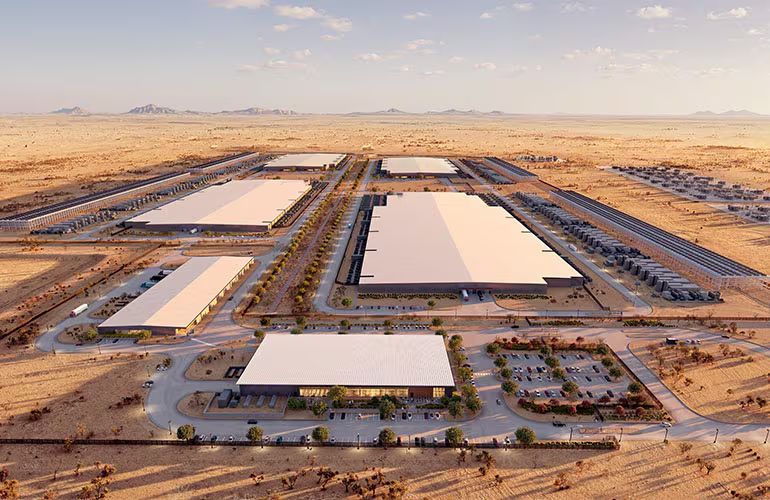
Beyond the buildout, data centres are emerging as an investable real-asset class in their own right. This paper sets out the investment case for GCC allocators — contracted, long-lease income with AI-driven growth — alongside the risks that distinguish the sector from conventional real assets, and the routes through which investors can access it.
The investment case for data centres as an emerging GCC asset class.
Part of Matchpoint Partners' proprietary research programme — original, data-driven analysis grounded in live deal experience. Read the full paper: framework, structures, worked examples and data.
Read the full research paper Explore our AI Data Centres practice
What this paper examines
The paper examines data centres from the allocator’s side of the table: not how to build and finance them, but whether and how to own them. It positions the sector within the real-assets spectrum — alongside core property and infrastructure — and assesses the return profile: contracted, long-lease income from operators and hyperscalers, combined with structural growth driven by AI and cloud demand.
It then weighs the risks that make data centres unlike conventional real assets, principally technology obsolescence and dependence on power infrastructure, and compares the practical access routes available to GCC investors: direct ownership, platform and fund investments, and listed exposure. Case studies, sensitivity analysis and international benchmarking support an allocation roadmap.
Why it matters now
GCC family offices and institutions are actively diversifying into private alternatives, and data centres sit at the intersection of two themes they already favour: income-producing real assets and the AI economy. But the sector rewards selectivity. The gap between a well-contracted, well-powered asset and a speculative one is wide, and access route matters as much as asset choice. Allocators who understand the sector’s distinctive risks before committing capital are far better placed to capture its income-plus-growth profile.
Key questions it answers
- Where do data centres sit on the real-assets spectrum, and how does their return profile compare with core property and infrastructure?
- What are the principal risks — technology obsolescence, power dependence, counterparty concentration — and how should they be priced?
- Which access route suits which investor: direct ownership, platforms, funds or listed vehicles?
- What separates a well-contracted, institutional-quality asset from a speculative one?
Who should read it
Family-office principals and CIOs, institutional allocators and investment-committee members in the GCC considering an allocation to digital infrastructure; and wealth advisers who need a balanced framework rather than a sector pitch. It pairs naturally with our companion paper on datacenter debt, which covers the financing side of the same assets.
How this applies to live mandates
Matchpoint Partners works with family offices and investors on access to data-centre and digital-infrastructure opportunities across the GCC, from direct and co-investment positions to platform-level participation. The selectivity framework in this paper — contract quality, power security and access route — reflects the questions we put to every opportunity before introducing it to clients. Explore our Digital Infrastructure practice or speak to a partner.
Data Centers as an Asset Class — frequently asked questions
They can offer an attractive combination of contracted, long-lease income and AI-driven growth, but they carry risks conventional real assets do not — technology obsolescence and power dependence chief among them. The case is strongest for allocators who can access quality, well-contracted assets and price those risks properly, as the full paper sets out.
Through several routes: direct or co-investment in operating assets, participation in development platforms, dedicated funds, or listed vehicles. Each trades off control, liquidity and minimum commitment differently. The paper compares these access routes and matches them to investor type, capital base and governance capacity.
Data centres combine characteristics of both: contracted, long-lease income reminiscent of core infrastructure, with structural growth from AI and cloud demand that conventional property rarely offers. The trade-off is a distinct risk set — technology obsolescence, power dependence and counterparty concentration — which means the comparison should be made on risk-adjusted rather than headline terms.
It is the risk that a facility’s design — its power density, cooling and connectivity — falls behind what tenants require as computing hardware evolves. Unlike conventional buildings, a data centre can lose competitiveness without losing physical condition. Investors manage the risk through contract structure, refresh provisions and selecting assets built to adaptable specifications.
Contract quality and power security, above all. An institutional-quality asset has long-dated commitments from creditworthy counterparties, firm and redundant power arrangements, and a credible operator. A speculative asset relies on demand that has not yet been contracted. The gap between the two in risk and financeability is wide, which is why selectivity matters more than sector exposure.
Want to act on this research?
Talk to a partner about how it applies to your transaction.
