
AI Strategy & Execution
Pure-play AI advisory for organisations that need to choose, build, govern and scale production systems with measurable business value.
 Image · AI Strategy & Execution
From first principles to production AI
Matchpoint helps leadership teams turn AI ambition into an executable portfolio of products, platforms and operating changes. The work begins with business decisions, users, data, risk and unit economics; it continues through architecture, experimentation, evaluation, production deployment and adoption.
The practice is independent of Matchpoint's corporate-finance work. Engagements can cover enterprise AI transformation, new AI products, agentic workflows, knowledge systems, document intelligence, synthetic data, computer vision, model economics, responsible AI and the operating model required to sustain them.
- 20 dedicated services covering strategy, product, architecture, data, reliability, economics and adoption.
- Strategy to production with decision gates, prototypes, evaluation plans and implementation ownership.
- AI systems including LLMs, agentic workflows, RAG, GraphRAG, classical ML, computer vision and synthetic data.
- Enterprise delivery designed around value, privacy, reliability, resilience and human accountability.
What we deliver
Explore each capability in detail.
 01
01Enterprise AI Strategy & Roadmap →
A board-ready AI direction, portfolio and investment sequence tied to operating priorities.
 02
02AI Opportunity & Use-Case Prioritisation →
A disciplined portfolio of AI opportunities ranked by value, feasibility, risk and adoption burden.
 03
03AI Venture Thesis & Product-Market Validation →
Research-led validation of AI product opportunities, market timing, data advantage and defensibility.
 04
04AI Business Case & Value Realisation →
A measurable value case that follows AI benefits from baseline through adoption and realised operating impact.
 05
05AI Product Strategy & 0-to-1 Delivery →
Product direction and hands-on delivery for new AI products from discovery through production launch.
 06
06AI Architecture & Build-Buy-Partner Decisions →
A technology and sourcing architecture shaped by differentiation, data, reliability, cost and control.
 07
07Agentic AI & Workflow Automation →
Agent systems that plan, use tools and complete bounded work inside observable business workflows.
 08
08Hybrid Deterministic & LLM Systems →
Architectures that combine rules, software and language models according to the strengths of each component.
 09
09Enterprise RAG, GraphRAG & Knowledge Systems →
Evidence-grounded knowledge systems using retrieval, graphs, taxonomies and domain context.
 10
10Document Intelligence & Multimodal AI →
AI systems that understand complex documents, layouts, tables, handwriting, images and supporting context.
 11
11Synthetic Data & Privacy Engineering →
Synthetic-data products for safer development, augmentation, evaluation and cross-domain collaboration.
12AI Data Platforms & Cross-Domain Access →
Reusable data products and access patterns that let multiple teams build AI without rebuilding the foundation.
 13
13AI Evaluation, Reliability & Citation Systems →
Evaluation systems for high-stakes AI where answers, evidence, uncertainty and failure behaviour must be visible.
14Responsible AI, Fairness & Governance →
Decision rights, standards and release controls for responsible development and use of AI.
15Inference Economics & Cost Optimisation →
Unit economics for AI systems across model calls, context, latency, quality, infrastructure and human review.
 16
16Model Routing, Caching & Resilience →
Production patterns for routing work, reusing stable context and maintaining service across model providers.
17AI Platform Operating Model & MLOps →
The platform, lifecycle and team structure required to build, release and operate AI repeatedly.
 18
18AI Adoption, Change & Capability Building →
Role-based adoption, workflow redesign and capability transfer that make AI part of everyday work.
 19
19AI Technical Due Diligence & Product Integration →
Independent assessment of AI products and a delivery plan for integrating technology, data and teams.
 20
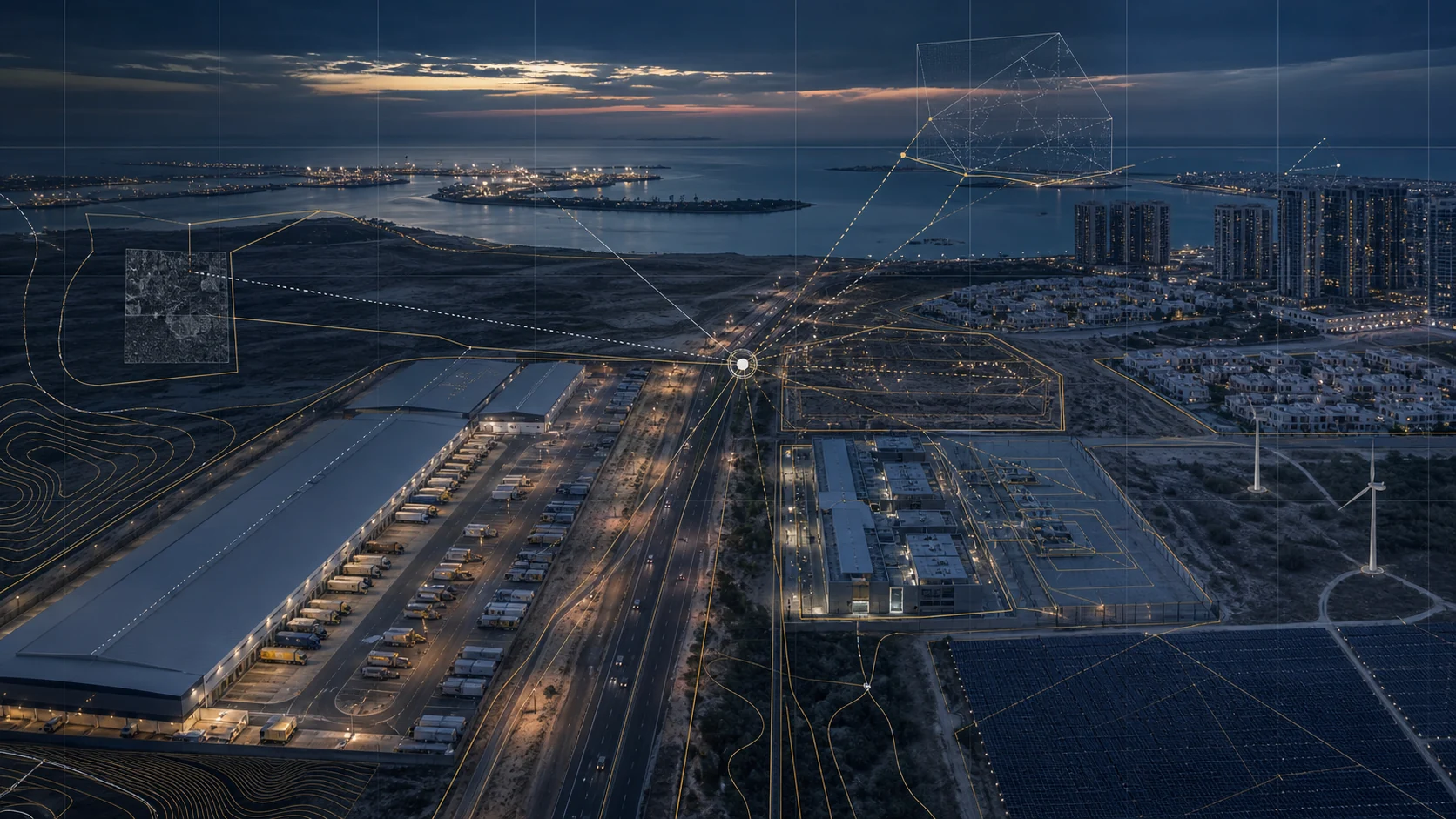
20Computer Vision, Sensor & Edge AI →
Applied AI for images, video and sensor streams across products, assets and physical operations.
Evidence at every delivery gate
Each engagement moves through explicit decisions, artefacts and acceptance criteria, with business and technical owners involved from the start.
Frame the decision
Define the user, workflow, baseline, consequence of failure, value measure and named owner.
Design the system
Specify data, models, tools, architecture, human review, evaluation and operating constraints.
Prove the workflow
Build a bounded product slice and test quality, reliability, cost, latency and user adoption.
Productionise
Integrate, release, monitor and transfer ownership through documented controls and runbooks.
AI Strategy & Execution FAQs
We help organisations decide where AI belongs, define the product and platform roadmap, design the architecture, build and evaluate production use cases, establish governance and operating ownership, and scale adoption.
Yes. We define production acceptance criteria, data and integration requirements, evaluation harnesses, operating controls, model and provider resilience, cost thresholds, release gates and ownership after launch.
We compare strategic differentiation, data advantage, time to value, switching cost, integration depth, security, reliability, model economics and the internal capability required to operate each option.
Outputs can include an enterprise roadmap, prioritised use-case portfolio, product requirements, reference architecture, prototype, evaluation framework, value case, governance design, operating model, delivery plan and production scale-up support.
Engagements can be structured as a fixed diagnostic, a defined product or architecture workstream, a staged pilot-to-production programme, or an ongoing AI product and transformation retainer. Scope, outputs, decision gates, responsibilities and fees are agreed in writing before work begins.
A focused diagnostic can take several weeks. Product, platform and operating-model work is staged around discovery, design, proof, evaluation, integration and production release; the timetable depends on data, system access, decision speed and the required level of reliability.
We frame the business decision and baseline, assess data and systems, design the product and architecture, build a bounded proof, evaluate it against explicit acceptance criteria, then support integration, release, monitoring and ownership transfer.
Ready to turn AI ambition into an executable plan?
Bring us the decision, product, workflow or platform challenge. We will define the first practical workstream and its acceptance criteria.
