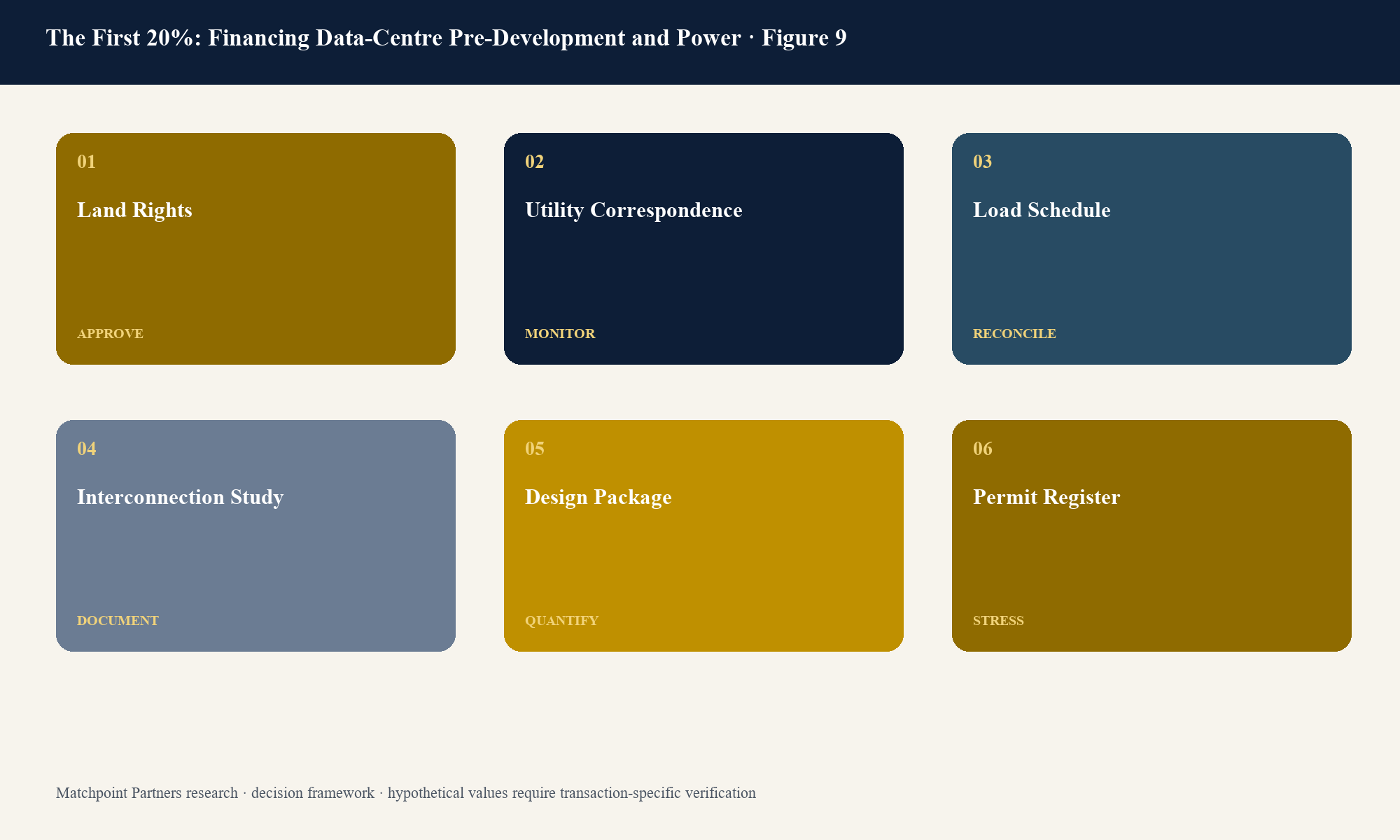
The decision and its evidence boundary
The decision is which capital should fund each pre-development risk and which objective evidence permits that capital to roll into construction finance. The work begins with a dated perimeter, named decision authority and one controlled record. That record links land rights, the site control milestone and the cash at risk measure. Each item carries a source, owner, date, status and exception. This structure lets the committee distinguish evidence that already exists from a management target or a hypothetical modelling assumption.
Grid Uncertainty is the principal focus on this page. Its effect can appear through timing, liquidity, control, value or enforceability. The review should test the sponsor equity route against at least the base pre-development plan case and record the sensitivity of cash at risk. A reader should be able to reproduce the conclusion from the cited documents and the disclosed assumptions without relying on an unsupported market benchmark.
The control response assigns preparation, challenge and approval to different people across sponsor, utility, landowner. Open items remain in an exception register with a deadline and consequence. A financing or investment recommendation is released after the relevant evidence is complete, the downside case is funded, and the legal, regulatory, tax, accounting and technical questions have been reviewed by qualified advisers where applicable.
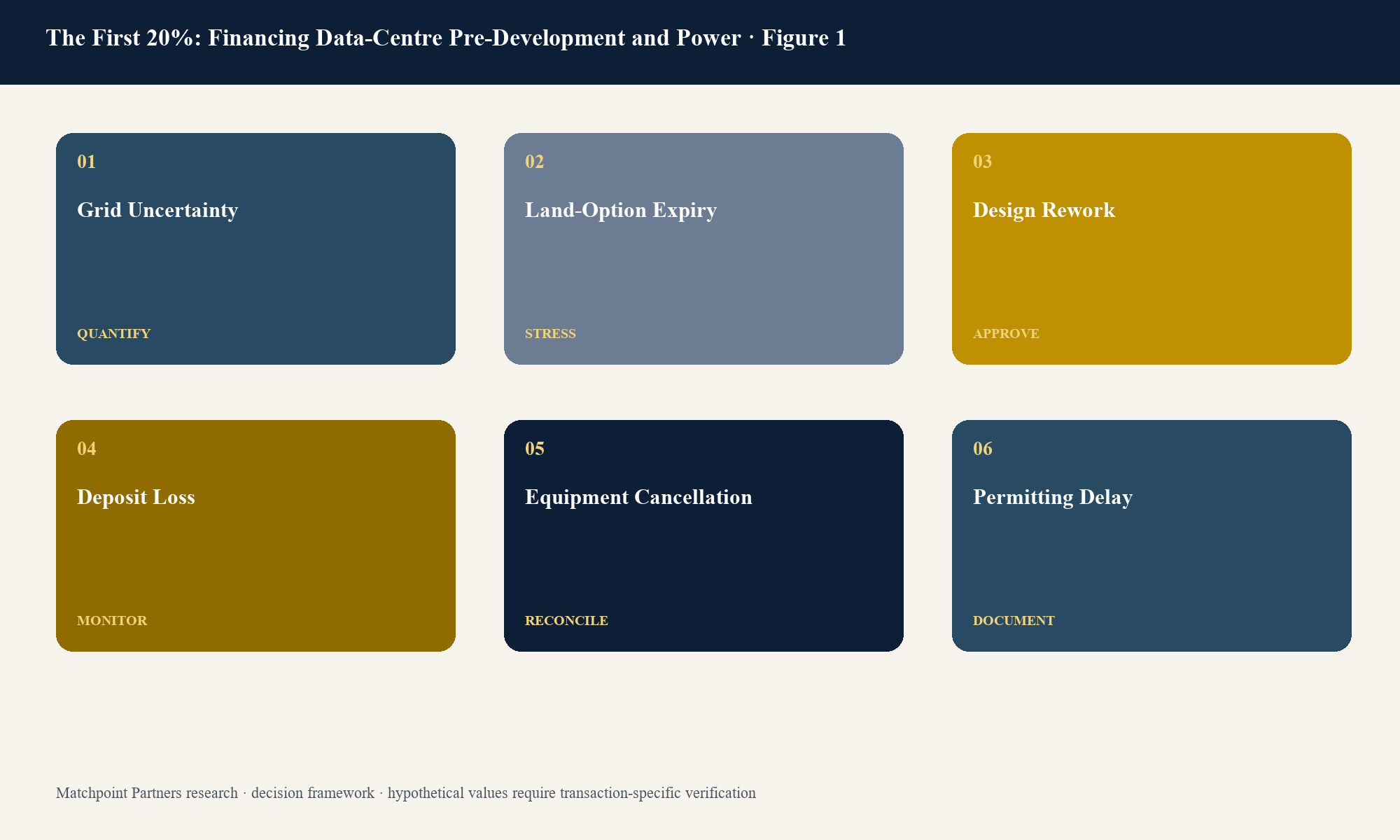
Economics, structure and value transfer
The decision is which capital should fund each pre-development risk and which objective evidence permits that capital to roll into construction finance. The work begins with a dated perimeter, named decision authority and one controlled record. That record links design package, the ready to build milestone and the cost to ready-to-build measure. Each item carries a source, owner, date, status and exception. This structure lets the committee distinguish evidence that already exists from a management target or a hypothetical modelling assumption.
Equipment Cancellation is the principal focus on this page. Its effect can appear through timing, liquidity, control, value or enforceability. The review should test the utility deposit facility route against at least the base pre-development plan case and record the sensitivity of cost to ready-to-build. A reader should be able to reproduce the conclusion from the cited documents and the disclosed assumptions without relying on an unsupported market benchmark.
The control response assigns preparation, challenge and approval to different people across equipment supplier, construction lender, sponsor. Open items remain in an exception register with a deadline and consequence. A financing or investment recommendation is released after the relevant evidence is complete, the downside case is funded, and the legal, regulatory, tax, accounting and technical questions have been reviewed by qualified advisers where applicable.
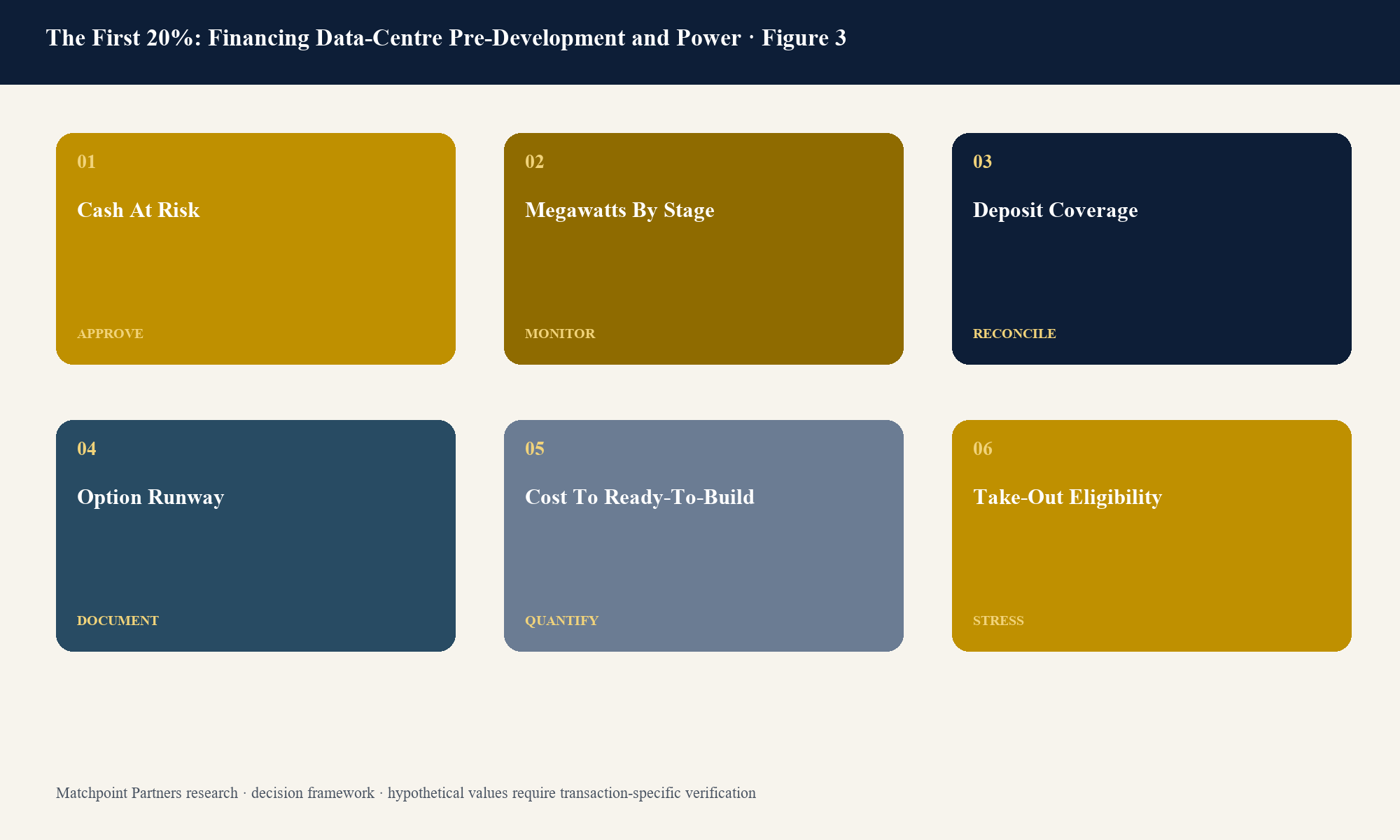
Risks, controls and downside funding
The decision is which capital should fund each pre-development risk and which objective evidence permits that capital to roll into construction finance. The work begins with a dated perimeter, named decision authority and one controlled record. That record links land rights, the connection offer milestone and the cash at risk measure. Each item carries a source, owner, date, status and exception. This structure lets the committee distinguish evidence that already exists from a management target or a hypothetical modelling assumption.
Grid Uncertainty is the principal focus on this page. Its effect can appear through timing, liquidity, control, value or enforceability. The review should test the pre-development bridge route against at least the base pre-development plan case and record the sensitivity of cash at risk. A reader should be able to reproduce the conclusion from the cited documents and the disclosed assumptions without relying on an unsupported market benchmark.
The control response assigns preparation, challenge and approval to different people across landowner, development lender, equipment supplier. Open items remain in an exception register with a deadline and consequence. A financing or investment recommendation is released after the relevant evidence is complete, the downside case is funded, and the legal, regulatory, tax, accounting and technical questions have been reviewed by qualified advisers where applicable.
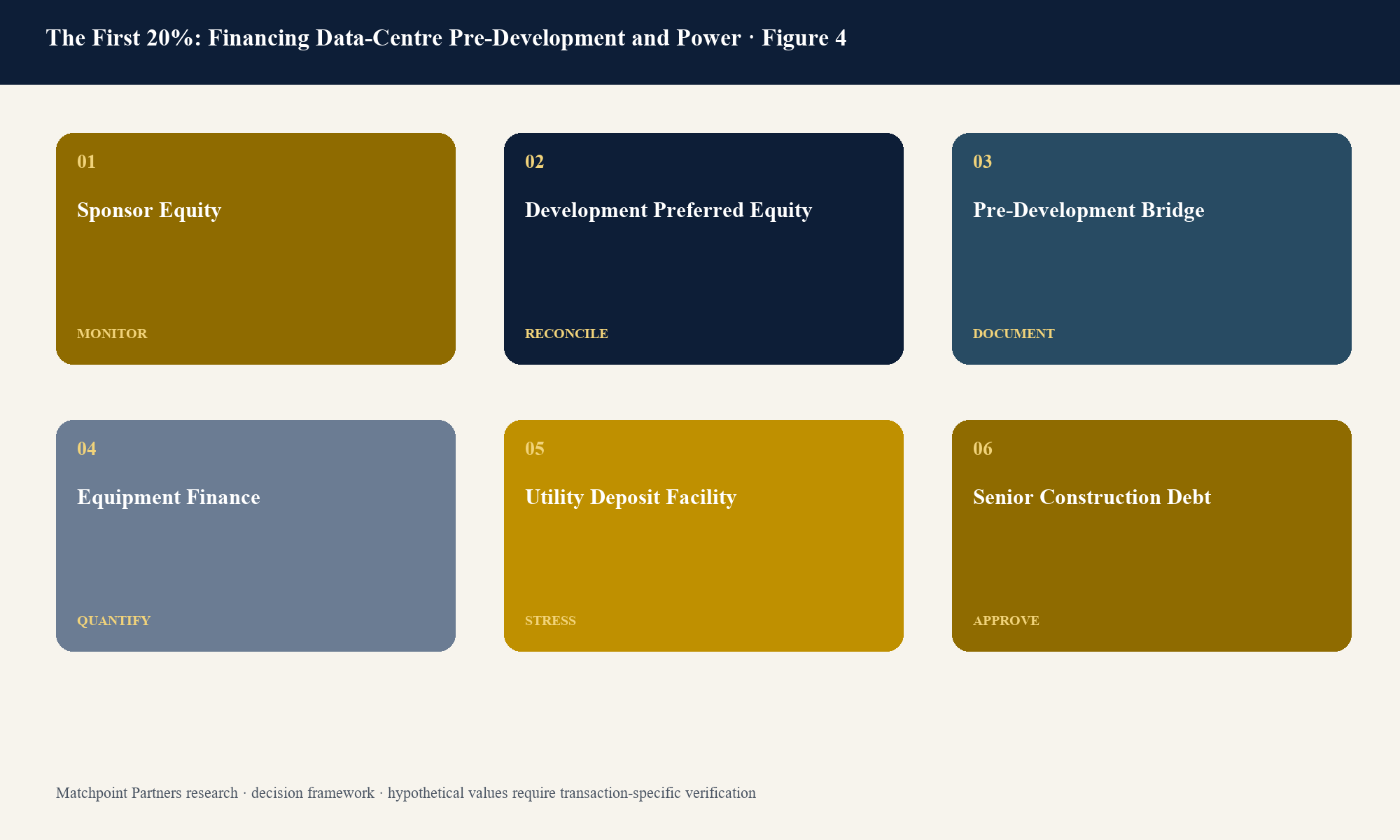
Documents, milestones and approval gates
The decision is which capital should fund each pre-development risk and which objective evidence permits that capital to roll into construction finance. The work begins with a dated perimeter, named decision authority and one controlled record. That record links land rights, the ready to build milestone and the cash at risk measure. Each item carries a source, owner, date, status and exception. This structure lets the committee distinguish evidence that already exists from a management target or a hypothetical modelling assumption.
Grid Uncertainty is the principal focus on this page. Its effect can appear through timing, liquidity, control, value or enforceability. The review should test the utility deposit facility route against at least the base pre-development plan case and record the sensitivity of cash at risk. A reader should be able to reproduce the conclusion from the cited documents and the disclosed assumptions without relying on an unsupported market benchmark.
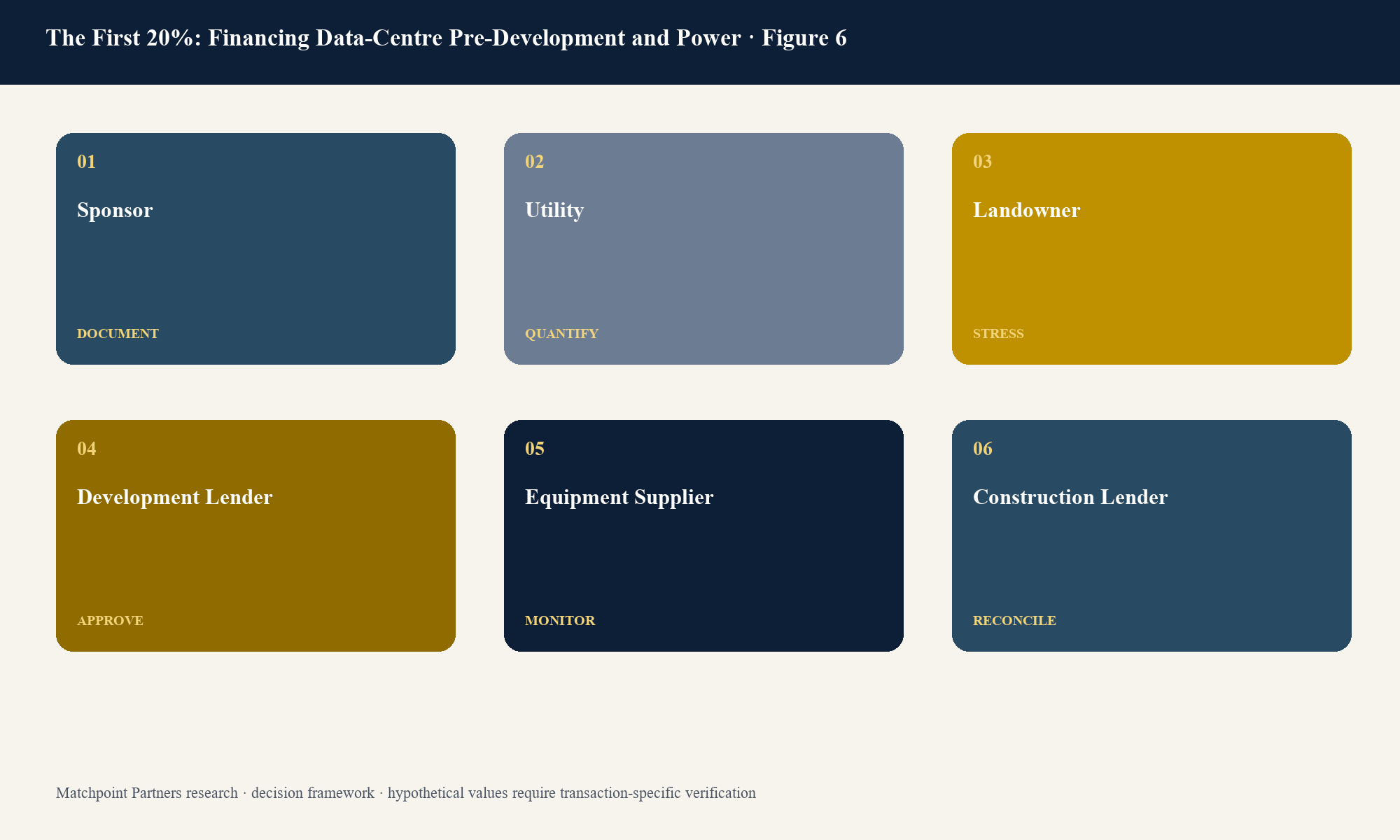
The control response assigns preparation, challenge and approval to different people across equipment supplier, construction lender, sponsor. Open items remain in an exception register with a deadline and consequence. A financing or investment recommendation is released after the relevant evidence is complete, the downside case is funded, and the legal, regulatory, tax, accounting and technical questions have been reviewed by qualified advisers where applicable.
Implementation and monitoring
The decision is which capital should fund each pre-development risk and which objective evidence permits that capital to roll into construction finance. The work begins with a dated perimeter, named decision authority and one controlled record. That record links utility correspondence, the utility application milestone and the megawatts by stage measure. Each item carries a source, owner, date, status and exception. This structure lets the committee distinguish evidence that already exists from a management target or a hypothetical modelling assumption.
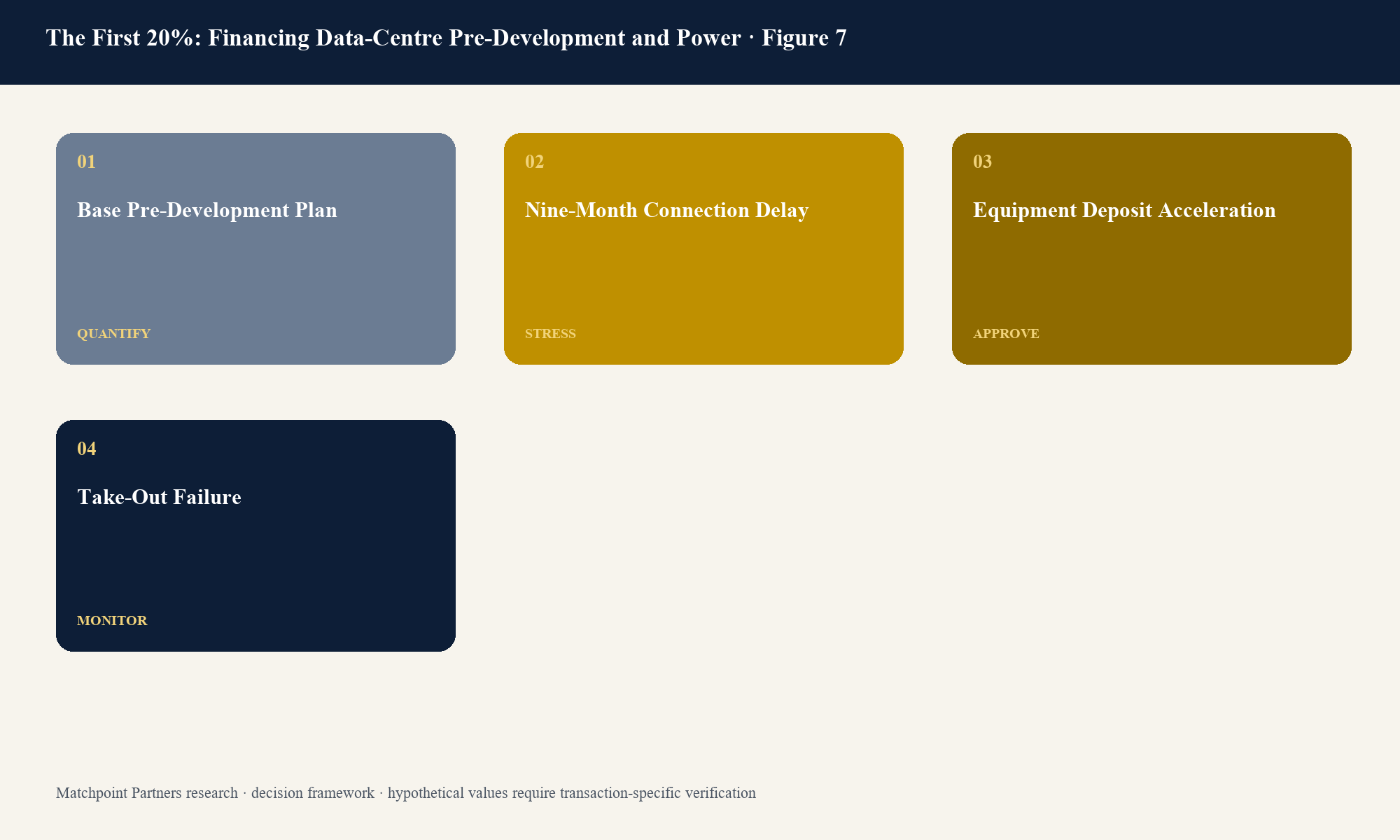
Land-Option Expiry is the principal focus on this page. Its effect can appear through timing, liquidity, control, value or enforceability. The review should test the development preferred equity route against at least the nine-month connection delay case and record the sensitivity of megawatts by stage. A reader should be able to reproduce the conclusion from the cited documents and the disclosed assumptions without relying on an unsupported market benchmark.
The control response assigns preparation, challenge and approval to different people across utility, landowner, development lender. Open items remain in an exception register with a deadline and consequence. A financing or investment recommendation is released after the relevant evidence is complete, the downside case is funded, and the legal, regulatory, tax, accounting and technical questions have been reviewed by qualified advisers where applicable.