

1. Define the take-out thesis before selecting an instrument
A securitisation is a financing mechanism, not a declaration that a data centre is stable. The board should first define the business objective: refinance construction debt, diversify lenders, extend duration, release equity, fund additional capacity, lower concentration in the banking group or create a repeat issuance platform. The objective determines the eligible asset perimeter, target investors, currency, tenor, amortisation, hedge and disclosure burden.
The financing team should describe the source of repayment in one sentence. For a stabilised data-centre pool, that source may be contracted and collected service revenue generated by specified facilities after operating costs, taxes, maintenance, lifecycle expenditure and permitted leakage. The statement should identify who pays, what service is delivered, which assets support it, how collections enter controlled accounts and which risks can interrupt the flow.
Public issuer releases demonstrate precedent. DataBank reported a USD 1.1 billion secured-note issuance into a new master trust in September 2025, following four earlier securitisations. Vantage reported USD 1.35 billion of securitised notes in October 2023, with proceeds primarily refinancing facilities in Virginia and Quebec. STACK reported a USD 240 million green securitised-note issuance in March 2024. These announcements evidence completed financing activity as described by the issuers. They do not supply a transferable underwriting formula.
The board should approve a written take-out thesis, minimum stability evidence, excluded risks and walk-away conditions before mandate launch. A transaction that starts with a desired rating or proceeds number can force the operating facts into an unsuitable structure.
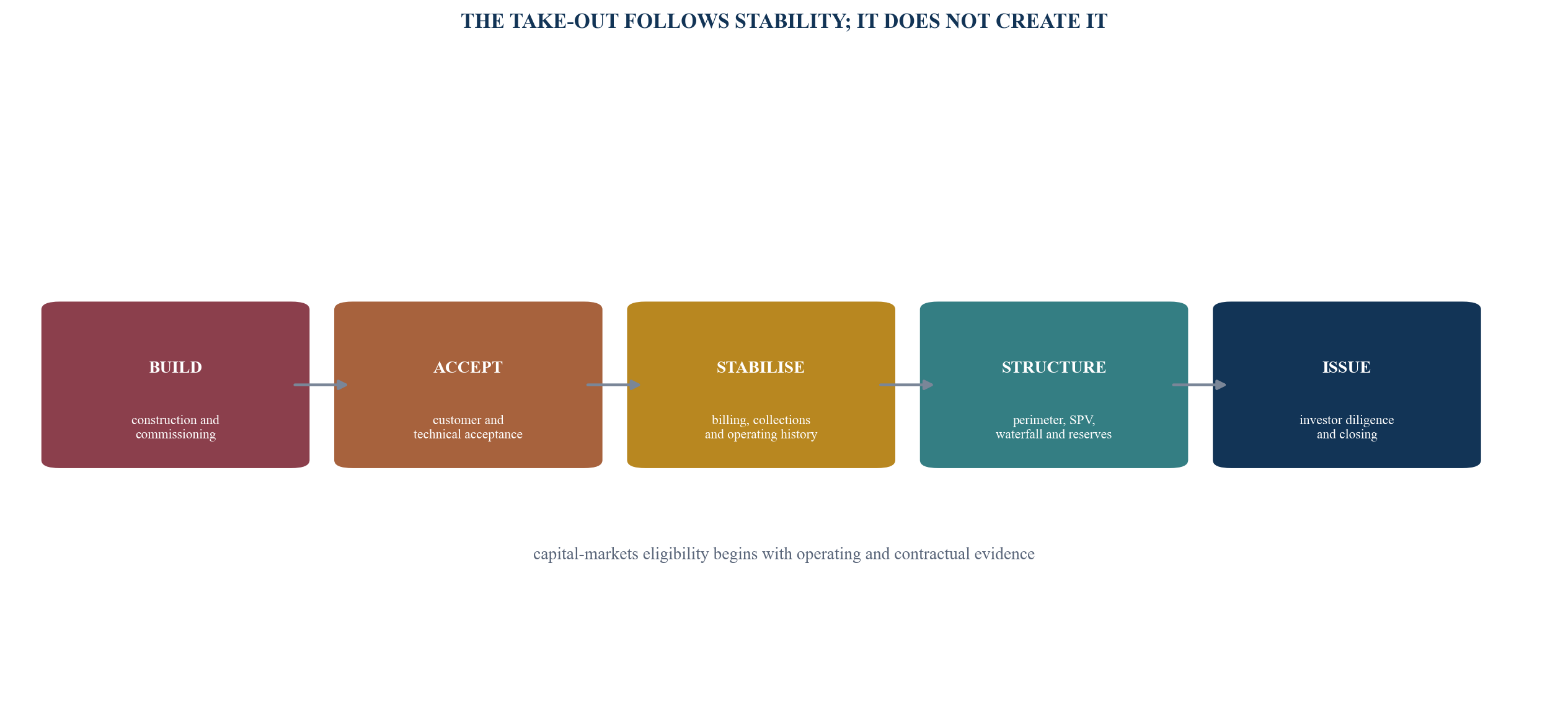
Each gate requires evidence; passage is not automatic.
2. Establish a four-part stability gate
Stability should be tested across operations, contracts, cash and legal enforceability. Operational stability requires commissioned systems, customer acceptance, defined available capacity, operating procedures, tested resilience and a credible defect-closure record. Contractual stability requires executed agreements, clear service definitions, pricing, term, renewal, remedies and assignment rights. Cash stability requires accurate billing, reconciled collections, understood deductions and a repeatable bridge from revenue to available debt service. Legal stability requires valid ownership or leasehold rights, permits, insurance, security and a bankruptcy-remoteness opinion for the proposed structure.
Elapsed time alone does not prove stability. A campus can operate for twelve months while depending on one customer whose break option arrives before the proposed note maturity. A recently completed building can have strong cash evidence if acceptance, billing and collections are complete and the contract is long dated. The gate should therefore use measured conditions rather than a fixed seasoning period unless law, regulation, rating criteria or investor policy requires one.
Digital Realty's 2025 Form 10-K reported more than 5,000 customers and disclosed concentration, expiry and reletting risks. It stated that its largest customer represented about 11.7 per cent of aggregate annualised recurring revenue at year end and that customer agreements representing 23.3 per cent of portfolio square footage were scheduled to expire through 2027. These company-wide disclosures illustrate the categories that matter. They do not describe a proposed securitisation pool.
Table 1. Stabilised-compute eligibility gate
| Domain | Minimum evidence | Red flag | Decision owner |
|---|---|---|---|
| operations | commissioned capacity, customer acceptance, tested resilience and closed critical defects | provisional service, unresolved life-safety issue or untested recovery | operations, engineering and risk |
| contracts | executed agreements, service schedule, pricing, term, remedies and assignment analysis | near-term break, uncapped remedy or disputed acceptance | commercial and legal |
| cash | reconciled invoices, collections, deductions, operating costs and controlled accounts | material unbilled revenue, unexplained leakage or recurring dispute | finance and servicing |
| property and permits | valid tenure, permits, easements, utility rights, insurance and security map | contested title, missing permit or non-assignable utility right | legal and asset management |
| data | contract-to-meter-to-invoice lineage and monthly history | inconsistent customer, capacity or cash identifiers | finance, operations and data owner |
| governance | approved perimeter, exceptions, reserve policy and disclosure responsibility | no accountable sponsor or unsupported eligibility override | board and financing committee |
Thresholds require transaction-specific approval and supporting evidence.
3. Select the asset perimeter and preserve traceability
The securitised perimeter can include property interests, equipment, customer contracts, receivables, insurance proceeds, controlled accounts and related rights. The exact package depends on local law and the financing form. The perimeter should exclude assets that cannot be transferred, pledged, separated, valued or operated without material support from the wider group unless that support is documented and underwritten.
Each facility needs a unique record linking legal entity, address, tenure, commissioned megawatts, customer hall, contract, meter, invoice, bank receipt, operating cost, maintenance plan and capital-expenditure schedule. The identifiers should survive transfer to the special-purpose issuer. Reconciliations should show that the monthly servicing report reaches the general ledger and bank accounts without manual reinterpretation.
Shared infrastructure requires special treatment. A substation, network route, cooling plant, security team, procurement contract, software platform or operating licence may serve assets inside and outside the pool. The transaction needs service agreements, cost allocation, access rights, continuity protections, step-in mechanics and replacement plans. A portfolio that appears diverse at the building level can depend on one shared utility or operator.
The perimeter should also identify future capacity. Unbuilt land, powered shell, commissioned-but-unleased halls and expansion rights carry different risk from occupied capacity. Their costs and cash flows should remain outside the debt base case unless the structure expressly permits ramp-up exposure and the investors accept the related construction, leasing and funding risk.
4. Underwrite the customer contract as the primary exposure
The data-centre contract combines real estate, energy, critical infrastructure and service obligations. The financing review should isolate base recurring charges, power and other pass-through amounts, variable usage, cross-connect revenue, installation fees, managed services and one-off credits. Each component has a different margin, volatility, termination profile and transferability.
Term should be measured after every break, renewal, expansion and termination right. A ten-year stated term may provide three years of firm cash if the customer can terminate following a service event, regulatory change, delayed capacity or a change of control. The underwriter should map notice periods, cure rights, credits, liability caps, force majeure, customer audit rights, security obligations and provider maintenance windows.
Credit analysis should consider the contractual obligor, guarantor, operating customer and payment route. A familiar brand may contract through a thin subsidiary. An investment-grade parent may provide no guarantee. A government-related customer may depend on annual appropriations or procurement compliance. An artificial-intelligence customer can have strong equity funding and limited operating history. The data room should distinguish public rating, audited financial statements, management information, sponsor support and unsupported reputation.
Table 2. Contract-to-cash underwriting matrix
| Contract feature | Cash-flow question | Evidence | Possible structural treatment |
|---|---|---|---|
| contracted capacity | how much accepted capacity produces a fixed charge? | signed service schedule, acceptance certificate and billing record | include only accepted and billed capacity |
| power charge | is the amount fixed, indexed, pass-through or reconciled? | tariff, meter data, invoice method and true-up history | exclude pure pass-through from margin or stress recovery lag |
| term and break | how long is cash legally committed? | agreement, amendments, notice and break schedule | size to firm term or require amortisation before break |
| service remedies | how can uptime or delivery failure reduce cash? | SLA, credit history, incident log and liability terms | reserve, trigger or downside deduction |
| assignment and control | can contracts and collections support the issuer? | consent, security, account and notice analysis | obtain consent, acknowledgement or alternative structure |
| concentration | what happens if one obligor leaves or fails? | revenue, capacity, credit and expiry by obligor | concentration haircut, reserve or subordination |
Contract interpretation remains subject to qualified legal advice.
5. Build a recurring cash-flow bridge
The model should begin with invoiced and collected revenue, not a sales pipeline or annualised booking. It should reconcile customer-level receipts to base recurring revenue, pass-through charges, variable services, installation income, credits, bad debt and tax. The bridge then deducts direct energy, network, operating, maintenance, property, insurance, tax, management and servicing costs before calculating cash available for debt service.
Pass-through revenue deserves careful presentation. A dollar of recovered electricity cost can increase reported revenue without adding the same amount of margin. A timing mismatch between utility payment and customer collection can consume liquidity even when recovery is contractually permitted. The model should therefore show gross revenue, net recurring margin and working-capital movements separately.
Cash controls should follow the model. Customers should pay into designated accounts where legally and commercially workable. The servicer should reconcile billed, collected, overdue, credited and disputed amounts each month. The waterfall should define permitted operating withdrawals, taxes, maintenance, reserves, fees, interest, principal and residual distributions. Any affiliate payment should have a contract, formula, cap, approval and disclosure.
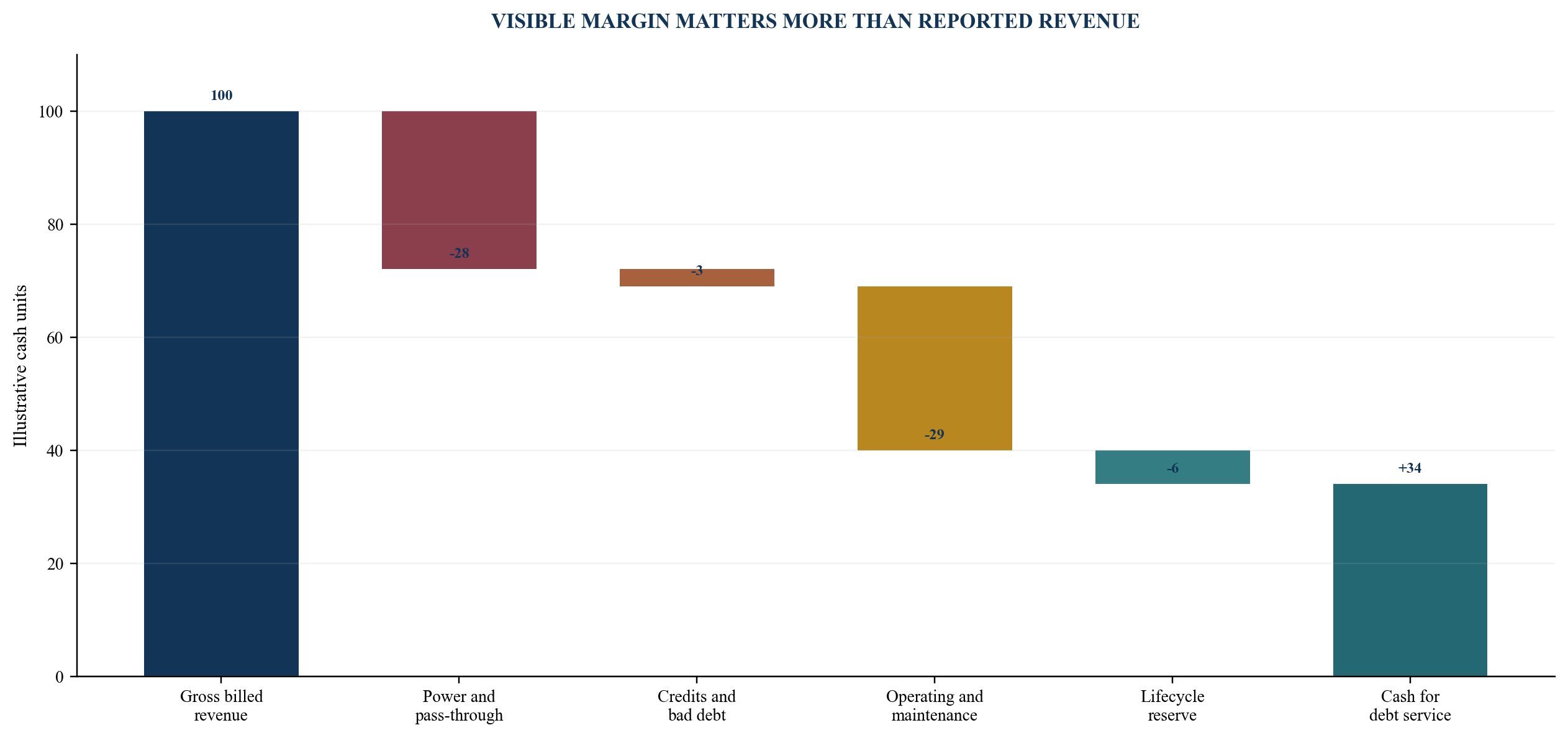
The bridge separates pass-through revenue and recurring operating margin.
6. Normalise power, pass-through and variable income
Power is both an essential input and a source of modelling distortion. The contract may recover actual utility cost, apply a fixed tariff, use an index, include a markup, reconcile periodically or cap adjustments. The financing model should reproduce the contractual calculation for each customer and compare it with meter, utility and invoice data.
The base case should exclude any power margin that lacks a tested collection history or enforceable mechanism. It should also capture losses, demand charges, hedging, taxes, network charges, generator fuel and renewable certificates where relevant. If power is procured by an affiliate, the arrangement should be independently supportable and capable of continuing after enforcement or operator replacement.
Variable income from cross-connects, remote hands, installation, cloud on-ramps and managed services can be recurring, usage-linked or episodic. The analyst should classify each stream using contract, history, margin and churn. A conservative debt case can include an evidenced floor and treat the balance as upside. Revenue that depends on future sales, uncommissioned capacity or a discretionary service should remain outside the initial sizing case.
Currency and inflation require similar separation. Customer escalators, utility costs, wages, insurance and maintenance can move on different indices and dates. A nominal escalation in revenue does not protect margin if the cost base resets faster or the customer has a cap. The model should show the hedge, natural offset, basis risk and residual exposure.
7. Measure concentration across customers, sites and dependencies
Concentration should be measured by revenue, cash margin, contracted capacity, expiry, credit quality and replacement difficulty. A customer contributing 20 per cent of revenue can contribute more than 20 per cent of cash if its power is efficient and its space requires little support. The same customer can occupy several sites, creating portfolio-wide exposure that a property-level view misses.
Customer concentration is only one layer. The pool may depend on one grid substation, fibre route, water source, software platform, equipment vendor, operator, jurisdiction or insurance programme. Geographic diversity can still contain correlated weather, regulatory or power-market risk. The data room should state the dependency and the tested alternative.
The debt case should apply explicit concentration consequences. Options include excluding revenue above an approved limit, applying a cash haircut, trapping excess cash, requiring additional reserves, shortening amortisation or increasing subordination. The chosen method should correspond to the loss mechanism. A percentage haircut without a renewal or downtime rationale can create false comfort.
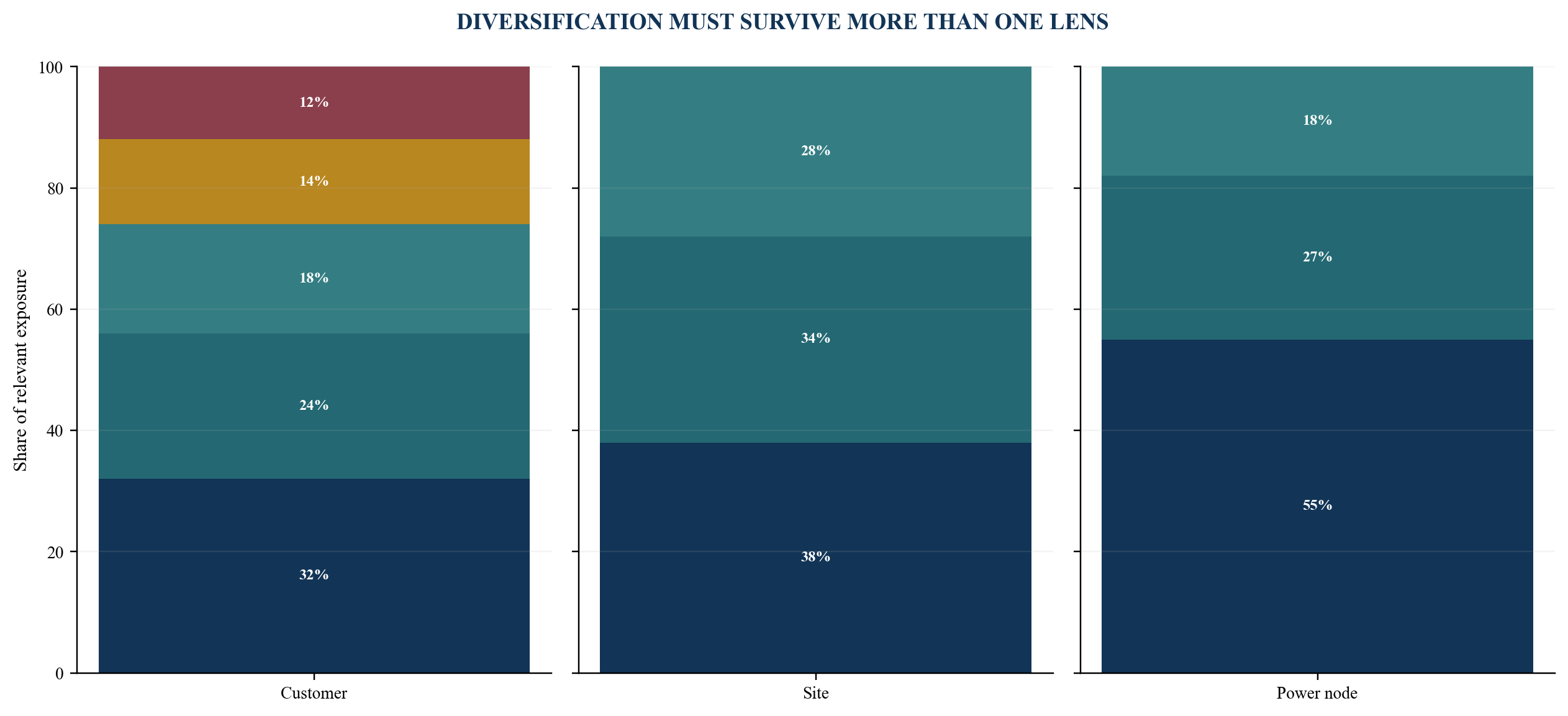
Shares are management assumptions and show several concentration lenses.
8. Model expiry, renewal and reletting as a transition process
The model should create a customer-by-customer expiry ladder through the legal final maturity. Each line should show firm term, renewal option, notice date, contracted price, current market comparison, customer investment in the site, technical fit, expected downtime, reconfiguration cost and alternative demand. The base case should avoid treating an unexercised renewal as committed revenue.
Renewal probability is not directly observable. Historical retention can inform the range when the population is comparable and the data are complete. A hyperscale build-to-suit, an enterprise colocation customer and a network interconnection customer have different switching costs and remarketing paths. The model should separate them.
A reletting scenario starts when the customer gives notice, not when cash stops. It should include marketing, design, customer diligence, contract, equipment changes, utility reallocation, commissioning and acceptance. During that period the site continues to incur fixed costs. A facility designed around one customer's layout, cooling density or power architecture may need material capital before another customer can use it.
The transaction can manage expiry through scheduled amortisation, concentration limits, cash traps, reserve funding and reinvestment rules. The legal final maturity should leave time to resolve assets after expected note repayment. Investors should see the portfolio's weighted average remaining term, earliest material break, annual expiry percentage and downside cash after each major customer event.
9. Convert operating resilience into servicing evidence
Securitised cash depends on continuous physical service and continuous financial servicing. The operator must maintain power, cooling, access, connectivity and incident response. The servicer must bill, collect, reconcile, report, enforce and transfer funds. Failure in either system can interrupt noteholder cash.
The transaction should define key performance indicators with sources and owners. Measures can include contracted and available megawatts, occupancy, service credits, incidents, energy use, collections, delinquency, churn, maintenance completion, open critical defects, backup restoration, insurance claims and reserve balances. Each metric needs a consistent calculation and a trace to operating records.
The security package should recognise operator dependence. The financing documents can require an operating agreement, performance standards, reporting, notice, replacement rights, transition assistance, intellectual-property licences, access to systems and a funded handover plan. A back-up servicer for billing and collections cannot necessarily operate the physical plant. The structure may need separate financial servicing and technical operator-continuity solutions.
Investor reporting should distinguish a temporary service credit from a sustained reduction in capacity. Material events should trigger timely notice and an explanation of cash effect, insurance, customer remedies, recovery and remediation. A dashboard without source data or exception ownership is not sufficient evidence.
10. Fund maintenance, lifecycle and technology change
Data-centre cash flow cannot be valued as a static lease when the service requires continuing equipment and software investment. Switchgear, UPS, batteries, generators, cooling, controls, security, networks and customer spaces have different maintenance and replacement cycles. Equipment may remain functional while losing vendor support, efficiency or compatibility.
The base case should include recurring maintenance and a lifecycle reserve derived from an asset register, condition assessment and replacement plan. It should separate routine expense, major maintenance, customer-funded work, expansion and capacity-enhancing capital. Deferring maintenance can temporarily increase cash while weakening service and collateral value.
Technology risk also affects reletting. Higher-density compute can require new cooling, power distribution and structural design. Lower-density legacy halls may retain value for other workloads, but the price, downtime and capital require evidence. The model should use scenarios rather than assume that every megawatt can be repriced to current market demand.
Table 3. Lifecycle reserve architecture
| Reserve layer | Covered items | Evidence base | Release control |
|---|---|---|---|
| routine maintenance | planned service, testing, consumables and minor parts | maintenance plan, work orders and cost history | monthly operating budget |
| major maintenance | generator overhaul, cooling refurbishment and switchgear service | condition report, vendor cycle and outage plan | annual approved programme |
| lifecycle replacement | UPS, batteries, controls, security and network systems | asset register, support date and replacement estimate | funded schedule and independent confirmation |
| tenant transition | decommissioning, reconfiguration and recommissioning | expiry ladder, technical fit and contractor estimates | customer event or approved reletting plan |
| emergency works | uninsured urgent repair and specialist mobilisation | risk register, claims history and response plan | controlled account and authorised incident |
| expansion | new halls, utility capacity and additional equipment | separate investment case and funding commitment | excluded from debt service unless expressly permitted |
Frequencies and amounts depend on asset condition, engineering advice and contract allocation.
11. Prove property, utility and security rights
The legal review should map every ownership, leasehold, easement, utility, access, licence, permit, contract and account right supporting the pool. The special-purpose issuer or security trustee needs an enforceable route to the cash and collateral under the chosen law. The structure should address perfection, priority, insolvency, commingling, set-off, assignment restrictions, taxes and enforcement.
Property tenure should extend beyond note maturity and allow the required use, access, maintenance and transfer. A long customer contract cannot support long-dated notes if the underlying ground lease expires earlier or can terminate following a change of control. Utility and fibre rights may be personal to the operator or subject to consent.
Bankruptcy remoteness requires more than a newly incorporated entity. The documents should limit activities, debt, mergers, voluntary insolvency and distributions; appoint independent decision mechanisms where appropriate; and separate accounts, records, assets and contracts. Legal opinions should address the specific transaction and jurisdictions.
Security should follow value. Mortgages or real-estate security can support property recovery. Contract and receivable security can support collections. Equipment security can be affected by fixtures law, title, customisation and removal cost. Equity pledges and account control can support enforcement. The recovery analysis should avoid assuming that book value equals realisable value or that enforcement can occur without service interruption.
12. Choose between ABS, CMBS and corporate take-out
The instrument should match the repayment source and enforcement route. An asset-backed structure can focus on operating cash, contracts, accounts and a master trust. A commercial mortgage-backed structure can focus more heavily on real property, mortgage security and property-level net operating income. A corporate or infrastructure bond can rely on the wider group and covenants. A private placement can provide negotiated terms with a smaller investor group.
The same portfolio can support different forms, and the labels do not decide the risk. The financing team should compare legal eligibility, disclosure, investor depth, rating treatment, collateral, amortisation, flexibility, cost, hedging, accounting and future issuance. The preferred route can change by jurisdiction and sponsor objective.
Basel's simple, transparent and comparable framework emphasises homogeneous exposures, clear obligations and investor due diligence. The EU, UK, UAE, India and Australia apply their own definitions, retention, diligence, disclosure and bank-capital rules. The transaction team should establish the applicable regime before presenting a structure as a securitisation or claiming special treatment.
Table 4. Capital-markets route comparison
| Route | Primary repayment focus | Typical strengths | Principal questions |
|---|---|---|---|
| operating ABS | contracted operating cash and controlled accounts | repeat issuance, tailored waterfall and operating metrics | asset eligibility, servicing, contract transfer, concentration and residual value |
| CMBS-style financing | property cash flow and mortgage collateral | established real-estate security concepts and property investor base | specialised use, customer concentration, capex and operational dependence |
| corporate or infrastructure bond | group cash flow and covenant package | broad asset access and operating flexibility | corporate leverage, structural subordination and asset leakage |
| private placement | negotiated issuer or asset cash flow | confidentiality, bespoke terms and staged execution | investor concentration, amendments, liquidity and pricing evidence |
| bank or private-credit refinancing | bilateral or club credit | execution control, construction-to-operation bridge and flexibility | lender concentration, tenor, hold capacity and refinancing risk |
| sukuk or Shariah-compliant structure | asset, usufruct or service cash under approved form | regional investor access and faith-based mandate fit | asset rights, Shariah governance, tax, transfer and cash-flow mechanics |
The table is a decision aid and does not determine legal classification or market availability.
13. Design the issuer and priority of payments
The structure should show every entity, asset transfer, security interest, contract, account, hedge, service and cash movement. The issuer's permitted activities, ownership, governance and separateness should support the legal opinions. The servicer, operator, account bank, trustee, paying agent, hedge counterparty and back-up arrangements need defined obligations and replacement events.
The priority of payments should reflect the operating reality. Taxes, essential property and operating costs, emergency works and servicing can require payment before note interest because preserving the service preserves the collateral. The transaction should prevent broad operating discretion from consuming noteholder cash. Eligible costs, budgets, caps, variance approval and reporting therefore matter.
Reserves can address liquidity, debt service, maintenance, lifecycle works, insurance deductibles, customer transitions and hedging. Each reserve needs a target, funding source, permitted use, replenishment rule and release condition. Multiple labels drawing on the same cash do not create multiple protections.
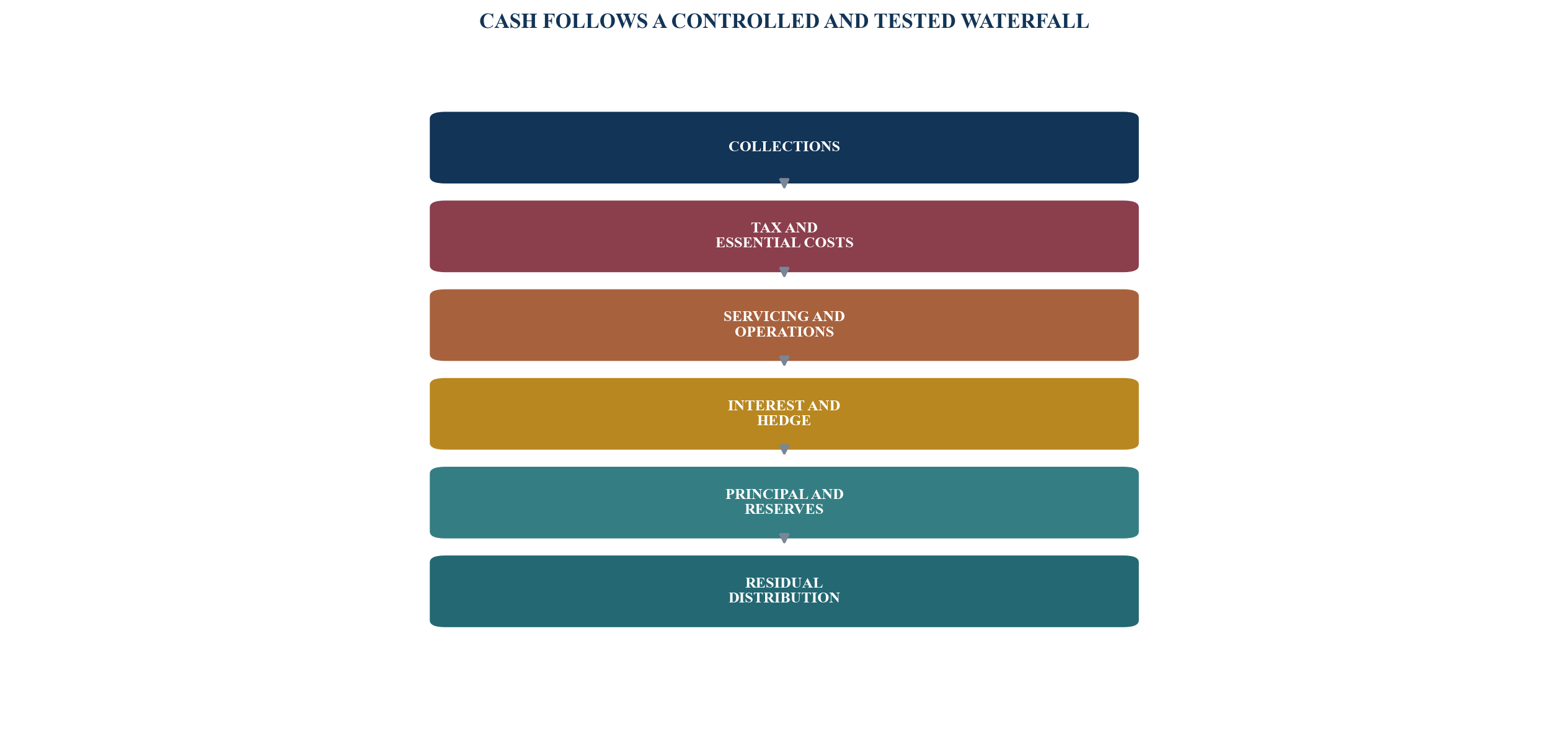
Legal and tax advice determines the enforceable transaction waterfall.
14. Calibrate credit enhancement and triggers to loss pathways
Credit enhancement can include subordination, overcollateralisation, reserve accounts, excess spread, guarantees, letters of credit and amortisation. Each mechanism protects against specific timing or loss. A liquidity reserve can bridge a delayed collection. It does not replace cash lost after customer termination. Subordination can absorb asset loss. It does not operate the facility after a critical failure.
Triggers should detect deterioration early enough to preserve cash. Measures can include debt-service coverage, occupancy, customer concentration, weighted average remaining term, collections, service credits, material incidents, reserve deficiency, overdue maintenance, insurance, operator default and rating events. A trigger can trap cash, accelerate amortisation, suspend additions, require remediation or cause an event of default.
The cure should match the problem. A reporting failure can be cured by delivering verified information. A service failure may require technical remediation, customer settlement and replenished liquidity. A customer expiry cliff may require additional amortisation or replacement cash. Broad sponsor discretion can weaken the protection; inflexible triggers can damage operations. The documents should balance defined consequences with a controlled decision process.
Support from the sponsor should be explicit. Regulators including APRA and CBUAE address implicit support in bank securitisation frameworks. A transaction should not assume that a sponsor will rescue the issuer beyond documented and enforceable commitments. Investors and the board need to know which residual risk remains with the notes and which remains with equity.
15. Build a jurisdictional applicability register
The legal classification and regulatory obligations depend on the issuer, originator, assets, investors, offering and jurisdictions. In the United States, Regulation AB governs disclosure for registered asset-backed securities within its scope; SEC guidance addresses pool, servicing and reporting matters. Private offerings can follow different securities-law routes and still require accurate material disclosure.
EU Regulation 2017/2402 establishes a general securitisation framework, including due diligence, risk retention and transparency, with a specific simple, transparent and standardised regime. ESMA maintains disclosure templates and reporting instructions. The UK framework changed on 1 November 2024; FCA SECN should be read with the Securitisation Regulations 2024 and the PRA Rulebook.
The CBUAE rulebook sets bank-capital and due-diligence requirements for securitisation exposures and includes STC treatment. RBI's 2021 directions apply to specified regulated entities and include minimum holding, retention and transfer conditions. APRA's APS 120, in force from 1 January 2024, requires Australian authorised deposit-taking institutions to manage securitisation risk and capital.
Table 5. Regulatory workstream by jurisdiction
| Jurisdiction | Public anchor | Core workstream | Evidence before launch |
|---|---|---|---|
| United States | SEC Regulation AB and securities rules | offering route, ABS definition, disclosure, servicing, retention and reporting | US counsel memorandum and disclosure responsibility map |
| European Union | Regulation 2017/2402 and ESMA materials | due diligence, retention, transparency, repository reporting and STS analysis | entity and investor scope, templates and reporting owner |
| United Kingdom | FCA SECN, Securitisation Regulations 2024 and PRA rules | originator, sponsor, SSPE and investor obligations; UK STS where relevant | UK counsel analysis and private or public reporting plan |
| United Arab Emirates | CBUAE securitisation standards plus relevant offering and SPV rules | bank capital, due diligence, risk transfer, STC, securities and insolvency analysis | regulator and counsel workplan; Shariah review where applicable |
| India | RBI Securitisation of Standard Assets Directions 2021 | regulated-entity eligibility, minimum holding, retention, transfer and capital | regulated-entity and asset-eligibility memorandum |
| Australia | APRA APS 120 plus securities and accounting rules | ADI risk management, capital, disclosure and implicit support | APRA classification, legal opinion and transaction self-assessment |
Applicability depends on current law, entity status, offering and transaction facts.
16. Model an illustrative 60 MW stabilised portfolio
Consider a hypothetical portfolio of three commissioned facilities with 60 MW of accepted capacity and 54 MW contracted. Management assumes annual base recurring revenue of USD 78 million, net power and pass-through margin of USD 4 million and other recurring service revenue of USD 8 million. It assumes operating and maintenance cost of USD 38 million and a lifecycle reserve of USD 7 million, producing USD 45 million of cash available before debt service.
The financing case assumes USD 400 million of senior notes, USD 60 million of junior notes, a 6.25 per cent blended cash interest rate and USD 9 million of scheduled annual principal. Annual debt service is therefore assumed at USD 37.75 million and initial coverage at about 1.19 times. These are method assumptions, not market terms or a pricing indication.
The first downside applies a five per cent recurring-revenue reduction and USD 3 million of additional cost, reducing cash available for debt service to USD 37.5 million. The second removes the largest customer's margin contribution after remedies and mitigation, reducing cash to USD 30 million. The third combines customer loss, six months of transition cost and higher lifecycle spending, reducing cash to USD 24 million. The model excludes insurance proceeds until timing and collectability are evidenced.
Table 6. Illustrative capital-markets take-out stress
| Assumption or output | Base | Moderate stress | Major customer event | Combined transition stress |
|---|---|---|---|---|
| contracted capacity | 54 MW | 54 MW | 38 MW | 38 MW |
| recurring and service revenue | USD 90.0m | USD 85.5m | USD 68.0m | USD 66.0m |
| operating cost and lifecycle reserve | USD 45.0m | USD 48.0m | USD 38.0m | USD 42.0m |
| cash available for debt service | USD 45.0m | USD 37.5m | USD 30.0m | USD 24.0m |
| annual debt service | USD 37.75m | USD 37.75m | USD 37.75m | USD 37.75m |
| debt-service coverage | 1.19x | 0.99x | 0.79x | 0.64x |
All values are management assumptions for method demonstration only.
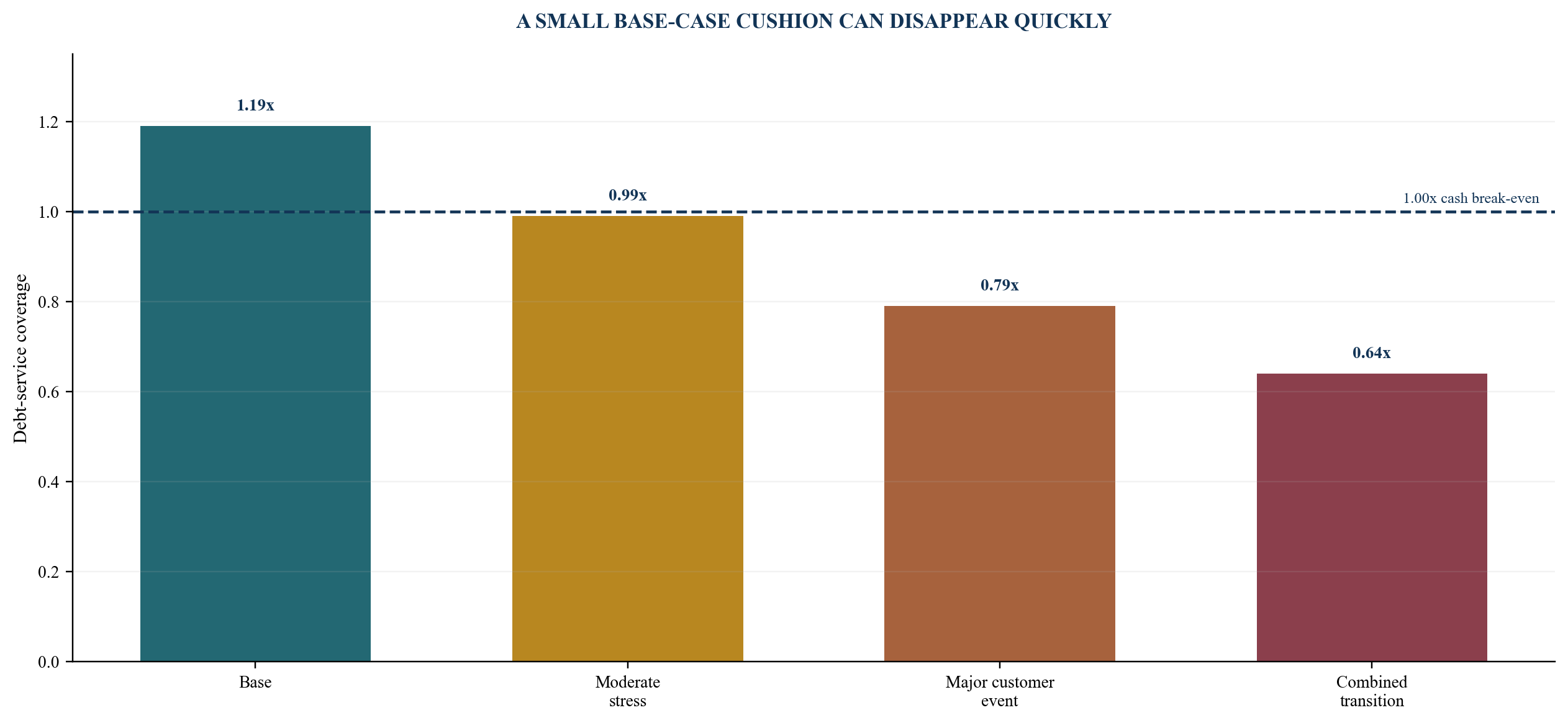
The chart is a management-assumption sensitivity, not a forecast or rating outcome.
17. Size tranches from stress, term and recovery
The sizing process should begin with cash and recovery scenarios, then determine senior, junior and equity positions. The base case should use contracted and collected cash supported by the stability gate. Downside cases should test customer loss, expiry, power-cost mismatch, service credits, outage, maintenance, capex, interest and hedge movements, operator replacement and asset-sale timing.
Scheduled amortisation should align note balance with remaining contract term and asset quality. A bullet maturity can concentrate refinancing risk. Rapid amortisation can constrain lifecycle investment and growth. The structure can use target balances, excess-cash sweeps and release tests to adapt while preserving investor protection.
Recovery requires a separate analysis. It should consider property value, operating value, retenanting time, capital required, customer portability, specialist use, equipment removal, enforcement cost and market liquidity. The analysis should not capitalise a stressed cash flow at an unstressed rate or assume that an operating platform transfers immediately.
Rating criteria and investor models may use different stresses. S&P published global criteria for data-centre securitisations in 2024 and republished them with non-material changes in 2025. A rating is an external opinion under the applicable methodology. The board should understand the assumptions, information, sensitivity and ongoing surveillance obligations rather than treat the rating as a substitute for its own risk decision.
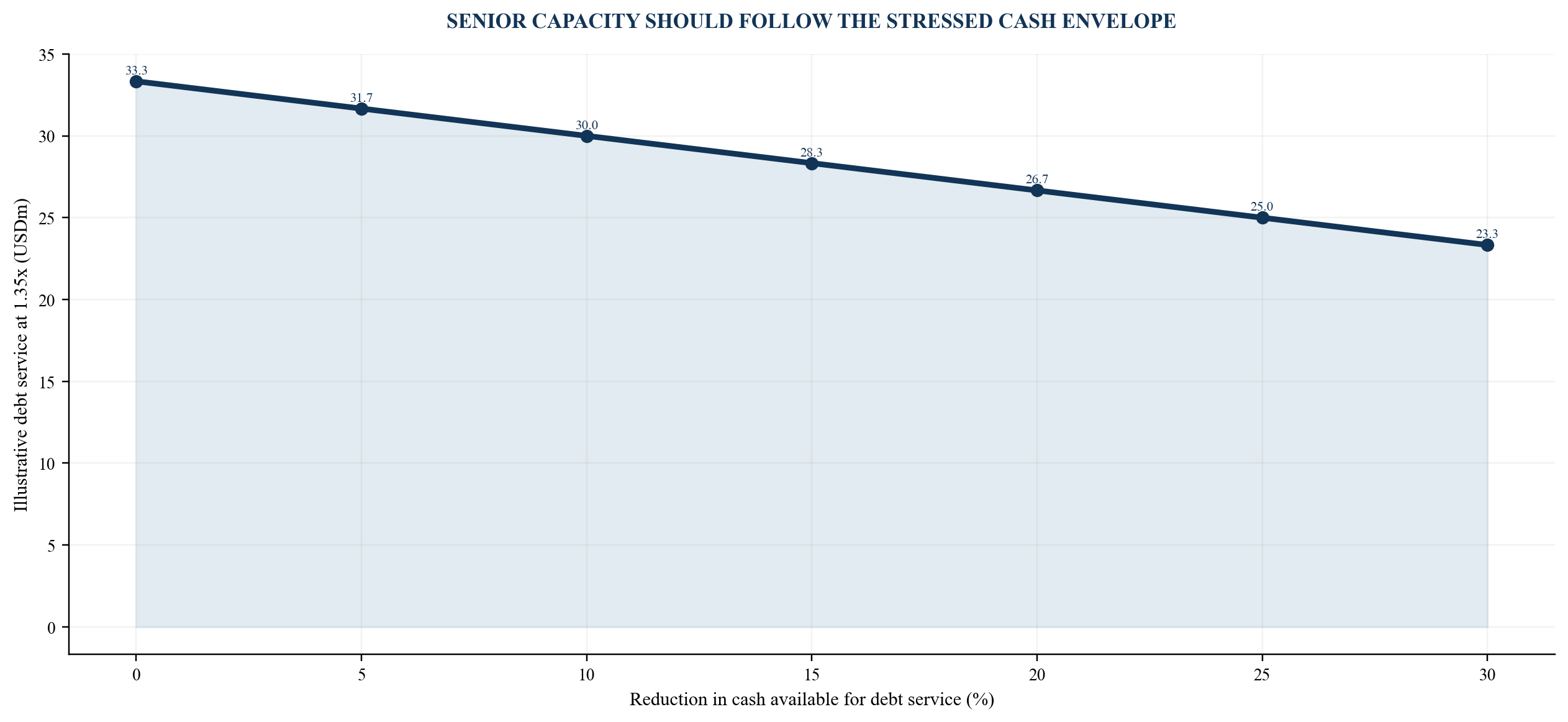
Values are conceptual management assumptions and exclude rating, legal and market constraints.
18. Build an investor-grade data room and reporting system
The data room should let an investor trace each cash-flow assertion to a contract, operating record, invoice, bank receipt and ledger. Core folders should include structure, legal opinions, asset perimeter, property, permits, utilities, customer contracts, billing, collections, operating costs, maintenance, lifecycle capital, insurance, resilience, tax, accounting, hedging, valuation, environmental information, model, offering materials and governance.
The disclosure workstream should begin before launch. In the EU, ESMA reporting uses prescribed templates for relevant securitisations. In the UK, FCA SECN contains transparency requirements. In the United States, Regulation AB and the chosen offering route determine disclosure and reporting. Private transactions still require accurate, complete and timely material information under their governing obligations.
Monthly reporting should reconcile beginning note balance, collections, permitted deductions, reserves, interest, principal, triggers and ending balance. It should also show customer concentration, expiry, occupancy, capacity, service credits, incidents, collections, delinquency, maintenance and capex. Changes in definitions should require controlled approval and restatement where material.
Sensitive customer, security and infrastructure data need access controls and redaction. Investors need enough information to understand risk without receiving operational detail that increases cyber or physical exposure. The issuer remains responsible for disclosure obligations even when reporting is outsourced.
19. Run a 180-day capital-markets take-out office
The first 30 days establish the mandate, perimeter and evidence gap. The team reconciles assets, contracts, capacity, invoices, collections, costs, property rights, permits, insurance, maintenance and existing debt. It defines objectives, walk-away conditions and the initial financing-route comparison.
Days 31 to 75 complete stability and structure design. Workstreams address customer terms, concentration, expiry, power recovery, lifecycle capital, asset transfer, security, SPV governance, accounts, servicing, operating continuity, tax, accounting and regulatory classification. Finance builds the contract-to-cash model and downside cases.
Days 76 to 120 prepare execution materials. The team selects arrangers and other advisers, opens the controlled data room, finalises the investor model, prepares disclosure, drafts the waterfall and reporting package, begins ratings work where applicable and closes material diligence gaps. The board approves the transaction envelope.
Days 121 to 180 support investor diligence, documents, hedging, consents, verification, pricing and closing. A launch occurs only when evidence supports the disclosure and the asset can operate under the proposed structure. The office should leave behind repeatable servicing, reporting, compliance and future-issuance processes.
20. Convert the framework into an accountable mandate
A paid mandate can begin with a fixed-scope securitisation-readiness diagnostic. Deliverables can include the stability gate, eligible perimeter, contract-to-cash data model, concentration and expiry analysis, lifecycle reserve, financing-route comparison, preliminary structure, investor evidence index, red-flag register and 180-day execution plan.
A second phase can coordinate the transaction: adviser selection, model and data room, structuring alternatives, management materials, investor questions, diligence tracking, rating-process support, consents, conditions and closing. Legal, regulatory, securities, tax, accounting, rating, engineering, cyber, environmental, insurance and valuation responsibilities remain with qualified appointed advisers.
A retained capital-markets office can maintain monthly evidence, trigger forecasts, investor reporting, lifecycle reserves and future issuance readiness after closing. Its value should be measured through accepted deliverables, controlled decisions, closed diligence items, financing milestones and collections under the engagement.
Commercial demand, mandate conversion, fee level and timing remain unverified until a client signs an engagement, invoices are issued and cash is collected. Advisory revenue remains zero until those events occur. The practical commercial test is whether a data-centre owner, sponsor, operator or lender authorises a paid readiness diagnostic and a defined execution mandate.
References
- International Energy Agency, Key Questions on Energy and AI, 16 April 2026, https://www.iea.org/reports/key-questions-on-energy-and-ai
- United States Securities and Exchange Commission, Asset-Backed Securities Corporation Finance Interpretations, updated 23 March 2026, https://www.sec.gov/rules-regulations/staff-guidance/corporation-finance-interpretations-cfis/asset-backed-securities
- United States Securities and Exchange Commission, Asset-Backed Securities Disclosure and Registration, Release 33-9638, September 2014, https://www.sec.gov/files/rules/final/2014/33-9638.pdf
- Digital Realty Trust, Inc., Form 10-K for the year ended 31 December 2025, https://www.sec.gov/Archives/edgar/data/1297996/000110465926015365/dlr-20251231x10k.htm
- DataBank, DataBank Raises USD 1.1 Billion in Hyperscale Asset Securitization, 24 September 2025, https://www.databank.com/resources/press-releases/databank-raises-1-1-billion-in-hyperscale-asset-securitization/
- Vantage Data Centers, Vantage Data Centers Raises USD 1.35 Billion in Securitized Notes for North American Platform, 5 October 2023, https://vantage-dc.com/news/vantage-data-centers-raises-usd1.35-billion-in-securitized-notes-for-north-american-platform
- STACK Infrastructure, STACK Infrastructure Closes USD 240 Million in Latest Green Structured Debt Financing, 21 March 2024, https://www.stackinfra.com/about/news-press/press-releases/stack-infrastructure-closes-240m-in-latest-green-structured-debt-financing/
- S&P Global Ratings, Global Data Center Securitizations Methodology and Assumptions, republished 21 August 2025, https://www.spglobal.com/ratings/en/regulatory/article/-/view/sourceId/13095954
- Basel Committee on Banking Supervision, CRE40 Securitisation: General Provisions, https://www.bis.org/basel_framework/chapter/CRE/40.htm
- European Union, Regulation (EU) 2017/2402 laying down a general framework for securitisation, 12 December 2017, https://eur-lex.europa.eu/eli/reg/2017/2402/oj
- European Securities and Markets Authority, Securitisation Disclosure Templates Reporting Instructions, https://www.esma.europa.eu/document/securitisation-disclosure-templates-reporting-instructions
- Financial Conduct Authority, Securitisation, updated 27 March 2026, https://www.fca.org.uk/markets/securitisation
- Financial Conduct Authority, Securitisation Sourcebook SECN, https://handbook.fca.org.uk/handbook/SECN/
- Central Bank of the UAE, Securitisation Standard, in force from 1 December 2022, https://rulebook.centralbank.ae/en/rulebook/viii-securitisation
- Reserve Bank of India, Reserve Bank of India Securitisation of Standard Assets Directions 2021, 24 September 2021, https://www.rbi.org.in/Scripts/NotificationUser.aspx?Id=12165
- Australian Prudential Regulation Authority, Prudential Standard APS 120 Securitisation, in force 1 January 2024, https://www.apra.gov.au/standards/aps-120
- IFRS Foundation, IFRS 9 Financial Instruments, https://www.ifrs.org/issued-standards/list-of-standards/ifrs-9-financial-instruments/
- IFRS Foundation, IFRS 16 Leases, https://www.ifrs.org/issued-standards/list-of-standards/ifrs-16-leases/
About the Author
Chennakeshav Adya, Independent Researcher
This research is provided for general information. It is not investment, legal, regulatory, securities, accounting, tax, rating, engineering, environmental, cyber, insurance or valuation advice. Issuers, sponsors, investors and lenders should obtain current advice from qualified professionals and conduct transaction-specific diligence.
