

1. Define the financing question
Translate acquisition value, integration risk and risk appetite into a repayable capital structure.
The acquisition financing team should reconcile investment case, purchase price, forecasts, financing market and approvals. Each conclusion records the accountable owner, source, assessment date, model version, evidence, cash consequence, covenant effect, control and unresolved exception. The immediate output is an acquisition-financing mandate.
Debt capacity must be proved through cash generation, liquidity and repayment outcomes across credible downside cases. Reviewers test earnings, working capital, capex, integration, interest, covenants, collateral and refinancing against native records and executed terms. The investment case, risk appetite, legal documents and governing law control every conclusion.
Material gaps require an owner, corrective action, model test, funding response, advice and decision date. Consequences flow through liquidity, leverage, coverage, collateral, refinancing, valuation and transaction timing. Residual risk remains visible until sources are committed, terms are executable, contingencies are credible and authorised governing bodies approve the next gate.
2. Map sources and uses
Reconcile consideration, fees, refinancing, working capital, capex, taxes, contingencies and minimum cash.
The acquisition financing team should reconcile purchase agreement, funds flow, balance sheet, forecasts and diligence. Each conclusion records the accountable owner, source, assessment date, model version, evidence, cash consequence, covenant effect, control and unresolved exception. The immediate output is a complete sources-and-uses statement.
Debt capacity must be proved through cash generation, liquidity and repayment outcomes across credible downside cases. Reviewers test earnings, working capital, capex, integration, interest, covenants, collateral and refinancing against native records and executed terms. The investment case, risk appetite, legal documents and governing law control every conclusion.
Material gaps require an owner, corrective action, model test, funding response, advice and decision date. Consequences flow through liquidity, leverage, coverage, collateral, refinancing, valuation and transaction timing. Residual risk remains visible until sources are committed, terms are executable, contingencies are credible and authorised governing bodies approve the next gate.
3. Establish evidence integrity
Preserve source, date, scope, version, owner and limitation for each financing conclusion.
The acquisition financing team should reconcile native financial records, contracts, models, diligence, workpapers and approvals. Each conclusion records the accountable owner, source, assessment date, model version, evidence, cash consequence, covenant effect, control and unresolved exception. The immediate output is a financing-evidence register.
Debt capacity must be proved through cash generation, liquidity and repayment outcomes across credible downside cases. Reviewers test earnings, working capital, capex, integration, interest, covenants, collateral and refinancing against native records and executed terms. The investment case, risk appetite, legal documents and governing law control every conclusion.
Material gaps require an owner, corrective action, model test, funding response, advice and decision date. Consequences flow through liquidity, leverage, coverage, collateral, refinancing, valuation and transaction timing. Residual risk remains visible until sources are committed, terms are executable, contingencies are credible and authorised governing bodies approve the next gate.
4. Normalise earnings
Build a sustainable cash-earnings base free from unsupported adjustments and double counting.
The acquisition financing team should reconcile ledgers, management accounts, audited statements, QoE and contracts. Each conclusion records the accountable owner, source, assessment date, model version, evidence, cash consequence, covenant effect, control and unresolved exception. The immediate output is a lender earnings bridge.
Debt capacity must be proved through cash generation, liquidity and repayment outcomes across credible downside cases. Reviewers test earnings, working capital, capex, integration, interest, covenants, collateral and refinancing against native records and executed terms. The investment case, risk appetite, legal documents and governing law control every conclusion.
Material gaps require an owner, corrective action, model test, funding response, advice and decision date. Consequences flow through liquidity, leverage, coverage, collateral, refinancing, valuation and transaction timing. Residual risk remains visible until sources are committed, terms are executable, contingencies are credible and authorised governing bodies approve the next gate.
5. Reconcile net debt
Identify borrowings, leases, supplier finance, guarantees, factoring and debt-like obligations.
The acquisition financing team should reconcile debt documents, confirmations, cash, leases, payables and legal analysis. Each conclusion records the accountable owner, source, assessment date, model version, evidence, cash consequence, covenant effect, control and unresolved exception. The immediate output is a net-debt schedule.
Debt capacity must be proved through cash generation, liquidity and repayment outcomes across credible downside cases. Reviewers test earnings, working capital, capex, integration, interest, covenants, collateral and refinancing against native records and executed terms. The investment case, risk appetite, legal documents and governing law control every conclusion.
Material gaps require an owner, corrective action, model test, funding response, advice and decision date. Consequences flow through liquidity, leverage, coverage, collateral, refinancing, valuation and transaction timing. Residual risk remains visible until sources are committed, terms are executable, contingencies are credible and authorised governing bodies approve the next gate.
6. Set the operating base case
Translate commercial drivers into revenue, margin, capex, working capital, tax and cash flow.
The acquisition financing team should reconcile business plan, customer and product data, operations and diligence. Each conclusion records the accountable owner, source, assessment date, model version, evidence, cash consequence, covenant effect, control and unresolved exception. The immediate output is an integrated operating forecast.
Debt capacity must be proved through cash generation, liquidity and repayment outcomes across credible downside cases. Reviewers test earnings, working capital, capex, integration, interest, covenants, collateral and refinancing against native records and executed terms. The investment case, risk appetite, legal documents and governing law control every conclusion.
Material gaps require an owner, corrective action, model test, funding response, advice and decision date. Consequences flow through liquidity, leverage, coverage, collateral, refinancing, valuation and transaction timing. Residual risk remains visible until sources are committed, terms are executable, contingencies are credible and authorised governing bodies approve the next gate.
7. Test synergy timing
Separate recurring, executable synergies from aspiration, cost and implementation delay.
The acquisition financing team should reconcile integration plan, owners, budgets, dependencies and benchmarks. Each conclusion records the accountable owner, source, assessment date, model version, evidence, cash consequence, covenant effect, control and unresolved exception. The immediate output is a synergy realisation schedule.
Debt capacity must be proved through cash generation, liquidity and repayment outcomes across credible downside cases. Reviewers test earnings, working capital, capex, integration, interest, covenants, collateral and refinancing against native records and executed terms. The investment case, risk appetite, legal documents and governing law control every conclusion.
Material gaps require an owner, corrective action, model test, funding response, advice and decision date. Consequences flow through liquidity, leverage, coverage, collateral, refinancing, valuation and transaction timing. Residual risk remains visible until sources are committed, terms are executable, contingencies are credible and authorised governing bodies approve the next gate.
8. Model integration cost
Capture one-off systems, people, facilities, advisers, restructuring and disruption cash needs.
The acquisition financing team should reconcile integration workstreams, contracts, estimates, precedents and contingencies. Each conclusion records the accountable owner, source, assessment date, model version, evidence, cash consequence, covenant effect, control and unresolved exception. The immediate output is an integration cash budget.
Debt capacity must be proved through cash generation, liquidity and repayment outcomes across credible downside cases. Reviewers test earnings, working capital, capex, integration, interest, covenants, collateral and refinancing against native records and executed terms. The investment case, risk appetite, legal documents and governing law control every conclusion.
Material gaps require an owner, corrective action, model test, funding response, advice and decision date. Consequences flow through liquidity, leverage, coverage, collateral, refinancing, valuation and transaction timing. Residual risk remains visible until sources are committed, terms are executable, contingencies are credible and authorised governing bodies approve the next gate.
Table 1. Acquisition cash architecture
| Layer | Primary evidence | Decision use |
|---|---|---|
| price | purchase agreement | uses |
| operations | cash forecast | capacity |
| integration | workstream budget | liquidity |
| financing | term sheets | sources |
Illustrative programme design; company-specific facts and authorised advice govern.
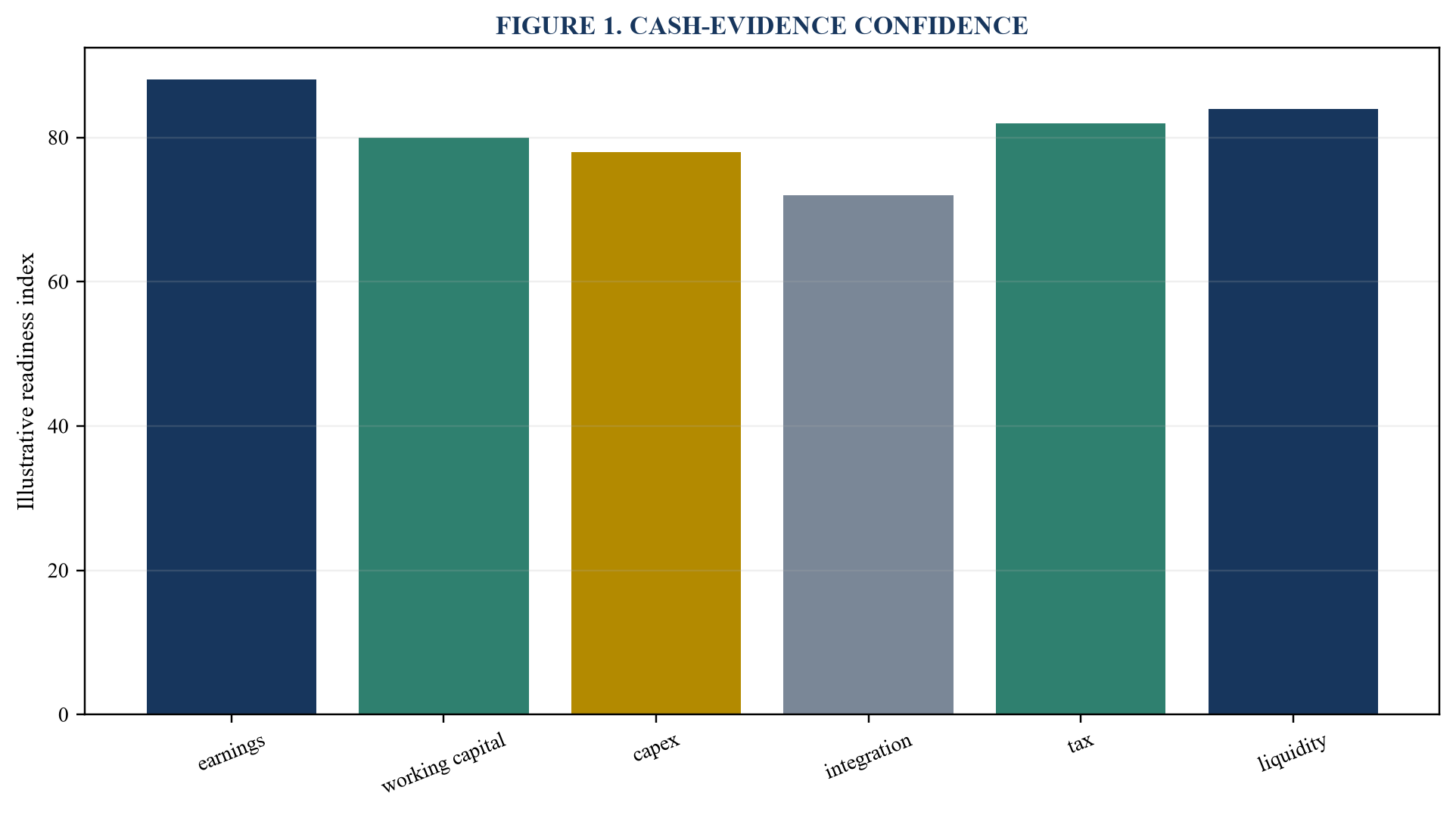
Values are illustrative readiness indices and require company-specific evidence.
9. Set minimum liquidity
Determine cash required for volatility, seasonality, disruption, capex, tax and restricted balances.
The acquisition financing team should reconcile daily cash, seasonality, working capital, covenants and treasury policy. Each conclusion records the accountable owner, source, assessment date, model version, evidence, cash consequence, covenant effect, control and unresolved exception. The immediate output is a minimum-liquidity reserve.
Debt capacity must be proved through cash generation, liquidity and repayment outcomes across credible downside cases. Reviewers test earnings, working capital, capex, integration, interest, covenants, collateral and refinancing against native records and executed terms. The investment case, risk appetite, legal documents and governing law control every conclusion.
Material gaps require an owner, corrective action, model test, funding response, advice and decision date. Consequences flow through liquidity, leverage, coverage, collateral, refinancing, valuation and transaction timing. Residual risk remains visible until sources are committed, terms are executable, contingencies are credible and authorised governing bodies approve the next gate.
10. Map the debt perimeter
Identify borrower, guarantors, security providers, restricted groups and structural subordination.
The acquisition financing team should reconcile corporate chart, debt documents, asset ownership and legal advice. Each conclusion records the accountable owner, source, assessment date, model version, evidence, cash consequence, covenant effect, control and unresolved exception. The immediate output is a financing perimeter map.
Debt capacity must be proved through cash generation, liquidity and repayment outcomes across credible downside cases. Reviewers test earnings, working capital, capex, integration, interest, covenants, collateral and refinancing against native records and executed terms. The investment case, risk appetite, legal documents and governing law control every conclusion.
Material gaps require an owner, corrective action, model test, funding response, advice and decision date. Consequences flow through liquidity, leverage, coverage, collateral, refinancing, valuation and transaction timing. Residual risk remains visible until sources are committed, terms are executable, contingencies are credible and authorised governing bodies approve the next gate.
11. Choose debt instruments
Match term debt, revolver, delayed draw, asset-backed, mezzanine and vendor finance to cash flows.
The acquisition financing team should reconcile cash profile, assets, market terms, maturity needs and risk appetite. Each conclusion records the accountable owner, source, assessment date, model version, evidence, cash consequence, covenant effect, control and unresolved exception. The immediate output is an instrument-selection matrix.
Debt capacity must be proved through cash generation, liquidity and repayment outcomes across credible downside cases. Reviewers test earnings, working capital, capex, integration, interest, covenants, collateral and refinancing against native records and executed terms. The investment case, risk appetite, legal documents and governing law control every conclusion.
Material gaps require an owner, corrective action, model test, funding response, advice and decision date. Consequences flow through liquidity, leverage, coverage, collateral, refinancing, valuation and transaction timing. Residual risk remains visible until sources are committed, terms are executable, contingencies are credible and authorised governing bodies approve the next gate.
12. Design amortisation
Align mandatory repayment with free cash flow, seasonality, capex and integration milestones.
The acquisition financing team should reconcile cash model, debt terms, operating cycle and downside cases. Each conclusion records the accountable owner, source, assessment date, model version, evidence, cash consequence, covenant effect, control and unresolved exception. The immediate output is an amortisation schedule.
Debt capacity must be proved through cash generation, liquidity and repayment outcomes across credible downside cases. Reviewers test earnings, working capital, capex, integration, interest, covenants, collateral and refinancing against native records and executed terms. The investment case, risk appetite, legal documents and governing law control every conclusion.
Material gaps require an owner, corrective action, model test, funding response, advice and decision date. Consequences flow through liquidity, leverage, coverage, collateral, refinancing, valuation and transaction timing. Residual risk remains visible until sources are committed, terms are executable, contingencies are credible and authorised governing bodies approve the next gate.
13. Model interest expense
Test benchmark, margin, floor, fees, PIK, hedging, compounding and cash timing.
The acquisition financing team should reconcile term sheets, curves, hedge quotes, tax and accounting advice. Each conclusion records the accountable owner, source, assessment date, model version, evidence, cash consequence, covenant effect, control and unresolved exception. The immediate output is an interest-cost bridge.
Debt capacity must be proved through cash generation, liquidity and repayment outcomes across credible downside cases. Reviewers test earnings, working capital, capex, integration, interest, covenants, collateral and refinancing against native records and executed terms. The investment case, risk appetite, legal documents and governing law control every conclusion.
Material gaps require an owner, corrective action, model test, funding response, advice and decision date. Consequences flow through liquidity, leverage, coverage, collateral, refinancing, valuation and transaction timing. Residual risk remains visible until sources are committed, terms are executable, contingencies are credible and authorised governing bodies approve the next gate.
14. Model foreign-exchange risk
Trace acquisition, debt-service and operating currency mismatches and hedge capacity.
The acquisition financing team should reconcile currency cash flows, debt terms, treasury policy and market data. Each conclusion records the accountable owner, source, assessment date, model version, evidence, cash consequence, covenant effect, control and unresolved exception. The immediate output is an FX debt-service stress.
Debt capacity must be proved through cash generation, liquidity and repayment outcomes across credible downside cases. Reviewers test earnings, working capital, capex, integration, interest, covenants, collateral and refinancing against native records and executed terms. The investment case, risk appetite, legal documents and governing law control every conclusion.
Material gaps require an owner, corrective action, model test, funding response, advice and decision date. Consequences flow through liquidity, leverage, coverage, collateral, refinancing, valuation and transaction timing. Residual risk remains visible until sources are committed, terms are executable, contingencies are credible and authorised governing bodies approve the next gate.
15. Model working-capital volatility
Connect receivables, inventory, payables and seasonality to revolver use and liquidity.
The acquisition financing team should reconcile monthly balances, ageing, orders, terms and operating forecasts. Each conclusion records the accountable owner, source, assessment date, model version, evidence, cash consequence, covenant effect, control and unresolved exception. The immediate output is a working-capital borrowing base.
Debt capacity must be proved through cash generation, liquidity and repayment outcomes across credible downside cases. Reviewers test earnings, working capital, capex, integration, interest, covenants, collateral and refinancing against native records and executed terms. The investment case, risk appetite, legal documents and governing law control every conclusion.
Material gaps require an owner, corrective action, model test, funding response, advice and decision date. Consequences flow through liquidity, leverage, coverage, collateral, refinancing, valuation and transaction timing. Residual risk remains visible until sources are committed, terms are executable, contingencies are credible and authorised governing bodies approve the next gate.
16. Model capex and maintenance
Separate growth, integration, committed and maintenance investment from discretionary spend.
The acquisition financing team should reconcile asset registers, budgets, contracts, operations and diligence. Each conclusion records the accountable owner, source, assessment date, model version, evidence, cash consequence, covenant effect, control and unresolved exception. The immediate output is a capex funding schedule.
Debt capacity must be proved through cash generation, liquidity and repayment outcomes across credible downside cases. Reviewers test earnings, working capital, capex, integration, interest, covenants, collateral and refinancing against native records and executed terms. The investment case, risk appetite, legal documents and governing law control every conclusion.
Material gaps require an owner, corrective action, model test, funding response, advice and decision date. Consequences flow through liquidity, leverage, coverage, collateral, refinancing, valuation and transaction timing. Residual risk remains visible until sources are committed, terms are executable, contingencies are credible and authorised governing bodies approve the next gate.
Table 2. Debt instrument map
| Instrument | Cash-flow fit | Primary control |
|---|---|---|
| term loan | stable recurring cash | amortisation |
| revolver | seasonal liquidity | availability |
| asset-backed | eligible collateral | borrowing base |
| mezzanine | back-ended capacity | return and PIK |
Illustrative programme design; company-specific facts and authorised advice govern.
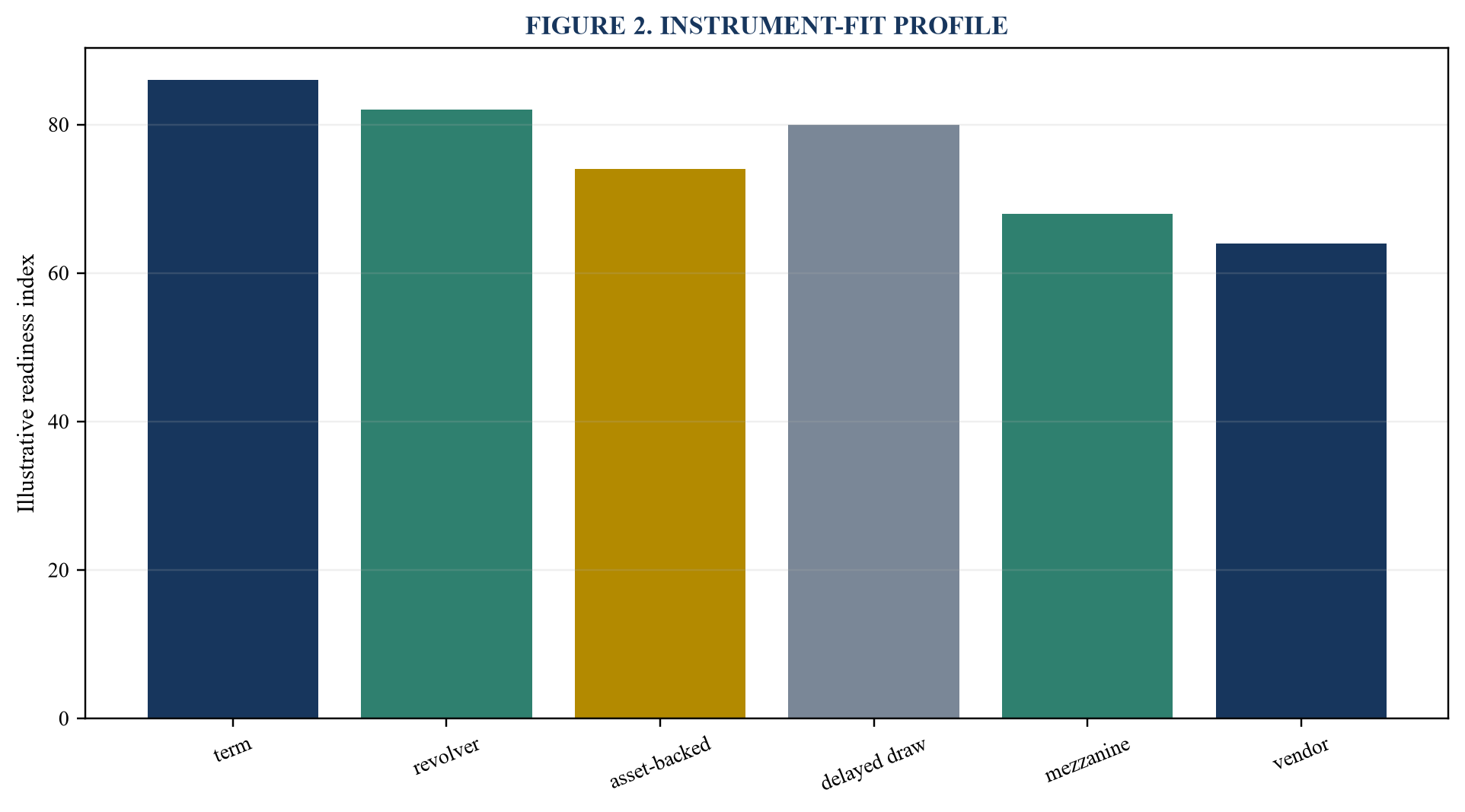
Values are illustrative readiness indices and require company-specific evidence.
17. Define covenant calculations
Translate legal definitions, baskets, add-backs, cure rights and testing dates into model logic.
The acquisition financing team should reconcile credit agreement, term sheet, forecasts and legal advice. Each conclusion records the accountable owner, source, assessment date, model version, evidence, cash consequence, covenant effect, control and unresolved exception. The immediate output is a covenant-definition book.
Debt capacity must be proved through cash generation, liquidity and repayment outcomes across credible downside cases. Reviewers test earnings, working capital, capex, integration, interest, covenants, collateral and refinancing against native records and executed terms. The investment case, risk appetite, legal documents and governing law control every conclusion.
Material gaps require an owner, corrective action, model test, funding response, advice and decision date. Consequences flow through liquidity, leverage, coverage, collateral, refinancing, valuation and transaction timing. Residual risk remains visible until sources are committed, terms are executable, contingencies are credible and authorised governing bodies approve the next gate.
18. Test leverage headroom
Measure gross, net, secured and first-lien leverage against definitions and thresholds.
The acquisition financing team should reconcile debt schedule, EBITDA bridge, cash, baskets and scenarios. Each conclusion records the accountable owner, source, assessment date, model version, evidence, cash consequence, covenant effect, control and unresolved exception. The immediate output is a leverage headroom model.
Debt capacity must be proved through cash generation, liquidity and repayment outcomes across credible downside cases. Reviewers test earnings, working capital, capex, integration, interest, covenants, collateral and refinancing against native records and executed terms. The investment case, risk appetite, legal documents and governing law control every conclusion.
Material gaps require an owner, corrective action, model test, funding response, advice and decision date. Consequences flow through liquidity, leverage, coverage, collateral, refinancing, valuation and transaction timing. Residual risk remains visible until sources are committed, terms are executable, contingencies are credible and authorised governing bodies approve the next gate.
19. Test interest coverage
Measure EBITDA, EBIT and cash-flow coverage under rate and earnings stress.
The acquisition financing team should reconcile operating forecast, interest bridge, hedges and covenant definitions. Each conclusion records the accountable owner, source, assessment date, model version, evidence, cash consequence, covenant effect, control and unresolved exception. The immediate output is a coverage headroom model.
Debt capacity must be proved through cash generation, liquidity and repayment outcomes across credible downside cases. Reviewers test earnings, working capital, capex, integration, interest, covenants, collateral and refinancing against native records and executed terms. The investment case, risk appetite, legal documents and governing law control every conclusion.
Material gaps require an owner, corrective action, model test, funding response, advice and decision date. Consequences flow through liquidity, leverage, coverage, collateral, refinancing, valuation and transaction timing. Residual risk remains visible until sources are committed, terms are executable, contingencies are credible and authorised governing bodies approve the next gate.
20. Test fixed-charge coverage
Include leases, tax, capex, amortisation and other mandatory cash commitments.
The acquisition financing team should reconcile cash forecast, leases, tax, capex and debt service. Each conclusion records the accountable owner, source, assessment date, model version, evidence, cash consequence, covenant effect, control and unresolved exception. The immediate output is a fixed-charge stress test.
Debt capacity must be proved through cash generation, liquidity and repayment outcomes across credible downside cases. Reviewers test earnings, working capital, capex, integration, interest, covenants, collateral and refinancing against native records and executed terms. The investment case, risk appetite, legal documents and governing law control every conclusion.
Material gaps require an owner, corrective action, model test, funding response, advice and decision date. Consequences flow through liquidity, leverage, coverage, collateral, refinancing, valuation and transaction timing. Residual risk remains visible until sources are committed, terms are executable, contingencies are credible and authorised governing bodies approve the next gate.
21. Test liquidity headroom
Measure unrestricted cash, revolver availability, borrowing-base limits and trapped cash.
The acquisition financing team should reconcile cash model, facilities, security, jurisdictions and treasury controls. Each conclusion records the accountable owner, source, assessment date, model version, evidence, cash consequence, covenant effect, control and unresolved exception. The immediate output is a liquidity headroom bridge.
Debt capacity must be proved through cash generation, liquidity and repayment outcomes across credible downside cases. Reviewers test earnings, working capital, capex, integration, interest, covenants, collateral and refinancing against native records and executed terms. The investment case, risk appetite, legal documents and governing law control every conclusion.
Material gaps require an owner, corrective action, model test, funding response, advice and decision date. Consequences flow through liquidity, leverage, coverage, collateral, refinancing, valuation and transaction timing. Residual risk remains visible until sources are committed, terms are executable, contingencies are credible and authorised governing bodies approve the next gate.
22. Build the downside architecture
Define integrated revenue, margin, working-capital, capex, rate, FX and timing stresses.
The acquisition financing team should reconcile diligence findings, history, market evidence and risk appetite. Each conclusion records the accountable owner, source, assessment date, model version, evidence, cash consequence, covenant effect, control and unresolved exception. The immediate output is a downside scenario library.
Debt capacity must be proved through cash generation, liquidity and repayment outcomes across credible downside cases. Reviewers test earnings, working capital, capex, integration, interest, covenants, collateral and refinancing against native records and executed terms. The investment case, risk appetite, legal documents and governing law control every conclusion.
Material gaps require an owner, corrective action, model test, funding response, advice and decision date. Consequences flow through liquidity, leverage, coverage, collateral, refinancing, valuation and transaction timing. Residual risk remains visible until sources are committed, terms are executable, contingencies are credible and authorised governing bodies approve the next gate.
23. Run break-even analysis
Find the operating and integration shocks that exhaust liquidity or breach each covenant.
The acquisition financing team should reconcile integrated model, covenant logic, revolver and scenario solver. Each conclusion records the accountable owner, source, assessment date, model version, evidence, cash consequence, covenant effect, control and unresolved exception. The immediate output is a financing break-even map.
Debt capacity must be proved through cash generation, liquidity and repayment outcomes across credible downside cases. Reviewers test earnings, working capital, capex, integration, interest, covenants, collateral and refinancing against native records and executed terms. The investment case, risk appetite, legal documents and governing law control every conclusion.
Material gaps require an owner, corrective action, model test, funding response, advice and decision date. Consequences flow through liquidity, leverage, coverage, collateral, refinancing, valuation and transaction timing. Residual risk remains visible until sources are committed, terms are executable, contingencies are credible and authorised governing bodies approve the next gate.
24. Run reverse stress tests
Work backwards from default, covenant breach and minimum-cash failure to causal combinations.
The acquisition financing team should reconcile failure thresholds, model drivers, correlations and controls. Each conclusion records the accountable owner, source, assessment date, model version, evidence, cash consequence, covenant effect, control and unresolved exception. The immediate output is a reverse-stress register.
Debt capacity must be proved through cash generation, liquidity and repayment outcomes across credible downside cases. Reviewers test earnings, working capital, capex, integration, interest, covenants, collateral and refinancing against native records and executed terms. The investment case, risk appetite, legal documents and governing law control every conclusion.
Material gaps require an owner, corrective action, model test, funding response, advice and decision date. Consequences flow through liquidity, leverage, coverage, collateral, refinancing, valuation and transaction timing. Residual risk remains visible until sources are committed, terms are executable, contingencies are credible and authorised governing bodies approve the next gate.
Table 3. Downside stress library
| Stress | Transmission | Headroom effect |
|---|---|---|
| revenue | lower contribution | coverage |
| margin | cash earnings compression | leverage |
| working capital | cash absorption | liquidity |
| delay | later synergy and cost | all metrics |
Illustrative programme design; company-specific facts and authorised advice govern.
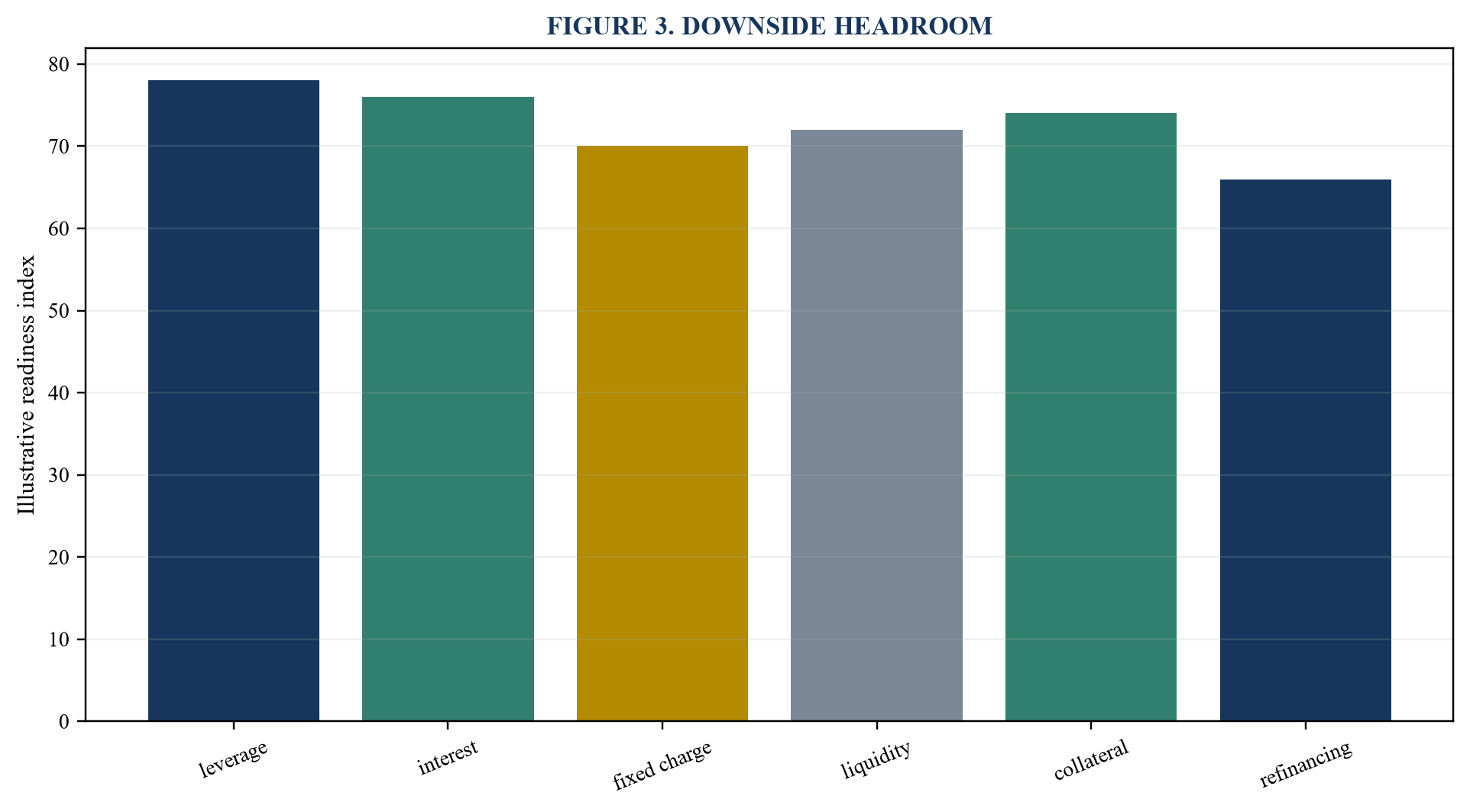
Values are illustrative readiness indices and require company-specific evidence.
25. Test refinancing risk
Assess maturity, bullet exposure, market access, enterprise value and required deleveraging.
The acquisition financing team should reconcile maturity profile, cash flow, market conditions and lender evidence. Each conclusion records the accountable owner, source, assessment date, model version, evidence, cash consequence, covenant effect, control and unresolved exception. The immediate output is a refinancing-capacity assessment.
Debt capacity must be proved through cash generation, liquidity and repayment outcomes across credible downside cases. Reviewers test earnings, working capital, capex, integration, interest, covenants, collateral and refinancing against native records and executed terms. The investment case, risk appetite, legal documents and governing law control every conclusion.
Material gaps require an owner, corrective action, model test, funding response, advice and decision date. Consequences flow through liquidity, leverage, coverage, collateral, refinancing, valuation and transaction timing. Residual risk remains visible until sources are committed, terms are executable, contingencies are credible and authorised governing bodies approve the next gate.
26. Test enterprise-value support
Validate valuation under stressed cash flows, multiples, asset values and realisation costs.
The acquisition financing team should reconcile valuation model, market evidence, collateral and downside cases. Each conclusion records the accountable owner, source, assessment date, model version, evidence, cash consequence, covenant effect, control and unresolved exception. The immediate output is a stressed value-support model.
Debt capacity must be proved through cash generation, liquidity and repayment outcomes across credible downside cases. Reviewers test earnings, working capital, capex, integration, interest, covenants, collateral and refinancing against native records and executed terms. The investment case, risk appetite, legal documents and governing law control every conclusion.
Material gaps require an owner, corrective action, model test, funding response, advice and decision date. Consequences flow through liquidity, leverage, coverage, collateral, refinancing, valuation and transaction timing. Residual risk remains visible until sources are committed, terms are executable, contingencies are credible and authorised governing bodies approve the next gate.
27. Test collateral coverage
Assess eligibility, perfection, priority, valuation, volatility and realisation across assets.
The acquisition financing team should reconcile asset registers, appraisals, security documents and legal advice. Each conclusion records the accountable owner, source, assessment date, model version, evidence, cash consequence, covenant effect, control and unresolved exception. The immediate output is a collateral coverage schedule.
Debt capacity must be proved through cash generation, liquidity and repayment outcomes across credible downside cases. Reviewers test earnings, working capital, capex, integration, interest, covenants, collateral and refinancing against native records and executed terms. The investment case, risk appetite, legal documents and governing law control every conclusion.
Material gaps require an owner, corrective action, model test, funding response, advice and decision date. Consequences flow through liquidity, leverage, coverage, collateral, refinancing, valuation and transaction timing. Residual risk remains visible until sources are committed, terms are executable, contingencies are credible and authorised governing bodies approve the next gate.
28. Test distributions and leakage
Model dividends, acquisitions, investments, debt incurrence, transfers and restricted payments.
The acquisition financing team should reconcile credit agreement, group structure, forecast and legal analysis. Each conclusion records the accountable owner, source, assessment date, model version, evidence, cash consequence, covenant effect, control and unresolved exception. The immediate output is a covenant leakage map.
Debt capacity must be proved through cash generation, liquidity and repayment outcomes across credible downside cases. Reviewers test earnings, working capital, capex, integration, interest, covenants, collateral and refinancing against native records and executed terms. The investment case, risk appetite, legal documents and governing law control every conclusion.
Material gaps require an owner, corrective action, model test, funding response, advice and decision date. Consequences flow through liquidity, leverage, coverage, collateral, refinancing, valuation and transaction timing. Residual risk remains visible until sources are committed, terms are executable, contingencies are credible and authorised governing bodies approve the next gate.
29. Test cure and waiver mechanics
Assess equity cures, deemed cures, testing, repeated use, lender consent and disclosure.
The acquisition financing team should reconcile credit documents, sponsor capacity, governance and legal advice. Each conclusion records the accountable owner, source, assessment date, model version, evidence, cash consequence, covenant effect, control and unresolved exception. The immediate output is a covenant-remedy matrix.
Debt capacity must be proved through cash generation, liquidity and repayment outcomes across credible downside cases. Reviewers test earnings, working capital, capex, integration, interest, covenants, collateral and refinancing against native records and executed terms. The investment case, risk appetite, legal documents and governing law control every conclusion.
Material gaps require an owner, corrective action, model test, funding response, advice and decision date. Consequences flow through liquidity, leverage, coverage, collateral, refinancing, valuation and transaction timing. Residual risk remains visible until sources are committed, terms are executable, contingencies are credible and authorised governing bodies approve the next gate.
30. Test change-of-control interactions
Identify mandatory prepayment, consent, portability, ratings and hedge consequences.
The acquisition financing team should reconcile existing debt, acquisition terms, hedges, ratings and legal advice. Each conclusion records the accountable owner, source, assessment date, model version, evidence, cash consequence, covenant effect, control and unresolved exception. The immediate output is a change-of-control schedule.
Debt capacity must be proved through cash generation, liquidity and repayment outcomes across credible downside cases. Reviewers test earnings, working capital, capex, integration, interest, covenants, collateral and refinancing against native records and executed terms. The investment case, risk appetite, legal documents and governing law control every conclusion.
Material gaps require an owner, corrective action, model test, funding response, advice and decision date. Consequences flow through liquidity, leverage, coverage, collateral, refinancing, valuation and transaction timing. Residual risk remains visible until sources are committed, terms are executable, contingencies are credible and authorised governing bodies approve the next gate.
31. Allocate risk in documents
Convert model findings into pricing, covenant, condition, security, guarantee and information terms.
The acquisition financing team should reconcile risk register, term sheets, legal drafting and negotiation. Each conclusion records the accountable owner, source, assessment date, model version, evidence, cash consequence, covenant effect, control and unresolved exception. The immediate output is a financing protections matrix.
Debt capacity must be proved through cash generation, liquidity and repayment outcomes across credible downside cases. Reviewers test earnings, working capital, capex, integration, interest, covenants, collateral and refinancing against native records and executed terms. The investment case, risk appetite, legal documents and governing law control every conclusion.
Material gaps require an owner, corrective action, model test, funding response, advice and decision date. Consequences flow through liquidity, leverage, coverage, collateral, refinancing, valuation and transaction timing. Residual risk remains visible until sources are committed, terms are executable, contingencies are credible and authorised governing bodies approve the next gate.
32. Plan financing conditions
Sequence approvals, diligence, KYC, security, funds flow, hedging and evidence to closing.
The acquisition financing team should reconcile condition precedent list, owners, documents and transaction timetable. Each conclusion records the accountable owner, source, assessment date, model version, evidence, cash consequence, covenant effect, control and unresolved exception. The immediate output is a financing closing plan.
Debt capacity must be proved through cash generation, liquidity and repayment outcomes across credible downside cases. Reviewers test earnings, working capital, capex, integration, interest, covenants, collateral and refinancing against native records and executed terms. The investment case, risk appetite, legal documents and governing law control every conclusion.
Material gaps require an owner, corrective action, model test, funding response, advice and decision date. Consequences flow through liquidity, leverage, coverage, collateral, refinancing, valuation and transaction timing. Residual risk remains visible until sources are committed, terms are executable, contingencies are credible and authorised governing bodies approve the next gate.
Table 4. Financing protection map
| Risk | Term response | Operating response |
|---|---|---|
| thin headroom | lower debt or covenant | cash actions |
| integration delay | reserve or delayed draw | milestone control |
| value erosion | security and reporting | deleveraging |
| maturity wall | tenor and amortisation | refinancing plan |
Illustrative programme design; company-specific facts and authorised advice govern.
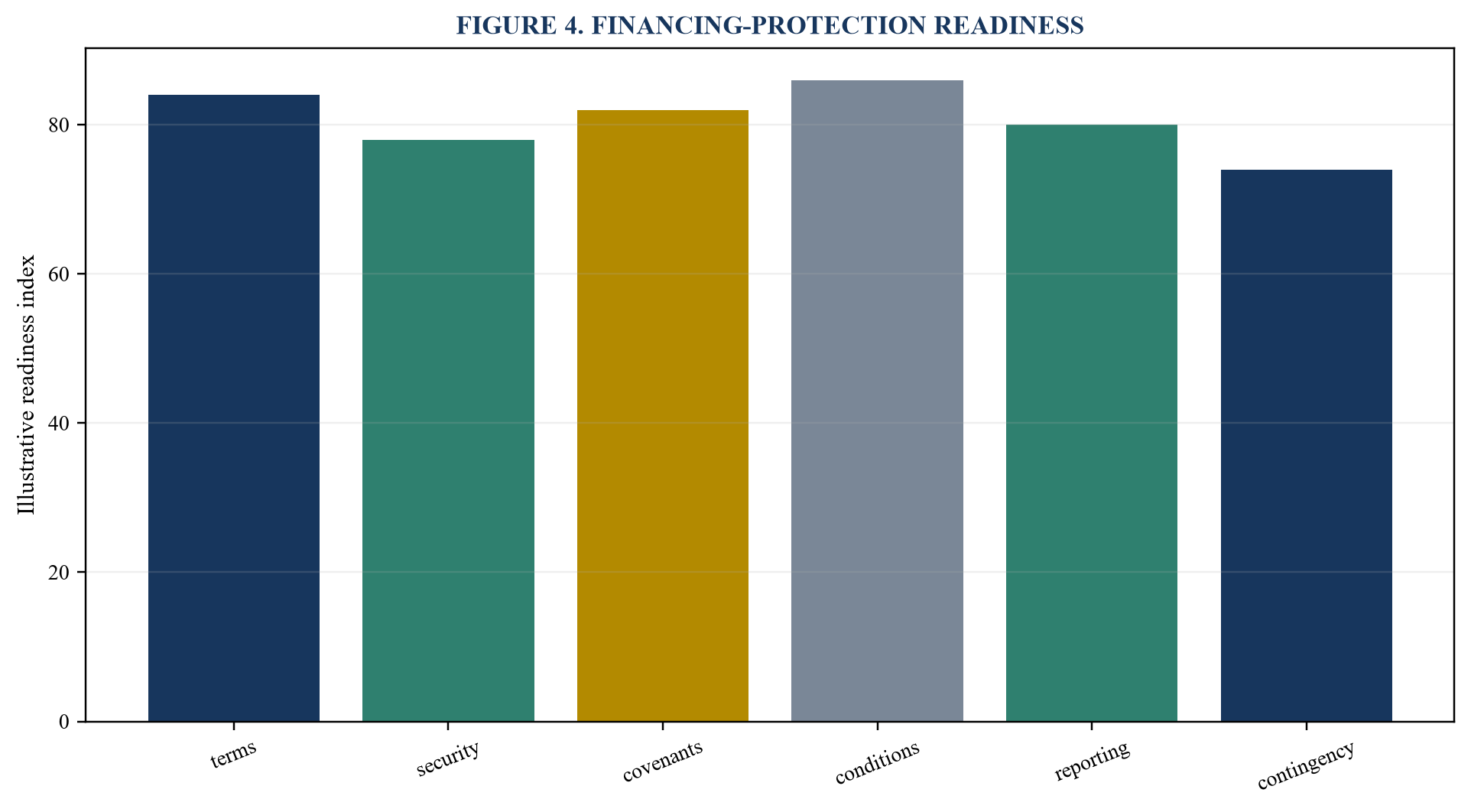
Values are illustrative readiness indices and require company-specific evidence.
33. Plan Day One liquidity
Confirm accounts, signatories, cash visibility, facilities, payment authority and contingency funding.
The acquisition financing team should reconcile treasury plan, systems, mandates, facilities and testing. Each conclusion records the accountable owner, source, assessment date, model version, evidence, cash consequence, covenant effect, control and unresolved exception. The immediate output is a Day-One treasury control plan.
Debt capacity must be proved through cash generation, liquidity and repayment outcomes across credible downside cases. Reviewers test earnings, working capital, capex, integration, interest, covenants, collateral and refinancing against native records and executed terms. The investment case, risk appetite, legal documents and governing law control every conclusion.
Material gaps require an owner, corrective action, model test, funding response, advice and decision date. Consequences flow through liquidity, leverage, coverage, collateral, refinancing, valuation and transaction timing. Residual risk remains visible until sources are committed, terms are executable, contingencies are credible and authorised governing bodies approve the next gate.
34. Plan the first hundred days
Sequence integration cash, covenant reporting, synergies, working capital and lender engagement.
The acquisition financing team should reconcile operating plan, financing model, owners, milestones and dashboards. Each conclusion records the accountable owner, source, assessment date, model version, evidence, cash consequence, covenant effect, control and unresolved exception. The immediate output is a debt-protection roadmap.
Debt capacity must be proved through cash generation, liquidity and repayment outcomes across credible downside cases. Reviewers test earnings, working capital, capex, integration, interest, covenants, collateral and refinancing against native records and executed terms. The investment case, risk appetite, legal documents and governing law control every conclusion.
Material gaps require an owner, corrective action, model test, funding response, advice and decision date. Consequences flow through liquidity, leverage, coverage, collateral, refinancing, valuation and transaction timing. Residual risk remains visible until sources are committed, terms are executable, contingencies are credible and authorised governing bodies approve the next gate.
35. Build covenant reporting
Reconcile actuals, definitions, compliance certificates, forecasts and early-warning indicators.
The acquisition financing team should reconcile ledger, debt documents, management reporting and controls. Each conclusion records the accountable owner, source, assessment date, model version, evidence, cash consequence, covenant effect, control and unresolved exception. The immediate output is a covenant reporting pack.
Debt capacity must be proved through cash generation, liquidity and repayment outcomes across credible downside cases. Reviewers test earnings, working capital, capex, integration, interest, covenants, collateral and refinancing against native records and executed terms. The investment case, risk appetite, legal documents and governing law control every conclusion.
Material gaps require an owner, corrective action, model test, funding response, advice and decision date. Consequences flow through liquidity, leverage, coverage, collateral, refinancing, valuation and transaction timing. Residual risk remains visible until sources are committed, terms are executable, contingencies are credible and authorised governing bodies approve the next gate.
36. Define early-warning triggers
Set thresholds for trading variance, cash burn, headroom, delayed synergies and refinancing.
The acquisition financing team should reconcile risk appetite, downside model, liquidity and governance. Each conclusion records the accountable owner, source, assessment date, model version, evidence, cash consequence, covenant effect, control and unresolved exception. The immediate output is a financing intervention matrix.
Debt capacity must be proved through cash generation, liquidity and repayment outcomes across credible downside cases. Reviewers test earnings, working capital, capex, integration, interest, covenants, collateral and refinancing against native records and executed terms. The investment case, risk appetite, legal documents and governing law control every conclusion.
Material gaps require an owner, corrective action, model test, funding response, advice and decision date. Consequences flow through liquidity, leverage, coverage, collateral, refinancing, valuation and transaction timing. Residual risk remains visible until sources are committed, terms are executable, contingencies are credible and authorised governing bodies approve the next gate.
37. Prepare contingency actions
Pre-authorise cost, capex, working-capital, asset-sale, equity and lender options.
The acquisition financing team should reconcile action plans, feasibility, lead times, approvals and scenarios. Each conclusion records the accountable owner, source, assessment date, model version, evidence, cash consequence, covenant effect, control and unresolved exception. The immediate output is a liquidity contingency ladder.
Debt capacity must be proved through cash generation, liquidity and repayment outcomes across credible downside cases. Reviewers test earnings, working capital, capex, integration, interest, covenants, collateral and refinancing against native records and executed terms. The investment case, risk appetite, legal documents and governing law control every conclusion.
Material gaps require an owner, corrective action, model test, funding response, advice and decision date. Consequences flow through liquidity, leverage, coverage, collateral, refinancing, valuation and transaction timing. Residual risk remains visible until sources are committed, terms are executable, contingencies are credible and authorised governing bodies approve the next gate.
38. Govern model risk
Control formulas, assumptions, versions, access, independent review and change approval.
The acquisition financing team should reconcile model inventory, audit trail, tests, policies and sign-off. Each conclusion records the accountable owner, source, assessment date, model version, evidence, cash consequence, covenant effect, control and unresolved exception. The immediate output is a financing model-control file.
Debt capacity must be proved through cash generation, liquidity and repayment outcomes across credible downside cases. Reviewers test earnings, working capital, capex, integration, interest, covenants, collateral and refinancing against native records and executed terms. The investment case, risk appetite, legal documents and governing law control every conclusion.
Material gaps require an owner, corrective action, model test, funding response, advice and decision date. Consequences flow through liquidity, leverage, coverage, collateral, refinancing, valuation and transaction timing. Residual risk remains visible until sources are committed, terms are executable, contingencies are credible and authorised governing bodies approve the next gate.
39. Monitor value and deleveraging
Track cash conversion, leverage, coverage, liquidity, integration and debt reduction.
The acquisition financing team should reconcile actuals, forecasts, covenants, lender reports and board packs. Each conclusion records the accountable owner, source, assessment date, model version, evidence, cash consequence, covenant effect, control and unresolved exception. The immediate output is a deleveraging control dashboard.
Debt capacity must be proved through cash generation, liquidity and repayment outcomes across credible downside cases. Reviewers test earnings, working capital, capex, integration, interest, covenants, collateral and refinancing against native records and executed terms. The investment case, risk appetite, legal documents and governing law control every conclusion.
Material gaps require an owner, corrective action, model test, funding response, advice and decision date. Consequences flow through liquidity, leverage, coverage, collateral, refinancing, valuation and transaction timing. Residual risk remains visible until sources are committed, terms are executable, contingencies are credible and authorised governing bodies approve the next gate.
40. Issue the financing conclusion
State affordable debt, instrument mix, headroom, protections, conditions and contingency capacity.
The acquisition financing team should reconcile reconciled evidence, models, terms, advice and approvals. Each conclusion records the accountable owner, source, assessment date, model version, evidence, cash consequence, covenant effect, control and unresolved exception. The immediate output is an acquisition-financing certificate.
Debt capacity must be proved through cash generation, liquidity and repayment outcomes across credible downside cases. Reviewers test earnings, working capital, capex, integration, interest, covenants, collateral and refinancing against native records and executed terms. The investment case, risk appetite, legal documents and governing law control every conclusion.
Material gaps require an owner, corrective action, model test, funding response, advice and decision date. Consequences flow through liquidity, leverage, coverage, collateral, refinancing, valuation and transaction timing. Residual risk remains visible until sources are committed, terms are executable, contingencies are credible and authorised governing bodies approve the next gate.
Table 5. Acquisition-financing certificate
| Dimension | Required conclusion | Evidence |
|---|---|---|
| capacity | repayable downside debt | cash model |
| liquidity | funded minimum cash | headroom bridge |
| covenants | tested definitions | compliance model |
| contingency | executable actions | approved ladder |
Illustrative programme design; company-specific facts and authorised advice govern.
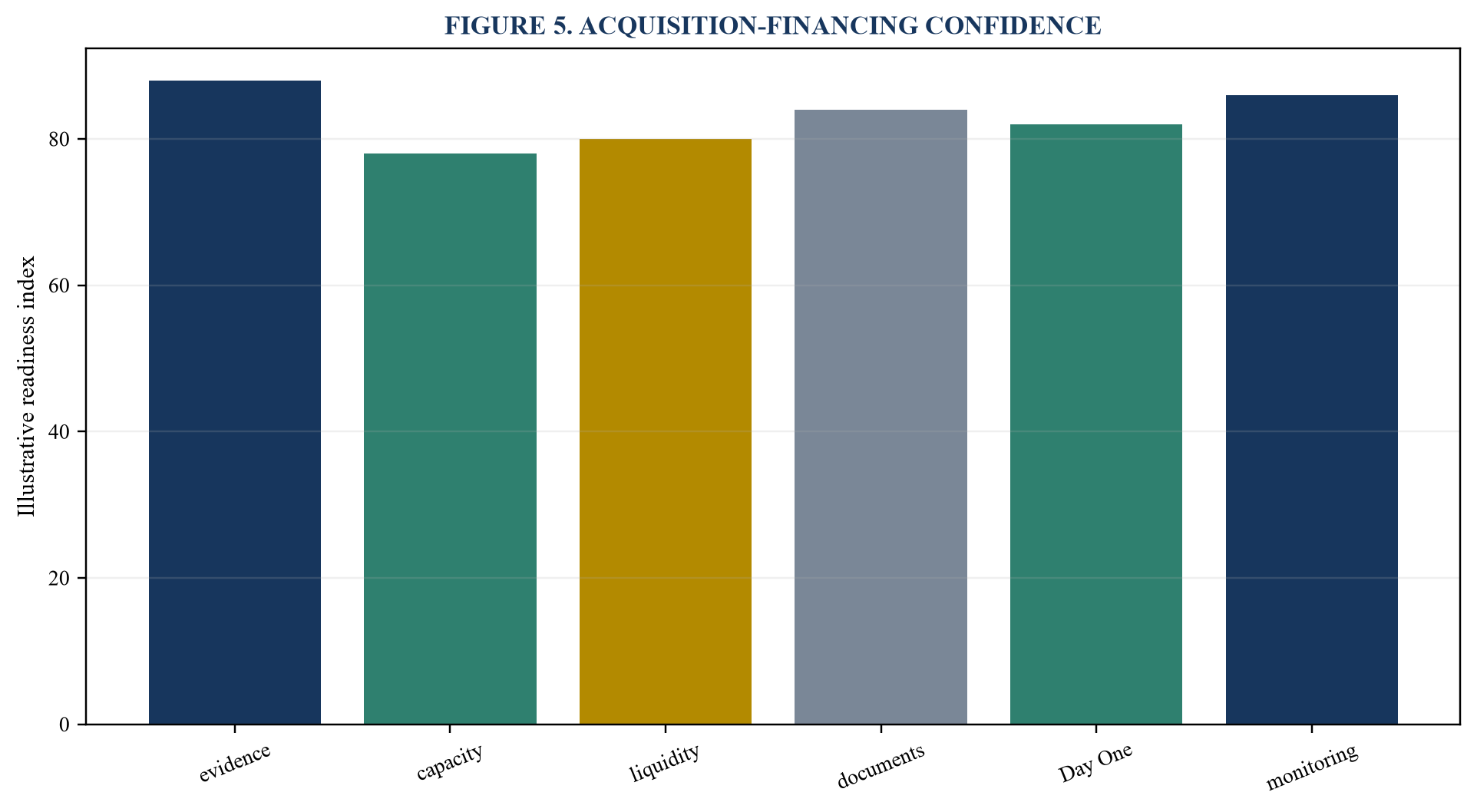
Values are illustrative readiness indices and require company-specific evidence.
References
- Board of Governors of the Federal Reserve System, Interagency Guidance on Leveraged Lending, https://www.federalreserve.gov/frrs/guidance/interagency-guidance-on-leveraged-lending.htm
- Board of Governors of the Federal Reserve System, Frequently Asked Questions for Implementing Interagency Guidance on Leveraged Lending, https://www.federalreserve.gov/frrs/guidance/frequently-asked-questions-for-implementing-interagency-guidance-on-leveraged-lending.htm
- Office of the Comptroller of the Currency, Comptroller's Handbook: Leveraged Lending, https://www.occ.treas.gov/publications-and-resources/publications/comptrollers-handbook/files/leveraged-lending/index-leveraged-lending.html
- European Central Bank Banking Supervision, Guidance on leveraged transactions, https://www.bankingsupervision.europa.eu/ecb/pub/pdf/ssm.leveraged_transactions_guidance_201705.en.pdf
- European Banking Authority, Guidelines on loan origination and monitoring, https://www.eba.europa.eu/regulation-and-policy/credit-risk/guidelines-loan-origination-and-monitoring
- Bank for International Settlements, Margins debt capacity and systemic risk, https://www.bis.org/publ/work1121.htm
- Basel Committee on Banking Supervision, Principles for the management of credit risk, https://www.bis.org/bcbs/publ/d591.htm
- Financial Stability Board, Liquidity preparedness for margin and collateral calls, https://www.fsb.org/2024/12/liquidity-preparedness-for-margin-and-collateral-calls/
- IFRS Foundation, IFRS 7 Financial Instruments Disclosures, https://www.ifrs.org/issued-standards/list-of-standards/ifrs-7-financial-instruments-disclosures/
- IFRS Foundation, IFRS 9 Financial Instruments, https://www.ifrs.org/issued-standards/list-of-standards/ifrs-9-financial-instruments/
- IFRS Foundation, IAS 1 Presentation of Financial Statements, https://www.ifrs.org/issued-standards/list-of-standards/ias-1-presentation-of-financial-statements/
- IFRS Foundation, IAS 7 Statement of Cash Flows, https://www.ifrs.org/issued-standards/list-of-standards/ias-7-statement-of-cash-flows/
- IFRS Foundation, IAS 1 Non-current Liabilities with Covenants, https://www.ifrs.org/projects/completed-projects/2022/non-current-liabilities-with-covenants/
- IFRS Foundation, Supplier Finance Arrangements amendments to IAS 7 and IFRS 7, https://www.ifrs.org/projects/completed-projects/2023/supplier-finance-arrangements/
- IFRS Foundation, IFRS 3 Business Combinations, https://www.ifrs.org/issued-standards/list-of-standards/ifrs-3-business-combinations/
- IFRS Foundation, IFRS 16 Leases, https://www.ifrs.org/issued-standards/list-of-standards/ifrs-16-leases/
- IFRS Foundation, IAS 36 Impairment of Assets, https://www.ifrs.org/issued-standards/list-of-standards/ias-36-impairment-of-assets/
- Financial Accounting Standards Board, Debt Topic 470, https://asc.fasb.org/topic&trid=2127358
- Financial Accounting Standards Board, Business Combinations Topic 805, https://asc.fasb.org/topic&trid=2127482
- International Valuation Standards Council, IVS 200 Businesses and Business Interests, https://www.ivsc.org/standards/
- International Valuation Standards Council, IVS 105 Valuation Models, https://www.ivsc.org/standards/
- US Securities and Exchange Commission, Financial Reporting Manual debt and liquidity guidance, https://www.sec.gov/corpfin/cf-manual
- US Securities and Exchange Commission, Commission Guidance Regarding Management's Discussion and Analysis of Financial Condition and Results of Operations, https://www.sec.gov/rules/interp/33-8350.htm
- International Swaps and Derivatives Association, Interest Rate and Currency Derivative Definitions, https://www.isda.org/book/2021-isda-interest-rate-derivatives-definitions/
- Loan Market Association, Sustainability Linked Loan Principles, https://www.lma.eu.com/application/files/3717/4256/3224/Sustainability-Linked_Loan_Principles_26_March_2025.pdf
- OECD, Principles of Corporate Governance, https://www.oecd.org/corporate/principles-corporate-governance/
