

1. Define the portfolio decision
Set the family, ownership perimeter, decision horizon, currencies, materiality, risk capacity, decision rights and required outcomes.
The controlled record includes family; owner; entity; horizon; currency; threshold; authority; outcome. The immediate deliverable is an approved portfolio-review charter. The record should preserve sources, periods, entities, currencies, adjustments, reviewers and unresolved exceptions.
The principal failure occurs when the review begins as a reporting exercise without an explicit capital or ownership decision. Reviewers should reconstruct the underlying evidence, challenge allocations and management explanations, test downside consequences and identify who has authority to approve the conclusion and its implementation.
A GCC family-group review should preserve legal-entity reality. Ownership, authority, cash, debt, licences and tax consequences can differ materially from management presentation and consolidated reporting.
The decision pack for define the portfolio decision should show the current baseline, correction from the prior view, value or risk at stake, alternatives considered, named owner, resources, decision date and next evidence gate. Progress should be measured through completed actions and observed cash or operating outcomes.
2. Map the legal-entity perimeter
Reconcile operating companies, holding vehicles, branches, foundations, trusts, partnerships, joint ventures, minority interests and dormant entities.
The controlled record includes entity; jurisdiction; purpose; owner; control; activity; status; source. The immediate deliverable is a source-linked legal-entity map. The record should preserve sources, periods, entities, currencies, adjustments, reviewers and unresolved exceptions.
The principal failure occurs when management groupings conceal the legal entities that own assets, incur liabilities and receive cash. Reviewers should reconstruct the underlying evidence, challenge allocations and management explanations, test downside consequences and identify who has authority to approve the conclusion and its implementation.
AI can accelerate extraction, reconciliation, entity resolution, scenario analysis and exception detection over approved records. Accountable family and corporate bodies retain authority for assumptions, interpretation, capital commitments and external actions.
The decision pack for map the legal-entity perimeter should show the current baseline, correction from the prior view, value or risk at stake, alternatives considered, named owner, resources, decision date and next evidence gate. Progress should be measured through completed actions and observed cash or operating outcomes.
3. Reconstruct ownership and control
Connect legal title, beneficial ownership, voting rights, economic rights, pledges, options, reserved matters, nominees and informal influence.
The controlled record includes holder; entity; interest; vote; right; restriction; date; evidence. The immediate deliverable is a verified ownership-and-control graph. The record should preserve sources, periods, entities, currencies, adjustments, reviewers and unresolved exceptions.
The principal failure occurs when headline percentages are accepted without testing control, encumbrance or economic entitlement. Reviewers should reconstruct the underlying evidence, challenge allocations and management explanations, test downside consequences and identify who has authority to approve the conclusion and its implementation.
Decision quality improves when every recommendation shows its evidence date, applicable entity, currency, scenario, reviewer, limitation and implementation consequence. Material changes should trigger targeted reapproval.
The decision pack for reconstruct ownership and control should show the current baseline, correction from the prior view, value or risk at stake, alternatives considered, named owner, resources, decision date and next evidence gate. Progress should be measured through completed actions and observed cash or operating outcomes.
4. Establish review governance
Assign sponsor, family council, board, investment committee, finance, operating, legal, tax, technology and independent-review responsibilities.
The controlled record includes body; person; role; authority; conflict; review; escalation; record. The immediate deliverable is a decision-rights and governance matrix. The record should preserve sources, periods, entities, currencies, adjustments, reviewers and unresolved exceptions.
The principal failure occurs when participants debate recommendations without knowing who may decide, advise, veto or execute. Reviewers should reconstruct the underlying evidence, challenge allocations and management explanations, test downside consequences and identify who has authority to approve the conclusion and its implementation.
Portfolio management information should distinguish accounting performance, cash conversion, capital consumption, strategic fit, governance burden and realisable value. Each measure answers a different ownership question.
The decision pack for establish review governance should show the current baseline, correction from the prior view, value or risk at stake, alternatives considered, named owner, resources, decision date and next evidence gate. Progress should be measured through completed actions and observed cash or operating outcomes.
5. Connect the family charter to capital
Translate family purpose, values, employment rules, distribution principles, transfer constraints and dispute mechanisms into portfolio criteria.
The controlled record includes principle; source; entity; decision; threshold; owner; conflict; action. The immediate deliverable is a charter-to-capital decision map. The record should preserve sources, periods, entities, currencies, adjustments, reviewers and unresolved exceptions.
The principal failure occurs when a family charter remains ceremonial and disconnected from investment, dividend and succession choices. Reviewers should reconstruct the underlying evidence, challenge allocations and management explanations, test downside consequences and identify who has authority to approve the conclusion and its implementation.
A GCC family-group review should preserve legal-entity reality. Ownership, authority, cash, debt, licences and tax consequences can differ materially from management presentation and consolidated reporting.
The decision pack for connect the family charter to capital should show the current baseline, correction from the prior view, value or risk at stake, alternatives considered, named owner, resources, decision date and next evidence gate. Progress should be measured through completed actions and observed cash or operating outcomes.
6. Segment businesses on one basis
Classify each activity by sector, geography, lifecycle, ownership, capital intensity, cash pattern, strategic role and risk.
The controlled record includes business; segment; geography; stage; capital; cash; role; risk. The immediate deliverable is a comparable portfolio segmentation. The record should preserve sources, periods, entities, currencies, adjustments, reviewers and unresolved exceptions.
The principal failure occurs when legacy labels prevent comparison between businesses with materially different economics. Reviewers should reconstruct the underlying evidence, challenge allocations and management explanations, test downside consequences and identify who has authority to approve the conclusion and its implementation.
AI can accelerate extraction, reconciliation, entity resolution, scenario analysis and exception detection over approved records. Accountable family and corporate bodies retain authority for assumptions, interpretation, capital commitments and external actions.
The decision pack for segment businesses on one basis should show the current baseline, correction from the prior view, value or risk at stake, alternatives considered, named owner, resources, decision date and next evidence gate. Progress should be measured through completed actions and observed cash or operating outcomes.
7. Reconcile financial history
Tie statutory accounts, management accounts, ledgers, bank evidence, eliminations, adjustments and subsequent events to stable definitions.
The controlled record includes entity; period; account; source; adjustment; owner; review; result. The immediate deliverable is a controlled historical financial baseline. The record should preserve sources, periods, entities, currencies, adjustments, reviewers and unresolved exceptions.
The principal failure occurs when portfolio conclusions rely on unreconciled numbers or changing definitions. Reviewers should reconstruct the underlying evidence, challenge allocations and management explanations, test downside consequences and identify who has authority to approve the conclusion and its implementation.
Decision quality improves when every recommendation shows its evidence date, applicable entity, currency, scenario, reviewer, limitation and implementation consequence. Material changes should trigger targeted reapproval.
The decision pack for reconcile financial history should show the current baseline, correction from the prior view, value or risk at stake, alternatives considered, named owner, resources, decision date and next evidence gate. Progress should be measured through completed actions and observed cash or operating outcomes.
8. Build a cash and consolidation bridge
Separate operating cash, investment, financing, dividends, shareholder flows, intercompany balances, eliminations and trapped cash.
The controlled record includes entity; period; flow; counterparty; restriction; elimination; cash; evidence. The immediate deliverable is a legal-entity cash and consolidation bridge. The record should preserve sources, periods, entities, currencies, adjustments, reviewers and unresolved exceptions.
The principal failure occurs when reported group liquidity combines cash that is unavailable, duplicated or owed elsewhere. Reviewers should reconstruct the underlying evidence, challenge allocations and management explanations, test downside consequences and identify who has authority to approve the conclusion and its implementation.
Portfolio management information should distinguish accounting performance, cash conversion, capital consumption, strategic fit, governance burden and realisable value. Each measure answers a different ownership question.
The decision pack for build a cash and consolidation bridge should show the current baseline, correction from the prior view, value or risk at stake, alternatives considered, named owner, resources, decision date and next evidence gate. Progress should be measured through completed actions and observed cash or operating outcomes.
Table 1. Portfolio evidence layers
| Layer | Required record | Decision |
|---|---|---|
| ownership | entities, rights and control | perimeter |
| financial | history, cash and capital | economics |
| strategic | fit, capability and market | ownership case |
| governance | authority, succession and action | execution |
Illustrative classifications require family-, company-, jurisdiction-, transaction- and period-specific approval.
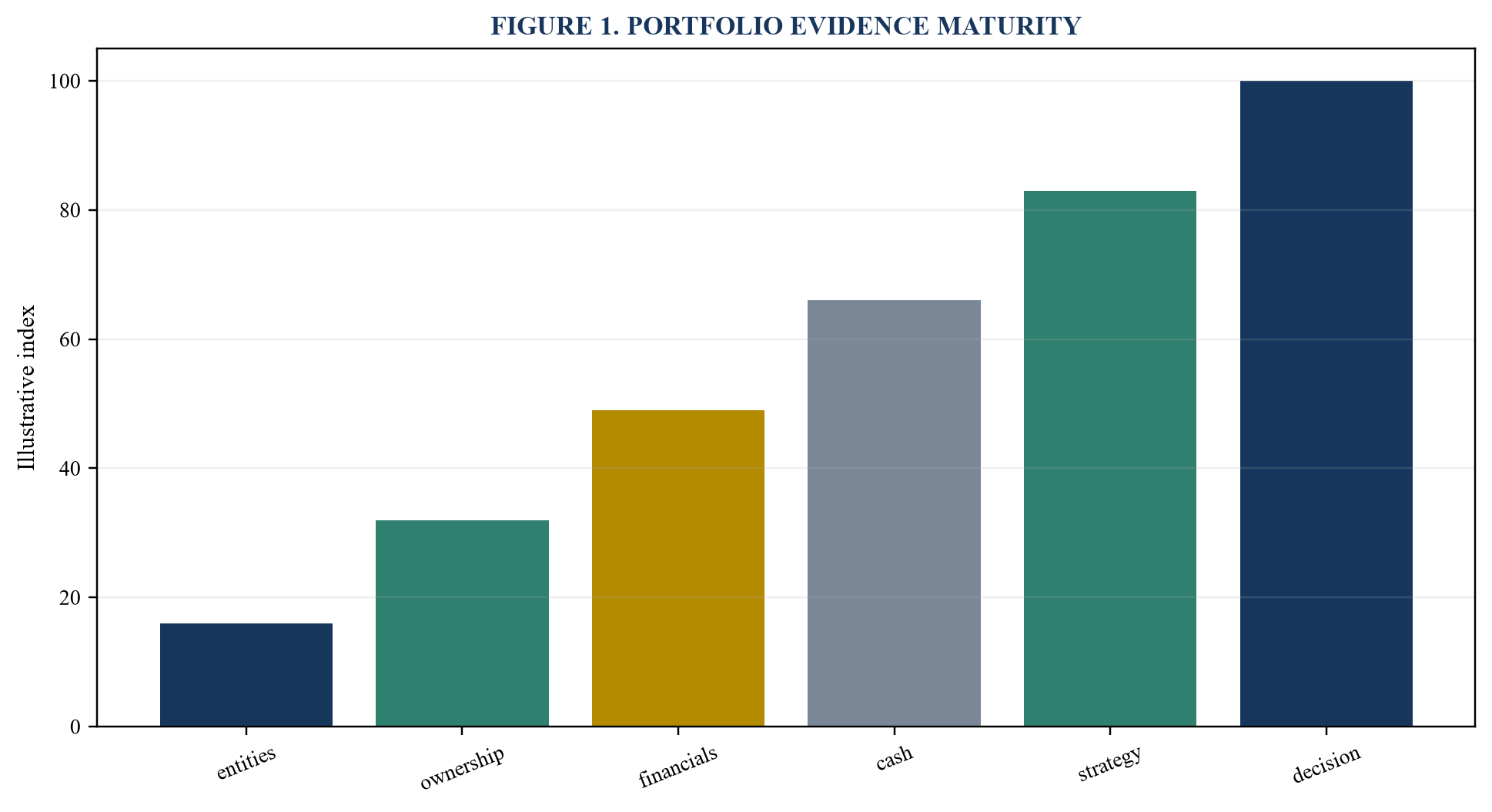
Values are illustrative indices and require replacement with approved family-group and company evidence.
9. Measure capital employed
Attribute debt, equity, working capital, fixed assets, leases, guarantees, commitments and shared assets to the businesses that consume them.
The controlled record includes business; capital; instrument; asset; liability; allocation; basis; date. The immediate deliverable is a capital-employed register. The record should preserve sources, periods, entities, currencies, adjustments, reviewers and unresolved exceptions.
The principal failure occurs when earnings are compared without the capital required to produce and protect them. Reviewers should reconstruct the underlying evidence, challenge allocations and management explanations, test downside consequences and identify who has authority to approve the conclusion and its implementation.
A GCC family-group review should preserve legal-entity reality. Ownership, authority, cash, debt, licences and tax consequences can differ materially from management presentation and consolidated reporting.
The decision pack for measure capital employed should show the current baseline, correction from the prior view, value or risk at stake, alternatives considered, named owner, resources, decision date and next evidence gate. Progress should be measured through completed actions and observed cash or operating outcomes.
10. Reconstruct return on invested capital
Calculate returns from reconciled operating profit, tax, invested capital, leases, acquisitions, exceptional items and economic adjustments.
The controlled record includes business; period; profit; tax; capital; adjustment; return; owner. The immediate deliverable is a comparable return-on-capital bridge. The record should preserve sources, periods, entities, currencies, adjustments, reviewers and unresolved exceptions.
The principal failure occurs when accounting profit is treated as value creation without a consistent capital denominator. Reviewers should reconstruct the underlying evidence, challenge allocations and management explanations, test downside consequences and identify who has authority to approve the conclusion and its implementation.
AI can accelerate extraction, reconciliation, entity resolution, scenario analysis and exception detection over approved records. Accountable family and corporate bodies retain authority for assumptions, interpretation, capital commitments and external actions.
The decision pack for reconstruct return on invested capital should show the current baseline, correction from the prior view, value or risk at stake, alternatives considered, named owner, resources, decision date and next evidence gate. Progress should be measured through completed actions and observed cash or operating outcomes.
11. Test reinvestment productivity
Trace maintenance, growth, regulatory, digital and acquisition investment to milestones, capacity, revenue, margin, cash and strategic options.
The controlled record includes programme; spend; purpose; milestone; output; benefit; owner; evidence. The immediate deliverable is a reinvestment productivity ledger. The record should preserve sources, periods, entities, currencies, adjustments, reviewers and unresolved exceptions.
The principal failure occurs when approved investment is assumed to create value without post-investment evidence. Reviewers should reconstruct the underlying evidence, challenge allocations and management explanations, test downside consequences and identify who has authority to approve the conclusion and its implementation.
Decision quality improves when every recommendation shows its evidence date, applicable entity, currency, scenario, reviewer, limitation and implementation consequence. Material changes should trigger targeted reapproval.
The decision pack for test reinvestment productivity should show the current baseline, correction from the prior view, value or risk at stake, alternatives considered, named owner, resources, decision date and next evidence gate. Progress should be measured through completed actions and observed cash or operating outcomes.
12. Reconcile cash conversion
Connect orders, delivery, acceptance, billing, receivables, inventory, payables, retention, disputes and collections by business.
The controlled record includes business; customer; stage; amount; date; condition; cash; exception. The immediate deliverable is a business-level cash-conversion model. The record should preserve sources, periods, entities, currencies, adjustments, reviewers and unresolved exceptions.
The principal failure occurs when EBITDA masks structural working-capital consumption and related-party settlement delays. Reviewers should reconstruct the underlying evidence, challenge allocations and management explanations, test downside consequences and identify who has authority to approve the conclusion and its implementation.
Portfolio management information should distinguish accounting performance, cash conversion, capital consumption, strategic fit, governance burden and realisable value. Each measure answers a different ownership question.
The decision pack for reconcile cash conversion should show the current baseline, correction from the prior view, value or risk at stake, alternatives considered, named owner, resources, decision date and next evidence gate. Progress should be measured through completed actions and observed cash or operating outcomes.
13. Map debt and guarantees
Record borrower, lender, instrument, use, maturity, pricing, covenant, security, guarantee, recourse and change-of-control terms.
The controlled record includes borrower; facility; amount; maturity; covenant; security; guarantor; source. The immediate deliverable is a debt, security and guarantee register. The record should preserve sources, periods, entities, currencies, adjustments, reviewers and unresolved exceptions.
The principal failure occurs when debt is viewed at consolidated level while obligations and recourse sit at specific entities. Reviewers should reconstruct the underlying evidence, challenge allocations and management explanations, test downside consequences and identify who has authority to approve the conclusion and its implementation.
A GCC family-group review should preserve legal-entity reality. Ownership, authority, cash, debt, licences and tax consequences can differ materially from management presentation and consolidated reporting.
The decision pack for map debt and guarantees should show the current baseline, correction from the prior view, value or risk at stake, alternatives considered, named owner, resources, decision date and next evidence gate. Progress should be measured through completed actions and observed cash or operating outcomes.
14. Surface contingent liabilities
Reconcile litigation, tax, pensions, warranties, environmental duties, performance bonds, commitments, indemnities and unfunded obligations.
The controlled record includes matter; entity; trigger; exposure; timing; evidence; adviser; treatment. The immediate deliverable is a contingent-liability and claims schedule. The record should preserve sources, periods, entities, currencies, adjustments, reviewers and unresolved exceptions.
The principal failure occurs when portfolio value ignores obligations that remain outside booked debt. Reviewers should reconstruct the underlying evidence, challenge allocations and management explanations, test downside consequences and identify who has authority to approve the conclusion and its implementation.
AI can accelerate extraction, reconciliation, entity resolution, scenario analysis and exception detection over approved records. Accountable family and corporate bodies retain authority for assumptions, interpretation, capital commitments and external actions.
The decision pack for surface contingent liabilities should show the current baseline, correction from the prior view, value or risk at stake, alternatives considered, named owner, resources, decision date and next evidence gate. Progress should be measured through completed actions and observed cash or operating outcomes.
15. Assess tax and jurisdictional friction
Map corporate tax, VAT, withholding, transfer pricing, substance, permanent establishment, distributions, reorganisations and disposals.
The controlled record includes entity; jurisdiction; tax; transaction; position; evidence; adviser; exposure. The immediate deliverable is a tax-friction and structuring map. The record should preserve sources, periods, entities, currencies, adjustments, reviewers and unresolved exceptions.
The principal failure occurs when gross portfolio value is compared without the tax and legal route required to realise cash. Reviewers should reconstruct the underlying evidence, challenge allocations and management explanations, test downside consequences and identify who has authority to approve the conclusion and its implementation.
Decision quality improves when every recommendation shows its evidence date, applicable entity, currency, scenario, reviewer, limitation and implementation consequence. Material changes should trigger targeted reapproval.
The decision pack for assess tax and jurisdictional friction should show the current baseline, correction from the prior view, value or risk at stake, alternatives considered, named owner, resources, decision date and next evidence gate. Progress should be measured through completed actions and observed cash or operating outcomes.
16. Reconcile related-party relationships
Connect ownership, control, relatives, counterparties, contracts, pricing, approvals, ledgers, balances and cash settlement.
The controlled record includes party; relationship; transaction; amount; price; approval; balance; evidence. The immediate deliverable is a related-party evidence graph. The record should preserve sources, periods, entities, currencies, adjustments, reviewers and unresolved exceptions.
The principal failure occurs when connected flows distort profitability, liquidity and independence. Reviewers should reconstruct the underlying evidence, challenge allocations and management explanations, test downside consequences and identify who has authority to approve the conclusion and its implementation.
Portfolio management information should distinguish accounting performance, cash conversion, capital consumption, strategic fit, governance burden and realisable value. Each measure answers a different ownership question.
The decision pack for reconcile related-party relationships should show the current baseline, correction from the prior view, value or risk at stake, alternatives considered, named owner, resources, decision date and next evidence gate. Progress should be measured through completed actions and observed cash or operating outcomes.
Table 2. Look-through performance controls
| Dimension | Evidence | Gate |
|---|---|---|
| return | profit, tax and capital employed | economic value |
| cash | conversion, restrictions and transfers | liquidity |
| risk | debt, guarantees and obligations | resilience |
| relationship | connected parties and pricing | independence |
Illustrative classifications require family-, company-, jurisdiction-, transaction- and period-specific approval.
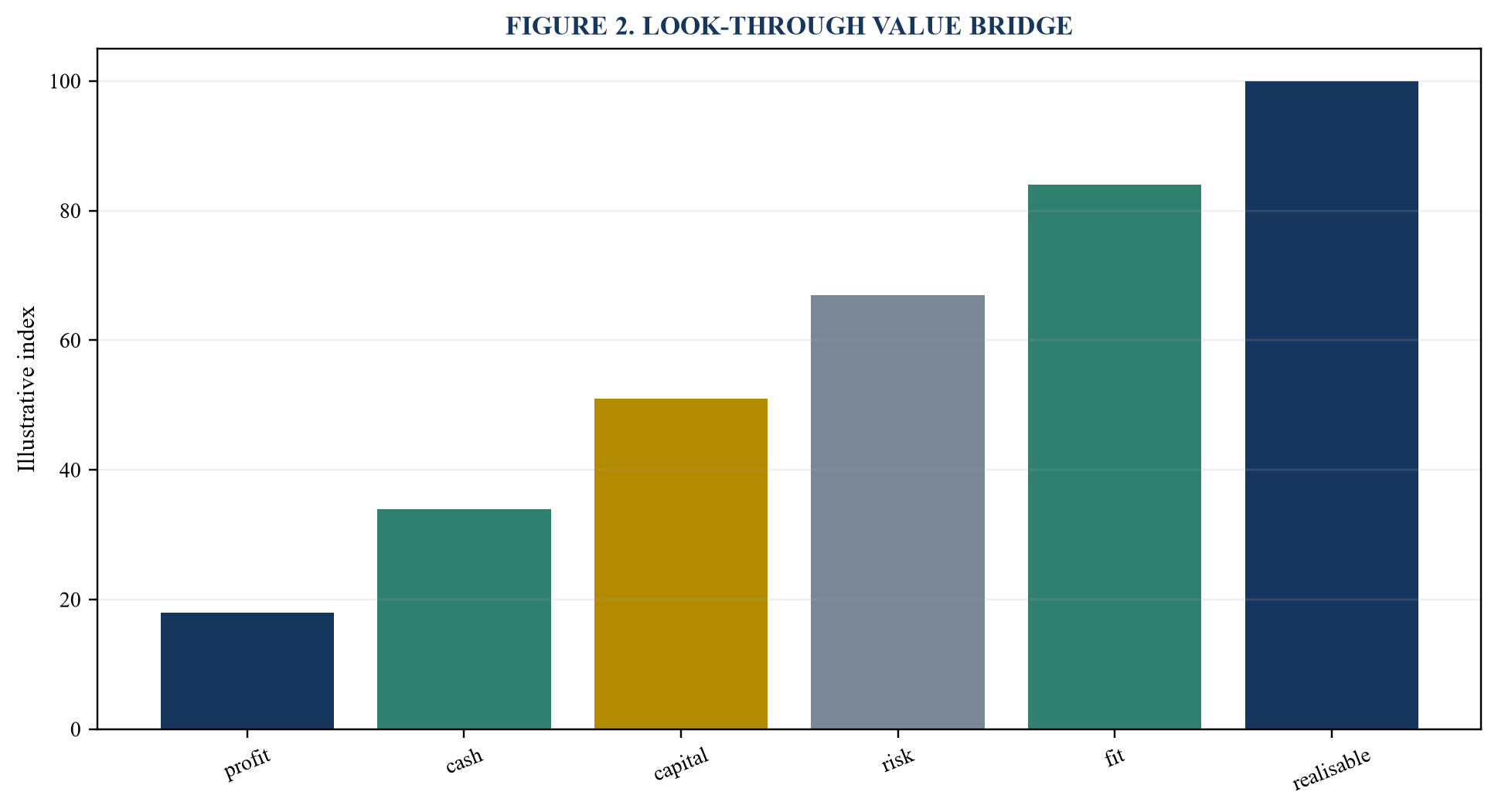
Values are illustrative indices and require replacement with approved family-group and company evidence.
17. Build business-unit economics
Measure price, volume, mix, direct cost, service effort, capacity, customer acquisition, retention, maintenance and contribution.
The controlled record includes business; product; customer; driver; revenue; cost; capacity; contribution. The immediate deliverable is a driver-based unit-economics model. The record should preserve sources, periods, entities, currencies, adjustments, reviewers and unresolved exceptions.
The principal failure occurs when aggregated margin conceals loss-making products, customers or geographies. Reviewers should reconstruct the underlying evidence, challenge allocations and management explanations, test downside consequences and identify who has authority to approve the conclusion and its implementation.
A GCC family-group review should preserve legal-entity reality. Ownership, authority, cash, debt, licences and tax consequences can differ materially from management presentation and consolidated reporting.
The decision pack for build business-unit economics should show the current baseline, correction from the prior view, value or risk at stake, alternatives considered, named owner, resources, decision date and next evidence gate. Progress should be measured through completed actions and observed cash or operating outcomes.
18. Test competitive position
Evaluate customer need, differentiation, switching cost, route to market, regulation, supply constraints, technology change and competitor response.
The controlled record includes market; customer; need; competitor; advantage; evidence; durability; risk. The immediate deliverable is an evidence-led competitive-position scorecard. The record should preserve sources, periods, entities, currencies, adjustments, reviewers and unresolved exceptions.
The principal failure occurs when market growth is assumed to protect a weak or eroding position. Reviewers should reconstruct the underlying evidence, challenge allocations and management explanations, test downside consequences and identify who has authority to approve the conclusion and its implementation.
AI can accelerate extraction, reconciliation, entity resolution, scenario analysis and exception detection over approved records. Accountable family and corporate bodies retain authority for assumptions, interpretation, capital commitments and external actions.
The decision pack for test competitive position should show the current baseline, correction from the prior view, value or risk at stake, alternatives considered, named owner, resources, decision date and next evidence gate. Progress should be measured through completed actions and observed cash or operating outcomes.
19. Measure customer and counterparty concentration
Map revenue, margin, receivables, contracts, renewal, dependence, relationships, guarantees and replacement options.
The controlled record includes counterparty; business; revenue; margin; balance; term; dependency; action. The immediate deliverable is a look-through concentration map. The record should preserve sources, periods, entities, currencies, adjustments, reviewers and unresolved exceptions.
The principal failure occurs when group diversification is assumed even when several businesses depend on the same customer or state-linked counterparty. Reviewers should reconstruct the underlying evidence, challenge allocations and management explanations, test downside consequences and identify who has authority to approve the conclusion and its implementation.
Decision quality improves when every recommendation shows its evidence date, applicable entity, currency, scenario, reviewer, limitation and implementation consequence. Material changes should trigger targeted reapproval.
The decision pack for measure customer and counterparty concentration should show the current baseline, correction from the prior view, value or risk at stake, alternatives considered, named owner, resources, decision date and next evidence gate. Progress should be measured through completed actions and observed cash or operating outcomes.
20. Assess operating resilience
Test facilities, supply, logistics, utilities, key systems, licences, insurance, continuity, recovery and crisis authority.
The controlled record includes business; dependency; control; test; threshold; owner; finding; remedy. The immediate deliverable is an operating-resilience baseline. The record should preserve sources, periods, entities, currencies, adjustments, reviewers and unresolved exceptions.
The principal failure occurs when stable historical earnings are projected through untested operational dependencies. Reviewers should reconstruct the underlying evidence, challenge allocations and management explanations, test downside consequences and identify who has authority to approve the conclusion and its implementation.
Portfolio management information should distinguish accounting performance, cash conversion, capital consumption, strategic fit, governance burden and realisable value. Each measure answers a different ownership question.
The decision pack for assess operating resilience should show the current baseline, correction from the prior view, value or risk at stake, alternatives considered, named owner, resources, decision date and next evidence gate. Progress should be measured through completed actions and observed cash or operating outcomes.
21. Inventory technology and data
Record core systems, interfaces, data assets, ownership, licences, quality, vendors, technical debt, cybersecurity and replacement plans.
The controlled record includes asset; system; data; owner; vendor; right; condition; roadmap. The immediate deliverable is a technology-and-data portfolio map. The record should preserve sources, periods, entities, currencies, adjustments, reviewers and unresolved exceptions.
The principal failure occurs when digital capability is inferred from expenditure or demonstrations without an owned and supportable asset base. Reviewers should reconstruct the underlying evidence, challenge allocations and management explanations, test downside consequences and identify who has authority to approve the conclusion and its implementation.
A GCC family-group review should preserve legal-entity reality. Ownership, authority, cash, debt, licences and tax consequences can differ materially from management presentation and consolidated reporting.
The decision pack for inventory technology and data should show the current baseline, correction from the prior view, value or risk at stake, alternatives considered, named owner, resources, decision date and next evidence gate. Progress should be measured through completed actions and observed cash or operating outcomes.
22. Govern AI use across the group
Identify every AI use, model, provider, data source, decision role, validation, limitation, monitoring, incident and human authority.
The controlled record includes use; model; provider; data; decision; validation; owner; control. The immediate deliverable is a governed group AI inventory. The record should preserve sources, periods, entities, currencies, adjustments, reviewers and unresolved exceptions.
The principal failure occurs when uncontrolled AI adoption creates inconsistent decisions, hidden vendor reliance and unmeasured risk. Reviewers should reconstruct the underlying evidence, challenge allocations and management explanations, test downside consequences and identify who has authority to approve the conclusion and its implementation.
AI can accelerate extraction, reconciliation, entity resolution, scenario analysis and exception detection over approved records. Accountable family and corporate bodies retain authority for assumptions, interpretation, capital commitments and external actions.
The decision pack for govern ai use across the group should show the current baseline, correction from the prior view, value or risk at stake, alternatives considered, named owner, resources, decision date and next evidence gate. Progress should be measured through completed actions and observed cash or operating outcomes.
23. Test cybersecurity and privacy
Assess identity, access, data flows, protection, suppliers, incidents, testing, recovery, personal-data duties and cross-border transfers.
The controlled record includes asset; data; threat; control; test; finding; owner; residual risk. The immediate deliverable is a portfolio cyber-and-privacy risk map. The record should preserve sources, periods, entities, currencies, adjustments, reviewers and unresolved exceptions.
The principal failure occurs when a weak business becomes a path into shared systems, sensitive family data or regulated operations. Reviewers should reconstruct the underlying evidence, challenge allocations and management explanations, test downside consequences and identify who has authority to approve the conclusion and its implementation.
Decision quality improves when every recommendation shows its evidence date, applicable entity, currency, scenario, reviewer, limitation and implementation consequence. Material changes should trigger targeted reapproval.
The decision pack for test cybersecurity and privacy should show the current baseline, correction from the prior view, value or risk at stake, alternatives considered, named owner, resources, decision date and next evidence gate. Progress should be measured through completed actions and observed cash or operating outcomes.
24. Map leadership and critical talent
Connect each business to accountable leaders, scarce roles, incentives, succession, family employment, workload, retention and replacement depth.
The controlled record includes person; role; authority; performance; incentive; dependency; successor; action. The immediate deliverable is a leadership and key-person matrix. The record should preserve sources, periods, entities, currencies, adjustments, reviewers and unresolved exceptions.
The principal failure occurs when reported business quality depends on individuals whose continuity and incentives are unresolved. Reviewers should reconstruct the underlying evidence, challenge allocations and management explanations, test downside consequences and identify who has authority to approve the conclusion and its implementation.
Portfolio management information should distinguish accounting performance, cash conversion, capital consumption, strategic fit, governance burden and realisable value. Each measure answers a different ownership question.
The decision pack for map leadership and critical talent should show the current baseline, correction from the prior view, value or risk at stake, alternatives considered, named owner, resources, decision date and next evidence gate. Progress should be measured through completed actions and observed cash or operating outcomes.
Table 3. Ownership readiness matrix
| Area | Required evidence | Decision |
|---|---|---|
| leadership | authority, capacity and succession | continuity |
| technology | systems, data and AI controls | scalability |
| governance | bodies, rights and conflicts | accountability |
| family | charter, liquidity and transition | alignment |
Illustrative classifications require family-, company-, jurisdiction-, transaction- and period-specific approval.
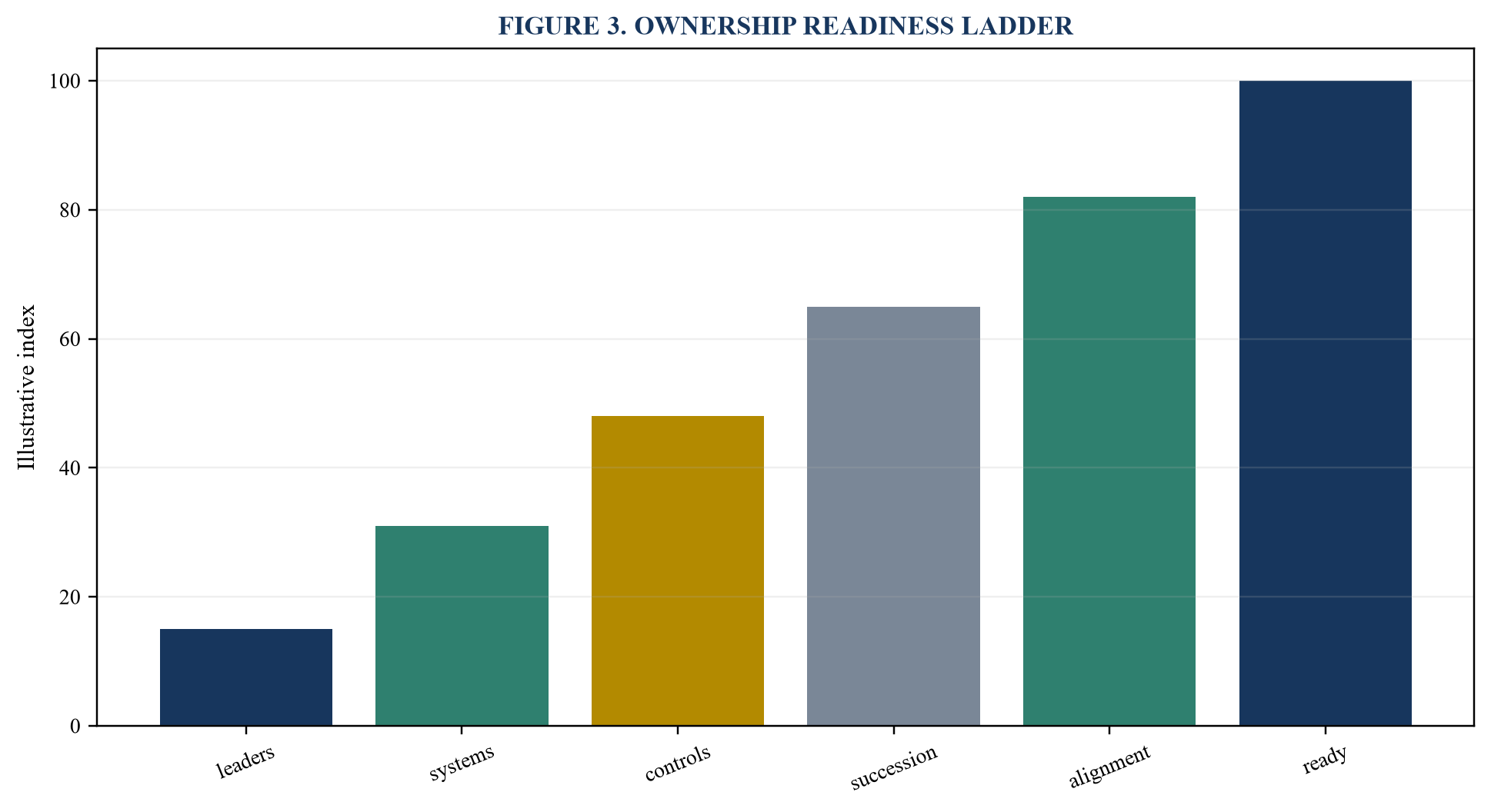
Values are illustrative indices and require replacement with approved family-group and company evidence.
25. Assess succession readiness
Test ownership transition, governance continuity, leadership succession, capability development, liquidity needs, transfer restrictions and dispute pathways.
The controlled record includes owner; generation; role; right; capability; timing; liquidity; evidence. The immediate deliverable is a succession-readiness plan. The record should preserve sources, periods, entities, currencies, adjustments, reviewers and unresolved exceptions.
The principal failure occurs when succession is treated as a future family matter despite current effects on capital allocation and counterparties. Reviewers should reconstruct the underlying evidence, challenge allocations and management explanations, test downside consequences and identify who has authority to approve the conclusion and its implementation.
A GCC family-group review should preserve legal-entity reality. Ownership, authority, cash, debt, licences and tax consequences can differ materially from management presentation and consolidated reporting.
The decision pack for assess succession readiness should show the current baseline, correction from the prior view, value or risk at stake, alternatives considered, named owner, resources, decision date and next evidence gate. Progress should be measured through completed actions and observed cash or operating outcomes.
26. Measure strategic fit
Score each business against family purpose, capabilities, customers, geography, risk capacity, capital intensity, governance burden and optionality.
The controlled record includes business; criterion; evidence; score; dependency; conflict; reviewer; decision. The immediate deliverable is a strategic-fit matrix. The record should preserve sources, periods, entities, currencies, adjustments, reviewers and unresolved exceptions.
The principal failure occurs when sentiment or history substitutes for an explicit ownership rationale. Reviewers should reconstruct the underlying evidence, challenge allocations and management explanations, test downside consequences and identify who has authority to approve the conclusion and its implementation.
AI can accelerate extraction, reconciliation, entity resolution, scenario analysis and exception detection over approved records. Accountable family and corporate bodies retain authority for assumptions, interpretation, capital commitments and external actions.
The decision pack for measure strategic fit should show the current baseline, correction from the prior view, value or risk at stake, alternatives considered, named owner, resources, decision date and next evidence gate. Progress should be measured through completed actions and observed cash or operating outcomes.
27. Map portfolio interactions
Identify shared customers, suppliers, talent, systems, property, financing, guarantees, brands, data, procurement and governance.
The controlled record includes business; resource; provider; user; term; value; dependency; evidence. The immediate deliverable is a portfolio dependency graph. The record should preserve sources, periods, entities, currencies, adjustments, reviewers and unresolved exceptions.
The principal failure occurs when apparent standalone choices ignore the dependencies created by group ownership. Reviewers should reconstruct the underlying evidence, challenge allocations and management explanations, test downside consequences and identify who has authority to approve the conclusion and its implementation.
Decision quality improves when every recommendation shows its evidence date, applicable entity, currency, scenario, reviewer, limitation and implementation consequence. Material changes should trigger targeted reapproval.
The decision pack for map portfolio interactions should show the current baseline, correction from the prior view, value or risk at stake, alternatives considered, named owner, resources, decision date and next evidence gate. Progress should be measured through completed actions and observed cash or operating outcomes.
28. Validate synergies and dis-synergies
Quantify shared-service, procurement, customer, capital, tax and technology benefits alongside complexity, conflict and stranded cost.
The controlled record includes initiative; business; baseline; cost; benefit; timing; owner; evidence. The immediate deliverable is a synergy and complexity ledger. The record should preserve sources, periods, entities, currencies, adjustments, reviewers and unresolved exceptions.
The principal failure occurs when group membership is assumed to create synergy without an executable mechanism or cash proof. Reviewers should reconstruct the underlying evidence, challenge allocations and management explanations, test downside consequences and identify who has authority to approve the conclusion and its implementation.
Portfolio management information should distinguish accounting performance, cash conversion, capital consumption, strategic fit, governance burden and realisable value. Each measure answers a different ownership question.
The decision pack for validate synergies and dis-synergies should show the current baseline, correction from the prior view, value or risk at stake, alternatives considered, named owner, resources, decision date and next evidence gate. Progress should be measured through completed actions and observed cash or operating outcomes.
29. Build comparable valuation cases
Apply income, market and asset approaches with explicit definitions, scenarios, control, liquidity, rights, obligations and realisation costs.
The controlled record includes business; method; forecast; multiple; adjustment; scenario; reviewer; value. The immediate deliverable is a valuation range and evidence bridge. The record should preserve sources, periods, entities, currencies, adjustments, reviewers and unresolved exceptions.
The principal failure occurs when one headline value conceals method risk, ownership restrictions and cash realisation friction. Reviewers should reconstruct the underlying evidence, challenge allocations and management explanations, test downside consequences and identify who has authority to approve the conclusion and its implementation.
A GCC family-group review should preserve legal-entity reality. Ownership, authority, cash, debt, licences and tax consequences can differ materially from management presentation and consolidated reporting.
The decision pack for build comparable valuation cases should show the current baseline, correction from the prior view, value or risk at stake, alternatives considered, named owner, resources, decision date and next evidence gate. Progress should be measured through completed actions and observed cash or operating outcomes.
30. Classify hold, invest, repair, partner or exit
Translate strategic fit, return, risk, capability, capital need, succession and marketability into distinct action categories.
The controlled record includes business; evidence; option; condition; capital; owner; timing; gate. The immediate deliverable is an action-classification matrix. The record should preserve sources, periods, entities, currencies, adjustments, reviewers and unresolved exceptions.
The principal failure occurs when every business receives incremental capital because explicit alternatives were never framed. Reviewers should reconstruct the underlying evidence, challenge allocations and management explanations, test downside consequences and identify who has authority to approve the conclusion and its implementation.
AI can accelerate extraction, reconciliation, entity resolution, scenario analysis and exception detection over approved records. Accountable family and corporate bodies retain authority for assumptions, interpretation, capital commitments and external actions.
The decision pack for classify hold, invest, repair, partner or exit should show the current baseline, correction from the prior view, value or risk at stake, alternatives considered, named owner, resources, decision date and next evidence gate. Progress should be measured through completed actions and observed cash or operating outcomes.
31. Allocate capital through common gates
Compare organic growth, maintenance, digital change, acquisition, debt reduction, dividends and reserves on return, risk, timing and strategic fit.
The controlled record includes proposal; amount; source; return; risk; milestone; sponsor; decision. The immediate deliverable is a portfolio capital-allocation queue. The record should preserve sources, periods, entities, currencies, adjustments, reviewers and unresolved exceptions.
The principal failure occurs when capital follows influence or precedent rather than comparable evidence. Reviewers should reconstruct the underlying evidence, challenge allocations and management explanations, test downside consequences and identify who has authority to approve the conclusion and its implementation.
Decision quality improves when every recommendation shows its evidence date, applicable entity, currency, scenario, reviewer, limitation and implementation consequence. Material changes should trigger targeted reapproval.
The decision pack for allocate capital through common gates should show the current baseline, correction from the prior view, value or risk at stake, alternatives considered, named owner, resources, decision date and next evidence gate. Progress should be measured through completed actions and observed cash or operating outcomes.
32. Design liquidity and dividend policy
Connect family needs, operating buffers, covenants, growth commitments, tax, distributions, reserves and emergency liquidity.
The controlled record includes entity; source; restriction; need; buffer; dividend; timing; approval. The immediate deliverable is a liquidity-and-distribution framework. The record should preserve sources, periods, entities, currencies, adjustments, reviewers and unresolved exceptions.
The principal failure occurs when dividend expectations are set independently of legal-entity cash and downside resilience. Reviewers should reconstruct the underlying evidence, challenge allocations and management explanations, test downside consequences and identify who has authority to approve the conclusion and its implementation.
Portfolio management information should distinguish accounting performance, cash conversion, capital consumption, strategic fit, governance burden and realisable value. Each measure answers a different ownership question.
The decision pack for design liquidity and dividend policy should show the current baseline, correction from the prior view, value or risk at stake, alternatives considered, named owner, resources, decision date and next evidence gate. Progress should be measured through completed actions and observed cash or operating outcomes.
Table 4. Capital action choices
| Choice | Primary evidence | Critical gate |
|---|---|---|
| hold | cash, resilience and fit | monitor |
| invest | return, milestones and capability | fund |
| repair | root cause, owner and runway | intervene |
| partner or exit | marketability and separation | transact |
Illustrative classifications require family-, company-, jurisdiction-, transaction- and period-specific approval.
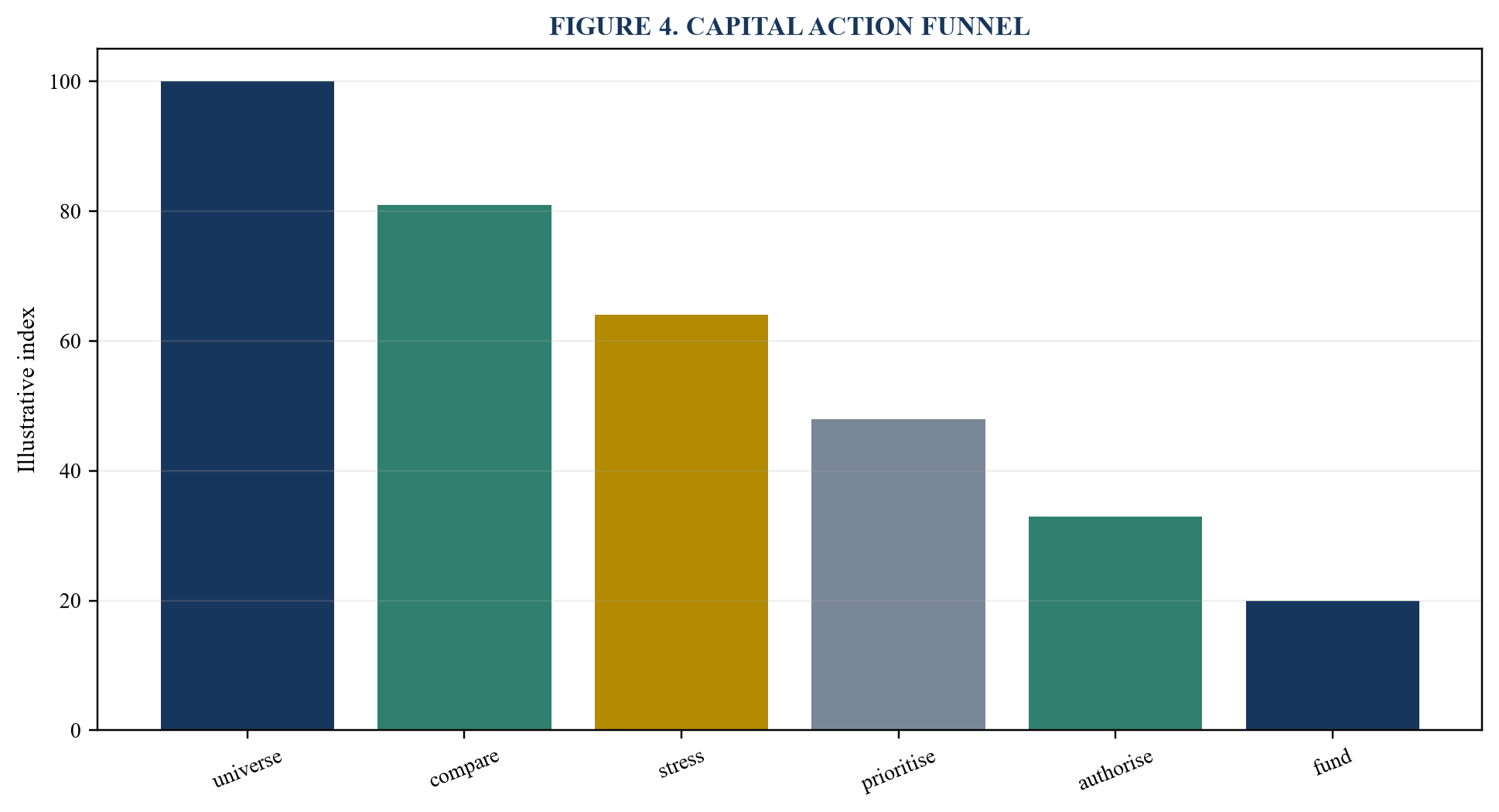
Values are illustrative indices and require replacement with approved family-group and company evidence.
33. Govern acquisitions and new ventures
Require thesis, sponsor, capability, price, financing, downside, integration, decision rights and exit logic before committing capital.
The controlled record includes opportunity; thesis; sponsor; value; funding; risk; milestone; decision. The immediate deliverable is a transaction and venture approval gate. The record should preserve sources, periods, entities, currencies, adjustments, reviewers and unresolved exceptions.
The principal failure occurs when new opportunities bypass the discipline applied to existing assets. Reviewers should reconstruct the underlying evidence, challenge allocations and management explanations, test downside consequences and identify who has authority to approve the conclusion and its implementation.
A GCC family-group review should preserve legal-entity reality. Ownership, authority, cash, debt, licences and tax consequences can differ materially from management presentation and consolidated reporting.
The decision pack for govern acquisitions and new ventures should show the current baseline, correction from the prior view, value or risk at stake, alternatives considered, named owner, resources, decision date and next evidence gate. Progress should be measured through completed actions and observed cash or operating outcomes.
34. Prepare divestment options
Assess perimeter, carve-out, management, financials, contracts, consents, tax, separation, buyer universe, timing and confidentiality.
The controlled record includes business; perimeter; dependency; consent; separation; buyer; value; action. The immediate deliverable is a divestment-readiness roadmap. The record should preserve sources, periods, entities, currencies, adjustments, reviewers and unresolved exceptions.
The principal failure occurs when a sale decision arrives before the asset can stand alone or support diligence. Reviewers should reconstruct the underlying evidence, challenge allocations and management explanations, test downside consequences and identify who has authority to approve the conclusion and its implementation.
AI can accelerate extraction, reconciliation, entity resolution, scenario analysis and exception detection over approved records. Accountable family and corporate bodies retain authority for assumptions, interpretation, capital commitments and external actions.
The decision pack for prepare divestment options should show the current baseline, correction from the prior view, value or risk at stake, alternatives considered, named owner, resources, decision date and next evidence gate. Progress should be measured through completed actions and observed cash or operating outcomes.
35. Create the portfolio evidence graph
Link entities, owners, accounts, contracts, assets, liabilities, people, decisions, assumptions and source records with dated provenance.
The controlled record includes object; relationship; source; period; owner; confidence; review; change. The immediate deliverable is a controlled portfolio knowledge graph. The record should preserve sources, periods, entities, currencies, adjustments, reviewers and unresolved exceptions.
The principal failure occurs when AI analysis operates on detached spreadsheets that cannot be traced to authoritative evidence. Reviewers should reconstruct the underlying evidence, challenge allocations and management explanations, test downside consequences and identify who has authority to approve the conclusion and its implementation.
Decision quality improves when every recommendation shows its evidence date, applicable entity, currency, scenario, reviewer, limitation and implementation consequence. Material changes should trigger targeted reapproval.
The decision pack for create the portfolio evidence graph should show the current baseline, correction from the prior view, value or risk at stake, alternatives considered, named owner, resources, decision date and next evidence gate. Progress should be measured through completed actions and observed cash or operating outcomes.
36. Validate AI-assisted analysis
Test extraction, entity matching, classification, forecasting and recommendations for accuracy, coverage, bias, drift, explainability and override.
The controlled record includes model; task; population; metric; threshold; result; limitation; approver. The immediate deliverable is an AI validation and limitation register. The record should preserve sources, periods, entities, currencies, adjustments, reviewers and unresolved exceptions.
The principal failure occurs when machine output becomes a board conclusion without task-specific validation. Reviewers should reconstruct the underlying evidence, challenge allocations and management explanations, test downside consequences and identify who has authority to approve the conclusion and its implementation.
Portfolio management information should distinguish accounting performance, cash conversion, capital consumption, strategic fit, governance burden and realisable value. Each measure answers a different ownership question.
The decision pack for validate ai-assisted analysis should show the current baseline, correction from the prior view, value or risk at stake, alternatives considered, named owner, resources, decision date and next evidence gate. Progress should be measured through completed actions and observed cash or operating outcomes.
37. Run scenarios and stress tests
Model demand, margin, working capital, rates, currencies, commodity prices, capex, regulation, succession and transaction timing.
The controlled record includes scenario; driver; source; range; dependency; result; action; owner. The immediate deliverable is a portfolio scenario and response model. The record should preserve sources, periods, entities, currencies, adjustments, reviewers and unresolved exceptions.
The principal failure occurs when one central forecast conceals correlated portfolio risks and liquidity calls. Reviewers should reconstruct the underlying evidence, challenge allocations and management explanations, test downside consequences and identify who has authority to approve the conclusion and its implementation.
A GCC family-group review should preserve legal-entity reality. Ownership, authority, cash, debt, licences and tax consequences can differ materially from management presentation and consolidated reporting.
The decision pack for run scenarios and stress tests should show the current baseline, correction from the prior view, value or risk at stake, alternatives considered, named owner, resources, decision date and next evidence gate. Progress should be measured through completed actions and observed cash or operating outcomes.
38. Build the decision calendar
Sequence reporting, board reviews, family decisions, financing, investment gates, dividends, succession actions and transaction windows.
The controlled record includes decision; body; evidence; deadline; dependency; owner; gate; record. The immediate deliverable is an integrated decision calendar. The record should preserve sources, periods, entities, currencies, adjustments, reviewers and unresolved exceptions.
The principal failure occurs when good recommendations expire because authority, evidence and timing were never coordinated. Reviewers should reconstruct the underlying evidence, challenge allocations and management explanations, test downside consequences and identify who has authority to approve the conclusion and its implementation.
AI can accelerate extraction, reconciliation, entity resolution, scenario analysis and exception detection over approved records. Accountable family and corporate bodies retain authority for assumptions, interpretation, capital commitments and external actions.
The decision pack for build the decision calendar should show the current baseline, correction from the prior view, value or risk at stake, alternatives considered, named owner, resources, decision date and next evidence gate. Progress should be measured through completed actions and observed cash or operating outcomes.
39. Convert conclusions into an action portfolio
Assign each initiative a baseline, value case, owner, resources, dependencies, milestones, risks, evidence and stop rule.
The controlled record includes initiative; baseline; value; owner; milestone; dependency; risk; outcome. The immediate deliverable is a prioritised action portfolio. The record should preserve sources, periods, entities, currencies, adjustments, reviewers and unresolved exceptions.
The principal failure occurs when the review ends with a presentation rather than funded and accountable execution. Reviewers should reconstruct the underlying evidence, challenge allocations and management explanations, test downside consequences and identify who has authority to approve the conclusion and its implementation.
Decision quality improves when every recommendation shows its evidence date, applicable entity, currency, scenario, reviewer, limitation and implementation consequence. Material changes should trigger targeted reapproval.
The decision pack for convert conclusions into an action portfolio should show the current baseline, correction from the prior view, value or risk at stake, alternatives considered, named owner, resources, decision date and next evidence gate. Progress should be measured through completed actions and observed cash or operating outcomes.
40. Close the review through accountable gates
Use perimeter, evidence, valuation, governance, family alignment, capital, transaction and execution gates with recorded dissent and follow-up.
The controlled record includes phase; scope; threshold; result; exception; approver; decision; outcome. The immediate deliverable is an evidence-gated portfolio review. The record should preserve sources, periods, entities, currencies, adjustments, reviewers and unresolved exceptions.
The principal failure occurs when consensus language conceals unresolved facts, authority or implementation risk. Reviewers should reconstruct the underlying evidence, challenge allocations and management explanations, test downside consequences and identify who has authority to approve the conclusion and its implementation.
Portfolio management information should distinguish accounting performance, cash conversion, capital consumption, strategic fit, governance burden and realisable value. Each measure answers a different ownership question.
The decision pack for close the review through accountable gates should show the current baseline, correction from the prior view, value or risk at stake, alternatives considered, named owner, resources, decision date and next evidence gate. Progress should be measured through completed actions and observed cash or operating outcomes.
Table 5. Portfolio-review execution gates
| Phase | Primary work | Gate |
|---|---|---|
| perimeter | entities, owners and decisions | approved scope |
| evidence | financial, strategic and risk baseline | reviewed facts |
| choice | valuation, scenarios and alternatives | authorised action |
| execution | owners, capital and milestones | verified outcome |
Illustrative classifications require family-, company-, jurisdiction-, transaction- and period-specific approval.
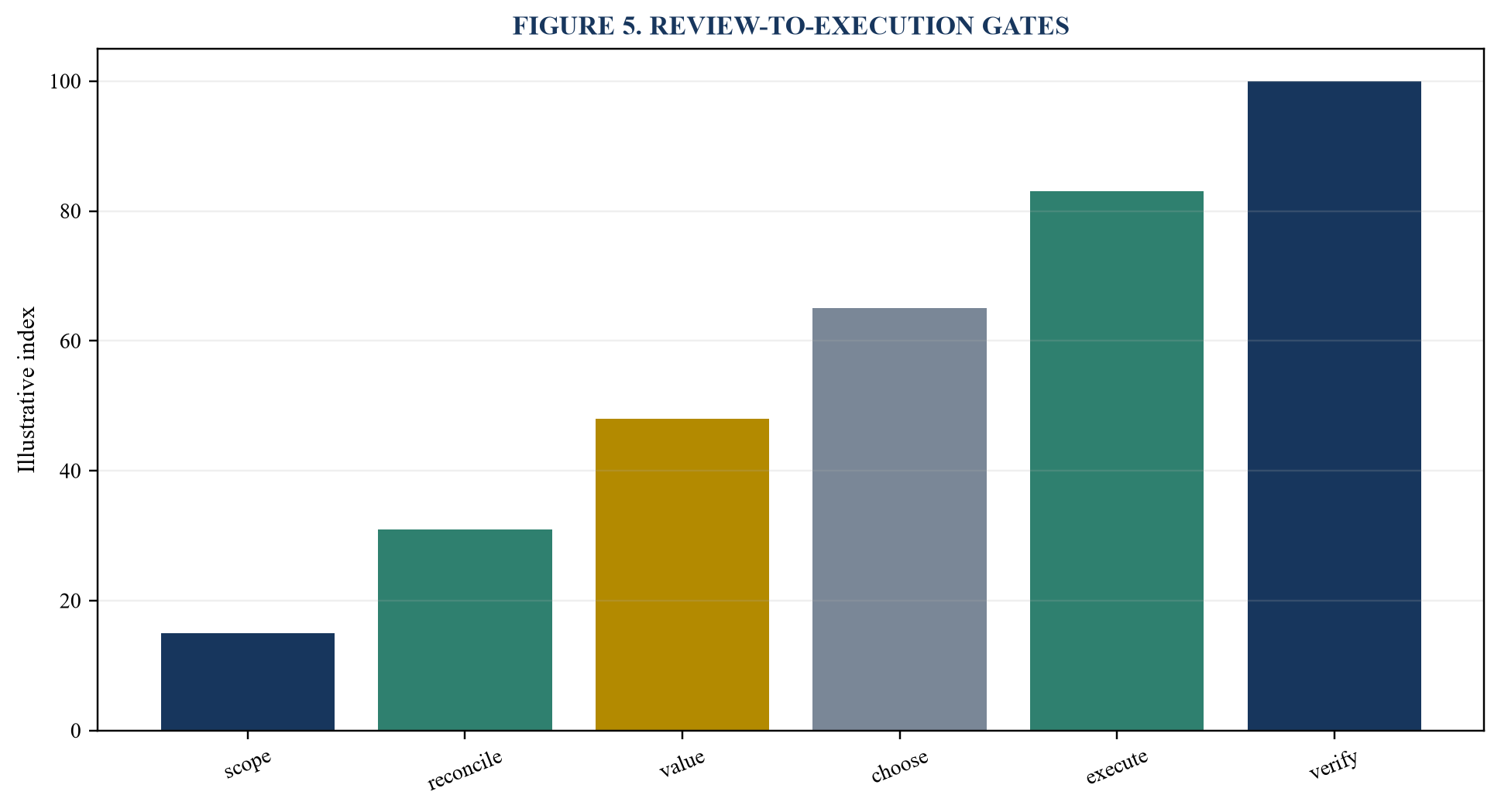
Values are illustrative indices and require replacement with approved family-group and company evidence.
References
- UAE Government, Federal Decree-Law No. 37 of 2022 Concerning Family Businesses, https://uaelegislation.gov.ae/en/legislations/1608
- UAE Government, Federal Decree-Law No. 32 of 2021 on Commercial Companies, https://uaelegislation.gov.ae/en/legislations/1542
- UAE Government, Federal Decree-Law No. 45 of 2021 on Personal Data Protection, https://uaelegislation.gov.ae/en/legislations/1972
- UAE Government, Federal Decree-Law No. 47 of 2022 on the Taxation of Corporations and Businesses, https://uaelegislation.gov.ae/en/legislations/1582
- UAE Federal Tax Authority, Corporate Tax General Guide, https://tax.gov.ae/Datafolder/Files/Guides/CT/CT%20General%20Guide%20-%20EN%20-%2010%2009%202023.pdf
- UAE Federal Tax Authority, Transfer Pricing Guide, https://tax.gov.ae/Datafolder/Files/Pdf/2023/Transfer%20Pricing%20Guide%20-%20EN%20-%2023%2010%202023.pdf
- Abu Dhabi Global Market, Foundations Regime, https://www.adgm.com/documents/publications/en/adgm-foundations-regime.pdf
- Abu Dhabi Global Market, Beneficial Ownership and Control, https://www.adgm.com/operating-in-adgm/obligations-of-adgm-registered-entities/beneficial-ownership-and-control
- Abu Dhabi Global Market Academy, Family Office Governance and Succession Planning, https://academy.adgm.com/schools/wealth-and-asset-management/family-office-governance-and-succession-planning
- Dubai International Financial Centre, Family Wealth Centre, https://www.difc.com/business/family-wealth-centre
- Dubai International Financial Centre, Family Arrangements Regulations, https://www.difc.com/business/laws-and-regulations/legal-database
- Dubai International Financial Centre, Ultimate Beneficial Ownership Regulations, https://www.difc.com/business/laws-and-regulations/legal-database
- Dubai International Financial Centre, Data Protection Law and Regulations, https://www.difc.com/business/operating/data-protection
- Dubai Financial Services Authority, Artificial Intelligence Survey 2025, https://www.dfsa.ae/news/new-dfsa-ai-survey-generative-ai-adoption-has-nearly-tripled-within-difc-last-12-months-governance-continues-develop
- Dubai Financial Services Authority, Regulatory Expectations on Artificial Intelligence Risk Management in the DIFC, https://www.dfsa.ae/your-resources/publications-reports/seo-letters-1
- IFRS Foundation, IFRS 10 Consolidated Financial Statements, https://www.ifrs.org/issued-standards/list-of-standards/ifrs-10-consolidated-financial-statements/
- IFRS Foundation, IFRS 12 Disclosure of Interests in Other Entities, https://www.ifrs.org/issued-standards/list-of-standards/ifrs-12-disclosure-of-interests-in-other-entities/
- IFRS Foundation, IFRS 8 Operating Segments, https://www.ifrs.org/issued-standards/list-of-standards/ifrs-8-operating-segments/
- IFRS Foundation, IAS 24 Related Party Disclosures, https://www.ifrs.org/issued-standards/list-of-standards/ias-24-related-party-disclosures/
- IFRS Foundation, IAS 36 Impairment of Assets, https://www.ifrs.org/issued-standards/list-of-standards/ias-36-impairment-of-assets/
- Organisation for Economic Co-operation and Development, G20/OECD Principles of Corporate Governance 2023, https://www.oecd.org/corporate/principles-corporate-governance/
- National Institute of Standards and Technology, AI Risk Management Framework, https://www.nist.gov/itl/ai-risk-management-framework
- National Institute of Standards and Technology, Generative AI Profile, https://www.nist.gov/publications/artificial-intelligence-risk-management-framework-generative-artificial-intelligence
- International Organization for Standardization, ISO/IEC 42001 Artificial Intelligence Management Systems, https://www.iso.org/standard/81230.html
- International Organization for Standardization, ISO/IEC 27001 Information Security Management Systems, https://www.iso.org/standard/27001
- Financial Action Task Force, Recommendations, https://www.fatf-gafi.org/en/publications/Fatfrecommendations/Fatf-recommendations.html
