

1. Define the investment decision
State whether the analysis supports an MSW upgrade, port community integration, berth optimisation, terminal improvement, financing, acquisition or operating transformation. Freeze port, terminals, vessel calls, processes, period and accountable authority.
Controlled evidence includes approved mandate; port and process scope; statutory boundary; decision date; accountable committee. The immediate decision is to freeze the decision perimeter before digitalisation claims enter the model. Definitions should remain stable across MSW, port, terminal, operational and financial records.
Evidence should remain port-, vessel-, terminal-, cargo- and period-specific. The analysis should preserve rejected messages, overrides, late data, exceptions, service failures and disrupted calls.
The analytical unit should remain stable from source record to valuation conclusion. Reviewers should see the population, exclusions, period, owner and reconciliation to finance. Where evidence is incomplete, the model should retain a range and identify the action needed to narrow it. Comparisons should preserve product, customer, site, complexity and market conditions; aggregation should not conceal adverse cohorts or delayed consequences.
2. Use the port call as the analytical unit
A port call links notices, declarations, arrival, anchorage, pilotage, towage, berth, cargo, bunkers, stores, crew, clearance, departure and settlement.
Controlled evidence includes port-call identifier; vessel and voyage; event timestamps; declarations; services; invoices; release. The immediate decision is to retain one identifier from first notice through departure and cash. Definitions should remain stable across MSW, port, terminal, operational and financial records.
Finance should distinguish observed operation, public-authority decision, management estimate, funded action, forecast and buyer-specific opportunity. Every benefit needs timing, full cost, responsibility and a route to cash.
Evidence should distinguish observation, estimate, management plan and transaction judgement. A supported claim includes timing, full cost, dependency, transferability and a cash consequence. Sensitivity should show how the conclusion changes when adoption, demand, quality or persistence underperforms. Material assumptions need validation dates, accountable owners and explicit expiry conditions so that stale expectations do not survive into pricing or financing decisions.
3. Map public and private authority
Maritime administration, harbour master, customs, immigration, health, security, terminal, port service providers, shipowner, charterer and agent hold different legal and operational powers.
Controlled evidence includes statute; port rule; process map; role matrix; delegation; escalation; audit trail. The immediate decision is to connect every data request and decision to accountable authority. Definitions should remain stable across MSW, port, terminal, operational and financial records.
Ship, port, border, terminal and finance teams should use stable identifiers and cut-offs. Representative calls should be traced from first notice through settlement.
The operating team and finance team should use the same definitions. Native records should support aggregate dashboards, and sample testing should follow representative cases from input through outcome and cash. Exceptions, failed cases and client concessions remain part of the population. Reconciliation should cover opening and closing balances, acquisitions, disposals, foreign exchange, allocation changes and manual adjustments that could otherwise mimic operating improvement.
4. Separate MSW, PCS and operational platforms
The Maritime Single Window supports required information exchange with public authorities. Port Community Systems and operational platforms may coordinate broader commercial and physical processes.
Controlled evidence includes system inventory; statutory scope; business process; owner; interface; service level. The immediate decision is to avoid treating one platform as the whole port ecosystem. Definitions should remain stable across MSW, port, terminal, operational and financial records.
Decision makers need bounded downside for data error, model drift, unsafe coordination, cyber incident, service failure, regulatory breach, vendor exit and weak adoption.
Decision makers need both upside and downside. The analysis should state which party controls conversion, what investment remains, when cash appears, which risks survive and whether the result continues after a change of ownership. Unsupported precision should be replaced with bounded scenarios. The committee should record the decision consequence of each range, including price, structure, funding, covenant, integration and monitoring implications.
5. Adopt shared data semantics
The IMO Compendium provides a reference model for harmonised meaning and format. Local extensions should preserve identifiers, definitions, code lists and mapping governance.
Controlled evidence includes data element; definition; format; code; source; mapping; version. The immediate decision is to make exchanged data semantically consistent across stakeholders. Definitions should remain stable across MSW, port, terminal, operational and financial records.
Evidence should remain port-, vessel-, terminal-, cargo- and period-specific. The analysis should preserve rejected messages, overrides, late data, exceptions, service failures and disrupted calls.
The analytical unit should remain stable from source record to valuation conclusion. Reviewers should see the population, exclusions, period, owner and reconciliation to finance. Where evidence is incomplete, the model should retain a range and identify the action needed to narrow it. Comparisons should preserve product, customer, site, complexity and market conditions; aggregation should not conceal adverse cohorts or delayed consequences.
6. Design the port-call event model
The event model should connect estimated, requested, planned and actual times for vessel, berth, fairway, pilot, tug, mooring, cargo and clearance activities.
Controlled evidence includes event name; timestamp type; source; owner; confidence; dependency; update. The immediate decision is to make each prediction and decision traceable to a shared event. Definitions should remain stable across MSW, port, terminal, operational and financial records.
Finance should distinguish observed operation, public-authority decision, management estimate, funded action, forecast and buyer-specific opportunity. Every benefit needs timing, full cost, responsibility and a route to cash.
Evidence should distinguish observation, estimate, management plan and transaction judgement. A supported claim includes timing, full cost, dependency, transferability and a cash consequence. Sensitivity should show how the conclusion changes when adoption, demand, quality or persistence underperforms. Material assumptions need validation dates, accountable owners and explicit expiry conditions so that stale expectations do not survive into pricing or financing decisions.
Table 1. Port-call event model
| Event layer | Required evidence | Decision question |
|---|---|---|
| forecast | ETA, readiness and confidence | what is expected? |
| request | authorised time or service request | what is needed? |
| plan | accepted resource and constraint | what is committed? |
| actual | timestamped operating event | what occurred? |
| settlement | invoice, release and cash | what value resulted? |
Replace illustrative classifications with company-specific evidence and approved transaction treatment.
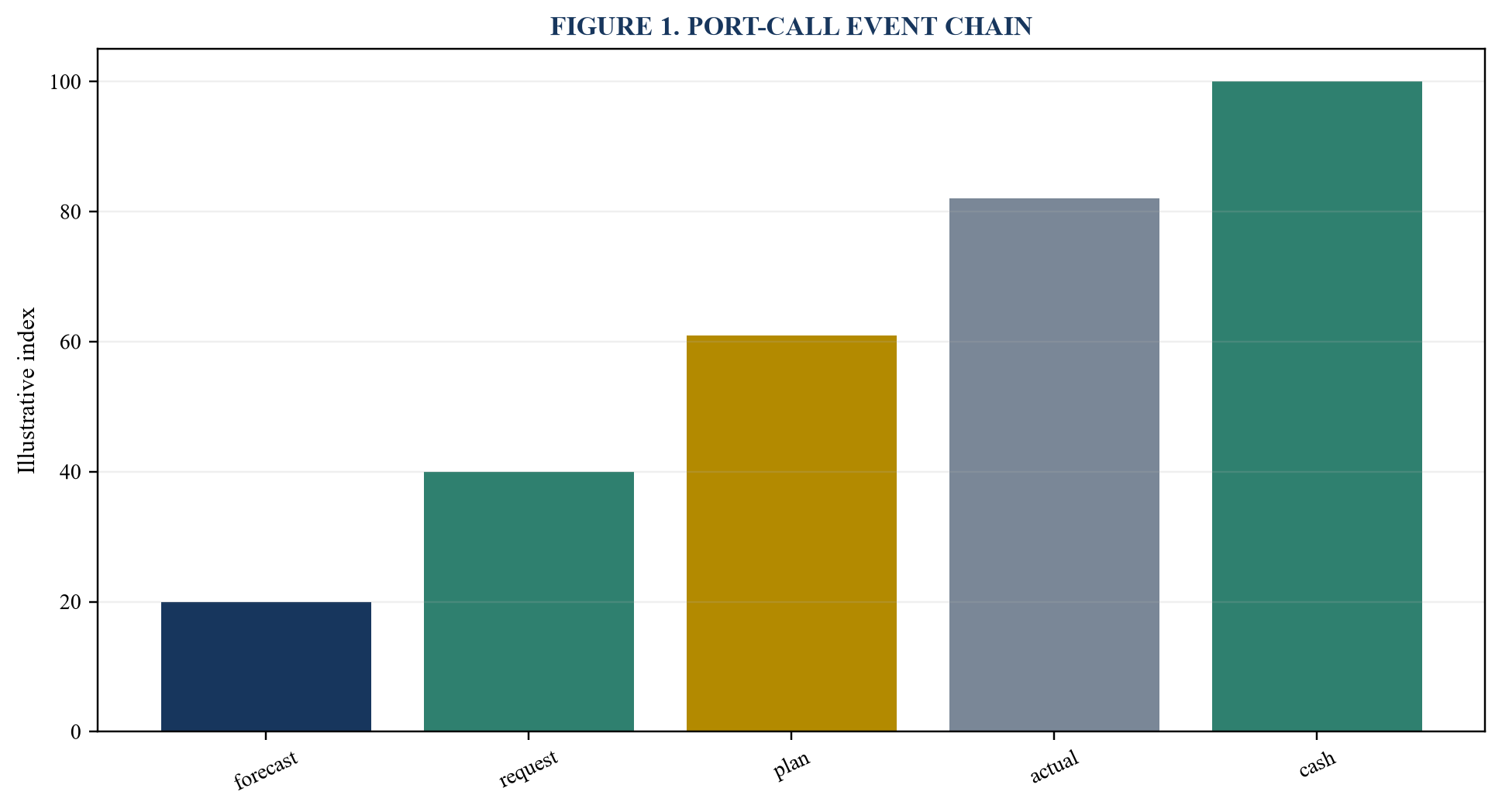
Shared events connect prediction, authority, execution and cash.
7. Apply the mandatory MSW boundary
IMO Member States have been required to use Maritime Single Windows for electronic exchange of arrival, stay and departure information since 1 January 2024.
Controlled evidence includes FAL requirement; national implementation; competent authority; covered formalities; exception. The immediate decision is to test compliance and process performance against the applicable national system. Definitions should remain stable across MSW, port, terminal, operational and financial records.
Ship, port, border, terminal and finance teams should use stable identifiers and cut-offs. Representative calls should be traced from first notice through settlement.
The operating team and finance team should use the same definitions. Native records should support aggregate dashboards, and sample testing should follow representative cases from input through outcome and cash. Exceptions, failed cases and client concessions remain part of the population. Reconciliation should cover opening and closing balances, acquisitions, disposals, foreign exchange, allocation changes and manual adjustments that could otherwise mimic operating improvement.
8. Implement once-only submission
Information should be requested once and reused where law, purpose, quality, permission and retention allow. Duplicate entry creates delay and inconsistent records.
Controlled evidence includes data request; legal basis; source; reuse rule; recipient; retention; exception. The immediate decision is to remove avoidable re-keying while preserving accountable verification. Definitions should remain stable across MSW, port, terminal, operational and financial records.
Decision makers need bounded downside for data error, model drift, unsafe coordination, cyber incident, service failure, regulatory breach, vendor exit and weak adoption.
Decision makers need both upside and downside. The analysis should state which party controls conversion, what investment remains, when cash appears, which risks survive and whether the result continues after a change of ownership. Unsupported precision should be replaced with bounded scenarios. The committee should record the decision consequence of each range, including price, structure, funding, covenant, integration and monitoring implications.
9. Control identity and access
Ships, agents, officials, terminals and service providers need verified identities, role-based access, delegation, revocation and evidence of who submitted or changed data.
Controlled evidence includes identity proof; role; credential; delegation; access log; revocation; review. The immediate decision is to protect authority and non-repudiation across organisations. Definitions should remain stable across MSW, port, terminal, operational and financial records.
Evidence should remain port-, vessel-, terminal-, cargo- and period-specific. The analysis should preserve rejected messages, overrides, late data, exceptions, service failures and disrupted calls.
The analytical unit should remain stable from source record to valuation conclusion. Reviewers should see the population, exclusions, period, owner and reconciliation to finance. Where evidence is incomplete, the model should retain a range and identify the action needed to narrow it. Comparisons should preserve product, customer, site, complexity and market conditions; aggregation should not conceal adverse cohorts or delayed consequences.
10. Authenticate and preserve integrity
Electronic exchange should protect authenticity, integrity and confidentiality. A correct message can still be unreliable if the sender, version or transformation is unclear.
Controlled evidence includes signature; certificate; checksum; channel; timestamp; receipt; archive. The immediate decision is to make every material submission and response independently verifiable. Definitions should remain stable across MSW, port, terminal, operational and financial records.
Finance should distinguish observed operation, public-authority decision, management estimate, funded action, forecast and buyer-specific opportunity. Every benefit needs timing, full cost, responsibility and a route to cash.
Evidence should distinguish observation, estimate, management plan and transaction judgement. A supported claim includes timing, full cost, dependency, transferability and a cash consequence. Sensitivity should show how the conclusion changes when adoption, demand, quality or persistence underperforms. Material assumptions need validation dates, accountable owners and explicit expiry conditions so that stale expectations do not survive into pricing or financing decisions.
11. Create the interoperability register
Interfaces should state message, schema, protocol, version, owner, service level, error handling and change process. Point-to-point connections can multiply hidden dependencies.
Controlled evidence includes interface catalogue; schema; API; message broker; version; SLA; owner. The immediate decision is to govern interoperability as a portfolio of controlled contracts. Definitions should remain stable across MSW, port, terminal, operational and financial records.
Ship, port, border, terminal and finance teams should use stable identifiers and cut-offs. Representative calls should be traced from first notice through settlement.
The operating team and finance team should use the same definitions. Native records should support aggregate dashboards, and sample testing should follow representative cases from input through outcome and cash. Exceptions, failed cases and client concessions remain part of the population. Reconciliation should cover opening and closing balances, acquisitions, disposals, foreign exchange, allocation changes and manual adjustments that could otherwise mimic operating improvement.
12. Reconcile master data
Vessel, voyage, port, berth, terminal, cargo, party and document identifiers should remain consistent across MSW, PCS, terminal and enterprise systems.
Controlled evidence includes master record; identifier; alias; ownership; quality rule; reconciliation. The immediate decision is to prevent matching errors from becoming clearance or operational delay. Definitions should remain stable across MSW, port, terminal, operational and financial records.
Decision makers need bounded downside for data error, model drift, unsafe coordination, cyber incident, service failure, regulatory breach, vendor exit and weak adoption.
Decision makers need both upside and downside. The analysis should state which party controls conversion, what investment remains, when cash appears, which risks survive and whether the result continues after a change of ownership. Unsupported precision should be replaced with bounded scenarios. The committee should record the decision consequence of each range, including price, structure, funding, covenant, integration and monitoring implications.
Table 2. Master-data controls
| Object | Control | Failure consequence |
|---|---|---|
| vessel | unique identifier and particulars | misrouted declaration |
| port and berth | controlled location code | wrong operational plan |
| party | verified identity and role | unauthorised action |
| cargo | manifest and amendment lineage | hold or unsafe handling |
Replace illustrative classifications with company-specific evidence and approved transaction treatment.
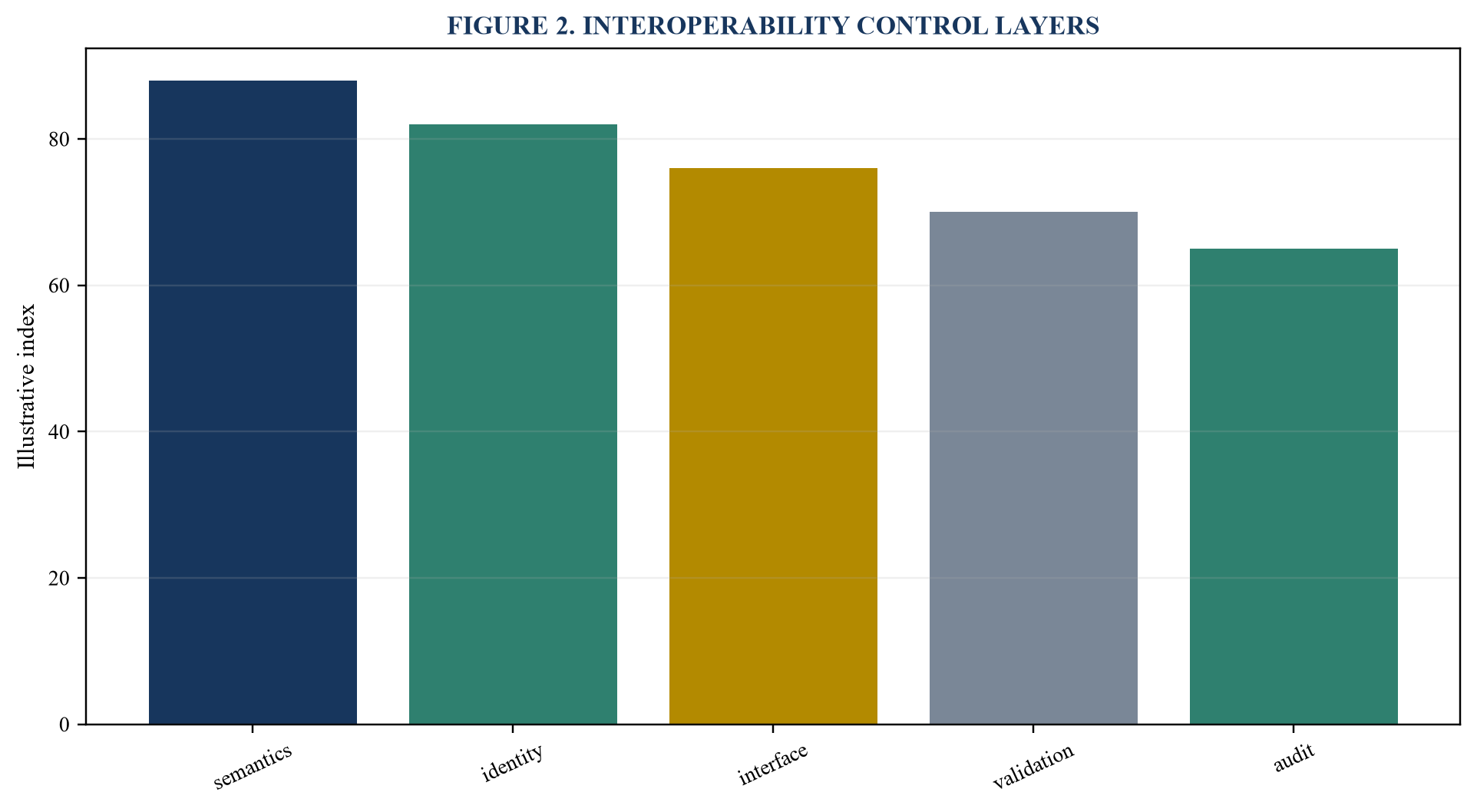
Replace illustrative indices with system- and jurisdiction-specific evidence.
13. Structure pre-arrival information
Pre-arrival notices and declarations should be complete, timely, validated and linked to expected operational events. Early submission without usable quality has limited value.
Controlled evidence includes submission deadline; field completeness; validation; acknowledgement; correction; owner. The immediate decision is to measure decision-ready information before the operating window. Definitions should remain stable across MSW, port, terminal, operational and financial records.
Evidence should remain port-, vessel-, terminal-, cargo- and period-specific. The analysis should preserve rejected messages, overrides, late data, exceptions, service failures and disrupted calls.
The analytical unit should remain stable from source record to valuation conclusion. Reviewers should see the population, exclusions, period, owner and reconciliation to finance. Where evidence is incomplete, the model should retain a range and identify the action needed to narrow it. Comparisons should preserve product, customer, site, complexity and market conditions; aggregation should not conceal adverse cohorts or delayed consequences.
14. Predict vessel arrival responsibly
ETA models should preserve forecast horizon, source, uncertainty, weather, route, speed, congestion and operational constraint. Point accuracy alone is insufficient.
Controlled evidence includes forecast version; issue time; confidence; actual event; route context; error. The immediate decision is to connect ETA improvement to an authorised berth or service decision. Definitions should remain stable across MSW, port, terminal, operational and financial records.
Finance should distinguish observed operation, public-authority decision, management estimate, funded action, forecast and buyer-specific opportunity. Every benefit needs timing, full cost, responsibility and a route to cash.
Evidence should distinguish observation, estimate, management plan and transaction judgement. A supported claim includes timing, full cost, dependency, transferability and a cash consequence. Sensitivity should show how the conclusion changes when adoption, demand, quality or persistence underperforms. Material assumptions need validation dates, accountable owners and explicit expiry conditions so that stale expectations do not survive into pricing or financing decisions.
15. Predict berth readiness
Berth availability depends on preceding calls, cargo completion, labour, equipment, tide, draft, safety, inspection and terminal constraints.
Controlled evidence includes berth plan; predecessor event; cargo state; equipment; labour; restriction; confidence. The immediate decision is to use feasible readiness windows rather than one unsupported timestamp. Definitions should remain stable across MSW, port, terminal, operational and financial records.
Ship, port, border, terminal and finance teams should use stable identifiers and cut-offs. Representative calls should be traced from first notice through settlement.
The operating team and finance team should use the same definitions. Native records should support aggregate dashboards, and sample testing should follow representative cases from input through outcome and cash. Exceptions, failed cases and client concessions remain part of the population. Reconciliation should cover opening and closing balances, acquisitions, disposals, foreign exchange, allocation changes and manual adjustments that could otherwise mimic operating improvement.
16. Coordinate nautical services
Pilotage, towage, mooring, fairway, traffic services, tide and weather should be synchronised to an executable movement plan.
Controlled evidence includes service request; acceptance; resource; restriction; event time; cancellation; invoice. The immediate decision is to prevent isolated optimisation from moving delay to another service. Definitions should remain stable across MSW, port, terminal, operational and financial records.
Decision makers need bounded downside for data error, model drift, unsafe coordination, cyber incident, service failure, regulatory breach, vendor exit and weak adoption.
Decision makers need both upside and downside. The analysis should state which party controls conversion, what investment remains, when cash appears, which risks survive and whether the result continues after a change of ownership. Unsupported precision should be replaced with bounded scenarios. The committee should record the decision consequence of each range, including price, structure, funding, covenant, integration and monitoring implications.
17. Coordinate terminal operations
Crane, yard, gate, labour, equipment, stowage and cargo readiness determine whether berth time converts into throughput.
Controlled evidence includes terminal plan; crane intensity; yard state; labour; equipment status; move record. The immediate decision is to connect vessel planning to terminal capacity and exceptions. Definitions should remain stable across MSW, port, terminal, operational and financial records.
Evidence should remain port-, vessel-, terminal-, cargo- and period-specific. The analysis should preserve rejected messages, overrides, late data, exceptions, service failures and disrupted calls.
The analytical unit should remain stable from source record to valuation conclusion. Reviewers should see the population, exclusions, period, owner and reconciliation to finance. Where evidence is incomplete, the model should retain a range and identify the action needed to narrow it. Comparisons should preserve product, customer, site, complexity and market conditions; aggregation should not conceal adverse cohorts or delayed consequences.
18. Integrate cargo and customs release
Cargo flow depends on manifest, risk assessment, inspection, duty, permits, holds and release. Vessel departure and cargo availability have different event boundaries.
Controlled evidence includes manifest; declaration; inspection; hold; payment; release; amendment. The immediate decision is to separate vessel clearance from cargo release and working capital. Definitions should remain stable across MSW, port, terminal, operational and financial records.
Finance should distinguish observed operation, public-authority decision, management estimate, funded action, forecast and buyer-specific opportunity. Every benefit needs timing, full cost, responsibility and a route to cash.
Evidence should distinguish observation, estimate, management plan and transaction judgement. A supported claim includes timing, full cost, dependency, transferability and a cash consequence. Sensitivity should show how the conclusion changes when adoption, demand, quality or persistence underperforms. Material assumptions need validation dates, accountable owners and explicit expiry conditions so that stale expectations do not survive into pricing or financing decisions.
19. Integrate immigration, health and security
Crew, passenger, health and security processes have distinct legal purposes, data sensitivity and decision rights.
Controlled evidence includes declaration; competent authority; purpose; status; decision; retention; access. The immediate decision is to preserve regulatory authority and privacy while reducing avoidable delay. Definitions should remain stable across MSW, port, terminal, operational and financial records.
Ship, port, border, terminal and finance teams should use stable identifiers and cut-offs. Representative calls should be traced from first notice through settlement.
The operating team and finance team should use the same definitions. Native records should support aggregate dashboards, and sample testing should follow representative cases from input through outcome and cash. Exceptions, failed cases and client concessions remain part of the population. Reconciliation should cover opening and closing balances, acquisitions, disposals, foreign exchange, allocation changes and manual adjustments that could otherwise mimic operating improvement.
20. Control dangerous-goods information
Dangerous-goods classification, packaging, stowage, segregation, emergency information and approvals affect safe port and terminal handling.
Controlled evidence includes declaration; code; document; stowage; approval; exception; response. The immediate decision is to treat safety-critical data as a hard operating constraint. Definitions should remain stable across MSW, port, terminal, operational and financial records.
Decision makers need bounded downside for data error, model drift, unsafe coordination, cyber incident, service failure, regulatory breach, vendor exit and weak adoption.
Decision makers need both upside and downside. The analysis should state which party controls conversion, what investment remains, when cash appears, which risks survive and whether the result continues after a change of ownership. Unsupported precision should be replaced with bounded scenarios. The committee should record the decision consequence of each range, including price, structure, funding, covenant, integration and monitoring implications.
21. Manage electronic trade and ship documents
Electronic bills, certificates, bunker records and supporting documents need authenticity, authority, version and acceptance across applicable parties.
Controlled evidence includes document type; issuer; holder; signature; version; acceptance; revocation. The immediate decision is to link document status to the process decision it enables. Definitions should remain stable across MSW, port, terminal, operational and financial records.
Evidence should remain port-, vessel-, terminal-, cargo- and period-specific. The analysis should preserve rejected messages, overrides, late data, exceptions, service failures and disrupted calls.
The analytical unit should remain stable from source record to valuation conclusion. Reviewers should see the population, exclusions, period, owner and reconciliation to finance. Where evidence is incomplete, the model should retain a range and identify the action needed to narrow it. Comparisons should preserve product, customer, site, complexity and market conditions; aggregation should not conceal adverse cohorts or delayed consequences.
22. Design verification and correction
Automated validation should distinguish format, semantic, cross-field, source and risk checks. Rejection without a clear correction path can increase delay.
Controlled evidence includes rule; severity; message; owner; correction; resubmission; outcome. The immediate decision is to make validation errors actionable and measurable. Definitions should remain stable across MSW, port, terminal, operational and financial records.
Finance should distinguish observed operation, public-authority decision, management estimate, funded action, forecast and buyer-specific opportunity. Every benefit needs timing, full cost, responsibility and a route to cash.
Evidence should distinguish observation, estimate, management plan and transaction judgement. A supported claim includes timing, full cost, dependency, transferability and a cash consequence. Sensitivity should show how the conclusion changes when adoption, demand, quality or persistence underperforms. Material assumptions need validation dates, accountable owners and explicit expiry conditions so that stale expectations do not survive into pricing or financing decisions.
23. Operate the exception queue
Late, conflicting, missing or suspicious data require triage, authority, evidence and service-level targets. Average automation rates can conceal the costly tail.
Controlled evidence includes exception; priority; owner; age; action; resolution; root cause. The immediate decision is to manage exceptions as an operational product rather than system noise. Definitions should remain stable across MSW, port, terminal, operational and financial records.
Ship, port, border, terminal and finance teams should use stable identifiers and cut-offs. Representative calls should be traced from first notice through settlement.
The operating team and finance team should use the same definitions. Native records should support aggregate dashboards, and sample testing should follow representative cases from input through outcome and cash. Exceptions, failed cases and client concessions remain part of the population. Reconciliation should cover opening and closing balances, acquisitions, disposals, foreign exchange, allocation changes and manual adjustments that could otherwise mimic operating improvement.
24. Apply just-in-time arrival
A reliable requested arrival time can support economical vessel speed when berth, fairway and services are genuinely available and charter arrangements permit.
Controlled evidence includes requested arrival; berth readiness; service plan; vessel decision; actual event; reason. The immediate decision is to convert trusted port readiness into a feasible vessel action. Definitions should remain stable across MSW, port, terminal, operational and financial records.
Decision makers need bounded downside for data error, model drift, unsafe coordination, cyber incident, service failure, regulatory breach, vendor exit and weak adoption.
Decision makers need both upside and downside. The analysis should state which party controls conversion, what investment remains, when cash appears, which risks survive and whether the result continues after a change of ownership. Unsupported precision should be replaced with bounded scenarios. The committee should record the decision consequence of each range, including price, structure, funding, covenant, integration and monitoring implications.
Table 3. Just-in-time evidence
| Layer | Evidence | Control risk |
|---|---|---|
| port | berth and service readiness | optimistic availability |
| vessel | safe route and speed decision | unfeasible instruction |
| contract | authority and consequence | misallocated cost |
| outcome | arrival, waiting, fuel and cash | weak attribution |
Replace illustrative classifications with company-specific evidence and approved transaction treatment.
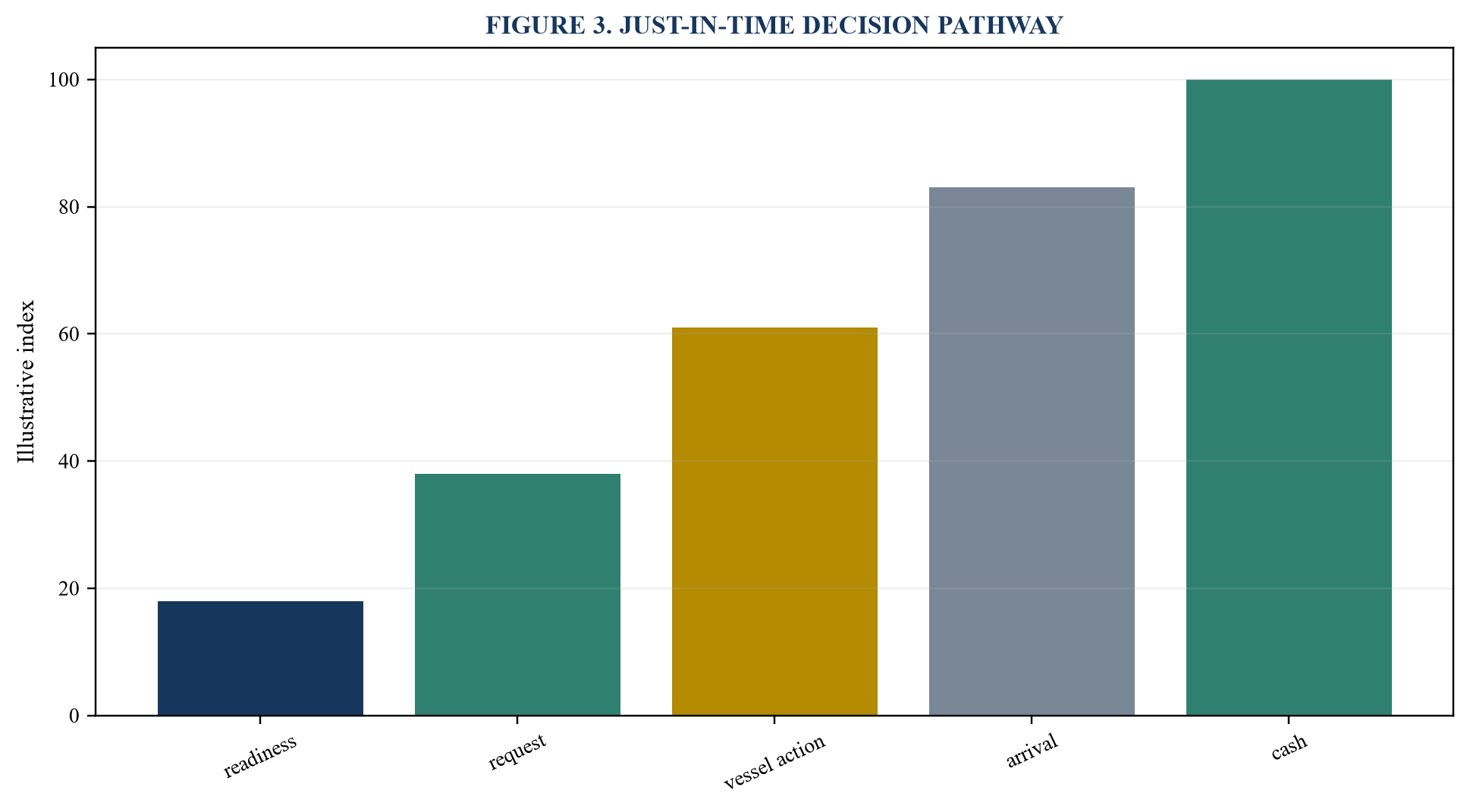
Readiness creates value only through a feasible vessel and service decision.
25. Measure port and anchorage dwell
Dwell should separate waiting, regulatory, nautical, berth, cargo, service and disruption time. One average can hide controllable bottlenecks.
Controlled evidence includes event timestamps; reason code; responsible process; vessel cohort; exception. The immediate decision is to assign time to reproducible process intervals and causes. Definitions should remain stable across MSW, port, terminal, operational and financial records.
Evidence should remain port-, vessel-, terminal-, cargo- and period-specific. The analysis should preserve rejected messages, overrides, late data, exceptions, service failures and disrupted calls.
The analytical unit should remain stable from source record to valuation conclusion. Reviewers should see the population, exclusions, period, owner and reconciliation to finance. Where evidence is incomplete, the model should retain a range and identify the action needed to narrow it. Comparisons should preserve product, customer, site, complexity and market conditions; aggregation should not conceal adverse cohorts or delayed consequences.
26. Measure throughput without losing quality
Throughput can include calls, vessel moves, cargo units, tonnes or revenue. Safety, congestion, service reliability and asset intensity should remain visible.
Controlled evidence includes capacity definition; volume; time; resource; safety event; service metric. The immediate decision is to value sustainable flow rather than gross activity alone. Definitions should remain stable across MSW, port, terminal, operational and financial records.
Finance should distinguish observed operation, public-authority decision, management estimate, funded action, forecast and buyer-specific opportunity. Every benefit needs timing, full cost, responsibility and a route to cash.
Evidence should distinguish observation, estimate, management plan and transaction judgement. A supported claim includes timing, full cost, dependency, transferability and a cash consequence. Sensitivity should show how the conclusion changes when adoption, demand, quality or persistence underperforms. Material assumptions need validation dates, accountable owners and explicit expiry conditions so that stale expectations do not survive into pricing or financing decisions.
27. Build the working-capital clock
Working capital can move through documentation, discharge, inspection, release, invoicing, disputes and collection. Port time and cash time are related but distinct.
Controlled evidence includes cargo event; title and control; invoice; duty; release; dispute; collection. The immediate decision is to trace each operational change to a specific cash-timing mechanism. Definitions should remain stable across MSW, port, terminal, operational and financial records.
Ship, port, border, terminal and finance teams should use stable identifiers and cut-offs. Representative calls should be traced from first notice through settlement.
The operating team and finance team should use the same definitions. Native records should support aggregate dashboards, and sample testing should follow representative cases from input through outcome and cash. Exceptions, failed cases and client concessions remain part of the population. Reconciliation should cover opening and closing balances, acquisitions, disposals, foreign exchange, allocation changes and manual adjustments that could otherwise mimic operating improvement.
28. Reconcile revenue and operating cost
Digital change can affect harbour dues, berth, storage, demurrage, labour, agency, fuel, service revenue and penalties. Tariff and incidence matter.
Controlled evidence includes tariff; contract; quantity; invoice; credit; settlement; full cost. The immediate decision is to bridge activity change to paid or collected cash. Definitions should remain stable across MSW, port, terminal, operational and financial records.
Decision makers need bounded downside for data error, model drift, unsafe coordination, cyber incident, service failure, regulatory breach, vendor exit and weak adoption.
Decision makers need both upside and downside. The analysis should state which party controls conversion, what investment remains, when cash appears, which risks survive and whether the result continues after a change of ownership. Unsupported precision should be replaced with bounded scenarios. The committee should record the decision consequence of each range, including price, structure, funding, covenant, integration and monitoring implications.
29. Validate AI by decision horizon
Arrival, berth, cargo and exception models have different horizons, labels and error costs. Validation should preserve port, terminal, vessel and disruption cohorts.
Controlled evidence includes model objective; training period; test set; horizon; error; threshold; drift. The immediate decision is to approve each model only for an evidenced operating decision. Definitions should remain stable across MSW, port, terminal, operational and financial records.
Evidence should remain port-, vessel-, terminal-, cargo- and period-specific. The analysis should preserve rejected messages, overrides, late data, exceptions, service failures and disrupted calls.
The analytical unit should remain stable from source record to valuation conclusion. Reviewers should see the population, exclusions, period, owner and reconciliation to finance. Where evidence is incomplete, the model should retain a range and identify the action needed to narrow it. Comparisons should preserve product, customer, site, complexity and market conditions; aggregation should not conceal adverse cohorts or delayed consequences.
30. Keep accountable human control
Harbour masters, officials, planners, agents and operators need clear authority, escalation, override and reason recording. Safety and public-law decisions remain accountable.
Controlled evidence includes role; competence; recommendation; approval; override; reason; audit trail. The immediate decision is to make human judgement reviewable and improve the model safely. Definitions should remain stable across MSW, port, terminal, operational and financial records.
Finance should distinguish observed operation, public-authority decision, management estimate, funded action, forecast and buyer-specific opportunity. Every benefit needs timing, full cost, responsibility and a route to cash.
Evidence should distinguish observation, estimate, management plan and transaction judgement. A supported claim includes timing, full cost, dependency, transferability and a cash consequence. Sensitivity should show how the conclusion changes when adoption, demand, quality or persistence underperforms. Material assumptions need validation dates, accountable owners and explicit expiry conditions so that stale expectations do not survive into pricing or financing decisions.
31. Secure the MSW ecosystem
MSWs connect public authorities and commercial systems. Cyber compromise can affect confidentiality, clearance, safety, trade continuity and evidence integrity.
Controlled evidence includes asset inventory; access; segmentation; monitoring; backup; incident response; continuity. The immediate decision is to treat cyber resilience and recovery as service requirements. Definitions should remain stable across MSW, port, terminal, operational and financial records.
Ship, port, border, terminal and finance teams should use stable identifiers and cut-offs. Representative calls should be traced from first notice through settlement.
The operating team and finance team should use the same definitions. Native records should support aggregate dashboards, and sample testing should follow representative cases from input through outcome and cash. Exceptions, failed cases and client concessions remain part of the population. Reconciliation should cover opening and closing balances, acquisitions, disposals, foreign exchange, allocation changes and manual adjustments that could otherwise mimic operating improvement.
32. Govern privacy and purpose
Crew, passenger, health and commercial data should be collected, used, shared and retained under applicable legal authority and defined purpose.
Controlled evidence includes data category; legal basis; purpose; recipient; retention; deletion; access. The immediate decision is to limit data use while preserving required process evidence. Definitions should remain stable across MSW, port, terminal, operational and financial records.
Decision makers need bounded downside for data error, model drift, unsafe coordination, cyber incident, service failure, regulatory breach, vendor exit and weak adoption.
Decision makers need both upside and downside. The analysis should state which party controls conversion, what investment remains, when cash appears, which risks survive and whether the result continues after a change of ownership. Unsupported precision should be replaced with bounded scenarios. The committee should record the decision consequence of each range, including price, structure, funding, covenant, integration and monitoring implications.
33. Design open and portable interfaces
Port and national systems should manage standards, local extensions, APIs, event subscriptions, testing and migration so stakeholders can connect predictably.
Controlled evidence includes specification; conformance test; sandbox; change notice; portability; exit plan. The immediate decision is to reduce switching cost and fragmented bilateral integration. Definitions should remain stable across MSW, port, terminal, operational and financial records.
Evidence should remain port-, vessel-, terminal-, cargo- and period-specific. The analysis should preserve rejected messages, overrides, late data, exceptions, service failures and disrupted calls.
The analytical unit should remain stable from source record to valuation conclusion. Reviewers should see the population, exclusions, period, owner and reconciliation to finance. Where evidence is incomplete, the model should retain a range and identify the action needed to narrow it. Comparisons should preserve product, customer, site, complexity and market conditions; aggregation should not conceal adverse cohorts or delayed consequences.
34. Contract for performance and continuity
Technology contracts should address service levels, data rights, cybersecurity, model change, audit access, incident response, subcontractors, assignment and exit support.
Controlled evidence includes contract; SLA; data licence; IP; support; change; termination; transition. The immediate decision is to preserve operation and evidence after vendor or ownership change. Definitions should remain stable across MSW, port, terminal, operational and financial records.
Finance should distinguish observed operation, public-authority decision, management estimate, funded action, forecast and buyer-specific opportunity. Every benefit needs timing, full cost, responsibility and a route to cash.
Evidence should distinguish observation, estimate, management plan and transaction judgement. A supported claim includes timing, full cost, dependency, transferability and a cash consequence. Sensitivity should show how the conclusion changes when adoption, demand, quality or persistence underperforms. Material assumptions need validation dates, accountable owners and explicit expiry conditions so that stale expectations do not survive into pricing or financing decisions.
35. Create matched port-call cohorts
Cohorts should preserve vessel type, service, terminal, cargo, direction, season, congestion and disruption. Matching rules should be fixed before reviewing outcomes.
Controlled evidence includes population; inclusion; exclusion; matching key; balance test; observation period. The immediate decision is to reduce mix bias while retaining adverse calls and exceptions. Definitions should remain stable across MSW, port, terminal, operational and financial records.
Ship, port, border, terminal and finance teams should use stable identifiers and cut-offs. Representative calls should be traced from first notice through settlement.
The operating team and finance team should use the same definitions. Native records should support aggregate dashboards, and sample testing should follow representative cases from input through outcome and cash. Exceptions, failed cases and client concessions remain part of the population. Reconciliation should cover opening and closing balances, acquisitions, disposals, foreign exchange, allocation changes and manual adjustments that could otherwise mimic operating improvement.
36. Attribute time and throughput outcomes
Dwell and throughput can change because of volume, weather, labour, equipment, regulation, network disruption or digital intervention. Attribution needs reconciled cohorts and sensitivity.
Controlled evidence includes baseline; intervention; confounder; timing; calculation; reviewer; range. The immediate decision is to avoid crediting every favourable variance to AI or the MSW. Definitions should remain stable across MSW, port, terminal, operational and financial records.
Decision makers need bounded downside for data error, model drift, unsafe coordination, cyber incident, service failure, regulatory breach, vendor exit and weak adoption.
Decision makers need both upside and downside. The analysis should state which party controls conversion, what investment remains, when cash appears, which risks survive and whether the result continues after a change of ownership. Unsupported precision should be replaced with bounded scenarios. The committee should record the decision consequence of each range, including price, structure, funding, covenant, integration and monitoring implications.
37. Build the cash-flow bridge
The bridge should reconcile vessel time, fuel, berth and service cost, demurrage, storage, cargo release, invoice timing, collection, technology, people and working capital.
Controlled evidence includes event ledger; tariff; contract; invoice; collection; technology cost; reconciliation. The immediate decision is to separate gross time benefit from recurring free cash flow. Definitions should remain stable across MSW, port, terminal, operational and financial records.
Evidence should remain port-, vessel-, terminal-, cargo- and period-specific. The analysis should preserve rejected messages, overrides, late data, exceptions, service failures and disrupted calls.
The analytical unit should remain stable from source record to valuation conclusion. Reviewers should see the population, exclusions, period, owner and reconciliation to finance. Where evidence is incomplete, the model should retain a range and identify the action needed to narrow it. Comparisons should preserve product, customer, site, complexity and market conditions; aggregation should not conceal adverse cohorts or delayed consequences.
Table 4. Port-call cash bridge
| Line | Evidence | Primary risk |
|---|---|---|
| vessel time | event-level duration | mix and causality |
| port cost | tariff and invoice | economic incidence |
| cargo release | hold and release timestamps | boundary mismatch |
| working capital | invoice and collection | cash timing |
| technology | steady-state system and people | omitted full cost |
| cash | ledger and bank reconciliation | persistence |
Replace illustrative classifications with company-specific evidence and approved transaction treatment.
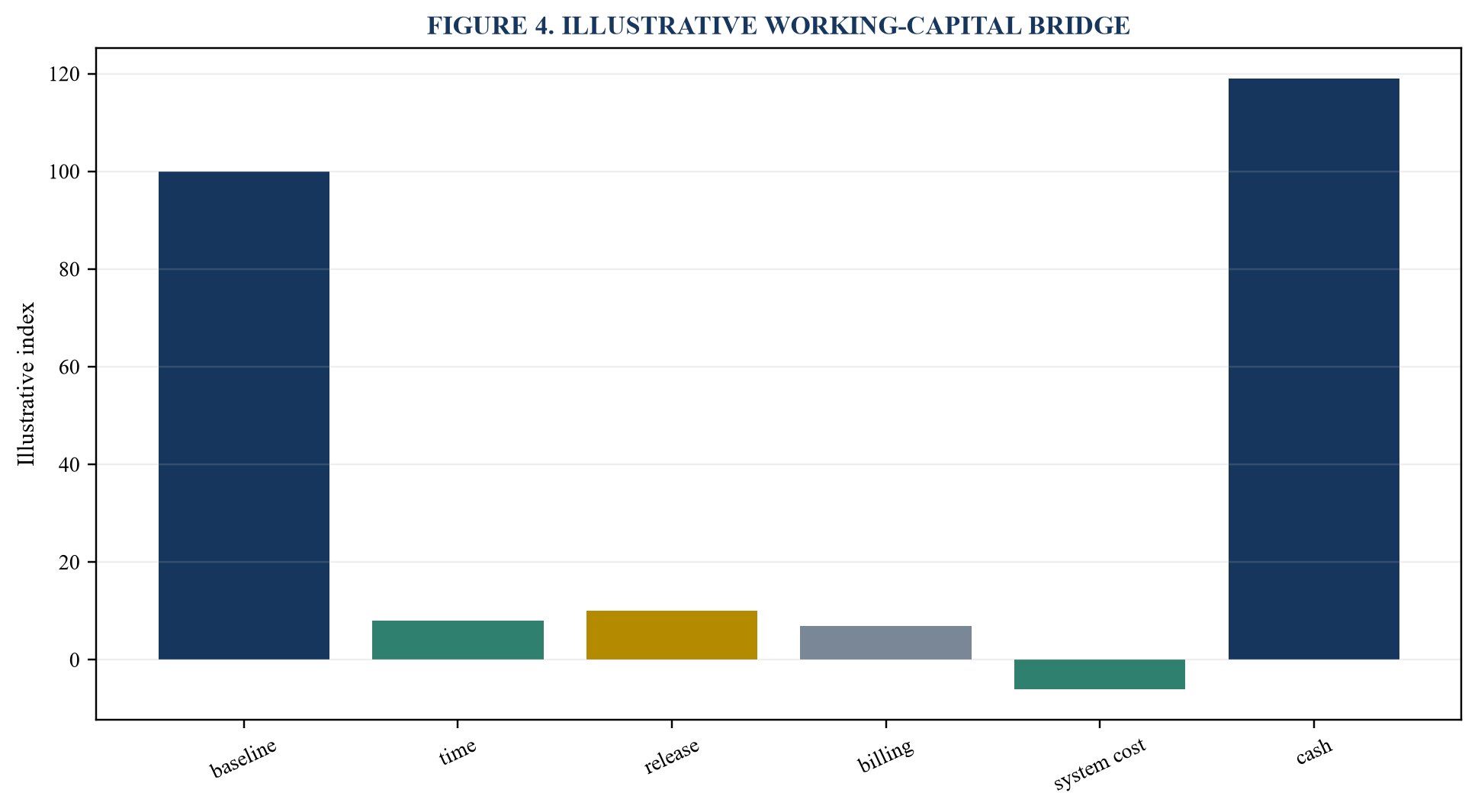
Time, release and collection should be reconciled after full programme cost.
38. Translate outcomes into financing and value
Financing and valuation should distinguish observed performance, funded rollout, forecast, buyer synergy and unresolved implementation risk.
Controlled evidence includes cash bridge; capex; forecast; covenant; discount rate; comparable evidence; downside. The immediate decision is to recognise transferable and persistent cash improvement once. Definitions should remain stable across MSW, port, terminal, operational and financial records.
Finance should distinguish observed operation, public-authority decision, management estimate, funded action, forecast and buyer-specific opportunity. Every benefit needs timing, full cost, responsibility and a route to cash.
Evidence should distinguish observation, estimate, management plan and transaction judgement. A supported claim includes timing, full cost, dependency, transferability and a cash consequence. Sensitivity should show how the conclusion changes when adoption, demand, quality or persistence underperforms. Material assumptions need validation dates, accountable owners and explicit expiry conditions so that stale expectations do not survive into pricing or financing decisions.
39. Build the evidence room and rollout
Sequence authority, process, data, identity, interfaces, model validation, controlled calls, exception operations, financial reconciliation and governance. Preserve native evidence and open findings.
Controlled evidence includes index; source; owner; milestone; dependency; evidence gate; stop criterion. The immediate decision is to release scale capital only as regulatory, operational and cash gates are passed. Definitions should remain stable across MSW, port, terminal, operational and financial records.
Ship, port, border, terminal and finance teams should use stable identifiers and cut-offs. Representative calls should be traced from first notice through settlement.
The operating team and finance team should use the same definitions. Native records should support aggregate dashboards, and sample testing should follow representative cases from input through outcome and cash. Exceptions, failed cases and client concessions remain part of the population. Reconciliation should cover opening and closing balances, acquisitions, disposals, foreign exchange, allocation changes and manual adjustments that could otherwise mimic operating improvement.
Table 5. Evidence-gated rollout
| Period | Primary work | Gate |
|---|---|---|
| days 1-30 | authority, process, data and baseline | approve evidence design |
| days 31-60 | interfaces, models and controlled calls | approve operating case |
| days 61-100 | exceptions, cash and governance | approve scale decision |
Replace illustrative classifications with company-specific evidence and approved transaction treatment.
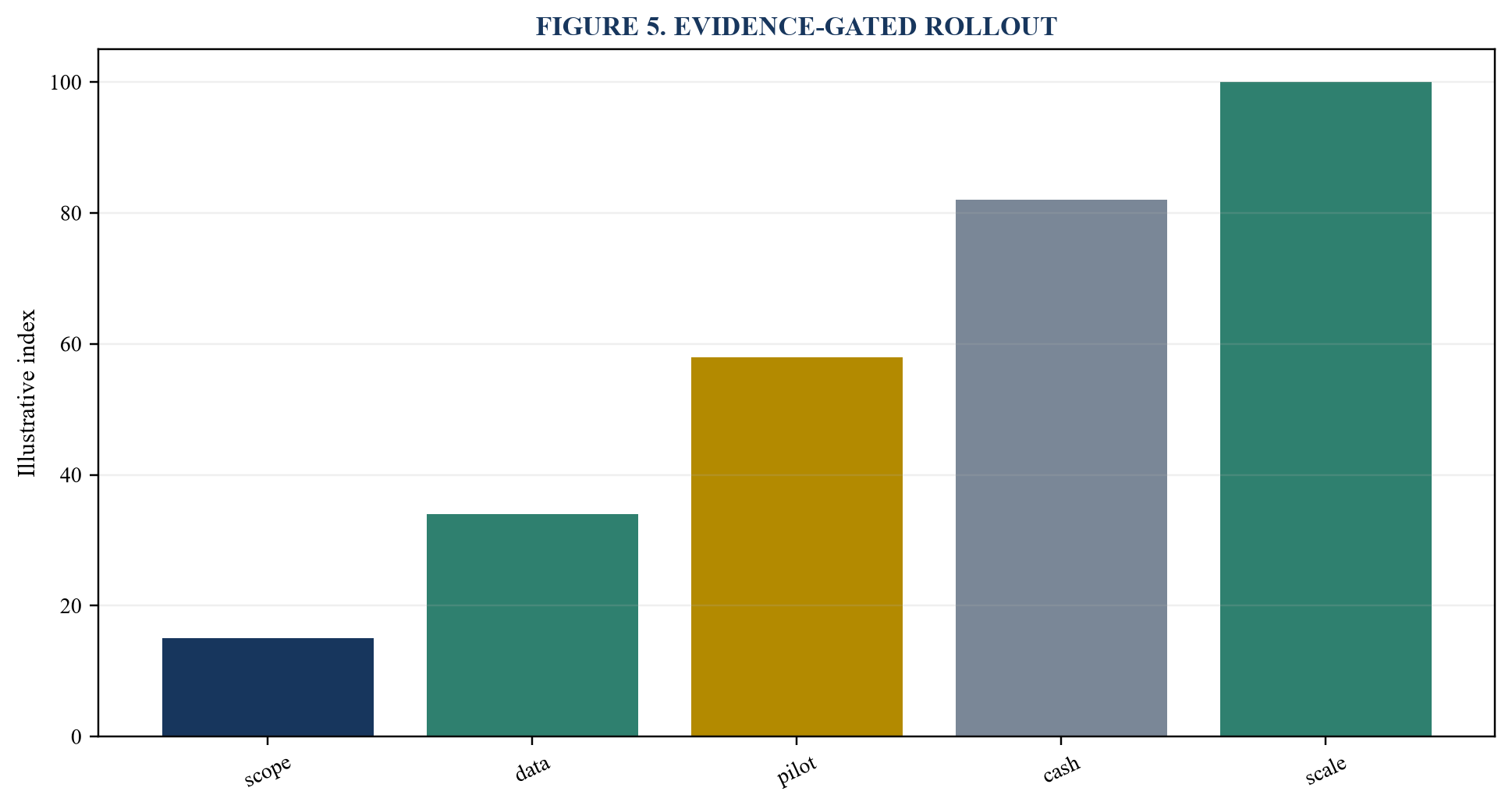
Investment should follow regulatory, operational and financial proof.
40. Conclusion
AI-enabled port calls and Maritime Single Windows create financeable value when interoperable data supports accountable decisions that improve safe throughput and cash conversion after full cost.
Controlled evidence includes port-call event; authority; model version; action; operating outcome; cash; control. The immediate decision is to use one evidence chain across ship, port, border, terminal and finance. Definitions should remain stable across MSW, port, terminal, operational and financial records.
Decision makers need bounded downside for data error, model drift, unsafe coordination, cyber incident, service failure, regulatory breach, vendor exit and weak adoption.
Decision makers need both upside and downside. The analysis should state which party controls conversion, what investment remains, when cash appears, which risks survive and whether the result continues after a change of ownership. Unsupported precision should be replaced with bounded scenarios. The committee should record the decision consequence of each range, including price, structure, funding, covenant, integration and monitoring implications.
References
- International Maritime Organization, Maritime Single Window, https://www.imo.org/en/ourwork/facilitation/pages/maritimesinglewindow-default.aspx
- International Maritime Organization, Facilitation Convention, https://www.imo.org/en/about/conventions/pages/convention-on-facilitation-of-international-maritime-traffic-(fal).aspx
- International Maritime Organization, IMO Compendium on Facilitation and Electronic Business, https://www.imo.org/en/ourwork/facilitation/pages/imocompendium.aspx
- International Maritime Organization, Guidelines for Setting Up a Maritime Single Window, FAL.5/Circ.42/Rev.4, https://www.imo.org/en/ourwork/facilitation/pages/falguidance-default.aspx
- International Maritime Organization, Guidelines for Harmonized Communication and Electronic Exchange of Operational Data for Port Calls, FAL.5/Circ.52, https://imocompendium.imo.org/public/IMO-Compendium/Current/files/FAL.5-Circ.52.pdf
- International Maritime Organization, Guidelines on Authentication, Integrity and Confidentiality via Maritime Single Windows, FAL.5/Circ.46, https://www.imo.org/en/ourwork/facilitation/pages/falguidance-default.aspx
- International Maritime Organization, Recommended Actions to Accelerate MSW Implementation, FAL.16(47), https://www.imo.org/en/ourwork/facilitation/pages/falguidance-default.aspx
- International Maritime Organization, Guidelines on Port Community Systems, FAL.5/Circ.54, https://www.imo.org/en/ourwork/facilitation/pages/falguidance-default.aspx
- International Maritime Organization, IMO to Develop Global Strategy for Maritime Digitalization, https://www.imo.org/en/mediacentre/pressbriefings/pages/imo-global-strategy-maritime-digitalization.aspx
- International Maritime Organization, Facilitation Committee 49th Session Summary, https://www.imo.org/en/mediacentre/meetingsummaries/pages/fal-49th-session.aspx
- International Maritime Organization, Maritime Cyber Risk, https://www.imo.org/en/ourwork/security/pages/cyber-security.aspx
- International Maritime Organization, Guidelines on Maritime Cyber Risk Management, MSC-FAL.1/Circ.3/Rev.3, https://wwwcdn.imo.org/localresources/en/OurWork/Security/Documents/MSC-FAL.1-Circ.3-Rev.3.pdf
- International Maritime Organization, Just-in-Time Arrival Guide, https://greenvoyage2050.imo.org/just-in-time-arrival-guide/
- International Maritime Organization, Lowering Containership Emissions through Just-in-Time Arrivals, https://www.imo.org/en/mediacentre/pages/whatsnew-1718.aspx
- United Nations Economic Commission for Europe, UN/CEFACT Recommendation 33 on Single Window, https://unece.org/trade/documents/2020/04/recommendation-no33-recommendation-and-guidelines-establishing-single-window
- United Nations Economic Commission for Europe, UN/CEFACT Smart Container Business Requirements Specification, https://unece.org/trade/uncefact/brs
- World Customs Organization, WCO Data Model, https://www.wcoomd.org/en/topics/facilitation/instrument-and-tools/tools/data-model.aspx
- World Bank and S&P Global Market Intelligence, Container Port Performance Index, https://www.worldbank.org/en/news/press-release/2024/06/04/global-container-ports-performance-index-2023
- United Nations Conference on Trade and Development, Review of Maritime Transport 2025, https://unctad.org/publication/review-maritime-transport-2025
- International Association of Ports and Harbors, Port Community Systems and Digitalisation Resources, https://www.iaphworldports.org/
- International Port Community Systems Association, Port Community Systems, https://ipcsa.international/
- Digital Container Shipping Association, Port Call Standards, https://dcsa.org/standards/port-call
- International Organization for Standardization, ISO 28005 Electronic Port Clearance, https://www.iso.org/standard/65513.html
- International Organization for Standardization, ISO 19847 Shipboard Data Servers, https://www.iso.org/standard/71995.html
- International Valuation Standards Council, International Valuation Standards, https://ivsc.org/standards/
- IFRS Foundation, IFRS Accounting Standards, https://www.ifrs.org/issued-standards/list-of-standards/
