

1. Define the value thesis
Identify which product, data, customer, research, regulatory and operating capabilities support transaction value.
The controlled record includes person or role; knowledge domain; linked asset, customer, control or milestone; employment status; jurisdiction; IP evidence; access; decision authority; substitutability; retention signal; successor; transfer test; owner; date and remedy. The immediate deliverable is a people-to-value thesis. Each conclusion should distinguish formal title, actual authority, tacit knowledge, documented knowledge and demonstrated successor capability.
The principal failure occurs when management presents talent as culture without linking people to cash flow or risk. Reviewers should reconcile primary employment, IP, repository, customer, governance and interview evidence; test the exact transaction and integration consequence; identify who can assume the work; and quantify delay, revenue, remediation, hiring and valuation exposure.
The decision pack for define the value thesis should show the value claim, dependency, evidence, current holder, restriction, successor, transfer method, acceptance test, retention instrument, milestone, downside, cost, owner and approval. Material exceptions flow into diligence, price, structure, conditions, covenants, warranties, indemnities, escrow, integration sequencing, customer communications, operating reserves and board decisions.
2. Map critical knowledge
Locate tacit and documented knowledge across models, data, product, infrastructure, customers, contracts and regulation.
The controlled record includes person or role; knowledge domain; linked asset, customer, control or milestone; employment status; jurisdiction; IP evidence; access; decision authority; substitutability; retention signal; successor; transfer test; owner; date and remedy. The immediate deliverable is a knowledge dependency map. Each conclusion should distinguish formal title, actual authority, tacit knowledge, documented knowledge and demonstrated successor capability.
The principal failure occurs when critical knowledge is described by job title rather than decision dependency. Reviewers should reconcile primary employment, IP, repository, customer, governance and interview evidence; test the exact transaction and integration consequence; identify who can assume the work; and quantify delay, revenue, remediation, hiring and valuation exposure.
The decision pack for map critical knowledge should show the value claim, dependency, evidence, current holder, restriction, successor, transfer method, acceptance test, retention instrument, milestone, downside, cost, owner and approval. Material exceptions flow into diligence, price, structure, conditions, covenants, warranties, indemnities, escrow, integration sequencing, customer communications, operating reserves and board decisions.
3. Identify key persons
Rank founders, researchers, engineers, product owners, commercial leaders and control specialists by consequence and substitutability.
The controlled record includes person or role; knowledge domain; linked asset, customer, control or milestone; employment status; jurisdiction; IP evidence; access; decision authority; substitutability; retention signal; successor; transfer test; owner; date and remedy. The immediate deliverable is a key-person register. Each conclusion should distinguish formal title, actual authority, tacit knowledge, documented knowledge and demonstrated successor capability.
The principal failure occurs when seniority is used as the only measure of key-person exposure. Reviewers should reconcile primary employment, IP, repository, customer, governance and interview evidence; test the exact transaction and integration consequence; identify who can assume the work; and quantify delay, revenue, remediation, hiring and valuation exposure.
The decision pack for identify key persons should show the value claim, dependency, evidence, current holder, restriction, successor, transfer method, acceptance test, retention instrument, milestone, downside, cost, owner and approval. Material exceptions flow into diligence, price, structure, conditions, covenants, warranties, indemnities, escrow, integration sequencing, customer communications, operating reserves and board decisions.
4. Map founder dependency
Separate vision, product authority, customer trust, fundraising, recruiting, technical architecture and operating approvals.
The controlled record includes person or role; knowledge domain; linked asset, customer, control or milestone; employment status; jurisdiction; IP evidence; access; decision authority; substitutability; retention signal; successor; transfer test; owner; date and remedy. The immediate deliverable is a founder-role decomposition. Each conclusion should distinguish formal title, actual authority, tacit knowledge, documented knowledge and demonstrated successor capability.
The principal failure occurs when the founder's multiple roles remain bundled and untransferable. Reviewers should reconcile primary employment, IP, repository, customer, governance and interview evidence; test the exact transaction and integration consequence; identify who can assume the work; and quantify delay, revenue, remediation, hiring and valuation exposure.
The decision pack for map founder dependency should show the value claim, dependency, evidence, current holder, restriction, successor, transfer method, acceptance test, retention instrument, milestone, downside, cost, owner and approval. Material exceptions flow into diligence, price, structure, conditions, covenants, warranties, indemnities, escrow, integration sequencing, customer communications, operating reserves and board decisions.
5. Map model knowledge
Identify who understands architecture, training, evaluation, failure modes, safety and performance trade-offs.
The controlled record includes person or role; knowledge domain; linked asset, customer, control or milestone; employment status; jurisdiction; IP evidence; access; decision authority; substitutability; retention signal; successor; transfer test; owner; date and remedy. The immediate deliverable is a model-knowledge matrix. Each conclusion should distinguish formal title, actual authority, tacit knowledge, documented knowledge and demonstrated successor capability.
The principal failure occurs when model artefacts exist while material operating knowledge remains tacit. Reviewers should reconcile primary employment, IP, repository, customer, governance and interview evidence; test the exact transaction and integration consequence; identify who can assume the work; and quantify delay, revenue, remediation, hiring and valuation exposure.
The decision pack for map model knowledge should show the value claim, dependency, evidence, current holder, restriction, successor, transfer method, acceptance test, retention instrument, milestone, downside, cost, owner and approval. Material exceptions flow into diligence, price, structure, conditions, covenants, warranties, indemnities, escrow, integration sequencing, customer communications, operating reserves and board decisions.
6. Map data knowledge
Identify who understands provenance, consent, quality, labelling, transformations, access and customer restrictions.
The controlled record includes person or role; knowledge domain; linked asset, customer, control or milestone; employment status; jurisdiction; IP evidence; access; decision authority; substitutability; retention signal; successor; transfer test; owner; date and remedy. The immediate deliverable is a data-stewardship dependency map. Each conclusion should distinguish formal title, actual authority, tacit knowledge, documented knowledge and demonstrated successor capability.
The principal failure occurs when data value cannot be maintained after the people who created the corpus depart. Reviewers should reconcile primary employment, IP, repository, customer, governance and interview evidence; test the exact transaction and integration consequence; identify who can assume the work; and quantify delay, revenue, remediation, hiring and valuation exposure.
The decision pack for map data knowledge should show the value claim, dependency, evidence, current holder, restriction, successor, transfer method, acceptance test, retention instrument, milestone, downside, cost, owner and approval. Material exceptions flow into diligence, price, structure, conditions, covenants, warranties, indemnities, escrow, integration sequencing, customer communications, operating reserves and board decisions.
7. Map product knowledge
Trace roadmap logic, user needs, integrations, pricing, experiments and technical debt to accountable people.
The controlled record includes person or role; knowledge domain; linked asset, customer, control or milestone; employment status; jurisdiction; IP evidence; access; decision authority; substitutability; retention signal; successor; transfer test; owner; date and remedy. The immediate deliverable is a product-decision ledger. Each conclusion should distinguish formal title, actual authority, tacit knowledge, documented knowledge and demonstrated successor capability.
The principal failure occurs when the buyer inherits code without the reasoning that governs product decisions. Reviewers should reconcile primary employment, IP, repository, customer, governance and interview evidence; test the exact transaction and integration consequence; identify who can assume the work; and quantify delay, revenue, remediation, hiring and valuation exposure.
The decision pack for map product knowledge should show the value claim, dependency, evidence, current holder, restriction, successor, transfer method, acceptance test, retention instrument, milestone, downside, cost, owner and approval. Material exceptions flow into diligence, price, structure, conditions, covenants, warranties, indemnities, escrow, integration sequencing, customer communications, operating reserves and board decisions.
8. Map customer dependency
Measure relationship concentration, founder-led selling, solution knowledge, implementation trust and renewal influence.
The controlled record includes person or role; knowledge domain; linked asset, customer, control or milestone; employment status; jurisdiction; IP evidence; access; decision authority; substitutability; retention signal; successor; transfer test; owner; date and remedy. The immediate deliverable is a customer-relationship dependency map. Each conclusion should distinguish formal title, actual authority, tacit knowledge, documented knowledge and demonstrated successor capability.
The principal failure occurs when revenue is transferable in contracts and dependent on personal relationships in practice. Reviewers should reconcile primary employment, IP, repository, customer, governance and interview evidence; test the exact transaction and integration consequence; identify who can assume the work; and quantify delay, revenue, remediation, hiring and valuation exposure.
The decision pack for map customer dependency should show the value claim, dependency, evidence, current holder, restriction, successor, transfer method, acceptance test, retention instrument, milestone, downside, cost, owner and approval. Material exceptions flow into diligence, price, structure, conditions, covenants, warranties, indemnities, escrow, integration sequencing, customer communications, operating reserves and board decisions.
Table 1. Knowledge dependency perimeter
| Domain | Key evidence | Continuity test |
|---|---|---|
| model | architecture and evaluations | successor release |
| data | lineage and controls | stewardship exercise |
| product | decision history | roadmap defence |
| customer | relationship map | joint handover |
Illustrative controls require person-, role-, company-, jurisdiction-, transaction- and period-specific approval.
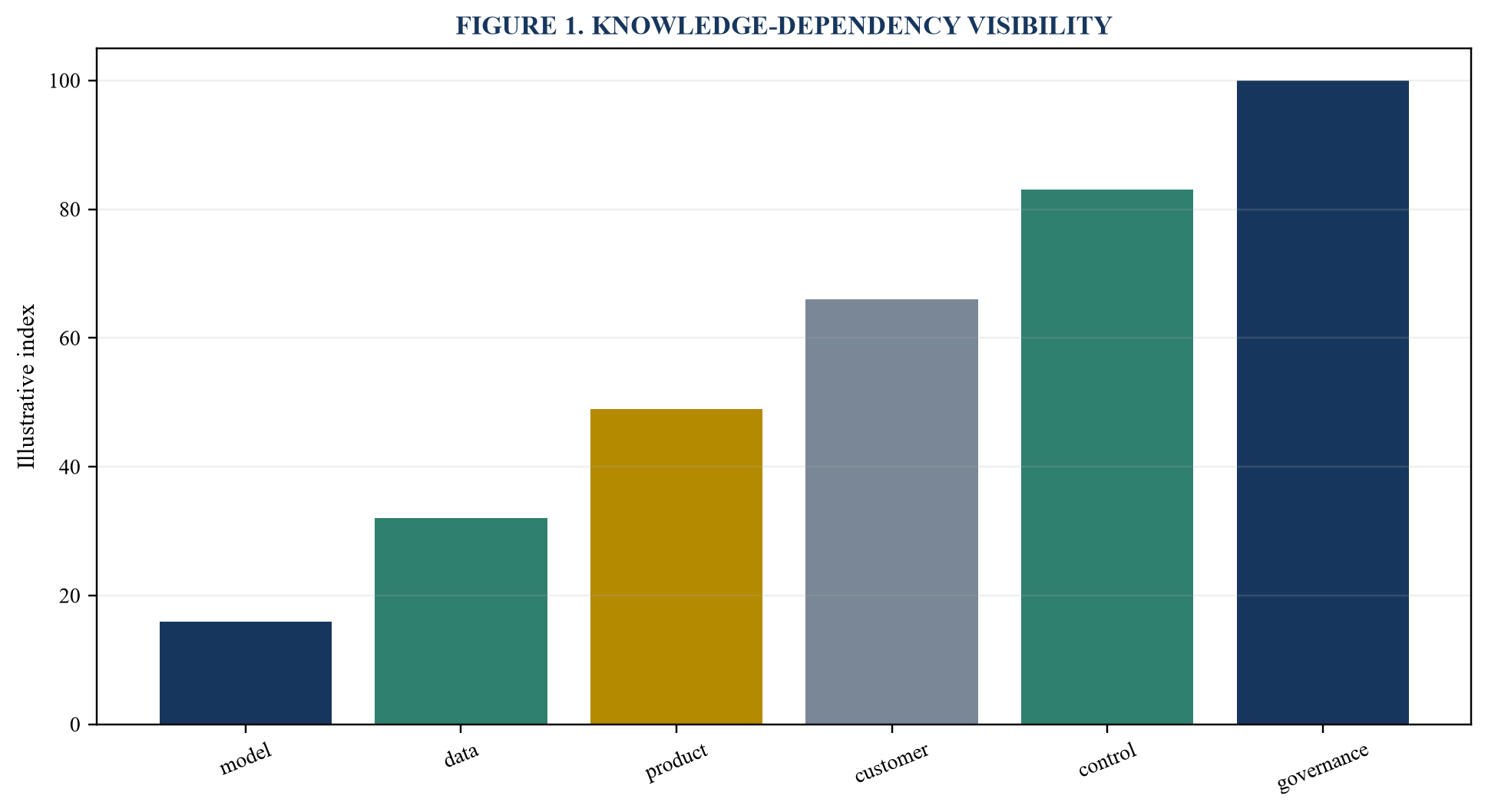
Values are illustrative indices and require replacement with approved transaction evidence.
9. Map partner dependency
Identify who manages cloud, model, data, distribution, research and regulatory counterparties.
The controlled record includes person or role; knowledge domain; linked asset, customer, control or milestone; employment status; jurisdiction; IP evidence; access; decision authority; substitutability; retention signal; successor; transfer test; owner; date and remedy. The immediate deliverable is a partner-continuity schedule. Each conclusion should distinguish formal title, actual authority, tacit knowledge, documented knowledge and demonstrated successor capability.
The principal failure occurs when strategic partnerships rely on informal individual ties. Reviewers should reconcile primary employment, IP, repository, customer, governance and interview evidence; test the exact transaction and integration consequence; identify who can assume the work; and quantify delay, revenue, remediation, hiring and valuation exposure.
The decision pack for map partner dependency should show the value claim, dependency, evidence, current holder, restriction, successor, transfer method, acceptance test, retention instrument, milestone, downside, cost, owner and approval. Material exceptions flow into diligence, price, structure, conditions, covenants, warranties, indemnities, escrow, integration sequencing, customer communications, operating reserves and board decisions.
10. Map regulatory knowledge
Locate accountable knowledge for model risk, privacy, security, sector rules, audit and incident response.
The controlled record includes person or role; knowledge domain; linked asset, customer, control or milestone; employment status; jurisdiction; IP evidence; access; decision authority; substitutability; retention signal; successor; transfer test; owner; date and remedy. The immediate deliverable is a regulatory-knowledge map. Each conclusion should distinguish formal title, actual authority, tacit knowledge, documented knowledge and demonstrated successor capability.
The principal failure occurs when control continuity fails when one specialist leaves. Reviewers should reconcile primary employment, IP, repository, customer, governance and interview evidence; test the exact transaction and integration consequence; identify who can assume the work; and quantify delay, revenue, remediation, hiring and valuation exposure.
The decision pack for map regulatory knowledge should show the value claim, dependency, evidence, current holder, restriction, successor, transfer method, acceptance test, retention instrument, milestone, downside, cost, owner and approval. Material exceptions flow into diligence, price, structure, conditions, covenants, warranties, indemnities, escrow, integration sequencing, customer communications, operating reserves and board decisions.
11. Verify employment status
Reconcile employee, worker, consultant, secondee, adviser and academic affiliations across jurisdictions.
The controlled record includes person or role; knowledge domain; linked asset, customer, control or milestone; employment status; jurisdiction; IP evidence; access; decision authority; substitutability; retention signal; successor; transfer test; owner; date and remedy. The immediate deliverable is a workforce status schedule. Each conclusion should distinguish formal title, actual authority, tacit knowledge, documented knowledge and demonstrated successor capability.
The principal failure occurs when economically critical contributors lack durable engagement terms. Reviewers should reconcile primary employment, IP, repository, customer, governance and interview evidence; test the exact transaction and integration consequence; identify who can assume the work; and quantify delay, revenue, remediation, hiring and valuation exposure.
The decision pack for verify employment status should show the value claim, dependency, evidence, current holder, restriction, successor, transfer method, acceptance test, retention instrument, milestone, downside, cost, owner and approval. Material exceptions flow into diligence, price, structure, conditions, covenants, warranties, indemnities, escrow, integration sequencing, customer communications, operating reserves and board decisions.
12. Verify IP assignment
Test inventions, copyright, software, data, trade secrets, moral rights, waivers and further-assurance obligations.
The controlled record includes person or role; knowledge domain; linked asset, customer, control or milestone; employment status; jurisdiction; IP evidence; access; decision authority; substitutability; retention signal; successor; transfer test; owner; date and remedy. The immediate deliverable is an IP-chain cure register. Each conclusion should distinguish formal title, actual authority, tacit knowledge, documented knowledge and demonstrated successor capability.
The principal failure occurs when company value rests on work that was never validly assigned. Reviewers should reconcile primary employment, IP, repository, customer, governance and interview evidence; test the exact transaction and integration consequence; identify who can assume the work; and quantify delay, revenue, remediation, hiring and valuation exposure.
The decision pack for verify ip assignment should show the value claim, dependency, evidence, current holder, restriction, successor, transfer method, acceptance test, retention instrument, milestone, downside, cost, owner and approval. Material exceptions flow into diligence, price, structure, conditions, covenants, warranties, indemnities, escrow, integration sequencing, customer communications, operating reserves and board decisions.
13. Review prior obligations
Identify previous employers, universities, sponsors, open-source projects, non-disclosure duties and side ventures.
The controlled record includes person or role; knowledge domain; linked asset, customer, control or milestone; employment status; jurisdiction; IP evidence; access; decision authority; substitutability; retention signal; successor; transfer test; owner; date and remedy. The immediate deliverable is a prior-obligations matrix. Each conclusion should distinguish formal title, actual authority, tacit knowledge, documented knowledge and demonstrated successor capability.
The principal failure occurs when incoming talent brought restrictions or third-party material into the target. Reviewers should reconcile primary employment, IP, repository, customer, governance and interview evidence; test the exact transaction and integration consequence; identify who can assume the work; and quantify delay, revenue, remediation, hiring and valuation exposure.
The decision pack for review prior obligations should show the value claim, dependency, evidence, current holder, restriction, successor, transfer method, acceptance test, retention instrument, milestone, downside, cost, owner and approval. Material exceptions flow into diligence, price, structure, conditions, covenants, warranties, indemnities, escrow, integration sequencing, customer communications, operating reserves and board decisions.
14. Review restrictive covenants
Assess non-compete, non-solicit, confidentiality, garden leave and enforceability by jurisdiction.
The controlled record includes person or role; knowledge domain; linked asset, customer, control or milestone; employment status; jurisdiction; IP evidence; access; decision authority; substitutability; retention signal; successor; transfer test; owner; date and remedy. The immediate deliverable is a covenant-enforceability map. Each conclusion should distinguish formal title, actual authority, tacit knowledge, documented knowledge and demonstrated successor capability.
The principal failure occurs when the retention thesis assumes restraints that cannot be enforced. Reviewers should reconcile primary employment, IP, repository, customer, governance and interview evidence; test the exact transaction and integration consequence; identify who can assume the work; and quantify delay, revenue, remediation, hiring and valuation exposure.
The decision pack for review restrictive covenants should show the value claim, dependency, evidence, current holder, restriction, successor, transfer method, acceptance test, retention instrument, milestone, downside, cost, owner and approval. Material exceptions flow into diligence, price, structure, conditions, covenants, warranties, indemnities, escrow, integration sequencing, customer communications, operating reserves and board decisions.
15. Review invention provenance
Connect inventors and contributors to notebooks, commits, disclosures, patents and assignments.
The controlled record includes person or role; knowledge domain; linked asset, customer, control or milestone; employment status; jurisdiction; IP evidence; access; decision authority; substitutability; retention signal; successor; transfer test; owner; date and remedy. The immediate deliverable is an invention provenance file. Each conclusion should distinguish formal title, actual authority, tacit knowledge, documented knowledge and demonstrated successor capability.
The principal failure occurs when patent ownership and actual contribution records diverge. Reviewers should reconcile primary employment, IP, repository, customer, governance and interview evidence; test the exact transaction and integration consequence; identify who can assume the work; and quantify delay, revenue, remediation, hiring and valuation exposure.
The decision pack for review invention provenance should show the value claim, dependency, evidence, current holder, restriction, successor, transfer method, acceptance test, retention instrument, milestone, downside, cost, owner and approval. Material exceptions flow into diligence, price, structure, conditions, covenants, warranties, indemnities, escrow, integration sequencing, customer communications, operating reserves and board decisions.
16. Review trade-secret controls
Test classification, need-to-know access, repositories, logging, exit procedures and enforcement history.
The controlled record includes person or role; knowledge domain; linked asset, customer, control or milestone; employment status; jurisdiction; IP evidence; access; decision authority; substitutability; retention signal; successor; transfer test; owner; date and remedy. The immediate deliverable is a trade-secret control assessment. Each conclusion should distinguish formal title, actual authority, tacit knowledge, documented knowledge and demonstrated successor capability.
The principal failure occurs when valuable know-how lacks measures consistent with trade-secret protection. Reviewers should reconcile primary employment, IP, repository, customer, governance and interview evidence; test the exact transaction and integration consequence; identify who can assume the work; and quantify delay, revenue, remediation, hiring and valuation exposure.
The decision pack for review trade-secret controls should show the value claim, dependency, evidence, current holder, restriction, successor, transfer method, acceptance test, retention instrument, milestone, downside, cost, owner and approval. Material exceptions flow into diligence, price, structure, conditions, covenants, warranties, indemnities, escrow, integration sequencing, customer communications, operating reserves and board decisions.
Table 2. Key-person assessment
| Dimension | Evidence | Decision use |
|---|---|---|
| consequence | value and control link | priority |
| substitutability | successor test | transition time |
| retention | person-specific signal | instrument |
| IP | assignment chain | cure |
Illustrative controls require person-, role-, company-, jurisdiction-, transaction- and period-specific approval.
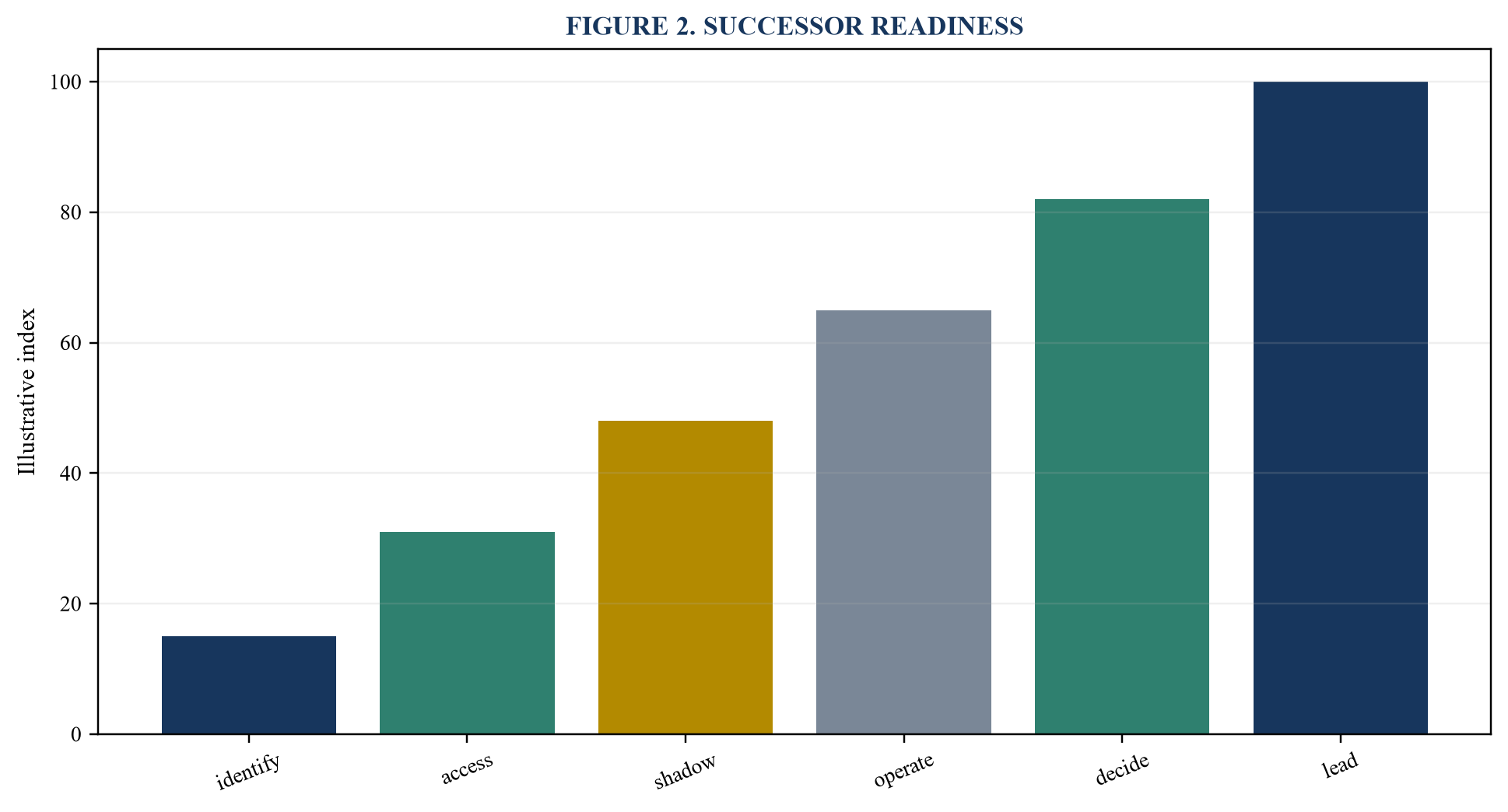
Values are illustrative indices and require replacement with approved transaction evidence.
17. Measure role concentration
Quantify how many critical decisions, systems, customers and approvals depend on each person.
The controlled record includes person or role; knowledge domain; linked asset, customer, control or milestone; employment status; jurisdiction; IP evidence; access; decision authority; substitutability; retention signal; successor; transfer test; owner; date and remedy. The immediate deliverable is a dependency concentration index. Each conclusion should distinguish formal title, actual authority, tacit knowledge, documented knowledge and demonstrated successor capability.
The principal failure occurs when headcount scale conceals concentrated operating authority. Reviewers should reconcile primary employment, IP, repository, customer, governance and interview evidence; test the exact transaction and integration consequence; identify who can assume the work; and quantify delay, revenue, remediation, hiring and valuation exposure.
The decision pack for measure role concentration should show the value claim, dependency, evidence, current holder, restriction, successor, transfer method, acceptance test, retention instrument, milestone, downside, cost, owner and approval. Material exceptions flow into diligence, price, structure, conditions, covenants, warranties, indemnities, escrow, integration sequencing, customer communications, operating reserves and board decisions.
18. Measure substitutability
Estimate internal successor readiness, external hiring time, knowledge depth and productivity ramp.
The controlled record includes person or role; knowledge domain; linked asset, customer, control or milestone; employment status; jurisdiction; IP evidence; access; decision authority; substitutability; retention signal; successor; transfer test; owner; date and remedy. The immediate deliverable is a role substitutability model. Each conclusion should distinguish formal title, actual authority, tacit knowledge, documented knowledge and demonstrated successor capability.
The principal failure occurs when replacement is assumed available at salary cost alone. Reviewers should reconcile primary employment, IP, repository, customer, governance and interview evidence; test the exact transaction and integration consequence; identify who can assume the work; and quantify delay, revenue, remediation, hiring and valuation exposure.
The decision pack for measure substitutability should show the value claim, dependency, evidence, current holder, restriction, successor, transfer method, acceptance test, retention instrument, milestone, downside, cost, owner and approval. Material exceptions flow into diligence, price, structure, conditions, covenants, warranties, indemnities, escrow, integration sequencing, customer communications, operating reserves and board decisions.
19. Measure knowledge transferability
Score codification, teachability, access, evidence quality and practice under supervision.
The controlled record includes person or role; knowledge domain; linked asset, customer, control or milestone; employment status; jurisdiction; IP evidence; access; decision authority; substitutability; retention signal; successor; transfer test; owner; date and remedy. The immediate deliverable is a knowledge-transfer scorecard. Each conclusion should distinguish formal title, actual authority, tacit knowledge, documented knowledge and demonstrated successor capability.
The principal failure occurs when documents are counted without testing whether another person can operate from them. Reviewers should reconcile primary employment, IP, repository, customer, governance and interview evidence; test the exact transaction and integration consequence; identify who can assume the work; and quantify delay, revenue, remediation, hiring and valuation exposure.
The decision pack for measure knowledge transferability should show the value claim, dependency, evidence, current holder, restriction, successor, transfer method, acceptance test, retention instrument, milestone, downside, cost, owner and approval. Material exceptions flow into diligence, price, structure, conditions, covenants, warranties, indemnities, escrow, integration sequencing, customer communications, operating reserves and board decisions.
20. Measure team resilience
Assess redundancy, cross-training, code review, shared ownership, rotation and succession.
The controlled record includes person or role; knowledge domain; linked asset, customer, control or milestone; employment status; jurisdiction; IP evidence; access; decision authority; substitutability; retention signal; successor; transfer test; owner; date and remedy. The immediate deliverable is a team resilience heat map. Each conclusion should distinguish formal title, actual authority, tacit knowledge, documented knowledge and demonstrated successor capability.
The principal failure occurs when a nominal team remains dependent on one architect or founder. Reviewers should reconcile primary employment, IP, repository, customer, governance and interview evidence; test the exact transaction and integration consequence; identify who can assume the work; and quantify delay, revenue, remediation, hiring and valuation exposure.
The decision pack for measure team resilience should show the value claim, dependency, evidence, current holder, restriction, successor, transfer method, acceptance test, retention instrument, milestone, downside, cost, owner and approval. Material exceptions flow into diligence, price, structure, conditions, covenants, warranties, indemnities, escrow, integration sequencing, customer communications, operating reserves and board decisions.
21. Test retention evidence
Review tenure, engagement, compensation, equity, vesting, promotion, workload, attrition and interview evidence.
The controlled record includes person or role; knowledge domain; linked asset, customer, control or milestone; employment status; jurisdiction; IP evidence; access; decision authority; substitutability; retention signal; successor; transfer test; owner; date and remedy. The immediate deliverable is a retention evidence pack. Each conclusion should distinguish formal title, actual authority, tacit knowledge, documented knowledge and demonstrated successor capability.
The principal failure occurs when management confidence substitutes for person-specific retention evidence. Reviewers should reconcile primary employment, IP, repository, customer, governance and interview evidence; test the exact transaction and integration consequence; identify who can assume the work; and quantify delay, revenue, remediation, hiring and valuation exposure.
The decision pack for test retention evidence should show the value claim, dependency, evidence, current holder, restriction, successor, transfer method, acceptance test, retention instrument, milestone, downside, cost, owner and approval. Material exceptions flow into diligence, price, structure, conditions, covenants, warranties, indemnities, escrow, integration sequencing, customer communications, operating reserves and board decisions.
22. Design stay interviews
Elicit motivation, concerns, role expectations, transaction response and credible conditions for continuity.
The controlled record includes person or role; knowledge domain; linked asset, customer, control or milestone; employment status; jurisdiction; IP evidence; access; decision authority; substitutability; retention signal; successor; transfer test; owner; date and remedy. The immediate deliverable is a structured stay-interview record. Each conclusion should distinguish formal title, actual authority, tacit knowledge, documented knowledge and demonstrated successor capability.
The principal failure occurs when retention terms are designed without understanding individual drivers. Reviewers should reconcile primary employment, IP, repository, customer, governance and interview evidence; test the exact transaction and integration consequence; identify who can assume the work; and quantify delay, revenue, remediation, hiring and valuation exposure.
The decision pack for design stay interviews should show the value claim, dependency, evidence, current holder, restriction, successor, transfer method, acceptance test, retention instrument, milestone, downside, cost, owner and approval. Material exceptions flow into diligence, price, structure, conditions, covenants, warranties, indemnities, escrow, integration sequencing, customer communications, operating reserves and board decisions.
23. Segment retention need
Separate essential close, transition, stabilisation and long-term roles with milestone dates.
The controlled record includes person or role; knowledge domain; linked asset, customer, control or milestone; employment status; jurisdiction; IP evidence; access; decision authority; substitutability; retention signal; successor; transfer test; owner; date and remedy. The immediate deliverable is a retention segmentation schedule. Each conclusion should distinguish formal title, actual authority, tacit knowledge, documented knowledge and demonstrated successor capability.
The principal failure occurs when every key person receives the same duration and instrument. Reviewers should reconcile primary employment, IP, repository, customer, governance and interview evidence; test the exact transaction and integration consequence; identify who can assume the work; and quantify delay, revenue, remediation, hiring and valuation exposure.
The decision pack for segment retention need should show the value claim, dependency, evidence, current holder, restriction, successor, transfer method, acceptance test, retention instrument, milestone, downside, cost, owner and approval. Material exceptions flow into diligence, price, structure, conditions, covenants, warranties, indemnities, escrow, integration sequencing, customer communications, operating reserves and board decisions.
24. Design retention economics
Align cash, equity, rollover, vesting, promotion, autonomy and recognition with value protected.
The controlled record includes person or role; knowledge domain; linked asset, customer, control or milestone; employment status; jurisdiction; IP evidence; access; decision authority; substitutability; retention signal; successor; transfer test; owner; date and remedy. The immediate deliverable is a value-linked retention plan. Each conclusion should distinguish formal title, actual authority, tacit knowledge, documented knowledge and demonstrated successor capability.
The principal failure occurs when packages reward attendance without protecting critical outcomes. Reviewers should reconcile primary employment, IP, repository, customer, governance and interview evidence; test the exact transaction and integration consequence; identify who can assume the work; and quantify delay, revenue, remediation, hiring and valuation exposure.
The decision pack for design retention economics should show the value claim, dependency, evidence, current holder, restriction, successor, transfer method, acceptance test, retention instrument, milestone, downside, cost, owner and approval. Material exceptions flow into diligence, price, structure, conditions, covenants, warranties, indemnities, escrow, integration sequencing, customer communications, operating reserves and board decisions.
Table 3. Retention design
| Need | Instrument | Milestone |
|---|---|---|
| close | cash or condition | completion |
| transition | vesting or bonus | accepted handover |
| stabilise | role and autonomy | operating target |
| long term | equity and progression | value creation |
Illustrative controls require person-, role-, company-, jurisdiction-, transaction- and period-specific approval.
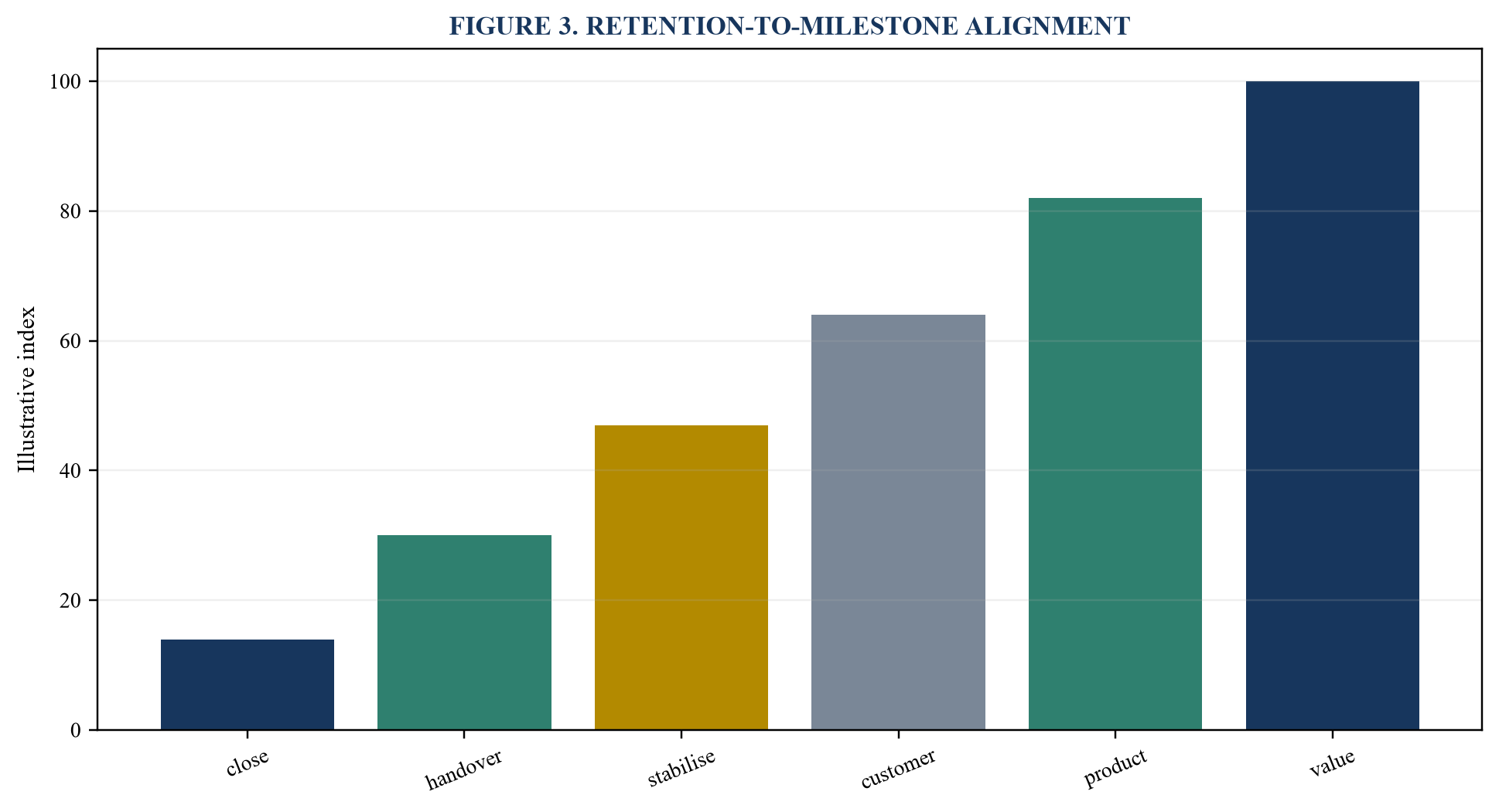
Values are illustrative indices and require replacement with approved transaction evidence.
25. Design founder transition
Define governance, authority, reporting, decision rights, external profile and exit milestones.
The controlled record includes person or role; knowledge domain; linked asset, customer, control or milestone; employment status; jurisdiction; IP evidence; access; decision authority; substitutability; retention signal; successor; transfer test; owner; date and remedy. The immediate deliverable is a founder transition compact. Each conclusion should distinguish formal title, actual authority, tacit knowledge, documented knowledge and demonstrated successor capability.
The principal failure occurs when the founder stays nominally while authority and motivation collapse. Reviewers should reconcile primary employment, IP, repository, customer, governance and interview evidence; test the exact transaction and integration consequence; identify who can assume the work; and quantify delay, revenue, remediation, hiring and valuation exposure.
The decision pack for design founder transition should show the value claim, dependency, evidence, current holder, restriction, successor, transfer method, acceptance test, retention instrument, milestone, downside, cost, owner and approval. Material exceptions flow into diligence, price, structure, conditions, covenants, warranties, indemnities, escrow, integration sequencing, customer communications, operating reserves and board decisions.
26. Design knowledge transfer
Convert tacit knowledge into paired work, runbooks, recorded decisions, shadowing, rehearsals and acceptance tests.
The controlled record includes person or role; knowledge domain; linked asset, customer, control or milestone; employment status; jurisdiction; IP evidence; access; decision authority; substitutability; retention signal; successor; transfer test; owner; date and remedy. The immediate deliverable is a tested transfer curriculum. Each conclusion should distinguish formal title, actual authority, tacit knowledge, documented knowledge and demonstrated successor capability.
The principal failure occurs when knowledge transfer becomes a document handover at the end of notice. Reviewers should reconcile primary employment, IP, repository, customer, governance and interview evidence; test the exact transaction and integration consequence; identify who can assume the work; and quantify delay, revenue, remediation, hiring and valuation exposure.
The decision pack for design knowledge transfer should show the value claim, dependency, evidence, current holder, restriction, successor, transfer method, acceptance test, retention instrument, milestone, downside, cost, owner and approval. Material exceptions flow into diligence, price, structure, conditions, covenants, warranties, indemnities, escrow, integration sequencing, customer communications, operating reserves and board decisions.
27. Design technical transition
Transfer repositories, environments, credentials, evaluation sets, release authority and incident knowledge.
The controlled record includes person or role; knowledge domain; linked asset, customer, control or milestone; employment status; jurisdiction; IP evidence; access; decision authority; substitutability; retention signal; successor; transfer test; owner; date and remedy. The immediate deliverable is a technical-control handover. Each conclusion should distinguish formal title, actual authority, tacit knowledge, documented knowledge and demonstrated successor capability.
The principal failure occurs when the buyer receives code access without operational command. Reviewers should reconcile primary employment, IP, repository, customer, governance and interview evidence; test the exact transaction and integration consequence; identify who can assume the work; and quantify delay, revenue, remediation, hiring and valuation exposure.
The decision pack for design technical transition should show the value claim, dependency, evidence, current holder, restriction, successor, transfer method, acceptance test, retention instrument, milestone, downside, cost, owner and approval. Material exceptions flow into diligence, price, structure, conditions, covenants, warranties, indemnities, escrow, integration sequencing, customer communications, operating reserves and board decisions.
28. Design commercial transition
Transfer customer histories, stakeholders, commitments, pricing logic, pipeline and renewal risks.
The controlled record includes person or role; knowledge domain; linked asset, customer, control or milestone; employment status; jurisdiction; IP evidence; access; decision authority; substitutability; retention signal; successor; transfer test; owner; date and remedy. The immediate deliverable is a customer transition plan. Each conclusion should distinguish formal title, actual authority, tacit knowledge, documented knowledge and demonstrated successor capability.
The principal failure occurs when relationship handovers happen after customers learn of departures. Reviewers should reconcile primary employment, IP, repository, customer, governance and interview evidence; test the exact transaction and integration consequence; identify who can assume the work; and quantify delay, revenue, remediation, hiring and valuation exposure.
The decision pack for design commercial transition should show the value claim, dependency, evidence, current holder, restriction, successor, transfer method, acceptance test, retention instrument, milestone, downside, cost, owner and approval. Material exceptions flow into diligence, price, structure, conditions, covenants, warranties, indemnities, escrow, integration sequencing, customer communications, operating reserves and board decisions.
29. Design governance transition
Move boards, architecture councils, model approvals, risk committees and escalation rights to the future state.
The controlled record includes person or role; knowledge domain; linked asset, customer, control or milestone; employment status; jurisdiction; IP evidence; access; decision authority; substitutability; retention signal; successor; transfer test; owner; date and remedy. The immediate deliverable is a governance migration plan. Each conclusion should distinguish formal title, actual authority, tacit knowledge, documented knowledge and demonstrated successor capability.
The principal failure occurs when formal governance changes before successors can exercise authority. Reviewers should reconcile primary employment, IP, repository, customer, governance and interview evidence; test the exact transaction and integration consequence; identify who can assume the work; and quantify delay, revenue, remediation, hiring and valuation exposure.
The decision pack for design governance transition should show the value claim, dependency, evidence, current holder, restriction, successor, transfer method, acceptance test, retention instrument, milestone, downside, cost, owner and approval. Material exceptions flow into diligence, price, structure, conditions, covenants, warranties, indemnities, escrow, integration sequencing, customer communications, operating reserves and board decisions.
30. Design communications
Sequence messages to key people, teams, customers, partners and investors with confidentiality controls.
The controlled record includes person or role; knowledge domain; linked asset, customer, control or milestone; employment status; jurisdiction; IP evidence; access; decision authority; substitutability; retention signal; successor; transfer test; owner; date and remedy. The immediate deliverable is a transaction communications plan. Each conclusion should distinguish formal title, actual authority, tacit knowledge, documented knowledge and demonstrated successor capability.
The principal failure occurs when rumour and inconsistent promises damage retention and trust. Reviewers should reconcile primary employment, IP, repository, customer, governance and interview evidence; test the exact transaction and integration consequence; identify who can assume the work; and quantify delay, revenue, remediation, hiring and valuation exposure.
The decision pack for design communications should show the value claim, dependency, evidence, current holder, restriction, successor, transfer method, acceptance test, retention instrument, milestone, downside, cost, owner and approval. Material exceptions flow into diligence, price, structure, conditions, covenants, warranties, indemnities, escrow, integration sequencing, customer communications, operating reserves and board decisions.
31. Protect employee data
Control diligence access, sensitive compensation, performance, monitoring and cross-border workforce information.
The controlled record includes person or role; knowledge domain; linked asset, customer, control or milestone; employment status; jurisdiction; IP evidence; access; decision authority; substitutability; retention signal; successor; transfer test; owner; date and remedy. The immediate deliverable is a workforce-data protocol. Each conclusion should distinguish formal title, actual authority, tacit knowledge, documented knowledge and demonstrated successor capability.
The principal failure occurs when people diligence creates privacy, trust or discrimination exposure. Reviewers should reconcile primary employment, IP, repository, customer, governance and interview evidence; test the exact transaction and integration consequence; identify who can assume the work; and quantify delay, revenue, remediation, hiring and valuation exposure.
The decision pack for protect employee data should show the value claim, dependency, evidence, current holder, restriction, successor, transfer method, acceptance test, retention instrument, milestone, downside, cost, owner and approval. Material exceptions flow into diligence, price, structure, conditions, covenants, warranties, indemnities, escrow, integration sequencing, customer communications, operating reserves and board decisions.
32. Test cultural integration
Identify decision speed, research norms, risk tolerance, incentives, location and management practices that affect key teams.
The controlled record includes person or role; knowledge domain; linked asset, customer, control or milestone; employment status; jurisdiction; IP evidence; access; decision authority; substitutability; retention signal; successor; transfer test; owner; date and remedy. The immediate deliverable is a culture-friction assessment. Each conclusion should distinguish formal title, actual authority, tacit knowledge, documented knowledge and demonstrated successor capability.
The principal failure occurs when talent departures are treated as compensation failures when operating culture changed. Reviewers should reconcile primary employment, IP, repository, customer, governance and interview evidence; test the exact transaction and integration consequence; identify who can assume the work; and quantify delay, revenue, remediation, hiring and valuation exposure.
The decision pack for test cultural integration should show the value claim, dependency, evidence, current holder, restriction, successor, transfer method, acceptance test, retention instrument, milestone, downside, cost, owner and approval. Material exceptions flow into diligence, price, structure, conditions, covenants, warranties, indemnities, escrow, integration sequencing, customer communications, operating reserves and board decisions.
Table 4. Attrition valuation bridge
| Exposure | Model input | Value effect |
|---|---|---|
| revenue | customer dependency | cash-flow loss |
| product | critical-path delay | launch deferral |
| control | remediation time | cost and risk |
| replacement | hire and ramp | cash and timing |
Illustrative controls require person-, role-, company-, jurisdiction-, transaction- and period-specific approval.
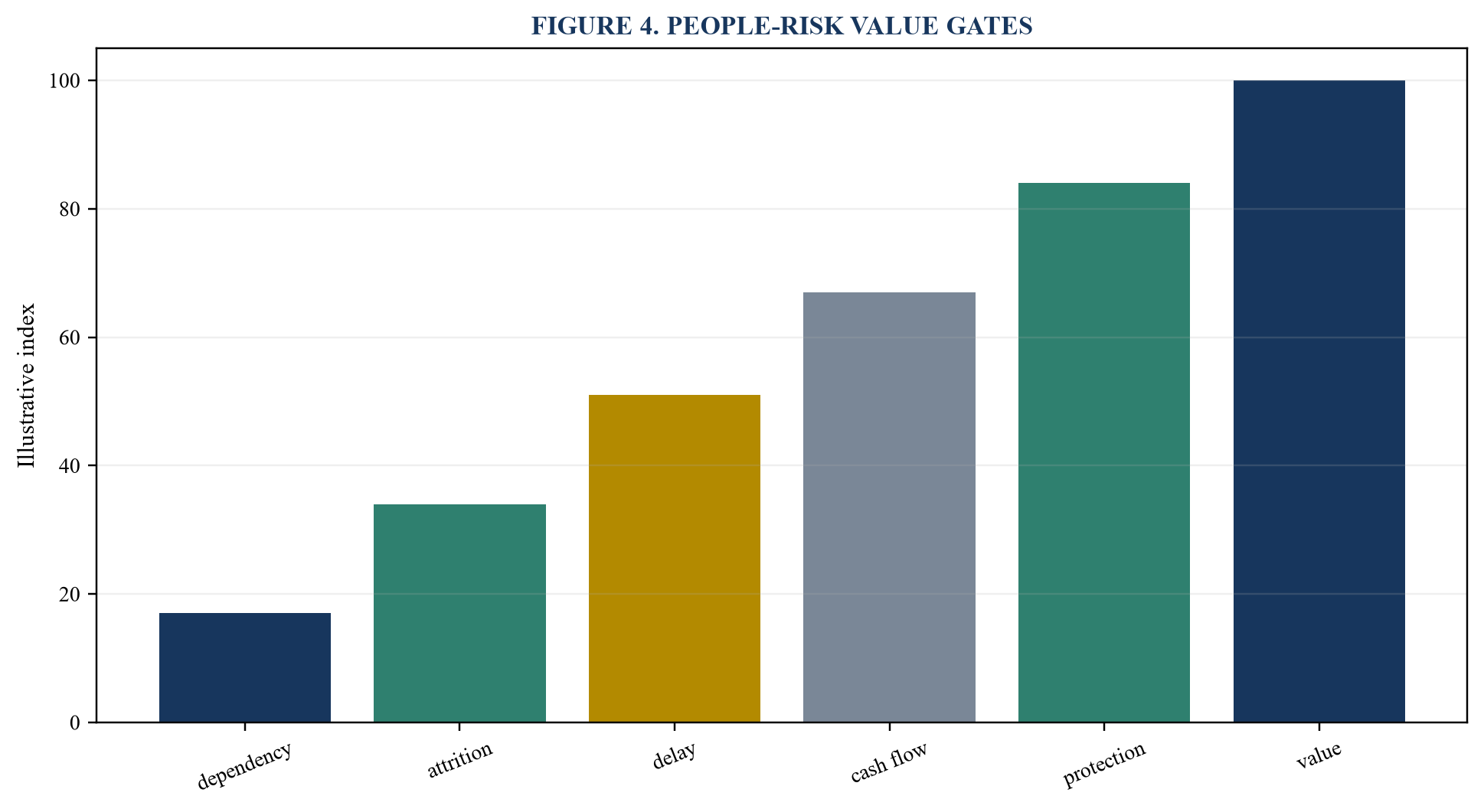
Values are illustrative indices and require replacement with approved transaction evidence.
33. Model attrition scenarios
Stress founder exit, key researcher loss, team cluster departure and delayed hiring across milestones.
The controlled record includes person or role; knowledge domain; linked asset, customer, control or milestone; employment status; jurisdiction; IP evidence; access; decision authority; substitutability; retention signal; successor; transfer test; owner; date and remedy. The immediate deliverable is an attrition scenario model. Each conclusion should distinguish formal title, actual authority, tacit knowledge, documented knowledge and demonstrated successor capability.
The principal failure occurs when the base case assumes uninterrupted productivity through the transaction. Reviewers should reconcile primary employment, IP, repository, customer, governance and interview evidence; test the exact transaction and integration consequence; identify who can assume the work; and quantify delay, revenue, remediation, hiring and valuation exposure.
The decision pack for model attrition scenarios should show the value claim, dependency, evidence, current holder, restriction, successor, transfer method, acceptance test, retention instrument, milestone, downside, cost, owner and approval. Material exceptions flow into diligence, price, structure, conditions, covenants, warranties, indemnities, escrow, integration sequencing, customer communications, operating reserves and board decisions.
34. Model financial exposure
Connect departures to revenue, product delay, remediation, hiring, customer loss and valuation.
The controlled record includes person or role; knowledge domain; linked asset, customer, control or milestone; employment status; jurisdiction; IP evidence; access; decision authority; substitutability; retention signal; successor; transfer test; owner; date and remedy. The immediate deliverable is a people-risk value bridge. Each conclusion should distinguish formal title, actual authority, tacit knowledge, documented knowledge and demonstrated successor capability.
The principal failure occurs when key-person risk remains qualitative and outside the model. Reviewers should reconcile primary employment, IP, repository, customer, governance and interview evidence; test the exact transaction and integration consequence; identify who can assume the work; and quantify delay, revenue, remediation, hiring and valuation exposure.
The decision pack for model financial exposure should show the value claim, dependency, evidence, current holder, restriction, successor, transfer method, acceptance test, retention instrument, milestone, downside, cost, owner and approval. Material exceptions flow into diligence, price, structure, conditions, covenants, warranties, indemnities, escrow, integration sequencing, customer communications, operating reserves and board decisions.
35. Link price and structure
Translate dependency into earn-out, rollover, holdback, escrow, condition, covenant and price cases.
The controlled record includes person or role; knowledge domain; linked asset, customer, control or milestone; employment status; jurisdiction; IP evidence; access; decision authority; substitutability; retention signal; successor; transfer test; owner; date and remedy. The immediate deliverable is a dependency-linked structure schedule. Each conclusion should distinguish formal title, actual authority, tacit knowledge, documented knowledge and demonstrated successor capability.
The principal failure occurs when retention exposure is funded entirely by the buyer after signing. Reviewers should reconcile primary employment, IP, repository, customer, governance and interview evidence; test the exact transaction and integration consequence; identify who can assume the work; and quantify delay, revenue, remediation, hiring and valuation exposure.
The decision pack for link price and structure should show the value claim, dependency, evidence, current holder, restriction, successor, transfer method, acceptance test, retention instrument, milestone, downside, cost, owner and approval. Material exceptions flow into diligence, price, structure, conditions, covenants, warranties, indemnities, escrow, integration sequencing, customer communications, operating reserves and board decisions.
36. Draft evidence-specific protections
Align representations, warranties, covenants, non-solicit, IP cures and disclosure with identified people risk.
The controlled record includes person or role; knowledge domain; linked asset, customer, control or milestone; employment status; jurisdiction; IP evidence; access; decision authority; substitutability; retention signal; successor; transfer test; owner; date and remedy. The immediate deliverable is a talent-and-IP protection matrix. Each conclusion should distinguish formal title, actual authority, tacit knowledge, documented knowledge and demonstrated successor capability.
The principal failure occurs when generic employment warranties fail to address critical dependencies. Reviewers should reconcile primary employment, IP, repository, customer, governance and interview evidence; test the exact transaction and integration consequence; identify who can assume the work; and quantify delay, revenue, remediation, hiring and valuation exposure.
The decision pack for draft evidence-specific protections should show the value claim, dependency, evidence, current holder, restriction, successor, transfer method, acceptance test, retention instrument, milestone, downside, cost, owner and approval. Material exceptions flow into diligence, price, structure, conditions, covenants, warranties, indemnities, escrow, integration sequencing, customer communications, operating reserves and board decisions.
37. Plan Day One
Secure access, authority, communications, customer coverage, payroll, equity, benefits and control continuity.
The controlled record includes person or role; knowledge domain; linked asset, customer, control or milestone; employment status; jurisdiction; IP evidence; access; decision authority; substitutability; retention signal; successor; transfer test; owner; date and remedy. The immediate deliverable is a Day-One continuity plan. Each conclusion should distinguish formal title, actual authority, tacit knowledge, documented knowledge and demonstrated successor capability.
The principal failure occurs when the first operating day creates avoidable uncertainty for critical staff. Reviewers should reconcile primary employment, IP, repository, customer, governance and interview evidence; test the exact transaction and integration consequence; identify who can assume the work; and quantify delay, revenue, remediation, hiring and valuation exposure.
The decision pack for plan day one should show the value claim, dependency, evidence, current holder, restriction, successor, transfer method, acceptance test, retention instrument, milestone, downside, cost, owner and approval. Material exceptions flow into diligence, price, structure, conditions, covenants, warranties, indemnities, escrow, integration sequencing, customer communications, operating reserves and board decisions.
38. Govern the first hundred days
Track retention, transfer tests, hiring, culture, customer handovers, IP cures and decision migration.
The controlled record includes person or role; knowledge domain; linked asset, customer, control or milestone; employment status; jurisdiction; IP evidence; access; decision authority; substitutability; retention signal; successor; transfer test; owner; date and remedy. The immediate deliverable is a 100-day talent control room. Each conclusion should distinguish formal title, actual authority, tacit knowledge, documented knowledge and demonstrated successor capability.
The principal failure occurs when signed retention agreements are mistaken for completed transition. Reviewers should reconcile primary employment, IP, repository, customer, governance and interview evidence; test the exact transaction and integration consequence; identify who can assume the work; and quantify delay, revenue, remediation, hiring and valuation exposure.
The decision pack for govern the first hundred days should show the value claim, dependency, evidence, current holder, restriction, successor, transfer method, acceptance test, retention instrument, milestone, downside, cost, owner and approval. Material exceptions flow into diligence, price, structure, conditions, covenants, warranties, indemnities, escrow, integration sequencing, customer communications, operating reserves and board decisions.
39. Monitor leading indicators
Use regrettable attrition, engagement, successor readiness, documentation tests, incidents and customer continuity.
The controlled record includes person or role; knowledge domain; linked asset, customer, control or milestone; employment status; jurisdiction; IP evidence; access; decision authority; substitutability; retention signal; successor; transfer test; owner; date and remedy. The immediate deliverable is a talent-resilience dashboard. Each conclusion should distinguish formal title, actual authority, tacit knowledge, documented knowledge and demonstrated successor capability.
The principal failure occurs when boards discover dependency failure through missed results. Reviewers should reconcile primary employment, IP, repository, customer, governance and interview evidence; test the exact transaction and integration consequence; identify who can assume the work; and quantify delay, revenue, remediation, hiring and valuation exposure.
The decision pack for monitor leading indicators should show the value claim, dependency, evidence, current holder, restriction, successor, transfer method, acceptance test, retention instrument, milestone, downside, cost, owner and approval. Material exceptions flow into diligence, price, structure, conditions, covenants, warranties, indemnities, escrow, integration sequencing, customer communications, operating reserves and board decisions.
40. Close through evidence gates
Require verified IP, accepted retention, tested successors, transferred authority, costed downside and accountable residual risk.
The controlled record includes person or role; knowledge domain; linked asset, customer, control or milestone; employment status; jurisdiction; IP evidence; access; decision authority; substitutability; retention signal; successor; transfer test; owner; date and remedy. The immediate deliverable is an accountable talent-dependency decision. Each conclusion should distinguish formal title, actual authority, tacit knowledge, documented knowledge and demonstrated successor capability.
The principal failure occurs when the transaction closes with unpriced people dependency. Reviewers should reconcile primary employment, IP, repository, customer, governance and interview evidence; test the exact transaction and integration consequence; identify who can assume the work; and quantify delay, revenue, remediation, hiring and valuation exposure.
The decision pack for close through evidence gates should show the value claim, dependency, evidence, current holder, restriction, successor, transfer method, acceptance test, retention instrument, milestone, downside, cost, owner and approval. Material exceptions flow into diligence, price, structure, conditions, covenants, warranties, indemnities, escrow, integration sequencing, customer communications, operating reserves and board decisions.
Table 5. Transaction close gates
| Gate | Required proof | Decision |
|---|---|---|
| IP | assignments reconciled | title accepted |
| retention | critical terms accepted | continuity credible |
| transfer | successor tests passed | authority migrates |
| economics | downside protected | price approved |
Illustrative controls require person-, role-, company-, jurisdiction-, transaction- and period-specific approval.
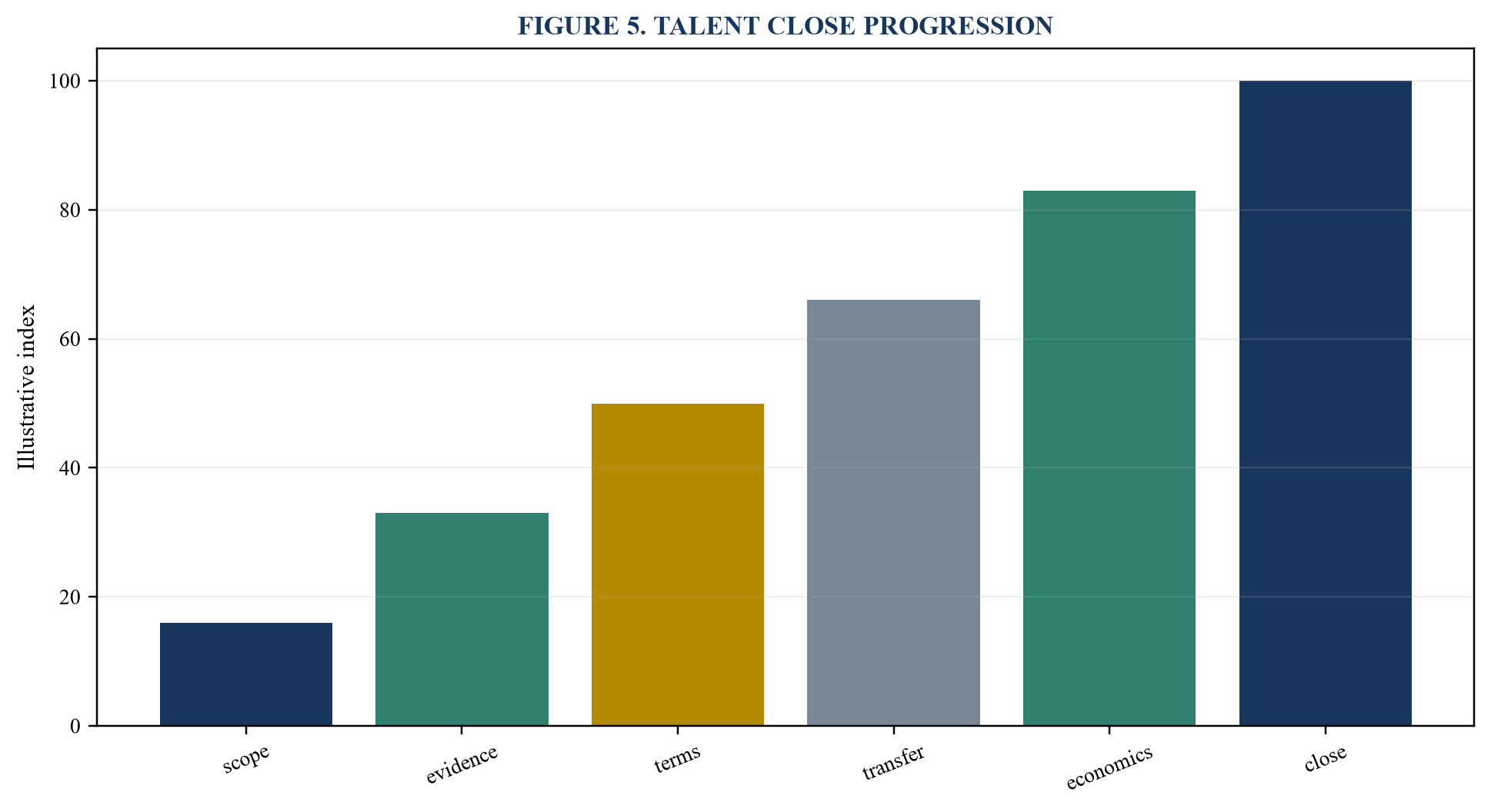
Values are illustrative indices and require replacement with approved transaction evidence.
References
- World Intellectual Property Organization, Technology Transfer Frequently Asked Questions, https://www.wipo.int/en/web/technology-transfer/faq
- World Intellectual Property Organization, Knowledge and Technology Transfer, https://www.wipo.int/en/web/technology-transfer/
- World Intellectual Property Organization, IP Commercialization, https://www.wipo.int/en/web/ip-commercialization
- World Intellectual Property Organization, IP Business Moments: Grow, https://www.wipo.int/en/web/ip-business-moments/grow
- World Intellectual Property Organization, IP Business Moments: Accelerate, https://www.wipo.int/en/web/ip-business-moments/accelerate
- World Intellectual Property Organization, WIPO and Artificial Intelligence, https://www.wipo.int/en/web/wipo-and-ai
- World Intellectual Property Organization, AI and IP Policy Frequently Asked Questions, https://www.wipo.int/en/web/frontier-technologies/artificial-intelligence/faq
- World Intellectual Property Organization, Learning Machines: AI and IP for SMEs, https://www.wipo.int/web-publications/learning-machines-an-introduction-to-ai-and-ip-for-small-and-medium-sized-enterprises/en/index.html
- World Intellectual Property Organization, AI-Enabled Innovation and IP Life Cycle, https://www.wipo.int/web-publications/ai-enabled-health-innovation-and-ip-from-idea-to-impact/en/1-ip-considerations-supporting-health-impacts-across-the-ai-enabled-innovation-life-cycle.html
- World Intellectual Property Organization, WIPO Lex, https://www.wipo.int/wipolex/en/
- International Labour Organization, World Employment and Social Outlook 2025, https://www.ilo.org/publications/flagship-reports/world-employment-and-social-outlook-trends-2025
- International Labour Organization, Generative AI and Jobs, https://www.ilo.org/publications/generative-ai-and-jobs-refined-global-index-occupational-exposure
- Organisation for Economic Co-operation and Development, OECD Employment Outlook 2025, https://www.oecd.org/en/publications/oecd-employment-outlook-2025_194a947b-en.html
- Organisation for Economic Co-operation and Development, Artificial Intelligence and the Labour Market, https://www.oecd.org/en/topics/sub-issues/artificial-intelligence-and-work.html
- Organisation for Economic Co-operation and Development, Recommendation on Artificial Intelligence, https://legalinstruments.oecd.org/en/instruments/OECD-LEGAL-0449
- Bank for International Settlements, The Use of Artificial Intelligence for Policy Purposes, https://www.bis.org/publ/othp100.pdf
- National Institute of Standards and Technology, AI Risk Management Framework, https://www.nist.gov/itl/ai-risk-management-framework
- National Institute of Standards and Technology, Generative AI Profile NIST AI 600-1, https://nvlpubs.nist.gov/nistpubs/ai/NIST.AI.600-1.pdf
- European Union, Regulation 2024/1689 Artificial Intelligence Act, https://eur-lex.europa.eu/eli/reg/2024/1689
- European Commission, Talent in Deep Tech, https://eic.ec.europa.eu/eic-funding-opportunities/eic-talent_en
- UK Government, Transfer of Undertakings Guidance, https://www.gov.uk/transfers-takeovers
- UK Intellectual Property Office, Ownership of Copyright Works, https://www.gov.uk/guidance/ownership-of-copyright-works
- United States Patent and Trademark Office, Employee Inventions, https://www.uspto.gov/learning-and-resources/inventors-entrepreneurs-resources
- U.S. Securities and Exchange Commission, Human Capital Disclosure, https://www.sec.gov/rules-regulations/2020/08/modernization-regulation-s-k-items-101-103-and-105
- ISO, ISO 30414 Human Capital Reporting, https://www.iso.org/standard/69338.html
- ISO, ISO/IEC 42001 Artificial Intelligence Management Systems, https://www.iso.org/standard/81230.html
