

1. Define the capital decision
State whether the analysis supports fleet deployment, software procurement, charter negotiation, financing, acquisition, sale or operating improvement. Freeze the vessels, routes, cargoes, charter forms, period and accountable decision maker.
Controlled evidence includes approved mandate; fleet and route scope; charter form; decision date; accountable committee. The immediate decision is to freeze the decision perimeter before optimisation claims enter the model. Definitions should remain stable across passage plans, operational records, charter workpapers and financial models.
Evidence should remain vessel-, route-, charter- and period-specific. The analysis should preserve rejected recommendations, manual intervention, adverse weather, port disruption and failed cases.
The operating team and finance team should use the same definitions. Native records should support aggregate dashboards, and sample testing should follow representative cases from input through outcome and cash. Exceptions, failed cases and client concessions remain part of the population. Reconciliation should cover opening and closing balances, acquisitions, disposals, foreign exchange, allocation changes and manual adjustments that could otherwise mimic operating improvement.
2. Use the voyage as the analytical unit
A voyage links orders, route, speed, weather, fuel, port events, cargo service and revenue. Annual ratings and company-level carbon obligations should be reconciled without erasing voyage-level causality.
Controlled evidence includes voyage identifier; ballast and laden legs; timestamps; ports; cargo; charter; revenue. The immediate decision is to retain one identifier from recommendation through cash. Definitions should remain stable across passage plans, operational records, charter workpapers and financial models.
Finance should distinguish observed operation, management estimate, funded action, forecast and buyer-specific opportunity. Every benefit needs timing, full cost, responsibility and a route to cash.
Decision makers need both upside and downside. The analysis should state which party controls conversion, what investment remains, when cash appears, which risks survive and whether the result continues after a change of ownership. Unsupported precision should be replaced with bounded scenarios. The committee should record the decision consequence of each range, including price, structure, funding, covenant, integration and monitoring implications.
3. Preserve navigational safety
The master retains responsibility for safe navigation. An optimisation recommendation should remain advisory unless the approved operating model and applicable law establish another arrangement.
Controlled evidence includes passage plan; master decision; safety limits; deviations; bridge records; incident log. The immediate decision is to exclude any recommendation that compromises safety or seaworthiness. Definitions should remain stable across passage plans, operational records, charter workpapers and financial models.
Marine operations, chartering, sustainability and finance teams should use the same voyage identifiers and cut-offs. Representative cases should be traced from decision through service outcome and settlement.
The analytical unit should remain stable from source record to valuation conclusion. Reviewers should see the population, exclusions, period, owner and reconciliation to finance. Where evidence is incomplete, the model should retain a range and identify the action needed to narrow it. Comparisons should preserve product, customer, site, complexity and market conditions; aggregation should not conceal adverse cohorts or delayed consequences.
4. Build the data-lineage map
Weather, current, AIS, noon reports, flow meters, engine data, charter orders, port events, bunker records and invoices have different owners, timestamps and error modes.
Controlled evidence includes source inventory; owner; clock; units; calibration; transformations; retention. The immediate decision is to make each material output traceable to native records. Definitions should remain stable across passage plans, operational records, charter workpapers and financial models.
Decision makers need bounded downside for model error, data loss, unsafe routing, schedule failure, carbon-price movement, contractual dispute, vendor exit and weak adoption.
Evidence should distinguish observation, estimate, management plan and transaction judgement. A supported claim includes timing, full cost, dependency, transferability and a cash consequence. Sensitivity should show how the conclusion changes when adoption, demand, quality or persistence underperforms. Material assumptions need validation dates, accountable owners and explicit expiry conditions so that stale expectations do not survive into pricing or financing decisions.
5. Construct the counterfactual baseline
The baseline should estimate what the same vessel and voyage would have consumed and delivered without the intervention. Fleet averages can conceal vessel, season and route mix.
Controlled evidence includes matched voyages; vessel condition; cargo; draft; weather; speed; route; port time. The immediate decision is to replace an unadjusted historical average with a decision-relevant counterfactual. Definitions should remain stable across passage plans, operational records, charter workpapers and financial models.
Evidence should remain vessel-, route-, charter- and period-specific. The analysis should preserve rejected recommendations, manual intervention, adverse weather, port disruption and failed cases.
The operating team and finance team should use the same definitions. Native records should support aggregate dashboards, and sample testing should follow representative cases from input through outcome and cash. Exceptions, failed cases and client concessions remain part of the population. Reconciliation should cover opening and closing balances, acquisitions, disposals, foreign exchange, allocation changes and manual adjustments that could otherwise mimic operating improvement.
6. Design the voyage decision loop
The loop should connect forecast, recommendation, review, approval, execution, monitoring, exception and learning. Each stage needs time, authority and evidence.
Controlled evidence includes forecast version; recommendation; approver; execution record; exception; outcome. The immediate decision is to measure adopted and rejected recommendations separately. Definitions should remain stable across passage plans, operational records, charter workpapers and financial models.
Finance should distinguish observed operation, management estimate, funded action, forecast and buyer-specific opportunity. Every benefit needs timing, full cost, responsibility and a route to cash.
Decision makers need both upside and downside. The analysis should state which party controls conversion, what investment remains, when cash appears, which risks survive and whether the result continues after a change of ownership. Unsupported precision should be replaced with bounded scenarios. The committee should record the decision consequence of each range, including price, structure, funding, covenant, integration and monitoring implications.
Table 1. Voyage decision loop
| Stage | Required evidence | Decision question |
|---|---|---|
| forecast | versioned weather, port and vessel inputs | what was known? |
| recommendation | route, speed, ETA and constraints | what was proposed? |
| approval | master and commercial decision | who authorised? |
| execution | actual route, speed and events | what occurred? |
| outcome | fuel, carbon, schedule and cash | what value resulted? |
Replace illustrative classifications with company-specific evidence and approved transaction treatment.
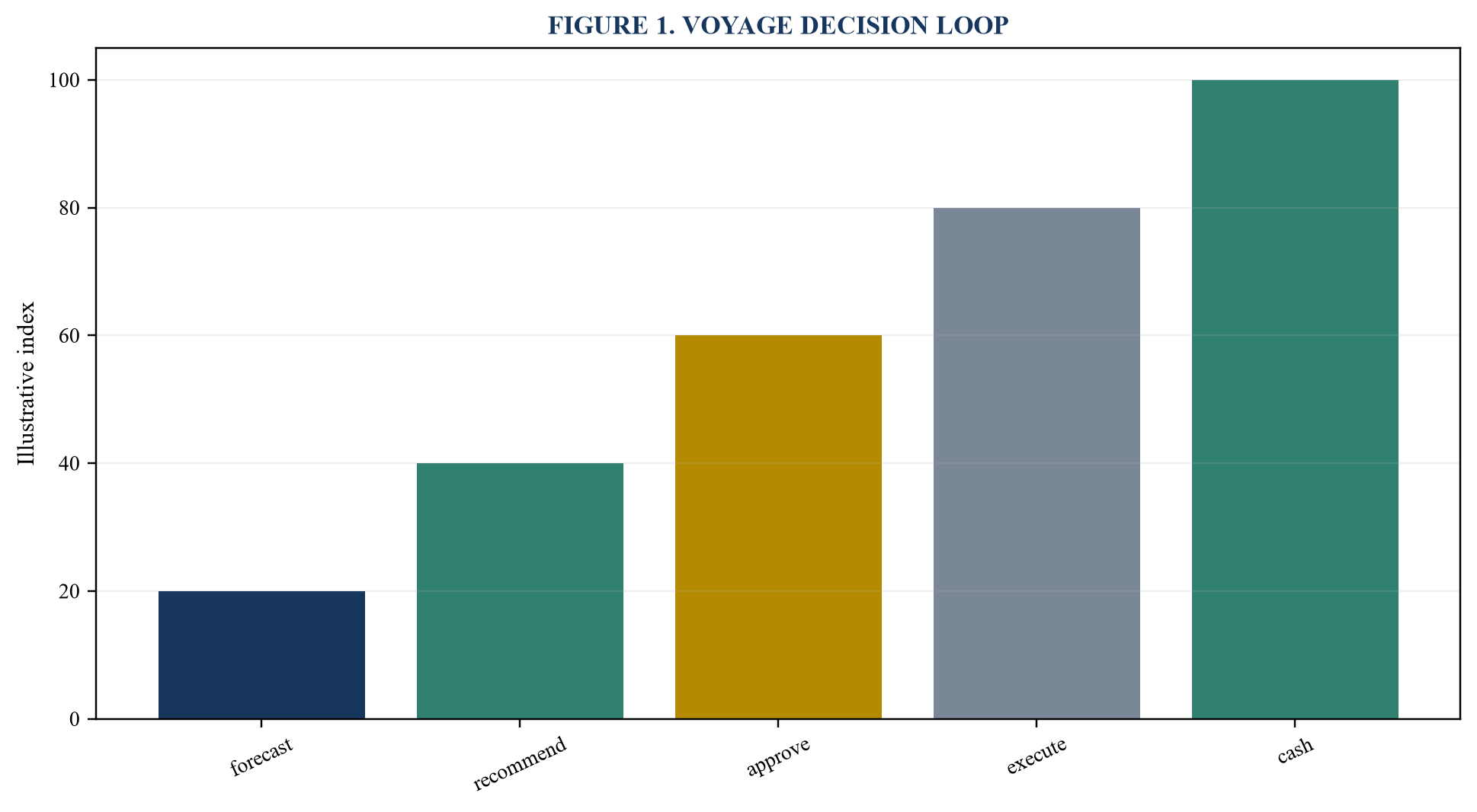
A recommendation creates value only through safe approval, execution, outcome and cash.
7. Validate weather and current inputs
Forecast age, resolution, update frequency and uncertainty affect route and speed decisions. Severe weather avoidance can increase distance while protecting safety and cargo.
Controlled evidence includes forecast provider; issue time; confidence; observed weather; route change; reason. The immediate decision is to value net voyage outcome rather than shortest distance. Definitions should remain stable across passage plans, operational records, charter workpapers and financial models.
Marine operations, chartering, sustainability and finance teams should use the same voyage identifiers and cut-offs. Representative cases should be traced from decision through service outcome and settlement.
The analytical unit should remain stable from source record to valuation conclusion. Reviewers should see the population, exclusions, period, owner and reconciliation to finance. Where evidence is incomplete, the model should retain a range and identify the action needed to narrow it. Comparisons should preserve product, customer, site, complexity and market conditions; aggregation should not conceal adverse cohorts or delayed consequences.
8. Model the speed-power-fuel relationship
Fuel response to speed is vessel- and condition-specific. Engine loading, sea state, fouling, draft and auxiliary demand can change the curve.
Controlled evidence includes speed through water; shaft power; fuel rate; engine load; draft; sea state; hull condition. The immediate decision is to use calibrated vessel curves within the observed operating envelope. Definitions should remain stable across passage plans, operational records, charter workpapers and financial models.
Decision makers need bounded downside for model error, data loss, unsafe routing, schedule failure, carbon-price movement, contractual dispute, vendor exit and weak adoption.
Evidence should distinguish observation, estimate, management plan and transaction judgement. A supported claim includes timing, full cost, dependency, transferability and a cash consequence. Sensitivity should show how the conclusion changes when adoption, demand, quality or persistence underperforms. Material assumptions need validation dates, accountable owners and explicit expiry conditions so that stale expectations do not survive into pricing or financing decisions.
9. Control estimated time of arrival
ETA quality affects berth coordination, customer communication and speed decisions. Accuracy should be tested by horizon, route, port and disruption type.
Controlled evidence includes forecast ETA; update time; actual arrival; berth window; deviation reason. The immediate decision is to connect prediction accuracy to a controllable operating action. Definitions should remain stable across passage plans, operational records, charter workpapers and financial models.
Evidence should remain vessel-, route-, charter- and period-specific. The analysis should preserve rejected recommendations, manual intervention, adverse weather, port disruption and failed cases.
The operating team and finance team should use the same definitions. Native records should support aggregate dashboards, and sample testing should follow representative cases from input through outcome and cash. Exceptions, failed cases and client concessions remain part of the population. Reconciliation should cover opening and closing balances, acquisitions, disposals, foreign exchange, allocation changes and manual adjustments that could otherwise mimic operating improvement.
10. Apply just-in-time arrival
Just-in-time arrival can create a longer economical sailing window when berth, fairway and nautical services are reliably available. Port coordination is a prerequisite.
Controlled evidence includes port-call process; berth readiness; requested arrival time; communications; actual events. The immediate decision is to avoid slow steaming into an unchanged anchorage queue. Definitions should remain stable across passage plans, operational records, charter workpapers and financial models.
Finance should distinguish observed operation, management estimate, funded action, forecast and buyer-specific opportunity. Every benefit needs timing, full cost, responsibility and a route to cash.
Decision makers need both upside and downside. The analysis should state which party controls conversion, what investment remains, when cash appears, which risks survive and whether the result continues after a change of ownership. Unsupported precision should be replaced with bounded scenarios. The committee should record the decision consequence of each range, including price, structure, funding, covenant, integration and monitoring implications.
11. Map port and terminal constraints
Draft, tide, pilotage, towage, berth, crane, labour, cargo readiness and local restrictions can invalidate an otherwise efficient plan.
Controlled evidence includes port restrictions; terminal plan; service bookings; congestion; notice; acceptance. The immediate decision is to treat port readiness as a hard feasibility condition. Definitions should remain stable across passage plans, operational records, charter workpapers and financial models.
Marine operations, chartering, sustainability and finance teams should use the same voyage identifiers and cut-offs. Representative cases should be traced from decision through service outcome and settlement.
The analytical unit should remain stable from source record to valuation conclusion. Reviewers should see the population, exclusions, period, owner and reconciliation to finance. Where evidence is incomplete, the model should retain a range and identify the action needed to narrow it. Comparisons should preserve product, customer, site, complexity and market conditions; aggregation should not conceal adverse cohorts or delayed consequences.
12. Reconcile charterparty authority
Owners, charterers and the master may control different aspects of employment, speed, route, fuel, maintenance and arrival. The contract should allocate cooperation, data and consequences.
Controlled evidence includes charterparty; bills of lading; voyage orders; warranties; indemnities; claims history. The immediate decision is to map each optimisation lever to contractual authority. Definitions should remain stable across passage plans, operational records, charter workpapers and financial models.
Decision makers need bounded downside for model error, data loss, unsafe routing, schedule failure, carbon-price movement, contractual dispute, vendor exit and weak adoption.
Evidence should distinguish observation, estimate, management plan and transaction judgement. A supported claim includes timing, full cost, dependency, transferability and a cash consequence. Sensitivity should show how the conclusion changes when adoption, demand, quality or persistence underperforms. Material assumptions need validation dates, accountable owners and explicit expiry conditions so that stale expectations do not survive into pricing or financing decisions.
Table 2. Charter control map
| Lever | Typical control question | Evidence |
|---|---|---|
| route | who orders and who may deviate? | charter and passage plan |
| speed | what warranties and minimums apply? | clause and voyage order |
| arrival | is berth readiness communicated? | port-call record |
| fuel | who buys and bears consumption? | bunker invoice and charter |
| carbon | who surrenders and recovers cost? | regulation and clause |
Replace illustrative classifications with company-specific evidence and approved transaction treatment.
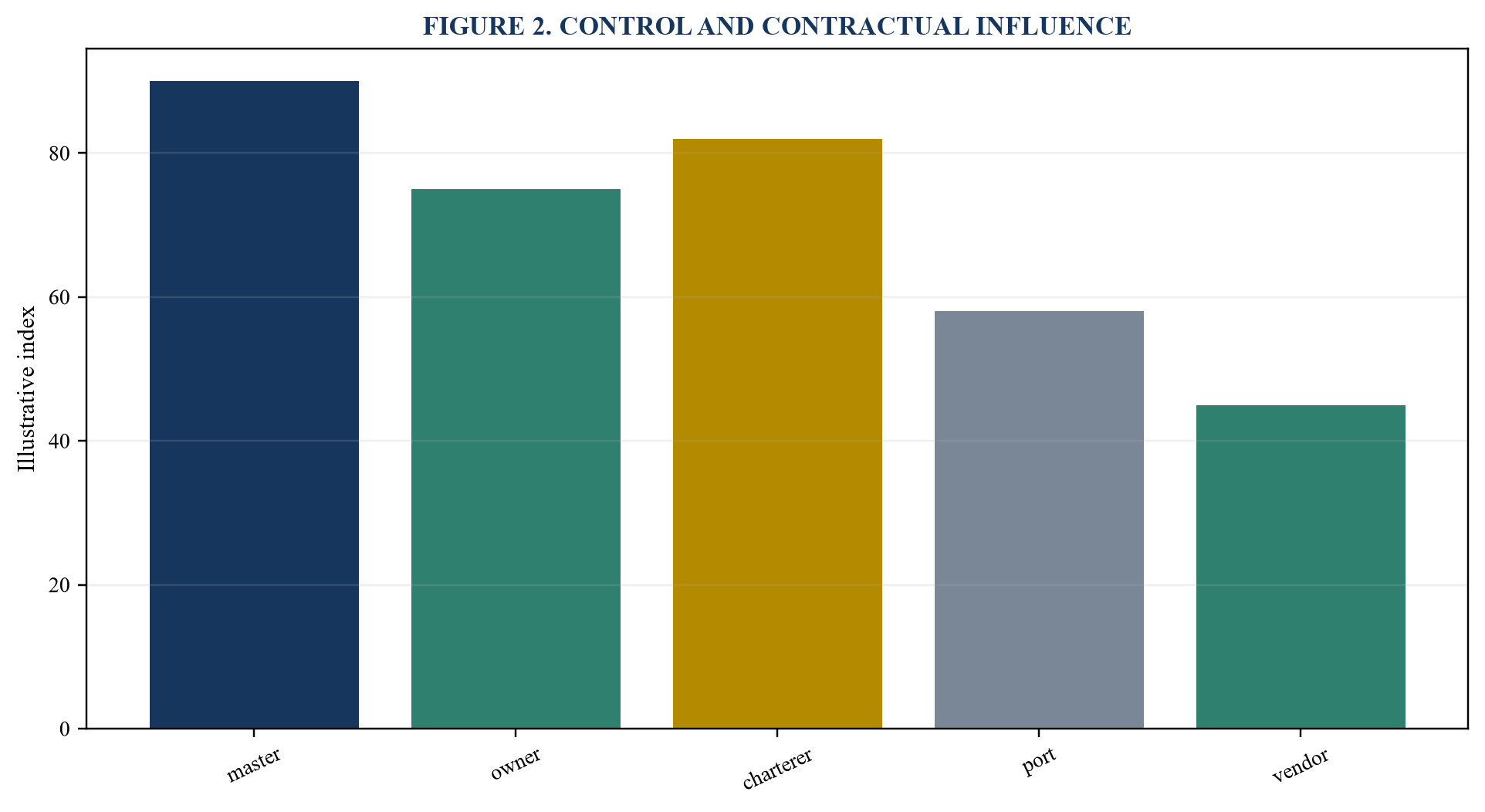
Illustrative indices require charter- and voyage-specific assessment.
13. Protect cargo and service obligations
Temperature, ventilation, dangerous goods, sloshing, shelf life, security and delivery commitments can constrain route and speed.
Controlled evidence includes cargo specification; carriage instructions; tolerances; monitoring; claims. The immediate decision is to include cargo risk and customer service in the objective function. Definitions should remain stable across passage plans, operational records, charter workpapers and financial models.
Evidence should remain vessel-, route-, charter- and period-specific. The analysis should preserve rejected recommendations, manual intervention, adverse weather, port disruption and failed cases.
The operating team and finance team should use the same definitions. Native records should support aggregate dashboards, and sample testing should follow representative cases from input through outcome and cash. Exceptions, failed cases and client concessions remain part of the population. Reconciliation should cover opening and closing balances, acquisitions, disposals, foreign exchange, allocation changes and manual adjustments that could otherwise mimic operating improvement.
14. Measure fuel from reliable records
Bunker delivery notes, tank soundings, mass-flow meters, engine systems and noon reports can diverge. Consumption should reconcile opening, receipt, transfer and closing quantities.
Controlled evidence includes fuel ledger; meter calibration; tank records; density; temperature; ROB; reconciliation. The immediate decision is to separate measured consumption from modelled consumption. Definitions should remain stable across passage plans, operational records, charter workpapers and financial models.
Finance should distinguish observed operation, management estimate, funded action, forecast and buyer-specific opportunity. Every benefit needs timing, full cost, responsibility and a route to cash.
Decision makers need both upside and downside. The analysis should state which party controls conversion, what investment remains, when cash appears, which risks survive and whether the result continues after a change of ownership. Unsupported precision should be replaced with bounded scenarios. The committee should record the decision consequence of each range, including price, structure, funding, covenant, integration and monitoring implications.
15. Separate bunker-price effects
Fuel expenditure changes with quantity, grade, location, timing, hedging and procurement. An optimisation programme usually controls quantity more directly than price.
Controlled evidence includes fuel quantity; grade; invoice; port; benchmark; hedge; procurement variance. The immediate decision is to bridge physical saving to paid cash without claiming market-price movements. Definitions should remain stable across passage plans, operational records, charter workpapers and financial models.
Marine operations, chartering, sustainability and finance teams should use the same voyage identifiers and cut-offs. Representative cases should be traced from decision through service outcome and settlement.
The analytical unit should remain stable from source record to valuation conclusion. Reviewers should see the population, exclusions, period, owner and reconciliation to finance. Where evidence is incomplete, the model should retain a range and identify the action needed to narrow it. Comparisons should preserve product, customer, site, complexity and market conditions; aggregation should not conceal adverse cohorts or delayed consequences.
16. Model EU ETS exposure
EU ETS has applied to maritime transport since 2024 under defined voyage and emissions boundaries. Allowance quantity, phase-in, price, surrender timing and contractual recovery should remain visible.
Controlled evidence includes MRV emissions; voyage scope; responsible company; EUA transactions; surrender; recovery. The immediate decision is to separate avoided allowance demand from fuel and trading effects. Definitions should remain stable across passage plans, operational records, charter workpapers and financial models.
Decision makers need bounded downside for model error, data loss, unsafe routing, schedule failure, carbon-price movement, contractual dispute, vendor exit and weak adoption.
Evidence should distinguish observation, estimate, management plan and transaction judgement. A supported claim includes timing, full cost, dependency, transferability and a cash consequence. Sensitivity should show how the conclusion changes when adoption, demand, quality or persistence underperforms. Material assumptions need validation dates, accountable owners and explicit expiry conditions so that stale expectations do not survive into pricing or financing decisions.
17. Model FuelEU Maritime exposure
FuelEU Maritime applies a goal-based greenhouse-gas intensity regime to covered ships calling at European ports. Compliance balance, pooling, banking, borrowing and penalties require separate treatment.
Controlled evidence includes energy use; fuel certification; well-to-wake factors; compliance balance; pooling agreement. The immediate decision is to avoid treating fuel quantity reduction as the whole FuelEU outcome. Definitions should remain stable across passage plans, operational records, charter workpapers and financial models.
Evidence should remain vessel-, route-, charter- and period-specific. The analysis should preserve rejected recommendations, manual intervention, adverse weather, port disruption and failed cases.
The operating team and finance team should use the same definitions. Native records should support aggregate dashboards, and sample testing should follow representative cases from input through outcome and cash. Exceptions, failed cases and client concessions remain part of the population. Reconciliation should cover opening and closing balances, acquisitions, disposals, foreign exchange, allocation changes and manual adjustments that could otherwise mimic operating improvement.
18. Reconcile the IMO CII boundary
CII is an annual operational carbon-intensity rating for covered ships. A voyage can improve fuel efficiency while producing a different CII effect because distance, capacity and idle time matter.
Controlled evidence includes IMO DCS fuel; distance; capacity; attained CII; rating; SEEMP; corrective plan. The immediate decision is to show voyage contribution without presenting CII as a voyage metric. Definitions should remain stable across passage plans, operational records, charter workpapers and financial models.
Finance should distinguish observed operation, management estimate, funded action, forecast and buyer-specific opportunity. Every benefit needs timing, full cost, responsibility and a route to cash.
Decision makers need both upside and downside. The analysis should state which party controls conversion, what investment remains, when cash appears, which risks survive and whether the result continues after a change of ownership. Unsupported precision should be replaced with bounded scenarios. The committee should record the decision consequence of each range, including price, structure, funding, covenant, integration and monitoring implications.
19. Allocate carbon cost contractually
Owner, charterer, operator and cargo customer may bear, recover or influence carbon cost differently. Allocation should follow regulation and contract.
Controlled evidence includes ETS clause; FuelEU clause; charter adjustment; invoice; dispute; settlement. The immediate decision is to connect operational control to economic incidence. Definitions should remain stable across passage plans, operational records, charter workpapers and financial models.
Marine operations, chartering, sustainability and finance teams should use the same voyage identifiers and cut-offs. Representative cases should be traced from decision through service outcome and settlement.
The analytical unit should remain stable from source record to valuation conclusion. Reviewers should see the population, exclusions, period, owner and reconciliation to finance. Where evidence is incomplete, the model should retain a range and identify the action needed to narrow it. Comparisons should preserve product, customer, site, complexity and market conditions; aggregation should not conceal adverse cohorts or delayed consequences.
20. Measure schedule reliability
Reliability should capture arrival-window performance, missed calls, bunching, recovery, connection failure and customer consequence. Average transit time is insufficient.
Controlled evidence includes schedule; promised window; actual arrival; port omission; recovery; customer event. The immediate decision is to value the distribution and consequence of delay. Definitions should remain stable across passage plans, operational records, charter workpapers and financial models.
Decision makers need bounded downside for model error, data loss, unsafe routing, schedule failure, carbon-price movement, contractual dispute, vendor exit and weak adoption.
Evidence should distinguish observation, estimate, management plan and transaction judgement. A supported claim includes timing, full cost, dependency, transferability and a cash consequence. Sensitivity should show how the conclusion changes when adoption, demand, quality or persistence underperforms. Material assumptions need validation dates, accountable owners and explicit expiry conditions so that stale expectations do not survive into pricing or financing decisions.
Table 3. Reliability cohort
| Metric | Definition | Cash consequence |
|---|---|---|
| on-window arrival | arrival within agreed range | service and customer outcome |
| port waiting | time before usable berth | fuel, time and carbon |
| missed call | planned call not completed | revenue and recovery |
| connection failure | onward link missed | claim or concession |
| recovery time | time to restore schedule | network and operating cost |
Replace illustrative classifications with company-specific evidence and approved transaction treatment.
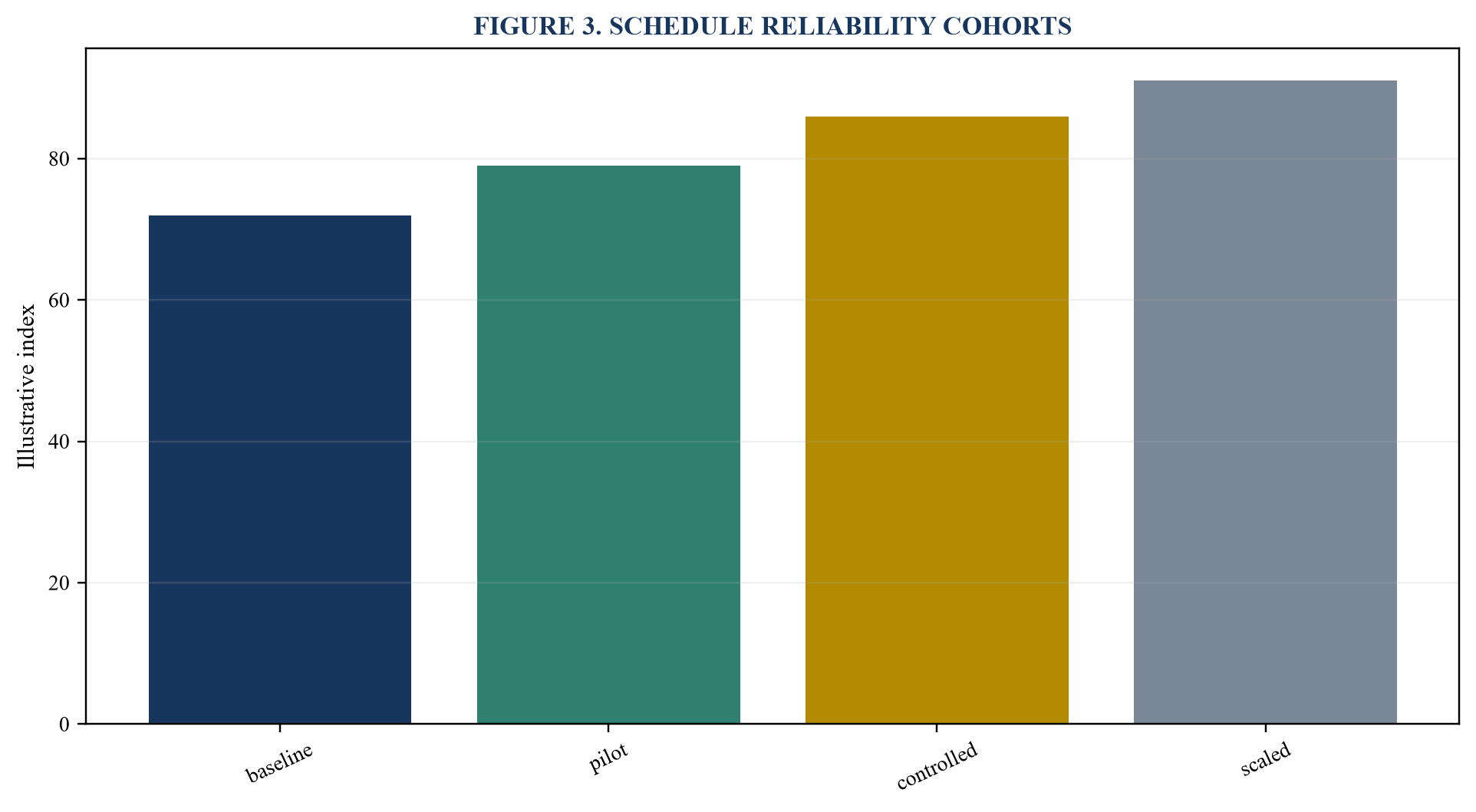
Replace illustrative values with matched route and vessel evidence.
21. Reconcile waiting and demurrage
Anchorage, berth and cargo delays consume time and sometimes fuel. Laytime and demurrage may compensate time without covering every carbon or network consequence.
Controlled evidence includes notice of readiness; statements of fact; laytime; demurrage; fuel; carbon; responsibility. The immediate decision is to separate operational loss, contractual recovery and residual exposure. Definitions should remain stable across passage plans, operational records, charter workpapers and financial models.
Evidence should remain vessel-, route-, charter- and period-specific. The analysis should preserve rejected recommendations, manual intervention, adverse weather, port disruption and failed cases.
The operating team and finance team should use the same definitions. Native records should support aggregate dashboards, and sample testing should follow representative cases from input through outcome and cash. Exceptions, failed cases and client concessions remain part of the population. Reconciliation should cover opening and closing balances, acquisitions, disposals, foreign exchange, allocation changes and manual adjustments that could otherwise mimic operating improvement.
22. Protect revenue and customer commitments
A fuel-efficient route can destroy value if it causes a missed delivery, lost slot, cargo claim or customer concession.
Controlled evidence includes freight; service contract; delivery window; claim; rebate; cancellation; collection. The immediate decision is to measure contribution after service consequences. Definitions should remain stable across passage plans, operational records, charter workpapers and financial models.
Finance should distinguish observed operation, management estimate, funded action, forecast and buyer-specific opportunity. Every benefit needs timing, full cost, responsibility and a route to cash.
Decision makers need both upside and downside. The analysis should state which party controls conversion, what investment remains, when cash appears, which risks survive and whether the result continues after a change of ownership. Unsupported precision should be replaced with bounded scenarios. The committee should record the decision consequence of each range, including price, structure, funding, covenant, integration and monitoring implications.
23. Record exceptions and claims
Model overrides, unsafe recommendations, port changes, late forecasts and inaccurate data should remain in the population. Excluding failures biases the investment case.
Controlled evidence includes override; reason; incident; claim; root cause; closure; financial consequence. The immediate decision is to price error and exception tails explicitly. Definitions should remain stable across passage plans, operational records, charter workpapers and financial models.
Marine operations, chartering, sustainability and finance teams should use the same voyage identifiers and cut-offs. Representative cases should be traced from decision through service outcome and settlement.
The analytical unit should remain stable from source record to valuation conclusion. Reviewers should see the population, exclusions, period, owner and reconciliation to finance. Where evidence is incomplete, the model should retain a range and identify the action needed to narrow it. Comparisons should preserve product, customer, site, complexity and market conditions; aggregation should not conceal adverse cohorts or delayed consequences.
24. Control hull, propeller and engine condition
Fouling, damage, maintenance, engine tuning and retrofit can change consumption independently of routing software.
Controlled evidence includes dry-dock; cleaning; maintenance; performance test; engine setting; retrofit date. The immediate decision is to prevent physical-condition improvement from being credited to AI. Definitions should remain stable across passage plans, operational records, charter workpapers and financial models.
Decision makers need bounded downside for model error, data loss, unsafe routing, schedule failure, carbon-price movement, contractual dispute, vendor exit and weak adoption.
Evidence should distinguish observation, estimate, management plan and transaction judgement. A supported claim includes timing, full cost, dependency, transferability and a cash consequence. Sensitivity should show how the conclusion changes when adoption, demand, quality or persistence underperforms. Material assumptions need validation dates, accountable owners and explicit expiry conditions so that stale expectations do not survive into pricing or financing decisions.
25. Integrate trim, draft and ballast decisions
Trim and ballast can affect resistance, stability, cargo and port access. Recommendations should remain within approved limits.
Controlled evidence includes loading computer; stability book; draft; trim; ballast; approval; outcome. The immediate decision is to coordinate hydrodynamic efficiency with safety and cargo constraints. Definitions should remain stable across passage plans, operational records, charter workpapers and financial models.
Evidence should remain vessel-, route-, charter- and period-specific. The analysis should preserve rejected recommendations, manual intervention, adverse weather, port disruption and failed cases.
The operating team and finance team should use the same definitions. Native records should support aggregate dashboards, and sample testing should follow representative cases from input through outcome and cash. Exceptions, failed cases and client concessions remain part of the population. Reconciliation should cover opening and closing balances, acquisitions, disposals, foreign exchange, allocation changes and manual adjustments that could otherwise mimic operating improvement.
26. Test route feasibility and resilience
Canals, piracy, sanctions, conflict, ice, emissions-control areas, bunkering and port restrictions can alter the feasible route set.
Controlled evidence includes route restrictions; notices; security assessment; fuel availability; contingency. The immediate decision is to maintain executable alternatives for disruption. Definitions should remain stable across passage plans, operational records, charter workpapers and financial models.
Finance should distinguish observed operation, management estimate, funded action, forecast and buyer-specific opportunity. Every benefit needs timing, full cost, responsibility and a route to cash.
Decision makers need both upside and downside. The analysis should state which party controls conversion, what investment remains, when cash appears, which risks survive and whether the result continues after a change of ownership. Unsupported precision should be replaced with bounded scenarios. The committee should record the decision consequence of each range, including price, structure, funding, covenant, integration and monitoring implications.
27. Validate the optimisation model
Back-tests, shadow operation and controlled trials should test prediction, recommendation and outcome separately. Model quality can drift with vessel and market conditions.
Controlled evidence includes version; training period; test set; benchmark; error; adoption; outcome; drift. The immediate decision is to approve use only within a defined operating domain. Definitions should remain stable across passage plans, operational records, charter workpapers and financial models.
Marine operations, chartering, sustainability and finance teams should use the same voyage identifiers and cut-offs. Representative cases should be traced from decision through service outcome and settlement.
The analytical unit should remain stable from source record to valuation conclusion. Reviewers should see the population, exclusions, period, owner and reconciliation to finance. Where evidence is incomplete, the model should retain a range and identify the action needed to narrow it. Comparisons should preserve product, customer, site, complexity and market conditions; aggregation should not conceal adverse cohorts or delayed consequences.
28. Keep accountable human review
The master, operator and commercial team need clear authority, escalation and reasons for acceptance or rejection. Automation should not obscure responsibility.
Controlled evidence includes role matrix; competence; alert; approval; override; handover; audit trail. The immediate decision is to make human judgement reviewable without penalising safe rejection. Definitions should remain stable across passage plans, operational records, charter workpapers and financial models.
Decision makers need bounded downside for model error, data loss, unsafe routing, schedule failure, carbon-price movement, contractual dispute, vendor exit and weak adoption.
Evidence should distinguish observation, estimate, management plan and transaction judgement. A supported claim includes timing, full cost, dependency, transferability and a cash consequence. Sensitivity should show how the conclusion changes when adoption, demand, quality or persistence underperforms. Material assumptions need validation dates, accountable owners and explicit expiry conditions so that stale expectations do not survive into pricing or financing decisions.
29. Secure data and operational technology
Voyage systems connect vessel, shore, vendors and communications. Cyber compromise or data manipulation can affect safety and financial reporting.
Controlled evidence includes asset inventory; access; segmentation; authentication; update; incident response. The immediate decision is to connect cyber residual risk to deployment and financing. Definitions should remain stable across passage plans, operational records, charter workpapers and financial models.
Evidence should remain vessel-, route-, charter- and period-specific. The analysis should preserve rejected recommendations, manual intervention, adverse weather, port disruption and failed cases.
The operating team and finance team should use the same definitions. Native records should support aggregate dashboards, and sample testing should follow representative cases from input through outcome and cash. Exceptions, failed cases and client concessions remain part of the population. Reconciliation should cover opening and closing balances, acquisitions, disposals, foreign exchange, allocation changes and manual adjustments that could otherwise mimic operating improvement.
30. Build adoption and change capability
Value depends on bridge, fleet, chartering, operations and port teams using recommendations consistently. Training alone does not prove adoption.
Controlled evidence includes workflow; training; usage; rejection reason; coaching; process control. The immediate decision is to measure sustained decision behaviour and operating consequence. Definitions should remain stable across passage plans, operational records, charter workpapers and financial models.
Finance should distinguish observed operation, management estimate, funded action, forecast and buyer-specific opportunity. Every benefit needs timing, full cost, responsibility and a route to cash.
Decision makers need both upside and downside. The analysis should state which party controls conversion, what investment remains, when cash appears, which risks survive and whether the result continues after a change of ownership. Unsupported precision should be replaced with bounded scenarios. The committee should record the decision consequence of each range, including price, structure, funding, covenant, integration and monitoring implications.
31. Create matched-voyage cohorts
Cohorts should preserve vessel, route, direction, cargo, draft, season, weather, port conditions and charter constraints. Matching rules should be fixed before reviewing outcomes.
Controlled evidence includes population; inclusion; exclusion; matching key; balance test; observation period. The immediate decision is to reduce mix bias while retaining exceptions. Definitions should remain stable across passage plans, operational records, charter workpapers and financial models.
Marine operations, chartering, sustainability and finance teams should use the same voyage identifiers and cut-offs. Representative cases should be traced from decision through service outcome and settlement.
The analytical unit should remain stable from source record to valuation conclusion. Reviewers should see the population, exclusions, period, owner and reconciliation to finance. Where evidence is incomplete, the model should retain a range and identify the action needed to narrow it. Comparisons should preserve product, customer, site, complexity and market conditions; aggregation should not conceal adverse cohorts or delayed consequences.
32. Attribute the observed outcome
Fuel, delay and cash can change because of route, speed, weather, port, maintenance, cargo mix, market price and accounting cut-off. Attribution should use reconciled bridges and sensitivity.
Controlled evidence includes baseline; intervention; confounder; timing; owner; calculation; approval. The immediate decision is to avoid assigning every favourable variance to the optimisation system. Definitions should remain stable across passage plans, operational records, charter workpapers and financial models.
Decision makers need bounded downside for model error, data loss, unsafe routing, schedule failure, carbon-price movement, contractual dispute, vendor exit and weak adoption.
Evidence should distinguish observation, estimate, management plan and transaction judgement. A supported claim includes timing, full cost, dependency, transferability and a cash consequence. Sensitivity should show how the conclusion changes when adoption, demand, quality or persistence underperforms. Material assumptions need validation dates, accountable owners and explicit expiry conditions so that stale expectations do not survive into pricing or financing decisions.
33. Build the cash-flow bridge
The bridge should reconcile fuel quantity, bunker price, allowances, FuelEU balance, port and canal cost, demurrage, service revenue, claims, software, connectivity, people, working capital and tax.
Controlled evidence includes voyage ledger; invoices; carbon accounts; contracts; collections; full cost. The immediate decision is to separate gross modelled benefit from recurring free cash flow. Definitions should remain stable across passage plans, operational records, charter workpapers and financial models.
Evidence should remain vessel-, route-, charter- and period-specific. The analysis should preserve rejected recommendations, manual intervention, adverse weather, port disruption and failed cases.
The operating team and finance team should use the same definitions. Native records should support aggregate dashboards, and sample testing should follow representative cases from input through outcome and cash. Exceptions, failed cases and client concessions remain part of the population. Reconciliation should cover opening and closing balances, acquisitions, disposals, foreign exchange, allocation changes and manual adjustments that could otherwise mimic operating improvement.
Table 4. Voyage cash bridge
| Line | Evidence | Control risk |
|---|---|---|
| fuel quantity | reconciled physical consumption | meter and mix bias |
| bunker price | paid invoice and hedge | market movement |
| carbon | verified scope and settlement | boundary and allocation |
| service | contract, event and collection | delay and claims |
| technology cost | steady-state contract and people | omitted full cost |
| cash | ledger and bank reconciliation | timing and attribution |
Replace illustrative classifications with company-specific evidence and approved transaction treatment.
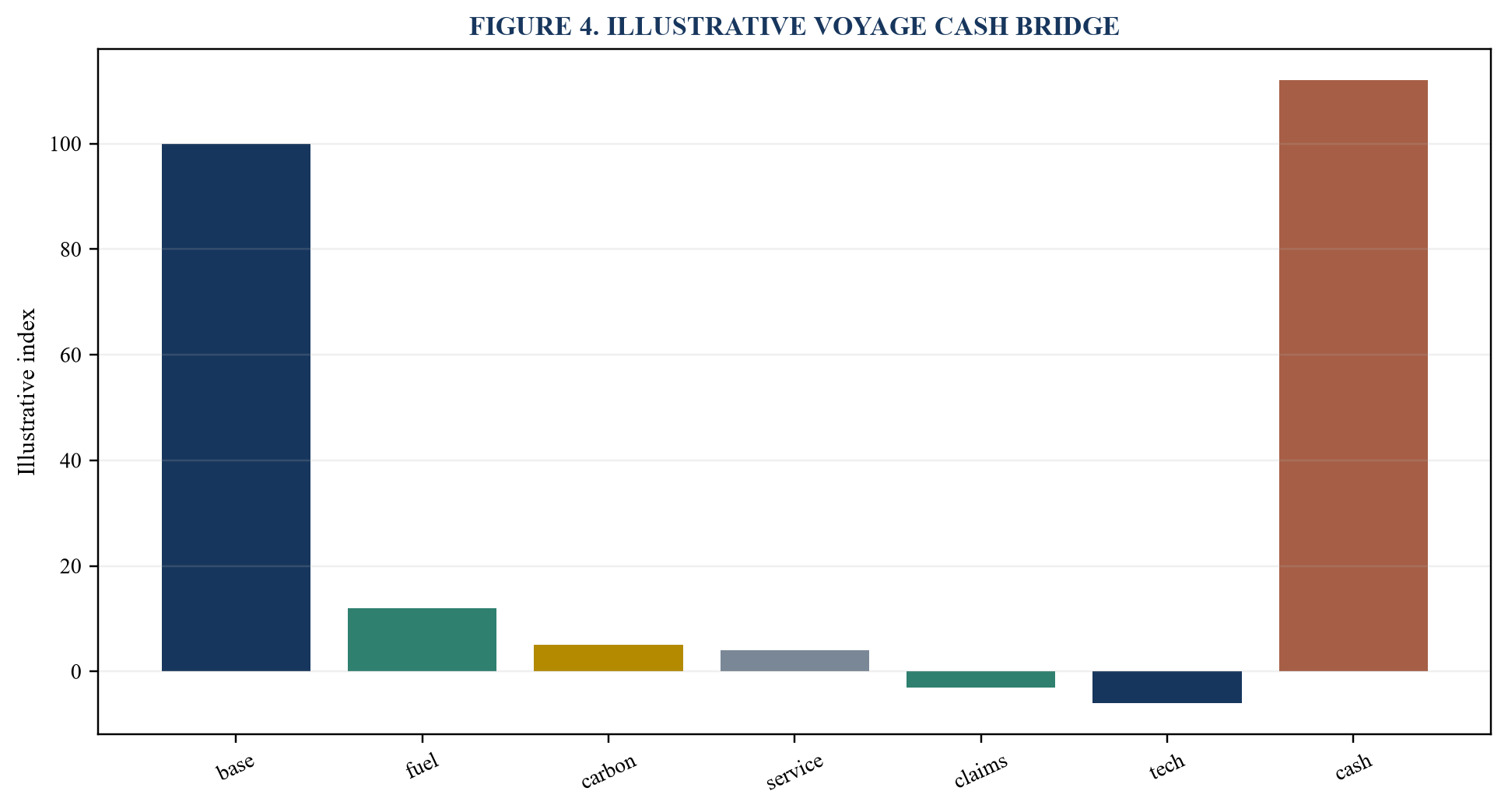
Fuel, carbon and service should be reconciled after full technology cost.
34. Assess financing relevance
Lenders may value lower operating cost and stronger cash resilience when evidence, contracts, controls and downside are reviewable. Forecast savings alone do not create debt capacity.
Controlled evidence includes debt service; covenant; charter cash; verified savings; cost; downside; monitoring. The immediate decision is to link benefit to repayment and covenant headroom. Definitions should remain stable across passage plans, operational records, charter workpapers and financial models.
Finance should distinguish observed operation, management estimate, funded action, forecast and buyer-specific opportunity. Every benefit needs timing, full cost, responsibility and a route to cash.
Decision makers need both upside and downside. The analysis should state which party controls conversion, what investment remains, when cash appears, which risks survive and whether the result continues after a change of ownership. Unsupported precision should be replaced with bounded scenarios. The committee should record the decision consequence of each range, including price, structure, funding, covenant, integration and monitoring implications.
35. Translate cash into enterprise value
Valuation should distinguish observed run rate, funded rollout, management forecast, buyer synergy and unresolved risk. Multiple expansion should not duplicate cash-flow benefit.
Controlled evidence includes valuation bridge; forecast; discount rate; comparable evidence; integration cost. The immediate decision is to recognise transferable and persistent cash once. Definitions should remain stable across passage plans, operational records, charter workpapers and financial models.
Marine operations, chartering, sustainability and finance teams should use the same voyage identifiers and cut-offs. Representative cases should be traced from decision through service outcome and settlement.
The analytical unit should remain stable from source record to valuation conclusion. Reviewers should see the population, exclusions, period, owner and reconciliation to finance. Where evidence is incomplete, the model should retain a range and identify the action needed to narrow it. Comparisons should preserve product, customer, site, complexity and market conditions; aggregation should not conceal adverse cohorts or delayed consequences.
36. Contract for performance and transferability
Software licence, data rights, service levels, model support, cybersecurity, change control, audit access and termination assistance can affect continuity and buyer value.
Controlled evidence includes contract; IP; data licence; SLA; pricing; change; exit; assignment. The immediate decision is to make the capability operable after ownership or vendor change. Definitions should remain stable across passage plans, operational records, charter workpapers and financial models.
Decision makers need bounded downside for model error, data loss, unsafe routing, schedule failure, carbon-price movement, contractual dispute, vendor exit and weak adoption.
Evidence should distinguish observation, estimate, management plan and transaction judgement. A supported claim includes timing, full cost, dependency, transferability and a cash consequence. Sensitivity should show how the conclusion changes when adoption, demand, quality or persistence underperforms. Material assumptions need validation dates, accountable owners and explicit expiry conditions so that stale expectations do not survive into pricing or financing decisions.
37. Establish assurance and reporting controls
Operational, regulatory and financial reports should share definitions and reconciliations. Management estimates should remain identifiable.
Controlled evidence includes control owner; source; calculation; review; exception; evidence; retention. The immediate decision is to allow independent reproduction from voyage event to reported cash. Definitions should remain stable across passage plans, operational records, charter workpapers and financial models.
Evidence should remain vessel-, route-, charter- and period-specific. The analysis should preserve rejected recommendations, manual intervention, adverse weather, port disruption and failed cases.
The operating team and finance team should use the same definitions. Native records should support aggregate dashboards, and sample testing should follow representative cases from input through outcome and cash. Exceptions, failed cases and client concessions remain part of the population. Reconciliation should cover opening and closing balances, acquisitions, disposals, foreign exchange, allocation changes and manual adjustments that could otherwise mimic operating improvement.
38. Build the transaction evidence room
The room should connect contracts, data lineage, model validation, voyages, fuel, carbon, ports, claims, costs, customers, controls and open findings.
Controlled evidence includes index; source; owner; date; version; finding; closure; access. The immediate decision is to support diligence without replacing native evidence with dashboards. Definitions should remain stable across passage plans, operational records, charter workpapers and financial models.
Finance should distinguish observed operation, management estimate, funded action, forecast and buyer-specific opportunity. Every benefit needs timing, full cost, responsibility and a route to cash.
Decision makers need both upside and downside. The analysis should state which party controls conversion, what investment remains, when cash appears, which risks survive and whether the result continues after a change of ownership. Unsupported precision should be replaced with bounded scenarios. The committee should record the decision consequence of each range, including price, structure, funding, covenant, integration and monitoring implications.
39. Execute the one-hundred-day programme
Sequence baseline freeze, data reconciliation, model validation, vessel trials, port and charter alignment, carbon treatment, cash verification and governance.
Controlled evidence includes workstream; owner; milestone; budget; dependency; evidence gate; stop criterion. The immediate decision is to release scale capital only as evidence gates are passed. Definitions should remain stable across passage plans, operational records, charter workpapers and financial models.
Marine operations, chartering, sustainability and finance teams should use the same voyage identifiers and cut-offs. Representative cases should be traced from decision through service outcome and settlement.
The analytical unit should remain stable from source record to valuation conclusion. Reviewers should see the population, exclusions, period, owner and reconciliation to finance. Where evidence is incomplete, the model should retain a range and identify the action needed to narrow it. Comparisons should preserve product, customer, site, complexity and market conditions; aggregation should not conceal adverse cohorts or delayed consequences.
Table 5. One-hundred-day programme
| Period | Primary work | Gate |
|---|---|---|
| days 1–30 | freeze scope, rights, data and baseline | approve evidence design |
| days 31–60 | validate model and controlled voyages | approve operating case |
| days 61–100 | reconcile carbon, service and cash | approve scale decision |
Replace illustrative classifications with company-specific evidence and approved transaction treatment.
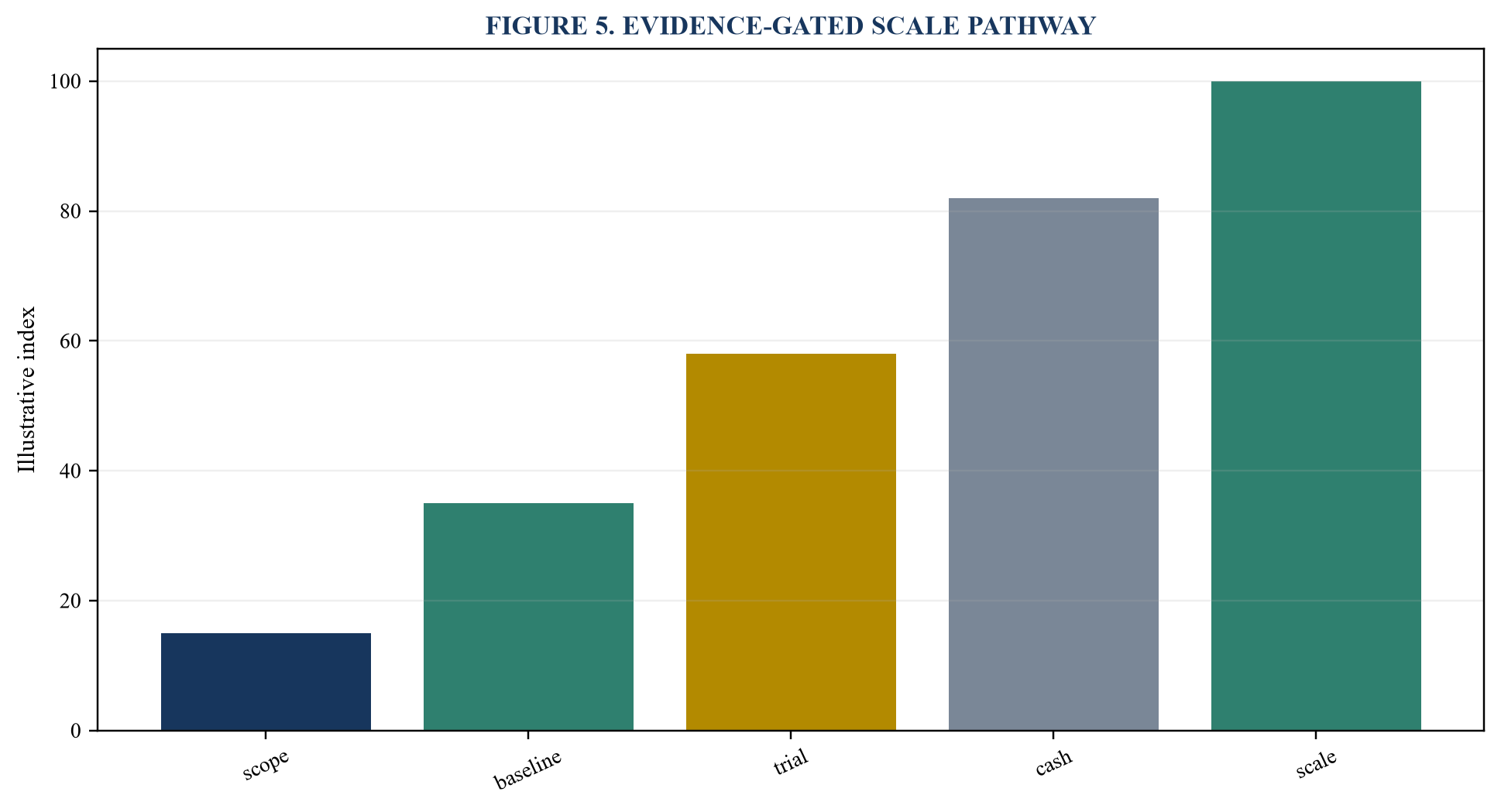
Capital should follow reproducible operating and cash evidence.
40. Conclusion
AI voyage optimisation creates financeable value when safe and contractually permitted decisions produce reproducible improvements in fuel, carbon exposure, service reliability and collected cash after full cost.
Controlled evidence includes decision record; matched voyage; fuel reconciliation; carbon boundary; service outcome; cash; control. The immediate decision is to use one evidence chain across navigation, operations, commercial and finance. Definitions should remain stable across passage plans, operational records, charter workpapers and financial models.
Decision makers need bounded downside for model error, data loss, unsafe routing, schedule failure, carbon-price movement, contractual dispute, vendor exit and weak adoption.
Evidence should distinguish observation, estimate, management plan and transaction judgement. A supported claim includes timing, full cost, dependency, transferability and a cash consequence. Sensitivity should show how the conclusion changes when adoption, demand, quality or persistence underperforms. Material assumptions need validation dates, accountable owners and explicit expiry conditions so that stale expectations do not survive into pricing or financing decisions.
References
- International Maritime Organization, 2023 IMO Strategy on Reduction of GHG Emissions from Ships, https://www.imo.org/en/OurWork/Environment/Pages/2023-IMO-Strategy-on-Reduction-of-GHG-Emissions-from-Ships.aspx
- International Maritime Organization, Improving the energy efficiency of ships, https://www.imo.org/en/OurWork/Environment/Pages/Improving%20the%20energy%20efficiency%20of%20ships.aspx
- International Maritime Organization, Short-term GHG reduction measure, https://www.imo.org/en/ourwork/environment/pages/short-term-ghg-reduction-measure.aspx
- International Maritime Organization, MARPOL Annex VI, https://www.imo.org/en/about/conventions/pages/international-convention-for-the-prevention-of-pollution-from-ships-(marpol).aspx
- International Maritime Organization, Ship Energy Efficiency Management Plan guidance, https://www.imo.org/en/ourwork/environment/pages/technical-and-operational-measures.aspx
- International Maritime Organization, Lowering containership emissions through Just In Time arrivals, https://www.imo.org/en/mediacentre/pages/whatsnew-1718.aspx
- IMO GreenVoyage2050, Just in Time Arrival Guide, https://greenvoyage2050.imo.org/just-in-time-arrival-guide/
- International Maritime Organization, Fourth IMO GHG Study 2020, https://www.imo.org/en/ourwork/environment/pages/fourth-imo-greenhouse-gas-study-2020.aspx
- European Commission, Maritime transport in the EU Emissions Trading System FAQ, https://climate.ec.europa.eu/eu-action/transport-decarbonisation/reducing-emissions-shipping-sector/faq-maritime-transport-eu-emissions-trading-system-ets_en
- European Commission, Reducing emissions from the shipping sector, https://climate.ec.europa.eu/eu-action/transport-decarbonisation/reducing-emissions-shipping-sector_en
- EUR-Lex, Directive (EU) 2023/959, https://eur-lex.europa.eu/eli/dir/2023/959/oj
- EUR-Lex, Regulation (EU) 2015/757 on maritime emissions monitoring, https://eur-lex.europa.eu/eli/reg/2015/757/oj
- European Commission, Decarbonising maritime transport: FuelEU Maritime, https://transport.ec.europa.eu/transport-modes/maritime/decarbonising-maritime-transport-fueleu-maritime_en
- EUR-Lex, Regulation (EU) 2023/1805, https://eur-lex.europa.eu/eli/reg/2023/1805/oj
- BIMCO, CII Operations Clause for Time Charter Parties 2022, https://www.bimco.org/contractual-affairs/bimco-clauses/current-clauses/cii-operations-clause-2022/
- BIMCO, CII Clause for Voyage Charter Parties 2023, https://www.bimco.org/contractual-affairs/bimco-clauses/current-clauses/cii-clause-for-voyage-charter-parties-2023/
- BIMCO, Just In Time Arrival Clause for Voyage Charter Parties 2021, https://www.bimco.org/contractual-affairs/bimco-clauses/current-clauses/just-in-time-arrival-clause-for-voyage-charter-parties-2021/
- International Chamber of Shipping, Reducing CO2 emissions to zero, https://www.ics-shipping.org/current-issue/reducing-co2-emissions-to-zero/
- United Nations Conference on Trade and Development, Review of Maritime Transport 2025, https://unctad.org/publication/review-maritime-transport-2025
- International Organization for Standardization, ISO 19030 measurement of changes in hull and propeller performance, https://www.iso.org/standard/63774.html
- International Organization for Standardization, ISO 19847 shipboard data servers, https://www.iso.org/standard/71995.html
- International Organization for Standardization, ISO 19848 shipboard machinery and equipment data, https://www.iso.org/standard/71996.html
- International Association of Classification Societies, UR E26 Cyber Resilience of Ships, https://iacs.org.uk/resolutions/unified-requirements/ur-e
- International Association of Classification Societies, UR E27 Cyber Resilience of On-Board Systems and Equipment, https://iacs.org.uk/resolutions/unified-requirements/ur-e
- International Valuation Standards Council, International Valuation Standards, https://ivsc.org/standards/
- IFRS Foundation, IFRS Accounting Standards, https://www.ifrs.org/issued-standards/list-of-standards/
