

1. Define the investment decision
Specify whether the analysis supports newbuild approval, retrofit, fleet deployment, debt financing, leasing, acquisition, sale or a strategic partnership. State vessel, route, flag, class, cargo, operating modes, valuation date and decision authority.
Controlled evidence includes approved mandate; vessel and route scope; financing purpose; valuation date; accountable committee. The immediate decision is to freeze the decision perimeter before technology claims enter the model. Definitions should remain stable across technical files, Safety Management System records, transaction workpapers and financial models.
Maritime evidence should remain vessel-, route-, mode- and period-specific. The analysis should preserve approval conditions, operational exclusions, failures and manual intervention. A fleet average can conceal one critical route, port, vendor or casualty exposure.
The operating team and finance team should use the same definitions. Native records should support aggregate dashboards, and sample testing should follow representative cases from input through outcome and cash. Exceptions, failed cases and client concessions remain part of the population. Reconciliation should cover opening and closing balances, acquisitions, disposals, foreign exchange, allocation changes and manual adjustments that could otherwise mimic operating improvement.
2. Apply the MASS Code transition timetable
The 2026 Code is non-mandatory and supports experience building before a future mandatory SOLAS framework. Investors should map current application by flag and class alongside the 2028 development phase, planned 2030 adoption and expected 2032 entry into force.
Controlled evidence includes IMO resolution; flag circulars; class rules; project approvals; experience-building submissions. The immediate decision is to treat regulatory milestones as dated conditions rather than assumed market-wide permission. Definitions should remain stable across technical files, Safety Management System records, transaction workpapers and financial models.
Investment evidence should distinguish approved capability, observed operation, funded closure, management forecast and buyer action. Every benefit needs timing, full cost, responsibility, insurance response, financing consequence and a cash route.
Decision makers need both upside and downside. The analysis should state which party controls conversion, what investment remains, when cash appears, which risks survive and whether the result continues after a change of ownership. Unsupported precision should be replaced with bounded scenarios. The committee should record the decision consequence of each range, including price, structure, funding, covenant, integration and monitoring implications.
3. Define MASS by function and operating mode
A ship is a MASS when autonomous or remote technologies replace or support functions normally performed by crew and the approval process is completed. Enhanced automation alone does not establish MASS status.
Controlled evidence includes function map; mode description; human role; system boundary; MASS Safety Certificate. The immediate decision is to analyse navigation, engineering, cargo, safety and communications separately. Definitions should remain stable across technical files, Safety Management System records, transaction workpapers and financial models.
Engineering, marine operations, legal, insurance and finance teams should use the same identifiers and mode definitions. Native records should support summaries, and representative voyages should be traced from operating decision through service outcome and cash.
The analytical unit should remain stable from source record to valuation conclusion. Reviewers should see the population, exclusions, period, owner and reconciliation to finance. Where evidence is incomplete, the model should retain a range and identify the action needed to narrow it. Comparisons should preserve product, customer, site, complexity and market conditions; aggregation should not conceal adverse cohorts or delayed consequences.
4. Build the autonomy ladder
Crewed decision support, remote control with crew, remote control without crew and highly autonomous operation create different control and recovery requirements. A vessel can use several modes during one voyage.
Controlled evidence includes mode transitions; authority; minimum-risk condition; crew and ROC roles; route restrictions. The immediate decision is to value approved modes and transitions rather than a marketing label. Definitions should remain stable across technical files, Safety Management System records, transaction workpapers and financial models.
Decision makers need bounded scenarios for certification delay, communications loss, quality failure, casualty, insurance restriction, vendor exit, charter resistance and weak resale liquidity. Each range should connect to price, funding, covenant, protection and monitoring.
Evidence should distinguish observation, estimate, management plan and transaction judgement. A supported claim includes timing, full cost, dependency, transferability and a cash consequence. Sensitivity should show how the conclusion changes when adoption, demand, quality or persistence underperforms. Material assumptions need validation dates, accountable owners and explicit expiry conditions so that stale expectations do not survive into pricing or financing decisions.
Table 1. Functional autonomy ladder
| Mode | Human role | Primary evidence |
|---|---|---|
| crewed decision support | onboard master and crew retain control | approved tool, procedures and performance |
| remote control with crew | ROC acts with onboard intervention | authority, handover and communications |
| remote control without crew | ROC controls with remote fallback | certificate, redundancy and emergency response |
| high autonomy | system acts within approved domain | safety case, limits and human oversight |
Replace illustrative classifications with company-specific evidence and approved transaction treatment.
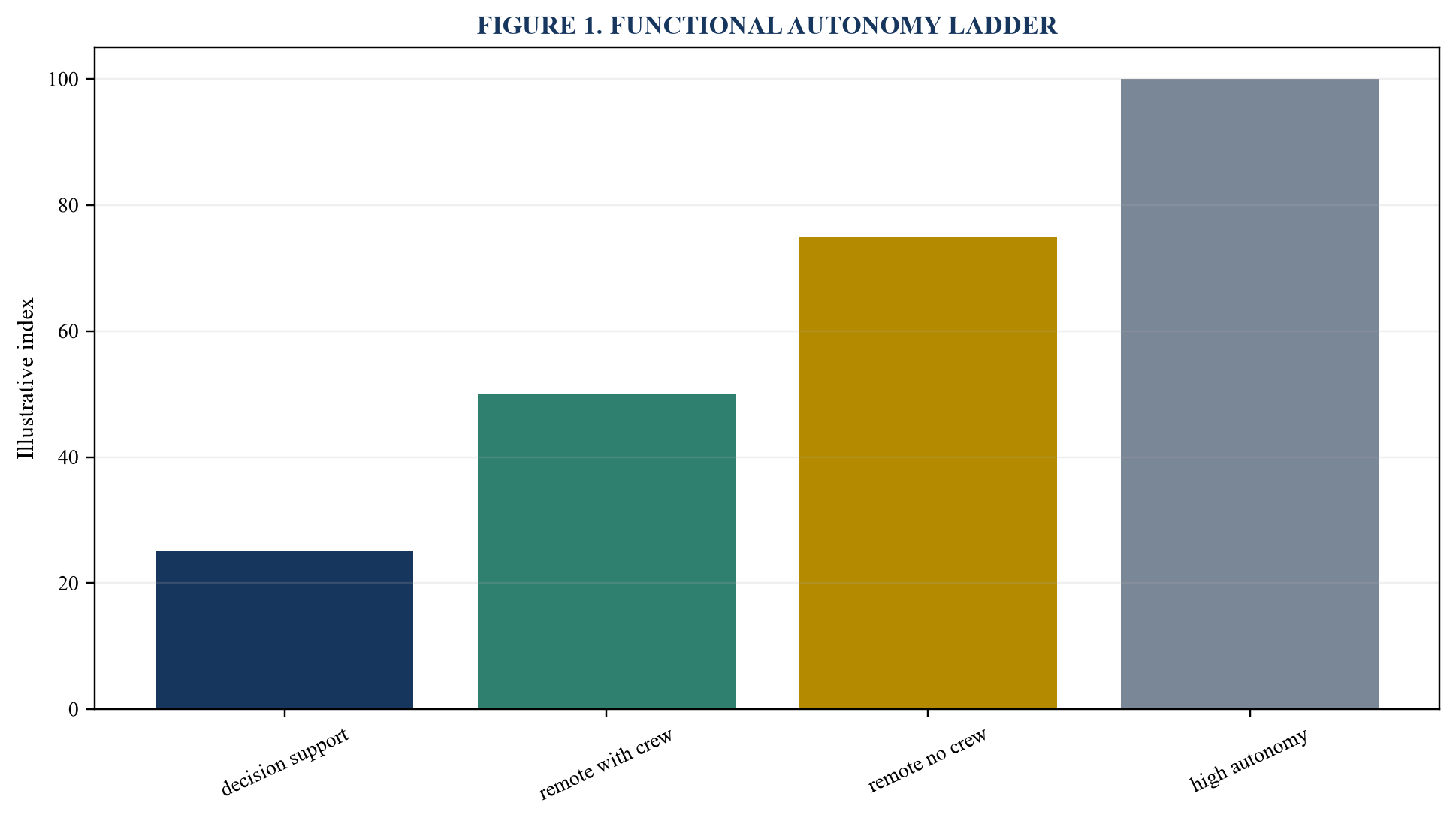
Modes should be assessed by function, human authority and approved operating domain.
5. Map the certification pathway
The pathway should connect concept, hazard analysis, design, testing, flag and class engagement, trials, operational approval, safety management and certificate maintenance. Evidence gates should precede irreversible capital expenditure.
Controlled evidence includes approval basis; equivalences; class notation; flag decisions; trial permits; certificate conditions. The immediate decision is to link funding drawdown and valuation recognition to completed approval gates. Definitions should remain stable across technical files, Safety Management System records, transaction workpapers and financial models.
Maritime evidence should remain vessel-, route-, mode- and period-specific. The analysis should preserve approval conditions, operational exclusions, failures and manual intervention. A fleet average can conceal one critical route, port, vendor or casualty exposure.
The operating team and finance team should use the same definitions. Native records should support aggregate dashboards, and sample testing should follow representative cases from input through outcome and cash. Exceptions, failed cases and client concessions remain part of the population. Reconciliation should cover opening and closing balances, acquisitions, disposals, foreign exchange, allocation changes and manual adjustments that could otherwise mimic operating improvement.
Table 2. Certification and investment gates
| Gate | Evidence | Capital decision |
|---|---|---|
| concept | operating modes and approval basis | fund feasibility |
| design | hazards, architecture and class engagement | fund detailed engineering |
| verification | test and assurance results | fund trials |
| operation | flag, class, SMS and certificate conditions | fund deployment |
| scale | charter, insurer and fleet evidence | fund replication |
Replace illustrative classifications with company-specific evidence and approved transaction treatment.
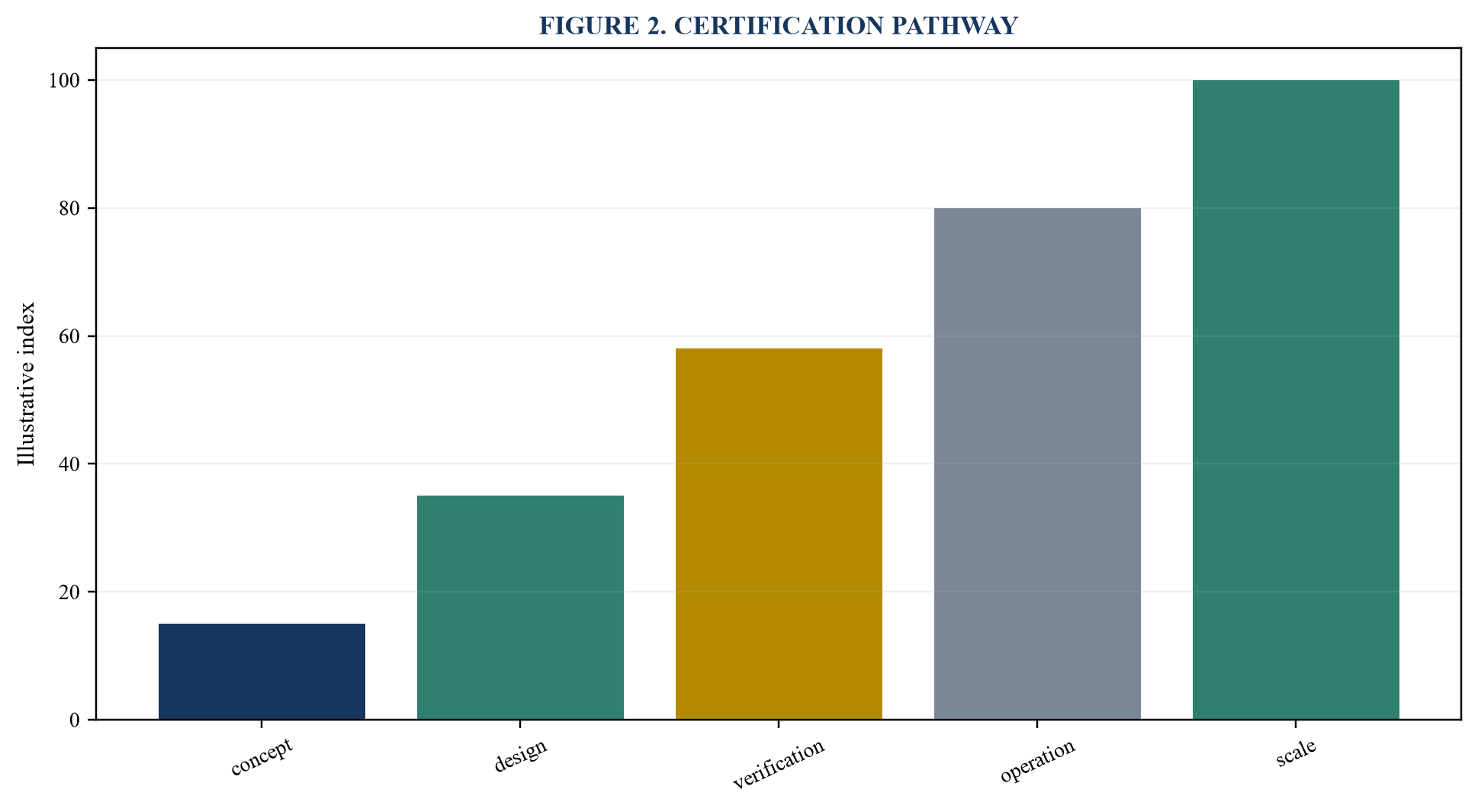
Capital should follow evidence gates from concept through approved scale.
6. Construct the safety case
The safety case should demonstrate equivalent safety for the intended operating modes and environment. It should cover hazards, architecture, human interaction, degraded operation, emergency response and evidence from verification and trials.
Controlled evidence includes hazard log; risk controls; verification; validation; assurance; residual risk; owner. The immediate decision is to require traceable closure of safety-critical assumptions and findings. Definitions should remain stable across technical files, Safety Management System records, transaction workpapers and financial models.
Investment evidence should distinguish approved capability, observed operation, funded closure, management forecast and buyer action. Every benefit needs timing, full cost, responsibility, insurance response, financing consequence and a cash route.
Decision makers need both upside and downside. The analysis should state which party controls conversion, what investment remains, when cash appears, which risks survive and whether the result continues after a change of ownership. Unsupported precision should be replaced with bounded scenarios. The committee should record the decision consequence of each range, including price, structure, funding, covenant, integration and monitoring implications.
7. Establish the human-control model
The MASS Code retains a human master with overall responsibility, whether located on board or at a Remote Operations Centre. Authority, situational awareness, workload, handover and intervention need operational proof.
Controlled evidence includes role matrix; competence; authority; staffing; fatigue; handover; override; drills. The immediate decision is to test whether one person or ROC can safely supervise the proposed vessel set. Definitions should remain stable across technical files, Safety Management System records, transaction workpapers and financial models.
Engineering, marine operations, legal, insurance and finance teams should use the same identifiers and mode definitions. Native records should support summaries, and representative voyages should be traced from operating decision through service outcome and cash.
The analytical unit should remain stable from source record to valuation conclusion. Reviewers should see the population, exclusions, period, owner and reconciliation to finance. Where evidence is incomplete, the model should retain a range and identify the action needed to narrow it. Comparisons should preserve product, customer, site, complexity and market conditions; aggregation should not conceal adverse cohorts or delayed consequences.
8. Design the Remote Operations Centre
A ROC is part of the ship operating system. Its certification, physical resilience, systems, staffing, security, communications, records, business continuity and Safety Management System should match the consequence of lost or incorrect control.
Controlled evidence includes ROC architecture; site resilience; staffing; competence; procedures; access; continuity. The immediate decision is to include ROC capital and operating cost in fleet economics. Definitions should remain stable across technical files, Safety Management System records, transaction workpapers and financial models.
Decision makers need bounded scenarios for certification delay, communications loss, quality failure, casualty, insurance restriction, vendor exit, charter resistance and weak resale liquidity. Each range should connect to price, funding, covenant, protection and monitoring.
Evidence should distinguish observation, estimate, management plan and transaction judgement. A supported claim includes timing, full cost, dependency, transferability and a cash consequence. Sensitivity should show how the conclusion changes when adoption, demand, quality or persistence underperforms. Material assumptions need validation dates, accountable owners and explicit expiry conditions so that stale expectations do not survive into pricing or financing decisions.
9. Engineer mode transition and minimum-risk condition
Loss of communications, sensor degradation, cyber incident, severe weather, traffic complexity or equipment failure may require a controlled mode change. The minimum-risk condition should be defined for each route and vessel state.
Controlled evidence includes trigger logic; authority; alarms; fallback; safe state; test results; recovery time. The immediate decision is to treat unsafe or untested transitions as deployment and financing constraints. Definitions should remain stable across technical files, Safety Management System records, transaction workpapers and financial models.
Maritime evidence should remain vessel-, route-, mode- and period-specific. The analysis should preserve approval conditions, operational exclusions, failures and manual intervention. A fleet average can conceal one critical route, port, vendor or casualty exposure.
The operating team and finance team should use the same definitions. Native records should support aggregate dashboards, and sample testing should follow representative cases from input through outcome and cash. Exceptions, failed cases and client concessions remain part of the population. Reconciliation should cover opening and closing balances, acquisitions, disposals, foreign exchange, allocation changes and manual adjustments that could otherwise mimic operating improvement.
10. Validate navigation and collision avoidance
Autonomous navigation should be tested against COLREG obligations, traffic density, restricted waters, pilotage, sensor limitations, chart quality and human interaction. Average performance cannot replace rare-event assurance.
Controlled evidence includes scenario library; encounter tests; sensor coverage; false detections; decisions; overrides. The immediate decision is to set operational envelopes and exclusions supported by evidence. Definitions should remain stable across technical files, Safety Management System records, transaction workpapers and financial models.
Investment evidence should distinguish approved capability, observed operation, funded closure, management forecast and buyer action. Every benefit needs timing, full cost, responsibility, insurance response, financing consequence and a cash route.
Decision makers need both upside and downside. The analysis should state which party controls conversion, what investment remains, when cash appears, which risks survive and whether the result continues after a change of ownership. Unsupported precision should be replaced with bounded scenarios. The committee should record the decision consequence of each range, including price, structure, funding, covenant, integration and monitoring implications.
11. Secure connectivity and communications
Remote operations depend on availability, latency, integrity, authentication and coverage across primary and alternate links. Communications design should reflect route geography, weather, congestion and deliberate interference.
Controlled evidence includes coverage map; service levels; latency; outages; redundancy; authentication; cost. The immediate decision is to model downtime, route restriction and fallback rather than assuming continuous connectivity. Definitions should remain stable across technical files, Safety Management System records, transaction workpapers and financial models.
Engineering, marine operations, legal, insurance and finance teams should use the same identifiers and mode definitions. Native records should support summaries, and representative voyages should be traced from operating decision through service outcome and cash.
The analytical unit should remain stable from source record to valuation conclusion. Reviewers should see the population, exclusions, period, owner and reconciliation to finance. Where evidence is incomplete, the model should retain a range and identify the action needed to narrow it. Comparisons should preserve product, customer, site, complexity and market conditions; aggregation should not conceal adverse cohorts or delayed consequences.
12. Govern cyber risk
MASS expands the cyber perimeter across vessel operational technology, ROC, satellite links, vendors, software updates and identities. Safety and cyber cases should share assets, hazards, controls and incident scenarios.
Controlled evidence includes asset inventory; segmentation; access; secure update; detection; response; exercises. The immediate decision is to connect residual cyber exposure to operations, insurance, covenants and value. Definitions should remain stable across technical files, Safety Management System records, transaction workpapers and financial models.
Decision makers need bounded scenarios for certification delay, communications loss, quality failure, casualty, insurance restriction, vendor exit, charter resistance and weak resale liquidity. Each range should connect to price, funding, covenant, protection and monitoring.
Evidence should distinguish observation, estimate, management plan and transaction judgement. A supported claim includes timing, full cost, dependency, transferability and a cash consequence. Sensitivity should show how the conclusion changes when adoption, demand, quality or persistence underperforms. Material assumptions need validation dates, accountable owners and explicit expiry conditions so that stale expectations do not survive into pricing or financing decisions.
13. Control software and model assurance
Safety-critical software requires requirements traceability, configuration control, testing, independent assurance, change approval, rollback and field-performance monitoring. Learning systems need bounded use and stable evidence.
Controlled evidence includes versions; requirements; test coverage; data; anomalies; approvals; deployment history. The immediate decision is to prevent unapproved model change from altering the certified operating basis. Definitions should remain stable across technical files, Safety Management System records, transaction workpapers and financial models.
Maritime evidence should remain vessel-, route-, mode- and period-specific. The analysis should preserve approval conditions, operational exclusions, failures and manual intervention. A fleet average can conceal one critical route, port, vendor or casualty exposure.
The operating team and finance team should use the same definitions. Native records should support aggregate dashboards, and sample testing should follow representative cases from input through outcome and cash. Exceptions, failed cases and client concessions remain part of the population. Reconciliation should cover opening and closing balances, acquisitions, disposals, foreign exchange, allocation changes and manual adjustments that could otherwise mimic operating improvement.
14. Build the sensor and perception evidence case
Radar, lidar, cameras, AIS, GNSS and environmental sensors have different failure modes. Fusion performance should be tested in fog, glare, precipitation, clutter, spoofing and partial degradation.
Controlled evidence includes sensor specifications; calibration; scenario results; detection and false-alarm rates; maintenance. The immediate decision is to value performance within the proven operational design domain. Definitions should remain stable across technical files, Safety Management System records, transaction workpapers and financial models.
Investment evidence should distinguish approved capability, observed operation, funded closure, management forecast and buyer action. Every benefit needs timing, full cost, responsibility, insurance response, financing consequence and a cash route.
Decision makers need both upside and downside. The analysis should state which party controls conversion, what investment remains, when cash appears, which risks survive and whether the result continues after a change of ownership. Unsupported precision should be replaced with bounded scenarios. The committee should record the decision consequence of each range, including price, structure, funding, covenant, integration and monitoring implications.
15. Plan onboard maintenance and intervention
Reduced crew changes inspection, repair, firefighting, damage control, cargo response and machinery intervention. Reliability improvements should be assessed with access, redundancy, spares, port support and recovery time.
Controlled evidence includes failure modes; maintenance intervals; remote diagnostics; spares; intervention plan; downtime. The immediate decision is to include additional reliability and shore-support cost before recognising crew savings. Definitions should remain stable across technical files, Safety Management System records, transaction workpapers and financial models.
Engineering, marine operations, legal, insurance and finance teams should use the same identifiers and mode definitions. Native records should support summaries, and representative voyages should be traced from operating decision through service outcome and cash.
The analytical unit should remain stable from source record to valuation conclusion. Reviewers should see the population, exclusions, period, owner and reconciliation to finance. Where evidence is incomplete, the model should retain a range and identify the action needed to narrow it. Comparisons should preserve product, customer, site, complexity and market conditions; aggregation should not conceal adverse cohorts or delayed consequences.
16. Integrate fire, flooding and emergency response
Uncrewed or lightly crewed operation can alter detection, containment, evacuation and external assistance. Emergency functions should remain credible during communications and power loss.
Controlled evidence includes detection; suppression; compartmentation; damage control; SAR interface; drills. The immediate decision is to test consequence severity and response time across operating modes. Definitions should remain stable across technical files, Safety Management System records, transaction workpapers and financial models.
Decision makers need bounded scenarios for certification delay, communications loss, quality failure, casualty, insurance restriction, vendor exit, charter resistance and weak resale liquidity. Each range should connect to price, funding, covenant, protection and monitoring.
Evidence should distinguish observation, estimate, management plan and transaction judgement. A supported claim includes timing, full cost, dependency, transferability and a cash consequence. Sensitivity should show how the conclusion changes when adoption, demand, quality or persistence underperforms. Material assumptions need validation dates, accountable owners and explicit expiry conditions so that stale expectations do not survive into pricing or financing decisions.
17. Map search and rescue obligations
A MASS remains part of the maritime safety system. The ability to receive distress information, alter course, assist and communicate should be defined alongside responsibility for persons in distress.
Controlled evidence includes SAR procedures; communication; manoeuvring; remote authority; rescue capability; exercises. The immediate decision is to reflect route and mission restrictions where assistance cannot be provided equivalently. Definitions should remain stable across technical files, Safety Management System records, transaction workpapers and financial models.
Maritime evidence should remain vessel-, route-, mode- and period-specific. The analysis should preserve approval conditions, operational exclusions, failures and manual intervention. A fleet average can conceal one critical route, port, vendor or casualty exposure.
The operating team and finance team should use the same definitions. Native records should support aggregate dashboards, and sample testing should follow representative cases from input through outcome and cash. Exceptions, failed cases and client concessions remain part of the population. Reconciliation should cover opening and closing balances, acquisitions, disposals, foreign exchange, allocation changes and manual adjustments that could otherwise mimic operating improvement.
18. Align the ship-port interface
Arrival, pilotage, towage, mooring, cargo, documentation, inspection and departure require port and authority acceptance. Digital interfaces and remote roles should be mapped for each intended port.
Controlled evidence includes port permissions; pilot and tug plan; mooring method; FAL data; local procedures; trials. The immediate decision is to treat port readiness as a commercial route dependency. Definitions should remain stable across technical files, Safety Management System records, transaction workpapers and financial models.
Investment evidence should distinguish approved capability, observed operation, funded closure, management forecast and buyer action. Every benefit needs timing, full cost, responsibility, insurance response, financing consequence and a cash route.
Decision makers need both upside and downside. The analysis should state which party controls conversion, what investment remains, when cash appears, which risks survive and whether the result continues after a change of ownership. Unsupported precision should be replaced with bounded scenarios. The committee should record the decision consequence of each range, including price, structure, funding, covenant, integration and monitoring implications.
19. Define cargo and charter constraints
Cargo hazard, stowage, refrigeration, security, dangerous goods and charter obligations can limit autonomous modes. Charterers may require crew, intervention capacity, reporting or performance warranties.
Controlled evidence includes cargo code; charterparty; customer approval; operating limits; service levels; claims. The immediate decision is to value approved cargo-route combinations rather than theoretical vessel capability. Definitions should remain stable across technical files, Safety Management System records, transaction workpapers and financial models.
Engineering, marine operations, legal, insurance and finance teams should use the same identifiers and mode definitions. Native records should support summaries, and representative voyages should be traced from operating decision through service outcome and cash.
The analytical unit should remain stable from source record to valuation conclusion. Reviewers should see the population, exclusions, period, owner and reconciliation to finance. Where evidence is incomplete, the model should retain a range and identify the action needed to narrow it. Comparisons should preserve product, customer, site, complexity and market conditions; aggregation should not conceal adverse cohorts or delayed consequences.
20. Allocate legal responsibility
Responsibility may involve owner, master, ROC operator, remote operator, manufacturer, software provider, class, flag and service vendors. Contract allocation does not remove public-law duties or third-party exposure.
Controlled evidence includes statutory duties; contracts; indemnities; control evidence; jurisdiction; dispute forum. The immediate decision is to map responsibility to actual authority, control and insurability. Definitions should remain stable across technical files, Safety Management System records, transaction workpapers and financial models.
Decision makers need bounded scenarios for certification delay, communications loss, quality failure, casualty, insurance restriction, vendor exit, charter resistance and weak resale liquidity. Each range should connect to price, funding, covenant, protection and monitoring.
Evidence should distinguish observation, estimate, management plan and transaction judgement. A supported claim includes timing, full cost, dependency, transferability and a cash consequence. Sensitivity should show how the conclusion changes when adoption, demand, quality or persistence underperforms. Material assumptions need validation dates, accountable owners and explicit expiry conditions so that stale expectations do not survive into pricing or financing decisions.
Table 3. Responsibility and liability map
| Party | Control | Evidence question |
|---|---|---|
| owner | asset and operating system | who governs seaworthiness? |
| master | overall vessel responsibility | how is authority exercised? |
| ROC operator | remote functions and staffing | what is controlled from shore? |
| technology provider | system and support | what defects and changes are controlled? |
| flag and class | approval and survey | which conditions limit operation? |
| insurer and lender | risk transfer and finance | what events restrict cover or funding? |
Replace illustrative classifications with company-specific evidence and approved transaction treatment.
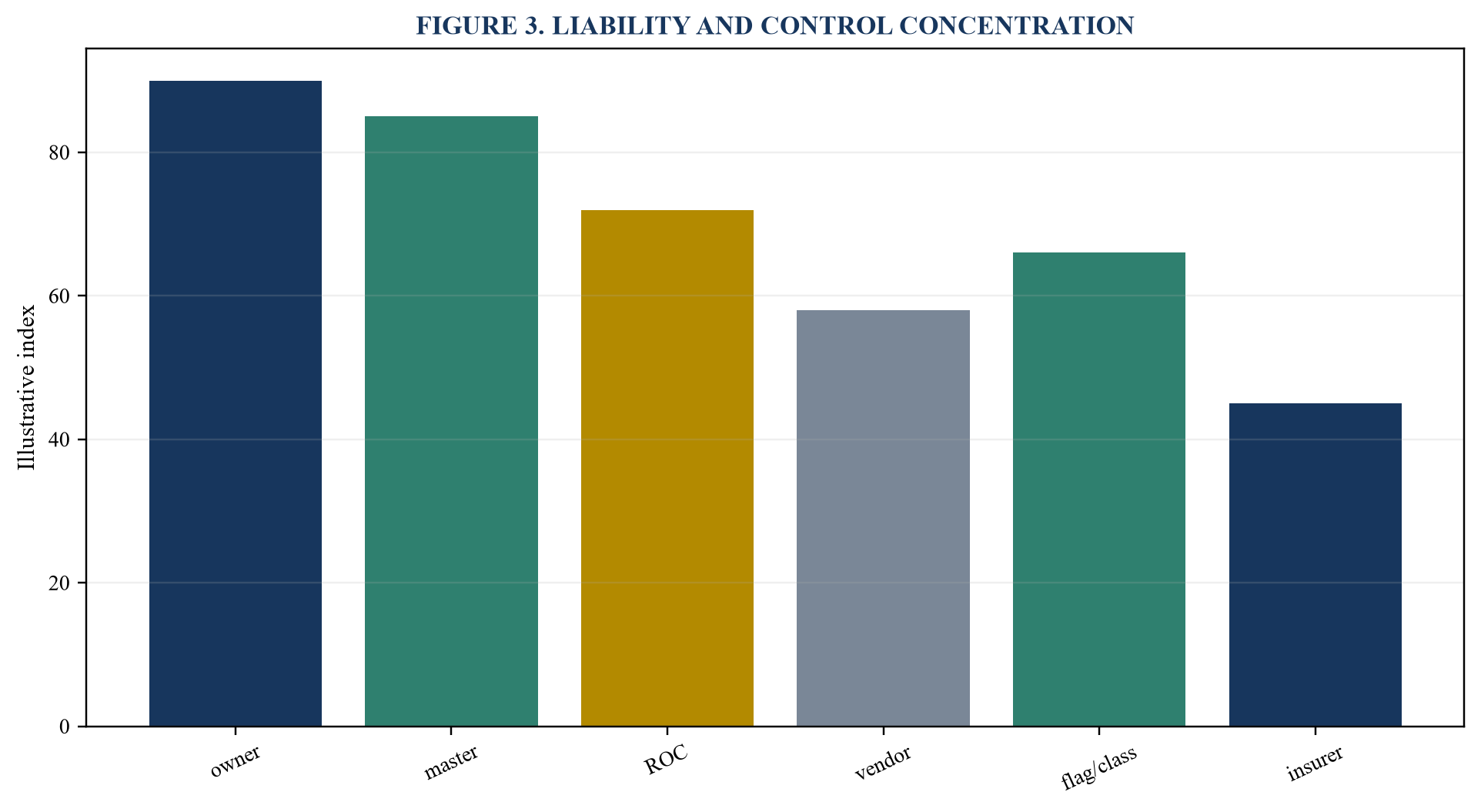
Values are conceptual and require jurisdiction- and contract-specific analysis.
21. Analyse collision and casualty liability
Collision, pollution, cargo, salvage, wreck removal and personal-injury regimes should be reviewed for the vessel, route and operating model. Evidential records may become central after a casualty.
Controlled evidence includes applicable conventions; limitation; logs; control history; causation evidence; notification. The immediate decision is to include liability caps, exclusions and uninsured tails in downside scenarios. Definitions should remain stable across technical files, Safety Management System records, transaction workpapers and financial models.
Maritime evidence should remain vessel-, route-, mode- and period-specific. The analysis should preserve approval conditions, operational exclusions, failures and manual intervention. A fleet average can conceal one critical route, port, vendor or casualty exposure.
The operating team and finance team should use the same definitions. Native records should support aggregate dashboards, and sample testing should follow representative cases from input through outcome and cash. Exceptions, failed cases and client concessions remain part of the population. Reconciliation should cover opening and closing balances, acquisitions, disposals, foreign exchange, allocation changes and manual adjustments that could otherwise mimic operating improvement.
22. Test insurance availability and conditions
Insurance response depends on disclosure, class and flag acceptance, operating envelope, cyber controls, crew model, loss history and policy wording. A technical safety case does not itself prove insurability or price.
Controlled evidence includes broker indications; underwriter terms; exclusions; deductibles; warranties; aggregation; premium. The immediate decision is to make insurance evidence a financing and deployment gate. Definitions should remain stable across technical files, Safety Management System records, transaction workpapers and financial models.
Investment evidence should distinguish approved capability, observed operation, funded closure, management forecast and buyer action. Every benefit needs timing, full cost, responsibility, insurance response, financing consequence and a cash route.
Decision makers need both upside and downside. The analysis should state which party controls conversion, what investment remains, when cash appears, which risks survive and whether the result continues after a change of ownership. Unsupported precision should be replaced with bounded scenarios. The committee should record the decision consequence of each range, including price, structure, funding, covenant, integration and monitoring implications.
23. Build the operating model
Define ownership, technical management, crewing, ROC, maintenance, vendors, port support, emergency response, data and continuous assurance. The operating model should show accountability during normal and degraded modes.
Controlled evidence includes RACI; contracts; staffing; systems; service levels; reserves; escalation. The immediate decision is to assess whether capability scales beyond a single demonstration vessel. Definitions should remain stable across technical files, Safety Management System records, transaction workpapers and financial models.
Engineering, marine operations, legal, insurance and finance teams should use the same identifiers and mode definitions. Native records should support summaries, and representative voyages should be traced from operating decision through service outcome and cash.
The analytical unit should remain stable from source record to valuation conclusion. Reviewers should see the population, exclusions, period, owner and reconciliation to finance. Where evidence is incomplete, the model should retain a range and identify the action needed to narrow it. Comparisons should preserve product, customer, site, complexity and market conditions; aggregation should not conceal adverse cohorts or delayed consequences.
24. Reconcile crew and shore economics
Onboard headcount can fall while ROC staff, training, connectivity, assurance, maintenance and port support rise. Savings depend on wage geography, rotations, welfare, accommodation, redundancy and fleet scale.
Controlled evidence includes crew plan; ROC ratios; compensation; travel; training; support; full cost; utilisation. The immediate decision is to value net sustainable cash after scale and transition cost. Definitions should remain stable across technical files, Safety Management System records, transaction workpapers and financial models.
Decision makers need bounded scenarios for certification delay, communications loss, quality failure, casualty, insurance restriction, vendor exit, charter resistance and weak resale liquidity. Each range should connect to price, funding, covenant, protection and monitoring.
Evidence should distinguish observation, estimate, management plan and transaction judgement. A supported claim includes timing, full cost, dependency, transferability and a cash consequence. Sensitivity should show how the conclusion changes when adoption, demand, quality or persistence underperforms. Material assumptions need validation dates, accountable owners and explicit expiry conditions so that stale expectations do not survive into pricing or financing decisions.
25. Measure fuel, route and schedule effects
Autonomous control can affect speed, routing, weather response, engine operation and port arrival. Benefits should be separated from hull, engine, fuel price, charter instruction and ordinary voyage optimisation.
Controlled evidence includes voyage cohorts; weather; speed; fuel; cargo; route; schedule; charter terms. The immediate decision is to use matched voyages and contribution after service consequences. Definitions should remain stable across technical files, Safety Management System records, transaction workpapers and financial models.
Maritime evidence should remain vessel-, route-, mode- and period-specific. The analysis should preserve approval conditions, operational exclusions, failures and manual intervention. A fleet average can conceal one critical route, port, vendor or casualty exposure.
The operating team and finance team should use the same definitions. Native records should support aggregate dashboards, and sample testing should follow representative cases from input through outcome and cash. Exceptions, failed cases and client concessions remain part of the population. Reconciliation should cover opening and closing balances, acquisitions, disposals, foreign exchange, allocation changes and manual adjustments that could otherwise mimic operating improvement.
26. Model availability and downtime
Availability should include planned maintenance, software changes, connectivity loss, sensor faults, port delay, certificate restrictions and ROC interruption. One unavailable vessel can affect network and charter economics.
Controlled evidence includes operating hours; failure and repair; restrictions; cancellations; off-hire; network impact. The immediate decision is to connect technical availability to contracted revenue and cash. Definitions should remain stable across technical files, Safety Management System records, transaction workpapers and financial models.
Investment evidence should distinguish approved capability, observed operation, funded closure, management forecast and buyer action. Every benefit needs timing, full cost, responsibility, insurance response, financing consequence and a cash route.
Decision makers need both upside and downside. The analysis should state which party controls conversion, what investment remains, when cash appears, which risks survive and whether the result continues after a change of ownership. Unsupported precision should be replaced with bounded scenarios. The committee should record the decision consequence of each range, including price, structure, funding, covenant, integration and monitoring implications.
27. Construct the full cost stack
Include vessel systems, redundancy, sensors, communications, ROC, software, data, class, flag, trials, insurance, training, cyber, maintenance, updates, shore support and decommissioning.
Controlled evidence includes supplier contracts; capex; opex; internal labour; renewal; escalation; contingency. The immediate decision is to replace pilot subsidies and vendor estimates with steady-state contractual cost. Definitions should remain stable across technical files, Safety Management System records, transaction workpapers and financial models.
Engineering, marine operations, legal, insurance and finance teams should use the same identifiers and mode definitions. Native records should support summaries, and representative voyages should be traced from operating decision through service outcome and cash.
The analytical unit should remain stable from source record to valuation conclusion. Reviewers should see the population, exclusions, period, owner and reconciliation to finance. Where evidence is incomplete, the model should retain a range and identify the action needed to narrow it. Comparisons should preserve product, customer, site, complexity and market conditions; aggregation should not conceal adverse cohorts or delayed consequences.
28. Build the cash-flow bridge
The bridge should reconcile freight or charter revenue, utilisation, off-hire, fuel, crew, ROC, maintenance, insurance, connectivity, port cost, capex, working capital and tax.
Controlled evidence includes charters; voyages; ledgers; capex plan; cost allocations; cash; run-rate date. The immediate decision is to separate observed economics, funded scale actions, forecast and buyer synergy. Definitions should remain stable across technical files, Safety Management System records, transaction workpapers and financial models.
Decision makers need bounded scenarios for certification delay, communications loss, quality failure, casualty, insurance restriction, vendor exit, charter resistance and weak resale liquidity. Each range should connect to price, funding, covenant, protection and monitoring.
Evidence should distinguish observation, estimate, management plan and transaction judgement. A supported claim includes timing, full cost, dependency, transferability and a cash consequence. Sensitivity should show how the conclusion changes when adoption, demand, quality or persistence underperforms. Material assumptions need validation dates, accountable owners and explicit expiry conditions so that stale expectations do not survive into pricing or financing decisions.
Table 4. Autonomous-vessel cash bridge
| Line | Required evidence | Risk |
|---|---|---|
| revenue | charter, route, availability and service | customer acceptance |
| crew and ROC | net onboard and shore staffing | scale and fatigue |
| fuel and schedule | matched voyage performance | weather and charter instruction |
| technology | steady-state contracts and support | vendor repricing |
| maintenance and insurance | approved plan and policy terms | failure and exclusions |
| capex and residual | certified systems and secondary market | obsolescence and liquidity |
Replace illustrative classifications with company-specific evidence and approved transaction treatment.
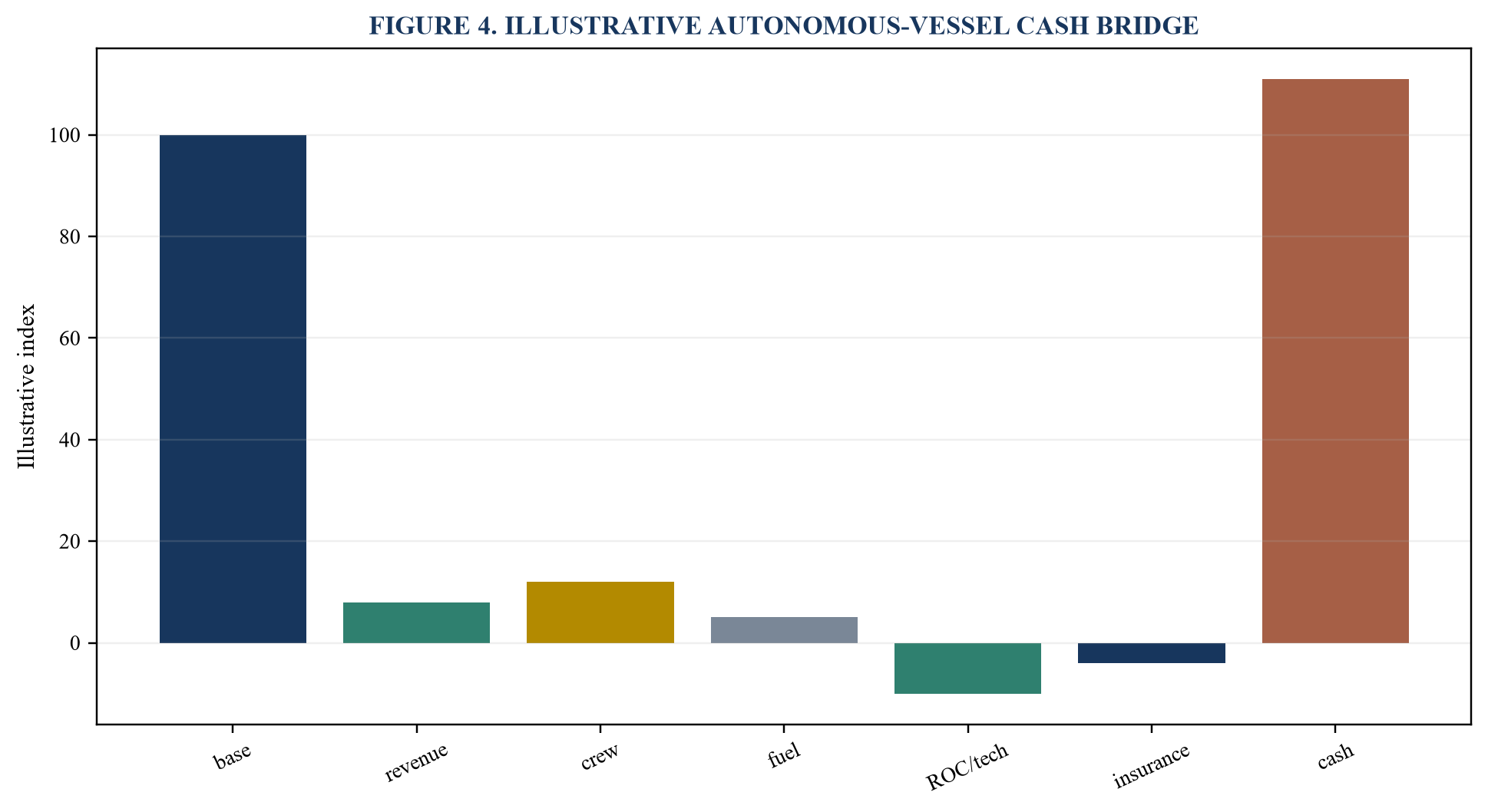
Replace values with vessel-, route- and charter-specific evidence.
29. Assess financing bankability
Lenders need certificate clarity, reliable cash flow, insurance, security, covenants, technical monitoring, step-in practicality and residual-value confidence. Novel systems can affect advance rate and tenor.
Controlled evidence includes term sheet; debt service; covenants; security; assignments; reserves; downside headroom. The immediate decision is to align financing with approval and operating milestones. Definitions should remain stable across technical files, Safety Management System records, transaction workpapers and financial models.
Maritime evidence should remain vessel-, route-, mode- and period-specific. The analysis should preserve approval conditions, operational exclusions, failures and manual intervention. A fleet average can conceal one critical route, port, vendor or casualty exposure.
The operating team and finance team should use the same definitions. Native records should support aggregate dashboards, and sample testing should follow representative cases from input through outcome and cash. Exceptions, failed cases and client concessions remain part of the population. Reconciliation should cover opening and closing balances, acquisitions, disposals, foreign exchange, allocation changes and manual adjustments that could otherwise mimic operating improvement.
30. Design leasing and asset-security structures
Operating and finance leases, sale-and-leaseback and special-purpose ownership may allocate technology and residual risk differently. Lessors need repossession, software access and continued operation rights.
Controlled evidence includes title; lease; licences; maintenance reserves; consent; repossession; transition rights. The immediate decision is to ensure asset security includes the digital and shore-based capability required to operate. Definitions should remain stable across technical files, Safety Management System records, transaction workpapers and financial models.
Investment evidence should distinguish approved capability, observed operation, funded closure, management forecast and buyer action. Every benefit needs timing, full cost, responsibility, insurance response, financing consequence and a cash route.
Decision makers need both upside and downside. The analysis should state which party controls conversion, what investment remains, when cash appears, which risks survive and whether the result continues after a change of ownership. Unsupported precision should be replaced with bounded scenarios. The committee should record the decision consequence of each range, including price, structure, funding, covenant, integration and monitoring implications.
31. Test residual value and secondary liquidity
Residual value depends on conventional usability, retrofit reversibility, certificate transfer, vendor support, software rights, route acceptance and buyer depth. Bespoke autonomy can narrow the secondary market.
Controlled evidence includes comparable vessels; retrofit cost; remaining life; support term; transfer approvals; buyer universe. The immediate decision is to apply liquidity and obsolescence scenarios rather than a standard residual curve. Definitions should remain stable across technical files, Safety Management System records, transaction workpapers and financial models.
Engineering, marine operations, legal, insurance and finance teams should use the same identifiers and mode definitions. Native records should support summaries, and representative voyages should be traced from operating decision through service outcome and cash.
The analytical unit should remain stable from source record to valuation conclusion. Reviewers should see the population, exclusions, period, owner and reconciliation to finance. Where evidence is incomplete, the model should retain a range and identify the action needed to narrow it. Comparisons should preserve product, customer, site, complexity and market conditions; aggregation should not conceal adverse cohorts or delayed consequences.
32. Select the valuation method
Discounted cash flow can model route and regulatory timing; market evidence may be sparse or non-comparable; cost may inform replacement but miss operating benefit and risk.
Controlled evidence includes forecast; discount rate; certificate dates; transactions; vessel comparables; replacement cost. The immediate decision is to triangulate methods and disclose the limits of available evidence. Definitions should remain stable across technical files, Safety Management System records, transaction workpapers and financial models.
Decision makers need bounded scenarios for certification delay, communications loss, quality failure, casualty, insurance restriction, vendor exit, charter resistance and weak resale liquidity. Each range should connect to price, funding, covenant, protection and monitoring.
Evidence should distinguish observation, estimate, management plan and transaction judgement. A supported claim includes timing, full cost, dependency, transferability and a cash consequence. Sensitivity should show how the conclusion changes when adoption, demand, quality or persistence underperforms. Material assumptions need validation dates, accountable owners and explicit expiry conditions so that stale expectations do not survive into pricing or financing decisions.
33. Build valuation scenarios
Scenarios should distinguish conventional fallback, restricted remote operation, scaled approved autonomy and delayed mandatory-code transition. Each needs capex, opex, revenue, availability and terminal assumptions.
Controlled evidence includes mode, route and fleet cases; probabilities; timing; investment; cash; residual value. The immediate decision is to show which evidence gate moves a case from option value to recognised value. Definitions should remain stable across technical files, Safety Management System records, transaction workpapers and financial models.
Maritime evidence should remain vessel-, route-, mode- and period-specific. The analysis should preserve approval conditions, operational exclusions, failures and manual intervention. A fleet average can conceal one critical route, port, vendor or casualty exposure.
The operating team and finance team should use the same definitions. Native records should support aggregate dashboards, and sample testing should follow representative cases from input through outcome and cash. Exceptions, failed cases and client concessions remain part of the population. Reconciliation should cover opening and closing balances, acquisitions, disposals, foreign exchange, allocation changes and manual adjustments that could otherwise mimic operating improvement.
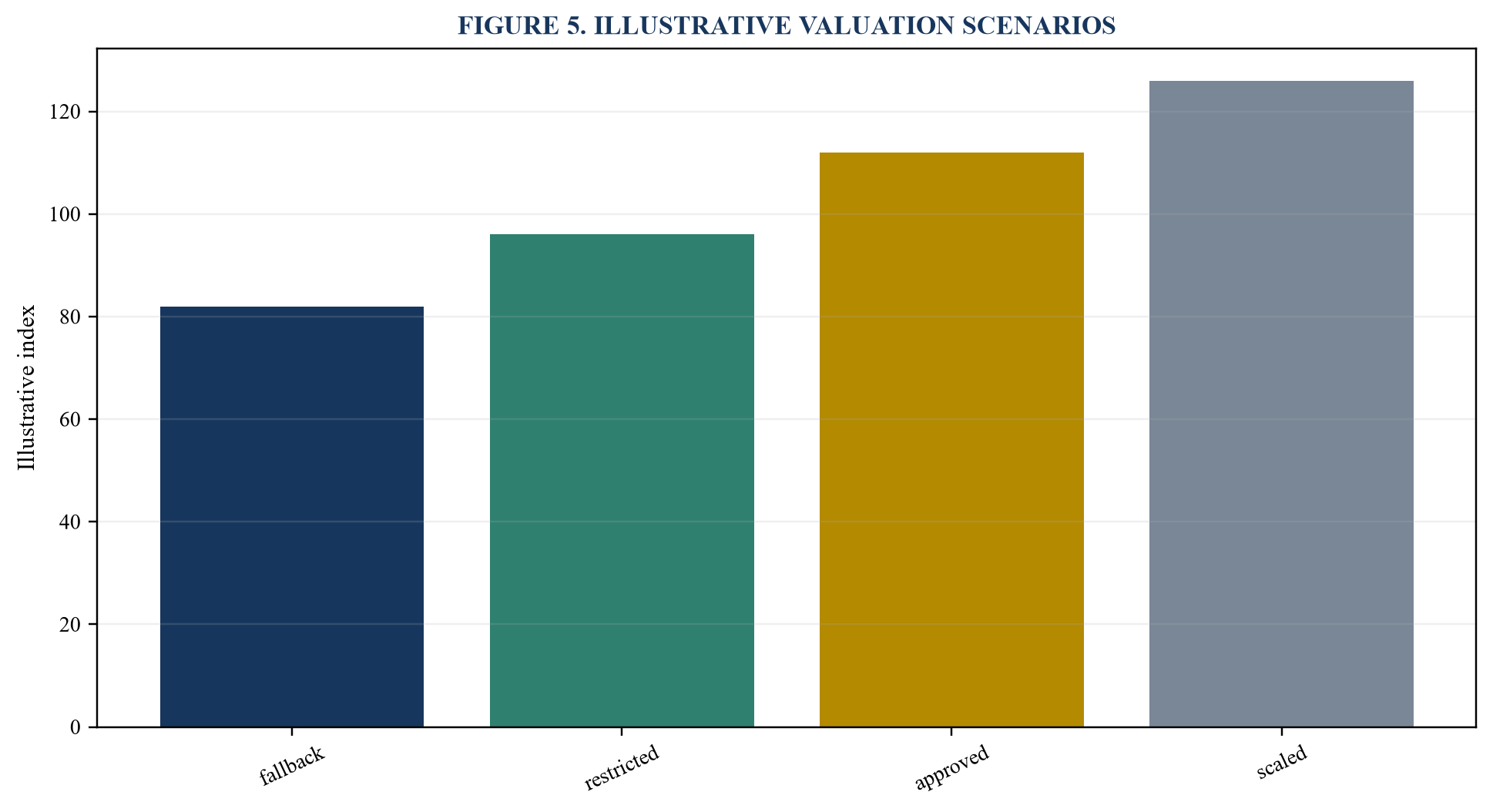
Recognition should follow approval, operating evidence, cash and residual-value support.
34. Separate standalone value from fleet synergy
A buyer may supply routes, charters, ROC scale, maintenance, data, financing or port access. These benefits depend on buyer action and integration.
Controlled evidence includes buyer capability; integration plan; cost; timing; probability; sharing rationale. The immediate decision is to preserve a standalone vessel or operator case and a separate synergy bridge. Definitions should remain stable across technical files, Safety Management System records, transaction workpapers and financial models.
Investment evidence should distinguish approved capability, observed operation, funded closure, management forecast and buyer action. Every benefit needs timing, full cost, responsibility, insurance response, financing consequence and a cash route.
Decision makers need both upside and downside. The analysis should state which party controls conversion, what investment remains, when cash appears, which risks survive and whether the result continues after a change of ownership. Unsupported precision should be replaced with bounded scenarios. The committee should record the decision consequence of each range, including price, structure, funding, covenant, integration and monitoring implications.
35. Structure staged capital and consideration
Milestone funding, earn-outs, holdbacks, warranties, indemnities, covenants and transition services can allocate certification, deployment and performance uncertainty.
Controlled evidence includes milestone definition; verifier; system source; access; dispute process; buyer obligations. The immediate decision is to tie protection to measurable approvals and operating outcomes. Definitions should remain stable across technical files, Safety Management System records, transaction workpapers and financial models.
Engineering, marine operations, legal, insurance and finance teams should use the same identifiers and mode definitions. Native records should support summaries, and representative voyages should be traced from operating decision through service outcome and cash.
The analytical unit should remain stable from source record to valuation conclusion. Reviewers should see the population, exclusions, period, owner and reconciliation to finance. Where evidence is incomplete, the model should retain a range and identify the action needed to narrow it. Comparisons should preserve product, customer, site, complexity and market conditions; aggregation should not conceal adverse cohorts or delayed consequences.
36. Build the diligence evidence room
The room should connect design, approvals, safety, class, flag, ROC, cyber, trials, operating results, charters, insurance, finance and open findings. Summaries should retain native lineage.
Controlled evidence includes index; source; owner; date; version; finding; closure; access; redaction. The immediate decision is to allow a reviewer to reproduce the investment case from approved mode to cash. Definitions should remain stable across technical files, Safety Management System records, transaction workpapers and financial models.
Decision makers need bounded scenarios for certification delay, communications loss, quality failure, casualty, insurance restriction, vendor exit, charter resistance and weak resale liquidity. Each range should connect to price, funding, covenant, protection and monitoring.
Evidence should distinguish observation, estimate, management plan and transaction judgement. A supported claim includes timing, full cost, dependency, transferability and a cash consequence. Sensitivity should show how the conclusion changes when adoption, demand, quality or persistence underperforms. Material assumptions need validation dates, accountable owners and explicit expiry conditions so that stale expectations do not survive into pricing or financing decisions.
37. Classify investment adjustments
Observed vessel economics, funded certification actions, fleet-scale forecasts, buyer synergies and unresolved risks should remain separate. Each adjustment requires amount, timing, owner, probability and transferability.
Controlled evidence includes adjustment register; evidence; approval; accounting; valuation; financing consequence. The immediate decision is to prevent the same benefit entering cash flow, multiple and synergy twice. Definitions should remain stable across technical files, Safety Management System records, transaction workpapers and financial models.
Maritime evidence should remain vessel-, route-, mode- and period-specific. The analysis should preserve approval conditions, operational exclusions, failures and manual intervention. A fleet average can conceal one critical route, port, vendor or casualty exposure.
The operating team and finance team should use the same definitions. Native records should support aggregate dashboards, and sample testing should follow representative cases from input through outcome and cash. Exceptions, failed cases and client concessions remain part of the population. Reconciliation should cover opening and closing balances, acquisitions, disposals, foreign exchange, allocation changes and manual adjustments that could otherwise mimic operating improvement.
38. Execute the one-hundred-day plan
Sequence approval gap closure, safety and cyber testing, charter and insurer engagement, ROC readiness, operating-economics validation and financing documentation.
Controlled evidence includes workstreams; milestones; owners; budget; dependencies; evidence gates; stop criteria. The immediate decision is to release capital and valuation recognition only as gates are passed. Definitions should remain stable across technical files, Safety Management System records, transaction workpapers and financial models.
Investment evidence should distinguish approved capability, observed operation, funded closure, management forecast and buyer action. Every benefit needs timing, full cost, responsibility, insurance response, financing consequence and a cash route.
Decision makers need both upside and downside. The analysis should state which party controls conversion, what investment remains, when cash appears, which risks survive and whether the result continues after a change of ownership. Unsupported precision should be replaced with bounded scenarios. The committee should record the decision consequence of each range, including price, structure, funding, covenant, integration and monitoring implications.
Table 5. One-hundred-day investment plan
| Period | Primary work | Decision gate |
|---|---|---|
| days 1–30 | freeze modes, approvals, hazards and economics | approve evidence priorities |
| days 31–60 | reproduce trials, ROC, cyber, charter and insurance | approve funded closure |
| days 61–100 | validate cash, finance, residual and downside | approve investment terms |
Replace illustrative classifications with company-specific evidence and approved transaction treatment.
39. Identify red flags
Red flags include autonomy labels without function maps, unclosed safety findings, fragile communications, untested fallback, unclear master authority, vendor lock-in, gross crew savings and assumed insurance.
Controlled evidence includes sample tests; exceptions; incidents; contract gaps; restrictions; cash reconciliation. The immediate decision is to trace clusters to root causes and quantify downside without double counting. Definitions should remain stable across technical files, Safety Management System records, transaction workpapers and financial models.
Engineering, marine operations, legal, insurance and finance teams should use the same identifiers and mode definitions. Native records should support summaries, and representative voyages should be traced from operating decision through service outcome and cash.
The analytical unit should remain stable from source record to valuation conclusion. Reviewers should see the population, exclusions, period, owner and reconciliation to finance. Where evidence is incomplete, the model should retain a range and identify the action needed to narrow it. Comparisons should preserve product, customer, site, complexity and market conditions; aggregation should not conceal adverse cohorts or delayed consequences.
40. Set the investment standard
The case is decision-ready when an independent reviewer can reproduce approved modes, safety and certification status, operating capability, contract economics, cash, financing, residual value and downside.
Controlled evidence includes complete evidence chain; uncertainty; owner; approval; decision consequence. The immediate decision is to record what is approved, observed, funded, forecast, buyer-specific and unresolved. Definitions should remain stable across technical files, Safety Management System records, transaction workpapers and financial models.
Decision makers need bounded scenarios for certification delay, communications loss, quality failure, casualty, insurance restriction, vendor exit, charter resistance and weak resale liquidity. Each range should connect to price, funding, covenant, protection and monitoring.
Evidence should distinguish observation, estimate, management plan and transaction judgement. A supported claim includes timing, full cost, dependency, transferability and a cash consequence. Sensitivity should show how the conclusion changes when adoption, demand, quality or persistence underperforms. Material assumptions need validation dates, accountable owners and explicit expiry conditions so that stale expectations do not survive into pricing or financing decisions.
41. Conclusion
The MASS Code creates a structured path from autonomous technology to approved maritime operation. Investibility arises when vessel and ROC capability, safety, cyber, responsibility, insurance, contracts and cash remain coherent across operating modes and ownership change.
Controlled evidence includes certification pathway; operating evidence; liability; insurance; financing; valuation; downside. The immediate decision is to use one reconciled framework across engineering, operations, finance, diligence and transaction structure. Definitions should remain stable across technical files, Safety Management System records, transaction workpapers and financial models.
Maritime evidence should remain vessel-, route-, mode- and period-specific. The analysis should preserve approval conditions, operational exclusions, failures and manual intervention. A fleet average can conceal one critical route, port, vendor or casualty exposure.
The operating team and finance team should use the same definitions. Native records should support aggregate dashboards, and sample testing should follow representative cases from input through outcome and cash. Exceptions, failed cases and client concessions remain part of the population. Reconciliation should cover opening and closing balances, acquisitions, disposals, foreign exchange, allocation changes and manual adjustments that could otherwise mimic operating improvement.
References
- International Maritime Organization, IMO adopts first global Code for autonomous ships, https://www.imo.org/en/mediacentre/pressbriefings/pages/imo-adopts-mass-code.aspx
- International Maritime Organization, FAQ: Autonomous shipping, https://www.imo.org/en/mediacentre/hottopics/pages/autonomous-shipping.aspx
- International Maritime Organization, Resolution MSC.595(111), International Code of Safety for Maritime Autonomous Surface Ships, https://www.imo.org/en/mediacentre/hottopics/pages/autonomous-shipping.aspx
- International Maritime Organization, Autonomous ships regulatory scoping exercise completed, https://www.imo.org/en/mediacentre/pressbriefings/pages/massrse2021.aspx
- International Maritime Organization, Outcome of the Regulatory Scoping Exercise for MASS, MSC.1/Circ.1638, https://www.imo.org/en/mediacentre/hottopics/pages/autonomous-shipping.aspx
- International Maritime Organization, Joint MSC-LEG-FAL Working Group on MASS, second session, https://www.imo.org/en/mediacentre/meetingsummaries/pages/joint-msc-leg-fal-working-group-on-maritime-autonomous-surface-ships-%28mass%29-.aspx
- International Maritime Organization, Maritime Safety Committee 107th session, https://www.imo.org/en/mediacentre/meetingsummaries/pages/msc-107th-session.aspx
- International Maritime Organization, Maritime Safety Committee 110th session, https://www.imo.org/en/mediacentre/meetingsummaries/pages/msc-110th-session.aspx
- International Maritime Organization, International Convention for the Safety of Life at Sea, https://www.imo.org/en/about/conventions/pages/international-convention-for-the-safety-of-life-at-sea-(solas),-1974.aspx
- International Maritime Organization, Convention on the International Regulations for Preventing Collisions at Sea, https://www.imo.org/en/about/conventions/pages/colreg.aspx
- International Maritime Organization, International Safety Management Code, https://www.imo.org/en/ourwork/humanelement/pages/ismcode.aspx
- International Maritime Organization, Guidelines on maritime cyber risk management, https://www.imo.org/en/ourwork/security/pages/cyber-security.aspx
- International Maritime Organization, Convention on Facilitation of International Maritime Traffic, https://www.imo.org/en/about/conventions/pages/convention-on-facilitation-of-international-maritime-traffic-(fal).aspx
- International Maritime Organization, Legal Committee regulatory scoping exercise for MASS, https://www.imo.org/en/mediacentre/meetingsummaries/pages/leg-105th-session.aspx
- United Nations, United Nations Convention on the Law of the Sea, https://www.un.org/depts/los/convention_agreements/texts/unclos/unclos_e.pdf
- International Association of Classification Societies, UR E26 Cyber Resilience of Ships, https://iacs.org.uk/resolutions/unified-requirements/ur-e
- International Association of Classification Societies, UR E27 Cyber Resilience of On-Board Systems and Equipment, https://iacs.org.uk/resolutions/unified-requirements/ur-e
- United Kingdom Department for Transport, Future of transport regulatory review: maritime autonomy and remote operations response, https://assets.publishing.service.gov.uk/media/64e8ac717af6dd001368efce/fot-regulatory-review-maritime-autonomy-and-remote-operations-consultation-response.pdf
- United Kingdom Government, Cyber Security Code of Practice for Ships, https://assets.publishing.service.gov.uk/government/uploads/system/uploads/attachment_data/file/642598/cyber-security-code-of-practice-for-ships.pdf
- United Kingdom Maritime and Coastguard Agency, Maritime Autonomous Surface Ships Code of Practice, https://www.gov.uk/government/publications/maritime-autonomous-surface-ships-mass-uk-industry-conduct-principles-and-code-of-practice
- European Maritime Safety Agency, Autonomous ships and maritime digitalisation, https://www.emsa.europa.eu/
- International Organization for Standardization, ISO 23807 Ships and marine technology: general requirements for the assessment of cyber risks, https://www.iso.org/standard/77336.html
- International Organization for Standardization, ISO/IEC 27001 Information security management systems, https://www.iso.org/standard/27001
- National Institute of Standards and Technology, Cybersecurity Framework 2.0, https://www.nist.gov/cyberframework
- International Valuation Standards Council, International Valuation Standards, https://ivsc.org/standards/
- IFRS Foundation, IFRS 16 Leases, https://www.ifrs.org/issued-standards/list-of-standards/ifrs-16-leases/
