

1. Define the public-service need
The project team should state the service deficit, beneficiaries, policy objective, demand, alternatives and required timing. The required output is a service-needs case. Record the service objective, responsible party, evidence, contractual obligation, cash-flow consequence, approval and review date [1][2].
Test policy and contract assumptions against technical studies, demand evidence, authority powers, market sounding, lender requirements, financial models and applicable law. Identify which party can control each risk, absorb its consequence and finance the response. Preserve source dates and limitations.
The principal risk is that a project can begin with an asset concept instead of a measurable public outcome. Quantify effects on cost, schedule, service, revenue, deductions, debt-service coverage, public affordability, contingent liabilities and termination value. Compare the proposed allocation with a credible market and public-sector alternative.
Translate the conclusion into output specifications, risk matrix, payment mechanism, project documents, support instruments, financing terms, monitoring, remedies and closing conditions. Refresh it when scope, law, costs, demand, technology, funding or public capacity changes.
2. Test the delivery-model choice
The project team should compare conventional procurement, public delivery, concession, availability PPP, user-pay PPP and hybrid forms. The required output is a delivery-options appraisal. Record the service objective, responsible party, evidence, contractual obligation, cash-flow consequence, approval and review date [1][3].
Test policy and contract assumptions against technical studies, demand evidence, authority powers, market sounding, lender requirements, financial models and applicable law. Identify which party can control each risk, absorb its consequence and finance the response. Preserve source dates and limitations.
The principal risk is that private finance can be selected without evidence that risk transfer and lifecycle integration create value. Quantify effects on cost, schedule, service, revenue, deductions, debt-service coverage, public affordability, contingent liabilities and termination value. Compare the proposed allocation with a credible market and public-sector alternative.
Translate the conclusion into output specifications, risk matrix, payment mechanism, project documents, support instruments, financing terms, monitoring, remedies and closing conditions. Refresh it when scope, law, costs, demand, technology, funding or public capacity changes.
3. Specify measurable outputs
The project team should translate policy goals into availability, capacity, quality, safety, resilience and customer-service standards. The required output is an output specification. Record the service objective, responsible party, evidence, contractual obligation, cash-flow consequence, approval and review date [4][5].
Test policy and contract assumptions against technical studies, demand evidence, authority powers, market sounding, lender requirements, financial models and applicable law. Identify which party can control each risk, absorb its consequence and finance the response. Preserve source dates and limitations.
The principal risk is that ambiguous outcomes cannot support objective acceptance or payment. Quantify effects on cost, schedule, service, revenue, deductions, debt-service coverage, public affordability, contingent liabilities and termination value. Compare the proposed allocation with a credible market and public-sector alternative.
Translate the conclusion into output specifications, risk matrix, payment mechanism, project documents, support instruments, financing terms, monitoring, remedies and closing conditions. Refresh it when scope, law, costs, demand, technology, funding or public capacity changes.
4. Define the project perimeter
The project team should map land, assets, utilities, interfaces, associated facilities, services, authorities and excluded works. The required output is a project-boundary schedule. Record the service objective, responsible party, evidence, contractual obligation, cash-flow consequence, approval and review date [1][6].
Test policy and contract assumptions against technical studies, demand evidence, authority powers, market sounding, lender requirements, financial models and applicable law. Identify which party can control each risk, absorb its consequence and finance the response. Preserve source dates and limitations.
The principal risk is that missing interfaces can create delay and cost beyond the project company’s control. Quantify effects on cost, schedule, service, revenue, deductions, debt-service coverage, public affordability, contingent liabilities and termination value. Compare the proposed allocation with a credible market and public-sector alternative.
Translate the conclusion into output specifications, risk matrix, payment mechanism, project documents, support instruments, financing terms, monitoring, remedies and closing conditions. Refresh it when scope, law, costs, demand, technology, funding or public capacity changes.
5. Confirm technical feasibility
The project team should verify site, surveys, technology, design basis, construction methods, capacity and lifecycle requirements. The required output is a technical feasibility report. Record the service objective, responsible party, evidence, contractual obligation, cash-flow consequence, approval and review date [7][8].
Test policy and contract assumptions against technical studies, demand evidence, authority powers, market sounding, lender requirements, financial models and applicable law. Identify which party can control each risk, absorb its consequence and finance the response. Preserve source dates and limitations.
The principal risk is that an unproven design can undermine schedule, performance and residual value. Quantify effects on cost, schedule, service, revenue, deductions, debt-service coverage, public affordability, contingent liabilities and termination value. Compare the proposed allocation with a credible market and public-sector alternative.
Translate the conclusion into output specifications, risk matrix, payment mechanism, project documents, support instruments, financing terms, monitoring, remedies and closing conditions. Refresh it when scope, law, costs, demand, technology, funding or public capacity changes.
6. Establish demand and usage evidence
The project team should test forecasts, willingness to pay, competing supply, ramp-up, seasonality and downside cases. The required output is a demand evidence pack. Record the service objective, responsible party, evidence, contractual obligation, cash-flow consequence, approval and review date [9][10].
Test policy and contract assumptions against technical studies, demand evidence, authority powers, market sounding, lender requirements, financial models and applicable law. Identify which party can control each risk, absorb its consequence and finance the response. Preserve source dates and limitations.
The principal risk is that optimistic volume assumptions can inflate revenue and leverage. Quantify effects on cost, schedule, service, revenue, deductions, debt-service coverage, public affordability, contingent liabilities and termination value. Compare the proposed allocation with a credible market and public-sector alternative.
Translate the conclusion into output specifications, risk matrix, payment mechanism, project documents, support instruments, financing terms, monitoring, remedies and closing conditions. Refresh it when scope, law, costs, demand, technology, funding or public capacity changes.
7. Define the revenue model
The project team should choose user charges, availability payments, usage payments, output subsidies or a blended mechanism. The required output is a revenue architecture. Record the service objective, responsible party, evidence, contractual obligation, cash-flow consequence, approval and review date [11][12].
Test policy and contract assumptions against technical studies, demand evidence, authority powers, market sounding, lender requirements, financial models and applicable law. Identify which party can control each risk, absorb its consequence and finance the response. Preserve source dates and limitations.
The principal risk is that the payment source can bear risks it cannot control or afford. Quantify effects on cost, schedule, service, revenue, deductions, debt-service coverage, public affordability, contingent liabilities and termination value. Compare the proposed allocation with a credible market and public-sector alternative.
Translate the conclusion into output specifications, risk matrix, payment mechanism, project documents, support instruments, financing terms, monitoring, remedies and closing conditions. Refresh it when scope, law, costs, demand, technology, funding or public capacity changes.
Table 1. Contracted-cash-flow chain
| Link | Evidence | Failure mode |
|---|---|---|
| output | measurable standard | ambiguity |
| performance | verified result | dispute |
| payment | enforceable formula | deduction shock |
| cash | secured settlement | non-payment |
Illustrative analytical structure; verified project and jurisdiction evidence governs.
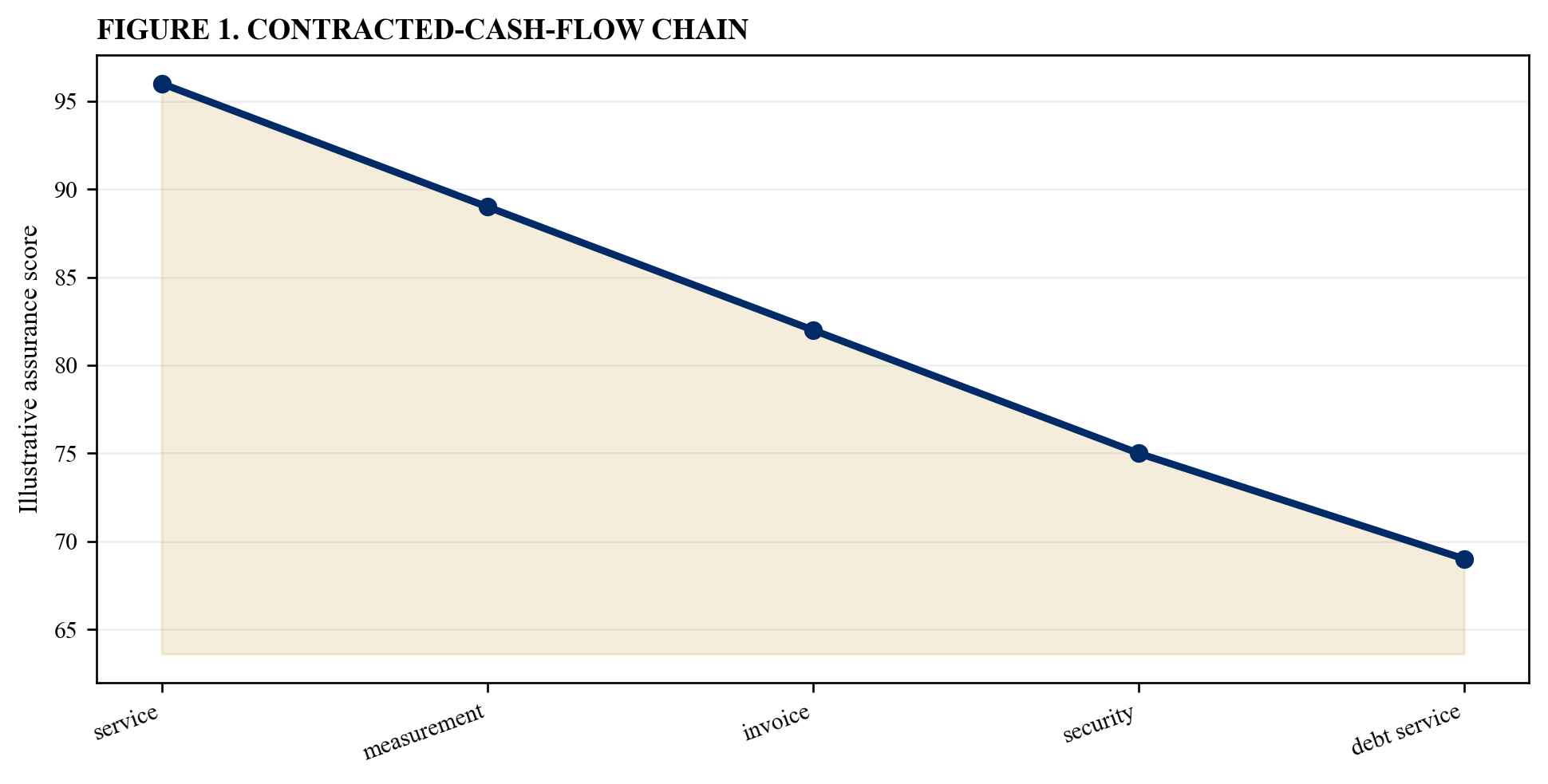
Illustrative analytical scenario; verified project evidence should replace values.
8. Link payment to controllable outputs
The project team should align payment units, performance standards, measurement, deductions, bonuses and cure. The required output is a payment-mechanism schedule. Record the service objective, responsible party, evidence, contractual obligation, cash-flow consequence, approval and review date [11][13].
Test policy and contract assumptions against technical studies, demand evidence, authority powers, market sounding, lender requirements, financial models and applicable law. Identify which party can control each risk, absorb its consequence and finance the response. Preserve source dates and limitations.
The principal risk is that deductions can become arbitrary or disproportionate to service failure. Quantify effects on cost, schedule, service, revenue, deductions, debt-service coverage, public affordability, contingent liabilities and termination value. Compare the proposed allocation with a credible market and public-sector alternative.
Translate the conclusion into output specifications, risk matrix, payment mechanism, project documents, support instruments, financing terms, monitoring, remedies and closing conditions. Refresh it when scope, law, costs, demand, technology, funding or public capacity changes.
9. Protect payment appropriations
The project team should verify budget authority, payment obligations, sovereign or sub-sovereign capacity and approval duration. The required output is a public-payment authority memo. Record the service objective, responsible party, evidence, contractual obligation, cash-flow consequence, approval and review date [14][15].
Test policy and contract assumptions against technical studies, demand evidence, authority powers, market sounding, lender requirements, financial models and applicable law. Identify which party can control each risk, absorb its consequence and finance the response. Preserve source dates and limitations.
The principal risk is that a signed long-term contract can lack annual appropriation or lawful payment support. Quantify effects on cost, schedule, service, revenue, deductions, debt-service coverage, public affordability, contingent liabilities and termination value. Compare the proposed allocation with a credible market and public-sector alternative.
Translate the conclusion into output specifications, risk matrix, payment mechanism, project documents, support instruments, financing terms, monitoring, remedies and closing conditions. Refresh it when scope, law, costs, demand, technology, funding or public capacity changes.
10. Create payment security
The project team should compare escrow, reserve, guarantee, letter of credit, liquidity facility, intercept and multilateral support. The required output is a payment-security package. Record the service objective, responsible party, evidence, contractual obligation, cash-flow consequence, approval and review date [16][17].
Test policy and contract assumptions against technical studies, demand evidence, authority powers, market sounding, lender requirements, financial models and applicable law. Identify which party can control each risk, absorb its consequence and finance the response. Preserve source dates and limitations.
The principal risk is that revenue certainty can depend on an unsecured public obligor. Quantify effects on cost, schedule, service, revenue, deductions, debt-service coverage, public affordability, contingent liabilities and termination value. Compare the proposed allocation with a credible market and public-sector alternative.
Translate the conclusion into output specifications, risk matrix, payment mechanism, project documents, support instruments, financing terms, monitoring, remedies and closing conditions. Refresh it when scope, law, costs, demand, technology, funding or public capacity changes.
11. Allocate land and site risk
The project team should define title, access, resettlement, contamination, archaeology, utilities and right-of-way responsibility. The required output is a land-risk protocol. Record the service objective, responsible party, evidence, contractual obligation, cash-flow consequence, approval and review date [18][19].
Test policy and contract assumptions against technical studies, demand evidence, authority powers, market sounding, lender requirements, financial models and applicable law. Identify which party can control each risk, absorb its consequence and finance the response. Preserve source dates and limitations.
The principal risk is that the private party can face delay from public actions it cannot control. Quantify effects on cost, schedule, service, revenue, deductions, debt-service coverage, public affordability, contingent liabilities and termination value. Compare the proposed allocation with a credible market and public-sector alternative.
Translate the conclusion into output specifications, risk matrix, payment mechanism, project documents, support instruments, financing terms, monitoring, remedies and closing conditions. Refresh it when scope, law, costs, demand, technology, funding or public capacity changes.
12. Allocate permits and approvals
The project team should map each permit, owner, dependency, submission, decision period, appeal and consequence. The required output is a permit critical path. Record the service objective, responsible party, evidence, contractual obligation, cash-flow consequence, approval and review date [18][20].
Test policy and contract assumptions against technical studies, demand evidence, authority powers, market sounding, lender requirements, financial models and applicable law. Identify which party can control each risk, absorb its consequence and finance the response. Preserve source dates and limitations.
The principal risk is that blanket permit risk can be transferred without corresponding authority or information. Quantify effects on cost, schedule, service, revenue, deductions, debt-service coverage, public affordability, contingent liabilities and termination value. Compare the proposed allocation with a credible market and public-sector alternative.
Translate the conclusion into output specifications, risk matrix, payment mechanism, project documents, support instruments, financing terms, monitoring, remedies and closing conditions. Refresh it when scope, law, costs, demand, technology, funding or public capacity changes.
13. Allocate design risk
The project team should give the responsible party authority over design while preserving output and mandatory requirements. The required output is a design-responsibility matrix. Record the service objective, responsible party, evidence, contractual obligation, cash-flow consequence, approval and review date [4][7].
Test policy and contract assumptions against technical studies, demand evidence, authority powers, market sounding, lender requirements, financial models and applicable law. Identify which party can control each risk, absorb its consequence and finance the response. Preserve source dates and limitations.
The principal risk is that prescriptive inputs can transfer nominal risk while retaining public control. Quantify effects on cost, schedule, service, revenue, deductions, debt-service coverage, public affordability, contingent liabilities and termination value. Compare the proposed allocation with a credible market and public-sector alternative.
Translate the conclusion into output specifications, risk matrix, payment mechanism, project documents, support instruments, financing terms, monitoring, remedies and closing conditions. Refresh it when scope, law, costs, demand, technology, funding or public capacity changes.
14. Allocate construction and completion risk
The project team should set price, schedule, acceptance, delay damages, contingency, security and relief. The required output is a completion-support package. Record the service objective, responsible party, evidence, contractual obligation, cash-flow consequence, approval and review date [6][21].
Test policy and contract assumptions against technical studies, demand evidence, authority powers, market sounding, lender requirements, financial models and applicable law. Identify which party can control each risk, absorb its consequence and finance the response. Preserve source dates and limitations.
The principal risk is that uncapped or unmanageable completion exposure can eliminate financeable leverage. Quantify effects on cost, schedule, service, revenue, deductions, debt-service coverage, public affordability, contingent liabilities and termination value. Compare the proposed allocation with a credible market and public-sector alternative.
Translate the conclusion into output specifications, risk matrix, payment mechanism, project documents, support instruments, financing terms, monitoring, remedies and closing conditions. Refresh it when scope, law, costs, demand, technology, funding or public capacity changes.
15. Control interface risk
The project team should coordinate public works, utilities, contractors, permits, testing and operations through one interface plan. The required output is an interface register. Record the service objective, responsible party, evidence, contractual obligation, cash-flow consequence, approval and review date [6][22].
Test policy and contract assumptions against technical studies, demand evidence, authority powers, market sounding, lender requirements, financial models and applicable law. Identify which party can control each risk, absorb its consequence and finance the response. Preserve source dates and limitations.
The principal risk is that independent workstreams can each meet scope while the integrated project fails. Quantify effects on cost, schedule, service, revenue, deductions, debt-service coverage, public affordability, contingent liabilities and termination value. Compare the proposed allocation with a credible market and public-sector alternative.
Translate the conclusion into output specifications, risk matrix, payment mechanism, project documents, support instruments, financing terms, monitoring, remedies and closing conditions. Refresh it when scope, law, costs, demand, technology, funding or public capacity changes.
16. Allocate operating-performance risk
The project team should define service standards, maintenance, monitoring, deductions, persistent breach and lifecycle handback. The required output is an operating-performance regime. Record the service objective, responsible party, evidence, contractual obligation, cash-flow consequence, approval and review date [5][13].
Test policy and contract assumptions against technical studies, demand evidence, authority powers, market sounding, lender requirements, financial models and applicable law. Identify which party can control each risk, absorb its consequence and finance the response. Preserve source dates and limitations.
The principal risk is that weak measurement can leave public service poor and lender cash flow disputed. Quantify effects on cost, schedule, service, revenue, deductions, debt-service coverage, public affordability, contingent liabilities and termination value. Compare the proposed allocation with a credible market and public-sector alternative.
Translate the conclusion into output specifications, risk matrix, payment mechanism, project documents, support instruments, financing terms, monitoring, remedies and closing conditions. Refresh it when scope, law, costs, demand, technology, funding or public capacity changes.
17. Fund lifecycle maintenance
The project team should forecast major maintenance, renewals, reserves, lock-ups and handback requirements. The required output is a lifecycle funding plan. Record the service objective, responsible party, evidence, contractual obligation, cash-flow consequence, approval and review date [23][24].
Test policy and contract assumptions against technical studies, demand evidence, authority powers, market sounding, lender requirements, financial models and applicable law. Identify which party can control each risk, absorb its consequence and finance the response. Preserve source dates and limitations.
The principal risk is that early distributions can leave the asset underfunded later in the concession. Quantify effects on cost, schedule, service, revenue, deductions, debt-service coverage, public affordability, contingent liabilities and termination value. Compare the proposed allocation with a credible market and public-sector alternative.
Translate the conclusion into output specifications, risk matrix, payment mechanism, project documents, support instruments, financing terms, monitoring, remedies and closing conditions. Refresh it when scope, law, costs, demand, technology, funding or public capacity changes.
18. Allocate demand risk proportionately
The project team should assign traffic, usage or consumption risk only where the private party can influence it. The required output is a demand-risk memorandum. Record the service objective, responsible party, evidence, contractual obligation, cash-flow consequence, approval and review date [9][11].
Test policy and contract assumptions against technical studies, demand evidence, authority powers, market sounding, lender requirements, financial models and applicable law. Identify which party can control each risk, absorb its consequence and finance the response. Preserve source dates and limitations.
The principal risk is that uncontrollable demand exposure can make debt sizing fragile. Quantify effects on cost, schedule, service, revenue, deductions, debt-service coverage, public affordability, contingent liabilities and termination value. Compare the proposed allocation with a credible market and public-sector alternative.
Translate the conclusion into output specifications, risk matrix, payment mechanism, project documents, support instruments, financing terms, monitoring, remedies and closing conditions. Refresh it when scope, law, costs, demand, technology, funding or public capacity changes.
Table 2. Risk-allocation matrix
| Risk | Primary bearer | Control |
|---|---|---|
| completion | project company | fixed-price EPC |
| land access | authority | site handover |
| operations | project company | output regime |
| change in law | shared by category | relief formula |
Illustrative analytical structure; verified project and jurisdiction evidence governs.
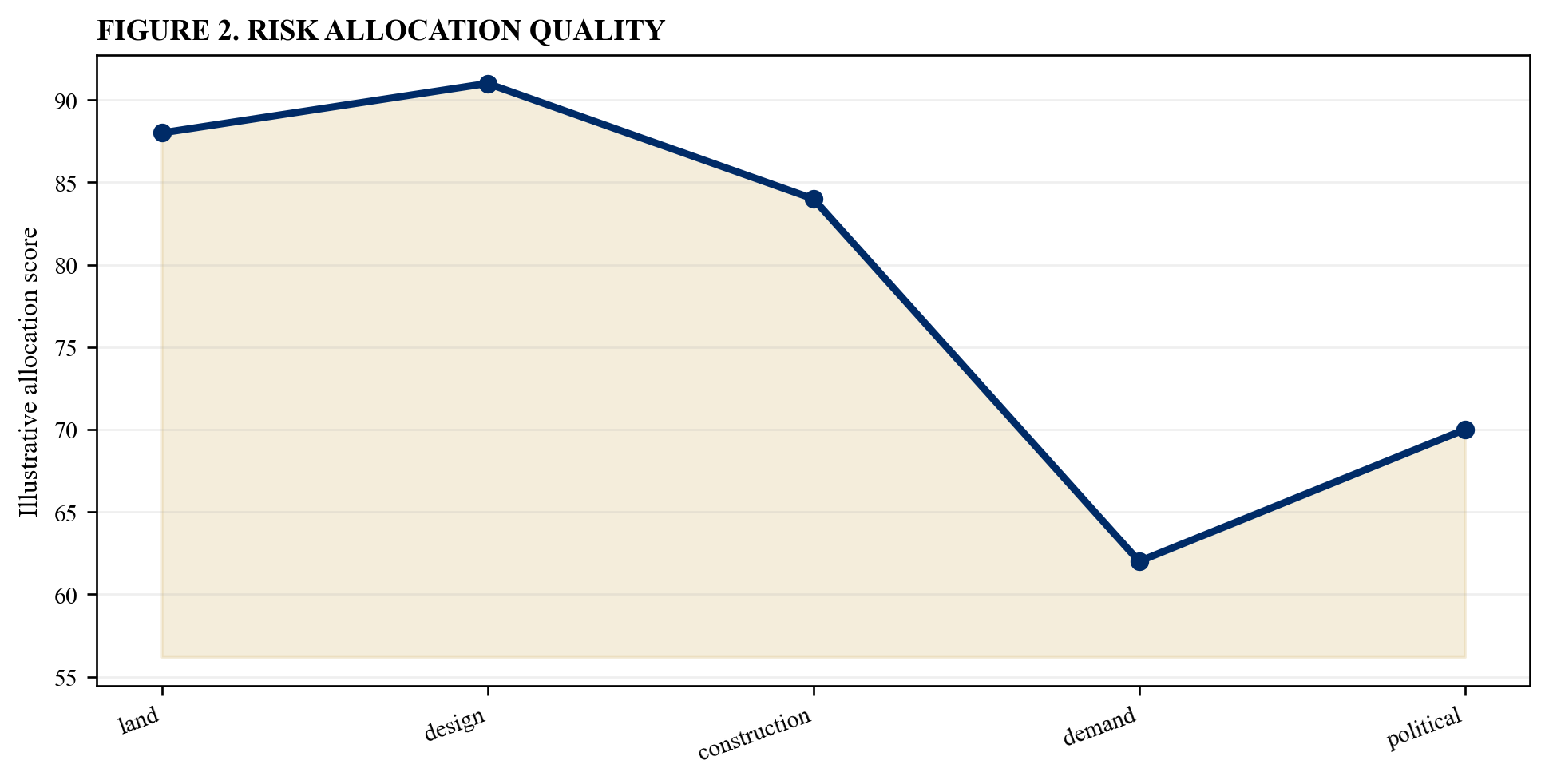
Illustrative analytical scenario; verified project evidence should replace values.
19. Design tariff and indexation rules
The project team should set base tariff, inflation basket, exchange-rate treatment, pass-throughs, resets and affordability constraints. The required output is an indexation formula. Record the service objective, responsible party, evidence, contractual obligation, cash-flow consequence, approval and review date [11][25].
Test policy and contract assumptions against technical studies, demand evidence, authority powers, market sounding, lender requirements, financial models and applicable law. Identify which party can control each risk, absorb its consequence and finance the response. Preserve source dates and limitations.
The principal risk is that nominal revenue can fail to track unavoidable operating and debt costs. Quantify effects on cost, schedule, service, revenue, deductions, debt-service coverage, public affordability, contingent liabilities and termination value. Compare the proposed allocation with a credible market and public-sector alternative.
Translate the conclusion into output specifications, risk matrix, payment mechanism, project documents, support instruments, financing terms, monitoring, remedies and closing conditions. Refresh it when scope, law, costs, demand, technology, funding or public capacity changes.
20. Allocate inflation and commodity risk
The project team should separate controllable procurement from systemic price movements and hedging capacity. The required output is an input-cost allocation. Record the service objective, responsible party, evidence, contractual obligation, cash-flow consequence, approval and review date [25][26].
Test policy and contract assumptions against technical studies, demand evidence, authority powers, market sounding, lender requirements, financial models and applicable law. Identify which party can control each risk, absorb its consequence and finance the response. Preserve source dates and limitations.
The principal risk is that unhedgeable cost volatility can destroy coverage ratios. Quantify effects on cost, schedule, service, revenue, deductions, debt-service coverage, public affordability, contingent liabilities and termination value. Compare the proposed allocation with a credible market and public-sector alternative.
Translate the conclusion into output specifications, risk matrix, payment mechanism, project documents, support instruments, financing terms, monitoring, remedies and closing conditions. Refresh it when scope, law, costs, demand, technology, funding or public capacity changes.
21. Allocate currency and convertibility risk
The project team should match revenue and debt currency, define conversion, transfer, hedging and compensation. The required output is a currency-risk framework. Record the service objective, responsible party, evidence, contractual obligation, cash-flow consequence, approval and review date [27][28].
Test policy and contract assumptions against technical studies, demand evidence, authority powers, market sounding, lender requirements, financial models and applicable law. Identify which party can control each risk, absorb its consequence and finance the response. Preserve source dates and limitations.
The principal risk is that hard-currency debt can be serviced from devaluing or trapped local revenue. Quantify effects on cost, schedule, service, revenue, deductions, debt-service coverage, public affordability, contingent liabilities and termination value. Compare the proposed allocation with a credible market and public-sector alternative.
Translate the conclusion into output specifications, risk matrix, payment mechanism, project documents, support instruments, financing terms, monitoring, remedies and closing conditions. Refresh it when scope, law, costs, demand, technology, funding or public capacity changes.
22. Allocate change-in-law risk
The project team should distinguish general, discriminatory and project-specific change and define relief. The required output is a change-in-law regime. Record the service objective, responsible party, evidence, contractual obligation, cash-flow consequence, approval and review date [4][29].
Test policy and contract assumptions against technical studies, demand evidence, authority powers, market sounding, lender requirements, financial models and applicable law. Identify which party can control each risk, absorb its consequence and finance the response. Preserve source dates and limitations.
The principal risk is that regulatory change can impose costs outside the project company’s pricing power. Quantify effects on cost, schedule, service, revenue, deductions, debt-service coverage, public affordability, contingent liabilities and termination value. Compare the proposed allocation with a credible market and public-sector alternative.
Translate the conclusion into output specifications, risk matrix, payment mechanism, project documents, support instruments, financing terms, monitoring, remedies and closing conditions. Refresh it when scope, law, costs, demand, technology, funding or public capacity changes.
23. Address political and public-authority risk
The project team should cover expropriation, discriminatory action, permit withdrawal, non-payment and public default. The required output is a political-risk package. Record the service objective, responsible party, evidence, contractual obligation, cash-flow consequence, approval and review date [16][30].
Test policy and contract assumptions against technical studies, demand evidence, authority powers, market sounding, lender requirements, financial models and applicable law. Identify which party can control each risk, absorb its consequence and finance the response. Preserve source dates and limitations.
The principal risk is that government actions can impair the project while contractual remedies remain slow. Quantify effects on cost, schedule, service, revenue, deductions, debt-service coverage, public affordability, contingent liabilities and termination value. Compare the proposed allocation with a credible market and public-sector alternative.
Translate the conclusion into output specifications, risk matrix, payment mechanism, project documents, support instruments, financing terms, monitoring, remedies and closing conditions. Refresh it when scope, law, costs, demand, technology, funding or public capacity changes.
24. Calibrate force majeure
The project team should define events, mitigation, relief, insurance interaction, duration and termination. The required output is a force-majeure regime. Record the service objective, responsible party, evidence, contractual obligation, cash-flow consequence, approval and review date [4][31].
Test policy and contract assumptions against technical studies, demand evidence, authority powers, market sounding, lender requirements, financial models and applicable law. Identify which party can control each risk, absorb its consequence and finance the response. Preserve source dates and limitations.
The principal risk is that risk can be shifted to a party unable to price or insure it. Quantify effects on cost, schedule, service, revenue, deductions, debt-service coverage, public affordability, contingent liabilities and termination value. Compare the proposed allocation with a credible market and public-sector alternative.
Translate the conclusion into output specifications, risk matrix, payment mechanism, project documents, support instruments, financing terms, monitoring, remedies and closing conditions. Refresh it when scope, law, costs, demand, technology, funding or public capacity changes.
25. Prepare for technological change
The project team should define upgrade standards, obsolescence, change procedure, shared benefit and residual-life tests. The required output is a technology-change protocol. Record the service objective, responsible party, evidence, contractual obligation, cash-flow consequence, approval and review date [32][33].
Test policy and contract assumptions against technical studies, demand evidence, authority powers, market sounding, lender requirements, financial models and applicable law. Identify which party can control each risk, absorb its consequence and finance the response. Preserve source dates and limitations.
The principal risk is that a long concession can lock in obsolete systems or impose unfunded upgrades. Quantify effects on cost, schedule, service, revenue, deductions, debt-service coverage, public affordability, contingent liabilities and termination value. Compare the proposed allocation with a credible market and public-sector alternative.
Translate the conclusion into output specifications, risk matrix, payment mechanism, project documents, support instruments, financing terms, monitoring, remedies and closing conditions. Refresh it when scope, law, costs, demand, technology, funding or public capacity changes.
26. Complete environmental and social diligence
The project team should assess impacts, land acquisition, labour, community, biodiversity, climate and grievance mechanisms. The required output is an environmental-social action plan. Record the service objective, responsible party, evidence, contractual obligation, cash-flow consequence, approval and review date [34][35].
Test policy and contract assumptions against technical studies, demand evidence, authority powers, market sounding, lender requirements, financial models and applicable law. Identify which party can control each risk, absorb its consequence and finance the response. Preserve source dates and limitations.
The principal risk is that unresolved impacts can stop construction, financing or operation. Quantify effects on cost, schedule, service, revenue, deductions, debt-service coverage, public affordability, contingent liabilities and termination value. Compare the proposed allocation with a credible market and public-sector alternative.
Translate the conclusion into output specifications, risk matrix, payment mechanism, project documents, support instruments, financing terms, monitoring, remedies and closing conditions. Refresh it when scope, law, costs, demand, technology, funding or public capacity changes.
27. Build the integrated financial model
The project team should connect construction, ramp-up, revenue, deductions, costs, tax, working capital, reserves and debt. The required output is a lender-grade base case. Record the service objective, responsible party, evidence, contractual obligation, cash-flow consequence, approval and review date [36][37].
Test policy and contract assumptions against technical studies, demand evidence, authority powers, market sounding, lender requirements, financial models and applicable law. Identify which party can control each risk, absorb its consequence and finance the response. Preserve source dates and limitations.
The principal risk is that separate technical and commercial assumptions can produce internally inconsistent cash flow. Quantify effects on cost, schedule, service, revenue, deductions, debt-service coverage, public affordability, contingent liabilities and termination value. Compare the proposed allocation with a credible market and public-sector alternative.
Translate the conclusion into output specifications, risk matrix, payment mechanism, project documents, support instruments, financing terms, monitoring, remedies and closing conditions. Refresh it when scope, law, costs, demand, technology, funding or public capacity changes.
28. Stress debt-service resilience
The project team should test delays, cost overruns, weak demand, deductions, inflation, currency, rate and termination scenarios. The required output is a coverage-ratio stress model. Record the service objective, responsible party, evidence, contractual obligation, cash-flow consequence, approval and review date [21][37].
Test policy and contract assumptions against technical studies, demand evidence, authority powers, market sounding, lender requirements, financial models and applicable law. Identify which party can control each risk, absorb its consequence and finance the response. Preserve source dates and limitations.
The principal risk is that base-case debt capacity can disappear under plausible correlated shocks. Quantify effects on cost, schedule, service, revenue, deductions, debt-service coverage, public affordability, contingent liabilities and termination value. Compare the proposed allocation with a credible market and public-sector alternative.
Translate the conclusion into output specifications, risk matrix, payment mechanism, project documents, support instruments, financing terms, monitoring, remedies and closing conditions. Refresh it when scope, law, costs, demand, technology, funding or public capacity changes.
Table 3. Illustrative debt-service bridge
| Item | AED million | Treatment |
|---|---|---|
| gross revenue | 120 | contracted |
| deductions | (6) | performance |
| operating cost | (42) | paid |
| cash for debt service | 72 | coverage base |
Illustrative analytical structure; verified project and jurisdiction evidence governs.
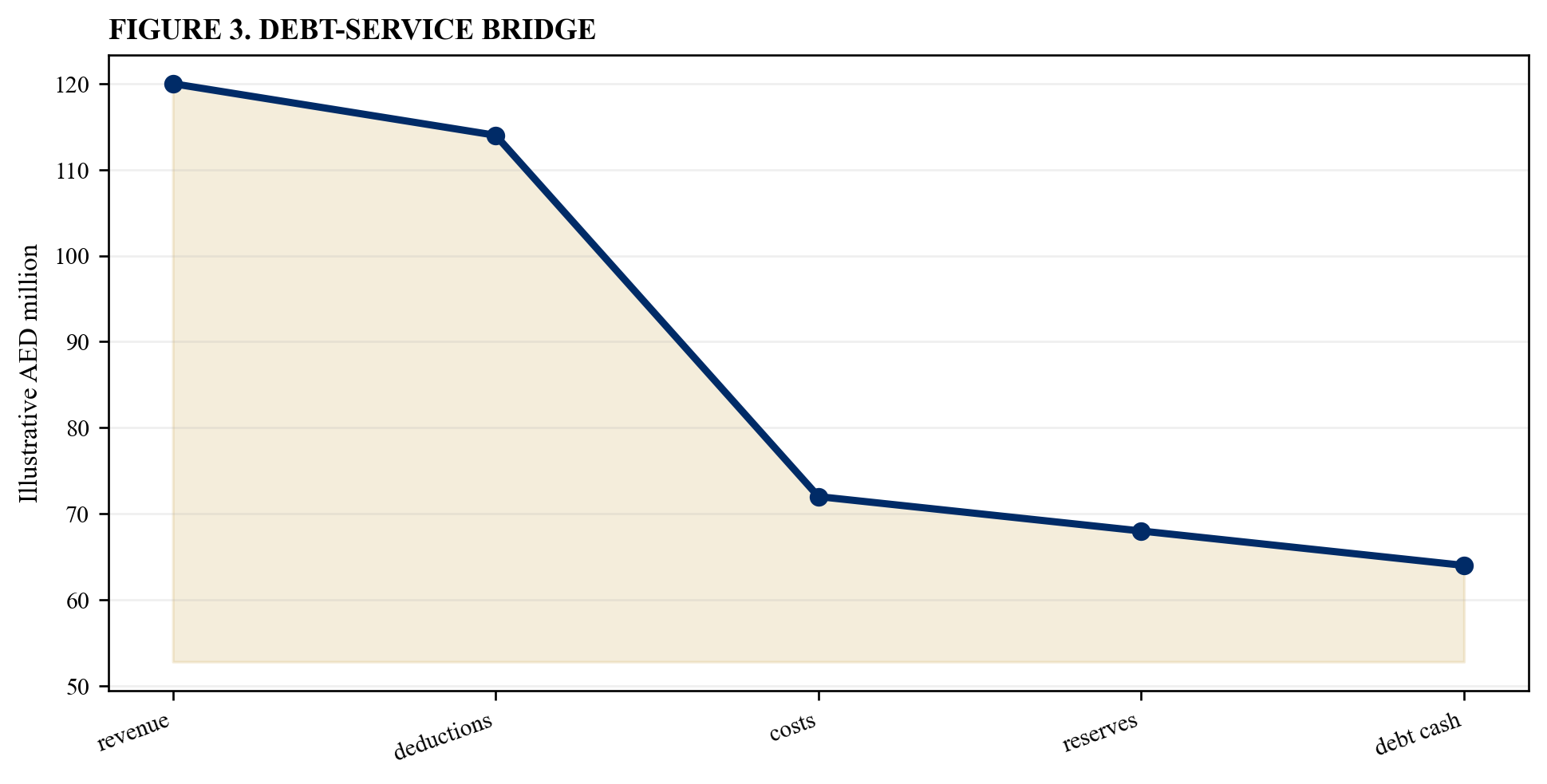
Illustrative analytical scenario; verified project evidence should replace values.
29. Size equity and contingent support
The project team should define base equity, standby equity, sponsor support, cost-overrun funding and distribution tests. The required output is an equity-support schedule. Record the service objective, responsible party, evidence, contractual obligation, cash-flow consequence, approval and review date [38][39].
Test policy and contract assumptions against technical studies, demand evidence, authority powers, market sounding, lender requirements, financial models and applicable law. Identify which party can control each risk, absorb its consequence and finance the response. Preserve source dates and limitations.
The principal risk is that thin capital can push ordinary volatility onto lenders or government. Quantify effects on cost, schedule, service, revenue, deductions, debt-service coverage, public affordability, contingent liabilities and termination value. Compare the proposed allocation with a credible market and public-sector alternative.
Translate the conclusion into output specifications, risk matrix, payment mechanism, project documents, support instruments, financing terms, monitoring, remedies and closing conditions. Refresh it when scope, law, costs, demand, technology, funding or public capacity changes.
30. Secure construction performance
The project team should align EPC obligations, bonds, parent guarantees, liquidated damages, insurance and replacement rights. The required output is a construction-security matrix. Record the service objective, responsible party, evidence, contractual obligation, cash-flow consequence, approval and review date [21][40].
Test policy and contract assumptions against technical studies, demand evidence, authority powers, market sounding, lender requirements, financial models and applicable law. Identify which party can control each risk, absorb its consequence and finance the response. Preserve source dates and limitations.
The principal risk is that project-company rights can be weaker than its obligations to the authority and lenders. Quantify effects on cost, schedule, service, revenue, deductions, debt-service coverage, public affordability, contingent liabilities and termination value. Compare the proposed allocation with a credible market and public-sector alternative.
Translate the conclusion into output specifications, risk matrix, payment mechanism, project documents, support instruments, financing terms, monitoring, remedies and closing conditions. Refresh it when scope, law, costs, demand, technology, funding or public capacity changes.
31. Secure operating performance
The project team should align O&M standards, liability, deductions, insurance, replacement and termination support. The required output is an operating-security matrix. Record the service objective, responsible party, evidence, contractual obligation, cash-flow consequence, approval and review date [13][23].
Test policy and contract assumptions against technical studies, demand evidence, authority powers, market sounding, lender requirements, financial models and applicable law. Identify which party can control each risk, absorb its consequence and finance the response. Preserve source dates and limitations.
The principal risk is that an operator failure can interrupt both service and debt repayment. Quantify effects on cost, schedule, service, revenue, deductions, debt-service coverage, public affordability, contingent liabilities and termination value. Compare the proposed allocation with a credible market and public-sector alternative.
Translate the conclusion into output specifications, risk matrix, payment mechanism, project documents, support instruments, financing terms, monitoring, remedies and closing conditions. Refresh it when scope, law, costs, demand, technology, funding or public capacity changes.
32. Create lender direct agreements
The project team should provide notice, cure, step-in, substitute-entity, transfer and standstill rights. The required output is a direct-agreement package. Record the service objective, responsible party, evidence, contractual obligation, cash-flow consequence, approval and review date [4][17].
Test policy and contract assumptions against technical studies, demand evidence, authority powers, market sounding, lender requirements, financial models and applicable law. Identify which party can control each risk, absorb its consequence and finance the response. Preserve source dates and limitations.
The principal risk is that authority termination can destroy lender recovery before a cure is attempted. Quantify effects on cost, schedule, service, revenue, deductions, debt-service coverage, public affordability, contingent liabilities and termination value. Compare the proposed allocation with a credible market and public-sector alternative.
Translate the conclusion into output specifications, risk matrix, payment mechanism, project documents, support instruments, financing terms, monitoring, remedies and closing conditions. Refresh it when scope, law, costs, demand, technology, funding or public capacity changes.
33. Define compensation on termination
The project team should specify authority default, project default, force majeure and voluntary termination calculations. The required output is a termination-compensation schedule. Record the service objective, responsible party, evidence, contractual obligation, cash-flow consequence, approval and review date [4][16].
Test policy and contract assumptions against technical studies, demand evidence, authority powers, market sounding, lender requirements, financial models and applicable law. Identify which party can control each risk, absorb its consequence and finance the response. Preserve source dates and limitations.
The principal risk is that uncertain recovery can make long-dated debt unpriceable. Quantify effects on cost, schedule, service, revenue, deductions, debt-service coverage, public affordability, contingent liabilities and termination value. Compare the proposed allocation with a credible market and public-sector alternative.
Translate the conclusion into output specifications, risk matrix, payment mechanism, project documents, support instruments, financing terms, monitoring, remedies and closing conditions. Refresh it when scope, law, costs, demand, technology, funding or public capacity changes.
34. Align public support with the gap
The project team should use grants, subordinated finance, guarantees, tax support or availability payments for defined constraints. The required output is a support-instrument rationale. Record the service objective, responsible party, evidence, contractual obligation, cash-flow consequence, approval and review date [14][16].
Test policy and contract assumptions against technical studies, demand evidence, authority powers, market sounding, lender requirements, financial models and applicable law. Identify which party can control each risk, absorb its consequence and finance the response. Preserve source dates and limitations.
The principal risk is that untargeted support can socialise risk without proving additionality or value. Quantify effects on cost, schedule, service, revenue, deductions, debt-service coverage, public affordability, contingent liabilities and termination value. Compare the proposed allocation with a credible market and public-sector alternative.
Translate the conclusion into output specifications, risk matrix, payment mechanism, project documents, support instruments, financing terms, monitoring, remedies and closing conditions. Refresh it when scope, law, costs, demand, technology, funding or public capacity changes.
Table 4. Payment-security ladder
| Level | Instrument | Residual exposure |
|---|---|---|
| 1 | contract obligation | obligor credit |
| 2 | payment reserve | duration |
| 3 | bank or sovereign support | provider credit |
| 4 | multilateral enhancement | covered events |
Illustrative analytical structure; verified project and jurisdiction evidence governs.
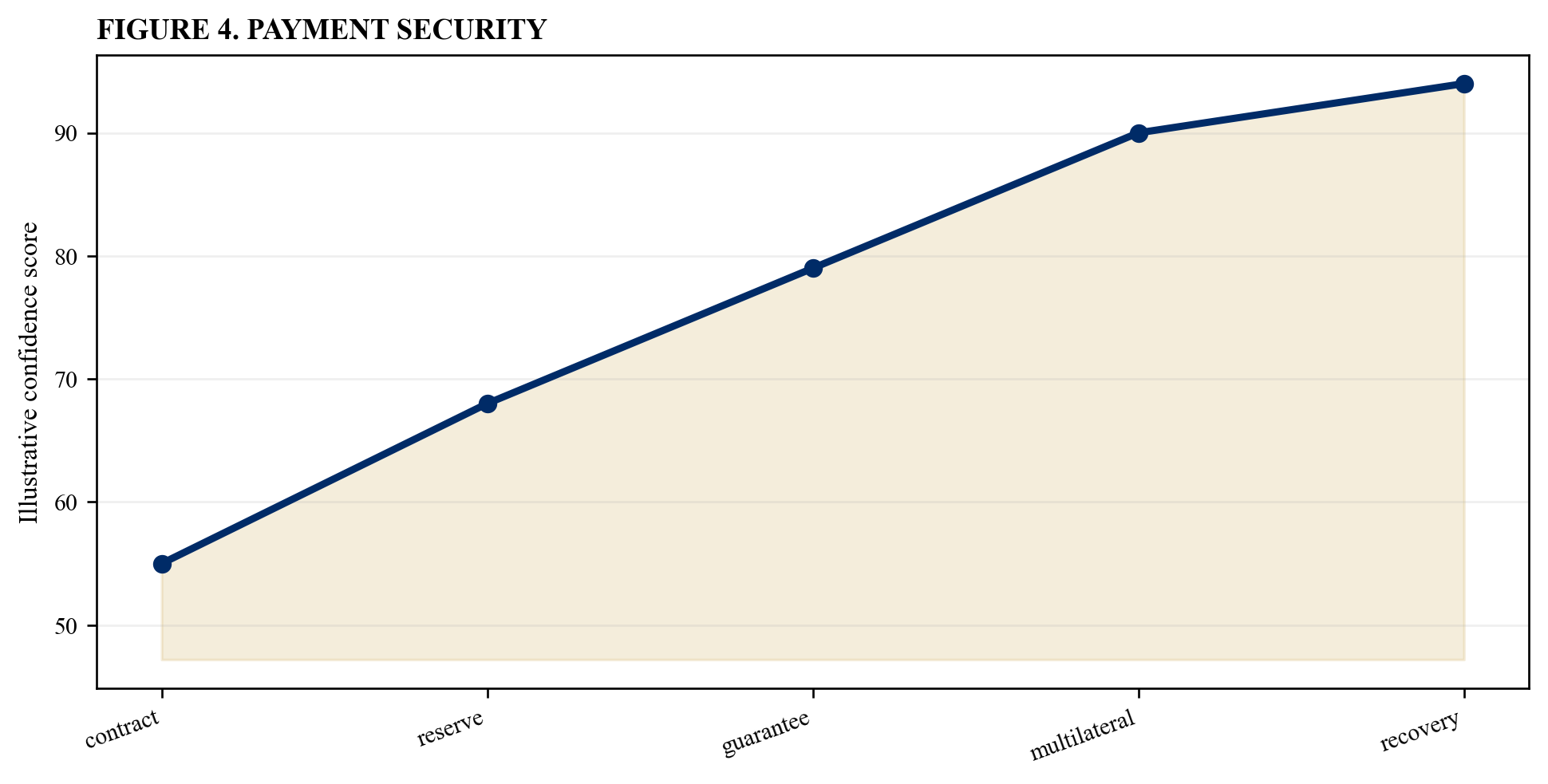
Illustrative analytical scenario; verified project evidence should replace values.
35. Measure fiscal commitments
The project team should record direct payments, guarantees, termination exposure, contingent liabilities and downside scenarios. The required output is a fiscal-risk statement. Record the service objective, responsible party, evidence, contractual obligation, cash-flow consequence, approval and review date [14][15].
Test policy and contract assumptions against technical studies, demand evidence, authority powers, market sounding, lender requirements, financial models and applicable law. Identify which party can control each risk, absorb its consequence and finance the response. Preserve source dates and limitations.
The principal risk is that off-balance-sheet presentation can obscure long-term public obligations. Quantify effects on cost, schedule, service, revenue, deductions, debt-service coverage, public affordability, contingent liabilities and termination value. Compare the proposed allocation with a credible market and public-sector alternative.
Translate the conclusion into output specifications, risk matrix, payment mechanism, project documents, support instruments, financing terms, monitoring, remedies and closing conditions. Refresh it when scope, law, costs, demand, technology, funding or public capacity changes.
36. Design a bankable procurement
The project team should use qualification, data access, dialogue, lender input, bid requirements and credible timetables. The required output is a procurement strategy. Record the service objective, responsible party, evidence, contractual obligation, cash-flow consequence, approval and review date [2][20].
Test policy and contract assumptions against technical studies, demand evidence, authority powers, market sounding, lender requirements, financial models and applicable law. Identify which party can control each risk, absorb its consequence and finance the response. Preserve source dates and limitations.
The principal risk is that bidders can price uncertainty or withdraw after spending material development cost. Quantify effects on cost, schedule, service, revenue, deductions, debt-service coverage, public affordability, contingent liabilities and termination value. Compare the proposed allocation with a credible market and public-sector alternative.
Translate the conclusion into output specifications, risk matrix, payment mechanism, project documents, support instruments, financing terms, monitoring, remedies and closing conditions. Refresh it when scope, law, costs, demand, technology, funding or public capacity changes.
37. Preserve competition and value
The project team should set transparent criteria, standardised information, bid comparability and negotiation boundaries. The required output is a competitive-process protocol. Record the service objective, responsible party, evidence, contractual obligation, cash-flow consequence, approval and review date [2][3].
Test policy and contract assumptions against technical studies, demand evidence, authority powers, market sounding, lender requirements, financial models and applicable law. Identify which party can control each risk, absorb its consequence and finance the response. Preserve source dates and limitations.
The principal risk is that late risk changes can favour one bidder or erode value for money. Quantify effects on cost, schedule, service, revenue, deductions, debt-service coverage, public affordability, contingent liabilities and termination value. Compare the proposed allocation with a credible market and public-sector alternative.
Translate the conclusion into output specifications, risk matrix, payment mechanism, project documents, support instruments, financing terms, monitoring, remedies and closing conditions. Refresh it when scope, law, costs, demand, technology, funding or public capacity changes.
38. Set conditions to financial close
The project team should list land, permits, contracts, equity, debt, hedging, insurance, security and legal opinions. The required output is a closing conditions matrix. Record the service objective, responsible party, evidence, contractual obligation, cash-flow consequence, approval and review date [6][37].
Test policy and contract assumptions against technical studies, demand evidence, authority powers, market sounding, lender requirements, financial models and applicable law. Identify which party can control each risk, absorb its consequence and finance the response. Preserve source dates and limitations.
The principal risk is that commercial close can occur before the project is capable of drawing funds. Quantify effects on cost, schedule, service, revenue, deductions, debt-service coverage, public affordability, contingent liabilities and termination value. Compare the proposed allocation with a credible market and public-sector alternative.
Translate the conclusion into output specifications, risk matrix, payment mechanism, project documents, support instruments, financing terms, monitoring, remedies and closing conditions. Refresh it when scope, law, costs, demand, technology, funding or public capacity changes.
39. Plan monitoring and change
The project team should assign data, independent engineer, payment calculation, covenant reporting, disputes and periodic review. The required output is a contract-management system. Record the service objective, responsible party, evidence, contractual obligation, cash-flow consequence, approval and review date [5][32].
Test policy and contract assumptions against technical studies, demand evidence, authority powers, market sounding, lender requirements, financial models and applicable law. Identify which party can control each risk, absorb its consequence and finance the response. Preserve source dates and limitations.
The principal risk is that bankability can deteriorate after close through unmanaged change and weak evidence. Quantify effects on cost, schedule, service, revenue, deductions, debt-service coverage, public affordability, contingent liabilities and termination value. Compare the proposed allocation with a credible market and public-sector alternative.
Translate the conclusion into output specifications, risk matrix, payment mechanism, project documents, support instruments, financing terms, monitoring, remedies and closing conditions. Refresh it when scope, law, costs, demand, technology, funding or public capacity changes.
40. Issue the bankability certificate
The project team should reconcile outputs, allocation, contracts, payment security, model, lender protections, affordability and residual risk. The required output is an auditable bankability certificate. Record the service objective, responsible party, evidence, contractual obligation, cash-flow consequence, approval and review date [1][4].
Test policy and contract assumptions against technical studies, demand evidence, authority powers, market sounding, lender requirements, financial models and applicable law. Identify which party can control each risk, absorb its consequence and finance the response. Preserve source dates and limitations.
The principal risk is that approval can rely on a model without a complete contractual cash-flow chain. Quantify effects on cost, schedule, service, revenue, deductions, debt-service coverage, public affordability, contingent liabilities and termination value. Compare the proposed allocation with a credible market and public-sector alternative.
Translate the conclusion into output specifications, risk matrix, payment mechanism, project documents, support instruments, financing terms, monitoring, remedies and closing conditions. Refresh it when scope, law, costs, demand, technology, funding or public capacity changes.
Table 5. Bankability certificate
| Conclusion | Evidence | Owner |
|---|---|---|
| outputs | accepted specification | authority |
| risk | allocation matrix | legal |
| cash | payment and security | finance |
| lender case | model and terms | funders |
Illustrative analytical structure; verified project and jurisdiction evidence governs.
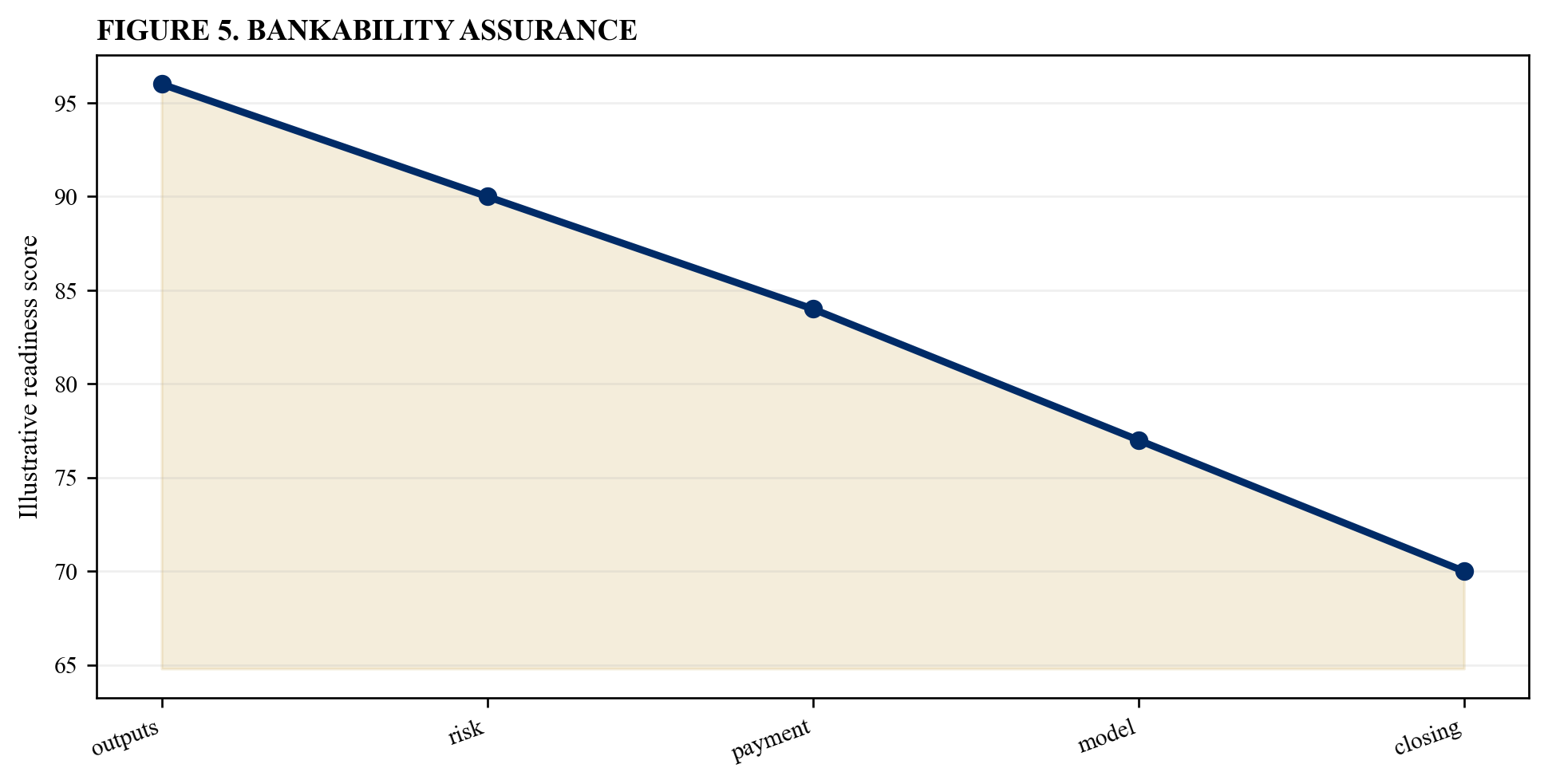
Illustrative analytical scenario; verified project evidence should replace values.
References
- World Bank Group, PPP Reference Guide Version 3, https://ppp.worldbank.org/sites/default/files/2024-08/PPP%20Reference%20Guide%20Version%203.pdf
- World Bank PPP Resource Center, PPP Process, https://ppp.worldbank.org/ppp-process
- OECD, Principles for Public Governance of Public-Private Partnerships, https://www.oecd.org/gov/budgeting/oecd-principles-for-public-governance-of-public-private-partnerships.htm
- World Bank Group, Guidance on PPP Contractual Provisions 2017, https://ppp.worldbank.org/sites/default/files/2024-07/Guidance_%20PPP_Contractual_Provisions_EN_2017.pdf
- World Bank PPP Resource Center, Designing PPP Contracts, https://ppp.worldbank.org/designing-ppp-contracts
- World Bank PPP Resource Center, Translating Risk Allocation into Contract Structure, https://ppp.worldbank.org/translating-risk-allocation-contract-structure
- World Bank PPP Resource Center, Technical Feasibility, https://ppp.worldbank.org/
- International Organization for Standardization, ISO 55001 Asset Management, https://www.iso.org/standard/83054.html
- World Bank PPP Resource Center, Assessing Project Demand, https://ppp.worldbank.org/
- Asian Development Bank, PPP Handbook, https://www.adb.org/documents/public-private-partnership-ppp-handbook
- World Bank PPP Resource Center, Payment Mechanism, https://ppp.worldbank.org/payment-mechanism
- European PPP Expertise Centre, Guide to Guidance, https://www.eib.org/epec/g2g/index.htm
- World Bank PPP Resource Center, Performance Requirements, https://ppp.worldbank.org/
- International Monetary Fund, Public-Private Partnerships Fiscal Risk Assessment Model, https://www.imf.org/external/np/fad/publicinvestment/
- World Bank, PPP Fiscal Risk Assessment Model, https://www.worldbank.org/en/topic/publicprivatepartnerships
- World Bank PPP Resource Center, Third Party Risk Mitigation and Credit Enhancement, https://ppp.worldbank.org/third-party-risk-mitigation-and-credit-enhancement
- Multilateral Investment Guarantee Agency, Products, https://www.miga.org/products
- World Bank PPP Resource Center, Risk Allocation, https://ppp.worldbank.org/risk-allocation
- International Finance Corporation, Performance Standard 5 Land Acquisition and Involuntary Resettlement, https://www.ifc.org/en/insights-reports/2012/ifc-performance-standards
- World Bank, Procurement Regulations for IPF Borrowers, https://www.worldbank.org/en/projects-operations/products-and-services/brief/procurement-new-framework
- International Federation of Consulting Engineers, FIDIC Contracts, https://fidic.org/books/contracts-and-agreements-collection-english
- International Organization for Standardization, ISO 21502 Project Management, https://www.iso.org/standard/74947.html
- International Organization for Standardization, ISO 55000 Asset Management, https://www.iso.org/standard/83053.html
- Loan Market Association, Recommended Forms and Guidance, https://www.lma.eu.com/documents-guidelines/documents
- World Bank PPP Resource Center, Tariff Setting and Indexation, https://ppp.worldbank.org/
- International Swaps and Derivatives Association, Documentation, https://www.isda.org/book/
- International Monetary Fund, Annual Report on Exchange Arrangements and Exchange Restrictions, https://www.imf.org/en/Publications/Annual-Report-on-Exchange-Arrangements-and-Exchange-Restrictions
- World Bank, Currency and Exchange Rate Risk, https://ppp.worldbank.org/
- World Bank PPP Resource Center, Change in Law, https://ppp.worldbank.org/
- Multilateral Investment Guarantee Agency, Political Risk Insurance, https://www.miga.org/product/political-risk-insurance
- World Bank PPP Resource Center, Force Majeure, https://ppp.worldbank.org/
- World Bank PPP Resource Center, Structuring the PPP Contract, https://ppp.worldbank.org/structuring-ppp-contract
- OECD, Digital Transformation of Infrastructure, https://www.oecd.org/en/topics/infrastructure.html
- International Finance Corporation, Environmental and Social Performance Standards, https://www.ifc.org/en/insights-reports/2012/ifc-performance-standards
- Equator Principles Association, Equator Principles EP4, https://equator-principles.com/about-the-equator-principles/
- International Finance Corporation, Project Finance, https://www.ifc.org/en/what-we-do/products-and-services/how-to-apply-for-financing
- World Bank PPP Resource Center, Considerations for Government, https://ppp.worldbank.org/considerations-government
- International Finance Corporation, Blended Finance, https://www.ifc.org/en/what-we-do/products-and-services/blended-finance
- World Bank Group, Guidelines for PPP Projects, https://ppp.worldbank.org/
- International Chamber of Commerce, Uniform Rules for Demand Guarantees URDG 758, https://iccwbo.org/business-solutions/icc-rules-standards-and-guidance/
