

1. Define the regulated decision
Fix the recommendation, recipient, use, consequence, jurisdiction, date and accountable authority.
The controlled record includes scope; authority; source; passage; fact; calculation; reviewer; decision. The immediate deliverable is an approved advice-use charter. Preserve jurisdiction, effective date, version, transformation, reviewer, approval and unresolved exceptions.
The principal failure occurs when the system is designed around fluent answers before the consequential decision is defined. Reviewers should reconstruct the evidence path, test consequence under adverse conditions and identify who may approve or withhold the recommendation.
A citation-grade system is an evidence and decision architecture. Each material output should preserve applicable authority, exact passage, effective version, transformation, calculation, reviewer and correction.
The decision pack for define the regulated decision should show the prior view, correction, consequence at stake, alternatives, owner, due date, next evidence gate and observed outcome. Exceptions require closure evidence and an explicit effect on retrieval, citation, abstention, review or release.
2. Map the regulatory perimeter
Identify entities, permissions, products, clients, communications, cross-border effects and record obligations.
The controlled record includes scope; authority; source; passage; fact; calculation; reviewer; decision. The immediate deliverable is a regulatory perimeter map. Preserve jurisdiction, effective date, version, transformation, reviewer, approval and unresolved exceptions.
The principal failure occurs when one assistant spans regulated activities without use-case classification. Reviewers should reconstruct the evidence path, test consequence under adverse conditions and identify who may approve or withhold the recommendation.
Retrieval quality, citation correctness and professional judgement are separate controls. Performance in one cannot silently compensate for failure in another.
The decision pack for map the regulatory perimeter should show the prior view, correction, consequence at stake, alternatives, owner, due date, next evidence gate and observed outcome. Exceptions require closure evidence and an explicit effect on retrieval, citation, abstention, review or release.
3. Classify consequence and materiality
Score financial, legal, customer, prudential, conduct, operational and reputational consequence.
The controlled record includes scope; authority; source; passage; fact; calculation; reviewer; decision. The immediate deliverable is a consequence-tier matrix. Preserve jurisdiction, effective date, version, transformation, reviewer, approval and unresolved exceptions.
The principal failure occurs when low-risk and high-consequence outputs use the same evidence standard. Reviewers should reconstruct the evidence path, test consequence under adverse conditions and identify who may approve or withhold the recommendation.
AI can support bounded retrieval, comparison, calculation and drafting over approved records. Accountable professionals retain authority for interpretation, recommendation and client action.
The decision pack for classify consequence and materiality should show the prior view, correction, consequence at stake, alternatives, owner, due date, next evidence gate and observed outcome. Exceptions require closure evidence and an explicit effect on retrieval, citation, abstention, review or release.
4. Assign accountable governance
Name business, professional, compliance, legal, risk, data, model, security, audit and release authorities.
The controlled record includes scope; authority; source; passage; fact; calculation; reviewer; decision. The immediate deliverable is an accountable governance matrix. Preserve jurisdiction, effective date, version, transformation, reviewer, approval and unresolved exceptions.
The principal failure occurs when responsibility is fragmented between the vendor and regulated firm. Reviewers should reconstruct the evidence path, test consequence under adverse conditions and identify who may approve or withhold the recommendation.
Abstention is a designed outcome for missing, stale, conflicting or inapplicable evidence. Escalation should identify the gap and competent reviewer needed to resolve it.
The decision pack for assign accountable governance should show the prior view, correction, consequence at stake, alternatives, owner, due date, next evidence gate and observed outcome. Exceptions require closure evidence and an explicit effect on retrieval, citation, abstention, review or release.
5. Build the authority hierarchy
Rank legislation, regulation, binding decisions, supervisory material, standards, contracts, policies and commentary.
The controlled record includes scope; authority; source; passage; fact; calculation; reviewer; decision. The immediate deliverable is an approved source-authority policy. Preserve jurisdiction, effective date, version, transformation, reviewer, approval and unresolved exceptions.
The principal failure occurs when search relevance outranks legal or regulatory authority. Reviewers should reconstruct the evidence path, test consequence under adverse conditions and identify who may approve or withhold the recommendation.
A citation-grade system is an evidence and decision architecture. Each material output should preserve applicable authority, exact passage, effective version, transformation, calculation, reviewer and correction.
The decision pack for build the authority hierarchy should show the prior view, correction, consequence at stake, alternatives, owner, due date, next evidence gate and observed outcome. Exceptions require closure evidence and an explicit effect on retrieval, citation, abstention, review or release.
6. Create the source register
Record issuer, title, URL, publication, effective date, version, jurisdiction, rights, access and retention.
The controlled record includes scope; authority; source; passage; fact; calculation; reviewer; decision. The immediate deliverable is a versioned source register. Preserve jurisdiction, effective date, version, transformation, reviewer, approval and unresolved exceptions.
The principal failure occurs when citations point to mutable or unidentified material. Reviewers should reconstruct the evidence path, test consequence under adverse conditions and identify who may approve or withhold the recommendation.
Retrieval quality, citation correctness and professional judgement are separate controls. Performance in one cannot silently compensate for failure in another.
The decision pack for create the source register should show the prior view, correction, consequence at stake, alternatives, owner, due date, next evidence gate and observed outcome. Exceptions require closure evidence and an explicit effect on retrieval, citation, abstention, review or release.
7. Control corpus admission
Test authority, relevance, authenticity, completeness, currency, language, rights, security and parsing.
The controlled record includes scope; authority; source; passage; fact; calculation; reviewer; decision. The immediate deliverable is a corpus admission record. Preserve jurisdiction, effective date, version, transformation, reviewer, approval and unresolved exceptions.
The principal failure occurs when documents enter retrieval because they are accessible rather than fit for decision. Reviewers should reconstruct the evidence path, test consequence under adverse conditions and identify who may approve or withhold the recommendation.
AI can support bounded retrieval, comparison, calculation and drafting over approved records. Accountable professionals retain authority for interpretation, recommendation and client action.
The decision pack for control corpus admission should show the prior view, correction, consequence at stake, alternatives, owner, due date, next evidence gate and observed outcome. Exceptions require closure evidence and an explicit effect on retrieval, citation, abstention, review or release.
8. Preserve document structure
Retain headings, paragraphs, tables, footnotes, annexes, definitions, page numbers and relationships.
The controlled record includes scope; authority; source; passage; fact; calculation; reviewer; decision. The immediate deliverable is a structure-preserving document model. Preserve jurisdiction, effective date, version, transformation, reviewer, approval and unresolved exceptions.
The principal failure occurs when chunking separates qualifications and exceptions from a cited proposition. Reviewers should reconstruct the evidence path, test consequence under adverse conditions and identify who may approve or withhold the recommendation.
Abstention is a designed outcome for missing, stale, conflicting or inapplicable evidence. Escalation should identify the gap and competent reviewer needed to resolve it.
The decision pack for preserve document structure should show the prior view, correction, consequence at stake, alternatives, owner, due date, next evidence gate and observed outcome. Exceptions require closure evidence and an explicit effect on retrieval, citation, abstention, review or release.
Table 1. Evidence architecture layers
| Layer | Required record | Decision |
|---|---|---|
| authority | issuer, status and applicability | source admission |
| content | structure, passage and version | retrieval unit |
| claim | proposition, support and conflict | citation sufficiency |
| advice | facts, judgement and review | release |
Illustrative controls require use-, consequence-, jurisdiction-, firm- and period-specific approval.
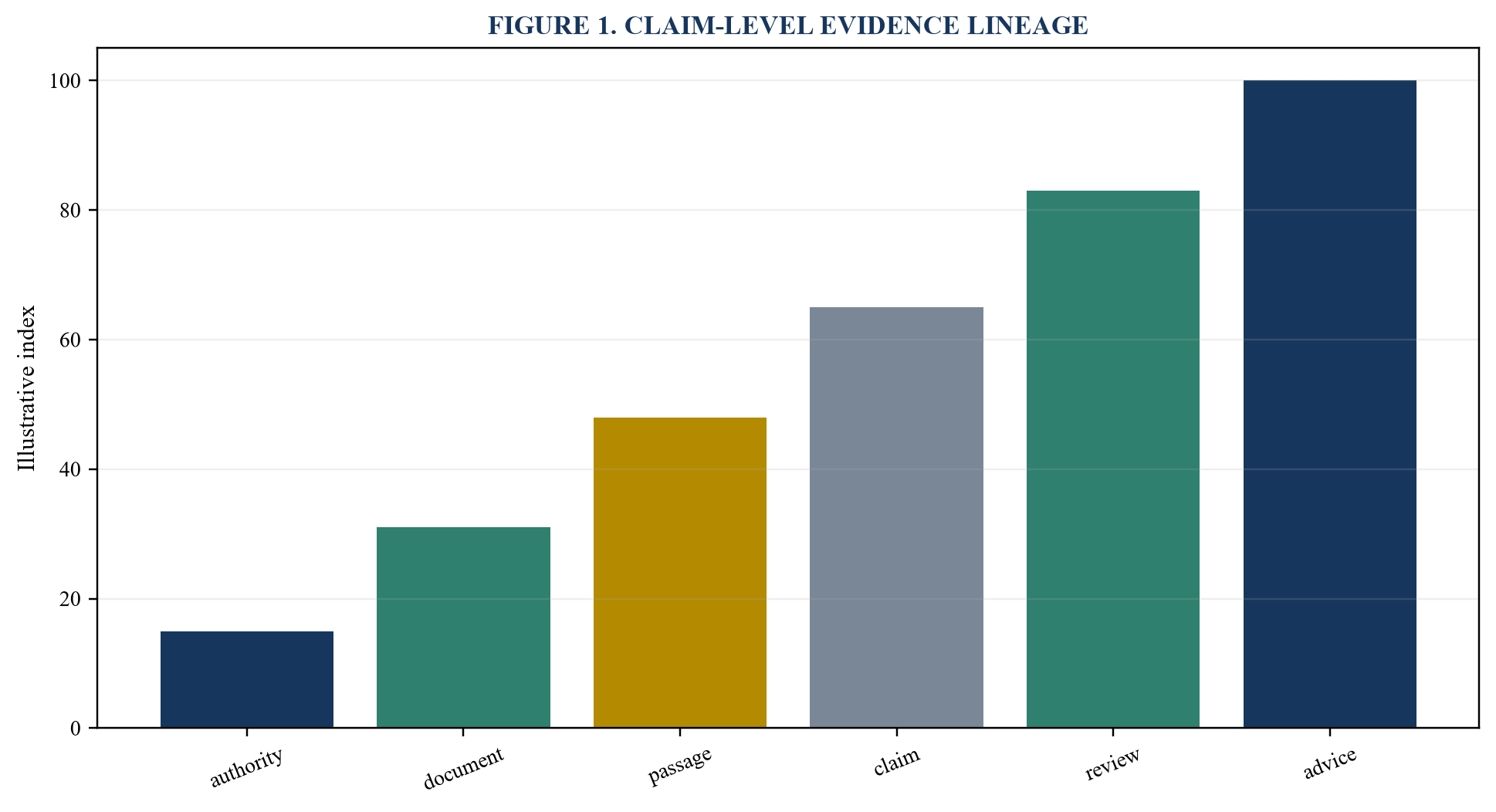
Values are illustrative indices and require replacement with approved validation evidence.
9. Build claim-level lineage
Connect each material proposition to exact passages, versions, transformations, calculations and reviewers.
The controlled record includes scope; authority; source; passage; fact; calculation; reviewer; decision. The immediate deliverable is a claim-lineage graph. Preserve jurisdiction, effective date, version, transformation, reviewer, approval and unresolved exceptions.
The principal failure occurs when a document-level citation cannot support the specific recommendation. Reviewers should reconstruct the evidence path, test consequence under adverse conditions and identify who may approve or withhold the recommendation.
A citation-grade system is an evidence and decision architecture. Each material output should preserve applicable authority, exact passage, effective version, transformation, calculation, reviewer and correction.
The decision pack for build claim-level lineage should show the prior view, correction, consequence at stake, alternatives, owner, due date, next evidence gate and observed outcome. Exceptions require closure evidence and an explicit effect on retrieval, citation, abstention, review or release.
10. Define citation sufficiency
Specify when primary authority, corroboration, calculations or expert evidence are required.
The controlled record includes scope; authority; source; passage; fact; calculation; reviewer; decision. The immediate deliverable is a citation-sufficiency policy. Preserve jurisdiction, effective date, version, transformation, reviewer, approval and unresolved exceptions.
The principal failure occurs when citation presence is mistaken for evidential sufficiency. Reviewers should reconstruct the evidence path, test consequence under adverse conditions and identify who may approve or withhold the recommendation.
Retrieval quality, citation correctness and professional judgement are separate controls. Performance in one cannot silently compensate for failure in another.
The decision pack for define citation sufficiency should show the prior view, correction, consequence at stake, alternatives, owner, due date, next evidence gate and observed outcome. Exceptions require closure evidence and an explicit effect on retrieval, citation, abstention, review or release.
11. Separate retrieval from recommendation
Record retrieved evidence, exclusions, synthesis, judgement, conflicts, assumptions and recommendation as distinct states.
The controlled record includes scope; authority; source; passage; fact; calculation; reviewer; decision. The immediate deliverable is an evidence-to-advice state model. Preserve jurisdiction, effective date, version, transformation, reviewer, approval and unresolved exceptions.
The principal failure occurs when generated prose hides where evidence ends and judgement begins. Reviewers should reconstruct the evidence path, test consequence under adverse conditions and identify who may approve or withhold the recommendation.
AI can support bounded retrieval, comparison, calculation and drafting over approved records. Accountable professionals retain authority for interpretation, recommendation and client action.
The decision pack for separate retrieval from recommendation should show the prior view, correction, consequence at stake, alternatives, owner, due date, next evidence gate and observed outcome. Exceptions require closure evidence and an explicit effect on retrieval, citation, abstention, review or release.
12. Engineer retrieval by proposition
Decompose questions into jurisdiction, date, party, product, rule, exception, fact and decision propositions.
The controlled record includes scope; authority; source; passage; fact; calculation; reviewer; decision. The immediate deliverable is a proposition-led retrieval plan. Preserve jurisdiction, effective date, version, transformation, reviewer, approval and unresolved exceptions.
The principal failure occurs when one broad query returns similar material without resolving the proposition. Reviewers should reconstruct the evidence path, test consequence under adverse conditions and identify who may approve or withhold the recommendation.
Abstention is a designed outcome for missing, stale, conflicting or inapplicable evidence. Escalation should identify the gap and competent reviewer needed to resolve it.
The decision pack for engineer retrieval by proposition should show the prior view, correction, consequence at stake, alternatives, owner, due date, next evidence gate and observed outcome. Exceptions require closure evidence and an explicit effect on retrieval, citation, abstention, review or release.
13. Control jurisdiction and time
Apply effective-date, transition, territorial, entity, client and product filters before ranking.
The controlled record includes scope; authority; source; passage; fact; calculation; reviewer; decision. The immediate deliverable is an applicability filter. Preserve jurisdiction, effective date, version, transformation, reviewer, approval and unresolved exceptions.
The principal failure occurs when superseded or foreign material is cited as controlling authority. Reviewers should reconstruct the evidence path, test consequence under adverse conditions and identify who may approve or withhold the recommendation.
A citation-grade system is an evidence and decision architecture. Each material output should preserve applicable authority, exact passage, effective version, transformation, calculation, reviewer and correction.
The decision pack for control jurisdiction and time should show the prior view, correction, consequence at stake, alternatives, owner, due date, next evidence gate and observed outcome. Exceptions require closure evidence and an explicit effect on retrieval, citation, abstention, review or release.
14. Resolve definitions and cross-references
Trace defined terms, incorporated provisions, annexes, exceptions, waivers and linked instruments.
The controlled record includes scope; authority; source; passage; fact; calculation; reviewer; decision. The immediate deliverable is a regulatory relationship graph. Preserve jurisdiction, effective date, version, transformation, reviewer, approval and unresolved exceptions.
The principal failure occurs when isolated passages reverse meaning by omitting definitions or exceptions. Reviewers should reconstruct the evidence path, test consequence under adverse conditions and identify who may approve or withhold the recommendation.
Retrieval quality, citation correctness and professional judgement are separate controls. Performance in one cannot silently compensate for failure in another.
The decision pack for resolve definitions and cross-references should show the prior view, correction, consequence at stake, alternatives, owner, due date, next evidence gate and observed outcome. Exceptions require closure evidence and an explicit effect on retrieval, citation, abstention, review or release.
15. Detect conflicts and ambiguity
Surface inconsistent authorities, versions, interpretations, facts and calculations.
The controlled record includes scope; authority; source; passage; fact; calculation; reviewer; decision. The immediate deliverable is a conflict and ambiguity register. Preserve jurisdiction, effective date, version, transformation, reviewer, approval and unresolved exceptions.
The principal failure occurs when the system averages incompatible sources into a confident answer. Reviewers should reconstruct the evidence path, test consequence under adverse conditions and identify who may approve or withhold the recommendation.
AI can support bounded retrieval, comparison, calculation and drafting over approved records. Accountable professionals retain authority for interpretation, recommendation and client action.
The decision pack for detect conflicts and ambiguity should show the prior view, correction, consequence at stake, alternatives, owner, due date, next evidence gate and observed outcome. Exceptions require closure evidence and an explicit effect on retrieval, citation, abstention, review or release.
16. Design abstention logic
Set evidence, freshness, authority, conflict, jurisdiction and calculation conditions that block recommendation.
The controlled record includes scope; authority; source; passage; fact; calculation; reviewer; decision. The immediate deliverable is an abstention and escalation policy. Preserve jurisdiction, effective date, version, transformation, reviewer, approval and unresolved exceptions.
The principal failure occurs when the system answers despite missing or contradictory evidence. Reviewers should reconstruct the evidence path, test consequence under adverse conditions and identify who may approve or withhold the recommendation.
Abstention is a designed outcome for missing, stale, conflicting or inapplicable evidence. Escalation should identify the gap and competent reviewer needed to resolve it.
The decision pack for design abstention logic should show the prior view, correction, consequence at stake, alternatives, owner, due date, next evidence gate and observed outcome. Exceptions require closure evidence and an explicit effect on retrieval, citation, abstention, review or release.
Table 2. Abstention logic
| Failure | Required response | Escalation |
|---|---|---|
| missing authority | withhold recommendation | research owner |
| stale source | refresh and reassess | source custodian |
| material conflict | present alternatives | qualified professional |
| wrong jurisdiction | block release | compliance or legal |
Illustrative controls require use-, consequence-, jurisdiction-, firm- and period-specific approval.
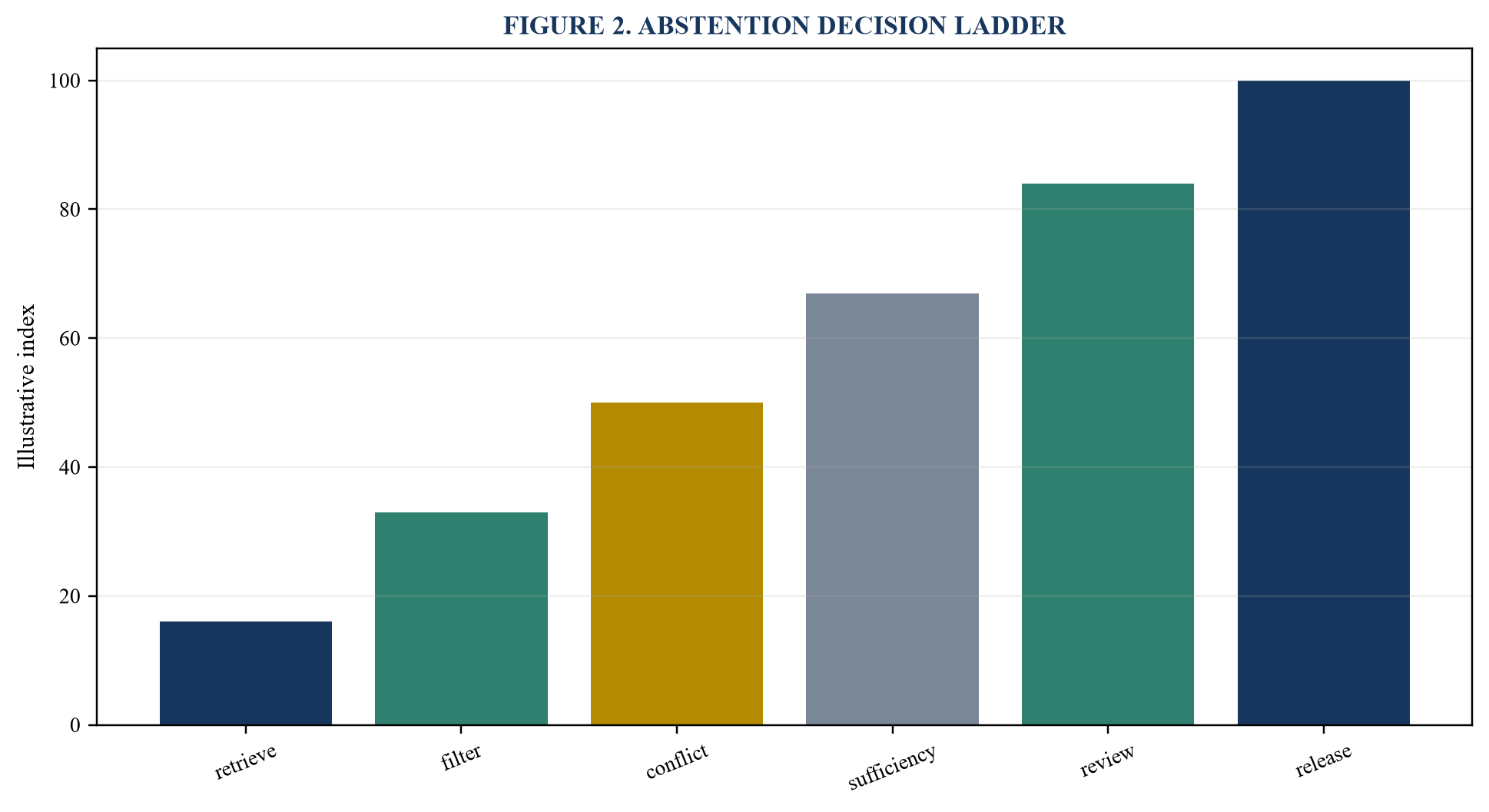
Values are illustrative indices and require replacement with approved validation evidence.
17. Design calibrated uncertainty
Express source coverage, factual uncertainty, legal ambiguity, model uncertainty and judgement separately.
The controlled record includes scope; authority; source; passage; fact; calculation; reviewer; decision. The immediate deliverable is a multidimensional uncertainty record. Preserve jurisdiction, effective date, version, transformation, reviewer, approval and unresolved exceptions.
The principal failure occurs when one confidence score suggests unsupported precision. Reviewers should reconstruct the evidence path, test consequence under adverse conditions and identify who may approve or withhold the recommendation.
A citation-grade system is an evidence and decision architecture. Each material output should preserve applicable authority, exact passage, effective version, transformation, calculation, reviewer and correction.
The decision pack for design calibrated uncertainty should show the prior view, correction, consequence at stake, alternatives, owner, due date, next evidence gate and observed outcome. Exceptions require closure evidence and an explicit effect on retrieval, citation, abstention, review or release.
18. Control factual inputs
Verify client, transaction, product, entity, amount, date, jurisdiction and contractual facts.
The controlled record includes scope; authority; source; passage; fact; calculation; reviewer; decision. The immediate deliverable is a verified fact ledger. Preserve jurisdiction, effective date, version, transformation, reviewer, approval and unresolved exceptions.
The principal failure occurs when correct rules are applied to invented, stale or mismatched facts. Reviewers should reconstruct the evidence path, test consequence under adverse conditions and identify who may approve or withhold the recommendation.
Retrieval quality, citation correctness and professional judgement are separate controls. Performance in one cannot silently compensate for failure in another.
The decision pack for control factual inputs should show the prior view, correction, consequence at stake, alternatives, owner, due date, next evidence gate and observed outcome. Exceptions require closure evidence and an explicit effect on retrieval, citation, abstention, review or release.
19. Control calculations
Preserve formula, inputs, units, currency, dates, rounding, scenarios, tool version and checks.
The controlled record includes scope; authority; source; passage; fact; calculation; reviewer; decision. The immediate deliverable is a reproducible calculation pack. Preserve jurisdiction, effective date, version, transformation, reviewer, approval and unresolved exceptions.
The principal failure occurs when a cited narrative conceals an unreproducible numerical recommendation. Reviewers should reconstruct the evidence path, test consequence under adverse conditions and identify who may approve or withhold the recommendation.
AI can support bounded retrieval, comparison, calculation and drafting over approved records. Accountable professionals retain authority for interpretation, recommendation and client action.
The decision pack for control calculations should show the prior view, correction, consequence at stake, alternatives, owner, due date, next evidence gate and observed outcome. Exceptions require closure evidence and an explicit effect on retrieval, citation, abstention, review or release.
20. Test evidence coverage
Measure whether every material claim, assumption, exception, calculation and recommendation has support.
The controlled record includes scope; authority; source; passage; fact; calculation; reviewer; decision. The immediate deliverable is a claim coverage matrix. Preserve jurisdiction, effective date, version, transformation, reviewer, approval and unresolved exceptions.
The principal failure occurs when headline citation counts conceal unsupported decisive claims. Reviewers should reconstruct the evidence path, test consequence under adverse conditions and identify who may approve or withhold the recommendation.
Abstention is a designed outcome for missing, stale, conflicting or inapplicable evidence. Escalation should identify the gap and competent reviewer needed to resolve it.
The decision pack for test evidence coverage should show the prior view, correction, consequence at stake, alternatives, owner, due date, next evidence gate and observed outcome. Exceptions require closure evidence and an explicit effect on retrieval, citation, abstention, review or release.
21. Test citation correctness
Verify that passages entail the claim, preserve scope and qualification, and identify the displayed source.
The controlled record includes scope; authority; source; passage; fact; calculation; reviewer; decision. The immediate deliverable is a citation-correctness test. Preserve jurisdiction, effective date, version, transformation, reviewer, approval and unresolved exceptions.
The principal failure occurs when citations are real but do not support the proposition. Reviewers should reconstruct the evidence path, test consequence under adverse conditions and identify who may approve or withhold the recommendation.
A citation-grade system is an evidence and decision architecture. Each material output should preserve applicable authority, exact passage, effective version, transformation, calculation, reviewer and correction.
The decision pack for test citation correctness should show the prior view, correction, consequence at stake, alternatives, owner, due date, next evidence gate and observed outcome. Exceptions require closure evidence and an explicit effect on retrieval, citation, abstention, review or release.
22. Test citation completeness
Identify material claims lacking citations, assumptions lacking disclosure and conclusions lacking reasoning.
The controlled record includes scope; authority; source; passage; fact; calculation; reviewer; decision. The immediate deliverable is a completeness exception report. Preserve jurisdiction, effective date, version, transformation, reviewer, approval and unresolved exceptions.
The principal failure occurs when easy statements are cited while decisive judgement remains unsupported. Reviewers should reconstruct the evidence path, test consequence under adverse conditions and identify who may approve or withhold the recommendation.
Retrieval quality, citation correctness and professional judgement are separate controls. Performance in one cannot silently compensate for failure in another.
The decision pack for test citation completeness should show the prior view, correction, consequence at stake, alternatives, owner, due date, next evidence gate and observed outcome. Exceptions require closure evidence and an explicit effect on retrieval, citation, abstention, review or release.
23. Test source quality and freshness
Score authority, primary status, currency, authenticity, stability and jurisdictional relevance.
The controlled record includes scope; authority; source; passage; fact; calculation; reviewer; decision. The immediate deliverable is a source-quality scorecard. Preserve jurisdiction, effective date, version, transformation, reviewer, approval and unresolved exceptions.
The principal failure occurs when recent commentary displaces controlling authority or stale guidance survives. Reviewers should reconstruct the evidence path, test consequence under adverse conditions and identify who may approve or withhold the recommendation.
AI can support bounded retrieval, comparison, calculation and drafting over approved records. Accountable professionals retain authority for interpretation, recommendation and client action.
The decision pack for test source quality and freshness should show the prior view, correction, consequence at stake, alternatives, owner, due date, next evidence gate and observed outcome. Exceptions require closure evidence and an explicit effect on retrieval, citation, abstention, review or release.
24. Govern human review
Match professional competence, independence, authority, time and evidence access to consequence tier.
The controlled record includes scope; authority; source; passage; fact; calculation; reviewer; decision. The immediate deliverable is a consequence-based review plan. Preserve jurisdiction, effective date, version, transformation, reviewer, approval and unresolved exceptions.
The principal failure occurs when a nominal human approves without context or ability to challenge. Reviewers should reconstruct the evidence path, test consequence under adverse conditions and identify who may approve or withhold the recommendation.
Abstention is a designed outcome for missing, stale, conflicting or inapplicable evidence. Escalation should identify the gap and competent reviewer needed to resolve it.
The decision pack for govern human review should show the prior view, correction, consequence at stake, alternatives, owner, due date, next evidence gate and observed outcome. Exceptions require closure evidence and an explicit effect on retrieval, citation, abstention, review or release.
Table 3. Human review tiers
| Consequence | Review design | Evidence |
|---|---|---|
| limited | trained operator | recorded checks |
| material | qualified professional | claim and calculation review |
| high | independent challenge | approval memorandum |
| critical | authorised committee | decision and conditions |
Illustrative controls require use-, consequence-, jurisdiction-, firm- and period-specific approval.
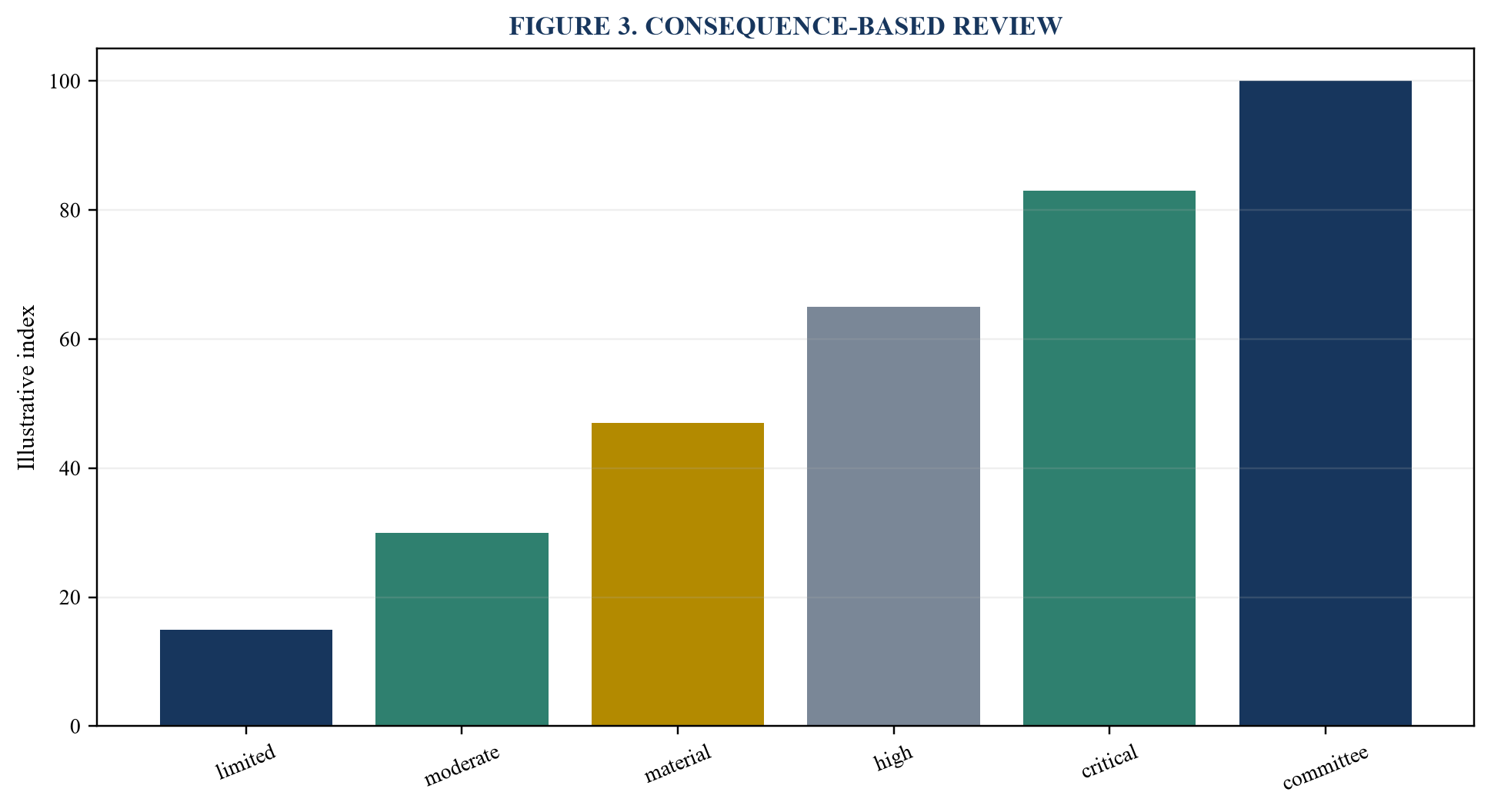
Values are illustrative indices and require replacement with approved validation evidence.
25. Record review rights and overrides
Allow correction, rejection, alternative reasoning, source substitution and escalation with reasons.
The controlled record includes scope; authority; source; passage; fact; calculation; reviewer; decision. The immediate deliverable is an override and challenge log. Preserve jurisdiction, effective date, version, transformation, reviewer, approval and unresolved exceptions.
The principal failure occurs when overrides are hidden, weakening challenge and learning. Reviewers should reconstruct the evidence path, test consequence under adverse conditions and identify who may approve or withhold the recommendation.
A citation-grade system is an evidence and decision architecture. Each material output should preserve applicable authority, exact passage, effective version, transformation, calculation, reviewer and correction.
The decision pack for record review rights and overrides should show the prior view, correction, consequence at stake, alternatives, owner, due date, next evidence gate and observed outcome. Exceptions require closure evidence and an explicit effect on retrieval, citation, abstention, review or release.
26. Control communications
Separate draft analysis, professional advice, client disclosure, marketing and regulatory records.
The controlled record includes scope; authority; source; passage; fact; calculation; reviewer; decision. The immediate deliverable is a communication and release taxonomy. Preserve jurisdiction, effective date, version, transformation, reviewer, approval and unresolved exceptions.
The principal failure occurs when draft generated material reaches a client as approved advice. Reviewers should reconstruct the evidence path, test consequence under adverse conditions and identify who may approve or withhold the recommendation.
Retrieval quality, citation correctness and professional judgement are separate controls. Performance in one cannot silently compensate for failure in another.
The decision pack for control communications should show the prior view, correction, consequence at stake, alternatives, owner, due date, next evidence gate and observed outcome. Exceptions require closure evidence and an explicit effect on retrieval, citation, abstention, review or release.
27. Design the advice record
Package question, facts, sources, passages, calculations, conflicts, assumptions, reasoning, review and action.
The controlled record includes scope; authority; source; passage; fact; calculation; reviewer; decision. The immediate deliverable is an audit-ready advice record. Preserve jurisdiction, effective date, version, transformation, reviewer, approval and unresolved exceptions.
The principal failure occurs when the firm cannot reconstruct the recommendation. Reviewers should reconstruct the evidence path, test consequence under adverse conditions and identify who may approve or withhold the recommendation.
AI can support bounded retrieval, comparison, calculation and drafting over approved records. Accountable professionals retain authority for interpretation, recommendation and client action.
The decision pack for design the advice record should show the prior view, correction, consequence at stake, alternatives, owner, due date, next evidence gate and observed outcome. Exceptions require closure evidence and an explicit effect on retrieval, citation, abstention, review or release.
28. Protect confidentiality and privilege
Control purpose, access, minimisation, segregation, retention, deletion, vendor use, transfer and privilege.
The controlled record includes scope; authority; source; passage; fact; calculation; reviewer; decision. The immediate deliverable is a data and privilege control map. Preserve jurisdiction, effective date, version, transformation, reviewer, approval and unresolved exceptions.
The principal failure occurs when traceability exposes confidential or privileged material. Reviewers should reconstruct the evidence path, test consequence under adverse conditions and identify who may approve or withhold the recommendation.
Abstention is a designed outcome for missing, stale, conflicting or inapplicable evidence. Escalation should identify the gap and competent reviewer needed to resolve it.
The decision pack for protect confidentiality and privilege should show the prior view, correction, consequence at stake, alternatives, owner, due date, next evidence gate and observed outcome. Exceptions require closure evidence and an explicit effect on retrieval, citation, abstention, review or release.
29. Control model and vendor dependencies
Inventory providers, hosting, versions, prompts, tools, data use, retention, change rights, incidents and exit.
The controlled record includes scope; authority; source; passage; fact; calculation; reviewer; decision. The immediate deliverable is a dependency register. Preserve jurisdiction, effective date, version, transformation, reviewer, approval and unresolved exceptions.
The principal failure occurs when the advice system changes when an external component changes. Reviewers should reconstruct the evidence path, test consequence under adverse conditions and identify who may approve or withhold the recommendation.
A citation-grade system is an evidence and decision architecture. Each material output should preserve applicable authority, exact passage, effective version, transformation, calculation, reviewer and correction.
The decision pack for control model and vendor dependencies should show the prior view, correction, consequence at stake, alternatives, owner, due date, next evidence gate and observed outcome. Exceptions require closure evidence and an explicit effect on retrieval, citation, abstention, review or release.
30. Defend against retrieval attacks
Test prompt injection, poisoned documents, malicious links, hidden text, impersonated authority and exfiltration.
The controlled record includes scope; authority; source; passage; fact; calculation; reviewer; decision. The immediate deliverable is a retrieval-security test pack. Preserve jurisdiction, effective date, version, transformation, reviewer, approval and unresolved exceptions.
The principal failure occurs when untrusted corpus content controls tools or discloses protected data. Reviewers should reconstruct the evidence path, test consequence under adverse conditions and identify who may approve or withhold the recommendation.
Retrieval quality, citation correctness and professional judgement are separate controls. Performance in one cannot silently compensate for failure in another.
The decision pack for defend against retrieval attacks should show the prior view, correction, consequence at stake, alternatives, owner, due date, next evidence gate and observed outcome. Exceptions require closure evidence and an explicit effect on retrieval, citation, abstention, review or release.
31. Validate the end-to-end system
Test representative and edge cases for retrieval, citation, calculation, abstention, review and record integrity.
The controlled record includes scope; authority; source; passage; fact; calculation; reviewer; decision. The immediate deliverable is an end-to-end validation report. Preserve jurisdiction, effective date, version, transformation, reviewer, approval and unresolved exceptions.
The principal failure occurs when component accuracy masks workflow failure. Reviewers should reconstruct the evidence path, test consequence under adverse conditions and identify who may approve or withhold the recommendation.
AI can support bounded retrieval, comparison, calculation and drafting over approved records. Accountable professionals retain authority for interpretation, recommendation and client action.
The decision pack for validate the end-to-end system should show the prior view, correction, consequence at stake, alternatives, owner, due date, next evidence gate and observed outcome. Exceptions require closure evidence and an explicit effect on retrieval, citation, abstention, review or release.
32. Evaluate subgroup and language performance
Test jurisdiction, document type, language, client segment, product, rarity and complexity.
The controlled record includes scope; authority; source; passage; fact; calculation; reviewer; decision. The immediate deliverable is a segmented performance assessment. Preserve jurisdiction, effective date, version, transformation, reviewer, approval and unresolved exceptions.
The principal failure occurs when average performance conceals weak results for minority languages or rare instruments. Reviewers should reconstruct the evidence path, test consequence under adverse conditions and identify who may approve or withhold the recommendation.
Abstention is a designed outcome for missing, stale, conflicting or inapplicable evidence. Escalation should identify the gap and competent reviewer needed to resolve it.
The decision pack for evaluate subgroup and language performance should show the prior view, correction, consequence at stake, alternatives, owner, due date, next evidence gate and observed outcome. Exceptions require closure evidence and an explicit effect on retrieval, citation, abstention, review or release.
Table 4. Validation scorecard
| Metric | Test | Gate |
|---|---|---|
| retrieval coverage | relevant authority found | minimum recall |
| citation correctness | passage entails claim | support threshold |
| abstention | unsafe answer withheld | failure ceiling |
| review quality | material errors caught | release threshold |
Illustrative controls require use-, consequence-, jurisdiction-, firm- and period-specific approval.
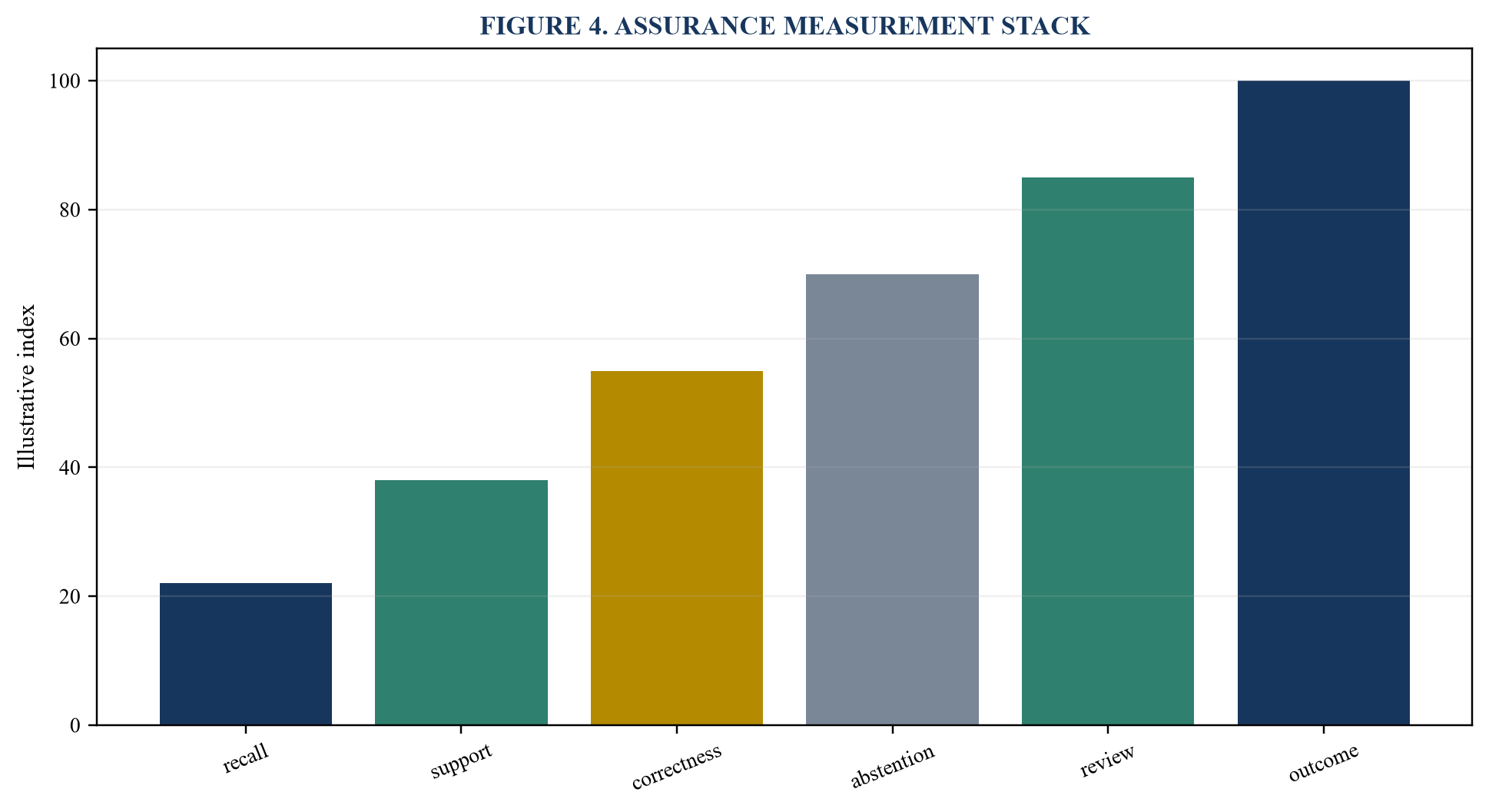
Values are illustrative indices and require replacement with approved validation evidence.
33. Set acceptance thresholds
Define minimum retrieval, support, citation, abstention, calculation and reviewer performance by consequence.
The controlled record includes scope; authority; source; passage; fact; calculation; reviewer; decision. The immediate deliverable is a release-threshold matrix. Preserve jurisdiction, effective date, version, transformation, reviewer, approval and unresolved exceptions.
The principal failure occurs when commercial deadlines dilute standards without recorded acceptance. Reviewers should reconstruct the evidence path, test consequence under adverse conditions and identify who may approve or withhold the recommendation.
A citation-grade system is an evidence and decision architecture. Each material output should preserve applicable authority, exact passage, effective version, transformation, calculation, reviewer and correction.
The decision pack for set acceptance thresholds should show the prior view, correction, consequence at stake, alternatives, owner, due date, next evidence gate and observed outcome. Exceptions require closure evidence and an explicit effect on retrieval, citation, abstention, review or release.
34. Monitor drift and change
Track source updates, law changes, model releases, parser changes, query shifts, failures, overrides and outcomes.
The controlled record includes scope; authority; source; passage; fact; calculation; reviewer; decision. The immediate deliverable is a change and drift dashboard. Preserve jurisdiction, effective date, version, transformation, reviewer, approval and unresolved exceptions.
The principal failure occurs when a previously valid system operates after material change. Reviewers should reconstruct the evidence path, test consequence under adverse conditions and identify who may approve or withhold the recommendation.
Retrieval quality, citation correctness and professional judgement are separate controls. Performance in one cannot silently compensate for failure in another.
The decision pack for monitor drift and change should show the prior view, correction, consequence at stake, alternatives, owner, due date, next evidence gate and observed outcome. Exceptions require closure evidence and an explicit effect on retrieval, citation, abstention, review or release.
35. Manage incidents and correction
Triage unsupported advice, wrong citations, missed abstention, data exposure, client impact and downstream reuse.
The controlled record includes scope; authority; source; passage; fact; calculation; reviewer; decision. The immediate deliverable is an advice-correction protocol. Preserve jurisdiction, effective date, version, transformation, reviewer, approval and unresolved exceptions.
The principal failure occurs when issued advice and client records remain uncorrected after a model fix. Reviewers should reconstruct the evidence path, test consequence under adverse conditions and identify who may approve or withhold the recommendation.
AI can support bounded retrieval, comparison, calculation and drafting over approved records. Accountable professionals retain authority for interpretation, recommendation and client action.
The decision pack for manage incidents and correction should show the prior view, correction, consequence at stake, alternatives, owner, due date, next evidence gate and observed outcome. Exceptions require closure evidence and an explicit effect on retrieval, citation, abstention, review or release.
36. Create independent assurance
Test governance, samples, lineage, controls, security, validation, outcomes and representations independently.
The controlled record includes scope; authority; source; passage; fact; calculation; reviewer; decision. The immediate deliverable is an independent-assurance plan. Preserve jurisdiction, effective date, version, transformation, reviewer, approval and unresolved exceptions.
The principal failure occurs when internal teams assure controls they designed and operated. Reviewers should reconstruct the evidence path, test consequence under adverse conditions and identify who may approve or withhold the recommendation.
Abstention is a designed outcome for missing, stale, conflicting or inapplicable evidence. Escalation should identify the gap and competent reviewer needed to resolve it.
The decision pack for create independent assurance should show the prior view, correction, consequence at stake, alternatives, owner, due date, next evidence gate and observed outcome. Exceptions require closure evidence and an explicit effect on retrieval, citation, abstention, review or release.
37. Design management reporting
Report use, consequence mix, abstention, gaps, citation error, overrides, incidents, remediation and outcomes.
The controlled record includes scope; authority; source; passage; fact; calculation; reviewer; decision. The immediate deliverable is a regulated-AI assurance scorecard. Preserve jurisdiction, effective date, version, transformation, reviewer, approval and unresolved exceptions.
The principal failure occurs when adoption and speed metrics crowd out evidence and customer outcomes. Reviewers should reconstruct the evidence path, test consequence under adverse conditions and identify who may approve or withhold the recommendation.
A citation-grade system is an evidence and decision architecture. Each material output should preserve applicable authority, exact passage, effective version, transformation, calculation, reviewer and correction.
The decision pack for design management reporting should show the prior view, correction, consequence at stake, alternatives, owner, due date, next evidence gate and observed outcome. Exceptions require closure evidence and an explicit effect on retrieval, citation, abstention, review or release.
38. Gate deployment and expansion
Require approved scope, validation, data controls, review capacity, training, fallback, monitoring and exit.
The controlled record includes scope; authority; source; passage; fact; calculation; reviewer; decision. The immediate deliverable is a deployment and expansion gate. Preserve jurisdiction, effective date, version, transformation, reviewer, approval and unresolved exceptions.
The principal failure occurs when a pilot expands to new products or jurisdictions without reassessment. Reviewers should reconstruct the evidence path, test consequence under adverse conditions and identify who may approve or withhold the recommendation.
Retrieval quality, citation correctness and professional judgement are separate controls. Performance in one cannot silently compensate for failure in another.
The decision pack for gate deployment and expansion should show the prior view, correction, consequence at stake, alternatives, owner, due date, next evidence gate and observed outcome. Exceptions require closure evidence and an explicit effect on retrieval, citation, abstention, review or release.
39. Prove operating effectiveness
Sample live cases, reproduce recommendations, verify reviews, trace corrections and compare outcomes.
The controlled record includes scope; authority; source; passage; fact; calculation; reviewer; decision. The immediate deliverable is an operating-effectiveness test. Preserve jurisdiction, effective date, version, transformation, reviewer, approval and unresolved exceptions.
The principal failure occurs when design documents exist while teams bypass the workflow. Reviewers should reconstruct the evidence path, test consequence under adverse conditions and identify who may approve or withhold the recommendation.
AI can support bounded retrieval, comparison, calculation and drafting over approved records. Accountable professionals retain authority for interpretation, recommendation and client action.
The decision pack for prove operating effectiveness should show the prior view, correction, consequence at stake, alternatives, owner, due date, next evidence gate and observed outcome. Exceptions require closure evidence and an explicit effect on retrieval, citation, abstention, review or release.
40. Close through accountable gates
Use scope, authority, corpus, facts, retrieval, citation, calculation, abstention, review, release and monitoring gates.
The controlled record includes scope; authority; source; passage; fact; calculation; reviewer; decision. The immediate deliverable is an evidence-gated operating model. Preserve jurisdiction, effective date, version, transformation, reviewer, approval and unresolved exceptions.
The principal failure occurs when model completion is confused with defensible professional advice. Reviewers should reconstruct the evidence path, test consequence under adverse conditions and identify who may approve or withhold the recommendation.
Abstention is a designed outcome for missing, stale, conflicting or inapplicable evidence. Escalation should identify the gap and competent reviewer needed to resolve it.
The decision pack for close through accountable gates should show the prior view, correction, consequence at stake, alternatives, owner, due date, next evidence gate and observed outcome. Exceptions require closure evidence and an explicit effect on retrieval, citation, abstention, review or release.
Table 5. Regulated-advice gates
| Gate | Primary work | Completion evidence |
|---|---|---|
| scope | use, consequence and jurisdiction | approved charter |
| evidence | authority, corpus and facts | controlled record |
| decision | retrieval, citation and calculation | reproducible advice |
| release | review, communication and monitoring | authorised action |
Illustrative controls require use-, consequence-, jurisdiction-, firm- and period-specific approval.
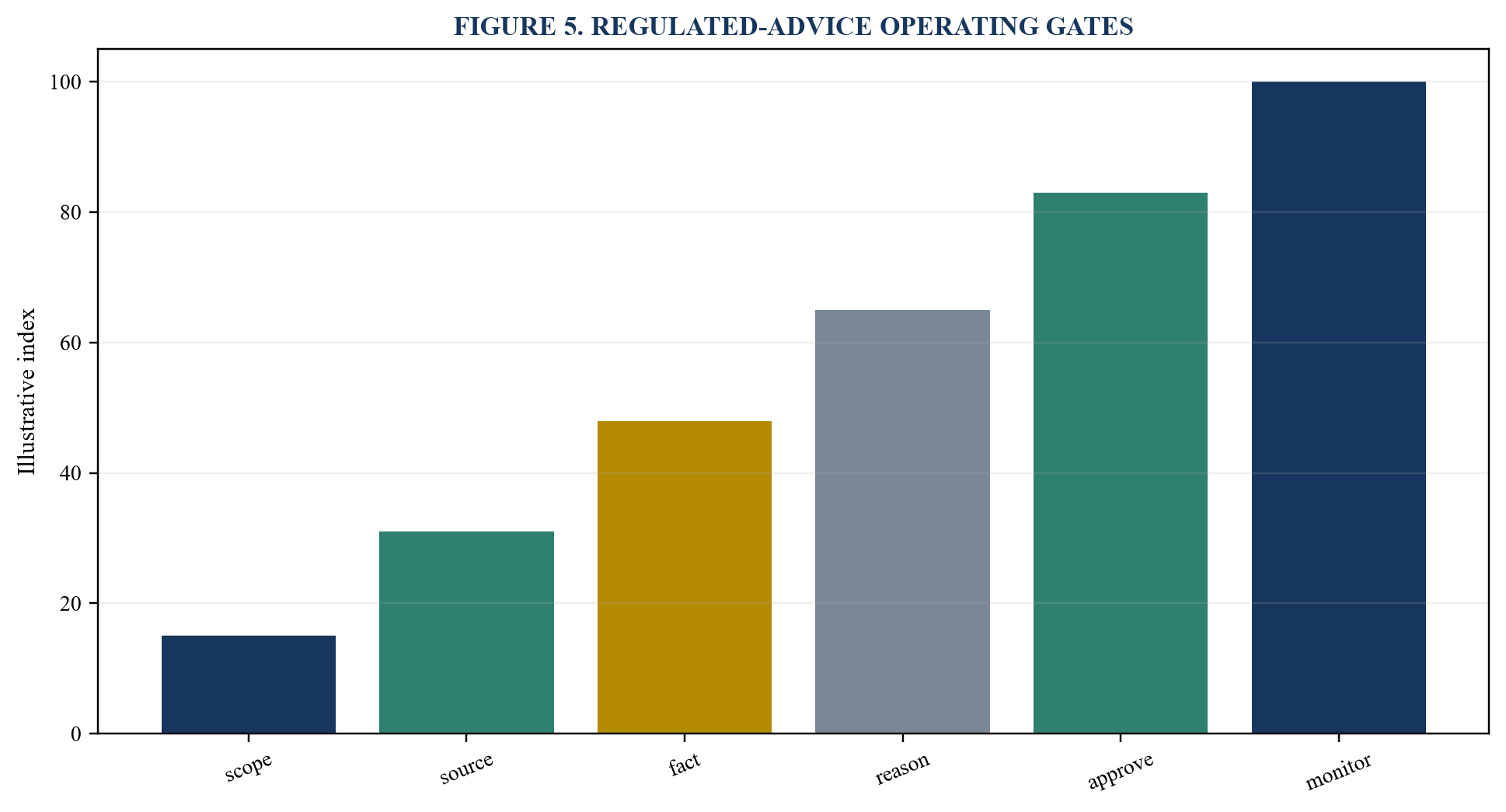
Values are illustrative indices and require replacement with approved validation evidence.
References
- European Commission, AI Act, https://digital-strategy.ec.europa.eu/en/factpages/ai-act
- European Commission, Navigating the AI Act, https://digital-strategy.ec.europa.eu/en/faqs/navigating-ai-act
- European Commission, Guidelines on Obligations for General-Purpose AI Providers, https://digital-strategy.ec.europa.eu/en/faqs/guidelines-obligations-general-purpose-ai-providers
- European Commission, Guidelines on Transparency Obligations, https://digital-strategy.ec.europa.eu/en/library/guidelines-transparency-obligations-providers-and-deployers-ai-systems
- European Union, Regulation (EU) 2024/1689 Artificial Intelligence Act, https://eur-lex.europa.eu/eli/reg/2024/1689/oj
- Central Bank of the UAE, Guidance Note on Responsible Adoption and Use of Artificial Intelligence, https://rulebook.centralbank.ae/en/rulebook/guidance-note-consumer-protection-and-responsible-adoption-and-use-artificial-intelligence
- Central Bank of the UAE, Guidelines for Financial Institutions Adopting Enabling Technologies, https://rulebook.centralbank.ae/en/rulebook/guidelines-financial-institutions-adopting-enabling-technologies
- Central Bank of the UAE, Model Management Standards, https://rulebook.centralbank.ae/en/rulebook/model-management-standards
- Dubai Financial Services Authority, Artificial Intelligence Survey 2025, https://www.dfsa.ae/news/new-dfsa-ai-survey-generative-ai-adoption-has-nearly-tripled-within-difc-last-12-months-governance-continues-develop
- National Institute of Standards and Technology, AI Risk Management Framework 1.0, https://www.nist.gov/publications/artificial-intelligence-risk-management-framework-ai-rmf-10
- National Institute of Standards and Technology, Generative AI Profile, https://nvlpubs.nist.gov/nistpubs/ai/NIST.AI.600-1.pdf
- National Institute of Standards and Technology, AI RMF Core, https://airc.nist.gov/airmf-resources/airmf/5-sec-core/
- National Institute of Standards and Technology, AI Resource Center, https://airc.nist.gov/
- International Organization for Standardization, ISO/IEC 42001 AI Management Systems, https://www.iso.org/standard/81230.html
- International Organization for Standardization, ISO/IEC 23894 AI Risk Management, https://www.iso.org/standard/77304.html
- International Organization for Standardization, ISO/IEC 27001 Information Security Management Systems, https://www.iso.org/standard/27001
- Bank for International Settlements, AI in Central Banking, https://www.bis.org/publ/othp33.htm
- Bank for International Settlements, Big Data and Machine Learning in Central Banking, https://www.bis.org/publ/work930.htm
- Financial Stability Board, AI and Machine Learning in Financial Services, https://www.fsb.org/2017/11/artificial-intelligence-and-machine-learning-in-financial-service/
- Financial Action Task Force, Opportunities and Challenges of New Technologies, https://www.fatf-gafi.org/en/publications/Digitaltransformation/Opportunities-challenges-new-technologies-aml-cft.html
- UK Financial Conduct Authority, Artificial Intelligence, https://www.fca.org.uk/firms/innovation/artificial-intelligence
- UK Information Commissioner's Office, Guidance on AI and Data Protection, https://ico.org.uk/for-organisations/uk-gdpr-guidance-and-resources/artificial-intelligence/
- Organisation for Economic Co-operation and Development, OECD AI Principles, https://oecd.ai/en/ai-principles
- UAE Government, Personal Data Protection Law, https://uaelegislation.gov.ae/en/legislations/1972
- World Wide Web Consortium, Data on the Web Best Practices, https://www.w3.org/TR/dwbp/
- International Organization for Standardization, ISO 31000 Risk Management, https://www.iso.org/iso-31000-risk-management.html
