

1. Set the board's design mandate
The merger leadership team should define value objectives, legal boundaries, design scope, decision rights, evidence standards, timetable and escalation thresholds. The required output is a board-approved pre-close operating-model mandate. Record the design question, current-state evidence, future-state choice, legal boundary, dependency, owner, reviewer and approval status [1][2].
Translate the choice into a controlled operating-model release. Separate lawful pre-close analysis from implementation; specify what can be prepared, what triggers at closing and what remains a post-close management decision. Link organisation, process, data, systems, controls, people, cost and customer consequences.
The principal risk is that teams can confuse permission to plan with authority to implement. Quantify revenue exposure, service continuity, critical roles, cost, cash, control effectiveness, cyber risk, synergy timing and residual risk across base, delayed and remediated cases.
Retain source data, current-state maps, design options, legal advice, approvals, assumptions, dependencies, rehearsal evidence, exceptions and change records. Refresh after material developments and expire provisional decisions that no longer fit the closing path.
2. Separate design from implementation
The merger leadership team should classify analysis, recommendation, preparation, access, communication, commitment and execution activities. The required output is a design-versus-control boundary map. Record the design question, current-state evidence, future-state choice, legal boundary, dependency, owner, reviewer and approval status [1][3].
Translate the choice into a controlled operating-model release. Separate lawful pre-close analysis from implementation; specify what can be prepared, what triggers at closing and what remains a post-close management decision. Link organisation, process, data, systems, controls, people, cost and customer consequences.
The principal risk is that a planning workstream can direct the target's competitive conduct. Quantify revenue exposure, service continuity, critical roles, cost, cash, control effectiveness, cyber risk, synergy timing and residual risk across base, delayed and remediated cases.
Retain source data, current-state maps, design options, legal advice, approvals, assumptions, dependencies, rehearsal evidence, exceptions and change records. Refresh after material developments and expire provisional decisions that no longer fit the closing path.
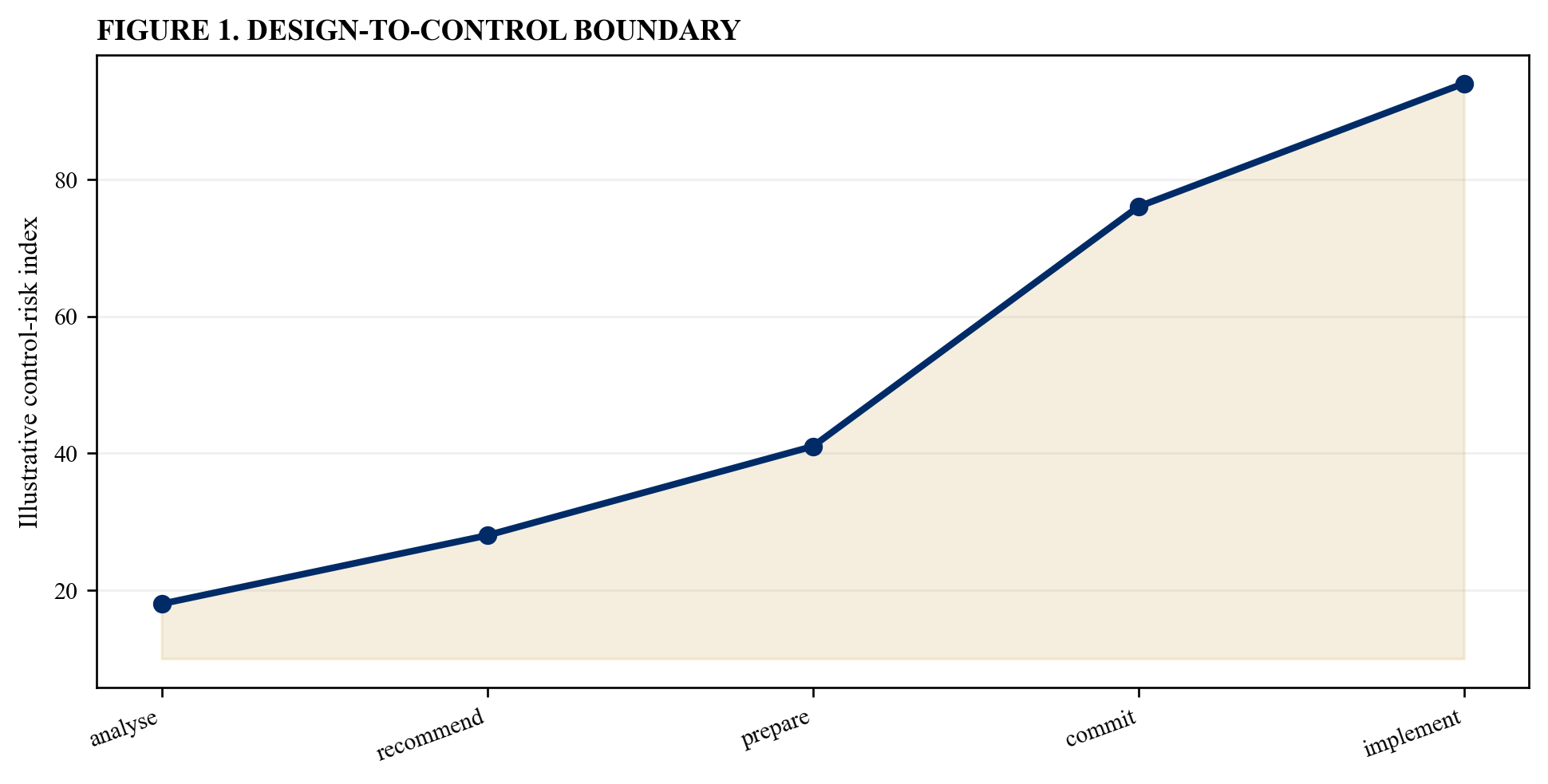
Illustrative analytical scenario; verified transaction evidence should replace index values.
3. Map the closing pathway
The merger leadership team should record filings, approvals, shareholder actions, financing, remedies, long-stop dates and plausible timing ranges. The required output is a condition and timing map. Record the design question, current-state evidence, future-state choice, legal boundary, dependency, owner, reviewer and approval status [4][5].
Translate the choice into a controlled operating-model release. Separate lawful pre-close analysis from implementation; specify what can be prepared, what triggers at closing and what remains a post-close management decision. Link organisation, process, data, systems, controls, people, cost and customer consequences.
The principal risk is that the model can assume a date or perimeter that remains conditional. Quantify revenue exposure, service continuity, critical roles, cost, cash, control effectiveness, cyber risk, synergy timing and residual risk across base, delayed and remediated cases.
Retain source data, current-state maps, design options, legal advice, approvals, assumptions, dependencies, rehearsal evidence, exceptions and change records. Refresh after material developments and expire provisional decisions that no longer fit the closing path.
4. Create the decision taxonomy
The merger leadership team should distinguish current-party decisions, conditional recommendations, reversible preparation, closing actions and post-close choices. The required output is a governed decision register. Record the design question, current-state evidence, future-state choice, legal boundary, dependency, owner, reviewer and approval status [2][6].
Translate the choice into a controlled operating-model release. Separate lawful pre-close analysis from implementation; specify what can be prepared, what triggers at closing and what remains a post-close management decision. Link organisation, process, data, systems, controls, people, cost and customer consequences.
The principal risk is that provisional choices can harden into unauthorised commitments. Quantify revenue exposure, service continuity, critical roles, cost, cash, control effectiveness, cyber risk, synergy timing and residual risk across base, delayed and remediated cases.
Retain source data, current-state maps, design options, legal advice, approvals, assumptions, dependencies, rehearsal evidence, exceptions and change records. Refresh after material developments and expire provisional decisions that no longer fit the closing path.
Table 1. Pre-close decision taxonomy
| Decision class | Permitted output | Control |
|---|---|---|
| current-party | independent action | own authority |
| conditional design | recommendation | no implementation |
| reversible preparation | ready artefact | legal approval |
| closing action | cutover step | control transfer |
Illustrative structure; verified transaction evidence and specialist review govern.
5. Define operating-model principles
The merger leadership team should agree customer, value, accountability, control, simplicity, resilience and local-autonomy principles. The required output is a ranked design-principles scorecard. Record the design question, current-state evidence, future-state choice, legal boundary, dependency, owner, reviewer and approval status [7][8].
Translate the choice into a controlled operating-model release. Separate lawful pre-close analysis from implementation; specify what can be prepared, what triggers at closing and what remains a post-close management decision. Link organisation, process, data, systems, controls, people, cost and customer consequences.
The principal risk is that functions can optimise locally without a coherent enterprise model. Quantify revenue exposure, service continuity, critical roles, cost, cash, control effectiveness, cyber risk, synergy timing and residual risk across base, delayed and remediated cases.
Retain source data, current-state maps, design options, legal advice, approvals, assumptions, dependencies, rehearsal evidence, exceptions and change records. Refresh after material developments and expire provisional decisions that no longer fit the closing path.
6. Establish the design authority
The merger leadership team should set sponsor, integration leader, functional owners, clean teams, advisers, challenge and approval forums. The required output is a pre-close design governance map. Record the design question, current-state evidence, future-state choice, legal boundary, dependency, owner, reviewer and approval status [1][9].
Translate the choice into a controlled operating-model release. Separate lawful pre-close analysis from implementation; specify what can be prepared, what triggers at closing and what remains a post-close management decision. Link organisation, process, data, systems, controls, people, cost and customer consequences.
The principal risk is that decisions can be made without accountable owners or lawful access. Quantify revenue exposure, service continuity, critical roles, cost, cash, control effectiveness, cyber risk, synergy timing and residual risk across base, delayed and remediated cases.
Retain source data, current-state maps, design options, legal advice, approvals, assumptions, dependencies, rehearsal evidence, exceptions and change records. Refresh after material developments and expire provisional decisions that no longer fit the closing path.
7. Baseline both operating models
The merger leadership team should document structures, value streams, decision rights, capabilities, systems, costs, controls and service levels independently. The required output is a comparable current-state evidence pack. Record the design question, current-state evidence, future-state choice, legal boundary, dependency, owner, reviewer and approval status [7][10].
Translate the choice into a controlled operating-model release. Separate lawful pre-close analysis from implementation; specify what can be prepared, what triggers at closing and what remains a post-close management decision. Link organisation, process, data, systems, controls, people, cost and customer consequences.
The principal risk is that the louder organisation can become the undocumented default. Quantify revenue exposure, service continuity, critical roles, cost, cash, control effectiveness, cyber risk, synergy timing and residual risk across base, delayed and remediated cases.
Retain source data, current-state maps, design options, legal advice, approvals, assumptions, dependencies, rehearsal evidence, exceptions and change records. Refresh after material developments and expire provisional decisions that no longer fit the closing path.
8. Anchor the customer promise
The merger leadership team should define which customer outcomes, service commitments and trust attributes the combined model must protect. The required output is a customer-promise control statement. Record the design question, current-state evidence, future-state choice, legal boundary, dependency, owner, reviewer and approval status [11][12].
Translate the choice into a controlled operating-model release. Separate lawful pre-close analysis from implementation; specify what can be prepared, what triggers at closing and what remains a post-close management decision. Link organisation, process, data, systems, controls, people, cost and customer consequences.
The principal risk is that internal integration convenience can weaken the external proposition. Quantify revenue exposure, service continuity, critical roles, cost, cash, control effectiveness, cyber risk, synergy timing and residual risk across base, delayed and remediated cases.
Retain source data, current-state maps, design options, legal advice, approvals, assumptions, dependencies, rehearsal evidence, exceptions and change records. Refresh after material developments and expire provisional decisions that no longer fit the closing path.
9. Map end-to-end value streams
The merger leadership team should connect demand, sales, fulfilment, service, cash, product and support across organisational boundaries. The required output is a value-stream dependency map. Record the design question, current-state evidence, future-state choice, legal boundary, dependency, owner, reviewer and approval status [7][13].
Translate the choice into a controlled operating-model release. Separate lawful pre-close analysis from implementation; specify what can be prepared, what triggers at closing and what remains a post-close management decision. Link organisation, process, data, systems, controls, people, cost and customer consequences.
The principal risk is that functional charts can conceal broken handoffs and duplicated accountability. Quantify revenue exposure, service continuity, critical roles, cost, cash, control effectiveness, cyber risk, synergy timing and residual risk across base, delayed and remediated cases.
Retain source data, current-state maps, design options, legal advice, approvals, assumptions, dependencies, rehearsal evidence, exceptions and change records. Refresh after material developments and expire provisional decisions that no longer fit the closing path.
10. Choose organisation layers
The merger leadership team should define enterprise, business, geography, product, customer and shared-service accountabilities. The required output is an organisation-layer blueprint. Record the design question, current-state evidence, future-state choice, legal boundary, dependency, owner, reviewer and approval status [7][14].
Translate the choice into a controlled operating-model release. Separate lawful pre-close analysis from implementation; specify what can be prepared, what triggers at closing and what remains a post-close management decision. Link organisation, process, data, systems, controls, people, cost and customer consequences.
The principal risk is that matrix complexity can multiply approvals without improving control. Quantify revenue exposure, service continuity, critical roles, cost, cash, control effectiveness, cyber risk, synergy timing and residual risk across base, delayed and remediated cases.
Retain source data, current-state maps, design options, legal advice, approvals, assumptions, dependencies, rehearsal evidence, exceptions and change records. Refresh after material developments and expire provisional decisions that no longer fit the closing path.
11. Design leadership interfaces
The merger leadership team should specify roles, spans, reserved matters, interim appointments, succession and conflict protocols. The required output is a leadership-interface map. Record the design question, current-state evidence, future-state choice, legal boundary, dependency, owner, reviewer and approval status [15][16].
Translate the choice into a controlled operating-model release. Separate lawful pre-close analysis from implementation; specify what can be prepared, what triggers at closing and what remains a post-close management decision. Link organisation, process, data, systems, controls, people, cost and customer consequences.
The principal risk is that title allocation can precede capability and accountability design. Quantify revenue exposure, service continuity, critical roles, cost, cash, control effectiveness, cyber risk, synergy timing and residual risk across base, delayed and remediated cases.
Retain source data, current-state maps, design options, legal advice, approvals, assumptions, dependencies, rehearsal evidence, exceptions and change records. Refresh after material developments and expire provisional decisions that no longer fit the closing path.
12. Set decision rights
The merger leadership team should assign recommend, decide, execute, challenge and inform roles for value-critical decisions. The required output is a decision-rights matrix. Record the design question, current-state evidence, future-state choice, legal boundary, dependency, owner, reviewer and approval status [7][17].
Translate the choice into a controlled operating-model release. Separate lawful pre-close analysis from implementation; specify what can be prepared, what triggers at closing and what remains a post-close management decision. Link organisation, process, data, systems, controls, people, cost and customer consequences.
The principal risk is that shared accountability can leave urgent decisions ownerless. Quantify revenue exposure, service continuity, critical roles, cost, cash, control effectiveness, cyber risk, synergy timing and residual risk across base, delayed and remediated cases.
Retain source data, current-state maps, design options, legal advice, approvals, assumptions, dependencies, rehearsal evidence, exceptions and change records. Refresh after material developments and expire provisional decisions that no longer fit the closing path.
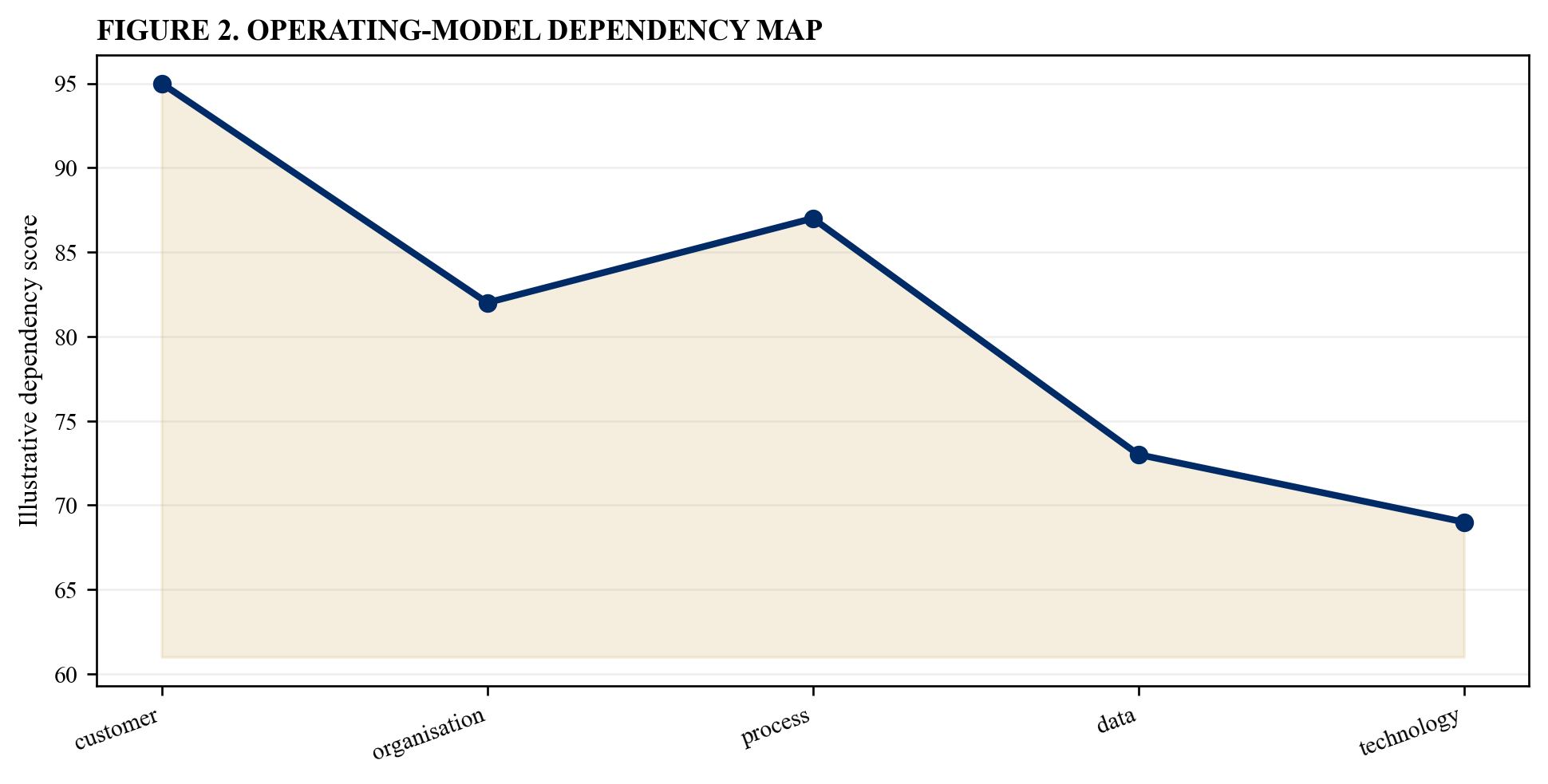
Illustrative analytical scenario; verified transaction evidence should replace index values.
13. Design governance forums
The merger leadership team should define purpose, membership, inputs, thresholds, cadence, minutes and escalation for each forum. The required output is a governance operating calendar. Record the design question, current-state evidence, future-state choice, legal boundary, dependency, owner, reviewer and approval status [7][18].
Translate the choice into a controlled operating-model release. Separate lawful pre-close analysis from implementation; specify what can be prepared, what triggers at closing and what remains a post-close management decision. Link organisation, process, data, systems, controls, people, cost and customer consequences.
The principal risk is that meetings can proliferate while decisions slow. Quantify revenue exposure, service continuity, critical roles, cost, cash, control effectiveness, cyber risk, synergy timing and residual risk across base, delayed and remediated cases.
Retain source data, current-state maps, design options, legal advice, approvals, assumptions, dependencies, rehearsal evidence, exceptions and change records. Refresh after material developments and expire provisional decisions that no longer fit the closing path.
14. Map legal entities and authorities
The merger leadership team should reconcile boards, delegations, signatories, bank mandates, licences, contracts and statutory duties. The required output is a legal-to-operating authority bridge. Record the design question, current-state evidence, future-state choice, legal boundary, dependency, owner, reviewer and approval status [19][20].
Translate the choice into a controlled operating-model release. Separate lawful pre-close analysis from implementation; specify what can be prepared, what triggers at closing and what remains a post-close management decision. Link organisation, process, data, systems, controls, people, cost and customer consequences.
The principal risk is that a target model can require powers the entity or manager does not hold. Quantify revenue exposure, service continuity, critical roles, cost, cash, control effectiveness, cyber risk, synergy timing and residual risk across base, delayed and remediated cases.
Retain source data, current-state maps, design options, legal advice, approvals, assumptions, dependencies, rehearsal evidence, exceptions and change records. Refresh after material developments and expire provisional decisions that no longer fit the closing path.
Table 2. Operating-model layer matrix
| Layer | Core question | Evidence |
|---|---|---|
| enterprise | what is central | reserved matters |
| business | who owns value | P&L and capabilities |
| geography | what remains local | licence and customer need |
| shared service | what is standard | service catalogue |
Illustrative structure; verified transaction evidence and specialist review govern.
15. Protect licences and regulated activities
The merger leadership team should identify notifications, approvals, controllers, responsible persons, ring-fences and conduct requirements. The required output is a regulatory continuity plan. Record the design question, current-state evidence, future-state choice, legal boundary, dependency, owner, reviewer and approval status [4][21].
Translate the choice into a controlled operating-model release. Separate lawful pre-close analysis from implementation; specify what can be prepared, what triggers at closing and what remains a post-close management decision. Link organisation, process, data, systems, controls, people, cost and customer consequences.
The principal risk is that a centralised model can breach licence perimeter or local accountability. Quantify revenue exposure, service continuity, critical roles, cost, cash, control effectiveness, cyber risk, synergy timing and residual risk across base, delayed and remediated cases.
Retain source data, current-state maps, design options, legal advice, approvals, assumptions, dependencies, rehearsal evidence, exceptions and change records. Refresh after material developments and expire provisional decisions that no longer fit the closing path.
16. Set brand and channel architecture
The merger leadership team should decide conditional brand roles, migration criteria, customer channels and transition evidence. The required output is a brand-and-channel option map. Record the design question, current-state evidence, future-state choice, legal boundary, dependency, owner, reviewer and approval status [1][11].
Translate the choice into a controlled operating-model release. Separate lawful pre-close analysis from implementation; specify what can be prepared, what triggers at closing and what remains a post-close management decision. Link organisation, process, data, systems, controls, people, cost and customer consequences.
The principal risk is that premature convergence can destroy local trust or imply completion. Quantify revenue exposure, service continuity, critical roles, cost, cash, control effectiveness, cyber risk, synergy timing and residual risk across base, delayed and remediated cases.
Retain source data, current-state maps, design options, legal advice, approvals, assumptions, dependencies, rehearsal evidence, exceptions and change records. Refresh after material developments and expire provisional decisions that no longer fit the closing path.
17. Design the commercial model
The merger leadership team should map segments, propositions, coverage, pricing authority, incentives, pipeline and conflict rules. The required output is a post-close commercial blueprint. Record the design question, current-state evidence, future-state choice, legal boundary, dependency, owner, reviewer and approval status [3][22].
Translate the choice into a controlled operating-model release. Separate lawful pre-close analysis from implementation; specify what can be prepared, what triggers at closing and what remains a post-close management decision. Link organisation, process, data, systems, controls, people, cost and customer consequences.
The principal risk is that joint planning can expose sensitive information or coordinate competition. Quantify revenue exposure, service continuity, critical roles, cost, cash, control effectiveness, cyber risk, synergy timing and residual risk across base, delayed and remediated cases.
Retain source data, current-state maps, design options, legal advice, approvals, assumptions, dependencies, rehearsal evidence, exceptions and change records. Refresh after material developments and expire provisional decisions that no longer fit the closing path.
18. Protect customer ownership
The merger leadership team should define account continuity, relationship handoffs, consent, service evidence and escalation. The required output is a customer-transition register. Record the design question, current-state evidence, future-state choice, legal boundary, dependency, owner, reviewer and approval status [11][12].
Translate the choice into a controlled operating-model release. Separate lawful pre-close analysis from implementation; specify what can be prepared, what triggers at closing and what remains a post-close management decision. Link organisation, process, data, systems, controls, people, cost and customer consequences.
The principal risk is that customers can experience duplicate contact, silence or unapproved promises. Quantify revenue exposure, service continuity, critical roles, cost, cash, control effectiveness, cyber risk, synergy timing and residual risk across base, delayed and remediated cases.
Retain source data, current-state maps, design options, legal advice, approvals, assumptions, dependencies, rehearsal evidence, exceptions and change records. Refresh after material developments and expire provisional decisions that no longer fit the closing path.
19. Rationalise the product portfolio
The merger leadership team should classify retain, invest, integrate, migrate and retire options with customer and regulatory gates. The required output is a product decision portfolio. Record the design question, current-state evidence, future-state choice, legal boundary, dependency, owner, reviewer and approval status [7][23].
Translate the choice into a controlled operating-model release. Separate lawful pre-close analysis from implementation; specify what can be prepared, what triggers at closing and what remains a post-close management decision. Link organisation, process, data, systems, controls, people, cost and customer consequences.
The principal risk is that synergy assumptions can rely on product exits before evidence exists. Quantify revenue exposure, service continuity, critical roles, cost, cash, control effectiveness, cyber risk, synergy timing and residual risk across base, delayed and remediated cases.
Retain source data, current-state maps, design options, legal advice, approvals, assumptions, dependencies, rehearsal evidence, exceptions and change records. Refresh after material developments and expire provisional decisions that no longer fit the closing path.
20. Design service delivery
The merger leadership team should link capacity, locations, workflows, quality, resilience and service-level ownership. The required output is a delivery operating model. Record the design question, current-state evidence, future-state choice, legal boundary, dependency, owner, reviewer and approval status [8][13].
Translate the choice into a controlled operating-model release. Separate lawful pre-close analysis from implementation; specify what can be prepared, what triggers at closing and what remains a post-close management decision. Link organisation, process, data, systems, controls, people, cost and customer consequences.
The principal risk is that centralisation can save cost while lengthening recovery or response time. Quantify revenue exposure, service continuity, critical roles, cost, cash, control effectiveness, cyber risk, synergy timing and residual risk across base, delayed and remediated cases.
Retain source data, current-state maps, design options, legal advice, approvals, assumptions, dependencies, rehearsal evidence, exceptions and change records. Refresh after material developments and expire provisional decisions that no longer fit the closing path.
21. Design supply-chain ownership
The merger leadership team should map category authority, critical suppliers, concentration, continuity, contracting and change control. The required output is a supply-chain accountability map. Record the design question, current-state evidence, future-state choice, legal boundary, dependency, owner, reviewer and approval status [24][25].
Translate the choice into a controlled operating-model release. Separate lawful pre-close analysis from implementation; specify what can be prepared, what triggers at closing and what remains a post-close management decision. Link organisation, process, data, systems, controls, people, cost and customer consequences.
The principal risk is that procurement consolidation can create a single point of failure. Quantify revenue exposure, service continuity, critical roles, cost, cash, control effectiveness, cyber risk, synergy timing and residual risk across base, delayed and remediated cases.
Retain source data, current-state maps, design options, legal advice, approvals, assumptions, dependencies, rehearsal evidence, exceptions and change records. Refresh after material developments and expire provisional decisions that no longer fit the closing path.
22. Design workforce architecture
The merger leadership team should map roles, capabilities, locations, consultation, selection, retention, succession and workforce data. The required output is a workforce transition blueprint. Record the design question, current-state evidence, future-state choice, legal boundary, dependency, owner, reviewer and approval status [15][26].
Translate the choice into a controlled operating-model release. Separate lawful pre-close analysis from implementation; specify what can be prepared, what triggers at closing and what remains a post-close management decision. Link organisation, process, data, systems, controls, people, cost and customer consequences.
The principal risk is that organisation design can prejudice required employee processes. Quantify revenue exposure, service continuity, critical roles, cost, cash, control effectiveness, cyber risk, synergy timing and residual risk across base, delayed and remediated cases.
Retain source data, current-state maps, design options, legal advice, approvals, assumptions, dependencies, rehearsal evidence, exceptions and change records. Refresh after material developments and expire provisional decisions that no longer fit the closing path.
23. Design finance and performance management
The merger leadership team should set ledger, close, reporting, planning, management information, policies and controller accountabilities. The required output is a finance operating-model map. Record the design question, current-state evidence, future-state choice, legal boundary, dependency, owner, reviewer and approval status [27][28].
Translate the choice into a controlled operating-model release. Separate lawful pre-close analysis from implementation; specify what can be prepared, what triggers at closing and what remains a post-close management decision. Link organisation, process, data, systems, controls, people, cost and customer consequences.
The principal risk is that Day One can begin without one trusted view of performance. Quantify revenue exposure, service continuity, critical roles, cost, cash, control effectiveness, cyber risk, synergy timing and residual risk across base, delayed and remediated cases.
Retain source data, current-state maps, design options, legal advice, approvals, assumptions, dependencies, rehearsal evidence, exceptions and change records. Refresh after material developments and expire provisional decisions that no longer fit the closing path.
24. Design treasury and cash control
The merger leadership team should map accounts, signatories, liquidity, payments, debt, hedging, guarantees and trapped cash. The required output is a Day One cash-control schedule. Record the design question, current-state evidence, future-state choice, legal boundary, dependency, owner, reviewer and approval status [20][29].
Translate the choice into a controlled operating-model release. Separate lawful pre-close analysis from implementation; specify what can be prepared, what triggers at closing and what remains a post-close management decision. Link organisation, process, data, systems, controls, people, cost and customer consequences.
The principal risk is that legal ownership can change before cash authority and funding are operable. Quantify revenue exposure, service continuity, critical roles, cost, cash, control effectiveness, cyber risk, synergy timing and residual risk across base, delayed and remediated cases.
Retain source data, current-state maps, design options, legal advice, approvals, assumptions, dependencies, rehearsal evidence, exceptions and change records. Refresh after material developments and expire provisional decisions that no longer fit the closing path.
Table 3. Day One control matrix
| Domain | Minimum outcome | Proof |
|---|---|---|
| cash | payments authorised | bank test |
| customer | service ownership clear | account roster |
| people | employment and escalation live | manager rehearsal |
| cyber | identity and incident control | access test |
Illustrative structure; verified transaction evidence and specialist review govern.
25. Design tax governance
The merger leadership team should map entities, registrations, transfer pricing, permanent establishments, indirect tax, attributes and decision ownership. The required output is a tax operating-model register. Record the design question, current-state evidence, future-state choice, legal boundary, dependency, owner, reviewer and approval status [30][31].
Translate the choice into a controlled operating-model release. Separate lawful pre-close analysis from implementation; specify what can be prepared, what triggers at closing and what remains a post-close management decision. Link organisation, process, data, systems, controls, people, cost and customer consequences.
The principal risk is that operational choices can create tax exposures outside the deal model. Quantify revenue exposure, service continuity, critical roles, cost, cash, control effectiveness, cyber risk, synergy timing and residual risk across base, delayed and remediated cases.
Retain source data, current-state maps, design options, legal advice, approvals, assumptions, dependencies, rehearsal evidence, exceptions and change records. Refresh after material developments and expire provisional decisions that no longer fit the closing path.
26. Design data ownership
The merger leadership team should classify domains, controllers, purposes, quality, access, lineage, retention and deletion. The required output is a combined data-governance blueprint. Record the design question, current-state evidence, future-state choice, legal boundary, dependency, owner, reviewer and approval status [32][33].
Translate the choice into a controlled operating-model release. Separate lawful pre-close analysis from implementation; specify what can be prepared, what triggers at closing and what remains a post-close management decision. Link organisation, process, data, systems, controls, people, cost and customer consequences.
The principal risk is that integration design can rely on personal or sensitive data without lawful use. Quantify revenue exposure, service continuity, critical roles, cost, cash, control effectiveness, cyber risk, synergy timing and residual risk across base, delayed and remediated cases.
Retain source data, current-state maps, design options, legal advice, approvals, assumptions, dependencies, rehearsal evidence, exceptions and change records. Refresh after material developments and expire provisional decisions that no longer fit the closing path.
27. Design the application landscape
The merger leadership team should classify systems to retain, separate, interoperate, migrate or retire with business owners and exit criteria. The required output is an application disposition map. Record the design question, current-state evidence, future-state choice, legal boundary, dependency, owner, reviewer and approval status [34][35].
Translate the choice into a controlled operating-model release. Separate lawful pre-close analysis from implementation; specify what can be prepared, what triggers at closing and what remains a post-close management decision. Link organisation, process, data, systems, controls, people, cost and customer consequences.
The principal risk is that technology sequencing can be driven by licence dates instead of business risk. Quantify revenue exposure, service continuity, critical roles, cost, cash, control effectiveness, cyber risk, synergy timing and residual risk across base, delayed and remediated cases.
Retain source data, current-state maps, design options, legal advice, approvals, assumptions, dependencies, rehearsal evidence, exceptions and change records. Refresh after material developments and expire provisional decisions that no longer fit the closing path.
28. Design infrastructure and cyber controls
The merger leadership team should map identity, networks, endpoints, cloud, logging, incidents, recovery and third-party dependencies. The required output is a Day One cyber architecture. Record the design question, current-state evidence, future-state choice, legal boundary, dependency, owner, reviewer and approval status [24][34].
Translate the choice into a controlled operating-model release. Separate lawful pre-close analysis from implementation; specify what can be prepared, what triggers at closing and what remains a post-close management decision. Link organisation, process, data, systems, controls, people, cost and customer consequences.
The principal risk is that new connectivity can expand attack paths before controls and monitoring converge. Quantify revenue exposure, service continuity, critical roles, cost, cash, control effectiveness, cyber risk, synergy timing and residual risk across base, delayed and remediated cases.
Retain source data, current-state maps, design options, legal advice, approvals, assumptions, dependencies, rehearsal evidence, exceptions and change records. Refresh after material developments and expire provisional decisions that no longer fit the closing path.
29. Design shared services and transition agreements
The merger leadership team should define service catalogues, volumes, standards, pricing, access, data, change, exit and dispute controls. The required output is a TSA and shared-service blueprint. Record the design question, current-state evidence, future-state choice, legal boundary, dependency, owner, reviewer and approval status [13][36].
Translate the choice into a controlled operating-model release. Separate lawful pre-close analysis from implementation; specify what can be prepared, what triggers at closing and what remains a post-close management decision. Link organisation, process, data, systems, controls, people, cost and customer consequences.
The principal risk is that temporary services can become an unpriced permanent dependency. Quantify revenue exposure, service continuity, critical roles, cost, cash, control effectiveness, cyber risk, synergy timing and residual risk across base, delayed and remediated cases.
Retain source data, current-state maps, design options, legal advice, approvals, assumptions, dependencies, rehearsal evidence, exceptions and change records. Refresh after material developments and expire provisional decisions that no longer fit the closing path.
30. Integrate risk and controls
The merger leadership team should map financial, operational, regulatory, conduct, cyber and resilience controls to owners and evidence. The required output is a combined control architecture. Record the design question, current-state evidence, future-state choice, legal boundary, dependency, owner, reviewer and approval status [8][18].
Translate the choice into a controlled operating-model release. Separate lawful pre-close analysis from implementation; specify what can be prepared, what triggers at closing and what remains a post-close management decision. Link organisation, process, data, systems, controls, people, cost and customer consequences.
The principal risk is that process redesign can remove compensating controls before replacements operate. Quantify revenue exposure, service continuity, critical roles, cost, cash, control effectiveness, cyber risk, synergy timing and residual risk across base, delayed and remediated cases.
Retain source data, current-state maps, design options, legal advice, approvals, assumptions, dependencies, rehearsal evidence, exceptions and change records. Refresh after material developments and expire provisional decisions that no longer fit the closing path.
31. Build the synergy accountability ledger
The merger leadership team should assign baseline, owner, mechanism, dependency, timing, investment, risk and evidence for every benefit. The required output is a board-owned synergy ledger. Record the design question, current-state evidence, future-state choice, legal boundary, dependency, owner, reviewer and approval status [7][23].
Translate the choice into a controlled operating-model release. Separate lawful pre-close analysis from implementation; specify what can be prepared, what triggers at closing and what remains a post-close management decision. Link organisation, process, data, systems, controls, people, cost and customer consequences.
The principal risk is that synergies can remain targets without controllable delivery paths. Quantify revenue exposure, service continuity, critical roles, cost, cash, control effectiveness, cyber risk, synergy timing and residual risk across base, delayed and remediated cases.
Retain source data, current-state maps, design options, legal advice, approvals, assumptions, dependencies, rehearsal evidence, exceptions and change records. Refresh after material developments and expire provisional decisions that no longer fit the closing path.
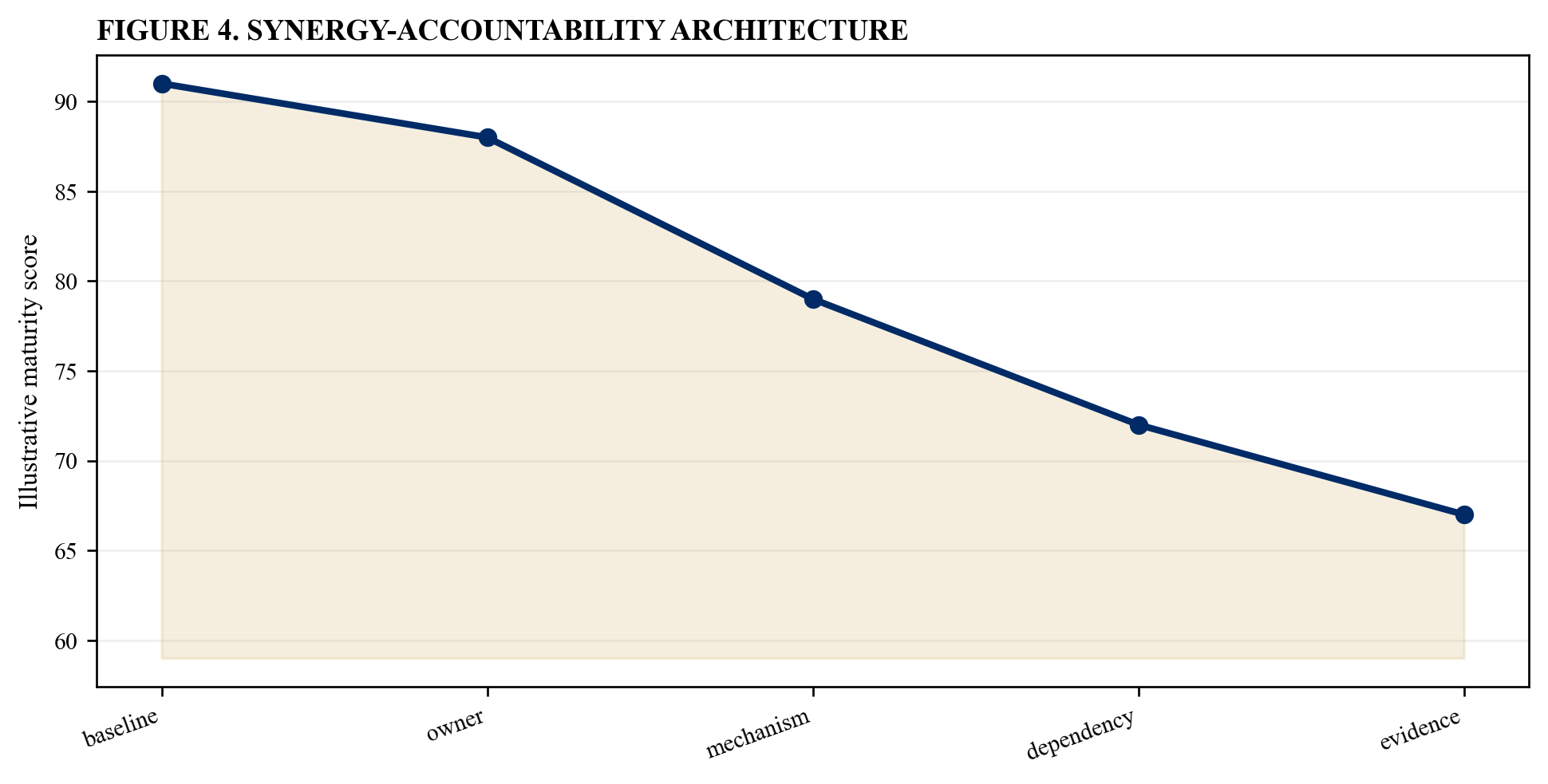
Illustrative analytical scenario; verified transaction evidence should replace index values.
32. Quantify dis-synergies
The merger leadership team should model customer loss, talent exits, supplier changes, duplicated operations, remediation and service disruption. The required output is a net-value bridge. Record the design question, current-state evidence, future-state choice, legal boundary, dependency, owner, reviewer and approval status [11][25].
Translate the choice into a controlled operating-model release. Separate lawful pre-close analysis from implementation; specify what can be prepared, what triggers at closing and what remains a post-close management decision. Link organisation, process, data, systems, controls, people, cost and customer consequences.
The principal risk is that gross savings can conceal the cost of preserving revenue and resilience. Quantify revenue exposure, service continuity, critical roles, cost, cash, control effectiveness, cyber risk, synergy timing and residual risk across base, delayed and remediated cases.
Retain source data, current-state maps, design options, legal advice, approvals, assumptions, dependencies, rehearsal evidence, exceptions and change records. Refresh after material developments and expire provisional decisions that no longer fit the closing path.
33. Fund integration costs
The merger leadership team should phase technology, people, facilities, advisers, retention, working capital and contingency before benefits. The required output is an integration funding curve. Record the design question, current-state evidence, future-state choice, legal boundary, dependency, owner, reviewer and approval status [27][29].
Translate the choice into a controlled operating-model release. Separate lawful pre-close analysis from implementation; specify what can be prepared, what triggers at closing and what remains a post-close management decision. Link organisation, process, data, systems, controls, people, cost and customer consequences.
The principal risk is that value delivery can stall because one-time cash needs are understated. Quantify revenue exposure, service continuity, critical roles, cost, cash, control effectiveness, cyber risk, synergy timing and residual risk across base, delayed and remediated cases.
Retain source data, current-state maps, design options, legal advice, approvals, assumptions, dependencies, rehearsal evidence, exceptions and change records. Refresh after material developments and expire provisional decisions that no longer fit the closing path.
Table 4. Net-value bridge
| Component | Owner | Gate |
|---|---|---|
| gross synergy | business leader | mechanism proven |
| dis-synergy | customer or operations | mitigation funded |
| integration cost | CFO | cash approved |
| net value | sponsor | dependency reconciled |
Illustrative structure; verified transaction evidence and specialist review govern.
34. Define the Day One minimum viable model
The merger leadership team should specify legal operation, authority, cash, customers, employees, suppliers, reporting, cyber and compliance essentials. The required output is a Day One critical-path plan. Record the design question, current-state evidence, future-state choice, legal boundary, dependency, owner, reviewer and approval status [8][20].
Translate the choice into a controlled operating-model release. Separate lawful pre-close analysis from implementation; specify what can be prepared, what triggers at closing and what remains a post-close management decision. Link organisation, process, data, systems, controls, people, cost and customer consequences.
The principal risk is that teams can pursue optimisation before continuity is secured. Quantify revenue exposure, service continuity, critical roles, cost, cash, control effectiveness, cyber risk, synergy timing and residual risk across base, delayed and remediated cases.
Retain source data, current-state maps, design options, legal advice, approvals, assumptions, dependencies, rehearsal evidence, exceptions and change records. Refresh after material developments and expire provisional decisions that no longer fit the closing path.
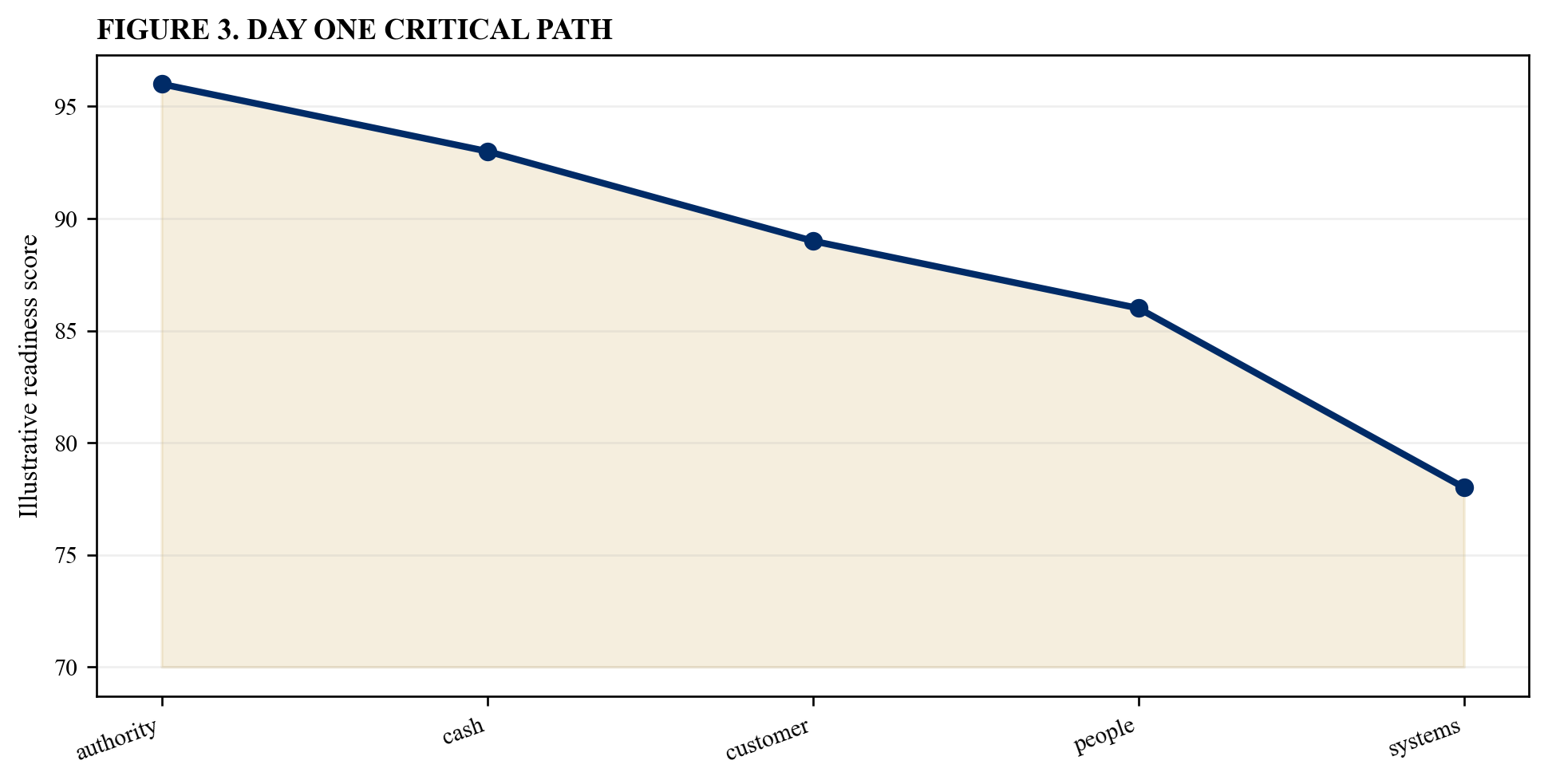
Illustrative analytical scenario; verified transaction evidence should replace index values.
35. Sequence the first 100 days
The merger leadership team should release decisions through evidence, dependency, consultation, technology and change-capacity gates. The required output is a 100-day decision roadmap. Record the design question, current-state evidence, future-state choice, legal boundary, dependency, owner, reviewer and approval status [7][14].
Translate the choice into a controlled operating-model release. Separate lawful pre-close analysis from implementation; specify what can be prepared, what triggers at closing and what remains a post-close management decision. Link organisation, process, data, systems, controls, people, cost and customer consequences.
The principal risk is that too many simultaneous changes can overwhelm scarce leaders and control teams. Quantify revenue exposure, service continuity, critical roles, cost, cash, control effectiveness, cyber risk, synergy timing and residual risk across base, delayed and remediated cases.
Retain source data, current-state maps, design options, legal advice, approvals, assumptions, dependencies, rehearsal evidence, exceptions and change records. Refresh after material developments and expire provisional decisions that no longer fit the closing path.
36. Prepare for a longer closing
The merger leadership team should maintain current-state changes, refresh assumptions, preserve optionality and control decision expiry. The required output is a long-close refresh protocol. Record the design question, current-state evidence, future-state choice, legal boundary, dependency, owner, reviewer and approval status [1][4].
Translate the choice into a controlled operating-model release. Separate lawful pre-close analysis from implementation; specify what can be prepared, what triggers at closing and what remains a post-close management decision. Link organisation, process, data, systems, controls, people, cost and customer consequences.
The principal risk is that the approved design can become obsolete before ownership transfers. Quantify revenue exposure, service continuity, critical roles, cost, cash, control effectiveness, cyber risk, synergy timing and residual risk across base, delayed and remediated cases.
Retain source data, current-state maps, design options, legal advice, approvals, assumptions, dependencies, rehearsal evidence, exceptions and change records. Refresh after material developments and expire provisional decisions that no longer fit the closing path.
37. Prepare for remedies and perimeter change
The merger leadership team should design modular options for divestiture, ring-fencing, behavioural commitments and excluded assets. The required output is a remedies-ready architecture. Record the design question, current-state evidence, future-state choice, legal boundary, dependency, owner, reviewer and approval status [5][21].
Translate the choice into a controlled operating-model release. Separate lawful pre-close analysis from implementation; specify what can be prepared, what triggers at closing and what remains a post-close management decision. Link organisation, process, data, systems, controls, people, cost and customer consequences.
The principal risk is that one irreversible target model can become unusable after regulatory change. Quantify revenue exposure, service continuity, critical roles, cost, cash, control effectiveness, cyber risk, synergy timing and residual risk across base, delayed and remediated cases.
Retain source data, current-state maps, design options, legal advice, approvals, assumptions, dependencies, rehearsal evidence, exceptions and change records. Refresh after material developments and expire provisional decisions that no longer fit the closing path.
38. Rehearse cutover and decisions
The merger leadership team should simulate authority, incidents, customer cases, payments, reporting, access and escalation with evidence. The required output is a Day One rehearsal record. Record the design question, current-state evidence, future-state choice, legal boundary, dependency, owner, reviewer and approval status [8][34].
Translate the choice into a controlled operating-model release. Separate lawful pre-close analysis from implementation; specify what can be prepared, what triggers at closing and what remains a post-close management decision. Link organisation, process, data, systems, controls, people, cost and customer consequences.
The principal risk is that a complete checklist can conceal untested cross-functional handoffs. Quantify revenue exposure, service continuity, critical roles, cost, cash, control effectiveness, cyber risk, synergy timing and residual risk across base, delayed and remediated cases.
Retain source data, current-state maps, design options, legal advice, approvals, assumptions, dependencies, rehearsal evidence, exceptions and change records. Refresh after material developments and expire provisional decisions that no longer fit the closing path.
39. Operate the readiness dashboard
The merger leadership team should track decision maturity, evidence, dependencies, critical-path status, stakeholder risk, cost and residual exposure. The required output is a board readiness dashboard. Record the design question, current-state evidence, future-state choice, legal boundary, dependency, owner, reviewer and approval status [7][18].
Translate the choice into a controlled operating-model release. Separate lawful pre-close analysis from implementation; specify what can be prepared, what triggers at closing and what remains a post-close management decision. Link organisation, process, data, systems, controls, people, cost and customer consequences.
The principal risk is that green workstreams can conceal red enterprise dependencies. Quantify revenue exposure, service continuity, critical roles, cost, cash, control effectiveness, cyber risk, synergy timing and residual risk across base, delayed and remediated cases.
Retain source data, current-state maps, design options, legal advice, approvals, assumptions, dependencies, rehearsal evidence, exceptions and change records. Refresh after material developments and expire provisional decisions that no longer fit the closing path.
40. Issue the operating-model certificate
The merger leadership team should reconcile design choices, legal boundaries, dependencies, owners, rehearsals, exceptions and residual risks. The required output is a retained closing-ready operating-model certificate. Record the design question, current-state evidence, future-state choice, legal boundary, dependency, owner, reviewer and approval status [1][8].
Translate the choice into a controlled operating-model release. Separate lawful pre-close analysis from implementation; specify what can be prepared, what triggers at closing and what remains a post-close management decision. Link organisation, process, data, systems, controls, people, cost and customer consequences.
The principal risk is that leaders can declare readiness without proving lawful operability. Quantify revenue exposure, service continuity, critical roles, cost, cash, control effectiveness, cyber risk, synergy timing and residual risk across base, delayed and remediated cases.
Retain source data, current-state maps, design options, legal advice, approvals, assumptions, dependencies, rehearsal evidence, exceptions and change records. Refresh after material developments and expire provisional decisions that no longer fit the closing path.
Table 5. Operating-model certificate
| Conclusion | Retained evidence | Approval test |
|---|---|---|
| lawful design | boundary register | cleared |
| operability | Day One rehearsal | passed |
| value | net synergy ledger | owned |
| exceptions | owner and deadline | bounded |
Illustrative structure; verified transaction evidence and specialist review govern.
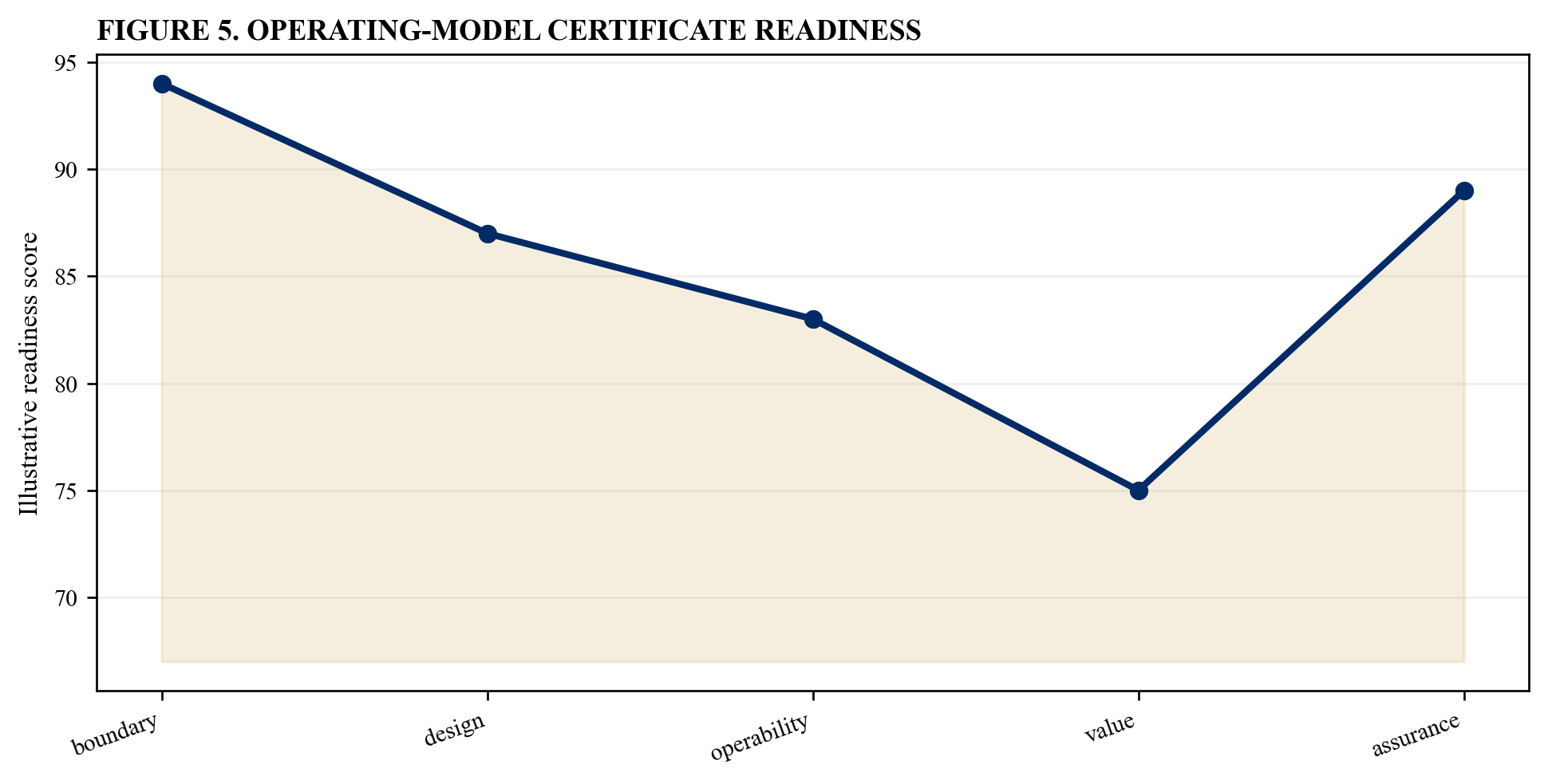
Illustrative analytical scenario; verified transaction evidence should replace index values.
References
- UK Competition and Markets Authority, Interim Measures in Merger Investigations CMA108, https://www.gov.uk/government/publications/interim-measures-and-derogations-guidance-and-templates
- US Federal Trade Commission, Avoiding Antitrust Pitfalls during Pre-Merger Negotiations and Due Diligence, https://www.ftc.gov/enforcement/competition-matters/2018/03/avoiding-antitrust-pitfalls-during-pre-merger-negotiations-due-diligence
- US Department of Justice, Antitrust Division, Merger Guidelines, https://www.justice.gov/atr/merger-guidelines/overview
- UK Competition and Markets Authority, Mergers Guidance on Jurisdiction and Procedure, https://www.gov.uk/government/publications/mergers-guidance-on-the-cmas-jurisdiction-and-procedure
- UK Competition and Markets Authority, Merger Remedies CMA87, https://www.gov.uk/government/publications/merger-remedies-cma87
- European Commission, EU Merger Control Procedures, https://competition-policy.ec.europa.eu/mergers/procedures_en
- UK Financial Reporting Council, UK Corporate Governance Code 2024, https://www.frc.org.uk/library/standards-codes-policy/corporate-governance/uk-corporate-governance-code/
- UK Government, UK Government Resilience Framework, https://www.gov.uk/government/publications/the-uk-government-resilience-framework
- US Federal Trade Commission, Premerger Notification and Merger Review Process, https://www.ftc.gov/advice-guidance/competition-guidance/guide-antitrust-laws/mergers/premerger-notification-merger-review-process
- IFRS Foundation, IFRS 8 Operating Segments, https://www.ifrs.org/issued-standards/list-of-standards/ifrs-8-operating-segments/
- IFRS Foundation, IFRS 15 Revenue from Contracts with Customers, https://www.ifrs.org/issued-standards/list-of-standards/ifrs-15-revenue-from-contracts-with-customers/
- UK Competition and Markets Authority, Consumer Protection from Unfair Trading Regulations Guidance, https://www.gov.uk/government/publications/consumer-protection-from-unfair-trading-regulations-traders
- International Organization for Standardization, ISO 22301 Business Continuity Management Systems, https://www.iso.org/standard/75106.html
- US Government Accountability Office, Business Process Reengineering Assessment Guide, https://www.gao.gov/products/aimd-10.1.15
- European Union, Directive 2002/14/EC on Informing and Consulting Employees, https://eur-lex.europa.eu/eli/dir/2002/14/oj
- US Department of Labor, Worker Adjustment and Retraining Notification Act Guidance, https://www.dol.gov/agencies/eta/layoffs/warn
- UK Financial Reporting Council, Guidance on Board Effectiveness, https://www.frc.org.uk/library/standards-codes-policy/corporate-governance/guidance-on-board-effectiveness/
- Committee of Sponsoring Organizations of the Treadway Commission, Internal Control Integrated Framework, https://www.coso.org/internal-control
- UK Companies House, Company Directors Responsibilities, https://www.gov.uk/guidance/being-a-company-director
- IFRS Foundation, IAS 7 Statement of Cash Flows, https://www.ifrs.org/issued-standards/list-of-standards/ias-7-statement-of-cash-flows/
- European Commission, Merger Control Overview, https://competition-policy.ec.europa.eu/mergers/overview_en
- European Commission, Practical Information for Mergers, https://competition-policy.ec.europa.eu/mergers/practical-information_en
- IFRS Foundation, IFRS 3 Business Combinations, https://www.ifrs.org/issued-standards/list-of-standards/ifrs-3-business-combinations/
- National Institute of Standards and Technology, SP 800-161 Rev. 1 Cybersecurity Supply Chain Risk Management, https://csrc.nist.gov/pubs/sp/800/161/r1/final
- National Institute of Standards and Technology, SP 1326 Cybersecurity Supply Chain Due Diligence, https://csrc.nist.gov/pubs/sp/1326/final
- European Union, Directive 2009/38/EC on European Works Councils, https://eur-lex.europa.eu/eli/dir/2009/38/oj
- IFRS Foundation, IAS 1 Presentation of Financial Statements, https://www.ifrs.org/issued-standards/list-of-standards/ias-1-presentation-of-financial-statements/
- US Securities and Exchange Commission, Management's Discussion and Analysis Guidance, https://www.sec.gov/rules-regulations/2003/12/interpretation-commission-guidance-regarding-managements-discussion-analysis-financial-condition
- IFRS Foundation, IFRS 9 Financial Instruments, https://www.ifrs.org/issued-standards/list-of-standards/ifrs-9-financial-instruments/
- OECD, Transfer Pricing Guidelines for Multinational Enterprises and Tax Administrations, https://www.oecd.org/tax/transfer-pricing/oecd-transfer-pricing-guidelines-for-multinational-enterprises-and-tax-administrations-20769717.htm
- IFRS Foundation, IAS 12 Income Taxes, https://www.ifrs.org/issued-standards/list-of-standards/ias-12-income-taxes/
- European Union, General Data Protection Regulation, https://eur-lex.europa.eu/eli/reg/2016/679/oj
- UK Information Commissioner's Office, Data Minimisation, https://ico.org.uk/for-organisations/uk-gdpr-guidance-and-resources/data-protection-principles/a-guide-to-the-data-protection-principles/the-principles/data-minimisation/
- National Institute of Standards and Technology, Cybersecurity Framework 2.0, https://www.nist.gov/cyberframework
- National Institute of Standards and Technology, IR 8286 Rev. 1 Integrating Cybersecurity and Enterprise Risk Management, https://csrc.nist.gov/pubs/ir/8286/r1/final
- UK Cabinet Office, Sourcing Playbook, https://www.gov.uk/government/publications/the-sourcing-playbook
