

1. Set the board's closing-certainty objective
The transaction team should state the acceptable probability, timing, remedy burden, value leakage and walk-away conditions. The required output is a closing-certainty mandate. Use current evidence and link each material conclusion to retained customer, commercial, economic, contractual, financing and regulatory sources [1][2].
Translate the conclusion into the board case and merger agreement. Identify the jurisdiction, legal test, theory of harm, evidence owner, source system, filing milestone, remedy implication, contractual duty, value threshold and decision deadline. Reconcile counsel, economists, commercial teams, finance, operations and disclosure.
The principal risk is that commercial enthusiasm can obscure the approval risk the board is actually accepting. Quantify probability, timing, remedy cost, stranded cost, financing carry, business disruption, termination exposure and value at risk across timely-clearance, remedy, prolonged-review and prohibition cases.
Retain the source, version, reviewer, contrary evidence, specialist advice and board response. Refresh the analysis after material market, document, regulator, remedy, financing or timetable changes; compare actual progress with the approved cases; and assign each exception an accountable owner and deadline.
2. Map control and transaction perimeter
The transaction team should identify acquisitions of shares, assets, influence, joint control, options and connected steps in every relevant jurisdiction. The required output is a jurisdiction and control map. Use current evidence and link each material conclusion to retained customer, commercial, economic, contractual, financing and regulatory sources [3][4].
Translate the conclusion into the board case and merger agreement. Identify the jurisdiction, legal test, theory of harm, evidence owner, source system, filing milestone, remedy implication, contractual duty, value threshold and decision deadline. Reconcile counsel, economists, commercial teams, finance, operations and disclosure.
The principal risk is that an incomplete perimeter can omit a filing, referral or substantive review. Quantify probability, timing, remedy cost, stranded cost, financing carry, business disruption, termination exposure and value at risk across timely-clearance, remedy, prolonged-review and prohibition cases.
Retain the source, version, reviewer, contrary evidence, specialist advice and board response. Refresh the analysis after material market, document, regulator, remedy, financing or timetable changes; compare actual progress with the approved cases; and assign each exception an accountable owner and deadline.
3. Build the filing universe
The transaction team should screen turnover, assets, transaction value, local nexus, sector, foreign-investment and subsidy thresholds with qualified counsel. The required output is a verified filing matrix. Use current evidence and link each material conclusion to retained customer, commercial, economic, contractual, financing and regulatory sources [4][5].
Translate the conclusion into the board case and merger agreement. Identify the jurisdiction, legal test, theory of harm, evidence owner, source system, filing milestone, remedy implication, contractual duty, value threshold and decision deadline. Reconcile counsel, economists, commercial teams, finance, operations and disclosure.
The principal risk is that a missed mandatory filing can delay or invalidate closing and create sanctions. Quantify probability, timing, remedy cost, stranded cost, financing carry, business disruption, termination exposure and value at risk across timely-clearance, remedy, prolonged-review and prohibition cases.
Retain the source, version, reviewer, contrary evidence, specialist advice and board response. Refresh the analysis after material market, document, regulator, remedy, financing or timetable changes; compare actual progress with the approved cases; and assign each exception an accountable owner and deadline.
4. Sequence the regulatory critical path
The transaction team should connect pre-notification, filing acceptance, waiting periods, information requests, phase transitions, remedies and appeals. The required output is an approval critical-path model. Use current evidence and link each material conclusion to retained customer, commercial, economic, contractual, financing and regulatory sources [5][6].
Translate the conclusion into the board case and merger agreement. Identify the jurisdiction, legal test, theory of harm, evidence owner, source system, filing milestone, remedy implication, contractual duty, value threshold and decision deadline. Reconcile counsel, economists, commercial teams, finance, operations and disclosure.
The principal risk is that parallel filings can become serial when evidence and remedies are not coordinated. Quantify probability, timing, remedy cost, stranded cost, financing carry, business disruption, termination exposure and value at risk across timely-clearance, remedy, prolonged-review and prohibition cases.
Retain the source, version, reviewer, contrary evidence, specialist advice and board response. Refresh the analysis after material market, document, regulator, remedy, financing or timetable changes; compare actual progress with the approved cases; and assign each exception an accountable owner and deadline.
5. Define the counterfactual
The transaction team should document credible market conditions without the transaction, including entry, expansion, decline and alternative strategic paths. The required output is a counterfactual memorandum. Use current evidence and link each material conclusion to retained customer, commercial, economic, contractual, financing and regulatory sources [2][7].
Translate the conclusion into the board case and merger agreement. Identify the jurisdiction, legal test, theory of harm, evidence owner, source system, filing milestone, remedy implication, contractual duty, value threshold and decision deadline. Reconcile counsel, economists, commercial teams, finance, operations and disclosure.
The principal risk is that the board can compare the merger with an unrealistic static world. Quantify probability, timing, remedy cost, stranded cost, financing carry, business disruption, termination exposure and value at risk across timely-clearance, remedy, prolonged-review and prohibition cases.
Retain the source, version, reviewer, contrary evidence, specialist advice and board response. Refresh the analysis after material market, document, regulator, remedy, financing or timetable changes; compare actual progress with the approved cases; and assign each exception an accountable owner and deadline.
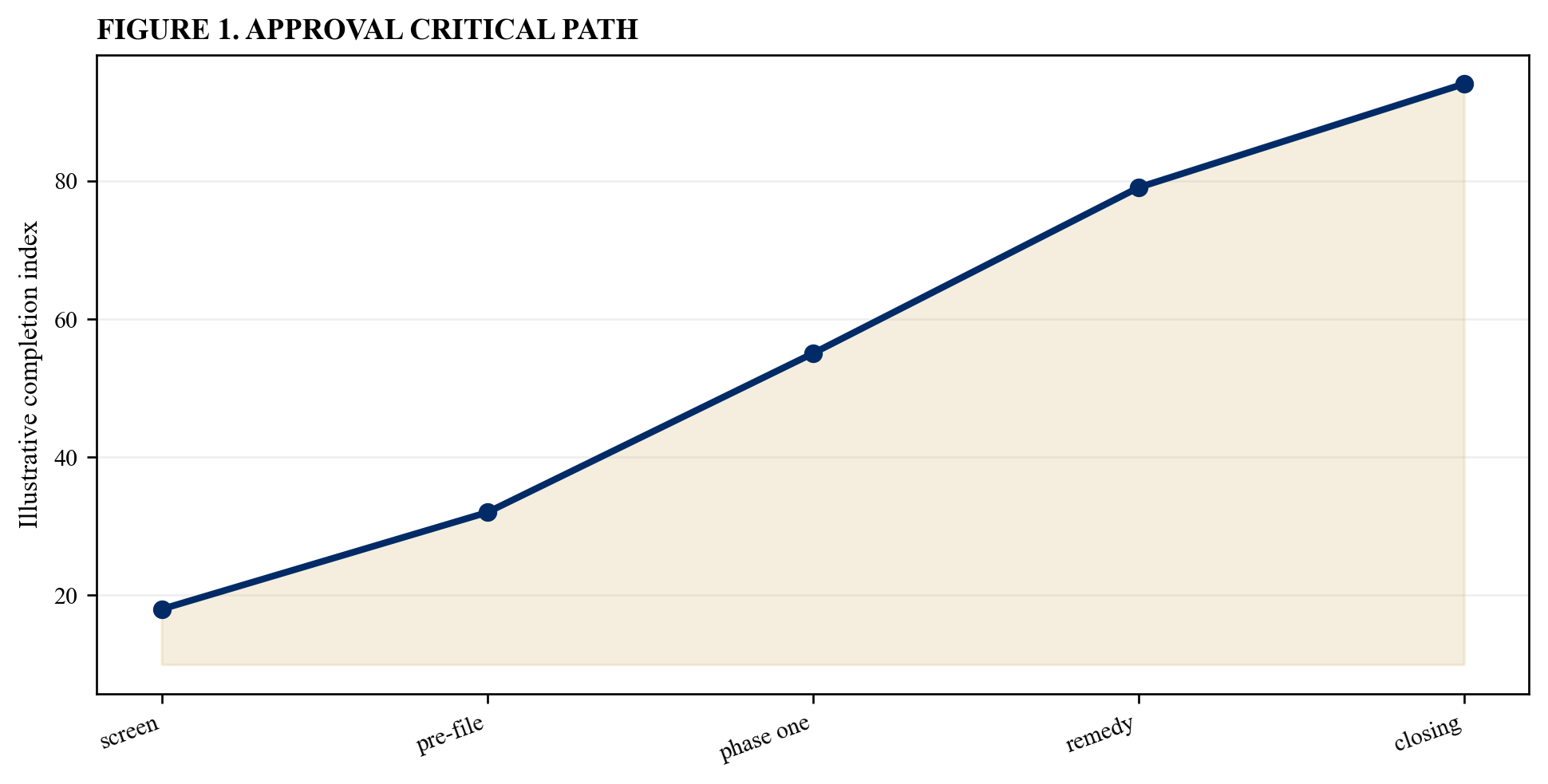
Illustrative analytical scenario; verified transaction, market and regulatory evidence should replace index values.
6. Map customer substitution
The transaction team should collect switching evidence, tenders, lost sales, internal research, price response and customer testimony. The required output is a demand-substitution evidence file. Use current evidence and link each material conclusion to retained customer, commercial, economic, contractual, financing and regulatory sources [1][8].
Translate the conclusion into the board case and merger agreement. Identify the jurisdiction, legal test, theory of harm, evidence owner, source system, filing milestone, remedy implication, contractual duty, value threshold and decision deadline. Reconcile counsel, economists, commercial teams, finance, operations and disclosure.
The principal risk is that product labels can conceal the alternatives customers actually consider. Quantify probability, timing, remedy cost, stranded cost, financing carry, business disruption, termination exposure and value at risk across timely-clearance, remedy, prolonged-review and prohibition cases.
Retain the source, version, reviewer, contrary evidence, specialist advice and board response. Refresh the analysis after material market, document, regulator, remedy, financing or timetable changes; compare actual progress with the approved cases; and assign each exception an accountable owner and deadline.
7. Define geographic competition
The transaction team should test transport, regulation, service reach, procurement, language, capacity and customer location. The required output is a geographic-market evidence map. Use current evidence and link each material conclusion to retained customer, commercial, economic, contractual, financing and regulatory sources [8][9].
Translate the conclusion into the board case and merger agreement. Identify the jurisdiction, legal test, theory of harm, evidence owner, source system, filing milestone, remedy implication, contractual duty, value threshold and decision deadline. Reconcile counsel, economists, commercial teams, finance, operations and disclosure.
The principal risk is that national labels can misstate local or cross-border competitive constraints. Quantify probability, timing, remedy cost, stranded cost, financing carry, business disruption, termination exposure and value at risk across timely-clearance, remedy, prolonged-review and prohibition cases.
Retain the source, version, reviewer, contrary evidence, specialist advice and board response. Refresh the analysis after material market, document, regulator, remedy, financing or timetable changes; compare actual progress with the approved cases; and assign each exception an accountable owner and deadline.
8. Test price discrimination
The transaction team should identify customer groups that can be targeted separately by price, quality, service or contract terms. The required output is a customer-segmentation analysis. Use current evidence and link each material conclusion to retained customer, commercial, economic, contractual, financing and regulatory sources [1][8].
Translate the conclusion into the board case and merger agreement. Identify the jurisdiction, legal test, theory of harm, evidence owner, source system, filing milestone, remedy implication, contractual duty, value threshold and decision deadline. Reconcile counsel, economists, commercial teams, finance, operations and disclosure.
The principal risk is that a broad aggregate market can hide harm to a vulnerable customer group. Quantify probability, timing, remedy cost, stranded cost, financing carry, business disruption, termination exposure and value at risk across timely-clearance, remedy, prolonged-review and prohibition cases.
Retain the source, version, reviewer, contrary evidence, specialist advice and board response. Refresh the analysis after material market, document, regulator, remedy, financing or timetable changes; compare actual progress with the approved cases; and assign each exception an accountable owner and deadline.
Table 1. Market-evidence ladder
| Question | Evidence | Decision use |
|---|---|---|
| substitution | switching and tenders | product boundary |
| geography | flows and regulation | area boundary |
| future rivalry | plans and capability | dynamic effects |
| power | shares and direct evidence | harm assessment |
Illustrative structure; transaction-specific legal and economic analysis governs.
9. Measure shares and concentration
The transaction team should reconcile revenue, units, capacity, users, transactions and other economically meaningful denominators. The required output is a concentration workbook. Use current evidence and link each material conclusion to retained customer, commercial, economic, contractual, financing and regulatory sources [1][10].
Translate the conclusion into the board case and merger agreement. Identify the jurisdiction, legal test, theory of harm, evidence owner, source system, filing milestone, remedy implication, contractual duty, value threshold and decision deadline. Reconcile counsel, economists, commercial teams, finance, operations and disclosure.
The principal risk is that one convenient denominator can create false precision. Quantify probability, timing, remedy cost, stranded cost, financing carry, business disruption, termination exposure and value at risk across timely-clearance, remedy, prolonged-review and prohibition cases.
Retain the source, version, reviewer, contrary evidence, specialist advice and board response. Refresh the analysis after material market, document, regulator, remedy, financing or timetable changes; compare actual progress with the approved cases; and assign each exception an accountable owner and deadline.
10. Use direct competitive evidence
The transaction team should analyse win-loss records, diversion, bidding, pricing, product roadmaps and ordinary-course strategy documents. The required output is a direct-effects evidence pack. Use current evidence and link each material conclusion to retained customer, commercial, economic, contractual, financing and regulatory sources [1][2].
Translate the conclusion into the board case and merger agreement. Identify the jurisdiction, legal test, theory of harm, evidence owner, source system, filing milestone, remedy implication, contractual duty, value threshold and decision deadline. Reconcile counsel, economists, commercial teams, finance, operations and disclosure.
The principal risk is that share calculations can miss intense head-to-head competition. Quantify probability, timing, remedy cost, stranded cost, financing carry, business disruption, termination exposure and value at risk across timely-clearance, remedy, prolonged-review and prohibition cases.
Retain the source, version, reviewer, contrary evidence, specialist advice and board response. Refresh the analysis after material market, document, regulator, remedy, financing or timetable changes; compare actual progress with the approved cases; and assign each exception an accountable owner and deadline.
11. Test unilateral effects
The transaction team should evaluate whether the combined firm could worsen price, quality, service, variety, capacity or innovation. The required output is a unilateral-effects case. Use current evidence and link each material conclusion to retained customer, commercial, economic, contractual, financing and regulatory sources [2][7].
Translate the conclusion into the board case and merger agreement. Identify the jurisdiction, legal test, theory of harm, evidence owner, source system, filing milestone, remedy implication, contractual duty, value threshold and decision deadline. Reconcile counsel, economists, commercial teams, finance, operations and disclosure.
The principal risk is that non-price harm can remain invisible in a price-only model. Quantify probability, timing, remedy cost, stranded cost, financing carry, business disruption, termination exposure and value at risk across timely-clearance, remedy, prolonged-review and prohibition cases.
Retain the source, version, reviewer, contrary evidence, specialist advice and board response. Refresh the analysis after material market, document, regulator, remedy, financing or timetable changes; compare actual progress with the approved cases; and assign each exception an accountable owner and deadline.
12. Test coordinated effects
The transaction team should assess transparency, symmetry, monitoring, retaliation, history and the role of disruptive rivals. The required output is a coordination-risk assessment. Use current evidence and link each material conclusion to retained customer, commercial, economic, contractual, financing and regulatory sources [1][2].
Translate the conclusion into the board case and merger agreement. Identify the jurisdiction, legal test, theory of harm, evidence owner, source system, filing milestone, remedy implication, contractual duty, value threshold and decision deadline. Reconcile counsel, economists, commercial teams, finance, operations and disclosure.
The principal risk is that the merger can make tacit or explicit coordination more stable. Quantify probability, timing, remedy cost, stranded cost, financing carry, business disruption, termination exposure and value at risk across timely-clearance, remedy, prolonged-review and prohibition cases.
Retain the source, version, reviewer, contrary evidence, specialist advice and board response. Refresh the analysis after material market, document, regulator, remedy, financing or timetable changes; compare actual progress with the approved cases; and assign each exception an accountable owner and deadline.
13. Assess potential competition
The transaction team should document entry plans, capabilities, investment, perceived threats and likely future overlap. The required output is a future-competition file. Use current evidence and link each material conclusion to retained customer, commercial, economic, contractual, financing and regulatory sources [2][11].
Translate the conclusion into the board case and merger agreement. Identify the jurisdiction, legal test, theory of harm, evidence owner, source system, filing milestone, remedy implication, contractual duty, value threshold and decision deadline. Reconcile counsel, economists, commercial teams, finance, operations and disclosure.
The principal risk is that acquiring a nascent or potential rival can remove competition before revenue appears. Quantify probability, timing, remedy cost, stranded cost, financing carry, business disruption, termination exposure and value at risk across timely-clearance, remedy, prolonged-review and prohibition cases.
Retain the source, version, reviewer, contrary evidence, specialist advice and board response. Refresh the analysis after material market, document, regulator, remedy, financing or timetable changes; compare actual progress with the approved cases; and assign each exception an accountable owner and deadline.
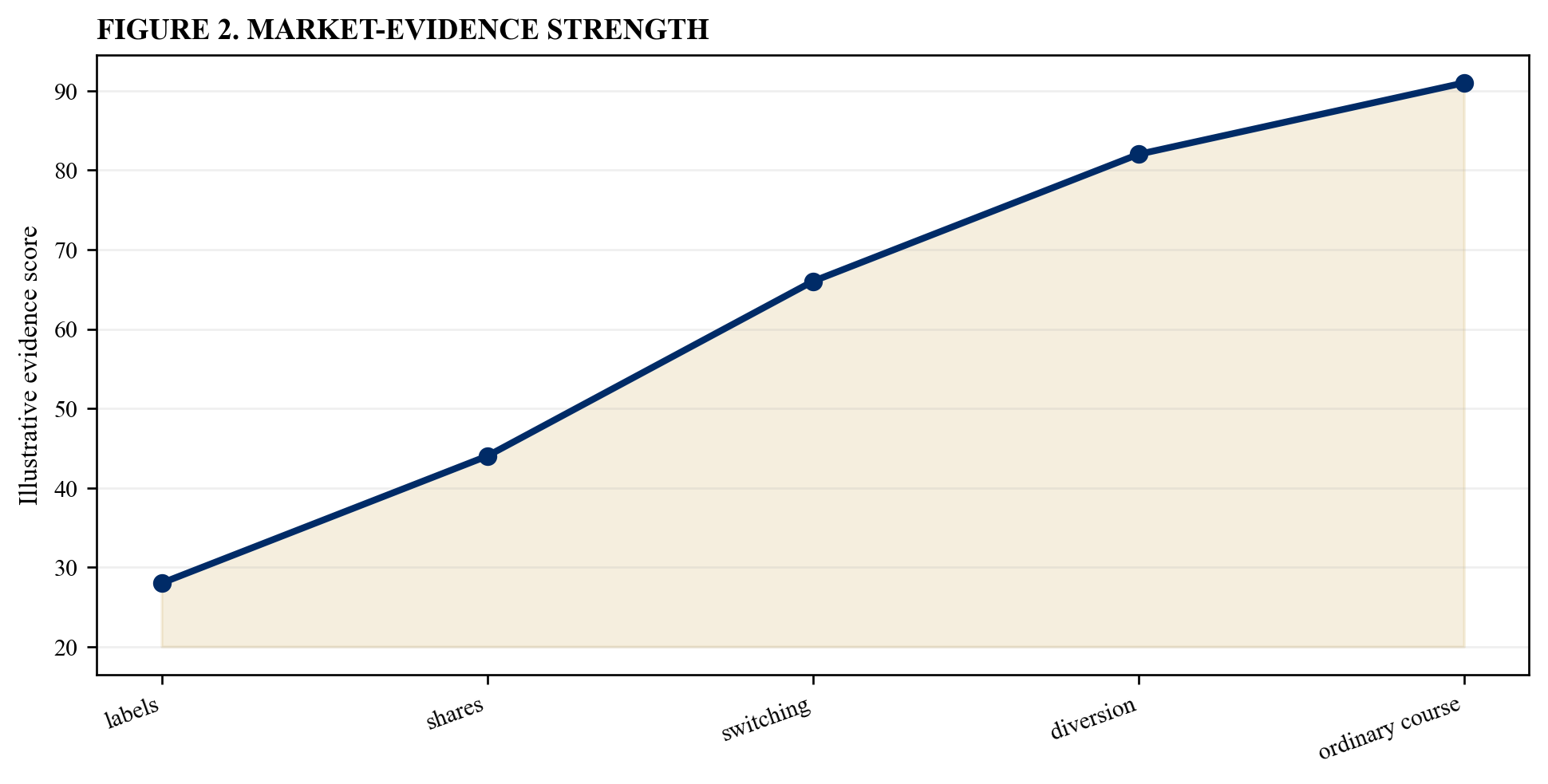
Illustrative analytical scenario; verified transaction, market and regulatory evidence should replace index values.
14. Assess innovation competition
The transaction team should map research programmes, talent, data, intellectual property, pipelines and alternative innovation routes. The required output is an innovation-space analysis. Use current evidence and link each material conclusion to retained customer, commercial, economic, contractual, financing and regulatory sources [2][11].
Translate the conclusion into the board case and merger agreement. Identify the jurisdiction, legal test, theory of harm, evidence owner, source system, filing milestone, remedy implication, contractual duty, value threshold and decision deadline. Reconcile counsel, economists, commercial teams, finance, operations and disclosure.
The principal risk is that historic sales can understate rivalry in fast-moving technology markets. Quantify probability, timing, remedy cost, stranded cost, financing carry, business disruption, termination exposure and value at risk across timely-clearance, remedy, prolonged-review and prohibition cases.
Retain the source, version, reviewer, contrary evidence, specialist advice and board response. Refresh the analysis after material market, document, regulator, remedy, financing or timetable changes; compare actual progress with the approved cases; and assign each exception an accountable owner and deadline.
15. Assess labour and buyer power
The transaction team should test competition for workers, creators, suppliers and other providers as well as downstream customers. The required output is a buyer-side competition file. Use current evidence and link each material conclusion to retained customer, commercial, economic, contractual, financing and regulatory sources [2][12].
Translate the conclusion into the board case and merger agreement. Identify the jurisdiction, legal test, theory of harm, evidence owner, source system, filing milestone, remedy implication, contractual duty, value threshold and decision deadline. Reconcile counsel, economists, commercial teams, finance, operations and disclosure.
The principal risk is that the transaction can reduce alternatives for inputs without raising consumer prices immediately. Quantify probability, timing, remedy cost, stranded cost, financing carry, business disruption, termination exposure and value at risk across timely-clearance, remedy, prolonged-review and prohibition cases.
Retain the source, version, reviewer, contrary evidence, specialist advice and board response. Refresh the analysis after material market, document, regulator, remedy, financing or timetable changes; compare actual progress with the approved cases; and assign each exception an accountable owner and deadline.
16. Assess platform dynamics
The transaction team should map each side, cross-group effects, disintermediation, access rules, data advantages and tipping conditions. The required output is a platform competition model. Use current evidence and link each material conclusion to retained customer, commercial, economic, contractual, financing and regulatory sources [2][13].
Translate the conclusion into the board case and merger agreement. Identify the jurisdiction, legal test, theory of harm, evidence owner, source system, filing milestone, remedy implication, contractual duty, value threshold and decision deadline. Reconcile counsel, economists, commercial teams, finance, operations and disclosure.
The principal risk is that single-sided analysis can miss where power is created or reinforced. Quantify probability, timing, remedy cost, stranded cost, financing carry, business disruption, termination exposure and value at risk across timely-clearance, remedy, prolonged-review and prohibition cases.
Retain the source, version, reviewer, contrary evidence, specialist advice and board response. Refresh the analysis after material market, document, regulator, remedy, financing or timetable changes; compare actual progress with the approved cases; and assign each exception an accountable owner and deadline.
Table 2. Theory-of-harm map
| Theory | Core test | Evidence focus |
|---|---|---|
| unilateral | lost rivalry | diversion and margins |
| coordinated | stable coordination | transparency and retaliation |
| vertical | foreclosure | ability incentive effect |
| ecosystem | leverage | bundling data access |
Illustrative structure; transaction-specific legal and economic analysis governs.
17. Test vertical foreclosure
The transaction team should measure input and customer foreclosure ability, incentive, effect and access to competitively sensitive information. The required output is a vertical-effects model. Use current evidence and link each material conclusion to retained customer, commercial, economic, contractual, financing and regulatory sources [2][14].
Translate the conclusion into the board case and merger agreement. Identify the jurisdiction, legal test, theory of harm, evidence owner, source system, filing milestone, remedy implication, contractual duty, value threshold and decision deadline. Reconcile counsel, economists, commercial teams, finance, operations and disclosure.
The principal risk is that control of an essential input can weaken rivals after closing. Quantify probability, timing, remedy cost, stranded cost, financing carry, business disruption, termination exposure and value at risk across timely-clearance, remedy, prolonged-review and prohibition cases.
Retain the source, version, reviewer, contrary evidence, specialist advice and board response. Refresh the analysis after material market, document, regulator, remedy, financing or timetable changes; compare actual progress with the approved cases; and assign each exception an accountable owner and deadline.
18. Test conglomerate and ecosystem effects
The transaction team should analyse bundling, tying, defaults, interoperability, data combination and portfolio leverage. The required output is an ecosystem-effects map. Use current evidence and link each material conclusion to retained customer, commercial, economic, contractual, financing and regulatory sources [7][13].
Translate the conclusion into the board case and merger agreement. Identify the jurisdiction, legal test, theory of harm, evidence owner, source system, filing milestone, remedy implication, contractual duty, value threshold and decision deadline. Reconcile counsel, economists, commercial teams, finance, operations and disclosure.
The principal risk is that the combined portfolio can extend power across adjacent markets. Quantify probability, timing, remedy cost, stranded cost, financing carry, business disruption, termination exposure and value at risk across timely-clearance, remedy, prolonged-review and prohibition cases.
Retain the source, version, reviewer, contrary evidence, specialist advice and board response. Refresh the analysis after material market, document, regulator, remedy, financing or timetable changes; compare actual progress with the approved cases; and assign each exception an accountable owner and deadline.
19. Evaluate entry and expansion
The transaction team should test whether response would be timely, likely and sufficient given sunk cost, approvals, scale, data and customer adoption. The required output is an entry sufficiency file. Use current evidence and link each material conclusion to retained customer, commercial, economic, contractual, financing and regulatory sources [1][7].
Translate the conclusion into the board case and merger agreement. Identify the jurisdiction, legal test, theory of harm, evidence owner, source system, filing milestone, remedy implication, contractual duty, value threshold and decision deadline. Reconcile counsel, economists, commercial teams, finance, operations and disclosure.
The principal risk is that theoretical entry can be too slow or small to constrain harm. Quantify probability, timing, remedy cost, stranded cost, financing carry, business disruption, termination exposure and value at risk across timely-clearance, remedy, prolonged-review and prohibition cases.
Retain the source, version, reviewer, contrary evidence, specialist advice and board response. Refresh the analysis after material market, document, regulator, remedy, financing or timetable changes; compare actual progress with the approved cases; and assign each exception an accountable owner and deadline.
20. Substantiate efficiencies
The transaction team should connect each claimed saving or innovation benefit to merger specificity, verifiability, timing and customer pass-through. The required output is an efficiencies evidence ledger. Use current evidence and link each material conclusion to retained customer, commercial, economic, contractual, financing and regulatory sources [7][15].
Translate the conclusion into the board case and merger agreement. Identify the jurisdiction, legal test, theory of harm, evidence owner, source system, filing milestone, remedy implication, contractual duty, value threshold and decision deadline. Reconcile counsel, economists, commercial teams, finance, operations and disclosure.
The principal risk is that unsupported synergy claims carry little regulatory weight and can conflict with valuation assumptions. Quantify probability, timing, remedy cost, stranded cost, financing carry, business disruption, termination exposure and value at risk across timely-clearance, remedy, prolonged-review and prohibition cases.
Retain the source, version, reviewer, contrary evidence, specialist advice and board response. Refresh the analysis after material market, document, regulator, remedy, financing or timetable changes; compare actual progress with the approved cases; and assign each exception an accountable owner and deadline.
21. Control ordinary-course documents
The transaction team should preserve, classify and reconcile board papers, strategy decks, emails, forecasts, sales records and deal rationale. The required output is a document evidence protocol. Use current evidence and link each material conclusion to retained customer, commercial, economic, contractual, financing and regulatory sources [1][16].
Translate the conclusion into the board case and merger agreement. Identify the jurisdiction, legal test, theory of harm, evidence owner, source system, filing milestone, remedy implication, contractual duty, value threshold and decision deadline. Reconcile counsel, economists, commercial teams, finance, operations and disclosure.
The principal risk is that contemporaneous language can contradict the filed narrative. Quantify probability, timing, remedy cost, stranded cost, financing carry, business disruption, termination exposure and value at risk across timely-clearance, remedy, prolonged-review and prohibition cases.
Retain the source, version, reviewer, contrary evidence, specialist advice and board response. Refresh the analysis after material market, document, regulator, remedy, financing or timetable changes; compare actual progress with the approved cases; and assign each exception an accountable owner and deadline.
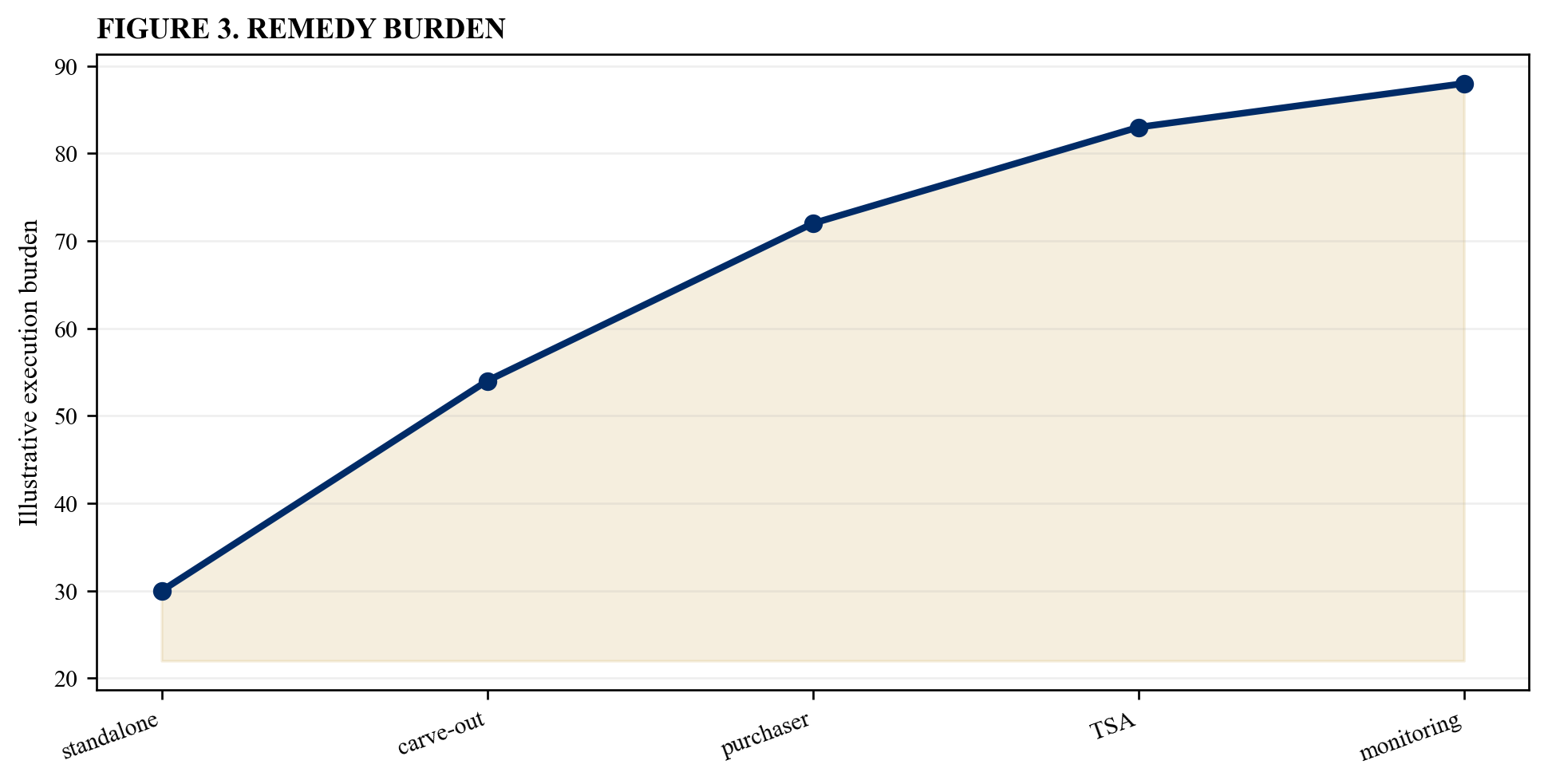
Illustrative analytical scenario; verified transaction, market and regulatory evidence should replace index values.
22. Prepare the customer evidence plan
The transaction team should select representative customers, anticipate questions and reconcile testimony with data and contracts. The required output is a customer-contact protocol. Use current evidence and link each material conclusion to retained customer, commercial, economic, contractual, financing and regulatory sources [7][16].
Translate the conclusion into the board case and merger agreement. Identify the jurisdiction, legal test, theory of harm, evidence owner, source system, filing milestone, remedy implication, contractual duty, value threshold and decision deadline. Reconcile counsel, economists, commercial teams, finance, operations and disclosure.
The principal risk is that unprepared outreach can create inconsistent evidence and commercial harm. Quantify probability, timing, remedy cost, stranded cost, financing carry, business disruption, termination exposure and value at risk across timely-clearance, remedy, prolonged-review and prohibition cases.
Retain the source, version, reviewer, contrary evidence, specialist advice and board response. Refresh the analysis after material market, document, regulator, remedy, financing or timetable changes; compare actual progress with the approved cases; and assign each exception an accountable owner and deadline.
23. Design structural remedies
The transaction team should identify viable divestiture businesses, assets, people, contracts, data, licences and transitional support. The required output is a divestiture perimeter. Use current evidence and link each material conclusion to retained customer, commercial, economic, contractual, financing and regulatory sources [17][18].
Translate the conclusion into the board case and merger agreement. Identify the jurisdiction, legal test, theory of harm, evidence owner, source system, filing milestone, remedy implication, contractual duty, value threshold and decision deadline. Reconcile counsel, economists, commercial teams, finance, operations and disclosure.
The principal risk is that a carve-out can be too dependent or incomplete to preserve competition. Quantify probability, timing, remedy cost, stranded cost, financing carry, business disruption, termination exposure and value at risk across timely-clearance, remedy, prolonged-review and prohibition cases.
Retain the source, version, reviewer, contrary evidence, specialist advice and board response. Refresh the analysis after material market, document, regulator, remedy, financing or timetable changes; compare actual progress with the approved cases; and assign each exception an accountable owner and deadline.
24. Test purchaser viability
The transaction team should define independence, capability, incentives, funding and approval requirements for a remedy buyer. The required output is a purchaser criteria matrix. Use current evidence and link each material conclusion to retained customer, commercial, economic, contractual, financing and regulatory sources [17][18].
Translate the conclusion into the board case and merger agreement. Identify the jurisdiction, legal test, theory of harm, evidence owner, source system, filing milestone, remedy implication, contractual duty, value threshold and decision deadline. Reconcile counsel, economists, commercial teams, finance, operations and disclosure.
The principal risk is that the remedy can fail if the buyer cannot operate or compete. Quantify probability, timing, remedy cost, stranded cost, financing carry, business disruption, termination exposure and value at risk across timely-clearance, remedy, prolonged-review and prohibition cases.
Retain the source, version, reviewer, contrary evidence, specialist advice and board response. Refresh the analysis after material market, document, regulator, remedy, financing or timetable changes; compare actual progress with the approved cases; and assign each exception an accountable owner and deadline.
Table 3. Remedy feasibility
| Element | Structural remedy | Behavioural remedy |
|---|---|---|
| asset | viable perimeter | access obligation |
| buyer | capable purchaser | beneficiary set |
| control | separation plan | monitoring protocol |
| risk | execution failure | compliance failure |
Illustrative structure; transaction-specific legal and economic analysis governs.
25. Design behavioural remedies
The transaction team should specify access, interoperability, supply, non-discrimination, firewalls, reporting, monitoring and duration. The required output is a behavioural-remedy control design. Use current evidence and link each material conclusion to retained customer, commercial, economic, contractual, financing and regulatory sources [17][19].
Translate the conclusion into the board case and merger agreement. Identify the jurisdiction, legal test, theory of harm, evidence owner, source system, filing milestone, remedy implication, contractual duty, value threshold and decision deadline. Reconcile counsel, economists, commercial teams, finance, operations and disclosure.
The principal risk is that complex conduct obligations can be difficult to monitor and enforce. Quantify probability, timing, remedy cost, stranded cost, financing carry, business disruption, termination exposure and value at risk across timely-clearance, remedy, prolonged-review and prohibition cases.
Retain the source, version, reviewer, contrary evidence, specialist advice and board response. Refresh the analysis after material market, document, regulator, remedy, financing or timetable changes; compare actual progress with the approved cases; and assign each exception an accountable owner and deadline.
26. Cost the remedy
The transaction team should quantify lost earnings, stranded costs, separation expense, TSA exposure, tax, financing and management burden. The required output is a remedy value bridge. Use current evidence and link each material conclusion to retained customer, commercial, economic, contractual, financing and regulatory sources [18][20].
Translate the conclusion into the board case and merger agreement. Identify the jurisdiction, legal test, theory of harm, evidence owner, source system, filing milestone, remedy implication, contractual duty, value threshold and decision deadline. Reconcile counsel, economists, commercial teams, finance, operations and disclosure.
The principal risk is that a closable deal can destroy the value case after concessions. Quantify probability, timing, remedy cost, stranded cost, financing carry, business disruption, termination exposure and value at risk across timely-clearance, remedy, prolonged-review and prohibition cases.
Retain the source, version, reviewer, contrary evidence, specialist advice and board response. Refresh the analysis after material market, document, regulator, remedy, financing or timetable changes; compare actual progress with the approved cases; and assign each exception an accountable owner and deadline.
27. Set the remedy cap
The transaction team should translate value-at-risk and protected strategic assets into objective contractual boundaries and decision rights. The required output is a remedy-cap schedule. Use current evidence and link each material conclusion to retained customer, commercial, economic, contractual, financing and regulatory sources [20][21].
Translate the conclusion into the board case and merger agreement. Identify the jurisdiction, legal test, theory of harm, evidence owner, source system, filing milestone, remedy implication, contractual duty, value threshold and decision deadline. Reconcile counsel, economists, commercial teams, finance, operations and disclosure.
The principal risk is that an undefined efforts promise can require concessions beyond the approved case. Quantify probability, timing, remedy cost, stranded cost, financing carry, business disruption, termination exposure and value at risk across timely-clearance, remedy, prolonged-review and prohibition cases.
Retain the source, version, reviewer, contrary evidence, specialist advice and board response. Refresh the analysis after material market, document, regulator, remedy, financing or timetable changes; compare actual progress with the approved cases; and assign each exception an accountable owner and deadline.
28. Draft the regulatory efforts covenant
The transaction team should allocate filing control, information duties, advocacy, litigation, appeals, remedies and consultation rights. The required output is an efforts-and-control matrix. Use current evidence and link each material conclusion to retained customer, commercial, economic, contractual, financing and regulatory sources [21][22].
Translate the conclusion into the board case and merger agreement. Identify the jurisdiction, legal test, theory of harm, evidence owner, source system, filing milestone, remedy implication, contractual duty, value threshold and decision deadline. Reconcile counsel, economists, commercial teams, finance, operations and disclosure.
The principal risk is that ambiguous cooperation language can break down under pressure. Quantify probability, timing, remedy cost, stranded cost, financing carry, business disruption, termination exposure and value at risk across timely-clearance, remedy, prolonged-review and prohibition cases.
Retain the source, version, reviewer, contrary evidence, specialist advice and board response. Refresh the analysis after material market, document, regulator, remedy, financing or timetable changes; compare actual progress with the approved cases; and assign each exception an accountable owner and deadline.
29. Design the long-stop date
The transaction team should derive the outside date from realistic filing, review, remedy, litigation, financing and operational paths. The required output is a long-stop timetable. Use current evidence and link each material conclusion to retained customer, commercial, economic, contractual, financing and regulatory sources [5][22].
Translate the conclusion into the board case and merger agreement. Identify the jurisdiction, legal test, theory of harm, evidence owner, source system, filing milestone, remedy implication, contractual duty, value threshold and decision deadline. Reconcile counsel, economists, commercial teams, finance, operations and disclosure.
The principal risk is that a calendar date selected by convention can expire before the approval path. Quantify probability, timing, remedy cost, stranded cost, financing carry, business disruption, termination exposure and value at risk across timely-clearance, remedy, prolonged-review and prohibition cases.
Retain the source, version, reviewer, contrary evidence, specialist advice and board response. Refresh the analysis after material market, document, regulator, remedy, financing or timetable changes; compare actual progress with the approved cases; and assign each exception an accountable owner and deadline.
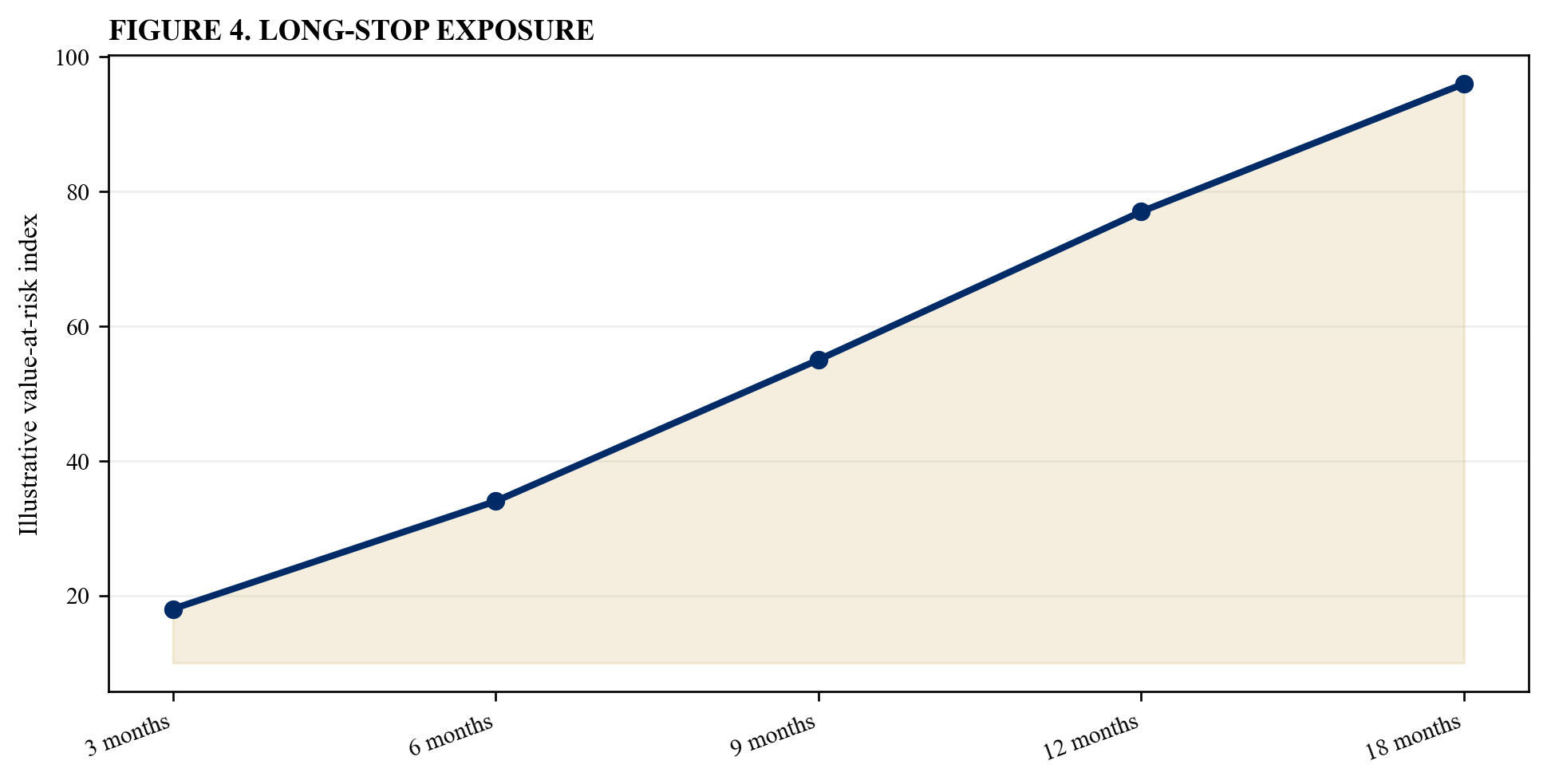
Illustrative analytical scenario; verified transaction, market and regulatory evidence should replace index values.
30. Design extension mechanics
The transaction team should state automatic and elective extensions, notice, conditions, financing linkage and rights during each period. The required output is an extension decision tree. Use current evidence and link each material conclusion to retained customer, commercial, economic, contractual, financing and regulatory sources [22][23].
Translate the conclusion into the board case and merger agreement. Identify the jurisdiction, legal test, theory of harm, evidence owner, source system, filing milestone, remedy implication, contractual duty, value threshold and decision deadline. Reconcile counsel, economists, commercial teams, finance, operations and disclosure.
The principal risk is that an extension can preserve the contract while funding and business value deteriorate. Quantify probability, timing, remedy cost, stranded cost, financing carry, business disruption, termination exposure and value at risk across timely-clearance, remedy, prolonged-review and prohibition cases.
Retain the source, version, reviewer, contrary evidence, specialist advice and board response. Refresh the analysis after material market, document, regulator, remedy, financing or timetable changes; compare actual progress with the approved cases; and assign each exception an accountable owner and deadline.
31. Calibrate the reverse termination fee
The transaction team should link payment triggers, amount, exclusivity, breach carve-outs and remedy obligations to allocated regulatory risk. The required output is a regulatory-fee framework. Use current evidence and link each material conclusion to retained customer, commercial, economic, contractual, financing and regulatory sources [23][24].
Translate the conclusion into the board case and merger agreement. Identify the jurisdiction, legal test, theory of harm, evidence owner, source system, filing milestone, remedy implication, contractual duty, value threshold and decision deadline. Reconcile counsel, economists, commercial teams, finance, operations and disclosure.
The principal risk is that a fee can become either inadequate protection or an unintended option price. Quantify probability, timing, remedy cost, stranded cost, financing carry, business disruption, termination exposure and value at risk across timely-clearance, remedy, prolonged-review and prohibition cases.
Retain the source, version, reviewer, contrary evidence, specialist advice and board response. Refresh the analysis after material market, document, regulator, remedy, financing or timetable changes; compare actual progress with the approved cases; and assign each exception an accountable owner and deadline.
32. Align financing duration
The transaction team should test commitment expiry, ticking fees, market flex, solvency, bridge capacity and ratings across the regulatory tail. The required output is a financing endurance model. Use current evidence and link each material conclusion to retained customer, commercial, economic, contractual, financing and regulatory sources [22][25].
Translate the conclusion into the board case and merger agreement. Identify the jurisdiction, legal test, theory of harm, evidence owner, source system, filing milestone, remedy implication, contractual duty, value threshold and decision deadline. Reconcile counsel, economists, commercial teams, finance, operations and disclosure.
The principal risk is that approval can arrive after committed funding expires or reprices. Quantify probability, timing, remedy cost, stranded cost, financing carry, business disruption, termination exposure and value at risk across timely-clearance, remedy, prolonged-review and prohibition cases.
Retain the source, version, reviewer, contrary evidence, specialist advice and board response. Refresh the analysis after material market, document, regulator, remedy, financing or timetable changes; compare actual progress with the approved cases; and assign each exception an accountable owner and deadline.
Table 4. Long-stop design
| Path | Timing driver | Contract response |
|---|---|---|
| base | standard review | initial outside date |
| remedy | buyer and separation | conditional extension |
| litigation | court timetable | funding and appeal rule |
| prohibition | final order | termination and fee |
Illustrative structure; transaction-specific legal and economic analysis governs.
33. Control interim operations
The transaction team should set covenants, consent thresholds and integration-planning rules consistent with competition and gun-jumping constraints. The required output is an interim operating protocol. Use current evidence and link each material conclusion to retained customer, commercial, economic, contractual, financing and regulatory sources [5][26].
Translate the conclusion into the board case and merger agreement. Identify the jurisdiction, legal test, theory of harm, evidence owner, source system, filing milestone, remedy implication, contractual duty, value threshold and decision deadline. Reconcile counsel, economists, commercial teams, finance, operations and disclosure.
The principal risk is that premature control can create enforcement risk while rigid covenants damage the target. Quantify probability, timing, remedy cost, stranded cost, financing carry, business disruption, termination exposure and value at risk across timely-clearance, remedy, prolonged-review and prohibition cases.
Retain the source, version, reviewer, contrary evidence, specialist advice and board response. Refresh the analysis after material market, document, regulator, remedy, financing or timetable changes; compare actual progress with the approved cases; and assign each exception an accountable owner and deadline.
34. Build the low-risk case
The transaction team should model timely clearance without remedies using verified base assumptions. The required output is a base approval outcome. Use current evidence and link each material conclusion to retained customer, commercial, economic, contractual, financing and regulatory sources [5][6].
Translate the conclusion into the board case and merger agreement. Identify the jurisdiction, legal test, theory of harm, evidence owner, source system, filing milestone, remedy implication, contractual duty, value threshold and decision deadline. Reconcile counsel, economists, commercial teams, finance, operations and disclosure.
The principal risk is that a single expected date can hide path dependence. Quantify probability, timing, remedy cost, stranded cost, financing carry, business disruption, termination exposure and value at risk across timely-clearance, remedy, prolonged-review and prohibition cases.
Retain the source, version, reviewer, contrary evidence, specialist advice and board response. Refresh the analysis after material market, document, regulator, remedy, financing or timetable changes; compare actual progress with the approved cases; and assign each exception an accountable owner and deadline.
35. Build the remedy case
The transaction team should combine divestiture perimeter, purchaser timing, value leakage, financing and operational separation. The required output is a remedy-adjusted outcome. Use current evidence and link each material conclusion to retained customer, commercial, economic, contractual, financing and regulatory sources [17][20].
Translate the conclusion into the board case and merger agreement. Identify the jurisdiction, legal test, theory of harm, evidence owner, source system, filing milestone, remedy implication, contractual duty, value threshold and decision deadline. Reconcile counsel, economists, commercial teams, finance, operations and disclosure.
The principal risk is that the board can approve a deal whose only clearable form no longer meets its hurdle. Quantify probability, timing, remedy cost, stranded cost, financing carry, business disruption, termination exposure and value at risk across timely-clearance, remedy, prolonged-review and prohibition cases.
Retain the source, version, reviewer, contrary evidence, specialist advice and board response. Refresh the analysis after material market, document, regulator, remedy, financing or timetable changes; compare actual progress with the approved cases; and assign each exception an accountable owner and deadline.
36. Build the prolonged-review case
The transaction team should extend investigation, information requests, litigation, financing carry and business disruption. The required output is a long-review outcome. Use current evidence and link each material conclusion to retained customer, commercial, economic, contractual, financing and regulatory sources [5][22].
Translate the conclusion into the board case and merger agreement. Identify the jurisdiction, legal test, theory of harm, evidence owner, source system, filing milestone, remedy implication, contractual duty, value threshold and decision deadline. Reconcile counsel, economists, commercial teams, finance, operations and disclosure.
The principal risk is that delay can consume value even when the deal eventually closes. Quantify probability, timing, remedy cost, stranded cost, financing carry, business disruption, termination exposure and value at risk across timely-clearance, remedy, prolonged-review and prohibition cases.
Retain the source, version, reviewer, contrary evidence, specialist advice and board response. Refresh the analysis after material market, document, regulator, remedy, financing or timetable changes; compare actual progress with the approved cases; and assign each exception an accountable owner and deadline.
37. Build the prohibition case
The transaction team should quantify termination fees, sunk cost, lost alternatives, employee and customer effects and standalone recovery. The required output is a no-close outcome. Use current evidence and link each material conclusion to retained customer, commercial, economic, contractual, financing and regulatory sources [23][24].
Translate the conclusion into the board case and merger agreement. Identify the jurisdiction, legal test, theory of harm, evidence owner, source system, filing milestone, remedy implication, contractual duty, value threshold and decision deadline. Reconcile counsel, economists, commercial teams, finance, operations and disclosure.
The principal risk is that failure cost can exceed the visible reverse termination fee. Quantify probability, timing, remedy cost, stranded cost, financing carry, business disruption, termination exposure and value at risk across timely-clearance, remedy, prolonged-review and prohibition cases.
Retain the source, version, reviewer, contrary evidence, specialist advice and board response. Refresh the analysis after material market, document, regulator, remedy, financing or timetable changes; compare actual progress with the approved cases; and assign each exception an accountable owner and deadline.
38. Set board escalation triggers
The transaction team should define evidence, remedy, timetable, financing and value thresholds with owners and decision clocks. The required output is a regulatory escalation protocol. Use current evidence and link each material conclusion to retained customer, commercial, economic, contractual, financing and regulatory sources [20][21].
Translate the conclusion into the board case and merger agreement. Identify the jurisdiction, legal test, theory of harm, evidence owner, source system, filing milestone, remedy implication, contractual duty, value threshold and decision deadline. Reconcile counsel, economists, commercial teams, finance, operations and disclosure.
The principal risk is that protective decisions can arrive after contractual or filing deadlines. Quantify probability, timing, remedy cost, stranded cost, financing carry, business disruption, termination exposure and value at risk across timely-clearance, remedy, prolonged-review and prohibition cases.
Retain the source, version, reviewer, contrary evidence, specialist advice and board response. Refresh the analysis after material market, document, regulator, remedy, financing or timetable changes; compare actual progress with the approved cases; and assign each exception an accountable owner and deadline.
39. Control announcement and disclosure
The transaction team should reconcile deal rationale, competition narrative, risk factors, remedy commitments and forward-looking statements. The required output is a disclosure consistency file. Use current evidence and link each material conclusion to retained customer, commercial, economic, contractual, financing and regulatory sources [16][24].
Translate the conclusion into the board case and merger agreement. Identify the jurisdiction, legal test, theory of harm, evidence owner, source system, filing milestone, remedy implication, contractual duty, value threshold and decision deadline. Reconcile counsel, economists, commercial teams, finance, operations and disclosure.
The principal risk is that public claims can undermine regulatory evidence or mislead investors. Quantify probability, timing, remedy cost, stranded cost, financing carry, business disruption, termination exposure and value at risk across timely-clearance, remedy, prolonged-review and prohibition cases.
Retain the source, version, reviewer, contrary evidence, specialist advice and board response. Refresh the analysis after material market, document, regulator, remedy, financing or timetable changes; compare actual progress with the approved cases; and assign each exception an accountable owner and deadline.
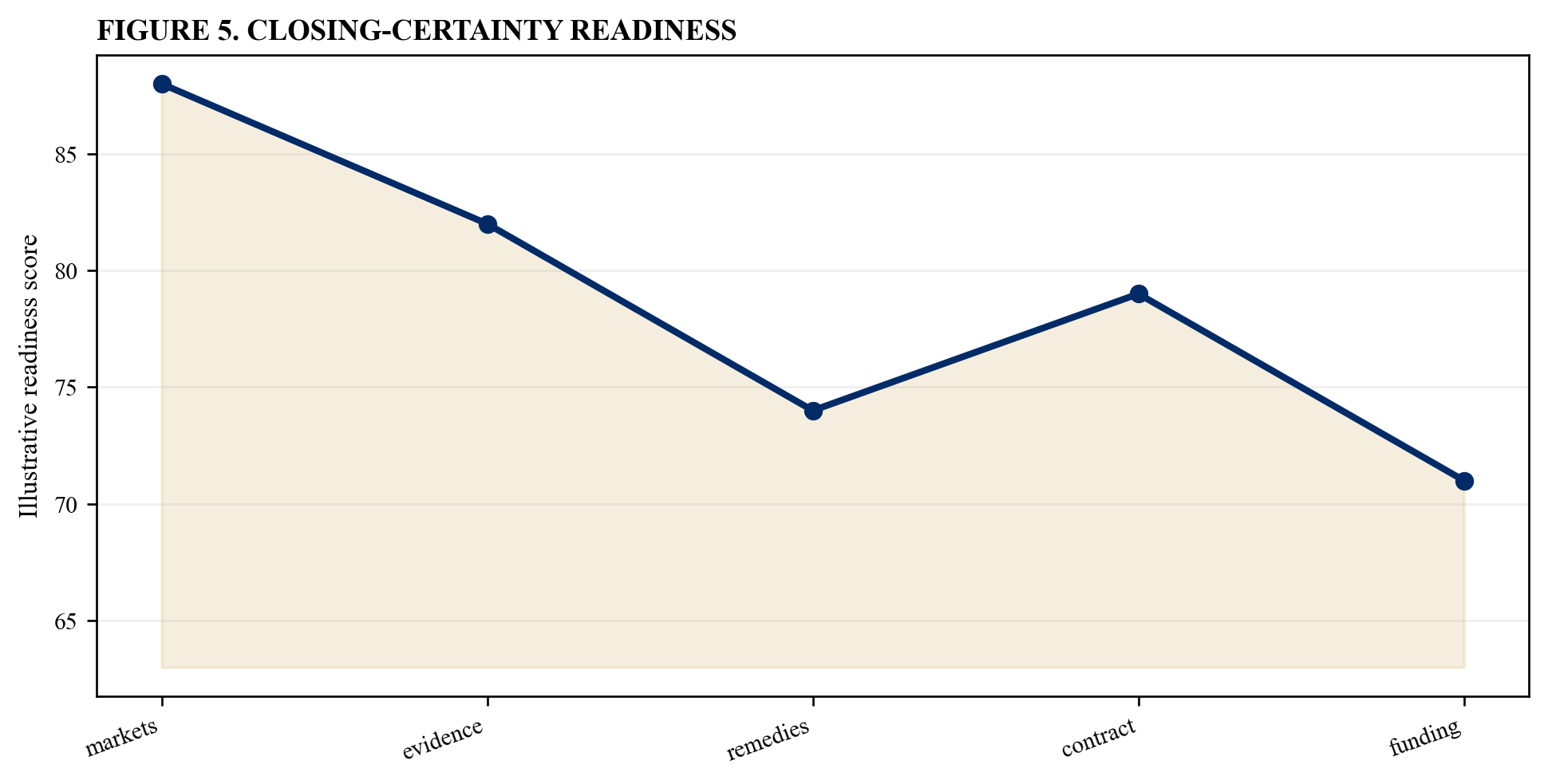
Illustrative analytical scenario; verified transaction, market and regulatory evidence should replace index values.
40. Issue the closing-certainty certificate
The transaction team should approve the market evidence, filing path, remedy feasibility, contract allocation, funding and board response. The required output is a retained board and transaction-ready closing-certainty certificate. Use current evidence and link each material conclusion to retained customer, commercial, economic, contractual, financing and regulatory sources [1][22].
Translate the conclusion into the board case and merger agreement. Identify the jurisdiction, legal test, theory of harm, evidence owner, source system, filing milestone, remedy implication, contractual duty, value threshold and decision deadline. Reconcile counsel, economists, commercial teams, finance, operations and disclosure.
The principal risk is that the transaction can be announced without one reconciled view of approval risk. Quantify probability, timing, remedy cost, stranded cost, financing carry, business disruption, termination exposure and value at risk across timely-clearance, remedy, prolonged-review and prohibition cases.
Retain the source, version, reviewer, contrary evidence, specialist advice and board response. Refresh the analysis after material market, document, regulator, remedy, financing or timetable changes; compare actual progress with the approved cases; and assign each exception an accountable owner and deadline.
Table 5. Closing-certainty certificate
| Conclusion | Evidence | Approval test |
|---|---|---|
| markets | substitution file | board challenged |
| harm | theory map | economist reviewed |
| remedy | costed perimeter | operationally feasible |
| contract | risk allocation | funding aligned |
Illustrative structure; transaction-specific legal and economic analysis governs.
References
- US Department of Justice and Federal Trade Commission, 2023 Merger Guidelines, https://www.justice.gov/atr/2023-merger-guidelines
- US Department of Justice, Applying the Merger Guidelines, https://www.justice.gov/atr/merger-guidelines/applying-merger-guidelines
- Council Regulation EC No 139/2004 on the control of concentrations, https://eur-lex.europa.eu/legal-content/EN/TXT/?uri=CELEX:32004R0139
- UK Enterprise Act 2002, Part 3 mergers, https://www.legislation.gov.uk/ukpga/2002/40/part/3
- US Federal Trade Commission, Premerger Notification Program, https://www.ftc.gov/enforcement/premerger-notification-program
- US Department of Justice, Civil Enforcement and Model Timing Agreement, https://www.justice.gov/atr/civil-enforcement
- UK Competition and Markets Authority, Merger Assessment Guidelines, https://www.gov.uk/government/publications/merger-assessment-guidelines/merger-assessment-guidelines-html-version
- European Commission, Notice on the definition of the relevant market, https://eur-lex.europa.eu/legal-content/EN/TXT/PDF/?uri=CELEX:52024XC01645
- European Commission, Best Practices on the conduct of EC merger proceedings, https://competition-policy.ec.europa.eu/mergers/legislation/best-practices_en
- US Department of Justice, Calculating Market Shares and Concentration, https://www.justice.gov/atr/merger-guidelines/tools/market-shares
- US Department of Justice, Guideline 4 on potential entrants, https://www.justice.gov/atr/merger-guidelines/applying-merger-guidelines/guideline-4
- US Department of Justice, Guideline 10 on competing buyers, https://www.justice.gov/atr/merger-guidelines/applying-merger-guidelines/guideline-10
- US Department of Justice, Guideline 9 on multi-sided platforms, https://www.justice.gov/atr/merger-guidelines/applying-merger-guidelines/guideline-9
- US Department of Justice, Guideline 5 on access to products and services, https://www.justice.gov/atr/merger-guidelines/applying-merger-guidelines/guideline-5
- UK Competition and Markets Authority, Merger Assessment Guidelines, efficiencies chapter, https://www.gov.uk/government/publications/merger-assessment-guidelines/merger-assessment-guidelines-html-version
- US Federal Trade Commission, HSR Rules and 2025 notification requirements, https://www.ftc.gov/legal-library/browse/rules/hsr-rules
- UK Competition and Markets Authority, Merger Remedies, December 2025, https://www.gov.uk/government/publications/merger-remedies
- European Commission, Merger remedies legislation and model texts, https://competition-policy.ec.europa.eu/mergers/legislation_en
- European Commission, Commission Notice on Remedies, https://eur-lex.europa.eu/legal-content/EN/TXT/?uri=CELEX:52008XC1022(01)
- UK Competition and Markets Authority, Merger Remedies guidance, https://assets.publishing.service.gov.uk/media/6942b474217ed9b1e98f29d0/merger-remedies-guidance-cma87.pdf
- US Securities and Exchange Commission, filed agreement regulatory efforts and remedy obligations, https://www.sec.gov/Archives/edgar/data/1082554/000110465923116505/tm2329335d4_exh1a.htm
- US Securities and Exchange Commission, filed merger agreement with outside-date extensions, https://www.sec.gov/Archives/edgar/data/1618921/000119312525050096/d935649d8k.htm
- US Securities and Exchange Commission, proxy disclosure of outside date and antitrust reverse termination fee, https://www.sec.gov/Archives/edgar/data/8146/000119312526326441/d140981ddefm14a.htm
- US Securities and Exchange Commission, proxy disclosure of regulatory termination fee triggers, https://www.sec.gov/Archives/edgar/data/1521036/000119312526365886/d180727dprem14a.htm
- US Securities and Exchange Commission, Regulation S-K Item 503 risk-factor disclosure, https://www.ecfr.gov/current/title-17/chapter-II/part-229
- US Federal Trade Commission, Premerger coordination and gun-jumping overview, https://www.ftc.gov/advice-guidance/competition-guidance/guide-antitrust-laws/mergers/premerger-conduct
