

1. Define the transaction objective
Translate shareholder priorities into a ranked set of price, certainty, timing, confidentiality, legacy and reinvestment outcomes.
The controlled record should identify the relevant customer, revenue stream, contract, cohort, relationship owner, commercial dependency, evidence source, baseline, trend, scenario, control, exception, accountable executive, deadline and approval. The immediate deliverable is a transaction objective memorandum.
The principal failure occurs when the process is launched around a headline valuation with no decision hierarchy. Reviewers should connect the evidence to revenue durability, gross margin, cash conversion, renewal probability, switching behaviour, counterparty credit and transaction value; distinguish contractual protection from observed customer behaviour; and test whether the conclusion survives a downside scenario.
The decision pack for define the transaction objective should state the commercial question, measurement perimeter, historical evidence, customer-specific facts, forecast logic, sensitivity, management action, buyer implication, residual uncertainty and next gate. Material exceptions should flow into the valuation model, quality-of-earnings work, diligence room, sale-process narrative, transaction protections and board reporting.
2. Fix the sale perimeter
Identify the entities, assets, liabilities, contracts, people, data and intellectual property included in the transaction.
The controlled record should identify the relevant customer, revenue stream, contract, cohort, relationship owner, commercial dependency, evidence source, baseline, trend, scenario, control, exception, accountable executive, deadline and approval. The immediate deliverable is a controlled perimeter schedule.
The principal failure occurs when buyers price different perimeters and the seller compares unlike offers. Reviewers should connect the evidence to revenue durability, gross margin, cash conversion, renewal probability, switching behaviour, counterparty credit and transaction value; distinguish contractual protection from observed customer behaviour; and test whether the conclusion survives a downside scenario.
The decision pack for fix the sale perimeter should state the commercial question, measurement perimeter, historical evidence, customer-specific facts, forecast logic, sensitivity, management action, buyer implication, residual uncertainty and next gate. Material exceptions should flow into the valuation model, quality-of-earnings work, diligence room, sale-process narrative, transaction protections and board reporting.
3. Establish board governance
Set decision rights, conflicts procedures, adviser roles, approval thresholds and escalation routes.
The controlled record should identify the relevant customer, revenue stream, contract, cohort, relationship owner, commercial dependency, evidence source, baseline, trend, scenario, control, exception, accountable executive, deadline and approval. The immediate deliverable is a sale-process governance charter.
The principal failure occurs when a founder or executive negotiates material concessions without an authorised mandate. Reviewers should connect the evidence to revenue durability, gross margin, cash conversion, renewal probability, switching behaviour, counterparty credit and transaction value; distinguish contractual protection from observed customer behaviour; and test whether the conclusion survives a downside scenario.
The decision pack for establish board governance should state the commercial question, measurement perimeter, historical evidence, customer-specific facts, forecast logic, sensitivity, management action, buyer implication, residual uncertainty and next gate. Material exceptions should flow into the valuation model, quality-of-earnings work, diligence room, sale-process narrative, transaction protections and board reporting.
4. Build the evidence baseline
Reconcile historical results, quality of earnings, net debt, working capital, forecasts and operational risks before outreach.
The controlled record should identify the relevant customer, revenue stream, contract, cohort, relationship owner, commercial dependency, evidence source, baseline, trend, scenario, control, exception, accountable executive, deadline and approval. The immediate deliverable is a seller evidence baseline.
The principal failure occurs when commercial momentum is marketed before the evidence can withstand diligence. Reviewers should connect the evidence to revenue durability, gross margin, cash conversion, renewal probability, switching behaviour, counterparty credit and transaction value; distinguish contractual protection from observed customer behaviour; and test whether the conclusion survives a downside scenario.
The decision pack for build the evidence baseline should state the commercial question, measurement perimeter, historical evidence, customer-specific facts, forecast logic, sensitivity, management action, buyer implication, residual uncertainty and next gate. Material exceptions should flow into the valuation model, quality-of-earnings work, diligence room, sale-process narrative, transaction protections and board reporting.
5. Map the buyer universe
Construct a long list across strategic buyers, sponsors, family capital and adjacent consolidators with ownership and conflict checks.
The controlled record should identify the relevant customer, revenue stream, contract, cohort, relationship owner, commercial dependency, evidence source, baseline, trend, scenario, control, exception, accountable executive, deadline and approval. The immediate deliverable is a buyer-universe map.
The principal failure occurs when the universe reflects adviser familiarity rather than credible ability and appetite. Reviewers should connect the evidence to revenue durability, gross margin, cash conversion, renewal probability, switching behaviour, counterparty credit and transaction value; distinguish contractual protection from observed customer behaviour; and test whether the conclusion survives a downside scenario.
The decision pack for map the buyer universe should state the commercial question, measurement perimeter, historical evidence, customer-specific facts, forecast logic, sensitivity, management action, buyer implication, residual uncertainty and next gate. Material exceptions should flow into the valuation model, quality-of-earnings work, diligence room, sale-process narrative, transaction protections and board reporting.
6. Segment buyer archetypes
Score strategic fit, synergy capacity, financing, regulatory exposure, integration capability and decision speed.
The controlled record should identify the relevant customer, revenue stream, contract, cohort, relationship owner, commercial dependency, evidence source, baseline, trend, scenario, control, exception, accountable executive, deadline and approval. The immediate deliverable is a buyer-archetype matrix.
The principal failure occurs when all buyers receive identical sequencing despite different sources of value and risk. Reviewers should connect the evidence to revenue durability, gross margin, cash conversion, renewal probability, switching behaviour, counterparty credit and transaction value; distinguish contractual protection from observed customer behaviour; and test whether the conclusion survives a downside scenario.
The decision pack for segment buyer archetypes should state the commercial question, measurement perimeter, historical evidence, customer-specific facts, forecast logic, sensitivity, management action, buyer implication, residual uncertainty and next gate. Material exceptions should flow into the valuation model, quality-of-earnings work, diligence room, sale-process narrative, transaction protections and board reporting.
7. Design contact waves
Sequence outreach so evidence improves, leaks remain controlled and credible alternatives survive into final negotiations.
The controlled record should identify the relevant customer, revenue stream, contract, cohort, relationship owner, commercial dependency, evidence source, baseline, trend, scenario, control, exception, accountable executive, deadline and approval. The immediate deliverable is a contact-wave plan.
The principal failure occurs when the preferred buyer receives an early uncontested path. Reviewers should connect the evidence to revenue durability, gross margin, cash conversion, renewal probability, switching behaviour, counterparty credit and transaction value; distinguish contractual protection from observed customer behaviour; and test whether the conclusion survives a downside scenario.
The decision pack for design contact waves should state the commercial question, measurement perimeter, historical evidence, customer-specific facts, forecast logic, sensitivity, management action, buyer implication, residual uncertainty and next gate. Material exceptions should flow into the valuation model, quality-of-earnings work, diligence room, sale-process narrative, transaction protections and board reporting.
8. Set qualification gates
Require strategic rationale, decision-maker access, valuation range, funding evidence, approvals and a diligence plan.
The controlled record should identify the relevant customer, revenue stream, contract, cohort, relationship owner, commercial dependency, evidence source, baseline, trend, scenario, control, exception, accountable executive, deadline and approval. The immediate deliverable is a bidder qualification scorecard.
The principal failure occurs when management invests scarce time in curiosity without executable intent. Reviewers should connect the evidence to revenue durability, gross margin, cash conversion, renewal probability, switching behaviour, counterparty credit and transaction value; distinguish contractual protection from observed customer behaviour; and test whether the conclusion survives a downside scenario.
The decision pack for set qualification gates should state the commercial question, measurement perimeter, historical evidence, customer-specific facts, forecast logic, sensitivity, management action, buyer implication, residual uncertainty and next gate. Material exceptions should flow into the valuation model, quality-of-earnings work, diligence room, sale-process narrative, transaction protections and board reporting.
Table 1. Bidder qualification gates
| Gate | Evidence | Decision |
|---|---|---|
| intent | written rationale | admit |
| value | range and assumptions | prioritise |
| funding | sources and authority | advance |
| execution | approvals and timetable | resource |
Illustrative analytical design; company-specific evidence and professional advice govern.
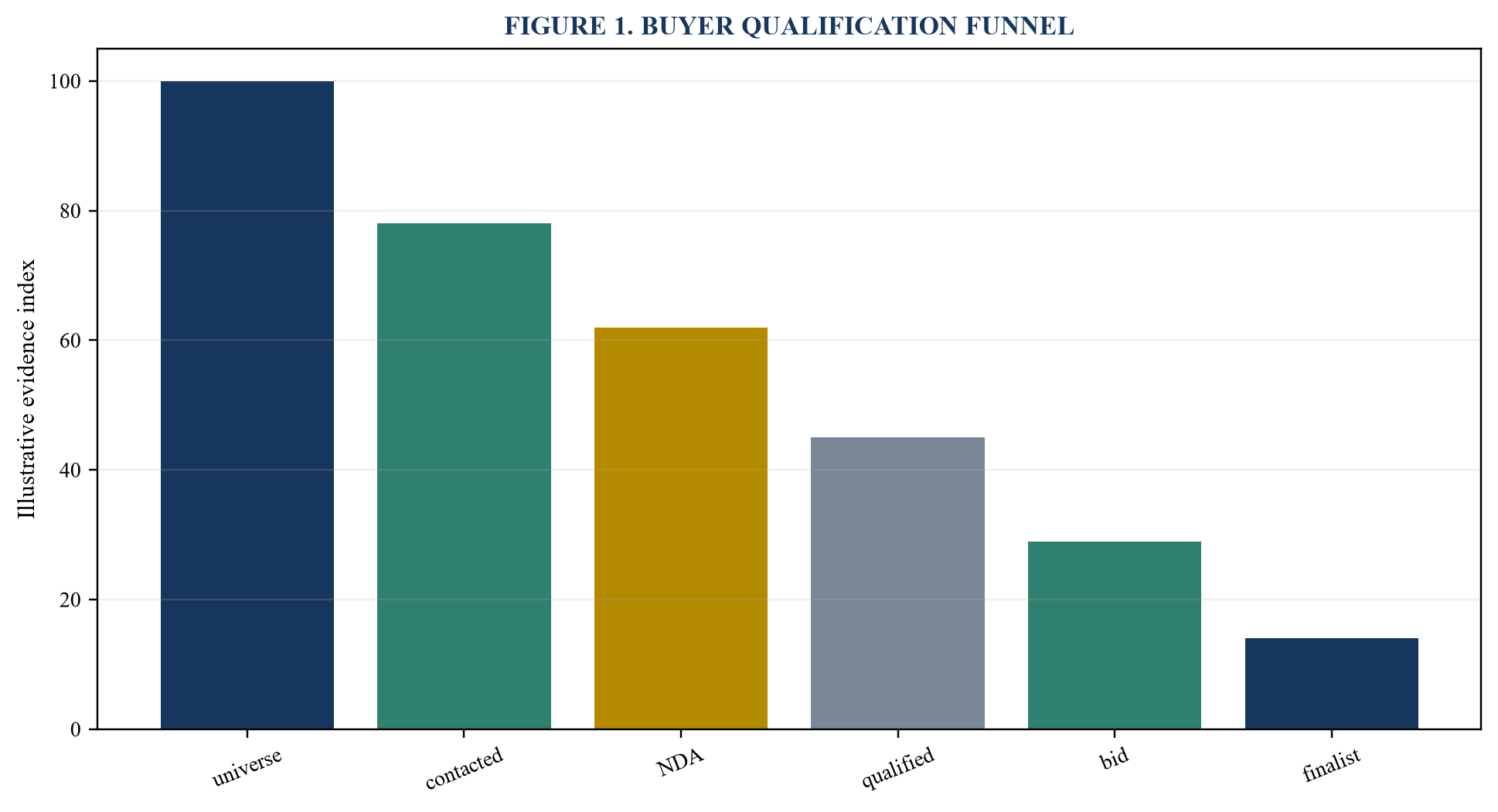
Values are illustrative evidence indices and require company-specific support.
9. Draft the teaser
Present the investment thesis, scale, growth, differentiation and process without revealing identity or sensitive facts prematurely.
The controlled record should identify the relevant customer, revenue stream, contract, cohort, relationship owner, commercial dependency, evidence source, baseline, trend, scenario, control, exception, accountable executive, deadline and approval. The immediate deliverable is a controlled anonymous teaser.
The principal failure occurs when the teaser oversells unverified upside or exposes the company before an NDA. Reviewers should connect the evidence to revenue durability, gross margin, cash conversion, renewal probability, switching behaviour, counterparty credit and transaction value; distinguish contractual protection from observed customer behaviour; and test whether the conclusion survives a downside scenario.
The decision pack for draft the teaser should state the commercial question, measurement perimeter, historical evidence, customer-specific facts, forecast logic, sensitivity, management action, buyer implication, residual uncertainty and next gate. Material exceptions should flow into the valuation model, quality-of-earnings work, diligence room, sale-process narrative, transaction protections and board reporting.
10. Control NDAs and standstills
Align permitted use, representatives, non-solicitation, financing sources, clean teams, residuals, return of information and standstill treatment.
The controlled record should identify the relevant customer, revenue stream, contract, cohort, relationship owner, commercial dependency, evidence source, baseline, trend, scenario, control, exception, accountable executive, deadline and approval. The immediate deliverable is an NDA deviation matrix.
The principal failure occurs when different confidentiality terms create unequal information and enforcement risk. Reviewers should connect the evidence to revenue durability, gross margin, cash conversion, renewal probability, switching behaviour, counterparty credit and transaction value; distinguish contractual protection from observed customer behaviour; and test whether the conclusion survives a downside scenario.
The decision pack for control ndas and standstills should state the commercial question, measurement perimeter, historical evidence, customer-specific facts, forecast logic, sensitivity, management action, buyer implication, residual uncertainty and next gate. Material exceptions should flow into the valuation model, quality-of-earnings work, diligence room, sale-process narrative, transaction protections and board reporting.
11. Issue the process letter
Define bid form, perimeter, price, funding, approvals, assumptions, conditions, timetable and required mark-ups.
The controlled record should identify the relevant customer, revenue stream, contract, cohort, relationship owner, commercial dependency, evidence source, baseline, trend, scenario, control, exception, accountable executive, deadline and approval. The immediate deliverable is a first-round process letter.
The principal failure occurs when indicative offers omit the terms that later become price reductions. Reviewers should connect the evidence to revenue durability, gross margin, cash conversion, renewal probability, switching behaviour, counterparty credit and transaction value; distinguish contractual protection from observed customer behaviour; and test whether the conclusion survives a downside scenario.
The decision pack for issue the process letter should state the commercial question, measurement perimeter, historical evidence, customer-specific facts, forecast logic, sensitivity, management action, buyer implication, residual uncertainty and next gate. Material exceptions should flow into the valuation model, quality-of-earnings work, diligence room, sale-process narrative, transaction protections and board reporting.
12. Standardise indicative bids
Convert price ranges and narrative proposals into a common economic, conditionality and certainty template.
The controlled record should identify the relevant customer, revenue stream, contract, cohort, relationship owner, commercial dependency, evidence source, baseline, trend, scenario, control, exception, accountable executive, deadline and approval. The immediate deliverable is a comparable-bid schedule.
The principal failure occurs when the highest headline bid conceals the widest diligence and financing outs. Reviewers should connect the evidence to revenue durability, gross margin, cash conversion, renewal probability, switching behaviour, counterparty credit and transaction value; distinguish contractual protection from observed customer behaviour; and test whether the conclusion survives a downside scenario.
The decision pack for standardise indicative bids should state the commercial question, measurement perimeter, historical evidence, customer-specific facts, forecast logic, sensitivity, management action, buyer implication, residual uncertainty and next gate. Material exceptions should flow into the valuation model, quality-of-earnings work, diligence room, sale-process narrative, transaction protections and board reporting.
13. Test financing certainty
Assess equity authority, debt commitments, investment-committee status, funding conditions and sources and uses.
The controlled record should identify the relevant customer, revenue stream, contract, cohort, relationship owner, commercial dependency, evidence source, baseline, trend, scenario, control, exception, accountable executive, deadline and approval. The immediate deliverable is a financing-certainty assessment.
The principal failure occurs when the seller confuses access to capital with committed funds. Reviewers should connect the evidence to revenue durability, gross margin, cash conversion, renewal probability, switching behaviour, counterparty credit and transaction value; distinguish contractual protection from observed customer behaviour; and test whether the conclusion survives a downside scenario.
The decision pack for test financing certainty should state the commercial question, measurement perimeter, historical evidence, customer-specific facts, forecast logic, sensitivity, management action, buyer implication, residual uncertainty and next gate. Material exceptions should flow into the valuation model, quality-of-earnings work, diligence room, sale-process narrative, transaction protections and board reporting.
14. Test regulatory deliverability
Map merger control, foreign investment, sector licences, data, sanctions and ownership approvals by bidder.
The controlled record should identify the relevant customer, revenue stream, contract, cohort, relationship owner, commercial dependency, evidence source, baseline, trend, scenario, control, exception, accountable executive, deadline and approval. The immediate deliverable is a regulatory deliverability map.
The principal failure occurs when regulatory execution is deferred until exclusivity. Reviewers should connect the evidence to revenue durability, gross margin, cash conversion, renewal probability, switching behaviour, counterparty credit and transaction value; distinguish contractual protection from observed customer behaviour; and test whether the conclusion survives a downside scenario.
The decision pack for test regulatory deliverability should state the commercial question, measurement perimeter, historical evidence, customer-specific facts, forecast logic, sensitivity, management action, buyer implication, residual uncertainty and next gate. Material exceptions should flow into the valuation model, quality-of-earnings work, diligence room, sale-process narrative, transaction protections and board reporting.
15. Surface strategic value
Require each bidder to evidence revenue, cost, tax, capital, technology and capability synergies without disclosing rival-sensitive information.
The controlled record should identify the relevant customer, revenue stream, contract, cohort, relationship owner, commercial dependency, evidence source, baseline, trend, scenario, control, exception, accountable executive, deadline and approval. The immediate deliverable is a synergy entitlement brief.
The principal failure occurs when the seller gives away the synergy case and receives no value recognition. Reviewers should connect the evidence to revenue durability, gross margin, cash conversion, renewal probability, switching behaviour, counterparty credit and transaction value; distinguish contractual protection from observed customer behaviour; and test whether the conclusion survives a downside scenario.
The decision pack for surface strategic value should state the commercial question, measurement perimeter, historical evidence, customer-specific facts, forecast logic, sensitivity, management action, buyer implication, residual uncertainty and next gate. Material exceptions should flow into the valuation model, quality-of-earnings work, diligence room, sale-process narrative, transaction protections and board reporting.
16. Allocate scarce access
Match data-room depth, management time, site visits and expert sessions to bidder credibility and decision needs.
The controlled record should identify the relevant customer, revenue stream, contract, cohort, relationship owner, commercial dependency, evidence source, baseline, trend, scenario, control, exception, accountable executive, deadline and approval. The immediate deliverable is an access-allocation plan.
The principal failure occurs when weak bidders consume resources while strong bidders lack decisive evidence. Reviewers should connect the evidence to revenue durability, gross margin, cash conversion, renewal probability, switching behaviour, counterparty credit and transaction value; distinguish contractual protection from observed customer behaviour; and test whether the conclusion survives a downside scenario.
The decision pack for allocate scarce access should state the commercial question, measurement perimeter, historical evidence, customer-specific facts, forecast logic, sensitivity, management action, buyer implication, residual uncertainty and next gate. Material exceptions should flow into the valuation model, quality-of-earnings work, diligence room, sale-process narrative, transaction protections and board reporting.
Table 2. Access allocation
| Bidder state | Access level | Control |
|---|---|---|
| screened | teaser | identity protection |
| qualified | foundation room | parity log |
| finalist | confirmatory room | issue closure |
| preferred | restricted evidence | milestone exclusivity |
Illustrative analytical design; company-specific evidence and professional advice govern.
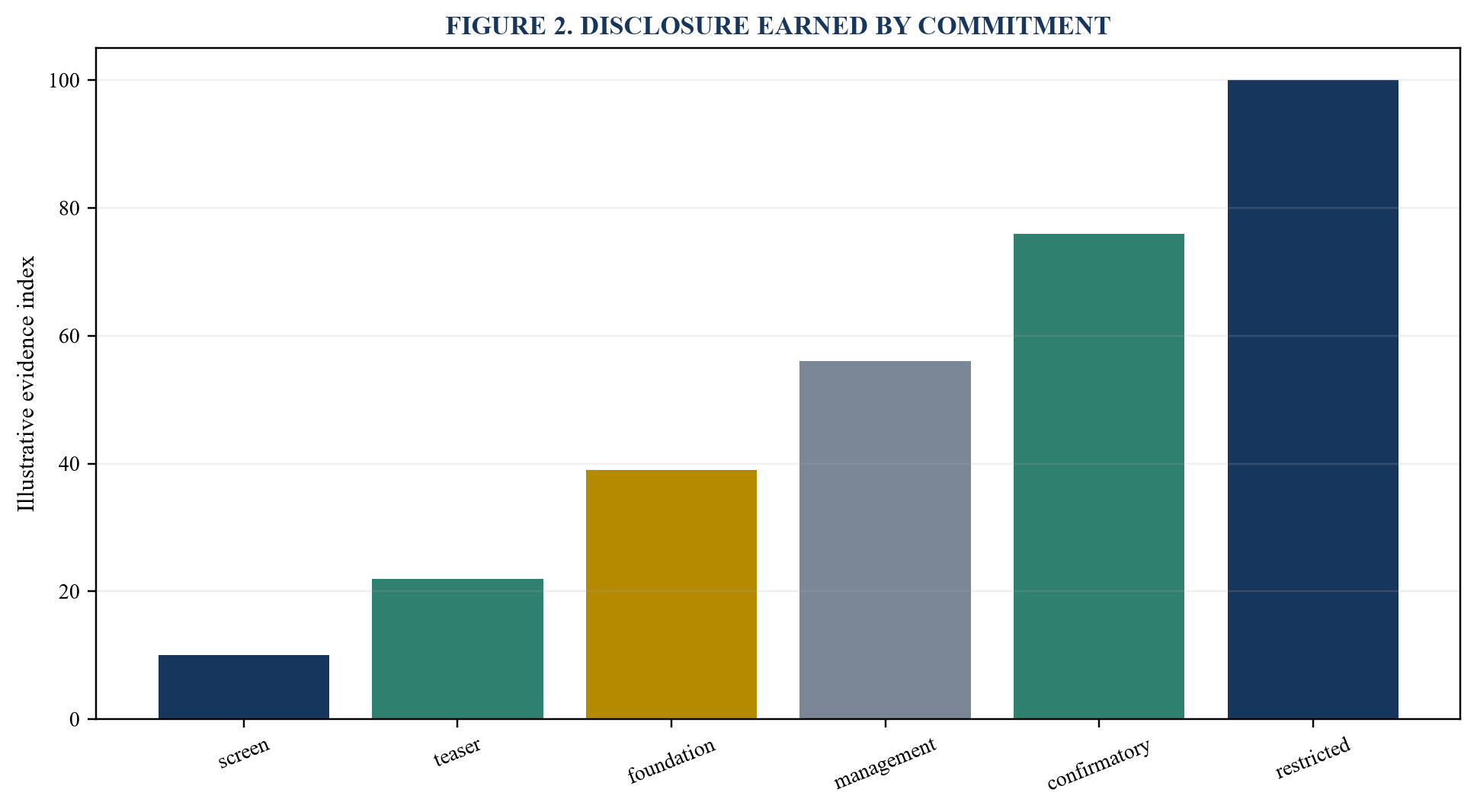
Values are illustrative evidence indices and require company-specific support.
17. Stage the data room
Release foundation, confirmatory, restricted and clean-team information against explicit process gates.
The controlled record should identify the relevant customer, revenue stream, contract, cohort, relationship owner, commercial dependency, evidence source, baseline, trend, scenario, control, exception, accountable executive, deadline and approval. The immediate deliverable is a staged disclosure index.
The principal failure occurs when buyers receive full downside evidence before demonstrating price and commitment. Reviewers should connect the evidence to revenue durability, gross margin, cash conversion, renewal probability, switching behaviour, counterparty credit and transaction value; distinguish contractual protection from observed customer behaviour; and test whether the conclusion survives a downside scenario.
The decision pack for stage the data room should state the commercial question, measurement perimeter, historical evidence, customer-specific facts, forecast logic, sensitivity, management action, buyer implication, residual uncertainty and next gate. Material exceptions should flow into the valuation model, quality-of-earnings work, diligence room, sale-process narrative, transaction protections and board reporting.
18. Maintain information parity
Track questions, answers, uploads, exceptions and material disclosures across qualified bidders.
The controlled record should identify the relevant customer, revenue stream, contract, cohort, relationship owner, commercial dependency, evidence source, baseline, trend, scenario, control, exception, accountable executive, deadline and approval. The immediate deliverable is an information-parity ledger.
The principal failure occurs when one bidder gains an unintended informational advantage. Reviewers should connect the evidence to revenue durability, gross margin, cash conversion, renewal probability, switching behaviour, counterparty credit and transaction value; distinguish contractual protection from observed customer behaviour; and test whether the conclusion survives a downside scenario.
The decision pack for maintain information parity should state the commercial question, measurement perimeter, historical evidence, customer-specific facts, forecast logic, sensitivity, management action, buyer implication, residual uncertainty and next gate. Material exceptions should flow into the valuation model, quality-of-earnings work, diligence room, sale-process narrative, transaction protections and board reporting.
19. Prepare management
Align the equity story, forecast logic, risk answers, prohibited disclosures and decision boundaries before presentations.
The controlled record should identify the relevant customer, revenue stream, contract, cohort, relationship owner, commercial dependency, evidence source, baseline, trend, scenario, control, exception, accountable executive, deadline and approval. The immediate deliverable is a management-presentation control book.
The principal failure occurs when different executives provide incompatible narratives or speculative commitments. Reviewers should connect the evidence to revenue durability, gross margin, cash conversion, renewal probability, switching behaviour, counterparty credit and transaction value; distinguish contractual protection from observed customer behaviour; and test whether the conclusion survives a downside scenario.
The decision pack for prepare management should state the commercial question, measurement perimeter, historical evidence, customer-specific facts, forecast logic, sensitivity, management action, buyer implication, residual uncertainty and next gate. Material exceptions should flow into the valuation model, quality-of-earnings work, diligence room, sale-process narrative, transaction protections and board reporting.
20. Commission vendor diligence
Use financial, tax, legal, commercial, technology, cyber and operational work to identify issues early and support comparable underwriting.
The controlled record should identify the relevant customer, revenue stream, contract, cohort, relationship owner, commercial dependency, evidence source, baseline, trend, scenario, control, exception, accountable executive, deadline and approval. The immediate deliverable is a vendor-diligence evidence pack.
The principal failure occurs when vendor reports become promotional documents that omit decision-relevant weaknesses. Reviewers should connect the evidence to revenue durability, gross margin, cash conversion, renewal probability, switching behaviour, counterparty credit and transaction value; distinguish contractual protection from observed customer behaviour; and test whether the conclusion survives a downside scenario.
The decision pack for commission vendor diligence should state the commercial question, measurement perimeter, historical evidence, customer-specific facts, forecast logic, sensitivity, management action, buyer implication, residual uncertainty and next gate. Material exceptions should flow into the valuation model, quality-of-earnings work, diligence room, sale-process narrative, transaction protections and board reporting.
21. Build the price bridge
Reconcile enterprise value to equity proceeds through cash, debt, debt-like items, working capital, leakage, tax and transaction costs.
The controlled record should identify the relevant customer, revenue stream, contract, cohort, relationship owner, commercial dependency, evidence source, baseline, trend, scenario, control, exception, accountable executive, deadline and approval. The immediate deliverable is an enterprise-to-equity value bridge.
The principal failure occurs when price chipping appears late through definitions rather than headline value. Reviewers should connect the evidence to revenue durability, gross margin, cash conversion, renewal probability, switching behaviour, counterparty credit and transaction value; distinguish contractual protection from observed customer behaviour; and test whether the conclusion survives a downside scenario.
The decision pack for build the price bridge should state the commercial question, measurement perimeter, historical evidence, customer-specific facts, forecast logic, sensitivity, management action, buyer implication, residual uncertainty and next gate. Material exceptions should flow into the valuation model, quality-of-earnings work, diligence room, sale-process narrative, transaction protections and board reporting.
22. Set the working-capital mechanism
Define normalised working capital, seasonality, growth, ageing, exclusions, measurement time and dispute evidence.
The controlled record should identify the relevant customer, revenue stream, contract, cohort, relationship owner, commercial dependency, evidence source, baseline, trend, scenario, control, exception, accountable executive, deadline and approval. The immediate deliverable is a completion working-capital model.
The principal failure occurs when the target is negotiated from a single balance-sheet date. Reviewers should connect the evidence to revenue durability, gross margin, cash conversion, renewal probability, switching behaviour, counterparty credit and transaction value; distinguish contractual protection from observed customer behaviour; and test whether the conclusion survives a downside scenario.
The decision pack for set the working-capital mechanism should state the commercial question, measurement perimeter, historical evidence, customer-specific facts, forecast logic, sensitivity, management action, buyer implication, residual uncertainty and next gate. Material exceptions should flow into the valuation model, quality-of-earnings work, diligence room, sale-process narrative, transaction protections and board reporting.
23. Control debt-like items
Classify leases, deferred consideration, provisions, bonuses, customer advances, factoring, tax and related-party balances consistently.
The controlled record should identify the relevant customer, revenue stream, contract, cohort, relationship owner, commercial dependency, evidence source, baseline, trend, scenario, control, exception, accountable executive, deadline and approval. The immediate deliverable is a debt-like-item protocol.
The principal failure occurs when known obligations are rediscovered after exclusivity and deducted twice. Reviewers should connect the evidence to revenue durability, gross margin, cash conversion, renewal probability, switching behaviour, counterparty credit and transaction value; distinguish contractual protection from observed customer behaviour; and test whether the conclusion survives a downside scenario.
The decision pack for control debt-like items should state the commercial question, measurement perimeter, historical evidence, customer-specific facts, forecast logic, sensitivity, management action, buyer implication, residual uncertainty and next gate. Material exceptions should flow into the valuation model, quality-of-earnings work, diligence room, sale-process narrative, transaction protections and board reporting.
24. Separate recurring and one-off capex
Evidence maintenance, growth, remediation and deferred investment by asset and forecast period.
The controlled record should identify the relevant customer, revenue stream, contract, cohort, relationship owner, commercial dependency, evidence source, baseline, trend, scenario, control, exception, accountable executive, deadline and approval. The immediate deliverable is a capex normalisation schedule.
The principal failure occurs when buyers reclassify operational underinvestment as a price adjustment. Reviewers should connect the evidence to revenue durability, gross margin, cash conversion, renewal probability, switching behaviour, counterparty credit and transaction value; distinguish contractual protection from observed customer behaviour; and test whether the conclusion survives a downside scenario.
The decision pack for separate recurring and one-off capex should state the commercial question, measurement perimeter, historical evidence, customer-specific facts, forecast logic, sensitivity, management action, buyer implication, residual uncertainty and next gate. Material exceptions should flow into the valuation model, quality-of-earnings work, diligence room, sale-process narrative, transaction protections and board reporting.
Table 3. Price-chip defence
| Adjustment route | Seller evidence | Control |
|---|---|---|
| working capital | normalised cycle | defined target |
| net debt | classified schedule | no double count |
| capex | maintenance bridge | forecast consistency |
| earnings | cash-supported bridge | locked adjustments |
Illustrative analytical design; company-specific evidence and professional advice govern.
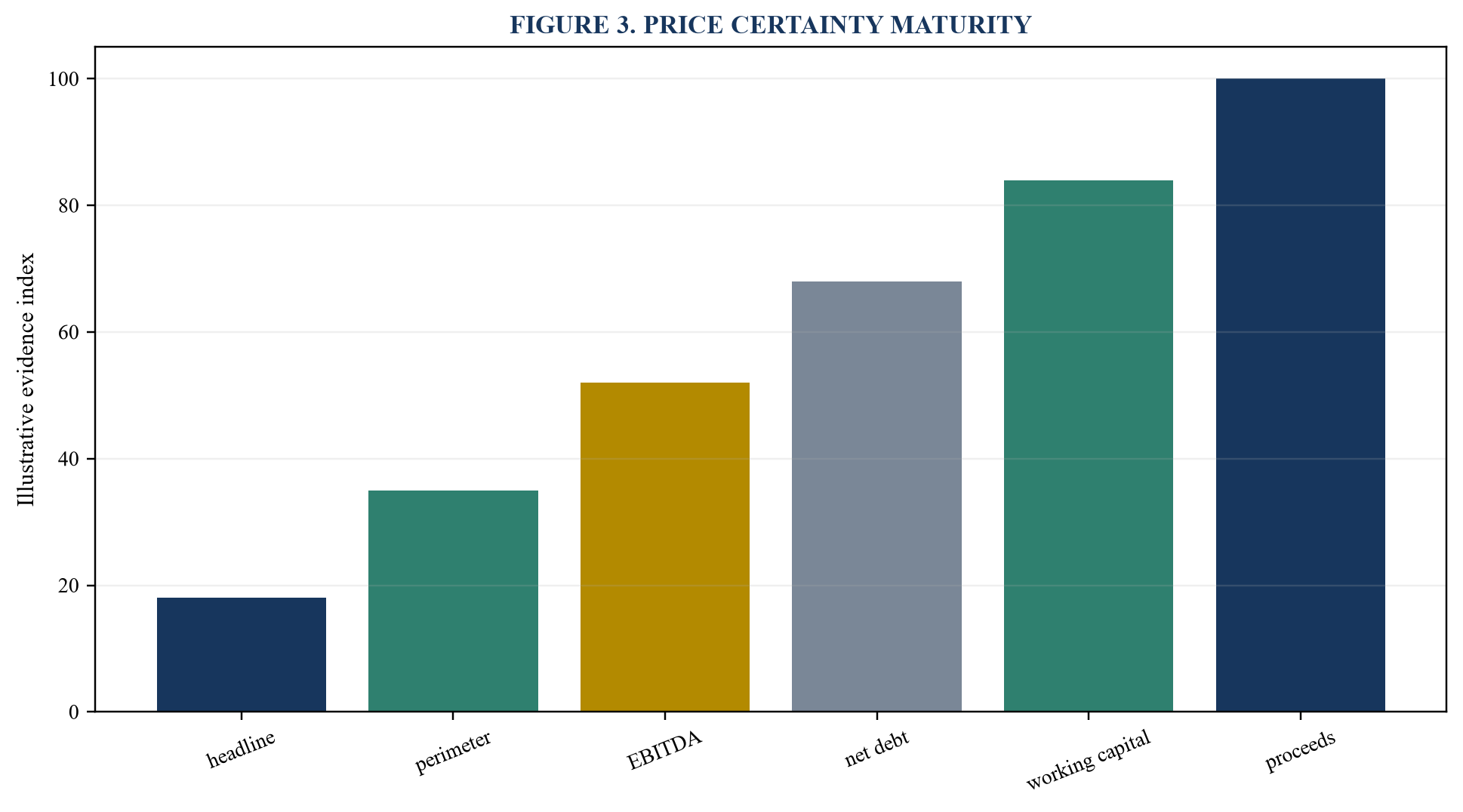
Values are illustrative evidence indices and require company-specific support.
25. Defend revenue quality
Test concentration, churn, cohorts, backlog, pricing, renewals, channel economics and contract enforceability.
The controlled record should identify the relevant customer, revenue stream, contract, cohort, relationship owner, commercial dependency, evidence source, baseline, trend, scenario, control, exception, accountable executive, deadline and approval. The immediate deliverable is a revenue-quality evidence map.
The principal failure occurs when management relies on pipeline anecdotes rather than observable conversion and retention. Reviewers should connect the evidence to revenue durability, gross margin, cash conversion, renewal probability, switching behaviour, counterparty credit and transaction value; distinguish contractual protection from observed customer behaviour; and test whether the conclusion survives a downside scenario.
The decision pack for defend revenue quality should state the commercial question, measurement perimeter, historical evidence, customer-specific facts, forecast logic, sensitivity, management action, buyer implication, residual uncertainty and next gate. Material exceptions should flow into the valuation model, quality-of-earnings work, diligence room, sale-process narrative, transaction protections and board reporting.
26. Defend earnings quality
Reconcile revenue recognition, gross margin, adjustments, owner costs, provisions and cash conversion.
The controlled record should identify the relevant customer, revenue stream, contract, cohort, relationship owner, commercial dependency, evidence source, baseline, trend, scenario, control, exception, accountable executive, deadline and approval. The immediate deliverable is a quality-of-earnings bridge.
The principal failure occurs when adjusted EBITDA expands during marketing and contracts during diligence. Reviewers should connect the evidence to revenue durability, gross margin, cash conversion, renewal probability, switching behaviour, counterparty credit and transaction value; distinguish contractual protection from observed customer behaviour; and test whether the conclusion survives a downside scenario.
The decision pack for defend earnings quality should state the commercial question, measurement perimeter, historical evidence, customer-specific facts, forecast logic, sensitivity, management action, buyer implication, residual uncertainty and next gate. Material exceptions should flow into the valuation model, quality-of-earnings work, diligence room, sale-process narrative, transaction protections and board reporting.
27. Anchor valuation
Triangulate precedent transactions, trading comparables, discounted cash flow, sponsor returns and strategic value.
The controlled record should identify the relevant customer, revenue stream, contract, cohort, relationship owner, commercial dependency, evidence source, baseline, trend, scenario, control, exception, accountable executive, deadline and approval. The immediate deliverable is a valuation triangulation model.
The principal failure occurs when the seller treats an early non-binding range as an entitlement. Reviewers should connect the evidence to revenue durability, gross margin, cash conversion, renewal probability, switching behaviour, counterparty credit and transaction value; distinguish contractual protection from observed customer behaviour; and test whether the conclusion survives a downside scenario.
The decision pack for anchor valuation should state the commercial question, measurement perimeter, historical evidence, customer-specific facts, forecast logic, sensitivity, management action, buyer implication, residual uncertainty and next gate. Material exceptions should flow into the valuation model, quality-of-earnings work, diligence room, sale-process narrative, transaction protections and board reporting.
28. Run downside cases
Model trading variance, customer loss, delayed approvals, financing changes and timetable extension before final bids.
The controlled record should identify the relevant customer, revenue stream, contract, cohort, relationship owner, commercial dependency, evidence source, baseline, trend, scenario, control, exception, accountable executive, deadline and approval. The immediate deliverable is a downside response matrix.
The principal failure occurs when the process has no prepared response when buyers reprice emerging risk. Reviewers should connect the evidence to revenue durability, gross margin, cash conversion, renewal probability, switching behaviour, counterparty credit and transaction value; distinguish contractual protection from observed customer behaviour; and test whether the conclusion survives a downside scenario.
The decision pack for run downside cases should state the commercial question, measurement perimeter, historical evidence, customer-specific facts, forecast logic, sensitivity, management action, buyer implication, residual uncertainty and next gate. Material exceptions should flow into the valuation model, quality-of-earnings work, diligence room, sale-process narrative, transaction protections and board reporting.
29. Control transaction mark-ups
Compare purchase-price mechanics, warranties, indemnities, covenants, conditions, termination rights and remedies clause by clause.
The controlled record should identify the relevant customer, revenue stream, contract, cohort, relationship owner, commercial dependency, evidence source, baseline, trend, scenario, control, exception, accountable executive, deadline and approval. The immediate deliverable is a bidder mark-up comparison.
The principal failure occurs when commercial concessions are hidden inside legal drafting. Reviewers should connect the evidence to revenue durability, gross margin, cash conversion, renewal probability, switching behaviour, counterparty credit and transaction value; distinguish contractual protection from observed customer behaviour; and test whether the conclusion survives a downside scenario.
The decision pack for control transaction mark-ups should state the commercial question, measurement perimeter, historical evidence, customer-specific facts, forecast logic, sensitivity, management action, buyer implication, residual uncertainty and next gate. Material exceptions should flow into the valuation model, quality-of-earnings work, diligence room, sale-process narrative, transaction protections and board reporting.
30. Compress conditionality
Require final bids to identify every remaining diligence item, approval, financing condition and internal gate.
The controlled record should identify the relevant customer, revenue stream, contract, cohort, relationship owner, commercial dependency, evidence source, baseline, trend, scenario, control, exception, accountable executive, deadline and approval. The immediate deliverable is a conditionality burn-down plan.
The principal failure occurs when confirmatory diligence remains an open-ended right to renegotiate. Reviewers should connect the evidence to revenue durability, gross margin, cash conversion, renewal probability, switching behaviour, counterparty credit and transaction value; distinguish contractual protection from observed customer behaviour; and test whether the conclusion survives a downside scenario.
The decision pack for compress conditionality should state the commercial question, measurement perimeter, historical evidence, customer-specific facts, forecast logic, sensitivity, management action, buyer implication, residual uncertainty and next gate. Material exceptions should flow into the valuation model, quality-of-earnings work, diligence room, sale-process narrative, transaction protections and board reporting.
31. Structure contingent value
Evaluate earnouts, rollover, seller notes, escrow and deferred consideration by controllability, credit risk, tax and enforcement.
The controlled record should identify the relevant customer, revenue stream, contract, cohort, relationship owner, commercial dependency, evidence source, baseline, trend, scenario, control, exception, accountable executive, deadline and approval. The immediate deliverable is a contingent-value risk model.
The principal failure occurs when contingent value is counted at face value despite buyer control and collection risk. Reviewers should connect the evidence to revenue durability, gross margin, cash conversion, renewal probability, switching behaviour, counterparty credit and transaction value; distinguish contractual protection from observed customer behaviour; and test whether the conclusion survives a downside scenario.
The decision pack for structure contingent value should state the commercial question, measurement perimeter, historical evidence, customer-specific facts, forecast logic, sensitivity, management action, buyer implication, residual uncertainty and next gate. Material exceptions should flow into the valuation model, quality-of-earnings work, diligence room, sale-process narrative, transaction protections and board reporting.
32. Govern exclusivity
Grant a short, milestone-based exclusivity only when price, funding, mark-up and decision authority justify the option value surrendered.
The controlled record should identify the relevant customer, revenue stream, contract, cohort, relationship owner, commercial dependency, evidence source, baseline, trend, scenario, control, exception, accountable executive, deadline and approval. The immediate deliverable is an exclusivity gate memorandum.
The principal failure occurs when exclusivity converts a competitive process into a bilateral diligence exercise. Reviewers should connect the evidence to revenue durability, gross margin, cash conversion, renewal probability, switching behaviour, counterparty credit and transaction value; distinguish contractual protection from observed customer behaviour; and test whether the conclusion survives a downside scenario.
The decision pack for govern exclusivity should state the commercial question, measurement perimeter, historical evidence, customer-specific facts, forecast logic, sensitivity, management action, buyer implication, residual uncertainty and next gate. Material exceptions should flow into the valuation model, quality-of-earnings work, diligence room, sale-process narrative, transaction protections and board reporting.
Table 4. Exclusivity decision
| Requirement | Minimum evidence | Failure response |
|---|---|---|
| price | agreed bridge | reopen competition |
| funding | commitment path | shorten term |
| mark-up | bounded deviations | reserve rights |
| approvals | owned timetable | milestone expiry |
Illustrative analytical design; company-specific evidence and professional advice govern.
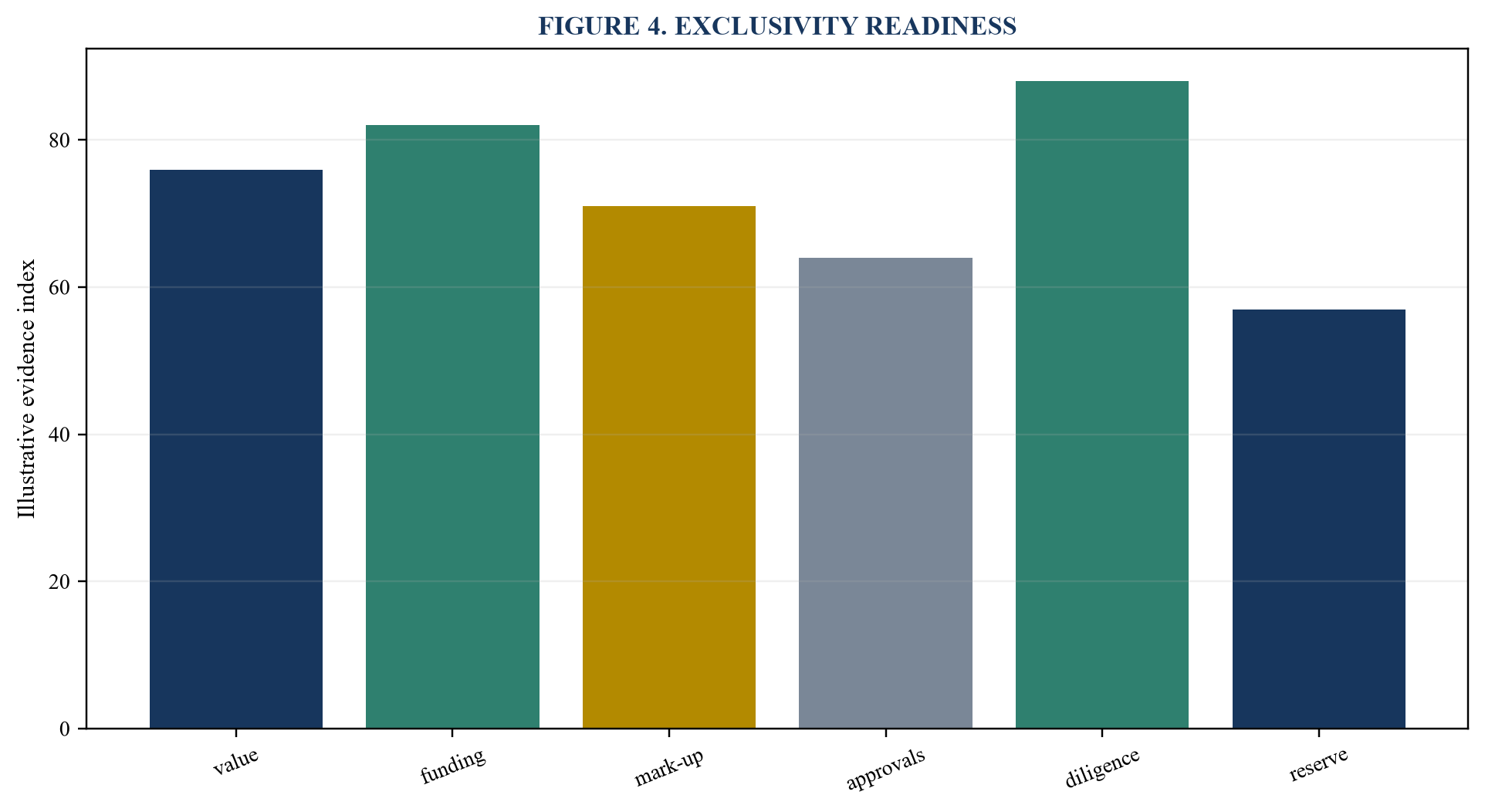
Values are illustrative evidence indices and require company-specific support.
33. Preserve a credible reserve bidder
Maintain lawful, truthful and carefully controlled contact with qualified alternatives through signing readiness.
The controlled record should identify the relevant customer, revenue stream, contract, cohort, relationship owner, commercial dependency, evidence source, baseline, trend, scenario, control, exception, accountable executive, deadline and approval. The immediate deliverable is a reserve-bidder protocol.
The principal failure occurs when the runner-up is dismissed before the preferred bidder is executable. Reviewers should connect the evidence to revenue durability, gross margin, cash conversion, renewal probability, switching behaviour, counterparty credit and transaction value; distinguish contractual protection from observed customer behaviour; and test whether the conclusion survives a downside scenario.
The decision pack for preserve a credible reserve bidder should state the commercial question, measurement perimeter, historical evidence, customer-specific facts, forecast logic, sensitivity, management action, buyer implication, residual uncertainty and next gate. Material exceptions should flow into the valuation model, quality-of-earnings work, diligence room, sale-process narrative, transaction protections and board reporting.
34. Negotiate break protection
Calibrate termination fees, reverse termination fees, specific performance, expense reimbursement and remedy obligations.
The controlled record should identify the relevant customer, revenue stream, contract, cohort, relationship owner, commercial dependency, evidence source, baseline, trend, scenario, control, exception, accountable executive, deadline and approval. The immediate deliverable is a deal-protection matrix.
The principal failure occurs when break protection deters superior proposals or leaves the seller uncompensated for buyer failure. Reviewers should connect the evidence to revenue durability, gross margin, cash conversion, renewal probability, switching behaviour, counterparty credit and transaction value; distinguish contractual protection from observed customer behaviour; and test whether the conclusion survives a downside scenario.
The decision pack for negotiate break protection should state the commercial question, measurement perimeter, historical evidence, customer-specific facts, forecast logic, sensitivity, management action, buyer implication, residual uncertainty and next gate. Material exceptions should flow into the valuation model, quality-of-earnings work, diligence room, sale-process narrative, transaction protections and board reporting.
35. Manage bidder withdrawal
Define escalation, information recovery, employee and customer protection, and rapid re-entry for each dropout scenario.
The controlled record should identify the relevant customer, revenue stream, contract, cohort, relationship owner, commercial dependency, evidence source, baseline, trend, scenario, control, exception, accountable executive, deadline and approval. The immediate deliverable is a bidder-contingency playbook.
The principal failure occurs when a bidder exit creates panic and an uncontrolled shift to the remaining party. Reviewers should connect the evidence to revenue durability, gross margin, cash conversion, renewal probability, switching behaviour, counterparty credit and transaction value; distinguish contractual protection from observed customer behaviour; and test whether the conclusion survives a downside scenario.
The decision pack for manage bidder withdrawal should state the commercial question, measurement perimeter, historical evidence, customer-specific facts, forecast logic, sensitivity, management action, buyer implication, residual uncertainty and next gate. Material exceptions should flow into the valuation model, quality-of-earnings work, diligence room, sale-process narrative, transaction protections and board reporting.
36. Control communications
Sequence board, employee, customer, lender, regulator and market messages with leak and rumour protocols.
The controlled record should identify the relevant customer, revenue stream, contract, cohort, relationship owner, commercial dependency, evidence source, baseline, trend, scenario, control, exception, accountable executive, deadline and approval. The immediate deliverable is a transaction communications calendar.
The principal failure occurs when communications reveal urgency or weaken negotiating credibility. Reviewers should connect the evidence to revenue durability, gross margin, cash conversion, renewal probability, switching behaviour, counterparty credit and transaction value; distinguish contractual protection from observed customer behaviour; and test whether the conclusion survives a downside scenario.
The decision pack for control communications should state the commercial question, measurement perimeter, historical evidence, customer-specific facts, forecast logic, sensitivity, management action, buyer implication, residual uncertainty and next gate. Material exceptions should flow into the valuation model, quality-of-earnings work, diligence room, sale-process narrative, transaction protections and board reporting.
37. Close confirmatory diligence
Convert every open request into an owner, evidence item, materiality decision, buyer response and closure test.
The controlled record should identify the relevant customer, revenue stream, contract, cohort, relationship owner, commercial dependency, evidence source, baseline, trend, scenario, control, exception, accountable executive, deadline and approval. The immediate deliverable is a confirmatory-diligence closure ledger.
The principal failure occurs when the buyer repeats settled questions to manufacture timetable pressure. Reviewers should connect the evidence to revenue durability, gross margin, cash conversion, renewal probability, switching behaviour, counterparty credit and transaction value; distinguish contractual protection from observed customer behaviour; and test whether the conclusion survives a downside scenario.
The decision pack for close confirmatory diligence should state the commercial question, measurement perimeter, historical evidence, customer-specific facts, forecast logic, sensitivity, management action, buyer implication, residual uncertainty and next gate. Material exceptions should flow into the valuation model, quality-of-earnings work, diligence room, sale-process narrative, transaction protections and board reporting.
38. Create signing readiness
Reconcile final economics, funds, approvals, disclosure schedules, consents, management arrangements and execution versions.
The controlled record should identify the relevant customer, revenue stream, contract, cohort, relationship owner, commercial dependency, evidence source, baseline, trend, scenario, control, exception, accountable executive, deadline and approval. The immediate deliverable is a signing-readiness certificate.
The principal failure occurs when the seller accepts a price reduction to avoid losing momentum at the signing table. Reviewers should connect the evidence to revenue durability, gross margin, cash conversion, renewal probability, switching behaviour, counterparty credit and transaction value; distinguish contractual protection from observed customer behaviour; and test whether the conclusion survives a downside scenario.
The decision pack for create signing readiness should state the commercial question, measurement perimeter, historical evidence, customer-specific facts, forecast logic, sensitivity, management action, buyer implication, residual uncertainty and next gate. Material exceptions should flow into the valuation model, quality-of-earnings work, diligence room, sale-process narrative, transaction protections and board reporting.
39. Monitor value through closing
Track trading, leakage, covenants, consents, regulatory remedies, financing and stakeholder stability until completion.
The controlled record should identify the relevant customer, revenue stream, contract, cohort, relationship owner, commercial dependency, evidence source, baseline, trend, scenario, control, exception, accountable executive, deadline and approval. The immediate deliverable is a signing-to-closing control dashboard.
The principal failure occurs when value protection ends when the agreement is signed. Reviewers should connect the evidence to revenue durability, gross margin, cash conversion, renewal probability, switching behaviour, counterparty credit and transaction value; distinguish contractual protection from observed customer behaviour; and test whether the conclusion survives a downside scenario.
The decision pack for monitor value through closing should state the commercial question, measurement perimeter, historical evidence, customer-specific facts, forecast logic, sensitivity, management action, buyer implication, residual uncertainty and next gate. Material exceptions should flow into the valuation model, quality-of-earnings work, diligence room, sale-process narrative, transaction protections and board reporting.
40. Close through evidence gates
Require comparable bids, documented concessions, executable funding, controlled conditions, protected alternatives and board rationale.
The controlled record should identify the relevant customer, revenue stream, contract, cohort, relationship owner, commercial dependency, evidence source, baseline, trend, scenario, control, exception, accountable executive, deadline and approval. The immediate deliverable is a competitive-process close record.
The principal failure occurs when competitive tension is measured by bidder count instead of credible choice at each decision gate. Reviewers should connect the evidence to revenue durability, gross margin, cash conversion, renewal probability, switching behaviour, counterparty credit and transaction value; distinguish contractual protection from observed customer behaviour; and test whether the conclusion survives a downside scenario.
The decision pack for close through evidence gates should state the commercial question, measurement perimeter, historical evidence, customer-specific facts, forecast logic, sensitivity, management action, buyer implication, residual uncertainty and next gate. Material exceptions should flow into the valuation model, quality-of-earnings work, diligence room, sale-process narrative, transaction protections and board reporting.
Table 5. Competitive-process close
| Outcome | Measure | Evidence |
|---|---|---|
| value | equity proceeds | signed bridge |
| certainty | conditions closed | funds and approvals |
| choice | credible alternatives | process record |
| governance | reasoned decision | board materials |
Illustrative analytical design; company-specific evidence and professional advice govern.
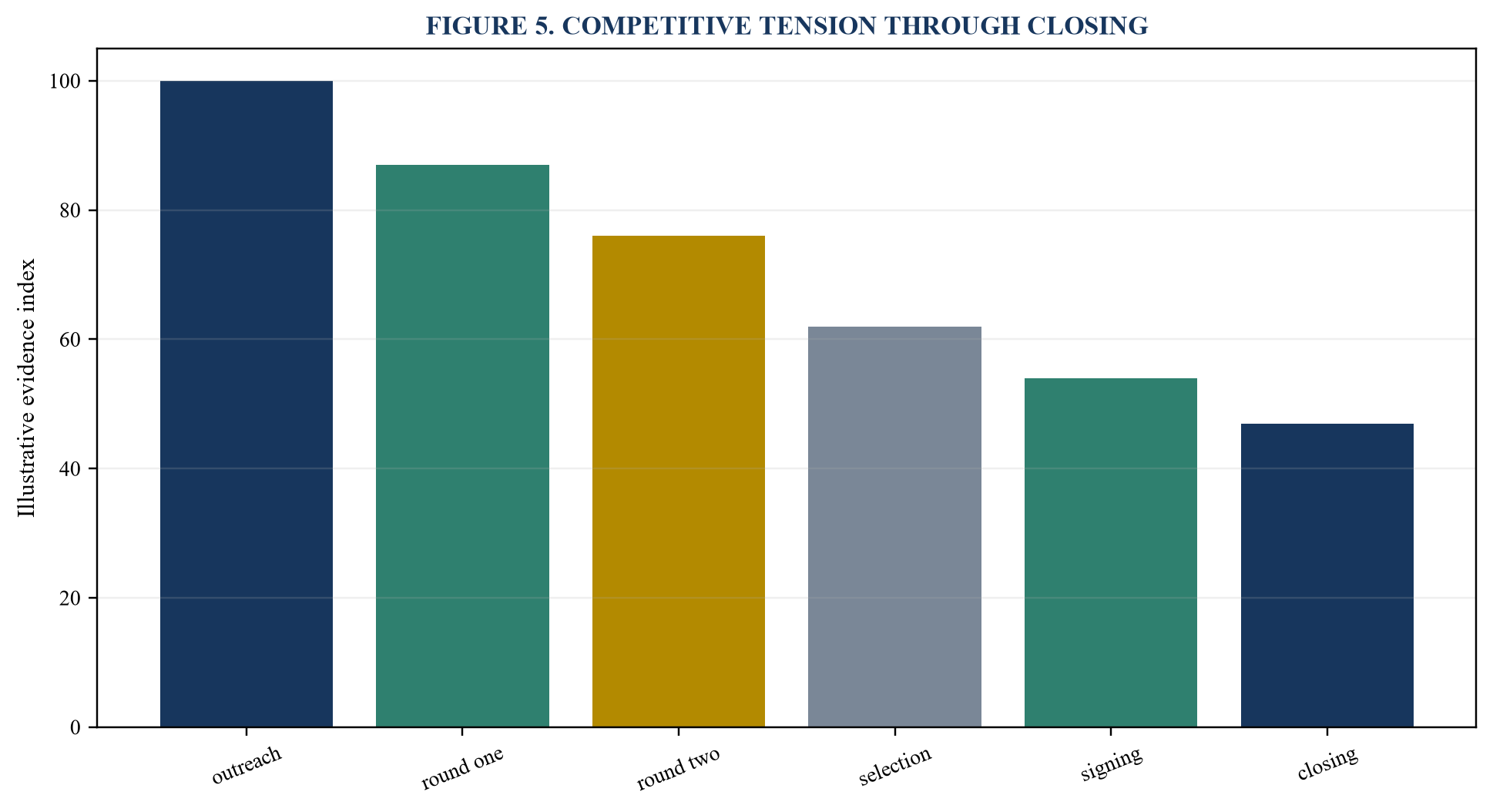
Values are illustrative evidence indices and require company-specific support.
References
- UK Takeover Panel, The Takeover Code, https://code.thetakeoverpanel.org.uk/
- UK Takeover Panel, Practice Statement 31 on formal and private sale processes, https://code.thetakeoverpanel.org.uk/tp/ps/ps-31.html
- UK Takeover Panel, Appendix 8 auction procedure, https://code.thetakeoverpanel.org.uk/tp/apps/app-8.html
- UK Takeover Panel, Rule 21.1 restrictions on offeree-board actions, https://code.thetakeoverpanel.org.uk/tp/rules/rule-21/rule-21-1.html
- UK Takeover Panel, Rule 21.2 offer-related arrangements, https://code.thetakeoverpanel.org.uk/tp/rules/rule-21/rule-21-2.html
- UK Takeover Panel, Rule 21.3 equality of information, https://code.thetakeoverpanel.org.uk/tp/rules/rule-21/rule-21-3.html
- UK Government, Companies Act 2006, https://www.legislation.gov.uk/ukpga/2006/46/contents
- UK Government, Enterprise Act 2002, https://www.legislation.gov.uk/ukpga/2002/40/contents
- UK Government, Digital Markets, Competition and Consumers Act 2024, https://www.legislation.gov.uk/ukpga/2024/13/contents
- Competition and Markets Authority, Mergers guidance on jurisdiction and procedure, https://www.gov.uk/government/publications/mergers-guidance-on-the-cmas-jurisdiction-and-procedure
- Competition and Markets Authority, Information for businesses involved in a merger investigation, https://www.gov.uk/government/collections/information-for-businesses-involved-in-a-merger-investigation
- Competition and Markets Authority, Merger assessment guidelines, https://www.gov.uk/government/publications/merger-assessment-guidelines
- Financial Conduct Authority, UK Market Abuse Regulation, https://www.fca.org.uk/markets/market-abuse/regulation
- US Securities and Exchange Commission, Regulation M-A, https://www.ecfr.gov/current/title-17/chapter-II/part-229/subpart-229.1000
- US Securities and Exchange Commission, Schedule 14A, https://www.sec.gov/files/formdef-14a.pdf
- US Securities and Exchange Commission, 2026 preliminary merger proxy describing a formal auction, https://www.sec.gov/Archives/edgar/data/1023459/000102345926000036/prem14a.htm
- US Securities and Exchange Commission, 2025 preliminary merger proxy describing process letters and exclusivity, https://www.sec.gov/Archives/edgar/data/1692412/000119312525044152/d150546dprem14a.htm
- US Department of Justice and Federal Trade Commission, Merger Guidelines, https://www.justice.gov/atr/merger-guidelines
- US Federal Trade Commission, Hart-Scott-Rodino premerger notification programme, https://www.ftc.gov/enforcement/premerger-notification-program
- European Union, Council Regulation 139/2004 on the control of concentrations, https://eur-lex.europa.eu/legal-content/EN/TXT/?uri=CELEX:32004R0139
- European Commission, Merger notices and guidelines, https://competition-policy.ec.europa.eu/mergers/legislation/notices-and-guidelines_en
- UAE Ministry of Economy and Tourism, Federal Decree-Law 36 of 2023 Regulating Competition, https://www.moet.gov.ae/documents/20121/0/Federal%2BDecree-Law%2BNo.%2B%2836%29%2Bof%2B2023%2BRegulating%2BCompetition.pdf/d5f2b12d-7688-5180-e63b-44a8dbe878d6
- UAE Ministry of Economy and Tourism, Cabinet Decision 3 of 2025 on economic-concentration thresholds, https://www.moet.gov.ae/documents/20121/0/Cabinet%2BDecision%2BNo.%2B%283%29%2Bof%2B2025%2BOn%2Bthe%2BRatios%2BRelated%2Bto%2Bthe%2BImplementation%2Bof%2BFederal%2BDecree-Law%2BNo.%2B%2836%29%2Bof%2B2023%2BRegulating%2BC.pdf/c8e816c6-4670-a5cd-906f-b5f0837011e9
- International Valuation Standards Council, International Valuation Standards, https://www.ivsc.org/standards/
- IFRS Foundation, IFRS 3 Business Combinations, https://www.ifrs.org/issued-standards/list-of-standards/ifrs-3-business-combinations/
- Committee of Sponsoring Organizations of the Treadway Commission, Enterprise Risk Management, https://www.coso.org/enterprise-risk-management
