

1. Define the controlled outcome
State the KYC, reconciliation or investigation decision, document classes, users, consequence and service level.
The controlled record includes scope; authority; source; passage; fact; calculation; reviewer; decision. The immediate deliverable is an approved document-AI outcome charter. Preserve jurisdiction, effective date, version, transformation, reviewer, approval and unresolved exceptions.
The principal failure occurs when OCR accuracy is treated as the business objective. Reviewers should reconstruct the evidence path, test consequence under adverse conditions and identify who may approve or withhold the recommendation.
Document automation should be judged on the controlled KYC or reconciliation outcome. Recognition, structure, semantics, evidence and final decisions require separate tests.
The decision pack for define the controlled outcome should show the prior view, correction, consequence at stake, alternatives, owner, due date, next evidence gate and observed outcome. Exceptions require closure evidence and an explicit effect on retrieval, citation, abstention, review or release.
2. Map document complexity
Inventory native files, scans, photographs, forms, tables, handwriting, stamps, signatures, attachments and multilingual content.
The controlled record includes scope; authority; source; passage; fact; calculation; reviewer; decision. The immediate deliverable is a document-complexity map. Preserve jurisdiction, effective date, version, transformation, reviewer, approval and unresolved exceptions.
The principal failure occurs when one average sample conceals materially different document regimes. Reviewers should reconstruct the evidence path, test consequence under adverse conditions and identify who may approve or withhold the recommendation.
Complex layouts combine visual and logical relationships across pages, tables, forms, handwriting, languages and attachments; character-level accuracy cannot capture these dependencies.
The decision pack for map document complexity should show the prior view, correction, consequence at stake, alternatives, owner, due date, next evidence gate and observed outcome. Exceptions require closure evidence and an explicit effect on retrieval, citation, abstention, review or release.
3. Separate recognition from understanding
Distinguish characters, words, layout, reading order, fields, relationships and business meaning.
The controlled record includes scope; authority; source; passage; fact; calculation; reviewer; decision. The immediate deliverable is a layered evaluation model. Preserve jurisdiction, effective date, version, transformation, reviewer, approval and unresolved exceptions.
The principal failure occurs when high character accuracy is mistaken for correct interpretation. Reviewers should reconstruct the evidence path, test consequence under adverse conditions and identify who may approve or withhold the recommendation.
Reviewers need source-grounded evidence, calibrated confidence, consequence-based thresholds, explicit alternatives and authority to withhold or override an automated result.
The decision pack for separate recognition from understanding should show the prior view, correction, consequence at stake, alternatives, owner, due date, next evidence gate and observed outcome. Exceptions require closure evidence and an explicit effect on retrieval, citation, abstention, review or release.
4. Set the evidence unit
Define page, region, line, cell, field, entity, assertion, calculation and decision trace.
The controlled record includes scope; authority; source; passage; fact; calculation; reviewer; decision. The immediate deliverable is an evidence-unit specification. Preserve jurisdiction, effective date, version, transformation, reviewer, approval and unresolved exceptions.
The principal failure occurs when outputs cannot be tied back to the exact visual evidence. Reviewers should reconstruct the evidence path, test consequence under adverse conditions and identify who may approve or withhold the recommendation.
End-to-end value depends on accurate decisions, secure integration, exception economics, resilience and monitored performance across the real document population.
The decision pack for set the evidence unit should show the prior view, correction, consequence at stake, alternatives, owner, due date, next evidence gate and observed outcome. Exceptions require closure evidence and an explicit effect on retrieval, citation, abstention, review or release.
5. Establish ground truth
Create independently reviewed labels with adjudication, provenance and version control.
The controlled record includes scope; authority; source; passage; fact; calculation; reviewer; decision. The immediate deliverable is a controlled benchmark corpus. Preserve jurisdiction, effective date, version, transformation, reviewer, approval and unresolved exceptions.
The principal failure occurs when developer annotations become unquestioned truth. Reviewers should reconstruct the evidence path, test consequence under adverse conditions and identify who may approve or withhold the recommendation.
Document automation should be judged on the controlled KYC or reconciliation outcome. Recognition, structure, semantics, evidence and final decisions require separate tests.
The decision pack for establish ground truth should show the prior view, correction, consequence at stake, alternatives, owner, due date, next evidence gate and observed outcome. Exceptions require closure evidence and an explicit effect on retrieval, citation, abstention, review or release.
6. Sample production reality
Stratify by issuer, country, language, channel, quality, age, template, volume and risk.
The controlled record includes scope; authority; source; passage; fact; calculation; reviewer; decision. The immediate deliverable is a representative sampling plan. Preserve jurisdiction, effective date, version, transformation, reviewer, approval and unresolved exceptions.
The principal failure occurs when a clean laboratory dataset overstates field performance. Reviewers should reconstruct the evidence path, test consequence under adverse conditions and identify who may approve or withhold the recommendation.
Complex layouts combine visual and logical relationships across pages, tables, forms, handwriting, languages and attachments; character-level accuracy cannot capture these dependencies.
The decision pack for sample production reality should show the prior view, correction, consequence at stake, alternatives, owner, due date, next evidence gate and observed outcome. Exceptions require closure evidence and an explicit effect on retrieval, citation, abstention, review or release.
7. Test image acquisition
Measure crop, rotation, glare, blur, compression, occlusion, colour, resolution and perspective.
The controlled record includes scope; authority; source; passage; fact; calculation; reviewer; decision. The immediate deliverable is an acquisition-quality scorecard. Preserve jurisdiction, effective date, version, transformation, reviewer, approval and unresolved exceptions.
The principal failure occurs when capture defects are attributed to the extraction model. Reviewers should reconstruct the evidence path, test consequence under adverse conditions and identify who may approve or withhold the recommendation.
Reviewers need source-grounded evidence, calibrated confidence, consequence-based thresholds, explicit alternatives and authority to withhold or override an automated result.
The decision pack for test image acquisition should show the prior view, correction, consequence at stake, alternatives, owner, due date, next evidence gate and observed outcome. Exceptions require closure evidence and an explicit effect on retrieval, citation, abstention, review or release.
8. Test page segmentation
Evaluate detection of paragraphs, lists, tables, figures, footnotes, headers, stamps and signatures.
The controlled record includes scope; authority; source; passage; fact; calculation; reviewer; decision. The immediate deliverable is a layout-segmentation benchmark. Preserve jurisdiction, effective date, version, transformation, reviewer, approval and unresolved exceptions.
The principal failure occurs when content regions merge or disappear before recognition begins. Reviewers should reconstruct the evidence path, test consequence under adverse conditions and identify who may approve or withhold the recommendation.
End-to-end value depends on accurate decisions, secure integration, exception economics, resilience and monitored performance across the real document population.
The decision pack for test page segmentation should show the prior view, correction, consequence at stake, alternatives, owner, due date, next evidence gate and observed outcome. Exceptions require closure evidence and an explicit effect on retrieval, citation, abstention, review or release.
Table 1. Complex-document evidence layers
| Layer | Primary question | Required evidence |
|---|---|---|
| recognition | what marks were read | token benchmark |
| structure | how elements relate | layout benchmark |
| semantics | what fields mean | field validation |
| decision | what action follows | outcome reconciliation |
Illustrative controls require use-, consequence-, jurisdiction-, firm- and period-specific approval.
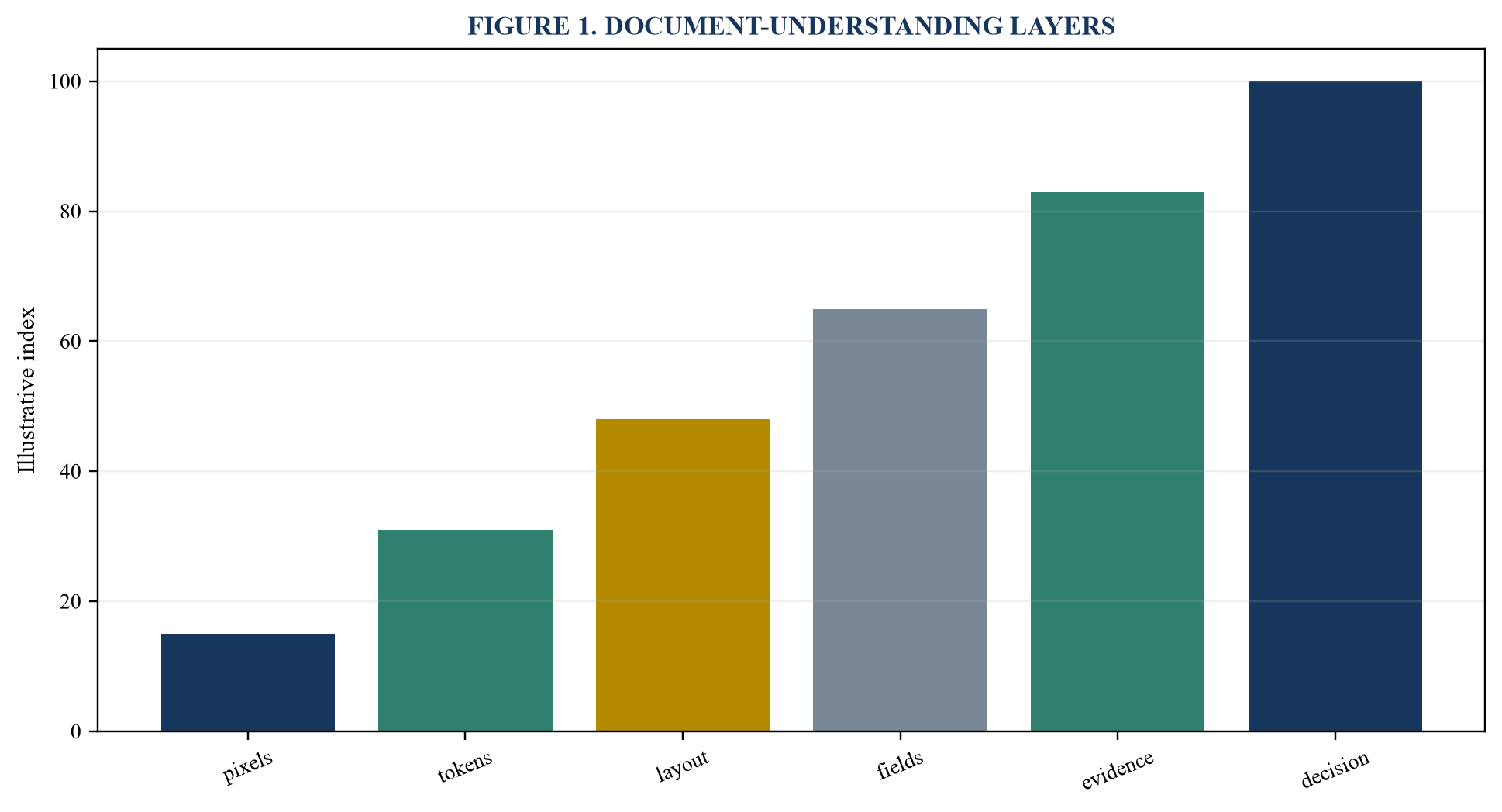
Values are illustrative indices and require replacement with approved validation evidence.
9. Test reading order
Validate columns, sidebars, forms, annotations and non-linear layouts.
The controlled record includes scope; authority; source; passage; fact; calculation; reviewer; decision. The immediate deliverable is a reading-order evaluation. Preserve jurisdiction, effective date, version, transformation, reviewer, approval and unresolved exceptions.
The principal failure occurs when correct words are assembled into the wrong narrative. Reviewers should reconstruct the evidence path, test consequence under adverse conditions and identify who may approve or withhold the recommendation.
Document automation should be judged on the controlled KYC or reconciliation outcome. Recognition, structure, semantics, evidence and final decisions require separate tests.
The decision pack for test reading order should show the prior view, correction, consequence at stake, alternatives, owner, due date, next evidence gate and observed outcome. Exceptions require closure evidence and an explicit effect on retrieval, citation, abstention, review or release.
10. Test cross-page continuity
Reconnect headings, clauses, tables, footnotes, totals and identifiers across page boundaries.
The controlled record includes scope; authority; source; passage; fact; calculation; reviewer; decision. The immediate deliverable is a cross-page context benchmark. Preserve jurisdiction, effective date, version, transformation, reviewer, approval and unresolved exceptions.
The principal failure occurs when page-level processing destroys document-level meaning. Reviewers should reconstruct the evidence path, test consequence under adverse conditions and identify who may approve or withhold the recommendation.
Complex layouts combine visual and logical relationships across pages, tables, forms, handwriting, languages and attachments; character-level accuracy cannot capture these dependencies.
The decision pack for test cross-page continuity should show the prior view, correction, consequence at stake, alternatives, owner, due date, next evidence gate and observed outcome. Exceptions require closure evidence and an explicit effect on retrieval, citation, abstention, review or release.
11. Test table detection
Measure table boundaries, spanning cells, nested headers, borderless layouts and continuation pages.
The controlled record includes scope; authority; source; passage; fact; calculation; reviewer; decision. The immediate deliverable is a table-detection scorecard. Preserve jurisdiction, effective date, version, transformation, reviewer, approval and unresolved exceptions.
The principal failure occurs when tables are found but their structure is unusable. Reviewers should reconstruct the evidence path, test consequence under adverse conditions and identify who may approve or withhold the recommendation.
Reviewers need source-grounded evidence, calibrated confidence, consequence-based thresholds, explicit alternatives and authority to withhold or override an automated result.
The decision pack for test table detection should show the prior view, correction, consequence at stake, alternatives, owner, due date, next evidence gate and observed outcome. Exceptions require closure evidence and an explicit effect on retrieval, citation, abstention, review or release.
12. Test table reconstruction
Validate row, column, header, unit, currency and subtotal relationships.
The controlled record includes scope; authority; source; passage; fact; calculation; reviewer; decision. The immediate deliverable is a table-structure evaluation. Preserve jurisdiction, effective date, version, transformation, reviewer, approval and unresolved exceptions.
The principal failure occurs when correct cell text is assigned to the wrong field or period. Reviewers should reconstruct the evidence path, test consequence under adverse conditions and identify who may approve or withhold the recommendation.
End-to-end value depends on accurate decisions, secure integration, exception economics, resilience and monitored performance across the real document population.
The decision pack for test table reconstruction should show the prior view, correction, consequence at stake, alternatives, owner, due date, next evidence gate and observed outcome. Exceptions require closure evidence and an explicit effect on retrieval, citation, abstention, review or release.
13. Test form understanding
Evaluate key-value pairs, checkboxes, radio buttons, repeated sections and conditional fields.
The controlled record includes scope; authority; source; passage; fact; calculation; reviewer; decision. The immediate deliverable is a form-understanding benchmark. Preserve jurisdiction, effective date, version, transformation, reviewer, approval and unresolved exceptions.
The principal failure occurs when nearby text is paired through geometry rather than meaning. Reviewers should reconstruct the evidence path, test consequence under adverse conditions and identify who may approve or withhold the recommendation.
Document automation should be judged on the controlled KYC or reconciliation outcome. Recognition, structure, semantics, evidence and final decisions require separate tests.
The decision pack for test form understanding should show the prior view, correction, consequence at stake, alternatives, owner, due date, next evidence gate and observed outcome. Exceptions require closure evidence and an explicit effect on retrieval, citation, abstention, review or release.
14. Test handwriting and marks
Measure names, figures, ticks, amendments, initials and mixed print-handwriting content.
The controlled record includes scope; authority; source; passage; fact; calculation; reviewer; decision. The immediate deliverable is a handwriting and mark assessment. Preserve jurisdiction, effective date, version, transformation, reviewer, approval and unresolved exceptions.
The principal failure occurs when manual additions carrying decision value are silently lost. Reviewers should reconstruct the evidence path, test consequence under adverse conditions and identify who may approve or withhold the recommendation.
Complex layouts combine visual and logical relationships across pages, tables, forms, handwriting, languages and attachments; character-level accuracy cannot capture these dependencies.
The decision pack for test handwriting and marks should show the prior view, correction, consequence at stake, alternatives, owner, due date, next evidence gate and observed outcome. Exceptions require closure evidence and an explicit effect on retrieval, citation, abstention, review or release.
15. Test multilingual content
Evaluate scripts, transliteration, mixed-language fields, names and locale-specific formats.
The controlled record includes scope; authority; source; passage; fact; calculation; reviewer; decision. The immediate deliverable is a multilingual validation matrix. Preserve jurisdiction, effective date, version, transformation, reviewer, approval and unresolved exceptions.
The principal failure occurs when one language model degrades identity or financial evidence in another. Reviewers should reconstruct the evidence path, test consequence under adverse conditions and identify who may approve or withhold the recommendation.
Reviewers need source-grounded evidence, calibrated confidence, consequence-based thresholds, explicit alternatives and authority to withhold or override an automated result.
The decision pack for test multilingual content should show the prior view, correction, consequence at stake, alternatives, owner, due date, next evidence gate and observed outcome. Exceptions require closure evidence and an explicit effect on retrieval, citation, abstention, review or release.
16. Normalise values
Standardise dates, names, addresses, identifiers, currencies, decimals, units and sign conventions.
The controlled record includes scope; authority; source; passage; fact; calculation; reviewer; decision. The immediate deliverable is a normalisation control pack. Preserve jurisdiction, effective date, version, transformation, reviewer, approval and unresolved exceptions.
The principal failure occurs when correctly read text becomes an incorrect structured value. Reviewers should reconstruct the evidence path, test consequence under adverse conditions and identify who may approve or withhold the recommendation.
End-to-end value depends on accurate decisions, secure integration, exception economics, resilience and monitored performance across the real document population.
The decision pack for normalise values should show the prior view, correction, consequence at stake, alternatives, owner, due date, next evidence gate and observed outcome. Exceptions require closure evidence and an explicit effect on retrieval, citation, abstention, review or release.
Table 2. Document-complexity test matrix
| Dimension | Test | Decision evidence |
|---|---|---|
| layout | regions and reading order | segmented results |
| tables | cells, headers and continuations | structure accuracy |
| language | scripts, names and formats | locale results |
| quality | blur, glare and compression | robustness curve |
Illustrative controls require use-, consequence-, jurisdiction-, firm- and period-specific approval.
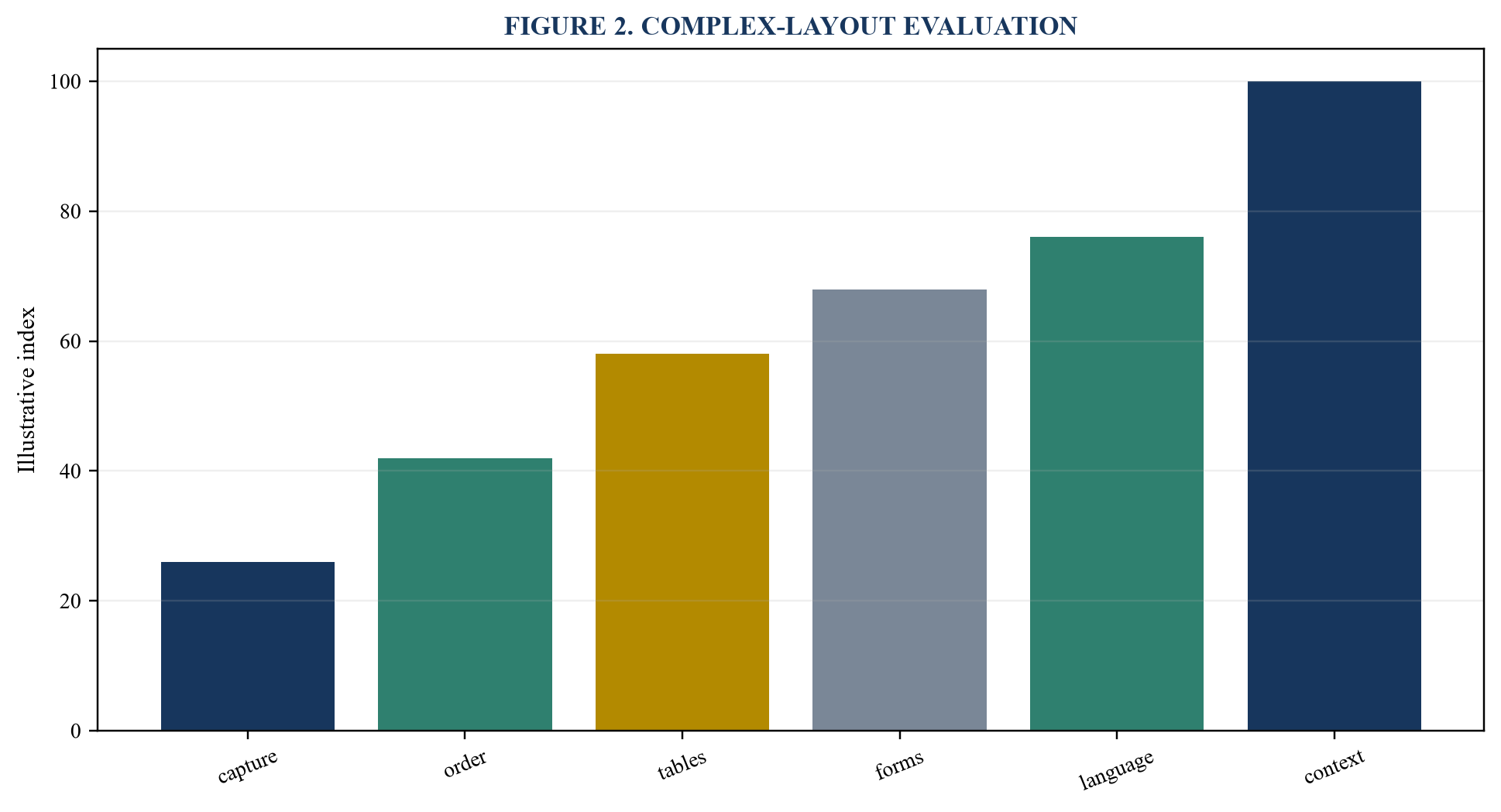
Values are illustrative indices and require replacement with approved validation evidence.
17. Resolve entities
Link customers, counterparties, accounts, beneficial owners, invoices and transactions across documents.
The controlled record includes scope; authority; source; passage; fact; calculation; reviewer; decision. The immediate deliverable is an entity-resolution benchmark. Preserve jurisdiction, effective date, version, transformation, reviewer, approval and unresolved exceptions.
The principal failure occurs when spelling variation or reused identifiers create false matches. Reviewers should reconstruct the evidence path, test consequence under adverse conditions and identify who may approve or withhold the recommendation.
Document automation should be judged on the controlled KYC or reconciliation outcome. Recognition, structure, semantics, evidence and final decisions require separate tests.
The decision pack for resolve entities should show the prior view, correction, consequence at stake, alternatives, owner, due date, next evidence gate and observed outcome. Exceptions require closure evidence and an explicit effect on retrieval, citation, abstention, review or release.
18. Validate document authenticity
Combine extraction with issuer, template, security-feature, metadata and tamper checks.
The controlled record includes scope; authority; source; passage; fact; calculation; reviewer; decision. The immediate deliverable is an authenticity evidence record. Preserve jurisdiction, effective date, version, transformation, reviewer, approval and unresolved exceptions.
The principal failure occurs when legible fraudulent documents pass as valid evidence. Reviewers should reconstruct the evidence path, test consequence under adverse conditions and identify who may approve or withhold the recommendation.
Complex layouts combine visual and logical relationships across pages, tables, forms, handwriting, languages and attachments; character-level accuracy cannot capture these dependencies.
The decision pack for validate document authenticity should show the prior view, correction, consequence at stake, alternatives, owner, due date, next evidence gate and observed outcome. Exceptions require closure evidence and an explicit effect on retrieval, citation, abstention, review or release.
19. Detect missing evidence
Identify absent pages, attachments, signatures, fields, periods and supporting documents.
The controlled record includes scope; authority; source; passage; fact; calculation; reviewer; decision. The immediate deliverable is a completeness assessment. Preserve jurisdiction, effective date, version, transformation, reviewer, approval and unresolved exceptions.
The principal failure occurs when automation completes a file whose evidential chain is incomplete. Reviewers should reconstruct the evidence path, test consequence under adverse conditions and identify who may approve or withhold the recommendation.
Reviewers need source-grounded evidence, calibrated confidence, consequence-based thresholds, explicit alternatives and authority to withhold or override an automated result.
The decision pack for detect missing evidence should show the prior view, correction, consequence at stake, alternatives, owner, due date, next evidence gate and observed outcome. Exceptions require closure evidence and an explicit effect on retrieval, citation, abstention, review or release.
20. Reconcile within documents
Test subtotals, totals, roll-forwards, dates, balances and accounting identities.
The controlled record includes scope; authority; source; passage; fact; calculation; reviewer; decision. The immediate deliverable is an internal reconciliation report. Preserve jurisdiction, effective date, version, transformation, reviewer, approval and unresolved exceptions.
The principal failure occurs when locally plausible fields fail the document's own controls. Reviewers should reconstruct the evidence path, test consequence under adverse conditions and identify who may approve or withhold the recommendation.
End-to-end value depends on accurate decisions, secure integration, exception economics, resilience and monitored performance across the real document population.
The decision pack for reconcile within documents should show the prior view, correction, consequence at stake, alternatives, owner, due date, next evidence gate and observed outcome. Exceptions require closure evidence and an explicit effect on retrieval, citation, abstention, review or release.
21. Reconcile across documents
Compare identity, address, ownership, income, invoice, bank and ledger evidence across sources.
The controlled record includes scope; authority; source; passage; fact; calculation; reviewer; decision. The immediate deliverable is a cross-document reconciliation. Preserve jurisdiction, effective date, version, transformation, reviewer, approval and unresolved exceptions.
The principal failure occurs when each extraction is accurate while the combined case is inconsistent. Reviewers should reconstruct the evidence path, test consequence under adverse conditions and identify who may approve or withhold the recommendation.
Document automation should be judged on the controlled KYC or reconciliation outcome. Recognition, structure, semantics, evidence and final decisions require separate tests.
The decision pack for reconcile across documents should show the prior view, correction, consequence at stake, alternatives, owner, due date, next evidence gate and observed outcome. Exceptions require closure evidence and an explicit effect on retrieval, citation, abstention, review or release.
22. Map KYC decisions
Connect extracted facts to customer identification, verification, ownership, purpose, risk and enhanced diligence.
The controlled record includes scope; authority; source; passage; fact; calculation; reviewer; decision. The immediate deliverable is a KYC decision map. Preserve jurisdiction, effective date, version, transformation, reviewer, approval and unresolved exceptions.
The principal failure occurs when document parsing is mistaken for completed customer due diligence. Reviewers should reconstruct the evidence path, test consequence under adverse conditions and identify who may approve or withhold the recommendation.
Complex layouts combine visual and logical relationships across pages, tables, forms, handwriting, languages and attachments; character-level accuracy cannot capture these dependencies.
The decision pack for map kyc decisions should show the prior view, correction, consequence at stake, alternatives, owner, due date, next evidence gate and observed outcome. Exceptions require closure evidence and an explicit effect on retrieval, citation, abstention, review or release.
23. Map financial reconciliation
Connect fields to invoice, purchase order, receipt, bank, ledger and exception logic.
The controlled record includes scope; authority; source; passage; fact; calculation; reviewer; decision. The immediate deliverable is a reconciliation control map. Preserve jurisdiction, effective date, version, transformation, reviewer, approval and unresolved exceptions.
The principal failure occurs when straight-through processing posts unsupported financial conclusions. Reviewers should reconstruct the evidence path, test consequence under adverse conditions and identify who may approve or withhold the recommendation.
Reviewers need source-grounded evidence, calibrated confidence, consequence-based thresholds, explicit alternatives and authority to withhold or override an automated result.
The decision pack for map financial reconciliation should show the prior view, correction, consequence at stake, alternatives, owner, due date, next evidence gate and observed outcome. Exceptions require closure evidence and an explicit effect on retrieval, citation, abstention, review or release.
24. Test exception taxonomy
Classify low confidence, conflict, missingness, unusual layout, policy breach and suspected manipulation.
The controlled record includes scope; authority; source; passage; fact; calculation; reviewer; decision. The immediate deliverable is an exception taxonomy. Preserve jurisdiction, effective date, version, transformation, reviewer, approval and unresolved exceptions.
The principal failure occurs when all failures enter one manual queue without priority or cause. Reviewers should reconstruct the evidence path, test consequence under adverse conditions and identify who may approve or withhold the recommendation.
End-to-end value depends on accurate decisions, secure integration, exception economics, resilience and monitored performance across the real document population.
The decision pack for test exception taxonomy should show the prior view, correction, consequence at stake, alternatives, owner, due date, next evidence gate and observed outcome. Exceptions require closure evidence and an explicit effect on retrieval, citation, abstention, review or release.
Table 3. KYC and reconciliation controls
| Control | Test | Completion evidence |
|---|---|---|
| identity | document and entity consistency | verified attributes |
| ownership | cross-document relationship | resolved chain |
| financial | totals, periods and postings | balanced reconciliation |
| exception | conflict and missing evidence | authorised decision |
Illustrative controls require use-, consequence-, jurisdiction-, firm- and period-specific approval.
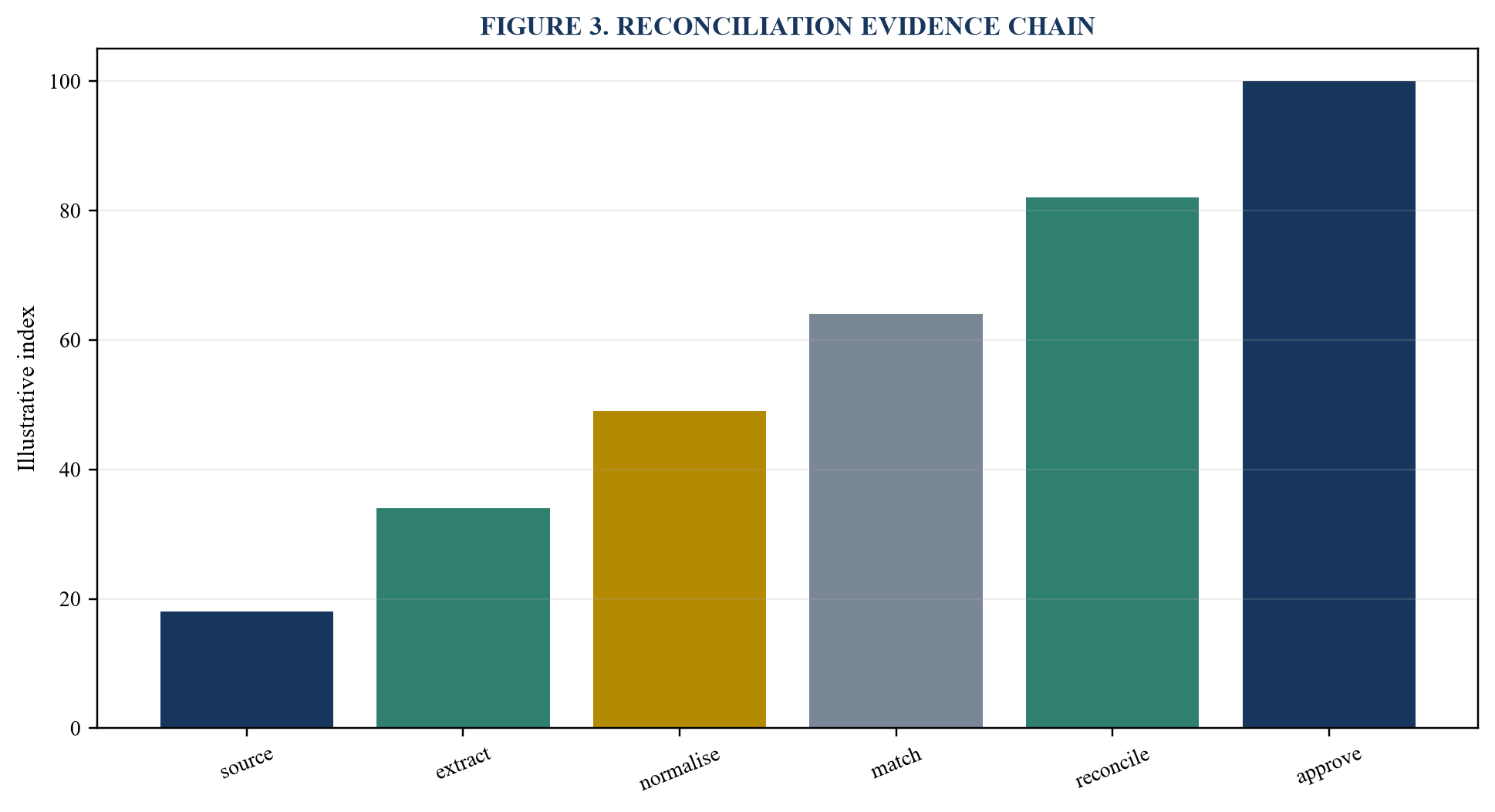
Values are illustrative indices and require replacement with approved validation evidence.
25. Design human review
Route material exceptions with source evidence, proposed value, confidence, alternatives and required authority.
The controlled record includes scope; authority; source; passage; fact; calculation; reviewer; decision. The immediate deliverable is an evidence-centred review workflow. Preserve jurisdiction, effective date, version, transformation, reviewer, approval and unresolved exceptions.
The principal failure occurs when reviewers rubber-stamp opaque model outputs. Reviewers should reconstruct the evidence path, test consequence under adverse conditions and identify who may approve or withhold the recommendation.
Document automation should be judged on the controlled KYC or reconciliation outcome. Recognition, structure, semantics, evidence and final decisions require separate tests.
The decision pack for design human review should show the prior view, correction, consequence at stake, alternatives, owner, due date, next evidence gate and observed outcome. Exceptions require closure evidence and an explicit effect on retrieval, citation, abstention, review or release.
26. Calibrate confidence
Relate field and document confidence to observed error, consequence and review policy.
The controlled record includes scope; authority; source; passage; fact; calculation; reviewer; decision. The immediate deliverable is a calibrated confidence model. Preserve jurisdiction, effective date, version, transformation, reviewer, approval and unresolved exceptions.
The principal failure occurs when vendor confidence scores are treated as probabilities of correctness. Reviewers should reconstruct the evidence path, test consequence under adverse conditions and identify who may approve or withhold the recommendation.
Complex layouts combine visual and logical relationships across pages, tables, forms, handwriting, languages and attachments; character-level accuracy cannot capture these dependencies.
The decision pack for calibrate confidence should show the prior view, correction, consequence at stake, alternatives, owner, due date, next evidence gate and observed outcome. Exceptions require closure evidence and an explicit effect on retrieval, citation, abstention, review or release.
27. Set consequence-based thresholds
Vary acceptance, review and rejection by field, document, customer, amount and risk.
The controlled record includes scope; authority; source; passage; fact; calculation; reviewer; decision. The immediate deliverable is a threshold matrix. Preserve jurisdiction, effective date, version, transformation, reviewer, approval and unresolved exceptions.
The principal failure occurs when one threshold exposes high-consequence decisions or destroys automation value. Reviewers should reconstruct the evidence path, test consequence under adverse conditions and identify who may approve or withhold the recommendation.
Reviewers need source-grounded evidence, calibrated confidence, consequence-based thresholds, explicit alternatives and authority to withhold or override an automated result.
The decision pack for set consequence-based thresholds should show the prior view, correction, consequence at stake, alternatives, owner, due date, next evidence gate and observed outcome. Exceptions require closure evidence and an explicit effect on retrieval, citation, abstention, review or release.
28. Measure end-to-end accuracy
Score final decisions, reconciliations and exceptions in addition to component metrics.
The controlled record includes scope; authority; source; passage; fact; calculation; reviewer; decision. The immediate deliverable is an end-to-end outcome scorecard. Preserve jurisdiction, effective date, version, transformation, reviewer, approval and unresolved exceptions.
The principal failure occurs when local benchmark gains fail to improve the controlled process. Reviewers should reconstruct the evidence path, test consequence under adverse conditions and identify who may approve or withhold the recommendation.
End-to-end value depends on accurate decisions, secure integration, exception economics, resilience and monitored performance across the real document population.
The decision pack for measure end-to-end accuracy should show the prior view, correction, consequence at stake, alternatives, owner, due date, next evidence gate and observed outcome. Exceptions require closure evidence and an explicit effect on retrieval, citation, abstention, review or release.
29. Measure operational economics
Track cycle time, touch time, queue age, rework, escalation, compute, licence and loss.
The controlled record includes scope; authority; source; passage; fact; calculation; reviewer; decision. The immediate deliverable is a net business-case model. Preserve jurisdiction, effective date, version, transformation, reviewer, approval and unresolved exceptions.
The principal failure occurs when automation savings ignore exception labour and control remediation. Reviewers should reconstruct the evidence path, test consequence under adverse conditions and identify who may approve or withhold the recommendation.
Document automation should be judged on the controlled KYC or reconciliation outcome. Recognition, structure, semantics, evidence and final decisions require separate tests.
The decision pack for measure operational economics should show the prior view, correction, consequence at stake, alternatives, owner, due date, next evidence gate and observed outcome. Exceptions require closure evidence and an explicit effect on retrieval, citation, abstention, review or release.
30. Test fairness and accessibility
Evaluate names, languages, scripts, nationalities, ages, disabilities and capture channels.
The controlled record includes scope; authority; source; passage; fact; calculation; reviewer; decision. The immediate deliverable is a segmented impact assessment. Preserve jurisdiction, effective date, version, transformation, reviewer, approval and unresolved exceptions.
The principal failure occurs when error concentration creates unequal friction or exclusion. Reviewers should reconstruct the evidence path, test consequence under adverse conditions and identify who may approve or withhold the recommendation.
Complex layouts combine visual and logical relationships across pages, tables, forms, handwriting, languages and attachments; character-level accuracy cannot capture these dependencies.
The decision pack for test fairness and accessibility should show the prior view, correction, consequence at stake, alternatives, owner, due date, next evidence gate and observed outcome. Exceptions require closure evidence and an explicit effect on retrieval, citation, abstention, review or release.
31. Protect privacy and confidentiality
Control minimisation, access, redaction, retention, residency, logs, model use and deletion.
The controlled record includes scope; authority; source; passage; fact; calculation; reviewer; decision. The immediate deliverable is a document-data control map. Preserve jurisdiction, effective date, version, transformation, reviewer, approval and unresolved exceptions.
The principal failure occurs when sensitive documents leak through training, prompts, outputs or support paths. Reviewers should reconstruct the evidence path, test consequence under adverse conditions and identify who may approve or withhold the recommendation.
Reviewers need source-grounded evidence, calibrated confidence, consequence-based thresholds, explicit alternatives and authority to withhold or override an automated result.
The decision pack for protect privacy and confidentiality should show the prior view, correction, consequence at stake, alternatives, owner, due date, next evidence gate and observed outcome. Exceptions require closure evidence and an explicit effect on retrieval, citation, abstention, review or release.
32. Control vendor and model risk
Assess model version, hosting, subprocessors, training use, security, continuity, audit and exit.
The controlled record includes scope; authority; source; passage; fact; calculation; reviewer; decision. The immediate deliverable is a vendor assurance file. Preserve jurisdiction, effective date, version, transformation, reviewer, approval and unresolved exceptions.
The principal failure occurs when a black-box service changes performance or data handling without control. Reviewers should reconstruct the evidence path, test consequence under adverse conditions and identify who may approve or withhold the recommendation.
End-to-end value depends on accurate decisions, secure integration, exception economics, resilience and monitored performance across the real document population.
The decision pack for control vendor and model risk should show the prior view, correction, consequence at stake, alternatives, owner, due date, next evidence gate and observed outcome. Exceptions require closure evidence and an explicit effect on retrieval, citation, abstention, review or release.
Table 4. Consequence thresholds
| Outcome | Default route | Required control |
|---|---|---|
| low impact | straight-through | calibrated evidence |
| material | human review | source and alternatives |
| conflict | investigation | cross-document reconciliation |
| suspected fraud | hold and escalate | specialist authority |
Illustrative controls require use-, consequence-, jurisdiction-, firm- and period-specific approval.
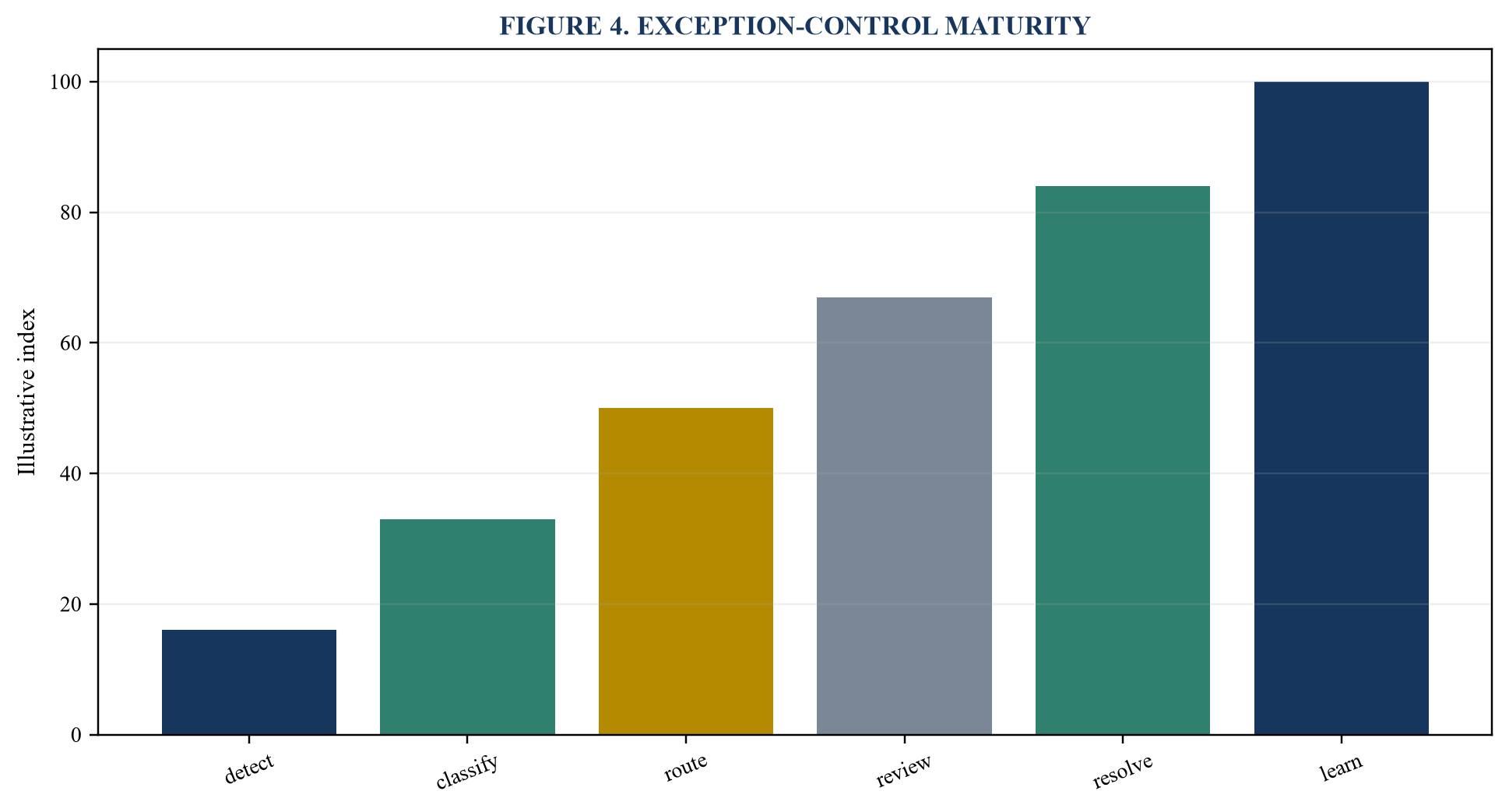
Values are illustrative indices and require replacement with approved validation evidence.
33. Test adversarial documents
Probe prompt injection, hidden text, overlays, manipulated PDFs, QR codes, malware and visual spoofing.
The controlled record includes scope; authority; source; passage; fact; calculation; reviewer; decision. The immediate deliverable is an adversarial test pack. Preserve jurisdiction, effective date, version, transformation, reviewer, approval and unresolved exceptions.
The principal failure occurs when documents become instructions to the processing system. Reviewers should reconstruct the evidence path, test consequence under adverse conditions and identify who may approve or withhold the recommendation.
Document automation should be judged on the controlled KYC or reconciliation outcome. Recognition, structure, semantics, evidence and final decisions require separate tests.
The decision pack for test adversarial documents should show the prior view, correction, consequence at stake, alternatives, owner, due date, next evidence gate and observed outcome. Exceptions require closure evidence and an explicit effect on retrieval, citation, abstention, review or release.
34. Preserve lineage
Record original file hash, page, region, extraction, transformation, review, override and final decision.
The controlled record includes scope; authority; source; passage; fact; calculation; reviewer; decision. The immediate deliverable is an immutable evidence trail. Preserve jurisdiction, effective date, version, transformation, reviewer, approval and unresolved exceptions.
The principal failure occurs when the bank cannot reconstruct how a value entered a system of record. Reviewers should reconstruct the evidence path, test consequence under adverse conditions and identify who may approve or withhold the recommendation.
Complex layouts combine visual and logical relationships across pages, tables, forms, handwriting, languages and attachments; character-level accuracy cannot capture these dependencies.
The decision pack for preserve lineage should show the prior view, correction, consequence at stake, alternatives, owner, due date, next evidence gate and observed outcome. Exceptions require closure evidence and an explicit effect on retrieval, citation, abstention, review or release.
35. Integrate with systems of record
Control schemas, APIs, duplicate handling, idempotency, retries, reversals and access.
The controlled record includes scope; authority; source; passage; fact; calculation; reviewer; decision. The immediate deliverable is an integration control design. Preserve jurisdiction, effective date, version, transformation, reviewer, approval and unresolved exceptions.
The principal failure occurs when accurate extraction creates incorrect postings or duplicated cases. Reviewers should reconstruct the evidence path, test consequence under adverse conditions and identify who may approve or withhold the recommendation.
Reviewers need source-grounded evidence, calibrated confidence, consequence-based thresholds, explicit alternatives and authority to withhold or override an automated result.
The decision pack for integrate with systems of record should show the prior view, correction, consequence at stake, alternatives, owner, due date, next evidence gate and observed outcome. Exceptions require closure evidence and an explicit effect on retrieval, citation, abstention, review or release.
36. Validate resilience
Test volume spikes, corrupt files, latency, outages, fallbacks, recovery and backlogs.
The controlled record includes scope; authority; source; passage; fact; calculation; reviewer; decision. The immediate deliverable is a resilience and recovery plan. Preserve jurisdiction, effective date, version, transformation, reviewer, approval and unresolved exceptions.
The principal failure occurs when the service fails during onboarding, close or regulatory deadlines. Reviewers should reconstruct the evidence path, test consequence under adverse conditions and identify who may approve or withhold the recommendation.
End-to-end value depends on accurate decisions, secure integration, exception economics, resilience and monitored performance across the real document population.
The decision pack for validate resilience should show the prior view, correction, consequence at stake, alternatives, owner, due date, next evidence gate and observed outcome. Exceptions require closure evidence and an explicit effect on retrieval, citation, abstention, review or release.
37. Monitor drift
Track issuers, templates, languages, quality, field errors, exceptions, overrides and outcomes.
The controlled record includes scope; authority; source; passage; fact; calculation; reviewer; decision. The immediate deliverable is a production monitoring dashboard. Preserve jurisdiction, effective date, version, transformation, reviewer, approval and unresolved exceptions.
The principal failure occurs when performance decays as document populations change. Reviewers should reconstruct the evidence path, test consequence under adverse conditions and identify who may approve or withhold the recommendation.
Document automation should be judged on the controlled KYC or reconciliation outcome. Recognition, structure, semantics, evidence and final decisions require separate tests.
The decision pack for monitor drift should show the prior view, correction, consequence at stake, alternatives, owner, due date, next evidence gate and observed outcome. Exceptions require closure evidence and an explicit effect on retrieval, citation, abstention, review or release.
38. Trigger revalidation
Require review after material model, vendor, document, workflow, policy or jurisdiction change.
The controlled record includes scope; authority; source; passage; fact; calculation; reviewer; decision. The immediate deliverable is a revalidation register. Preserve jurisdiction, effective date, version, transformation, reviewer, approval and unresolved exceptions.
The principal failure occurs when a changed system inherits obsolete approval. Reviewers should reconstruct the evidence path, test consequence under adverse conditions and identify who may approve or withhold the recommendation.
Complex layouts combine visual and logical relationships across pages, tables, forms, handwriting, languages and attachments; character-level accuracy cannot capture these dependencies.
The decision pack for trigger revalidation should show the prior view, correction, consequence at stake, alternatives, owner, due date, next evidence gate and observed outcome. Exceptions require closure evidence and an explicit effect on retrieval, citation, abstention, review or release.
39. Retain and delete evidence
Apply approved retention to originals, crops, features, outputs, logs, queues and backups.
The controlled record includes scope; authority; source; passage; fact; calculation; reviewer; decision. The immediate deliverable is a verified lifecycle record. Preserve jurisdiction, effective date, version, transformation, reviewer, approval and unresolved exceptions.
The principal failure occurs when derived document artefacts outlive their lawful purpose. Reviewers should reconstruct the evidence path, test consequence under adverse conditions and identify who may approve or withhold the recommendation.
Reviewers need source-grounded evidence, calibrated confidence, consequence-based thresholds, explicit alternatives and authority to withhold or override an automated result.
The decision pack for retain and delete evidence should show the prior view, correction, consequence at stake, alternatives, owner, due date, next evidence gate and observed outcome. Exceptions require closure evidence and an explicit effect on retrieval, citation, abstention, review or release.
40. Close through control gates
Require representative benchmarks, consequence thresholds, evidence-centred review, reconciled outcomes, secure integration and monitoring.
The controlled record includes scope; authority; source; passage; fact; calculation; reviewer; decision. The immediate deliverable is an evidence-gated deployment decision. Preserve jurisdiction, effective date, version, transformation, reviewer, approval and unresolved exceptions.
The principal failure occurs when a strong OCR score is mistaken for safe KYC or financial automation. Reviewers should reconstruct the evidence path, test consequence under adverse conditions and identify who may approve or withhold the recommendation.
End-to-end value depends on accurate decisions, secure integration, exception economics, resilience and monitored performance across the real document population.
The decision pack for close through control gates should show the prior view, correction, consequence at stake, alternatives, owner, due date, next evidence gate and observed outcome. Exceptions require closure evidence and an explicit effect on retrieval, citation, abstention, review or release.
Table 5. Document-AI deployment gates
| Gate | Primary work | Completion evidence |
|---|---|---|
| population | complexity and sampling | representative corpus |
| performance | component and outcome tests | threshold results |
| control | review, privacy and lineage | approved design |
| operation | integration and monitoring | accountable release |
Illustrative controls require use-, consequence-, jurisdiction-, firm- and period-specific approval.
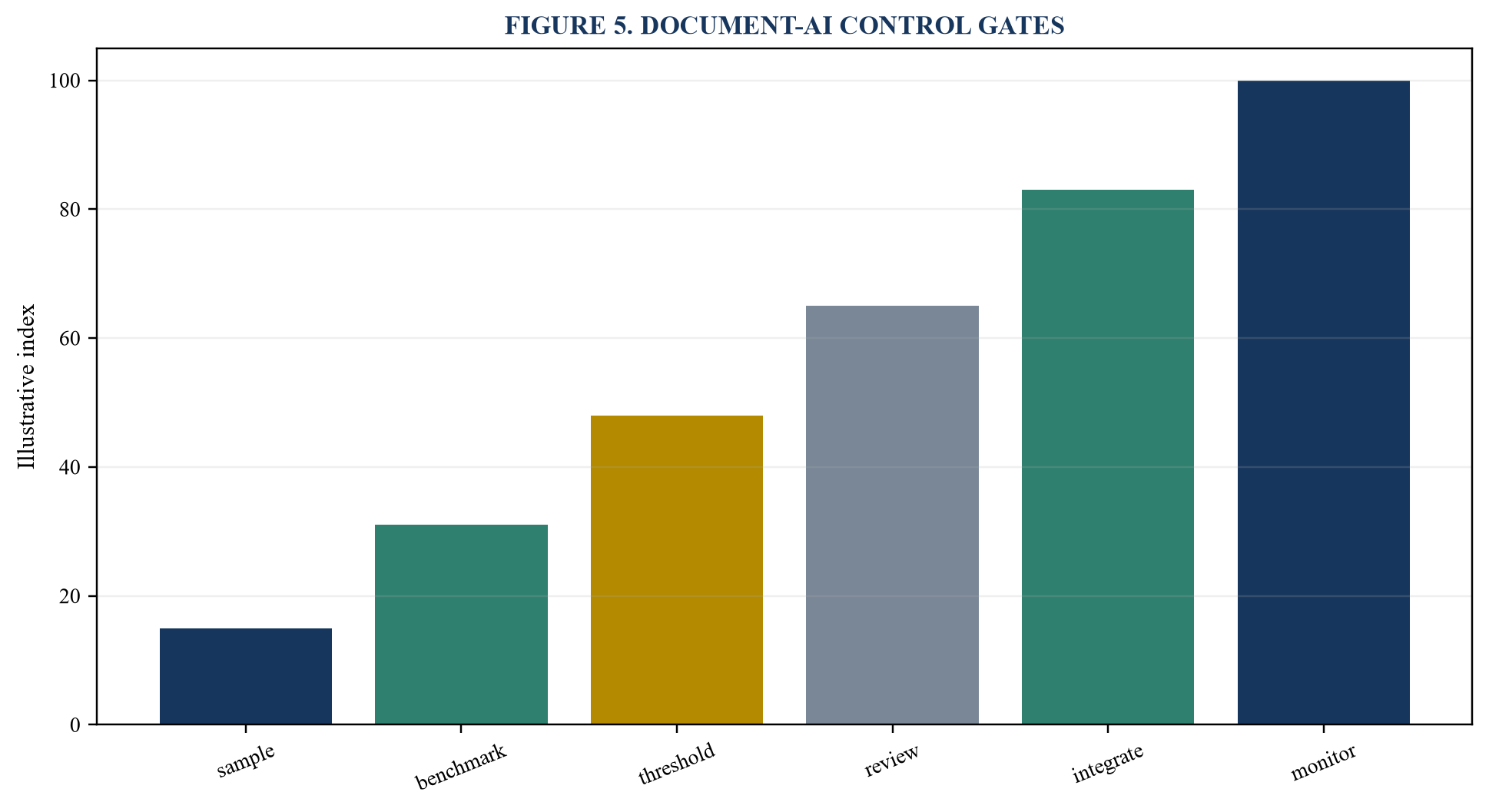
Values are illustrative indices and require replacement with approved validation evidence.
References
- Microsoft Research, OCR and Document Understanding, https://www.microsoft.com/en-us/research/project/ocr-and-document-understanding/
- Microsoft Research, Document AI, https://www.microsoft.com/en-us/research/project/document-ai/
- Microsoft Research, LayoutReader: Pre-training of Text and Layout for Reading Order Detection, https://www.microsoft.com/en-us/research/publication/layoutreader-pre-training-of-text-and-layout-for-reading-order-detection/
- Microsoft, Document Intelligence Layout Model, https://learn.microsoft.com/en-us/azure/ai-services/document-intelligence/prebuilt/layout
- Microsoft, Document Intelligence Analyze Response, https://learn.microsoft.com/en-us/azure/ai-services/document-intelligence/concept/analyze-document-response
- Microsoft, Cross-Page Table Reconstruction with Document Intelligence, https://techcommunity.microsoft.com/blog/azure-ai-foundry-blog/a-heuristic-method-of-merging-cross-page-tables-based-on-document-intelligence-l/4118126
- DocVQA, Dataset for Visual Question Answering on Document Images, https://arxiv.org/abs/2007.00398
- National Institute of Standards and Technology, Special Database 19 Handprinted Forms and Characters, https://www.nist.gov/srd/nist-special-database-19
- Financial Action Task Force, Guidance on Digital Identity, https://www.fatf-gafi.org/content/dam/fatf-gafi/guidance/Guidance-on-Digital-Identity.pdf.coredownload.pdf
- Financial Action Task Force, Risk-Based Approach Guidance for the Banking Sector, https://www.fatf-gafi.org/en/publications/Fatfrecommendations/Risk-based-approach-banking-sector.html
- Wolfsberg Group, Frequently Asked Questions on Digital Customer Lifecycle Risk Management, https://wolfsberg-group.org/resources/2022-digital-customer-lifecycle-risk-management/
- Central Bank of the UAE, Guidance Note on Responsible Adoption and Use of Artificial Intelligence, https://rulebook.centralbank.ae/en/rulebook/guidance-note-consumer-protection-and-responsible-adoption-and-use-artificial-intelligence
- Central Bank of the UAE, Data Quality, Privacy and Security for AI and ML, https://rulebook.centralbank.ae/en/rulebook/5-data-quality-privacy-and-security
- Central Bank of the UAE, Model Management Standards, https://rulebook.centralbank.ae/en/rulebook/model-management-standards
- Central Bank of the UAE, AML and CFT Guidance for Licensed Financial Institutions, https://rulebook.centralbank.ae/en/rulebook/anti-money-laundering-and-combating-financing-terrorism
- Basel Committee on Banking Supervision, Principles for Effective Risk Data Aggregation and Risk Reporting, https://www.bis.org/publ/bcbs239.htm
- Prudential Regulation Authority, SS1/23 Model Risk Management Principles for Banks, https://www.bankofengland.co.uk/prudential-regulation/publication/2023/may/model-risk-management-principles-for-banks-supervisory-statement
- National Institute of Standards and Technology, Digital Identity Guidelines, https://pages.nist.gov/800-63-4/
- National Institute of Standards and Technology, AI Risk Management Framework 1.0, https://www.nist.gov/publications/artificial-intelligence-risk-management-framework-ai-rmf-10
- National Institute of Standards and Technology, Generative AI Profile, https://nvlpubs.nist.gov/nistpubs/ai/NIST.AI.600-1.pdf
- Information Commissioner's Office, Guidance on AI and Data Protection, https://ico.org.uk/for-organisations/uk-gdpr-guidance-and-resources/artificial-intelligence/
- UAE Government, Federal Decree-Law No. 45 of 2021 on Personal Data Protection, https://uaelegislation.gov.ae/en/legislations/1972
- International Organization for Standardization, ISO/IEC 42001 AI Management Systems, https://www.iso.org/standard/81230.html
- International Organization for Standardization, ISO/IEC 27001 Information Security Management Systems, https://www.iso.org/standard/27001
- International Organization for Standardization, ISO 19005 PDF/A, https://www.iso.org/standard/38920.html
- Unicode Consortium, Unicode Standard, https://www.unicode.org/standard/standard.html
