

1. Define the public objective
The public authority should state the service, access, capacity, affordability and resilience outcome that justifies support. The required output is a support-objective charter. Record the accountable owner, source evidence, legal basis, contractual wording, model assumption, fiscal period, cash-flow consequence and review date [1][2].
Test the conclusion across base, downside, severe-but-plausible and reverse-stress cases. Separate contractual maximum exposure, probability-weighted expected loss, tail loss, annual liquidity need and recovery-adjusted loss. Reconcile the project view with the government portfolio, budget, debt strategy, accounting, statistics and service-continuity obligations.
The principal risk is that guarantees can subsidise finance without solving the public need. Quantify the effect on public service, bankability, guarantee value, annual cash need, debt and deficit, fiscal headroom, risk concentration, incentives and intergenerational cost. Compare the proposed support with caps, deductibles, sharing bands, insurance, sponsor support and alternative delivery structures.
Translate the conclusion into triggers, approval conditions, pricing, reserves, disclosure, monitoring, claims, recoveries and release controls. Refresh it after material contractual, fiscal, market or performance change.
2. Map every support instrument
The public authority should inventory contracts, guarantees, indemnities, comfort letters, undertakings, subsidies, loans, equity and insurance. The required output is a complete support register. Record the accountable owner, source evidence, legal basis, contractual wording, model assumption, fiscal period, cash-flow consequence and review date [3][4].
Test the conclusion across base, downside, severe-but-plausible and reverse-stress cases. Separate contractual maximum exposure, probability-weighted expected loss, tail loss, annual liquidity need and recovery-adjusted loss. Reconcile the project view with the government portfolio, budget, debt strategy, accounting, statistics and service-continuity obligations.
The principal risk is that exposure can sit outside the principal project agreement. Quantify the effect on public service, bankability, guarantee value, annual cash need, debt and deficit, fiscal headroom, risk concentration, incentives and intergenerational cost. Compare the proposed support with caps, deductibles, sharing bands, insurance, sponsor support and alternative delivery structures.
Translate the conclusion into triggers, approval conditions, pricing, reserves, disclosure, monitoring, claims, recoveries and release controls. Refresh it after material contractual, fiscal, market or performance change.
3. Classify direct and contingent obligations
The public authority should separate scheduled commitments from payments dependent on uncertain events. The required output is a fiscal-liability taxonomy. Record the accountable owner, source evidence, legal basis, contractual wording, model assumption, fiscal period, cash-flow consequence and review date [5][6].
Test the conclusion across base, downside, severe-but-plausible and reverse-stress cases. Separate contractual maximum exposure, probability-weighted expected loss, tail loss, annual liquidity need and recovery-adjusted loss. Reconcile the project view with the government portfolio, budget, debt strategy, accounting, statistics and service-continuity obligations.
The principal risk is that ordinary payments and event-driven claims can be confused or omitted. Quantify the effect on public service, bankability, guarantee value, annual cash need, debt and deficit, fiscal headroom, risk concentration, incentives and intergenerational cost. Compare the proposed support with caps, deductibles, sharing bands, insurance, sponsor support and alternative delivery structures.
Translate the conclusion into triggers, approval conditions, pricing, reserves, disclosure, monitoring, claims, recoveries and release controls. Refresh it after material contractual, fiscal, market or performance change.
4. Classify explicit and implicit exposure
The public authority should distinguish legal obligations from rescue, continuity, environmental and political expectations. The required output is an explicit-implicit matrix. Record the accountable owner, source evidence, legal basis, contractual wording, model assumption, fiscal period, cash-flow consequence and review date [5][7].
Test the conclusion across base, downside, severe-but-plausible and reverse-stress cases. Separate contractual maximum exposure, probability-weighted expected loss, tail loss, annual liquidity need and recovery-adjusted loss. Reconcile the project view with the government portfolio, budget, debt strategy, accounting, statistics and service-continuity obligations.
The principal risk is that absence of a legal guarantee can conceal a credible public intervention risk. Quantify the effect on public service, bankability, guarantee value, annual cash need, debt and deficit, fiscal headroom, risk concentration, incentives and intergenerational cost. Compare the proposed support with caps, deductibles, sharing bands, insurance, sponsor support and alternative delivery structures.
Translate the conclusion into triggers, approval conditions, pricing, reserves, disclosure, monitoring, claims, recoveries and release controls. Refresh it after material contractual, fiscal, market or performance change.
5. Read the legal trigger
The public authority should translate defined events, thresholds, notices, cure periods, exclusions and dispute rights into model states. The required output is a trigger interpretation memorandum. Record the accountable owner, source evidence, legal basis, contractual wording, model assumption, fiscal period, cash-flow consequence and review date [8][9].
Test the conclusion across base, downside, severe-but-plausible and reverse-stress cases. Separate contractual maximum exposure, probability-weighted expected loss, tail loss, annual liquidity need and recovery-adjusted loss. Reconcile the project view with the government portfolio, budget, debt strategy, accounting, statistics and service-continuity obligations.
The principal risk is that modelled exposure can differ materially from enforceable wording. Quantify the effect on public service, bankability, guarantee value, annual cash need, debt and deficit, fiscal headroom, risk concentration, incentives and intergenerational cost. Compare the proposed support with caps, deductibles, sharing bands, insurance, sponsor support and alternative delivery structures.
Translate the conclusion into triggers, approval conditions, pricing, reserves, disclosure, monitoring, claims, recoveries and release controls. Refresh it after material contractual, fiscal, market or performance change.
6. Identify the beneficiary and payment route
The public authority should map lenders, project company, sponsors, suppliers, users and public counterparties. The required output is a beneficiary and cash-flow map. Record the accountable owner, source evidence, legal basis, contractual wording, model assumption, fiscal period, cash-flow consequence and review date [4][10].
Test the conclusion across base, downside, severe-but-plausible and reverse-stress cases. Separate contractual maximum exposure, probability-weighted expected loss, tail loss, annual liquidity need and recovery-adjusted loss. Reconcile the project view with the government portfolio, budget, debt strategy, accounting, statistics and service-continuity obligations.
The principal risk is that support can protect one party while creating unintended priority or moral hazard. Quantify the effect on public service, bankability, guarantee value, annual cash need, debt and deficit, fiscal headroom, risk concentration, incentives and intergenerational cost. Compare the proposed support with caps, deductibles, sharing bands, insurance, sponsor support and alternative delivery structures.
Translate the conclusion into triggers, approval conditions, pricing, reserves, disclosure, monitoring, claims, recoveries and release controls. Refresh it after material contractual, fiscal, market or performance change.
7. Test whether support is necessary
The public authority should compare bankability with and without support and assess narrower alternatives. The required output is a support-necessity assessment. Record the accountable owner, source evidence, legal basis, contractual wording, model assumption, fiscal period, cash-flow consequence and review date [3][11].
Test the conclusion across base, downside, severe-but-plausible and reverse-stress cases. Separate contractual maximum exposure, probability-weighted expected loss, tail loss, annual liquidity need and recovery-adjusted loss. Reconcile the project view with the government portfolio, budget, debt strategy, accounting, statistics and service-continuity obligations.
The principal risk is that public risk can replace lender or sponsor diligence without incremental public value. Quantify the effect on public service, bankability, guarantee value, annual cash need, debt and deficit, fiscal headroom, risk concentration, incentives and intergenerational cost. Compare the proposed support with caps, deductibles, sharing bands, insurance, sponsor support and alternative delivery structures.
Translate the conclusion into triggers, approval conditions, pricing, reserves, disclosure, monitoring, claims, recoveries and release controls. Refresh it after material contractual, fiscal, market or performance change.
8. Set the contractual maximum
The public authority should calculate caps, baskets, deductibles, escalation, indexation, currency, duration and aggregation. The required output is a maximum-exposure schedule. Record the accountable owner, source evidence, legal basis, contractual wording, model assumption, fiscal period, cash-flow consequence and review date [4][12].
Test the conclusion across base, downside, severe-but-plausible and reverse-stress cases. Separate contractual maximum exposure, probability-weighted expected loss, tail loss, annual liquidity need and recovery-adjusted loss. Reconcile the project view with the government portfolio, budget, debt strategy, accounting, statistics and service-continuity obligations.
The principal risk is that a nominal cap can expand through indexation, interest, costs and linked obligations. Quantify the effect on public service, bankability, guarantee value, annual cash need, debt and deficit, fiscal headroom, risk concentration, incentives and intergenerational cost. Compare the proposed support with caps, deductibles, sharing bands, insurance, sponsor support and alternative delivery structures.
Translate the conclusion into triggers, approval conditions, pricing, reserves, disclosure, monitoring, claims, recoveries and release controls. Refresh it after material contractual, fiscal, market or performance change.
Table 1. Contingent-liability taxonomy
| Class | Example | Primary measure |
|---|---|---|
| direct explicit | availability payment | nominal cash profile |
| contingent explicit | demand guarantee | expected and tail loss |
| direct implicit | service continuity | policy scenario |
| contingent implicit | operator rescue | reverse stress |
Illustrative analytical structure; verified project and jurisdiction evidence governs.
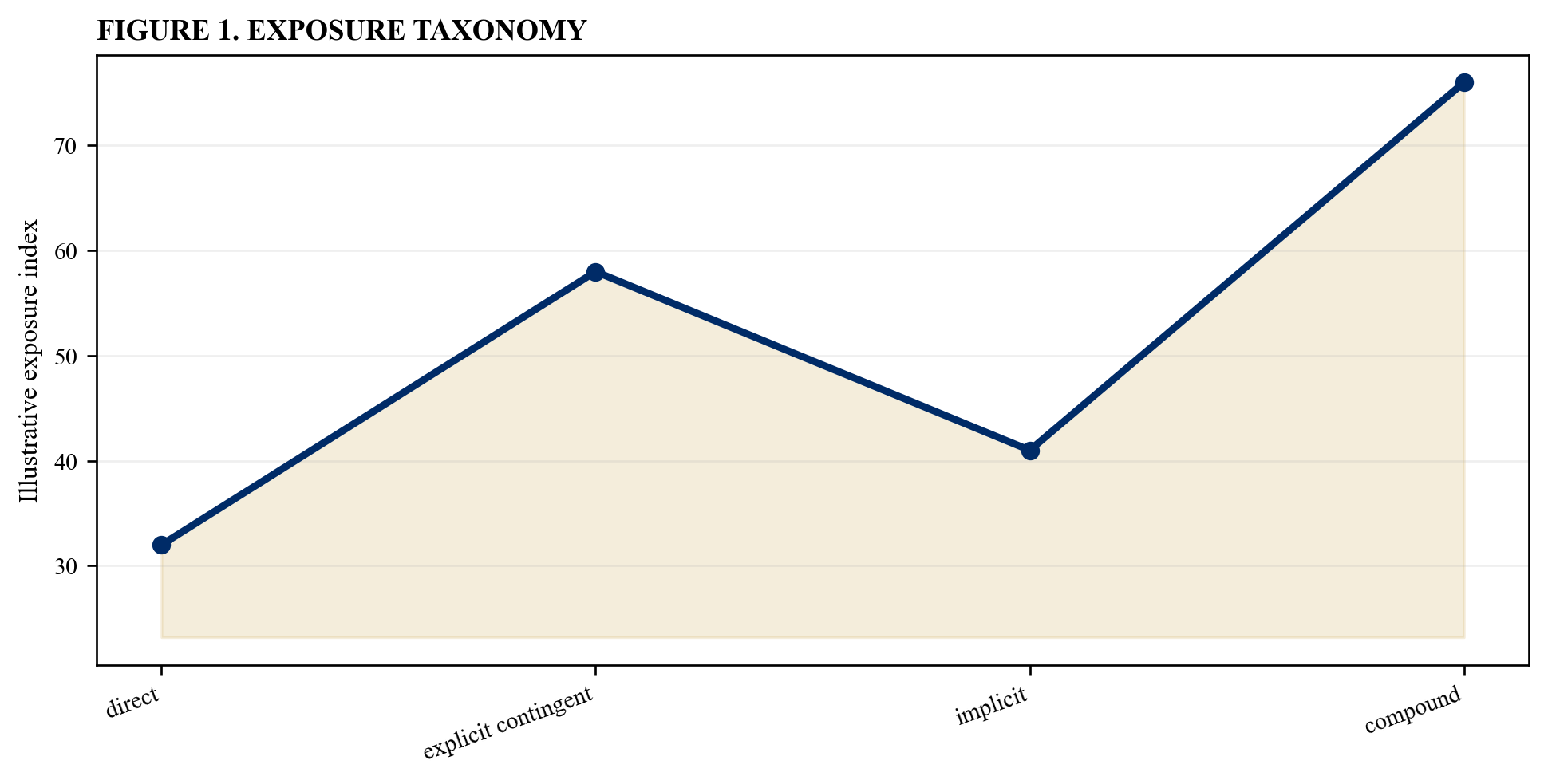
Illustrative analytical scenario; verified project evidence should replace values.
9. Model demand guarantees
The public authority should forecast traffic, volumes, tariffs, elasticity, ramp-up, competition and downside floors. The required output is a probabilistic demand-support model. Record the accountable owner, source evidence, legal basis, contractual wording, model assumption, fiscal period, cash-flow consequence and review date [13][14].
Test the conclusion across base, downside, severe-but-plausible and reverse-stress cases. Separate contractual maximum exposure, probability-weighted expected loss, tail loss, annual liquidity need and recovery-adjusted loss. Reconcile the project view with the government portfolio, budget, debt strategy, accounting, statistics and service-continuity obligations.
The principal risk is that optimism bias and correlated recession can turn floors into recurring budget claims. Quantify the effect on public service, bankability, guarantee value, annual cash need, debt and deficit, fiscal headroom, risk concentration, incentives and intergenerational cost. Compare the proposed support with caps, deductibles, sharing bands, insurance, sponsor support and alternative delivery structures.
Translate the conclusion into triggers, approval conditions, pricing, reserves, disclosure, monitoring, claims, recoveries and release controls. Refresh it after material contractual, fiscal, market or performance change.
10. Model revenue and tariff support
The public authority should connect permitted tariffs, affordability policy, collection, subsidy and regulatory decisions. The required output is a revenue-support bridge. Record the accountable owner, source evidence, legal basis, contractual wording, model assumption, fiscal period, cash-flow consequence and review date [15][16].
Test the conclusion across base, downside, severe-but-plausible and reverse-stress cases. Separate contractual maximum exposure, probability-weighted expected loss, tail loss, annual liquidity need and recovery-adjusted loss. Reconcile the project view with the government portfolio, budget, debt strategy, accounting, statistics and service-continuity obligations.
The principal risk is that political tariff restraint can crystallise contractual compensation. Quantify the effect on public service, bankability, guarantee value, annual cash need, debt and deficit, fiscal headroom, risk concentration, incentives and intergenerational cost. Compare the proposed support with caps, deductibles, sharing bands, insurance, sponsor support and alternative delivery structures.
Translate the conclusion into triggers, approval conditions, pricing, reserves, disclosure, monitoring, claims, recoveries and release controls. Refresh it after material contractual, fiscal, market or performance change.
11. Model exchange-rate protection
The public authority should quantify currency mismatch, convertibility, transfer, indexation and hedge availability. The required output is an FX exposure distribution. Record the accountable owner, source evidence, legal basis, contractual wording, model assumption, fiscal period, cash-flow consequence and review date [17][18].
Test the conclusion across base, downside, severe-but-plausible and reverse-stress cases. Separate contractual maximum exposure, probability-weighted expected loss, tail loss, annual liquidity need and recovery-adjusted loss. Reconcile the project view with the government portfolio, budget, debt strategy, accounting, statistics and service-continuity obligations.
The principal risk is that devaluation can raise guarantee payments while weakening government revenue and reserves. Quantify the effect on public service, bankability, guarantee value, annual cash need, debt and deficit, fiscal headroom, risk concentration, incentives and intergenerational cost. Compare the proposed support with caps, deductibles, sharing bands, insurance, sponsor support and alternative delivery structures.
Translate the conclusion into triggers, approval conditions, pricing, reserves, disclosure, monitoring, claims, recoveries and release controls. Refresh it after material contractual, fiscal, market or performance change.
12. Model interest and refinancing support
The public authority should test benchmark resets, margins, tenor gaps, take-out commitments and market closure. The required output is a refinancing cash-call model. Record the accountable owner, source evidence, legal basis, contractual wording, model assumption, fiscal period, cash-flow consequence and review date [19][20].
Test the conclusion across base, downside, severe-but-plausible and reverse-stress cases. Separate contractual maximum exposure, probability-weighted expected loss, tail loss, annual liquidity need and recovery-adjusted loss. Reconcile the project view with the government portfolio, budget, debt strategy, accounting, statistics and service-continuity obligations.
The principal risk is that support can become most expensive when sovereign and project funding costs rise together. Quantify the effect on public service, bankability, guarantee value, annual cash need, debt and deficit, fiscal headroom, risk concentration, incentives and intergenerational cost. Compare the proposed support with caps, deductibles, sharing bands, insurance, sponsor support and alternative delivery structures.
Translate the conclusion into triggers, approval conditions, pricing, reserves, disclosure, monitoring, claims, recoveries and release controls. Refresh it after material contractual, fiscal, market or performance change.
13. Model debt guarantees
The public authority should trace principal, interest, fees, acceleration, cure, recoveries, collateral and subrogation. The required output is a guaranteed-debt waterfall. Record the accountable owner, source evidence, legal basis, contractual wording, model assumption, fiscal period, cash-flow consequence and review date [3][21].
Test the conclusion across base, downside, severe-but-plausible and reverse-stress cases. Separate contractual maximum exposure, probability-weighted expected loss, tail loss, annual liquidity need and recovery-adjusted loss. Reconcile the project view with the government portfolio, budget, debt strategy, accounting, statistics and service-continuity obligations.
The principal risk is that full debt protection can weaken creditor scrutiny and socialise financing risk. Quantify the effect on public service, bankability, guarantee value, annual cash need, debt and deficit, fiscal headroom, risk concentration, incentives and intergenerational cost. Compare the proposed support with caps, deductibles, sharing bands, insurance, sponsor support and alternative delivery structures.
Translate the conclusion into triggers, approval conditions, pricing, reserves, disclosure, monitoring, claims, recoveries and release controls. Refresh it after material contractual, fiscal, market or performance change.
14. Model public-counterparty default
The public authority should test utility, municipality, ministry and state-owned enterprise payment interruption. The required output is an obligor default scenario. Record the accountable owner, source evidence, legal basis, contractual wording, model assumption, fiscal period, cash-flow consequence and review date [4][22].
Test the conclusion across base, downside, severe-but-plausible and reverse-stress cases. Separate contractual maximum exposure, probability-weighted expected loss, tail loss, annual liquidity need and recovery-adjusted loss. Reconcile the project view with the government portfolio, budget, debt strategy, accounting, statistics and service-continuity obligations.
The principal risk is that a guarantee of another public entity can transfer rather than reduce fiscal risk. Quantify the effect on public service, bankability, guarantee value, annual cash need, debt and deficit, fiscal headroom, risk concentration, incentives and intergenerational cost. Compare the proposed support with caps, deductibles, sharing bands, insurance, sponsor support and alternative delivery structures.
Translate the conclusion into triggers, approval conditions, pricing, reserves, disclosure, monitoring, claims, recoveries and release controls. Refresh it after material contractual, fiscal, market or performance change.
15. Model change-in-law exposure
The public authority should separate general, discriminatory, sector-specific and tax changes and their remedies. The required output is a change-in-law claim model. Record the accountable owner, source evidence, legal basis, contractual wording, model assumption, fiscal period, cash-flow consequence and review date [8][23].
Test the conclusion across base, downside, severe-but-plausible and reverse-stress cases. Separate contractual maximum exposure, probability-weighted expected loss, tail loss, annual liquidity need and recovery-adjusted loss. Reconcile the project view with the government portfolio, budget, debt strategy, accounting, statistics and service-continuity obligations.
The principal risk is that broad protection can make normal policy evolution a compensable event. Quantify the effect on public service, bankability, guarantee value, annual cash need, debt and deficit, fiscal headroom, risk concentration, incentives and intergenerational cost. Compare the proposed support with caps, deductibles, sharing bands, insurance, sponsor support and alternative delivery structures.
Translate the conclusion into triggers, approval conditions, pricing, reserves, disclosure, monitoring, claims, recoveries and release controls. Refresh it after material contractual, fiscal, market or performance change.
16. Model force majeure and climate events
The public authority should connect relief, compensation, insurance, resilience standards and restoration obligations. The required output is an event-loss allocation. Record the accountable owner, source evidence, legal basis, contractual wording, model assumption, fiscal period, cash-flow consequence and review date [24][25].
Test the conclusion across base, downside, severe-but-plausible and reverse-stress cases. Separate contractual maximum exposure, probability-weighted expected loss, tail loss, annual liquidity need and recovery-adjusted loss. Reconcile the project view with the government portfolio, budget, debt strategy, accounting, statistics and service-continuity obligations.
The principal risk is that correlated physical shocks can create claims across projects and public services. Quantify the effect on public service, bankability, guarantee value, annual cash need, debt and deficit, fiscal headroom, risk concentration, incentives and intergenerational cost. Compare the proposed support with caps, deductibles, sharing bands, insurance, sponsor support and alternative delivery structures.
Translate the conclusion into triggers, approval conditions, pricing, reserves, disclosure, monitoring, claims, recoveries and release controls. Refresh it after material contractual, fiscal, market or performance change.
Table 2. Trigger valuation map
| Trigger | Exposure driver | Control |
|---|---|---|
| demand floor | volume and tariff gap | cap and sharing band |
| refinancing | rate and tenor gap | sunset and market test |
| termination | debt and equity formula | scenario limit |
| FX support | currency movement | deductible and hedge |
Illustrative analytical structure; verified project and jurisdiction evidence governs.
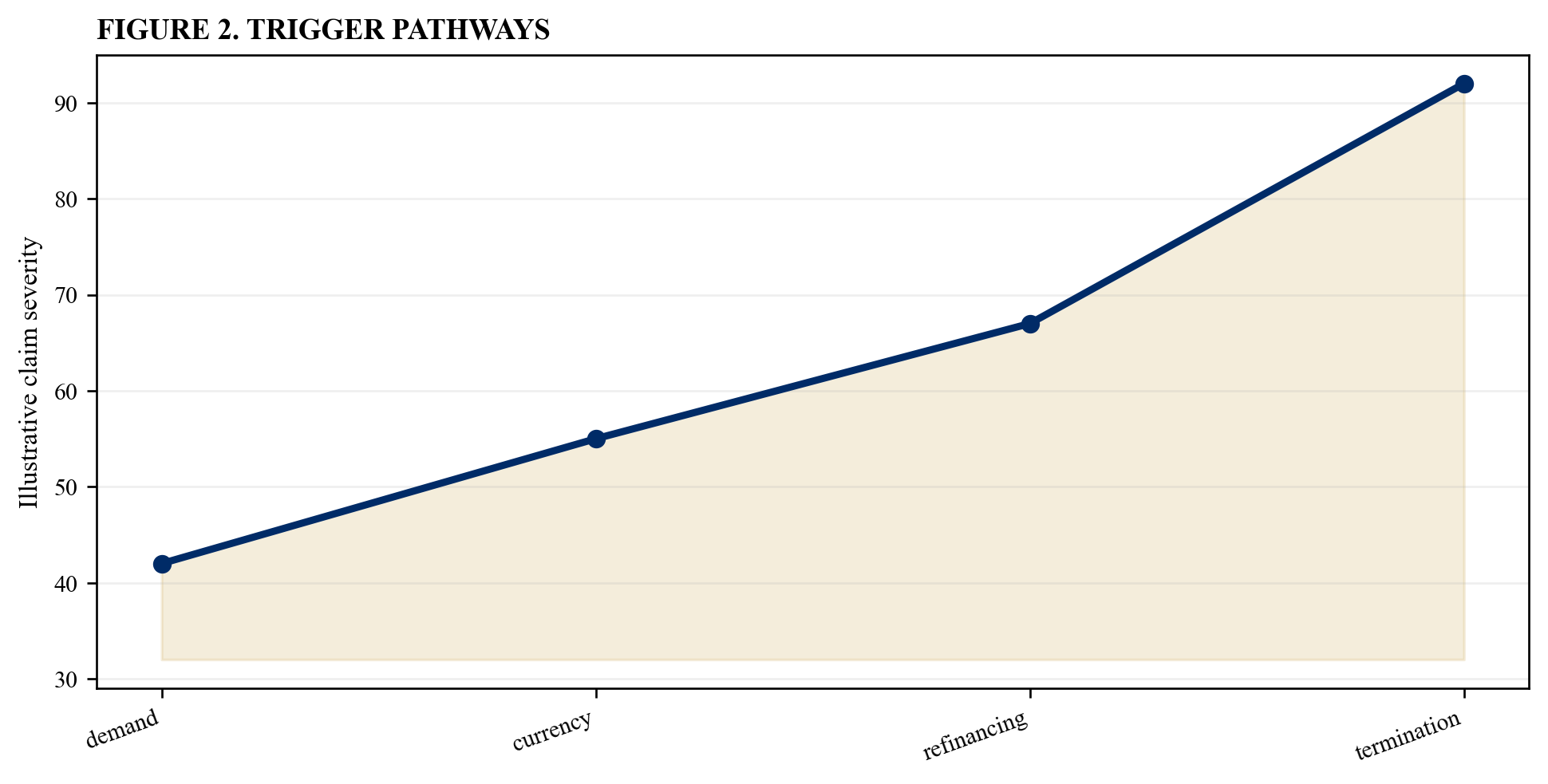
Illustrative analytical scenario; verified project evidence should replace values.
17. Model termination compensation
The public authority should value authority default, project default, prolonged force majeure, corruption and voluntary termination. The required output is a termination-liability schedule. Record the accountable owner, source evidence, legal basis, contractual wording, model assumption, fiscal period, cash-flow consequence and review date [26][27].
Test the conclusion across base, downside, severe-but-plausible and reverse-stress cases. Separate contractual maximum exposure, probability-weighted expected loss, tail loss, annual liquidity need and recovery-adjusted loss. Reconcile the project view with the government portfolio, budget, debt strategy, accounting, statistics and service-continuity obligations.
The principal risk is that accelerated debt and equity formulas can create the largest single fiscal call. Quantify the effect on public service, bankability, guarantee value, annual cash need, debt and deficit, fiscal headroom, risk concentration, incentives and intergenerational cost. Compare the proposed support with caps, deductibles, sharing bands, insurance, sponsor support and alternative delivery structures.
Translate the conclusion into triggers, approval conditions, pricing, reserves, disclosure, monitoring, claims, recoveries and release controls. Refresh it after material contractual, fiscal, market or performance change.
18. Model political and regulatory risk
The public authority should assess permits, expropriation, discriminatory action, convertibility and regulatory decisions. The required output is a political-risk exposure map. Record the accountable owner, source evidence, legal basis, contractual wording, model assumption, fiscal period, cash-flow consequence and review date [18][28].
Test the conclusion across base, downside, severe-but-plausible and reverse-stress cases. Separate contractual maximum exposure, probability-weighted expected loss, tail loss, annual liquidity need and recovery-adjusted loss. Reconcile the project view with the government portfolio, budget, debt strategy, accounting, statistics and service-continuity obligations.
The principal risk is that overlapping public undertakings can produce duplicate compensation. Quantify the effect on public service, bankability, guarantee value, annual cash need, debt and deficit, fiscal headroom, risk concentration, incentives and intergenerational cost. Compare the proposed support with caps, deductibles, sharing bands, insurance, sponsor support and alternative delivery structures.
Translate the conclusion into triggers, approval conditions, pricing, reserves, disclosure, monitoring, claims, recoveries and release controls. Refresh it after material contractual, fiscal, market or performance change.
19. Recognise interaction among triggers
The public authority should model sequences such as demand shock, covenant breach, refinancing failure and termination. The required output is a compound-event tree. Record the accountable owner, source evidence, legal basis, contractual wording, model assumption, fiscal period, cash-flow consequence and review date [6][29].
Test the conclusion across base, downside, severe-but-plausible and reverse-stress cases. Separate contractual maximum exposure, probability-weighted expected loss, tail loss, annual liquidity need and recovery-adjusted loss. Reconcile the project view with the government portfolio, budget, debt strategy, accounting, statistics and service-continuity obligations.
The principal risk is that single-risk valuation can miss path-dependent and cascading exposure. Quantify the effect on public service, bankability, guarantee value, annual cash need, debt and deficit, fiscal headroom, risk concentration, incentives and intergenerational cost. Compare the proposed support with caps, deductibles, sharing bands, insurance, sponsor support and alternative delivery structures.
Translate the conclusion into triggers, approval conditions, pricing, reserves, disclosure, monitoring, claims, recoveries and release controls. Refresh it after material contractual, fiscal, market or performance change.
20. Estimate expected loss
The public authority should combine scenario probability, exposure at event, timing, mitigation and recovery. The required output is an expected-loss estimate. Record the accountable owner, source evidence, legal basis, contractual wording, model assumption, fiscal period, cash-flow consequence and review date [30][31].
Test the conclusion across base, downside, severe-but-plausible and reverse-stress cases. Separate contractual maximum exposure, probability-weighted expected loss, tail loss, annual liquidity need and recovery-adjusted loss. Reconcile the project view with the government portfolio, budget, debt strategy, accounting, statistics and service-continuity obligations.
The principal risk is that a maximum-only view cannot inform pricing, budgeting or portfolio comparison. Quantify the effect on public service, bankability, guarantee value, annual cash need, debt and deficit, fiscal headroom, risk concentration, incentives and intergenerational cost. Compare the proposed support with caps, deductibles, sharing bands, insurance, sponsor support and alternative delivery structures.
Translate the conclusion into triggers, approval conditions, pricing, reserves, disclosure, monitoring, claims, recoveries and release controls. Refresh it after material contractual, fiscal, market or performance change.
21. Estimate tail loss
The public authority should calculate severe-but-plausible and reverse-stress outcomes with transparent assumptions. The required output is a tail-loss distribution. Record the accountable owner, source evidence, legal basis, contractual wording, model assumption, fiscal period, cash-flow consequence and review date [6][32].
Test the conclusion across base, downside, severe-but-plausible and reverse-stress cases. Separate contractual maximum exposure, probability-weighted expected loss, tail loss, annual liquidity need and recovery-adjusted loss. Reconcile the project view with the government portfolio, budget, debt strategy, accounting, statistics and service-continuity obligations.
The principal risk is that expected value can be small while liquidity need is fiscally destabilising. Quantify the effect on public service, bankability, guarantee value, annual cash need, debt and deficit, fiscal headroom, risk concentration, incentives and intergenerational cost. Compare the proposed support with caps, deductibles, sharing bands, insurance, sponsor support and alternative delivery structures.
Translate the conclusion into triggers, approval conditions, pricing, reserves, disclosure, monitoring, claims, recoveries and release controls. Refresh it after material contractual, fiscal, market or performance change.
22. Estimate payment timing
The public authority should translate notice, cure, dispute, acceleration and settlement provisions into fiscal periods. The required output is a claim-timing profile. Record the accountable owner, source evidence, legal basis, contractual wording, model assumption, fiscal period, cash-flow consequence and review date [9][33].
Test the conclusion across base, downside, severe-but-plausible and reverse-stress cases. Separate contractual maximum exposure, probability-weighted expected loss, tail loss, annual liquidity need and recovery-adjusted loss. Reconcile the project view with the government portfolio, budget, debt strategy, accounting, statistics and service-continuity obligations.
The principal risk is that an affordable present value can still create an unmanageable annual cash call. Quantify the effect on public service, bankability, guarantee value, annual cash need, debt and deficit, fiscal headroom, risk concentration, incentives and intergenerational cost. Compare the proposed support with caps, deductibles, sharing bands, insurance, sponsor support and alternative delivery structures.
Translate the conclusion into triggers, approval conditions, pricing, reserves, disclosure, monitoring, claims, recoveries and release controls. Refresh it after material contractual, fiscal, market or performance change.
23. Value recoveries and subrogation
The public authority should assess collateral, counter-indemnities, sponsor recourse, asset value and enforcement. The required output is a recovery-adjusted loss model. Record the accountable owner, source evidence, legal basis, contractual wording, model assumption, fiscal period, cash-flow consequence and review date [4][21].
Test the conclusion across base, downside, severe-but-plausible and reverse-stress cases. Separate contractual maximum exposure, probability-weighted expected loss, tail loss, annual liquidity need and recovery-adjusted loss. Reconcile the project view with the government portfolio, budget, debt strategy, accounting, statistics and service-continuity obligations.
The principal risk is that gross exposure can overstate loss while optimistic recoveries understate liquidity. Quantify the effect on public service, bankability, guarantee value, annual cash need, debt and deficit, fiscal headroom, risk concentration, incentives and intergenerational cost. Compare the proposed support with caps, deductibles, sharing bands, insurance, sponsor support and alternative delivery structures.
Translate the conclusion into triggers, approval conditions, pricing, reserves, disclosure, monitoring, claims, recoveries and release controls. Refresh it after material contractual, fiscal, market or performance change.
24. Test model uncertainty
The public authority should vary demand, volatility, correlation, legal interpretation, recovery and policy response. The required output is a sensitivity and model-risk report. Record the accountable owner, source evidence, legal basis, contractual wording, model assumption, fiscal period, cash-flow consequence and review date [30][34].
Test the conclusion across base, downside, severe-but-plausible and reverse-stress cases. Separate contractual maximum exposure, probability-weighted expected loss, tail loss, annual liquidity need and recovery-adjusted loss. Reconcile the project view with the government portfolio, budget, debt strategy, accounting, statistics and service-continuity obligations.
The principal risk is that false precision can conceal the variables that drive fiscal exposure. Quantify the effect on public service, bankability, guarantee value, annual cash need, debt and deficit, fiscal headroom, risk concentration, incentives and intergenerational cost. Compare the proposed support with caps, deductibles, sharing bands, insurance, sponsor support and alternative delivery structures.
Translate the conclusion into triggers, approval conditions, pricing, reserves, disclosure, monitoring, claims, recoveries and release controls. Refresh it after material contractual, fiscal, market or performance change.
Table 3. Illustrative loss measures
| Measure | Illustrative index | Decision use |
|---|---|---|
| contract maximum | 100 | legal ceiling |
| tail loss | 72 | liquidity and limit |
| expected loss | 24 | pricing and provision |
| net expected loss | 16 | recovery-adjusted view |
Illustrative analytical structure; verified project and jurisdiction evidence governs.
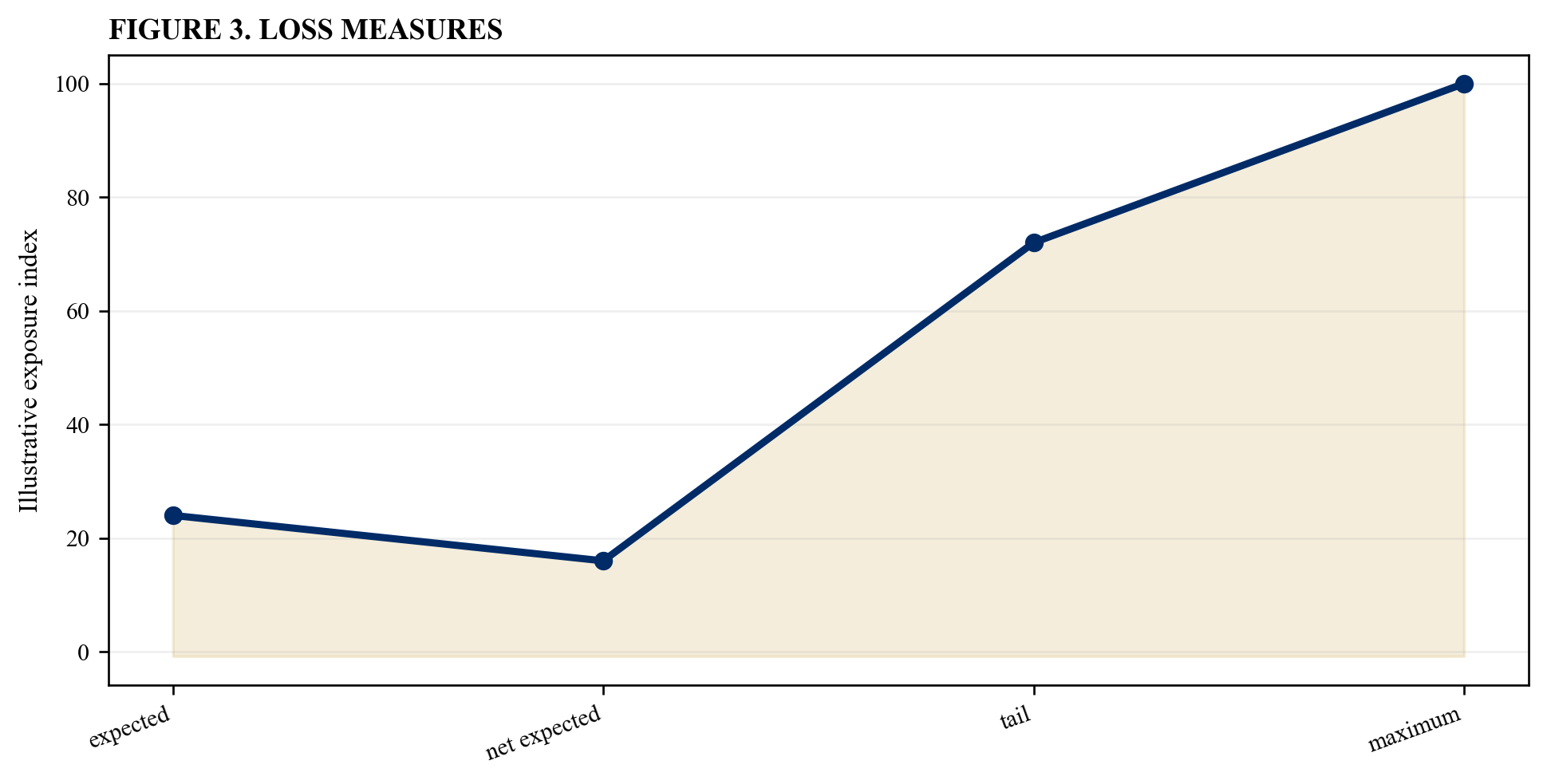
Illustrative analytical scenario; verified project evidence should replace values.
25. Run macro-fiscal stress
The public authority should combine growth, inflation, rates, FX, commodity, disaster, revenue and expenditure shocks. The required output is a macro-fiscal claim stress. Record the accountable owner, source evidence, legal basis, contractual wording, model assumption, fiscal period, cash-flow consequence and review date [6][35].
Test the conclusion across base, downside, severe-but-plausible and reverse-stress cases. Separate contractual maximum exposure, probability-weighted expected loss, tail loss, annual liquidity need and recovery-adjusted loss. Reconcile the project view with the government portfolio, budget, debt strategy, accounting, statistics and service-continuity obligations.
The principal risk is that guarantees can crystallise when fiscal capacity is already weakest. Quantify the effect on public service, bankability, guarantee value, annual cash need, debt and deficit, fiscal headroom, risk concentration, incentives and intergenerational cost. Compare the proposed support with caps, deductibles, sharing bands, insurance, sponsor support and alternative delivery structures.
Translate the conclusion into triggers, approval conditions, pricing, reserves, disclosure, monitoring, claims, recoveries and release controls. Refresh it after material contractual, fiscal, market or performance change.
26. Aggregate the portfolio
The public authority should group exposure by sector, obligor, trigger, currency, maturity, geography and counterparty. The required output is a portfolio contingent-liability dashboard. Record the accountable owner, source evidence, legal basis, contractual wording, model assumption, fiscal period, cash-flow consequence and review date [5][36].
Test the conclusion across base, downside, severe-but-plausible and reverse-stress cases. Separate contractual maximum exposure, probability-weighted expected loss, tail loss, annual liquidity need and recovery-adjusted loss. Reconcile the project view with the government portfolio, budget, debt strategy, accounting, statistics and service-continuity obligations.
The principal risk is that many individually acceptable guarantees can create concentrated sovereign risk. Quantify the effect on public service, bankability, guarantee value, annual cash need, debt and deficit, fiscal headroom, risk concentration, incentives and intergenerational cost. Compare the proposed support with caps, deductibles, sharing bands, insurance, sponsor support and alternative delivery structures.
Translate the conclusion into triggers, approval conditions, pricing, reserves, disclosure, monitoring, claims, recoveries and release controls. Refresh it after material contractual, fiscal, market or performance change.
27. Measure correlation
The public authority should identify shared demand, commodity, interest, climate, policy and counterparty drivers. The required output is a correlation map. Record the accountable owner, source evidence, legal basis, contractual wording, model assumption, fiscal period, cash-flow consequence and review date [29][35].
Test the conclusion across base, downside, severe-but-plausible and reverse-stress cases. Separate contractual maximum exposure, probability-weighted expected loss, tail loss, annual liquidity need and recovery-adjusted loss. Reconcile the project view with the government portfolio, budget, debt strategy, accounting, statistics and service-continuity obligations.
The principal risk is that portfolio arithmetic can understate simultaneous claims. Quantify the effect on public service, bankability, guarantee value, annual cash need, debt and deficit, fiscal headroom, risk concentration, incentives and intergenerational cost. Compare the proposed support with caps, deductibles, sharing bands, insurance, sponsor support and alternative delivery structures.
Translate the conclusion into triggers, approval conditions, pricing, reserves, disclosure, monitoring, claims, recoveries and release controls. Refresh it after material contractual, fiscal, market or performance change.
28. Set approval limits
The public authority should apply project, sector, obligor, currency, annual-cash and portfolio ceilings. The required output is a guarantee-limit framework. Record the accountable owner, source evidence, legal basis, contractual wording, model assumption, fiscal period, cash-flow consequence and review date [5][37].
Test the conclusion across base, downside, severe-but-plausible and reverse-stress cases. Separate contractual maximum exposure, probability-weighted expected loss, tail loss, annual liquidity need and recovery-adjusted loss. Reconcile the project view with the government portfolio, budget, debt strategy, accounting, statistics and service-continuity obligations.
The principal risk is that support can accumulate through fragmented approvals without an aggregate constraint. Quantify the effect on public service, bankability, guarantee value, annual cash need, debt and deficit, fiscal headroom, risk concentration, incentives and intergenerational cost. Compare the proposed support with caps, deductibles, sharing bands, insurance, sponsor support and alternative delivery structures.
Translate the conclusion into triggers, approval conditions, pricing, reserves, disclosure, monitoring, claims, recoveries and release controls. Refresh it after material contractual, fiscal, market or performance change.
29. Price the guarantee
The public authority should compare expected loss, capital, liquidity, administration, risk premium and public benefit. The required output is a guarantee-fee schedule. Record the accountable owner, source evidence, legal basis, contractual wording, model assumption, fiscal period, cash-flow consequence and review date [3][31].
Test the conclusion across base, downside, severe-but-plausible and reverse-stress cases. Separate contractual maximum exposure, probability-weighted expected loss, tail loss, annual liquidity need and recovery-adjusted loss. Reconcile the project view with the government portfolio, budget, debt strategy, accounting, statistics and service-continuity obligations.
The principal risk is that free support can distort procurement, investment and lender incentives. Quantify the effect on public service, bankability, guarantee value, annual cash need, debt and deficit, fiscal headroom, risk concentration, incentives and intergenerational cost. Compare the proposed support with caps, deductibles, sharing bands, insurance, sponsor support and alternative delivery structures.
Translate the conclusion into triggers, approval conditions, pricing, reserves, disclosure, monitoring, claims, recoveries and release controls. Refresh it after material contractual, fiscal, market or performance change.
30. Design risk-sharing features
The public authority should use caps, deductibles, first loss, sharing bands, sunsets, performance conditions and clawbacks. The required output is a risk-sharing term sheet. Record the accountable owner, source evidence, legal basis, contractual wording, model assumption, fiscal period, cash-flow consequence and review date [4][11].
Test the conclusion across base, downside, severe-but-plausible and reverse-stress cases. Separate contractual maximum exposure, probability-weighted expected loss, tail loss, annual liquidity need and recovery-adjusted loss. Reconcile the project view with the government portfolio, budget, debt strategy, accounting, statistics and service-continuity obligations.
The principal risk is that binary protection can transfer risks that private parties can manage. Quantify the effect on public service, bankability, guarantee value, annual cash need, debt and deficit, fiscal headroom, risk concentration, incentives and intergenerational cost. Compare the proposed support with caps, deductibles, sharing bands, insurance, sponsor support and alternative delivery structures.
Translate the conclusion into triggers, approval conditions, pricing, reserves, disclosure, monitoring, claims, recoveries and release controls. Refresh it after material contractual, fiscal, market or performance change.
31. Create budget liquidity
The public authority should choose contingency appropriations, reserves, guarantee funds or borrowing authority. The required output is a claim-funding plan. Record the accountable owner, source evidence, legal basis, contractual wording, model assumption, fiscal period, cash-flow consequence and review date [38][39].
Test the conclusion across base, downside, severe-but-plausible and reverse-stress cases. Separate contractual maximum exposure, probability-weighted expected loss, tail loss, annual liquidity need and recovery-adjusted loss. Reconcile the project view with the government portfolio, budget, debt strategy, accounting, statistics and service-continuity obligations.
The principal risk is that recognition without a payment mechanism can produce arrears or emergency cuts. Quantify the effect on public service, bankability, guarantee value, annual cash need, debt and deficit, fiscal headroom, risk concentration, incentives and intergenerational cost. Compare the proposed support with caps, deductibles, sharing bands, insurance, sponsor support and alternative delivery structures.
Translate the conclusion into triggers, approval conditions, pricing, reserves, disclosure, monitoring, claims, recoveries and release controls. Refresh it after material contractual, fiscal, market or performance change.
32. Reconcile accounting and economics
The public authority should compare budget, financial-reporting, statistical, debt and contract treatments. The required output is an exposure-reconciliation table. Record the accountable owner, source evidence, legal basis, contractual wording, model assumption, fiscal period, cash-flow consequence and review date [40][7].
Test the conclusion across base, downside, severe-but-plausible and reverse-stress cases. Separate contractual maximum exposure, probability-weighted expected loss, tail loss, annual liquidity need and recovery-adjusted loss. Reconcile the project view with the government portfolio, budget, debt strategy, accounting, statistics and service-continuity obligations.
The principal risk is that classification can drive structuring while economic risk remains unchanged. Quantify the effect on public service, bankability, guarantee value, annual cash need, debt and deficit, fiscal headroom, risk concentration, incentives and intergenerational cost. Compare the proposed support with caps, deductibles, sharing bands, insurance, sponsor support and alternative delivery structures.
Translate the conclusion into triggers, approval conditions, pricing, reserves, disclosure, monitoring, claims, recoveries and release controls. Refresh it after material contractual, fiscal, market or performance change.
Table 4. Illustrative portfolio stress
| Scenario | Claim index | Fiscal response |
|---|---|---|
| base | 18 | monitor |
| demand shock | 43 | reserve review |
| FX and rates | 61 | portfolio control |
| compound stress | 86 | claim-funding protocol |
Illustrative analytical structure; verified project and jurisdiction evidence governs.
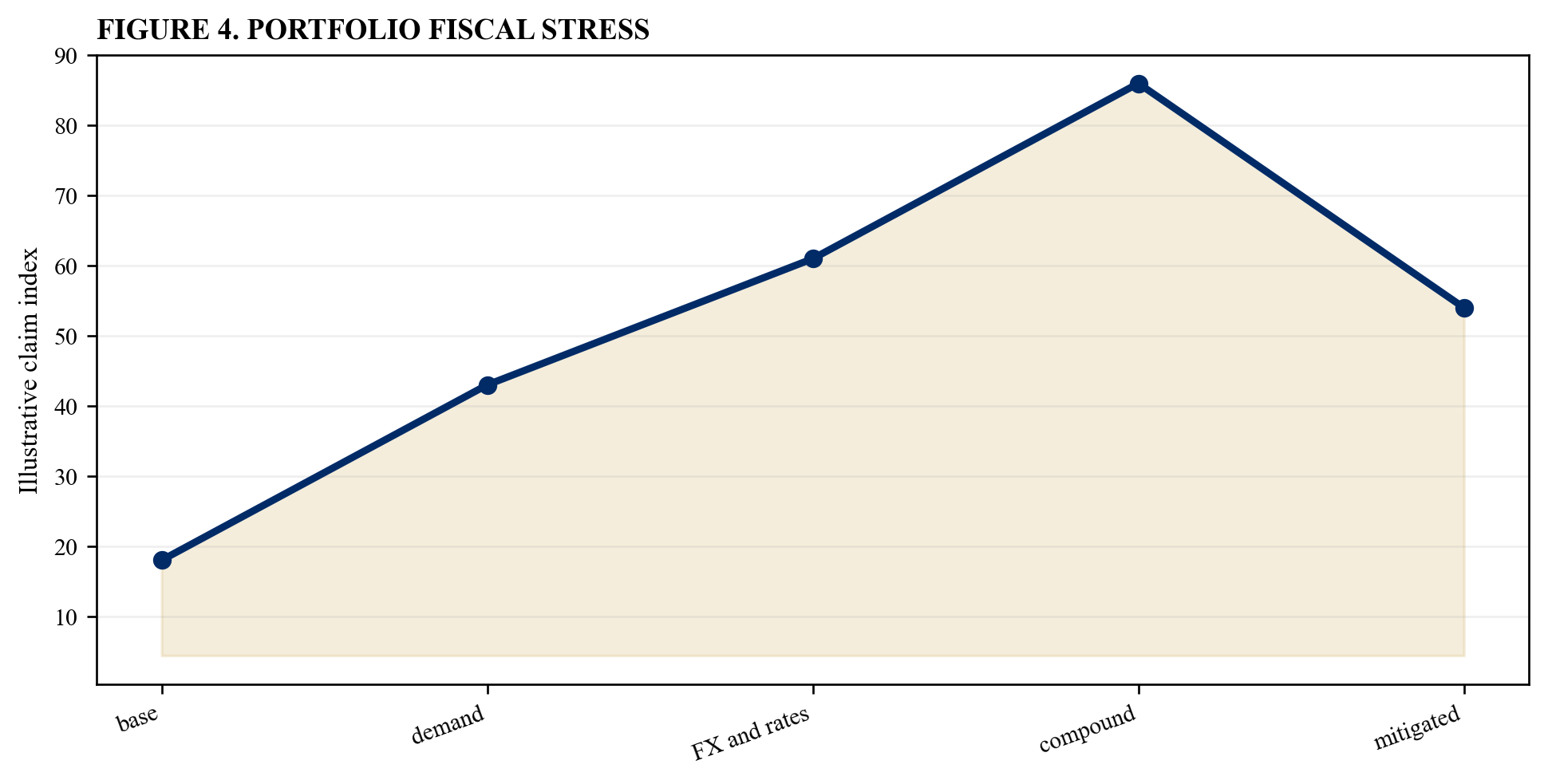
Illustrative analytical scenario; verified project evidence should replace values.
33. Disclose decision-useful exposure
The public authority should publish instrument, beneficiary, trigger, maximum, expected loss, tail loss and realised claims. The required output is a contingent-liability statement. Record the accountable owner, source evidence, legal basis, contractual wording, model assumption, fiscal period, cash-flow consequence and review date [7][36].
Test the conclusion across base, downside, severe-but-plausible and reverse-stress cases. Separate contractual maximum exposure, probability-weighted expected loss, tail loss, annual liquidity need and recovery-adjusted loss. Reconcile the project view with the government portfolio, budget, debt strategy, accounting, statistics and service-continuity obligations.
The principal risk is that generic notes can hide material concentration and model uncertainty. Quantify the effect on public service, bankability, guarantee value, annual cash need, debt and deficit, fiscal headroom, risk concentration, incentives and intergenerational cost. Compare the proposed support with caps, deductibles, sharing bands, insurance, sponsor support and alternative delivery structures.
Translate the conclusion into triggers, approval conditions, pricing, reserves, disclosure, monitoring, claims, recoveries and release controls. Refresh it after material contractual, fiscal, market or performance change.
34. Assign institutional ownership
The public authority should define ministry, PPP unit, debt office, budget authority, accountant, auditor and contract manager roles. The required output is an accountability map. Record the accountable owner, source evidence, legal basis, contractual wording, model assumption, fiscal period, cash-flow consequence and review date [5][33].
Test the conclusion across base, downside, severe-but-plausible and reverse-stress cases. Separate contractual maximum exposure, probability-weighted expected loss, tail loss, annual liquidity need and recovery-adjusted loss. Reconcile the project view with the government portfolio, budget, debt strategy, accounting, statistics and service-continuity obligations.
The principal risk is that no institution may own the exposure from approval through expiry. Quantify the effect on public service, bankability, guarantee value, annual cash need, debt and deficit, fiscal headroom, risk concentration, incentives and intergenerational cost. Compare the proposed support with caps, deductibles, sharing bands, insurance, sponsor support and alternative delivery structures.
Translate the conclusion into triggers, approval conditions, pricing, reserves, disclosure, monitoring, claims, recoveries and release controls. Refresh it after material contractual, fiscal, market or performance change.
35. Monitor leading indicators
The public authority should track demand, tariffs, covenants, refinancing, public arrears, disputes, climate and market signals. The required output is an early-warning dashboard. Record the accountable owner, source evidence, legal basis, contractual wording, model assumption, fiscal period, cash-flow consequence and review date [35][37].
Test the conclusion across base, downside, severe-but-plausible and reverse-stress cases. Separate contractual maximum exposure, probability-weighted expected loss, tail loss, annual liquidity need and recovery-adjusted loss. Reconcile the project view with the government portfolio, budget, debt strategy, accounting, statistics and service-continuity obligations.
The principal risk is that government can learn about crystallisation only after a formal claim. Quantify the effect on public service, bankability, guarantee value, annual cash need, debt and deficit, fiscal headroom, risk concentration, incentives and intergenerational cost. Compare the proposed support with caps, deductibles, sharing bands, insurance, sponsor support and alternative delivery structures.
Translate the conclusion into triggers, approval conditions, pricing, reserves, disclosure, monitoring, claims, recoveries and release controls. Refresh it after material contractual, fiscal, market or performance change.
36. Control amendments and waivers
The public authority should require fresh valuation, affordability, authority and disclosure for changes. The required output is a guarantee-change gateway. Record the accountable owner, source evidence, legal basis, contractual wording, model assumption, fiscal period, cash-flow consequence and review date [9][23].
Test the conclusion across base, downside, severe-but-plausible and reverse-stress cases. Separate contractual maximum exposure, probability-weighted expected loss, tail loss, annual liquidity need and recovery-adjusted loss. Reconcile the project view with the government portfolio, budget, debt strategy, accounting, statistics and service-continuity obligations.
The principal risk is that renegotiation can expand exposure outside original scrutiny. Quantify the effect on public service, bankability, guarantee value, annual cash need, debt and deficit, fiscal headroom, risk concentration, incentives and intergenerational cost. Compare the proposed support with caps, deductibles, sharing bands, insurance, sponsor support and alternative delivery structures.
Translate the conclusion into triggers, approval conditions, pricing, reserves, disclosure, monitoring, claims, recoveries and release controls. Refresh it after material contractual, fiscal, market or performance change.
37. Prepare a claim protocol
The public authority should set evidence, validation, dispute, appropriation, payment, recovery and reporting steps. The required output is a contingent-claim playbook. Record the accountable owner, source evidence, legal basis, contractual wording, model assumption, fiscal period, cash-flow consequence and review date [33][39].
Test the conclusion across base, downside, severe-but-plausible and reverse-stress cases. Separate contractual maximum exposure, probability-weighted expected loss, tail loss, annual liquidity need and recovery-adjusted loss. Reconcile the project view with the government portfolio, budget, debt strategy, accounting, statistics and service-continuity obligations.
The principal risk is that unclear response can increase interest, service disruption and settlement cost. Quantify the effect on public service, bankability, guarantee value, annual cash need, debt and deficit, fiscal headroom, risk concentration, incentives and intergenerational cost. Compare the proposed support with caps, deductibles, sharing bands, insurance, sponsor support and alternative delivery structures.
Translate the conclusion into triggers, approval conditions, pricing, reserves, disclosure, monitoring, claims, recoveries and release controls. Refresh it after material contractual, fiscal, market or performance change.
38. Audit realised outcomes
The public authority should compare forecasts with claims, recoveries, fees, reserves and project performance. The required output is a back-testing report. Record the accountable owner, source evidence, legal basis, contractual wording, model assumption, fiscal period, cash-flow consequence and review date [31][34].
Test the conclusion across base, downside, severe-but-plausible and reverse-stress cases. Separate contractual maximum exposure, probability-weighted expected loss, tail loss, annual liquidity need and recovery-adjusted loss. Reconcile the project view with the government portfolio, budget, debt strategy, accounting, statistics and service-continuity obligations.
The principal risk is that models and approval criteria cannot improve without outcome evidence. Quantify the effect on public service, bankability, guarantee value, annual cash need, debt and deficit, fiscal headroom, risk concentration, incentives and intergenerational cost. Compare the proposed support with caps, deductibles, sharing bands, insurance, sponsor support and alternative delivery structures.
Translate the conclusion into triggers, approval conditions, pricing, reserves, disclosure, monitoring, claims, recoveries and release controls. Refresh it after material contractual, fiscal, market or performance change.
39. Plan expiry and release
The public authority should verify surviving obligations, limitation periods, disputes, records, security and formal discharge. The required output is a liability-release certificate. Record the accountable owner, source evidence, legal basis, contractual wording, model assumption, fiscal period, cash-flow consequence and review date [26][36].
Test the conclusion across base, downside, severe-but-plausible and reverse-stress cases. Separate contractual maximum exposure, probability-weighted expected loss, tail loss, annual liquidity need and recovery-adjusted loss. Reconcile the project view with the government portfolio, budget, debt strategy, accounting, statistics and service-continuity obligations.
The principal risk is that exposure can persist after operational expiry or asset handback. Quantify the effect on public service, bankability, guarantee value, annual cash need, debt and deficit, fiscal headroom, risk concentration, incentives and intergenerational cost. Compare the proposed support with caps, deductibles, sharing bands, insurance, sponsor support and alternative delivery structures.
Translate the conclusion into triggers, approval conditions, pricing, reserves, disclosure, monitoring, claims, recoveries and release controls. Refresh it after material contractual, fiscal, market or performance change.
40. Issue the contingent-liability certificate
The public authority should reconcile purpose, allocation, legal trigger, valuation, limits, funding, disclosure and monitoring. The required output is an auditable approval certificate. Record the accountable owner, source evidence, legal basis, contractual wording, model assumption, fiscal period, cash-flow consequence and review date [5][6].
Test the conclusion across base, downside, severe-but-plausible and reverse-stress cases. Separate contractual maximum exposure, probability-weighted expected loss, tail loss, annual liquidity need and recovery-adjusted loss. Reconcile the project view with the government portfolio, budget, debt strategy, accounting, statistics and service-continuity obligations.
The principal risk is that support can proceed through disconnected legal, project and fiscal documents. Quantify the effect on public service, bankability, guarantee value, annual cash need, debt and deficit, fiscal headroom, risk concentration, incentives and intergenerational cost. Compare the proposed support with caps, deductibles, sharing bands, insurance, sponsor support and alternative delivery structures.
Translate the conclusion into triggers, approval conditions, pricing, reserves, disclosure, monitoring, claims, recoveries and release controls. Refresh it after material contractual, fiscal, market or performance change.
Table 5. Contingent-liability certificate
| Decision | Evidence | Owner |
|---|---|---|
| necessity | bankability counterfactual | procuring authority |
| valuation | expected and tail loss | fiscal-risk unit |
| capacity | limits and funding | finance ministry |
| control | disclosure and monitoring | contract owner |
Illustrative analytical structure; verified project and jurisdiction evidence governs.
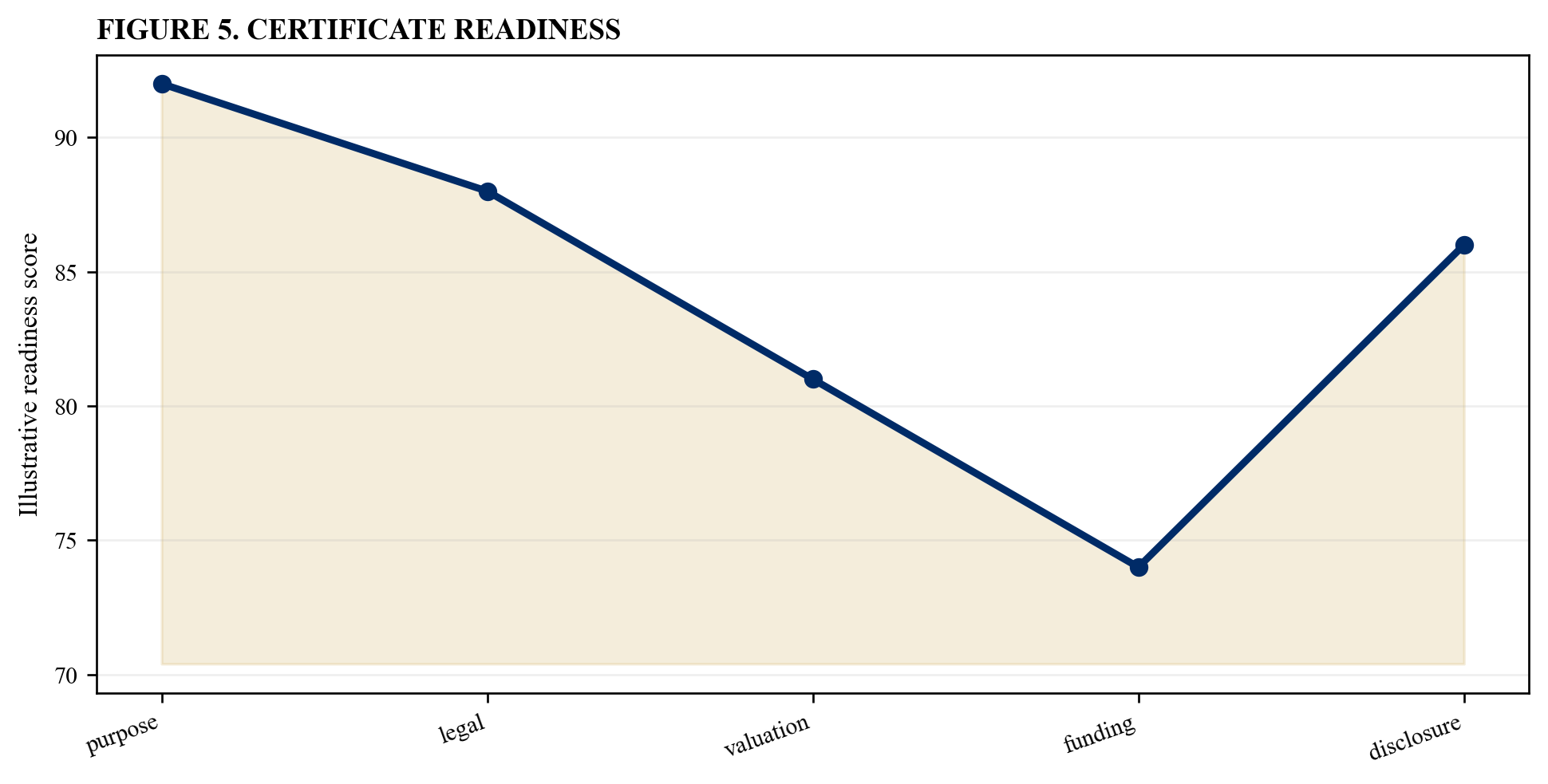
Illustrative analytical scenario; verified project evidence should replace values.
References
- World Bank PPP Resource Center, Public Financial Management Frameworks for PPPs, https://ppp.worldbank.org/public-financial-management-frameworks-ppps
- World Bank Group, PPP Reference Guide Version 3, https://ppp.worldbank.org/sites/default/files/2024-08/PPP%20Reference%20Guide%20Version%203.pdf
- World Bank PPP Resource Center, Government Support, https://ppp.worldbank.org/government-support
- World Bank PPP Resource Center, Government Guarantees, https://ppp.worldbank.org/government-guarantees
- World Bank PPP Resource Center, Assessing Fiscal Implications of a PPP Project, https://ppp.worldbank.org/assessing-fiscal-implications-ppp-project
- IMF, Public-Private Partnerships and PFRAM, https://infrastructuregovern.imf.org/content/PIMA/Home/PPPs-and-PFRAM.html
- World Bank PPP Resource Center, Fiscal Accounting and Reporting for PPPs, https://ppp.worldbank.org/fiscal-accounting-and-reporting-ppps
- World Bank PPP Resource Center, Structuring PPP Contracts, https://ppp.worldbank.org/structuring-ppp-contract
- World Bank PPP Resource Center, Managing PPP Contracts, https://ppp.worldbank.org/managing-ppp-contracts
- OECD, Principles for Public Governance of PPPs, https://legalinstruments.oecd.org/public/doc/275/275.en.pdf
- World Bank PPP Resource Center, Risk Allocation, https://ppp.worldbank.org/risk-allocation
- World Bank PPP Resource Center, Guarantees, https://ppp.worldbank.org/guarantees
- World Bank PPP Resource Center, Demand Risk, https://ppp.worldbank.org/risk-allocation
- UK HM Treasury, Green Book, https://www.gov.uk/government/publications/the-green-book-appraisal-and-evaluation-in-central-government
- World Bank PPP Resource Center, Payment Mechanism, https://ppp.worldbank.org/payment-mechanism
- OECD, Infrastructure Governance, https://www.oecd.org/en/topics/infrastructure-governance.html
- IMF, Guidance Note on Bank-Fund Debt Sustainability Framework, https://www.imf.org/en/Publications/Policy-Papers/Issues/2018/02/14/pp122617guidance-note-on-lic-dsf
- MIGA, Political Risk Insurance, https://www.miga.org/what-we-do
- World Bank PPP Resource Center, Finance Structures for PPP, https://ppp.worldbank.org/finance-structures-ppp
- EPEC, Financing PPPs, https://www.eib.org/epec/what-we-do/financing-ppps.htm
- World Bank PPP Resource Center, Government Support in Financing PPPs, https://ppp.worldbank.org/government-support
- IMF, Fiscal Risks Toolkit, https://www.imf.org/en/Topics/fiscal-policies/Fiscal-Risks
- World Bank PPP Resource Center, Change in Law, https://ppp.worldbank.org/change-law
- World Bank PPP Resource Center, Force Majeure, https://ppp.worldbank.org/force-majeure
- World Bank, Climate Toolkits for Infrastructure PPPs, https://ppp.worldbank.org/climate-toolkits-infrastructure-ppps
- World Bank PPP Resource Center, Termination Provisions, https://ppp.worldbank.org/termination-provisions
- UK NISTA, PFI Contract Management Guidance, https://www.gov.uk/government/collections/pfi-contract-management-guidance
- World Bank PPP Resource Center, Political Risk, https://ppp.worldbank.org/risk-allocation
- IMF, Fiscal Stress Tests, https://www.imf.org/en/Topics/fiscal-policies/Fiscal-Risks
- IMF, Fiscal Transparency Handbook, https://www.imf.org/external/np/fad/trans/
- World Bank PPP Resource Center, Valuing Liabilities, https://ppp.worldbank.org/government-guarantees
- IMF, Analyzing and Managing Fiscal Risks, https://www.imf.org/en/Publications/Policy-Papers/Issues/2016/12/31/Analyzing-and-Managing-Fiscal-Risks-Best-Practices-PP5042
- World Bank PPP Resource Center, PPP Contract Management, https://ppp.worldbank.org/ppp-contract-management
- IMF, Fiscal Risk Analysis and Management, https://www.imf.org/en/Topics/fiscal-policies/Fiscal-Risks
- IMF, Fiscal Risk Statement Guidance, https://www.imf.org/en/Publications/TNM/Issues/2016/12/31/How-to-Improve-the-Financial-Oversight-of-Public-Corporations-40187
- OECD, Recommendation on Governance of Infrastructure, https://legalinstruments.oecd.org/en/instruments/OECD-LEGAL-0460
- World Bank PPP Resource Center, Controlling Aggregate Exposure to PPPs, https://ppp.worldbank.org/controlling-aggregate-exposure-ppps
- World Bank PPP Resource Center, Budgeting for Government Commitments to PPPs, https://ppp.worldbank.org/budgeting-government-commitments-ppps
- IMF, Public Investment Management Assessment, https://infrastructuregovern.imf.org/content/PIMA/Home/PimaTool.html
- IPSASB, IPSAS 19 Provisions, Contingent Liabilities and Contingent Assets, https://www.ipsasb.org/publications/ipsas-19-provisions-contingent-liabilities-and-contingent-assets
