

1. Define the contract-hygiene objective
Set the exit perimeter, transaction route, closing timetable and level of contractual certainty required.
The controlled record should identify the counterparty, contract family, jurisdiction, governing law, purpose, value, owner, operative documents, amendment history, notice, consent, performance, exception and remediation. The immediate deliverable is a board-approved contract-hygiene charter.
The principal failure occurs when contract review begins after buyers identify the material agreements. Reviewers should distinguish legal rights from operational practice, assignment from novation, control change from asset transfer, termination rights from commercial likelihood, and signed text from the complete agreement. They should connect each conclusion to revenue, margin, service continuity, working capital, financing, data, intellectual property, separation, regulatory approval, transaction structure, closing conditions and value, then test downside and counterparty-response scenarios.
The decision pack for define the contract-hygiene objective should state the clause text, interpretation status, economic exposure, consent path, timing, leverage, alternative, owner, authorised-advice status, buyer implication, residual uncertainty and next gate. Material exceptions should flow into the contract fact book, diligence room, separation plan, forecast, disclosure process, transaction protections, consent campaign and board reporting.
2. Freeze the legal-entity perimeter
Map contracting entities, branches, business units, assets and proposed transfer steps.
The controlled record should identify the counterparty, contract family, jurisdiction, governing law, purpose, value, owner, operative documents, amendment history, notice, consent, performance, exception and remediation. The immediate deliverable is a contracting-entity map.
The principal failure occurs when the corporate chart identifies every contracting party. Reviewers should distinguish legal rights from operational practice, assignment from novation, control change from asset transfer, termination rights from commercial likelihood, and signed text from the complete agreement. They should connect each conclusion to revenue, margin, service continuity, working capital, financing, data, intellectual property, separation, regulatory approval, transaction structure, closing conditions and value, then test downside and counterparty-response scenarios.
The decision pack for freeze the legal-entity perimeter should state the clause text, interpretation status, economic exposure, consent path, timing, leverage, alternative, owner, authorised-advice status, buyer implication, residual uncertainty and next gate. Material exceptions should flow into the contract fact book, diligence room, separation plan, forecast, disclosure process, transaction protections, consent campaign and board reporting.
3. Build the contract universe
Combine repositories, ledgers, procurement, CRM, billing, project, lease, licence and correspondence sources.
The controlled record should identify the counterparty, contract family, jurisdiction, governing law, purpose, value, owner, operative documents, amendment history, notice, consent, performance, exception and remediation. The immediate deliverable is a reconciled contract inventory.
The principal failure occurs when the central repository contains the complete population. Reviewers should distinguish legal rights from operational practice, assignment from novation, control change from asset transfer, termination rights from commercial likelihood, and signed text from the complete agreement. They should connect each conclusion to revenue, margin, service continuity, working capital, financing, data, intellectual property, separation, regulatory approval, transaction structure, closing conditions and value, then test downside and counterparty-response scenarios.
The decision pack for build the contract universe should state the clause text, interpretation status, economic exposure, consent path, timing, leverage, alternative, owner, authorised-advice status, buyer implication, residual uncertainty and next gate. Material exceptions should flow into the contract fact book, diligence room, separation plan, forecast, disclosure process, transaction protections, consent campaign and board reporting.
4. Reconcile contracts to economics
Link each agreement to revenue, cost, margin, cash, assets, liabilities, backlog and forecast.
The controlled record should identify the counterparty, contract family, jurisdiction, governing law, purpose, value, owner, operative documents, amendment history, notice, consent, performance, exception and remediation. The immediate deliverable is a contract-to-economics bridge.
The principal failure occurs when document count measures transaction materiality. Reviewers should distinguish legal rights from operational practice, assignment from novation, control change from asset transfer, termination rights from commercial likelihood, and signed text from the complete agreement. They should connect each conclusion to revenue, margin, service continuity, working capital, financing, data, intellectual property, separation, regulatory approval, transaction structure, closing conditions and value, then test downside and counterparty-response scenarios.
The decision pack for reconcile contracts to economics should state the clause text, interpretation status, economic exposure, consent path, timing, leverage, alternative, owner, authorised-advice status, buyer implication, residual uncertainty and next gate. Material exceptions should flow into the contract fact book, diligence room, separation plan, forecast, disclosure process, transaction protections, consent campaign and board reporting.
5. Create contract families
Group master terms, orders, statements of work, amendments, side letters, renewals and disputes.
The controlled record should identify the counterparty, contract family, jurisdiction, governing law, purpose, value, owner, operative documents, amendment history, notice, consent, performance, exception and remediation. The immediate deliverable is a contract-family hierarchy.
The principal failure occurs when the latest signed PDF contains the entire agreement. Reviewers should distinguish legal rights from operational practice, assignment from novation, control change from asset transfer, termination rights from commercial likelihood, and signed text from the complete agreement. They should connect each conclusion to revenue, margin, service continuity, working capital, financing, data, intellectual property, separation, regulatory approval, transaction structure, closing conditions and value, then test downside and counterparty-response scenarios.
The decision pack for create contract families should state the clause text, interpretation status, economic exposure, consent path, timing, leverage, alternative, owner, authorised-advice status, buyer implication, residual uncertainty and next gate. Material exceptions should flow into the contract fact book, diligence room, separation plan, forecast, disclosure process, transaction protections, consent campaign and board reporting.
6. Control source documents
Rank originals, counterparts, electronic signatures, amendments, notices and operative versions.
The controlled record should identify the counterparty, contract family, jurisdiction, governing law, purpose, value, owner, operative documents, amendment history, notice, consent, performance, exception and remediation. The immediate deliverable is an operative-document register.
The principal failure occurs when file names establish execution and precedence. Reviewers should distinguish legal rights from operational practice, assignment from novation, control change from asset transfer, termination rights from commercial likelihood, and signed text from the complete agreement. They should connect each conclusion to revenue, margin, service continuity, working capital, financing, data, intellectual property, separation, regulatory approval, transaction structure, closing conditions and value, then test downside and counterparty-response scenarios.
The decision pack for control source documents should state the clause text, interpretation status, economic exposure, consent path, timing, leverage, alternative, owner, authorised-advice status, buyer implication, residual uncertainty and next gate. Material exceptions should flow into the contract fact book, diligence room, separation plan, forecast, disclosure process, transaction protections, consent campaign and board reporting.
7. Set materiality tiers
Rank contracts by financial value, operational criticality, substitutability, counterparty leverage and closing dependency.
The controlled record should identify the counterparty, contract family, jurisdiction, governing law, purpose, value, owner, operative documents, amendment history, notice, consent, performance, exception and remediation. The immediate deliverable is a transaction materiality model.
The principal failure occurs when revenue alone identifies critical agreements. Reviewers should distinguish legal rights from operational practice, assignment from novation, control change from asset transfer, termination rights from commercial likelihood, and signed text from the complete agreement. They should connect each conclusion to revenue, margin, service continuity, working capital, financing, data, intellectual property, separation, regulatory approval, transaction structure, closing conditions and value, then test downside and counterparty-response scenarios.
The decision pack for set materiality tiers should state the clause text, interpretation status, economic exposure, consent path, timing, leverage, alternative, owner, authorised-advice status, buyer implication, residual uncertainty and next gate. Material exceptions should flow into the contract fact book, diligence room, separation plan, forecast, disclosure process, transaction protections, consent campaign and board reporting.
8. Govern the review programme
Set taxonomies, reviewers, legal escalation, quality control, owners, dates and buyer-response rules.
The controlled record should identify the counterparty, contract family, jurisdiction, governing law, purpose, value, owner, operative documents, amendment history, notice, consent, performance, exception and remediation. The immediate deliverable is a governed contract review office.
The principal failure occurs when distributed review produces consistent conclusions. Reviewers should distinguish legal rights from operational practice, assignment from novation, control change from asset transfer, termination rights from commercial likelihood, and signed text from the complete agreement. They should connect each conclusion to revenue, margin, service continuity, working capital, financing, data, intellectual property, separation, regulatory approval, transaction structure, closing conditions and value, then test downside and counterparty-response scenarios.
The decision pack for govern the review programme should state the clause text, interpretation status, economic exposure, consent path, timing, leverage, alternative, owner, authorised-advice status, buyer implication, residual uncertainty and next gate. Material exceptions should flow into the contract fact book, diligence room, separation plan, forecast, disclosure process, transaction protections, consent campaign and board reporting.
Table 1. Contract evidence control
| Layer | Required evidence | Control |
|---|---|---|
| population | repository and ledger | completeness |
| family | master and amendments | precedence |
| economics | revenue and cost | materiality |
| rights | clause and law | legal review |
Illustrative analytical design; contract-specific facts, governing law and authorised legal advice govern.
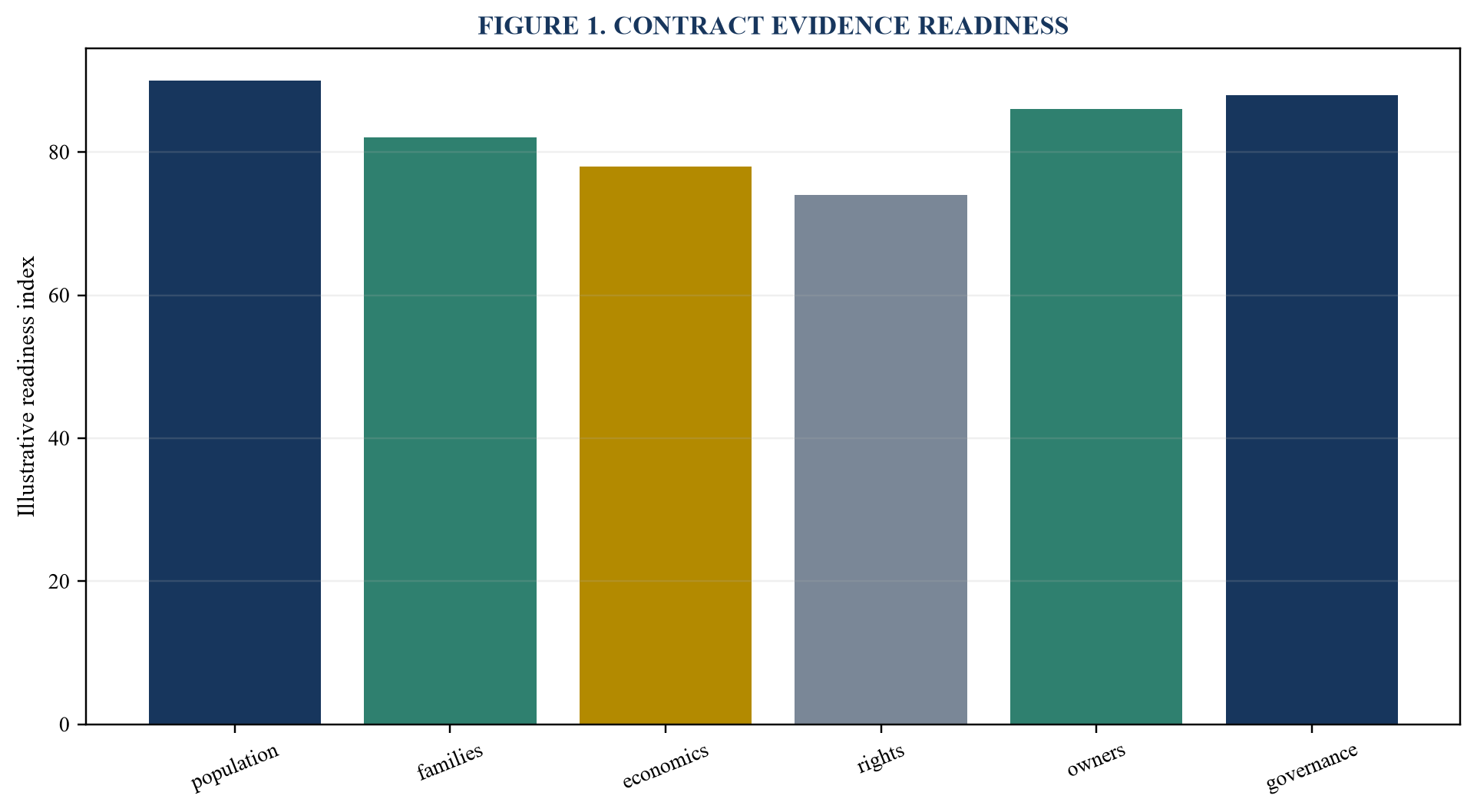
Values are illustrative readiness indices and require contract-specific evidence.
9. Read governing law and forum
Identify governing law, jurisdiction, arbitration, venue, language and conflict rules.
The controlled record should identify the counterparty, contract family, jurisdiction, governing law, purpose, value, owner, operative documents, amendment history, notice, consent, performance, exception and remediation. The immediate deliverable is a governing-law matrix.
The principal failure occurs when standard clause labels have uniform meaning across jurisdictions. Reviewers should distinguish legal rights from operational practice, assignment from novation, control change from asset transfer, termination rights from commercial likelihood, and signed text from the complete agreement. They should connect each conclusion to revenue, margin, service continuity, working capital, financing, data, intellectual property, separation, regulatory approval, transaction structure, closing conditions and value, then test downside and counterparty-response scenarios.
The decision pack for read governing law and forum should state the clause text, interpretation status, economic exposure, consent path, timing, leverage, alternative, owner, authorised-advice status, buyer implication, residual uncertainty and next gate. Material exceptions should flow into the contract fact book, diligence room, separation plan, forecast, disclosure process, transaction protections, consent campaign and board reporting.
10. Determine transaction mechanics
Compare share sale, merger, asset sale, carve-out, reorganisation and financing consequences.
The controlled record should identify the counterparty, contract family, jurisdiction, governing law, purpose, value, owner, operative documents, amendment history, notice, consent, performance, exception and remediation. The immediate deliverable is a route-by-clause decision tree.
The principal failure occurs when the same clause result applies to every deal route. Reviewers should distinguish legal rights from operational practice, assignment from novation, control change from asset transfer, termination rights from commercial likelihood, and signed text from the complete agreement. They should connect each conclusion to revenue, margin, service continuity, working capital, financing, data, intellectual property, separation, regulatory approval, transaction structure, closing conditions and value, then test downside and counterparty-response scenarios.
The decision pack for determine transaction mechanics should state the clause text, interpretation status, economic exposure, consent path, timing, leverage, alternative, owner, authorised-advice status, buyer implication, residual uncertainty and next gate. Material exceptions should flow into the contract fact book, diligence room, separation plan, forecast, disclosure process, transaction protections, consent campaign and board reporting.
11. Extract change-of-control clauses
Identify direct, indirect, deemed, beneficial-ownership, competitor and control definitions.
The controlled record should identify the counterparty, contract family, jurisdiction, governing law, purpose, value, owner, operative documents, amendment history, notice, consent, performance, exception and remediation. The immediate deliverable is a change-of-control rights map.
The principal failure occurs when a share sale never transfers the contracting entity. Reviewers should distinguish legal rights from operational practice, assignment from novation, control change from asset transfer, termination rights from commercial likelihood, and signed text from the complete agreement. They should connect each conclusion to revenue, margin, service continuity, working capital, financing, data, intellectual property, separation, regulatory approval, transaction structure, closing conditions and value, then test downside and counterparty-response scenarios.
The decision pack for extract change-of-control clauses should state the clause text, interpretation status, economic exposure, consent path, timing, leverage, alternative, owner, authorised-advice status, buyer implication, residual uncertainty and next gate. Material exceptions should flow into the contract fact book, diligence room, separation plan, forecast, disclosure process, transaction protections, consent campaign and board reporting.
12. Test assignment restrictions
Separate assignment of rights, delegation of duties, transfer by operation of law and affiliate exceptions.
The controlled record should identify the counterparty, contract family, jurisdiction, governing law, purpose, value, owner, operative documents, amendment history, notice, consent, performance, exception and remediation. The immediate deliverable is an assignment-permission matrix.
The principal failure occurs when assignment and novation are interchangeable. Reviewers should distinguish legal rights from operational practice, assignment from novation, control change from asset transfer, termination rights from commercial likelihood, and signed text from the complete agreement. They should connect each conclusion to revenue, margin, service continuity, working capital, financing, data, intellectual property, separation, regulatory approval, transaction structure, closing conditions and value, then test downside and counterparty-response scenarios.
The decision pack for test assignment restrictions should state the clause text, interpretation status, economic exposure, consent path, timing, leverage, alternative, owner, authorised-advice status, buyer implication, residual uncertainty and next gate. Material exceptions should flow into the contract fact book, diligence room, separation plan, forecast, disclosure process, transaction protections, consent campaign and board reporting.
13. Test novation requirements
Determine when counterparty release and substitution are required for obligations.
The controlled record should identify the counterparty, contract family, jurisdiction, governing law, purpose, value, owner, operative documents, amendment history, notice, consent, performance, exception and remediation. The immediate deliverable is a novation pathway.
The principal failure occurs when commercial consent silently creates a legal novation. Reviewers should distinguish legal rights from operational practice, assignment from novation, control change from asset transfer, termination rights from commercial likelihood, and signed text from the complete agreement. They should connect each conclusion to revenue, margin, service continuity, working capital, financing, data, intellectual property, separation, regulatory approval, transaction structure, closing conditions and value, then test downside and counterparty-response scenarios.
The decision pack for test novation requirements should state the clause text, interpretation status, economic exposure, consent path, timing, leverage, alternative, owner, authorised-advice status, buyer implication, residual uncertainty and next gate. Material exceptions should flow into the contract fact book, diligence room, separation plan, forecast, disclosure process, transaction protections, consent campaign and board reporting.
14. Test termination for convenience
Map notice periods, fees, wind-down rights, transition obligations and partial termination.
The controlled record should identify the counterparty, contract family, jurisdiction, governing law, purpose, value, owner, operative documents, amendment history, notice, consent, performance, exception and remediation. The immediate deliverable is a convenience-termination exposure model.
The principal failure occurs when a long contract term guarantees durable economics. Reviewers should distinguish legal rights from operational practice, assignment from novation, control change from asset transfer, termination rights from commercial likelihood, and signed text from the complete agreement. They should connect each conclusion to revenue, margin, service continuity, working capital, financing, data, intellectual property, separation, regulatory approval, transaction structure, closing conditions and value, then test downside and counterparty-response scenarios.
The decision pack for test termination for convenience should state the clause text, interpretation status, economic exposure, consent path, timing, leverage, alternative, owner, authorised-advice status, buyer implication, residual uncertainty and next gate. Material exceptions should flow into the contract fact book, diligence room, separation plan, forecast, disclosure process, transaction protections, consent campaign and board reporting.
15. Test termination for cause
Identify breach, insolvency, control change, sanctions, ownership, performance and cure triggers.
The controlled record should identify the counterparty, contract family, jurisdiction, governing law, purpose, value, owner, operative documents, amendment history, notice, consent, performance, exception and remediation. The immediate deliverable is a cause-and-cure register.
The principal failure occurs when no current default means no termination exposure. Reviewers should distinguish legal rights from operational practice, assignment from novation, control change from asset transfer, termination rights from commercial likelihood, and signed text from the complete agreement. They should connect each conclusion to revenue, margin, service continuity, working capital, financing, data, intellectual property, separation, regulatory approval, transaction structure, closing conditions and value, then test downside and counterparty-response scenarios.
The decision pack for test termination for cause should state the clause text, interpretation status, economic exposure, consent path, timing, leverage, alternative, owner, authorised-advice status, buyer implication, residual uncertainty and next gate. Material exceptions should flow into the contract fact book, diligence room, separation plan, forecast, disclosure process, transaction protections, consent campaign and board reporting.
16. Test renewal and expiry
Reconcile fixed terms, evergreen renewals, notice windows, repricing and holdover arrangements.
The controlled record should identify the counterparty, contract family, jurisdiction, governing law, purpose, value, owner, operative documents, amendment history, notice, consent, performance, exception and remediation. The immediate deliverable is a renewal critical-path calendar.
The principal failure occurs when historic renewal behaviour preserves a missed option. Reviewers should distinguish legal rights from operational practice, assignment from novation, control change from asset transfer, termination rights from commercial likelihood, and signed text from the complete agreement. They should connect each conclusion to revenue, margin, service continuity, working capital, financing, data, intellectual property, separation, regulatory approval, transaction structure, closing conditions and value, then test downside and counterparty-response scenarios.
The decision pack for test renewal and expiry should state the clause text, interpretation status, economic exposure, consent path, timing, leverage, alternative, owner, authorised-advice status, buyer implication, residual uncertainty and next gate. Material exceptions should flow into the contract fact book, diligence room, separation plan, forecast, disclosure process, transaction protections, consent campaign and board reporting.
Table 2. Transfer-rights decision
| Mechanism | Core question | Evidence |
|---|---|---|
| control change | trigger and definition | ownership route |
| assignment | rights and duties | permission text |
| novation | release and substitution | executed consent |
| termination | trigger and cure | notice record |
Illustrative analytical design; contract-specific facts, governing law and authorised legal advice govern.
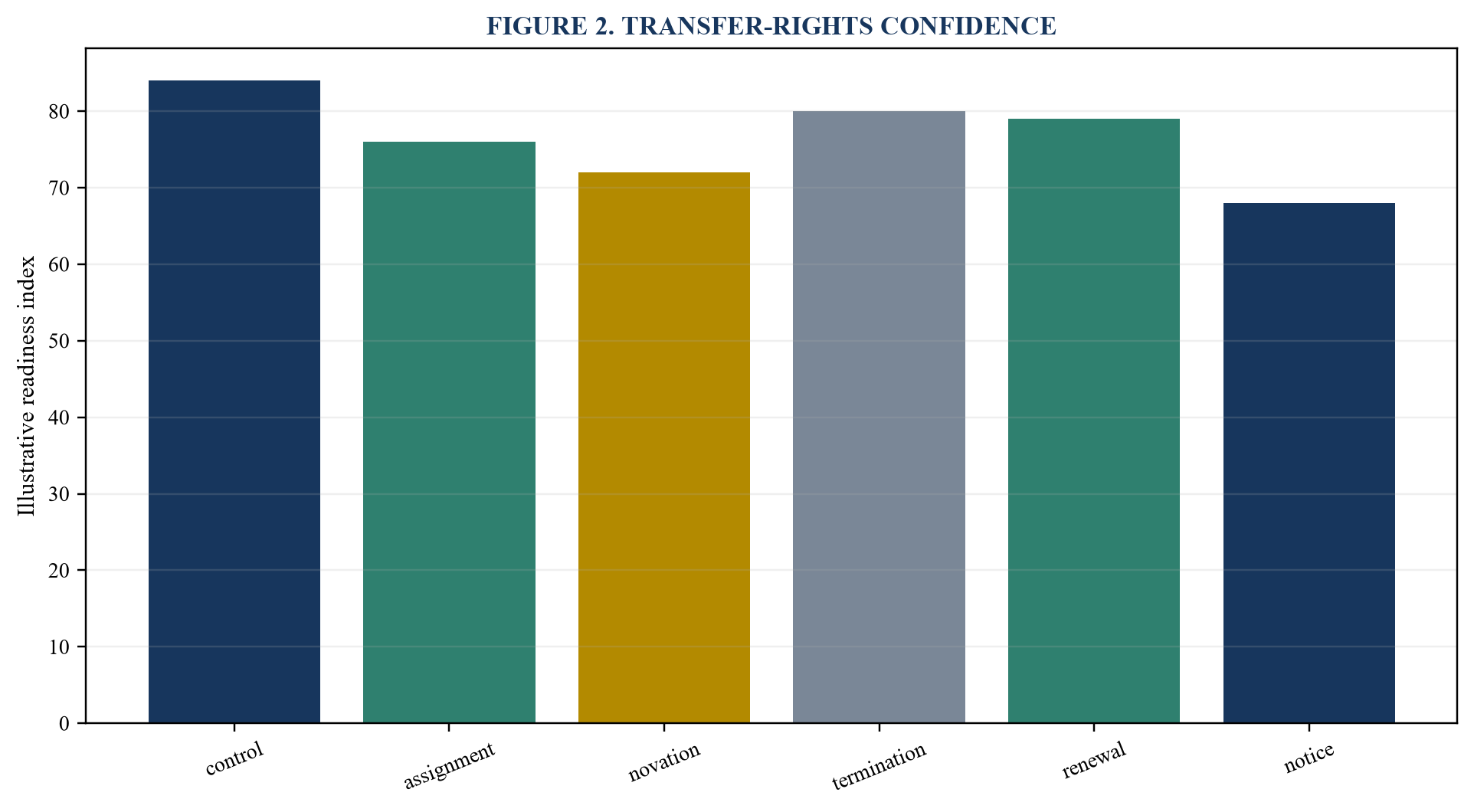
Values are illustrative readiness indices and require contract-specific evidence.
17. Map consent requirements
Identify consent, notice, consultation, acknowledgement, waiver and information conditions.
The controlled record should identify the counterparty, contract family, jurisdiction, governing law, purpose, value, owner, operative documents, amendment history, notice, consent, performance, exception and remediation. The immediate deliverable is a consent-obligation register.
The principal failure occurs when every clause requires explicit written consent. Reviewers should distinguish legal rights from operational practice, assignment from novation, control change from asset transfer, termination rights from commercial likelihood, and signed text from the complete agreement. They should connect each conclusion to revenue, margin, service continuity, working capital, financing, data, intellectual property, separation, regulatory approval, transaction structure, closing conditions and value, then test downside and counterparty-response scenarios.
The decision pack for map consent requirements should state the clause text, interpretation status, economic exposure, consent path, timing, leverage, alternative, owner, authorised-advice status, buyer implication, residual uncertainty and next gate. Material exceptions should flow into the contract fact book, diligence room, separation plan, forecast, disclosure process, transaction protections, consent campaign and board reporting.
18. Validate notice mechanics
Test recipient, address, medium, timing, deemed receipt, copy and delivery evidence.
The controlled record should identify the counterparty, contract family, jurisdiction, governing law, purpose, value, owner, operative documents, amendment history, notice, consent, performance, exception and remediation. The immediate deliverable is a notice compliance pack.
The principal failure occurs when email to the commercial contact satisfies formal notice. Reviewers should distinguish legal rights from operational practice, assignment from novation, control change from asset transfer, termination rights from commercial likelihood, and signed text from the complete agreement. They should connect each conclusion to revenue, margin, service continuity, working capital, financing, data, intellectual property, separation, regulatory approval, transaction structure, closing conditions and value, then test downside and counterparty-response scenarios.
The decision pack for validate notice mechanics should state the clause text, interpretation status, economic exposure, consent path, timing, leverage, alternative, owner, authorised-advice status, buyer implication, residual uncertainty and next gate. Material exceptions should flow into the contract fact book, diligence room, separation plan, forecast, disclosure process, transaction protections, consent campaign and board reporting.
19. Review customer contracts
Assess continuity, pricing, exclusivity, service levels, credits, data, audit and termination exposure.
The controlled record should identify the counterparty, contract family, jurisdiction, governing law, purpose, value, owner, operative documents, amendment history, notice, consent, performance, exception and remediation. The immediate deliverable is a customer continuity heat map.
The principal failure occurs when customer importance can be inferred from billed revenue. Reviewers should distinguish legal rights from operational practice, assignment from novation, control change from asset transfer, termination rights from commercial likelihood, and signed text from the complete agreement. They should connect each conclusion to revenue, margin, service continuity, working capital, financing, data, intellectual property, separation, regulatory approval, transaction structure, closing conditions and value, then test downside and counterparty-response scenarios.
The decision pack for review customer contracts should state the clause text, interpretation status, economic exposure, consent path, timing, leverage, alternative, owner, authorised-advice status, buyer implication, residual uncertainty and next gate. Material exceptions should flow into the contract fact book, diligence room, separation plan, forecast, disclosure process, transaction protections, consent campaign and board reporting.
20. Review supplier contracts
Assess dependency, capacity, pricing, minimums, allocation, step-in, subcontracting and replacement.
The controlled record should identify the counterparty, contract family, jurisdiction, governing law, purpose, value, owner, operative documents, amendment history, notice, consent, performance, exception and remediation. The immediate deliverable is a supplier dependency map.
The principal failure occurs when multiple vendors prove practical substitutability. Reviewers should distinguish legal rights from operational practice, assignment from novation, control change from asset transfer, termination rights from commercial likelihood, and signed text from the complete agreement. They should connect each conclusion to revenue, margin, service continuity, working capital, financing, data, intellectual property, separation, regulatory approval, transaction structure, closing conditions and value, then test downside and counterparty-response scenarios.
The decision pack for review supplier contracts should state the clause text, interpretation status, economic exposure, consent path, timing, leverage, alternative, owner, authorised-advice status, buyer implication, residual uncertainty and next gate. Material exceptions should flow into the contract fact book, diligence room, separation plan, forecast, disclosure process, transaction protections, consent campaign and board reporting.
21. Review leases and property rights
Map premises, permits, landlord consent, transfer, use, break, restoration and security.
The controlled record should identify the counterparty, contract family, jurisdiction, governing law, purpose, value, owner, operative documents, amendment history, notice, consent, performance, exception and remediation. The immediate deliverable is a property continuity plan.
The principal failure occurs when occupancy can continue after the deal without formal action. Reviewers should distinguish legal rights from operational practice, assignment from novation, control change from asset transfer, termination rights from commercial likelihood, and signed text from the complete agreement. They should connect each conclusion to revenue, margin, service continuity, working capital, financing, data, intellectual property, separation, regulatory approval, transaction structure, closing conditions and value, then test downside and counterparty-response scenarios.
The decision pack for review leases and property rights should state the clause text, interpretation status, economic exposure, consent path, timing, leverage, alternative, owner, authorised-advice status, buyer implication, residual uncertainty and next gate. Material exceptions should flow into the contract fact book, diligence room, separation plan, forecast, disclosure process, transaction protections, consent campaign and board reporting.
22. Review licences and permits
Identify holder, scope, transferability, control triggers, conditions, renewal and regulator engagement.
The controlled record should identify the counterparty, contract family, jurisdiction, governing law, purpose, value, owner, operative documents, amendment history, notice, consent, performance, exception and remediation. The immediate deliverable is a licence-and-permit register.
The principal failure occurs when licences follow the operating assets automatically. Reviewers should distinguish legal rights from operational practice, assignment from novation, control change from asset transfer, termination rights from commercial likelihood, and signed text from the complete agreement. They should connect each conclusion to revenue, margin, service continuity, working capital, financing, data, intellectual property, separation, regulatory approval, transaction structure, closing conditions and value, then test downside and counterparty-response scenarios.
The decision pack for review licences and permits should state the clause text, interpretation status, economic exposure, consent path, timing, leverage, alternative, owner, authorised-advice status, buyer implication, residual uncertainty and next gate. Material exceptions should flow into the contract fact book, diligence room, separation plan, forecast, disclosure process, transaction protections, consent campaign and board reporting.
23. Review intellectual-property agreements
Map ownership, licences, sublicensing, field, territory, control, escrow and termination.
The controlled record should identify the counterparty, contract family, jurisdiction, governing law, purpose, value, owner, operative documents, amendment history, notice, consent, performance, exception and remediation. The immediate deliverable is an IP contract chain.
The principal failure occurs when registered ownership captures all technology rights. Reviewers should distinguish legal rights from operational practice, assignment from novation, control change from asset transfer, termination rights from commercial likelihood, and signed text from the complete agreement. They should connect each conclusion to revenue, margin, service continuity, working capital, financing, data, intellectual property, separation, regulatory approval, transaction structure, closing conditions and value, then test downside and counterparty-response scenarios.
The decision pack for review intellectual-property agreements should state the clause text, interpretation status, economic exposure, consent path, timing, leverage, alternative, owner, authorised-advice status, buyer implication, residual uncertainty and next gate. Material exceptions should flow into the contract fact book, diligence room, separation plan, forecast, disclosure process, transaction protections, consent campaign and board reporting.
24. Review data and technology contracts
Assess hosting, cloud, software, data use, cybersecurity, audit, portability, exit and subcontractors.
The controlled record should identify the counterparty, contract family, jurisdiction, governing law, purpose, value, owner, operative documents, amendment history, notice, consent, performance, exception and remediation. The immediate deliverable is a technology continuity map.
The principal failure occurs when technical migration resolves contractual restrictions. Reviewers should distinguish legal rights from operational practice, assignment from novation, control change from asset transfer, termination rights from commercial likelihood, and signed text from the complete agreement. They should connect each conclusion to revenue, margin, service continuity, working capital, financing, data, intellectual property, separation, regulatory approval, transaction structure, closing conditions and value, then test downside and counterparty-response scenarios.
The decision pack for review data and technology contracts should state the clause text, interpretation status, economic exposure, consent path, timing, leverage, alternative, owner, authorised-advice status, buyer implication, residual uncertainty and next gate. Material exceptions should flow into the contract fact book, diligence room, separation plan, forecast, disclosure process, transaction protections, consent campaign and board reporting.
Table 3. Continuity contract map
| Contract class | Continuity dependency | Fallback |
|---|---|---|
| customer | retention and service | commercial waiver |
| supplier | capacity and inputs | replacement |
| technology | data and access | migration |
| property | occupation and permits | transition |
Illustrative analytical design; contract-specific facts, governing law and authorised legal advice govern.
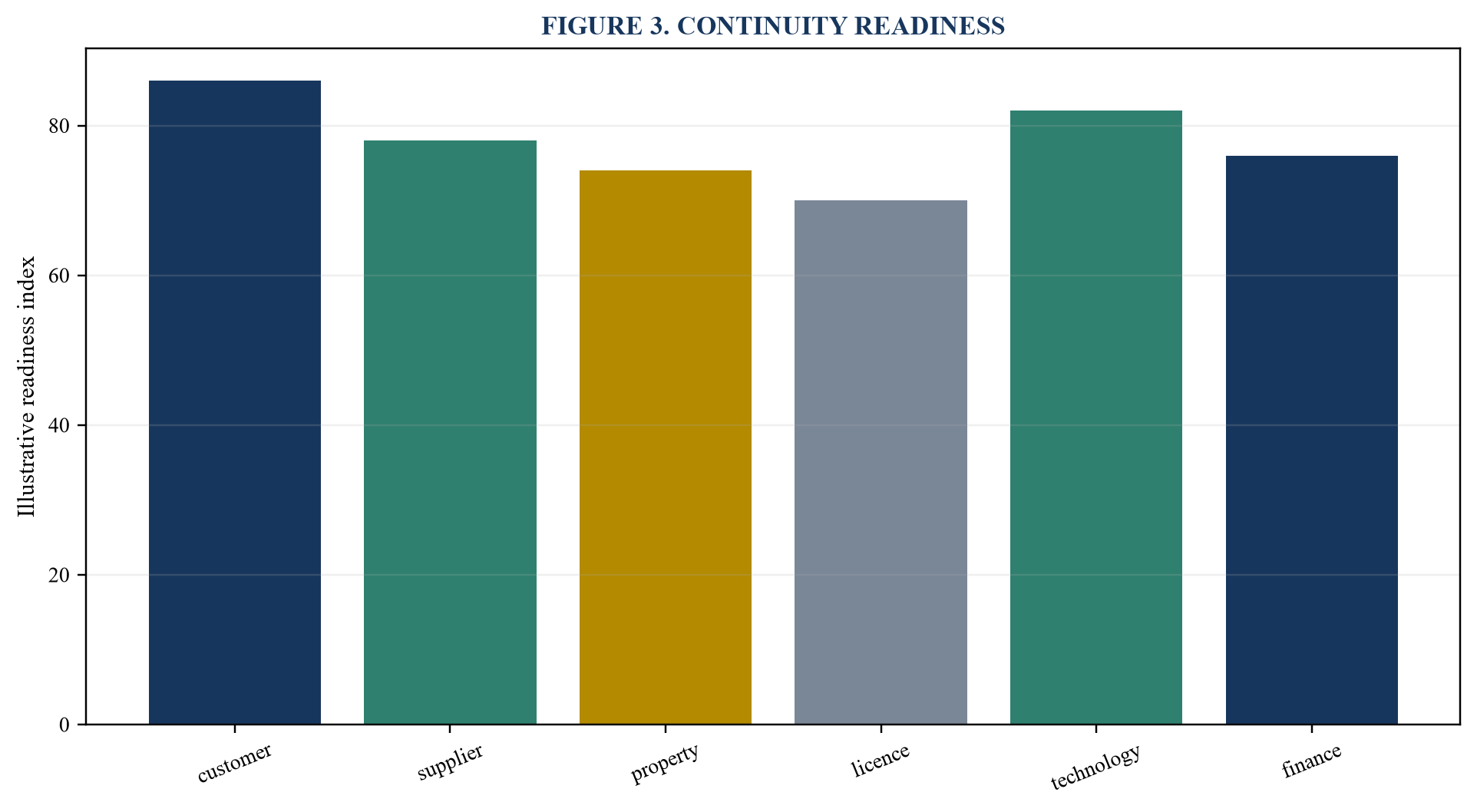
Values are illustrative readiness indices and require contract-specific evidence.
25. Review financing documents
Test debt, security, guarantees, covenants, mandatory prepayment, control and consent provisions.
The controlled record should identify the counterparty, contract family, jurisdiction, governing law, purpose, value, owner, operative documents, amendment history, notice, consent, performance, exception and remediation. The immediate deliverable is a financing-consent map.
The principal failure occurs when commercial lender support waives documentary requirements. Reviewers should distinguish legal rights from operational practice, assignment from novation, control change from asset transfer, termination rights from commercial likelihood, and signed text from the complete agreement. They should connect each conclusion to revenue, margin, service continuity, working capital, financing, data, intellectual property, separation, regulatory approval, transaction structure, closing conditions and value, then test downside and counterparty-response scenarios.
The decision pack for review financing documents should state the clause text, interpretation status, economic exposure, consent path, timing, leverage, alternative, owner, authorised-advice status, buyer implication, residual uncertainty and next gate. Material exceptions should flow into the contract fact book, diligence room, separation plan, forecast, disclosure process, transaction protections, consent campaign and board reporting.
26. Review joint ventures and alliances
Assess reserved matters, transfers, pre-emption, deadlock, control, funding and exit rights.
The controlled record should identify the counterparty, contract family, jurisdiction, governing law, purpose, value, owner, operative documents, amendment history, notice, consent, performance, exception and remediation. The immediate deliverable is a partner-rights matrix.
The principal failure occurs when minority interests do not affect transaction execution. Reviewers should distinguish legal rights from operational practice, assignment from novation, control change from asset transfer, termination rights from commercial likelihood, and signed text from the complete agreement. They should connect each conclusion to revenue, margin, service continuity, working capital, financing, data, intellectual property, separation, regulatory approval, transaction structure, closing conditions and value, then test downside and counterparty-response scenarios.
The decision pack for review joint ventures and alliances should state the clause text, interpretation status, economic exposure, consent path, timing, leverage, alternative, owner, authorised-advice status, buyer implication, residual uncertainty and next gate. Material exceptions should flow into the contract fact book, diligence room, separation plan, forecast, disclosure process, transaction protections, consent campaign and board reporting.
27. Review government and public contracts
Map procurement restrictions, approvals, disclosure, integrity, performance and modification rules.
The controlled record should identify the counterparty, contract family, jurisdiction, governing law, purpose, value, owner, operative documents, amendment history, notice, consent, performance, exception and remediation. The immediate deliverable is a public-contract pathway.
The principal failure occurs when corporate restructuring automatically qualifies for a transfer exception. Reviewers should distinguish legal rights from operational practice, assignment from novation, control change from asset transfer, termination rights from commercial likelihood, and signed text from the complete agreement. They should connect each conclusion to revenue, margin, service continuity, working capital, financing, data, intellectual property, separation, regulatory approval, transaction structure, closing conditions and value, then test downside and counterparty-response scenarios.
The decision pack for review government and public contracts should state the clause text, interpretation status, economic exposure, consent path, timing, leverage, alternative, owner, authorised-advice status, buyer implication, residual uncertainty and next gate. Material exceptions should flow into the contract fact book, diligence room, separation plan, forecast, disclosure process, transaction protections, consent campaign and board reporting.
28. Review employment and benefits contracts
Test transfer rules, consultation, key-person terms, restrictive covenants, incentives and change payments.
The controlled record should identify the counterparty, contract family, jurisdiction, governing law, purpose, value, owner, operative documents, amendment history, notice, consent, performance, exception and remediation. The immediate deliverable is a people-contract transition map.
The principal failure occurs when employee contracts always remain with the legal entity. Reviewers should distinguish legal rights from operational practice, assignment from novation, control change from asset transfer, termination rights from commercial likelihood, and signed text from the complete agreement. They should connect each conclusion to revenue, margin, service continuity, working capital, financing, data, intellectual property, separation, regulatory approval, transaction structure, closing conditions and value, then test downside and counterparty-response scenarios.
The decision pack for review employment and benefits contracts should state the clause text, interpretation status, economic exposure, consent path, timing, leverage, alternative, owner, authorised-advice status, buyer implication, residual uncertainty and next gate. Material exceptions should flow into the contract fact book, diligence room, separation plan, forecast, disclosure process, transaction protections, consent campaign and board reporting.
29. Review distribution and agency agreements
Assess territory, exclusivity, compensation, inventory, goodwill, termination and mandatory-law exposure.
The controlled record should identify the counterparty, contract family, jurisdiction, governing law, purpose, value, owner, operative documents, amendment history, notice, consent, performance, exception and remediation. The immediate deliverable is a channel-rights map.
The principal failure occurs when termination economics are fully stated in the contract. Reviewers should distinguish legal rights from operational practice, assignment from novation, control change from asset transfer, termination rights from commercial likelihood, and signed text from the complete agreement. They should connect each conclusion to revenue, margin, service continuity, working capital, financing, data, intellectual property, separation, regulatory approval, transaction structure, closing conditions and value, then test downside and counterparty-response scenarios.
The decision pack for review distribution and agency agreements should state the clause text, interpretation status, economic exposure, consent path, timing, leverage, alternative, owner, authorised-advice status, buyer implication, residual uncertainty and next gate. Material exceptions should flow into the contract fact book, diligence room, separation plan, forecast, disclosure process, transaction protections, consent campaign and board reporting.
30. Review construction and project contracts
Map scope, variations, bonds, delay, liquidated damages, acceptance, claims and step-in rights.
The controlled record should identify the counterparty, contract family, jurisdiction, governing law, purpose, value, owner, operative documents, amendment history, notice, consent, performance, exception and remediation. The immediate deliverable is a project-contract risk register.
The principal failure occurs when project completion eliminates surviving contractual risk. Reviewers should distinguish legal rights from operational practice, assignment from novation, control change from asset transfer, termination rights from commercial likelihood, and signed text from the complete agreement. They should connect each conclusion to revenue, margin, service continuity, working capital, financing, data, intellectual property, separation, regulatory approval, transaction structure, closing conditions and value, then test downside and counterparty-response scenarios.
The decision pack for review construction and project contracts should state the clause text, interpretation status, economic exposure, consent path, timing, leverage, alternative, owner, authorised-advice status, buyer implication, residual uncertainty and next gate. Material exceptions should flow into the contract fact book, diligence room, separation plan, forecast, disclosure process, transaction protections, consent campaign and board reporting.
31. Review insurance contracts
Test insured entity, control notices, assignment, runoff, claims-made periods and transaction cover.
The controlled record should identify the counterparty, contract family, jurisdiction, governing law, purpose, value, owner, operative documents, amendment history, notice, consent, performance, exception and remediation. The immediate deliverable is an insurance continuity plan.
The principal failure occurs when historic insurance automatically protects the buyer. Reviewers should distinguish legal rights from operational practice, assignment from novation, control change from asset transfer, termination rights from commercial likelihood, and signed text from the complete agreement. They should connect each conclusion to revenue, margin, service continuity, working capital, financing, data, intellectual property, separation, regulatory approval, transaction structure, closing conditions and value, then test downside and counterparty-response scenarios.
The decision pack for review insurance contracts should state the clause text, interpretation status, economic exposure, consent path, timing, leverage, alternative, owner, authorised-advice status, buyer implication, residual uncertainty and next gate. Material exceptions should flow into the contract fact book, diligence room, separation plan, forecast, disclosure process, transaction protections, consent campaign and board reporting.
32. Review compliance and sanctions clauses
Map anti-bribery, sanctions, export, human-rights, ESG, audit and termination provisions.
The controlled record should identify the counterparty, contract family, jurisdiction, governing law, purpose, value, owner, operative documents, amendment history, notice, consent, performance, exception and remediation. The immediate deliverable is a compliance-clause exception map.
The principal failure occurs when policy compliance proves contractual compliance. Reviewers should distinguish legal rights from operational practice, assignment from novation, control change from asset transfer, termination rights from commercial likelihood, and signed text from the complete agreement. They should connect each conclusion to revenue, margin, service continuity, working capital, financing, data, intellectual property, separation, regulatory approval, transaction structure, closing conditions and value, then test downside and counterparty-response scenarios.
The decision pack for review compliance and sanctions clauses should state the clause text, interpretation status, economic exposure, consent path, timing, leverage, alternative, owner, authorised-advice status, buyer implication, residual uncertainty and next gate. Material exceptions should flow into the contract fact book, diligence room, separation plan, forecast, disclosure process, transaction protections, consent campaign and board reporting.
Table 4. Consent prioritisation
| Tier | Criteria | Action |
|---|---|---|
| closing critical | condition or essential right | early engagement |
| value critical | material economics | negotiated consent |
| continuity critical | hard to replace | dual-track fallback |
| administrative | notice only | controlled delivery |
Illustrative analytical design; contract-specific facts, governing law and authorised legal advice govern.
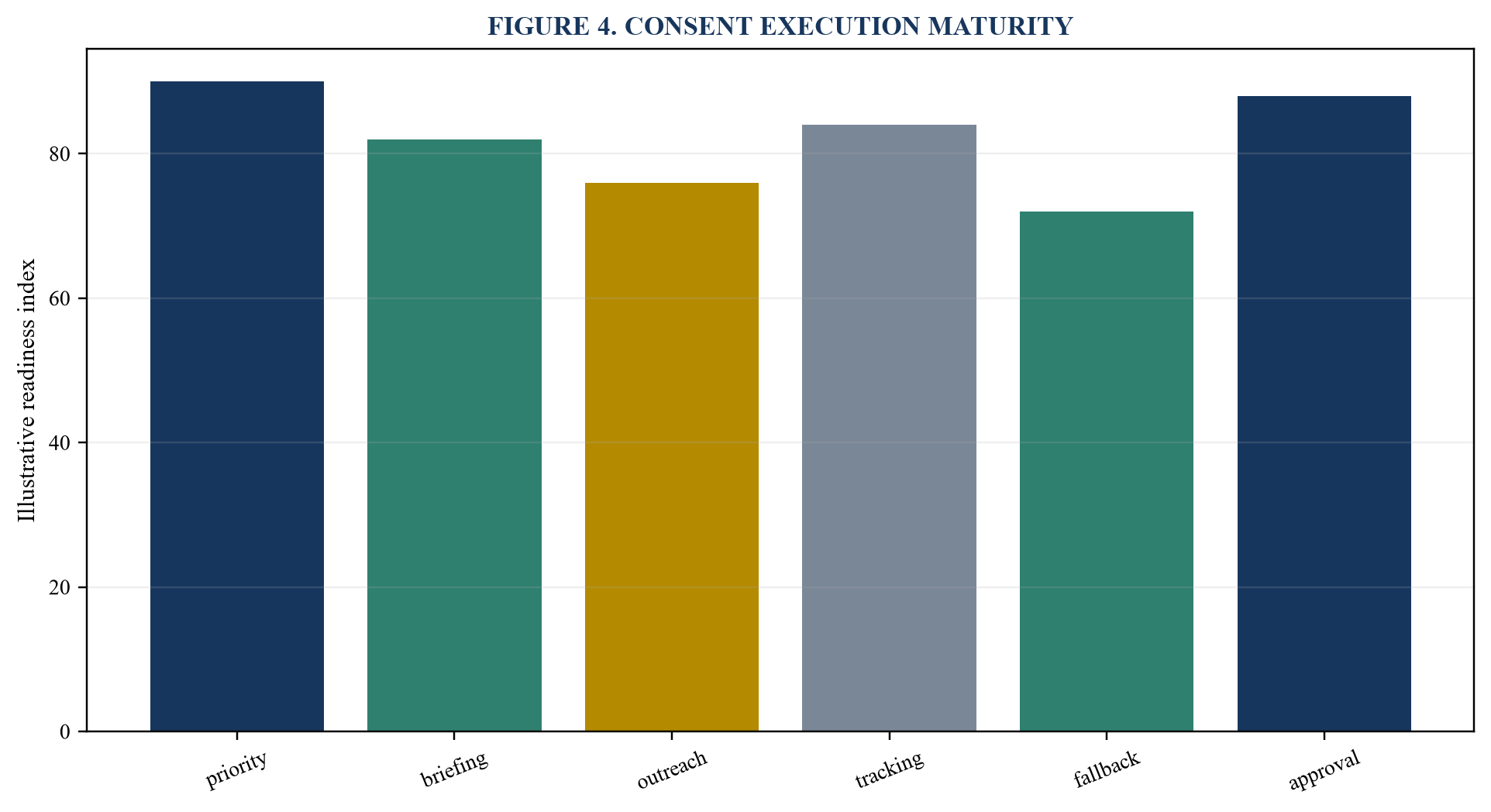
Values are illustrative readiness indices and require contract-specific evidence.
33. Build the consent strategy
Sequence counterparties, messages, information, asks, fallbacks and approvals by critical path.
The controlled record should identify the counterparty, contract family, jurisdiction, governing law, purpose, value, owner, operative documents, amendment history, notice, consent, performance, exception and remediation. The immediate deliverable is a consent campaign plan.
The principal failure occurs when all consents should be requested simultaneously. Reviewers should distinguish legal rights from operational practice, assignment from novation, control change from asset transfer, termination rights from commercial likelihood, and signed text from the complete agreement. They should connect each conclusion to revenue, margin, service continuity, working capital, financing, data, intellectual property, separation, regulatory approval, transaction structure, closing conditions and value, then test downside and counterparty-response scenarios.
The decision pack for build the consent strategy should state the clause text, interpretation status, economic exposure, consent path, timing, leverage, alternative, owner, authorised-advice status, buyer implication, residual uncertainty and next gate. Material exceptions should flow into the contract fact book, diligence room, separation plan, forecast, disclosure process, transaction protections, consent campaign and board reporting.
34. Prepare counterparty engagement
Control relationship intelligence, negotiation authority, confidentiality, disclosure and communication.
The controlled record should identify the counterparty, contract family, jurisdiction, governing law, purpose, value, owner, operative documents, amendment history, notice, consent, performance, exception and remediation. The immediate deliverable is a counterparty briefing pack.
The principal failure occurs when a template letter is sufficient for every relationship. Reviewers should distinguish legal rights from operational practice, assignment from novation, control change from asset transfer, termination rights from commercial likelihood, and signed text from the complete agreement. They should connect each conclusion to revenue, margin, service continuity, working capital, financing, data, intellectual property, separation, regulatory approval, transaction structure, closing conditions and value, then test downside and counterparty-response scenarios.
The decision pack for prepare counterparty engagement should state the clause text, interpretation status, economic exposure, consent path, timing, leverage, alternative, owner, authorised-advice status, buyer implication, residual uncertainty and next gate. Material exceptions should flow into the contract fact book, diligence room, separation plan, forecast, disclosure process, transaction protections, consent campaign and board reporting.
35. Model refusal and renegotiation
Estimate replacement, repricing, delay, concessions, transition and transaction consequences.
The controlled record should identify the counterparty, contract family, jurisdiction, governing law, purpose, value, owner, operative documents, amendment history, notice, consent, performance, exception and remediation. The immediate deliverable is a consent downside model.
The principal failure occurs when counterparties will consent without economic leverage. Reviewers should distinguish legal rights from operational practice, assignment from novation, control change from asset transfer, termination rights from commercial likelihood, and signed text from the complete agreement. They should connect each conclusion to revenue, margin, service continuity, working capital, financing, data, intellectual property, separation, regulatory approval, transaction structure, closing conditions and value, then test downside and counterparty-response scenarios.
The decision pack for model refusal and renegotiation should state the clause text, interpretation status, economic exposure, consent path, timing, leverage, alternative, owner, authorised-advice status, buyer implication, residual uncertainty and next gate. Material exceptions should flow into the contract fact book, diligence room, separation plan, forecast, disclosure process, transaction protections, consent campaign and board reporting.
36. Design continuity alternatives
Evaluate subcontracting, transitional services, replacement, duplication, carve-out and delayed transfer.
The controlled record should identify the counterparty, contract family, jurisdiction, governing law, purpose, value, owner, operative documents, amendment history, notice, consent, performance, exception and remediation. The immediate deliverable is a continuity alternatives matrix.
The principal failure occurs when failure to obtain consent always prevents closing. Reviewers should distinguish legal rights from operational practice, assignment from novation, control change from asset transfer, termination rights from commercial likelihood, and signed text from the complete agreement. They should connect each conclusion to revenue, margin, service continuity, working capital, financing, data, intellectual property, separation, regulatory approval, transaction structure, closing conditions and value, then test downside and counterparty-response scenarios.
The decision pack for design continuity alternatives should state the clause text, interpretation status, economic exposure, consent path, timing, leverage, alternative, owner, authorised-advice status, buyer implication, residual uncertainty and next gate. Material exceptions should flow into the contract fact book, diligence room, separation plan, forecast, disclosure process, transaction protections, consent campaign and board reporting.
37. Prepare the contract fact book
Present population, economics, clause findings, consents, disputes and remediation coherently.
The controlled record should identify the counterparty, contract family, jurisdiction, governing law, purpose, value, owner, operative documents, amendment history, notice, consent, performance, exception and remediation. The immediate deliverable is a buyer-ready contract fact book.
The principal failure occurs when raw agreements allow buyers to reach the correct conclusion. Reviewers should distinguish legal rights from operational practice, assignment from novation, control change from asset transfer, termination rights from commercial likelihood, and signed text from the complete agreement. They should connect each conclusion to revenue, margin, service continuity, working capital, financing, data, intellectual property, separation, regulatory approval, transaction structure, closing conditions and value, then test downside and counterparty-response scenarios.
The decision pack for prepare the contract fact book should state the clause text, interpretation status, economic exposure, consent path, timing, leverage, alternative, owner, authorised-advice status, buyer implication, residual uncertainty and next gate. Material exceptions should flow into the contract fact book, diligence room, separation plan, forecast, disclosure process, transaction protections, consent campaign and board reporting.
38. Connect contract risk to valuation
Translate churn, repricing, replacement, leakage, delay and execution uncertainty into forecast and value.
The controlled record should identify the counterparty, contract family, jurisdiction, governing law, purpose, value, owner, operative documents, amendment history, notice, consent, performance, exception and remediation. The immediate deliverable is a contract-to-value bridge.
The principal failure occurs when only terminated contracts affect price. Reviewers should distinguish legal rights from operational practice, assignment from novation, control change from asset transfer, termination rights from commercial likelihood, and signed text from the complete agreement. They should connect each conclusion to revenue, margin, service continuity, working capital, financing, data, intellectual property, separation, regulatory approval, transaction structure, closing conditions and value, then test downside and counterparty-response scenarios.
The decision pack for connect contract risk to valuation should state the clause text, interpretation status, economic exposure, consent path, timing, leverage, alternative, owner, authorised-advice status, buyer implication, residual uncertainty and next gate. Material exceptions should flow into the contract fact book, diligence room, separation plan, forecast, disclosure process, transaction protections, consent campaign and board reporting.
39. Map transaction protections
Assess conditions, covenants, specific indemnities, escrow, retention, warranties and disclosure.
The controlled record should identify the counterparty, contract family, jurisdiction, governing law, purpose, value, owner, operative documents, amendment history, notice, consent, performance, exception and remediation. The immediate deliverable is a protection-options matrix.
The principal failure occurs when contract warranties substitute for population completeness. Reviewers should distinguish legal rights from operational practice, assignment from novation, control change from asset transfer, termination rights from commercial likelihood, and signed text from the complete agreement. They should connect each conclusion to revenue, margin, service continuity, working capital, financing, data, intellectual property, separation, regulatory approval, transaction structure, closing conditions and value, then test downside and counterparty-response scenarios.
The decision pack for map transaction protections should state the clause text, interpretation status, economic exposure, consent path, timing, leverage, alternative, owner, authorised-advice status, buyer implication, residual uncertainty and next gate. Material exceptions should flow into the contract fact book, diligence room, separation plan, forecast, disclosure process, transaction protections, consent campaign and board reporting.
40. Govern buyer challenge
Control questions, responses, evidence, legal review, concessions, new facts and closing consequences.
The controlled record should identify the counterparty, contract family, jurisdiction, governing law, purpose, value, owner, operative documents, amendment history, notice, consent, performance, exception and remediation. The immediate deliverable is a buyer contract challenge register.
The principal failure occurs when fast answers are more valuable than controlled answers. Reviewers should distinguish legal rights from operational practice, assignment from novation, control change from asset transfer, termination rights from commercial likelihood, and signed text from the complete agreement. They should connect each conclusion to revenue, margin, service continuity, working capital, financing, data, intellectual property, separation, regulatory approval, transaction structure, closing conditions and value, then test downside and counterparty-response scenarios.
The decision pack for govern buyer challenge should state the clause text, interpretation status, economic exposure, consent path, timing, leverage, alternative, owner, authorised-advice status, buyer implication, residual uncertainty and next gate. Material exceptions should flow into the contract fact book, diligence room, separation plan, forecast, disclosure process, transaction protections, consent campaign and board reporting.
Table 5. Buyer-ready contract certificate
| Gate | Evidence | Decision use |
|---|---|---|
| complete | reconciled population | scope |
| interpreted | clause and legal review | rights |
| engaged | consent evidence | certainty |
| protected | fallback and documents | closing |
Illustrative analytical design; contract-specific facts, governing law and authorised legal advice govern.
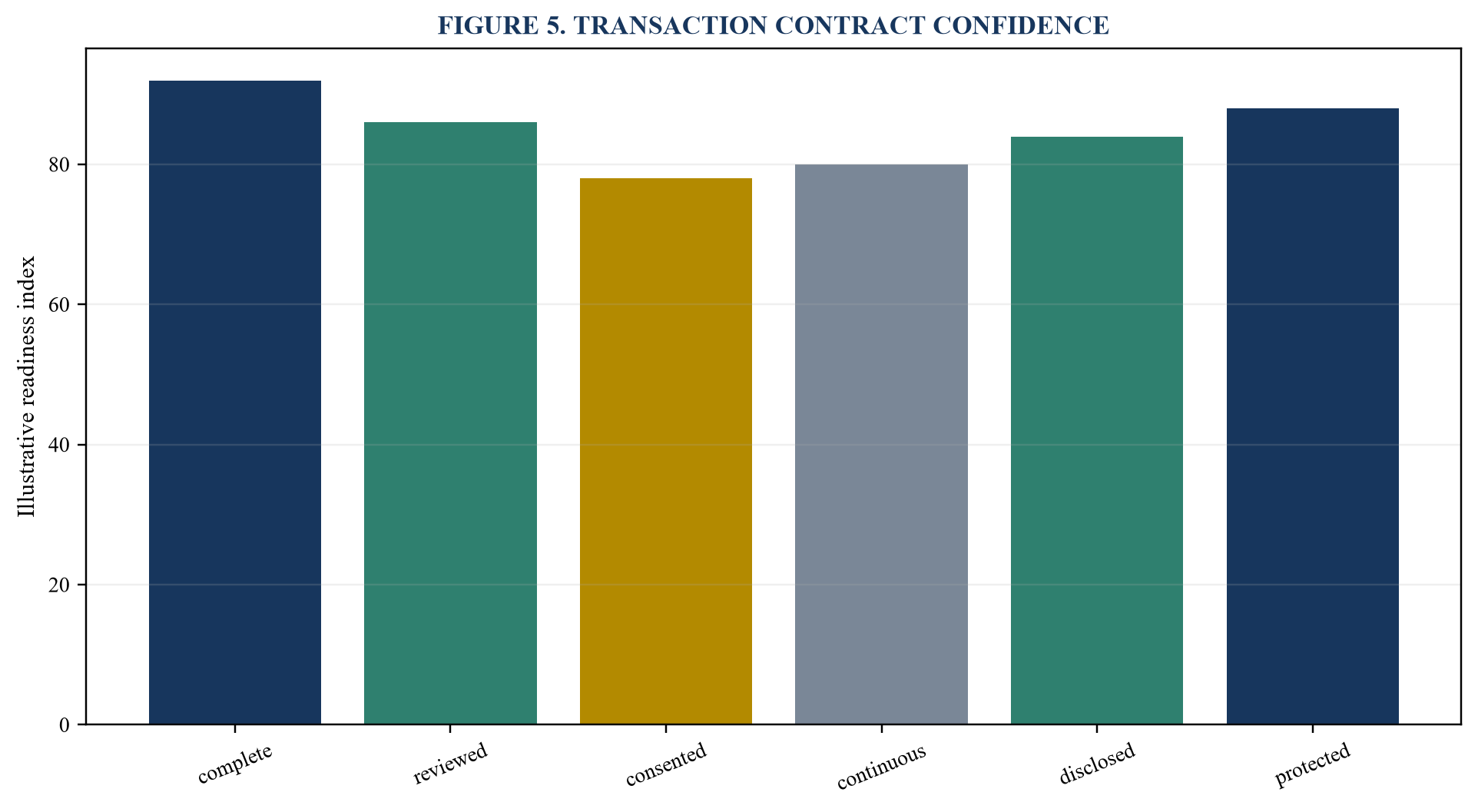
Values are illustrative readiness indices and require contract-specific evidence.
References
- IFRS Foundation, IFRS 15 Revenue from Contracts with Customers, https://www.ifrs.org/issued-standards/list-of-standards/ifrs-15-revenue-from-contracts-with-customers/
- IFRS Foundation, IFRS 16 Leases, https://www.ifrs.org/issued-standards/list-of-standards/ifrs-16-leases/
- IFRS Foundation, IFRS 9 Financial Instruments, https://www.ifrs.org/issued-standards/list-of-standards/ifrs-9-financial-instruments/
- IFRS Foundation, IAS 37 Provisions Contingent Liabilities and Contingent Assets, https://www.ifrs.org/issued-standards/list-of-standards/ias-37-provisions-contingent-liabilities-and-contingent-assets/
- IFRS Foundation, IFRS 3 Business Combinations, https://www.ifrs.org/issued-standards/list-of-standards/ifrs-3-business-combinations/
- UNCITRAL, United Nations Convention on Contracts for the International Sale of Goods, https://uncitral.un.org/en/texts/salegoods/conventions/sale_of_goods/cisg
- UNCITRAL, Convention on the Assignment of Receivables in International Trade, https://uncitral.un.org/en/texts/securityinterests/conventions/receivables
- UNCITRAL, Model Law on Electronic Transferable Records, https://uncitral.un.org/en/texts/ecommerce/modellaw/electronic_transferable_records
- UNCITRAL, Convention on Electronic Communications in International Contracts, https://uncitral.un.org/en/texts/ecommerce/conventions/electronic_communications
- International Chamber of Commerce, Force Majeure and Hardship Clauses, https://iccwbo.org/business-solutions/model-contracts-clauses/icc-force-majeure-and-hardship-clauses/
- International Chamber of Commerce, Incoterms Rules, https://iccwbo.org/business-solutions/incoterms-rules/
- International Chamber of Commerce, Arbitration Rules, https://iccwbo.org/dispute-resolution/dispute-resolution-services/arbitration/rules-procedure/
- OECD, Guidelines for Multinational Enterprises on Responsible Business Conduct, https://mneguidelines.oecd.org/mneguidelines/
- OECD, Anti-Bribery Convention, https://www.oecd.org/en/topics/sub-issues/fighting-foreign-bribery/convention-and-related-instruments.html
- United Nations, Guiding Principles on Business and Human Rights, https://www.ohchr.org/documents/publications/guidingprinciplesbusinesshr_en.pdf
- International Organization for Standardization, ISO 37301 Compliance Management Systems, https://www.iso.org/standard/75080.html
- International Organization for Standardization, ISO 37001 Anti-Bribery Management Systems, https://www.iso.org/iso-37001-anti-bribery-management.html
- International Organization for Standardization, ISO/IEC 27001 Information Security, https://www.iso.org/isoiec-27001-information-security.html
- International Organization for Standardization, ISO 22301 Business Continuity, https://www.iso.org/standard/75106.html
- European Union, General Data Protection Regulation, https://eur-lex.europa.eu/eli/reg/2016/679/oj
- European Union, Data Act, https://eur-lex.europa.eu/eli/reg/2023/2854/oj
- NIST, Cybersecurity Framework 2.0, https://www.nist.gov/cyberframework
- UK Government, Procurement Act 2023 Guidance on Contract Modifications, https://www.gov.uk/government/publications/procurement-act-2023-guidance-documents-manage-phase/guidance-contract-modifications-html
- UK Government, TUPE Transfers of Employment Contracts, https://www.gov.uk/transfers-takeovers/transfers-of-employment-contracts
- US Securities and Exchange Commission, Regulation S-K Item 601 Exhibits, https://www.ecfr.gov/current/title-17/chapter-II/part-229/section-229.601
- US Department of Justice, Evaluation of Corporate Compliance Programs, https://www.justice.gov/criminal/criminal-fraud/page/file/937501/dl
