

1. Define the integration solvency question
The transaction team should state the acquisition perimeter, financing structure, integration horizon, minimum-liquidity requirement and board risk appetite. The required output is a signed integration solvency mandate. Use dated source data and link each material conclusion to retained financial, operational and documentary evidence [1][2].
Translate the operating assumption into monthly profit, cash, debt and covenant effects. Identify the accountable owner, calculation method, dependency, decision date and evidence threshold. Reconcile actual performance to the approved case and show base, synergy-delay, disruption and severe-but-plausible outcomes separately.
The principal risk is that the team can optimise synergy delivery without establishing the cash and covenant boundaries that keep the business financeable. Quantify the effect on cash, revolving-credit availability, leverage, interest cover, fixed-charge capacity, minimum liquidity, covenant cure, refinancing and equity value. Preserve enough buffer for forecast error and execution volatility.
Retain the source, model version, reviewer, approval and management response. Escalate exceptions before the legal threshold is reached; update lenders using one reconciled information set; and remove benefits that expire, fail or remain unsupported by current evidence.
2. Reconstruct the opening balance sheet
The transaction team should reconcile completion accounts, funds flow, acquired cash, refinancing, fees, leakage, deferred consideration and opening working capital. The required output is an opening sources-and-uses certificate. Use dated source data and link each material conclusion to retained financial, operational and documentary evidence [3][4].
Translate the operating assumption into monthly profit, cash, debt and covenant effects. Identify the accountable owner, calculation method, dependency, decision date and evidence threshold. Reconcile actual performance to the approved case and show base, synergy-delay, disruption and severe-but-plausible outcomes separately.
The principal risk is that an incorrect day-one debt or cash position contaminates every later headroom calculation. Quantify the effect on cash, revolving-credit availability, leverage, interest cover, fixed-charge capacity, minimum liquidity, covenant cure, refinancing and equity value. Preserve enough buffer for forecast error and execution volatility.
Retain the source, model version, reviewer, approval and management response. Escalate exceptions before the legal threshold is reached; update lenders using one reconciled information set; and remove benefits that expire, fail or remain unsupported by current evidence.
3. Translate the debt documents
The transaction team should extract each leverage, interest-cover, fixed-charge, liquidity, information and default provision from executed agreements. The required output is a covenant definition dictionary. Use dated source data and link each material conclusion to retained financial, operational and documentary evidence [2][5].
Translate the operating assumption into monthly profit, cash, debt and covenant effects. Identify the accountable owner, calculation method, dependency, decision date and evidence threshold. Reconcile actual performance to the approved case and show base, synergy-delay, disruption and severe-but-plausible outcomes separately.
The principal risk is that headline ratios can conceal exclusions, testing dates, cure rights and evidence conditions that determine actual compliance. Quantify the effect on cash, revolving-credit availability, leverage, interest cover, fixed-charge capacity, minimum liquidity, covenant cure, refinancing and equity value. Preserve enough buffer for forecast error and execution volatility.
Retain the source, model version, reviewer, approval and management response. Escalate exceptions before the legal threshold is reached; update lenders using one reconciled information set; and remove benefits that expire, fail or remain unsupported by current evidence.
4. Build the monthly control model
The transaction team should integrate profit and loss, balance sheet, cash flow, debt schedules and covenant calculations at monthly frequency. The required output is a controlled twenty-four-month model. Use dated source data and link each material conclusion to retained financial, operational and documentary evidence [1][6].
Translate the operating assumption into monthly profit, cash, debt and covenant effects. Identify the accountable owner, calculation method, dependency, decision date and evidence threshold. Reconcile actual performance to the approved case and show base, synergy-delay, disruption and severe-but-plausible outcomes separately.
The principal risk is that quarterly reporting can discover a cash or covenant problem after management's practical response window has narrowed. Quantify the effect on cash, revolving-credit availability, leverage, interest cover, fixed-charge capacity, minimum liquidity, covenant cure, refinancing and equity value. Preserve enough buffer for forecast error and execution volatility.
Retain the source, model version, reviewer, approval and management response. Escalate exceptions before the legal threshold is reached; update lenders using one reconciled information set; and remove benefits that expire, fail or remain unsupported by current evidence.
5. Separate EBITDA cases
The transaction team should show reported, covenant, lender, board and operating EBITDA with complete bridges between them. The required output is an earnings-measure reconciliation. Use dated source data and link each material conclusion to retained financial, operational and documentary evidence [5][7].
Translate the operating assumption into monthly profit, cash, debt and covenant effects. Identify the accountable owner, calculation method, dependency, decision date and evidence threshold. Reconcile actual performance to the approved case and show base, synergy-delay, disruption and severe-but-plausible outcomes separately.
The principal risk is that teams can make inconsistent decisions because the same EBITDA label refers to different permitted adjustments. Quantify the effect on cash, revolving-credit availability, leverage, interest cover, fixed-charge capacity, minimum liquidity, covenant cure, refinancing and equity value. Preserve enough buffer for forecast error and execution volatility.
Retain the source, model version, reviewer, approval and management response. Escalate exceptions before the legal threshold is reached; update lenders using one reconciled information set; and remove benefits that expire, fail or remain unsupported by current evidence.
Illustrative analytical scenario; verified transaction evidence should replace index values.
6. Map the integration workplan
The transaction team should convert every technology, people, property, procurement, customer and legal workstream into dated milestones, costs and dependencies. The required output is an integration-to-finance map. Use dated source data and link each material conclusion to retained financial, operational and documentary evidence [8][9].
Translate the operating assumption into monthly profit, cash, debt and covenant effects. Identify the accountable owner, calculation method, dependency, decision date and evidence threshold. Reconcile actual performance to the approved case and show base, synergy-delay, disruption and severe-but-plausible outcomes separately.
The principal risk is that operational activity can consume liquidity without appearing in the financing model. Quantify the effect on cash, revolving-credit availability, leverage, interest cover, fixed-charge capacity, minimum liquidity, covenant cure, refinancing and equity value. Preserve enough buffer for forecast error and execution volatility.
Retain the source, model version, reviewer, approval and management response. Escalate exceptions before the legal threshold is reached; update lenders using one reconciled information set; and remove benefits that expire, fail or remain unsupported by current evidence.
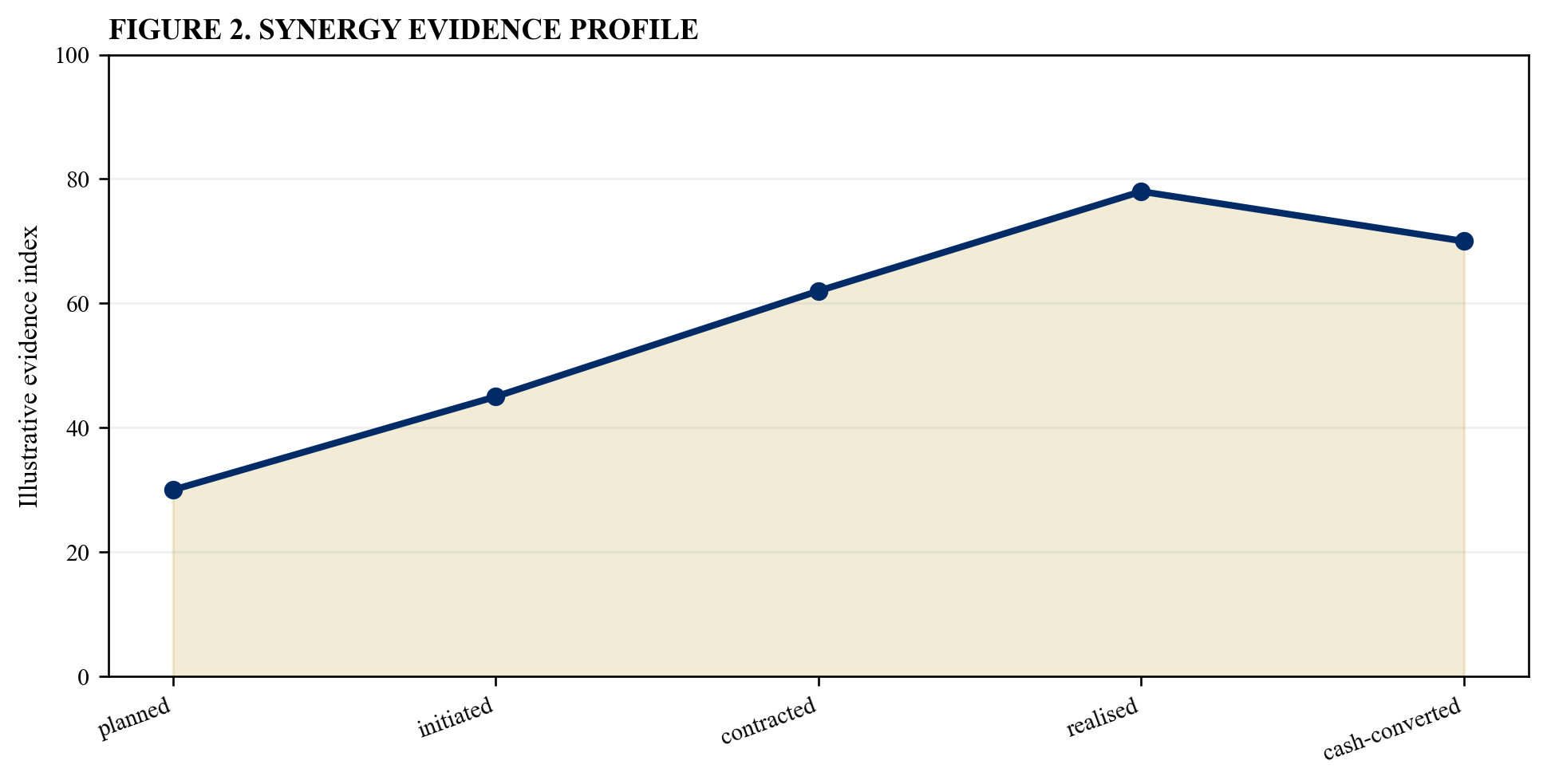
7. Classify synergy evidence
The transaction team should separate realised, contracted, approved, initiated, planned and contingent benefits and identify their cash-effective dates. The required output is a synergy evidence ladder. Use dated source data and link each material conclusion to retained financial, operational and documentary evidence [5][10].
Translate the operating assumption into monthly profit, cash, debt and covenant effects. Identify the accountable owner, calculation method, dependency, decision date and evidence threshold. Reconcile actual performance to the approved case and show base, synergy-delay, disruption and severe-but-plausible outcomes separately.
The principal risk is that management intent can be treated as covenant capacity before the benefit is earned or contractually eligible. Quantify the effect on cash, revolving-credit availability, leverage, interest cover, fixed-charge capacity, minimum liquidity, covenant cure, refinancing and equity value. Preserve enough buffer for forecast error and execution volatility.
Retain the source, model version, reviewer, approval and management response. Escalate exceptions before the legal threshold is reached; update lenders using one reconciled information set; and remove benefits that expire, fail or remain unsupported by current evidence.
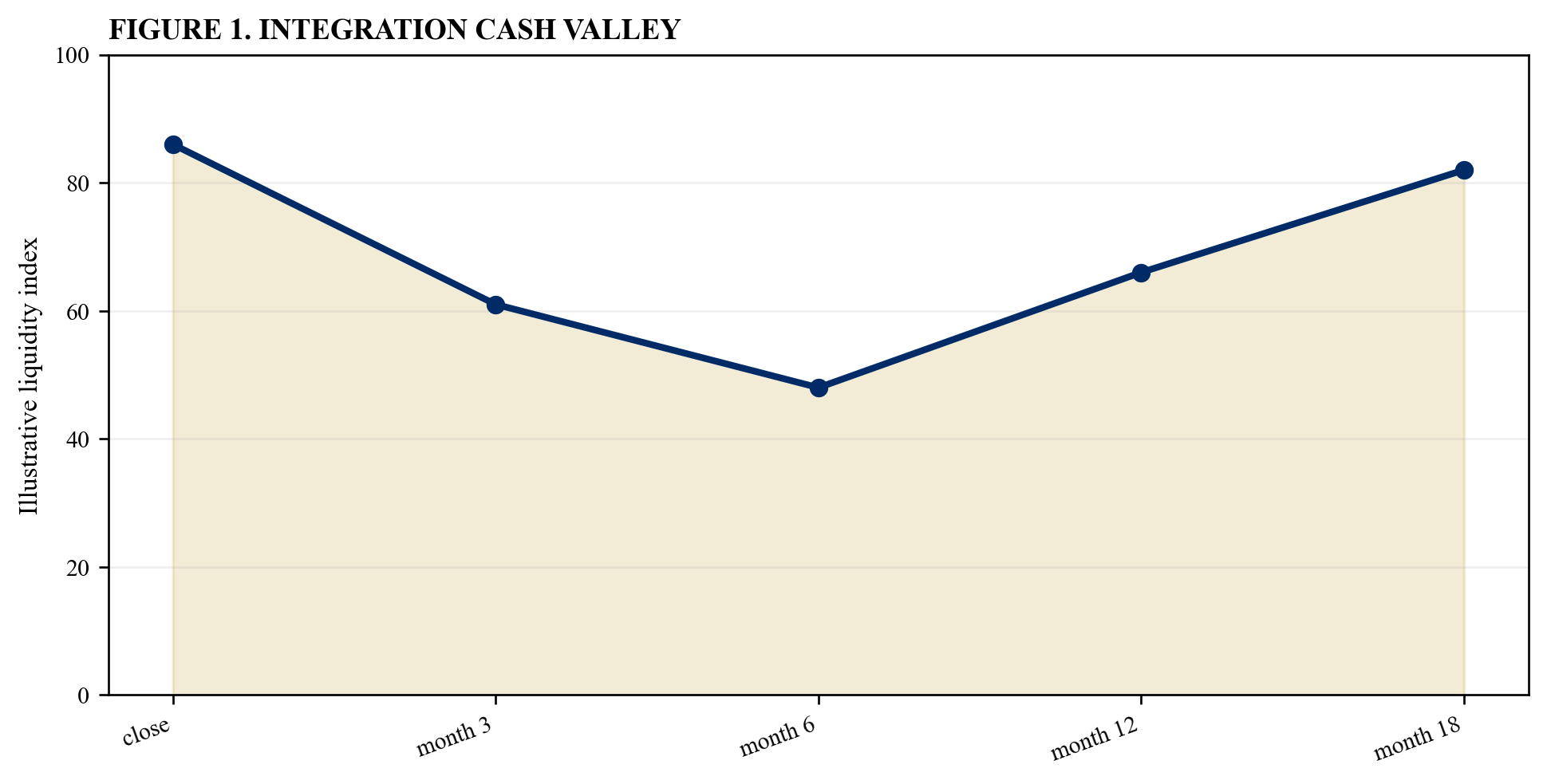
8. Model the integration cash valley
The transaction team should place fees, restructuring, retention, duplicate costs, systems spend and working-capital effects before the benefits they enable. The required output is a monthly cash-valley schedule. Use dated source data and link each material conclusion to retained financial, operational and documentary evidence [3][11].
Translate the operating assumption into monthly profit, cash, debt and covenant effects. Identify the accountable owner, calculation method, dependency, decision date and evidence threshold. Reconcile actual performance to the approved case and show base, synergy-delay, disruption and severe-but-plausible outcomes separately.
The principal risk is that an accretive transaction can still exhaust liquidity during implementation. Quantify the effect on cash, revolving-credit availability, leverage, interest cover, fixed-charge capacity, minimum liquidity, covenant cure, refinancing and equity value. Preserve enough buffer for forecast error and execution volatility.
Retain the source, model version, reviewer, approval and management response. Escalate exceptions before the legal threshold is reached; update lenders using one reconciled information set; and remove benefits that expire, fail or remain unsupported by current evidence.
Table 1. Integration cash-valley schedule
| Cash item | Timing test | Control |
|---|---|---|
| transaction and refinancing fees | completion and settlement | funds-flow evidence |
| duplicate operating cost | until platform exit | expiry owner |
| restructuring cash | before saving | approved payment schedule |
| working capital | monthly driver | business-unit forecast |
Illustrative control framework; executed documents and verified evidence govern.
9. Reconcile cost synergies
The transaction team should trace headcount, procurement, property and overhead savings to payroll, contracts, invoices and the general ledger. The required output is a realised-savings bridge. Use dated source data and link each material conclusion to retained financial, operational and documentary evidence [7][10].
Translate the operating assumption into monthly profit, cash, debt and covenant effects. Identify the accountable owner, calculation method, dependency, decision date and evidence threshold. Reconcile actual performance to the approved case and show base, synergy-delay, disruption and severe-but-plausible outcomes separately.
The principal risk is that savings can be recognised while exit costs, notice periods and stranded overhead remain unpaid. Quantify the effect on cash, revolving-credit availability, leverage, interest cover, fixed-charge capacity, minimum liquidity, covenant cure, refinancing and equity value. Preserve enough buffer for forecast error and execution volatility.
Retain the source, model version, reviewer, approval and management response. Escalate exceptions before the legal threshold is reached; update lenders using one reconciled information set; and remove benefits that expire, fail or remain unsupported by current evidence.
10. Challenge revenue synergies
The transaction team should test customer consent, pipeline conversion, capacity, pricing, churn, delivery cost and working-capital absorption. The required output is a probability-weighted revenue case. Use dated source data and link each material conclusion to retained financial, operational and documentary evidence [8][12].
Translate the operating assumption into monthly profit, cash, debt and covenant effects. Identify the accountable owner, calculation method, dependency, decision date and evidence threshold. Reconcile actual performance to the approved case and show base, synergy-delay, disruption and severe-but-plausible outcomes separately.
The principal risk is that revenue ambition can be converted into EBITDA and leverage headroom without evidence of margin or cash conversion. Quantify the effect on cash, revolving-credit availability, leverage, interest cover, fixed-charge capacity, minimum liquidity, covenant cure, refinancing and equity value. Preserve enough buffer for forecast error and execution volatility.
Retain the source, model version, reviewer, approval and management response. Escalate exceptions before the legal threshold is reached; update lenders using one reconciled information set; and remove benefits that expire, fail or remain unsupported by current evidence.
11. Schedule restructuring cash
The transaction team should distinguish accounting provisions from the timing and amount of severance, contract exits, adviser fees and implementation payments. The required output is a restructuring cash schedule. Use dated source data and link each material conclusion to retained financial, operational and documentary evidence [3][13].
Translate the operating assumption into monthly profit, cash, debt and covenant effects. Identify the accountable owner, calculation method, dependency, decision date and evidence threshold. Reconcile actual performance to the approved case and show base, synergy-delay, disruption and severe-but-plausible outcomes separately.
The principal risk is that a non-recurring accounting label can conceal a material near-term funding need. Quantify the effect on cash, revolving-credit availability, leverage, interest cover, fixed-charge capacity, minimum liquidity, covenant cure, refinancing and equity value. Preserve enough buffer for forecast error and execution volatility.
Retain the source, model version, reviewer, approval and management response. Escalate exceptions before the legal threshold is reached; update lenders using one reconciled information set; and remove benefits that expire, fail or remain unsupported by current evidence.
12. Capture duplicated operating costs
The transaction team should identify parallel systems, facilities, licences, advisers, management teams and transition-service charges. The required output is a duplicate-cost expiry register. Use dated source data and link each material conclusion to retained financial, operational and documentary evidence [8][14].
Translate the operating assumption into monthly profit, cash, debt and covenant effects. Identify the accountable owner, calculation method, dependency, decision date and evidence threshold. Reconcile actual performance to the approved case and show base, synergy-delay, disruption and severe-but-plausible outcomes separately.
The principal risk is that the integration case can assume savings while both operating platforms continue to incur expense. Quantify the effect on cash, revolving-credit availability, leverage, interest cover, fixed-charge capacity, minimum liquidity, covenant cure, refinancing and equity value. Preserve enough buffer for forecast error and execution volatility.
Retain the source, model version, reviewer, approval and management response. Escalate exceptions before the legal threshold is reached; update lenders using one reconciled information set; and remove benefits that expire, fail or remain unsupported by current evidence.
13. Protect customer continuity
The transaction team should link integration changes to customer concentration, service levels, renewal dates, consent requirements and churn indicators. The required output is a customer continuity dashboard. Use dated source data and link each material conclusion to retained financial, operational and documentary evidence [12][15].
Translate the operating assumption into monthly profit, cash, debt and covenant effects. Identify the accountable owner, calculation method, dependency, decision date and evidence threshold. Reconcile actual performance to the approved case and show base, synergy-delay, disruption and severe-but-plausible outcomes separately.
The principal risk is that integration disruption can weaken revenue and cash before cost actions are complete. Quantify the effect on cash, revolving-credit availability, leverage, interest cover, fixed-charge capacity, minimum liquidity, covenant cure, refinancing and equity value. Preserve enough buffer for forecast error and execution volatility.
Retain the source, model version, reviewer, approval and management response. Escalate exceptions before the legal threshold is reached; update lenders using one reconciled information set; and remove benefits that expire, fail or remain unsupported by current evidence.
Illustrative analytical scenario; verified transaction evidence should replace index values.
14. Protect critical people
The transaction team should map retention obligations, incentive replacement, notice periods, succession, capacity and loss-of-control risks. The required output is a critical-role cash and continuity plan. Use dated source data and link each material conclusion to retained financial, operational and documentary evidence [8][16].
Translate the operating assumption into monthly profit, cash, debt and covenant effects. Identify the accountable owner, calculation method, dependency, decision date and evidence threshold. Reconcile actual performance to the approved case and show base, synergy-delay, disruption and severe-but-plausible outcomes separately.
The principal risk is that unfunded retention or unexpected attrition can delay synergies and increase replacement cost. Quantify the effect on cash, revolving-credit availability, leverage, interest cover, fixed-charge capacity, minimum liquidity, covenant cure, refinancing and equity value. Preserve enough buffer for forecast error and execution volatility.
Retain the source, model version, reviewer, approval and management response. Escalate exceptions before the legal threshold is reached; update lenders using one reconciled information set; and remove benefits that expire, fail or remain unsupported by current evidence.
15. Model working-capital transmission
The transaction team should connect sales, inventory, receivables, payables, seasonality, supplier terms and completion adjustments to monthly cash. The required output is a working-capital driver schedule. Use dated source data and link each material conclusion to retained financial, operational and documentary evidence [11][17].
Translate the operating assumption into monthly profit, cash, debt and covenant effects. Identify the accountable owner, calculation method, dependency, decision date and evidence threshold. Reconcile actual performance to the approved case and show base, synergy-delay, disruption and severe-but-plausible outcomes separately.
The principal risk is that growth or disruption can consume liquidity while EBITDA appears stable. Quantify the effect on cash, revolving-credit availability, leverage, interest cover, fixed-charge capacity, minimum liquidity, covenant cure, refinancing and equity value. Preserve enough buffer for forecast error and execution volatility.
Retain the source, model version, reviewer, approval and management response. Escalate exceptions before the legal threshold is reached; update lenders using one reconciled information set; and remove benefits that expire, fail or remain unsupported by current evidence.
16. Separate maintenance and integration capital expenditure
The transaction team should classify expenditure required to sustain operations, achieve savings, comply with regulation and support growth. The required output is a capital-expenditure funding bridge. Use dated source data and link each material conclusion to retained financial, operational and documentary evidence [6][18].
Translate the operating assumption into monthly profit, cash, debt and covenant effects. Identify the accountable owner, calculation method, dependency, decision date and evidence threshold. Reconcile actual performance to the approved case and show base, synergy-delay, disruption and severe-but-plausible outcomes separately.
The principal risk is that headroom can be overstated when necessary investment sits outside the EBITDA case. Quantify the effect on cash, revolving-credit availability, leverage, interest cover, fixed-charge capacity, minimum liquidity, covenant cure, refinancing and equity value. Preserve enough buffer for forecast error and execution volatility.
Retain the source, model version, reviewer, approval and management response. Escalate exceptions before the legal threshold is reached; update lenders using one reconciled information set; and remove benefits that expire, fail or remain unsupported by current evidence.
Table 2. Covenant headroom bridge
| Measure | Required reconciliation | Decision use |
|---|---|---|
| net debt | facility and cash ledger | leverage numerator |
| covenant EBITDA | reported-to-permitted bridge | leverage denominator |
| cash interest | debt and hedge schedule | cover and liquidity |
| minimum liquidity | available cash and facilities | intervention trigger |
Illustrative control framework; executed documents and verified evidence govern.
17. Model tax and trapped cash
The transaction team should forecast cash tax, deductibility, deferred tax, withholding, legal-entity cash and distribution restrictions. The required output is a tax-and-cash availability map. Use dated source data and link each material conclusion to retained financial, operational and documentary evidence [3][19].
Translate the operating assumption into monthly profit, cash, debt and covenant effects. Identify the accountable owner, calculation method, dependency, decision date and evidence threshold. Reconcile actual performance to the approved case and show base, synergy-delay, disruption and severe-but-plausible outcomes separately.
The principal risk is that consolidated cash can appear available while remaining legally or operationally inaccessible for debt service. Quantify the effect on cash, revolving-credit availability, leverage, interest cover, fixed-charge capacity, minimum liquidity, covenant cure, refinancing and equity value. Preserve enough buffer for forecast error and execution volatility.
Retain the source, model version, reviewer, approval and management response. Escalate exceptions before the legal threshold is reached; update lenders using one reconciled information set; and remove benefits that expire, fail or remain unsupported by current evidence.
18. Integrate interest and hedging
The transaction team should calculate benchmark resets, floors, margins, ratchets, hedge cash flows, fees and break costs for each period. The required output is a debt-service schedule. Use dated source data and link each material conclusion to retained financial, operational and documentary evidence [1][20].
Translate the operating assumption into monthly profit, cash, debt and covenant effects. Identify the accountable owner, calculation method, dependency, decision date and evidence threshold. Reconcile actual performance to the approved case and show base, synergy-delay, disruption and severe-but-plausible outcomes separately.
The principal risk is that a delayed deleveraging path can raise coupon and collateral cash at the same time. Quantify the effect on cash, revolving-credit availability, leverage, interest cover, fixed-charge capacity, minimum liquidity, covenant cure, refinancing and equity value. Preserve enough buffer for forecast error and execution volatility.
Retain the source, model version, reviewer, approval and management response. Escalate exceptions before the legal threshold is reached; update lenders using one reconciled information set; and remove benefits that expire, fail or remain unsupported by current evidence.
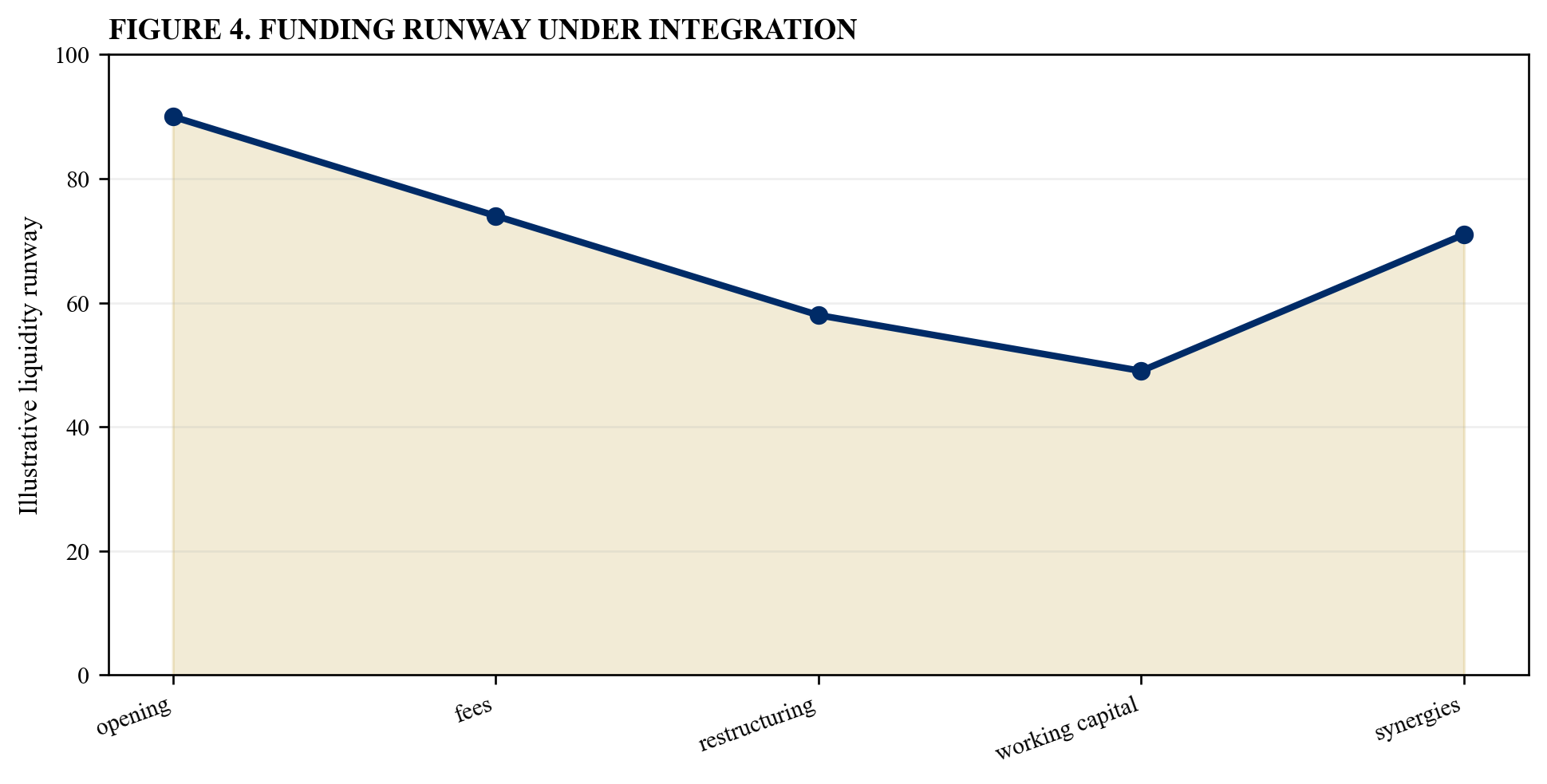
19. Forecast revolving-credit usage
The transaction team should model drawings, repayments, availability conditions, ancillary utilisation, letters of credit and seasonal peaks. The required output is a revolving-credit runway. Use dated source data and link each material conclusion to retained financial, operational and documentary evidence [2][21].
Translate the operating assumption into monthly profit, cash, debt and covenant effects. Identify the accountable owner, calculation method, dependency, decision date and evidence threshold. Reconcile actual performance to the approved case and show base, synergy-delay, disruption and severe-but-plausible outcomes separately.
The principal risk is that nominal facility size can exceed the liquidity that is practically drawable. Quantify the effect on cash, revolving-credit availability, leverage, interest cover, fixed-charge capacity, minimum liquidity, covenant cure, refinancing and equity value. Preserve enough buffer for forecast error and execution volatility.
Retain the source, model version, reviewer, approval and management response. Escalate exceptions before the legal threshold is reached; update lenders using one reconciled information set; and remove benefits that expire, fail or remain unsupported by current evidence.
20. Set the minimum-liquidity floor
The transaction team should define operational cash, contingency cash, restricted cash and board buffer by business unit and legal entity. The required output is a minimum-liquidity policy. Use dated source data and link each material conclusion to retained financial, operational and documentary evidence [1][22].
Translate the operating assumption into monthly profit, cash, debt and covenant effects. Identify the accountable owner, calculation method, dependency, decision date and evidence threshold. Reconcile actual performance to the approved case and show base, synergy-delay, disruption and severe-but-plausible outcomes separately.
The principal risk is that covenant compliance can coexist with insufficient cash to operate safely. Quantify the effect on cash, revolving-credit availability, leverage, interest cover, fixed-charge capacity, minimum liquidity, covenant cure, refinancing and equity value. Preserve enough buffer for forecast error and execution volatility.
Retain the source, model version, reviewer, approval and management response. Escalate exceptions before the legal threshold is reached; update lenders using one reconciled information set; and remove benefits that expire, fail or remain unsupported by current evidence.
21. Build the base case
The transaction team should use approved trading, dated integration milestones, evidenced synergies and committed funding. The required output is an accountable base model. Use dated source data and link each material conclusion to retained financial, operational and documentary evidence [6][8].
Translate the operating assumption into monthly profit, cash, debt and covenant effects. Identify the accountable owner, calculation method, dependency, decision date and evidence threshold. Reconcile actual performance to the approved case and show base, synergy-delay, disruption and severe-but-plausible outcomes separately.
The principal risk is that the central case can blend targets and evidence without showing which assumptions drive solvency. Quantify the effect on cash, revolving-credit availability, leverage, interest cover, fixed-charge capacity, minimum liquidity, covenant cure, refinancing and equity value. Preserve enough buffer for forecast error and execution volatility.
Retain the source, model version, reviewer, approval and management response. Escalate exceptions before the legal threshold is reached; update lenders using one reconciled information set; and remove benefits that expire, fail or remain unsupported by current evidence.
Illustrative analytical scenario; verified transaction evidence should replace index values.
22. Build the synergy-delay case
The transaction team should shift savings and implementation milestones while retaining duplicate cost and restructuring cash. The required output is a delayed-benefit case. Use dated source data and link each material conclusion to retained financial, operational and documentary evidence [8][10].
Translate the operating assumption into monthly profit, cash, debt and covenant effects. Identify the accountable owner, calculation method, dependency, decision date and evidence threshold. Reconcile actual performance to the approved case and show base, synergy-delay, disruption and severe-but-plausible outcomes separately.
The principal risk is that timing slippage can reduce liquidity and headroom before the annual plan records a material variance. Quantify the effect on cash, revolving-credit availability, leverage, interest cover, fixed-charge capacity, minimum liquidity, covenant cure, refinancing and equity value. Preserve enough buffer for forecast error and execution volatility.
Retain the source, model version, reviewer, approval and management response. Escalate exceptions before the legal threshold is reached; update lenders using one reconciled information set; and remove benefits that expire, fail or remain unsupported by current evidence.
23. Build the disruption case
The transaction team should stress revenue, margin, churn, working capital, system stability and management capacity during integration. The required output is an operational-disruption case. Use dated source data and link each material conclusion to retained financial, operational and documentary evidence [12][15].
Translate the operating assumption into monthly profit, cash, debt and covenant effects. Identify the accountable owner, calculation method, dependency, decision date and evidence threshold. Reconcile actual performance to the approved case and show base, synergy-delay, disruption and severe-but-plausible outcomes separately.
The principal risk is that the financing model can treat integration as a cost programme and omit revenue and execution downside. Quantify the effect on cash, revolving-credit availability, leverage, interest cover, fixed-charge capacity, minimum liquidity, covenant cure, refinancing and equity value. Preserve enough buffer for forecast error and execution volatility.
Retain the source, model version, reviewer, approval and management response. Escalate exceptions before the legal threshold is reached; update lenders using one reconciled information set; and remove benefits that expire, fail or remain unsupported by current evidence.
24. Build the severe-but-plausible case
The transaction team should combine weaker trading, delayed synergies, higher interest, working-capital absorption and restricted refinancing. The required output is a board downside case. Use dated source data and link each material conclusion to retained financial, operational and documentary evidence [1][23].
Translate the operating assumption into monthly profit, cash, debt and covenant effects. Identify the accountable owner, calculation method, dependency, decision date and evidence threshold. Reconcile actual performance to the approved case and show base, synergy-delay, disruption and severe-but-plausible outcomes separately.
The principal risk is that single-variable sensitivities can miss interacting pressures that create the actual liquidity failure. Quantify the effect on cash, revolving-credit availability, leverage, interest cover, fixed-charge capacity, minimum liquidity, covenant cure, refinancing and equity value. Preserve enough buffer for forecast error and execution volatility.
Retain the source, model version, reviewer, approval and management response. Escalate exceptions before the legal threshold is reached; update lenders using one reconciled information set; and remove benefits that expire, fail or remain unsupported by current evidence.
Table 3. Scenario architecture
| Case | Core assumption | Board question |
|---|---|---|
| base | approved evidence | is funding adequate |
| synergy delay | benefits shift right | how long is runway |
| disruption | trading and cash weaken | which actions protect value |
| severe | pressures interact | when is lender action required |
Illustrative control framework; executed documents and verified evidence govern.
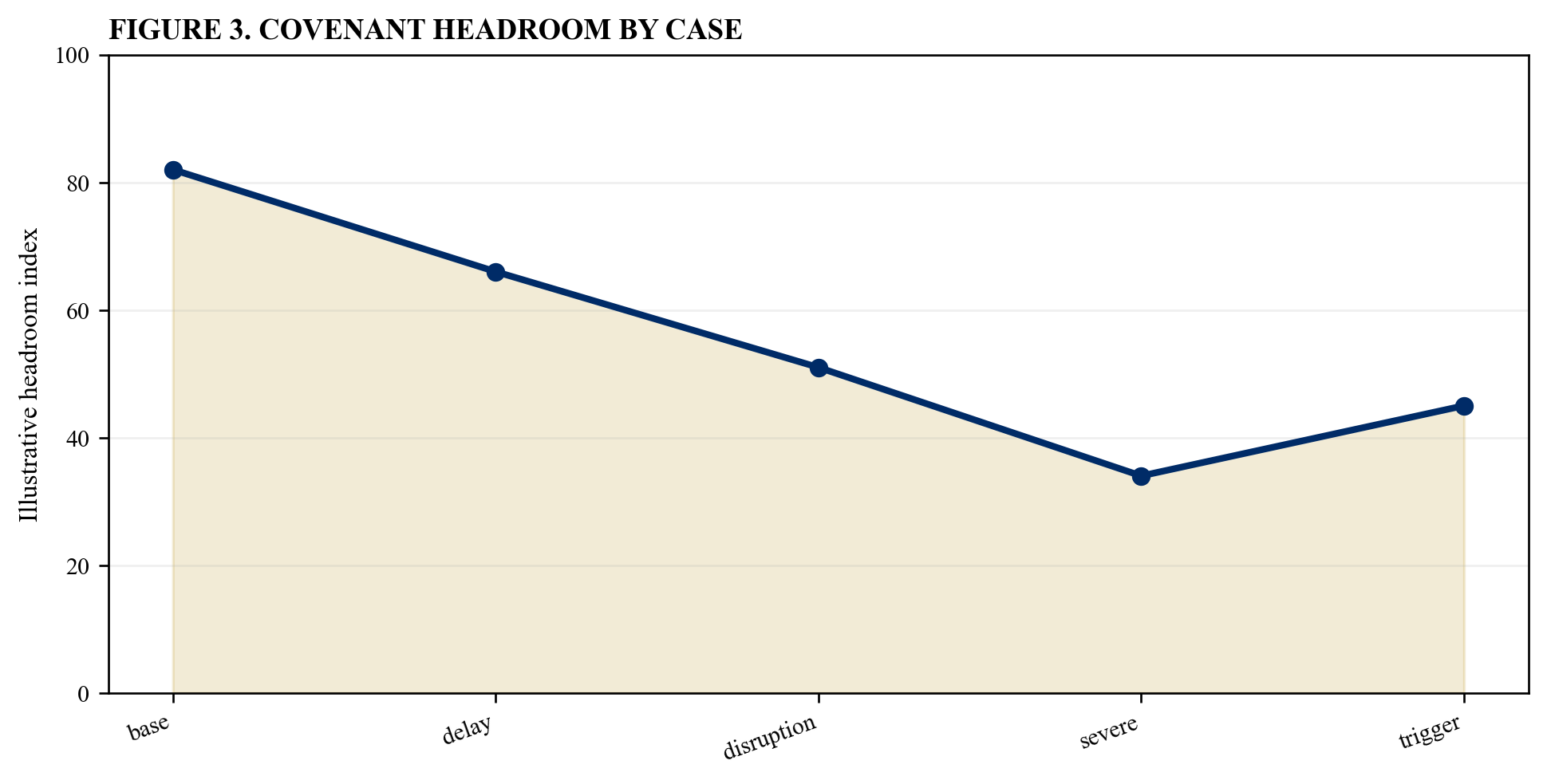
25. Calculate leverage headroom
The transaction team should reconcile net debt and covenant EBITDA for every test date under each scenario. The required output is a leverage headroom bridge. Use dated source data and link each material conclusion to retained financial, operational and documentary evidence [2][5].
Translate the operating assumption into monthly profit, cash, debt and covenant effects. Identify the accountable owner, calculation method, dependency, decision date and evidence threshold. Reconcile actual performance to the approved case and show base, synergy-delay, disruption and severe-but-plausible outcomes separately.
The principal risk is that apparent headroom can depend on adjustments that expire, breach caps or lack required evidence. Quantify the effect on cash, revolving-credit availability, leverage, interest cover, fixed-charge capacity, minimum liquidity, covenant cure, refinancing and equity value. Preserve enough buffer for forecast error and execution volatility.
Retain the source, model version, reviewer, approval and management response. Escalate exceptions before the legal threshold is reached; update lenders using one reconciled information set; and remove benefits that expire, fail or remain unsupported by current evidence.
26. Calculate interest-cover headroom
The transaction team should connect cash interest, capitalised interest, hedging, lease effects and covenant EBITDA to the executed definition. The required output is an interest-cover certificate. Use dated source data and link each material conclusion to retained financial, operational and documentary evidence [2][20].
Translate the operating assumption into monthly profit, cash, debt and covenant effects. Identify the accountable owner, calculation method, dependency, decision date and evidence threshold. Reconcile actual performance to the approved case and show base, synergy-delay, disruption and severe-but-plausible outcomes separately.
The principal risk is that leverage can remain compliant while rising debt service weakens cover and cash. Quantify the effect on cash, revolving-credit availability, leverage, interest cover, fixed-charge capacity, minimum liquidity, covenant cure, refinancing and equity value. Preserve enough buffer for forecast error and execution volatility.
Retain the source, model version, reviewer, approval and management response. Escalate exceptions before the legal threshold is reached; update lenders using one reconciled information set; and remove benefits that expire, fail or remain unsupported by current evidence.
27. Calculate fixed-charge capacity
The transaction team should include leases, tax, maintenance capital expenditure and other fixed payments where required. The required output is a fixed-charge bridge. Use dated source data and link each material conclusion to retained financial, operational and documentary evidence [5][18].
Translate the operating assumption into monthly profit, cash, debt and covenant effects. Identify the accountable owner, calculation method, dependency, decision date and evidence threshold. Reconcile actual performance to the approved case and show base, synergy-delay, disruption and severe-but-plausible outcomes separately.
The principal risk is that an EBITDA-only view can omit non-discretionary cash claims that determine resilience. Quantify the effect on cash, revolving-credit availability, leverage, interest cover, fixed-charge capacity, minimum liquidity, covenant cure, refinancing and equity value. Preserve enough buffer for forecast error and execution volatility.
Retain the source, model version, reviewer, approval and management response. Escalate exceptions before the legal threshold is reached; update lenders using one reconciled information set; and remove benefits that expire, fail or remain unsupported by current evidence.
28. Test permitted adjustments
The transaction team should apply categories, caps, baskets, time limits, evidence conditions and double-counting controls to every synergy. The required output is an adjustment eligibility schedule. Use dated source data and link each material conclusion to retained financial, operational and documentary evidence [2][7].
Translate the operating assumption into monthly profit, cash, debt and covenant effects. Identify the accountable owner, calculation method, dependency, decision date and evidence threshold. Reconcile actual performance to the approved case and show base, synergy-delay, disruption and severe-but-plausible outcomes separately.
The principal risk is that underwriting benefits can be unavailable in the binding covenant calculation. Quantify the effect on cash, revolving-credit availability, leverage, interest cover, fixed-charge capacity, minimum liquidity, covenant cure, refinancing and equity value. Preserve enough buffer for forecast error and execution volatility.
Retain the source, model version, reviewer, approval and management response. Escalate exceptions before the legal threshold is reached; update lenders using one reconciled information set; and remove benefits that expire, fail or remain unsupported by current evidence.
29. Model covenant cure mechanics
The transaction team should map equity cures, deemed EBITDA, debt reduction, frequency limits, timing, notice and reset consequences. The required output is a cure decision tree. Use dated source data and link each material conclusion to retained financial, operational and documentary evidence [2][24].
Translate the operating assumption into monthly profit, cash, debt and covenant effects. Identify the accountable owner, calculation method, dependency, decision date and evidence threshold. Reconcile actual performance to the approved case and show base, synergy-delay, disruption and severe-but-plausible outcomes separately.
The principal risk is that a theoretical cure can be unusable when timing, investor approval or document conditions are considered. Quantify the effect on cash, revolving-credit availability, leverage, interest cover, fixed-charge capacity, minimum liquidity, covenant cure, refinancing and equity value. Preserve enough buffer for forecast error and execution volatility.
Retain the source, model version, reviewer, approval and management response. Escalate exceptions before the legal threshold is reached; update lenders using one reconciled information set; and remove benefits that expire, fail or remain unsupported by current evidence.
Illustrative analytical scenario; verified transaction evidence should replace index values.
30. Construct the trigger ladder
The transaction team should set early-warning, management-action, lender-engagement and formal-breach thresholds above the legal minimum. The required output is a graduated intervention protocol. Use dated source data and link each material conclusion to retained financial, operational and documentary evidence [1][23].
Translate the operating assumption into monthly profit, cash, debt and covenant effects. Identify the accountable owner, calculation method, dependency, decision date and evidence threshold. Reconcile actual performance to the approved case and show base, synergy-delay, disruption and severe-but-plausible outcomes separately.
The principal risk is that waiting for a covenant test can destroy the time needed to preserve liquidity and negotiate options. Quantify the effect on cash, revolving-credit availability, leverage, interest cover, fixed-charge capacity, minimum liquidity, covenant cure, refinancing and equity value. Preserve enough buffer for forecast error and execution volatility.
Retain the source, model version, reviewer, approval and management response. Escalate exceptions before the legal threshold is reached; update lenders using one reconciled information set; and remove benefits that expire, fail or remain unsupported by current evidence.
31. Pre-agree management actions
The transaction team should rank discretionary spend controls, working-capital measures, integration resequencing, asset sales and equity support by value, timing and feasibility. The required output is an executable action register. Use dated source data and link each material conclusion to retained financial, operational and documentary evidence [6][22].
Translate the operating assumption into monthly profit, cash, debt and covenant effects. Identify the accountable owner, calculation method, dependency, decision date and evidence threshold. Reconcile actual performance to the approved case and show base, synergy-delay, disruption and severe-but-plausible outcomes separately.
The principal risk is that generic mitigations can fail because owners, approvals, cash timing and operational consequences were never established. Quantify the effect on cash, revolving-credit availability, leverage, interest cover, fixed-charge capacity, minimum liquidity, covenant cure, refinancing and equity value. Preserve enough buffer for forecast error and execution volatility.
Retain the source, model version, reviewer, approval and management response. Escalate exceptions before the legal threshold is reached; update lenders using one reconciled information set; and remove benefits that expire, fail or remain unsupported by current evidence.
32. Control integration expenditure
The transaction team should require business cases, authority limits, benefit owners, stage gates and post-investment review for material spend. The required output is an integration investment protocol. Use dated source data and link each material conclusion to retained financial, operational and documentary evidence [8][25].
Translate the operating assumption into monthly profit, cash, debt and covenant effects. Identify the accountable owner, calculation method, dependency, decision date and evidence threshold. Reconcile actual performance to the approved case and show base, synergy-delay, disruption and severe-but-plausible outcomes separately.
The principal risk is that uncontrolled implementation cost can consume the buffer intended to absorb trading volatility. Quantify the effect on cash, revolving-credit availability, leverage, interest cover, fixed-charge capacity, minimum liquidity, covenant cure, refinancing and equity value. Preserve enough buffer for forecast error and execution volatility.
Retain the source, model version, reviewer, approval and management response. Escalate exceptions before the legal threshold is reached; update lenders using one reconciled information set; and remove benefits that expire, fail or remain unsupported by current evidence.
Table 4. Trigger and action ladder
| Trigger | Required action | Owner |
|---|---|---|
| early warning | validate forecast and freeze leakage | CFO |
| management action | execute cash measures | integration leader |
| lender engagement | open evidence-led dialogue | treasurer |
| formal risk | approve relief and funding plan | board |
Illustrative control framework; executed documents and verified evidence govern.
33. Protect legal and regulatory separation
The transaction team should reflect merger-control restrictions, hold-separate obligations, information barriers and delayed integration permissions. The required output is a regulatory dependency map. Use dated source data and link each material conclusion to retained financial, operational and documentary evidence [9][26].
Translate the operating assumption into monthly profit, cash, debt and covenant effects. Identify the accountable owner, calculation method, dependency, decision date and evidence threshold. Reconcile actual performance to the approved case and show base, synergy-delay, disruption and severe-but-plausible outcomes separately.
The principal risk is that the model can assume actions that lawfully cannot occur on the planned date. Quantify the effect on cash, revolving-credit availability, leverage, interest cover, fixed-charge capacity, minimum liquidity, covenant cure, refinancing and equity value. Preserve enough buffer for forecast error and execution volatility.
Retain the source, model version, reviewer, approval and management response. Escalate exceptions before the legal threshold is reached; update lenders using one reconciled information set; and remove benefits that expire, fail or remain unsupported by current evidence.
34. Prepare the lender information pack
The transaction team should present actuals, forecasts, covenant calculations, integration milestones, variances, evidence and management actions consistently. The required output is a lender-ready monthly pack. Use dated source data and link each material conclusion to retained financial, operational and documentary evidence [2][7].
Translate the operating assumption into monthly profit, cash, debt and covenant effects. Identify the accountable owner, calculation method, dependency, decision date and evidence threshold. Reconcile actual performance to the approved case and show base, synergy-delay, disruption and severe-but-plausible outcomes separately.
The principal risk is that selective or late information can reduce confidence and make consensual relief harder to obtain. Quantify the effect on cash, revolving-credit availability, leverage, interest cover, fixed-charge capacity, minimum liquidity, covenant cure, refinancing and equity value. Preserve enough buffer for forecast error and execution volatility.
Retain the source, model version, reviewer, approval and management response. Escalate exceptions before the legal threshold is reached; update lenders using one reconciled information set; and remove benefits that expire, fail or remain unsupported by current evidence.
35. Plan covenant relief early
The transaction team should identify amendment, waiver, reset, covenant holiday, maturity extension and new-money alternatives before the trigger is reached. The required output is a relief option matrix. Use dated source data and link each material conclusion to retained financial, operational and documentary evidence [2][23].
Translate the operating assumption into monthly profit, cash, debt and covenant effects. Identify the accountable owner, calculation method, dependency, decision date and evidence threshold. Reconcile actual performance to the approved case and show base, synergy-delay, disruption and severe-but-plausible outcomes separately.
The principal risk is that a borrower can enter negotiations after leverage and liquidity have already weakened its bargaining position. Quantify the effect on cash, revolving-credit availability, leverage, interest cover, fixed-charge capacity, minimum liquidity, covenant cure, refinancing and equity value. Preserve enough buffer for forecast error and execution volatility.
Retain the source, model version, reviewer, approval and management response. Escalate exceptions before the legal threshold is reached; update lenders using one reconciled information set; and remove benefits that expire, fail or remain unsupported by current evidence.
36. Test refinancing capacity
The transaction team should project debt quantum, earnings quality, free cash flow, maturity, lender appetite and market access under every case. The required output is a refinancing readiness schedule. Use dated source data and link each material conclusion to retained financial, operational and documentary evidence [1][21].
Translate the operating assumption into monthly profit, cash, debt and covenant effects. Identify the accountable owner, calculation method, dependency, decision date and evidence threshold. Reconcile actual performance to the approved case and show base, synergy-delay, disruption and severe-but-plausible outcomes separately.
The principal risk is that the integration plan can preserve near-term compliance while creating an unfinanceable maturity wall. Quantify the effect on cash, revolving-credit availability, leverage, interest cover, fixed-charge capacity, minimum liquidity, covenant cure, refinancing and equity value. Preserve enough buffer for forecast error and execution volatility.
Retain the source, model version, reviewer, approval and management response. Escalate exceptions before the legal threshold is reached; update lenders using one reconciled information set; and remove benefits that expire, fail or remain unsupported by current evidence.
37. Back-test synergies monthly
The transaction team should compare promised, contracted, implemented, realised and cash-converted benefits and remove failed items. The required output is a synergy variance report. Use dated source data and link each material conclusion to retained financial, operational and documentary evidence [7][10].
Translate the operating assumption into monthly profit, cash, debt and covenant effects. Identify the accountable owner, calculation method, dependency, decision date and evidence threshold. Reconcile actual performance to the approved case and show base, synergy-delay, disruption and severe-but-plausible outcomes separately.
The principal risk is that optimism can persist when the model is never reconciled to realised operating and cash evidence. Quantify the effect on cash, revolving-credit availability, leverage, interest cover, fixed-charge capacity, minimum liquidity, covenant cure, refinancing and equity value. Preserve enough buffer for forecast error and execution volatility.
Retain the source, model version, reviewer, approval and management response. Escalate exceptions before the legal threshold is reached; update lenders using one reconciled information set; and remove benefits that expire, fail or remain unsupported by current evidence.
38. Govern model changes
The transaction team should maintain controlled versions, source links, change logs, independent review, approval thresholds and documented interpretations. The required output is a model governance protocol. Use dated source data and link each material conclusion to retained financial, operational and documentary evidence [6][25].
Translate the operating assumption into monthly profit, cash, debt and covenant effects. Identify the accountable owner, calculation method, dependency, decision date and evidence threshold. Reconcile actual performance to the approved case and show base, synergy-delay, disruption and severe-but-plausible outcomes separately.
The principal risk is that manual changes can manufacture headroom without accountable operational evidence. Quantify the effect on cash, revolving-credit availability, leverage, interest cover, fixed-charge capacity, minimum liquidity, covenant cure, refinancing and equity value. Preserve enough buffer for forecast error and execution volatility.
Retain the source, model version, reviewer, approval and management response. Escalate exceptions before the legal threshold is reached; update lenders using one reconciled information set; and remove benefits that expire, fail or remain unsupported by current evidence.
39. Escalate through the board calendar
The transaction team should align integration reviews, treasury decisions, covenant tests, lender reporting and refinancing gates. The required output is a board decision calendar. Use dated source data and link each material conclusion to retained financial, operational and documentary evidence [22][25].
Translate the operating assumption into monthly profit, cash, debt and covenant effects. Identify the accountable owner, calculation method, dependency, decision date and evidence threshold. Reconcile actual performance to the approved case and show base, synergy-delay, disruption and severe-but-plausible outcomes separately.
The principal risk is that operational and financing decisions can arrive in separate forums after the response window has closed. Quantify the effect on cash, revolving-credit availability, leverage, interest cover, fixed-charge capacity, minimum liquidity, covenant cure, refinancing and equity value. Preserve enough buffer for forecast error and execution volatility.
Retain the source, model version, reviewer, approval and management response. Escalate exceptions before the legal threshold is reached; update lenders using one reconciled information set; and remove benefits that expire, fail or remain unsupported by current evidence.
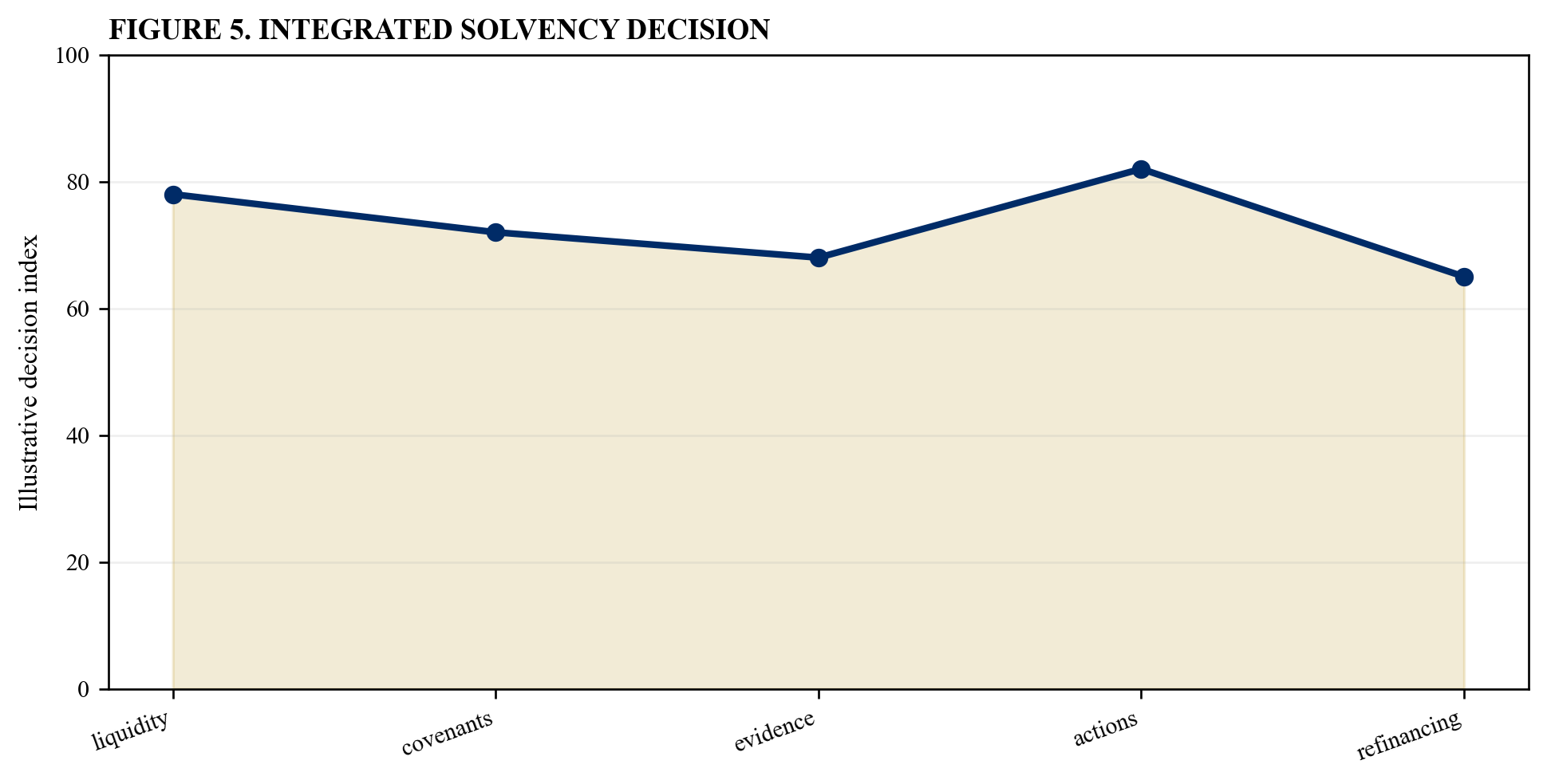
Illustrative analytical scenario; verified transaction evidence should replace index values.
40. Issue the integration solvency certificate
The transaction team should approve liquidity, covenant headroom, synergy evidence, cash conversion, mitigations and refinancing capacity under all four cases. The required output is a retained board certificate. Use dated source data and link each material conclusion to retained financial, operational and documentary evidence [22][25].
Translate the operating assumption into monthly profit, cash, debt and covenant effects. Identify the accountable owner, calculation method, dependency, decision date and evidence threshold. Reconcile actual performance to the approved case and show base, synergy-delay, disruption and severe-but-plausible outcomes separately.
The principal risk is that a positive strategic narrative can obscure a near-term financing constraint that requires immediate action. Quantify the effect on cash, revolving-credit availability, leverage, interest cover, fixed-charge capacity, minimum liquidity, covenant cure, refinancing and equity value. Preserve enough buffer for forecast error and execution volatility.
Retain the source, model version, reviewer, approval and management response. Escalate exceptions before the legal threshold is reached; update lenders using one reconciled information set; and remove benefits that expire, fail or remain unsupported by current evidence.
Table 5. Integration solvency certificate
| Conclusion | Evidence | Approval test |
|---|---|---|
| liquidity runway | cash and facilities model | above policy floor |
| covenant headroom | executed definitions | all test dates covered |
| synergy quality | realisation and cash proof | failed items removed |
| refinancing capacity | maturity and market case | credible exit path |
Illustrative control framework; executed documents and verified evidence govern.
References
- Bank of England, Financial Stability Report July 2026, https://www.bankofengland.co.uk/financial-stability-report/2026/july-2026
- European Central Bank, Guidance on leveraged transactions, https://www.bankingsupervision.europa.eu/ecb/pub/pdf/ssm.leveraged_transactions_guidance_201705.en.pdf
- IFRS Foundation, IFRS 3 Business Combinations, https://www.ifrs.org/issued-standards/list-of-standards/ifrs-3-business-combinations/
- IFRS Foundation, IFRS 10 Consolidated Financial Statements, https://www.ifrs.org/issued-standards/list-of-standards/ifrs-10-consolidated-financial-statements/
- European Banking Authority, Guidelines on leveraged transactions, https://www.eba.europa.eu/sites/default/files/documents/10180/1696305/1dba7657-6ccb-462a-b9f8-8df8686b9807/Final%20Guidelines%20on%20Leveraged%20Transactions.pdf
- European Banking Authority, Guidelines on loan origination and monitoring, https://www.eba.europa.eu/regulation-and-policy/credit-risk/guidelines-loan-origination-and-monitoring
- Financial Reporting Council, Standard for Investment Reporting 1000, https://www.frc.org.uk/library/standards-codes-policy/audit-assurance-and-ethics/standards-for-investment-reporting/
- UK Competition and Markets Authority, Merger assessment guidelines, https://www.gov.uk/government/publications/merger-assessment-guidelines
- UK Competition and Markets Authority, Interim measures in merger investigations, https://www.gov.uk/government/publications/interim-measures-in-merger-investigations
- US Securities and Exchange Commission, Non-GAAP Financial Measures, https://www.sec.gov/rules-regulations/staff-guidance/corporation-finance-interpretations/non-gaap-financial-measures
- IFRS Foundation, IAS 7 Statement of Cash Flows, https://www.ifrs.org/issued-standards/list-of-standards/ias-7-statement-of-cash-flows/
- IFRS Foundation, IFRS 15 Revenue from Contracts with Customers, https://www.ifrs.org/issued-standards/list-of-standards/ifrs-15-revenue-from-contracts-with-customers/
- IFRS Foundation, IAS 37 Provisions Contingent Liabilities and Contingent Assets, https://www.ifrs.org/issued-standards/list-of-standards/ias-37-provisions-contingent-liabilities-and-contingent-assets/
- IFRS Foundation, IFRS 16 Leases, https://www.ifrs.org/issued-standards/list-of-standards/ifrs-16-leases/
- UK Competition and Markets Authority, Mergers guidance on jurisdiction and procedure, https://www.gov.uk/government/publications/mergers-guidance-on-the-cmas-jurisdiction-and-procedure
- IFRS Foundation, IFRS 2 Share-based Payment, https://www.ifrs.org/issued-standards/list-of-standards/ifrs-2-share-based-payment/
- IFRS Foundation, IAS 2 Inventories, https://www.ifrs.org/issued-standards/list-of-standards/ias-2-inventories/
- IFRS Foundation, IAS 36 Impairment of Assets, https://www.ifrs.org/issued-standards/list-of-standards/ias-36-impairment-of-assets/
- IFRS Foundation, IAS 12 Income Taxes, https://www.ifrs.org/issued-standards/list-of-standards/ias-12-income-taxes/
- Bank of England, Yield curves, https://www.bankofengland.co.uk/statistics/yield-curves
- Bank for International Settlements, Principles for the management of credit risk, https://www.bis.org/publ/bcbs75.htm
- OECD, G20 OECD Principles of Corporate Governance 2023, https://www.oecd.org/corporate/principles-corporate-governance/
- Financial Conduct Authority, Guidance for firms on the fair treatment of vulnerable customers and financial resilience, https://www.fca.org.uk/publications/finalised-guidance/guidance-firms-fair-treatment-vulnerable-customers
- UK Government, Companies Act 2006, https://www.legislation.gov.uk/ukpga/2006/46/contents
- International Organization for Standardization, ISO 31000 Risk management, https://www.iso.org/iso-31000-risk-management.html
- European Commission, EU merger control, https://competition-policy.ec.europa.eu/mergers_en
