

1. Define the cross-border transition mandate
Coordinate ownership, residence, succession, tax and control across every relevant jurisdiction before a transfer or death.
The succession team should reconcile family objectives, people, entities, assets, governing instruments, residence histories and advisers. Each conclusion records the accountable body, source, timing, candidate or owner, evidence, dependency, control and unresolved exception. The immediate output is a cross-border transition charter.
Management continuity must be proved through operating outcomes while ownership choices remain explicit. Reviewers test capability, authority, relationships, stakeholder confidence and downside response against native records and observed performance. Company strategy, role requirements, family objectives and governing law control every conclusion.
Material gaps require an owner, corrective action, test, advice and decision date. Consequences should flow through leadership capacity, customer delivery, cash, financing, value, control, fairness and transaction timing. Residual risk remains visible until authority is operable, stakeholders are protected and the relevant governing bodies approve the next gate.
2. Build the family and beneficiary map
Identify settlors, testators, spouses, descendants, guardians, trustees, protectors, executors and contingent beneficiaries.
The succession team should reconcile identity records, family tree, marital status, citizenship, residence and dependency evidence. Each conclusion records the accountable body, source, timing, candidate or owner, evidence, dependency, control and unresolved exception. The immediate output is a verified family map.
Management continuity must be proved through operating outcomes while ownership choices remain explicit. Reviewers test capability, authority, relationships, stakeholder confidence and downside response against native records and observed performance. Company strategy, role requirements, family objectives and governing law control every conclusion.
Material gaps require an owner, corrective action, test, advice and decision date. Consequences should flow through leadership capacity, customer delivery, cash, financing, value, control, fairness and transaction timing. Residual risk remains visible until authority is operable, stakeholders are protected and the relevant governing bodies approve the next gate.
3. Create the asset and liability register
Record legal title, beneficial ownership, situs, currency, encumbrances, liquidity and valuation date for every material asset.
The succession team should reconcile registers, statements, contracts, valuations, debt documents and digital records. Each conclusion records the accountable body, source, timing, candidate or owner, evidence, dependency, control and unresolved exception. The immediate output is a cross-border estate inventory.
Management continuity must be proved through operating outcomes while ownership choices remain explicit. Reviewers test capability, authority, relationships, stakeholder confidence and downside response against native records and observed performance. Company strategy, role requirements, family objectives and governing law control every conclusion.
Material gaps require an owner, corrective action, test, advice and decision date. Consequences should flow through leadership capacity, customer delivery, cash, financing, value, control, fairness and transaction timing. Residual risk remains visible until authority is operable, stakeholders are protected and the relevant governing bodies approve the next gate.
4. Map entities and control
Trace companies, partnerships, trusts, foundations, nominees and holding structures to ultimate control and economic benefit.
The succession team should reconcile constitutional documents, registers, declarations, licences and governance records. Each conclusion records the accountable body, source, timing, candidate or owner, evidence, dependency, control and unresolved exception. The immediate output is an entity and control map.
Management continuity must be proved through operating outcomes while ownership choices remain explicit. Reviewers test capability, authority, relationships, stakeholder confidence and downside response against native records and observed performance. Company strategy, role requirements, family objectives and governing law control every conclusion.
Material gaps require an owner, corrective action, test, advice and decision date. Consequences should flow through leadership capacity, customer delivery, cash, financing, value, control, fairness and transaction timing. Residual risk remains visible until authority is operable, stakeholders are protected and the relevant governing bodies approve the next gate.
5. Establish the jurisdiction matrix
Identify which legal, tax, probate, regulatory and reporting systems can attach to each person, entity and asset.
The succession team should reconcile citizenship, residence, domicile, situs, incorporation, management and treaty facts. Each conclusion records the accountable body, source, timing, candidate or owner, evidence, dependency, control and unresolved exception. The immediate output is a jurisdiction exposure matrix.
Management continuity must be proved through operating outcomes while ownership choices remain explicit. Reviewers test capability, authority, relationships, stakeholder confidence and downside response against native records and observed performance. Company strategy, role requirements, family objectives and governing law control every conclusion.
Material gaps require an owner, corrective action, test, advice and decision date. Consequences should flow through leadership capacity, customer delivery, cash, financing, value, control, fairness and transaction timing. Residual risk remains visible until authority is operable, stakeholders are protected and the relevant governing bodies approve the next gate.
6. Reconstruct residence histories
Document day counts, homes, work, ties, treaty positions and long-term-residence periods instead of relying on labels.
The succession team should reconcile travel records, calendars, leases, employment, family ties and tax filings. Each conclusion records the accountable body, source, timing, candidate or owner, evidence, dependency, control and unresolved exception. The immediate output is a residence evidence ledger.
Management continuity must be proved through operating outcomes while ownership choices remain explicit. Reviewers test capability, authority, relationships, stakeholder confidence and downside response against native records and observed performance. Company strategy, role requirements, family objectives and governing law control every conclusion.
Material gaps require an owner, corrective action, test, advice and decision date. Consequences should flow through leadership capacity, customer delivery, cash, financing, value, control, fairness and transaction timing. Residual risk remains visible until authority is operable, stakeholders are protected and the relevant governing bodies approve the next gate.
7. Test current and future residence
Apply domestic tests and relevant treaty tie-breakers to present facts and planned movements.
The succession team should reconcile statutes, official guidance, treaties, travel plan and professional advice. Each conclusion records the accountable body, source, timing, candidate or owner, evidence, dependency, control and unresolved exception. The immediate output is a residence position paper.
Management continuity must be proved through operating outcomes while ownership choices remain explicit. Reviewers test capability, authority, relationships, stakeholder confidence and downside response against native records and observed performance. Company strategy, role requirements, family objectives and governing law control every conclusion.
Material gaps require an owner, corrective action, test, advice and decision date. Consequences should flow through leadership capacity, customer delivery, cash, financing, value, control, fairness and transaction timing. Residual risk remains visible until authority is operable, stakeholders are protected and the relevant governing bodies approve the next gate.
8. Identify succession connecting factors
Separate nationality, habitual residence, domicile, asset situs and governing-law elections that may determine succession.
The succession team should reconcile wills, residence evidence, citizenship, asset location and conflict-of-laws advice. Each conclusion records the accountable body, source, timing, candidate or owner, evidence, dependency, control and unresolved exception. The immediate output is a succession-law map.
Management continuity must be proved through operating outcomes while ownership choices remain explicit. Reviewers test capability, authority, relationships, stakeholder confidence and downside response against native records and observed performance. Company strategy, role requirements, family objectives and governing law control every conclusion.
Material gaps require an owner, corrective action, test, advice and decision date. Consequences should flow through leadership capacity, customer delivery, cash, financing, value, control, fairness and transaction timing. Residual risk remains visible until authority is operable, stakeholders are protected and the relevant governing bodies approve the next gate.
Table 1. Cross-border connecting-factor map
| Question | Connecting factor | Evidence |
|---|---|---|
| tax residence | days, homes and ties | travel and filings |
| succession law | habitual residence or domicile | wills and advice |
| probate | asset situs and forum | registry requirements |
| control | entity law and instruments | registers and mandates |
Illustrative programme design; company-specific facts and authorised advice govern.
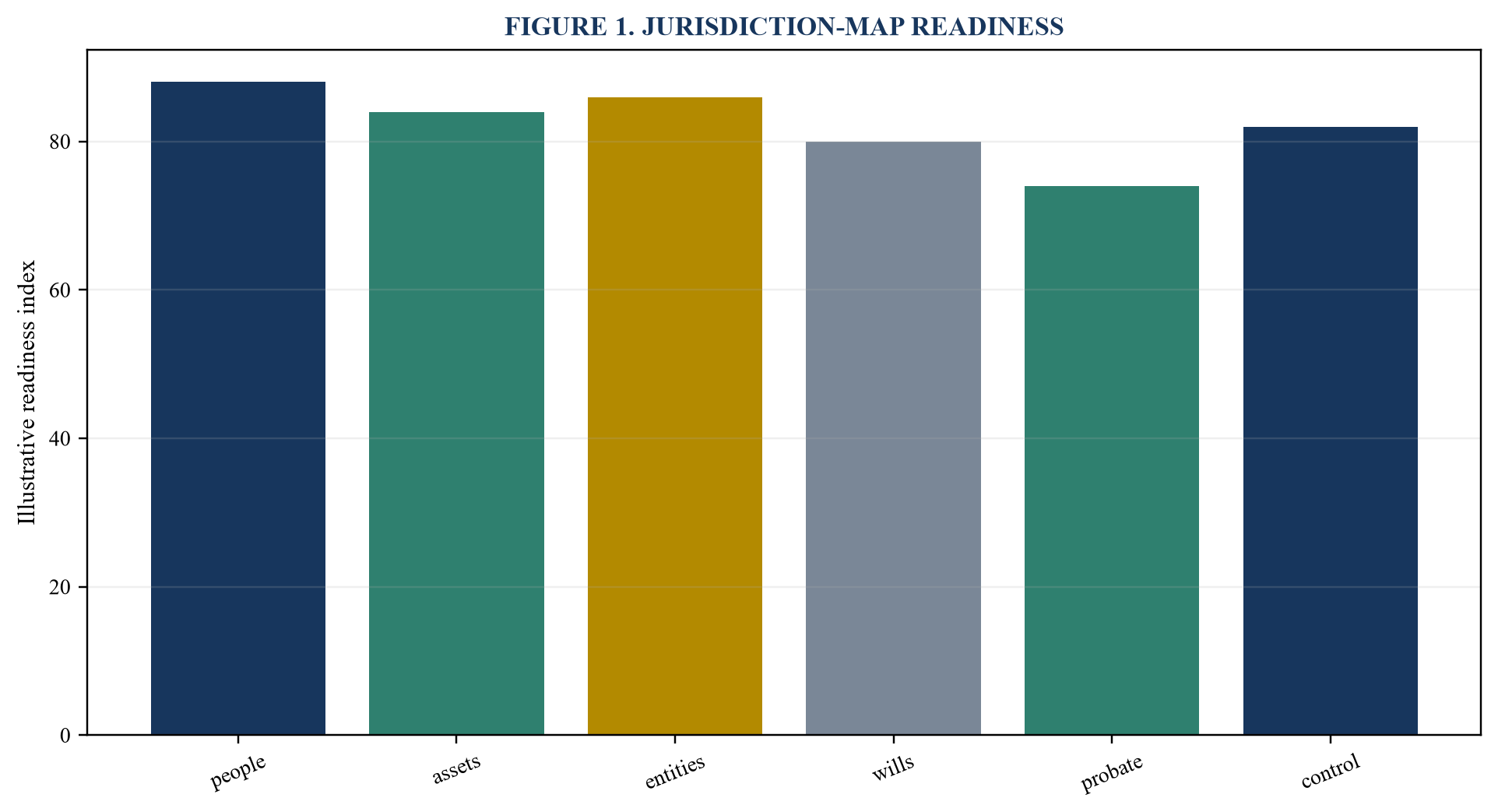
Values are illustrative readiness indices and require company-specific evidence.
9. Review wills by jurisdiction
Test scope, revocation, formal validity, executors, guardianship, local assets and consistency across every will.
The succession team should reconcile executed wills, registry evidence, translations, advice and asset inventory. Each conclusion records the accountable body, source, timing, candidate or owner, evidence, dependency, control and unresolved exception. The immediate output is a coordinated wills schedule.
Management continuity must be proved through operating outcomes while ownership choices remain explicit. Reviewers test capability, authority, relationships, stakeholder confidence and downside response against native records and observed performance. Company strategy, role requirements, family objectives and governing law control every conclusion.
Material gaps require an owner, corrective action, test, advice and decision date. Consequences should flow through leadership capacity, customer delivery, cash, financing, value, control, fairness and transaction timing. Residual risk remains visible until authority is operable, stakeholders are protected and the relevant governing bodies approve the next gate.
10. Reconcile forced-heirship exposure
Identify mandatory family entitlements, available elections and limits on testamentary freedom by asset and forum.
The succession team should reconcile applicable law, family facts, elections, marital regime and local advice. Each conclusion records the accountable body, source, timing, candidate or owner, evidence, dependency, control and unresolved exception. The immediate output is a forced-heirship analysis.
Management continuity must be proved through operating outcomes while ownership choices remain explicit. Reviewers test capability, authority, relationships, stakeholder confidence and downside response against native records and observed performance. Company strategy, role requirements, family objectives and governing law control every conclusion.
Material gaps require an owner, corrective action, test, advice and decision date. Consequences should flow through leadership capacity, customer delivery, cash, financing, value, control, fairness and transaction timing. Residual risk remains visible until authority is operable, stakeholders are protected and the relevant governing bodies approve the next gate.
11. Map marital-property regimes
Determine ownership consequences arising from marriage, civil partnership, community property, pre-nuptial agreements and local law.
The succession team should reconcile marriage records, agreements, residence history, asset acquisition and advice. Each conclusion records the accountable body, source, timing, candidate or owner, evidence, dependency, control and unresolved exception. The immediate output is a matrimonial property matrix.
Management continuity must be proved through operating outcomes while ownership choices remain explicit. Reviewers test capability, authority, relationships, stakeholder confidence and downside response against native records and observed performance. Company strategy, role requirements, family objectives and governing law control every conclusion.
Material gaps require an owner, corrective action, test, advice and decision date. Consequences should flow through leadership capacity, customer delivery, cash, financing, value, control, fairness and transaction timing. Residual risk remains visible until authority is operable, stakeholders are protected and the relevant governing bodies approve the next gate.
12. Design probate pathways
Identify grants, court processes, registry steps, translations, notarisation, legalisation and asset-release requirements.
The succession team should reconcile court rules, registry guidance, title records, bank requirements and counsel input. Each conclusion records the accountable body, source, timing, candidate or owner, evidence, dependency, control and unresolved exception. The immediate output is a multi-jurisdiction probate plan.
Management continuity must be proved through operating outcomes while ownership choices remain explicit. Reviewers test capability, authority, relationships, stakeholder confidence and downside response against native records and observed performance. Company strategy, role requirements, family objectives and governing law control every conclusion.
Material gaps require an owner, corrective action, test, advice and decision date. Consequences should flow through leadership capacity, customer delivery, cash, financing, value, control, fairness and transaction timing. Residual risk remains visible until authority is operable, stakeholders are protected and the relevant governing bodies approve the next gate.
13. Choose executors and local representatives
Appoint capable parties with authority, availability and local recognition across relevant forums.
The succession team should reconcile will terms, residency, institution rules, conflict checks and succession advice. Each conclusion records the accountable body, source, timing, candidate or owner, evidence, dependency, control and unresolved exception. The immediate output is an executor coverage map.
Management continuity must be proved through operating outcomes while ownership choices remain explicit. Reviewers test capability, authority, relationships, stakeholder confidence and downside response against native records and observed performance. Company strategy, role requirements, family objectives and governing law control every conclusion.
Material gaps require an owner, corrective action, test, advice and decision date. Consequences should flow through leadership capacity, customer delivery, cash, financing, value, control, fairness and transaction timing. Residual risk remains visible until authority is operable, stakeholders are protected and the relevant governing bodies approve the next gate.
14. Protect minors and dependants
Coordinate guardianship nominations, maintenance, education, special needs and asset-control arrangements.
The succession team should reconcile family facts, wills, trust or foundation terms, court rules and budgets. Each conclusion records the accountable body, source, timing, candidate or owner, evidence, dependency, control and unresolved exception. The immediate output is a dependant protection plan.
Management continuity must be proved through operating outcomes while ownership choices remain explicit. Reviewers test capability, authority, relationships, stakeholder confidence and downside response against native records and observed performance. Company strategy, role requirements, family objectives and governing law control every conclusion.
Material gaps require an owner, corrective action, test, advice and decision date. Consequences should flow through leadership capacity, customer delivery, cash, financing, value, control, fairness and transaction timing. Residual risk remains visible until authority is operable, stakeholders are protected and the relevant governing bodies approve the next gate.
15. Assess inheritance-tax perimeter
Determine which persons, assets, lifetime transfers and structures may be within each inheritance or estate-tax system.
The succession team should reconcile residence history, domicile where relevant, situs, ownership, transfers and tax law. Each conclusion records the accountable body, source, timing, candidate or owner, evidence, dependency, control and unresolved exception. The immediate output is an inheritance-tax exposure map.
Management continuity must be proved through operating outcomes while ownership choices remain explicit. Reviewers test capability, authority, relationships, stakeholder confidence and downside response against native records and observed performance. Company strategy, role requirements, family objectives and governing law control every conclusion.
Material gaps require an owner, corrective action, test, advice and decision date. Consequences should flow through leadership capacity, customer delivery, cash, financing, value, control, fairness and transaction timing. Residual risk remains visible until authority is operable, stakeholders are protected and the relevant governing bodies approve the next gate.
16. Model the UK long-term-residence tail
Test whether overseas assets remain in scope after departure and how the three-to-ten-year tail applies to the facts.
The succession team should reconcile UK residence years, departure date, trust history, asset situs and HMRC guidance. Each conclusion records the accountable body, source, timing, candidate or owner, evidence, dependency, control and unresolved exception. The immediate output is a UK inheritance-tax timeline.
Management continuity must be proved through operating outcomes while ownership choices remain explicit. Reviewers test capability, authority, relationships, stakeholder confidence and downside response against native records and observed performance. Company strategy, role requirements, family objectives and governing law control every conclusion.
Material gaps require an owner, corrective action, test, advice and decision date. Consequences should flow through leadership capacity, customer delivery, cash, financing, value, control, fairness and transaction timing. Residual risk remains visible until authority is operable, stakeholders are protected and the relevant governing bodies approve the next gate.
Table 2. Inheritance-tax exposure frame
| Test | Required evidence | Decision use |
|---|---|---|
| personal status | residence history | scope |
| asset status | ownership and situs | tax base |
| structure | settlor and trust facts | charges |
| timing | departure and transfer dates | tail period |
Illustrative programme design; company-specific facts and authorised advice govern.
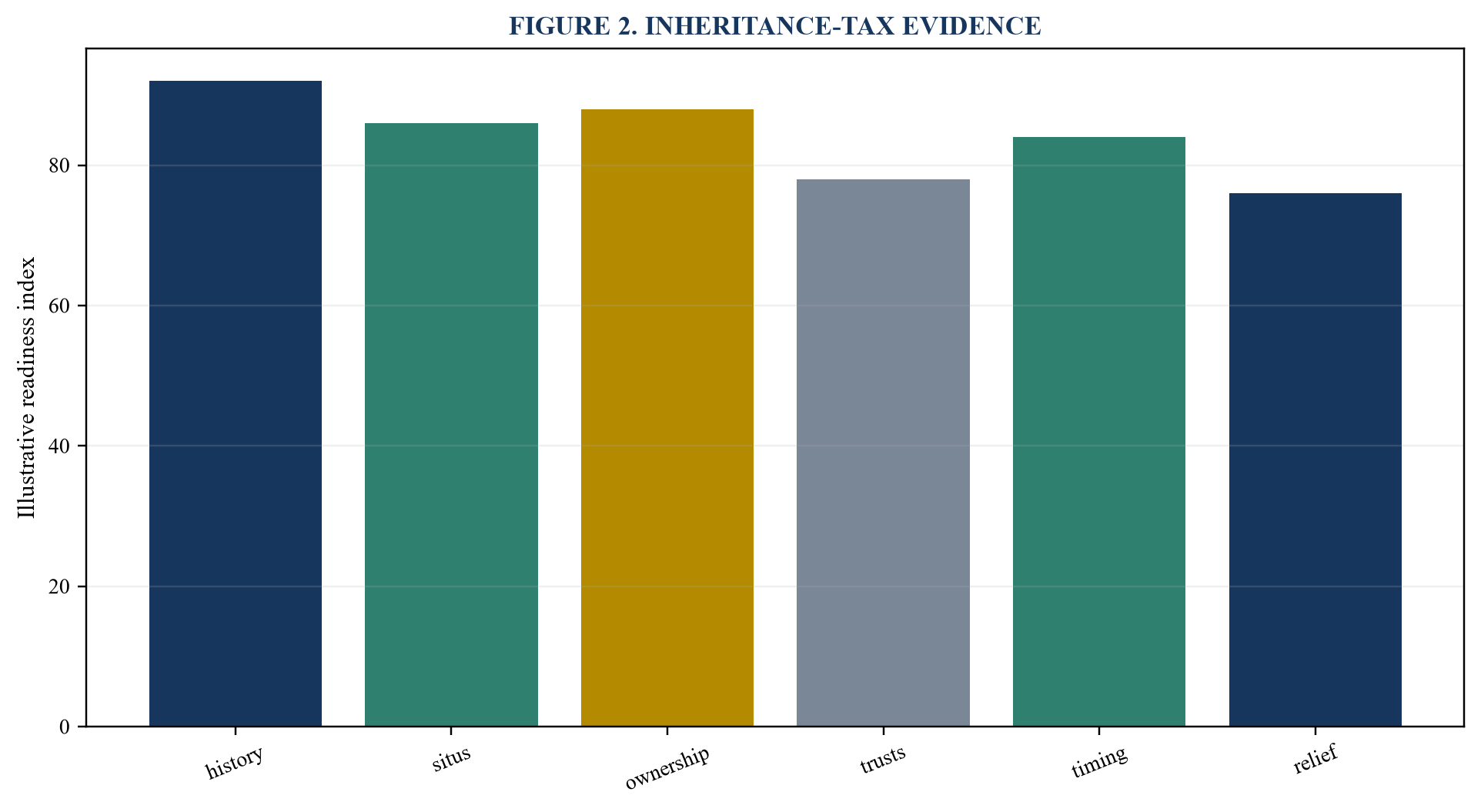
Values are illustrative readiness indices and require company-specific evidence.
17. Analyse trusts and foundations
Test legal ownership, settlor powers, beneficiary rights, control, tax treatment, reporting and succession operation.
The succession team should reconcile instruments, regulations, accounts, letters of wishes and adviser analysis. Each conclusion records the accountable body, source, timing, candidate or owner, evidence, dependency, control and unresolved exception. The immediate output is a structure effectiveness review.
Management continuity must be proved through operating outcomes while ownership choices remain explicit. Reviewers test capability, authority, relationships, stakeholder confidence and downside response against native records and observed performance. Company strategy, role requirements, family objectives and governing law control every conclusion.
Material gaps require an owner, corrective action, test, advice and decision date. Consequences should flow through leadership capacity, customer delivery, cash, financing, value, control, fairness and transaction timing. Residual risk remains visible until authority is operable, stakeholders are protected and the relevant governing bodies approve the next gate.
18. Review lifetime transfers
Assess gifts, sales, reorganisations, reservations of benefit, valuation, reporting and clawback risks before execution.
The succession team should reconcile transaction history, valuations, consideration, continued use and tax advice. Each conclusion records the accountable body, source, timing, candidate or owner, evidence, dependency, control and unresolved exception. The immediate output is a lifetime-transfer register.
Management continuity must be proved through operating outcomes while ownership choices remain explicit. Reviewers test capability, authority, relationships, stakeholder confidence and downside response against native records and observed performance. Company strategy, role requirements, family objectives and governing law control every conclusion.
Material gaps require an owner, corrective action, test, advice and decision date. Consequences should flow through leadership capacity, customer delivery, cash, financing, value, control, fairness and transaction timing. Residual risk remains visible until authority is operable, stakeholders are protected and the relevant governing bodies approve the next gate.
19. Coordinate business ownership succession
Align share rights, buy-sell arrangements, governance, valuation, funding and management continuity with the estate plan.
The succession team should reconcile articles, shareholder agreements, family constitution, valuation and financing. Each conclusion records the accountable body, source, timing, candidate or owner, evidence, dependency, control and unresolved exception. The immediate output is a business succession plan.
Management continuity must be proved through operating outcomes while ownership choices remain explicit. Reviewers test capability, authority, relationships, stakeholder confidence and downside response against native records and observed performance. Company strategy, role requirements, family objectives and governing law control every conclusion.
Material gaps require an owner, corrective action, test, advice and decision date. Consequences should flow through leadership capacity, customer delivery, cash, financing, value, control, fairness and transaction timing. Residual risk remains visible until authority is operable, stakeholders are protected and the relevant governing bodies approve the next gate.
20. Protect operating control during probate
Provide signing authority, board continuity, reserved decisions, emergency liquidity and stakeholder communication.
The succession team should reconcile delegations, board rules, banking mandates, insurance and continuity plans. Each conclusion records the accountable body, source, timing, candidate or owner, evidence, dependency, control and unresolved exception. The immediate output is an interim control protocol.
Management continuity must be proved through operating outcomes while ownership choices remain explicit. Reviewers test capability, authority, relationships, stakeholder confidence and downside response against native records and observed performance. Company strategy, role requirements, family objectives and governing law control every conclusion.
Material gaps require an owner, corrective action, test, advice and decision date. Consequences should flow through leadership capacity, customer delivery, cash, financing, value, control, fairness and transaction timing. Residual risk remains visible until authority is operable, stakeholders are protected and the relevant governing bodies approve the next gate.
21. Map tax residence of entities
Test incorporation, central management, treaty residence, permanent establishment and substance for holding and operating entities.
The succession team should reconcile board records, decision location, offices, people, treaties and filings. Each conclusion records the accountable body, source, timing, candidate or owner, evidence, dependency, control and unresolved exception. The immediate output is an entity residence matrix.
Management continuity must be proved through operating outcomes while ownership choices remain explicit. Reviewers test capability, authority, relationships, stakeholder confidence and downside response against native records and observed performance. Company strategy, role requirements, family objectives and governing law control every conclusion.
Material gaps require an owner, corrective action, test, advice and decision date. Consequences should flow through leadership capacity, customer delivery, cash, financing, value, control, fairness and transaction timing. Residual risk remains visible until authority is operable, stakeholders are protected and the relevant governing bodies approve the next gate.
22. Control migration of management
Prevent personal relocation from unintentionally changing company residence, taxable presence or regulatory obligations.
The succession team should reconcile decision calendars, board practice, travel, delegated authority and tax analysis. Each conclusion records the accountable body, source, timing, candidate or owner, evidence, dependency, control and unresolved exception. The immediate output is a management-location protocol.
Management continuity must be proved through operating outcomes while ownership choices remain explicit. Reviewers test capability, authority, relationships, stakeholder confidence and downside response against native records and observed performance. Company strategy, role requirements, family objectives and governing law control every conclusion.
Material gaps require an owner, corrective action, test, advice and decision date. Consequences should flow through leadership capacity, customer delivery, cash, financing, value, control, fairness and transaction timing. Residual risk remains visible until authority is operable, stakeholders are protected and the relevant governing bodies approve the next gate.
23. Separate income, gains and estate taxes
Model each tax base, timing, relief, filing and interaction instead of applying a single headline rate.
The succession team should reconcile cash flows, gains, distributions, estate values, domestic law and treaties. Each conclusion records the accountable body, source, timing, candidate or owner, evidence, dependency, control and unresolved exception. The immediate output is a multi-tax model.
Management continuity must be proved through operating outcomes while ownership choices remain explicit. Reviewers test capability, authority, relationships, stakeholder confidence and downside response against native records and observed performance. Company strategy, role requirements, family objectives and governing law control every conclusion.
Material gaps require an owner, corrective action, test, advice and decision date. Consequences should flow through leadership capacity, customer delivery, cash, financing, value, control, fairness and transaction timing. Residual risk remains visible until authority is operable, stakeholders are protected and the relevant governing bodies approve the next gate.
24. Map treaty and unilateral relief
Identify relevant income, capital, estate and gift treaties, credit rules and competent-authority routes.
The succession team should reconcile residence positions, tax types, asset situs, treaty text and assessments. Each conclusion records the accountable body, source, timing, candidate or owner, evidence, dependency, control and unresolved exception. The immediate output is a double-tax relief schedule.
Management continuity must be proved through operating outcomes while ownership choices remain explicit. Reviewers test capability, authority, relationships, stakeholder confidence and downside response against native records and observed performance. Company strategy, role requirements, family objectives and governing law control every conclusion.
Material gaps require an owner, corrective action, test, advice and decision date. Consequences should flow through leadership capacity, customer delivery, cash, financing, value, control, fairness and transaction timing. Residual risk remains visible until authority is operable, stakeholders are protected and the relevant governing bodies approve the next gate.
Table 3. Cross-border tax coordination
| Layer | Core question | Control |
|---|---|---|
| income | who is taxable where | residence and treaty |
| gains | which disposal is taxed | situs and relief |
| estate | what enters the death tax base | status and ownership |
| reporting | who discloses what | calendar and evidence |
Illustrative programme design; company-specific facts and authorised advice govern.
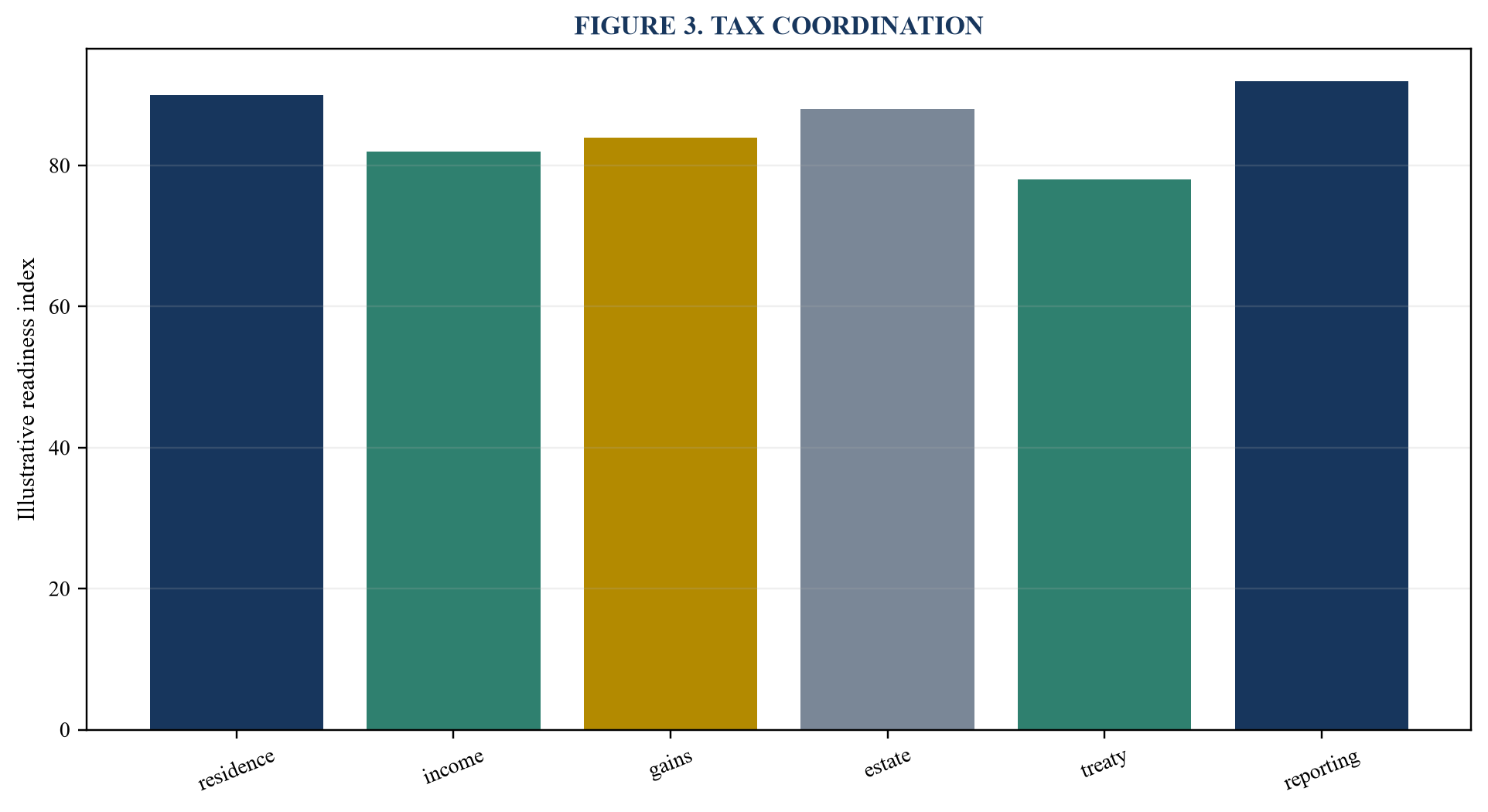
Values are illustrative readiness indices and require company-specific evidence.
25. Build the reporting inventory
List tax returns, trust registers, beneficial ownership, CRS, FATCA and financial-institution self-certifications by party.
The succession team should reconcile entity classification, controlling persons, accounts, jurisdictions and reporting rules. Each conclusion records the accountable body, source, timing, candidate or owner, evidence, dependency, control and unresolved exception. The immediate output is a cross-border compliance calendar.
Management continuity must be proved through operating outcomes while ownership choices remain explicit. Reviewers test capability, authority, relationships, stakeholder confidence and downside response against native records and observed performance. Company strategy, role requirements, family objectives and governing law control every conclusion.
Material gaps require an owner, corrective action, test, advice and decision date. Consequences should flow through leadership capacity, customer delivery, cash, financing, value, control, fairness and transaction timing. Residual risk remains visible until authority is operable, stakeholders are protected and the relevant governing bodies approve the next gate.
26. Apply beneficial-ownership transparency
Reconcile legal title, control and economic benefit consistently across corporate, tax and financial-institution records.
The succession team should reconcile registers, declarations, structure charts, account files and source-of-wealth evidence. Each conclusion records the accountable body, source, timing, candidate or owner, evidence, dependency, control and unresolved exception. The immediate output is a beneficial-ownership control file.
Management continuity must be proved through operating outcomes while ownership choices remain explicit. Reviewers test capability, authority, relationships, stakeholder confidence and downside response against native records and observed performance. Company strategy, role requirements, family objectives and governing law control every conclusion.
Material gaps require an owner, corrective action, test, advice and decision date. Consequences should flow through leadership capacity, customer delivery, cash, financing, value, control, fairness and transaction timing. Residual risk remains visible until authority is operable, stakeholders are protected and the relevant governing bodies approve the next gate.
27. Prepare source-of-wealth continuity
Maintain traceable evidence for inherited, gifted, sold and reorganised assets to support banks, trustees and regulators.
The succession team should reconcile historic statements, contracts, valuations, tax filings and probate records. Each conclusion records the accountable body, source, timing, candidate or owner, evidence, dependency, control and unresolved exception. The immediate output is a source-of-wealth dossier.
Management continuity must be proved through operating outcomes while ownership choices remain explicit. Reviewers test capability, authority, relationships, stakeholder confidence and downside response against native records and observed performance. Company strategy, role requirements, family objectives and governing law control every conclusion.
Material gaps require an owner, corrective action, test, advice and decision date. Consequences should flow through leadership capacity, customer delivery, cash, financing, value, control, fairness and transaction timing. Residual risk remains visible until authority is operable, stakeholders are protected and the relevant governing bodies approve the next gate.
28. Plan liquidity for tax and probate
Estimate taxes, fees, debts, family support and business needs, then locate accessible funding by date and currency.
The succession team should reconcile cash forecast, insurance, facilities, liquid assets, restrictions and scenario analysis. Each conclusion records the accountable body, source, timing, candidate or owner, evidence, dependency, control and unresolved exception. The immediate output is an estate liquidity plan.
Management continuity must be proved through operating outcomes while ownership choices remain explicit. Reviewers test capability, authority, relationships, stakeholder confidence and downside response against native records and observed performance. Company strategy, role requirements, family objectives and governing law control every conclusion.
Material gaps require an owner, corrective action, test, advice and decision date. Consequences should flow through leadership capacity, customer delivery, cash, financing, value, control, fairness and transaction timing. Residual risk remains visible until authority is operable, stakeholders are protected and the relevant governing bodies approve the next gate.
29. Stress-test valuation and currency
Test private-company value, property, concentrated assets, exchange rates and market timing against cash obligations.
The succession team should reconcile independent valuations, sensitivities, FX data, disposal costs and tax bases. Each conclusion records the accountable body, source, timing, candidate or owner, evidence, dependency, control and unresolved exception. The immediate output is a valuation and FX stress test.
Management continuity must be proved through operating outcomes while ownership choices remain explicit. Reviewers test capability, authority, relationships, stakeholder confidence and downside response against native records and observed performance. Company strategy, role requirements, family objectives and governing law control every conclusion.
Material gaps require an owner, corrective action, test, advice and decision date. Consequences should flow through leadership capacity, customer delivery, cash, financing, value, control, fairness and transaction timing. Residual risk remains visible until authority is operable, stakeholders are protected and the relevant governing bodies approve the next gate.
30. Coordinate banking and custody access
Ensure executors, trustees and authorised family members can locate and lawfully access accounts and investments.
The succession team should reconcile account inventory, mandates, vault records, digital access, institution rules and probate advice. Each conclusion records the accountable body, source, timing, candidate or owner, evidence, dependency, control and unresolved exception. The immediate output is an asset-access protocol.
Management continuity must be proved through operating outcomes while ownership choices remain explicit. Reviewers test capability, authority, relationships, stakeholder confidence and downside response against native records and observed performance. Company strategy, role requirements, family objectives and governing law control every conclusion.
Material gaps require an owner, corrective action, test, advice and decision date. Consequences should flow through leadership capacity, customer delivery, cash, financing, value, control, fairness and transaction timing. Residual risk remains visible until authority is operable, stakeholders are protected and the relevant governing bodies approve the next gate.
31. Govern digital assets and records
Map custody, keys, platforms, intellectual property, data and access succession without weakening security.
The succession team should reconcile digital inventory, custody design, platform terms, wills and cyber controls. Each conclusion records the accountable body, source, timing, candidate or owner, evidence, dependency, control and unresolved exception. The immediate output is a digital legacy plan.
Management continuity must be proved through operating outcomes while ownership choices remain explicit. Reviewers test capability, authority, relationships, stakeholder confidence and downside response against native records and observed performance. Company strategy, role requirements, family objectives and governing law control every conclusion.
Material gaps require an owner, corrective action, test, advice and decision date. Consequences should flow through leadership capacity, customer delivery, cash, financing, value, control, fairness and transaction timing. Residual risk remains visible until authority is operable, stakeholders are protected and the relevant governing bodies approve the next gate.
32. Resolve document conflicts
Detect inconsistent revocation, governing law, beneficiaries, powers, definitions and asset scope across instruments.
The succession team should reconcile wills, trusts, foundations, agreements, policies and legal opinions. Each conclusion records the accountable body, source, timing, candidate or owner, evidence, dependency, control and unresolved exception. The immediate output is a document conflict log.
Management continuity must be proved through operating outcomes while ownership choices remain explicit. Reviewers test capability, authority, relationships, stakeholder confidence and downside response against native records and observed performance. Company strategy, role requirements, family objectives and governing law control every conclusion.
Material gaps require an owner, corrective action, test, advice and decision date. Consequences should flow through leadership capacity, customer delivery, cash, financing, value, control, fairness and transaction timing. Residual risk remains visible until authority is operable, stakeholders are protected and the relevant governing bodies approve the next gate.
Table 4. Instrument consistency test
| Instrument | Failure mode | Reconciliation |
|---|---|---|
| wills | overlapping revocation | scope schedule |
| trusts | control contradicts intent | powers review |
| companies | shares cannot transfer | articles alignment |
| mandates | authority ends unexpectedly | continuity protocol |
Illustrative programme design; company-specific facts and authorised advice govern.
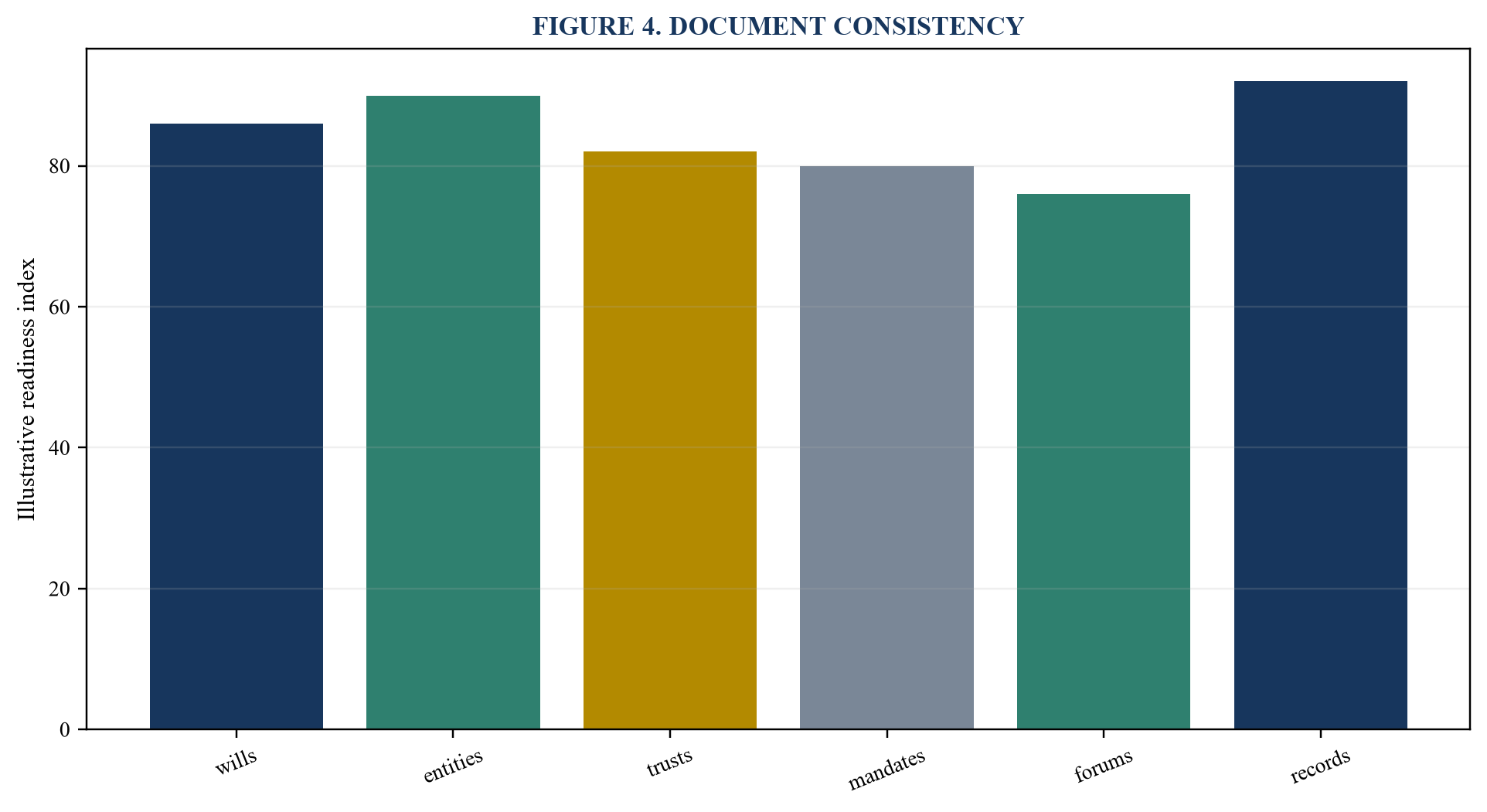
Values are illustrative readiness indices and require company-specific evidence.
33. Create a decision-rights architecture
Allocate approvals among family, owners, boards, trustees, protectors, executors and advisers before incapacity or death.
The succession team should reconcile governing documents, mandates, reserved matters and competency rules. Each conclusion records the accountable body, source, timing, candidate or owner, evidence, dependency, control and unresolved exception. The immediate output is a transition authority matrix.
Management continuity must be proved through operating outcomes while ownership choices remain explicit. Reviewers test capability, authority, relationships, stakeholder confidence and downside response against native records and observed performance. Company strategy, role requirements, family objectives and governing law control every conclusion.
Material gaps require an owner, corrective action, test, advice and decision date. Consequences should flow through leadership capacity, customer delivery, cash, financing, value, control, fairness and transaction timing. Residual risk remains visible until authority is operable, stakeholders are protected and the relevant governing bodies approve the next gate.
34. Design dispute and forum routes
Set escalation, mediation, arbitration, court and emergency-relief pathways appropriate to each instrument.
The succession team should reconcile forum clauses, enforceability advice, family governance and asset locations. Each conclusion records the accountable body, source, timing, candidate or owner, evidence, dependency, control and unresolved exception. The immediate output is a cross-border dispute map.
Management continuity must be proved through operating outcomes while ownership choices remain explicit. Reviewers test capability, authority, relationships, stakeholder confidence and downside response against native records and observed performance. Company strategy, role requirements, family objectives and governing law control every conclusion.
Material gaps require an owner, corrective action, test, advice and decision date. Consequences should flow through leadership capacity, customer delivery, cash, financing, value, control, fairness and transaction timing. Residual risk remains visible until authority is operable, stakeholders are protected and the relevant governing bodies approve the next gate.
35. Sequence implementation
Order residence evidence, wills, entity changes, valuations, consents, transfers, filings and communications around dependencies.
The succession team should reconcile critical path, lead times, adviser inputs, family decisions and regulatory steps. Each conclusion records the accountable body, source, timing, candidate or owner, evidence, dependency, control and unresolved exception. The immediate output is a transition implementation roadmap.
Management continuity must be proved through operating outcomes while ownership choices remain explicit. Reviewers test capability, authority, relationships, stakeholder confidence and downside response against native records and observed performance. Company strategy, role requirements, family objectives and governing law control every conclusion.
Material gaps require an owner, corrective action, test, advice and decision date. Consequences should flow through leadership capacity, customer delivery, cash, financing, value, control, fairness and transaction timing. Residual risk remains visible until authority is operable, stakeholders are protected and the relevant governing bodies approve the next gate.
36. Control execution evidence
Use signed approvals, certified documents, translations, legalisation, filing receipts and reconciled registers to prove completion.
The succession team should reconcile closing checklist, originals, registers, receipts, advice and secure archive. Each conclusion records the accountable body, source, timing, candidate or owner, evidence, dependency, control and unresolved exception. The immediate output is an execution evidence book.
Management continuity must be proved through operating outcomes while ownership choices remain explicit. Reviewers test capability, authority, relationships, stakeholder confidence and downside response against native records and observed performance. Company strategy, role requirements, family objectives and governing law control every conclusion.
Material gaps require an owner, corrective action, test, advice and decision date. Consequences should flow through leadership capacity, customer delivery, cash, financing, value, control, fairness and transaction timing. Residual risk remains visible until authority is operable, stakeholders are protected and the relevant governing bodies approve the next gate.
37. Run incapacity and death simulations
Test whether family, boards, banks, trustees and executors can preserve control and release liquidity under realistic disruption.
The succession team should reconcile scenario scripts, contact tree, documents, account access and response observations. Each conclusion records the accountable body, source, timing, candidate or owner, evidence, dependency, control and unresolved exception. The immediate output is a transition simulation report.
Management continuity must be proved through operating outcomes while ownership choices remain explicit. Reviewers test capability, authority, relationships, stakeholder confidence and downside response against native records and observed performance. Company strategy, role requirements, family objectives and governing law control every conclusion.
Material gaps require an owner, corrective action, test, advice and decision date. Consequences should flow through leadership capacity, customer delivery, cash, financing, value, control, fairness and transaction timing. Residual risk remains visible until authority is operable, stakeholders are protected and the relevant governing bodies approve the next gate.
38. Review annually and after trigger events
Refresh residence, assets, family facts, law, valuations, structures and documents after material change.
The succession team should reconcile annual confirmations, travel, transactions, births, deaths, marriage, divorce and law updates. Each conclusion records the accountable body, source, timing, candidate or owner, evidence, dependency, control and unresolved exception. The immediate output is an annual transition review.
Management continuity must be proved through operating outcomes while ownership choices remain explicit. Reviewers test capability, authority, relationships, stakeholder confidence and downside response against native records and observed performance. Company strategy, role requirements, family objectives and governing law control every conclusion.
Material gaps require an owner, corrective action, test, advice and decision date. Consequences should flow through leadership capacity, customer delivery, cash, financing, value, control, fairness and transaction timing. Residual risk remains visible until authority is operable, stakeholders are protected and the relevant governing bodies approve the next gate.
39. Issue the coordinated transition conclusion
Present exposures, conflicts, options, taxes, probate routes, liquidity, controls, approvals and unresolved advice.
The succession team should reconcile verified maps, legal and tax opinions, models, simulations, consents and evidence. Each conclusion records the accountable body, source, timing, candidate or owner, evidence, dependency, control and unresolved exception. The immediate output is a family transition decision paper.
Management continuity must be proved through operating outcomes while ownership choices remain explicit. Reviewers test capability, authority, relationships, stakeholder confidence and downside response against native records and observed performance. Company strategy, role requirements, family objectives and governing law control every conclusion.
Material gaps require an owner, corrective action, test, advice and decision date. Consequences should flow through leadership capacity, customer delivery, cash, financing, value, control, fairness and transaction timing. Residual risk remains visible until authority is operable, stakeholders are protected and the relevant governing bodies approve the next gate.
40. Maintain the live control register
Keep owners, due dates, evidence, exceptions and professional opinions current through execution and administration.
The succession team should reconcile governance calendar, action log, document repository and independent review. Each conclusion records the accountable body, source, timing, candidate or owner, evidence, dependency, control and unresolved exception. The immediate output is a live cross-border transition register.
Management continuity must be proved through operating outcomes while ownership choices remain explicit. Reviewers test capability, authority, relationships, stakeholder confidence and downside response against native records and observed performance. Company strategy, role requirements, family objectives and governing law control every conclusion.
Material gaps require an owner, corrective action, test, advice and decision date. Consequences should flow through leadership capacity, customer delivery, cash, financing, value, control, fairness and transaction timing. Residual risk remains visible until authority is operable, stakeholders are protected and the relevant governing bodies approve the next gate.
Table 5. Transition readiness certificate
| Dimension | Required conclusion | Evidence |
|---|---|---|
| law | connecting factors resolved | opinions |
| tax | scope and relief modelled | tax model |
| control | authority survives disruption | simulation |
| liquidity | obligations are fundable | cash plan |
Illustrative programme design; company-specific facts and authorised advice govern.
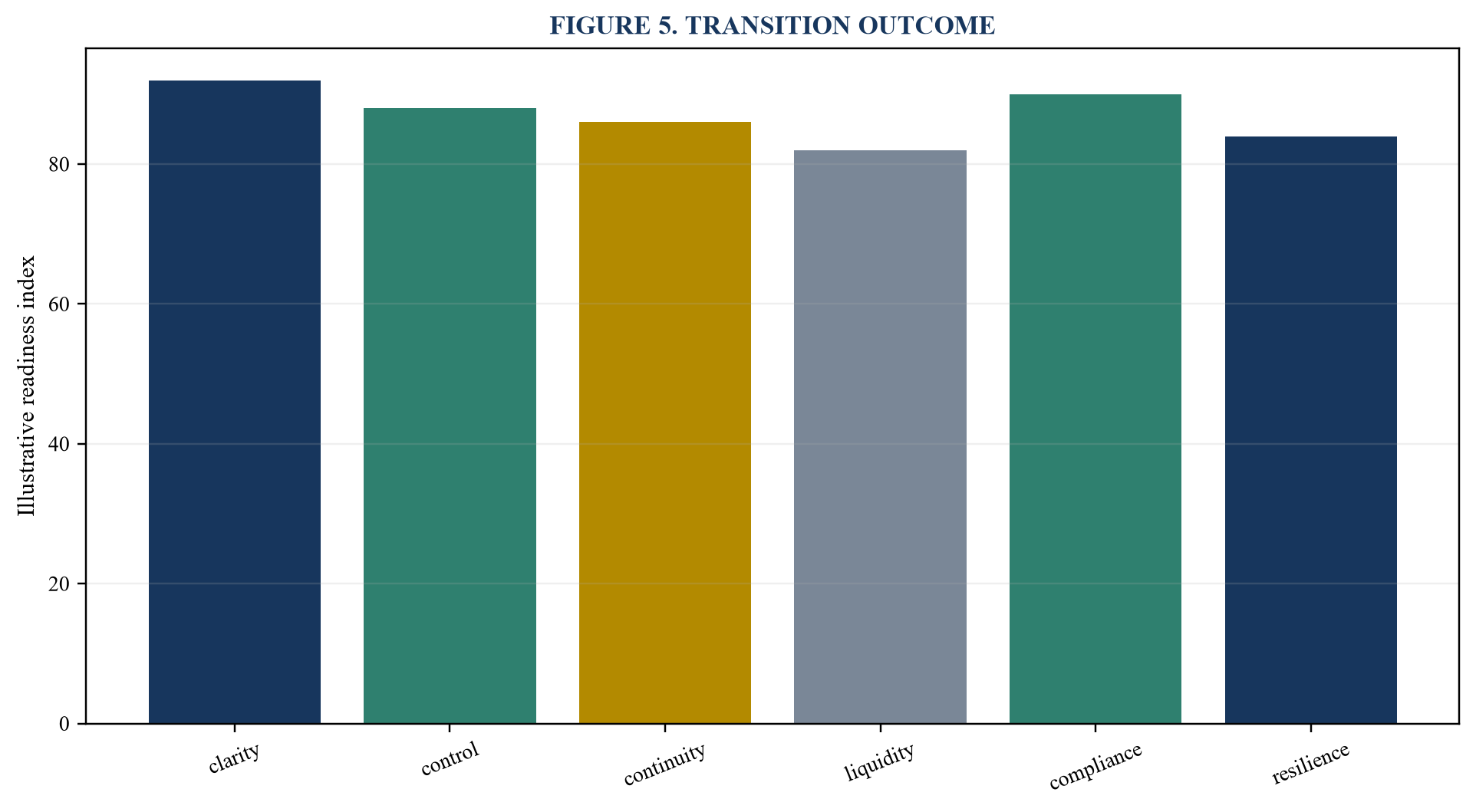
Values are illustrative readiness indices and require company-specific evidence.
References
- HM Revenue & Customs, Statutory Residence Test guidance RDR3, https://www.gov.uk/government/publications/rdr3-statutory-residence-test-srt
- HM Revenue & Customs, Inheritance Tax if you are a long-term UK resident, https://www.gov.uk/guidance/inheritance-tax-if-youre-a-long-term-uk-resident
- HM Revenue & Customs, Inheritance Tax Manual IHTM47001, https://www.gov.uk/hmrc-internal-manuals/inheritance-tax-manual/ihtm47001
- HM Revenue & Customs, Inheritance Tax Double Taxation Relief, https://www.gov.uk/guidance/inheritance-tax-double-taxation-relief
- HM Revenue & Customs, Trusts and Inheritance Tax, https://www.gov.uk/guidance/trusts-and-inheritance-tax
- HM Revenue & Customs, Non-resident trusts, https://www.gov.uk/guidance/non-resident-trusts
- UK Government, Finance Act 2013 Schedule 45 Statutory Residence Test, https://www.legislation.gov.uk/ukpga/2013/29/schedule/45
- UK Government, Inheritance Tax Act 1984, https://www.legislation.gov.uk/ukpga/1984/51/contents
- OECD, Model Tax Convention on Income and on Capital, https://www.oecd.org/en/topics/oecd-model-tax-convention-on-income-and-on-capital.html
- OECD, Consolidated Text of the Common Reporting Standard 2025, https://www.oecd.org/en/publications/consolidated-text-of-the-common-reporting-standard-2025_055664b1-en.html
- OECD, Automatic Exchange of Information Portal, https://www.oecd.org/en/topics/sub-issues/automatic-exchange-of-information.html
- European Union, Regulation EU No 650/2012 on succession, https://eur-lex.europa.eu/eli/reg/2012/650/oj
- Hague Conference on Private International Law, Apostille Convention, https://www.hcch.net/en/instruments/conventions/specialised-sections/apostille
- Hague Conference on Private International Law, Succession Section, https://www.hcch.net/en/instruments/conventions/specialised-sections/succession
- United Arab Emirates, Federal Decree-Law No. 41 of 2022 on Civil Personal Status, https://uaelegislation.gov.ae/en/legislations/1586
- United Arab Emirates, Cabinet Resolution No. 122 of 2023 Executive Regulations on Civil Personal Status, https://uaelegislation.gov.ae/en/legislations/2301
- United Arab Emirates, Federal Decree-Law No. 37 of 2022 Concerning Family Businesses, https://uaelegislation.gov.ae/en/legislations/1608
- DIFC Courts, Wills Service, https://www.difccourts.ae/difc-courts/services
- Dubai International Financial Centre, Family Arrangements Regulations 2023, https://assets.difc.com/v1/media/edge/images/dubaiintern0078-difcexperie96c5-production-3253/media/project/difcexperiences/difc/difcwebsite/documents/familydocs/family_arrangements_regulations_updated_april23.pdf
- Dubai International Financial Centre, Private and Family Wealth Offering, https://www.difc.com/business/difc-private-and-family-wealth-offering
- Abu Dhabi Global Market, Foundations Regulations 2017, https://assets.adgm.com/download/assets/foundations-regulations-2017.pdf/a9b58092643811efb33122e97052245a
- Abu Dhabi Global Market, Trusts Special Provisions Regulations 2016, https://www.adgm.com/legal-framework/rules-and-regulations
- Financial Action Task Force, Beneficial Ownership of Legal Persons, https://www.fatf-gafi.org/en/publications/Fatfrecommendations/Guidance-Beneficial-Ownership-Legal-Persons.html
- International Finance Corporation, Family Business Governance Handbook, https://www.ifc.org/en/insights-reports/2011/ifc-family-business-governance-handbook
- International Organization for Standardization, ISO 31000 Risk Management Guidelines, https://www.iso.org/iso-31000-risk-management.html
- International Valuation Standards Council, International Valuation Standards, https://www.ivsc.org/standards/
