

1. Define the proceeds objective
Translate shareholder priorities into net cash, currency, timing, certainty, reinvestment and distribution outcomes.
The controlled record should identify the relevant customer, revenue stream, contract, cohort, relationship owner, commercial dependency, evidence source, baseline, trend, scenario, control, exception, accountable executive, deadline and approval. The immediate deliverable is a cross-border proceeds objective memorandum.
The principal failure occurs when headline enterprise value is treated as distributable wealth. Reviewers should connect the evidence to revenue durability, gross margin, cash conversion, renewal probability, switching behaviour, counterparty credit and transaction value; distinguish contractual protection from observed customer behaviour; and test whether the conclusion survives a downside scenario.
The decision pack for define the proceeds objective should state the commercial question, measurement perimeter, historical evidence, customer-specific facts, forecast logic, sensitivity, management action, buyer implication, residual uncertainty and next gate. Material exceptions should flow into the valuation model, quality-of-earnings work, diligence room, sale-process narrative, transaction protections and board reporting.
2. Map the transaction perimeter
Identify sellers, target entities, assets, liabilities, jurisdictions, currencies and consideration instruments.
The controlled record should identify the relevant customer, revenue stream, contract, cohort, relationship owner, commercial dependency, evidence source, baseline, trend, scenario, control, exception, accountable executive, deadline and approval. The immediate deliverable is a transaction-perimeter map.
The principal failure occurs when the legal sale perimeter differs from the tax and cash-flow perimeter. Reviewers should connect the evidence to revenue durability, gross margin, cash conversion, renewal probability, switching behaviour, counterparty credit and transaction value; distinguish contractual protection from observed customer behaviour; and test whether the conclusion survives a downside scenario.
The decision pack for map the transaction perimeter should state the commercial question, measurement perimeter, historical evidence, customer-specific facts, forecast logic, sensitivity, management action, buyer implication, residual uncertainty and next gate. Material exceptions should flow into the valuation model, quality-of-earnings work, diligence room, sale-process narrative, transaction protections and board reporting.
3. Establish proceeds governance
Set board, shareholder, tax, treasury, banking, legal and signing decision rights.
The controlled record should identify the relevant customer, revenue stream, contract, cohort, relationship owner, commercial dependency, evidence source, baseline, trend, scenario, control, exception, accountable executive, deadline and approval. The immediate deliverable is a proceeds governance charter.
The principal failure occurs when material tax or currency choices are made without accountable approval. Reviewers should connect the evidence to revenue durability, gross margin, cash conversion, renewal probability, switching behaviour, counterparty credit and transaction value; distinguish contractual protection from observed customer behaviour; and test whether the conclusion survives a downside scenario.
The decision pack for establish proceeds governance should state the commercial question, measurement perimeter, historical evidence, customer-specific facts, forecast logic, sensitivity, management action, buyer implication, residual uncertainty and next gate. Material exceptions should flow into the valuation model, quality-of-earnings work, diligence room, sale-process narrative, transaction protections and board reporting.
4. Build the entity and ownership tree
Verify legal title, residence, beneficial ownership, intermediate holdings and historic reorganisations.
The controlled record should identify the relevant customer, revenue stream, contract, cohort, relationship owner, commercial dependency, evidence source, baseline, trend, scenario, control, exception, accountable executive, deadline and approval. The immediate deliverable is a verified ownership and residence schedule.
The principal failure occurs when payment instructions and treaty positions rely on an outdated structure chart. Reviewers should connect the evidence to revenue durability, gross margin, cash conversion, renewal probability, switching behaviour, counterparty credit and transaction value; distinguish contractual protection from observed customer behaviour; and test whether the conclusion survives a downside scenario.
The decision pack for build the entity and ownership tree should state the commercial question, measurement perimeter, historical evidence, customer-specific facts, forecast logic, sensitivity, management action, buyer implication, residual uncertainty and next gate. Material exceptions should flow into the valuation model, quality-of-earnings work, diligence room, sale-process narrative, transaction protections and board reporting.
5. Map source and residence taxation
Identify domestic taxing rights, exemptions, basis, losses, withholding and treaty interaction for each seller.
The controlled record should identify the relevant customer, revenue stream, contract, cohort, relationship owner, commercial dependency, evidence source, baseline, trend, scenario, control, exception, accountable executive, deadline and approval. The immediate deliverable is a jurisdiction-by-jurisdiction tax matrix.
The principal failure occurs when one jurisdiction's exemption is assumed to eliminate tax elsewhere. Reviewers should connect the evidence to revenue durability, gross margin, cash conversion, renewal probability, switching behaviour, counterparty credit and transaction value; distinguish contractual protection from observed customer behaviour; and test whether the conclusion survives a downside scenario.
The decision pack for map source and residence taxation should state the commercial question, measurement perimeter, historical evidence, customer-specific facts, forecast logic, sensitivity, management action, buyer implication, residual uncertainty and next gate. Material exceptions should flow into the valuation model, quality-of-earnings work, diligence room, sale-process narrative, transaction protections and board reporting.
6. Test treaty entitlement
Confirm covered taxes, residence, beneficial ownership, holding periods, limitation provisions, principal-purpose rules and filing evidence.
The controlled record should identify the relevant customer, revenue stream, contract, cohort, relationship owner, commercial dependency, evidence source, baseline, trend, scenario, control, exception, accountable executive, deadline and approval. The immediate deliverable is a treaty entitlement memorandum.
The principal failure occurs when a headline treaty rate is used without testing entitlement or procedure. Reviewers should connect the evidence to revenue durability, gross margin, cash conversion, renewal probability, switching behaviour, counterparty credit and transaction value; distinguish contractual protection from observed customer behaviour; and test whether the conclusion survives a downside scenario.
The decision pack for test treaty entitlement should state the commercial question, measurement perimeter, historical evidence, customer-specific facts, forecast logic, sensitivity, management action, buyer implication, residual uncertainty and next gate. Material exceptions should flow into the valuation model, quality-of-earnings work, diligence room, sale-process narrative, transaction protections and board reporting.
7. Classify the consideration
Separate cash, rollover equity, earnout, escrow, seller note, retention payment and non-compete consideration.
The controlled record should identify the relevant customer, revenue stream, contract, cohort, relationship owner, commercial dependency, evidence source, baseline, trend, scenario, control, exception, accountable executive, deadline and approval. The immediate deliverable is a consideration classification schedule.
The principal failure occurs when economically different receipts are assigned one tax and valuation treatment. Reviewers should connect the evidence to revenue durability, gross margin, cash conversion, renewal probability, switching behaviour, counterparty credit and transaction value; distinguish contractual protection from observed customer behaviour; and test whether the conclusion survives a downside scenario.
The decision pack for classify the consideration should state the commercial question, measurement perimeter, historical evidence, customer-specific facts, forecast logic, sensitivity, management action, buyer implication, residual uncertainty and next gate. Material exceptions should flow into the valuation model, quality-of-earnings work, diligence room, sale-process narrative, transaction protections and board reporting.
8. Model gross-to-net proceeds
Bridge enterprise value through debt, working capital, leakage, transaction costs, tax, withholding, FX and trapped cash.
The controlled record should identify the relevant customer, revenue stream, contract, cohort, relationship owner, commercial dependency, evidence source, baseline, trend, scenario, control, exception, accountable executive, deadline and approval. The immediate deliverable is a shareholder net-proceeds bridge.
The principal failure occurs when the board compares bids using enterprise value rather than cash available to each shareholder. Reviewers should connect the evidence to revenue durability, gross margin, cash conversion, renewal probability, switching behaviour, counterparty credit and transaction value; distinguish contractual protection from observed customer behaviour; and test whether the conclusion survives a downside scenario.
The decision pack for model gross-to-net proceeds should state the commercial question, measurement perimeter, historical evidence, customer-specific facts, forecast logic, sensitivity, management action, buyer implication, residual uncertainty and next gate. Material exceptions should flow into the valuation model, quality-of-earnings work, diligence room, sale-process narrative, transaction protections and board reporting.
Table 1. Gross-to-net proceeds bridge
| Layer | Core evidence | Decision output |
|---|---|---|
| headline value | signed consideration | gross value |
| price mechanics | debt and working capital | equity value |
| friction | tax, fees and FX | net cash |
| availability | controls and distribution | usable proceeds |
Illustrative analytical design; company-specific evidence and professional advice govern.
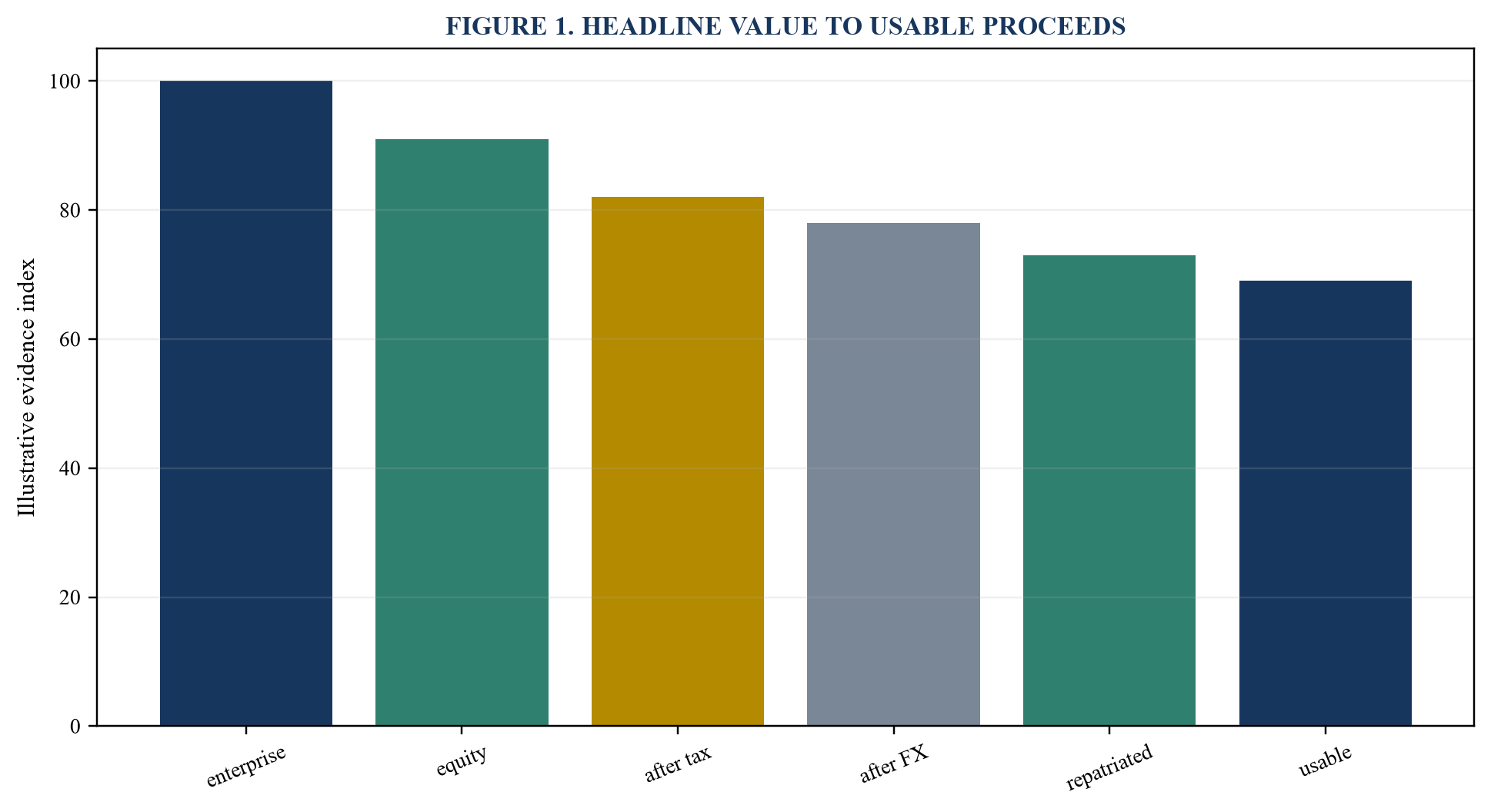
Values are illustrative evidence indices and require company-specific support.
9. Fix valuation dates and exchange rates
Define signing, completion, tax, accounting and distribution translation conventions.
The controlled record should identify the relevant customer, revenue stream, contract, cohort, relationship owner, commercial dependency, evidence source, baseline, trend, scenario, control, exception, accountable executive, deadline and approval. The immediate deliverable is an exchange-rate convention paper.
The principal failure occurs when different teams use convenient rates from different dates. Reviewers should connect the evidence to revenue durability, gross margin, cash conversion, renewal probability, switching behaviour, counterparty credit and transaction value; distinguish contractual protection from observed customer behaviour; and test whether the conclusion survives a downside scenario.
The decision pack for fix valuation dates and exchange rates should state the commercial question, measurement perimeter, historical evidence, customer-specific facts, forecast logic, sensitivity, management action, buyer implication, residual uncertainty and next gate. Material exceptions should flow into the valuation model, quality-of-earnings work, diligence room, sale-process narrative, transaction protections and board reporting.
10. Identify the functional currency
Establish functional, presentation, tax, settlement and shareholder spending currencies.
The controlled record should identify the relevant customer, revenue stream, contract, cohort, relationship owner, commercial dependency, evidence source, baseline, trend, scenario, control, exception, accountable executive, deadline and approval. The immediate deliverable is a currency-perimeter map.
The principal failure occurs when reported value and economic exposure are confused. Reviewers should connect the evidence to revenue durability, gross margin, cash conversion, renewal probability, switching behaviour, counterparty credit and transaction value; distinguish contractual protection from observed customer behaviour; and test whether the conclusion survives a downside scenario.
The decision pack for identify the functional currency should state the commercial question, measurement perimeter, historical evidence, customer-specific facts, forecast logic, sensitivity, management action, buyer implication, residual uncertainty and next gate. Material exceptions should flow into the valuation model, quality-of-earnings work, diligence room, sale-process narrative, transaction protections and board reporting.
11. Quantify transaction FX exposure
Measure exposure by amount, currency, probability, timing, correlation and natural offsets.
The controlled record should identify the relevant customer, revenue stream, contract, cohort, relationship owner, commercial dependency, evidence source, baseline, trend, scenario, control, exception, accountable executive, deadline and approval. The immediate deliverable is a transaction FX exposure schedule.
The principal failure occurs when the seller hedges the headline price instead of the forecast net exposure. Reviewers should connect the evidence to revenue durability, gross margin, cash conversion, renewal probability, switching behaviour, counterparty credit and transaction value; distinguish contractual protection from observed customer behaviour; and test whether the conclusion survives a downside scenario.
The decision pack for quantify transaction fx exposure should state the commercial question, measurement perimeter, historical evidence, customer-specific facts, forecast logic, sensitivity, management action, buyer implication, residual uncertainty and next gate. Material exceptions should flow into the valuation model, quality-of-earnings work, diligence room, sale-process narrative, transaction protections and board reporting.
12. Design the hedge policy
Set objectives, permitted instruments, hedge ratios, counterparties, credit limits, approvals and documentation.
The controlled record should identify the relevant customer, revenue stream, contract, cohort, relationship owner, commercial dependency, evidence source, baseline, trend, scenario, control, exception, accountable executive, deadline and approval. The immediate deliverable is a board-approved transaction hedge policy.
The principal failure occurs when a hedge becomes a speculative position or fails tax and accounting evidence requirements. Reviewers should connect the evidence to revenue durability, gross margin, cash conversion, renewal probability, switching behaviour, counterparty credit and transaction value; distinguish contractual protection from observed customer behaviour; and test whether the conclusion survives a downside scenario.
The decision pack for design the hedge policy should state the commercial question, measurement perimeter, historical evidence, customer-specific facts, forecast logic, sensitivity, management action, buyer implication, residual uncertainty and next gate. Material exceptions should flow into the valuation model, quality-of-earnings work, diligence room, sale-process narrative, transaction protections and board reporting.
13. Evaluate deal-contingent hedges
Compare forwards, options, collars, non-deliverable instruments and deal-contingent structures.
The controlled record should identify the relevant customer, revenue stream, contract, cohort, relationship owner, commercial dependency, evidence source, baseline, trend, scenario, control, exception, accountable executive, deadline and approval. The immediate deliverable is a hedge-instrument decision matrix.
The principal failure occurs when a failed deal leaves the seller with an uncovered derivative close-out. Reviewers should connect the evidence to revenue durability, gross margin, cash conversion, renewal probability, switching behaviour, counterparty credit and transaction value; distinguish contractual protection from observed customer behaviour; and test whether the conclusion survives a downside scenario.
The decision pack for evaluate deal-contingent hedges should state the commercial question, measurement perimeter, historical evidence, customer-specific facts, forecast logic, sensitivity, management action, buyer implication, residual uncertainty and next gate. Material exceptions should flow into the valuation model, quality-of-earnings work, diligence room, sale-process narrative, transaction protections and board reporting.
14. Control hedge accounting and tax
Align designation, effectiveness evidence, disposal treatment, deductions and recognition timing.
The controlled record should identify the relevant customer, revenue stream, contract, cohort, relationship owner, commercial dependency, evidence source, baseline, trend, scenario, control, exception, accountable executive, deadline and approval. The immediate deliverable is a hedge accounting and tax workplan.
The principal failure occurs when the economic hedge creates unexpected accounting or taxable volatility. Reviewers should connect the evidence to revenue durability, gross margin, cash conversion, renewal probability, switching behaviour, counterparty credit and transaction value; distinguish contractual protection from observed customer behaviour; and test whether the conclusion survives a downside scenario.
The decision pack for control hedge accounting and tax should state the commercial question, measurement perimeter, historical evidence, customer-specific facts, forecast logic, sensitivity, management action, buyer implication, residual uncertainty and next gate. Material exceptions should flow into the valuation model, quality-of-earnings work, diligence room, sale-process narrative, transaction protections and board reporting.
15. Map capital and exchange controls
Identify registration, approval, repatriation, surrender, conversion, account and documentary requirements.
The controlled record should identify the relevant customer, revenue stream, contract, cohort, relationship owner, commercial dependency, evidence source, baseline, trend, scenario, control, exception, accountable executive, deadline and approval. The immediate deliverable is a capital-controls pathway.
The principal failure occurs when legally earned proceeds cannot be converted or transferred on the expected timetable. Reviewers should connect the evidence to revenue durability, gross margin, cash conversion, renewal probability, switching behaviour, counterparty credit and transaction value; distinguish contractual protection from observed customer behaviour; and test whether the conclusion survives a downside scenario.
The decision pack for map capital and exchange controls should state the commercial question, measurement perimeter, historical evidence, customer-specific facts, forecast logic, sensitivity, management action, buyer implication, residual uncertainty and next gate. Material exceptions should flow into the valuation model, quality-of-earnings work, diligence room, sale-process narrative, transaction protections and board reporting.
16. Test banking readiness
Pre-clear receiving entities, accounts, currencies, intermediaries, payment purpose and expected-value documentation.
The controlled record should identify the relevant customer, revenue stream, contract, cohort, relationship owner, commercial dependency, evidence source, baseline, trend, scenario, control, exception, accountable executive, deadline and approval. The immediate deliverable is a bank-readiness certificate.
The principal failure occurs when the receiving bank freezes a legitimate payment for incomplete onboarding. Reviewers should connect the evidence to revenue durability, gross margin, cash conversion, renewal probability, switching behaviour, counterparty credit and transaction value; distinguish contractual protection from observed customer behaviour; and test whether the conclusion survives a downside scenario.
The decision pack for test banking readiness should state the commercial question, measurement perimeter, historical evidence, customer-specific facts, forecast logic, sensitivity, management action, buyer implication, residual uncertainty and next gate. Material exceptions should flow into the valuation model, quality-of-earnings work, diligence room, sale-process narrative, transaction protections and board reporting.
Table 2. Cross-border banking readiness
| Control | Evidence | Failure prevented |
|---|---|---|
| ownership | verified controllers | CDD hold |
| payment purpose | signed transaction documents | payment rejection |
| routing | tested bank chain | correspondent delay |
| authority | dual-approved instructions | fraud diversion |
Illustrative analytical design; company-specific evidence and professional advice govern.
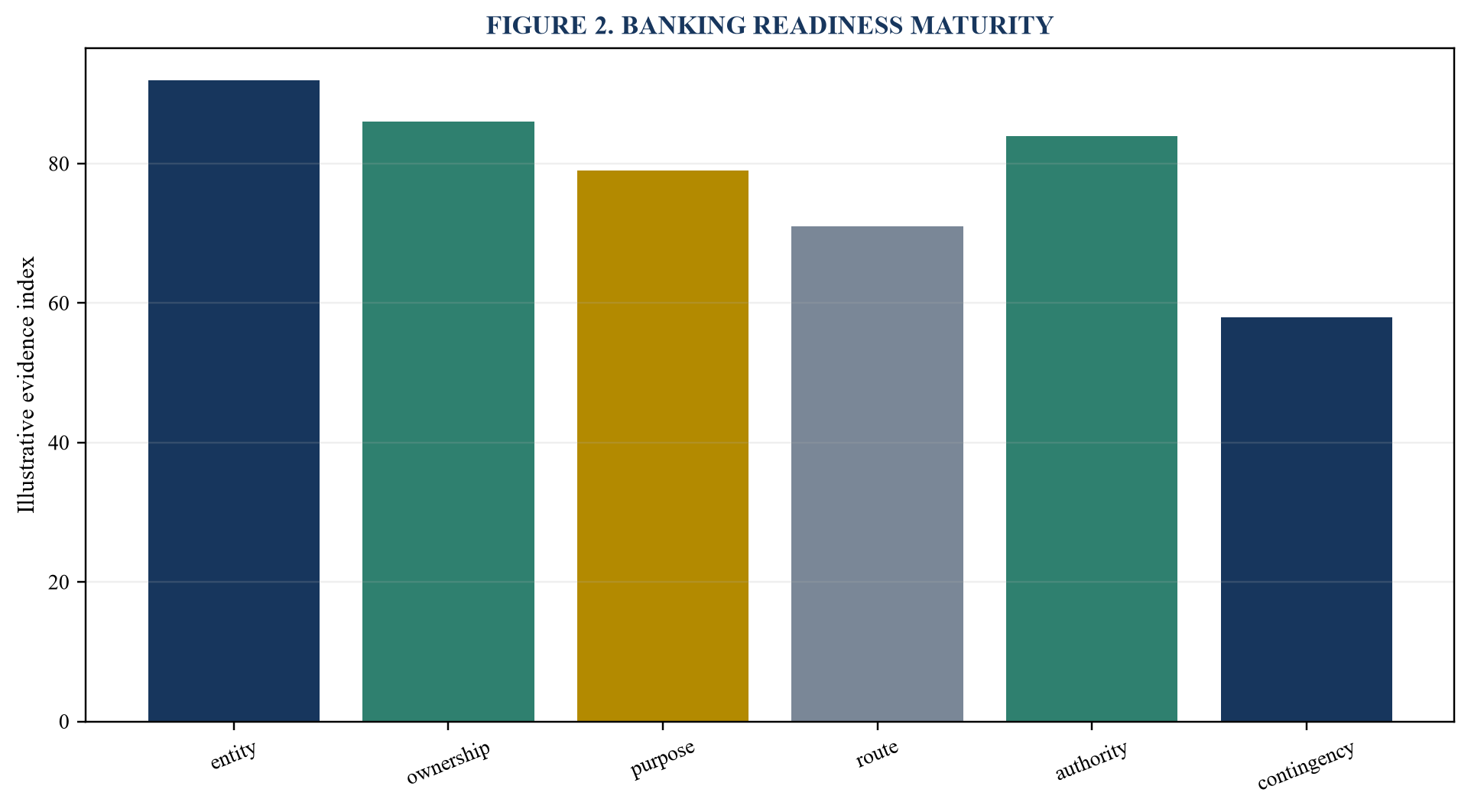
Values are illustrative evidence indices and require company-specific support.
17. Verify beneficial ownership evidence
Reconcile shareholders, controllers, trusts, nominees, source of wealth and source of funds.
The controlled record should identify the relevant customer, revenue stream, contract, cohort, relationship owner, commercial dependency, evidence source, baseline, trend, scenario, control, exception, accountable executive, deadline and approval. The immediate deliverable is a beneficial-ownership evidence pack.
The principal failure occurs when inconsistent ownership records trigger enhanced diligence at completion. Reviewers should connect the evidence to revenue durability, gross margin, cash conversion, renewal probability, switching behaviour, counterparty credit and transaction value; distinguish contractual protection from observed customer behaviour; and test whether the conclusion survives a downside scenario.
The decision pack for verify beneficial ownership evidence should state the commercial question, measurement perimeter, historical evidence, customer-specific facts, forecast logic, sensitivity, management action, buyer implication, residual uncertainty and next gate. Material exceptions should flow into the valuation model, quality-of-earnings work, diligence room, sale-process narrative, transaction protections and board reporting.
18. Screen sanctions and financial crime risk
Assess parties, banks, jurisdictions, vessels, goods, intermediaries and payment routes.
The controlled record should identify the relevant customer, revenue stream, contract, cohort, relationship owner, commercial dependency, evidence source, baseline, trend, scenario, control, exception, accountable executive, deadline and approval. The immediate deliverable is a transaction financial-crime risk assessment.
The principal failure occurs when a late alert blocks the only settlement path. Reviewers should connect the evidence to revenue durability, gross margin, cash conversion, renewal probability, switching behaviour, counterparty credit and transaction value; distinguish contractual protection from observed customer behaviour; and test whether the conclusion survives a downside scenario.
The decision pack for screen sanctions and financial crime risk should state the commercial question, measurement perimeter, historical evidence, customer-specific facts, forecast logic, sensitivity, management action, buyer implication, residual uncertainty and next gate. Material exceptions should flow into the valuation model, quality-of-earnings work, diligence room, sale-process narrative, transaction protections and board reporting.
19. Design the funds flow
Specify payer, payee, bank, currency, amount, sequence, value date, reference and authority for every movement.
The controlled record should identify the relevant customer, revenue stream, contract, cohort, relationship owner, commercial dependency, evidence source, baseline, trend, scenario, control, exception, accountable executive, deadline and approval. The immediate deliverable is an authorised funds-flow memorandum.
The principal failure occurs when purchase price is sent using fragmented or unverified instructions. Reviewers should connect the evidence to revenue durability, gross margin, cash conversion, renewal probability, switching behaviour, counterparty credit and transaction value; distinguish contractual protection from observed customer behaviour; and test whether the conclusion survives a downside scenario.
The decision pack for design the funds flow should state the commercial question, measurement perimeter, historical evidence, customer-specific facts, forecast logic, sensitivity, management action, buyer implication, residual uncertainty and next gate. Material exceptions should flow into the valuation model, quality-of-earnings work, diligence room, sale-process narrative, transaction protections and board reporting.
20. Protect payment instructions
Use controlled channels, dual verification, call-backs, change freezes and fraud escalation.
The controlled record should identify the relevant customer, revenue stream, contract, cohort, relationship owner, commercial dependency, evidence source, baseline, trend, scenario, control, exception, accountable executive, deadline and approval. The immediate deliverable is a payment-instruction control protocol.
The principal failure occurs when payment diversion occurs through compromised email or last-minute account changes. Reviewers should connect the evidence to revenue durability, gross margin, cash conversion, renewal probability, switching behaviour, counterparty credit and transaction value; distinguish contractual protection from observed customer behaviour; and test whether the conclusion survives a downside scenario.
The decision pack for protect payment instructions should state the commercial question, measurement perimeter, historical evidence, customer-specific facts, forecast logic, sensitivity, management action, buyer implication, residual uncertainty and next gate. Material exceptions should flow into the valuation model, quality-of-earnings work, diligence room, sale-process narrative, transaction protections and board reporting.
21. Choose settlement architecture
Compare escrow, paying agent, direct payment, netting, payment-versus-payment and local settlement options.
The controlled record should identify the relevant customer, revenue stream, contract, cohort, relationship owner, commercial dependency, evidence source, baseline, trend, scenario, control, exception, accountable executive, deadline and approval. The immediate deliverable is a settlement-architecture decision paper.
The principal failure occurs when one party releases value before receiving irrevocable consideration. Reviewers should connect the evidence to revenue durability, gross margin, cash conversion, renewal probability, switching behaviour, counterparty credit and transaction value; distinguish contractual protection from observed customer behaviour; and test whether the conclusion survives a downside scenario.
The decision pack for choose settlement architecture should state the commercial question, measurement perimeter, historical evidence, customer-specific facts, forecast logic, sensitivity, management action, buyer implication, residual uncertainty and next gate. Material exceptions should flow into the valuation model, quality-of-earnings work, diligence room, sale-process narrative, transaction protections and board reporting.
22. Define completion funds
Distinguish purchase price, debt payoff, fees, taxes, escrow, leakage and shareholder distribution.
The controlled record should identify the relevant customer, revenue stream, contract, cohort, relationship owner, commercial dependency, evidence source, baseline, trend, scenario, control, exception, accountable executive, deadline and approval. The immediate deliverable is a completion sources-and-uses schedule.
The principal failure occurs when closing cash is double-counted or paid to the wrong priority. Reviewers should connect the evidence to revenue durability, gross margin, cash conversion, renewal probability, switching behaviour, counterparty credit and transaction value; distinguish contractual protection from observed customer behaviour; and test whether the conclusion survives a downside scenario.
The decision pack for define completion funds should state the commercial question, measurement perimeter, historical evidence, customer-specific facts, forecast logic, sensitivity, management action, buyer implication, residual uncertainty and next gate. Material exceptions should flow into the valuation model, quality-of-earnings work, diligence room, sale-process narrative, transaction protections and board reporting.
23. Synchronise time zones and cut-offs
Map bank holidays, currency cut-offs, clearing windows, counsel availability and registry timing.
The controlled record should identify the relevant customer, revenue stream, contract, cohort, relationship owner, commercial dependency, evidence source, baseline, trend, scenario, control, exception, accountable executive, deadline and approval. The immediate deliverable is a global completion timetable.
The principal failure occurs when legal completion occurs after the relevant payment window closes. Reviewers should connect the evidence to revenue durability, gross margin, cash conversion, renewal probability, switching behaviour, counterparty credit and transaction value; distinguish contractual protection from observed customer behaviour; and test whether the conclusion survives a downside scenario.
The decision pack for synchronise time zones and cut-offs should state the commercial question, measurement perimeter, historical evidence, customer-specific facts, forecast logic, sensitivity, management action, buyer implication, residual uncertainty and next gate. Material exceptions should flow into the valuation model, quality-of-earnings work, diligence room, sale-process narrative, transaction protections and board reporting.
24. Control settlement finality
Obtain evidence of irrevocability, value, receipt and legal finality in each payment system.
The controlled record should identify the relevant customer, revenue stream, contract, cohort, relationship owner, commercial dependency, evidence source, baseline, trend, scenario, control, exception, accountable executive, deadline and approval. The immediate deliverable is a settlement-finality checklist.
The principal failure occurs when a payment confirmation is mistaken for final and usable funds. Reviewers should connect the evidence to revenue durability, gross margin, cash conversion, renewal probability, switching behaviour, counterparty credit and transaction value; distinguish contractual protection from observed customer behaviour; and test whether the conclusion survives a downside scenario.
The decision pack for control settlement finality should state the commercial question, measurement perimeter, historical evidence, customer-specific facts, forecast logic, sensitivity, management action, buyer implication, residual uncertainty and next gate. Material exceptions should flow into the valuation model, quality-of-earnings work, diligence room, sale-process narrative, transaction protections and board reporting.
Table 3. Settlement architecture
| Method | Strength | Residual risk |
|---|---|---|
| direct payment | simplicity | timing mismatch |
| escrow | conditional release | bank and insolvency risk |
| paying agent | distribution control | instruction quality |
| PvP or coordinated legs | principal-risk reduction | currency eligibility |
Illustrative analytical design; company-specific evidence and professional advice govern.
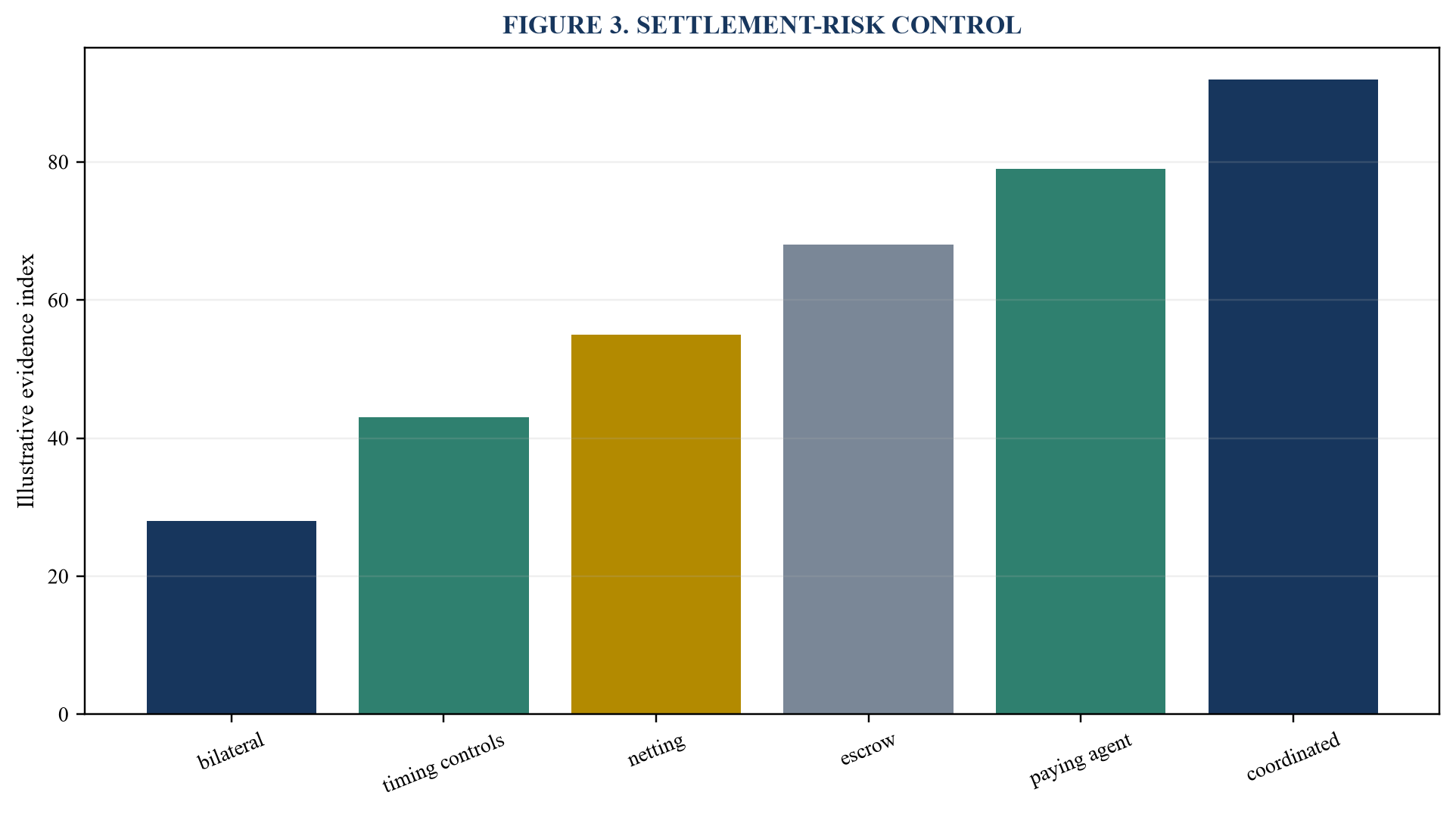
Values are illustrative evidence indices and require company-specific support.
25. Manage correspondent-bank chains
Identify intermediary banks, routing data, deductions, rejection rules and contingency accounts.
The controlled record should identify the relevant customer, revenue stream, contract, cohort, relationship owner, commercial dependency, evidence source, baseline, trend, scenario, control, exception, accountable executive, deadline and approval. The immediate deliverable is a payment-route map.
The principal failure occurs when funds are delayed or returned by an undisclosed correspondent. Reviewers should connect the evidence to revenue durability, gross margin, cash conversion, renewal probability, switching behaviour, counterparty credit and transaction value; distinguish contractual protection from observed customer behaviour; and test whether the conclusion survives a downside scenario.
The decision pack for manage correspondent-bank chains should state the commercial question, measurement perimeter, historical evidence, customer-specific facts, forecast logic, sensitivity, management action, buyer implication, residual uncertainty and next gate. Material exceptions should flow into the valuation model, quality-of-earnings work, diligence room, sale-process narrative, transaction protections and board reporting.
26. Structure escrow and holdbacks
Define amount, currency, release events, investment, fees, tax, insolvency and dispute mechanics.
The controlled record should identify the relevant customer, revenue stream, contract, cohort, relationship owner, commercial dependency, evidence source, baseline, trend, scenario, control, exception, accountable executive, deadline and approval. The immediate deliverable is an escrow economics model.
The principal failure occurs when protected cash becomes trapped, devalued or unavailable after the claim period. Reviewers should connect the evidence to revenue durability, gross margin, cash conversion, renewal probability, switching behaviour, counterparty credit and transaction value; distinguish contractual protection from observed customer behaviour; and test whether the conclusion survives a downside scenario.
The decision pack for structure escrow and holdbacks should state the commercial question, measurement perimeter, historical evidence, customer-specific facts, forecast logic, sensitivity, management action, buyer implication, residual uncertainty and next gate. Material exceptions should flow into the valuation model, quality-of-earnings work, diligence room, sale-process narrative, transaction protections and board reporting.
27. Value contingent consideration
Probability-weight earnouts and deferred payments after FX, tax, credit, control and enforcement risk.
The controlled record should identify the relevant customer, revenue stream, contract, cohort, relationship owner, commercial dependency, evidence source, baseline, trend, scenario, control, exception, accountable executive, deadline and approval. The immediate deliverable is a contingent-value model.
The principal failure occurs when face value is added to proceeds despite material collection risk. Reviewers should connect the evidence to revenue durability, gross margin, cash conversion, renewal probability, switching behaviour, counterparty credit and transaction value; distinguish contractual protection from observed customer behaviour; and test whether the conclusion survives a downside scenario.
The decision pack for value contingent consideration should state the commercial question, measurement perimeter, historical evidence, customer-specific facts, forecast logic, sensitivity, management action, buyer implication, residual uncertainty and next gate. Material exceptions should flow into the valuation model, quality-of-earnings work, diligence room, sale-process narrative, transaction protections and board reporting.
28. Protect rollover equity
Assess instrument rights, dilution, jurisdiction, tax basis, liquidity, governance and exit mechanics.
The controlled record should identify the relevant customer, revenue stream, contract, cohort, relationship owner, commercial dependency, evidence source, baseline, trend, scenario, control, exception, accountable executive, deadline and approval. The immediate deliverable is a rollover-equity risk memorandum.
The principal failure occurs when rollover is treated as cash-equivalent without a credible realisation path. Reviewers should connect the evidence to revenue durability, gross margin, cash conversion, renewal probability, switching behaviour, counterparty credit and transaction value; distinguish contractual protection from observed customer behaviour; and test whether the conclusion survives a downside scenario.
The decision pack for protect rollover equity should state the commercial question, measurement perimeter, historical evidence, customer-specific facts, forecast logic, sensitivity, management action, buyer implication, residual uncertainty and next gate. Material exceptions should flow into the valuation model, quality-of-earnings work, diligence room, sale-process narrative, transaction protections and board reporting.
29. Control debt payoff and security release
Reconcile payoff amounts, accrued interest, break costs, hedges, guarantees, filings and release evidence.
The controlled record should identify the relevant customer, revenue stream, contract, cohort, relationship owner, commercial dependency, evidence source, baseline, trend, scenario, control, exception, accountable executive, deadline and approval. The immediate deliverable is a debt payoff and release checklist.
The principal failure occurs when purchase price is paid while target security remains outstanding. Reviewers should connect the evidence to revenue durability, gross margin, cash conversion, renewal probability, switching behaviour, counterparty credit and transaction value; distinguish contractual protection from observed customer behaviour; and test whether the conclusion survives a downside scenario.
The decision pack for control debt payoff and security release should state the commercial question, measurement perimeter, historical evidence, customer-specific facts, forecast logic, sensitivity, management action, buyer implication, residual uncertainty and next gate. Material exceptions should flow into the valuation model, quality-of-earnings work, diligence room, sale-process narrative, transaction protections and board reporting.
30. Set completion-account mechanics
Define cash, debt, working capital, accounting policies, hierarchy, evidence and dispute procedures.
The controlled record should identify the relevant customer, revenue stream, contract, cohort, relationship owner, commercial dependency, evidence source, baseline, trend, scenario, control, exception, accountable executive, deadline and approval. The immediate deliverable is a completion-accounts protocol.
The principal failure occurs when tax and FX items migrate between price definitions and create double recovery. Reviewers should connect the evidence to revenue durability, gross margin, cash conversion, renewal probability, switching behaviour, counterparty credit and transaction value; distinguish contractual protection from observed customer behaviour; and test whether the conclusion survives a downside scenario.
The decision pack for set completion-account mechanics should state the commercial question, measurement perimeter, historical evidence, customer-specific facts, forecast logic, sensitivity, management action, buyer implication, residual uncertainty and next gate. Material exceptions should flow into the valuation model, quality-of-earnings work, diligence room, sale-process narrative, transaction protections and board reporting.
31. Allocate withholding responsibility
Specify deduction rights, gross-up, relief-at-source, certificates, filings, cooperation and refund economics.
The controlled record should identify the relevant customer, revenue stream, contract, cohort, relationship owner, commercial dependency, evidence source, baseline, trend, scenario, control, exception, accountable executive, deadline and approval. The immediate deliverable is a withholding allocation schedule.
The principal failure occurs when the seller discovers after closing that a material amount was legally withheld. Reviewers should connect the evidence to revenue durability, gross margin, cash conversion, renewal probability, switching behaviour, counterparty credit and transaction value; distinguish contractual protection from observed customer behaviour; and test whether the conclusion survives a downside scenario.
The decision pack for allocate withholding responsibility should state the commercial question, measurement perimeter, historical evidence, customer-specific facts, forecast logic, sensitivity, management action, buyer implication, residual uncertainty and next gate. Material exceptions should flow into the valuation model, quality-of-earnings work, diligence room, sale-process narrative, transaction protections and board reporting.
32. Plan tax payments and reserves
Estimate liabilities, instalments, filing dates, audits, indemnities and shareholder reserves.
The controlled record should identify the relevant customer, revenue stream, contract, cohort, relationship owner, commercial dependency, evidence source, baseline, trend, scenario, control, exception, accountable executive, deadline and approval. The immediate deliverable is a post-completion tax reserve policy.
The principal failure occurs when all proceeds are distributed before known obligations mature. Reviewers should connect the evidence to revenue durability, gross margin, cash conversion, renewal probability, switching behaviour, counterparty credit and transaction value; distinguish contractual protection from observed customer behaviour; and test whether the conclusion survives a downside scenario.
The decision pack for plan tax payments and reserves should state the commercial question, measurement perimeter, historical evidence, customer-specific facts, forecast logic, sensitivity, management action, buyer implication, residual uncertainty and next gate. Material exceptions should flow into the valuation model, quality-of-earnings work, diligence room, sale-process narrative, transaction protections and board reporting.
Table 4. Repatriation pathways
| Route | Required evidence | Value risk |
|---|---|---|
| dividend | reserves and withholding | tax leakage |
| capital reduction | company-law approval | delay |
| loan repayment | valid debt and pricing | recharacterisation |
| local reinvestment | mandate and liquidity | trapped value |
Illustrative analytical design; company-specific evidence and professional advice govern.
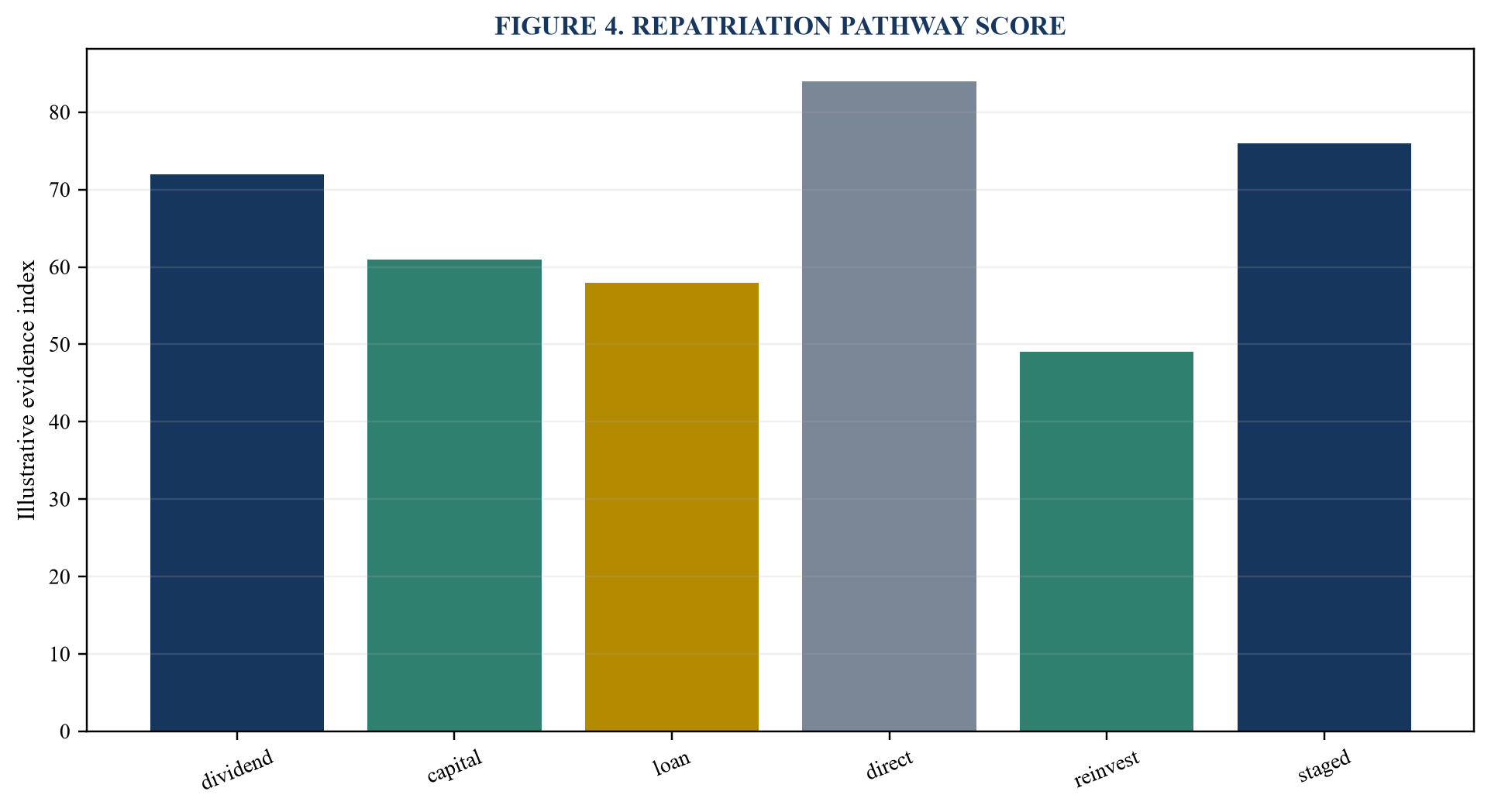
Values are illustrative evidence indices and require company-specific support.
33. Model repatriation pathways
Compare dividends, capital reductions, loan repayment, liquidation, local reinvestment and direct shareholder payment.
The controlled record should identify the relevant customer, revenue stream, contract, cohort, relationship owner, commercial dependency, evidence source, baseline, trend, scenario, control, exception, accountable executive, deadline and approval. The immediate deliverable is a repatriation options model.
The principal failure occurs when cash takes an inefficient route that triggers avoidable delay or tax. Reviewers should connect the evidence to revenue durability, gross margin, cash conversion, renewal probability, switching behaviour, counterparty credit and transaction value; distinguish contractual protection from observed customer behaviour; and test whether the conclusion survives a downside scenario.
The decision pack for model repatriation pathways should state the commercial question, measurement perimeter, historical evidence, customer-specific facts, forecast logic, sensitivity, management action, buyer implication, residual uncertainty and next gate. Material exceptions should flow into the valuation model, quality-of-earnings work, diligence room, sale-process narrative, transaction protections and board reporting.
34. Test distributable reserves and solvency
Verify company-law authority, accounts, capital maintenance, creditor protection and approvals.
The controlled record should identify the relevant customer, revenue stream, contract, cohort, relationship owner, commercial dependency, evidence source, baseline, trend, scenario, control, exception, accountable executive, deadline and approval. The immediate deliverable is a lawful-distribution certificate.
The principal failure occurs when cash is present but cannot lawfully be distributed. Reviewers should connect the evidence to revenue durability, gross margin, cash conversion, renewal probability, switching behaviour, counterparty credit and transaction value; distinguish contractual protection from observed customer behaviour; and test whether the conclusion survives a downside scenario.
The decision pack for test distributable reserves and solvency should state the commercial question, measurement perimeter, historical evidence, customer-specific facts, forecast logic, sensitivity, management action, buyer implication, residual uncertainty and next gate. Material exceptions should flow into the valuation model, quality-of-earnings work, diligence room, sale-process narrative, transaction protections and board reporting.
35. Run scenario and sensitivity analysis
Stress price, FX, tax, withholding, delay, trapped cash, failed hedge and contingent payment.
The controlled record should identify the relevant customer, revenue stream, contract, cohort, relationship owner, commercial dependency, evidence source, baseline, trend, scenario, control, exception, accountable executive, deadline and approval. The immediate deliverable is a quantified proceeds scenario model.
The principal failure occurs when the chosen bid ceases to lead after modest cross-border friction. Reviewers should connect the evidence to revenue durability, gross margin, cash conversion, renewal probability, switching behaviour, counterparty credit and transaction value; distinguish contractual protection from observed customer behaviour; and test whether the conclusion survives a downside scenario.
The decision pack for run scenario and sensitivity analysis should state the commercial question, measurement perimeter, historical evidence, customer-specific facts, forecast logic, sensitivity, management action, buyer implication, residual uncertainty and next gate. Material exceptions should flow into the valuation model, quality-of-earnings work, diligence room, sale-process narrative, transaction protections and board reporting.
36. Compare bids on certainty-adjusted value
Score net proceeds, timing, financing, payment route, conditions, tax cooperation and enforceability.
The controlled record should identify the relevant customer, revenue stream, contract, cohort, relationship owner, commercial dependency, evidence source, baseline, trend, scenario, control, exception, accountable executive, deadline and approval. The immediate deliverable is a certainty-adjusted bid comparison.
The principal failure occurs when the board selects the highest headline bid with the weakest conversion into cash. Reviewers should connect the evidence to revenue durability, gross margin, cash conversion, renewal probability, switching behaviour, counterparty credit and transaction value; distinguish contractual protection from observed customer behaviour; and test whether the conclusion survives a downside scenario.
The decision pack for compare bids on certainty-adjusted value should state the commercial question, measurement perimeter, historical evidence, customer-specific facts, forecast logic, sensitivity, management action, buyer implication, residual uncertainty and next gate. Material exceptions should flow into the valuation model, quality-of-earnings work, diligence room, sale-process narrative, transaction protections and board reporting.
37. Draft completion evidence gates
Require approvals, certificates, banking clearance, hedge readiness, funds, releases and signed documents.
The controlled record should identify the relevant customer, revenue stream, contract, cohort, relationship owner, commercial dependency, evidence source, baseline, trend, scenario, control, exception, accountable executive, deadline and approval. The immediate deliverable is a completion conditions matrix.
The principal failure occurs when the parties improvise critical completion evidence during the closing call. Reviewers should connect the evidence to revenue durability, gross margin, cash conversion, renewal probability, switching behaviour, counterparty credit and transaction value; distinguish contractual protection from observed customer behaviour; and test whether the conclusion survives a downside scenario.
The decision pack for draft completion evidence gates should state the commercial question, measurement perimeter, historical evidence, customer-specific facts, forecast logic, sensitivity, management action, buyer implication, residual uncertainty and next gate. Material exceptions should flow into the valuation model, quality-of-earnings work, diligence room, sale-process narrative, transaction protections and board reporting.
38. Prepare failure playbooks
Define responses to blocked payments, wrong currency, failed hedge, sanctions alert, tax challenge, bank outage and delayed registry.
The controlled record should identify the relevant customer, revenue stream, contract, cohort, relationship owner, commercial dependency, evidence source, baseline, trend, scenario, control, exception, accountable executive, deadline and approval. The immediate deliverable is a cross-border completion contingency plan.
The principal failure occurs when a single operational failure forces an unplanned waiver or unsecured completion. Reviewers should connect the evidence to revenue durability, gross margin, cash conversion, renewal probability, switching behaviour, counterparty credit and transaction value; distinguish contractual protection from observed customer behaviour; and test whether the conclusion survives a downside scenario.
The decision pack for prepare failure playbooks should state the commercial question, measurement perimeter, historical evidence, customer-specific facts, forecast logic, sensitivity, management action, buyer implication, residual uncertainty and next gate. Material exceptions should flow into the valuation model, quality-of-earnings work, diligence room, sale-process narrative, transaction protections and board reporting.
39. Close and reconcile proceeds
Match legal completion, bank value, FX execution, deductions, escrow, debt payoff and shareholder receipts.
The controlled record should identify the relevant customer, revenue stream, contract, cohort, relationship owner, commercial dependency, evidence source, baseline, trend, scenario, control, exception, accountable executive, deadline and approval. The immediate deliverable is a signed completion reconciliation.
The principal failure occurs when unexplained differences survive after closing and impair tax reporting. Reviewers should connect the evidence to revenue durability, gross margin, cash conversion, renewal probability, switching behaviour, counterparty credit and transaction value; distinguish contractual protection from observed customer behaviour; and test whether the conclusion survives a downside scenario.
The decision pack for close and reconcile proceeds should state the commercial question, measurement perimeter, historical evidence, customer-specific facts, forecast logic, sensitivity, management action, buyer implication, residual uncertainty and next gate. Material exceptions should flow into the valuation model, quality-of-earnings work, diligence room, sale-process narrative, transaction protections and board reporting.
40. Govern post-closing cash
Track refunds, indemnities, earnouts, escrow releases, tax audits, FX conversions and distributions.
The controlled record should identify the relevant customer, revenue stream, contract, cohort, relationship owner, commercial dependency, evidence source, baseline, trend, scenario, control, exception, accountable executive, deadline and approval. The immediate deliverable is a post-closing proceeds dashboard.
The principal failure occurs when residual value is lost through weak ownership after the transaction team disbands. Reviewers should connect the evidence to revenue durability, gross margin, cash conversion, renewal probability, switching behaviour, counterparty credit and transaction value; distinguish contractual protection from observed customer behaviour; and test whether the conclusion survives a downside scenario.
The decision pack for govern post-closing cash should state the commercial question, measurement perimeter, historical evidence, customer-specific facts, forecast logic, sensitivity, management action, buyer implication, residual uncertainty and next gate. Material exceptions should flow into the valuation model, quality-of-earnings work, diligence room, sale-process narrative, transaction protections and board reporting.
Table 5. Completion close record
| Outcome | Measure | Evidence |
|---|---|---|
| value | net shareholder cash | reconciled bridge |
| certainty | final settled funds | bank evidence |
| compliance | tax and control steps | certificates |
| residuals | future receipts and reserves | owned dashboard |
Illustrative analytical design; company-specific evidence and professional advice govern.
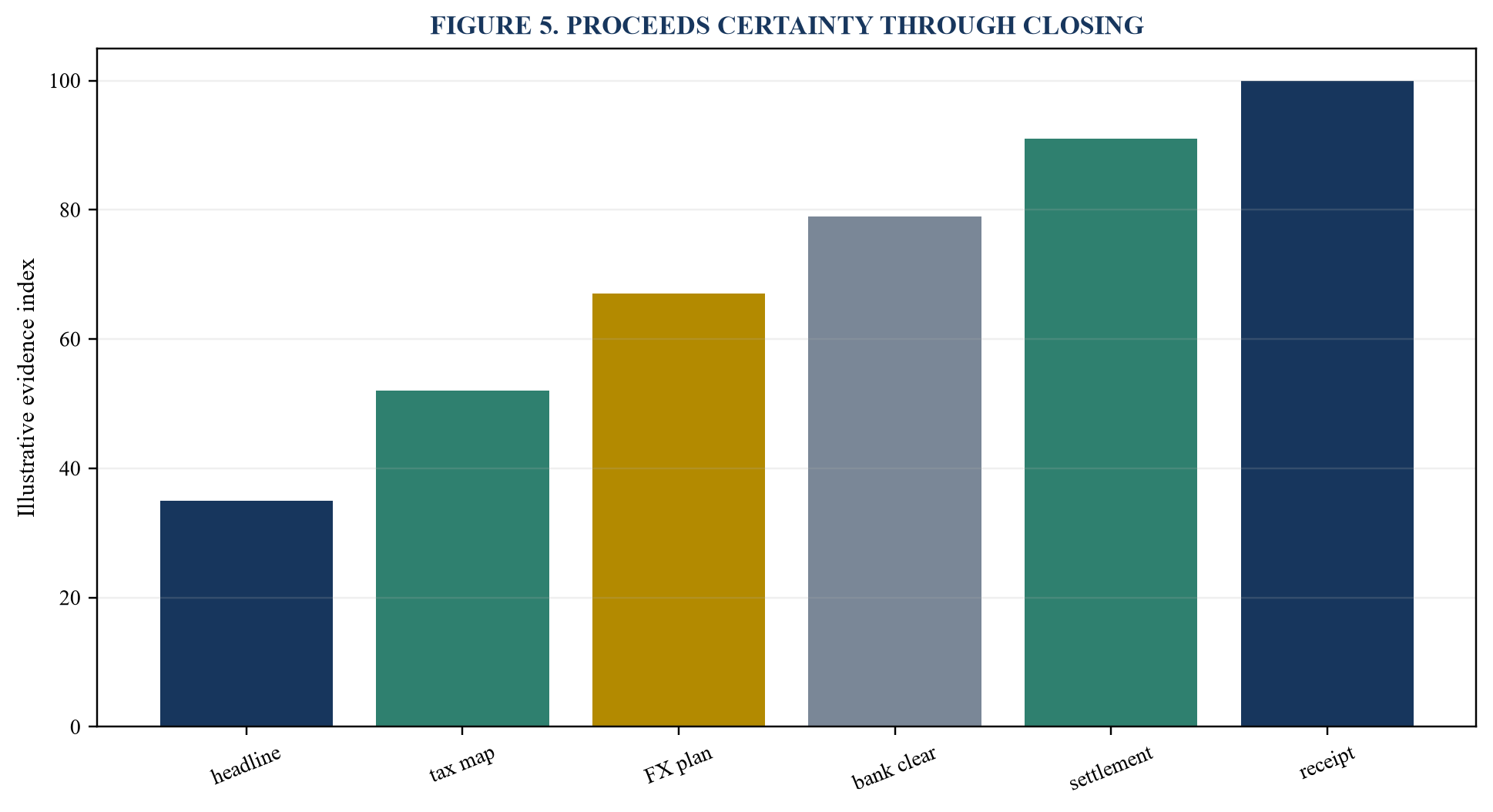
Values are illustrative evidence indices and require company-specific support.
References
- OECD, Model Tax Convention on Income and on Capital, https://www.oecd.org/en/topics/sub-issues/oecd-model-tax-convention-on-income-and-on-capital.html
- OECD, BEPS Multilateral Instrument, https://www.oecd.org/en/topics/sub-issues/beps-multilateral-instrument.html
- OECD, Preventing tax treaty abuse, https://www.oecd.org/en/topics/sub-issues/preventing-tax-treaty-abuse.html
- OECD, Multilateral Convention to Implement Tax Treaty Related Measures to Prevent BEPS, https://legalinstruments.oecd.org/public/doc/358/body-text.en.html
- UAE Federal Tax Authority, Corporate Tax FAQs, https://tax.gov.ae/en/taxes/corporate.tax/faqs.aspx
- UAE Federal Tax Authority, Basis of Taxation for Non-Residents, https://tax.gov.ae/en/taxes/corporate.tax/corporate.tax.topics/basis.of.taxation.nonresidents.aspx
- UAE Federal Tax Authority, Taxation of Foreign Source Income guide, https://tax.gov.ae/Datafolder/Files/Guides/CT/Taxation%20of%20Foreign%20Source%20Income%20-%20EN%20-%2016%2011%202023.pdf
- UK HM Revenue and Customs, Substantial Shareholdings Exemption guidance, https://www.gov.uk/hmrc-internal-manuals/capital-gains-manual/cg53005
- UK HM Revenue and Customs, Foreign exchange differences on shares, https://www.gov.uk/hmrc-internal-manuals/corporate-finance-manual/cfm61150
- UK HM Revenue and Customs, Derivative contracts used to hedge share transactions, https://www.gov.uk/hmrc-internal-manuals/corporate-finance-manual/cfm62905
- International Monetary Fund, Beyond Binary: A Policy-Intensity Measure of Capital Flow Management, https://www.imf.org/-/media/files/publications/wp/2026/english/wpiea2026021-source-pdf.pdf
- International Monetary Fund, Taxonomy of Capital Flow Management Measures, https://www.imf.org/en/-/media/files/data/2024/imf-2023-taxonomy-of-capital-flow-management-measures-for-publication.pdf
- Bank for International Settlements, Foreign exchange risks, https://www.bis.org/committees/bcbs/basel-consolidated-guidelines/module/rma/20
- Bank for International Settlements, Uncovering FX settlement risk: 2025 Triennial Survey, https://www.bis.org/publications/uncovering-fx-settlement-risk-new-measures-2025-bis-triennial-survey
- Bank for International Settlements, FX settlement risk mitigation in wholesale cross-border payments, https://www.bis.org/cpmi/pietf/fx_risk_mitigation.pdf
- Bank for International Settlements, Facilitating increased adoption of payment versus payment, https://www.bis.org/publications/facilitating-increased-adoption-payment-versus-payment-pvp-final-report
- Bank for International Settlements, Supervisory guidance for managing FX settlement risk, https://www.bis.org/publ/bcbs241.pdf
- Financial Action Task Force, The FATF Recommendations, https://www.fatf-gafi.org/en/publications/Fatfrecommendations/Fatf-recommendations.html
- Financial Action Task Force, Guidance on Beneficial Ownership of Legal Persons, https://www.fatf-gafi.org/en/publications/Fatfrecommendations/Guidance-Beneficial-Ownership-Legal-Persons.html
- European Central Bank, Payments and markets glossary, https://www.ecb.europa.eu/services/glossary/html/act7c.en.html
- International Valuation Standards Council, International Valuation Standards, https://www.ivsc.org/standards/
- IFRS Foundation, IAS 21 The Effects of Changes in Foreign Exchange Rates, https://www.ifrs.org/issued-standards/list-of-standards/ias-21-the-effects-of-changes-in-foreign-exchange-rates/
- IFRS Foundation, IFRS 9 Financial Instruments, https://www.ifrs.org/issued-standards/list-of-standards/ifrs-9-financial-instruments/
- IFRS Foundation, IFRS 3 Business Combinations, https://www.ifrs.org/issued-standards/list-of-standards/ifrs-3-business-combinations/
- Committee of Sponsoring Organizations of the Treadway Commission, Enterprise Risk Management, https://www.coso.org/enterprise-risk-management
- World Bank, Remittance and cross-border payment resources, https://www.worldbank.org/en/topic/financialinclusion/brief/remittances-prices-worldwide
