

1. Define the retention question
Test whether growth reflects durable customer economics or replacement of deteriorating cohorts.
The diligence team should reconcile transaction perimeter, revenue model, customer records, contracts and acquisition case. Each conclusion records the accountable owner, source, period, cohort definition, evidence, financial consequence, control and unresolved exception. The immediate output is a cohort-diligence mandate.
Customer durability must be proved through reconciled contracts, billing, revenue, usage and cash evidence. Reviewers test identity, retention, concentration, contribution and downside response against native records and observed performance. Cohort definitions, accounting policy, transaction perimeter, data rights and applicable law control each conclusion.
Material gaps require an owner, corrective action, validation test, advice and decision date. Consequences flow through sustainable growth, margin, cash, capital needs, valuation, leverage and transaction protection. Residual risk remains visible until the cohort evidence is reconciled, remedies are executable and the authorised decision-makers approve the next gate.
2. Set the customer perimeter
Reconcile legal customer, billing account, contract, product user and economic buyer identifiers.
The diligence team should reconcile CRM, billing, contracts, ERP, product data and master-data rules. Each conclusion records the accountable owner, source, period, cohort definition, evidence, financial consequence, control and unresolved exception. The immediate output is a customer-identity map.
Customer durability must be proved through reconciled contracts, billing, revenue, usage and cash evidence. Reviewers test identity, retention, concentration, contribution and downside response against native records and observed performance. Cohort definitions, accounting policy, transaction perimeter, data rights and applicable law control each conclusion.
Material gaps require an owner, corrective action, validation test, advice and decision date. Consequences flow through sustainable growth, margin, cash, capital needs, valuation, leverage and transaction protection. Residual risk remains visible until the cohort evidence is reconciled, remedies are executable and the authorised decision-makers approve the next gate.
3. Build the revenue ledger
Reconcile customer-level invoiced and recognised revenue to the general ledger and financial statements.
The diligence team should reconcile billing, revenue subledger, trial balance, journals and policies. Each conclusion records the accountable owner, source, period, cohort definition, evidence, financial consequence, control and unresolved exception. The immediate output is a customer-revenue reconciliation.
Customer durability must be proved through reconciled contracts, billing, revenue, usage and cash evidence. Reviewers test identity, retention, concentration, contribution and downside response against native records and observed performance. Cohort definitions, accounting policy, transaction perimeter, data rights and applicable law control each conclusion.
Material gaps require an owner, corrective action, validation test, advice and decision date. Consequences flow through sustainable growth, margin, cash, capital needs, valuation, leverage and transaction protection. Residual risk remains visible until the cohort evidence is reconciled, remedies are executable and the authorised decision-makers approve the next gate.
4. Create stable cohort keys
Assign acquisition date, product, channel, geography, segment and contract attributes without rewriting history.
The diligence team should reconcile CRM, contracts, product catalogue, channels and master data. Each conclusion records the accountable owner, source, period, cohort definition, evidence, financial consequence, control and unresolved exception. The immediate output is a cohort-key dictionary.
Customer durability must be proved through reconciled contracts, billing, revenue, usage and cash evidence. Reviewers test identity, retention, concentration, contribution and downside response against native records and observed performance. Cohort definitions, accounting policy, transaction perimeter, data rights and applicable law control each conclusion.
Material gaps require an owner, corrective action, validation test, advice and decision date. Consequences flow through sustainable growth, margin, cash, capital needs, valuation, leverage and transaction protection. Residual risk remains visible until the cohort evidence is reconciled, remedies are executable and the authorised decision-makers approve the next gate.
5. Define churn events
Distinguish logo loss, contraction, product cancellation, non-renewal, inactivity and economic churn.
The diligence team should reconcile contracts, usage, billing, cancellations, collections and policy. Each conclusion records the accountable owner, source, period, cohort definition, evidence, financial consequence, control and unresolved exception. The immediate output is a churn-event taxonomy.
Customer durability must be proved through reconciled contracts, billing, revenue, usage and cash evidence. Reviewers test identity, retention, concentration, contribution and downside response against native records and observed performance. Cohort definitions, accounting policy, transaction perimeter, data rights and applicable law control each conclusion.
Material gaps require an owner, corrective action, validation test, advice and decision date. Consequences flow through sustainable growth, margin, cash, capital needs, valuation, leverage and transaction protection. Residual risk remains visible until the cohort evidence is reconciled, remedies are executable and the authorised decision-makers approve the next gate.
6. Define retention metrics
Specify gross revenue retention, net revenue retention, logo retention, renewal, contraction and expansion consistently.
The diligence team should reconcile cohort definitions, billing, contracts, FX and reporting policy. Each conclusion records the accountable owner, source, period, cohort definition, evidence, financial consequence, control and unresolved exception. The immediate output is a retention-metric protocol.
Customer durability must be proved through reconciled contracts, billing, revenue, usage and cash evidence. Reviewers test identity, retention, concentration, contribution and downside response against native records and observed performance. Cohort definitions, accounting policy, transaction perimeter, data rights and applicable law control each conclusion.
Material gaps require an owner, corrective action, validation test, advice and decision date. Consequences flow through sustainable growth, margin, cash, capital needs, valuation, leverage and transaction protection. Residual risk remains visible until the cohort evidence is reconciled, remedies are executable and the authorised decision-makers approve the next gate.
7. Separate bookings from revenue
Reconcile signed commitments, order intake, billings, recognised revenue and cash by cohort.
The diligence team should reconcile contracts, bookings, invoices, revenue schedules and bank receipts. Each conclusion records the accountable owner, source, period, cohort definition, evidence, financial consequence, control and unresolved exception. The immediate output is a bookings-to-cash bridge.
Customer durability must be proved through reconciled contracts, billing, revenue, usage and cash evidence. Reviewers test identity, retention, concentration, contribution and downside response against native records and observed performance. Cohort definitions, accounting policy, transaction perimeter, data rights and applicable law control each conclusion.
Material gaps require an owner, corrective action, validation test, advice and decision date. Consequences flow through sustainable growth, margin, cash, capital needs, valuation, leverage and transaction protection. Residual risk remains visible until the cohort evidence is reconciled, remedies are executable and the authorised decision-makers approve the next gate.
8. Rebuild cohort history
Create vintage tables that preserve starting populations and trace revenue through time.
The diligence team should reconcile customer ledger, acquisition dates, monthly revenue and master-data changes. Each conclusion records the accountable owner, source, period, cohort definition, evidence, financial consequence, control and unresolved exception. The immediate output is a cohort history.
Customer durability must be proved through reconciled contracts, billing, revenue, usage and cash evidence. Reviewers test identity, retention, concentration, contribution and downside response against native records and observed performance. Cohort definitions, accounting policy, transaction perimeter, data rights and applicable law control each conclusion.
Material gaps require an owner, corrective action, validation test, advice and decision date. Consequences flow through sustainable growth, margin, cash, capital needs, valuation, leverage and transaction protection. Residual risk remains visible until the cohort evidence is reconciled, remedies are executable and the authorised decision-makers approve the next gate.
Table 1. Cohort data architecture
| Layer | Primary key | Control |
|---|---|---|
| customer | economic buyer | identity map |
| contract | agreement | term and rights |
| billing | invoice account | ledger tie-out |
| product | entitlement | usage mapping |
Illustrative programme design; company-specific facts and authorised advice govern.
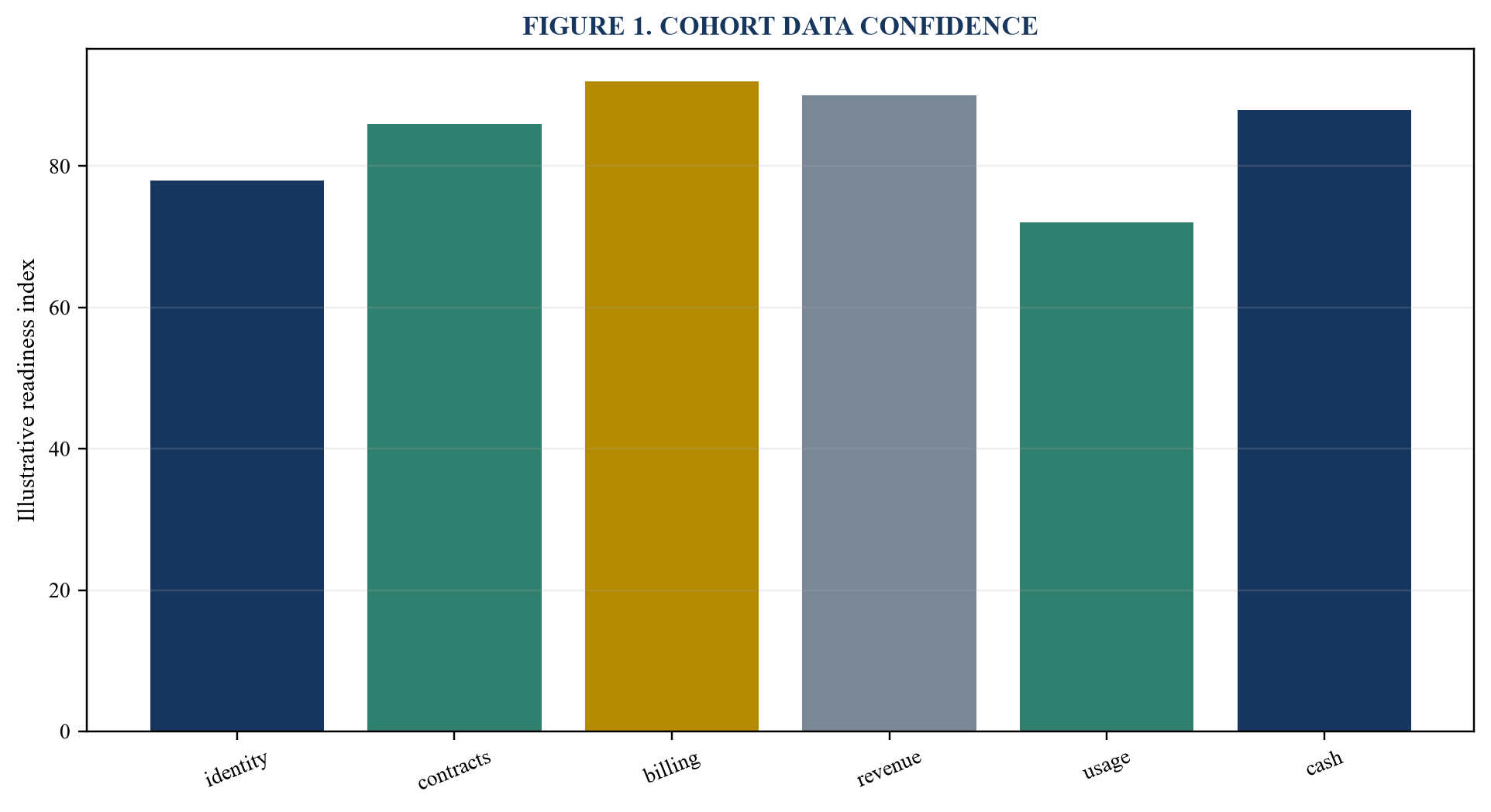
Values are illustrative readiness indices and require company-specific evidence.
9. Test aggregate growth
Bridge reported growth into new logos, price, volume, mix, expansion, contraction, churn and currency.
The diligence team should reconcile revenue ledger, cohorts, price lists, usage and FX. Each conclusion records the accountable owner, source, period, cohort definition, evidence, financial consequence, control and unresolved exception. The immediate output is a growth decomposition.
Customer durability must be proved through reconciled contracts, billing, revenue, usage and cash evidence. Reviewers test identity, retention, concentration, contribution and downside response against native records and observed performance. Cohort definitions, accounting policy, transaction perimeter, data rights and applicable law control each conclusion.
Material gaps require an owner, corrective action, validation test, advice and decision date. Consequences flow through sustainable growth, margin, cash, capital needs, valuation, leverage and transaction protection. Residual risk remains visible until the cohort evidence is reconciled, remedies are executable and the authorised decision-makers approve the next gate.
10. Measure gross retention
Calculate revenue retained before expansion and expose the economic cost of customer deterioration.
The diligence team should reconcile cohort revenue, cancellations, contractions, credits and policy. Each conclusion records the accountable owner, source, period, cohort definition, evidence, financial consequence, control and unresolved exception. The immediate output is a gross-retention schedule.
Customer durability must be proved through reconciled contracts, billing, revenue, usage and cash evidence. Reviewers test identity, retention, concentration, contribution and downside response against native records and observed performance. Cohort definitions, accounting policy, transaction perimeter, data rights and applicable law control each conclusion.
Material gaps require an owner, corrective action, validation test, advice and decision date. Consequences flow through sustainable growth, margin, cash, capital needs, valuation, leverage and transaction protection. Residual risk remains visible until the cohort evidence is reconciled, remedies are executable and the authorised decision-makers approve the next gate.
11. Measure net retention
Add expansion and cross-sell to gross retention while keeping the underlying loss visible.
The diligence team should reconcile cohort revenue, products, usage, price and account history. Each conclusion records the accountable owner, source, period, cohort definition, evidence, financial consequence, control and unresolved exception. The immediate output is a net-retention schedule.
Customer durability must be proved through reconciled contracts, billing, revenue, usage and cash evidence. Reviewers test identity, retention, concentration, contribution and downside response against native records and observed performance. Cohort definitions, accounting policy, transaction perimeter, data rights and applicable law control each conclusion.
Material gaps require an owner, corrective action, validation test, advice and decision date. Consequences flow through sustainable growth, margin, cash, capital needs, valuation, leverage and transaction protection. Residual risk remains visible until the cohort evidence is reconciled, remedies are executable and the authorised decision-makers approve the next gate.
12. Measure logo retention
Track customer counts separately from revenue so concentration cannot mask broad attrition.
The diligence team should reconcile customer identity, cohort status, mergers, duplicates and closures. Each conclusion records the accountable owner, source, period, cohort definition, evidence, financial consequence, control and unresolved exception. The immediate output is a logo-retention schedule.
Customer durability must be proved through reconciled contracts, billing, revenue, usage and cash evidence. Reviewers test identity, retention, concentration, contribution and downside response against native records and observed performance. Cohort definitions, accounting policy, transaction perimeter, data rights and applicable law control each conclusion.
Material gaps require an owner, corrective action, validation test, advice and decision date. Consequences flow through sustainable growth, margin, cash, capital needs, valuation, leverage and transaction protection. Residual risk remains visible until the cohort evidence is reconciled, remedies are executable and the authorised decision-makers approve the next gate.
13. Control reactivation
Prevent returning customers or renamed accounts from being misclassified as new acquisition.
The diligence team should reconcile identity map, dormant history, CRM, billing and contracts. Each conclusion records the accountable owner, source, period, cohort definition, evidence, financial consequence, control and unresolved exception. The immediate output is a reactivation control.
Customer durability must be proved through reconciled contracts, billing, revenue, usage and cash evidence. Reviewers test identity, retention, concentration, contribution and downside response against native records and observed performance. Cohort definitions, accounting policy, transaction perimeter, data rights and applicable law control each conclusion.
Material gaps require an owner, corrective action, validation test, advice and decision date. Consequences flow through sustainable growth, margin, cash, capital needs, valuation, leverage and transaction protection. Residual risk remains visible until the cohort evidence is reconciled, remedies are executable and the authorised decision-makers approve the next gate.
14. Control migration
Track product, plan, channel and legal-entity migrations without creating artificial churn or new revenue.
The diligence team should reconcile product mapping, contracts, billing changes, CRM and usage. Each conclusion records the accountable owner, source, period, cohort definition, evidence, financial consequence, control and unresolved exception. The immediate output is a migration bridge.
Customer durability must be proved through reconciled contracts, billing, revenue, usage and cash evidence. Reviewers test identity, retention, concentration, contribution and downside response against native records and observed performance. Cohort definitions, accounting policy, transaction perimeter, data rights and applicable law control each conclusion.
Material gaps require an owner, corrective action, validation test, advice and decision date. Consequences flow through sustainable growth, margin, cash, capital needs, valuation, leverage and transaction protection. Residual risk remains visible until the cohort evidence is reconciled, remedies are executable and the authorised decision-makers approve the next gate.
15. Normalise acquisitions
Separate acquired customer books from organic acquisition, retention and expansion.
The diligence team should reconcile deal records, acquisition date, customer mapping and purchase accounting. Each conclusion records the accountable owner, source, period, cohort definition, evidence, financial consequence, control and unresolved exception. The immediate output is an acquired-cohort bridge.
Customer durability must be proved through reconciled contracts, billing, revenue, usage and cash evidence. Reviewers test identity, retention, concentration, contribution and downside response against native records and observed performance. Cohort definitions, accounting policy, transaction perimeter, data rights and applicable law control each conclusion.
Material gaps require an owner, corrective action, validation test, advice and decision date. Consequences flow through sustainable growth, margin, cash, capital needs, valuation, leverage and transaction protection. Residual risk remains visible until the cohort evidence is reconciled, remedies are executable and the authorised decision-makers approve the next gate.
16. Normalise divestments
Remove sold or discontinued customer populations consistently from periods and denominators.
The diligence team should reconcile disposal perimeter, customer map, revenue and reporting policy. Each conclusion records the accountable owner, source, period, cohort definition, evidence, financial consequence, control and unresolved exception. The immediate output is a divested-cohort bridge.
Customer durability must be proved through reconciled contracts, billing, revenue, usage and cash evidence. Reviewers test identity, retention, concentration, contribution and downside response against native records and observed performance. Cohort definitions, accounting policy, transaction perimeter, data rights and applicable law control each conclusion.
Material gaps require an owner, corrective action, validation test, advice and decision date. Consequences flow through sustainable growth, margin, cash, capital needs, valuation, leverage and transaction protection. Residual risk remains visible until the cohort evidence is reconciled, remedies are executable and the authorised decision-makers approve the next gate.
Table 2. Retention metric definitions
| Metric | Numerator | Primary warning |
|---|---|---|
| logo retention | remaining customers | small-account churn |
| gross retention | retained starting revenue | contraction |
| net retention | retained plus expansion | loss masked by upsell |
| renewal | renewed eligible contracts | timing bias |
Illustrative programme design; company-specific facts and authorised advice govern.
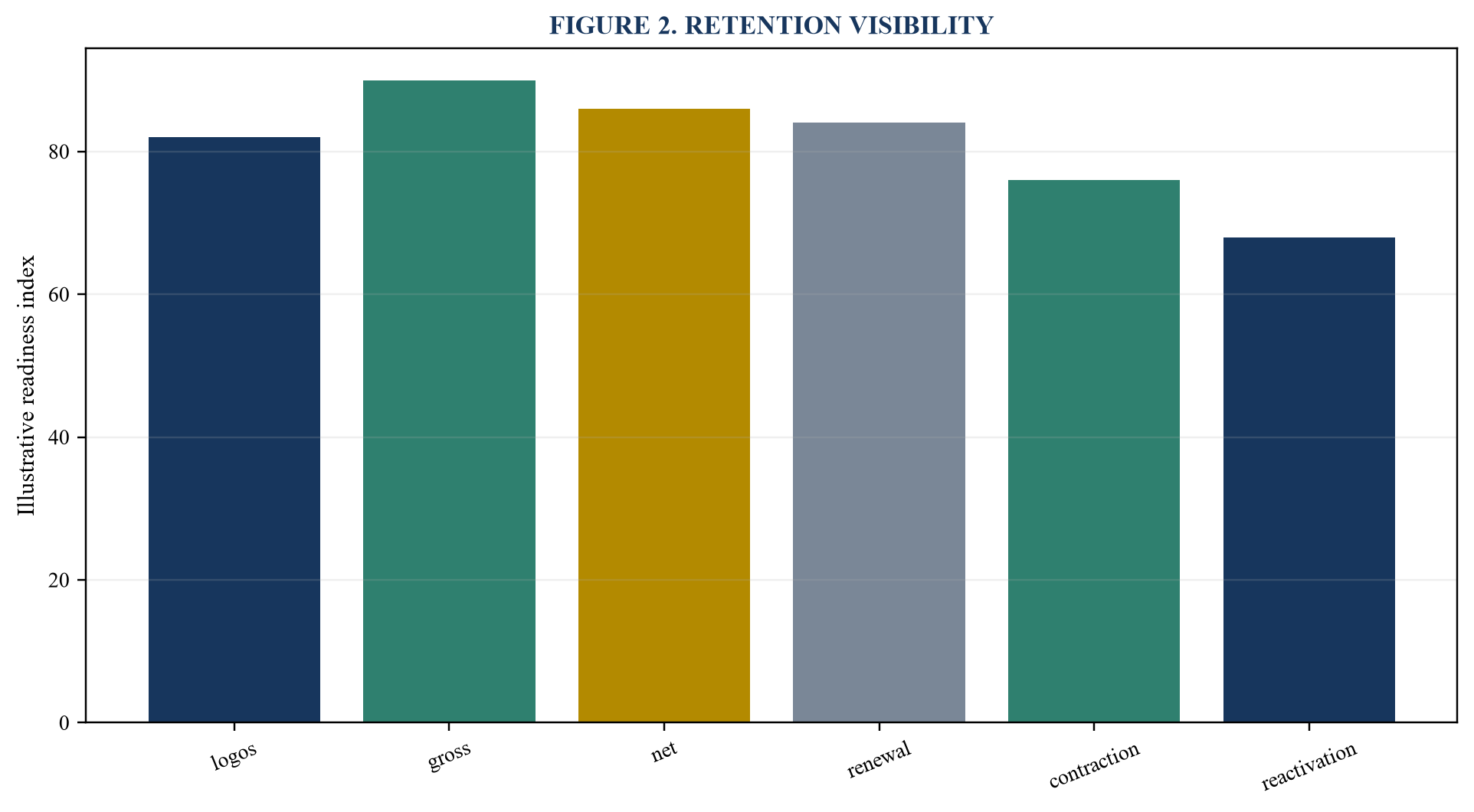
Values are illustrative readiness indices and require company-specific evidence.
17. Normalise currency
Separate exchange-rate movement from price, usage, expansion and contraction.
The diligence team should reconcile transaction currency, functional currency, rates and revenue history. Each conclusion records the accountable owner, source, period, cohort definition, evidence, financial consequence, control and unresolved exception. The immediate output is a constant-currency bridge.
Customer durability must be proved through reconciled contracts, billing, revenue, usage and cash evidence. Reviewers test identity, retention, concentration, contribution and downside response against native records and observed performance. Cohort definitions, accounting policy, transaction perimeter, data rights and applicable law control each conclusion.
Material gaps require an owner, corrective action, validation test, advice and decision date. Consequences flow through sustainable growth, margin, cash, capital needs, valuation, leverage and transaction protection. Residual risk remains visible until the cohort evidence is reconciled, remedies are executable and the authorised decision-makers approve the next gate.
18. Test price-led growth
Measure list, contracted and realised price changes by cohort and identify discounting or churn response.
The diligence team should reconcile contracts, invoices, price lists, credits and customer outcomes. Each conclusion records the accountable owner, source, period, cohort definition, evidence, financial consequence, control and unresolved exception. The immediate output is a price-realisation analysis.
Customer durability must be proved through reconciled contracts, billing, revenue, usage and cash evidence. Reviewers test identity, retention, concentration, contribution and downside response against native records and observed performance. Cohort definitions, accounting policy, transaction perimeter, data rights and applicable law control each conclusion.
Material gaps require an owner, corrective action, validation test, advice and decision date. Consequences flow through sustainable growth, margin, cash, capital needs, valuation, leverage and transaction protection. Residual risk remains visible until the cohort evidence is reconciled, remedies are executable and the authorised decision-makers approve the next gate.
19. Test volume and usage
Connect revenue change to units, seats, transactions, consumption, utilisation or project activity.
The diligence team should reconcile product telemetry, operational data, billing and contracts. Each conclusion records the accountable owner, source, period, cohort definition, evidence, financial consequence, control and unresolved exception. The immediate output is a usage-revenue bridge.
Customer durability must be proved through reconciled contracts, billing, revenue, usage and cash evidence. Reviewers test identity, retention, concentration, contribution and downside response against native records and observed performance. Cohort definitions, accounting policy, transaction perimeter, data rights and applicable law control each conclusion.
Material gaps require an owner, corrective action, validation test, advice and decision date. Consequences flow through sustainable growth, margin, cash, capital needs, valuation, leverage and transaction protection. Residual risk remains visible until the cohort evidence is reconciled, remedies are executable and the authorised decision-makers approve the next gate.
20. Test contract durability
Map term, renewal, termination, minimum commitments, indexation, service levels and change rights.
The diligence team should reconcile contracts, amendments, correspondence and legal analysis. Each conclusion records the accountable owner, source, period, cohort definition, evidence, financial consequence, control and unresolved exception. The immediate output is a contract-durability matrix.
Customer durability must be proved through reconciled contracts, billing, revenue, usage and cash evidence. Reviewers test identity, retention, concentration, contribution and downside response against native records and observed performance. Cohort definitions, accounting policy, transaction perimeter, data rights and applicable law control each conclusion.
Material gaps require an owner, corrective action, validation test, advice and decision date. Consequences flow through sustainable growth, margin, cash, capital needs, valuation, leverage and transaction protection. Residual risk remains visible until the cohort evidence is reconciled, remedies are executable and the authorised decision-makers approve the next gate.
21. Analyse churn timing
Measure churn by tenure and renewal point to identify onboarding, product, value or maturity failures.
The diligence team should reconcile cohort dates, renewals, cancellations, usage and support. Each conclusion records the accountable owner, source, period, cohort definition, evidence, financial consequence, control and unresolved exception. The immediate output is a churn-timing curve.
Customer durability must be proved through reconciled contracts, billing, revenue, usage and cash evidence. Reviewers test identity, retention, concentration, contribution and downside response against native records and observed performance. Cohort definitions, accounting policy, transaction perimeter, data rights and applicable law control each conclusion.
Material gaps require an owner, corrective action, validation test, advice and decision date. Consequences flow through sustainable growth, margin, cash, capital needs, valuation, leverage and transaction protection. Residual risk remains visible until the cohort evidence is reconciled, remedies are executable and the authorised decision-makers approve the next gate.
22. Analyse reason codes
Validate management churn reasons against customer communications, usage, tickets and competitive evidence.
The diligence team should reconcile CRM reasons, emails, surveys, tickets, usage and interviews. Each conclusion records the accountable owner, source, period, cohort definition, evidence, financial consequence, control and unresolved exception. The immediate output is a churn-cause register.
Customer durability must be proved through reconciled contracts, billing, revenue, usage and cash evidence. Reviewers test identity, retention, concentration, contribution and downside response against native records and observed performance. Cohort definitions, accounting policy, transaction perimeter, data rights and applicable law control each conclusion.
Material gaps require an owner, corrective action, validation test, advice and decision date. Consequences flow through sustainable growth, margin, cash, capital needs, valuation, leverage and transaction protection. Residual risk remains visible until the cohort evidence is reconciled, remedies are executable and the authorised decision-makers approve the next gate.
23. Analyse customer concentration
Combine revenue, gross margin, retention, contract and collection risk by major customer.
The diligence team should reconcile revenue, margin, contracts, cohorts and receivables. Each conclusion records the accountable owner, source, period, cohort definition, evidence, financial consequence, control and unresolved exception. The immediate output is a concentration-quality map.
Customer durability must be proved through reconciled contracts, billing, revenue, usage and cash evidence. Reviewers test identity, retention, concentration, contribution and downside response against native records and observed performance. Cohort definitions, accounting policy, transaction perimeter, data rights and applicable law control each conclusion.
Material gaps require an owner, corrective action, validation test, advice and decision date. Consequences flow through sustainable growth, margin, cash, capital needs, valuation, leverage and transaction protection. Residual risk remains visible until the cohort evidence is reconciled, remedies are executable and the authorised decision-makers approve the next gate.
24. Analyse segment divergence
Compare retention by product, geography, industry, size, channel, salesperson and implementation model.
The diligence team should reconcile cohort keys, revenue, usage, support and sales data. Each conclusion records the accountable owner, source, period, cohort definition, evidence, financial consequence, control and unresolved exception. The immediate output is a segment-retention map.
Customer durability must be proved through reconciled contracts, billing, revenue, usage and cash evidence. Reviewers test identity, retention, concentration, contribution and downside response against native records and observed performance. Cohort definitions, accounting policy, transaction perimeter, data rights and applicable law control each conclusion.
Material gaps require an owner, corrective action, validation test, advice and decision date. Consequences flow through sustainable growth, margin, cash, capital needs, valuation, leverage and transaction protection. Residual risk remains visible until the cohort evidence is reconciled, remedies are executable and the authorised decision-makers approve the next gate.
Table 3. Segment diligence
| Dimension | Question | Evidence |
|---|---|---|
| product | where does value persist | usage and revenue |
| channel | which acquisition source lasts | attribution and cohorts |
| geography | where do terms diverge | contracts and FX |
| customer size | who expands or leaves | cohort economics |
Illustrative programme design; company-specific facts and authorised advice govern.
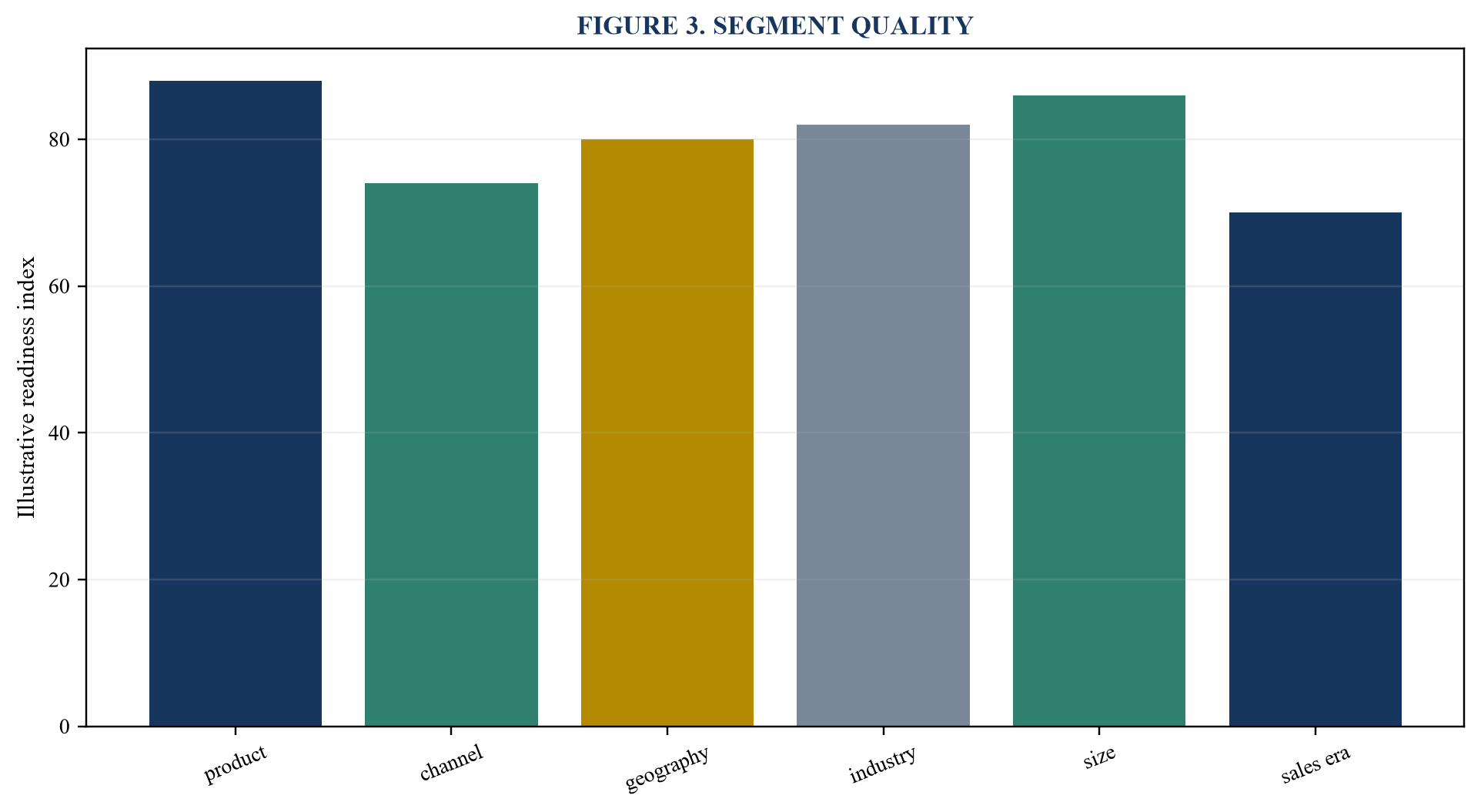
Values are illustrative readiness indices and require company-specific evidence.
25. Analyse channel quality
Test whether partner, reseller, paid, outbound, inbound and founder-led acquisition produce different retention.
The diligence team should reconcile source attribution, costs, cohorts, contracts and revenue. Each conclusion records the accountable owner, source, period, cohort definition, evidence, financial consequence, control and unresolved exception. The immediate output is a channel-quality analysis.
Customer durability must be proved through reconciled contracts, billing, revenue, usage and cash evidence. Reviewers test identity, retention, concentration, contribution and downside response against native records and observed performance. Cohort definitions, accounting policy, transaction perimeter, data rights and applicable law control each conclusion.
Material gaps require an owner, corrective action, validation test, advice and decision date. Consequences flow through sustainable growth, margin, cash, capital needs, valuation, leverage and transaction protection. Residual risk remains visible until the cohort evidence is reconciled, remedies are executable and the authorised decision-makers approve the next gate.
26. Analyse sales-era cohorts
Compare cohorts originated under different leadership, incentives, pricing and qualification standards.
The diligence team should reconcile CRM, compensation plans, sellers, cohort dates and outcomes. Each conclusion records the accountable owner, source, period, cohort definition, evidence, financial consequence, control and unresolved exception. The immediate output is a sales-era cohort map.
Customer durability must be proved through reconciled contracts, billing, revenue, usage and cash evidence. Reviewers test identity, retention, concentration, contribution and downside response against native records and observed performance. Cohort definitions, accounting policy, transaction perimeter, data rights and applicable law control each conclusion.
Material gaps require an owner, corrective action, validation test, advice and decision date. Consequences flow through sustainable growth, margin, cash, capital needs, valuation, leverage and transaction protection. Residual risk remains visible until the cohort evidence is reconciled, remedies are executable and the authorised decision-makers approve the next gate.
27. Test onboarding quality
Connect implementation time, adoption, training and early support to retention and expansion.
The diligence team should reconcile project records, product usage, training, tickets and cohorts. Each conclusion records the accountable owner, source, period, cohort definition, evidence, financial consequence, control and unresolved exception. The immediate output is an onboarding-retention bridge.
Customer durability must be proved through reconciled contracts, billing, revenue, usage and cash evidence. Reviewers test identity, retention, concentration, contribution and downside response against native records and observed performance. Cohort definitions, accounting policy, transaction perimeter, data rights and applicable law control each conclusion.
Material gaps require an owner, corrective action, validation test, advice and decision date. Consequences flow through sustainable growth, margin, cash, capital needs, valuation, leverage and transaction protection. Residual risk remains visible until the cohort evidence is reconciled, remedies are executable and the authorised decision-makers approve the next gate.
28. Test product engagement
Identify leading usage signals, feature adoption and service dependence that predict contraction or loss.
The diligence team should reconcile telemetry, entitlements, billing, cohorts and privacy controls. Each conclusion records the accountable owner, source, period, cohort definition, evidence, financial consequence, control and unresolved exception. The immediate output is an engagement-risk model.
Customer durability must be proved through reconciled contracts, billing, revenue, usage and cash evidence. Reviewers test identity, retention, concentration, contribution and downside response against native records and observed performance. Cohort definitions, accounting policy, transaction perimeter, data rights and applicable law control each conclusion.
Material gaps require an owner, corrective action, validation test, advice and decision date. Consequences flow through sustainable growth, margin, cash, capital needs, valuation, leverage and transaction protection. Residual risk remains visible until the cohort evidence is reconciled, remedies are executable and the authorised decision-makers approve the next gate.
29. Test service quality
Connect outages, delivery failures, response times, claims and satisfaction to economic churn.
The diligence team should reconcile service records, SLAs, tickets, credits, surveys and cohorts. Each conclusion records the accountable owner, source, period, cohort definition, evidence, financial consequence, control and unresolved exception. The immediate output is a service-retention bridge.
Customer durability must be proved through reconciled contracts, billing, revenue, usage and cash evidence. Reviewers test identity, retention, concentration, contribution and downside response against native records and observed performance. Cohort definitions, accounting policy, transaction perimeter, data rights and applicable law control each conclusion.
Material gaps require an owner, corrective action, validation test, advice and decision date. Consequences flow through sustainable growth, margin, cash, capital needs, valuation, leverage and transaction protection. Residual risk remains visible until the cohort evidence is reconciled, remedies are executable and the authorised decision-makers approve the next gate.
30. Test collection behaviour
Separate commercial churn from customers that remain billed but pay late, dispute or default.
The diligence team should reconcile receivables, disputes, cash, credit notes and cohort status. Each conclusion records the accountable owner, source, period, cohort definition, evidence, financial consequence, control and unresolved exception. The immediate output is a cash-retention schedule.
Customer durability must be proved through reconciled contracts, billing, revenue, usage and cash evidence. Reviewers test identity, retention, concentration, contribution and downside response against native records and observed performance. Cohort definitions, accounting policy, transaction perimeter, data rights and applicable law control each conclusion.
Material gaps require an owner, corrective action, validation test, advice and decision date. Consequences flow through sustainable growth, margin, cash, capital needs, valuation, leverage and transaction protection. Residual risk remains visible until the cohort evidence is reconciled, remedies are executable and the authorised decision-makers approve the next gate.
31. Rebuild customer acquisition cost
Allocate sales, marketing, implementation, commissions and discounts to new cohorts.
The diligence team should reconcile spend, payroll, commissions, attribution, bookings and cohorts. Each conclusion records the accountable owner, source, period, cohort definition, evidence, financial consequence, control and unresolved exception. The immediate output is a fully loaded acquisition-cost model.
Customer durability must be proved through reconciled contracts, billing, revenue, usage and cash evidence. Reviewers test identity, retention, concentration, contribution and downside response against native records and observed performance. Cohort definitions, accounting policy, transaction perimeter, data rights and applicable law control each conclusion.
Material gaps require an owner, corrective action, validation test, advice and decision date. Consequences flow through sustainable growth, margin, cash, capital needs, valuation, leverage and transaction protection. Residual risk remains visible until the cohort evidence is reconciled, remedies are executable and the authorised decision-makers approve the next gate.
32. Calculate cohort contribution
Measure revenue, gross margin, servicing cost, acquisition cost, working capital and cash by vintage.
The diligence team should reconcile cohort ledger, costs, support, capex, receivables and cash. Each conclusion records the accountable owner, source, period, cohort definition, evidence, financial consequence, control and unresolved exception. The immediate output is a cohort contribution model.
Customer durability must be proved through reconciled contracts, billing, revenue, usage and cash evidence. Reviewers test identity, retention, concentration, contribution and downside response against native records and observed performance. Cohort definitions, accounting policy, transaction perimeter, data rights and applicable law control each conclusion.
Material gaps require an owner, corrective action, validation test, advice and decision date. Consequences flow through sustainable growth, margin, cash, capital needs, valuation, leverage and transaction protection. Residual risk remains visible until the cohort evidence is reconciled, remedies are executable and the authorised decision-makers approve the next gate.
Table 4. Cohort economics
| Layer | Required measure | Decision use |
|---|---|---|
| acquisition | fully loaded CAC | growth funding |
| retention | survival and contraction | revenue durability |
| contribution | margin after service | payback |
| cash | collections and working capital | debt capacity |
Illustrative programme design; company-specific facts and authorised advice govern.
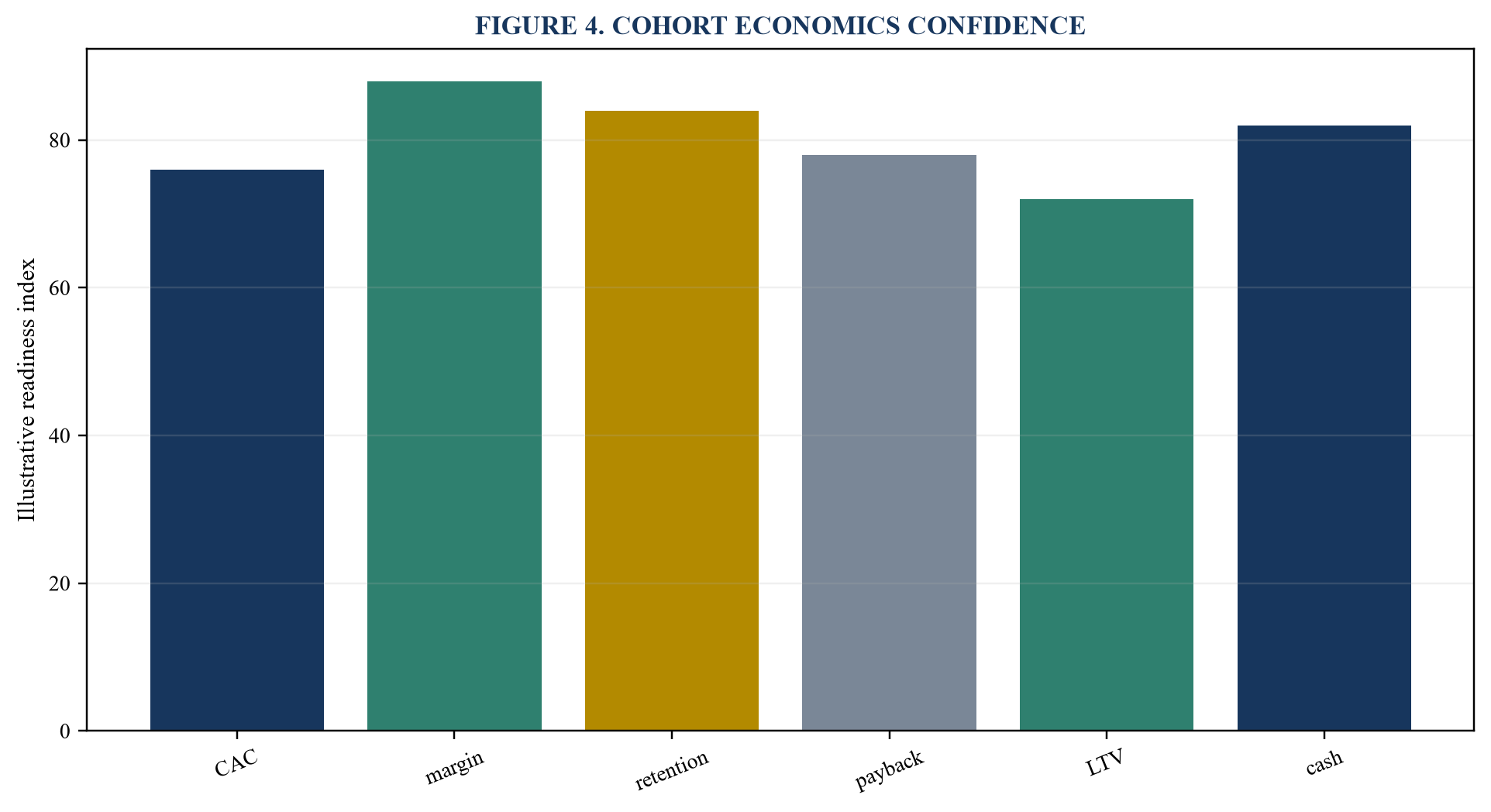
Values are illustrative readiness indices and require company-specific evidence.
33. Calculate payback
Measure months to recover acquisition and onboarding cash under observed retention and margin.
The diligence team should reconcile acquisition cost, contribution, cash timing and cohorts. Each conclusion records the accountable owner, source, period, cohort definition, evidence, financial consequence, control and unresolved exception. The immediate output is a cohort payback schedule.
Customer durability must be proved through reconciled contracts, billing, revenue, usage and cash evidence. Reviewers test identity, retention, concentration, contribution and downside response against native records and observed performance. Cohort definitions, accounting policy, transaction perimeter, data rights and applicable law control each conclusion.
Material gaps require an owner, corrective action, validation test, advice and decision date. Consequences flow through sustainable growth, margin, cash, capital needs, valuation, leverage and transaction protection. Residual risk remains visible until the cohort evidence is reconciled, remedies are executable and the authorised decision-makers approve the next gate.
34. Calculate lifetime value
Model risk-adjusted contribution using observed survival, contraction, expansion, margin and discounting.
The diligence team should reconcile cohort curves, contribution, scenarios and capital assumptions. Each conclusion records the accountable owner, source, period, cohort definition, evidence, financial consequence, control and unresolved exception. The immediate output is a lifetime-value model.
Customer durability must be proved through reconciled contracts, billing, revenue, usage and cash evidence. Reviewers test identity, retention, concentration, contribution and downside response against native records and observed performance. Cohort definitions, accounting policy, transaction perimeter, data rights and applicable law control each conclusion.
Material gaps require an owner, corrective action, validation test, advice and decision date. Consequences flow through sustainable growth, margin, cash, capital needs, valuation, leverage and transaction protection. Residual risk remains visible until the cohort evidence is reconciled, remedies are executable and the authorised decision-makers approve the next gate.
35. Test forecast assumptions
Back-test retention, expansion, new sales and pricing assumptions against cohort history.
The diligence team should reconcile budgets, board plans, cohorts, sales pipeline and actuals. Each conclusion records the accountable owner, source, period, cohort definition, evidence, financial consequence, control and unresolved exception. The immediate output is a forecast reliability test.
Customer durability must be proved through reconciled contracts, billing, revenue, usage and cash evidence. Reviewers test identity, retention, concentration, contribution and downside response against native records and observed performance. Cohort definitions, accounting policy, transaction perimeter, data rights and applicable law control each conclusion.
Material gaps require an owner, corrective action, validation test, advice and decision date. Consequences flow through sustainable growth, margin, cash, capital needs, valuation, leverage and transaction protection. Residual risk remains visible until the cohort evidence is reconciled, remedies are executable and the authorised decision-makers approve the next gate.
36. Stress growth quality
Model weaker acquisition, faster churn, lower expansion, price resistance and combined downside.
The diligence team should reconcile cohort model, elasticity, pipeline, costs and financing. Each conclusion records the accountable owner, source, period, cohort definition, evidence, financial consequence, control and unresolved exception. The immediate output is a growth-quality stress test.
Customer durability must be proved through reconciled contracts, billing, revenue, usage and cash evidence. Reviewers test identity, retention, concentration, contribution and downside response against native records and observed performance. Cohort definitions, accounting policy, transaction perimeter, data rights and applicable law control each conclusion.
Material gaps require an owner, corrective action, validation test, advice and decision date. Consequences flow through sustainable growth, margin, cash, capital needs, valuation, leverage and transaction protection. Residual risk remains visible until the cohort evidence is reconciled, remedies are executable and the authorised decision-makers approve the next gate.
37. Translate into valuation
Apply cohort economics to forecast revenue, margins, cash flow, terminal assumptions and multiples.
The diligence team should reconcile valuation model, cohort forecast, capital needs and market evidence. Each conclusion records the accountable owner, source, period, cohort definition, evidence, financial consequence, control and unresolved exception. The immediate output is a cohort-value bridge.
Customer durability must be proved through reconciled contracts, billing, revenue, usage and cash evidence. Reviewers test identity, retention, concentration, contribution and downside response against native records and observed performance. Cohort definitions, accounting policy, transaction perimeter, data rights and applicable law control each conclusion.
Material gaps require an owner, corrective action, validation test, advice and decision date. Consequences flow through sustainable growth, margin, cash, capital needs, valuation, leverage and transaction protection. Residual risk remains visible until the cohort evidence is reconciled, remedies are executable and the authorised decision-makers approve the next gate.
38. Design transaction protections
Use price, earn-out, rollover, escrow, indemnity or conditions where customer risk is measurable and material.
The diligence team should reconcile risk register, valuation, evidence, SPA and negotiation. Each conclusion records the accountable owner, source, period, cohort definition, evidence, financial consequence, control and unresolved exception. The immediate output is a retention-protection matrix.
Customer durability must be proved through reconciled contracts, billing, revenue, usage and cash evidence. Reviewers test identity, retention, concentration, contribution and downside response against native records and observed performance. Cohort definitions, accounting policy, transaction perimeter, data rights and applicable law control each conclusion.
Material gaps require an owner, corrective action, validation test, advice and decision date. Consequences flow through sustainable growth, margin, cash, capital needs, valuation, leverage and transaction protection. Residual risk remains visible until the cohort evidence is reconciled, remedies are executable and the authorised decision-makers approve the next gate.
39. Set post-close controls
Install cohort reporting, account ownership, onboarding, success, renewal and churn-response governance.
The diligence team should reconcile data model, operating plan, roles, systems and incentives. Each conclusion records the accountable owner, source, period, cohort definition, evidence, financial consequence, control and unresolved exception. The immediate output is a 100-day retention system.
Customer durability must be proved through reconciled contracts, billing, revenue, usage and cash evidence. Reviewers test identity, retention, concentration, contribution and downside response against native records and observed performance. Cohort definitions, accounting policy, transaction perimeter, data rights and applicable law control each conclusion.
Material gaps require an owner, corrective action, validation test, advice and decision date. Consequences flow through sustainable growth, margin, cash, capital needs, valuation, leverage and transaction protection. Residual risk remains visible until the cohort evidence is reconciled, remedies are executable and the authorised decision-makers approve the next gate.
40. Issue the cohort conclusion
State sustainable retention, growth quality, forecast changes, valuation effects, protections and monitoring.
The diligence team should reconcile verified cohorts, models, stress tests, contracts, approvals and advice. Each conclusion records the accountable owner, source, period, cohort definition, evidence, financial consequence, control and unresolved exception. The immediate output is a customer-cohort diligence certificate.
Customer durability must be proved through reconciled contracts, billing, revenue, usage and cash evidence. Reviewers test identity, retention, concentration, contribution and downside response against native records and observed performance. Cohort definitions, accounting policy, transaction perimeter, data rights and applicable law control each conclusion.
Material gaps require an owner, corrective action, validation test, advice and decision date. Consequences flow through sustainable growth, margin, cash, capital needs, valuation, leverage and transaction protection. Residual risk remains visible until the cohort evidence is reconciled, remedies are executable and the authorised decision-makers approve the next gate.
Table 5. Cohort decision certificate
| Dimension | Required conclusion | Evidence |
|---|---|---|
| data | customer history reconciled | ledger and identity map |
| retention | loss and expansion visible | cohort schedules |
| value | forecast risk adjusted | valuation bridge |
| control | remedies executable | documents and operating plan |
Illustrative programme design; company-specific facts and authorised advice govern.
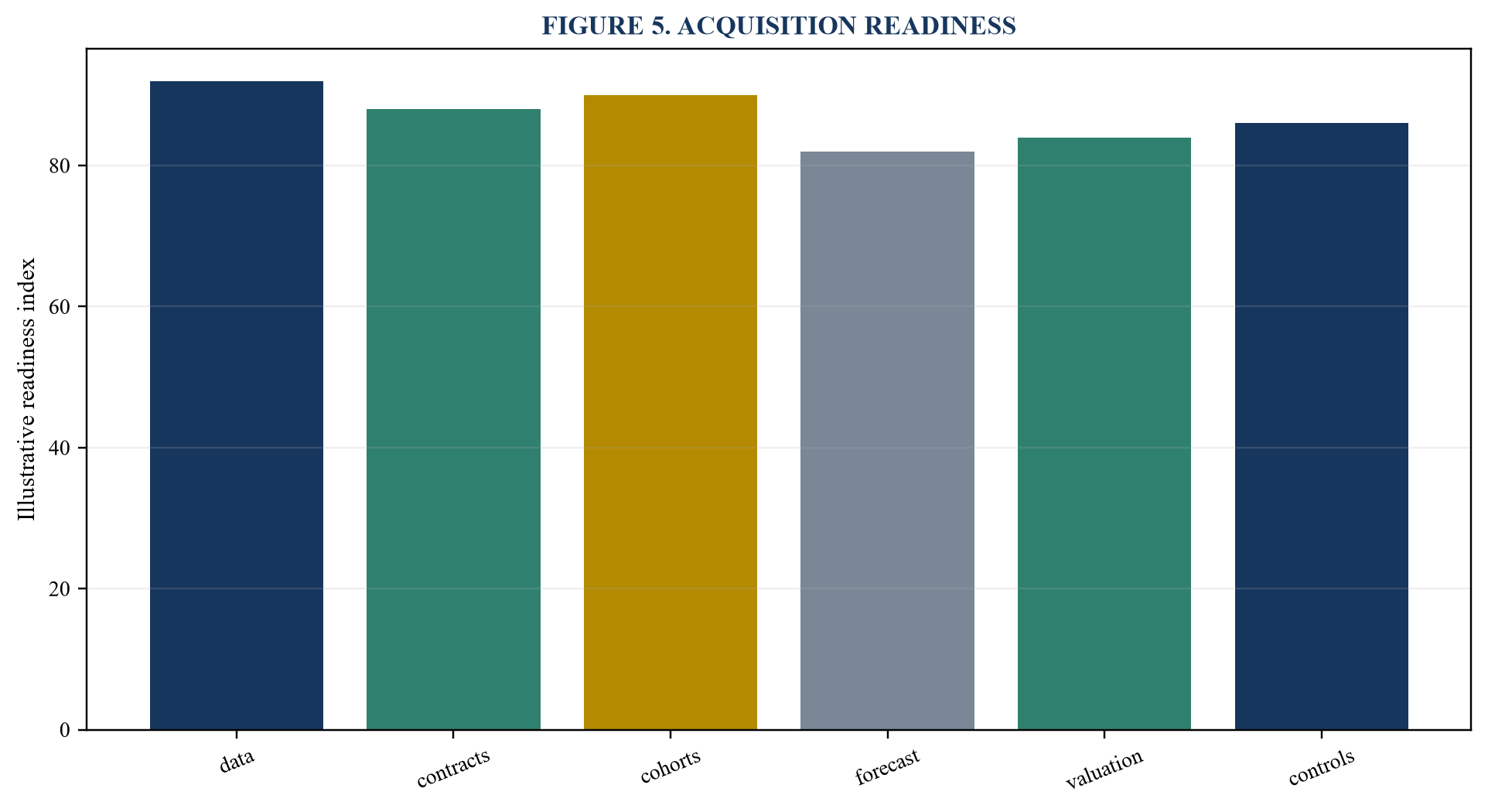
Values are illustrative readiness indices and require company-specific evidence.
References
- IFRS Foundation, IFRS 15 Revenue from Contracts with Customers, https://www.ifrs.org/issued-standards/list-of-standards/ifrs-15-revenue-from-contracts-with-customers/
- IFRS Foundation, IFRS 8 Operating Segments, https://www.ifrs.org/issued-standards/list-of-standards/ifrs-8-operating-segments/
- IFRS Foundation, IFRS 9 Financial Instruments, https://www.ifrs.org/issued-standards/list-of-standards/ifrs-9-financial-instruments/
- IFRS Foundation, IAS 7 Statement of Cash Flows, https://www.ifrs.org/issued-standards/list-of-standards/ias-7-statement-of-cash-flows/
- IFRS Foundation, IAS 21 The Effects of Changes in Foreign Exchange Rates, https://www.ifrs.org/issued-standards/list-of-standards/ias-21-the-effects-of-changes-in-foreign-exchange-rates/
- IFRS Foundation, IAS 36 Impairment of Assets, https://www.ifrs.org/issued-standards/list-of-standards/ias-36-impairment-of-assets/
- IFRS Foundation, IFRS 3 Business Combinations, https://www.ifrs.org/issued-standards/list-of-standards/ifrs-3-business-combinations/
- IFRS Foundation, IFRS 18 Presentation and Disclosure in Financial Statements, https://www.ifrs.org/issued-standards/list-of-standards/ifrs-18-presentation-and-disclosure-in-financial-statements/
- US Securities and Exchange Commission, Commission Guidance Regarding Management's Discussion and Analysis of Financial Condition and Results of Operations, https://www.sec.gov/rules/interp/2020/33-10751.pdf
- US Securities and Exchange Commission, Regulation S-K, https://www.sec.gov/rules-regulations/staff-guidance/corporation-finance-interpretations/regulation-s-k
- US Securities and Exchange Commission, Financial Reporting Manual, https://www.sec.gov/corpfin/cf-manual
- International Auditing and Assurance Standards Board, ISA 500 Audit Evidence, https://www.iaasb.org/publications/international-standard-auditing-isa-500-audit-evidence
- International Auditing and Assurance Standards Board, ISA 505 External Confirmations, https://www.iaasb.org/publications/international-standard-auditing-isa-505-external-confirmations
- International Auditing and Assurance Standards Board, ISA 520 Analytical Procedures, https://www.iaasb.org/publications/international-standard-auditing-isa-520-analytical-procedures
- International Auditing and Assurance Standards Board, ISA 530 Audit Sampling, https://www.iaasb.org/publications/international-standard-auditing-isa-530-audit-sampling
- International Auditing and Assurance Standards Board, ISA 540 Accounting Estimates, https://www.iaasb.org/publications/international-standard-auditing-isa-540-revised-auditing-accounting-estimates-and-related-disclosures
- International Valuation Standards Council, International Valuation Standards, https://www.ivsc.org/standards/
- International Valuation Standards Council, IVS 200 Businesses and Business Interests, https://training.ivsc.org/valuing-businesses-ivs-200/
- OECD, G20 OECD Principles of Corporate Governance 2023, https://doi.org/10.1787/ed750b30-en
- OECD, Guidelines on the Protection of Privacy and Transborder Flows of Personal Data, https://legalinstruments.oecd.org/en/instruments/OECD-LEGAL-0188
- European Union, General Data Protection Regulation, https://eur-lex.europa.eu/eli/reg/2016/679/oj
- United Kingdom Information Commissioner's Office, Data minimisation, https://ico.org.uk/for-organisations/uk-gdpr-guidance-and-resources/data-protection-principles/a-guide-to-the-data-protection-principles/the-principles/data-minimisation/
- National Institute of Standards and Technology, Privacy Framework, https://www.nist.gov/privacy-framework
- International Organization for Standardization, ISO 31000 Risk Management Guidelines, https://www.iso.org/iso-31000-risk-management.html
- European Banking Authority, Guidelines on Loan Origination and Monitoring, https://www.eba.europa.eu/regulation-and-policy/credit-risk/guidelines-loan-origination-and-monitoring
- Bank for International Settlements, Principles for the Management of Credit Risk, https://www.bis.org/publ/bcbs75.htm
