

1. Establish accountable retention command
The integration leadership should name commercial, service, finance, product, legal, privacy and integration authority. The required output is a customer-continuity charter. Record the business purpose, account and contract scope, evidence, accountable owner, customer and revenue impact, legal boundary, decision rationale and review date [1][2].
Assess customer continuity across both businesses. Test service outcomes, billing, contract rights, usage, complaints, relationship coverage, renewal timing, payment behaviour, privacy and the critical decision window. Apply documented business judgement to verified evidence.
The principal risk is that fragmented ownership can delay intervention. Compare prevention, early detection, diagnosis, intervention and verification, including service recovery, relationship action, contract clarification, controlled offers and forecast consequences.
Retain account and contract inventories, service and billing evidence, usage and complaint signals, customer communications, interventions, approvals, outcomes, exceptions and forecast changes. Reforecast when customer evidence, service performance, renewal timing, relationship coverage or integration plans change.
2. Define revenue at risk
The integration leadership should reconcile recurring, contracted, usage, project, renewal and expansion value by account. The required output is a revenue-at-risk ledger. Record the business purpose, account and contract scope, evidence, accountable owner, customer and revenue impact, legal boundary, decision rationale and review date [3][4].
Assess customer continuity across both businesses. Test service outcomes, billing, contract rights, usage, complaints, relationship coverage, renewal timing, payment behaviour, privacy and the critical decision window. Apply documented business judgement to verified evidence.
The principal risk is that reported revenue can lag deteriorating customer intent. Compare prevention, early detection, diagnosis, intervention and verification, including service recovery, relationship action, contract clarification, controlled offers and forecast consequences.
Retain account and contract inventories, service and billing evidence, usage and complaint signals, customer communications, interventions, approvals, outcomes, exceptions and forecast changes. Reforecast when customer evidence, service performance, renewal timing, relationship coverage or integration plans change.
Table 1. Retention control chain
| Control layer | Immediate evidence | Decision |
|---|---|---|
| command | named authority and cadence | activate |
| revenue at risk | account and contract ledger | prioritise |
| early warning | reconciled leading signals | diagnose |
| intervention | owner, action and outcome | accept |
Illustrative structure; verified transaction evidence and specialist review govern.
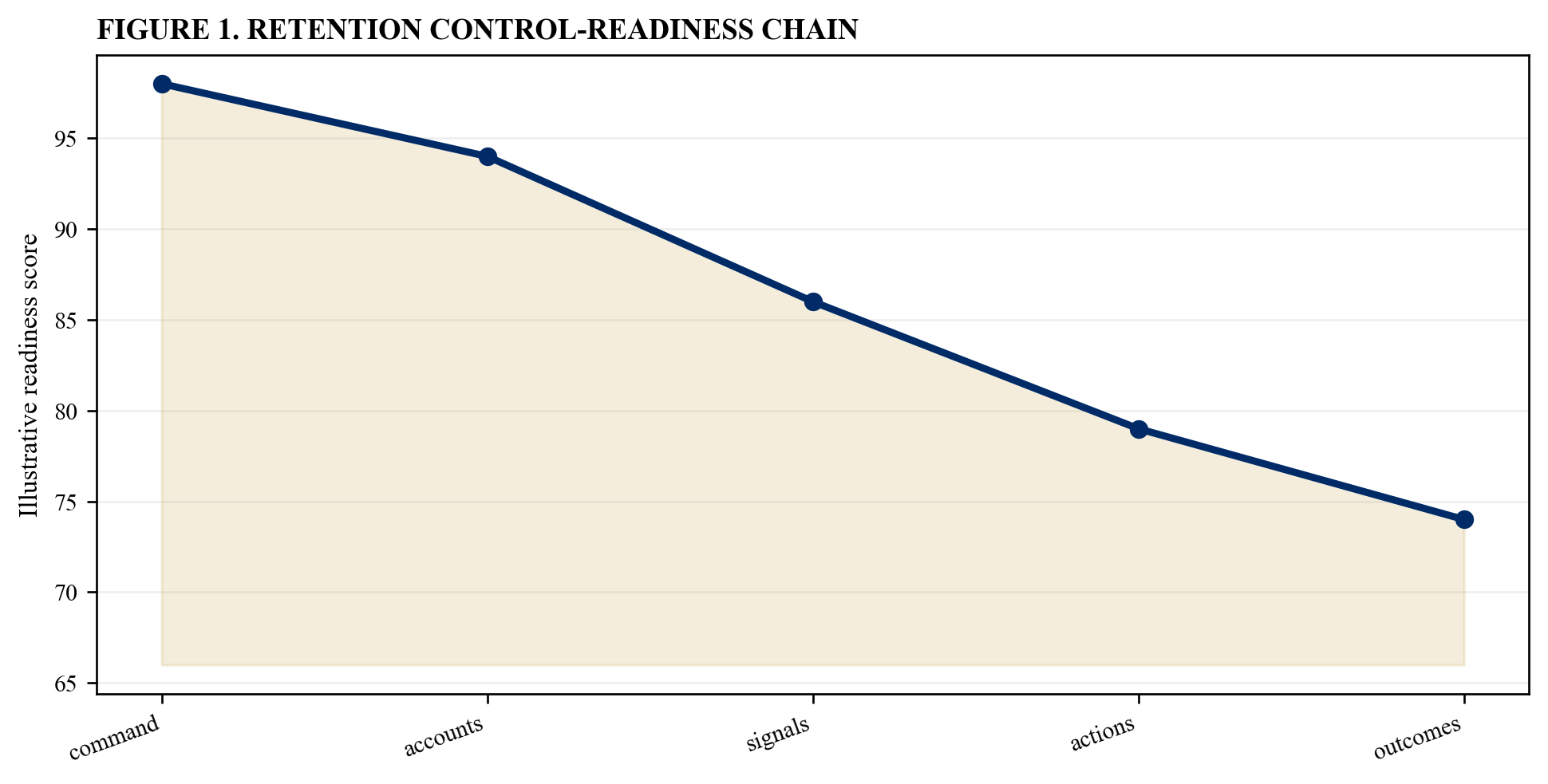
Illustrative analytical scenario; verified transaction evidence should replace index values.
3. Protect pre-close boundaries
The integration leadership should limit customer data access, coordination and outreach before lawful closing. The required output is a customer clean-team protocol. Record the business purpose, account and contract scope, evidence, accountable owner, customer and revenue impact, legal boundary, decision rationale and review date [5][6].
Assess customer continuity across both businesses. Test service outcomes, billing, contract rights, usage, complaints, relationship coverage, renewal timing, payment behaviour, privacy and the critical decision window. Apply documented business judgement to verified evidence.
The principal risk is that retention preparation can create premature integration. Compare prevention, early detection, diagnosis, intervention and verification, including service recovery, relationship action, contract clarification, controlled offers and forecast consequences.
Retain account and contract inventories, service and billing evidence, usage and complaint signals, customer communications, interventions, approvals, outcomes, exceptions and forecast changes. Reforecast when customer evidence, service performance, renewal timing, relationship coverage or integration plans change.
4. Segment critical customers
The integration leadership should rank accounts by value, concentration, strategic role, service dependency and vulnerability. The required output is a critical-customer map. Record the business purpose, account and contract scope, evidence, accountable owner, customer and revenue impact, legal boundary, decision rationale and review date [1][7].
Assess customer continuity across both businesses. Test service outcomes, billing, contract rights, usage, complaints, relationship coverage, renewal timing, payment behaviour, privacy and the critical decision window. Apply documented business judgement to verified evidence.
The principal risk is that uniform treatment can miss disproportionate exposure. Compare prevention, early detection, diagnosis, intervention and verification, including service recovery, relationship action, contract clarification, controlled offers and forecast consequences.
Retain account and contract inventories, service and billing evidence, usage and complaint signals, customer communications, interventions, approvals, outcomes, exceptions and forecast changes. Reforecast when customer evidence, service performance, renewal timing, relationship coverage or integration plans change.
5. Reconcile customer identity
The integration leadership should match legal entities, buying centres, users, contracts, products, sites and relationship history. The required output is a customer master bridge. Record the business purpose, account and contract scope, evidence, accountable owner, customer and revenue impact, legal boundary, decision rationale and review date [8][9].
Assess customer continuity across both businesses. Test service outcomes, billing, contract rights, usage, complaints, relationship coverage, renewal timing, payment behaviour, privacy and the critical decision window. Apply documented business judgement to verified evidence.
The principal risk is that duplicate or fragmented records can conceal risk. Compare prevention, early detection, diagnosis, intervention and verification, including service recovery, relationship action, contract clarification, controlled offers and forecast consequences.
Retain account and contract inventories, service and billing evidence, usage and complaint signals, customer communications, interventions, approvals, outcomes, exceptions and forecast changes. Reforecast when customer evidence, service performance, renewal timing, relationship coverage or integration plans change.
6. Inventory contractual rights
The integration leadership should extract term, renewal, termination, service, pricing, change, consent and assignment provisions. The required output is a contract-rights register. Record the business purpose, account and contract scope, evidence, accountable owner, customer and revenue impact, legal boundary, decision rationale and review date [3][10].
Assess customer continuity across both businesses. Test service outcomes, billing, contract rights, usage, complaints, relationship coverage, renewal timing, payment behaviour, privacy and the critical decision window. Apply documented business judgement to verified evidence.
The principal risk is that commercial teams can misread enforceable obligations. Compare prevention, early detection, diagnosis, intervention and verification, including service recovery, relationship action, contract clarification, controlled offers and forecast consequences.
Retain account and contract inventories, service and billing evidence, usage and complaint signals, customer communications, interventions, approvals, outcomes, exceptions and forecast changes. Reforecast when customer evidence, service performance, renewal timing, relationship coverage or integration plans change.
7. Protect relationship ownership
The integration leadership should assign primary, executive, service and commercial owners with deputies and handoffs. The required output is an account-coverage map. Record the business purpose, account and contract scope, evidence, accountable owner, customer and revenue impact, legal boundary, decision rationale and review date [11][12].
Assess customer continuity across both businesses. Test service outcomes, billing, contract rights, usage, complaints, relationship coverage, renewal timing, payment behaviour, privacy and the critical decision window. Apply documented business judgement to verified evidence.
The principal risk is that customers can lose trusted contacts during role changes. Compare prevention, early detection, diagnosis, intervention and verification, including service recovery, relationship action, contract clarification, controlled offers and forecast consequences.
Retain account and contract inventories, service and billing evidence, usage and complaint signals, customer communications, interventions, approvals, outcomes, exceptions and forecast changes. Reforecast when customer evidence, service performance, renewal timing, relationship coverage or integration plans change.
8. Establish the service baseline
The integration leadership should measure availability, quality, fulfilment, response, resolution and backlog before integration changes. The required output is a service-outcome baseline. Record the business purpose, account and contract scope, evidence, accountable owner, customer and revenue impact, legal boundary, decision rationale and review date [13][14].
Assess customer continuity across both businesses. Test service outcomes, billing, contract rights, usage, complaints, relationship coverage, renewal timing, payment behaviour, privacy and the critical decision window. Apply documented business judgement to verified evidence.
The principal risk is that aggregate service levels can hide account harm. Compare prevention, early detection, diagnosis, intervention and verification, including service recovery, relationship action, contract clarification, controlled offers and forecast consequences.
Retain account and contract inventories, service and billing evidence, usage and complaint signals, customer communications, interventions, approvals, outcomes, exceptions and forecast changes. Reforecast when customer evidence, service performance, renewal timing, relationship coverage or integration plans change.
9. Track service incidents
The integration leadership should link disruption, severity, duration, recurrence, affected users and recovery to accounts. The required output is an incident-to-customer ledger. Record the business purpose, account and contract scope, evidence, accountable owner, customer and revenue impact, legal boundary, decision rationale and review date [13][15].
Assess customer continuity across both businesses. Test service outcomes, billing, contract rights, usage, complaints, relationship coverage, renewal timing, payment behaviour, privacy and the critical decision window. Apply documented business judgement to verified evidence.
The principal risk is that operational events can remain disconnected from churn risk. Compare prevention, early detection, diagnosis, intervention and verification, including service recovery, relationship action, contract clarification, controlled offers and forecast consequences.
Retain account and contract inventories, service and billing evidence, usage and complaint signals, customer communications, interventions, approvals, outcomes, exceptions and forecast changes. Reforecast when customer evidence, service performance, renewal timing, relationship coverage or integration plans change.
10. Protect billing accuracy
The integration leadership should reconcile invoices, credits, disputes, payment terms, tax, usage and customer records. The required output is a billing-control pack. Record the business purpose, account and contract scope, evidence, accountable owner, customer and revenue impact, legal boundary, decision rationale and review date [3][16].
Assess customer continuity across both businesses. Test service outcomes, billing, contract rights, usage, complaints, relationship coverage, renewal timing, payment behaviour, privacy and the critical decision window. Apply documented business judgement to verified evidence.
The principal risk is that integration errors can convert trust into payment friction. Compare prevention, early detection, diagnosis, intervention and verification, including service recovery, relationship action, contract clarification, controlled offers and forecast consequences.
Retain account and contract inventories, service and billing evidence, usage and complaint signals, customer communications, interventions, approvals, outcomes, exceptions and forecast changes. Reforecast when customer evidence, service performance, renewal timing, relationship coverage or integration plans change.
11. Govern price and packaging change
The integration leadership should test value, notice, consent, migration, grandfathering and support implications. The required output is a commercial-change gate. Record the business purpose, account and contract scope, evidence, accountable owner, customer and revenue impact, legal boundary, decision rationale and review date [17][18].
Assess customer continuity across both businesses. Test service outcomes, billing, contract rights, usage, complaints, relationship coverage, renewal timing, payment behaviour, privacy and the critical decision window. Apply documented business judgement to verified evidence.
The principal risk is that uncoordinated changes can trigger avoidable exits. Compare prevention, early detection, diagnosis, intervention and verification, including service recovery, relationship action, contract clarification, controlled offers and forecast consequences.
Retain account and contract inventories, service and billing evidence, usage and complaint signals, customer communications, interventions, approvals, outcomes, exceptions and forecast changes. Reforecast when customer evidence, service performance, renewal timing, relationship coverage or integration plans change.
12. Clarify product-roadmap commitments
The integration leadership should inventory promised features, support dates, integrations, migrations and deprecations. The required output is a commitment register. Record the business purpose, account and contract scope, evidence, accountable owner, customer and revenue impact, legal boundary, decision rationale and review date [19][20].
Assess customer continuity across both businesses. Test service outcomes, billing, contract rights, usage, complaints, relationship coverage, renewal timing, payment behaviour, privacy and the critical decision window. Apply documented business judgement to verified evidence.
The principal risk is that roadmap uncertainty can halt renewals and expansion. Compare prevention, early detection, diagnosis, intervention and verification, including service recovery, relationship action, contract clarification, controlled offers and forecast consequences.
Retain account and contract inventories, service and billing evidence, usage and complaint signals, customer communications, interventions, approvals, outcomes, exceptions and forecast changes. Reforecast when customer evidence, service performance, renewal timing, relationship coverage or integration plans change.
13. Preserve sales-pipeline continuity
The integration leadership should reconcile opportunities, stages, sponsors, competition, commitments and next actions. The required output is a pipeline handoff ledger. Record the business purpose, account and contract scope, evidence, accountable owner, customer and revenue impact, legal boundary, decision rationale and review date [21][22].
Assess customer continuity across both businesses. Test service outcomes, billing, contract rights, usage, complaints, relationship coverage, renewal timing, payment behaviour, privacy and the critical decision window. Apply documented business judgement to verified evidence.
The principal risk is that ownership changes can stall credible demand. Compare prevention, early detection, diagnosis, intervention and verification, including service recovery, relationship action, contract clarification, controlled offers and forecast consequences.
Retain account and contract inventories, service and billing evidence, usage and complaint signals, customer communications, interventions, approvals, outcomes, exceptions and forecast changes. Reforecast when customer evidence, service performance, renewal timing, relationship coverage or integration plans change.
14. Protect support journeys
The integration leadership should map channels, entitlements, queues, escalation, language, accessibility and resolution paths. The required output is a support-continuity plan. Record the business purpose, account and contract scope, evidence, accountable owner, customer and revenue impact, legal boundary, decision rationale and review date [1][23].
Assess customer continuity across both businesses. Test service outcomes, billing, contract rights, usage, complaints, relationship coverage, renewal timing, payment behaviour, privacy and the critical decision window. Apply documented business judgement to verified evidence.
The principal risk is that channel changes can raise customer effort. Compare prevention, early detection, diagnosis, intervention and verification, including service recovery, relationship action, contract clarification, controlled offers and forecast consequences.
Retain account and contract inventories, service and billing evidence, usage and complaint signals, customer communications, interventions, approvals, outcomes, exceptions and forecast changes. Reforecast when customer evidence, service performance, renewal timing, relationship coverage or integration plans change.
15. Listen to frontline evidence
The integration leadership should capture structured insight from account, support, collections, product and delivery teams. The required output is a frontline signal log. Record the business purpose, account and contract scope, evidence, accountable owner, customer and revenue impact, legal boundary, decision rationale and review date [24][25].
Assess customer continuity across both businesses. Test service outcomes, billing, contract rights, usage, complaints, relationship coverage, renewal timing, payment behaviour, privacy and the critical decision window. Apply documented business judgement to verified evidence.
The principal risk is that dashboard data can miss emerging narrative evidence. Compare prevention, early detection, diagnosis, intervention and verification, including service recovery, relationship action, contract clarification, controlled offers and forecast consequences.
Retain account and contract inventories, service and billing evidence, usage and complaint signals, customer communications, interventions, approvals, outcomes, exceptions and forecast changes. Reforecast when customer evidence, service performance, renewal timing, relationship coverage or integration plans change.
16. Use complaints for root-cause analysis
The integration leadership should connect complaint themes, outcomes, repeat contacts, remediation and accountable actions. The required output is a complaint heat map. Record the business purpose, account and contract scope, evidence, accountable owner, customer and revenue impact, legal boundary, decision rationale and review date [26][27].
Assess customer continuity across both businesses. Test service outcomes, billing, contract rights, usage, complaints, relationship coverage, renewal timing, payment behaviour, privacy and the critical decision window. Apply documented business judgement to verified evidence.
The principal risk is that case closure can be mistaken for cause removal. Compare prevention, early detection, diagnosis, intervention and verification, including service recovery, relationship action, contract clarification, controlled offers and forecast consequences.
Retain account and contract inventories, service and billing evidence, usage and complaint signals, customer communications, interventions, approvals, outcomes, exceptions and forecast changes. Reforecast when customer evidence, service performance, renewal timing, relationship coverage or integration plans change.
Table 2. Customer-signal architecture
| Signal domain | Leading evidence | Control |
|---|---|---|
| service | incidents, backlog, response | baseline |
| commercial | renewal, downgrade, expansion | reconcile |
| relationship | coverage, sentiment, escalation | assign |
| behaviour | usage, orders, payment | explain |
Illustrative structure; verified transaction evidence and specialist review govern.
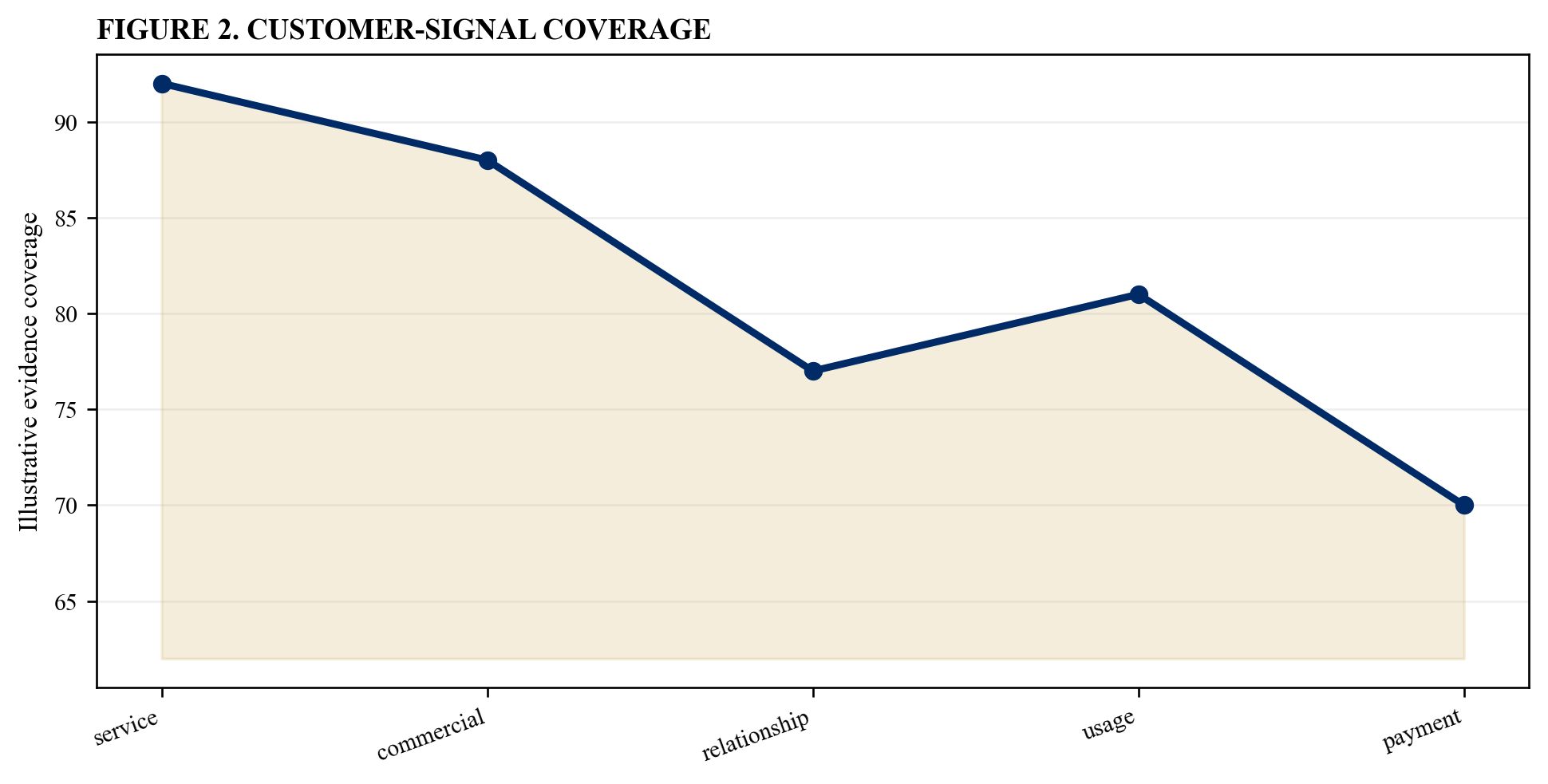
Illustrative analytical scenario; verified transaction evidence should replace index values.
17. Measure usage and engagement
The integration leadership should track adoption, active users, feature depth, workflow dependence and disengagement by cohort. The required output is a usage-risk profile. Record the business purpose, account and contract scope, evidence, accountable owner, customer and revenue impact, legal boundary, decision rationale and review date [28][29].
Assess customer continuity across both businesses. Test service outcomes, billing, contract rights, usage, complaints, relationship coverage, renewal timing, payment behaviour, privacy and the critical decision window. Apply documented business judgement to verified evidence.
The principal risk is that usage decline can precede commercial notice. Compare prevention, early detection, diagnosis, intervention and verification, including service recovery, relationship action, contract clarification, controlled offers and forecast consequences.
Retain account and contract inventories, service and billing evidence, usage and complaint signals, customer communications, interventions, approvals, outcomes, exceptions and forecast changes. Reforecast when customer evidence, service performance, renewal timing, relationship coverage or integration plans change.
18. Track orders, downgrades and cancellations
The integration leadership should capture reduced scope, delayed orders, seat contraction, cancellation intent and lost expansion. The required output is a demand-change ledger. Record the business purpose, account and contract scope, evidence, accountable owner, customer and revenue impact, legal boundary, decision rationale and review date [3][30].
Assess customer continuity across both businesses. Test service outcomes, billing, contract rights, usage, complaints, relationship coverage, renewal timing, payment behaviour, privacy and the critical decision window. Apply documented business judgement to verified evidence.
The principal risk is that small commercial signals can accumulate before churn. Compare prevention, early detection, diagnosis, intervention and verification, including service recovery, relationship action, contract clarification, controlled offers and forecast consequences.
Retain account and contract inventories, service and billing evidence, usage and complaint signals, customer communications, interventions, approvals, outcomes, exceptions and forecast changes. Reforecast when customer evidence, service performance, renewal timing, relationship coverage or integration plans change.
19. Monitor payment and dispute behaviour
The integration leadership should measure ageing, partial payment, deductions, disputes and collection contacts with context. The required output is a payment-friction profile. Record the business purpose, account and contract scope, evidence, accountable owner, customer and revenue impact, legal boundary, decision rationale and review date [3][16].
Assess customer continuity across both businesses. Test service outcomes, billing, contract rights, usage, complaints, relationship coverage, renewal timing, payment behaviour, privacy and the critical decision window. Apply documented business judgement to verified evidence.
The principal risk is that cash behaviour can be misread without service evidence. Compare prevention, early detection, diagnosis, intervention and verification, including service recovery, relationship action, contract clarification, controlled offers and forecast consequences.
Retain account and contract inventories, service and billing evidence, usage and complaint signals, customer communications, interventions, approvals, outcomes, exceptions and forecast changes. Reforecast when customer evidence, service performance, renewal timing, relationship coverage or integration plans change.
20. Collect direct customer evidence
The integration leadership should combine interviews, feedback, complaints, journey testing and relationship reviews. The required output is a voice-of-customer pack. Record the business purpose, account and contract scope, evidence, accountable owner, customer and revenue impact, legal boundary, decision rationale and review date [1][31].
Assess customer continuity across both businesses. Test service outcomes, billing, contract rights, usage, complaints, relationship coverage, renewal timing, payment behaviour, privacy and the critical decision window. Apply documented business judgement to verified evidence.
The principal risk is that survey scores alone can conceal account-specific causes. Compare prevention, early detection, diagnosis, intervention and verification, including service recovery, relationship action, contract clarification, controlled offers and forecast consequences.
Retain account and contract inventories, service and billing evidence, usage and complaint signals, customer communications, interventions, approvals, outcomes, exceptions and forecast changes. Reforecast when customer evidence, service performance, renewal timing, relationship coverage or integration plans change.
21. Build the leading-indicator model
The integration leadership should combine service, billing, relationship, usage, contract, complaint and payment signals. The required output is an explainable retention score. Record the business purpose, account and contract scope, evidence, accountable owner, customer and revenue impact, legal boundary, decision rationale and review date [1][32].
Assess customer continuity across both businesses. Test service outcomes, billing, contract rights, usage, complaints, relationship coverage, renewal timing, payment behaviour, privacy and the critical decision window. Apply documented business judgement to verified evidence.
The principal risk is that an opaque score can create false confidence. Compare prevention, early detection, diagnosis, intervention and verification, including service recovery, relationship action, contract clarification, controlled offers and forecast consequences.
Retain account and contract inventories, service and billing evidence, usage and complaint signals, customer communications, interventions, approvals, outcomes, exceptions and forecast changes. Reforecast when customer evidence, service performance, renewal timing, relationship coverage or integration plans change.
Table 3. Early-warning matrix
| Signal | Risk question | Escalation |
|---|---|---|
| service decline | material and unresolved? | service recovery |
| usage fall | persistent and unexplained? | customer diagnosis |
| renewal risk | near-term and high value? | executive coverage |
| billing dispute | linked to integration change? | commercial control |
Illustrative structure; verified transaction evidence and specialist review govern.
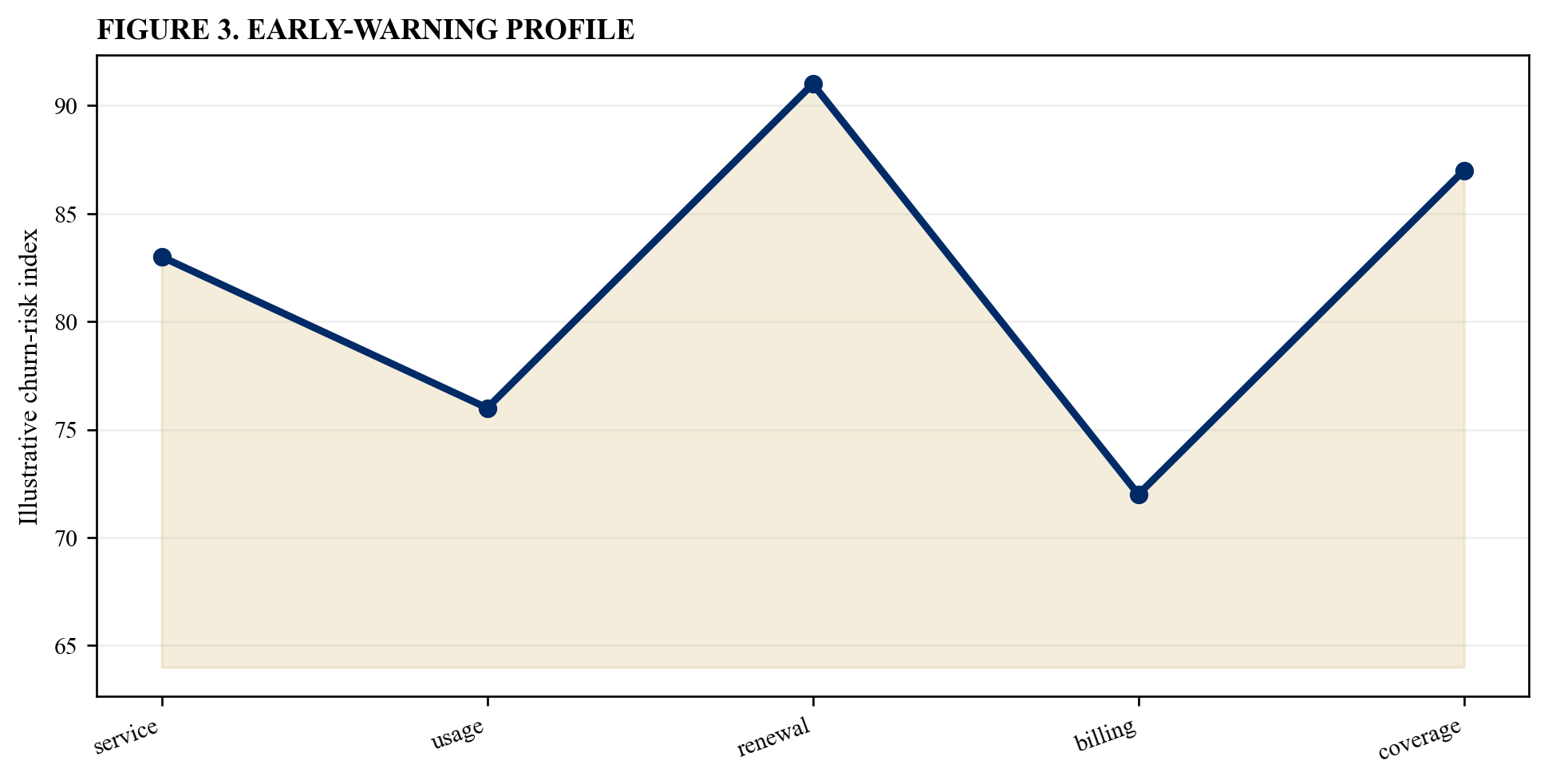
Illustrative analytical scenario; verified transaction evidence should replace index values.
22. Control retrospective bias
The integration leadership should set thresholds and observation windows before outcomes are known and test on holdout cohorts. The required output is a model-validation protocol. Record the business purpose, account and contract scope, evidence, accountable owner, customer and revenue impact, legal boundary, decision rationale and review date [32][33].
Assess customer continuity across both businesses. Test service outcomes, billing, contract rights, usage, complaints, relationship coverage, renewal timing, payment behaviour, privacy and the critical decision window. Apply documented business judgement to verified evidence.
The principal risk is that post-hoc patterns can overstate predictive power. Compare prevention, early detection, diagnosis, intervention and verification, including service recovery, relationship action, contract clarification, controlled offers and forecast consequences.
Retain account and contract inventories, service and billing evidence, usage and complaint signals, customer communications, interventions, approvals, outcomes, exceptions and forecast changes. Reforecast when customer evidence, service performance, renewal timing, relationship coverage or integration plans change.
23. Protect data lineage
The integration leadership should document source, owner, definition, timing, completeness, transformations and reconciliation for each signal. The required output is a retention data dictionary. Record the business purpose, account and contract scope, evidence, accountable owner, customer and revenue impact, legal boundary, decision rationale and review date [8][34].
Assess customer continuity across both businesses. Test service outcomes, billing, contract rights, usage, complaints, relationship coverage, renewal timing, payment behaviour, privacy and the critical decision window. Apply documented business judgement to verified evidence.
The principal risk is that inconsistent definitions can distort account risk. Compare prevention, early detection, diagnosis, intervention and verification, including service recovery, relationship action, contract clarification, controlled offers and forecast consequences.
Retain account and contract inventories, service and billing evidence, usage and complaint signals, customer communications, interventions, approvals, outcomes, exceptions and forecast changes. Reforecast when customer evidence, service performance, renewal timing, relationship coverage or integration plans change.
24. Govern profiling and automation
The integration leadership should define lawful purpose, necessity, transparency, human review, challenge and retention. The required output is a privacy control map. Record the business purpose, account and contract scope, evidence, accountable owner, customer and revenue impact, legal boundary, decision rationale and review date [35][36].
Assess customer continuity across both businesses. Test service outcomes, billing, contract rights, usage, complaints, relationship coverage, renewal timing, payment behaviour, privacy and the critical decision window. Apply documented business judgement to verified evidence.
The principal risk is that customer scoring can create unlawful or unfair effects. Compare prevention, early detection, diagnosis, intervention and verification, including service recovery, relationship action, contract clarification, controlled offers and forecast consequences.
Retain account and contract inventories, service and billing evidence, usage and complaint signals, customer communications, interventions, approvals, outcomes, exceptions and forecast changes. Reforecast when customer evidence, service performance, renewal timing, relationship coverage or integration plans change.
25. Protect vulnerable customers
The integration leadership should identify support needs and compare outcomes without unnecessary sensitive-data collection. The required output is a differentiated-outcomes review. Record the business purpose, account and contract scope, evidence, accountable owner, customer and revenue impact, legal boundary, decision rationale and review date [2][37].
Assess customer continuity across both businesses. Test service outcomes, billing, contract rights, usage, complaints, relationship coverage, renewal timing, payment behaviour, privacy and the critical decision window. Apply documented business judgement to verified evidence.
The principal risk is that integration can deepen harm for customers needing support. Compare prevention, early detection, diagnosis, intervention and verification, including service recovery, relationship action, contract clarification, controlled offers and forecast consequences.
Retain account and contract inventories, service and billing evidence, usage and complaint signals, customer communications, interventions, approvals, outcomes, exceptions and forecast changes. Reforecast when customer evidence, service performance, renewal timing, relationship coverage or integration plans change.
26. Create account-specific continuity plans
The integration leadership should translate diagnosed risks into owners, actions, customer commitments, evidence and deadlines. The required output is an account intervention plan. Record the business purpose, account and contract scope, evidence, accountable owner, customer and revenue impact, legal boundary, decision rationale and review date [11][24].
Assess customer continuity across both businesses. Test service outcomes, billing, contract rights, usage, complaints, relationship coverage, renewal timing, payment behaviour, privacy and the critical decision window. Apply documented business judgement to verified evidence.
The principal risk is that generic retention campaigns can miss the actual cause. Compare prevention, early detection, diagnosis, intervention and verification, including service recovery, relationship action, contract clarification, controlled offers and forecast consequences.
Retain account and contract inventories, service and billing evidence, usage and complaint signals, customer communications, interventions, approvals, outcomes, exceptions and forecast changes. Reforecast when customer evidence, service performance, renewal timing, relationship coverage or integration plans change.
27. Design service-recovery playbooks
The integration leadership should define acknowledgement, containment, remedy, communication, follow-up and recurrence prevention. The required output is a recovery decision tree. Record the business purpose, account and contract scope, evidence, accountable owner, customer and revenue impact, legal boundary, decision rationale and review date [13][26].
Assess customer continuity across both businesses. Test service outcomes, billing, contract rights, usage, complaints, relationship coverage, renewal timing, payment behaviour, privacy and the critical decision window. Apply documented business judgement to verified evidence.
The principal risk is that offers without operational repair can destroy credibility. Compare prevention, early detection, diagnosis, intervention and verification, including service recovery, relationship action, contract clarification, controlled offers and forecast consequences.
Retain account and contract inventories, service and billing evidence, usage and complaint signals, customer communications, interventions, approvals, outcomes, exceptions and forecast changes. Reforecast when customer evidence, service performance, renewal timing, relationship coverage or integration plans change.
28. Govern retention offers
The integration leadership should set eligibility, authority, economics, fairness, accounting, documentation and expiry. The required output is an offer-control matrix. Record the business purpose, account and contract scope, evidence, accountable owner, customer and revenue impact, legal boundary, decision rationale and review date [3][17].
Assess customer continuity across both businesses. Test service outcomes, billing, contract rights, usage, complaints, relationship coverage, renewal timing, payment behaviour, privacy and the critical decision window. Apply documented business judgement to verified evidence.
The principal risk is that blanket discounting can erode value and create precedent. Compare prevention, early detection, diagnosis, intervention and verification, including service recovery, relationship action, contract clarification, controlled offers and forecast consequences.
Retain account and contract inventories, service and billing evidence, usage and complaint signals, customer communications, interventions, approvals, outcomes, exceptions and forecast changes. Reforecast when customer evidence, service performance, renewal timing, relationship coverage or integration plans change.
29. Sequence customer communications
The integration leadership should coordinate verified facts, relevance, channel, owner, timing, feedback and follow-up. The required output is a communication calendar. Record the business purpose, account and contract scope, evidence, accountable owner, customer and revenue impact, legal boundary, decision rationale and review date [12][38].
Assess customer continuity across both businesses. Test service outcomes, billing, contract rights, usage, complaints, relationship coverage, renewal timing, payment behaviour, privacy and the critical decision window. Apply documented business judgement to verified evidence.
The principal risk is that duplicated or premature messages can raise uncertainty. Compare prevention, early detection, diagnosis, intervention and verification, including service recovery, relationship action, contract clarification, controlled offers and forecast consequences.
Retain account and contract inventories, service and billing evidence, usage and complaint signals, customer communications, interventions, approvals, outcomes, exceptions and forecast changes. Reforecast when customer evidence, service performance, renewal timing, relationship coverage or integration plans change.
30. Manage brand and channel transitions
The integration leadership should test naming, domains, contacts, portals, documentation and discoverability before switching. The required output is a transition-readiness gate. Record the business purpose, account and contract scope, evidence, accountable owner, customer and revenue impact, legal boundary, decision rationale and review date [14][23].
Assess customer continuity across both businesses. Test service outcomes, billing, contract rights, usage, complaints, relationship coverage, renewal timing, payment behaviour, privacy and the critical decision window. Apply documented business judgement to verified evidence.
The principal risk is that customers can interpret navigation friction as service decline. Compare prevention, early detection, diagnosis, intervention and verification, including service recovery, relationship action, contract clarification, controlled offers and forecast consequences.
Retain account and contract inventories, service and billing evidence, usage and complaint signals, customer communications, interventions, approvals, outcomes, exceptions and forecast changes. Reforecast when customer evidence, service performance, renewal timing, relationship coverage or integration plans change.
31. Align distributors and partners
The integration leadership should map customer ownership, data, incentives, support, escalation and conduct across intermediaries. The required output is a channel-continuity map. Record the business purpose, account and contract scope, evidence, accountable owner, customer and revenue impact, legal boundary, decision rationale and review date [18][39].
Assess customer continuity across both businesses. Test service outcomes, billing, contract rights, usage, complaints, relationship coverage, renewal timing, payment behaviour, privacy and the critical decision window. Apply documented business judgement to verified evidence.
The principal risk is that indirect customers can fall between organisations. Compare prevention, early detection, diagnosis, intervention and verification, including service recovery, relationship action, contract clarification, controlled offers and forecast consequences.
Retain account and contract inventories, service and billing evidence, usage and complaint signals, customer communications, interventions, approvals, outcomes, exceptions and forecast changes. Reforecast when customer evidence, service performance, renewal timing, relationship coverage or integration plans change.
32. Protect executive sponsorship
The integration leadership should assign senior coverage for concentrated and strategically critical accounts. The required output is an executive-contact schedule. Record the business purpose, account and contract scope, evidence, accountable owner, customer and revenue impact, legal boundary, decision rationale and review date [11][12].
Assess customer continuity across both businesses. Test service outcomes, billing, contract rights, usage, complaints, relationship coverage, renewal timing, payment behaviour, privacy and the critical decision window. Apply documented business judgement to verified evidence.
The principal risk is that leadership silence can amplify perceived risk. Compare prevention, early detection, diagnosis, intervention and verification, including service recovery, relationship action, contract clarification, controlled offers and forecast consequences.
Retain account and contract inventories, service and billing evidence, usage and complaint signals, customer communications, interventions, approvals, outcomes, exceptions and forecast changes. Reforecast when customer evidence, service performance, renewal timing, relationship coverage or integration plans change.
33. Operate a churn war room
The integration leadership should review material alerts, causes, authority, interventions, evidence and outcomes at a fixed cadence. The required output is a retention action ledger. Record the business purpose, account and contract scope, evidence, accountable owner, customer and revenue impact, legal boundary, decision rationale and review date [1][24].
Assess customer continuity across both businesses. Test service outcomes, billing, contract rights, usage, complaints, relationship coverage, renewal timing, payment behaviour, privacy and the critical decision window. Apply documented business judgement to verified evidence.
The principal risk is that risk signals can age without accountable decisions. Compare prevention, early detection, diagnosis, intervention and verification, including service recovery, relationship action, contract clarification, controlled offers and forecast consequences.
Retain account and contract inventories, service and billing evidence, usage and complaint signals, customer communications, interventions, approvals, outcomes, exceptions and forecast changes. Reforecast when customer evidence, service performance, renewal timing, relationship coverage or integration plans change.
Table 4. Retention intervention authority
| Decision | Accountable role | Evidence |
|---|---|---|
| service remedy | service owner | cause and recovery |
| contract clarification | commercial and legal | rights and commitment |
| retention offer | commercial authority | economics and fairness |
| forecast change | finance owner | account evidence |
Illustrative structure; verified transaction evidence and specialist review govern.
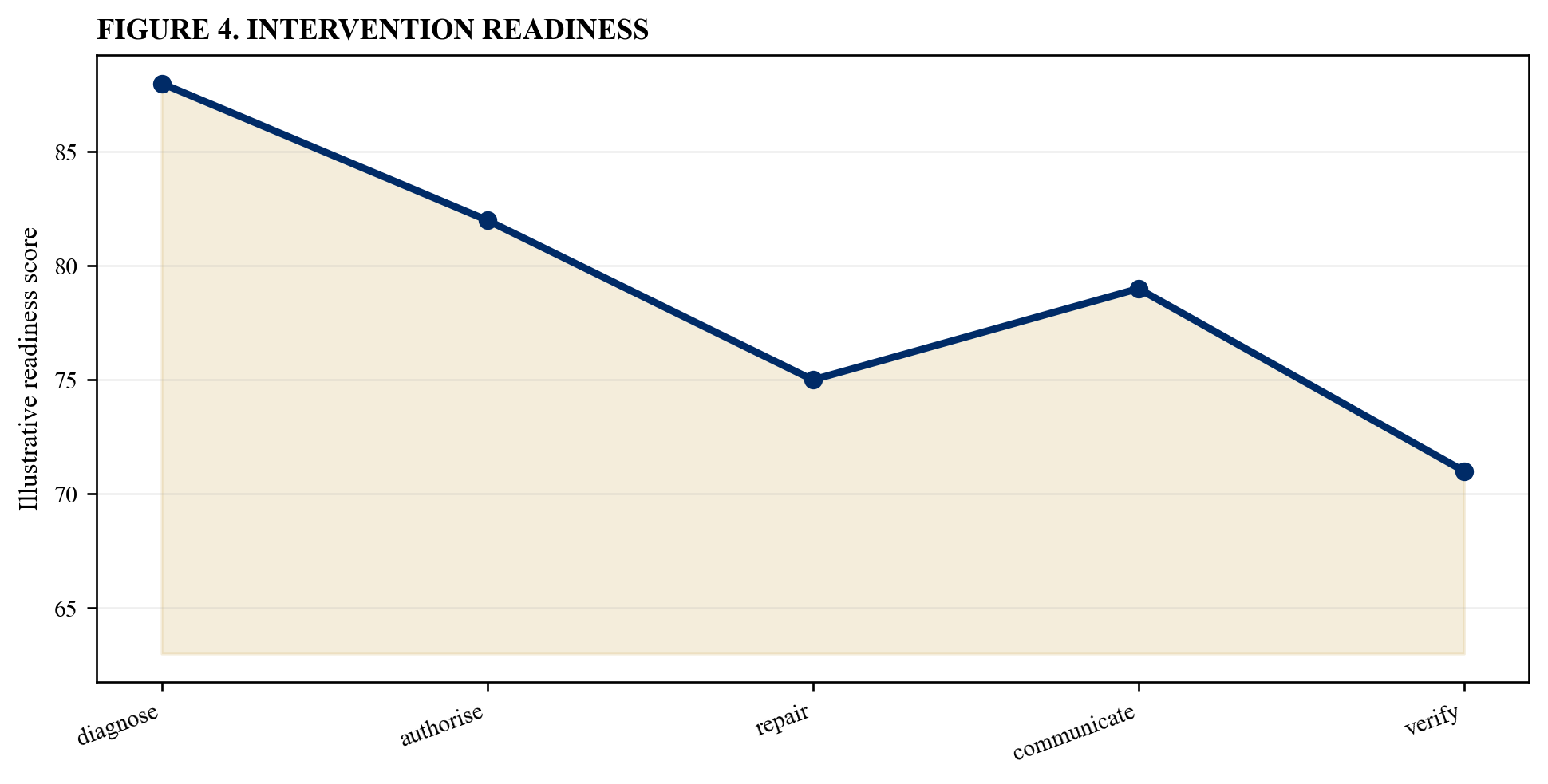
Illustrative analytical scenario; verified transaction evidence should replace index values.
34. Set thresholds and escalation
The integration leadership should define severity, confidence, value, urgency, owner, review and override rules. The required output is an escalation matrix. Record the business purpose, account and contract scope, evidence, accountable owner, customer and revenue impact, legal boundary, decision rationale and review date [32][33].
Assess customer continuity across both businesses. Test service outcomes, billing, contract rights, usage, complaints, relationship coverage, renewal timing, payment behaviour, privacy and the critical decision window. Apply documented business judgement to verified evidence.
The principal risk is that alert volume can overwhelm scarce attention. Compare prevention, early detection, diagnosis, intervention and verification, including service recovery, relationship action, contract clarification, controlled offers and forecast consequences.
Retain account and contract inventories, service and billing evidence, usage and complaint signals, customer communications, interventions, approvals, outcomes, exceptions and forecast changes. Reforecast when customer evidence, service performance, renewal timing, relationship coverage or integration plans change.
35. Diagnose causes before intervention
The integration leadership should test service, price, product, relationship, contract, competitor and integration explanations. The required output is a causal diagnosis record. Record the business purpose, account and contract scope, evidence, accountable owner, customer and revenue impact, legal boundary, decision rationale and review date [25][31].
Assess customer continuity across both businesses. Test service outcomes, billing, contract rights, usage, complaints, relationship coverage, renewal timing, payment behaviour, privacy and the critical decision window. Apply documented business judgement to verified evidence.
The principal risk is that correlation can trigger the wrong remedy. Compare prevention, early detection, diagnosis, intervention and verification, including service recovery, relationship action, contract clarification, controlled offers and forecast consequences.
Retain account and contract inventories, service and billing evidence, usage and complaint signals, customer communications, interventions, approvals, outcomes, exceptions and forecast changes. Reforecast when customer evidence, service performance, renewal timing, relationship coverage or integration plans change.
36. Measure outcomes by cohort
The integration leadership should compare retention, downgrade, expansion, service and complaint outcomes across relevant groups. The required output is a cohort outcome scorecard. Record the business purpose, account and contract scope, evidence, accountable owner, customer and revenue impact, legal boundary, decision rationale and review date [1][2].
Assess customer continuity across both businesses. Test service outcomes, billing, contract rights, usage, complaints, relationship coverage, renewal timing, payment behaviour, privacy and the critical decision window. Apply documented business judgement to verified evidence.
The principal risk is that portfolio averages can hide harmed segments. Compare prevention, early detection, diagnosis, intervention and verification, including service recovery, relationship action, contract clarification, controlled offers and forecast consequences.
Retain account and contract inventories, service and billing evidence, usage and complaint signals, customer communications, interventions, approvals, outcomes, exceptions and forecast changes. Reforecast when customer evidence, service performance, renewal timing, relationship coverage or integration plans change.
37. Update the revenue forecast
The integration leadership should translate verified account evidence into timing, probability, value and scenario effects. The required output is a retention-adjusted forecast. Record the business purpose, account and contract scope, evidence, accountable owner, customer and revenue impact, legal boundary, decision rationale and review date [3][4].
Assess customer continuity across both businesses. Test service outcomes, billing, contract rights, usage, complaints, relationship coverage, renewal timing, payment behaviour, privacy and the critical decision window. Apply documented business judgement to verified evidence.
The principal risk is that late recognition can overstate deal delivery. Compare prevention, early detection, diagnosis, intervention and verification, including service recovery, relationship action, contract clarification, controlled offers and forecast consequences.
Retain account and contract inventories, service and billing evidence, usage and complaint signals, customer communications, interventions, approvals, outcomes, exceptions and forecast changes. Reforecast when customer evidence, service performance, renewal timing, relationship coverage or integration plans change.
38. Align incentives and governance
The integration leadership should connect commercial rewards to durable customer outcomes, evidence quality and fair intervention. The required output is a retention governance model. Record the business purpose, account and contract scope, evidence, accountable owner, customer and revenue impact, legal boundary, decision rationale and review date [1][17].
Assess customer continuity across both businesses. Test service outcomes, billing, contract rights, usage, complaints, relationship coverage, renewal timing, payment behaviour, privacy and the critical decision window. Apply documented business judgement to verified evidence.
The principal risk is that short-term revenue incentives can defer customer harm. Compare prevention, early detection, diagnosis, intervention and verification, including service recovery, relationship action, contract clarification, controlled offers and forecast consequences.
Retain account and contract inventories, service and billing evidence, usage and complaint signals, customer communications, interventions, approvals, outcomes, exceptions and forecast changes. Reforecast when customer evidence, service performance, renewal timing, relationship coverage or integration plans change.
39. Issue the customer-continuity certificate
The integration leadership should reconcile accounts, contracts, signals, interventions, forecast effects, exceptions and acceptance. The required output is an auditable continuity certificate. Record the business purpose, account and contract scope, evidence, accountable owner, customer and revenue impact, legal boundary, decision rationale and review date [1][3].
Assess customer continuity across both businesses. Test service outcomes, billing, contract rights, usage, complaints, relationship coverage, renewal timing, payment behaviour, privacy and the critical decision window. Apply documented business judgement to verified evidence.
The principal risk is that leaders can declare retention without outcome evidence. Compare prevention, early detection, diagnosis, intervention and verification, including service recovery, relationship action, contract clarification, controlled offers and forecast consequences.
Retain account and contract inventories, service and billing evidence, usage and complaint signals, customer communications, interventions, approvals, outcomes, exceptions and forecast changes. Reforecast when customer evidence, service performance, renewal timing, relationship coverage or integration plans change.
Table 5. Customer-continuity certificate
| Conclusion | Evidence | Acceptance |
|---|---|---|
| portfolio visibility | account and contract map | approved |
| early warning | reconciled signal model | controlled |
| intervention | action and outcome ledger | verified |
| residual risk | forecast and exceptions | accepted |
Illustrative structure; verified transaction evidence and specialist review govern.
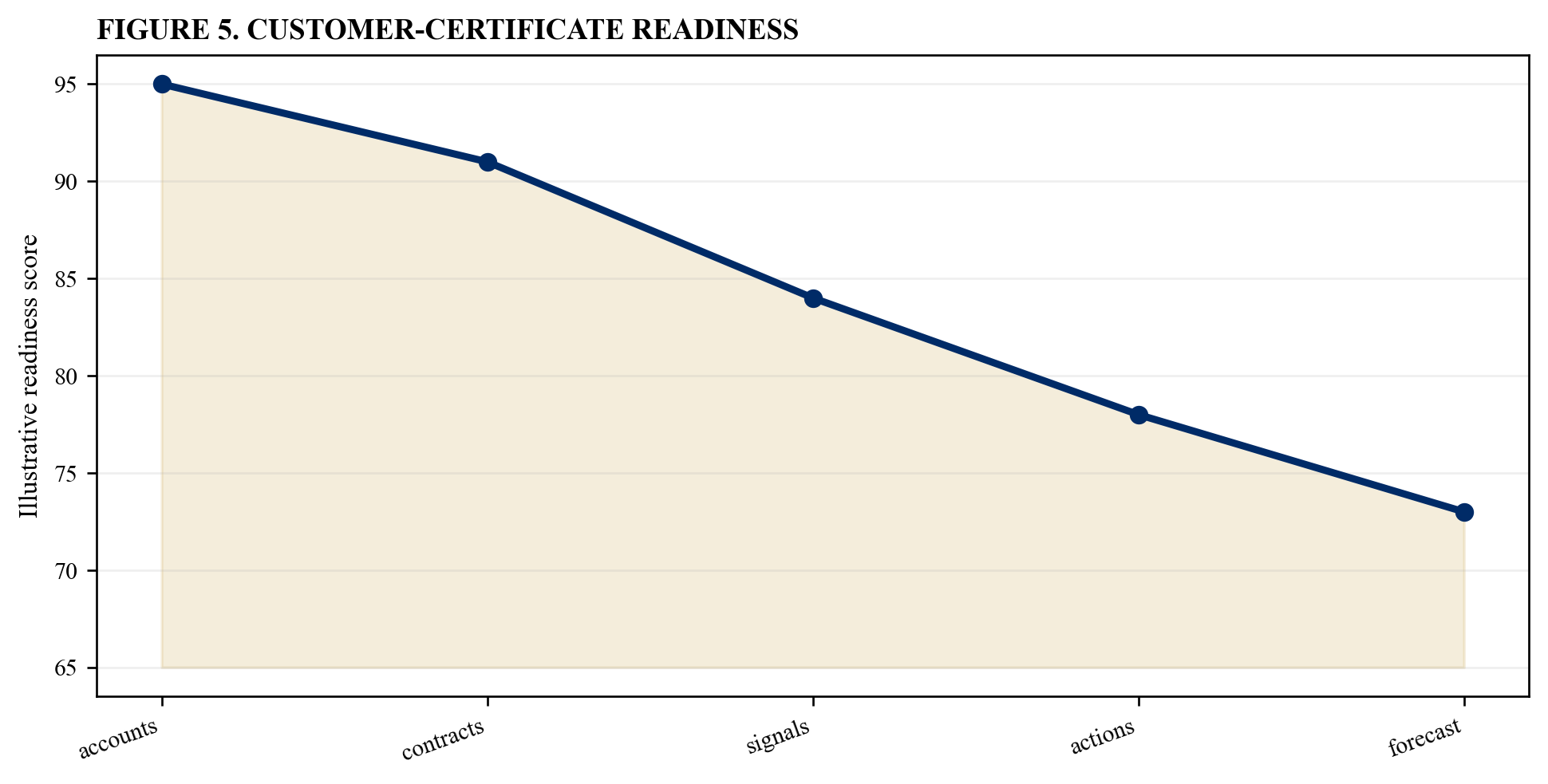
Illustrative analytical scenario; verified transaction evidence should replace index values.
40. Institutionalise customer-outcome governance
The integration leadership should embed accountable monitoring, challenge, learning, investment and board oversight. The required output is an enduring customer governance cycle. Record the business purpose, account and contract scope, evidence, accountable owner, customer and revenue impact, legal boundary, decision rationale and review date [1][40].
Assess customer continuity across both businesses. Test service outcomes, billing, contract rights, usage, complaints, relationship coverage, renewal timing, payment behaviour, privacy and the critical decision window. Apply documented business judgement to verified evidence.
The principal risk is that integration-period controls can decay after stabilisation. Compare prevention, early detection, diagnosis, intervention and verification, including service recovery, relationship action, contract clarification, controlled offers and forecast consequences.
Retain account and contract inventories, service and billing evidence, usage and complaint signals, customer communications, interventions, approvals, outcomes, exceptions and forecast changes. Reforecast when customer evidence, service performance, renewal timing, relationship coverage or integration plans change.
References
- UK Financial Conduct Authority, Consumer Duty Information for Firms, https://www.fca.org.uk/firms/consumer-duty/information-firms
- UK Financial Conduct Authority, Outcomes Monitoring under the Consumer Duty, https://www.fca.org.uk/publications/multi-firm-reviews/insurance-multi-firm-review-outcomes-monitoring-under-consumer-duty
- IFRS Foundation, IFRS 15 Revenue from Contracts with Customers, https://www.ifrs.org/issued-standards/list-of-standards/ifrs-15-revenue-from-contracts-with-customers/
- IFRS Foundation, IFRS 3 Business Combinations, https://www.ifrs.org/issued-standards/list-of-standards/ifrs-3-business-combinations/
- UK Competition and Markets Authority, Interim Measures in Merger Investigations, https://www.gov.uk/government/publications/interim-measures-and-derogations-guidance-and-templates
- European Commission, EU Merger Control Procedures, https://competition-policy.ec.europa.eu/mergers/procedures_en
- UK Financial Conduct Authority, Delivering Good Outcomes for Customers in Vulnerable Circumstances, https://www.fca.org.uk/publications/good-and-poor-practice/delivering-vulnerable-customers
- UK Government, Government Data Quality Framework, https://www.gov.uk/government/publications/the-government-data-quality-framework/the-government-data-quality-framework
- International Organization for Standardization, ISO 8000 Data Quality, https://www.iso.org/committee/50798/x/catalogue/
- UK Competition and Markets Authority, Unfair Contract Terms Guidance, https://www.gov.uk/government/publications/unfair-contract-terms-cma37
- UK Government Service Manual, Service Ownership, https://www.gov.uk/service-manual/the-team/service-owner
- UK Government Service Manual, Managing Stakeholder Relationships, https://www.gov.uk/service-manual/the-team/working-with-your-senior-responsible-owner
- UK Financial Conduct Authority, Operational Resilience, https://www.fca.org.uk/firms/operational-resilience
- UK Government Service Manual, Service Standard, https://www.gov.uk/service-manual/service-standard
- UK Government Service Manual, Measuring Success, https://www.gov.uk/service-manual/measuring-success
- IFRS Foundation, Conceptual Framework for Financial Reporting, https://www.ifrs.org/issued-standards/list-of-standards/conceptual-framework/
- UK Financial Conduct Authority, Price and Value Outcome, https://www.fca.org.uk/firms/consumer-duty/price-and-value-outcome
- UK Financial Conduct Authority, Firms Working Together to Manufacture Products or Services, https://www.fca.org.uk/publications/corporate-documents/consumer-duty-firms-working-together-manufacture-products-services
- UK Government Service Manual, Developing a Service Proposition, https://www.gov.uk/service-manual/design/developing-a-service-proposition
- UK Government Service Manual, Service Assessment, https://www.gov.uk/service-manual/service-assessments
- UK Government Service Manual, Agile Delivery, https://www.gov.uk/service-manual/agile-delivery
- UK Government Service Manual, Maintaining a Service in Live, https://www.gov.uk/service-manual/technology/maintaining-a-service-in-live
- UK Financial Conduct Authority, Consumer Support Outcome, https://www.fca.org.uk/publications/good-and-poor-practice/consumer-support-outcome
- UK Financial Conduct Authority, Outcomes Monitoring: Understanding the Consumer Experience, https://www.fca.org.uk/news/blogs/outcomes-monitoring-why-understanding-consumer-experience-matters
- UK Government Service Manual, Learning about Users and Their Needs, https://www.gov.uk/service-manual/user-research/start-by-learning-user-needs
- UK Financial Conduct Authority, Complaints and Root Cause Analysis, https://www.fca.org.uk/publications/good-and-poor-practice/complaints-and-root-cause-analysis-good-practice-and-areas-improvement
- Financial Ombudsman Service, Complaints Data, https://www.financial-ombudsman.org.uk/data-insight/complaints-data
- UK Government Service Manual, Performance Data, https://www.gov.uk/service-manual/measuring-success/using-data-to-improve-your-service-an-introduction
- UK Statistics Authority, Code of Practice for Statistics, https://code.statisticsauthority.gov.uk/
- IFRS Foundation, IAS 1 Presentation of Financial Statements, https://www.ifrs.org/issued-standards/list-of-standards/ias-1-presentation-of-financial-statements/
- UK Government Service Manual, User Research in Live, https://www.gov.uk/service-manual/user-research/user-research-in-live
- National Institute of Standards and Technology, AI Risk Management Framework, https://www.nist.gov/itl/ai-risk-management-framework
- National Institute of Standards and Technology, AI RMF Playbook, https://airc.nist.gov/airmf-resources/playbook/
- International Organization for Standardization, ISO 8000-8 Information and Data Quality, https://www.iso.org/standard/60805.html
- UK Information Commissioner's Office, Automated Decision-Making and Profiling, https://ico.org.uk/for-organisations/uk-gdpr-guidance-and-resources/individual-rights/automated-decision-making-and-profiling/
- European Union, General Data Protection Regulation, https://eur-lex.europa.eu/eli/reg/2016/679/oj
- UK Financial Conduct Authority and Information Commissioner's Office, Vulnerability-Related Data Expectations, https://www.fca.org.uk/publications/corporate-documents/joint-fca-and-ico-statement-regulatory-expectations-regarding-firms
- UK Information Commissioner's Office, Direct Marketing Guidance, https://ico.org.uk/for-organisations/direct-marketing-and-privacy-and-electronic-communications/
- UK Financial Conduct Authority, Consumer Duty Publications and Resources, https://www.fca.org.uk/firms/consumer-duty/publications-resources
- UK Corporate Governance Code 2024, https://www.frc.org.uk/library/standards-codes-policy/corporate-governance/uk-corporate-governance-code/
