

1. Appoint the Day One authority
The integration leadership team should name the executive sponsor, integration leader, functional owners, legal gatekeeper, command-centre lead and escalation forum. The required output is an approved Day One authority map. Record the closing trigger, accountable owner, operating dependency, legal or regulatory condition, evidence standard, fallback, deadline and escalation route [1][2].
Convert the requirement into a controlled Day One release. Define the minimum service outcome, source system, authorised decision maker, execution sequence and acceptance test. Connect the action to cash, customers, employees, suppliers, licences, data, technology, controls and external communications.
The principal risk is that urgent decisions can wait for owners who were never formally appointed. Quantify revenue exposure, service interruption, liquidity need, affected stakeholders, recovery time, control effectiveness and residual risk across base, delayed-closing, disrupted and remediated cases.
Retain the source evidence, approval, test result, exception, fallback, communication, decision and closure record. Rehearse critical handoffs with real owners and realistic timing. Keep each unresolved exception visible in the command centre until an accountable executive accepts or resolves it.
2. Define the minimum viable release
The integration leadership team should limit Day One to outcomes required for lawful control, continuity, safety, cash, service, reporting and response. The required output is a ranked minimum viable integration scope. Record the closing trigger, accountable owner, operating dependency, legal or regulatory condition, evidence standard, fallback, deadline and escalation route [3][4].
The principal risk is that optional integration activity can crowd out closing-critical work. Quantify revenue exposure, service interruption, liquidity need, affected stakeholders, recovery time, control effectiveness and residual risk across base, delayed-closing, disrupted and remediated cases.
Table 1. Minimum viable Day One release
| Release domain | Minimum outcome | Gate |
|---|---|---|
| authority | valid decisions | control confirmed |
| cash | payments operable | bank test passed |
| customer | service ownership live | roster approved |
| cyber | access and response controlled | security acceptance |
Illustrative structure; verified transaction evidence and specialist review govern.
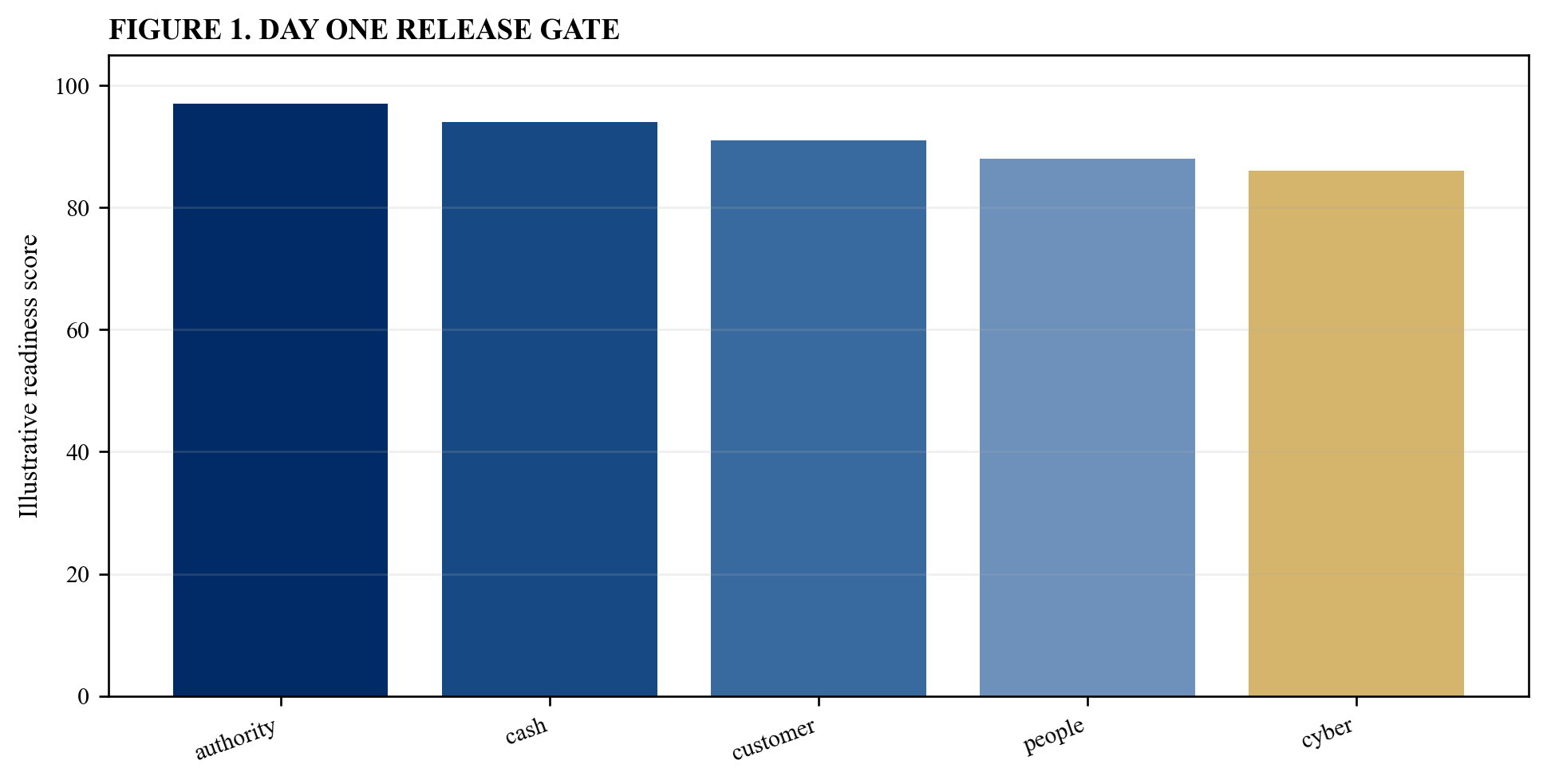
Illustrative analytical scenario; verified transaction evidence should replace index values.
3. Translate closing into executable triggers
The integration leadership team should map completion documents, funds flow, regulatory clearances, control transfer, notices and effective times. The required output is a closing-trigger matrix. Record the closing trigger, accountable owner, operating dependency, legal or regulatory condition, evidence standard, fallback, deadline and escalation route [1][5].
The principal risk is that teams can act before authority exists or miss actions once control transfers. Quantify revenue exposure, service interruption, liquidity need, affected stakeholders, recovery time, control effectiveness and residual risk across base, delayed-closing, disrupted and remediated cases.
4. Establish legal and delegated authority
The integration leadership team should reconcile boards, officers, reserved matters, powers of attorney, delegations and local signatories. The required output is a legal-authority bridge. Record the closing trigger, accountable owner, operating dependency, legal or regulatory condition, evidence standard, fallback, deadline and escalation route [6][7].
The principal risk is that operational leaders can lack the power required to approve payments, contracts or incidents. Quantify revenue exposure, service interruption, liquidity need, affected stakeholders, recovery time, control effectiveness and residual risk across base, delayed-closing, disrupted and remediated cases.
5. Secure opening liquidity
The integration leadership team should forecast opening cash, trapped balances, payment runs, facilities, collateral, headroom and emergency funding. The required output is a Day One liquidity schedule. Record the closing trigger, accountable owner, operating dependency, legal or regulatory condition, evidence standard, fallback, deadline and escalation route [8][9].
The principal risk is that ownership can transfer while usable cash remains inaccessible. Quantify revenue exposure, service interruption, liquidity need, affected stakeholders, recovery time, control effectiveness and residual risk across base, delayed-closing, disrupted and remediated cases.
6. Activate banking and payment control
The integration leadership team should test mandates, tokens, approvers, payment files, fraud controls, cut-off times and fallback routes. The required output is a bank-control activation record. Record the closing trigger, accountable owner, operating dependency, legal or regulatory condition, evidence standard, fallback, deadline and escalation route [8][10].
The principal risk is that a valid legal mandate can still fail operationally at the first payment. Quantify revenue exposure, service interruption, liquidity need, affected stakeholders, recovery time, control effectiveness and residual risk across base, delayed-closing, disrupted and remediated cases.
7. Protect debt and covenant compliance
The integration leadership team should map notices, change-of-control terms, draw conditions, guarantees, hedges, reporting and waiver evidence. The required output is a financing continuity register. Record the closing trigger, accountable owner, operating dependency, legal or regulatory condition, evidence standard, fallback, deadline and escalation route [9][11].
The principal risk is that closing can trigger default, repricing or lost liquidity without visible warning. Quantify revenue exposure, service interruption, liquidity need, affected stakeholders, recovery time, control effectiveness and residual risk across base, delayed-closing, disrupted and remediated cases.
8. Define the opening financial close
The integration leadership team should set chart-of-account bridges, consolidation, cut-off, policies, journals, estimates, controls and reporting calendar. The required output is an opening-close playbook. Record the closing trigger, accountable owner, operating dependency, legal or regulatory condition, evidence standard, fallback, deadline and escalation route [5][12].
The principal risk is that the combined group can begin without one reliable financial view. Quantify revenue exposure, service interruption, liquidity need, affected stakeholders, recovery time, control effectiveness and residual risk across base, delayed-closing, disrupted and remediated cases.
9. Assign every material customer
The integration leadership team should name commercial and service owners, executive sponsors, consent needs, commitments and escalation routes. The required output is a Day One customer ownership roster. Record the closing trigger, accountable owner, operating dependency, legal or regulatory condition, evidence standard, fallback, deadline and escalation route [13][14].
The principal risk is that customers can receive duplicate contact, silence or inconsistent promises. Quantify revenue exposure, service interruption, liquidity need, affected stakeholders, recovery time, control effectiveness and residual risk across base, delayed-closing, disrupted and remediated cases.
10. Preserve customer service
The integration leadership team should map critical journeys, service levels, fulfilment capacity, complaints, refunds, incidents and recovery priorities. The required output is a customer-continuity control plan. Record the closing trigger, accountable owner, operating dependency, legal or regulatory condition, evidence standard, fallback, deadline and escalation route [14][15].
The principal risk is that internal cutover activity can interrupt the outcomes that protect revenue. Quantify revenue exposure, service interruption, liquidity need, affected stakeholders, recovery time, control effectiveness and residual risk across base, delayed-closing, disrupted and remediated cases.
11. Control pricing and contracting
The integration leadership team should define approval limits, quote validity, discounts, contract signatures, conflicts, renewals and exceptions. The required output is a commercial authority schedule. Record the closing trigger, accountable owner, operating dependency, legal or regulatory condition, evidence standard, fallback, deadline and escalation route [6][13].
The principal risk is that unclear authority can stop sales or create unauthorised commitments. Quantify revenue exposure, service interruption, liquidity need, affected stakeholders, recovery time, control effectiveness and residual risk across base, delayed-closing, disrupted and remediated cases.
12. Protect pipeline and revenue evidence
The integration leadership team should reconcile opportunities, bookings, backlog, delivery milestones, billing, collections and forecast ownership. The required output is a revenue bridge with named owners. Record the closing trigger, accountable owner, operating dependency, legal or regulatory condition, evidence standard, fallback, deadline and escalation route [12][16].
The principal risk is that deal excitement can conceal lost pipeline, delayed billing or disputed revenue. Quantify revenue exposure, service interruption, liquidity need, affected stakeholders, recovery time, control effectiveness and residual risk across base, delayed-closing, disrupted and remediated cases.
13. Stabilise critical suppliers
The integration leadership team should identify essential vendors, consent clauses, payment status, service dependencies, contacts and contingency options. The required output is a supplier continuity roster. Record the closing trigger, accountable owner, operating dependency, legal or regulatory condition, evidence standard, fallback, deadline and escalation route [17][18].
The principal risk is that a minor administrative lapse can stop a critical third-party service. Quantify revenue exposure, service interruption, liquidity need, affected stakeholders, recovery time, control effectiveness and residual risk across base, delayed-closing, disrupted and remediated cases.
14. Protect inventory and logistics
The integration leadership team should map title, locations, customs, carriers, warehouses, planning data, release authority and shortages. The required output is a physical-flow continuity map. Record the closing trigger, accountable owner, operating dependency, legal or regulatory condition, evidence standard, fallback, deadline and escalation route [17][19].
The principal risk is that legal completion can interrupt material flow across organisational boundaries. Quantify revenue exposure, service interruption, liquidity need, affected stakeholders, recovery time, control effectiveness and residual risk across base, delayed-closing, disrupted and remediated cases.
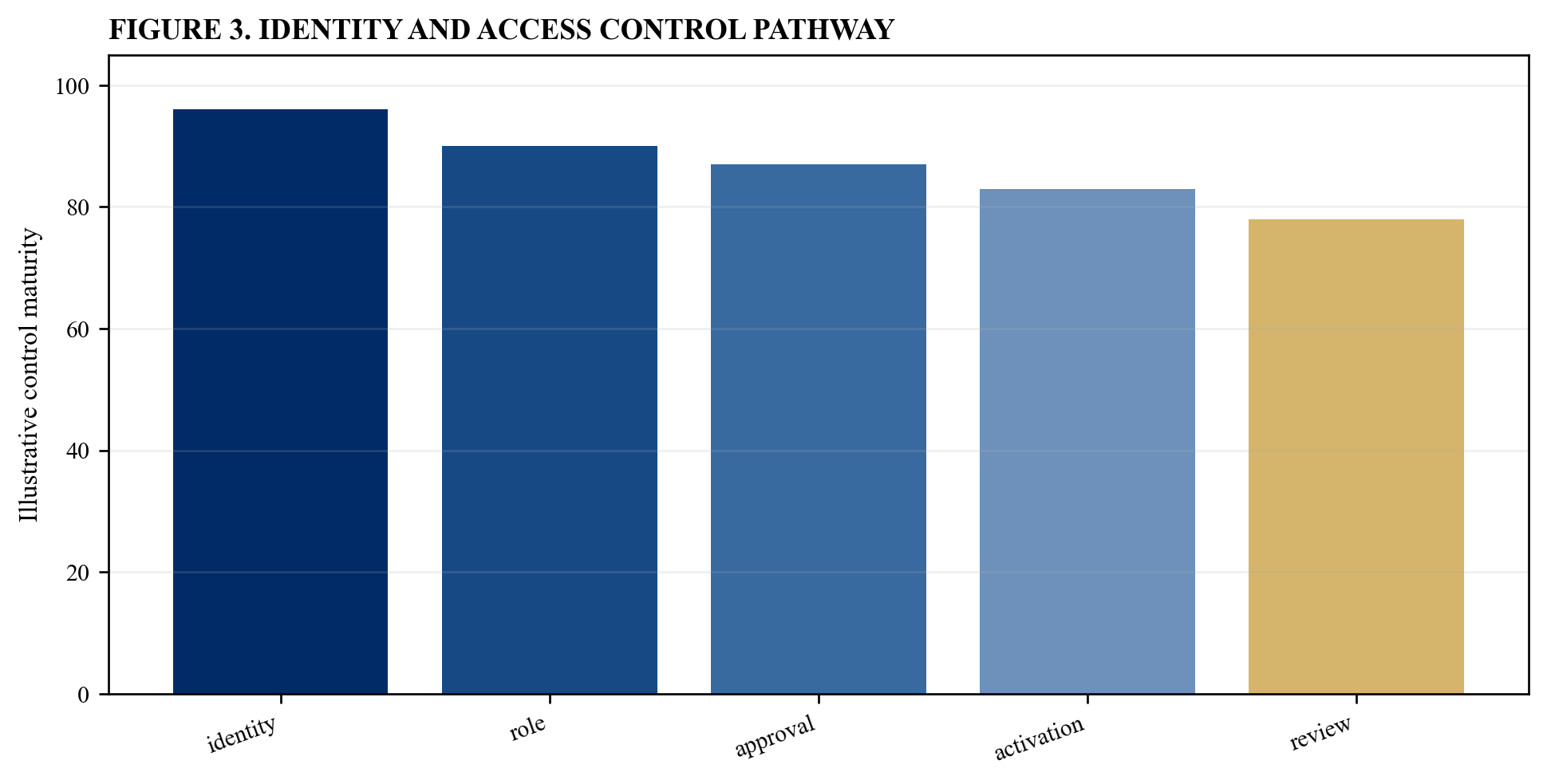
Table 2. Critical-service dependency map
| Service | Dependency | Fallback |
|---|---|---|
| order to cash | ERP and bank | manual priority queue |
| payroll | employee file and funding | exception run |
| customer support | identity and telephony | emergency routing |
| fulfilment | supplier and logistics | alternate route |
Illustrative structure; verified transaction evidence and specialist review govern.
15. Confirm the Day One leadership roster
The integration leadership team should publish reporting lines, interim roles, decision rights, deputies, availability and succession coverage. The required output is a leadership activation sheet. Record the closing trigger, accountable owner, operating dependency, legal or regulatory condition, evidence standard, fallback, deadline and escalation route [7][20].
The principal risk is that employees and customers can face ambiguous leadership at the moment of highest uncertainty. Quantify revenue exposure, service interruption, liquidity need, affected stakeholders, recovery time, control effectiveness and residual risk across base, delayed-closing, disrupted and remediated cases.
16. Secure payroll and benefits
The integration leadership team should test employee population, payroll files, funding, tax, pensions, benefits, joiners, leavers and exception handling. The required output is a payroll continuity certificate. Record the closing trigger, accountable owner, operating dependency, legal or regulatory condition, evidence standard, fallback, deadline and escalation route [21][22].
The principal risk is that a preventable pay failure can damage trust and retention immediately. Quantify revenue exposure, service interruption, liquidity need, affected stakeholders, recovery time, control effectiveness and residual risk across base, delayed-closing, disrupted and remediated cases.
17. Deliver lawful employee communications
The integration leadership team should sequence announcements, consultation boundaries, manager briefings, questions, channels and local requirements. The required output is an employee communication and consultation plan. Record the closing trigger, accountable owner, operating dependency, legal or regulatory condition, evidence standard, fallback, deadline and escalation route [21][23].
The principal risk is that premature or inconsistent messages can prejudice process and accelerate attrition. Quantify revenue exposure, service interruption, liquidity need, affected stakeholders, recovery time, control effectiveness and residual risk across base, delayed-closing, disrupted and remediated cases.
18. Retain critical capability
The integration leadership team should identify roles, dependency, flight risk, incentives, knowledge transfer, access and successor coverage. The required output is a critical-capability protection register. Record the closing trigger, accountable owner, operating dependency, legal or regulatory condition, evidence standard, fallback, deadline and escalation route [20][24].
The principal risk is that the combined business can lose the people required to operate and integrate it. Quantify revenue exposure, service interruption, liquidity need, affected stakeholders, recovery time, control effectiveness and residual risk across base, delayed-closing, disrupted and remediated cases.
19. Confirm licences and regulated accountability
The integration leadership team should map permissions, controllers, responsible persons, notifications, conditions, ring-fences and evidence. The required output is a regulatory-operability certificate. Record the closing trigger, accountable owner, operating dependency, legal or regulatory condition, evidence standard, fallback, deadline and escalation route [25][26].
The principal risk is that the intended model can exceed the permissions or accountability in force. Quantify revenue exposure, service interruption, liquidity need, affected stakeholders, recovery time, control effectiveness and residual risk across base, delayed-closing, disrupted and remediated cases.
20. Activate compliance and financial-crime controls
The integration leadership team should align sanctions, customer due diligence, transaction monitoring, conflicts, whistleblowing and investigations. The required output is a Day One compliance control map. Record the closing trigger, accountable owner, operating dependency, legal or regulatory condition, evidence standard, fallback, deadline and escalation route [26][27].
The principal risk is that control gaps can arise while policies, systems and ownership remain split. Quantify revenue exposure, service interruption, liquidity need, affected stakeholders, recovery time, control effectiveness and residual risk across base, delayed-closing, disrupted and remediated cases.
21. Protect personal and sensitive data
The integration leadership team should define controllers, purposes, lawful bases, minimisation, access, retention, notices and breach response. The required output is a privacy boundary and access register. Record the closing trigger, accountable owner, operating dependency, legal or regulatory condition, evidence standard, fallback, deadline and escalation route [28][29].
The principal risk is that integration teams can use data beyond lawful purpose or necessary scope. Quantify revenue exposure, service interruption, liquidity need, affected stakeholders, recovery time, control effectiveness and residual risk across base, delayed-closing, disrupted and remediated cases.
22. Provision identities through controlled roles
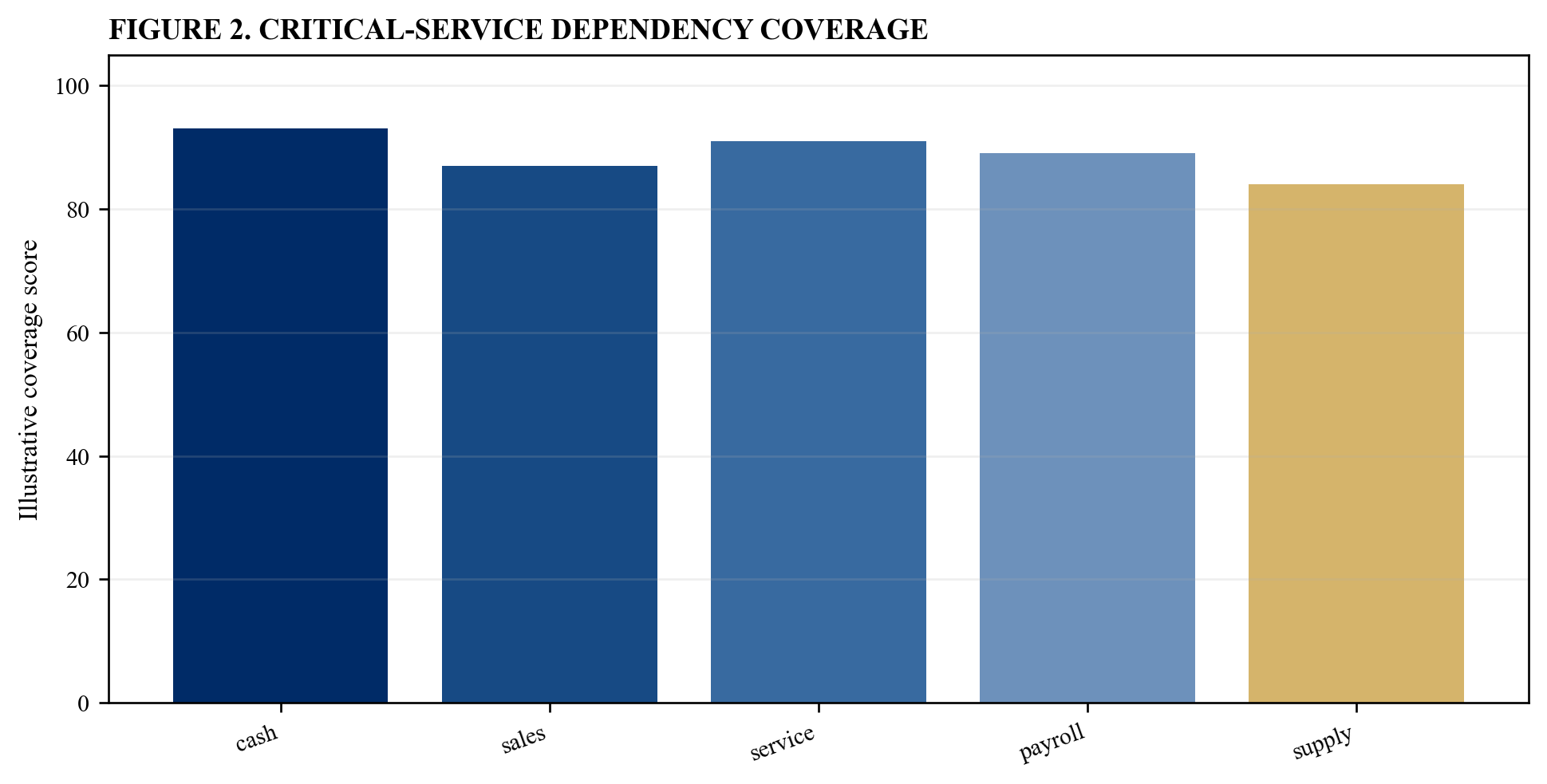
The integration leadership team should join authoritative personnel data to role design, approvals, least privilege, segregation and expiry. The required output is an identity activation ledger. Record the closing trigger, accountable owner, operating dependency, legal or regulatory condition, evidence standard, fallback, deadline and escalation route [30][31].
The principal risk is that manual urgency can create excessive, orphaned or conflicting access. Quantify revenue exposure, service interruption, liquidity need, affected stakeholders, recovery time, control effectiveness and residual risk across base, delayed-closing, disrupted and remediated cases.
Illustrative analytical scenario; verified transaction evidence should replace index values.
23. Preserve cyber monitoring
The integration leadership team should connect logs, alerts, endpoint protection, vulnerability status, third-party feeds and accountable responders. The required output is a Day One security monitoring map. Record the closing trigger, accountable owner, operating dependency, legal or regulatory condition, evidence standard, fallback, deadline and escalation route [30][32].
The principal risk is that new ownership and connectivity can reduce visibility during a high-risk transition. Quantify revenue exposure, service interruption, liquidity need, affected stakeholders, recovery time, control effectiveness and residual risk across base, delayed-closing, disrupted and remediated cases.
24. Unify incident command
The integration leadership team should define severity, reporting, containment authority, legal privilege, regulators, customers, recovery and evidence retention. The required output is a cross-company incident response playbook. Record the closing trigger, accountable owner, operating dependency, legal or regulatory condition, evidence standard, fallback, deadline and escalation route [32][33].
The principal risk is that parallel teams can delay containment or issue contradictory communications. Quantify revenue exposure, service interruption, liquidity need, affected stakeholders, recovery time, control effectiveness and residual risk across base, delayed-closing, disrupted and remediated cases.
Table 3. Access release matrix
| Stage | Evidence | Control |
|---|---|---|
| identity | authoritative person record | joiner approval |
| role | business need | least privilege |
| activation | tested credential | logging enabled |
| review | actual use | expiry or recertification |
Illustrative structure; verified transaction evidence and specialist review govern.
25. Control network and system connectivity
The integration leadership team should approve interfaces through architecture, necessity, segmentation, testing, logging, rollback and owner acceptance. The required output is a connectivity release record. Record the closing trigger, accountable owner, operating dependency, legal or regulatory condition, evidence standard, fallback, deadline and escalation route [30][34].
The principal risk is that rapid connection can expand attack paths and operational dependencies. Quantify revenue exposure, service interruption, liquidity need, affected stakeholders, recovery time, control effectiveness and residual risk across base, delayed-closing, disrupted and remediated cases.
26. Activate minimum collaboration tools
The integration leadership team should provide governed email, directory, meetings, document exchange and support without uncontrolled migration. The required output is a collaboration minimum viable product. Record the closing trigger, accountable owner, operating dependency, legal or regulatory condition, evidence standard, fallback, deadline and escalation route [28][31].
The principal risk is that people can improvise with insecure channels when approved tools arrive late. Quantify revenue exposure, service interruption, liquidity need, affected stakeholders, recovery time, control effectiveness and residual risk across base, delayed-closing, disrupted and remediated cases.
27. Protect core applications
The integration leadership team should classify systems by criticality, ownership, licences, access, interfaces, support, recovery and vendor dependency. The required output is an application continuity register. Record the closing trigger, accountable owner, operating dependency, legal or regulatory condition, evidence standard, fallback, deadline and escalation route [17][34].
The principal risk is that a licence, credential or interface failure can stop a critical business process. Quantify revenue exposure, service interruption, liquidity need, affected stakeholders, recovery time, control effectiveness and residual risk across base, delayed-closing, disrupted and remediated cases.
28. Create the opening management-information pack
The integration leadership team should reconcile operational, customer, workforce, cash, risk and synergy measures to sources and owners. The required output is a first-week management dashboard. Record the closing trigger, accountable owner, operating dependency, legal or regulatory condition, evidence standard, fallback, deadline and escalation route [12][35].
The principal risk is that leaders can act on incomparable definitions and stale extracts. Quantify revenue exposure, service interruption, liquidity need, affected stakeholders, recovery time, control effectiveness and residual risk across base, delayed-closing, disrupted and remediated cases.
29. Coordinate brand and external channels
The integration leadership team should control websites, domains, social accounts, signage, notices, media, sales materials and customer-facing claims. The required output is an external-channel cutover plan. Record the closing trigger, accountable owner, operating dependency, legal or regulatory condition, evidence standard, fallback, deadline and escalation route [14][36].
The principal risk is that public presentation can imply integration, commitments or service changes that are not operationally true. Quantify revenue exposure, service interruption, liquidity need, affected stakeholders, recovery time, control effectiveness and residual risk across base, delayed-closing, disrupted and remediated cases.
30. Secure sites and physical access
The integration leadership team should map premises, badges, visitors, safety, emergency contacts, assets, records, keys and restricted areas. The required output is a physical-security activation plan. Record the closing trigger, accountable owner, operating dependency, legal or regulatory condition, evidence standard, fallback, deadline and escalation route [18][33].
The principal risk is that new personnel can lack essential access or obtain access without control. Quantify revenue exposure, service interruption, liquidity need, affected stakeholders, recovery time, control effectiveness and residual risk across base, delayed-closing, disrupted and remediated cases.
31. Confirm insurance continuity
The integration leadership team should reconcile policies, insured entities, change-of-control clauses, notifications, limits, deductibles, claims and gaps. The required output is an insurance transition certificate. Record the closing trigger, accountable owner, operating dependency, legal or regulatory condition, evidence standard, fallback, deadline and escalation route [6][18].
The principal risk is that coverage assumptions can fail after an ownership or entity change. Quantify revenue exposure, service interruption, liquidity need, affected stakeholders, recovery time, control effectiveness and residual risk across base, delayed-closing, disrupted and remediated cases.
32. Map tax and entity obligations
The integration leadership team should schedule registrations, invoices, payroll taxes, indirect tax, transfer pricing, permanent establishments and filings. The required output is a legal-entity obligation calendar. Record the closing trigger, accountable owner, operating dependency, legal or regulatory condition, evidence standard, fallback, deadline and escalation route [6][37].
The principal risk is that Day One operating choices can create tax and filing failures outside the deal model. Quantify revenue exposure, service interruption, liquidity need, affected stakeholders, recovery time, control effectiveness and residual risk across base, delayed-closing, disrupted and remediated cases.
33. Govern transition services
The integration leadership team should define service, volume, standard, access, data, pricing, change, incident, audit, exit and dispute mechanics. The required output is a transition-service activation register. Record the closing trigger, accountable owner, operating dependency, legal or regulatory condition, evidence standard, fallback, deadline and escalation route [17][38].
The principal risk is that temporary dependencies can start without measurable delivery or exit control. Quantify revenue exposure, service interruption, liquidity need, affected stakeholders, recovery time, control effectiveness and residual risk across base, delayed-closing, disrupted and remediated cases.
34. Release synergies through control gates
The integration leadership team should hold savings and revenue actions behind baseline, owner, dependency, investment, risk and customer evidence. The required output is a gated synergy release ledger. Record the closing trigger, accountable owner, operating dependency, legal or regulatory condition, evidence standard, fallback, deadline and escalation route [7][39].
The principal risk is that pressure for visible benefits can destabilise the minimum viable operation. Quantify revenue exposure, service interruption, liquidity need, affected stakeholders, recovery time, control effectiveness and residual risk across base, delayed-closing, disrupted and remediated cases.
35. Build the enterprise critical path
The integration leadership team should connect legal, cash, customer, people, supplier, licence, data, cyber, system and reporting dependencies. The required output is a single Day One critical-path network. Record the closing trigger, accountable owner, operating dependency, legal or regulatory condition, evidence standard, fallback, deadline and escalation route [4][18].
The principal risk is that green functional plans can conceal one unresolved enterprise dependency. Quantify revenue exposure, service interruption, liquidity need, affected stakeholders, recovery time, control effectiveness and residual risk across base, delayed-closing, disrupted and remediated cases.
Illustrative analytical scenario; verified transaction evidence should replace index values.
36. Model disruption scenarios
The integration leadership team should quantify delayed completion, bank failure, payroll exception, customer incident, access outage and cyber event responses. The required output is a scenario and fallback matrix. Record the closing trigger, accountable owner, operating dependency, legal or regulatory condition, evidence standard, fallback, deadline and escalation route [18][33].
The principal risk is that one assumed closing path can leave the team unprepared for predictable variance. Quantify revenue exposure, service interruption, liquidity need, affected stakeholders, recovery time, control effectiveness and residual risk across base, delayed-closing, disrupted and remediated cases.
37. Rehearse cutover end to end
The integration leadership team should simulate triggers, handoffs, approvals, payments, customer cases, access, incidents, reporting and fallback. The required output is a timed rehearsal evidence pack. Record the closing trigger, accountable owner, operating dependency, legal or regulatory condition, evidence standard, fallback, deadline and escalation route [18][32].
The principal risk is that checklist completion can conceal untested cross-functional handoffs. Quantify revenue exposure, service interruption, liquidity need, affected stakeholders, recovery time, control effectiveness and residual risk across base, delayed-closing, disrupted and remediated cases.
38. Operate the integration command centre
The integration leadership team should set shifts, inputs, thresholds, issue owners, decisions, communications, evidence and executive escalation. The required output is a live command-centre protocol. Record the closing trigger, accountable owner, operating dependency, legal or regulatory condition, evidence standard, fallback, deadline and escalation route [7][33].
The principal risk is that issues can multiply in separate workstreams without enterprise prioritisation. Quantify revenue exposure, service interruption, liquidity need, affected stakeholders, recovery time, control effectiveness and residual risk across base, delayed-closing, disrupted and remediated cases.
Table 4. Command-centre escalation
| Severity | Decision owner | Response |
|---|---|---|
| critical | executive sponsor | immediate command |
| high | functional executive | bounded recovery |
| medium | workstream owner | same-day resolution |
| low | service desk | tracked closure |
Illustrative structure; verified transaction evidence and specialist review govern.
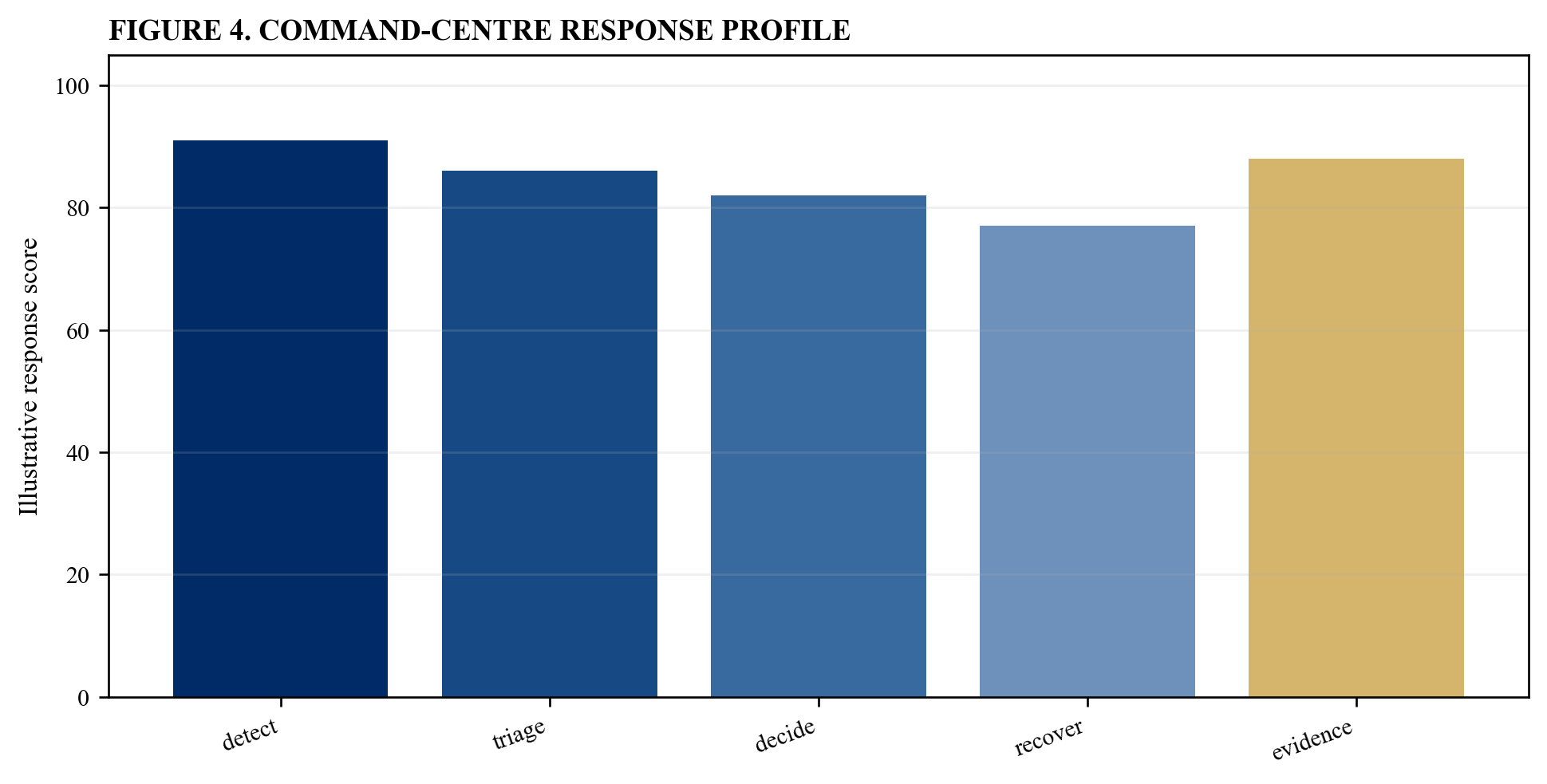
Illustrative analytical scenario; verified transaction evidence should replace index values.
39. Stabilise before accelerating
The integration leadership team should sequence the first thirty days around service health, cash, workforce, incidents, controls and verified learning. The required output is a thirty-day stabilisation roadmap. Record the closing trigger, accountable owner, operating dependency, legal or regulatory condition, evidence standard, fallback, deadline and escalation route [4][18].
The principal risk is that premature transformation can consume the capacity required to protect continuity. Quantify revenue exposure, service interruption, liquidity need, affected stakeholders, recovery time, control effectiveness and residual risk across base, delayed-closing, disrupted and remediated cases.
40. Issue the Day One certificate
The integration leadership team should reconcile authority, triggers, operations, rehearsals, exceptions, owners, fallbacks, command readiness and residual risk. The required output is a retained closing certificate. Record the closing trigger, accountable owner, operating dependency, legal or regulatory condition, evidence standard, fallback, deadline and escalation route [1][18].
The principal risk is that leaders can declare readiness without proving that the combined group can operate. Quantify revenue exposure, service interruption, liquidity need, affected stakeholders, recovery time, control effectiveness and residual risk across base, delayed-closing, disrupted and remediated cases.
Table 5. Day One certificate
| Conclusion | Retained proof | Acceptance |
|---|---|---|
| control | closing and authority record | confirmed |
| continuity | rehearsal and fallback | passed |
| response | command and escalation | operable |
| exceptions | owner and deadline | bounded |
Illustrative structure; verified transaction evidence and specialist review govern.
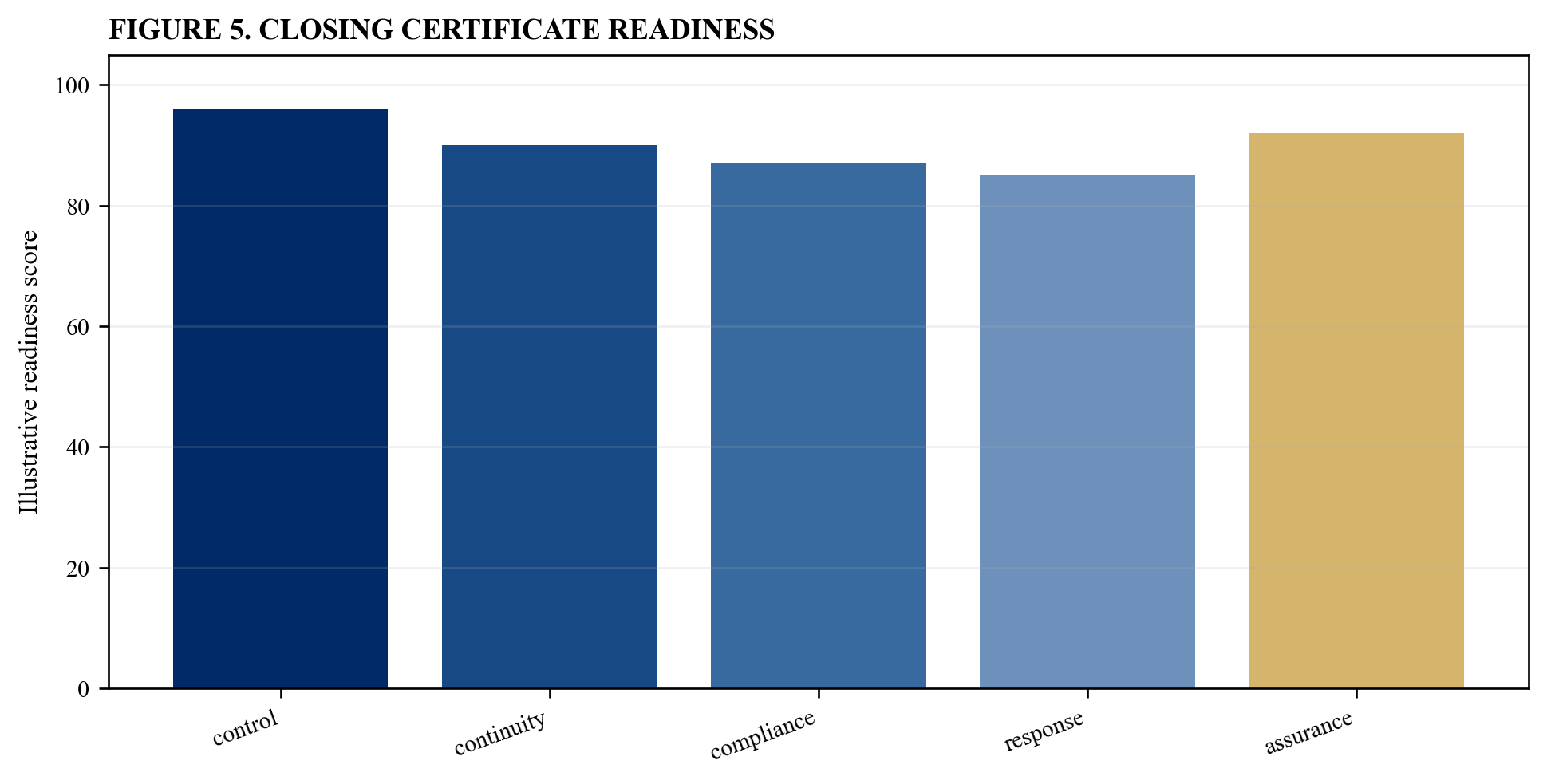
Illustrative analytical scenario; verified transaction evidence should replace index values.
References
- UK Competition and Markets Authority, Interim Measures in Merger Investigations, https://www.gov.uk/government/publications/interim-measures-and-derogations-guidance-and-templates
- US Federal Trade Commission, Avoiding Antitrust Pitfalls during Pre-Merger Negotiations and Due Diligence, https://www.ftc.gov/enforcement/competition-matters/2018/03/avoiding-antitrust-pitfalls-during-pre-merger-negotiations-due-diligence
- UK Competition and Markets Authority, Merging Your Business, https://www.gov.uk/guidance/merging-your-business
- UK Government, UK Government Resilience Framework, https://www.gov.uk/government/publications/the-uk-government-resilience-framework
- IFRS Foundation, IFRS 3 Business Combinations, https://www.ifrs.org/issued-standards/list-of-standards/ifrs-3-business-combinations/
- UK Companies House, Company Directors Responsibilities, https://www.gov.uk/guidance/being-a-company-director
- UK Financial Reporting Council, UK Corporate Governance Code 2024, https://www.frc.org.uk/library/standards-codes-policy/corporate-governance/uk-corporate-governance-code/
- IFRS Foundation, IAS 7 Statement of Cash Flows, https://www.ifrs.org/issued-standards/list-of-standards/ias-7-statement-of-cash-flows/
- IFRS Foundation, IFRS 9 Financial Instruments, https://www.ifrs.org/issued-standards/list-of-standards/ifrs-9-financial-instruments/
- US Treasury, Treasury Financial Manual, https://tfx.treasury.gov/tfm
- US Securities and Exchange Commission, Trust Indenture Act of 1939, https://www.sec.gov/files/rules-regulations/1939-act.pdf
- IFRS Foundation, IAS 1 Presentation of Financial Statements, https://www.ifrs.org/issued-standards/list-of-standards/ias-1-presentation-of-financial-statements/
- IFRS Foundation, IFRS 15 Revenue from Contracts with Customers, https://www.ifrs.org/issued-standards/list-of-standards/ifrs-15-revenue-from-contracts-with-customers/
- UK Competition and Markets Authority, Consumer Protection from Unfair Trading Regulations Guidance, https://www.gov.uk/government/publications/consumer-protection-from-unfair-trading-regulations-traders
- UK Financial Conduct Authority, Operational Resilience, https://www.fca.org.uk/firms/operational-resilience
- US Securities and Exchange Commission, Management Discussion and Analysis Guidance, https://www.sec.gov/rules-regulations/2003/12/interpretation-commission-guidance-regarding-managements-discussion-analysis-financial-condition
- National Institute of Standards and Technology, SP 800-161 Rev. 1 Cybersecurity Supply Chain Risk Management, https://csrc.nist.gov/pubs/sp/800/161/r1/final
- International Organization for Standardization, ISO 22301 Business Continuity Management Systems, https://www.iso.org/standard/75106.html
- World Customs Organization, SAFE Framework of Standards, https://www.wcoomd.org/en/topics/facilitation/instrument-and-tools/frameworks-of-standards/safe_package.aspx
- UK Financial Reporting Council, Guidance on Board Effectiveness, https://www.frc.org.uk/library/standards-codes-policy/corporate-governance/guidance-on-board-effectiveness/
- European Union, Directive 2002/14/EC on Informing and Consulting Employees, https://eur-lex.europa.eu/eli/dir/2002/14/oj
- US Department of Labor, Worker Adjustment and Retraining Notification Act Guidance, https://www.dol.gov/agencies/eta/layoffs/warn
- European Union, Directive 2009/38/EC on European Works Councils, https://eur-lex.europa.eu/eli/dir/2009/38/oj
- UK Government, Business Transfers, Takeovers and TUPE, https://www.gov.uk/transfers-takeovers
- European Commission, EU Merger Control Procedures, https://competition-policy.ec.europa.eu/mergers/procedures_en
- Financial Action Task Force, FATF Recommendations, https://www.fatf-gafi.org/en/publications/Fatfrecommendations/Fatf-recommendations.html
- US Department of Justice, Evaluation of Corporate Compliance Programs, https://www.justice.gov/criminal/criminal-fraud/page/file/937501/dl
- European Union, General Data Protection Regulation, https://eur-lex.europa.eu/eli/reg/2016/679/oj
- UK Information Commissioner's Office, Data Minimisation, https://ico.org.uk/for-organisations/uk-gdpr-guidance-and-resources/data-protection-principles/a-guide-to-the-data-protection-principles/the-principles/data-minimisation/
- National Institute of Standards and Technology, Cybersecurity Framework 2.0, https://www.nist.gov/cyberframework
- National Institute of Standards and Technology, SP 800-53 Rev. 5 Security and Privacy Controls, https://csrc.nist.gov/pubs/sp/800/53/r5/upd1/final
- National Institute of Standards and Technology, SP 800-61 Rev. 3 Incident Response Recommendations, https://csrc.nist.gov/pubs/sp/800/61/r3/final
- US Cybersecurity and Infrastructure Security Agency, Incident Response Plan Basics, https://www.cisa.gov/resources-tools/resources/incident-response-plan-irp-basics
- National Institute of Standards and Technology, IR 8286 Rev. 1 Integrating Cybersecurity and Enterprise Risk Management, https://csrc.nist.gov/pubs/ir/8286/r1/final
- Committee of Sponsoring Organizations of the Treadway Commission, Internal Control Integrated Framework, https://www.coso.org/internal-control
- UK Competition and Markets Authority, Green Claims Code, https://greenclaims.campaign.gov.uk/
- OECD, Transfer Pricing Guidelines, https://www.oecd.org/tax/transfer-pricing/oecd-transfer-pricing-guidelines-for-multinational-enterprises-and-tax-administrations-20769717.htm
- UK Cabinet Office, Sourcing Playbook, https://www.gov.uk/government/publications/the-sourcing-playbook
- IFRS Foundation, IFRS Practice Statement 1 Management Commentary, https://www.ifrs.org/issued-standards/list-of-standards/management-commentary-practice-statement/
