

1. Define deadlock narrowly
The sponsors should identify the board, shareholder and reserved matters that can trigger deadlock and exclude ordinary disagreement, delay and matters within delegated authority. The required output is a defined-trigger schedule. Record the triggering facts, responsible decision-maker, evidence, legal and commercial assumptions, timetable, interim controls and approval [1][2].
Test the route against the venture's actual constitutional documents, financing, licences, operations, information rights, stakeholder obligations and applicable law. Distinguish urgent reversible action from decisions that transfer permanent value or control.
The principal risk is that routine negotiation can be weaponised into a forced exit. Model at least one alternative route and document why the selected mechanism protects enterprise value, procedural fairness and completion certainty.
Retain notices, board records, evidence packs, valuations, funding proofs, specialist conclusions, approvals, exceptions and completion records. Refresh the analysis when ownership, liquidity, regulation, counterparties, financing or venture scope changes.
2. Map the governing instruments
The sponsors should reconcile constitutional documents, shareholder agreements, licences, financing, guarantees, commercial contracts and dispute clauses. The required output is a governing-document hierarchy. Record the triggering facts, responsible decision-maker, evidence, legal and commercial assumptions, timetable, interim controls and approval [3][4].
Test the route against the venture's actual constitutional documents, financing, licences, operations, information rights, stakeholder obligations and applicable law. Distinguish urgent reversible action from decisions that transfer permanent value or control.
The principal risk is that conflicting documents can assign different rights or forums. Model at least one alternative route and document why the selected mechanism protects enterprise value, procedural fairness and completion certainty.
Retain notices, board records, evidence packs, valuations, funding proofs, specialist conclusions, approvals, exceptions and completion records. Refresh the analysis when ownership, liquidity, regulation, counterparties, financing or venture scope changes.
3. Separate impasse from breach
The sponsors should classify whether the event is deadlock, contractual default, fiduciary issue, funding failure, fraud, insolvency or regulatory non-compliance. The required output is an event-classification memorandum. Record the triggering facts, responsible decision-maker, evidence, legal and commercial assumptions, timetable, interim controls and approval [5][6].
Test the route against the venture's actual constitutional documents, financing, licences, operations, information rights, stakeholder obligations and applicable law. Distinguish urgent reversible action from decisions that transfer permanent value or control.
The principal risk is that a party can obtain an exit remedy for its own uncured breach. Model at least one alternative route and document why the selected mechanism protects enterprise value, procedural fairness and completion certainty.
Retain notices, board records, evidence packs, valuations, funding proofs, specialist conclusions, approvals, exceptions and completion records. Refresh the analysis when ownership, liquidity, regulation, counterparties, financing or venture scope changes.
Table 1. Deadlock event taxonomy
| Event | Primary route | Control |
|---|---|---|
| decision impasse | escalation | defined matter |
| technical dispute | expert | scoped question |
| breach | cure/default | fault separation |
| solvency threat | urgent action | creditor protection |
Illustrative analytical structure; verified transaction evidence and specialist review govern.
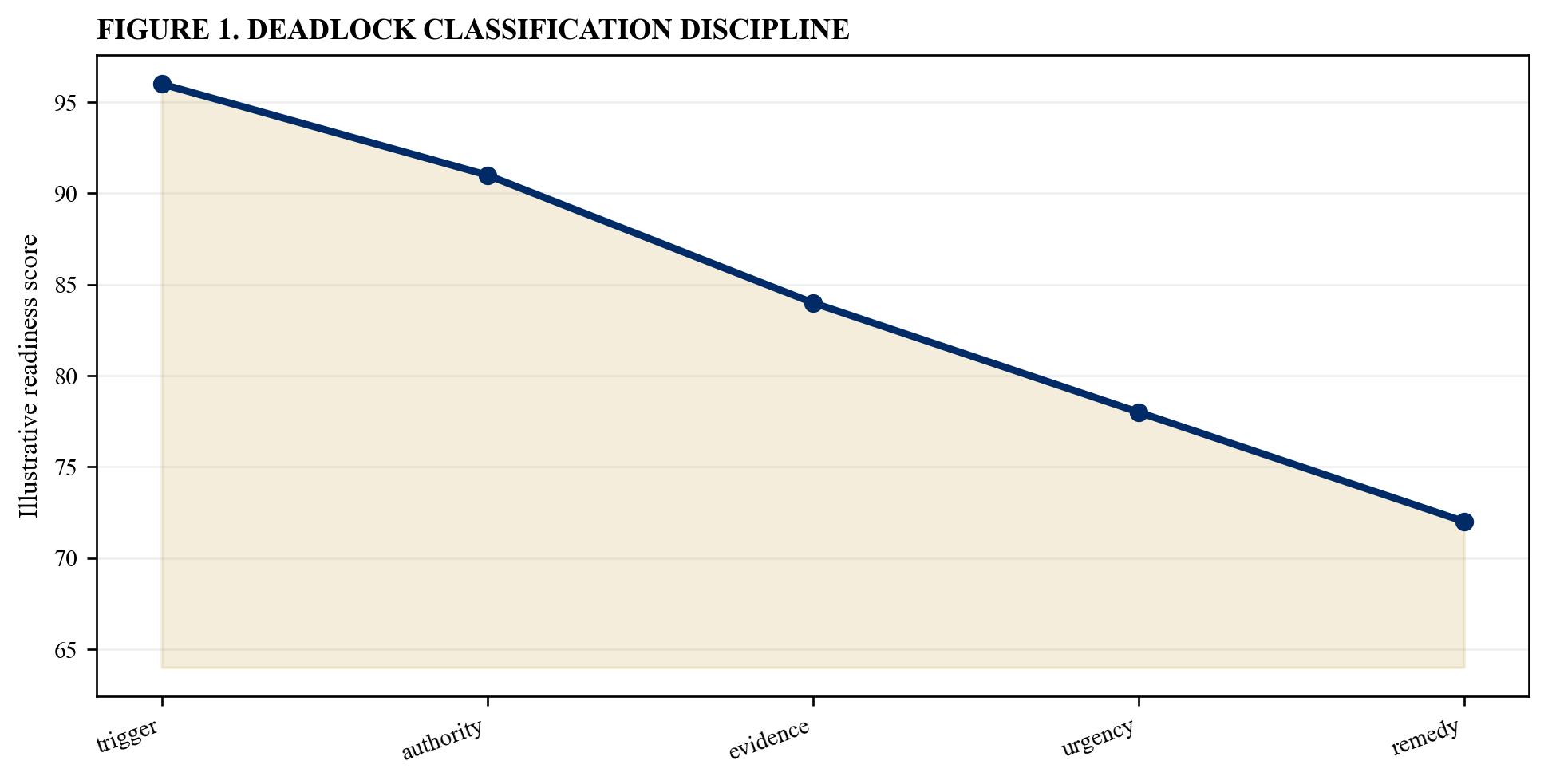
Illustrative analytical scenario; verified transaction evidence should replace index values.
4. Classify decisions by urgency
The sponsors should score each blocked matter for operational harm, reversibility, legal deadline, safety, customer effect and cash consequence. The required output is an urgency-and-reversibility matrix. Record the triggering facts, responsible decision-maker, evidence, legal and commercial assumptions, timetable, interim controls and approval [7][8].
Test the route against the venture's actual constitutional documents, financing, licences, operations, information rights, stakeholder obligations and applicable law. Distinguish urgent reversible action from decisions that transfer permanent value or control.
The principal risk is that the same timetable can govern a routine budget and an immediate safety decision. Model at least one alternative route and document why the selected mechanism protects enterprise value, procedural fairness and completion certainty.
Retain notices, board records, evidence packs, valuations, funding proofs, specialist conclusions, approvals, exceptions and completion records. Refresh the analysis when ownership, liquidity, regulation, counterparties, financing or venture scope changes.
5. Preserve the business
The sponsors should set interim authority, permitted ordinary-course actions, payment priorities, customer service, cyber controls and asset-preservation duties. The required output is a continuity protocol. Record the triggering facts, responsible decision-maker, evidence, legal and commercial assumptions, timetable, interim controls and approval [9][10].
Test the route against the venture's actual constitutional documents, financing, licences, operations, information rights, stakeholder obligations and applicable law. Distinguish urgent reversible action from decisions that transfer permanent value or control.
The principal risk is that the venture can lose value while partners debate procedure. Model at least one alternative route and document why the selected mechanism protects enterprise value, procedural fairness and completion certainty.
Retain notices, board records, evidence packs, valuations, funding proofs, specialist conclusions, approvals, exceptions and completion records. Refresh the analysis when ownership, liquidity, regulation, counterparties, financing or venture scope changes.
6. Freeze evidence properly
The sponsors should retain board papers, models, correspondence, system records, approvals, valuations and privilege-controlled legal advice. The required output is a deadlock evidence file. Record the triggering facts, responsible decision-maker, evidence, legal and commercial assumptions, timetable, interim controls and approval [11][12].
Test the route against the venture's actual constitutional documents, financing, licences, operations, information rights, stakeholder obligations and applicable law. Distinguish urgent reversible action from decisions that transfer permanent value or control.
The principal risk is that later decisions can depend on incomplete or selectively retained records. Model at least one alternative route and document why the selected mechanism protects enterprise value, procedural fairness and completion certainty.
Retain notices, board records, evidence packs, valuations, funding proofs, specialist conclusions, approvals, exceptions and completion records. Refresh the analysis when ownership, liquidity, regulation, counterparties, financing or venture scope changes.
7. Protect competition-sensitive information
The sponsors should limit parent access to prices, customers, strategy, wages, capacity and other competitively sensitive data. The required output is a clean-team information protocol. Record the triggering facts, responsible decision-maker, evidence, legal and commercial assumptions, timetable, interim controls and approval [13][14].
Test the route against the venture's actual constitutional documents, financing, licences, operations, information rights, stakeholder obligations and applicable law. Distinguish urgent reversible action from decisions that transfer permanent value or control.
The principal risk is that a governance dispute can become unlawful competitor information exchange. Model at least one alternative route and document why the selected mechanism protects enterprise value, procedural fairness and completion certainty.
Retain notices, board records, evidence packs, valuations, funding proofs, specialist conclusions, approvals, exceptions and completion records. Refresh the analysis when ownership, liquidity, regulation, counterparties, financing or venture scope changes.
8. Use a decision memorandum
The sponsors should state the question, alternatives, verified facts, assumptions, value effects, risks, required authority and proposed resolution. The required output is a short-form decision record. Record the triggering facts, responsible decision-maker, evidence, legal and commercial assumptions, timetable, interim controls and approval [7][15].
Test the route against the venture's actual constitutional documents, financing, licences, operations, information rights, stakeholder obligations and applicable law. Distinguish urgent reversible action from decisions that transfer permanent value or control.
The principal risk is that escalation can repeat positions without creating a decidable record. Model at least one alternative route and document why the selected mechanism protects enterprise value, procedural fairness and completion certainty.
Retain notices, board records, evidence packs, valuations, funding proofs, specialist conclusions, approvals, exceptions and completion records. Refresh the analysis when ownership, liquidity, regulation, counterparties, financing or venture scope changes.
9. Start the escalation clock
The sponsors should define notice content, valid service, cure period, meeting dates, extensions and consequences of non-attendance. The required output is a deterministic escalation timetable. Record the triggering facts, responsible decision-maker, evidence, legal and commercial assumptions, timetable, interim controls and approval [16][17].
Test the route against the venture's actual constitutional documents, financing, licences, operations, information rights, stakeholder obligations and applicable law. Distinguish urgent reversible action from decisions that transfer permanent value or control.
The principal risk is that one party can delay by disputing when the process began. Model at least one alternative route and document why the selected mechanism protects enterprise value, procedural fairness and completion certainty.
Retain notices, board records, evidence packs, valuations, funding proofs, specialist conclusions, approvals, exceptions and completion records. Refresh the analysis when ownership, liquidity, regulation, counterparties, financing or venture scope changes.
10. Escalate to authorised executives
The sponsors should name roles with authority to compromise and require pre-read circulation and attendance. The required output is an executive-resolution meeting. Record the triggering facts, responsible decision-maker, evidence, legal and commercial assumptions, timetable, interim controls and approval [18][19].
Test the route against the venture's actual constitutional documents, financing, licences, operations, information rights, stakeholder obligations and applicable law. Distinguish urgent reversible action from decisions that transfer permanent value or control.
The principal risk is that nominal escalation can reach people unable to bind their organisations. Model at least one alternative route and document why the selected mechanism protects enterprise value, procedural fairness and completion certainty.
Retain notices, board records, evidence packs, valuations, funding proofs, specialist conclusions, approvals, exceptions and completion records. Refresh the analysis when ownership, liquidity, regulation, counterparties, financing or venture scope changes.
11. Add independent facilitation
The sponsors should appoint a neutral chair or facilitator for process, issue framing and option development without transferring the final decision. The required output is a facilitated resolution session. Record the triggering facts, responsible decision-maker, evidence, legal and commercial assumptions, timetable, interim controls and approval [20][21].
Test the route against the venture's actual constitutional documents, financing, licences, operations, information rights, stakeholder obligations and applicable law. Distinguish urgent reversible action from decisions that transfer permanent value or control.
The principal risk is that relationship friction can obscure the underlying economic choice. Model at least one alternative route and document why the selected mechanism protects enterprise value, procedural fairness and completion certainty.
Retain notices, board records, evidence packs, valuations, funding proofs, specialist conclusions, approvals, exceptions and completion records. Refresh the analysis when ownership, liquidity, regulation, counterparties, financing or venture scope changes.
12. Route technical questions to experts
The sponsors should identify accounting, valuation, engineering, completion, earn-out and pricing questions suitable for expert determination. The required output is a scoped expert referral. Record the triggering facts, responsible decision-maker, evidence, legal and commercial assumptions, timetable, interim controls and approval [22][23].
Test the route against the venture's actual constitutional documents, financing, licences, operations, information rights, stakeholder obligations and applicable law. Distinguish urgent reversible action from decisions that transfer permanent value or control.
The principal risk is that an arbitrator can be asked to decide a narrow technical calculation inefficiently. Model at least one alternative route and document why the selected mechanism protects enterprise value, procedural fairness and completion certainty.
Retain notices, board records, evidence packs, valuations, funding proofs, specialist conclusions, approvals, exceptions and completion records. Refresh the analysis when ownership, liquidity, regulation, counterparties, financing or venture scope changes.
Table 2. Escalation clock
| Stage | Decision owner | Output |
|---|---|---|
| board | directors | reasoned record |
| executive | authorised sponsors | commercial proposal |
| neutral | expert or mediator | determination or options |
| exit | specified mechanism | transfer or sale |
Illustrative analytical structure; verified transaction evidence and specialist review govern.
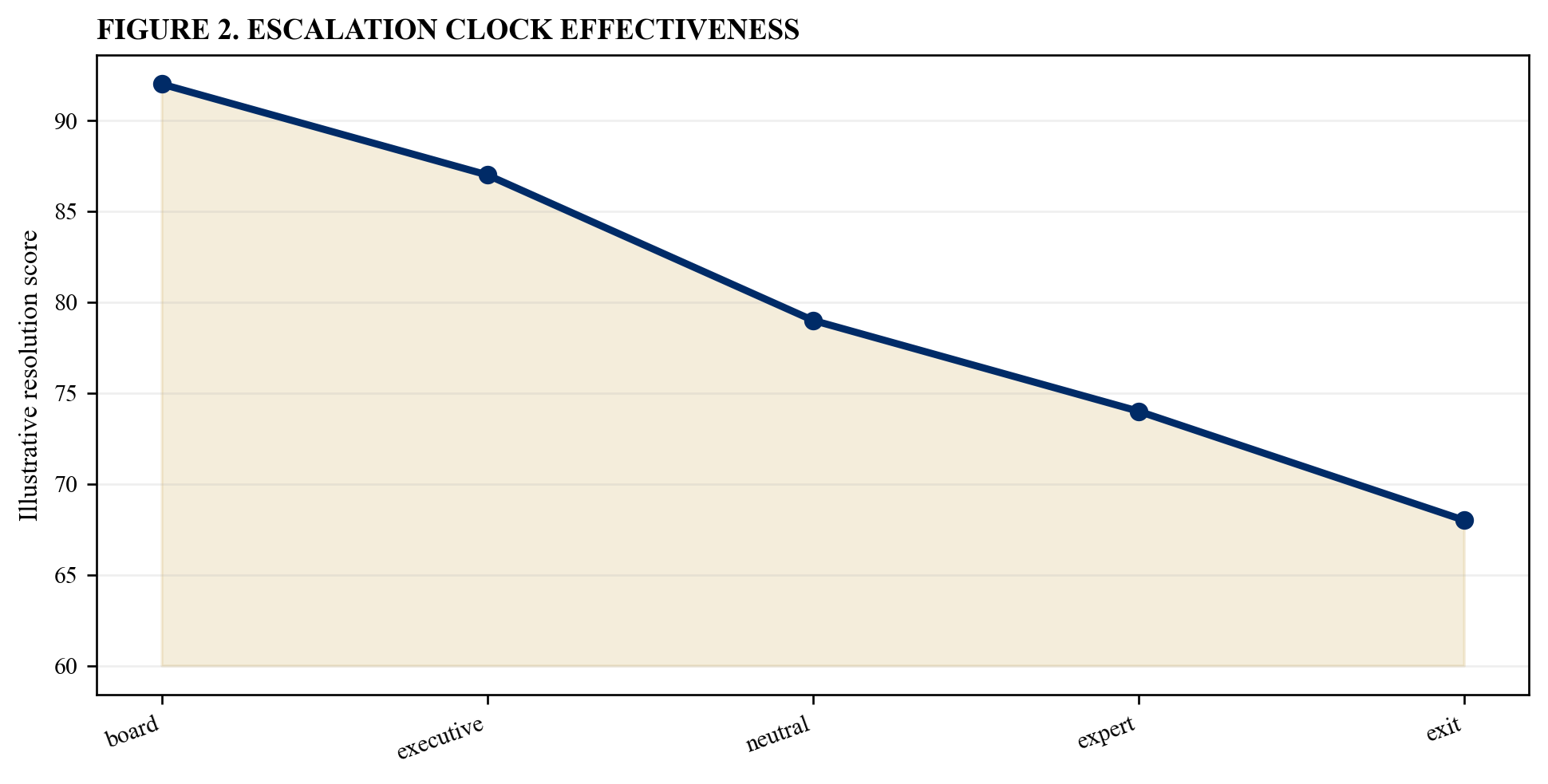
Illustrative analytical scenario; verified transaction evidence should replace index values.
13. Define expert authority
The sponsors should specify question, evidence, assumptions, procedure, timetable, correction rights, costs and whether the result is binding. The required output is an expert-determination protocol. Record the triggering facts, responsible decision-maker, evidence, legal and commercial assumptions, timetable, interim controls and approval [22][24].
Test the route against the venture's actual constitutional documents, financing, licences, operations, information rights, stakeholder obligations and applicable law. Distinguish urgent reversible action from decisions that transfer permanent value or control.
The principal risk is that an expert can decide matters beyond the intended remit. Model at least one alternative route and document why the selected mechanism protects enterprise value, procedural fairness and completion certainty.
Retain notices, board records, evidence packs, valuations, funding proofs, specialist conclusions, approvals, exceptions and completion records. Refresh the analysis when ownership, liquidity, regulation, counterparties, financing or venture scope changes.
14. Use mediation with a purpose
The sponsors should set the mediation window, participants, information pack, standstill, confidentiality and interaction with urgent relief. The required output is a time-bounded settlement process. Record the triggering facts, responsible decision-maker, evidence, legal and commercial assumptions, timetable, interim controls and approval [25][26].
Test the route against the venture's actual constitutional documents, financing, licences, operations, information rights, stakeholder obligations and applicable law. Distinguish urgent reversible action from decisions that transfer permanent value or control.
The principal risk is that mediation can become another delay stage. Model at least one alternative route and document why the selected mechanism protects enterprise value, procedural fairness and completion certainty.
Retain notices, board records, evidence packs, valuations, funding proofs, specialist conclusions, approvals, exceptions and completion records. Refresh the analysis when ownership, liquidity, regulation, counterparties, financing or venture scope changes.
15. Preserve urgent relief
The sponsors should retain access to emergency arbitration or courts for asset protection, evidence, confidentiality, funding and unlawful conduct. The required output is an interim-relief route. Record the triggering facts, responsible decision-maker, evidence, legal and commercial assumptions, timetable, interim controls and approval [27][28].
Test the route against the venture's actual constitutional documents, financing, licences, operations, information rights, stakeholder obligations and applicable law. Distinguish urgent reversible action from decisions that transfer permanent value or control.
The principal risk is that a multi-tier clause can block action while irreversible harm occurs. Model at least one alternative route and document why the selected mechanism protects enterprise value, procedural fairness and completion certainty.
Retain notices, board records, evidence packs, valuations, funding proofs, specialist conclusions, approvals, exceptions and completion records. Refresh the analysis when ownership, liquidity, regulation, counterparties, financing or venture scope changes.
16. Draft the arbitration interface
The sponsors should align governing law, seat, institution, number of arbitrators, consolidation, joinder, confidentiality and enforceability. The required output is a coherent arbitration clause. Record the triggering facts, responsible decision-maker, evidence, legal and commercial assumptions, timetable, interim controls and approval [27][29].
Test the route against the venture's actual constitutional documents, financing, licences, operations, information rights, stakeholder obligations and applicable law. Distinguish urgent reversible action from decisions that transfer permanent value or control.
The principal risk is that fragmented contracts can generate parallel proceedings and inconsistent outcomes. Model at least one alternative route and document why the selected mechanism protects enterprise value, procedural fairness and completion certainty.
Retain notices, board records, evidence packs, valuations, funding proofs, specialist conclusions, approvals, exceptions and completion records. Refresh the analysis when ownership, liquidity, regulation, counterparties, financing or venture scope changes.
17. Choose an operating default
The sponsors should state what happens if no agreement is reached: status quo, prior budget, chair decision, expert result, restricted action or exit. The required output is a defined default rule. Record the triggering facts, responsible decision-maker, evidence, legal and commercial assumptions, timetable, interim controls and approval [7][18].
Test the route against the venture's actual constitutional documents, financing, licences, operations, information rights, stakeholder obligations and applicable law. Distinguish urgent reversible action from decisions that transfer permanent value or control.
The principal risk is that silence can reward the party benefiting from delay. Model at least one alternative route and document why the selected mechanism protects enterprise value, procedural fairness and completion certainty.
Retain notices, board records, evidence packs, valuations, funding proofs, specialist conclusions, approvals, exceptions and completion records. Refresh the analysis when ownership, liquidity, regulation, counterparties, financing or venture scope changes.
18. Test status-quo risk
The sponsors should measure cash burn, covenant headroom, safety, licence, customer, employee and asset effects of continuing the prior position. The required output is a standstill stress test. Record the triggering facts, responsible decision-maker, evidence, legal and commercial assumptions, timetable, interim controls and approval [9][30].
Test the route against the venture's actual constitutional documents, financing, licences, operations, information rights, stakeholder obligations and applicable law. Distinguish urgent reversible action from decisions that transfer permanent value or control.
The principal risk is that status quo can be economically irreversible. Model at least one alternative route and document why the selected mechanism protects enterprise value, procedural fairness and completion certainty.
Retain notices, board records, evidence packs, valuations, funding proofs, specialist conclusions, approvals, exceptions and completion records. Refresh the analysis when ownership, liquidity, regulation, counterparties, financing or venture scope changes.
19. Separate governance and ownership exits
The sponsors should decide whether the remedy changes authority, economic rights, ownership, assets or the existence of the venture. The required output is a remedy architecture. Record the triggering facts, responsible decision-maker, evidence, legal and commercial assumptions, timetable, interim controls and approval [1][31].
Test the route against the venture's actual constitutional documents, financing, licences, operations, information rights, stakeholder obligations and applicable law. Distinguish urgent reversible action from decisions that transfer permanent value or control.
The principal risk is that a voting problem can trigger unnecessary liquidation. Model at least one alternative route and document why the selected mechanism protects enterprise value, procedural fairness and completion certainty.
Retain notices, board records, evidence packs, valuations, funding proofs, specialist conclusions, approvals, exceptions and completion records. Refresh the analysis when ownership, liquidity, regulation, counterparties, financing or venture scope changes.
20. Screen buy-sell mechanisms
The sponsors should compare price discovery, speed, funding need, asymmetry, information use, third-party consent and closing complexity. The required output is a mechanism-selection matrix. Record the triggering facts, responsible decision-maker, evidence, legal and commercial assumptions, timetable, interim controls and approval [32][33].
Test the route against the venture's actual constitutional documents, financing, licences, operations, information rights, stakeholder obligations and applicable law. Distinguish urgent reversible action from decisions that transfer permanent value or control.
The principal risk is that a familiar label can conceal mechanics unsuitable for the venture. Model at least one alternative route and document why the selected mechanism protects enterprise value, procedural fairness and completion certainty.
Retain notices, board records, evidence packs, valuations, funding proofs, specialist conclusions, approvals, exceptions and completion records. Refresh the analysis when ownership, liquidity, regulation, counterparties, financing or venture scope changes.
Table 3. Mechanism selection
| Mechanism | Strength | Critical weakness |
|---|---|---|
| roulette | speed | liquidity asymmetry |
| shoot-out | price competition | overbid risk |
| valuation transfer | evidence discipline | instruction disputes |
| market sale | external price | time and approvals |
Illustrative analytical structure; verified transaction evidence and specialist review govern.
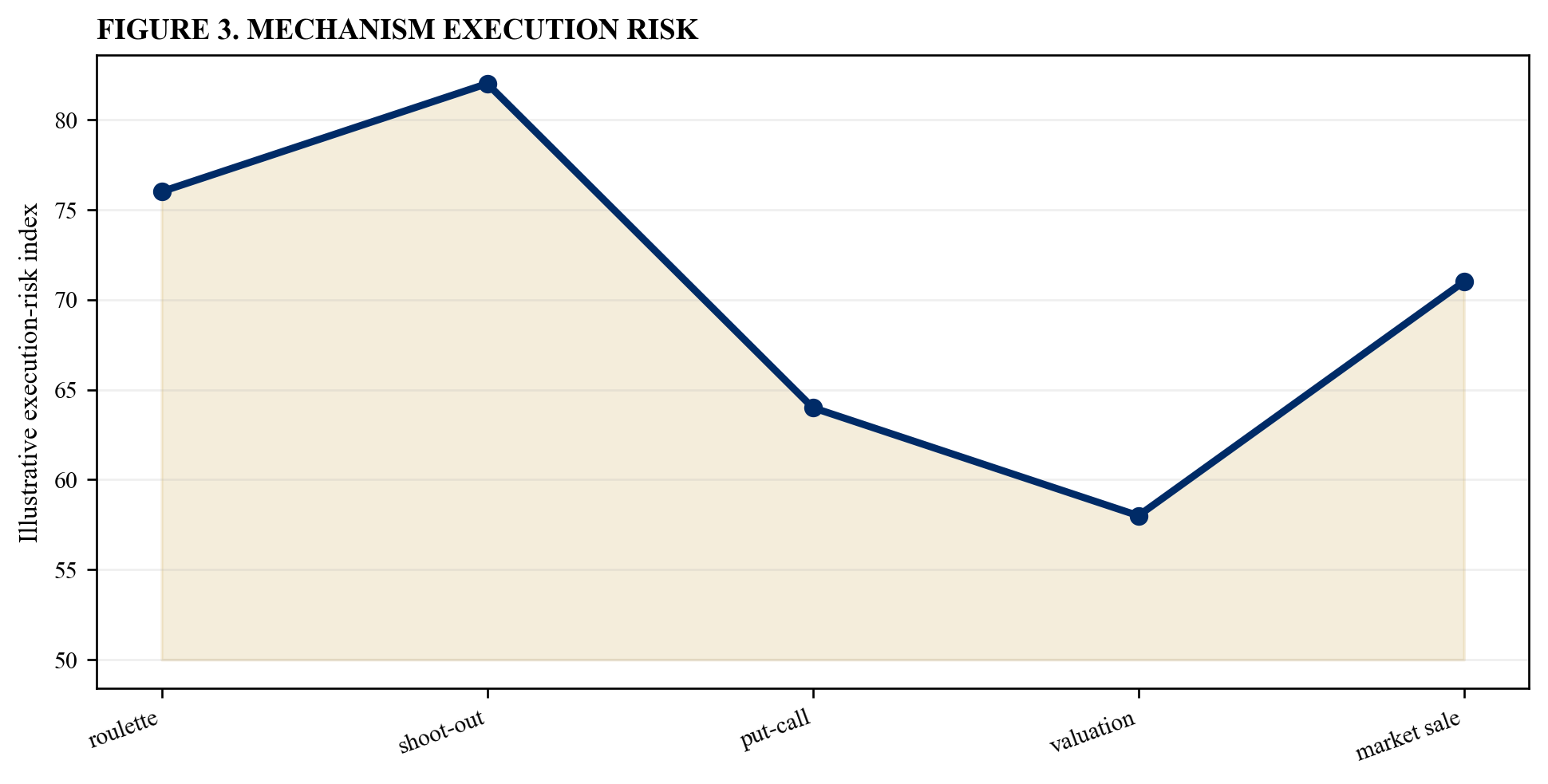
Illustrative analytical scenario; verified transaction evidence should replace index values.
21. Design Russian roulette
The sponsors should define offer price, unit, included securities, election, response time, funding proof, conditions and failure consequences. The required output is an executable either-buy-or-sell process. Record the triggering facts, responsible decision-maker, evidence, legal and commercial assumptions, timetable, interim controls and approval [32][34].
Test the route against the venture's actual constitutional documents, financing, licences, operations, information rights, stakeholder obligations and applicable law. Distinguish urgent reversible action from decisions that transfer permanent value or control.
The principal risk is that the wealthier partner can exploit a formally symmetric choice. Model at least one alternative route and document why the selected mechanism protects enterprise value, procedural fairness and completion certainty.
Retain notices, board records, evidence packs, valuations, funding proofs, specialist conclusions, approvals, exceptions and completion records. Refresh the analysis when ownership, liquidity, regulation, counterparties, financing or venture scope changes.
22. Design Texas shoot-out
The sponsors should set simultaneous sealed bids, bid currency, minimum terms, deposit, adjudicator, tie-break and confidentiality. The required output is a controlled sealed-bid auction. Record the triggering facts, responsible decision-maker, evidence, legal and commercial assumptions, timetable, interim controls and approval [32][35].
Test the route against the venture's actual constitutional documents, financing, licences, operations, information rights, stakeholder obligations and applicable law. Distinguish urgent reversible action from decisions that transfer permanent value or control.
The principal risk is that strategic bids can exceed financeable value or invite later retrading. Model at least one alternative route and document why the selected mechanism protects enterprise value, procedural fairness and completion certainty.
Retain notices, board records, evidence packs, valuations, funding proofs, specialist conclusions, approvals, exceptions and completion records. Refresh the analysis when ownership, liquidity, regulation, counterparties, financing or venture scope changes.
23. Design put and call rights
The sponsors should define trigger, exercise window, price formula, floors, caps, adjustments, security and closing conditions. The required output is a deterministic transfer option. Record the triggering facts, responsible decision-maker, evidence, legal and commercial assumptions, timetable, interim controls and approval [3][36].
Test the route against the venture's actual constitutional documents, financing, licences, operations, information rights, stakeholder obligations and applicable law. Distinguish urgent reversible action from decisions that transfer permanent value or control.
The principal risk is that a stale formula can transfer value unfairly. Model at least one alternative route and document why the selected mechanism protects enterprise value, procedural fairness and completion certainty.
Retain notices, board records, evidence packs, valuations, funding proofs, specialist conclusions, approvals, exceptions and completion records. Refresh the analysis when ownership, liquidity, regulation, counterparties, financing or venture scope changes.
24. Use valuation-based transfer
The sponsors should appoint an independent valuer and define basis, premise, date, information, minority and control assumptions and review rights. The required output is a valuation instruction. Record the triggering facts, responsible decision-maker, evidence, legal and commercial assumptions, timetable, interim controls and approval [37][38].
Test the route against the venture's actual constitutional documents, financing, licences, operations, information rights, stakeholder obligations and applicable law. Distinguish urgent reversible action from decisions that transfer permanent value or control.
The principal risk is that the parties can litigate the question the valuer was asked rather than the answer. Model at least one alternative route and document why the selected mechanism protects enterprise value, procedural fairness and completion certainty.
Retain notices, board records, evidence packs, valuations, funding proofs, specialist conclusions, approvals, exceptions and completion records. Refresh the analysis when ownership, liquidity, regulation, counterparties, financing or venture scope changes.
25. Model market sale
The sponsors should set adviser appointment, process control, bidder access, reserve price, related-party rules, approvals and allocation of liabilities. The required output is a third-party sale protocol. Record the triggering facts, responsible decision-maker, evidence, legal and commercial assumptions, timetable, interim controls and approval [39][40].
Test the route against the venture's actual constitutional documents, financing, licences, operations, information rights, stakeholder obligations and applicable law. Distinguish urgent reversible action from decisions that transfer permanent value or control.
The principal risk is that one partner can frustrate price discovery or steer the process. Model at least one alternative route and document why the selected mechanism protects enterprise value, procedural fairness and completion certainty.
Retain notices, board records, evidence packs, valuations, funding proofs, specialist conclusions, approvals, exceptions and completion records. Refresh the analysis when ownership, liquidity, regulation, counterparties, financing or venture scope changes.
26. Consider demerger or asset split
The sponsors should map separable assets, contracts, people, licences, IP, debt, tax, stranded cost and transition services. The required output is a separation perimeter. Record the triggering facts, responsible decision-maker, evidence, legal and commercial assumptions, timetable, interim controls and approval [3][30].
Test the route against the venture's actual constitutional documents, financing, licences, operations, information rights, stakeholder obligations and applicable law. Distinguish urgent reversible action from decisions that transfer permanent value or control.
The principal risk is that an apparently divisible venture can depend on indivisible rights or infrastructure. Model at least one alternative route and document why the selected mechanism protects enterprise value, procedural fairness and completion certainty.
Retain notices, board records, evidence packs, valuations, funding proofs, specialist conclusions, approvals, exceptions and completion records. Refresh the analysis when ownership, liquidity, regulation, counterparties, financing or venture scope changes.
27. Treat dissolution as a last route
The sponsors should identify statutory, contractual and court processes, creditor effects, asset realisation, employee consequences and timing. The required output is a dissolution consequence map. Record the triggering facts, responsible decision-maker, evidence, legal and commercial assumptions, timetable, interim controls and approval [5][31].
Test the route against the venture's actual constitutional documents, financing, licences, operations, information rights, stakeholder obligations and applicable law. Distinguish urgent reversible action from decisions that transfer permanent value or control.
The principal risk is that liquidation value can destroy viable going-concern value. Model at least one alternative route and document why the selected mechanism protects enterprise value, procedural fairness and completion certainty.
Retain notices, board records, evidence packs, valuations, funding proofs, specialist conclusions, approvals, exceptions and completion records. Refresh the analysis when ownership, liquidity, regulation, counterparties, financing or venture scope changes.
28. Stress-test liquidity asymmetry
The sponsors should model each partner's cash, leverage, approvals, capital constraints and alternative uses under every mechanism. The required output is a bid-capacity analysis. Record the triggering facts, responsible decision-maker, evidence, legal and commercial assumptions, timetable, interim controls and approval [34][37].
Test the route against the venture's actual constitutional documents, financing, licences, operations, information rights, stakeholder obligations and applicable law. Distinguish urgent reversible action from decisions that transfer permanent value or control.
The principal risk is that the outcome can be decided by financing capacity rather than relative value. Model at least one alternative route and document why the selected mechanism protects enterprise value, procedural fairness and completion certainty.
Retain notices, board records, evidence packs, valuations, funding proofs, specialist conclusions, approvals, exceptions and completion records. Refresh the analysis when ownership, liquidity, regulation, counterparties, financing or venture scope changes.
Table 4. Bid-capacity stress test
| Constraint | Evidence | Mitigation |
|---|---|---|
| liquidity | cash and commitments | funding proof |
| approvals | board and regulator | conditions map |
| debt | lender consents | release plan |
| operations | stand-alone readiness | transition services |
Illustrative analytical structure; verified transaction evidence and specialist review govern.
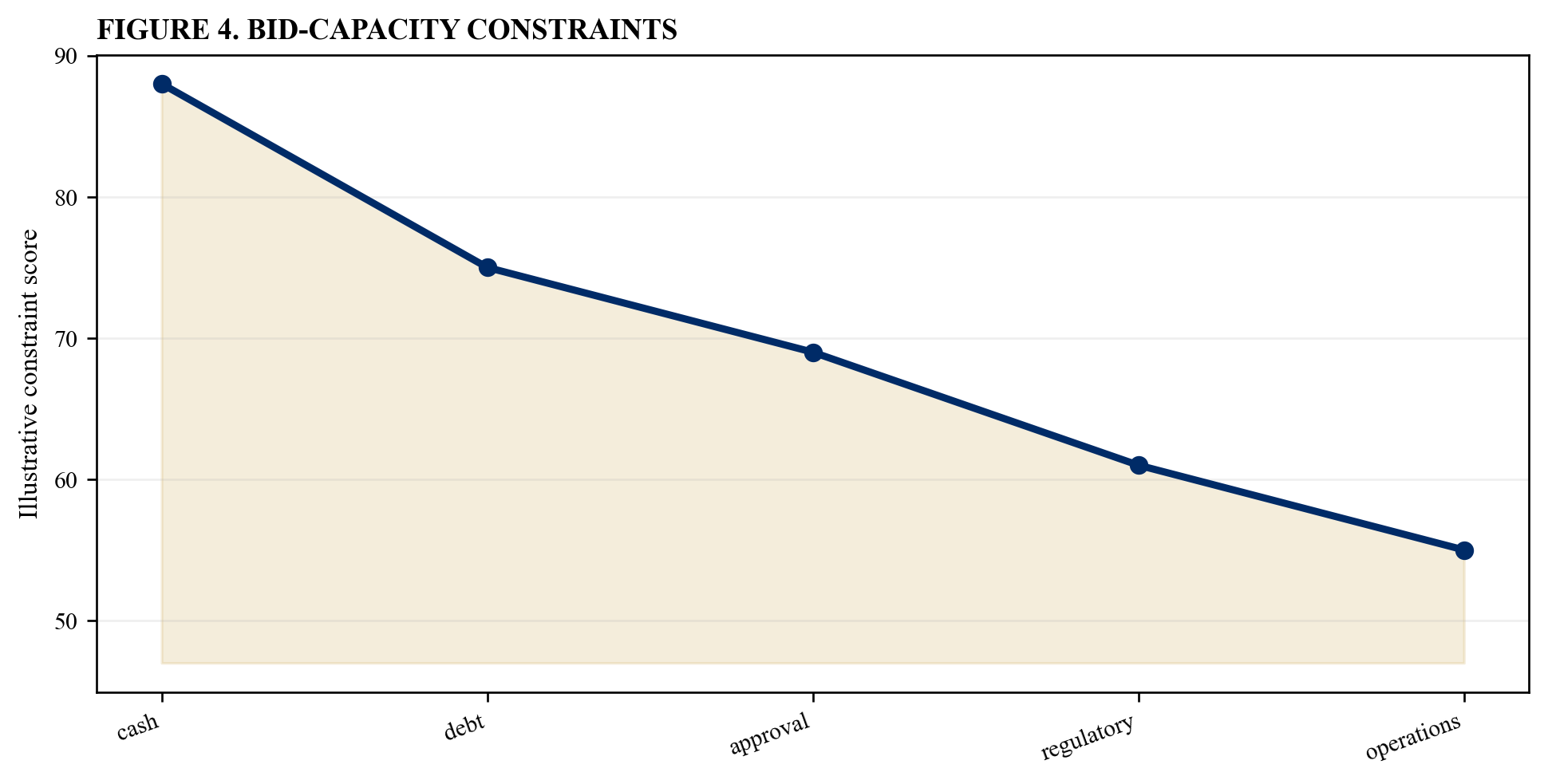
Illustrative analytical scenario; verified transaction evidence should replace index values.
29. Require credible funding proof
The sponsors should specify committed funds, financing conditions, equity approvals, regulatory capital and expiry dates. The required output is a funding-certainty certificate. Record the triggering facts, responsible decision-maker, evidence, legal and commercial assumptions, timetable, interim controls and approval [33][36].
Test the route against the venture's actual constitutional documents, financing, licences, operations, information rights, stakeholder obligations and applicable law. Distinguish urgent reversible action from decisions that transfer permanent value or control.
The principal risk is that a winning buyer can lack funds at closing. Model at least one alternative route and document why the selected mechanism protects enterprise value, procedural fairness and completion certainty.
Retain notices, board records, evidence packs, valuations, funding proofs, specialist conclusions, approvals, exceptions and completion records. Refresh the analysis when ownership, liquidity, regulation, counterparties, financing or venture scope changes.
30. Define the transfer perimeter
The sponsors should include shares, shareholder loans, accrued rights, guarantees, licences, data, IP, claims and intercompany balances. The required output is a transfer-perimeter schedule. Record the triggering facts, responsible decision-maker, evidence, legal and commercial assumptions, timetable, interim controls and approval [3][30].
Test the route against the venture's actual constitutional documents, financing, licences, operations, information rights, stakeholder obligations and applicable law. Distinguish urgent reversible action from decisions that transfer permanent value or control.
The principal risk is that the buyer can acquire equity while critical rights remain behind. Model at least one alternative route and document why the selected mechanism protects enterprise value, procedural fairness and completion certainty.
Retain notices, board records, evidence packs, valuations, funding proofs, specialist conclusions, approvals, exceptions and completion records. Refresh the analysis when ownership, liquidity, regulation, counterparties, financing or venture scope changes.
31. Allocate debt and guarantees
The sponsors should obtain lender consents, release parent support, refinance facilities and allocate break costs and collateral. The required output is a debt-and-security release plan. Record the triggering facts, responsible decision-maker, evidence, legal and commercial assumptions, timetable, interim controls and approval [10][30].
Test the route against the venture's actual constitutional documents, financing, licences, operations, information rights, stakeholder obligations and applicable law. Distinguish urgent reversible action from decisions that transfer permanent value or control.
The principal risk is that a departing partner can remain exposed after losing control. Model at least one alternative route and document why the selected mechanism protects enterprise value, procedural fairness and completion certainty.
Retain notices, board records, evidence packs, valuations, funding proofs, specialist conclusions, approvals, exceptions and completion records. Refresh the analysis when ownership, liquidity, regulation, counterparties, financing or venture scope changes.
32. Plan regulatory and merger approvals
The sponsors should identify foreign investment, competition, sector, licence, sanctions and beneficial-ownership approvals. The required output is an approvals critical path. Record the triggering facts, responsible decision-maker, evidence, legal and commercial assumptions, timetable, interim controls and approval [13][39].
Test the route against the venture's actual constitutional documents, financing, licences, operations, information rights, stakeholder obligations and applicable law. Distinguish urgent reversible action from decisions that transfer permanent value or control.
The principal risk is that a forced transfer can be legally impossible or delayed. Model at least one alternative route and document why the selected mechanism protects enterprise value, procedural fairness and completion certainty.
Retain notices, board records, evidence packs, valuations, funding proofs, specialist conclusions, approvals, exceptions and completion records. Refresh the analysis when ownership, liquidity, regulation, counterparties, financing or venture scope changes.
33. Model tax and accounting
The sponsors should compare share sale, asset sale, redemption, distribution, demerger and liquidation consequences. The required output is a net-proceeds bridge. Record the triggering facts, responsible decision-maker, evidence, legal and commercial assumptions, timetable, interim controls and approval [6][38].
Test the route against the venture's actual constitutional documents, financing, licences, operations, information rights, stakeholder obligations and applicable law. Distinguish urgent reversible action from decisions that transfer permanent value or control.
The principal risk is that gross bid value can disguise materially different after-tax outcomes. Model at least one alternative route and document why the selected mechanism protects enterprise value, procedural fairness and completion certainty.
Retain notices, board records, evidence packs, valuations, funding proofs, specialist conclusions, approvals, exceptions and completion records. Refresh the analysis when ownership, liquidity, regulation, counterparties, financing or venture scope changes.
34. Control information asymmetry
The sponsors should create equal data access, management presentation, updates, reliance rules and misrepresentation remedies. The required output is a bidder-information protocol. Record the triggering facts, responsible decision-maker, evidence, legal and commercial assumptions, timetable, interim controls and approval [11][37].
Test the route against the venture's actual constitutional documents, financing, licences, operations, information rights, stakeholder obligations and applicable law. Distinguish urgent reversible action from decisions that transfer permanent value or control.
The principal risk is that the operator partner can possess decisive undisclosed information. Model at least one alternative route and document why the selected mechanism protects enterprise value, procedural fairness and completion certainty.
Retain notices, board records, evidence packs, valuations, funding proofs, specialist conclusions, approvals, exceptions and completion records. Refresh the analysis when ownership, liquidity, regulation, counterparties, financing or venture scope changes.
35. Protect minority and stakeholder rights
The sponsors should map minority holders, employees, creditors, customers, pension, communities and public counterparties. The required output is a stakeholder consequence register. Record the triggering facts, responsible decision-maker, evidence, legal and commercial assumptions, timetable, interim controls and approval [2][9].
Test the route against the venture's actual constitutional documents, financing, licences, operations, information rights, stakeholder obligations and applicable law. Distinguish urgent reversible action from decisions that transfer permanent value or control.
The principal risk is that a bilateral solution can prejudice rights outside the two sponsors. Model at least one alternative route and document why the selected mechanism protects enterprise value, procedural fairness and completion certainty.
Retain notices, board records, evidence packs, valuations, funding proofs, specialist conclusions, approvals, exceptions and completion records. Refresh the analysis when ownership, liquidity, regulation, counterparties, financing or venture scope changes.
36. Set failure and default consequences
The sponsors should define deposit forfeiture, reverse transfer, damages, interest, security enforcement and renewed auction after failed completion. The required output is a completion-failure waterfall. Record the triggering facts, responsible decision-maker, evidence, legal and commercial assumptions, timetable, interim controls and approval [33][36].
Test the route against the venture's actual constitutional documents, financing, licences, operations, information rights, stakeholder obligations and applicable law. Distinguish urgent reversible action from decisions that transfer permanent value or control.
The principal risk is that a party can win tactically and refuse to close. Model at least one alternative route and document why the selected mechanism protects enterprise value, procedural fairness and completion certainty.
Retain notices, board records, evidence packs, valuations, funding proofs, specialist conclusions, approvals, exceptions and completion records. Refresh the analysis when ownership, liquidity, regulation, counterparties, financing or venture scope changes.
37. Build separation services
The sponsors should scope technology, data, treasury, procurement, premises, people and customer support needed after transfer. The required output is a transition-services plan. Record the triggering facts, responsible decision-maker, evidence, legal and commercial assumptions, timetable, interim controls and approval [9][30].
Test the route against the venture's actual constitutional documents, financing, licences, operations, information rights, stakeholder obligations and applicable law. Distinguish urgent reversible action from decisions that transfer permanent value or control.
The principal risk is that ownership can change before the business can operate independently. Model at least one alternative route and document why the selected mechanism protects enterprise value, procedural fairness and completion certainty.
Retain notices, board records, evidence packs, valuations, funding proofs, specialist conclusions, approvals, exceptions and completion records. Refresh the analysis when ownership, liquidity, regulation, counterparties, financing or venture scope changes.
38. Rehearse the mechanism
The sponsors should run tabletop simulations for notices, valuation, funding, approvals, information, auction and closing. The required output is a tested deadlock playbook. Record the triggering facts, responsible decision-maker, evidence, legal and commercial assumptions, timetable, interim controls and approval [7][18].
Test the route against the venture's actual constitutional documents, financing, licences, operations, information rights, stakeholder obligations and applicable law. Distinguish urgent reversible action from decisions that transfer permanent value or control.
The principal risk is that drafting defects can emerge only during a live crisis. Model at least one alternative route and document why the selected mechanism protects enterprise value, procedural fairness and completion certainty.
Retain notices, board records, evidence packs, valuations, funding proofs, specialist conclusions, approvals, exceptions and completion records. Refresh the analysis when ownership, liquidity, regulation, counterparties, financing or venture scope changes.
39. Monitor early-warning indicators
The sponsors should track repeated reserved-matter deferrals, funding disputes, budget variance, executive turnover and information delay. The required output is a deadlock risk dashboard. Record the triggering facts, responsible decision-maker, evidence, legal and commercial assumptions, timetable, interim controls and approval [9][15].
Test the route against the venture's actual constitutional documents, financing, licences, operations, information rights, stakeholder obligations and applicable law. Distinguish urgent reversible action from decisions that transfer permanent value or control.
The principal risk is that the formal trigger can arrive after value erosion has accelerated. Model at least one alternative route and document why the selected mechanism protects enterprise value, procedural fairness and completion certainty.
Retain notices, board records, evidence packs, valuations, funding proofs, specialist conclusions, approvals, exceptions and completion records. Refresh the analysis when ownership, liquidity, regulation, counterparties, financing or venture scope changes.
40. Issue the closing certificate
The sponsors should reconcile authority, price, funding, approvals, releases, transferred rights, transition services and residual claims. The required output is an auditable deadlock-resolution certificate. Record the triggering facts, responsible decision-maker, evidence, legal and commercial assumptions, timetable, interim controls and approval [3][38].
Test the route against the venture's actual constitutional documents, financing, licences, operations, information rights, stakeholder obligations and applicable law. Distinguish urgent reversible action from decisions that transfer permanent value or control.
The principal risk is that the legal transfer can close with operational and financial obligations unresolved. Model at least one alternative route and document why the selected mechanism protects enterprise value, procedural fairness and completion certainty.
Retain notices, board records, evidence packs, valuations, funding proofs, specialist conclusions, approvals, exceptions and completion records. Refresh the analysis when ownership, liquidity, regulation, counterparties, financing or venture scope changes.
Table 5. Resolution closing certificate
| Conclusion | Evidence | Acceptance |
|---|---|---|
| authority | approvals | legal |
| value | bid or valuation | commercial |
| funding | cleared consideration | finance |
| continuity | rights and services | operations |
Illustrative analytical structure; verified transaction evidence and specialist review govern.
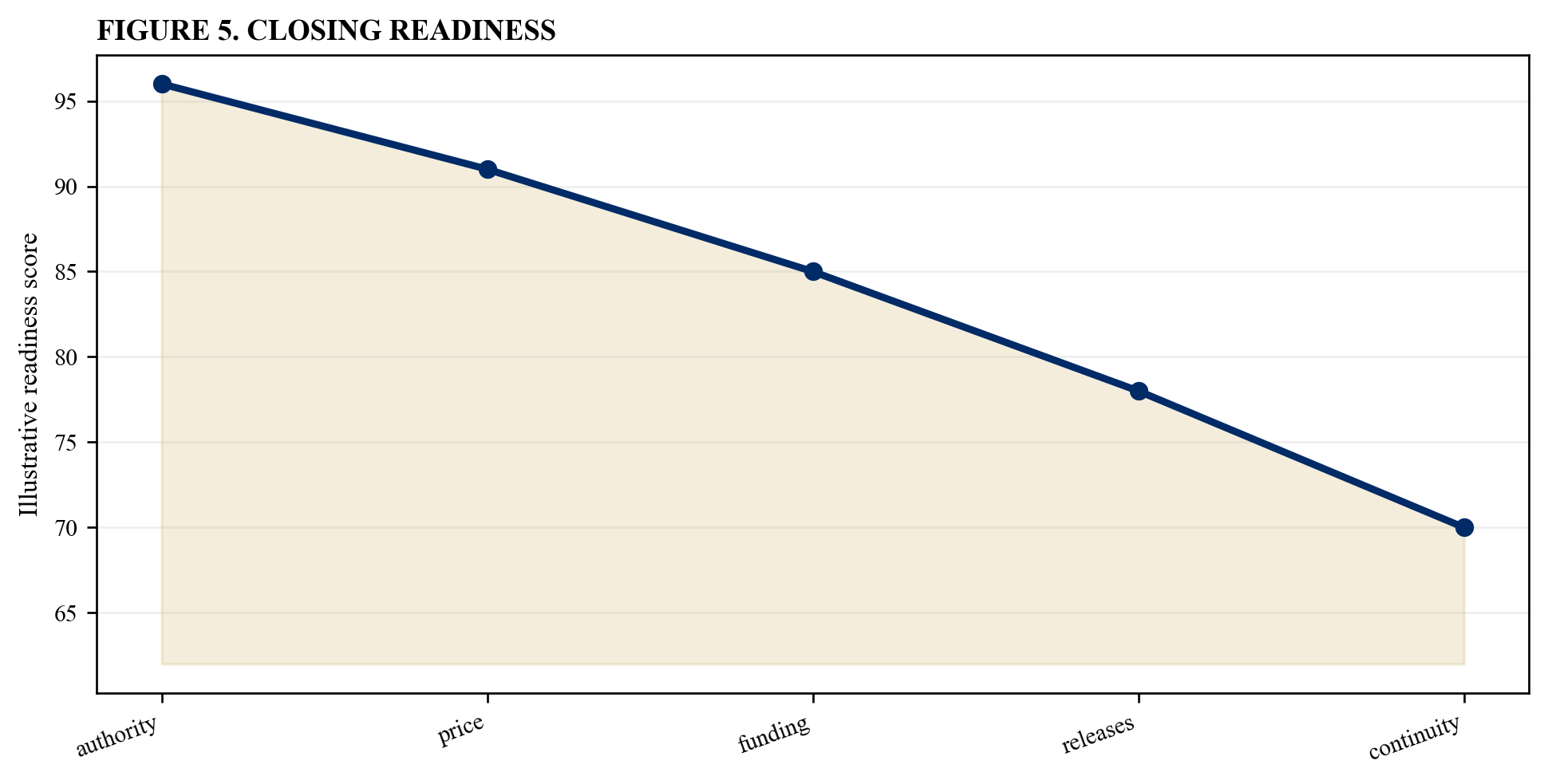
Illustrative analytical scenario; verified transaction evidence should replace index values.
References
- IFRS Foundation, IFRS 11 Joint Arrangements, https://www.ifrs.org/issued-standards/list-of-standards/ifrs-11-joint-arrangements/
- OECD, G20/OECD Principles of Corporate Governance 2023, https://www.oecd.org/en/publications/g20-oecd-principles-of-corporate-governance-2023_ed750b30-en.html
- International Chamber of Commerce, ICC Model Joint Venture Contract 2024, https://2go.iccwbo.org/explore-our-products/ebooks/model-contracts/icc-model-contract-joint-venture-ebook-2.html
- UNCITRAL, Model Law on International Commercial Arbitration, https://uncitral.un.org/en/texts/arbitration/modellaw/commercial_arbitration
- Delaware Code, Title 8 Section 273, Dissolution of Joint Venture Corporation, https://www.delcode.delaware.gov/title8/c001/sc10/
- UK Parliament, Companies Act 2006 Sections 994 and 996, https://www.legislation.gov.uk/ukpga/2006/46/part/30
- OECD, Guidelines on Corporate Governance of State-Owned Enterprises 2024, https://www.oecd.org/en/publications/oecd-guidelines-on-corporate-governance-of-state-owned-enterprises-2024_18a24f43-en.html
- World Bank Group, PPP Reference Guide Version 3, https://ppp.worldbank.org/public-private-partnership/library/ppp-reference-guide-3-0
- OECD, Guidelines for Multinational Enterprises on Responsible Business Conduct 2023, https://www.oecd.org/en/publications/oecd-guidelines-for-multinational-enterprises-on-responsible-business-conduct_81f92357-en.html
- IFRS Foundation, IFRS 7 Financial Instruments Disclosures, https://www.ifrs.org/issued-standards/list-of-standards/ifrs-7-financial-instruments-disclosures/
- International Bar Association, Rules on the Taking of Evidence in International Arbitration 2020, https://www.ibanet.org/resources
- UNCITRAL, Notes on Organizing Arbitral Proceedings, https://uncitral.un.org/en/texts/arbitration/explanatorytexts/organizing_arbitral_proceedings
- UK Competition and Markets Authority, Guidance on Horizontal Agreements, https://www.gov.uk/government/publications/guidance-on-horizontal-agreements
- UK Competition and Markets Authority, Collaborating with Other Businesses, https://www.gov.uk/government/publications/collaborating-with-other-businesses/collaborating-with-other-businesses
- International Organization for Standardization, ISO 37000 Governance of Organizations, https://www.iso.org/standard/65036.html
- ICC, Model Contracts and Clauses, https://iccwbo.org/business-solutions/model-contracts-clauses/
- UNCITRAL, Model Law on Electronic Commerce, https://uncitral.un.org/en/texts/ecommerce/modellaw/electronic_commerce
- OECD, Methodology for Assessing Implementation of the G20/OECD Principles, https://www.oecd.org/corporate/principles-corporate-governance/
- World Bank Group, Guidelines for the Development of a Policy for Managing Unsolicited Proposals, https://ppp.worldbank.org/public-private-partnership/library/policy-guidelines-managing-unsolicited-proposals-infrastructure-projects
- Centre for Effective Dispute Resolution, Model Mediation Procedure, https://www.cedr.com/commercial/mediation/
- UNCITRAL, Model Law on International Commercial Mediation 2018, https://uncitral.un.org/en/texts/mediation/modellaw/commercial_conciliation
- ICC, Expert Rules, https://iccwbo.org/dispute-resolution/dispute-resolution-services/adr/expertise/
- ICC, Rules for the Administration of Expert Proceedings, https://iccwbo.org/dispute-resolution/dispute-resolution-services/adr/expertise/
- International Bar Association, Guidelines and Rules on Dispute Resolution, https://www.ibanet.org/resources
- ICC, Mediation Rules, https://iccwbo.org/dispute-resolution/dispute-resolution-services/adr/mediation/mediation-rules/
- United Nations, Singapore Convention on Mediation, https://uncitral.un.org/en/texts/mediation/conventions/international_settlement_agreements
- London Court of International Arbitration, LCIA Arbitration Rules 2020, https://www.lcia.org/Dispute_Resolution_Services/lcia-arbitration-rules-2020.aspx
- Singapore International Arbitration Centre, SIAC Rules 2025, https://siac.org.sg/siac-rules-2025
- United Nations, New York Convention 1958, https://uncitral.un.org/en/texts/arbitration/conventions/foreign_arbitral_awards
- IFRS Foundation, IAS 37 Provisions Contingent Liabilities and Contingent Assets, https://www.ifrs.org/issued-standards/list-of-standards/ias-37-provisions-contingent-liabilities-and-contingent-assets/
- UK Parliament, Insolvency Act 1986 Section 122, https://www.legislation.gov.uk/ukpga/1986/45/section/122
- International Valuation Standards Council, International Valuation Standards effective 31 January 2025, https://ivsc.org/new-edition-of-the-international-valuation-standards-ivs-published/
- UNCITRAL, Legislative Guide on Insolvency Law, https://uncitral.un.org/en/texts/insolvency/legislativeguides/insolvency_law
- UK Government, The Green Book Appraisal and Evaluation in Central Government, https://www.gov.uk/government/publications/the-green-book-appraisal-and-evaluation-in-central-government
- ICC, Arbitration Rules 2021, https://iccwbo.org/dispute-resolution/dispute-resolution-services/arbitration/rules-procedure/2021-arbitration-rules/
- IFRS Foundation, IFRS 9 Financial Instruments, https://www.ifrs.org/issued-standards/list-of-standards/ifrs-9-financial-instruments/
- IFRS Foundation, IFRS 13 Fair Value Measurement, https://www.ifrs.org/issued-standards/list-of-standards/ifrs-13-fair-value-measurement/
- International Valuation Standards Council, IVS Standards, https://ivsc.org/standards/
- UK Competition and Markets Authority, Merger Assessment Guidelines, https://www.gov.uk/government/publications/merger-assessment-guidelines/merger-assessment-guidelines-html-version
- OECD, Recommendation on Competitive Neutrality, https://legalinstruments.oecd.org/en/instruments/OECD-LEGAL-0462
