

1. Define the distribution mandate
The transaction team should state the proposed payment, recipient, timing, funding sources, minimum liquidity and strategic constraints. The required output is a signed distribution mandate. Use current source data and link every material conclusion to retained company, financial, market and contractual evidence [1][2].
Translate the proposal into monthly revenue, margin, working capital, capital investment, tax, free cash flow, debt, liquidity and covenant outcomes. Identify the accountable owner, baseline, measurement method, decision date and evidence threshold. Reconcile the operating plan, accounts, treasury forecast, finance documents, valuation analysis and board case.
The principal risk is that the process can begin with debt capacity before defining the company's post-payment obligations. Quantify the effect on cash-flow and balance-sheet solvency, fixed-charge coverage, covenant headroom, minimum liquidity, investment capacity, refinancing and strategic flexibility. Show base, delayed-recovery, margin-reversal, higher-rate and refinancing-closure cases with explicit management responses.
Retain the source, model version, reviewer, independent challenge, legal and finance approval and board response. Compare approved assumptions with realised outcomes; remove unsupported capacity; and assign every exception an owner and deadline.
2. Map the decision authorities
The transaction team should identify board, shareholder, fund, lender, regulatory and third-party approval rights. The required output is an authority and consent matrix. Use current source data and link every material conclusion to retained company, financial, market and contractual evidence [3][4].
Translate the proposal into monthly revenue, margin, working capital, capital investment, tax, free cash flow, debt, liquidity and covenant outcomes. Identify the accountable owner, baseline, measurement method, decision date and evidence threshold. Reconcile the operating plan, accounts, treasury forecast, finance documents, valuation analysis and board case.
The principal risk is that an economically attractive payment can fail a legal, contractual or governance test. Quantify the effect on cash-flow and balance-sheet solvency, fixed-charge coverage, covenant headroom, minimum liquidity, investment capacity, refinancing and strategic flexibility. Show base, delayed-recovery, margin-reversal, higher-rate and refinancing-closure cases with explicit management responses.
Retain the source, model version, reviewer, independent challenge, legal and finance approval and board response. Compare approved assumptions with realised outcomes; remove unsupported capacity; and assign every exception an owner and deadline.
3. Confirm distributable reserves
The transaction team should reconcile accumulated realised profits and losses to relevant accounts and transaction adjustments. The required output is a distributable-reserves memorandum. Use current source data and link every material conclusion to retained company, financial, market and contractual evidence [3][5].
Translate the proposal into monthly revenue, margin, working capital, capital investment, tax, free cash flow, debt, liquidity and covenant outcomes. Identify the accountable owner, baseline, measurement method, decision date and evidence threshold. Reconcile the operating plan, accounts, treasury forecast, finance documents, valuation analysis and board case.
The principal risk is that accounting equity can be mistaken for profits available for distribution. Quantify the effect on cash-flow and balance-sheet solvency, fixed-charge coverage, covenant headroom, minimum liquidity, investment capacity, refinancing and strategic flexibility. Show base, delayed-recovery, margin-reversal, higher-rate and refinancing-closure cases with explicit management responses.
Retain the source, model version, reviewer, independent challenge, legal and finance approval and board response. Compare approved assumptions with realised outcomes; remove unsupported capacity; and assign every exception an owner and deadline.
4. Test directors' duties
The transaction team should record independent judgement, conflicts, creditor interests, information considered and professional advice. The required output is a board-duty evidence file. Use current source data and link every material conclusion to retained company, financial, market and contractual evidence [4][6].
Translate the proposal into monthly revenue, margin, working capital, capital investment, tax, free cash flow, debt, liquidity and covenant outcomes. Identify the accountable owner, baseline, measurement method, decision date and evidence threshold. Reconcile the operating plan, accounts, treasury forecast, finance documents, valuation analysis and board case.
The principal risk is that sponsor pressure can displace the directors' assessment of the company's interests. Quantify the effect on cash-flow and balance-sheet solvency, fixed-charge coverage, covenant headroom, minimum liquidity, investment capacity, refinancing and strategic flexibility. Show base, delayed-recovery, margin-reversal, higher-rate and refinancing-closure cases with explicit management responses.
Retain the source, model version, reviewer, independent challenge, legal and finance approval and board response. Compare approved assumptions with realised outcomes; remove unsupported capacity; and assign every exception an owner and deadline.
5. Run cash-flow solvency
The transaction team should forecast debts and other obligations as they fall due using monthly sources and uses. The required output is a cash-flow solvency schedule. Use current source data and link every material conclusion to retained company, financial, market and contractual evidence [6][7].
Translate the proposal into monthly revenue, margin, working capital, capital investment, tax, free cash flow, debt, liquidity and covenant outcomes. Identify the accountable owner, baseline, measurement method, decision date and evidence threshold. Reconcile the operating plan, accounts, treasury forecast, finance documents, valuation analysis and board case.
The principal risk is that annual liquidity can conceal a near-term payment failure. Quantify the effect on cash-flow and balance-sheet solvency, fixed-charge coverage, covenant headroom, minimum liquidity, investment capacity, refinancing and strategic flexibility. Show base, delayed-recovery, margin-reversal, higher-rate and refinancing-closure cases with explicit management responses.
Retain the source, model version, reviewer, independent challenge, legal and finance approval and board response. Compare approved assumptions with realised outcomes; remove unsupported capacity; and assign every exception an owner and deadline.
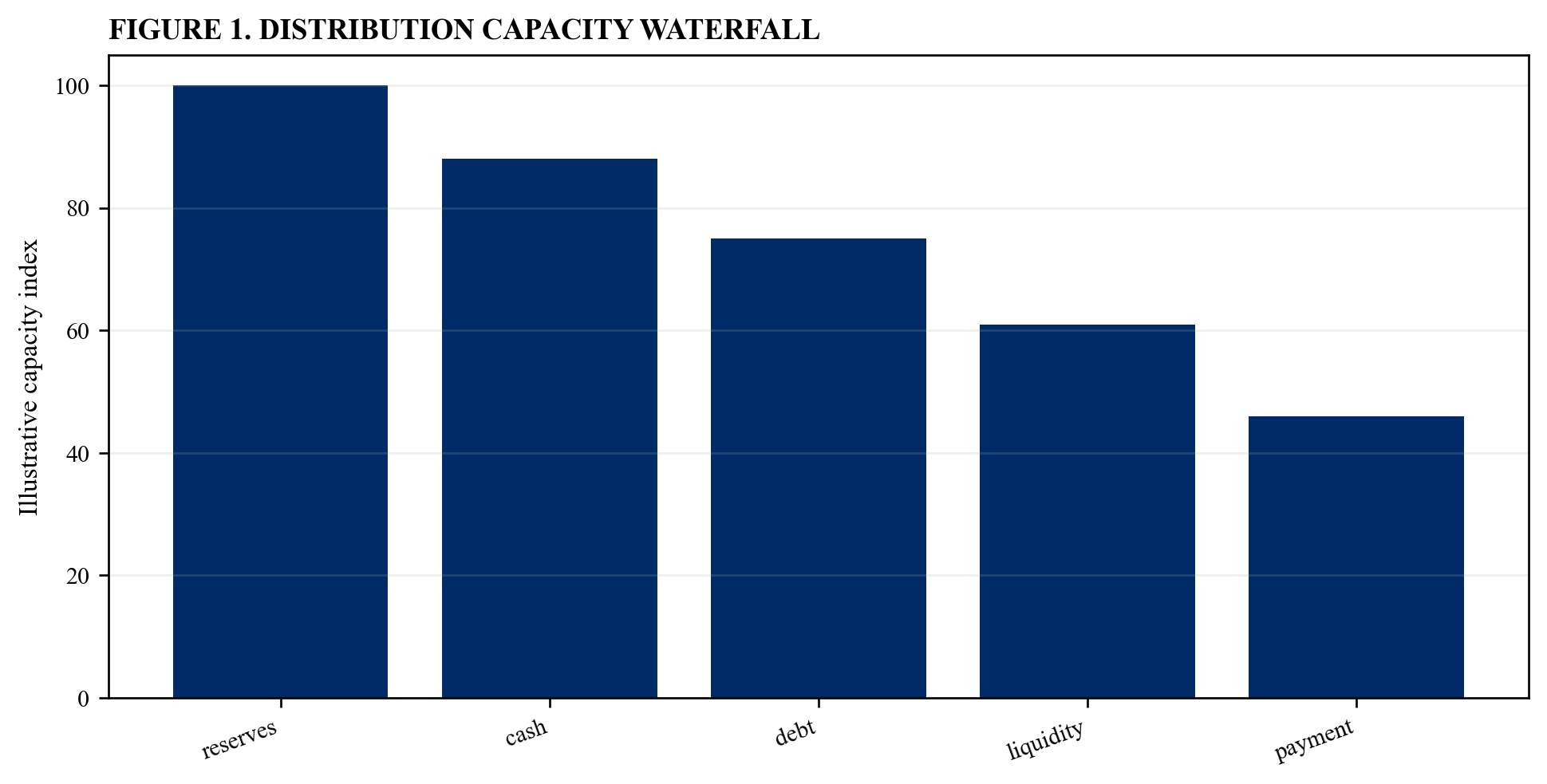
Illustrative analytical scenario; verified operating, financial and contractual evidence should replace index values.
6. Run balance-sheet solvency
The transaction team should value assets and liabilities including contingent and prospective obligations under realistic downside assumptions. The required output is a balance-sheet solvency file. Use current source data and link every material conclusion to retained company, financial, market and contractual evidence [6][8].
Translate the proposal into monthly revenue, margin, working capital, capital investment, tax, free cash flow, debt, liquidity and covenant outcomes. Identify the accountable owner, baseline, measurement method, decision date and evidence threshold. Reconcile the operating plan, accounts, treasury forecast, finance documents, valuation analysis and board case.
The principal risk is that book values can omit contingent claims or overstate recoverable assets. Quantify the effect on cash-flow and balance-sheet solvency, fixed-charge coverage, covenant headroom, minimum liquidity, investment capacity, refinancing and strategic flexibility. Show base, delayed-recovery, margin-reversal, higher-rate and refinancing-closure cases with explicit management responses.
Retain the source, model version, reviewer, independent challenge, legal and finance approval and board response. Compare approved assumptions with realised outcomes; remove unsupported capacity; and assign every exception an owner and deadline.
7. Reconstruct current leverage
The transaction team should bridge gross debt, cash, leases, guarantees, hedging, earn-outs and restricted cash. The required output is a verified leverage bridge. Use current source data and link every material conclusion to retained company, financial, market and contractual evidence [9][10].
Translate the proposal into monthly revenue, margin, working capital, capital investment, tax, free cash flow, debt, liquidity and covenant outcomes. Identify the accountable owner, baseline, measurement method, decision date and evidence threshold. Reconcile the operating plan, accounts, treasury forecast, finance documents, valuation analysis and board case.
The principal risk is that headline net leverage can exclude economically senior or unavailable balances. Quantify the effect on cash-flow and balance-sheet solvency, fixed-charge coverage, covenant headroom, minimum liquidity, investment capacity, refinancing and strategic flexibility. Show base, delayed-recovery, margin-reversal, higher-rate and refinancing-closure cases with explicit management responses.
Retain the source, model version, reviewer, independent challenge, legal and finance approval and board response. Compare approved assumptions with realised outcomes; remove unsupported capacity; and assign every exception an owner and deadline.
8. Define sustainable earnings
The transaction team should reconcile reported, adjusted, covenant and cash earnings to retained operating evidence. The required output is a governed earnings baseline. Use current source data and link every material conclusion to retained company, financial, market and contractual evidence [5][11].
Translate the proposal into monthly revenue, margin, working capital, capital investment, tax, free cash flow, debt, liquidity and covenant outcomes. Identify the accountable owner, baseline, measurement method, decision date and evidence threshold. Reconcile the operating plan, accounts, treasury forecast, finance documents, valuation analysis and board case.
The principal risk is that aggressive add-backs can enlarge the distribution and weaken debt service. Quantify the effect on cash-flow and balance-sheet solvency, fixed-charge coverage, covenant headroom, minimum liquidity, investment capacity, refinancing and strategic flexibility. Show base, delayed-recovery, margin-reversal, higher-rate and refinancing-closure cases with explicit management responses.
Retain the source, model version, reviewer, independent challenge, legal and finance approval and board response. Compare approved assumptions with realised outcomes; remove unsupported capacity; and assign every exception an owner and deadline.
Table 1. Distribution capacity waterfall
| Layer | Evidence | Decision test |
|---|---|---|
| reserves | relevant accounts | lawful capacity |
| cash | monthly forecast | obligations met |
| debt | executed definitions | permitted and serviceable |
| distribution | net proceeds | flexibility retained |
Illustrative control framework; verified company records, executed documents and authorised advice govern.
9. Reconcile earnings to cash
The transaction team should deduct tax, working capital, capital expenditure, leases, restructuring and mandatory payments. The required output is a sustainable free-cash-flow bridge. Use current source data and link every material conclusion to retained company, financial, market and contractual evidence [7][12].
Translate the proposal into monthly revenue, margin, working capital, capital investment, tax, free cash flow, debt, liquidity and covenant outcomes. Identify the accountable owner, baseline, measurement method, decision date and evidence threshold. Reconcile the operating plan, accounts, treasury forecast, finance documents, valuation analysis and board case.
The principal risk is that EBITDA can support leverage while producing little cash for interest and amortisation. Quantify the effect on cash-flow and balance-sheet solvency, fixed-charge coverage, covenant headroom, minimum liquidity, investment capacity, refinancing and strategic flexibility. Show base, delayed-recovery, margin-reversal, higher-rate and refinancing-closure cases with explicit management responses.
Retain the source, model version, reviewer, independent challenge, legal and finance approval and board response. Compare approved assumptions with realised outcomes; remove unsupported capacity; and assign every exception an owner and deadline.
10. Protect minimum liquidity
The transaction team should size operating, seasonal, tax, capex, integration and contingency reserves before the distribution. The required output is a minimum-liquidity policy. Use current source data and link every material conclusion to retained company, financial, market and contractual evidence [1][13].
Translate the proposal into monthly revenue, margin, working capital, capital investment, tax, free cash flow, debt, liquidity and covenant outcomes. Identify the accountable owner, baseline, measurement method, decision date and evidence threshold. Reconcile the operating plan, accounts, treasury forecast, finance documents, valuation analysis and board case.
The principal risk is that cash paid to shareholders can force emergency borrowing during normal volatility. Quantify the effect on cash-flow and balance-sheet solvency, fixed-charge coverage, covenant headroom, minimum liquidity, investment capacity, refinancing and strategic flexibility. Show base, delayed-recovery, margin-reversal, higher-rate and refinancing-closure cases with explicit management responses.
Retain the source, model version, reviewer, independent challenge, legal and finance approval and board response. Compare approved assumptions with realised outcomes; remove unsupported capacity; and assign every exception an owner and deadline.
11. Map future investment needs
The transaction team should schedule maintenance, compliance, resilience, technology, capacity and growth expenditure. The required output is a funded investment plan. Use current source data and link every material conclusion to retained company, financial, market and contractual evidence [12][14].
Translate the proposal into monthly revenue, margin, working capital, capital investment, tax, free cash flow, debt, liquidity and covenant outcomes. Identify the accountable owner, baseline, measurement method, decision date and evidence threshold. Reconcile the operating plan, accounts, treasury forecast, finance documents, valuation analysis and board case.
The principal risk is that the recapitalisation can transfer value by deferring investment needed to sustain earnings. Quantify the effect on cash-flow and balance-sheet solvency, fixed-charge coverage, covenant headroom, minimum liquidity, investment capacity, refinancing and strategic flexibility. Show base, delayed-recovery, margin-reversal, higher-rate and refinancing-closure cases with explicit management responses.
Retain the source, model version, reviewer, independent challenge, legal and finance approval and board response. Compare approved assumptions with realised outcomes; remove unsupported capacity; and assign every exception an owner and deadline.
12. Preserve acquisition capacity
The transaction team should compare the payment with committed and contingent acquisition needs and integration capacity. The required output is an acquisition-flexibility schedule. Use current source data and link every material conclusion to retained company, financial, market and contractual evidence [9][15].
Translate the proposal into monthly revenue, margin, working capital, capital investment, tax, free cash flow, debt, liquidity and covenant outcomes. Identify the accountable owner, baseline, measurement method, decision date and evidence threshold. Reconcile the operating plan, accounts, treasury forecast, finance documents, valuation analysis and board case.
The principal risk is that a distribution can consume capital needed for the platform strategy. Quantify the effect on cash-flow and balance-sheet solvency, fixed-charge coverage, covenant headroom, minimum liquidity, investment capacity, refinancing and strategic flexibility. Show base, delayed-recovery, margin-reversal, higher-rate and refinancing-closure cases with explicit management responses.
Retain the source, model version, reviewer, independent challenge, legal and finance approval and board response. Compare approved assumptions with realised outcomes; remove unsupported capacity; and assign every exception an owner and deadline.
13. Read the finance documents
The transaction team should map restricted payments, permitted debt, leverage tests, conditions, baskets, defaults and representations. The required output is an executed-document permissions matrix. Use current source data and link every material conclusion to retained company, financial, market and contractual evidence [9][16].
Translate the proposal into monthly revenue, margin, working capital, capital investment, tax, free cash flow, debt, liquidity and covenant outcomes. Identify the accountable owner, baseline, measurement method, decision date and evidence threshold. Reconcile the operating plan, accounts, treasury forecast, finance documents, valuation analysis and board case.
The principal risk is that a modelled capacity can exceed the legal permission in the credit agreement. Quantify the effect on cash-flow and balance-sheet solvency, fixed-charge coverage, covenant headroom, minimum liquidity, investment capacity, refinancing and strategic flexibility. Show base, delayed-recovery, margin-reversal, higher-rate and refinancing-closure cases with explicit management responses.
Retain the source, model version, reviewer, independent challenge, legal and finance approval and board response. Compare approved assumptions with realised outcomes; remove unsupported capacity; and assign every exception an owner and deadline.
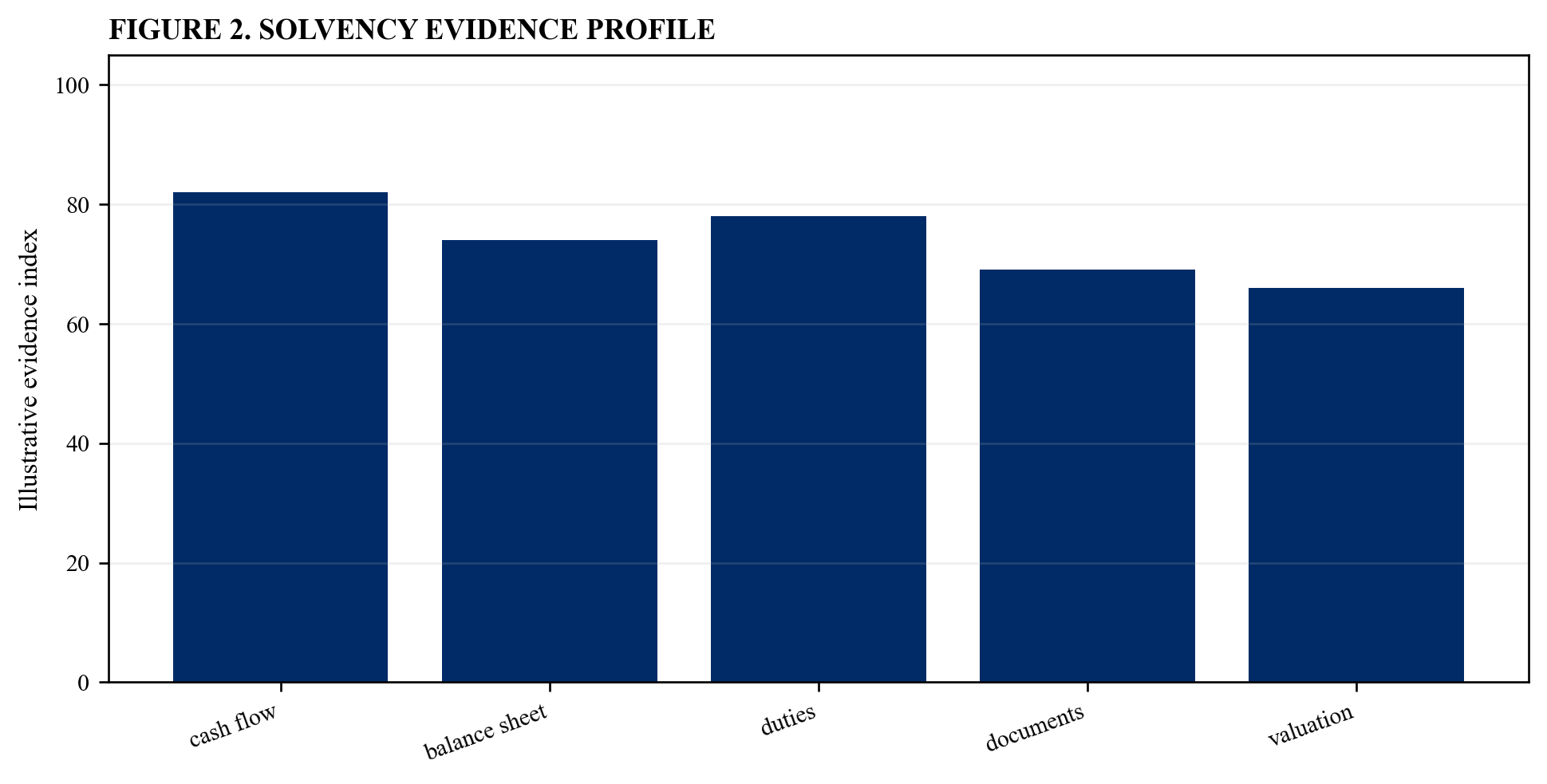
Illustrative analytical scenario; verified operating, financial and contractual evidence should replace index values.
14. Separate incurrence and maintenance tests
The transaction team should calculate each contractual test on its own definitions, dates and evidence requirements. The required output is a covenant-test calendar. Use current source data and link every material conclusion to retained company, financial, market and contractual evidence [9][16].
Translate the proposal into monthly revenue, margin, working capital, capital investment, tax, free cash flow, debt, liquidity and covenant outcomes. Identify the accountable owner, baseline, measurement method, decision date and evidence threshold. Reconcile the operating plan, accounts, treasury forecast, finance documents, valuation analysis and board case.
The principal risk is that passing an incurrence test can coexist with weak future maintenance headroom. Quantify the effect on cash-flow and balance-sheet solvency, fixed-charge coverage, covenant headroom, minimum liquidity, investment capacity, refinancing and strategic flexibility. Show base, delayed-recovery, margin-reversal, higher-rate and refinancing-closure cases with explicit management responses.
Retain the source, model version, reviewer, independent challenge, legal and finance approval and board response. Compare approved assumptions with realised outcomes; remove unsupported capacity; and assign every exception an owner and deadline.
15. Test restricted-payment capacity
The transaction team should roll cumulative baskets, builder baskets, ratio baskets, leakage and prior usage. The required output is a restricted-payment roll-forward. Use current source data and link every material conclusion to retained company, financial, market and contractual evidence [9][16].
Translate the proposal into monthly revenue, margin, working capital, capital investment, tax, free cash flow, debt, liquidity and covenant outcomes. Identify the accountable owner, baseline, measurement method, decision date and evidence threshold. Reconcile the operating plan, accounts, treasury forecast, finance documents, valuation analysis and board case.
The principal risk is that available capacity can be double counted across historic transactions. Quantify the effect on cash-flow and balance-sheet solvency, fixed-charge coverage, covenant headroom, minimum liquidity, investment capacity, refinancing and strategic flexibility. Show base, delayed-recovery, margin-reversal, higher-rate and refinancing-closure cases with explicit management responses.
Retain the source, model version, reviewer, independent challenge, legal and finance approval and board response. Compare approved assumptions with realised outcomes; remove unsupported capacity; and assign every exception an owner and deadline.
16. Design the new debt stack
The transaction team should set instrument, ranking, maturity, amortisation, pricing, call protection, security and hedging. The required output is a post-recap capital structure. Use current source data and link every material conclusion to retained company, financial, market and contractual evidence [1][9].
Translate the proposal into monthly revenue, margin, working capital, capital investment, tax, free cash flow, debt, liquidity and covenant outcomes. Identify the accountable owner, baseline, measurement method, decision date and evidence threshold. Reconcile the operating plan, accounts, treasury forecast, finance documents, valuation analysis and board case.
The principal risk is that cheap initial proceeds can create an inflexible maturity or refinancing wall. Quantify the effect on cash-flow and balance-sheet solvency, fixed-charge coverage, covenant headroom, minimum liquidity, investment capacity, refinancing and strategic flexibility. Show base, delayed-recovery, margin-reversal, higher-rate and refinancing-closure cases with explicit management responses.
Retain the source, model version, reviewer, independent challenge, legal and finance approval and board response. Compare approved assumptions with realised outcomes; remove unsupported capacity; and assign every exception an owner and deadline.
Table 2. Solvency evidence matrix
| Test | Primary evidence | Challenge |
|---|---|---|
| cash flow | monthly obligations | timing stress |
| balance sheet | asset and liability file | contingencies |
| duties | board record | creditor interests |
| reserves | realised-profit bridge | accounting basis |
Illustrative control framework; verified company records, executed documents and authorised advice govern.
17. Price cash interest
The transaction team should model base rates, margins, floors, fees, hedges, cash sweeps and interest periods. The required output is a monthly interest schedule. Use current source data and link every material conclusion to retained company, financial, market and contractual evidence [1][17].
Translate the proposal into monthly revenue, margin, working capital, capital investment, tax, free cash flow, debt, liquidity and covenant outcomes. Identify the accountable owner, baseline, measurement method, decision date and evidence threshold. Reconcile the operating plan, accounts, treasury forecast, finance documents, valuation analysis and board case.
The principal risk is that rate volatility can reduce free cash flow faster than leverage metrics indicate. Quantify the effect on cash-flow and balance-sheet solvency, fixed-charge coverage, covenant headroom, minimum liquidity, investment capacity, refinancing and strategic flexibility. Show base, delayed-recovery, margin-reversal, higher-rate and refinancing-closure cases with explicit management responses.
Retain the source, model version, reviewer, independent challenge, legal and finance approval and board response. Compare approved assumptions with realised outcomes; remove unsupported capacity; and assign every exception an owner and deadline.
18. Model amortisation and cash sweeps
The transaction team should apply mandatory repayment, excess-cash-flow sweeps and voluntary prepayment to available cash. The required output is a debt roll-forward. Use current source data and link every material conclusion to retained company, financial, market and contractual evidence [9][10].
Translate the proposal into monthly revenue, margin, working capital, capital investment, tax, free cash flow, debt, liquidity and covenant outcomes. Identify the accountable owner, baseline, measurement method, decision date and evidence threshold. Reconcile the operating plan, accounts, treasury forecast, finance documents, valuation analysis and board case.
The principal risk is that the distribution can be sized before recognising compulsory deleveraging. Quantify the effect on cash-flow and balance-sheet solvency, fixed-charge coverage, covenant headroom, minimum liquidity, investment capacity, refinancing and strategic flexibility. Show base, delayed-recovery, margin-reversal, higher-rate and refinancing-closure cases with explicit management responses.
Retain the source, model version, reviewer, independent challenge, legal and finance approval and board response. Compare approved assumptions with realised outcomes; remove unsupported capacity; and assign every exception an owner and deadline.
19. Map the maturity wall
The transaction team should aggregate all debt, hedges, leases, guarantees and bullet obligations by date. The required output is a maturity and refinancing calendar. Use current source data and link every material conclusion to retained company, financial, market and contractual evidence [1][18].
Translate the proposal into monthly revenue, margin, working capital, capital investment, tax, free cash flow, debt, liquidity and covenant outcomes. Identify the accountable owner, baseline, measurement method, decision date and evidence threshold. Reconcile the operating plan, accounts, treasury forecast, finance documents, valuation analysis and board case.
The principal risk is that multiple facilities can converge into one concentrated funding event. Quantify the effect on cash-flow and balance-sheet solvency, fixed-charge coverage, covenant headroom, minimum liquidity, investment capacity, refinancing and strategic flexibility. Show base, delayed-recovery, margin-reversal, higher-rate and refinancing-closure cases with explicit management responses.
Retain the source, model version, reviewer, independent challenge, legal and finance approval and board response. Compare approved assumptions with realised outcomes; remove unsupported capacity; and assign every exception an owner and deadline.
20. Test lender appetite
The transaction team should retain term sheets, commitment status, flex, syndication risk, market evidence and fallback funding. The required output is a lender-evidence register. Use current source data and link every material conclusion to retained company, financial, market and contractual evidence [1][9].
Translate the proposal into monthly revenue, margin, working capital, capital investment, tax, free cash flow, debt, liquidity and covenant outcomes. Identify the accountable owner, baseline, measurement method, decision date and evidence threshold. Reconcile the operating plan, accounts, treasury forecast, finance documents, valuation analysis and board case.
The principal risk is that permitted debt can be unavailable or repriced before completion. Quantify the effect on cash-flow and balance-sheet solvency, fixed-charge coverage, covenant headroom, minimum liquidity, investment capacity, refinancing and strategic flexibility. Show base, delayed-recovery, margin-reversal, higher-rate and refinancing-closure cases with explicit management responses.
Retain the source, model version, reviewer, independent challenge, legal and finance approval and board response. Compare approved assumptions with realised outcomes; remove unsupported capacity; and assign every exception an owner and deadline.
21. Revalue after volatility
The transaction team should use current market and income methods, independent challenge and ad hoc triggers. The required output is a current valuation file. Use current source data and link every material conclusion to retained company, financial, market and contractual evidence [2][19].
Translate the proposal into monthly revenue, margin, working capital, capital investment, tax, free cash flow, debt, liquidity and covenant outcomes. Identify the accountable owner, baseline, measurement method, decision date and evidence threshold. Reconcile the operating plan, accounts, treasury forecast, finance documents, valuation analysis and board case.
The principal risk is that stale valuation can support an excessive payment and distorted leverage. Quantify the effect on cash-flow and balance-sheet solvency, fixed-charge coverage, covenant headroom, minimum liquidity, investment capacity, refinancing and strategic flexibility. Show base, delayed-recovery, margin-reversal, higher-rate and refinancing-closure cases with explicit management responses.
Retain the source, model version, reviewer, independent challenge, legal and finance approval and board response. Compare approved assumptions with realised outcomes; remove unsupported capacity; and assign every exception an owner and deadline.
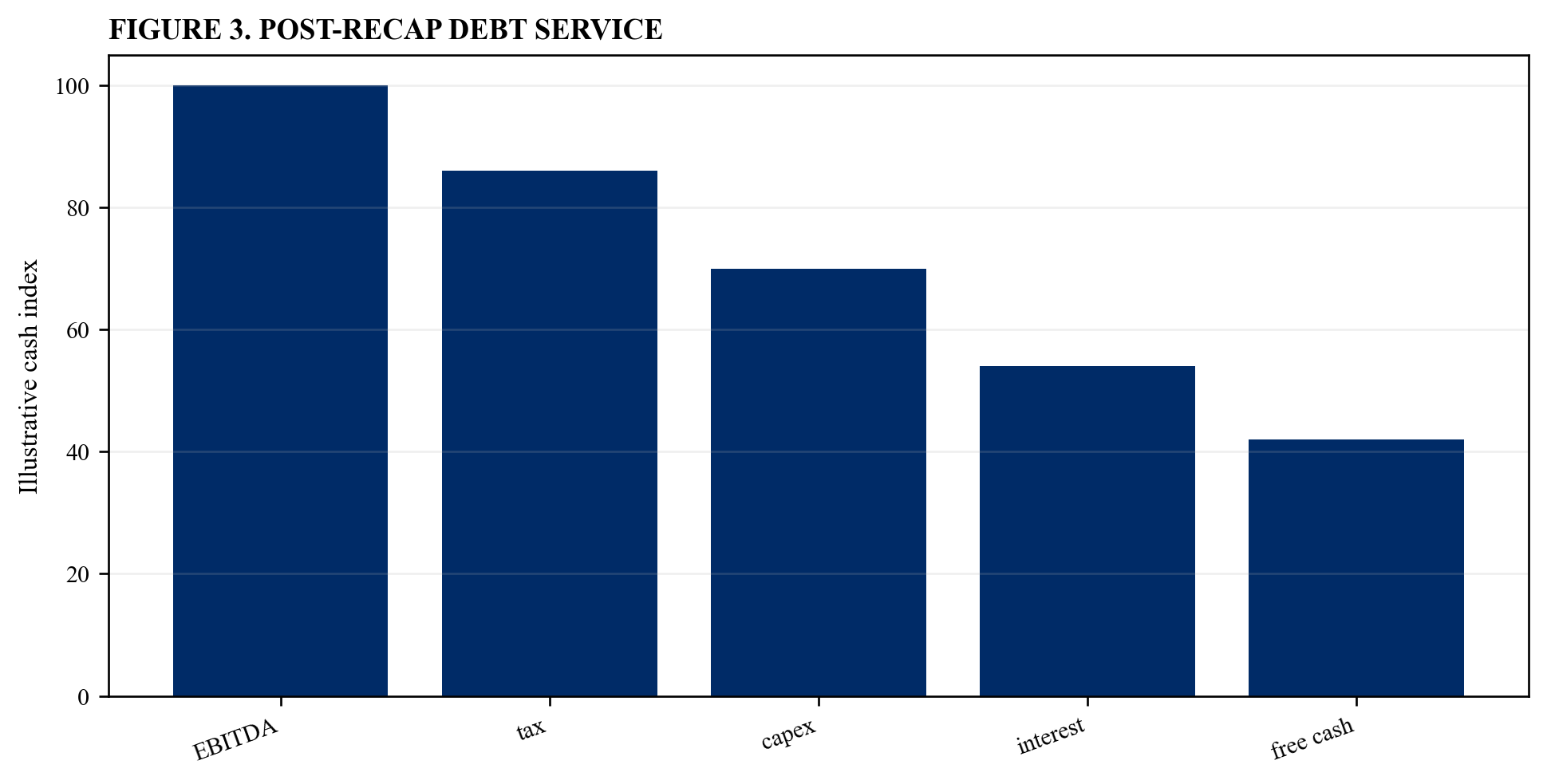
Illustrative analytical scenario; verified operating, financial and contractual evidence should replace index values.
22. Calibrate debt capacity
The transaction team should reconcile enterprise value, sustainable cash flow, fixed charges, recovery value and downside liquidity. The required output is a debt-capacity range. Use current source data and link every material conclusion to retained company, financial, market and contractual evidence [9][19].
Translate the proposal into monthly revenue, margin, working capital, capital investment, tax, free cash flow, debt, liquidity and covenant outcomes. Identify the accountable owner, baseline, measurement method, decision date and evidence threshold. Reconcile the operating plan, accounts, treasury forecast, finance documents, valuation analysis and board case.
The principal risk is that a leverage multiple alone can conceal weak cash coverage and recovery. Quantify the effect on cash-flow and balance-sheet solvency, fixed-charge coverage, covenant headroom, minimum liquidity, investment capacity, refinancing and strategic flexibility. Show base, delayed-recovery, margin-reversal, higher-rate and refinancing-closure cases with explicit management responses.
Retain the source, model version, reviewer, independent challenge, legal and finance approval and board response. Compare approved assumptions with realised outcomes; remove unsupported capacity; and assign every exception an owner and deadline.
23. Build the operating base case
The transaction team should combine verified revenue, margin, working-capital, capex and tax assumptions with monthly debt service. The required output is an owner-led operating model. Use current source data and link every material conclusion to retained company, financial, market and contractual evidence [7][14].
Translate the proposal into monthly revenue, margin, working capital, capital investment, tax, free cash flow, debt, liquidity and covenant outcomes. Identify the accountable owner, baseline, measurement method, decision date and evidence threshold. Reconcile the operating plan, accounts, treasury forecast, finance documents, valuation analysis and board case.
The principal risk is that management targets can enter the recap case without delivery evidence. Quantify the effect on cash-flow and balance-sheet solvency, fixed-charge coverage, covenant headroom, minimum liquidity, investment capacity, refinancing and strategic flexibility. Show base, delayed-recovery, margin-reversal, higher-rate and refinancing-closure cases with explicit management responses.
Retain the source, model version, reviewer, independent challenge, legal and finance approval and board response. Compare approved assumptions with realised outcomes; remove unsupported capacity; and assign every exception an owner and deadline.
24. Build the delayed-recovery case
The transaction team should defer revenue, margin and working-capital improvement while retaining committed cash uses. The required output is a delayed-recovery downside. Use current source data and link every material conclusion to retained company, financial, market and contractual evidence [1][13].
Translate the proposal into monthly revenue, margin, working capital, capital investment, tax, free cash flow, debt, liquidity and covenant outcomes. Identify the accountable owner, baseline, measurement method, decision date and evidence threshold. Reconcile the operating plan, accounts, treasury forecast, finance documents, valuation analysis and board case.
The principal risk is that timing slippage can exhaust liquidity before annual performance recovers. Quantify the effect on cash-flow and balance-sheet solvency, fixed-charge coverage, covenant headroom, minimum liquidity, investment capacity, refinancing and strategic flexibility. Show base, delayed-recovery, margin-reversal, higher-rate and refinancing-closure cases with explicit management responses.
Retain the source, model version, reviewer, independent challenge, legal and finance approval and board response. Compare approved assumptions with realised outcomes; remove unsupported capacity; and assign every exception an owner and deadline.
Table 3. Debt-service bridge
| Cash item | Model basis | Control |
|---|---|---|
| interest | rate and margin | hedge expiry |
| amortisation | executed schedule | mandatory priority |
| cash sweep | contract definition | double-count check |
| liquidity | minimum reserve | board threshold |
Illustrative control framework; verified company records, executed documents and authorised advice govern.
25. Build the margin-reversal case
The transaction team should reverse temporary savings and restore service, labour and maintenance requirements. The required output is a margin-quality downside. Use current source data and link every material conclusion to retained company, financial, market and contractual evidence [5][14].
Translate the proposal into monthly revenue, margin, working capital, capital investment, tax, free cash flow, debt, liquidity and covenant outcomes. Identify the accountable owner, baseline, measurement method, decision date and evidence threshold. Reconcile the operating plan, accounts, treasury forecast, finance documents, valuation analysis and board case.
The principal risk is that temporary actions can be capitalised into permanent debt capacity. Quantify the effect on cash-flow and balance-sheet solvency, fixed-charge coverage, covenant headroom, minimum liquidity, investment capacity, refinancing and strategic flexibility. Show base, delayed-recovery, margin-reversal, higher-rate and refinancing-closure cases with explicit management responses.
Retain the source, model version, reviewer, independent challenge, legal and finance approval and board response. Compare approved assumptions with realised outcomes; remove unsupported capacity; and assign every exception an owner and deadline.
26. Build the higher-rate case
The transaction team should apply adverse base rates, credit margins, hedge expiry and refinancing fees. The required output is an interest-rate downside. Use current source data and link every material conclusion to retained company, financial, market and contractual evidence [1][17].
Translate the proposal into monthly revenue, margin, working capital, capital investment, tax, free cash flow, debt, liquidity and covenant outcomes. Identify the accountable owner, baseline, measurement method, decision date and evidence threshold. Reconcile the operating plan, accounts, treasury forecast, finance documents, valuation analysis and board case.
The principal risk is that coverage can fail when hedges roll off or lenders reprice risk. Quantify the effect on cash-flow and balance-sheet solvency, fixed-charge coverage, covenant headroom, minimum liquidity, investment capacity, refinancing and strategic flexibility. Show base, delayed-recovery, margin-reversal, higher-rate and refinancing-closure cases with explicit management responses.
Retain the source, model version, reviewer, independent challenge, legal and finance approval and board response. Compare approved assumptions with realised outcomes; remove unsupported capacity; and assign every exception an owner and deadline.
27. Build the refinancing-closure case
The transaction team should assume unavailable new debt, limited extension capacity and slower voluntary deleveraging. The required output is a refinancing-closure downside. Use current source data and link every material conclusion to retained company, financial, market and contractual evidence [1][18].
Translate the proposal into monthly revenue, margin, working capital, capital investment, tax, free cash flow, debt, liquidity and covenant outcomes. Identify the accountable owner, baseline, measurement method, decision date and evidence threshold. Reconcile the operating plan, accounts, treasury forecast, finance documents, valuation analysis and board case.
The principal risk is that the capital structure can depend on markets remaining open. Quantify the effect on cash-flow and balance-sheet solvency, fixed-charge coverage, covenant headroom, minimum liquidity, investment capacity, refinancing and strategic flexibility. Show base, delayed-recovery, margin-reversal, higher-rate and refinancing-closure cases with explicit management responses.
Retain the source, model version, reviewer, independent challenge, legal and finance approval and board response. Compare approved assumptions with realised outcomes; remove unsupported capacity; and assign every exception an owner and deadline.
28. Set distribution alternatives
The transaction team should compare immediate payment, staged payment, smaller debt raise, delayed recap and operational deleveraging. The required output is an alternatives matrix. Use current source data and link every material conclusion to retained company, financial, market and contractual evidence [10][20].
Translate the proposal into monthly revenue, margin, working capital, capital investment, tax, free cash flow, debt, liquidity and covenant outcomes. Identify the accountable owner, baseline, measurement method, decision date and evidence threshold. Reconcile the operating plan, accounts, treasury forecast, finance documents, valuation analysis and board case.
The principal risk is that binary approval can conceal lower-risk ways to meet shareholder objectives. Quantify the effect on cash-flow and balance-sheet solvency, fixed-charge coverage, covenant headroom, minimum liquidity, investment capacity, refinancing and strategic flexibility. Show base, delayed-recovery, margin-reversal, higher-rate and refinancing-closure cases with explicit management responses.
Retain the source, model version, reviewer, independent challenge, legal and finance approval and board response. Compare approved assumptions with realised outcomes; remove unsupported capacity; and assign every exception an owner and deadline.
29. Measure future flexibility
The transaction team should score liquidity, covenant capacity, acquisition headroom, investment funding, refinancing and management options. The required output is a future-flexibility index. Use current source data and link every material conclusion to retained company, financial, market and contractual evidence [13][20].
Translate the proposal into monthly revenue, margin, working capital, capital investment, tax, free cash flow, debt, liquidity and covenant outcomes. Identify the accountable owner, baseline, measurement method, decision date and evidence threshold. Reconcile the operating plan, accounts, treasury forecast, finance documents, valuation analysis and board case.
The principal risk is that the transaction can maximise current proceeds while destroying valuable options. Quantify the effect on cash-flow and balance-sheet solvency, fixed-charge coverage, covenant headroom, minimum liquidity, investment capacity, refinancing and strategic flexibility. Show base, delayed-recovery, margin-reversal, higher-rate and refinancing-closure cases with explicit management responses.
Retain the source, model version, reviewer, independent challenge, legal and finance approval and board response. Compare approved assumptions with realised outcomes; remove unsupported capacity; and assign every exception an owner and deadline.
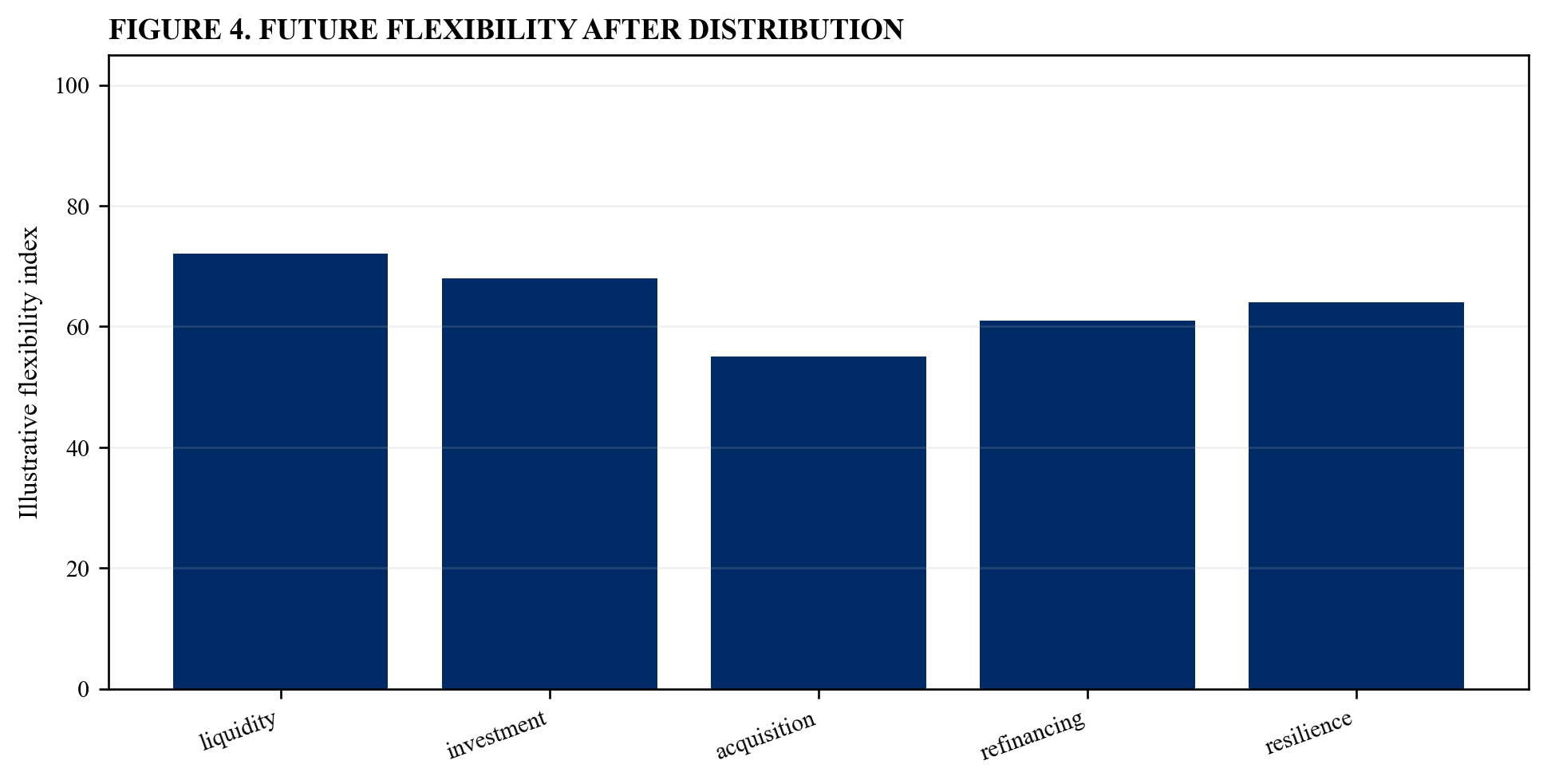
Illustrative analytical scenario; verified operating, financial and contractual evidence should replace index values.
30. Allocate the value transfer
The transaction team should separate shareholder proceeds, lender economics, fees, tax, hedging and company-retained benefit. The required output is a transaction value waterfall. Use current source data and link every material conclusion to retained company, financial, market and contractual evidence [10][21].
Translate the proposal into monthly revenue, margin, working capital, capital investment, tax, free cash flow, debt, liquidity and covenant outcomes. Identify the accountable owner, baseline, measurement method, decision date and evidence threshold. Reconcile the operating plan, accounts, treasury forecast, finance documents, valuation analysis and board case.
The principal risk is that gross distribution can overstate sponsor value and understate company cost. Quantify the effect on cash-flow and balance-sheet solvency, fixed-charge coverage, covenant headroom, minimum liquidity, investment capacity, refinancing and strategic flexibility. Show base, delayed-recovery, margin-reversal, higher-rate and refinancing-closure cases with explicit management responses.
Retain the source, model version, reviewer, independent challenge, legal and finance approval and board response. Compare approved assumptions with realised outcomes; remove unsupported capacity; and assign every exception an owner and deadline.
31. Assess fund-level conflicts
The transaction team should record carry, fund-life, fundraising, NAV, allocation and investor-reporting incentives. The required output is a sponsor-conflict register. Use current source data and link every material conclusion to retained company, financial, market and contractual evidence [2][22].
Translate the proposal into monthly revenue, margin, working capital, capital investment, tax, free cash flow, debt, liquidity and covenant outcomes. Identify the accountable owner, baseline, measurement method, decision date and evidence threshold. Reconcile the operating plan, accounts, treasury forecast, finance documents, valuation analysis and board case.
The principal risk is that the payment can favour fund economics over portfolio-company resilience. Quantify the effect on cash-flow and balance-sheet solvency, fixed-charge coverage, covenant headroom, minimum liquidity, investment capacity, refinancing and strategic flexibility. Show base, delayed-recovery, margin-reversal, higher-rate and refinancing-closure cases with explicit management responses.
Retain the source, model version, reviewer, independent challenge, legal and finance approval and board response. Compare approved assumptions with realised outcomes; remove unsupported capacity; and assign every exception an owner and deadline.
32. Govern valuation independence
The transaction team should define committee authority, conflicts, third-party challenge, methodology and record retention. The required output is an independent valuation protocol. Use current source data and link every material conclusion to retained company, financial, market and contractual evidence [2][19].
Translate the proposal into monthly revenue, margin, working capital, capital investment, tax, free cash flow, debt, liquidity and covenant outcomes. Identify the accountable owner, baseline, measurement method, decision date and evidence threshold. Reconcile the operating plan, accounts, treasury forecast, finance documents, valuation analysis and board case.
The principal risk is that distribution incentives can bias valuation and earnings judgements. Quantify the effect on cash-flow and balance-sheet solvency, fixed-charge coverage, covenant headroom, minimum liquidity, investment capacity, refinancing and strategic flexibility. Show base, delayed-recovery, margin-reversal, higher-rate and refinancing-closure cases with explicit management responses.
Retain the source, model version, reviewer, independent challenge, legal and finance approval and board response. Compare approved assumptions with realised outcomes; remove unsupported capacity; and assign every exception an owner and deadline.
Table 4. Future-flexibility matrix
| Option | Capacity measure | Protected outcome |
|---|---|---|
| investment | funded capex | earnings durability |
| acquisition | committed headroom | strategy preserved |
| refinancing | maturity runway | market optionality |
| resilience | cash reserve | shock absorption |
Illustrative control framework; verified company records, executed documents and authorised advice govern.
33. Plan tax and withholding
The transaction team should map borrower, holding-company, lender and recipient tax consequences using authorised advice. The required output is a transaction tax schedule. Use current source data and link every material conclusion to retained company, financial, market and contractual evidence [21][23].
Translate the proposal into monthly revenue, margin, working capital, capital investment, tax, free cash flow, debt, liquidity and covenant outcomes. Identify the accountable owner, baseline, measurement method, decision date and evidence threshold. Reconcile the operating plan, accounts, treasury forecast, finance documents, valuation analysis and board case.
The principal risk is that cash leakage or deductibility limits can reduce post-payment coverage. Quantify the effect on cash-flow and balance-sheet solvency, fixed-charge coverage, covenant headroom, minimum liquidity, investment capacity, refinancing and strategic flexibility. Show base, delayed-recovery, margin-reversal, higher-rate and refinancing-closure cases with explicit management responses.
Retain the source, model version, reviewer, independent challenge, legal and finance approval and board response. Compare approved assumptions with realised outcomes; remove unsupported capacity; and assign every exception an owner and deadline.
34. Set completion conditions
The transaction team should require current accounts, solvency evidence, legal opinions, lender commitments, no default and board approval. The required output is a gated completion checklist. Use current source data and link every material conclusion to retained company, financial, market and contractual evidence [3][9].
Translate the proposal into monthly revenue, margin, working capital, capital investment, tax, free cash flow, debt, liquidity and covenant outcomes. Identify the accountable owner, baseline, measurement method, decision date and evidence threshold. Reconcile the operating plan, accounts, treasury forecast, finance documents, valuation analysis and board case.
The principal risk is that conditions can be treated as drafting items rather than decision protections. Quantify the effect on cash-flow and balance-sheet solvency, fixed-charge coverage, covenant headroom, minimum liquidity, investment capacity, refinancing and strategic flexibility. Show base, delayed-recovery, margin-reversal, higher-rate and refinancing-closure cases with explicit management responses.
Retain the source, model version, reviewer, independent challenge, legal and finance approval and board response. Compare approved assumptions with realised outcomes; remove unsupported capacity; and assign every exception an owner and deadline.
35. Define stop conditions
The transaction team should set red thresholds for liquidity, coverage, covenant headroom, performance, litigation and funding certainty. The required output is a transaction stop protocol. Use current source data and link every material conclusion to retained company, financial, market and contractual evidence [6][13].
Translate the proposal into monthly revenue, margin, working capital, capital investment, tax, free cash flow, debt, liquidity and covenant outcomes. Identify the accountable owner, baseline, measurement method, decision date and evidence threshold. Reconcile the operating plan, accounts, treasury forecast, finance documents, valuation analysis and board case.
The principal risk is that momentum can carry the recap beyond the facts that supported approval. Quantify the effect on cash-flow and balance-sheet solvency, fixed-charge coverage, covenant headroom, minimum liquidity, investment capacity, refinancing and strategic flexibility. Show base, delayed-recovery, margin-reversal, higher-rate and refinancing-closure cases with explicit management responses.
Retain the source, model version, reviewer, independent challenge, legal and finance approval and board response. Compare approved assumptions with realised outcomes; remove unsupported capacity; and assign every exception an owner and deadline.
36. Prepare stakeholder disclosure
The transaction team should align lender, investor, auditor and management communications with verified figures and risks. The required output is a controlled disclosure pack. Use current source data and link every material conclusion to retained company, financial, market and contractual evidence [2][24].
Translate the proposal into monthly revenue, margin, working capital, capital investment, tax, free cash flow, debt, liquidity and covenant outcomes. Identify the accountable owner, baseline, measurement method, decision date and evidence threshold. Reconcile the operating plan, accounts, treasury forecast, finance documents, valuation analysis and board case.
The principal risk is that inconsistent explanations can weaken trust and future financing access. Quantify the effect on cash-flow and balance-sheet solvency, fixed-charge coverage, covenant headroom, minimum liquidity, investment capacity, refinancing and strategic flexibility. Show base, delayed-recovery, margin-reversal, higher-rate and refinancing-closure cases with explicit management responses.
Retain the source, model version, reviewer, independent challenge, legal and finance approval and board response. Compare approved assumptions with realised outcomes; remove unsupported capacity; and assign every exception an owner and deadline.
37. Monitor post-transaction performance
The transaction team should compare actual cash, leverage, covenants, investment and operational delivery with the approved case. The required output is a monthly recap dashboard. Use current source data and link every material conclusion to retained company, financial, market and contractual evidence [10][20].
Translate the proposal into monthly revenue, margin, working capital, capital investment, tax, free cash flow, debt, liquidity and covenant outcomes. Identify the accountable owner, baseline, measurement method, decision date and evidence threshold. Reconcile the operating plan, accounts, treasury forecast, finance documents, valuation analysis and board case.
The principal risk is that the board can lose visibility after proceeds have been distributed. Quantify the effect on cash-flow and balance-sheet solvency, fixed-charge coverage, covenant headroom, minimum liquidity, investment capacity, refinancing and strategic flexibility. Show base, delayed-recovery, margin-reversal, higher-rate and refinancing-closure cases with explicit management responses.
Retain the source, model version, reviewer, independent challenge, legal and finance approval and board response. Compare approved assumptions with realised outcomes; remove unsupported capacity; and assign every exception an owner and deadline.
38. Back-test the decision
The transaction team should compare realised debt service, liquidity, valuation and strategic flexibility with the approval case. The required output is a recap variance file. Use current source data and link every material conclusion to retained company, financial, market and contractual evidence [2][20].
Translate the proposal into monthly revenue, margin, working capital, capital investment, tax, free cash flow, debt, liquidity and covenant outcomes. Identify the accountable owner, baseline, measurement method, decision date and evidence threshold. Reconcile the operating plan, accounts, treasury forecast, finance documents, valuation analysis and board case.
The principal risk is that the same optimistic assumptions can recur across portfolio decisions. Quantify the effect on cash-flow and balance-sheet solvency, fixed-charge coverage, covenant headroom, minimum liquidity, investment capacity, refinancing and strategic flexibility. Show base, delayed-recovery, margin-reversal, higher-rate and refinancing-closure cases with explicit management responses.
Retain the source, model version, reviewer, independent challenge, legal and finance approval and board response. Compare approved assumptions with realised outcomes; remove unsupported capacity; and assign every exception an owner and deadline.
39. Prepare the board evidence pack
The transaction team should present legal capacity, solvency, cash, debt, valuation, conflicts, alternatives and downside responses. The required output is a decision-ready board dossier. Use current source data and link every material conclusion to retained company, financial, market and contractual evidence [3][4].
Translate the proposal into monthly revenue, margin, working capital, capital investment, tax, free cash flow, debt, liquidity and covenant outcomes. Identify the accountable owner, baseline, measurement method, decision date and evidence threshold. Reconcile the operating plan, accounts, treasury forecast, finance documents, valuation analysis and board case.
The principal risk is that fragmented advice can prevent a coherent judgement. Quantify the effect on cash-flow and balance-sheet solvency, fixed-charge coverage, covenant headroom, minimum liquidity, investment capacity, refinancing and strategic flexibility. Show base, delayed-recovery, margin-reversal, higher-rate and refinancing-closure cases with explicit management responses.
Retain the source, model version, reviewer, independent challenge, legal and finance approval and board response. Compare approved assumptions with realised outcomes; remove unsupported capacity; and assign every exception an owner and deadline.
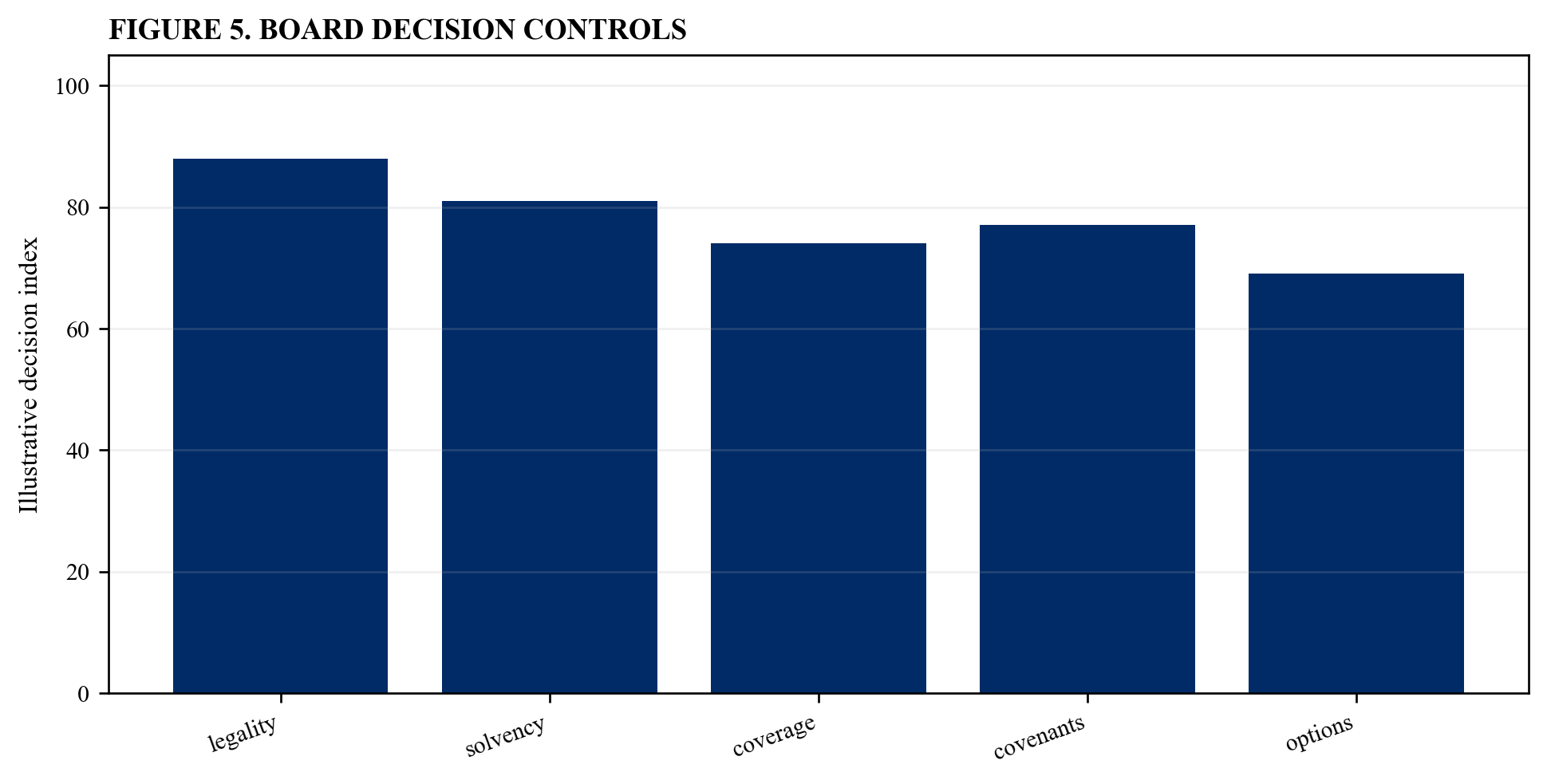
Illustrative analytical scenario; verified operating, financial and contractual evidence should replace index values.
40. Issue the recapitalisation certificate
The transaction team should approve the payment, retained liquidity, debt service, investment plan, covenants and future options. The required output is a retained board and investment committee certificate. Use current source data and link every material conclusion to retained company, financial, market and contractual evidence [4][20].
Translate the proposal into monthly revenue, margin, working capital, capital investment, tax, free cash flow, debt, liquidity and covenant outcomes. Identify the accountable owner, baseline, measurement method, decision date and evidence threshold. Reconcile the operating plan, accounts, treasury forecast, finance documents, valuation analysis and board case.
The principal risk is that the final resolution can record proceeds without the conditions that made them sustainable. Quantify the effect on cash-flow and balance-sheet solvency, fixed-charge coverage, covenant headroom, minimum liquidity, investment capacity, refinancing and strategic flexibility. Show base, delayed-recovery, margin-reversal, higher-rate and refinancing-closure cases with explicit management responses.
Retain the source, model version, reviewer, independent challenge, legal and finance approval and board response. Compare approved assumptions with realised outcomes; remove unsupported capacity; and assign every exception an owner and deadline.
Table 5. Recapitalisation certificate
| Conclusion | Evidence | Approval condition |
|---|---|---|
| distribution | reserves and approvals | lawful |
| solvency | cash and balance sheet | supported |
| debt | coverage and covenants | sustainable |
| flexibility | options matrix | minimum retained |
Illustrative control framework; verified company records, executed documents and authorised advice govern.
References
- Bank of England, Financial Stability Report July 2026, https://www.bankofengland.co.uk/financial-stability-report/2026/july-2026
- UK Financial Conduct Authority, Private market valuation practices, https://www.fca.org.uk/publications/multi-firm-reviews/private-market-valuation-practices
- UK Parliament, Companies Act 2006 Part 23 Distributions, https://www.legislation.gov.uk/ukpga/2006/46/part/23
- UK Government, Being a company director, https://www.gov.uk/guidance/being-a-company-director
- IFRS Foundation, IFRS 18 Presentation and Disclosure in Financial Statements, https://www.ifrs.org/issued-standards/list-of-standards/ifrs-18-presentation-and-disclosure-in-financial-statements/
- UK Insolvency Service, Director duties upon insolvency, https://www.gov.uk/guidance/director-information-hub-director-duties-upon-insolvency
- IFRS Foundation, IAS 7 Statement of Cash Flows, https://www.ifrs.org/issued-standards/list-of-standards/ias-7-statement-of-cash-flows/
- IFRS Foundation, IAS 37 Provisions Contingent Liabilities and Contingent Assets, https://www.ifrs.org/issued-standards/list-of-standards/ias-37-provisions-contingent-liabilities-and-contingent-assets/
- European Central Bank, Guidance on leveraged transactions, https://www.bankingsupervision.europa.eu/ecb/pub/pdf/ssm.leveraged_transactions_guidance_201705.en.pdf
- European Banking Authority, Guidelines on loan origination and monitoring, https://www.eba.europa.eu/regulation-and-policy/credit-risk/guidelines-on-loan-origination-and-monitoring
- IFRS Foundation, IFRS 8 Operating Segments, https://www.ifrs.org/issued-standards/list-of-standards/ifrs-8-operating-segments/
- IFRS Foundation, IAS 16 Property Plant and Equipment, https://www.ifrs.org/issued-standards/list-of-standards/ias-16-property-plant-and-equipment/
- International Organization for Standardization, ISO 31000 Risk management, https://www.iso.org/iso-31000-risk-management.html
- IFRS Foundation, IAS 36 Impairment of Assets, https://www.ifrs.org/issued-standards/list-of-standards/ias-36-impairment-of-assets/
- IFRS Foundation, IFRS 3 Business Combinations, https://www.ifrs.org/issued-standards/list-of-standards/ifrs-3-business-combinations/
- European Banking Authority, Guidelines on leveraged transactions, https://www.eba.europa.eu/sites/default/files/documents/10180/1696305/1dba7657-6ccb-462a-b9f8-8df8686b9807/Final%20Guidelines%20on%20Leveraged%20Transactions.pdf
- Bank of England, Monetary Policy Report August 2026, https://www.bankofengland.co.uk/monetary-policy-report/2026/august-2026
- Bank of England, Financial Policy Committee record July 2026, https://www.bankofengland.co.uk/financial-policy-summary-and-record/2026/july-2026
- International Valuation Standards Council, International Valuation Standards, https://www.ivsc.org/standards/
- OECD, G20 OECD Principles of Corporate Governance 2023, https://www.oecd.org/corporate/principles-corporate-governance/
- OECD, Base erosion and profit shifting, https://www.oecd.org/tax/beps/
- UK Financial Conduct Authority, Asset Management and Alternatives supervisory strategy, https://www.fca.org.uk/publication/correspondence/asset-management-alternatives-portfolio-letter-2025.pdf
- IFRS Foundation, IAS 12 Income Taxes, https://www.ifrs.org/issued-standards/list-of-standards/ias-12-income-taxes/
- IFRS Foundation, IAS 10 Events after the Reporting Period, https://www.ifrs.org/issued-standards/list-of-standards/ias-10-events-after-the-reporting-period/
- IFRS Foundation, IFRS 7 Financial Instruments Disclosures, https://www.ifrs.org/issued-standards/list-of-standards/ifrs-7-financial-instruments-disclosures/
- UK Government, Corporate Financial Distress guidance note, https://www.gov.uk/government/publications/the-sourcing-and-consultancy-playbooks/corporate-financial-distress-guidance-note-html
