

1. Define the leverage decision
The transaction team should state the purchase price, debt quantum, operating plan, covenant perimeter and refinancing route. The required output is a signed leverage question. Use dated source data and link each material conclusion to retained evidence and the relevant executed definition [1][2].
Classify the item by realisation status, recurrence, cash effect, timing, cap, expiry and accountable owner. Reconcile it to financial statements, the general ledger, operating forecasts and the debt model. Show reported, verified, contracted and judgemental cases separately.
The principal risk is that the team can optimise a ratio before agreeing what decision it must support. Quantify the effect on leverage, cash interest, covenant headroom, liquidity, refinancing and equity value. Accept an adjustment only when its calculation is reproducible, its evidence is proportionate and the downside case remains financeable after it is removed.
Retain the calculation version, source, reviewer, sensitivity and approval. Compare forecast adjustments with realised earnings and cash each quarter; remove expired or failed items and assign exceptions an owner and deadline.
2. Separate the EBITDA measures
The transaction team should identify reported EBITDA, adjusted EBITDA, pro forma EBITDA, covenant EBITDA and valuation EBITDA. The required output is a measure dictionary. Use dated source data and link each material conclusion to retained evidence and the relevant executed definition [3][4].
Classify the item by realisation status, recurrence, cash effect, timing, cap, expiry and accountable owner. Reconcile it to financial statements, the general ledger, operating forecasts and the debt model. Show reported, verified, contracted and judgemental cases separately.
The principal risk is that one label can conceal materially different calculations and permitted uses. Quantify the effect on leverage, cash interest, covenant headroom, liquidity, refinancing and equity value. Accept an adjustment only when its calculation is reproducible, its evidence is proportionate and the downside case remains financeable after it is removed.
Retain the calculation version, source, reviewer, sensitivity and approval. Compare forecast adjustments with realised earnings and cash each quarter; remove expired or failed items and assign exceptions an owner and deadline.
3. Build the statutory bridge
The transaction team should reconcile net income or operating result to the selected starting measure. The required output is a statement-linked earnings bridge. Use dated source data and link each material conclusion to retained evidence and the relevant executed definition [5][6].
Classify the item by realisation status, recurrence, cash effect, timing, cap, expiry and accountable owner. Reconcile it to financial statements, the general ledger, operating forecasts and the debt model. Show reported, verified, contracted and judgemental cases separately.
The principal risk is that an adjusted measure can become detached from audited performance. Quantify the effect on leverage, cash interest, covenant headroom, liquidity, refinancing and equity value. Accept an adjustment only when its calculation is reproducible, its evidence is proportionate and the downside case remains financeable after it is removed.
Retain the calculation version, source, reviewer, sensitivity and approval. Compare forecast adjustments with realised earnings and cash each quarter; remove expired or failed items and assign exceptions an owner and deadline.
4. Create the adjustment register
The transaction team should list every add-back and subtraction with value, period, owner, source and rationale. The required output is a complete adjustment ledger. Use dated source data and link each material conclusion to retained evidence and the relevant executed definition [3][7].
Classify the item by realisation status, recurrence, cash effect, timing, cap, expiry and accountable owner. Reconcile it to financial statements, the general ledger, operating forecasts and the debt model. Show reported, verified, contracted and judgemental cases separately.
The principal risk is that omitted negative adjustments can bias leverage more than any single add-back. Quantify the effect on leverage, cash interest, covenant headroom, liquidity, refinancing and equity value. Accept an adjustment only when its calculation is reproducible, its evidence is proportionate and the downside case remains financeable after it is removed.
Retain the calculation version, source, reviewer, sensitivity and approval. Compare forecast adjustments with realised earnings and cash each quarter; remove expired or failed items and assign exceptions an owner and deadline.
5. Classify realisation status
The transaction team should separate realised, contracted, approved, initiated, planned and speculative benefits. The required output is an adjustment-quality ladder. Use dated source data and link each material conclusion to retained evidence and the relevant executed definition [1][8].
Classify the item by realisation status, recurrence, cash effect, timing, cap, expiry and accountable owner. Reconcile it to financial statements, the general ledger, operating forecasts and the debt model. Show reported, verified, contracted and judgemental cases separately.
The principal risk is that management intent can be mistaken for achieved earnings. Quantify the effect on leverage, cash interest, covenant headroom, liquidity, refinancing and equity value. Accept an adjustment only when its calculation is reproducible, its evidence is proportionate and the downside case remains financeable after it is removed.
Retain the calculation version, source, reviewer, sensitivity and approval. Compare forecast adjustments with realised earnings and cash each quarter; remove expired or failed items and assign exceptions an owner and deadline.
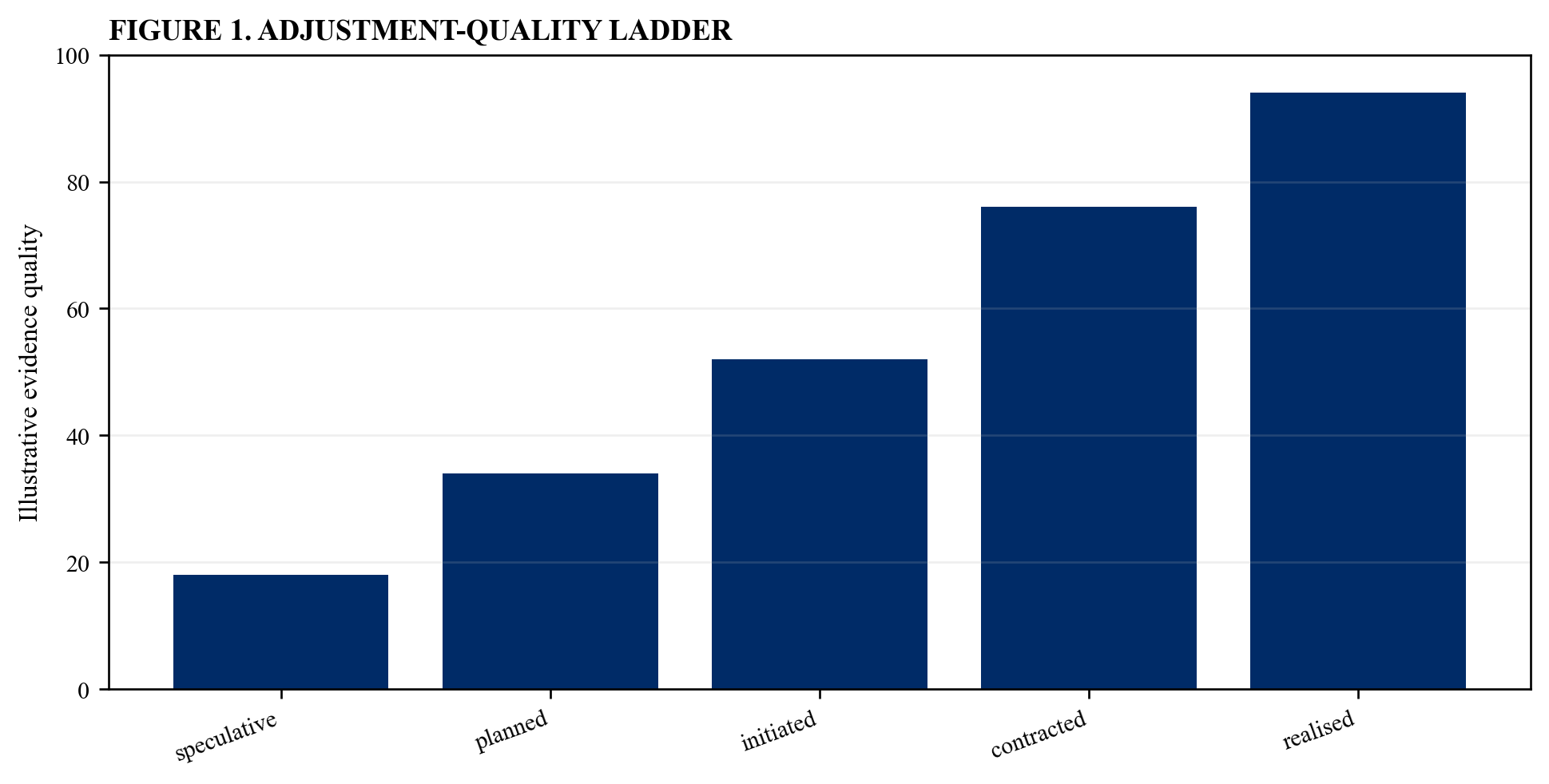
Illustrative analytical scenario; verified transaction evidence should replace index values.
6. Test realised cost savings
The transaction team should trace payroll, contracts, invoices and run-rate evidence to the general ledger. The required output is a realised-savings certificate. Use dated source data and link each material conclusion to retained evidence and the relevant executed definition [7][9].
Classify the item by realisation status, recurrence, cash effect, timing, cap, expiry and accountable owner. Reconcile it to financial statements, the general ledger, operating forecasts and the debt model. Show reported, verified, contracted and judgemental cases separately.
The principal risk is that savings can be claimed before duplicate costs have ended. Quantify the effect on leverage, cash interest, covenant headroom, liquidity, refinancing and equity value. Accept an adjustment only when its calculation is reproducible, its evidence is proportionate and the downside case remains financeable after it is removed.
Retain the calculation version, source, reviewer, sensitivity and approval. Compare forecast adjustments with realised earnings and cash each quarter; remove expired or failed items and assign exceptions an owner and deadline.
7. Test contracted savings
The transaction team should confirm enforceable supplier, property, insurance or service changes and their effective dates. The required output is a contracted-savings schedule. Use dated source data and link each material conclusion to retained evidence and the relevant executed definition [8][10].
Classify the item by realisation status, recurrence, cash effect, timing, cap, expiry and accountable owner. Reconcile it to financial statements, the general ledger, operating forecasts and the debt model. Show reported, verified, contracted and judgemental cases separately.
The principal risk is that a signed agreement may include transition costs or delayed commencement. Quantify the effect on leverage, cash interest, covenant headroom, liquidity, refinancing and equity value. Accept an adjustment only when its calculation is reproducible, its evidence is proportionate and the downside case remains financeable after it is removed.
Retain the calculation version, source, reviewer, sensitivity and approval. Compare forecast adjustments with realised earnings and cash each quarter; remove expired or failed items and assign exceptions an owner and deadline.
8. Test run-rate adjustments
The transaction team should reconcile the current operating level to the historical period and isolate seasonality. The required output is a dated run-rate bridge. Use dated source data and link each material conclusion to retained evidence and the relevant executed definition [3][6].
Classify the item by realisation status, recurrence, cash effect, timing, cap, expiry and accountable owner. Reconcile it to financial statements, the general ledger, operating forecasts and the debt model. Show reported, verified, contracted and judgemental cases separately.
The principal risk is that annualising a temporary month can inflate sustainable earnings. Quantify the effect on leverage, cash interest, covenant headroom, liquidity, refinancing and equity value. Accept an adjustment only when its calculation is reproducible, its evidence is proportionate and the downside case remains financeable after it is removed.
Retain the calculation version, source, reviewer, sensitivity and approval. Compare forecast adjustments with realised earnings and cash each quarter; remove expired or failed items and assign exceptions an owner and deadline.
Table 1. Adjustment evidence matrix
| Adjustment class | Minimum evidence | Core challenge |
|---|---|---|
| realised savings | ledger and run-rate proof | duplicate cost ended |
| contracted savings | executed contract | effective date and cash cost |
| revenue synergy | customer and capacity evidence | probability and margin |
| restructuring | approved plan and cash schedule | recurrence and double count |
Illustrative control framework; binding documents and verified evidence govern.
9. Challenge revenue synergies
The transaction team should identify customer evidence, capacity, pricing, timing, attrition and incremental cost. The required output is a probability-weighted revenue case. Use dated source data and link each material conclusion to retained evidence and the relevant executed definition [1][11].
Classify the item by realisation status, recurrence, cash effect, timing, cap, expiry and accountable owner. Reconcile it to financial statements, the general ledger, operating forecasts and the debt model. Show reported, verified, contracted and judgemental cases separately.
The principal risk is that gross revenue opportunity can be presented as EBITDA before conversion risk. Quantify the effect on leverage, cash interest, covenant headroom, liquidity, refinancing and equity value. Accept an adjustment only when its calculation is reproducible, its evidence is proportionate and the downside case remains financeable after it is removed.
Retain the calculation version, source, reviewer, sensitivity and approval. Compare forecast adjustments with realised earnings and cash each quarter; remove expired or failed items and assign exceptions an owner and deadline.
10. Challenge avoided costs
The transaction team should prove the obligation, counterfactual spend and timing of expenditure that will no longer occur. The required output is an avoided-cost evidence file. Use dated source data and link each material conclusion to retained evidence and the relevant executed definition [7][12].
Classify the item by realisation status, recurrence, cash effect, timing, cap, expiry and accountable owner. Reconcile it to financial statements, the general ledger, operating forecasts and the debt model. Show reported, verified, contracted and judgemental cases separately.
The principal risk is that a forecast cost can be added back despite never entering historical earnings. Quantify the effect on leverage, cash interest, covenant headroom, liquidity, refinancing and equity value. Accept an adjustment only when its calculation is reproducible, its evidence is proportionate and the downside case remains financeable after it is removed.
Retain the calculation version, source, reviewer, sensitivity and approval. Compare forecast adjustments with realised earnings and cash each quarter; remove expired or failed items and assign exceptions an owner and deadline.
11. Test restructuring items
The transaction team should separate one-time cash cost, recurring expense, provision release and future saving. The required output is a restructuring cash-and-earnings bridge. Use dated source data and link each material conclusion to retained evidence and the relevant executed definition [3][5].
Classify the item by realisation status, recurrence, cash effect, timing, cap, expiry and accountable owner. Reconcile it to financial statements, the general ledger, operating forecasts and the debt model. Show reported, verified, contracted and judgemental cases separately.
The principal risk is that repeated programmes can make supposedly exceptional costs operationally recurring. Quantify the effect on leverage, cash interest, covenant headroom, liquidity, refinancing and equity value. Accept an adjustment only when its calculation is reproducible, its evidence is proportionate and the downside case remains financeable after it is removed.
Retain the calculation version, source, reviewer, sensitivity and approval. Compare forecast adjustments with realised earnings and cash each quarter; remove expired or failed items and assign exceptions an owner and deadline.
12. Test integration adjustments
The transaction team should map systems, people, property, advisers and stranded costs across the integration plan. The required output is an integration-cost schedule. Use dated source data and link each material conclusion to retained evidence and the relevant executed definition [9][13].
Classify the item by realisation status, recurrence, cash effect, timing, cap, expiry and accountable owner. Reconcile it to financial statements, the general ledger, operating forecasts and the debt model. Show reported, verified, contracted and judgemental cases separately.
The principal risk is that adding back integration cost while including full synergies can double count value. Quantify the effect on leverage, cash interest, covenant headroom, liquidity, refinancing and equity value. Accept an adjustment only when its calculation is reproducible, its evidence is proportionate and the downside case remains financeable after it is removed.
Retain the calculation version, source, reviewer, sensitivity and approval. Compare forecast adjustments with realised earnings and cash each quarter; remove expired or failed items and assign exceptions an owner and deadline.
13. Test share-based compensation
The transaction team should assess accounting treatment, recurrence, dilution, replacement cost and contractual eligibility. The required output is a compensation adjustment memorandum. Use dated source data and link each material conclusion to retained evidence and the relevant executed definition [3][14].
Classify the item by realisation status, recurrence, cash effect, timing, cap, expiry and accountable owner. Reconcile it to financial statements, the general ledger, operating forecasts and the debt model. Show reported, verified, contracted and judgemental cases separately.
The principal risk is that a non-cash charge can still represent a recurring economic cost. Quantify the effect on leverage, cash interest, covenant headroom, liquidity, refinancing and equity value. Accept an adjustment only when its calculation is reproducible, its evidence is proportionate and the downside case remains financeable after it is removed.
Retain the calculation version, source, reviewer, sensitivity and approval. Compare forecast adjustments with realised earnings and cash each quarter; remove expired or failed items and assign exceptions an owner and deadline.
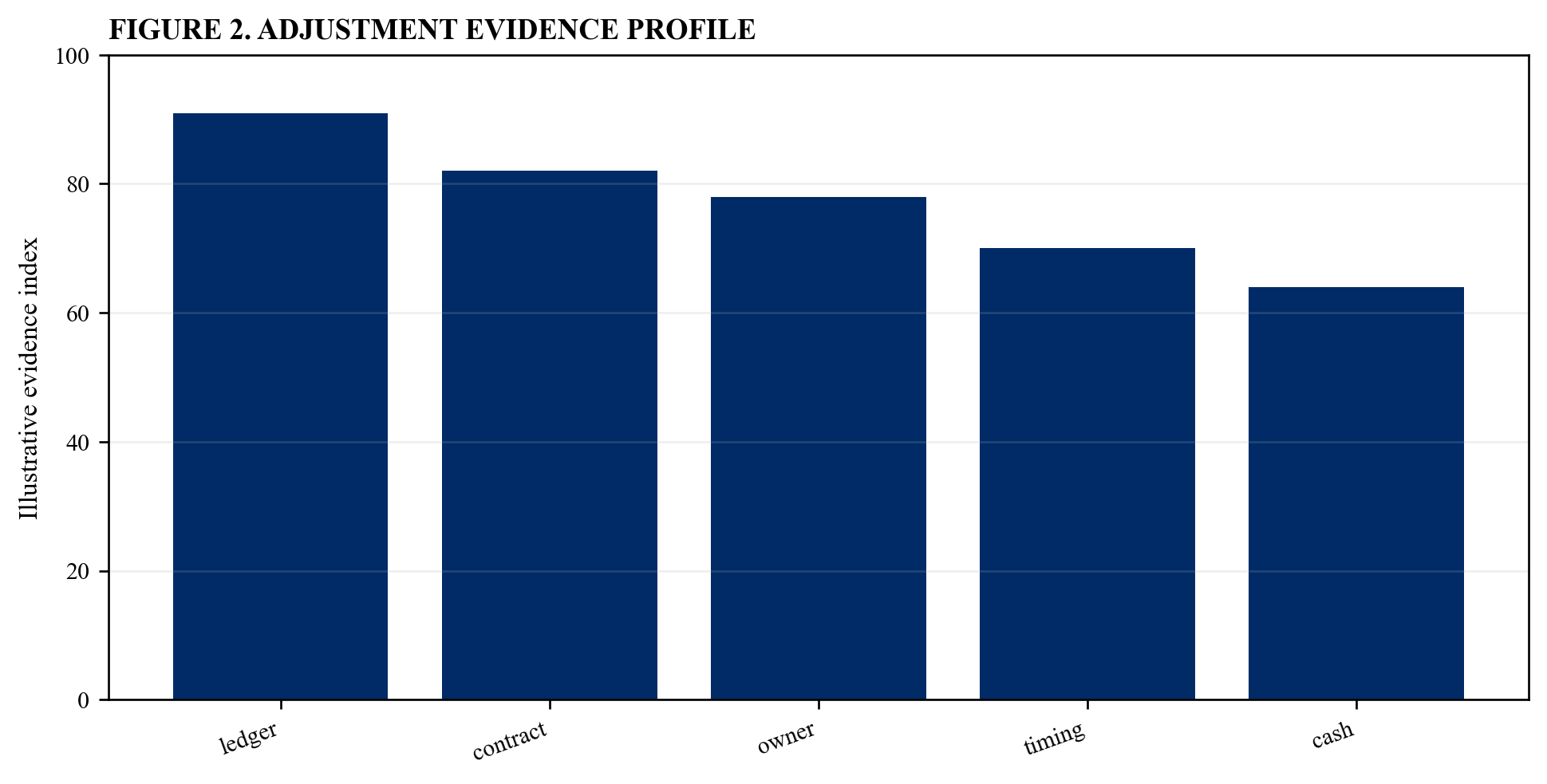
Illustrative analytical scenario; verified transaction evidence should replace index values.
14. Test litigation and regulatory items
The transaction team should verify the matter, provision, insurance recovery, recurrence and continuing compliance cost. The required output is a matter-specific adjustment file. Use dated source data and link each material conclusion to retained evidence and the relevant executed definition [5][15].
Classify the item by realisation status, recurrence, cash effect, timing, cap, expiry and accountable owner. Reconcile it to financial statements, the general ledger, operating forecasts and the debt model. Show reported, verified, contracted and judgemental cases separately.
The principal risk is that legal labels can conceal ordinary operating risk or future cash outflow. Quantify the effect on leverage, cash interest, covenant headroom, liquidity, refinancing and equity value. Accept an adjustment only when its calculation is reproducible, its evidence is proportionate and the downside case remains financeable after it is removed.
Retain the calculation version, source, reviewer, sensitivity and approval. Compare forecast adjustments with realised earnings and cash each quarter; remove expired or failed items and assign exceptions an owner and deadline.
15. Test lease and accounting effects
The transaction team should reconcile accounting-policy differences, lease expense, depreciation, interest and covenant treatment. The required output is an accounting-policy bridge. Use dated source data and link each material conclusion to retained evidence and the relevant executed definition [5][16].
Classify the item by realisation status, recurrence, cash effect, timing, cap, expiry and accountable owner. Reconcile it to financial statements, the general ledger, operating forecasts and the debt model. Show reported, verified, contracted and judgemental cases separately.
The principal risk is that ratio improvement can arise from presentation changes without better cash generation. Quantify the effect on leverage, cash interest, covenant headroom, liquidity, refinancing and equity value. Accept an adjustment only when its calculation is reproducible, its evidence is proportionate and the downside case remains financeable after it is removed.
Retain the calculation version, source, reviewer, sensitivity and approval. Compare forecast adjustments with realised earnings and cash each quarter; remove expired or failed items and assign exceptions an owner and deadline.
16. Build pro forma acquisitions
The transaction team should include acquired earnings only for the permitted period and reconcile financing, ownership and integration effects. The required output is a pro forma acquisition schedule. Use dated source data and link each material conclusion to retained evidence and the relevant executed definition [2][5].
Classify the item by realisation status, recurrence, cash effect, timing, cap, expiry and accountable owner. Reconcile it to financial statements, the general ledger, operating forecasts and the debt model. Show reported, verified, contracted and judgemental cases separately.
The principal risk is that acquired EBITDA can be included before reliable standalone evidence exists. Quantify the effect on leverage, cash interest, covenant headroom, liquidity, refinancing and equity value. Accept an adjustment only when its calculation is reproducible, its evidence is proportionate and the downside case remains financeable after it is removed.
Retain the calculation version, source, reviewer, sensitivity and approval. Compare forecast adjustments with realised earnings and cash each quarter; remove expired or failed items and assign exceptions an owner and deadline.
Table 2. Pro forma perimeter
| Item | Required treatment | Control |
|---|---|---|
| acquisition earnings | permitted ownership period | standalone reconciliation |
| integration savings | timed and capped | overlap test |
| disposal earnings | remove consistently | stranded-cost bridge |
| incremental debt | include with funding date | net-debt reconciliation |
Illustrative control framework; binding documents and verified evidence govern.
17. Build pro forma disposals
The transaction team should remove disposed earnings, stranded costs, debt and cash proceeds consistently. The required output is a disposal perimeter bridge. Use dated source data and link each material conclusion to retained evidence and the relevant executed definition [5][17].
Classify the item by realisation status, recurrence, cash effect, timing, cap, expiry and accountable owner. Reconcile it to financial statements, the general ledger, operating forecasts and the debt model. Show reported, verified, contracted and judgemental cases separately.
The principal risk is that earnings can be removed while related central costs remain. Quantify the effect on leverage, cash interest, covenant headroom, liquidity, refinancing and equity value. Accept an adjustment only when its calculation is reproducible, its evidence is proportionate and the downside case remains financeable after it is removed.
Retain the calculation version, source, reviewer, sensitivity and approval. Compare forecast adjustments with realised earnings and cash each quarter; remove expired or failed items and assign exceptions an owner and deadline.
18. Capture negative adjustments
The transaction team should record lost customers, price normalisation, wage inflation, stranded costs and discontinued subsidies. The required output is a downside adjustment register. Use dated source data and link each material conclusion to retained evidence and the relevant executed definition [1][7].
Classify the item by realisation status, recurrence, cash effect, timing, cap, expiry and accountable owner. Reconcile it to financial statements, the general ledger, operating forecasts and the debt model. Show reported, verified, contracted and judgemental cases separately.
The principal risk is that the case can include upside pro forma changes while ignoring known erosion. Quantify the effect on leverage, cash interest, covenant headroom, liquidity, refinancing and equity value. Accept an adjustment only when its calculation is reproducible, its evidence is proportionate and the downside case remains financeable after it is removed.
Retain the calculation version, source, reviewer, sensitivity and approval. Compare forecast adjustments with realised earnings and cash each quarter; remove expired or failed items and assign exceptions an owner and deadline.
19. Apply caps and baskets
The transaction team should map contractual caps, aggregate limits, permitted categories and lender discretion. The required output is an eligibility-and-cap schedule. Use dated source data and link each material conclusion to retained evidence and the relevant executed definition [2][8].
Classify the item by realisation status, recurrence, cash effect, timing, cap, expiry and accountable owner. Reconcile it to financial statements, the general ledger, operating forecasts and the debt model. Show reported, verified, contracted and judgemental cases separately.
The principal risk is that eligible adjustments can exceed the amount recognised under the debt document. Quantify the effect on leverage, cash interest, covenant headroom, liquidity, refinancing and equity value. Accept an adjustment only when its calculation is reproducible, its evidence is proportionate and the downside case remains financeable after it is removed.
Retain the calculation version, source, reviewer, sensitivity and approval. Compare forecast adjustments with realised earnings and cash each quarter; remove expired or failed items and assign exceptions an owner and deadline.
20. Apply time limits
The transaction team should record start date, achievement deadline, look-forward period and expiry for every adjustment. The required output is a time-bound adjustment calendar. Use dated source data and link each material conclusion to retained evidence and the relevant executed definition [2][8].
Classify the item by realisation status, recurrence, cash effect, timing, cap, expiry and accountable owner. Reconcile it to financial statements, the general ledger, operating forecasts and the debt model. Show reported, verified, contracted and judgemental cases separately.
The principal risk is that a benefit can remain in the model after its permitted window closes. Quantify the effect on leverage, cash interest, covenant headroom, liquidity, refinancing and equity value. Accept an adjustment only when its calculation is reproducible, its evidence is proportionate and the downside case remains financeable after it is removed.
Retain the calculation version, source, reviewer, sensitivity and approval. Compare forecast adjustments with realised earnings and cash each quarter; remove expired or failed items and assign exceptions an owner and deadline.
21. Eliminate double counting
The transaction team should trace every benefit across historical results, forecast, synergies, restructuring and acquired earnings. The required output is an overlap matrix. Use dated source data and link each material conclusion to retained evidence and the relevant executed definition [7][9].
Classify the item by realisation status, recurrence, cash effect, timing, cap, expiry and accountable owner. Reconcile it to financial statements, the general ledger, operating forecasts and the debt model. Show reported, verified, contracted and judgemental cases separately.
The principal risk is that the same cost reduction can appear in actual trading and multiple add-back categories. Quantify the effect on leverage, cash interest, covenant headroom, liquidity, refinancing and equity value. Accept an adjustment only when its calculation is reproducible, its evidence is proportionate and the downside case remains financeable after it is removed.
Retain the calculation version, source, reviewer, sensitivity and approval. Compare forecast adjustments with realised earnings and cash each quarter; remove expired or failed items and assign exceptions an owner and deadline.
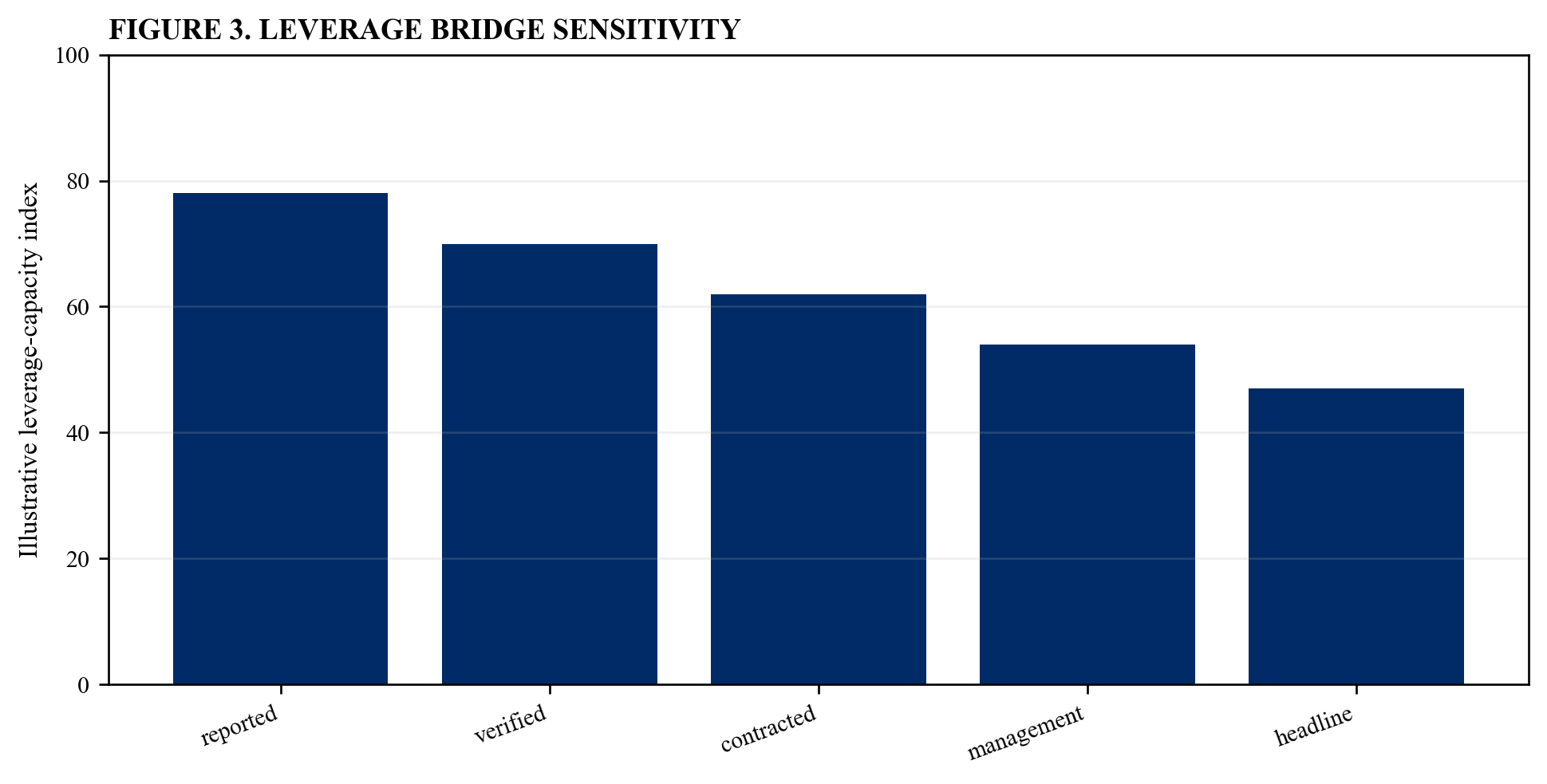
Illustrative analytical scenario; verified transaction evidence should replace index values.
22. Reconcile net debt
The transaction team should define gross debt, cash, restricted cash, leases, guarantees, deferred consideration and hedging liabilities. The required output is a contractual net-debt bridge. Use dated source data and link each material conclusion to retained evidence and the relevant executed definition [2][16].
Classify the item by realisation status, recurrence, cash effect, timing, cap, expiry and accountable owner. Reconcile it to financial statements, the general ledger, operating forecasts and the debt model. Show reported, verified, contracted and judgemental cases separately.
The principal risk is that a generous EBITDA case can be paired with an incomplete debt numerator. Quantify the effect on leverage, cash interest, covenant headroom, liquidity, refinancing and equity value. Accept an adjustment only when its calculation is reproducible, its evidence is proportionate and the downside case remains financeable after it is removed.
Retain the calculation version, source, reviewer, sensitivity and approval. Compare forecast adjustments with realised earnings and cash each quarter; remove expired or failed items and assign exceptions an owner and deadline.
23. Test cash-like items
The transaction team should verify availability, legal ownership, operational need, trapped cash and completion mechanics. The required output is a cash-availability certificate. Use dated source data and link each material conclusion to retained evidence and the relevant executed definition [5][18].
Classify the item by realisation status, recurrence, cash effect, timing, cap, expiry and accountable owner. Reconcile it to financial statements, the general ledger, operating forecasts and the debt model. Show reported, verified, contracted and judgemental cases separately.
The principal risk is that cash deducted from debt can be unavailable for repayment. Quantify the effect on leverage, cash interest, covenant headroom, liquidity, refinancing and equity value. Accept an adjustment only when its calculation is reproducible, its evidence is proportionate and the downside case remains financeable after it is removed.
Retain the calculation version, source, reviewer, sensitivity and approval. Compare forecast adjustments with realised earnings and cash each quarter; remove expired or failed items and assign exceptions an owner and deadline.
24. Reconcile working capital
The transaction team should connect earnings adjustments with receivables, inventory, payables, seasonality and completion accounts. The required output is a working-capital transmission schedule. Use dated source data and link each material conclusion to retained evidence and the relevant executed definition [10][19].
Classify the item by realisation status, recurrence, cash effect, timing, cap, expiry and accountable owner. Reconcile it to financial statements, the general ledger, operating forecasts and the debt model. Show reported, verified, contracted and judgemental cases separately.
The principal risk is that EBITDA improvement can consume cash through growth or transition. Quantify the effect on leverage, cash interest, covenant headroom, liquidity, refinancing and equity value. Accept an adjustment only when its calculation is reproducible, its evidence is proportionate and the downside case remains financeable after it is removed.
Retain the calculation version, source, reviewer, sensitivity and approval. Compare forecast adjustments with realised earnings and cash each quarter; remove expired or failed items and assign exceptions an owner and deadline.
Table 3. Cash-conversion bridge
| EBITDA item | Cash transmission | Evidence |
|---|---|---|
| cost saving | payment ceases | ledger and contract |
| revenue synergy | receivable and margin | customer-level build |
| restructuring | cash outflow precedes saving | approved cash plan |
| working capital | cash absorbed or released | driver forecast |
Illustrative control framework; binding documents and verified evidence govern.
25. Reconcile capital expenditure
The transaction team should separate maintenance, compliance, growth and integration investment. The required output is an EBITDA-to-free-cash-flow bridge. Use dated source data and link each material conclusion to retained evidence and the relevant executed definition [5][20].
Classify the item by realisation status, recurrence, cash effect, timing, cap, expiry and accountable owner. Reconcile it to financial statements, the general ledger, operating forecasts and the debt model. Show reported, verified, contracted and judgemental cases separately.
The principal risk is that add-backs can ignore expenditure needed to sustain the adjusted earnings. Quantify the effect on leverage, cash interest, covenant headroom, liquidity, refinancing and equity value. Accept an adjustment only when its calculation is reproducible, its evidence is proportionate and the downside case remains financeable after it is removed.
Retain the calculation version, source, reviewer, sensitivity and approval. Compare forecast adjustments with realised earnings and cash each quarter; remove expired or failed items and assign exceptions an owner and deadline.
26. Reconcile tax and provisions
The transaction team should model cash tax, deferred tax, provisions and deductibility of restructuring and transaction costs. The required output is a cash-tax bridge. Use dated source data and link each material conclusion to retained evidence and the relevant executed definition [5][15].
Classify the item by realisation status, recurrence, cash effect, timing, cap, expiry and accountable owner. Reconcile it to financial statements, the general ledger, operating forecasts and the debt model. Show reported, verified, contracted and judgemental cases separately.
The principal risk is that pre-tax adjustments can overstate cash available for debt service. Quantify the effect on leverage, cash interest, covenant headroom, liquidity, refinancing and equity value. Accept an adjustment only when its calculation is reproducible, its evidence is proportionate and the downside case remains financeable after it is removed.
Retain the calculation version, source, reviewer, sensitivity and approval. Compare forecast adjustments with realised earnings and cash each quarter; remove expired or failed items and assign exceptions an owner and deadline.
27. Map covenant eligibility
The transaction team should link each adjustment to executed definitions, calculation periods, evidence and no-default conditions. The required output is a covenant eligibility certificate. Use dated source data and link each material conclusion to retained evidence and the relevant executed definition [2][8].
Classify the item by realisation status, recurrence, cash effect, timing, cap, expiry and accountable owner. Reconcile it to financial statements, the general ledger, operating forecasts and the debt model. Show reported, verified, contracted and judgemental cases separately.
The principal risk is that an underwriting add-back may be excluded from covenant EBITDA. Quantify the effect on leverage, cash interest, covenant headroom, liquidity, refinancing and equity value. Accept an adjustment only when its calculation is reproducible, its evidence is proportionate and the downside case remains financeable after it is removed.
Retain the calculation version, source, reviewer, sensitivity and approval. Compare forecast adjustments with realised earnings and cash each quarter; remove expired or failed items and assign exceptions an owner and deadline.
28. Map pricing ratchets
The transaction team should test how adjustments affect leverage thresholds, certificate timing and margin changes. The required output is a pricing sensitivity schedule. Use dated source data and link each material conclusion to retained evidence and the relevant executed definition [2][21].
Classify the item by realisation status, recurrence, cash effect, timing, cap, expiry and accountable owner. Reconcile it to financial statements, the general ledger, operating forecasts and the debt model. Show reported, verified, contracted and judgemental cases separately.
The principal risk is that a disputed add-back can alter both covenant headroom and cash coupon. Quantify the effect on leverage, cash interest, covenant headroom, liquidity, refinancing and equity value. Accept an adjustment only when its calculation is reproducible, its evidence is proportionate and the downside case remains financeable after it is removed.
Retain the calculation version, source, reviewer, sensitivity and approval. Compare forecast adjustments with realised earnings and cash each quarter; remove expired or failed items and assign exceptions an owner and deadline.
29. Size debt capacity
The transaction team should calculate leverage, interest cover, fixed-charge cover and liquidity with and without each adjustment class. The required output is a layered debt-capacity case. Use dated source data and link each material conclusion to retained evidence and the relevant executed definition [1][2].
Classify the item by realisation status, recurrence, cash effect, timing, cap, expiry and accountable owner. Reconcile it to financial statements, the general ledger, operating forecasts and the debt model. Show reported, verified, contracted and judgemental cases separately.
The principal risk is that incremental debt can be supported by earnings that have not produced cash. Quantify the effect on leverage, cash interest, covenant headroom, liquidity, refinancing and equity value. Accept an adjustment only when its calculation is reproducible, its evidence is proportionate and the downside case remains financeable after it is removed.
Retain the calculation version, source, reviewer, sensitivity and approval. Compare forecast adjustments with realised earnings and cash each quarter; remove expired or failed items and assign exceptions an owner and deadline.
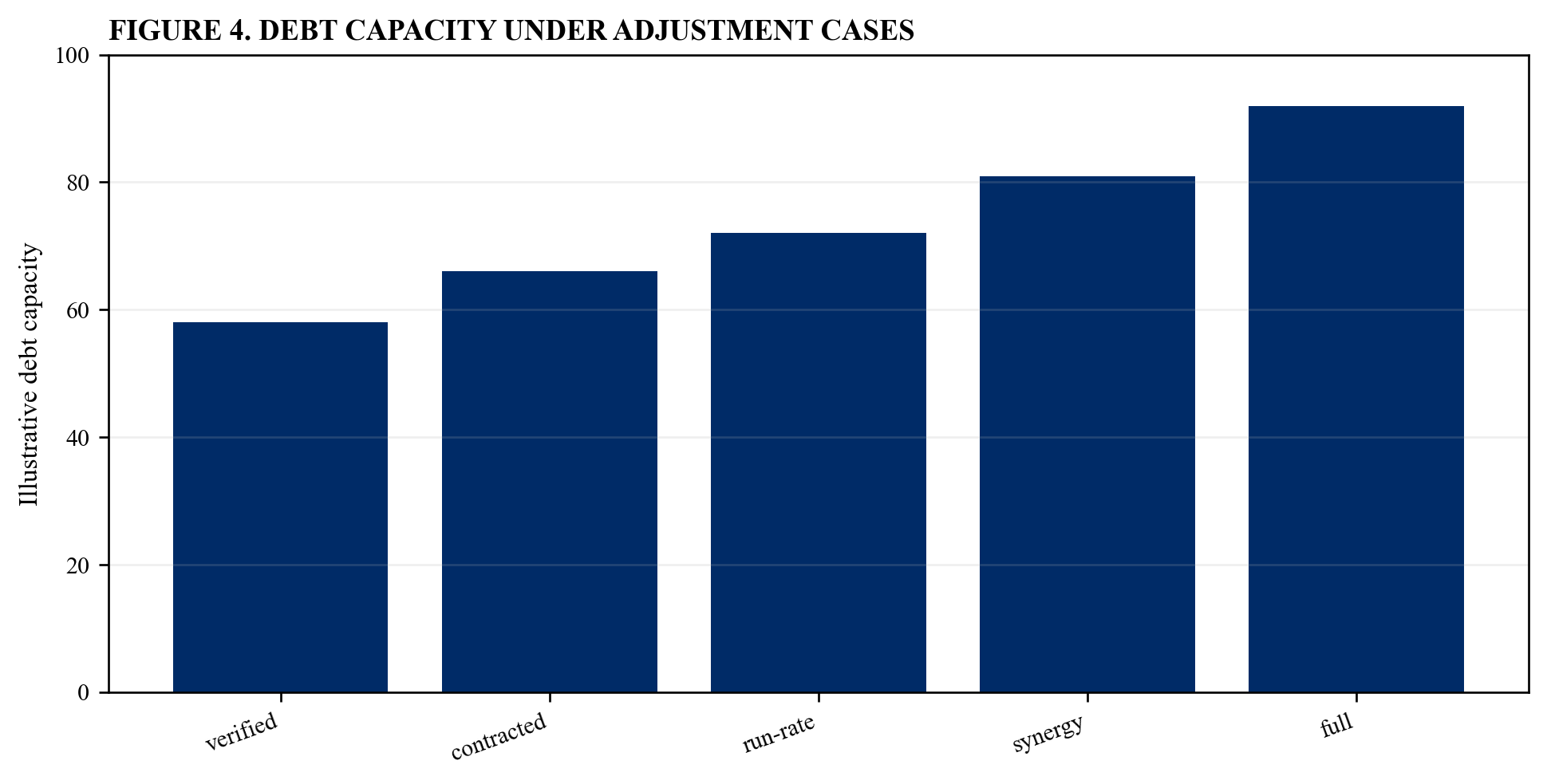
Illustrative analytical scenario; verified transaction evidence should replace index values.
30. Test valuation effects
The transaction team should separate multiple selection from the adjusted earnings base and show contribution by adjustment. The required output is an enterprise-value attribution bridge. Use dated source data and link each material conclusion to retained evidence and the relevant executed definition [5][22].
Classify the item by realisation status, recurrence, cash effect, timing, cap, expiry and accountable owner. Reconcile it to financial statements, the general ledger, operating forecasts and the debt model. Show reported, verified, contracted and judgemental cases separately.
The principal risk is that buyers can pay a multiple for benefits they must still fund and execute. Quantify the effect on leverage, cash interest, covenant headroom, liquidity, refinancing and equity value. Accept an adjustment only when its calculation is reproducible, its evidence is proportionate and the downside case remains financeable after it is removed.
Retain the calculation version, source, reviewer, sensitivity and approval. Compare forecast adjustments with realised earnings and cash each quarter; remove expired or failed items and assign exceptions an owner and deadline.
31. Run quality-of-earnings procedures
The transaction team should test cut-off, revenue recognition, expenses, related parties, normalisation and recurring cash items. The required output is a diligence exception log. Use dated source data and link each material conclusion to retained evidence and the relevant executed definition [5][7].
Classify the item by realisation status, recurrence, cash effect, timing, cap, expiry and accountable owner. Reconcile it to financial statements, the general ledger, operating forecasts and the debt model. Show reported, verified, contracted and judgemental cases separately.
The principal risk is that an adjustment register cannot repair an unreliable starting measure. Quantify the effect on leverage, cash interest, covenant headroom, liquidity, refinancing and equity value. Accept an adjustment only when its calculation is reproducible, its evidence is proportionate and the downside case remains financeable after it is removed.
Retain the calculation version, source, reviewer, sensitivity and approval. Compare forecast adjustments with realised earnings and cash each quarter; remove expired or failed items and assign exceptions an owner and deadline.
32. Build the evidence room
The transaction team should retain contracts, payroll, invoices, ledgers, board approvals, forecasts and calculation workpapers. The required output is an indexed adjustment evidence room. Use dated source data and link each material conclusion to retained evidence and the relevant executed definition [7][23].
Classify the item by realisation status, recurrence, cash effect, timing, cap, expiry and accountable owner. Reconcile it to financial statements, the general ledger, operating forecasts and the debt model. Show reported, verified, contracted and judgemental cases separately.
The principal risk is that support can become unavailable when lender review intensifies. Quantify the effect on leverage, cash interest, covenant headroom, liquidity, refinancing and equity value. Accept an adjustment only when its calculation is reproducible, its evidence is proportionate and the downside case remains financeable after it is removed.
Retain the calculation version, source, reviewer, sensitivity and approval. Compare forecast adjustments with realised earnings and cash each quarter; remove expired or failed items and assign exceptions an owner and deadline.
Table 4. Diligence evidence room
| Evidence | Owner | Review test |
|---|---|---|
| financial statements | finance | starting measure reconciles |
| general ledger | controller | adjustment traces |
| contracts and payroll | operations and HR | saving enforceable |
| board approvals | company secretary | action authorised |
Illustrative control framework; binding documents and verified evidence govern.
33. Prepare the lender case
The transaction team should present definitions, reconciliation, evidence, limitations and sensitivities consistently. The required output is a lender-ready leverage memorandum. Use dated source data and link each material conclusion to retained evidence and the relevant executed definition [1][2].
Classify the item by realisation status, recurrence, cash effect, timing, cap, expiry and accountable owner. Reconcile it to financial statements, the general ledger, operating forecasts and the debt model. Show reported, verified, contracted and judgemental cases separately.
The principal risk is that selective disclosure can delay credit approval and reduce trust. Quantify the effect on leverage, cash interest, covenant headroom, liquidity, refinancing and equity value. Accept an adjustment only when its calculation is reproducible, its evidence is proportionate and the downside case remains financeable after it is removed.
Retain the calculation version, source, reviewer, sensitivity and approval. Compare forecast adjustments with realised earnings and cash each quarter; remove expired or failed items and assign exceptions an owner and deadline.
34. Prepare the sponsor case
The transaction team should distinguish the investment case from the binding lender calculation and the operating target. The required output is a reconciled sponsor-to-credit bridge. Use dated source data and link each material conclusion to retained evidence and the relevant executed definition [9][24].
Classify the item by realisation status, recurrence, cash effect, timing, cap, expiry and accountable owner. Reconcile it to financial statements, the general ledger, operating forecasts and the debt model. Show reported, verified, contracted and judgemental cases separately.
The principal risk is that different deal teams can rely on incompatible versions of EBITDA. Quantify the effect on leverage, cash interest, covenant headroom, liquidity, refinancing and equity value. Accept an adjustment only when its calculation is reproducible, its evidence is proportionate and the downside case remains financeable after it is removed.
Retain the calculation version, source, reviewer, sensitivity and approval. Compare forecast adjustments with realised earnings and cash each quarter; remove expired or failed items and assign exceptions an owner and deadline.
35. Stress delayed synergies
The transaction team should shift benefits, duplicate costs and restructuring cash across the first two years. The required output is a synergy-delay leverage case. Use dated source data and link each material conclusion to retained evidence and the relevant executed definition [1][13].
Classify the item by realisation status, recurrence, cash effect, timing, cap, expiry and accountable owner. Reconcile it to financial statements, the general ledger, operating forecasts and the debt model. Show reported, verified, contracted and judgemental cases separately.
The principal risk is that timing slippage can raise debt service before covenant relief arrives. Quantify the effect on leverage, cash interest, covenant headroom, liquidity, refinancing and equity value. Accept an adjustment only when its calculation is reproducible, its evidence is proportionate and the downside case remains financeable after it is removed.
Retain the calculation version, source, reviewer, sensitivity and approval. Compare forecast adjustments with realised earnings and cash each quarter; remove expired or failed items and assign exceptions an owner and deadline.
36. Stress weaker trading
The transaction team should reduce revenue, margin and cash conversion before applying adjustments. The required output is an operating-downside leverage case. Use dated source data and link each material conclusion to retained evidence and the relevant executed definition [1][10].
Classify the item by realisation status, recurrence, cash effect, timing, cap, expiry and accountable owner. Reconcile it to financial statements, the general ledger, operating forecasts and the debt model. Show reported, verified, contracted and judgemental cases separately.
The principal risk is that add-backs can make leverage appear stable while the underlying business deteriorates. Quantify the effect on leverage, cash interest, covenant headroom, liquidity, refinancing and equity value. Accept an adjustment only when its calculation is reproducible, its evidence is proportionate and the downside case remains financeable after it is removed.
Retain the calculation version, source, reviewer, sensitivity and approval. Compare forecast adjustments with realised earnings and cash each quarter; remove expired or failed items and assign exceptions an owner and deadline.
37. Back-test adjustments
The transaction team should compare forecast adjustments with realised earnings, cash and retained evidence. The required output is a quarterly adjustment variance report. Use dated source data and link each material conclusion to retained evidence and the relevant executed definition [3][7].
Classify the item by realisation status, recurrence, cash effect, timing, cap, expiry and accountable owner. Reconcile it to financial statements, the general ledger, operating forecasts and the debt model. Show reported, verified, contracted and judgemental cases separately.
The principal risk is that optimism persists when expired or failed adjustments are not removed. Quantify the effect on leverage, cash interest, covenant headroom, liquidity, refinancing and equity value. Accept an adjustment only when its calculation is reproducible, its evidence is proportionate and the downside case remains financeable after it is removed.
Retain the calculation version, source, reviewer, sensitivity and approval. Compare forecast adjustments with realised earnings and cash each quarter; remove expired or failed items and assign exceptions an owner and deadline.
38. Govern changes
The transaction team should require controlled versions, independent review, approval thresholds and documented interpretation. The required output is an adjustment governance protocol. Use dated source data and link each material conclusion to retained evidence and the relevant executed definition [23][25].
Classify the item by realisation status, recurrence, cash effect, timing, cap, expiry and accountable owner. Reconcile it to financial statements, the general ledger, operating forecasts and the debt model. Show reported, verified, contracted and judgemental cases separately.
The principal risk is that late manual changes can alter leverage without accountable challenge. Quantify the effect on leverage, cash interest, covenant headroom, liquidity, refinancing and equity value. Accept an adjustment only when its calculation is reproducible, its evidence is proportionate and the downside case remains financeable after it is removed.
Retain the calculation version, source, reviewer, sensitivity and approval. Compare forecast adjustments with realised earnings and cash each quarter; remove expired or failed items and assign exceptions an owner and deadline.
39. Negotiate definitions
The transaction team should trade categories, caps, time limits, evidence, cure treatment and lender discretion as one package. The required output is a definition negotiation map. Use dated source data and link each material conclusion to retained evidence and the relevant executed definition [2][8].
Classify the item by realisation status, recurrence, cash effect, timing, cap, expiry and accountable owner. Reconcile it to financial statements, the general ledger, operating forecasts and the debt model. Show reported, verified, contracted and judgemental cases separately.
The principal risk is that a broad headline definition can be narrowed by detailed exclusions. Quantify the effect on leverage, cash interest, covenant headroom, liquidity, refinancing and equity value. Accept an adjustment only when its calculation is reproducible, its evidence is proportionate and the downside case remains financeable after it is removed.
Retain the calculation version, source, reviewer, sensitivity and approval. Compare forecast adjustments with realised earnings and cash each quarter; remove expired or failed items and assign exceptions an owner and deadline.
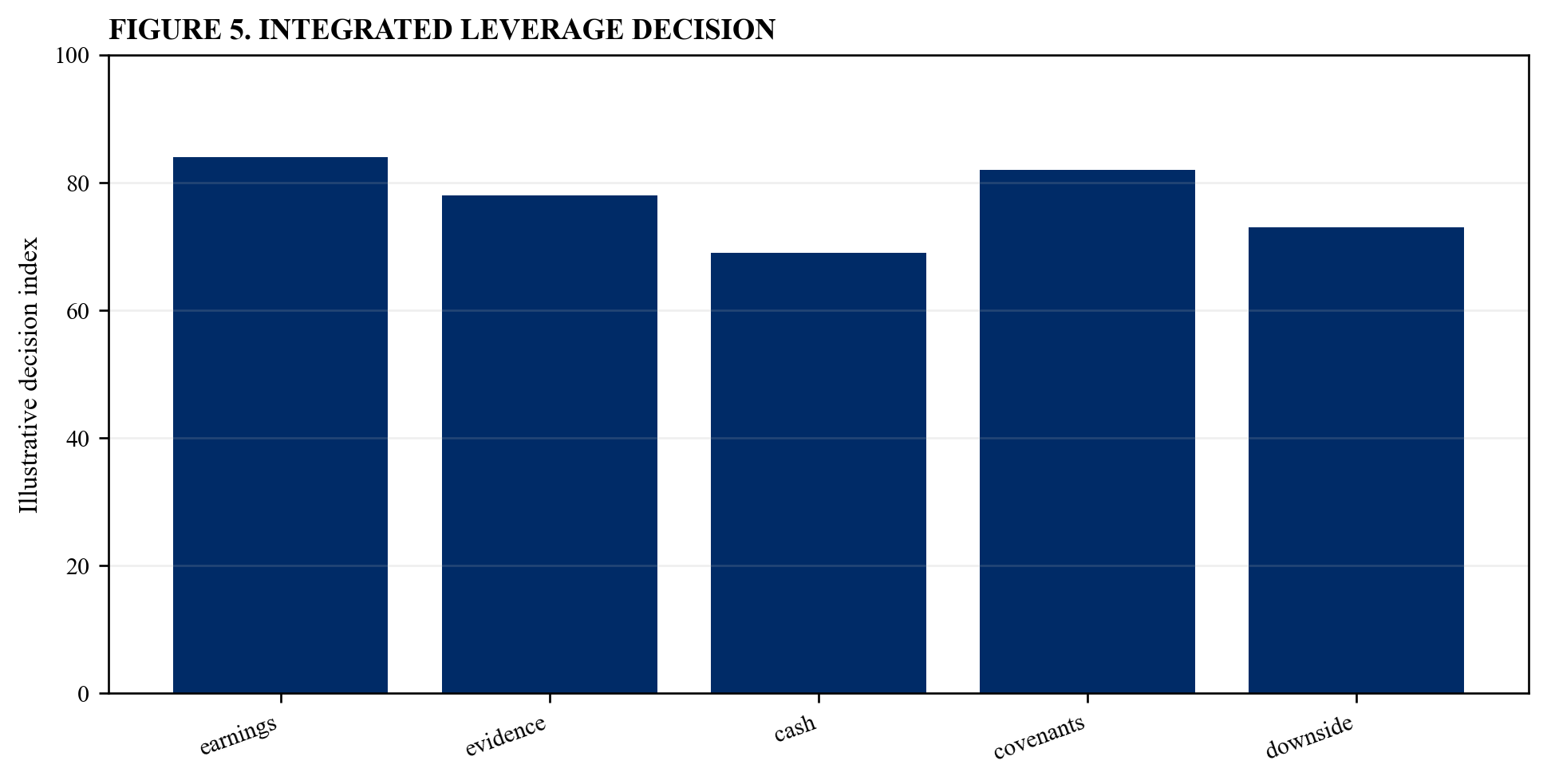
Illustrative analytical scenario; verified transaction evidence should replace index values.
40. Issue the board certificate
The transaction team should approve verified, contracted and judgemental cases with liquidity, covenant and refinancing effects. The required output is a board leverage certificate. Use dated source data and link each material conclusion to retained evidence and the relevant executed definition [24][26].
Classify the item by realisation status, recurrence, cash effect, timing, cap, expiry and accountable owner. Reconcile it to financial statements, the general ledger, operating forecasts and the debt model. Show reported, verified, contracted and judgemental cases separately.
The principal risk is that a single adjusted EBITDA figure can conceal a fatal cash or evidence weakness. Quantify the effect on leverage, cash interest, covenant headroom, liquidity, refinancing and equity value. Accept an adjustment only when its calculation is reproducible, its evidence is proportionate and the downside case remains financeable after it is removed.
Retain the calculation version, source, reviewer, sensitivity and approval. Compare forecast adjustments with realised earnings and cash each quarter; remove expired or failed items and assign exceptions an owner and deadline.
Table 5. Board leverage certificate
| Case | Required conclusion | Decision use |
|---|---|---|
| verified EBITDA | fully evidenced | base debt capacity |
| contracted case | conditions explicit | conditional capacity |
| judgemental case | sensitivity only | downside comparison |
| cash conversion | funded and reconciled | liquidity approval |
Illustrative control framework; binding documents and verified evidence govern.
References
- Bank of England, Financial Stability Report July 2026, https://www.bankofengland.co.uk/financial-stability-report/2026/july-2026
- European Central Bank, Guidance on leveraged transactions, https://www.bankingsupervision.europa.eu/ecb/pub/pdf/ssm.leveraged_transactions_guidance_201705.en.pdf
- US Securities and Exchange Commission, Non-GAAP Financial Measures, https://www.sec.gov/rules-regulations/staff-guidance/corporation-finance-interpretations/non-gaap-financial-measures
- European Securities and Markets Authority, Alternative Performance Measures Guidelines, https://www.esma.europa.eu/issuer-disclosure/financial-reporting
- IFRS Foundation, IFRS 18 Presentation and Disclosure in Financial Statements, https://www.ifrs.org/issued-standards/list-of-standards/ifrs-18-presentation-and-disclosure-in-financial-statements/
- IFRS Foundation, IAS 1 Presentation of Financial Statements, https://www.ifrs.org/issued-standards/list-of-standards/ias-1-presentation-of-financial-statements/
- Financial Reporting Council, Standard for Investment Reporting 1000, https://www.frc.org.uk/library/standards-codes-policy/audit-assurance-and-ethics/standards-for-investment-reporting/
- European Banking Authority, Guidelines on leveraged transactions, https://www.eba.europa.eu/sites/default/files/documents/10180/1696305/1dba7657-6ccb-462a-b9f8-8df8686b9807/Final%20Guidelines%20on%20Leveraged%20Transactions.pdf
- IFRS Foundation, IFRS 3 Business Combinations, https://www.ifrs.org/issued-standards/list-of-standards/ifrs-3-business-combinations/
- IFRS Foundation, IAS 7 Statement of Cash Flows, https://www.ifrs.org/issued-standards/list-of-standards/ias-7-statement-of-cash-flows/
- UK Competition and Markets Authority, Merger assessment guidelines, https://www.gov.uk/government/publications/merger-assessment-guidelines
- IFRS Foundation, IAS 37 Provisions Contingent Liabilities and Contingent Assets, https://www.ifrs.org/issued-standards/list-of-standards/ias-37-provisions-contingent-liabilities-and-contingent-assets/
- International Accounting Standards Board, Business combinations project, https://www.ifrs.org/projects/work-plan/business-combinations-disclosures-goodwill-and-impairment/
- IFRS Foundation, IFRS 2 Share-based Payment, https://www.ifrs.org/issued-standards/list-of-standards/ifrs-2-share-based-payment/
- IFRS Foundation, IAS 12 Income Taxes, https://www.ifrs.org/issued-standards/list-of-standards/ias-12-income-taxes/
- IFRS Foundation, IFRS 16 Leases, https://www.ifrs.org/issued-standards/list-of-standards/ifrs-16-leases/
- IFRS Foundation, IFRS 5 Non-current Assets Held for Sale and Discontinued Operations, https://www.ifrs.org/issued-standards/list-of-standards/ifrs-5-non-current-assets-held-for-sale-and-discontinued-operations/
- UK Government, Companies Act 2006, https://www.legislation.gov.uk/ukpga/2006/46/contents
- IFRS Foundation, IFRS 15 Revenue from Contracts with Customers, https://www.ifrs.org/issued-standards/list-of-standards/ifrs-15-revenue-from-contracts-with-customers/
- IFRS Foundation, IAS 36 Impairment of Assets, https://www.ifrs.org/issued-standards/list-of-standards/ias-36-impairment-of-assets/
- Bank of England, Yield curves, https://www.bankofengland.co.uk/statistics/yield-curves
- International Valuation Standards Council, International Valuation Standards, https://www.ivsc.org/standards/
- European Banking Authority, Guidelines on loan origination and monitoring, https://www.eba.europa.eu/regulation-and-policy/credit-risk/guidelines-loan-origination-and-monitoring
- OECD, G20 OECD Principles of Corporate Governance 2023, https://www.oecd.org/corporate/principles-corporate-governance/
- UK Financial Conduct Authority, Private market valuation practices, https://www.fca.org.uk/publications/multi-firm-reviews/private-market-valuation-practices
- Bank for International Settlements, Principles for the management of credit risk, https://www.bis.org/publ/bcbs75.htm
