

1. Define the participation purpose
The transaction team should state whether the design seeks wealth sharing, retention, succession, performance alignment, voice or a documented combination. The immediate output is a participation-purpose memorandum with named owners, dates, source evidence, approval status and open exceptions.
The analytical objective is to determine which outcomes the ownership structure must produce and how they will be measured. Reviewers should reconcile the transaction documents, constitutional records, trust and plan terms, workforce data, historical accounts, valuation evidence, financing terms, tax analysis, board materials and independent advice. Base, downside and change scenarios should use consistent definitions and retain clear calculation lineage.
The framework should assign responsibility across directors, management, trustees, employee representatives, employees, sellers, investors, lenders and advisers. Rights, duties, thresholds, evidence rules, information access, conflicts controls, response periods and escalation routes should be explicit.
At each gate, decision makers should test employee benefit, fairness, liquidity, reinvestment, financing compatibility, accountable authority and operating speed together. Material gaps remain visible until evidence is complete, advice is current, conditions are satisfied and the structure remains lawful, understandable and financeable.
2. Map the stakeholder perimeter
The transaction team should identify employees, management, sellers, trustees, investors, lenders, directors, representatives and excluded groups. The immediate output is a stakeholder and duty map with named owners, dates, source evidence, approval status and open exceptions.
The analytical objective is to determine who contributes capital, bears risk, receives benefit and holds formal duties. Reviewers should reconcile the transaction documents, constitutional records, trust and plan terms, workforce data, historical accounts, valuation evidence, financing terms, tax analysis, board materials and independent advice. Base, downside and change scenarios should use consistent definitions and retain clear calculation lineage.
The framework should assign responsibility across directors, management, trustees, employee representatives, employees, sellers, investors, lenders and advisers. Rights, duties, thresholds, evidence rules, information access, conflicts controls, response periods and escalation routes should be explicit.
At each gate, decision makers should test employee benefit, fairness, liquidity, reinvestment, financing compatibility, accountable authority and operating speed together. Material gaps remain visible until evidence is complete, advice is current, conditions are satisfied and the structure remains lawful, understandable and financeable.
3. Separate economics, voice and control
The transaction team should distinguish beneficial ownership, information rights, consultation, consent, voting and board authority. The immediate output is a rights-layer matrix with named owners, dates, source evidence, approval status and open exceptions.
The analytical objective is to determine where participation is meaningful and where accountable control must remain clear. Reviewers should reconcile the transaction documents, constitutional records, trust and plan terms, workforce data, historical accounts, valuation evidence, financing terms, tax analysis, board materials and independent advice. Base, downside and change scenarios should use consistent definitions and retain clear calculation lineage.
The framework should assign responsibility across directors, management, trustees, employee representatives, employees, sellers, investors, lenders and advisers. Rights, duties, thresholds, evidence rules, information access, conflicts controls, response periods and escalation routes should be explicit.
At each gate, decision makers should test employee benefit, fairness, liquidity, reinvestment, financing compatibility, accountable authority and operating speed together. Material gaps remain visible until evidence is complete, advice is current, conditions are satisfied and the structure remains lawful, understandable and financeable.
4. Choose the ownership vehicle
The transaction team should compare direct shares, options, growth shares, employee trusts, ownership trusts and hybrid pools. The immediate output is a vehicle decision record with named owners, dates, source evidence, approval status and open exceptions.
The analytical objective is to determine which structure best fits purpose, jurisdiction, workforce and financing constraints. Reviewers should reconcile the transaction documents, constitutional records, trust and plan terms, workforce data, historical accounts, valuation evidence, financing terms, tax analysis, board materials and independent advice. Base, downside and change scenarios should use consistent definitions and retain clear calculation lineage.
The framework should assign responsibility across directors, management, trustees, employee representatives, employees, sellers, investors, lenders and advisers. Rights, duties, thresholds, evidence rules, information access, conflicts controls, response periods and escalation routes should be explicit.
At each gate, decision makers should test employee benefit, fairness, liquidity, reinvestment, financing compatibility, accountable authority and operating speed together. Material gaps remain visible until evidence is complete, advice is current, conditions are satisfied and the structure remains lawful, understandable and financeable.
5. Test statutory eligibility
The transaction team should verify trading status, controlling-interest, all-employee, equality, residence, independence and participation conditions. The immediate output is a eligibility evidence file with named owners, dates, source evidence, approval status and open exceptions.
The analytical objective is to determine whether intended tax and legal treatment is available and sustainable. Reviewers should reconcile the transaction documents, constitutional records, trust and plan terms, workforce data, historical accounts, valuation evidence, financing terms, tax analysis, board materials and independent advice. Base, downside and change scenarios should use consistent definitions and retain clear calculation lineage.
The framework should assign responsibility across directors, management, trustees, employee representatives, employees, sellers, investors, lenders and advisers. Rights, duties, thresholds, evidence rules, information access, conflicts controls, response periods and escalation routes should be explicit.
At each gate, decision makers should test employee benefit, fairness, liquidity, reinvestment, financing compatibility, accountable authority and operating speed together. Material gaps remain visible until evidence is complete, advice is current, conditions are satisfied and the structure remains lawful, understandable and financeable.
6. Define the employee population
The transaction team should set eligibility for permanent, part-time, overseas, new, departing, absent and transferred employees. The immediate output is a eligibility rulebook with named owners, dates, source evidence, approval status and open exceptions.
The analytical objective is to determine who participates at each award, valuation and distribution date. Reviewers should reconcile the transaction documents, constitutional records, trust and plan terms, workforce data, historical accounts, valuation evidence, financing terms, tax analysis, board materials and independent advice. Base, downside and change scenarios should use consistent definitions and retain clear calculation lineage.
The framework should assign responsibility across directors, management, trustees, employee representatives, employees, sellers, investors, lenders and advisers. Rights, duties, thresholds, evidence rules, information access, conflicts controls, response periods and escalation routes should be explicit.
At each gate, decision makers should test employee benefit, fairness, liquidity, reinvestment, financing compatibility, accountable authority and operating speed together. Material gaps remain visible until evidence is complete, advice is current, conditions are satisfied and the structure remains lawful, understandable and financeable.
7. Design allocation principles
The transaction team should test equal, salary, service, role, performance and blended allocation bases against fairness and law. The immediate output is a allocation policy with named owners, dates, source evidence, approval status and open exceptions.
The analytical objective is to determine how benefits are distributed transparently without arbitrary outcomes. Reviewers should reconcile the transaction documents, constitutional records, trust and plan terms, workforce data, historical accounts, valuation evidence, financing terms, tax analysis, board materials and independent advice. Base, downside and change scenarios should use consistent definitions and retain clear calculation lineage.
The framework should assign responsibility across directors, management, trustees, employee representatives, employees, sellers, investors, lenders and advisers. Rights, duties, thresholds, evidence rules, information access, conflicts controls, response periods and escalation routes should be explicit.
At each gate, decision makers should test employee benefit, fairness, liquidity, reinvestment, financing compatibility, accountable authority and operating speed together. Material gaps remain visible until evidence is complete, advice is current, conditions are satisfied and the structure remains lawful, understandable and financeable.
8. Calibrate management equity
The transaction team should reconcile management rollover, sweet equity, growth shares, performance hurdles and employee participation. The immediate output is a fully diluted capitalisation model with named owners, dates, source evidence, approval status and open exceptions.
The analytical objective is to determine whether management incentives remain credible without crowding out broad participation. Reviewers should reconcile the transaction documents, constitutional records, trust and plan terms, workforce data, historical accounts, valuation evidence, financing terms, tax analysis, board materials and independent advice. Base, downside and change scenarios should use consistent definitions and retain clear calculation lineage.
The framework should assign responsibility across directors, management, trustees, employee representatives, employees, sellers, investors, lenders and advisers. Rights, duties, thresholds, evidence rules, information access, conflicts controls, response periods and escalation routes should be explicit.
At each gate, decision makers should test employee benefit, fairness, liquidity, reinvestment, financing compatibility, accountable authority and operating speed together. Material gaps remain visible until evidence is complete, advice is current, conditions are satisfied and the structure remains lawful, understandable and financeable.
Table 1. Participation architecture
| Layer | Employee interest | Accountable owner |
|---|---|---|
| economics | value and distributions | plan or trustee |
| information | understandable evidence | board and management |
| voice | consultation and proposals | representatives |
| control | reserved decisions | directors, shareholders or trustees |
Illustrative rights map; executed documents and applicable law govern.
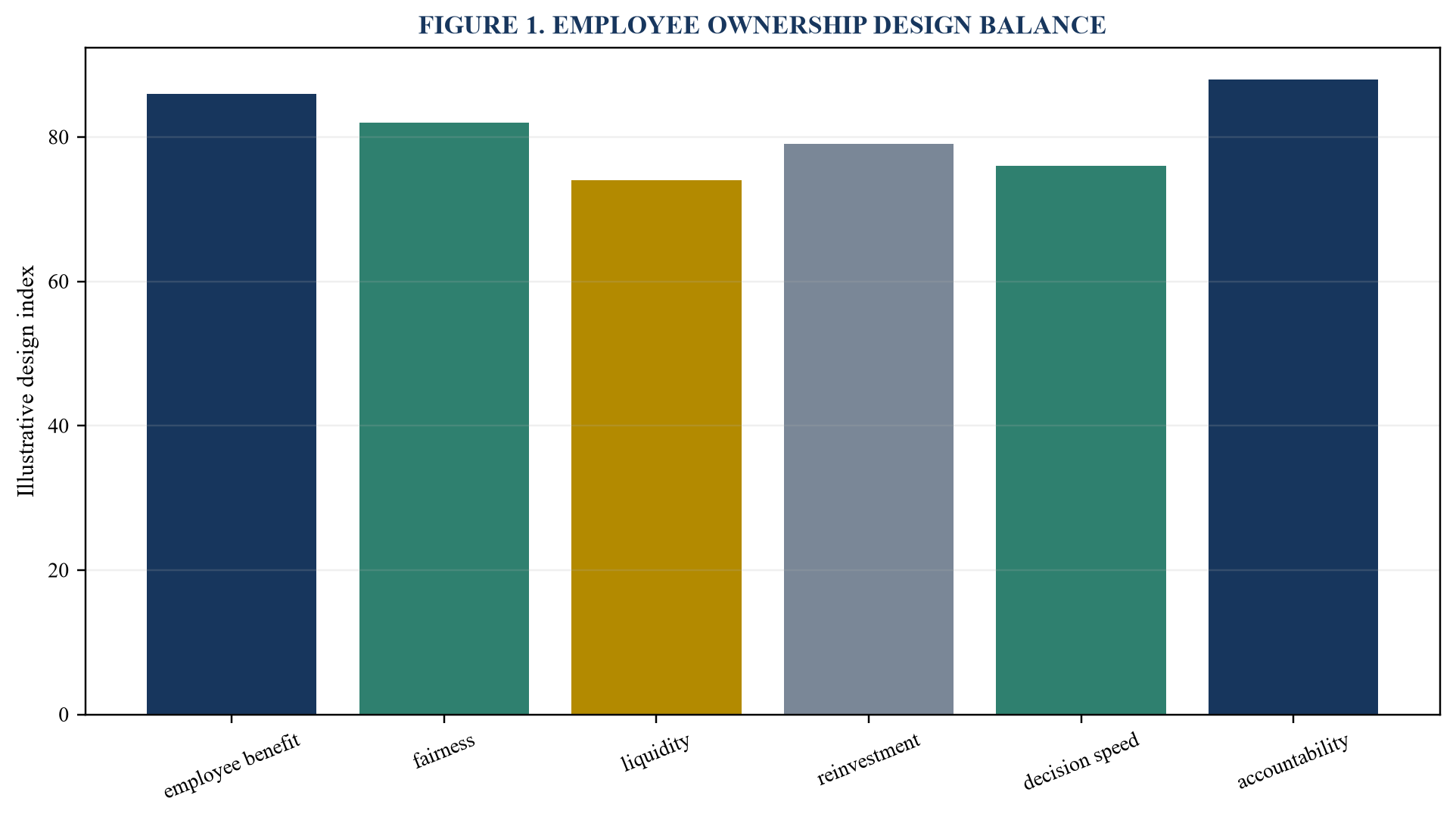
Values are illustrative readiness indices and require company-specific evidence.
9. Set vesting and leaver rules
The transaction team should define service, performance, good-leaver, bad-leaver, retirement, death, disability and redundancy treatment. The immediate output is a vesting and leaver schedule with named owners, dates, source evidence, approval status and open exceptions.
The analytical objective is to determine how earned value, retention and affordability remain balanced. Reviewers should reconcile the transaction documents, constitutional records, trust and plan terms, workforce data, historical accounts, valuation evidence, financing terms, tax analysis, board materials and independent advice. Base, downside and change scenarios should use consistent definitions and retain clear calculation lineage.
The framework should assign responsibility across directors, management, trustees, employee representatives, employees, sellers, investors, lenders and advisers. Rights, duties, thresholds, evidence rules, information access, conflicts controls, response periods and escalation routes should be explicit.
At each gate, decision makers should test employee benefit, fairness, liquidity, reinvestment, financing compatibility, accountable authority and operating speed together. Material gaps remain visible until evidence is complete, advice is current, conditions are satisfied and the structure remains lawful, understandable and financeable.
10. Establish an independent value
The transaction team should apply income, market and asset approaches with documented assumptions, sensitivity and conflicts controls. The immediate output is a valuation support file with named owners, dates, source evidence, approval status and open exceptions.
The analytical objective is to determine what employees, sellers, trustees and the company can reasonably treat as fair value. Reviewers should reconcile the transaction documents, constitutional records, trust and plan terms, workforce data, historical accounts, valuation evidence, financing terms, tax analysis, board materials and independent advice. Base, downside and change scenarios should use consistent definitions and retain clear calculation lineage.
The framework should assign responsibility across directors, management, trustees, employee representatives, employees, sellers, investors, lenders and advisers. Rights, duties, thresholds, evidence rules, information access, conflicts controls, response periods and escalation routes should be explicit.
At each gate, decision makers should test employee benefit, fairness, liquidity, reinvestment, financing compatibility, accountable authority and operating speed together. Material gaps remain visible until evidence is complete, advice is current, conditions are satisfied and the structure remains lawful, understandable and financeable.
11. Fund acquisition consideration
The transaction team should reconcile equity, debt, vendor deferral, trust funding, company contributions and transaction costs. The immediate output is a sources-and-uses schedule with named owners, dates, source evidence, approval status and open exceptions.
The analytical objective is to determine whether employee ownership is financed without weakening the operating company. Reviewers should reconcile the transaction documents, constitutional records, trust and plan terms, workforce data, historical accounts, valuation evidence, financing terms, tax analysis, board materials and independent advice. Base, downside and change scenarios should use consistent definitions and retain clear calculation lineage.
The framework should assign responsibility across directors, management, trustees, employee representatives, employees, sellers, investors, lenders and advisers. Rights, duties, thresholds, evidence rules, information access, conflicts controls, response periods and escalation routes should be explicit.
At each gate, decision makers should test employee benefit, fairness, liquidity, reinvestment, financing compatibility, accountable authority and operating speed together. Material gaps remain visible until evidence is complete, advice is current, conditions are satisfied and the structure remains lawful, understandable and financeable.
12. Protect operating liquidity
The transaction team should model working capital, tax, reinvestment, debt service, distributions and employee-plan cash requirements. The immediate output is a cash-priority waterfall with named owners, dates, source evidence, approval status and open exceptions.
The analytical objective is to determine which claims receive cash under base and downside conditions. Reviewers should reconcile the transaction documents, constitutional records, trust and plan terms, workforce data, historical accounts, valuation evidence, financing terms, tax analysis, board materials and independent advice. Base, downside and change scenarios should use consistent definitions and retain clear calculation lineage.
The framework should assign responsibility across directors, management, trustees, employee representatives, employees, sellers, investors, lenders and advisers. Rights, duties, thresholds, evidence rules, information access, conflicts controls, response periods and escalation routes should be explicit.
At each gate, decision makers should test employee benefit, fairness, liquidity, reinvestment, financing compatibility, accountable authority and operating speed together. Material gaps remain visible until evidence is complete, advice is current, conditions are satisfied and the structure remains lawful, understandable and financeable.
13. Design employee liquidity
The transaction team should set transfer windows, repurchases, internal markets, trust purchases, third-party exits and payment timing. The immediate output is a liquidity policy with named owners, dates, source evidence, approval status and open exceptions.
The analytical objective is to determine how employees realise value without creating an unfinanceable redemption obligation. Reviewers should reconcile the transaction documents, constitutional records, trust and plan terms, workforce data, historical accounts, valuation evidence, financing terms, tax analysis, board materials and independent advice. Base, downside and change scenarios should use consistent definitions and retain clear calculation lineage.
The framework should assign responsibility across directors, management, trustees, employee representatives, employees, sellers, investors, lenders and advisers. Rights, duties, thresholds, evidence rules, information access, conflicts controls, response periods and escalation routes should be explicit.
At each gate, decision makers should test employee benefit, fairness, liquidity, reinvestment, financing compatibility, accountable authority and operating speed together. Material gaps remain visible until evidence is complete, advice is current, conditions are satisfied and the structure remains lawful, understandable and financeable.
14. Model repurchase obligations
The transaction team should forecast departures, maturities, exercise behaviour, valuation changes and cash settlement. The immediate output is a repurchase liability model with named owners, dates, source evidence, approval status and open exceptions.
The analytical objective is to determine whether future employee exits can be funded through a stress case. Reviewers should reconcile the transaction documents, constitutional records, trust and plan terms, workforce data, historical accounts, valuation evidence, financing terms, tax analysis, board materials and independent advice. Base, downside and change scenarios should use consistent definitions and retain clear calculation lineage.
The framework should assign responsibility across directors, management, trustees, employee representatives, employees, sellers, investors, lenders and advisers. Rights, duties, thresholds, evidence rules, information access, conflicts controls, response periods and escalation routes should be explicit.
At each gate, decision makers should test employee benefit, fairness, liquidity, reinvestment, financing compatibility, accountable authority and operating speed together. Material gaps remain visible until evidence is complete, advice is current, conditions are satisfied and the structure remains lawful, understandable and financeable.
15. Control dilution
The transaction team should model grants, exercises, forfeitures, buybacks, new money, acquisitions and recapitalisations. The immediate output is a dilution bridge with named owners, dates, source evidence, approval status and open exceptions.
The analytical objective is to determine how ownership changes across stakeholders under plausible financing events. Reviewers should reconcile the transaction documents, constitutional records, trust and plan terms, workforce data, historical accounts, valuation evidence, financing terms, tax analysis, board materials and independent advice. Base, downside and change scenarios should use consistent definitions and retain clear calculation lineage.
The framework should assign responsibility across directors, management, trustees, employee representatives, employees, sellers, investors, lenders and advisers. Rights, duties, thresholds, evidence rules, information access, conflicts controls, response periods and escalation routes should be explicit.
At each gate, decision makers should test employee benefit, fairness, liquidity, reinvestment, financing compatibility, accountable authority and operating speed together. Material gaps remain visible until evidence is complete, advice is current, conditions are satisfied and the structure remains lawful, understandable and financeable.
16. Set distribution economics
The transaction team should define dividends, trust bonuses, profit sharing, reinvestment reserves and legal availability tests. The immediate output is a distribution framework with named owners, dates, source evidence, approval status and open exceptions.
The analytical objective is to determine whether employees receive understandable benefit while the company retains investment capacity. Reviewers should reconcile the transaction documents, constitutional records, trust and plan terms, workforce data, historical accounts, valuation evidence, financing terms, tax analysis, board materials and independent advice. Base, downside and change scenarios should use consistent definitions and retain clear calculation lineage.
The framework should assign responsibility across directors, management, trustees, employee representatives, employees, sellers, investors, lenders and advisers. Rights, duties, thresholds, evidence rules, information access, conflicts controls, response periods and escalation routes should be explicit.
At each gate, decision makers should test employee benefit, fairness, liquidity, reinvestment, financing compatibility, accountable authority and operating speed together. Material gaps remain visible until evidence is complete, advice is current, conditions are satisfied and the structure remains lawful, understandable and financeable.
Table 2. Vehicle decision matrix
| Vehicle | Principal strength | Principal constraint |
|---|---|---|
| direct shares | visible ownership | administration and liquidity |
| options or growth shares | performance alignment | valuation and dilution |
| employee trust | collective stewardship | trustee governance |
| hybrid pool | flexible segmentation | structural complexity |
Illustrative comparison; jurisdiction-specific tax and legal advice required.
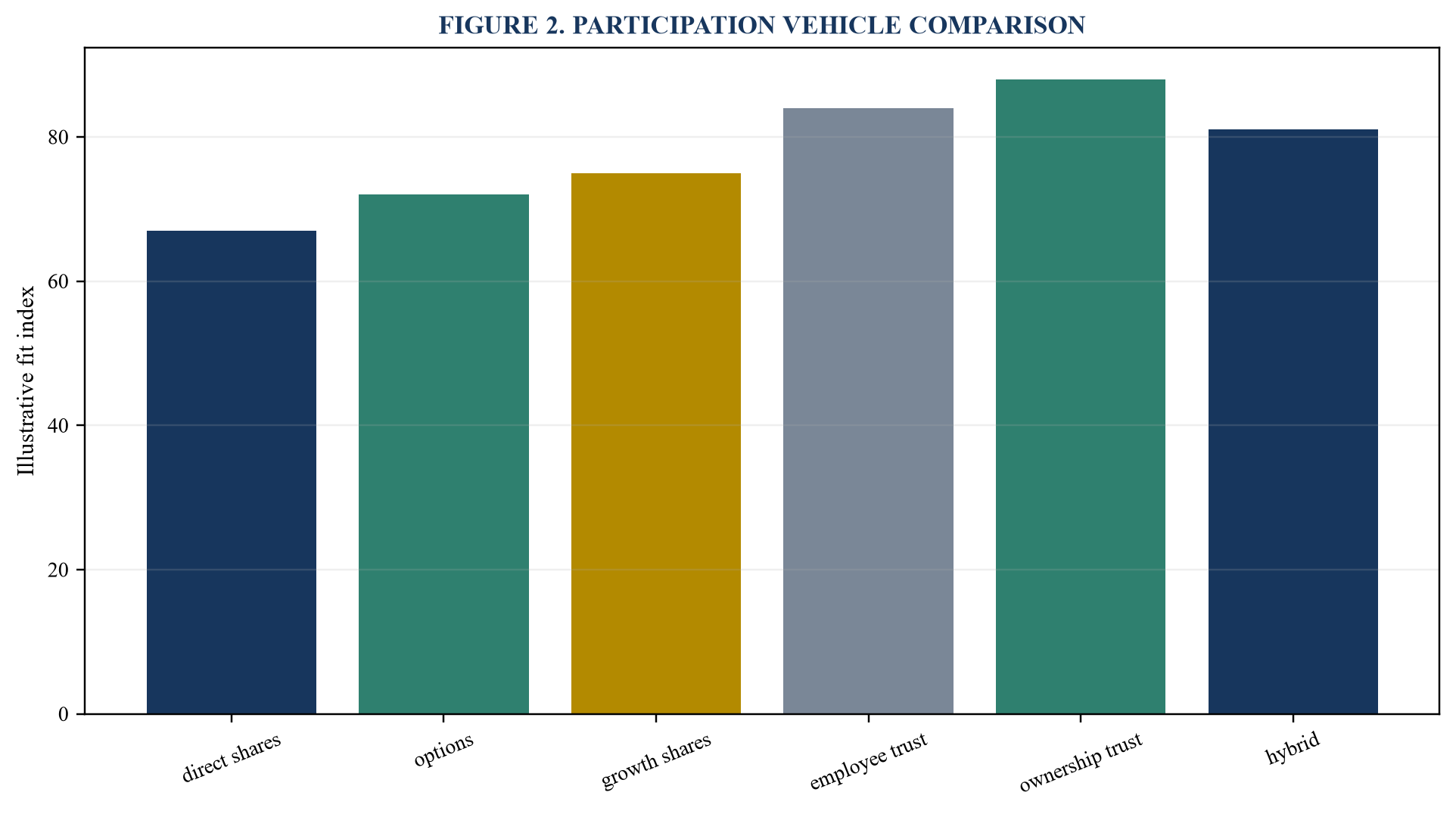
Values are illustrative readiness indices and require company-specific evidence.
17. Map tax treatment
The transaction team should document employer, trust, seller, management and employee tax points, relief conditions and reporting. The immediate output is a tax responsibility matrix with named owners, dates, source evidence, approval status and open exceptions.
The analytical objective is to determine where value is taxed and which conditions or events can alter the result. Reviewers should reconcile the transaction documents, constitutional records, trust and plan terms, workforce data, historical accounts, valuation evidence, financing terms, tax analysis, board materials and independent advice. Base, downside and change scenarios should use consistent definitions and retain clear calculation lineage.
The framework should assign responsibility across directors, management, trustees, employee representatives, employees, sellers, investors, lenders and advisers. Rights, duties, thresholds, evidence rules, information access, conflicts controls, response periods and escalation routes should be explicit.
At each gate, decision makers should test employee benefit, fairness, liquidity, reinvestment, financing compatibility, accountable authority and operating speed together. Material gaps remain visible until evidence is complete, advice is current, conditions are satisfied and the structure remains lawful, understandable and financeable.
18. Map accounting treatment
The transaction team should analyse share-based payment, financial instruments, consolidation, cash flows, provisions and disclosures. The immediate output is a accounting position paper with named owners, dates, source evidence, approval status and open exceptions.
The analytical objective is to determine how the structure affects earnings, liabilities, equity and reported cash. Reviewers should reconcile the transaction documents, constitutional records, trust and plan terms, workforce data, historical accounts, valuation evidence, financing terms, tax analysis, board materials and independent advice. Base, downside and change scenarios should use consistent definitions and retain clear calculation lineage.
The framework should assign responsibility across directors, management, trustees, employee representatives, employees, sellers, investors, lenders and advisers. Rights, duties, thresholds, evidence rules, information access, conflicts controls, response periods and escalation routes should be explicit.
At each gate, decision makers should test employee benefit, fairness, liquidity, reinvestment, financing compatibility, accountable authority and operating speed together. Material gaps remain visible until evidence is complete, advice is current, conditions are satisfied and the structure remains lawful, understandable and financeable.
19. Define trustee governance
The transaction team should set appointment, independence, competence, conflicts, information, valuation, voting and replacement rules. The immediate output is a trustee governance charter with named owners, dates, source evidence, approval status and open exceptions.
The analytical objective is to determine whether trustees can discharge duties with evidence and operational credibility. Reviewers should reconcile the transaction documents, constitutional records, trust and plan terms, workforce data, historical accounts, valuation evidence, financing terms, tax analysis, board materials and independent advice. Base, downside and change scenarios should use consistent definitions and retain clear calculation lineage.
The framework should assign responsibility across directors, management, trustees, employee representatives, employees, sellers, investors, lenders and advisers. Rights, duties, thresholds, evidence rules, information access, conflicts controls, response periods and escalation routes should be explicit.
At each gate, decision makers should test employee benefit, fairness, liquidity, reinvestment, financing compatibility, accountable authority and operating speed together. Material gaps remain visible until evidence is complete, advice is current, conditions are satisfied and the structure remains lawful, understandable and financeable.
20. Define board authority
The transaction team should retain director responsibility for strategy, risk, capital, performance, solvency and statutory duties. The immediate output is a board reserved-matters schedule with named owners, dates, source evidence, approval status and open exceptions.
The analytical objective is to determine which decisions require accountable corporate judgement. Reviewers should reconcile the transaction documents, constitutional records, trust and plan terms, workforce data, historical accounts, valuation evidence, financing terms, tax analysis, board materials and independent advice. Base, downside and change scenarios should use consistent definitions and retain clear calculation lineage.
The framework should assign responsibility across directors, management, trustees, employee representatives, employees, sellers, investors, lenders and advisers. Rights, duties, thresholds, evidence rules, information access, conflicts controls, response periods and escalation routes should be explicit.
At each gate, decision makers should test employee benefit, fairness, liquidity, reinvestment, financing compatibility, accountable authority and operating speed together. Material gaps remain visible until evidence is complete, advice is current, conditions are satisfied and the structure remains lawful, understandable and financeable.
21. Create representative voice
The transaction team should design elected forums, constituency rules, terms, training, access, feedback and removal mechanisms. The immediate output is a employee voice charter with named owners, dates, source evidence, approval status and open exceptions.
The analytical objective is to determine whether representatives have legitimacy, capacity and a defined remit. Reviewers should reconcile the transaction documents, constitutional records, trust and plan terms, workforce data, historical accounts, valuation evidence, financing terms, tax analysis, board materials and independent advice. Base, downside and change scenarios should use consistent definitions and retain clear calculation lineage.
The framework should assign responsibility across directors, management, trustees, employee representatives, employees, sellers, investors, lenders and advisers. Rights, duties, thresholds, evidence rules, information access, conflicts controls, response periods and escalation routes should be explicit.
At each gate, decision makers should test employee benefit, fairness, liquidity, reinvestment, financing compatibility, accountable authority and operating speed together. Material gaps remain visible until evidence is complete, advice is current, conditions are satisfied and the structure remains lawful, understandable and financeable.
22. Delegate operating decisions
The transaction team should assign commercial, people, investment and operational thresholds to capable named roles. The immediate output is a delegated-authority matrix with named owners, dates, source evidence, approval status and open exceptions.
The analytical objective is to determine whether routine decisions can proceed quickly within controlled limits. Reviewers should reconcile the transaction documents, constitutional records, trust and plan terms, workforce data, historical accounts, valuation evidence, financing terms, tax analysis, board materials and independent advice. Base, downside and change scenarios should use consistent definitions and retain clear calculation lineage.
The framework should assign responsibility across directors, management, trustees, employee representatives, employees, sellers, investors, lenders and advisers. Rights, duties, thresholds, evidence rules, information access, conflicts controls, response periods and escalation routes should be explicit.
At each gate, decision makers should test employee benefit, fairness, liquidity, reinvestment, financing compatibility, accountable authority and operating speed together. Material gaps remain visible until evidence is complete, advice is current, conditions are satisfied and the structure remains lawful, understandable and financeable.
23. Set escalation clocks
The transaction team should define notice, consultation, response, consent, emergency and deemed-decision time limits. The immediate output is a decision timetable with named owners, dates, source evidence, approval status and open exceptions.
The analytical objective is to determine how participation avoids unresolved questions and governance paralysis. Reviewers should reconcile the transaction documents, constitutional records, trust and plan terms, workforce data, historical accounts, valuation evidence, financing terms, tax analysis, board materials and independent advice. Base, downside and change scenarios should use consistent definitions and retain clear calculation lineage.
The framework should assign responsibility across directors, management, trustees, employee representatives, employees, sellers, investors, lenders and advisers. Rights, duties, thresholds, evidence rules, information access, conflicts controls, response periods and escalation routes should be explicit.
At each gate, decision makers should test employee benefit, fairness, liquidity, reinvestment, financing compatibility, accountable authority and operating speed together. Material gaps remain visible until evidence is complete, advice is current, conditions are satisfied and the structure remains lawful, understandable and financeable.
24. Protect confidential information
The transaction team should segment transaction, customer, personal, market-sensitive and privileged information with access controls. The immediate output is a information-rights protocol with named owners, dates, source evidence, approval status and open exceptions.
The analytical objective is to determine what employees and representatives need to know and when disclosure would cause harm. Reviewers should reconcile the transaction documents, constitutional records, trust and plan terms, workforce data, historical accounts, valuation evidence, financing terms, tax analysis, board materials and independent advice. Base, downside and change scenarios should use consistent definitions and retain clear calculation lineage.
The framework should assign responsibility across directors, management, trustees, employee representatives, employees, sellers, investors, lenders and advisers. Rights, duties, thresholds, evidence rules, information access, conflicts controls, response periods and escalation routes should be explicit.
At each gate, decision makers should test employee benefit, fairness, liquidity, reinvestment, financing compatibility, accountable authority and operating speed together. Material gaps remain visible until evidence is complete, advice is current, conditions are satisfied and the structure remains lawful, understandable and financeable.
Table 3. Cash-priority waterfall
| Cash claim | Evidence | Control |
|---|---|---|
| operations and tax | monthly cash model | protected liquidity |
| maintenance investment | asset plan | reinvestment floor |
| debt service | facility model | covenant headroom |
| employee benefit | plan and value model | affordability test |
Illustrative priorities; solvency, law and financing documents govern.
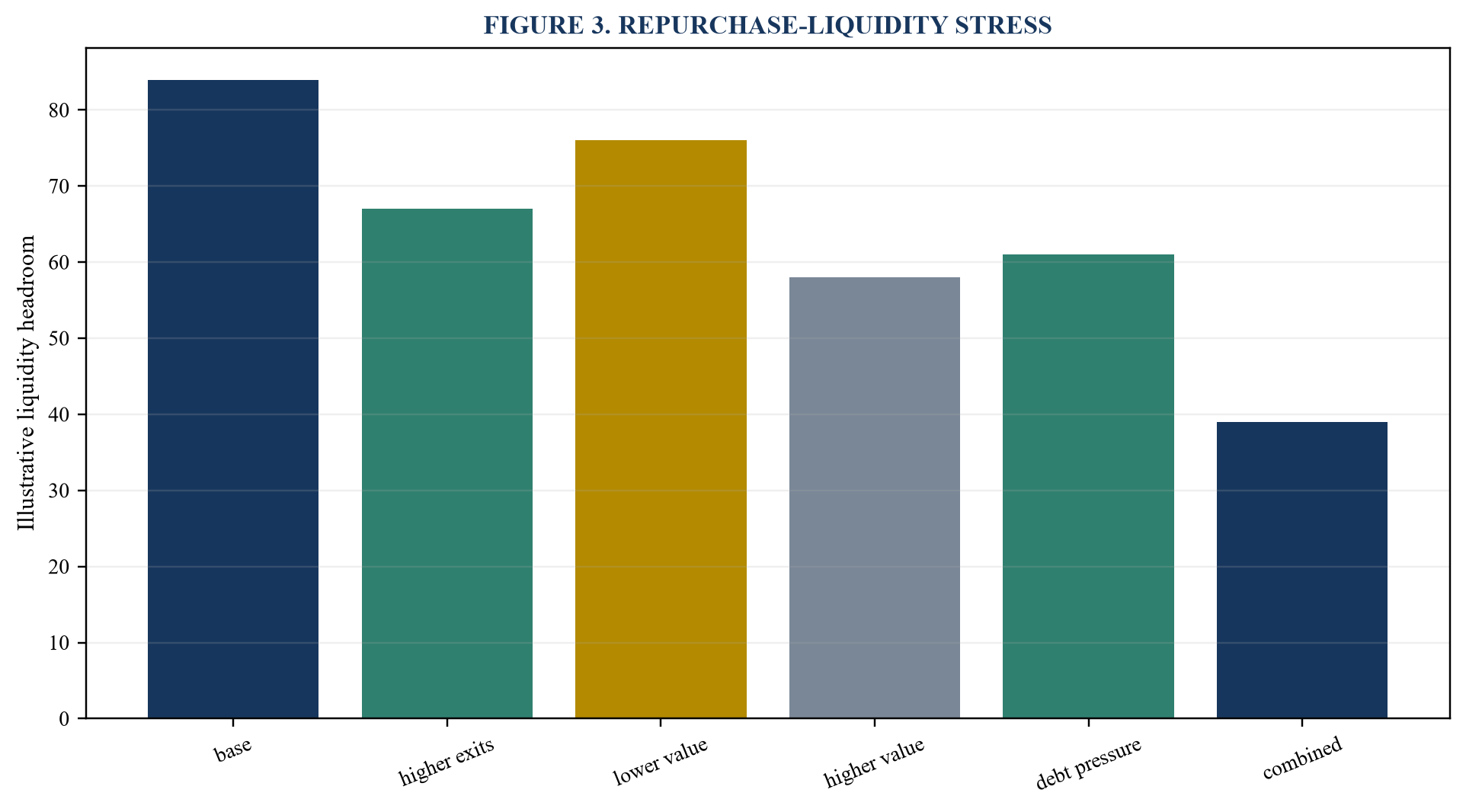
Values are illustrative readiness indices and require company-specific evidence.
25. Manage conflicts
The transaction team should identify seller, management, trustee, representative, lender and related-party conflicts. The immediate output is a conflicts register and recusal plan with named owners, dates, source evidence, approval status and open exceptions.
The analytical objective is to determine whether each conflicted decision has independent evidence and authority. Reviewers should reconcile the transaction documents, constitutional records, trust and plan terms, workforce data, historical accounts, valuation evidence, financing terms, tax analysis, board materials and independent advice. Base, downside and change scenarios should use consistent definitions and retain clear calculation lineage.
The framework should assign responsibility across directors, management, trustees, employee representatives, employees, sellers, investors, lenders and advisers. Rights, duties, thresholds, evidence rules, information access, conflicts controls, response periods and escalation routes should be explicit.
At each gate, decision makers should test employee benefit, fairness, liquidity, reinvestment, financing compatibility, accountable authority and operating speed together. Material gaps remain visible until evidence is complete, advice is current, conditions are satisfied and the structure remains lawful, understandable and financeable.
26. Integrate lender protections
The transaction team should reconcile ownership transfers, distributions, repurchases, additional debt, control and information with financing terms. The immediate output is a finance compatibility schedule with named owners, dates, source evidence, approval status and open exceptions.
The analytical objective is to determine whether participation remains operable within the capital structure. Reviewers should reconcile the transaction documents, constitutional records, trust and plan terms, workforce data, historical accounts, valuation evidence, financing terms, tax analysis, board materials and independent advice. Base, downside and change scenarios should use consistent definitions and retain clear calculation lineage.
The framework should assign responsibility across directors, management, trustees, employee representatives, employees, sellers, investors, lenders and advisers. Rights, duties, thresholds, evidence rules, information access, conflicts controls, response periods and escalation routes should be explicit.
At each gate, decision makers should test employee benefit, fairness, liquidity, reinvestment, financing compatibility, accountable authority and operating speed together. Material gaps remain visible until evidence is complete, advice is current, conditions are satisfied and the structure remains lawful, understandable and financeable.
27. Stress operating underperformance
The transaction team should vary revenue, margin, working capital, capex, distributions, valuations and departures. The immediate output is a integrated downside case with named owners, dates, source evidence, approval status and open exceptions.
The analytical objective is to determine where employee expectations, liquidity and creditor protections collide. Reviewers should reconcile the transaction documents, constitutional records, trust and plan terms, workforce data, historical accounts, valuation evidence, financing terms, tax analysis, board materials and independent advice. Base, downside and change scenarios should use consistent definitions and retain clear calculation lineage.
The framework should assign responsibility across directors, management, trustees, employee representatives, employees, sellers, investors, lenders and advisers. Rights, duties, thresholds, evidence rules, information access, conflicts controls, response periods and escalation routes should be explicit.
At each gate, decision makers should test employee benefit, fairness, liquidity, reinvestment, financing compatibility, accountable authority and operating speed together. Material gaps remain visible until evidence is complete, advice is current, conditions are satisfied and the structure remains lawful, understandable and financeable.
28. Stress workforce disagreement
The transaction team should model contested representatives, low participation, unequal outcomes, grievances and communication failures. The immediate output is a workforce governance scenario with named owners, dates, source evidence, approval status and open exceptions.
The analytical objective is to determine whether disagreements can be resolved without blocking accountable management. Reviewers should reconcile the transaction documents, constitutional records, trust and plan terms, workforce data, historical accounts, valuation evidence, financing terms, tax analysis, board materials and independent advice. Base, downside and change scenarios should use consistent definitions and retain clear calculation lineage.
The framework should assign responsibility across directors, management, trustees, employee representatives, employees, sellers, investors, lenders and advisers. Rights, duties, thresholds, evidence rules, information access, conflicts controls, response periods and escalation routes should be explicit.
At each gate, decision makers should test employee benefit, fairness, liquidity, reinvestment, financing compatibility, accountable authority and operating speed together. Material gaps remain visible until evidence is complete, advice is current, conditions are satisfied and the structure remains lawful, understandable and financeable.
29. Stress a strategic transaction
The transaction team should test acquisition, disposal, refinancing, new equity, partial exit and change of control. The immediate output is a transaction rights map with named owners, dates, source evidence, approval status and open exceptions.
The analytical objective is to determine how ownership and voice operate when speed, confidentiality and consent are critical. Reviewers should reconcile the transaction documents, constitutional records, trust and plan terms, workforce data, historical accounts, valuation evidence, financing terms, tax analysis, board materials and independent advice. Base, downside and change scenarios should use consistent definitions and retain clear calculation lineage.
The framework should assign responsibility across directors, management, trustees, employee representatives, employees, sellers, investors, lenders and advisers. Rights, duties, thresholds, evidence rules, information access, conflicts controls, response periods and escalation routes should be explicit.
At each gate, decision makers should test employee benefit, fairness, liquidity, reinvestment, financing compatibility, accountable authority and operating speed together. Material gaps remain visible until evidence is complete, advice is current, conditions are satisfied and the structure remains lawful, understandable and financeable.
30. Design performance evidence
The transaction team should link strategic objectives, operational indicators, employee outcomes, cash and value creation. The immediate output is a participation scorecard with named owners, dates, source evidence, approval status and open exceptions.
The analytical objective is to determine whether the model produces measurable benefit rather than symbolic ownership. Reviewers should reconcile the transaction documents, constitutional records, trust and plan terms, workforce data, historical accounts, valuation evidence, financing terms, tax analysis, board materials and independent advice. Base, downside and change scenarios should use consistent definitions and retain clear calculation lineage.
The framework should assign responsibility across directors, management, trustees, employee representatives, employees, sellers, investors, lenders and advisers. Rights, duties, thresholds, evidence rules, information access, conflicts controls, response periods and escalation routes should be explicit.
At each gate, decision makers should test employee benefit, fairness, liquidity, reinvestment, financing compatibility, accountable authority and operating speed together. Material gaps remain visible until evidence is complete, advice is current, conditions are satisfied and the structure remains lawful, understandable and financeable.
31. Build employee understanding
The transaction team should explain risk, value, rights, tax, liquidity, uncertainty and decision boundaries in plain language. The immediate output is a communication and education plan with named owners, dates, source evidence, approval status and open exceptions.
The analytical objective is to determine whether employees can make informed choices and form realistic expectations. Reviewers should reconcile the transaction documents, constitutional records, trust and plan terms, workforce data, historical accounts, valuation evidence, financing terms, tax analysis, board materials and independent advice. Base, downside and change scenarios should use consistent definitions and retain clear calculation lineage.
The framework should assign responsibility across directors, management, trustees, employee representatives, employees, sellers, investors, lenders and advisers. Rights, duties, thresholds, evidence rules, information access, conflicts controls, response periods and escalation routes should be explicit.
At each gate, decision makers should test employee benefit, fairness, liquidity, reinvestment, financing compatibility, accountable authority and operating speed together. Material gaps remain visible until evidence is complete, advice is current, conditions are satisfied and the structure remains lawful, understandable and financeable.
32. Establish grievance and remedy routes
The transaction team should define questions, complaints, whistleblowing, mediation, appeals and formal legal routes. The immediate output is a resolution protocol with named owners, dates, source evidence, approval status and open exceptions.
The analytical objective is to determine how concerns are addressed promptly and independently. Reviewers should reconcile the transaction documents, constitutional records, trust and plan terms, workforce data, historical accounts, valuation evidence, financing terms, tax analysis, board materials and independent advice. Base, downside and change scenarios should use consistent definitions and retain clear calculation lineage.
The framework should assign responsibility across directors, management, trustees, employee representatives, employees, sellers, investors, lenders and advisers. Rights, duties, thresholds, evidence rules, information access, conflicts controls, response periods and escalation routes should be explicit.
At each gate, decision makers should test employee benefit, fairness, liquidity, reinvestment, financing compatibility, accountable authority and operating speed together. Material gaps remain visible until evidence is complete, advice is current, conditions are satisfied and the structure remains lawful, understandable and financeable.
Table 4. Decision-rights matrix
| Decision | Employee voice | Final authority |
|---|---|---|
| workforce policy | consultation | board |
| annual participation design | recommendation | board or trustee |
| major transaction | informed process | shareholders, trustee or board |
| urgent operating action | post-action explanation | delegated executive |
Illustrative governance; constitutional and trust documents govern.
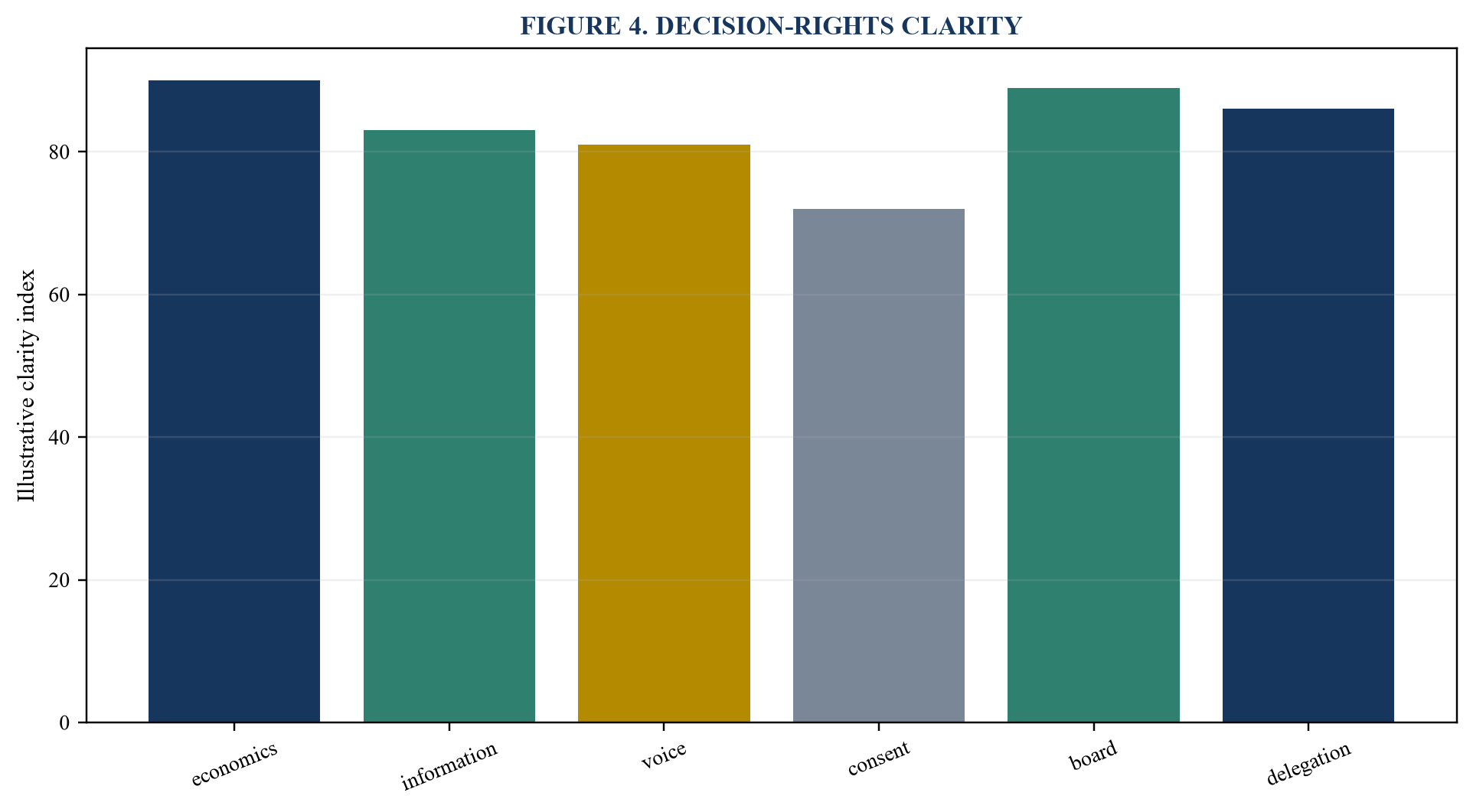
Values are illustrative readiness indices and require company-specific evidence.
33. Prepare legal implementation
The transaction team should assemble constitutional, trust, plan, shareholder, employment, finance and disclosure documents. The immediate output is a implementation document index with named owners, dates, source evidence, approval status and open exceptions.
The analytical objective is to determine whether rights and obligations reconcile across the legal stack. Reviewers should reconcile the transaction documents, constitutional records, trust and plan terms, workforce data, historical accounts, valuation evidence, financing terms, tax analysis, board materials and independent advice. Base, downside and change scenarios should use consistent definitions and retain clear calculation lineage.
The framework should assign responsibility across directors, management, trustees, employee representatives, employees, sellers, investors, lenders and advisers. Rights, duties, thresholds, evidence rules, information access, conflicts controls, response periods and escalation routes should be explicit.
At each gate, decision makers should test employee benefit, fairness, liquidity, reinvestment, financing compatibility, accountable authority and operating speed together. Material gaps remain visible until evidence is complete, advice is current, conditions are satisfied and the structure remains lawful, understandable and financeable.
34. Prepare the closing evidence pack
The transaction team should verify approvals, valuations, elections, funding, tax steps, filings, communications and conditions. The immediate output is a closing certification with named owners, dates, source evidence, approval status and open exceptions.
The analytical objective is to determine whether the employee-ownership structure exists exactly as approved. Reviewers should reconcile the transaction documents, constitutional records, trust and plan terms, workforce data, historical accounts, valuation evidence, financing terms, tax analysis, board materials and independent advice. Base, downside and change scenarios should use consistent definitions and retain clear calculation lineage.
The framework should assign responsibility across directors, management, trustees, employee representatives, employees, sellers, investors, lenders and advisers. Rights, duties, thresholds, evidence rules, information access, conflicts controls, response periods and escalation routes should be explicit.
At each gate, decision makers should test employee benefit, fairness, liquidity, reinvestment, financing compatibility, accountable authority and operating speed together. Material gaps remain visible until evidence is complete, advice is current, conditions are satisfied and the structure remains lawful, understandable and financeable.
35. Govern the first hundred days
The transaction team should sequence trustee induction, representative elections, communications, reporting and initial awards. The immediate output is a hundred-day governance plan with named owners, dates, source evidence, approval status and open exceptions.
The analytical objective is to determine whether new institutions become functional without distracting the business. Reviewers should reconcile the transaction documents, constitutional records, trust and plan terms, workforce data, historical accounts, valuation evidence, financing terms, tax analysis, board materials and independent advice. Base, downside and change scenarios should use consistent definitions and retain clear calculation lineage.
The framework should assign responsibility across directors, management, trustees, employee representatives, employees, sellers, investors, lenders and advisers. Rights, duties, thresholds, evidence rules, information access, conflicts controls, response periods and escalation routes should be explicit.
At each gate, decision makers should test employee benefit, fairness, liquidity, reinvestment, financing compatibility, accountable authority and operating speed together. Material gaps remain visible until evidence is complete, advice is current, conditions are satisfied and the structure remains lawful, understandable and financeable.
36. Monitor annual compliance
The transaction team should test eligibility, allocations, distributions, valuations, repurchases, conflicts, filings and disqualifying events. The immediate output is a annual compliance calendar with named owners, dates, source evidence, approval status and open exceptions.
The analytical objective is to determine whether legal, tax and governance conditions remain satisfied. Reviewers should reconcile the transaction documents, constitutional records, trust and plan terms, workforce data, historical accounts, valuation evidence, financing terms, tax analysis, board materials and independent advice. Base, downside and change scenarios should use consistent definitions and retain clear calculation lineage.
The framework should assign responsibility across directors, management, trustees, employee representatives, employees, sellers, investors, lenders and advisers. Rights, duties, thresholds, evidence rules, information access, conflicts controls, response periods and escalation routes should be explicit.
At each gate, decision makers should test employee benefit, fairness, liquidity, reinvestment, financing compatibility, accountable authority and operating speed together. Material gaps remain visible until evidence is complete, advice is current, conditions are satisfied and the structure remains lawful, understandable and financeable.
37. Review participation quality
The transaction team should survey understanding, trust, voice, fairness, retention and perceived influence alongside objective measures. The immediate output is a employee-ownership effectiveness review with named owners, dates, source evidence, approval status and open exceptions.
The analytical objective is to determine whether employees experience meaningful participation and credible accountability. Reviewers should reconcile the transaction documents, constitutional records, trust and plan terms, workforce data, historical accounts, valuation evidence, financing terms, tax analysis, board materials and independent advice. Base, downside and change scenarios should use consistent definitions and retain clear calculation lineage.
The framework should assign responsibility across directors, management, trustees, employee representatives, employees, sellers, investors, lenders and advisers. Rights, duties, thresholds, evidence rules, information access, conflicts controls, response periods and escalation routes should be explicit.
At each gate, decision makers should test employee benefit, fairness, liquidity, reinvestment, financing compatibility, accountable authority and operating speed together. Material gaps remain visible until evidence is complete, advice is current, conditions are satisfied and the structure remains lawful, understandable and financeable.
38. Plan succession and refresh
The transaction team should set trustee, director and representative succession, term limits, skills and institutional memory. The immediate output is a governance succession plan with named owners, dates, source evidence, approval status and open exceptions.
The analytical objective is to determine whether the system remains capable as people and ownership change. Reviewers should reconcile the transaction documents, constitutional records, trust and plan terms, workforce data, historical accounts, valuation evidence, financing terms, tax analysis, board materials and independent advice. Base, downside and change scenarios should use consistent definitions and retain clear calculation lineage.
The framework should assign responsibility across directors, management, trustees, employee representatives, employees, sellers, investors, lenders and advisers. Rights, duties, thresholds, evidence rules, information access, conflicts controls, response periods and escalation routes should be explicit.
At each gate, decision makers should test employee benefit, fairness, liquidity, reinvestment, financing compatibility, accountable authority and operating speed together. Material gaps remain visible until evidence is complete, advice is current, conditions are satisfied and the structure remains lawful, understandable and financeable.
39. Prepare restructuring routes
The transaction team should define responses to liquidity stress, covenant pressure, valuation disputes, disqualifying events and failed governance. The immediate output is a restructuring decision tree with named owners, dates, source evidence, approval status and open exceptions.
The analytical objective is to determine how value and employee interests are protected when the original design becomes unsustainable. Reviewers should reconcile the transaction documents, constitutional records, trust and plan terms, workforce data, historical accounts, valuation evidence, financing terms, tax analysis, board materials and independent advice. Base, downside and change scenarios should use consistent definitions and retain clear calculation lineage.
The framework should assign responsibility across directors, management, trustees, employee representatives, employees, sellers, investors, lenders and advisers. Rights, duties, thresholds, evidence rules, information access, conflicts controls, response periods and escalation routes should be explicit.
At each gate, decision makers should test employee benefit, fairness, liquidity, reinvestment, financing compatibility, accountable authority and operating speed together. Material gaps remain visible until evidence is complete, advice is current, conditions are satisfied and the structure remains lawful, understandable and financeable.
40. Issue the participation conclusion
The transaction team should integrate purpose, economics, value, liquidity, tax, governance, voice, control and resilience. The immediate output is a board-and-trustee participation certificate with named owners, dates, source evidence, approval status and open exceptions.
The analytical objective is to determine whether employee ownership is meaningful, financeable and decision-capable. Reviewers should reconcile the transaction documents, constitutional records, trust and plan terms, workforce data, historical accounts, valuation evidence, financing terms, tax analysis, board materials and independent advice. Base, downside and change scenarios should use consistent definitions and retain clear calculation lineage.
The framework should assign responsibility across directors, management, trustees, employee representatives, employees, sellers, investors, lenders and advisers. Rights, duties, thresholds, evidence rules, information access, conflicts controls, response periods and escalation routes should be explicit.
At each gate, decision makers should test employee benefit, fairness, liquidity, reinvestment, financing compatibility, accountable authority and operating speed together. Material gaps remain visible until evidence is complete, advice is current, conditions are satisfied and the structure remains lawful, understandable and financeable.
Table 5. Participation readiness certificate
| Certification | Evidence owner | Status |
|---|---|---|
| purpose, eligibility and fairness | board and trustee | tested |
| value, liquidity and dilution | finance lead | tested |
| voice, authority and escalation | governance lead | tested |
| tax, documents and compliance | authorised advisers | tested |
Illustrative gate; authorised advisers determine sufficiency.
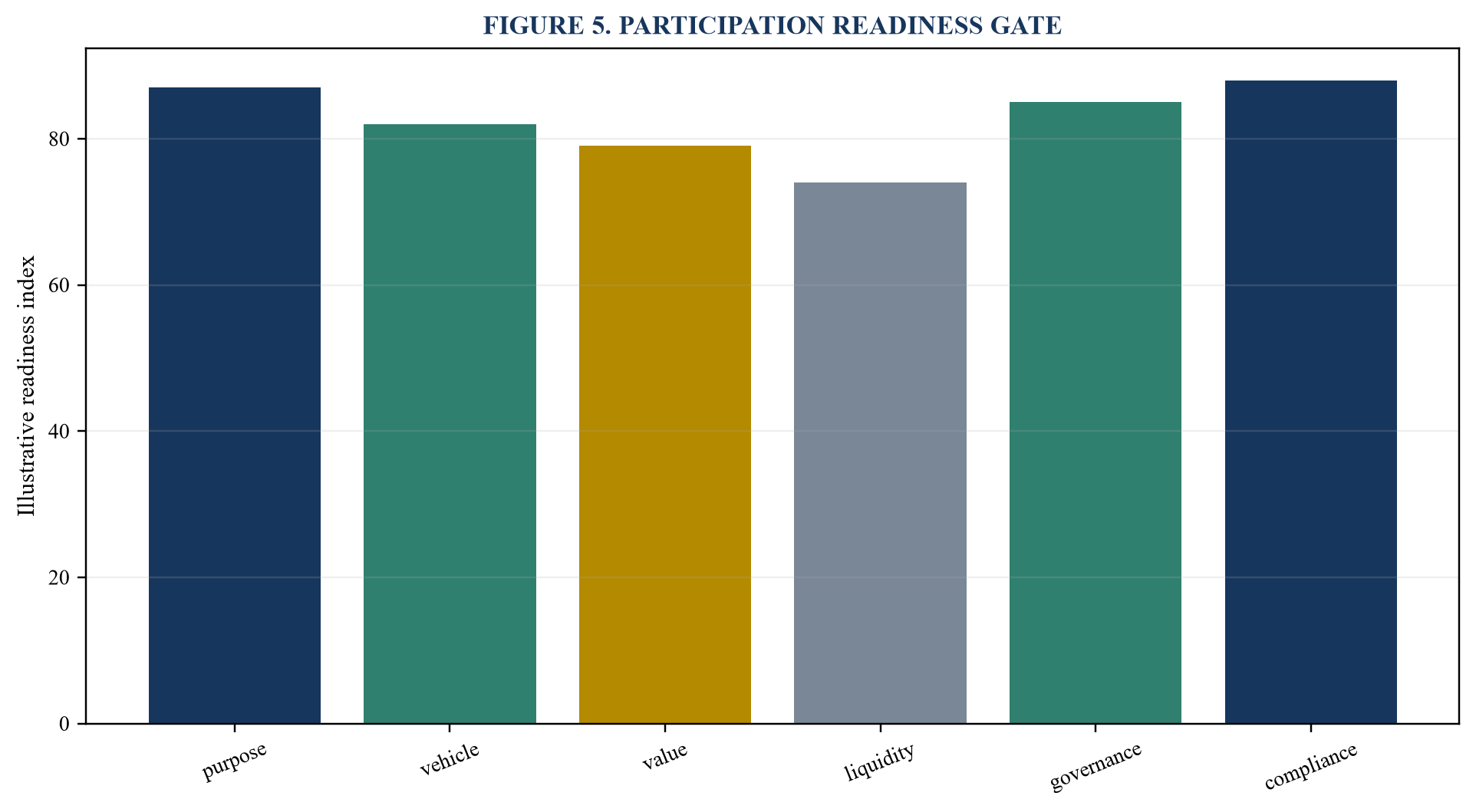
Values are illustrative readiness indices and require company-specific evidence.
References
- HM Revenue & Customs, Employee Ownership Trusts and Capital Gains Tax 2026, https://www.gov.uk/government/publications/employee-ownership-trusts-and-capital-gains-tax-self-assessment-helpsheet-hs277/hs277-employee-ownership-trusts-and-capital-gains-tax-2026--2
- HM Revenue & Customs, Capital Gains Manual CG67800: Employee-ownership trusts, https://www.gov.uk/hmrc-internal-manuals/capital-gains-manual/cg67800
- HM Revenue & Customs, Capital Gains Manual CG67820: five relief requirements, https://www.gov.uk/hmrc-internal-manuals/capital-gains-manual/cg67820
- HM Revenue & Customs, Capital Gains Manual CG67826: trustee residence requirement, https://www.gov.uk/hmrc-internal-manuals/capital-gains-manual/cg67826
- HM Revenue & Customs, Capital Gains Manual CG67827: trustee independence requirement, https://www.gov.uk/hmrc-internal-manuals/capital-gains-manual/cg67827
- HM Revenue & Customs, Capital Gains Manual CG67828: consideration requirement, https://www.gov.uk/hmrc-internal-manuals/capital-gains-manual/cg67828
- HM Revenue & Customs, Employment Income Manual EIM03053: participation requirement, https://www.gov.uk/hmrc-internal-manuals/employment-income-manual/eim03053
- HM Revenue & Customs, Savings and Investment Manual SAIM10270: employee-controlled company, https://www.gov.uk/hmrc-internal-manuals/savings-and-investment-manual/saim10270
- HM Revenue & Customs, Company Taxation Manual CTM15580: distributions to EOTs, https://www.gov.uk/hmrc-internal-manuals/company-taxation-manual/ctm15580
- UK Government, Taxation of Employee Ownership Trusts and Employee Benefit Trusts, https://www.gov.uk/government/publications/changes-to-the-taxation-of-employee-ownership-trusts-and-employee-benefit-trusts/taxation-of-employee-ownership-trusts-and-employee-benefit-trusts
- UK Legislation, Finance Act 2026, https://www.legislation.gov.uk/ukpga/2026/11/contents
- UK Legislation, Taxation of Chargeable Gains Act 1992 section 236H, https://www.legislation.gov.uk/ukpga/1992/12/section/236H
- UK Legislation, Companies Act 2006 section 172, https://www.legislation.gov.uk/ukpga/2006/46/section/172
- UK Legislation, Companies Act 2006 section 175, https://www.legislation.gov.uk/ukpga/2006/46/section/175
- UK Legislation, Companies Act 2006 Part 12: company resolutions and meetings, https://www.legislation.gov.uk/ukpga/2006/46/part/12
- UK Legislation, Information and Consultation of Employees Regulations 2004, https://www.legislation.gov.uk/uksi/2004/3426/contents
- Financial Reporting Council, UK Corporate Governance Code 2024, https://www.frc.org.uk/library/standards-codes-policy/corporate-governance/uk-corporate-governance-code/
- Financial Reporting Council, Annual Review of Corporate Governance Reporting 2025, https://www.frc.org.uk/library/standards-codes-policy/corporate-governance/annual-review-of-corporate-governance-reporting-2025/
- Acas, Informing and consulting employees, https://www.acas.org.uk/informing-and-consulting-employees
- IFRS Foundation, IFRS 2 Share-based Payment, https://www.ifrs.org/issued-standards/list-of-standards/ifrs-2-share-based-payment/
- IFRS Foundation, IFRS 9 Financial Instruments, https://www.ifrs.org/issued-standards/list-of-standards/ifrs-9-financial-instruments/
- IFRS Foundation, IFRS 10 Consolidated Financial Statements, https://www.ifrs.org/issued-standards/list-of-standards/ifrs-10-consolidated-financial-statements/
- US Department of Labor, Employee Stock Ownership Plans, https://www.dol.gov/agencies/ebsa/about-ebsa/our-activities/resource-center/fact-sheets/employee-stock-ownership-plans-esops
- Internal Revenue Service, Employee Stock Ownership Plans, https://www.irs.gov/retirement-plans/employee-stock-ownership-plans-esops
- OECD, G20/OECD Principles of Corporate Governance 2023, https://www.oecd.org/corporate/principles-corporate-governance/
- International Labour Organization, Workers representatives convention C135, https://normlex.ilo.org/dyn/nrmlx_en/f?p=NORMLEXPUB:12100:0::NO::P12100_ILO_CODE:C135
