

1. Define the regional expansion thesis
The board, UAE platform team and country leaders should state the customers, propositions, capabilities, countries, timing and economic advantage the UAE platform is intended to create. The controlled deliverable is a board-approved regional thesis. Record each jurisdiction, entity, licence, customer, process, system, decision, owner, dependency, source, effective date, evidence status and refresh trigger [1][2].
Reconcile corporate records, country regulations, licences, tax and customs positions, contracts, customer evidence, organisation data, service costs, technology architecture, cash flows, risk registers and operating performance. Separate enacted rules, binding commitments, management policy, analytical scenarios and missing evidence.
The central regionalisation risk is that regional ambition can become a collection of country launches without a shared source of advantage. Quantify the effect on market access, decision speed, customer delivery, margin, cash conversion, tax, control, resilience, talent, regulatory exposure and capital returns.
Translate the result into the regional operating model, country-entry gate, delegation schedule, shared-service design, capital plan, integration roadmap and board dashboard. Preserve a dated evidence trail and obtain qualified advice in every relevant GCC jurisdiction.
2. Set the platform perimeter
The board, UAE platform team and country leaders should identify every UAE and destination entity, branch, licence, establishment, free zone, contract and operating location. The controlled deliverable is a legal-operating perimeter map. Record each jurisdiction, entity, licence, customer, process, system, decision, owner, dependency, source, effective date, evidence status and refresh trigger [3][4].
Reconcile corporate records, country regulations, licences, tax and customs positions, contracts, customer evidence, organisation data, service costs, technology architecture, cash flows, risk registers and operating performance. Separate enacted rules, binding commitments, management policy, analytical scenarios and missing evidence.
The central regionalisation risk is that management can describe one regional platform while obligations and assets sit across disconnected entities. Quantify the effect on market access, decision speed, customer delivery, margin, cash conversion, tax, control, resilience, talent, regulatory exposure and capital returns.
Translate the result into the regional operating model, country-entry gate, delegation schedule, shared-service design, capital plan, integration roadmap and board dashboard. Preserve a dated evidence trail and obtain qualified advice in every relevant GCC jurisdiction.
3. Map GCC market-access conditions
The board, UAE platform team and country leaders should verify ownership, agency, sector approvals, localisation, product registration, professional licensing and procurement requirements by country. The controlled deliverable is a country access matrix. Record each jurisdiction, entity, licence, customer, process, system, decision, owner, dependency, source, effective date, evidence status and refresh trigger [5][6].
Reconcile corporate records, country regulations, licences, tax and customs positions, contracts, customer evidence, organisation data, service costs, technology architecture, cash flows, risk registers and operating performance. Separate enacted rules, binding commitments, management policy, analytical scenarios and missing evidence.
The central regionalisation risk is that a UAE licence or relationship can be assumed to travel across borders when local permission is required. Quantify the effect on market access, decision speed, customer delivery, margin, cash conversion, tax, control, resilience, talent, regulatory exposure and capital returns.
Translate the result into the regional operating model, country-entry gate, delegation schedule, shared-service design, capital plan, integration roadmap and board dashboard. Preserve a dated evidence trail and obtain qualified advice in every relevant GCC jurisdiction.
4. Test the GCC common-market assumption
The board, UAE platform team and country leaders should separate regional integration objectives from implemented national procedures for services, qualifications, customs and establishment. The controlled deliverable is an integration-evidence memorandum. Record each jurisdiction, entity, licence, customer, process, system, decision, owner, dependency, source, effective date, evidence status and refresh trigger [7][8].
Reconcile corporate records, country regulations, licences, tax and customs positions, contracts, customer evidence, organisation data, service costs, technology architecture, cash flows, risk registers and operating performance. Separate enacted rules, binding commitments, management policy, analytical scenarios and missing evidence.
The central regionalisation risk is that a strategic plan can rely on legal or administrative harmonisation that remains incomplete. Quantify the effect on market access, decision speed, customer delivery, margin, cash conversion, tax, control, resilience, talent, regulatory exposure and capital returns.
Translate the result into the regional operating model, country-entry gate, delegation schedule, shared-service design, capital plan, integration roadmap and board dashboard. Preserve a dated evidence trail and obtain qualified advice in every relevant GCC jurisdiction.
5. Map the regional value chain
The board, UAE platform team and country leaders should trace sourcing, import, assembly, storage, sales, contracting, delivery, invoicing, support and cash collection by jurisdiction. The controlled deliverable is an end-to-end value-chain map. Record each jurisdiction, entity, licence, customer, process, system, decision, owner, dependency, source, effective date, evidence status and refresh trigger [9][10].
Reconcile corporate records, country regulations, licences, tax and customs positions, contracts, customer evidence, organisation data, service costs, technology architecture, cash flows, risk registers and operating performance. Separate enacted rules, binding commitments, management policy, analytical scenarios and missing evidence.
The central regionalisation risk is that the proposed hub can centralise profit while operational substance and risk arise elsewhere. Quantify the effect on market access, decision speed, customer delivery, margin, cash conversion, tax, control, resilience, talent, regulatory exposure and capital returns.
Translate the result into the regional operating model, country-entry gate, delegation schedule, shared-service design, capital plan, integration roadmap and board dashboard. Preserve a dated evidence trail and obtain qualified advice in every relevant GCC jurisdiction.
6. Choose the country entry mode
The board, UAE platform team and country leaders should compare export, distributor, agent, branch, subsidiary, acquisition, alliance and joint venture for each market. The controlled deliverable is an entry-mode decision record. Record each jurisdiction, entity, licence, customer, process, system, decision, owner, dependency, source, effective date, evidence status and refresh trigger [11][12].
Reconcile corporate records, country regulations, licences, tax and customs positions, contracts, customer evidence, organisation data, service costs, technology architecture, cash flows, risk registers and operating performance. Separate enacted rules, binding commitments, management policy, analytical scenarios and missing evidence.
The central regionalisation risk is that one template can be used despite material differences in control, capital, liability and speed. Quantify the effect on market access, decision speed, customer delivery, margin, cash conversion, tax, control, resilience, talent, regulatory exposure and capital returns.
Translate the result into the regional operating model, country-entry gate, delegation schedule, shared-service design, capital plan, integration roadmap and board dashboard. Preserve a dated evidence trail and obtain qualified advice in every relevant GCC jurisdiction.
7. Sequence markets by evidence
The board, UAE platform team and country leaders should score demand, access, competition, customer proof, licence path, partner quality, supply capacity and cash conversion. The controlled deliverable is a country sequencing model. Record each jurisdiction, entity, licence, customer, process, system, decision, owner, dependency, source, effective date, evidence status and refresh trigger [13][14].
Reconcile corporate records, country regulations, licences, tax and customs positions, contracts, customer evidence, organisation data, service costs, technology architecture, cash flows, risk registers and operating performance. Separate enacted rules, binding commitments, management policy, analytical scenarios and missing evidence.
The central regionalisation risk is that headline market size can outrank executable routes to revenue and cash. Quantify the effect on market access, decision speed, customer delivery, margin, cash conversion, tax, control, resilience, talent, regulatory exposure and capital returns.
Translate the result into the regional operating model, country-entry gate, delegation schedule, shared-service design, capital plan, integration roadmap and board dashboard. Preserve a dated evidence trail and obtain qualified advice in every relevant GCC jurisdiction.
8. Define the UAE hub mandate
The board, UAE platform team and country leaders should specify strategy, capital, commercial leadership, key accounts, procurement, technology, talent, treasury, risk and service roles. The controlled deliverable is a platform mandate. Record each jurisdiction, entity, licence, customer, process, system, decision, owner, dependency, source, effective date, evidence status and refresh trigger [15][16].
Reconcile corporate records, country regulations, licences, tax and customs positions, contracts, customer evidence, organisation data, service costs, technology architecture, cash flows, risk registers and operating performance. Separate enacted rules, binding commitments, management policy, analytical scenarios and missing evidence.
The central regionalisation risk is that the hub can accumulate titles without enforceable authority, resources or service obligations. Quantify the effect on market access, decision speed, customer delivery, margin, cash conversion, tax, control, resilience, talent, regulatory exposure and capital returns.
Translate the result into the regional operating model, country-entry gate, delegation schedule, shared-service design, capital plan, integration roadmap and board dashboard. Preserve a dated evidence trail and obtain qualified advice in every relevant GCC jurisdiction.
Table 1. Platform mandate
| Decision | UAE hub | Country |
|---|---|---|
| capital | allocate | propose |
| key accounts | coordinate | execute |
| pricing | guardrails | local decision |
| risk | standard | evidence |
Statutory periods are stated where labelled; other entries are analytical controls.
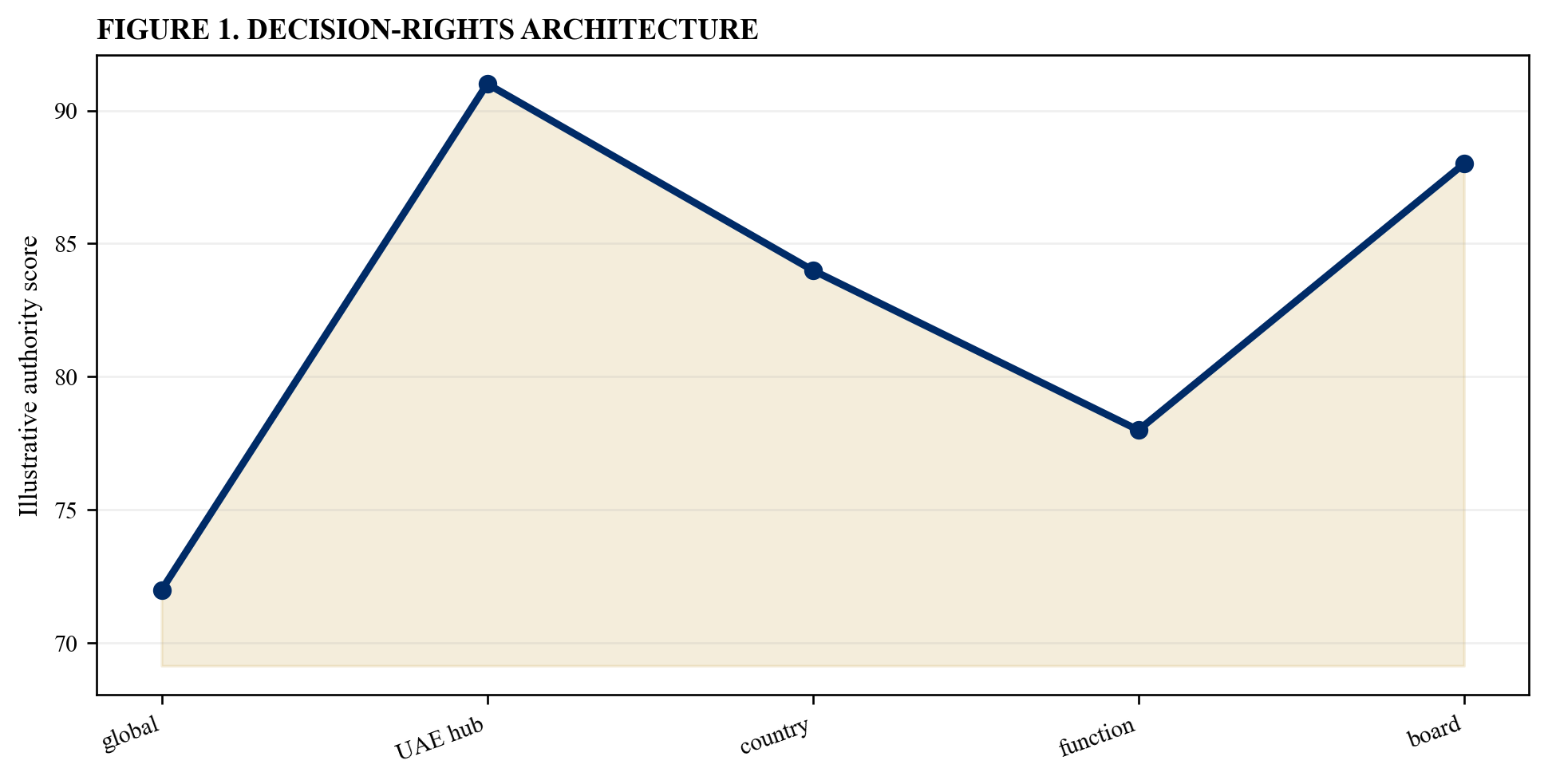
Illustrative analytical scenario; transaction evidence should replace model values.
9. Assign reserved matters
The board, UAE platform team and country leaders should calibrate board, regional, country and functional approvals for investment, pricing, contracts, hiring, borrowing and risk. The controlled deliverable is a reserved-matters schedule. Record each jurisdiction, entity, licence, customer, process, system, decision, owner, dependency, source, effective date, evidence status and refresh trigger [17][18].
Reconcile corporate records, country regulations, licences, tax and customs positions, contracts, customer evidence, organisation data, service costs, technology architecture, cash flows, risk registers and operating performance. Separate enacted rules, binding commitments, management policy, analytical scenarios and missing evidence.
The central regionalisation risk is that too much central control can delay local execution while weak control can fragment risk and capital. Quantify the effect on market access, decision speed, customer delivery, margin, cash conversion, tax, control, resilience, talent, regulatory exposure and capital returns.
Translate the result into the regional operating model, country-entry gate, delegation schedule, shared-service design, capital plan, integration roadmap and board dashboard. Preserve a dated evidence trail and obtain qualified advice in every relevant GCC jurisdiction.
10. Build the decision-rights architecture
The board, UAE platform team and country leaders should name recommendation, input, decision, execution and escalation owners for recurring cross-border decisions. The controlled deliverable is a decision-rights matrix. Record each jurisdiction, entity, licence, customer, process, system, decision, owner, dependency, source, effective date, evidence status and refresh trigger [15][19].
Reconcile corporate records, country regulations, licences, tax and customs positions, contracts, customer evidence, organisation data, service costs, technology architecture, cash flows, risk registers and operating performance. Separate enacted rules, binding commitments, management policy, analytical scenarios and missing evidence.
The central regionalisation risk is that committees can multiply while accountability remains ambiguous. Quantify the effect on market access, decision speed, customer delivery, margin, cash conversion, tax, control, resilience, talent, regulatory exposure and capital returns.
Translate the result into the regional operating model, country-entry gate, delegation schedule, shared-service design, capital plan, integration roadmap and board dashboard. Preserve a dated evidence trail and obtain qualified advice in every relevant GCC jurisdiction.
11. Design regional governance forums
The board, UAE platform team and country leaders should set purpose, membership, cadence, information, quorum, authority and escalation for each forum. The controlled deliverable is a governance calendar. Record each jurisdiction, entity, licence, customer, process, system, decision, owner, dependency, source, effective date, evidence status and refresh trigger [17][20].
Reconcile corporate records, country regulations, licences, tax and customs positions, contracts, customer evidence, organisation data, service costs, technology architecture, cash flows, risk registers and operating performance. Separate enacted rules, binding commitments, management policy, analytical scenarios and missing evidence.
The central regionalisation risk is that meetings can report activity without resolving resource, customer or country conflicts. Quantify the effect on market access, decision speed, customer delivery, margin, cash conversion, tax, control, resilience, talent, regulatory exposure and capital returns.
Translate the result into the regional operating model, country-entry gate, delegation schedule, shared-service design, capital plan, integration roadmap and board dashboard. Preserve a dated evidence trail and obtain qualified advice in every relevant GCC jurisdiction.
12. Align parent and platform governance
The board, UAE platform team and country leaders should connect global strategy, UAE hub authority and destination-company boards through explicit delegations. The controlled deliverable is a governance bridge. Record each jurisdiction, entity, licence, customer, process, system, decision, owner, dependency, source, effective date, evidence status and refresh trigger [21][22].
Reconcile corporate records, country regulations, licences, tax and customs positions, contracts, customer evidence, organisation data, service costs, technology architecture, cash flows, risk registers and operating performance. Separate enacted rules, binding commitments, management policy, analytical scenarios and missing evidence.
The central regionalisation risk is that local directors can carry duties without access to the information or authority needed to discharge them. Quantify the effect on market access, decision speed, customer delivery, margin, cash conversion, tax, control, resilience, talent, regulatory exposure and capital returns.
Translate the result into the regional operating model, country-entry gate, delegation schedule, shared-service design, capital plan, integration roadmap and board dashboard. Preserve a dated evidence trail and obtain qualified advice in every relevant GCC jurisdiction.
13. Allocate customer ownership
The board, UAE platform team and country leaders should define origination, contracting, delivery, relationship, cross-sell, credit and collection ownership for regional accounts. The controlled deliverable is a customer-accountability map. Record each jurisdiction, entity, licence, customer, process, system, decision, owner, dependency, source, effective date, evidence status and refresh trigger [23][24].
Reconcile corporate records, country regulations, licences, tax and customs positions, contracts, customer evidence, organisation data, service costs, technology architecture, cash flows, risk registers and operating performance. Separate enacted rules, binding commitments, management policy, analytical scenarios and missing evidence.
The central regionalisation risk is that multiple entities can claim the same customer while gaps emerge in service and collections. Quantify the effect on market access, decision speed, customer delivery, margin, cash conversion, tax, control, resilience, talent, regulatory exposure and capital returns.
Translate the result into the regional operating model, country-entry gate, delegation schedule, shared-service design, capital plan, integration roadmap and board dashboard. Preserve a dated evidence trail and obtain qualified advice in every relevant GCC jurisdiction.
14. Set commercial authority
The board, UAE platform team and country leaders should define bid, price, discount, credit, contract deviation, channel and strategic-account approvals. The controlled deliverable is a commercial delegation schedule. Record each jurisdiction, entity, licence, customer, process, system, decision, owner, dependency, source, effective date, evidence status and refresh trigger [25][26].
Reconcile corporate records, country regulations, licences, tax and customs positions, contracts, customer evidence, organisation data, service costs, technology architecture, cash flows, risk registers and operating performance. Separate enacted rules, binding commitments, management policy, analytical scenarios and missing evidence.
The central regionalisation risk is that revenue targets can be decentralised while the authority to execute remains centralised. Quantify the effect on market access, decision speed, customer delivery, margin, cash conversion, tax, control, resilience, talent, regulatory exposure and capital returns.
Translate the result into the regional operating model, country-entry gate, delegation schedule, shared-service design, capital plan, integration roadmap and board dashboard. Preserve a dated evidence trail and obtain qualified advice in every relevant GCC jurisdiction.
15. Design the regional channel model
The board, UAE platform team and country leaders should compare direct sales, distributors, agents, marketplaces, alliances and key-account overlays. The controlled deliverable is a channel portfolio. Record each jurisdiction, entity, licence, customer, process, system, decision, owner, dependency, source, effective date, evidence status and refresh trigger [11][27].
Reconcile corporate records, country regulations, licences, tax and customs positions, contracts, customer evidence, organisation data, service costs, technology architecture, cash flows, risk registers and operating performance. Separate enacted rules, binding commitments, management policy, analytical scenarios and missing evidence.
The central regionalisation risk is that channel reach can conceal margin leakage, customer-data loss, conflicts and dependency. Quantify the effect on market access, decision speed, customer delivery, margin, cash conversion, tax, control, resilience, talent, regulatory exposure and capital returns.
Translate the result into the regional operating model, country-entry gate, delegation schedule, shared-service design, capital plan, integration roadmap and board dashboard. Preserve a dated evidence trail and obtain qualified advice in every relevant GCC jurisdiction.
16. Build the shared-service catalogue
The board, UAE platform team and country leaders should specify finance, HR, procurement, legal, technology, data, marketing and operations services with users and owners. The controlled deliverable is a service catalogue. Record each jurisdiction, entity, licence, customer, process, system, decision, owner, dependency, source, effective date, evidence status and refresh trigger [28][29].
Reconcile corporate records, country regulations, licences, tax and customs positions, contracts, customer evidence, organisation data, service costs, technology architecture, cash flows, risk registers and operating performance. Separate enacted rules, binding commitments, management policy, analytical scenarios and missing evidence.
The central regionalisation risk is that a shared-service charge can exist without a defined service or measurable recipient benefit. Quantify the effect on market access, decision speed, customer delivery, margin, cash conversion, tax, control, resilience, talent, regulatory exposure and capital returns.
Translate the result into the regional operating model, country-entry gate, delegation schedule, shared-service design, capital plan, integration roadmap and board dashboard. Preserve a dated evidence trail and obtain qualified advice in every relevant GCC jurisdiction.
Table 2. Shared-service economics
| Service | Annual AED m | Driver |
|---|---|---|
| finance | 3.2 | transactions |
| technology | 5.8 | users |
| procurement | 2.4 | spend |
| legal and risk | 2.1 | case load |
Statutory periods are stated where labelled; other entries are analytical controls.
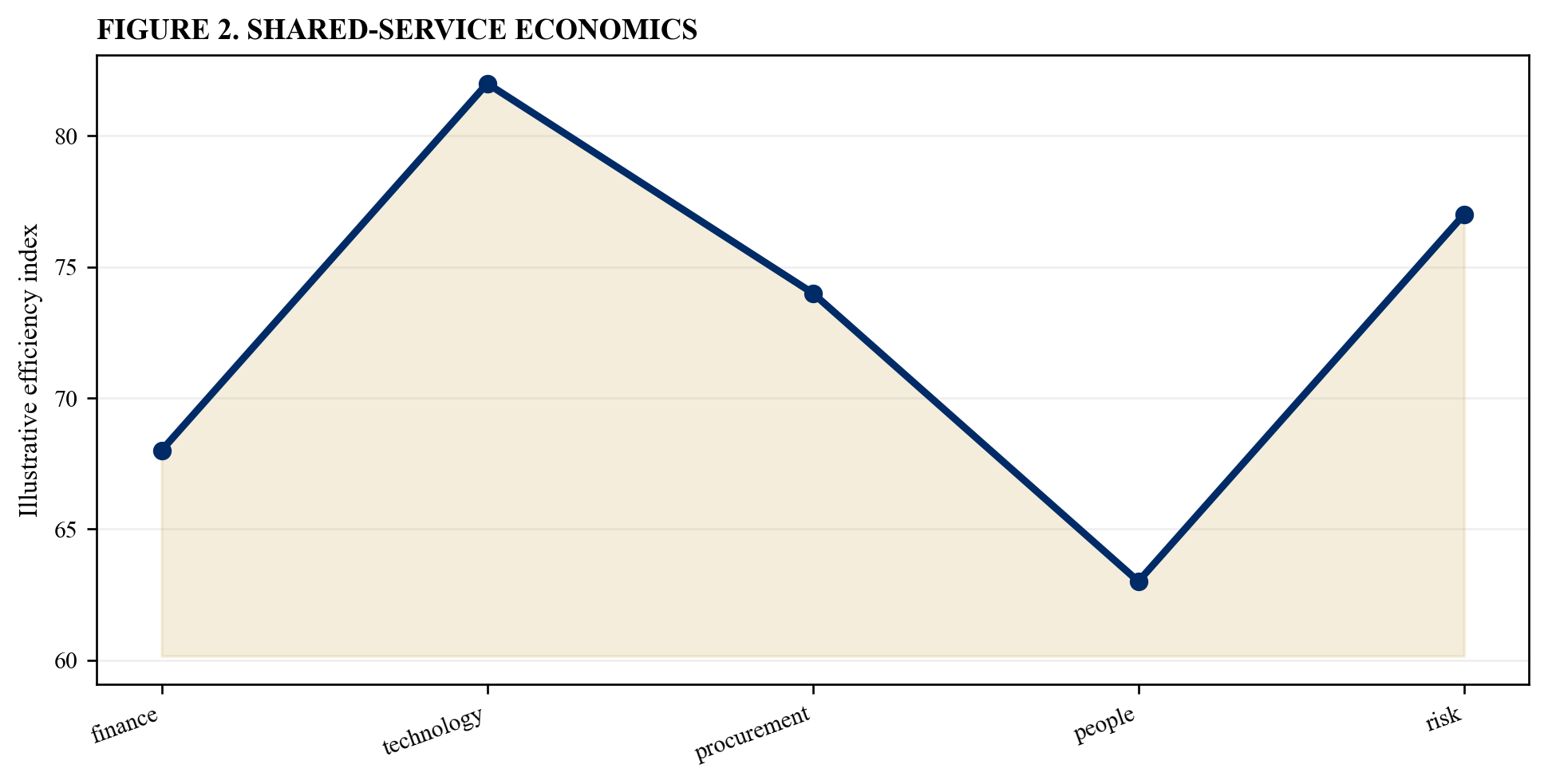
Illustrative analytical scenario; transaction evidence should replace model values.
17. Set service levels and remedies
The board, UAE platform team and country leaders should define volume, quality, response, continuity, security, reporting, escalation and exit requirements. The controlled deliverable is a service-level framework. Record each jurisdiction, entity, licence, customer, process, system, decision, owner, dependency, source, effective date, evidence status and refresh trigger [28][30].
Reconcile corporate records, country regulations, licences, tax and customs positions, contracts, customer evidence, organisation data, service costs, technology architecture, cash flows, risk registers and operating performance. Separate enacted rules, binding commitments, management policy, analytical scenarios and missing evidence.
The central regionalisation risk is that country operations can depend on a hub that carries no enforceable performance obligation. Quantify the effect on market access, decision speed, customer delivery, margin, cash conversion, tax, control, resilience, talent, regulatory exposure and capital returns.
Translate the result into the regional operating model, country-entry gate, delegation schedule, shared-service design, capital plan, integration roadmap and board dashboard. Preserve a dated evidence trail and obtain qualified advice in every relevant GCC jurisdiction.
18. Model shared-service economics
The board, UAE platform team and country leaders should allocate people, systems, vendors, facilities and management costs using transparent drivers. The controlled deliverable is a cost-to-serve model. Record each jurisdiction, entity, licence, customer, process, system, decision, owner, dependency, source, effective date, evidence status and refresh trigger [31][32].
Reconcile corporate records, country regulations, licences, tax and customs positions, contracts, customer evidence, organisation data, service costs, technology architecture, cash flows, risk registers and operating performance. Separate enacted rules, binding commitments, management policy, analytical scenarios and missing evidence.
The central regionalisation risk is that centralisation savings can be overstated when transition, duplication and local shadow teams are omitted. Quantify the effect on market access, decision speed, customer delivery, margin, cash conversion, tax, control, resilience, talent, regulatory exposure and capital returns.
Translate the result into the regional operating model, country-entry gate, delegation schedule, shared-service design, capital plan, integration roadmap and board dashboard. Preserve a dated evidence trail and obtain qualified advice in every relevant GCC jurisdiction.
19. Establish transfer-pricing support
The board, UAE platform team and country leaders should document functions, assets, risks, benefits, method, comparables, agreements and invoices. The controlled deliverable is a regional transfer-pricing file. Record each jurisdiction, entity, licence, customer, process, system, decision, owner, dependency, source, effective date, evidence status and refresh trigger [32][33].
Reconcile corporate records, country regulations, licences, tax and customs positions, contracts, customer evidence, organisation data, service costs, technology architecture, cash flows, risk registers and operating performance. Separate enacted rules, binding commitments, management policy, analytical scenarios and missing evidence.
The central regionalisation risk is that profit allocation can diverge from operating substance and documented services. Quantify the effect on market access, decision speed, customer delivery, margin, cash conversion, tax, control, resilience, talent, regulatory exposure and capital returns.
Translate the result into the regional operating model, country-entry gate, delegation schedule, shared-service design, capital plan, integration roadmap and board dashboard. Preserve a dated evidence trail and obtain qualified advice in every relevant GCC jurisdiction.
20. Map corporate-tax presence
The board, UAE platform team and country leaders should assess residence, permanent establishment, nexus, branches, intercompany dealings and profit attribution by country. The controlled deliverable is a regional tax-presence map. Record each jurisdiction, entity, licence, customer, process, system, decision, owner, dependency, source, effective date, evidence status and refresh trigger [34][35].
Reconcile corporate records, country regulations, licences, tax and customs positions, contracts, customer evidence, organisation data, service costs, technology architecture, cash flows, risk registers and operating performance. Separate enacted rules, binding commitments, management policy, analytical scenarios and missing evidence.
The central regionalisation risk is that commercial activity can create taxable presence before management recognises a local operation. Quantify the effect on market access, decision speed, customer delivery, margin, cash conversion, tax, control, resilience, talent, regulatory exposure and capital returns.
Translate the result into the regional operating model, country-entry gate, delegation schedule, shared-service design, capital plan, integration roadmap and board dashboard. Preserve a dated evidence trail and obtain qualified advice in every relevant GCC jurisdiction.
21. Design VAT and indirect-tax flows
The board, UAE platform team and country leaders should map registrations, place of supply, imports, exports, invoicing, recovery, evidence and reporting. The controlled deliverable is an indirect-tax transaction map. Record each jurisdiction, entity, licence, customer, process, system, decision, owner, dependency, source, effective date, evidence status and refresh trigger [36][37].
Reconcile corporate records, country regulations, licences, tax and customs positions, contracts, customer evidence, organisation data, service costs, technology architecture, cash flows, risk registers and operating performance. Separate enacted rules, binding commitments, management policy, analytical scenarios and missing evidence.
The central regionalisation risk is that system and contract design can produce tax leakage, blocked recovery or incorrect invoicing. Quantify the effect on market access, decision speed, customer delivery, margin, cash conversion, tax, control, resilience, talent, regulatory exposure and capital returns.
Translate the result into the regional operating model, country-entry gate, delegation schedule, shared-service design, capital plan, integration roadmap and board dashboard. Preserve a dated evidence trail and obtain qualified advice in every relevant GCC jurisdiction.
22. Engineer customs and origin
The board, UAE platform team and country leaders should classify goods, determine origin, value, importer of record, duties, documentation and free-zone treatment. The controlled deliverable is a customs operating model. Record each jurisdiction, entity, licence, customer, process, system, decision, owner, dependency, source, effective date, evidence status and refresh trigger [38][39].
Reconcile corporate records, country regulations, licences, tax and customs positions, contracts, customer evidence, organisation data, service costs, technology architecture, cash flows, risk registers and operating performance. Separate enacted rules, binding commitments, management policy, analytical scenarios and missing evidence.
The central regionalisation risk is that a regional warehouse can increase delay or duty cost when product, origin and destination rules are misapplied. Quantify the effect on market access, decision speed, customer delivery, margin, cash conversion, tax, control, resilience, talent, regulatory exposure and capital returns.
Translate the result into the regional operating model, country-entry gate, delegation schedule, shared-service design, capital plan, integration roadmap and board dashboard. Preserve a dated evidence trail and obtain qualified advice in every relevant GCC jurisdiction.
23. Map competition and concentration risk
The board, UAE platform team and country leaders should test market definition, dominance, agreements, distribution restrictions, information exchange and acquisition thresholds. The controlled deliverable is a regional competition register. Record each jurisdiction, entity, licence, customer, process, system, decision, owner, dependency, source, effective date, evidence status and refresh trigger [40][41].
Reconcile corporate records, country regulations, licences, tax and customs positions, contracts, customer evidence, organisation data, service costs, technology architecture, cash flows, risk registers and operating performance. Separate enacted rules, binding commitments, management policy, analytical scenarios and missing evidence.
The central regionalisation risk is that regional coordination can create country-specific competition exposure. Quantify the effect on market access, decision speed, customer delivery, margin, cash conversion, tax, control, resilience, talent, regulatory exposure and capital returns.
Translate the result into the regional operating model, country-entry gate, delegation schedule, shared-service design, capital plan, integration roadmap and board dashboard. Preserve a dated evidence trail and obtain qualified advice in every relevant GCC jurisdiction.
24. Allocate data ownership and rights
The board, UAE platform team and country leaders should define controller, processor, access, hosting, transfer, retention, customer consent and model-training rights. The controlled deliverable is a cross-border data map. Record each jurisdiction, entity, licence, customer, process, system, decision, owner, dependency, source, effective date, evidence status and refresh trigger [42][43].
Reconcile corporate records, country regulations, licences, tax and customs positions, contracts, customer evidence, organisation data, service costs, technology architecture, cash flows, risk registers and operating performance. Separate enacted rules, binding commitments, management policy, analytical scenarios and missing evidence.
The central regionalisation risk is that the hub can depend on customer or employee data it cannot lawfully access or reuse. Quantify the effect on market access, decision speed, customer delivery, margin, cash conversion, tax, control, resilience, talent, regulatory exposure and capital returns.
Translate the result into the regional operating model, country-entry gate, delegation schedule, shared-service design, capital plan, integration roadmap and board dashboard. Preserve a dated evidence trail and obtain qualified advice in every relevant GCC jurisdiction.
Table 3. Illustrative market sequence
| Market | Readiness | Gate |
|---|---|---|
| market A | 88 | launch |
| market B | 74 | partner proof |
| market C | 63 | licence |
| market D | 51 | hold |
Statutory periods are stated where labelled; other entries are analytical controls.
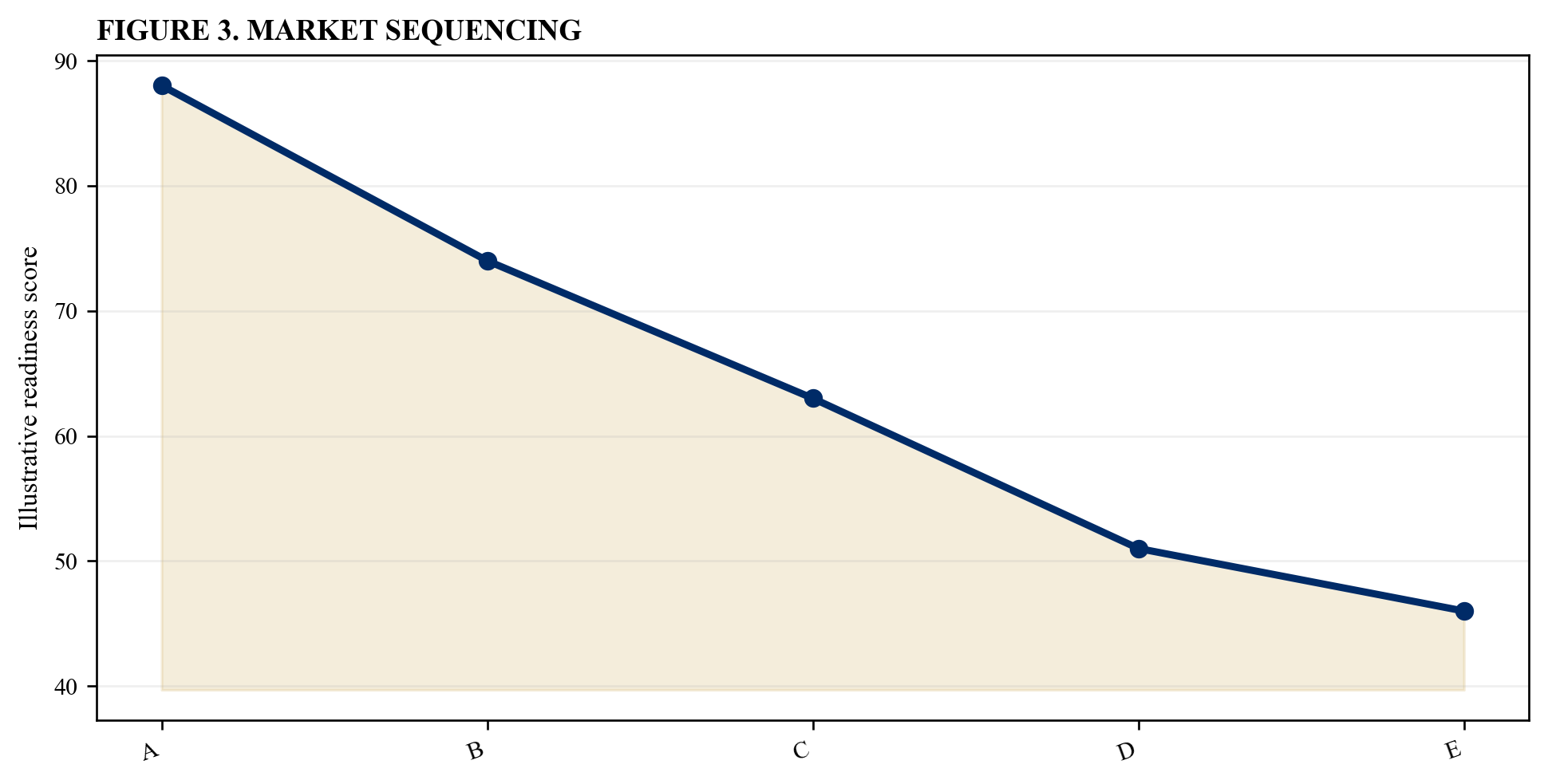
Illustrative analytical scenario; transaction evidence should replace model values.
25. Design the technology architecture
The board, UAE platform team and country leaders should choose common platforms, local instances, integrations, identity, cyber controls, data models and recovery. The controlled deliverable is a regional technology blueprint. Record each jurisdiction, entity, licence, customer, process, system, decision, owner, dependency, source, effective date, evidence status and refresh trigger [44][45].
Reconcile corporate records, country regulations, licences, tax and customs positions, contracts, customer evidence, organisation data, service costs, technology architecture, cash flows, risk registers and operating performance. Separate enacted rules, binding commitments, management policy, analytical scenarios and missing evidence.
The central regionalisation risk is that standardisation can create a single point of failure or conflict with local requirements. Quantify the effect on market access, decision speed, customer delivery, margin, cash conversion, tax, control, resilience, talent, regulatory exposure and capital returns.
Translate the result into the regional operating model, country-entry gate, delegation schedule, shared-service design, capital plan, integration roadmap and board dashboard. Preserve a dated evidence trail and obtain qualified advice in every relevant GCC jurisdiction.
26. Establish cyber and resilience controls
The board, UAE platform team and country leaders should set identity, privilege, monitoring, incident response, backups, third-party assurance and country continuity. The controlled deliverable is a regional resilience plan. Record each jurisdiction, entity, licence, customer, process, system, decision, owner, dependency, source, effective date, evidence status and refresh trigger [45][46].
Reconcile corporate records, country regulations, licences, tax and customs positions, contracts, customer evidence, organisation data, service costs, technology architecture, cash flows, risk registers and operating performance. Separate enacted rules, binding commitments, management policy, analytical scenarios and missing evidence.
The central regionalisation risk is that one country incident can interrupt multiple markets through concentrated shared infrastructure. Quantify the effect on market access, decision speed, customer delivery, margin, cash conversion, tax, control, resilience, talent, regulatory exposure and capital returns.
Translate the result into the regional operating model, country-entry gate, delegation schedule, shared-service design, capital plan, integration roadmap and board dashboard. Preserve a dated evidence trail and obtain qualified advice in every relevant GCC jurisdiction.
27. Build the regional talent model
The board, UAE platform team and country leaders should map scarce roles, leadership, mobility, local hiring, localisation, succession, reward and retention. The controlled deliverable is a capability deployment map. Record each jurisdiction, entity, licence, customer, process, system, decision, owner, dependency, source, effective date, evidence status and refresh trigger [47][48].
Reconcile corporate records, country regulations, licences, tax and customs positions, contracts, customer evidence, organisation data, service costs, technology architecture, cash flows, risk registers and operating performance. Separate enacted rules, binding commitments, management policy, analytical scenarios and missing evidence.
The central regionalisation risk is that the hub can export responsibility faster than it develops or attracts capable local teams. Quantify the effect on market access, decision speed, customer delivery, margin, cash conversion, tax, control, resilience, talent, regulatory exposure and capital returns.
Translate the result into the regional operating model, country-entry gate, delegation schedule, shared-service design, capital plan, integration roadmap and board dashboard. Preserve a dated evidence trail and obtain qualified advice in every relevant GCC jurisdiction.
28. Define country leadership mandates
The board, UAE platform team and country leaders should give each leader explicit P&L, customer, people, regulatory, risk and cash responsibilities. The controlled deliverable is a country-leader charter. Record each jurisdiction, entity, licence, customer, process, system, decision, owner, dependency, source, effective date, evidence status and refresh trigger [19][49].
Reconcile corporate records, country regulations, licences, tax and customs positions, contracts, customer evidence, organisation data, service costs, technology architecture, cash flows, risk registers and operating performance. Separate enacted rules, binding commitments, management policy, analytical scenarios and missing evidence.
The central regionalisation risk is that country heads can carry targets without control of the resources and decisions that drive them. Quantify the effect on market access, decision speed, customer delivery, margin, cash conversion, tax, control, resilience, talent, regulatory exposure and capital returns.
Translate the result into the regional operating model, country-entry gate, delegation schedule, shared-service design, capital plan, integration roadmap and board dashboard. Preserve a dated evidence trail and obtain qualified advice in every relevant GCC jurisdiction.
29. Align performance and incentives
The board, UAE platform team and country leaders should connect regional, functional and country metrics to revenue quality, cash, risk, service and capability. The controlled deliverable is a balanced incentive scorecard. Record each jurisdiction, entity, licence, customer, process, system, decision, owner, dependency, source, effective date, evidence status and refresh trigger [50][51].
Reconcile corporate records, country regulations, licences, tax and customs positions, contracts, customer evidence, organisation data, service costs, technology architecture, cash flows, risk registers and operating performance. Separate enacted rules, binding commitments, management policy, analytical scenarios and missing evidence.
The central regionalisation risk is that individual incentives can reward revenue transfer, cost shifting or volume without value. Quantify the effect on market access, decision speed, customer delivery, margin, cash conversion, tax, control, resilience, talent, regulatory exposure and capital returns.
Translate the result into the regional operating model, country-entry gate, delegation schedule, shared-service design, capital plan, integration roadmap and board dashboard. Preserve a dated evidence trail and obtain qualified advice in every relevant GCC jurisdiction.
30. Design treasury and banking
The board, UAE platform team and country leaders should map accounts, signatories, currencies, liquidity, guarantees, cash pooling, funding and repatriation. The controlled deliverable is a regional treasury architecture. Record each jurisdiction, entity, licence, customer, process, system, decision, owner, dependency, source, effective date, evidence status and refresh trigger [52][53].
Reconcile corporate records, country regulations, licences, tax and customs positions, contracts, customer evidence, organisation data, service costs, technology architecture, cash flows, risk registers and operating performance. Separate enacted rules, binding commitments, management policy, analytical scenarios and missing evidence.
The central regionalisation risk is that cash can become trapped or inaccessible where commitments and liabilities arise. Quantify the effect on market access, decision speed, customer delivery, margin, cash conversion, tax, control, resilience, talent, regulatory exposure and capital returns.
Translate the result into the regional operating model, country-entry gate, delegation schedule, shared-service design, capital plan, integration roadmap and board dashboard. Preserve a dated evidence trail and obtain qualified advice in every relevant GCC jurisdiction.
31. Model working capital by country
The board, UAE platform team and country leaders should forecast inventory, receivables, payables, tax, guarantees, deposits and collection lags. The controlled deliverable is a country cash-conversion model. Record each jurisdiction, entity, licence, customer, process, system, decision, owner, dependency, source, effective date, evidence status and refresh trigger [36][54].
Reconcile corporate records, country regulations, licences, tax and customs positions, contracts, customer evidence, organisation data, service costs, technology architecture, cash flows, risk registers and operating performance. Separate enacted rules, binding commitments, management policy, analytical scenarios and missing evidence.
The central regionalisation risk is that regional growth can consume more cash than consolidated earnings reveal. Quantify the effect on market access, decision speed, customer delivery, margin, cash conversion, tax, control, resilience, talent, regulatory exposure and capital returns.
Translate the result into the regional operating model, country-entry gate, delegation schedule, shared-service design, capital plan, integration roadmap and board dashboard. Preserve a dated evidence trail and obtain qualified advice in every relevant GCC jurisdiction.
32. Set capital-allocation gates
The board, UAE platform team and country leaders should require strategic fit, licence path, customer evidence, unit economics, downside liquidity, owner and milestones. The controlled deliverable is a repeatable investment gate. Record each jurisdiction, entity, licence, customer, process, system, decision, owner, dependency, source, effective date, evidence status and refresh trigger [55][56].
Reconcile corporate records, country regulations, licences, tax and customs positions, contracts, customer evidence, organisation data, service costs, technology architecture, cash flows, risk registers and operating performance. Separate enacted rules, binding commitments, management policy, analytical scenarios and missing evidence.
The central regionalisation risk is that option value can become an open-ended spending rationale. Quantify the effect on market access, decision speed, customer delivery, margin, cash conversion, tax, control, resilience, talent, regulatory exposure and capital returns.
Translate the result into the regional operating model, country-entry gate, delegation schedule, shared-service design, capital plan, integration roadmap and board dashboard. Preserve a dated evidence trail and obtain qualified advice in every relevant GCC jurisdiction.
Table 4. Capital-allocation scenarios
| Design | Three-year AED m | Control index |
|---|---|---|
| centralised | 96 | 91 |
| federated | 118 | 72 |
| hybrid | 104 | 86 |
| country-first | 129 | 64 |
Statutory periods are stated where labelled; other entries are analytical controls.
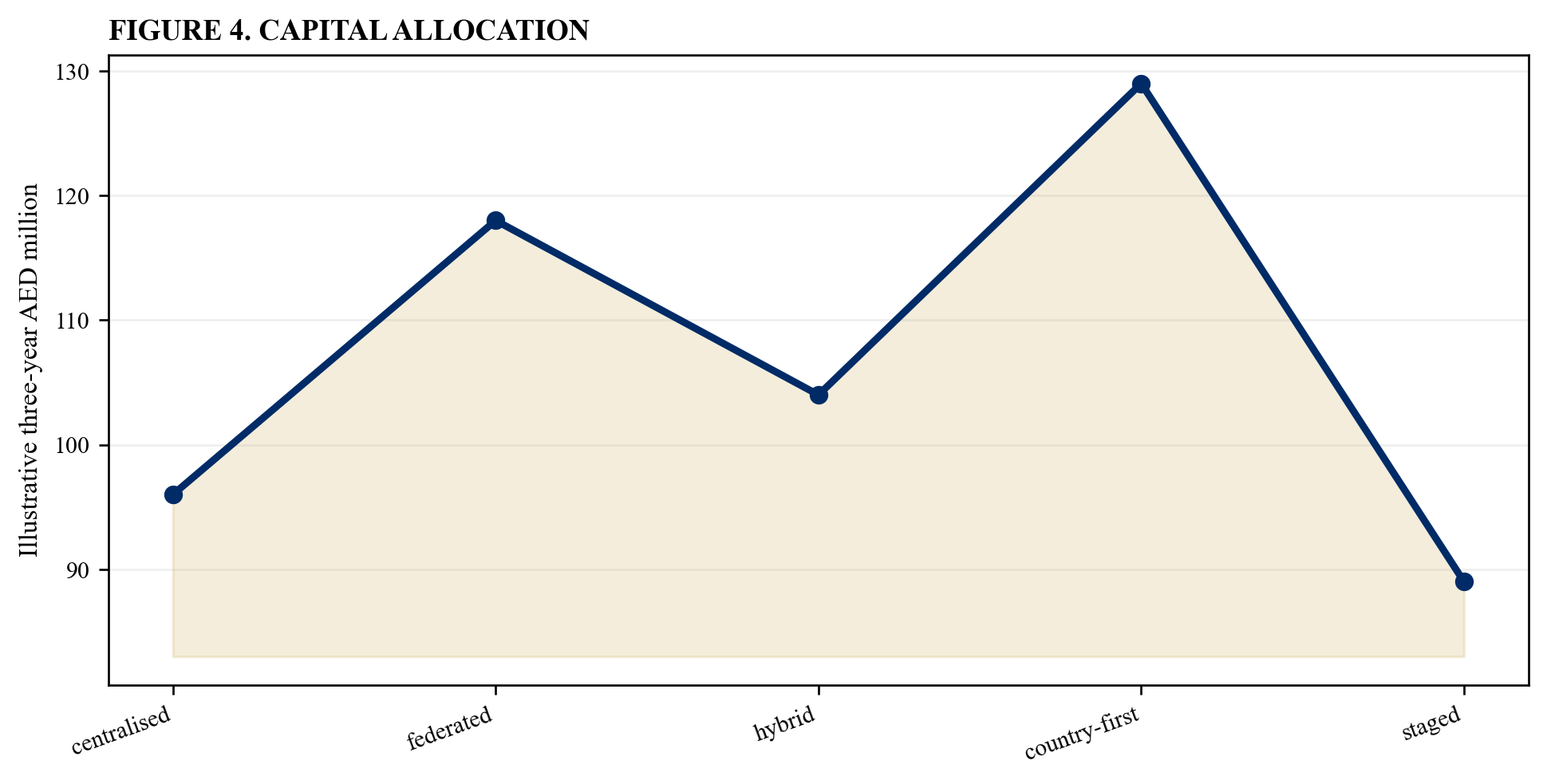
Illustrative analytical scenario; transaction evidence should replace model values.
33. Compare centralised and federated scenarios
The board, UAE platform team and country leaders should model cost, speed, control, resilience, customer proximity and capability under alternative designs. The controlled deliverable is an operating-model scenario set. Record each jurisdiction, entity, licence, customer, process, system, decision, owner, dependency, source, effective date, evidence status and refresh trigger [15][57].
Reconcile corporate records, country regulations, licences, tax and customs positions, contracts, customer evidence, organisation data, service costs, technology architecture, cash flows, risk registers and operating performance. Separate enacted rules, binding commitments, management policy, analytical scenarios and missing evidence.
The central regionalisation risk is that a structural choice can be made through preference rather than quantified trade-offs. Quantify the effect on market access, decision speed, customer delivery, margin, cash conversion, tax, control, resilience, talent, regulatory exposure and capital returns.
Translate the result into the regional operating model, country-entry gate, delegation schedule, shared-service design, capital plan, integration roadmap and board dashboard. Preserve a dated evidence trail and obtain qualified advice in every relevant GCC jurisdiction.
34. Plan integration waves
The board, UAE platform team and country leaders should sequence governance, customers, people, processes, systems, contracts and reporting by dependency and value. The controlled deliverable is a regional integration roadmap. Record each jurisdiction, entity, licence, customer, process, system, decision, owner, dependency, source, effective date, evidence status and refresh trigger [58][59].
Reconcile corporate records, country regulations, licences, tax and customs positions, contracts, customer evidence, organisation data, service costs, technology architecture, cash flows, risk registers and operating performance. Separate enacted rules, binding commitments, management policy, analytical scenarios and missing evidence.
The central regionalisation risk is that parallel country launches can exceed management and change capacity. Quantify the effect on market access, decision speed, customer delivery, margin, cash conversion, tax, control, resilience, talent, regulatory exposure and capital returns.
Translate the result into the regional operating model, country-entry gate, delegation schedule, shared-service design, capital plan, integration roadmap and board dashboard. Preserve a dated evidence trail and obtain qualified advice in every relevant GCC jurisdiction.
35. Protect business continuity
The board, UAE platform team and country leaders should identify critical services, contracts, people, data, suppliers, sites and financial dependencies. The controlled deliverable is a continuity control plan. Record each jurisdiction, entity, licence, customer, process, system, decision, owner, dependency, source, effective date, evidence status and refresh trigger [30][46].
Reconcile corporate records, country regulations, licences, tax and customs positions, contracts, customer evidence, organisation data, service costs, technology architecture, cash flows, risk registers and operating performance. Separate enacted rules, binding commitments, management policy, analytical scenarios and missing evidence.
The central regionalisation risk is that platform integration can interrupt the UAE base that funds and supports expansion. Quantify the effect on market access, decision speed, customer delivery, margin, cash conversion, tax, control, resilience, talent, regulatory exposure and capital returns.
Translate the result into the regional operating model, country-entry gate, delegation schedule, shared-service design, capital plan, integration roadmap and board dashboard. Preserve a dated evidence trail and obtain qualified advice in every relevant GCC jurisdiction.
36. Establish risk and compliance assurance
The board, UAE platform team and country leaders should create country obligations, owners, controls, evidence, testing, incidents and remediation workflows. The controlled deliverable is a regional compliance framework. Record each jurisdiction, entity, licence, customer, process, system, decision, owner, dependency, source, effective date, evidence status and refresh trigger [60][61].
Reconcile corporate records, country regulations, licences, tax and customs positions, contracts, customer evidence, organisation data, service costs, technology architecture, cash flows, risk registers and operating performance. Separate enacted rules, binding commitments, management policy, analytical scenarios and missing evidence.
The central regionalisation risk is that central policies can exist without operating evidence in each jurisdiction. Quantify the effect on market access, decision speed, customer delivery, margin, cash conversion, tax, control, resilience, talent, regulatory exposure and capital returns.
Translate the result into the regional operating model, country-entry gate, delegation schedule, shared-service design, capital plan, integration roadmap and board dashboard. Preserve a dated evidence trail and obtain qualified advice in every relevant GCC jurisdiction.
37. Build the regional performance cockpit
The board, UAE platform team and country leaders should combine market, customer, margin, cash, service, people, risk and milestone indicators. The controlled deliverable is a board platform dashboard. Record each jurisdiction, entity, licence, customer, process, system, decision, owner, dependency, source, effective date, evidence status and refresh trigger [50][62].
Reconcile corporate records, country regulations, licences, tax and customs positions, contracts, customer evidence, organisation data, service costs, technology architecture, cash flows, risk registers and operating performance. Separate enacted rules, binding commitments, management policy, analytical scenarios and missing evidence.
The central regionalisation risk is that consolidated growth can conceal country-level value destruction and control failures. Quantify the effect on market access, decision speed, customer delivery, margin, cash conversion, tax, control, resilience, talent, regulatory exposure and capital returns.
Translate the result into the regional operating model, country-entry gate, delegation schedule, shared-service design, capital plan, integration roadmap and board dashboard. Preserve a dated evidence trail and obtain qualified advice in every relevant GCC jurisdiction.
38. Run the first hundred days
The board, UAE platform team and country leaders should prioritise mandates, decision rights, key accounts, service catalogue, cash control, data and two market gates. The controlled deliverable is a timed platform activation plan. Record each jurisdiction, entity, licence, customer, process, system, decision, owner, dependency, source, effective date, evidence status and refresh trigger [58][63].
Reconcile corporate records, country regulations, licences, tax and customs positions, contracts, customer evidence, organisation data, service costs, technology architecture, cash flows, risk registers and operating performance. Separate enacted rules, binding commitments, management policy, analytical scenarios and missing evidence.
The central regionalisation risk is that teams can begin expansion before the hub operating system is functional. Quantify the effect on market access, decision speed, customer delivery, margin, cash conversion, tax, control, resilience, talent, regulatory exposure and capital returns.
Translate the result into the regional operating model, country-entry gate, delegation schedule, shared-service design, capital plan, integration roadmap and board dashboard. Preserve a dated evidence trail and obtain qualified advice in every relevant GCC jurisdiction.
39. Create the annual platform reset
The board, UAE platform team and country leaders should review market sequence, country portfolio, hub services, capability, capital and exit decisions. The controlled deliverable is an annual strategy-and-capital cycle. Record each jurisdiction, entity, licence, customer, process, system, decision, owner, dependency, source, effective date, evidence status and refresh trigger [55][64].
Reconcile corporate records, country regulations, licences, tax and customs positions, contracts, customer evidence, organisation data, service costs, technology architecture, cash flows, risk registers and operating performance. Separate enacted rules, binding commitments, management policy, analytical scenarios and missing evidence.
The central regionalisation risk is that loss-making complexity can persist because entry decisions are never revisited. Quantify the effect on market access, decision speed, customer delivery, margin, cash conversion, tax, control, resilience, talent, regulatory exposure and capital returns.
Translate the result into the regional operating model, country-entry gate, delegation schedule, shared-service design, capital plan, integration roadmap and board dashboard. Preserve a dated evidence trail and obtain qualified advice in every relevant GCC jurisdiction.
40. Issue the regional-platform readiness certificate
The board, UAE platform team and country leaders should reconcile thesis, access, entities, governance, customers, services, tax, data, people, cash, risk and expansion gates. The controlled deliverable is an auditable readiness certificate. Record each jurisdiction, entity, licence, customer, process, system, decision, owner, dependency, source, effective date, evidence status and refresh trigger [17][62].
Reconcile corporate records, country regulations, licences, tax and customs positions, contracts, customer evidence, organisation data, service costs, technology architecture, cash flows, risk registers and operating performance. Separate enacted rules, binding commitments, management policy, analytical scenarios and missing evidence.
The central regionalisation risk is that the board can approve regional scale without proof that the UAE hub can govern and support it. Quantify the effect on market access, decision speed, customer delivery, margin, cash conversion, tax, control, resilience, talent, regulatory exposure and capital returns.
Translate the result into the regional operating model, country-entry gate, delegation schedule, shared-service design, capital plan, integration roadmap and board dashboard. Preserve a dated evidence trail and obtain qualified advice in every relevant GCC jurisdiction.
Table 5. Platform-readiness certificate
| Domain | Evidence | Owner |
|---|---|---|
| market access | country files | legal |
| operating model | decision matrix | regional CEO |
| economics | cash and service model | CFO |
| assurance | control testing | board risk |
Statutory periods are stated where labelled; other entries are analytical controls.
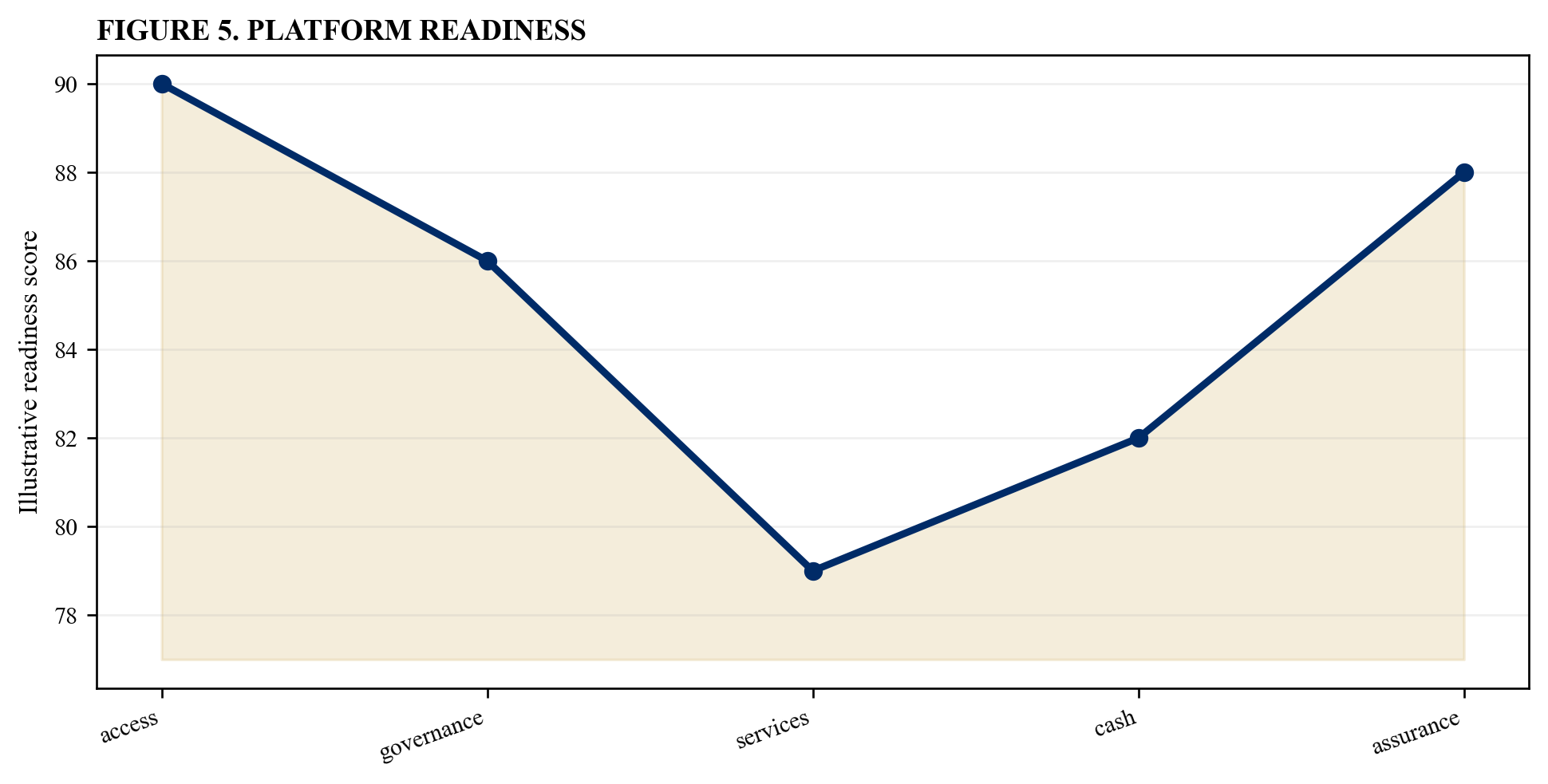
Illustrative analytical scenario; transaction evidence should replace model values.
References
- GCC Secretariat General, The Economic Agreement Between the GCC States, https://www.gcc-sg.org/en-us/CooperationAndAchievements/Achievements/EconomicCooperation/TheEconomicAgreement/Pages/default.aspx
- UAE Ministry of Economy and Tourism, Investment Incentives, https://www.moet.gov.ae/en/investment-incentives
- UAE Legislation, Federal Decree-Law No. 32 of 2021 on Commercial Companies, https://uaelegislation.gov.ae/en/legislations/1542
- GCC Secretariat General, GCC Member States, https://www.gcc-sg.org/en-us/AboutGCC/MemberStates/Pages/default.aspx
- UAE Ministry of Economy and Tourism, Strategic Impact Activities, https://www.moet.gov.ae/en/promising-sectors
- World Trade Organization, Trade Policy Reviews, https://www.wto.org/english/tratop_e/tpr_e/tpr_e.htm
- GCC Secretariat General, GCC Common Market, https://www.gcc-sg.org/en-us/CooperationAndAchievements/Achievements/EconomicCooperation/GCCCommonMarket/Pages/default.aspx
- GCC Secretariat General, Final Statement of the Forty-Sixth Supreme Council Session, https://www.gcc-sg.org/en/MediaCenter/News/Pages/news2025-12-3-3.aspx
- OECD, Guidelines for Multinational Enterprises on Responsible Business Conduct, https://mneguidelines.oecd.org/
- ISO, ISO 9001 Quality Management Systems, https://www.iso.org/iso-9001-quality-management.html
- ICC, Model Commercial Agency Contract, https://iccwbo.org/business-solutions/model-contracts-clauses/
- OECD, Due Diligence Guidance for Responsible Business Conduct, https://mneguidelines.oecd.org/due-diligence-guidance-for-responsible-business-conduct.htm
- World Bank, Enterprise Surveys, https://www.enterprisesurveys.org/
- IMF, Regional Economic Outlook Middle East and Central Asia, https://www.imf.org/en/Publications/REO/MECA
- ISO, ISO 37000 Governance of Organizations, https://www.iso.org/standard/65036.html
- OECD, G20/OECD Principles of Corporate Governance, https://www.oecd.org/corporate/principles-corporate-governance/
- COSO, Enterprise Risk Management Framework, https://www.coso.org/enterprise-risk-management
- Institute of Internal Auditors, Three Lines Model, https://www.theiia.org/en/content/position-papers/2020/the-iias-three-lines-model-an-update-of-the-three-lines-of-defense/
- Project Management Institute, The Standard for Project Management, https://www.pmi.org/pmbok-guide-standards
- ISO, ISO 21502 Project Management Guidance, https://www.iso.org/standard/74947.html
- UAE Securities and Commodities Authority, Corporate Governance, https://www.sca.gov.ae/en/regulations/regulations-listing.aspx
- IFRS Foundation, IFRS 10 Consolidated Financial Statements, https://www.ifrs.org/issued-standards/list-of-standards/ifrs-10-consolidated-financial-statements/
- ISO, ISO 10001 Customer Satisfaction, https://www.iso.org/standard/71580.html
- ICC, Incoterms 2020, https://iccwbo.org/business-solutions/incoterms-rules/incoterms-2020/
- UNIDROIT, Principles of International Commercial Contracts, https://www.unidroit.org/instruments/commercial-contracts/unidroit-principles-2016/
- ICC, Model Contracts and Clauses, https://iccwbo.org/business-solutions/model-contracts-clauses/
- OECD, Competition Assessment Toolkit, https://www.oecd.org/competition/assessment-toolkit.htm
- ISO, ISO 44001 Collaborative Business Relationship Management, https://www.iso.org/standard/72798.html
- IFRS Foundation, IAS 24 Related Party Disclosures, https://www.ifrs.org/issued-standards/list-of-standards/ias-24-related-party-disclosures/
- ISO, ISO 22301 Business Continuity Management, https://www.iso.org/standard/75106.html
- IFRS Foundation, IFRS 8 Operating Segments, https://www.ifrs.org/issued-standards/list-of-standards/ifrs-8-operating-segments/
- OECD, Transfer Pricing Guidelines for Multinational Enterprises and Tax Administrations, https://www.oecd.org/tax/transfer-pricing/oecd-transfer-pricing-guidelines-for-multinational-enterprises-and-tax-administrations-20769717.htm
- UAE Federal Tax Authority, Transfer Pricing Guide, https://tax.gov.ae/Datafolder/Files/Guides/CT/Transfer-Pricing-Guide.pdf
- UAE Federal Tax Authority, Corporate Tax General Guide, https://tax.gov.ae/Datafolder/Files/Guides/CT/CTGGCT1.pdf
- OECD, Model Tax Convention, https://www.oecd.org/tax/treaties/model-tax-convention-on-income-and-on-capital-condensed-version-20745419.htm
- UAE Federal Tax Authority, VAT User Guide, https://tax.gov.ae/DataFolder/Files/Pdf/VAT%20User%20GuideEnglishV070.pdf
- GCC Secretariat General, Unified VAT Agreement, https://www.gcc-sg.org/en-us/CooperationAndAchievements/Achievements/EconomicCooperation/Pages/VATAgreement.aspx
- GCC Secretariat General, Customs Union, https://www.gcc-sg.org/en-us/CooperationAndAchievements/Achievements/EconomicCooperation/CustomsUnion/Pages/default.aspx
- World Customs Organization, Revised Kyoto Convention, https://www.wcoomd.org/en/topics/facilitation/instrument-and-tools/conventions/pf_revised_kyoto_conv.aspx
- UAE Legislation, Federal Decree-Law No. 36 of 2023 Regulating Competition, https://uaelegislation.gov.ae/en/legislations/2117
- UAE Legislation, Cabinet Resolution No. 3 of 2025 Competition Thresholds, https://uaelegislation.gov.ae/en/legislations/2788
- UAE Legislation, Federal Decree-Law No. 45 of 2021 Personal Data Protection, https://uaelegislation.gov.ae/en/legislations/1531
- GCC Secretariat General, Data and Digital Economy Cooperation, https://www.gcc-sg.org/en-us/CooperationAndAchievements/Pages/default.aspx
- ISO, ISO IEC 27001 Information Security Management, https://www.iso.org/isoiec-27001-information-security.html
- NIST, Cybersecurity Framework 2.0, https://www.nist.gov/cyberframework
- ISO, ISO 22301 Business Continuity Management Systems, https://www.iso.org/standard/75106.html
- ILO, Skills and Lifelong Learning, https://www.ilo.org/topics-and-sectors/skills-and-lifelong-learning
- ISO, ISO 30414 Human Capital Reporting, https://www.iso.org/standard/69338.html
- ILO, Decent Work Agenda, https://www.ilo.org/topics-and-sectors/decent-work
- IFRS Foundation, IFRS Practice Statement 1 Management Commentary, https://www.ifrs.org/projects/work-plan/management-commentary/
- CFA Institute, Performance Evaluation and Attribution, https://www.cfainstitute.org/insights/professional-learning/refresher-readings
- Central Bank of the UAE, Foreign Exchange and EIBOR, https://www.centralbank.ae/en/forex-eibor/
- Association of Corporate Treasurers, Treasury Resources, https://www.treasurers.org/knowledge-hub
- IFRS Foundation, IAS 7 Statement of Cash Flows, https://www.ifrs.org/issued-standards/list-of-standards/ias-7-statement-of-cash-flows/
- IVSC, International Valuation Standards, https://www.ivsc.org/standards/
- CFA Institute, Capital Budgeting, https://www.cfainstitute.org/insights/professional-learning/refresher-readings
- ISO, ISO 31000 Risk Management, https://www.iso.org/iso-31000-risk-management.html
- Association of Change Management Professionals, Standard for Change Management, https://www.acmpglobal.org/page/the-standard
- PMI, Benefits Realization Management, https://www.pmi.org/learning/thought-leadership/series/benefits-realization
- ISO, ISO 37301 Compliance Management Systems, https://www.iso.org/standard/75080.html
- ISO, ISO 37001 Anti-Bribery Management Systems, https://www.iso.org/iso-37001-anti-bribery-management.html
- IFRS Foundation, IFRS 8 Operating Segments, https://www.ifrs.org/issued-standards/list-of-standards/ifrs-8-operating-segments/
- Prosci, Change Management Methodology, https://www.prosci.com/methodology
- OECD, Policy Framework for Investment, https://www.oecd.org/investment/pfi.htm
