

1. Set the equity-story assurance objective
Define which sustainability assertions may influence buyer, investor, lender, employee or regulator decisions.
The controlled review should reconcile strategy, claims universe, transaction timetable and decision thresholds. Workpapers identify the claim, boundary, period, source, method, owner, approval, completeness, estimation, exception, qualifier and transaction relevance. The immediate output is an approved sustainability-claims charter.
Testing determines whether a reasonable reader could reproduce the assertion and understand its limitations. Reviewers should distinguish measured data from estimates, historic performance from targets, entity results from product claims, gross outcomes from offsets, and management ambition from contractual or regulatory commitment. They should test consistency across public, commercial and transaction channels.
Material exceptions should be quantified and assigned an owner, action, evidence requirement and decision date. Consequences flow into the claims register, diligence room, forecast, investment plan, customer and financing analysis, disclosure schedule, transaction protections and board reporting. Residual uncertainty remains visible until support is obtained, wording is qualified or withdrawn, or risk is allocated.
2. Map the reporting and transaction perimeter
Reconcile legal entities, operations, assets, products, ventures, value chains and disposal boundaries.
The controlled review should reconcile corporate structure, consolidation, operational control and deal perimeter. Workpapers identify the claim, boundary, period, source, method, owner, approval, completeness, estimation, exception, qualifier and transaction relevance. The immediate output is a claims-boundary map.
Testing determines whether a reasonable reader could reproduce the assertion and understand its limitations. Reviewers should distinguish measured data from estimates, historic performance from targets, entity results from product claims, gross outcomes from offsets, and management ambition from contractual or regulatory commitment. They should test consistency across public, commercial and transaction channels.
Material exceptions should be quantified and assigned an owner, action, evidence requirement and decision date. Consequences flow into the claims register, diligence room, forecast, investment plan, customer and financing analysis, disclosure schedule, transaction protections and board reporting. Residual uncertainty remains visible until support is obtained, wording is qualified or withdrawn, or risk is allocated.
3. Inventory every sustainability assertion
Capture claims across reports, presentations, websites, labels, tenders, contracts and management scripts.
The controlled review should reconcile claim text, audience, channel, owner, date, qualifier and evidence link. Workpapers identify the claim, boundary, period, source, method, owner, approval, completeness, estimation, exception, qualifier and transaction relevance. The immediate output is a controlled claims register.
Testing determines whether a reasonable reader could reproduce the assertion and understand its limitations. Reviewers should distinguish measured data from estimates, historic performance from targets, entity results from product claims, gross outcomes from offsets, and management ambition from contractual or regulatory commitment. They should test consistency across public, commercial and transaction channels.
Material exceptions should be quantified and assigned an owner, action, evidence requirement and decision date. Consequences flow into the claims register, diligence room, forecast, investment plan, customer and financing analysis, disclosure schedule, transaction protections and board reporting. Residual uncertainty remains visible until support is obtained, wording is qualified or withdrawn, or risk is allocated.
4. Classify claim type
Separate historic metrics, targets, commitments, comparisons, labels, opinions and forward-looking statements.
The controlled review should reconcile claim taxonomy, decision use and substantiation standard. Workpapers identify the claim, boundary, period, source, method, owner, approval, completeness, estimation, exception, qualifier and transaction relevance. The immediate output is a claim-classification matrix.
Testing determines whether a reasonable reader could reproduce the assertion and understand its limitations. Reviewers should distinguish measured data from estimates, historic performance from targets, entity results from product claims, gross outcomes from offsets, and management ambition from contractual or regulatory commitment. They should test consistency across public, commercial and transaction channels.
Material exceptions should be quantified and assigned an owner, action, evidence requirement and decision date. Consequences flow into the claims register, diligence room, forecast, investment plan, customer and financing analysis, disclosure schedule, transaction protections and board reporting. Residual uncertainty remains visible until support is obtained, wording is qualified or withdrawn, or risk is allocated.
5. Define materiality and reliance
Rank claims by investor significance, commercial use, regulatory exposure and transaction consequence.
The controlled review should reconcile financial materiality, impact context, stakeholder use and buyer reliance. Workpapers identify the claim, boundary, period, source, method, owner, approval, completeness, estimation, exception, qualifier and transaction relevance. The immediate output is a risk-based assurance plan.
Testing determines whether a reasonable reader could reproduce the assertion and understand its limitations. Reviewers should distinguish measured data from estimates, historic performance from targets, entity results from product claims, gross outcomes from offsets, and management ambition from contractual or regulatory commitment. They should test consistency across public, commercial and transaction channels.
Material exceptions should be quantified and assigned an owner, action, evidence requirement and decision date. Consequences flow into the claims register, diligence room, forecast, investment plan, customer and financing analysis, disclosure schedule, transaction protections and board reporting. Residual uncertainty remains visible until support is obtained, wording is qualified or withdrawn, or risk is allocated.
6. Control definitions and terminology
Fix meanings for net zero, carbon neutral, renewable, circular, sustainable, avoided and aligned claims.
The controlled review should reconcile glossaries, standards, contracts, calculation methods and public wording. Workpapers identify the claim, boundary, period, source, method, owner, approval, completeness, estimation, exception, qualifier and transaction relevance. The immediate output is an approved definitions library.
Testing determines whether a reasonable reader could reproduce the assertion and understand its limitations. Reviewers should distinguish measured data from estimates, historic performance from targets, entity results from product claims, gross outcomes from offsets, and management ambition from contractual or regulatory commitment. They should test consistency across public, commercial and transaction channels.
Material exceptions should be quantified and assigned an owner, action, evidence requirement and decision date. Consequences flow into the claims register, diligence room, forecast, investment plan, customer and financing analysis, disclosure schedule, transaction protections and board reporting. Residual uncertainty remains visible until support is obtained, wording is qualified or withdrawn, or risk is allocated.
7. Establish reporting policies
Document recognition, measurement, estimation, restatement, aggregation and control policies.
The controlled review should reconcile methodology papers, governance approvals, change logs and exceptions. Workpapers identify the claim, boundary, period, source, method, owner, approval, completeness, estimation, exception, qualifier and transaction relevance. The immediate output is a sustainability reporting manual.
Testing determines whether a reasonable reader could reproduce the assertion and understand its limitations. Reviewers should distinguish measured data from estimates, historic performance from targets, entity results from product claims, gross outcomes from offsets, and management ambition from contractual or regulatory commitment. They should test consistency across public, commercial and transaction channels.
Material exceptions should be quantified and assigned an owner, action, evidence requirement and decision date. Consequences flow into the claims register, diligence room, forecast, investment plan, customer and financing analysis, disclosure schedule, transaction protections and board reporting. Residual uncertainty remains visible until support is obtained, wording is qualified or withdrawn, or risk is allocated.
8. Trace data lineage
Connect each reported metric from source activity through calculation, adjustment and publication.
The controlled review should reconcile meters, invoices, systems, spreadsheets, factors, transformations and approvals. Workpapers identify the claim, boundary, period, source, method, owner, approval, completeness, estimation, exception, qualifier and transaction relevance. The immediate output is a metric lineage register.
Testing determines whether a reasonable reader could reproduce the assertion and understand its limitations. Reviewers should distinguish measured data from estimates, historic performance from targets, entity results from product claims, gross outcomes from offsets, and management ambition from contractual or regulatory commitment. They should test consistency across public, commercial and transaction channels.
Material exceptions should be quantified and assigned an owner, action, evidence requirement and decision date. Consequences flow into the claims register, diligence room, forecast, investment plan, customer and financing analysis, disclosure schedule, transaction protections and board reporting. Residual uncertainty remains visible until support is obtained, wording is qualified or withdrawn, or risk is allocated.
Table 1. Claim-to-evidence control
| Claim class | Required evidence | Decision |
|---|---|---|
| historic metric | source and calculation | accuracy |
| target | baseline and funded plan | credibility |
| comparison | consistent boundary | fairness |
| alignment | criteria and legal review | eligibility |
Illustrative analytical design; company-specific facts, standards and authorised advice govern.
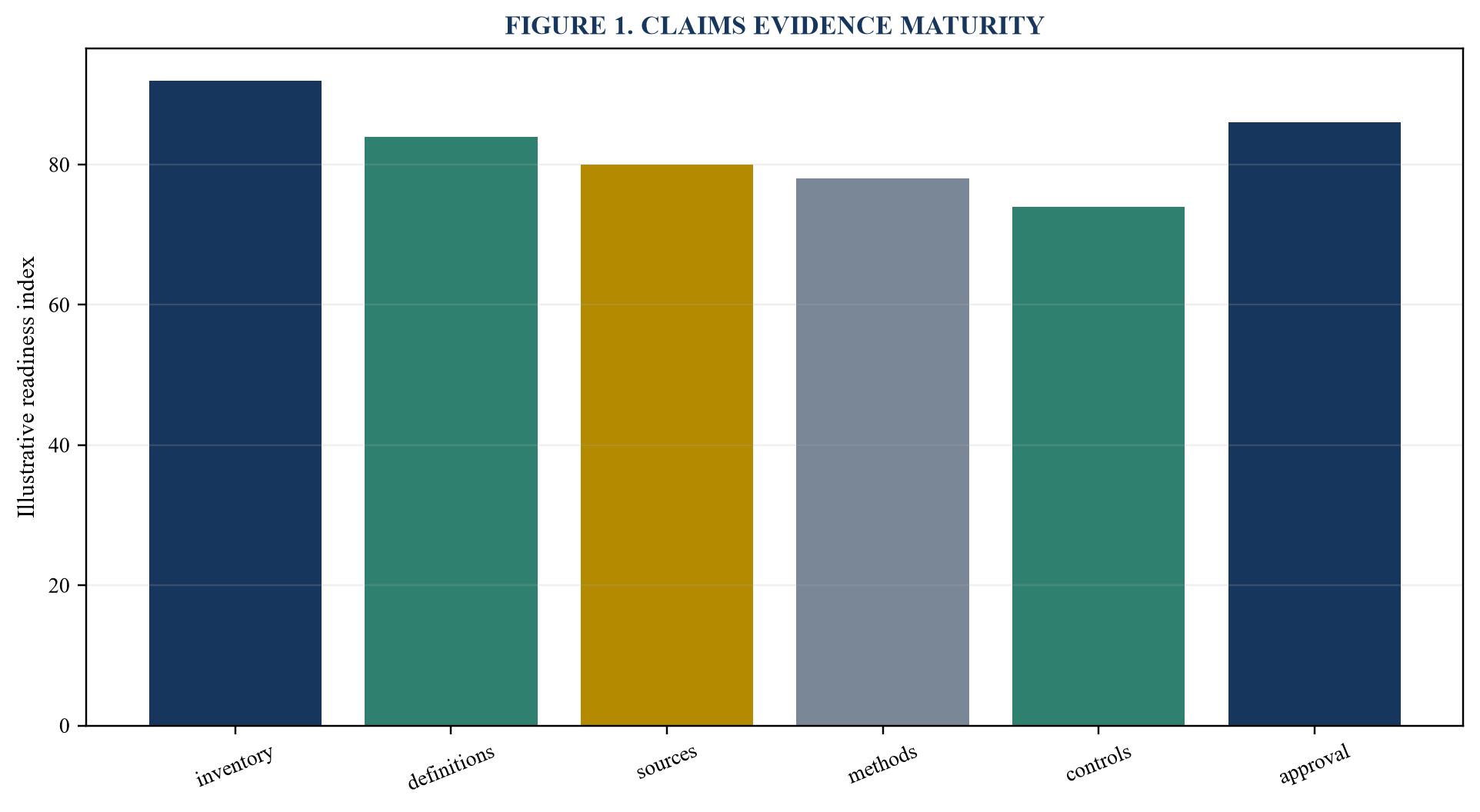
Values are illustrative readiness indices and require company-specific evidence.
9. Test evidence provenance
Record origin, owner, period, extraction, completeness, alteration control and retention.
The controlled review should reconcile native exports, source documents, access logs and review workpapers. Workpapers identify the claim, boundary, period, source, method, owner, approval, completeness, estimation, exception, qualifier and transaction relevance. The immediate output is an evidence chain-of-custody schedule.
Testing determines whether a reasonable reader could reproduce the assertion and understand its limitations. Reviewers should distinguish measured data from estimates, historic performance from targets, entity results from product claims, gross outcomes from offsets, and management ambition from contractual or regulatory commitment. They should test consistency across public, commercial and transaction channels.
Material exceptions should be quantified and assigned an owner, action, evidence requirement and decision date. Consequences flow into the claims register, diligence room, forecast, investment plan, customer and financing analysis, disclosure schedule, transaction protections and board reporting. Residual uncertainty remains visible until support is obtained, wording is qualified or withdrawn, or risk is allocated.
10. Reconcile financial and sustainability data
Link volumes, energy, production, headcount, procurement and capex to financial records.
The controlled review should reconcile general ledger, operational systems, invoices, contracts and forecasts. Workpapers identify the claim, boundary, period, source, method, owner, approval, completeness, estimation, exception, qualifier and transaction relevance. The immediate output is a finance-to-sustainability bridge.
Testing determines whether a reasonable reader could reproduce the assertion and understand its limitations. Reviewers should distinguish measured data from estimates, historic performance from targets, entity results from product claims, gross outcomes from offsets, and management ambition from contractual or regulatory commitment. They should test consistency across public, commercial and transaction channels.
Material exceptions should be quantified and assigned an owner, action, evidence requirement and decision date. Consequences flow into the claims register, diligence room, forecast, investment plan, customer and financing analysis, disclosure schedule, transaction protections and board reporting. Residual uncertainty remains visible until support is obtained, wording is qualified or withdrawn, or risk is allocated.
11. Map greenhouse-gas boundaries
Determine organisational, operational, value-chain and transaction boundaries for emissions.
The controlled review should reconcile equity share, control, Scope 1, Scope 2 and Scope 3 methods. Workpapers identify the claim, boundary, period, source, method, owner, approval, completeness, estimation, exception, qualifier and transaction relevance. The immediate output is a GHG boundary memorandum.
Testing determines whether a reasonable reader could reproduce the assertion and understand its limitations. Reviewers should distinguish measured data from estimates, historic performance from targets, entity results from product claims, gross outcomes from offsets, and management ambition from contractual or regulatory commitment. They should test consistency across public, commercial and transaction channels.
Material exceptions should be quantified and assigned an owner, action, evidence requirement and decision date. Consequences flow into the claims register, diligence room, forecast, investment plan, customer and financing analysis, disclosure schedule, transaction protections and board reporting. Residual uncertainty remains visible until support is obtained, wording is qualified or withdrawn, or risk is allocated.
12. Test Scope 1 emissions
Verify fuel, process, fugitive and owned-transport activity data and emission factors.
The controlled review should reconcile metering, fuel records, equipment, factors and calculation files. Workpapers identify the claim, boundary, period, source, method, owner, approval, completeness, estimation, exception, qualifier and transaction relevance. The immediate output is a Scope 1 evidence pack.
Testing determines whether a reasonable reader could reproduce the assertion and understand its limitations. Reviewers should distinguish measured data from estimates, historic performance from targets, entity results from product claims, gross outcomes from offsets, and management ambition from contractual or regulatory commitment. They should test consistency across public, commercial and transaction channels.
Material exceptions should be quantified and assigned an owner, action, evidence requirement and decision date. Consequences flow into the claims register, diligence room, forecast, investment plan, customer and financing analysis, disclosure schedule, transaction protections and board reporting. Residual uncertainty remains visible until support is obtained, wording is qualified or withdrawn, or risk is allocated.
13. Test Scope 2 emissions
Verify purchased energy, location-based and market-based methods and contractual instruments.
The controlled review should reconcile utility records, grid factors, certificates, contracts and residual mix. Workpapers identify the claim, boundary, period, source, method, owner, approval, completeness, estimation, exception, qualifier and transaction relevance. The immediate output is a Scope 2 evidence pack.
Testing determines whether a reasonable reader could reproduce the assertion and understand its limitations. Reviewers should distinguish measured data from estimates, historic performance from targets, entity results from product claims, gross outcomes from offsets, and management ambition from contractual or regulatory commitment. They should test consistency across public, commercial and transaction channels.
Material exceptions should be quantified and assigned an owner, action, evidence requirement and decision date. Consequences flow into the claims register, diligence room, forecast, investment plan, customer and financing analysis, disclosure schedule, transaction protections and board reporting. Residual uncertainty remains visible until support is obtained, wording is qualified or withdrawn, or risk is allocated.
14. Test Scope 3 emissions
Assess category completeness, supplier data, estimates, boundaries, exclusions and uncertainty.
The controlled review should reconcile spend, mass, distance, supplier, lifecycle and financed-emission inputs. Workpapers identify the claim, boundary, period, source, method, owner, approval, completeness, estimation, exception, qualifier and transaction relevance. The immediate output is a Scope 3 evidence pack.
Testing determines whether a reasonable reader could reproduce the assertion and understand its limitations. Reviewers should distinguish measured data from estimates, historic performance from targets, entity results from product claims, gross outcomes from offsets, and management ambition from contractual or regulatory commitment. They should test consistency across public, commercial and transaction channels.
Material exceptions should be quantified and assigned an owner, action, evidence requirement and decision date. Consequences flow into the claims register, diligence room, forecast, investment plan, customer and financing analysis, disclosure schedule, transaction protections and board reporting. Residual uncertainty remains visible until support is obtained, wording is qualified or withdrawn, or risk is allocated.
15. Test renewable-energy claims
Verify generation source, contractual instruments, geography, vintage, retirement and double counting.
The controlled review should reconcile power contracts, certificates, registries and consumption matching. Workpapers identify the claim, boundary, period, source, method, owner, approval, completeness, estimation, exception, qualifier and transaction relevance. The immediate output is a renewable-energy claim file.
Testing determines whether a reasonable reader could reproduce the assertion and understand its limitations. Reviewers should distinguish measured data from estimates, historic performance from targets, entity results from product claims, gross outcomes from offsets, and management ambition from contractual or regulatory commitment. They should test consistency across public, commercial and transaction channels.
Material exceptions should be quantified and assigned an owner, action, evidence requirement and decision date. Consequences flow into the claims register, diligence room, forecast, investment plan, customer and financing analysis, disclosure schedule, transaction protections and board reporting. Residual uncertainty remains visible until support is obtained, wording is qualified or withdrawn, or risk is allocated.
16. Test carbon-neutral and net-zero claims
Separate current emissions, reductions, removals, offsets, residuals, target pathway and scope.
The controlled review should reconcile inventories, transition plans, credits, retirement, quality and disclosures. Workpapers identify the claim, boundary, period, source, method, owner, approval, completeness, estimation, exception, qualifier and transaction relevance. The immediate output is a net-zero substantiation schedule.
Testing determines whether a reasonable reader could reproduce the assertion and understand its limitations. Reviewers should distinguish measured data from estimates, historic performance from targets, entity results from product claims, gross outcomes from offsets, and management ambition from contractual or regulatory commitment. They should test consistency across public, commercial and transaction channels.
Material exceptions should be quantified and assigned an owner, action, evidence requirement and decision date. Consequences flow into the claims register, diligence room, forecast, investment plan, customer and financing analysis, disclosure schedule, transaction protections and board reporting. Residual uncertainty remains visible until support is obtained, wording is qualified or withdrawn, or risk is allocated.
Table 2. Net-zero claim anatomy
| Element | Core question | Evidence |
|---|---|---|
| boundary | what is included | inventory |
| pathway | how reductions occur | transition plan |
| residual | what remains | scenario |
| neutralisation | quality and retirement | registry |
Illustrative analytical design; company-specific facts, standards and authorised advice govern.
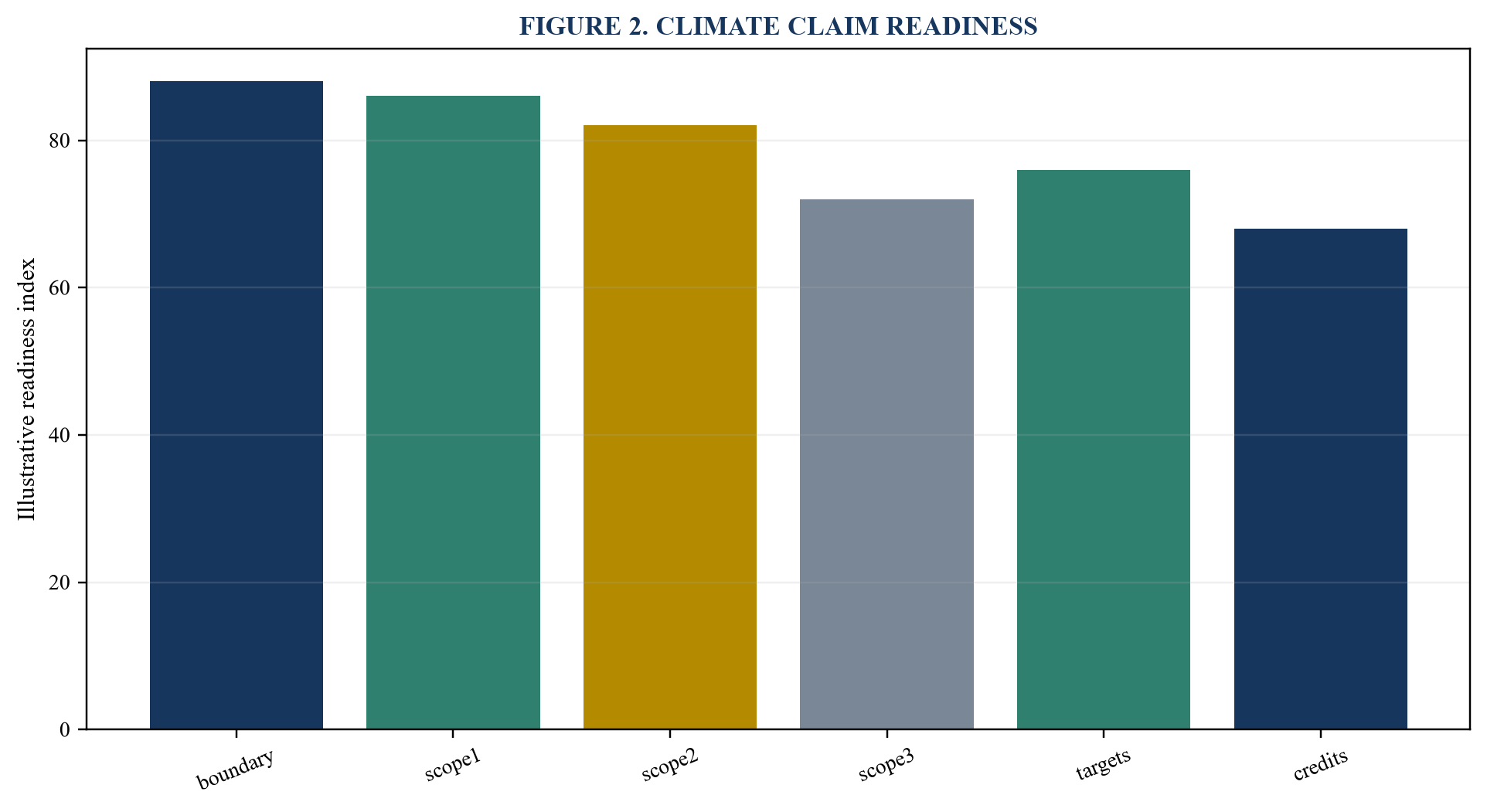
Values are illustrative readiness indices and require company-specific evidence.
17. Test targets and transition plans
Assess baseline, scope, milestones, dependencies, capex, governance and forecast consistency.
The controlled review should reconcile approved targets, scenario models, budgets, asset plans and progress records. Workpapers identify the claim, boundary, period, source, method, owner, approval, completeness, estimation, exception, qualifier and transaction relevance. The immediate output is a target achievability assessment.
Testing determines whether a reasonable reader could reproduce the assertion and understand its limitations. Reviewers should distinguish measured data from estimates, historic performance from targets, entity results from product claims, gross outcomes from offsets, and management ambition from contractual or regulatory commitment. They should test consistency across public, commercial and transaction channels.
Material exceptions should be quantified and assigned an owner, action, evidence requirement and decision date. Consequences flow into the claims register, diligence room, forecast, investment plan, customer and financing analysis, disclosure schedule, transaction protections and board reporting. Residual uncertainty remains visible until support is obtained, wording is qualified or withdrawn, or risk is allocated.
18. Test avoided-emissions claims
Define counterfactual, system boundary, attribution, displacement, rebound and uncertainty.
The controlled review should reconcile baseline methodology, lifecycle analysis and sensitivity cases. Workpapers identify the claim, boundary, period, source, method, owner, approval, completeness, estimation, exception, qualifier and transaction relevance. The immediate output is an avoided-emissions evidence paper.
Testing determines whether a reasonable reader could reproduce the assertion and understand its limitations. Reviewers should distinguish measured data from estimates, historic performance from targets, entity results from product claims, gross outcomes from offsets, and management ambition from contractual or regulatory commitment. They should test consistency across public, commercial and transaction channels.
Material exceptions should be quantified and assigned an owner, action, evidence requirement and decision date. Consequences flow into the claims register, diligence room, forecast, investment plan, customer and financing analysis, disclosure schedule, transaction protections and board reporting. Residual uncertainty remains visible until support is obtained, wording is qualified or withdrawn, or risk is allocated.
19. Test product environmental claims
Verify lifecycle boundary, functional unit, data quality, allocation and comparison basis.
The controlled review should reconcile LCAs, product records, declarations, tests and competitor benchmarks. Workpapers identify the claim, boundary, period, source, method, owner, approval, completeness, estimation, exception, qualifier and transaction relevance. The immediate output is a product-claims assurance pack.
Testing determines whether a reasonable reader could reproduce the assertion and understand its limitations. Reviewers should distinguish measured data from estimates, historic performance from targets, entity results from product claims, gross outcomes from offsets, and management ambition from contractual or regulatory commitment. They should test consistency across public, commercial and transaction channels.
Material exceptions should be quantified and assigned an owner, action, evidence requirement and decision date. Consequences flow into the claims register, diligence room, forecast, investment plan, customer and financing analysis, disclosure schedule, transaction protections and board reporting. Residual uncertainty remains visible until support is obtained, wording is qualified or withdrawn, or risk is allocated.
20. Test circularity and waste claims
Verify inputs, outputs, reuse, recycling, recovery, disposal and mass balance.
The controlled review should reconcile weighbridge, manifests, supplier records and chain-of-custody evidence. Workpapers identify the claim, boundary, period, source, method, owner, approval, completeness, estimation, exception, qualifier and transaction relevance. The immediate output is a circularity metric reconciliation.
Testing determines whether a reasonable reader could reproduce the assertion and understand its limitations. Reviewers should distinguish measured data from estimates, historic performance from targets, entity results from product claims, gross outcomes from offsets, and management ambition from contractual or regulatory commitment. They should test consistency across public, commercial and transaction channels.
Material exceptions should be quantified and assigned an owner, action, evidence requirement and decision date. Consequences flow into the claims register, diligence room, forecast, investment plan, customer and financing analysis, disclosure schedule, transaction protections and board reporting. Residual uncertainty remains visible until support is obtained, wording is qualified or withdrawn, or risk is allocated.
21. Test water claims
Assess withdrawal, consumption, discharge, quality, basin context and replenishment.
The controlled review should reconcile metering, permits, laboratory results, site data and basin analysis. Workpapers identify the claim, boundary, period, source, method, owner, approval, completeness, estimation, exception, qualifier and transaction relevance. The immediate output is a water-claims evidence pack.
Testing determines whether a reasonable reader could reproduce the assertion and understand its limitations. Reviewers should distinguish measured data from estimates, historic performance from targets, entity results from product claims, gross outcomes from offsets, and management ambition from contractual or regulatory commitment. They should test consistency across public, commercial and transaction channels.
Material exceptions should be quantified and assigned an owner, action, evidence requirement and decision date. Consequences flow into the claims register, diligence room, forecast, investment plan, customer and financing analysis, disclosure schedule, transaction protections and board reporting. Residual uncertainty remains visible until support is obtained, wording is qualified or withdrawn, or risk is allocated.
22. Test biodiversity and nature claims
Define location, dependency, impact, baseline, mitigation, restoration and monitoring.
The controlled review should reconcile site maps, ecological surveys, permits and outcome evidence. Workpapers identify the claim, boundary, period, source, method, owner, approval, completeness, estimation, exception, qualifier and transaction relevance. The immediate output is a nature-claims substantiation file.
Testing determines whether a reasonable reader could reproduce the assertion and understand its limitations. Reviewers should distinguish measured data from estimates, historic performance from targets, entity results from product claims, gross outcomes from offsets, and management ambition from contractual or regulatory commitment. They should test consistency across public, commercial and transaction channels.
Material exceptions should be quantified and assigned an owner, action, evidence requirement and decision date. Consequences flow into the claims register, diligence room, forecast, investment plan, customer and financing analysis, disclosure schedule, transaction protections and board reporting. Residual uncertainty remains visible until support is obtained, wording is qualified or withdrawn, or risk is allocated.
23. Test social and workforce claims
Verify headcount, safety, pay, diversity, training, labour and community assertions.
The controlled review should reconcile HR systems, payroll, incident records, surveys and programme evidence. Workpapers identify the claim, boundary, period, source, method, owner, approval, completeness, estimation, exception, qualifier and transaction relevance. The immediate output is a social-metrics assurance pack.
Testing determines whether a reasonable reader could reproduce the assertion and understand its limitations. Reviewers should distinguish measured data from estimates, historic performance from targets, entity results from product claims, gross outcomes from offsets, and management ambition from contractual or regulatory commitment. They should test consistency across public, commercial and transaction channels.
Material exceptions should be quantified and assigned an owner, action, evidence requirement and decision date. Consequences flow into the claims register, diligence room, forecast, investment plan, customer and financing analysis, disclosure schedule, transaction protections and board reporting. Residual uncertainty remains visible until support is obtained, wording is qualified or withdrawn, or risk is allocated.
24. Test supply-chain claims
Trace supplier standards, screening, audit coverage, corrective actions and purchasing exposure.
The controlled review should reconcile supplier master, spend, contracts, assessments and closure records. Workpapers identify the claim, boundary, period, source, method, owner, approval, completeness, estimation, exception, qualifier and transaction relevance. The immediate output is a responsible-sourcing evidence map.
Testing determines whether a reasonable reader could reproduce the assertion and understand its limitations. Reviewers should distinguish measured data from estimates, historic performance from targets, entity results from product claims, gross outcomes from offsets, and management ambition from contractual or regulatory commitment. They should test consistency across public, commercial and transaction channels.
Material exceptions should be quantified and assigned an owner, action, evidence requirement and decision date. Consequences flow into the claims register, diligence room, forecast, investment plan, customer and financing analysis, disclosure schedule, transaction protections and board reporting. Residual uncertainty remains visible until support is obtained, wording is qualified or withdrawn, or risk is allocated.
Table 3. Supply-chain claim test
| Layer | Evidence | Risk |
|---|---|---|
| coverage | supplier and spend universe | omission |
| screening | criteria and results | selection bias |
| audit | scope and findings | false assurance |
| closure | corrective-action proof | recurrence |
Illustrative analytical design; company-specific facts, standards and authorised advice govern.
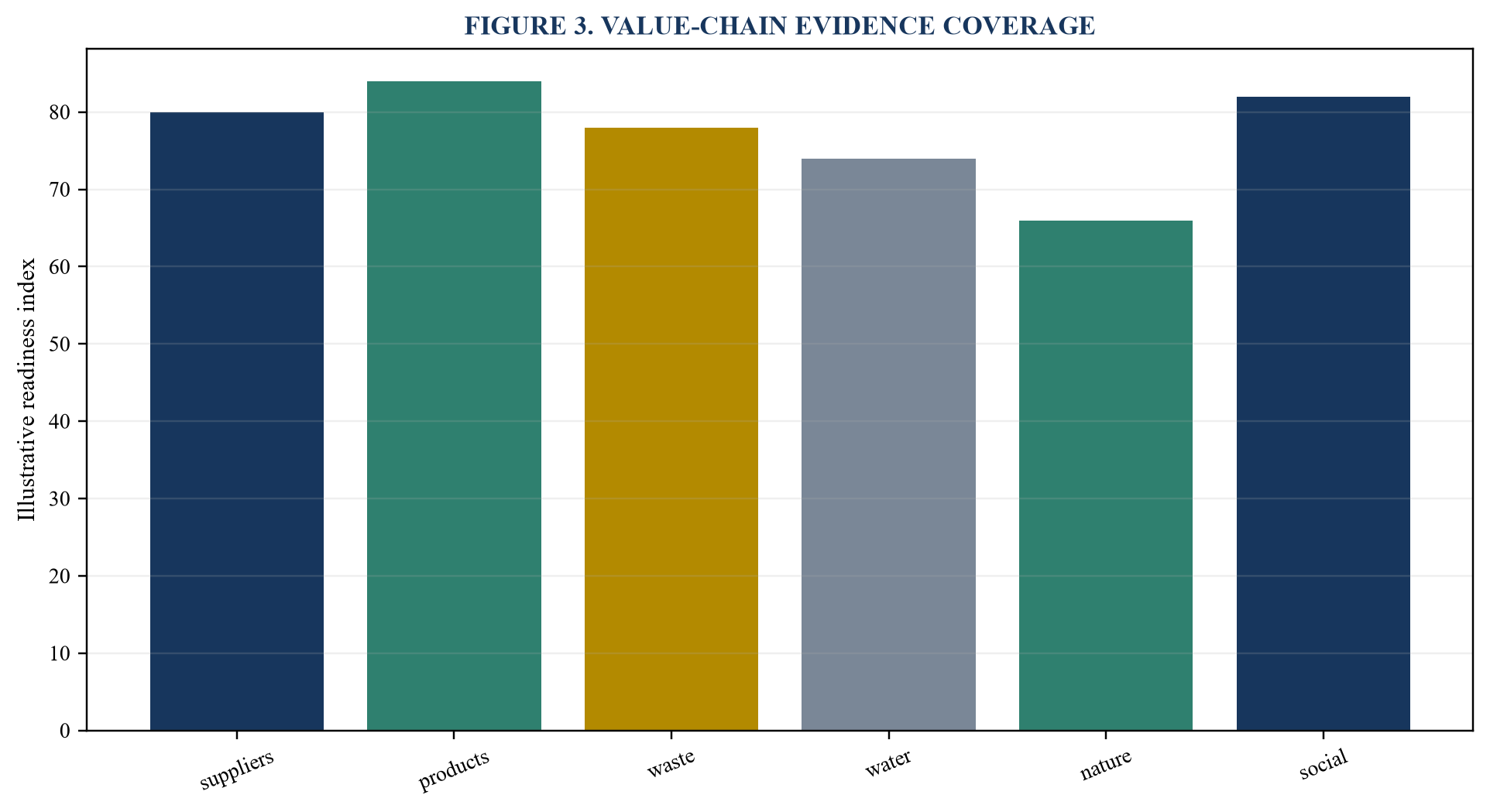
Values are illustrative readiness indices and require company-specific evidence.
25. Test taxonomy and framework alignment
Verify eligibility, substantial contribution, safeguards, harm tests and disclosure basis.
The controlled review should reconcile activity mapping, technical criteria, controls and legal analysis. Workpapers identify the claim, boundary, period, source, method, owner, approval, completeness, estimation, exception, qualifier and transaction relevance. The immediate output is an alignment claims schedule.
Testing determines whether a reasonable reader could reproduce the assertion and understand its limitations. Reviewers should distinguish measured data from estimates, historic performance from targets, entity results from product claims, gross outcomes from offsets, and management ambition from contractual or regulatory commitment. They should test consistency across public, commercial and transaction channels.
Material exceptions should be quantified and assigned an owner, action, evidence requirement and decision date. Consequences flow into the claims register, diligence room, forecast, investment plan, customer and financing analysis, disclosure schedule, transaction protections and board reporting. Residual uncertainty remains visible until support is obtained, wording is qualified or withdrawn, or risk is allocated.
26. Test labels, ratings and certifications
Determine scope, issuer, period, methodology, exclusions and permitted wording.
The controlled review should reconcile certificates, rating reports, audit scope and licence terms. Workpapers identify the claim, boundary, period, source, method, owner, approval, completeness, estimation, exception, qualifier and transaction relevance. The immediate output is an external-credential reliance file.
Testing determines whether a reasonable reader could reproduce the assertion and understand its limitations. Reviewers should distinguish measured data from estimates, historic performance from targets, entity results from product claims, gross outcomes from offsets, and management ambition from contractual or regulatory commitment. They should test consistency across public, commercial and transaction channels.
Material exceptions should be quantified and assigned an owner, action, evidence requirement and decision date. Consequences flow into the claims register, diligence room, forecast, investment plan, customer and financing analysis, disclosure schedule, transaction protections and board reporting. Residual uncertainty remains visible until support is obtained, wording is qualified or withdrawn, or risk is allocated.
27. Assess estimation and uncertainty
Quantify measurement gaps, proxies, factors, model risk, ranges and sensitivity.
The controlled review should reconcile calculation models, data-quality scores and uncertainty analysis. Workpapers identify the claim, boundary, period, source, method, owner, approval, completeness, estimation, exception, qualifier and transaction relevance. The immediate output is an uncertainty and estimation register.
Testing determines whether a reasonable reader could reproduce the assertion and understand its limitations. Reviewers should distinguish measured data from estimates, historic performance from targets, entity results from product claims, gross outcomes from offsets, and management ambition from contractual or regulatory commitment. They should test consistency across public, commercial and transaction channels.
Material exceptions should be quantified and assigned an owner, action, evidence requirement and decision date. Consequences flow into the claims register, diligence room, forecast, investment plan, customer and financing analysis, disclosure schedule, transaction protections and board reporting. Residual uncertainty remains visible until support is obtained, wording is qualified or withdrawn, or risk is allocated.
28. Assess restatements and changes
Explain methodology, factor, boundary, acquisition, disposal and error effects over time.
The controlled review should reconcile version history, reconciliations, approvals and comparative data. Workpapers identify the claim, boundary, period, source, method, owner, approval, completeness, estimation, exception, qualifier and transaction relevance. The immediate output is a change-and-restatement bridge.
Testing determines whether a reasonable reader could reproduce the assertion and understand its limitations. Reviewers should distinguish measured data from estimates, historic performance from targets, entity results from product claims, gross outcomes from offsets, and management ambition from contractual or regulatory commitment. They should test consistency across public, commercial and transaction channels.
Material exceptions should be quantified and assigned an owner, action, evidence requirement and decision date. Consequences flow into the claims register, diligence room, forecast, investment plan, customer and financing analysis, disclosure schedule, transaction protections and board reporting. Residual uncertainty remains visible until support is obtained, wording is qualified or withdrawn, or risk is allocated.
29. Reconcile claims to strategy
Test whether public commitments align with business model, portfolio, investment and operating plans.
The controlled review should reconcile strategy papers, budgets, capex, incentives and operating roadmaps. Workpapers identify the claim, boundary, period, source, method, owner, approval, completeness, estimation, exception, qualifier and transaction relevance. The immediate output is a strategy-to-claims consistency map.
Testing determines whether a reasonable reader could reproduce the assertion and understand its limitations. Reviewers should distinguish measured data from estimates, historic performance from targets, entity results from product claims, gross outcomes from offsets, and management ambition from contractual or regulatory commitment. They should test consistency across public, commercial and transaction channels.
Material exceptions should be quantified and assigned an owner, action, evidence requirement and decision date. Consequences flow into the claims register, diligence room, forecast, investment plan, customer and financing analysis, disclosure schedule, transaction protections and board reporting. Residual uncertainty remains visible until support is obtained, wording is qualified or withdrawn, or risk is allocated.
30. Reconcile claims to forecasts
Connect targets and assertions to revenue, cost, capex, opex, working capital and cash.
The controlled review should reconcile integrated financial model, scenarios, initiatives and dependencies. Workpapers identify the claim, boundary, period, source, method, owner, approval, completeness, estimation, exception, qualifier and transaction relevance. The immediate output is a sustainability-to-value bridge.
Testing determines whether a reasonable reader could reproduce the assertion and understand its limitations. Reviewers should distinguish measured data from estimates, historic performance from targets, entity results from product claims, gross outcomes from offsets, and management ambition from contractual or regulatory commitment. They should test consistency across public, commercial and transaction channels.
Material exceptions should be quantified and assigned an owner, action, evidence requirement and decision date. Consequences flow into the claims register, diligence room, forecast, investment plan, customer and financing analysis, disclosure schedule, transaction protections and board reporting. Residual uncertainty remains visible until support is obtained, wording is qualified or withdrawn, or risk is allocated.
31. Quantify downside scenarios
Model underperformance, remediation, carbon, energy, water, supply, litigation and reputation effects.
The controlled review should reconcile base, downside, severe and recovery cases with explicit assumptions. Workpapers identify the claim, boundary, period, source, method, owner, approval, completeness, estimation, exception, qualifier and transaction relevance. The immediate output is a quantified claims-risk model.
Testing determines whether a reasonable reader could reproduce the assertion and understand its limitations. Reviewers should distinguish measured data from estimates, historic performance from targets, entity results from product claims, gross outcomes from offsets, and management ambition from contractual or regulatory commitment. They should test consistency across public, commercial and transaction channels.
Material exceptions should be quantified and assigned an owner, action, evidence requirement and decision date. Consequences flow into the claims register, diligence room, forecast, investment plan, customer and financing analysis, disclosure schedule, transaction protections and board reporting. Residual uncertainty remains visible until support is obtained, wording is qualified or withdrawn, or risk is allocated.
32. Connect claims to valuation
Assess growth quality, margin durability, investment needs, terminal assumptions and discounting.
The controlled review should reconcile buyer cases, market evidence, sensitivities and forecast confidence. Workpapers identify the claim, boundary, period, source, method, owner, approval, completeness, estimation, exception, qualifier and transaction relevance. The immediate output is a valuation impact schedule.
Testing determines whether a reasonable reader could reproduce the assertion and understand its limitations. Reviewers should distinguish measured data from estimates, historic performance from targets, entity results from product claims, gross outcomes from offsets, and management ambition from contractual or regulatory commitment. They should test consistency across public, commercial and transaction channels.
Material exceptions should be quantified and assigned an owner, action, evidence requirement and decision date. Consequences flow into the claims register, diligence room, forecast, investment plan, customer and financing analysis, disclosure schedule, transaction protections and board reporting. Residual uncertainty remains visible until support is obtained, wording is qualified or withdrawn, or risk is allocated.
Table 4. Sustainability value bridge
| Driver | Financial pathway | Transaction test |
|---|---|---|
| revenue | access and retention | customer proof |
| cost | energy and resource use | operating evidence |
| investment | transition capex | funded plan |
| risk | claims and compliance | downside case |
Illustrative analytical design; company-specific facts, standards and authorised advice govern.
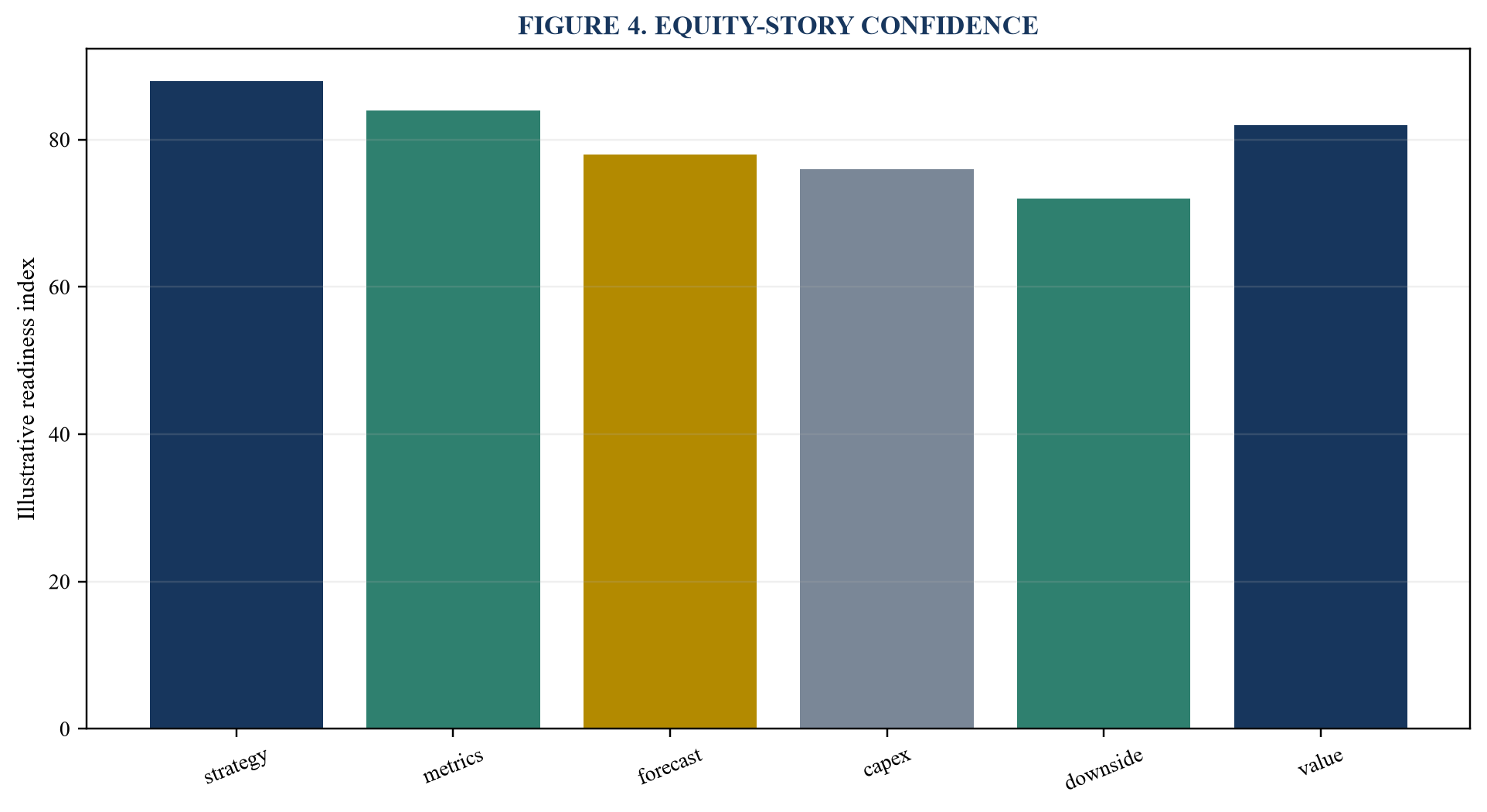
Values are illustrative readiness indices and require company-specific evidence.
33. Assess contracts and customer reliance
Map sustainability representations, audit rights, pricing, tender promises and termination exposure.
The controlled review should reconcile customer and supplier contracts, bids, SLAs and correspondence. Workpapers identify the claim, boundary, period, source, method, owner, approval, completeness, estimation, exception, qualifier and transaction relevance. The immediate output is a contractual reliance register.
Testing determines whether a reasonable reader could reproduce the assertion and understand its limitations. Reviewers should distinguish measured data from estimates, historic performance from targets, entity results from product claims, gross outcomes from offsets, and management ambition from contractual or regulatory commitment. They should test consistency across public, commercial and transaction channels.
Material exceptions should be quantified and assigned an owner, action, evidence requirement and decision date. Consequences flow into the claims register, diligence room, forecast, investment plan, customer and financing analysis, disclosure schedule, transaction protections and board reporting. Residual uncertainty remains visible until support is obtained, wording is qualified or withdrawn, or risk is allocated.
34. Assess financing implications
Review sustainability-linked terms, covenants, KPIs, verification, margin ratchets and default exposure.
The controlled review should reconcile loan, bond, hedge, guarantee and reporting documents. Workpapers identify the claim, boundary, period, source, method, owner, approval, completeness, estimation, exception, qualifier and transaction relevance. The immediate output is a financing claims-risk schedule.
Testing determines whether a reasonable reader could reproduce the assertion and understand its limitations. Reviewers should distinguish measured data from estimates, historic performance from targets, entity results from product claims, gross outcomes from offsets, and management ambition from contractual or regulatory commitment. They should test consistency across public, commercial and transaction channels.
Material exceptions should be quantified and assigned an owner, action, evidence requirement and decision date. Consequences flow into the claims register, diligence room, forecast, investment plan, customer and financing analysis, disclosure schedule, transaction protections and board reporting. Residual uncertainty remains visible until support is obtained, wording is qualified or withdrawn, or risk is allocated.
35. Assess regulatory and litigation exposure
Map securities, consumer, competition, reporting and sector rules by claim and geography.
The controlled review should reconcile legal analyses, filings, complaints, investigations and enforcement. Workpapers identify the claim, boundary, period, source, method, owner, approval, completeness, estimation, exception, qualifier and transaction relevance. The immediate output is a regulatory exposure matrix.
Testing determines whether a reasonable reader could reproduce the assertion and understand its limitations. Reviewers should distinguish measured data from estimates, historic performance from targets, entity results from product claims, gross outcomes from offsets, and management ambition from contractual or regulatory commitment. They should test consistency across public, commercial and transaction channels.
Material exceptions should be quantified and assigned an owner, action, evidence requirement and decision date. Consequences flow into the claims register, diligence room, forecast, investment plan, customer and financing analysis, disclosure schedule, transaction protections and board reporting. Residual uncertainty remains visible until support is obtained, wording is qualified or withdrawn, or risk is allocated.
36. Design pre-launch remediation
Prioritise unsupported wording, missing evidence, weak controls and inconsistent targets.
The controlled review should reconcile owners, milestones, budgets, approvals and closure proof. Workpapers identify the claim, boundary, period, source, method, owner, approval, completeness, estimation, exception, qualifier and transaction relevance. The immediate output is a claims-remediation roadmap.
Testing determines whether a reasonable reader could reproduce the assertion and understand its limitations. Reviewers should distinguish measured data from estimates, historic performance from targets, entity results from product claims, gross outcomes from offsets, and management ambition from contractual or regulatory commitment. They should test consistency across public, commercial and transaction channels.
Material exceptions should be quantified and assigned an owner, action, evidence requirement and decision date. Consequences flow into the claims register, diligence room, forecast, investment plan, customer and financing analysis, disclosure schedule, transaction protections and board reporting. Residual uncertainty remains visible until support is obtained, wording is qualified or withdrawn, or risk is allocated.
37. Prepare the buyer evidence room
Organise policies, source data, calculations, assurance, exceptions and governance records.
The controlled review should reconcile indexed evidence, redactions, provenance, access and Q&A controls. Workpapers identify the claim, boundary, period, source, method, owner, approval, completeness, estimation, exception, qualifier and transaction relevance. The immediate output is a buyer-ready sustainability data room.
Testing determines whether a reasonable reader could reproduce the assertion and understand its limitations. Reviewers should distinguish measured data from estimates, historic performance from targets, entity results from product claims, gross outcomes from offsets, and management ambition from contractual or regulatory commitment. They should test consistency across public, commercial and transaction channels.
Material exceptions should be quantified and assigned an owner, action, evidence requirement and decision date. Consequences flow into the claims register, diligence room, forecast, investment plan, customer and financing analysis, disclosure schedule, transaction protections and board reporting. Residual uncertainty remains visible until support is obtained, wording is qualified or withdrawn, or risk is allocated.
38. Govern management representations
Separate verified facts, estimates, ambitions, legal conclusions and unresolved matters.
The controlled review should reconcile representation matrix, evidence links, approvals and qualifiers. Workpapers identify the claim, boundary, period, source, method, owner, approval, completeness, estimation, exception, qualifier and transaction relevance. The immediate output is a controlled sustainability fact book.
Testing determines whether a reasonable reader could reproduce the assertion and understand its limitations. Reviewers should distinguish measured data from estimates, historic performance from targets, entity results from product claims, gross outcomes from offsets, and management ambition from contractual or regulatory commitment. They should test consistency across public, commercial and transaction channels.
Material exceptions should be quantified and assigned an owner, action, evidence requirement and decision date. Consequences flow into the claims register, diligence room, forecast, investment plan, customer and financing analysis, disclosure schedule, transaction protections and board reporting. Residual uncertainty remains visible until support is obtained, wording is qualified or withdrawn, or risk is allocated.
39. Design transaction protections
Map residual findings to conditions, covenants, warranties, indemnities, escrow and disclosure.
The controlled review should reconcile risk allocation, duration, quantification, caps and evidence. Workpapers identify the claim, boundary, period, source, method, owner, approval, completeness, estimation, exception, qualifier and transaction relevance. The immediate output is a transaction protection options paper.
Testing determines whether a reasonable reader could reproduce the assertion and understand its limitations. Reviewers should distinguish measured data from estimates, historic performance from targets, entity results from product claims, gross outcomes from offsets, and management ambition from contractual or regulatory commitment. They should test consistency across public, commercial and transaction channels.
Material exceptions should be quantified and assigned an owner, action, evidence requirement and decision date. Consequences flow into the claims register, diligence room, forecast, investment plan, customer and financing analysis, disclosure schedule, transaction protections and board reporting. Residual uncertainty remains visible until support is obtained, wording is qualified or withdrawn, or risk is allocated.
40. Issue the diligence-ready equity story
Present substantiated claims, limitations, value drivers, risks, controls and continuing obligations.
The controlled review should reconcile approved narrative, evidence index, metrics, sensitivities and board sign-off. Workpapers identify the claim, boundary, period, source, method, owner, approval, completeness, estimation, exception, qualifier and transaction relevance. The immediate output is a sustainability equity-story assurance certificate.
Testing determines whether a reasonable reader could reproduce the assertion and understand its limitations. Reviewers should distinguish measured data from estimates, historic performance from targets, entity results from product claims, gross outcomes from offsets, and management ambition from contractual or regulatory commitment. They should test consistency across public, commercial and transaction channels.
Material exceptions should be quantified and assigned an owner, action, evidence requirement and decision date. Consequences flow into the claims register, diligence room, forecast, investment plan, customer and financing analysis, disclosure schedule, transaction protections and board reporting. Residual uncertainty remains visible until support is obtained, wording is qualified or withdrawn, or risk is allocated.
Table 5. Diligence-ready claim certificate
| Gate | Required proof | Decision use |
|---|---|---|
| defined | boundary and method | meaning |
| traced | source and calculation | accuracy |
| governed | approval and control | reliability |
| qualified | limits and uncertainty | fair presentation |
Illustrative analytical design; company-specific facts, standards and authorised advice govern.
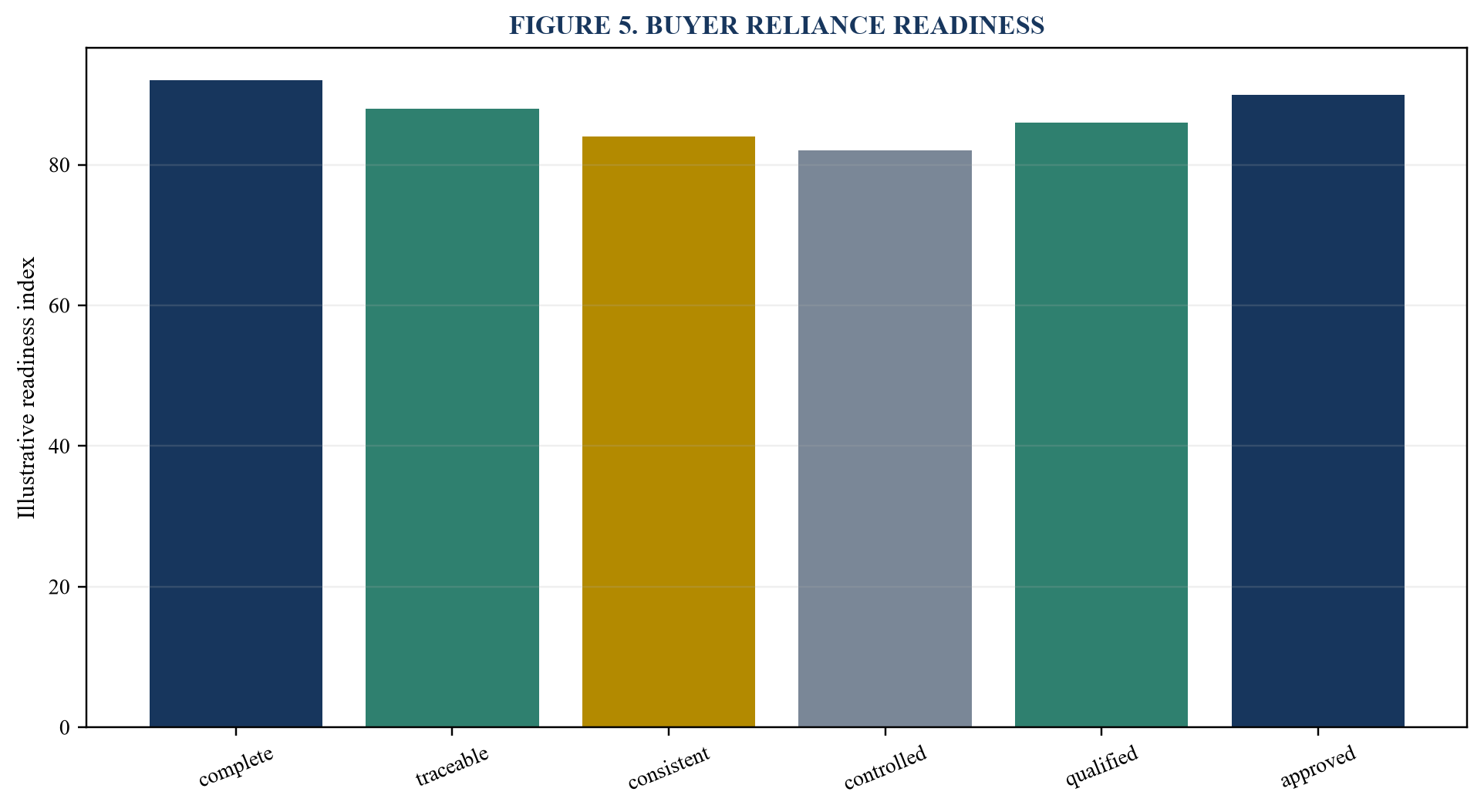
Values are illustrative readiness indices and require company-specific evidence.
References
- IFRS Foundation, IFRS S1 General Requirements for Disclosure of Sustainability-related Financial Information, https://www.ifrs.org/issued-standards/ifrs-sustainability-standards-navigator/ifrs-s1-general-requirements/
- IFRS Foundation, IFRS S2 Climate-related Disclosures, https://www.ifrs.org/issued-standards/ifrs-sustainability-standards-navigator/ifrs-s2-climate-related-disclosures/
- IFRS Foundation, SASB Standards, https://sasb.ifrs.org/standards/
- Greenhouse Gas Protocol, Corporate Standard, https://ghgprotocol.org/corporate-standard
- Greenhouse Gas Protocol, Scope 2 Guidance, https://ghgprotocol.org/scope-2-guidance
- Greenhouse Gas Protocol, Corporate Value Chain Scope 3 Standard, https://ghgprotocol.org/corporate-value-chain-scope-3-standard
- European Commission, Corporate Sustainability Reporting, https://finance.ec.europa.eu/financial-markets/company-reporting-and-auditing/company-reporting/corporate-sustainability-reporting_en
- European Commission, European Sustainability Reporting Standards, https://finance.ec.europa.eu/capital-markets-union-and-financial-markets/company-reporting-and-auditing/company-reporting/corporate-sustainability-reporting_en
- European Union, Taxonomy Regulation, https://eur-lex.europa.eu/eli/reg/2020/852/oj
- European Union, Sustainable Finance Disclosure Regulation, https://eur-lex.europa.eu/eli/reg/2019/2088/oj
- European Union, Empowering Consumers for the Green Transition Directive, https://eur-lex.europa.eu/eli/dir/2024/825/oj
- UK Financial Conduct Authority, Anti-greenwashing Rule Guidance FG24/3, https://www.fca.org.uk/publications/finalised-guidance/fg24-3-finalised-non-handbook-guidance-anti-greenwashing-rule
- US Federal Trade Commission, Guides for the Use of Environmental Marketing Claims, https://www.ftc.gov/business-guidance/advertising-marketing/environmental-marketing
- International Organization for Standardization, ISO 14064-1 Greenhouse Gases, https://www.iso.org/standard/66453.html
- International Organization for Standardization, ISO 14067 Carbon Footprint of Products, https://www.iso.org/standard/71206.html
- International Organization for Standardization, ISO 14040 Life Cycle Assessment, https://www.iso.org/standard/37456.html
- International Organization for Standardization, ISO 14044 Life Cycle Assessment Requirements and Guidelines, https://www.iso.org/standard/38498.html
- International Organization for Standardization, ISO 14046 Water Footprint, https://www.iso.org/standard/43263.html
- International Organization for Standardization, ISO 14068-1 Climate Change Management, https://www.iso.org/standard/43279.html
- Science Based Targets initiative, Corporate Net-Zero Standard, https://sciencebasedtargets.org/net-zero
- Taskforce on Nature-related Financial Disclosures, Recommendations, https://tnfd.global/recommendations-of-the-tnfd/
- Global Reporting Initiative, Standards, https://www.globalreporting.org/standards/
- United Nations, Guiding Principles on Business and Human Rights, https://www.ohchr.org/sites/default/files/documents/publications/guidingprinciplesbusinesshr_en.pdf
- OECD, Guidelines for Multinational Enterprises on Responsible Business Conduct, https://mneguidelines.oecd.org/mneguidelines/
- International Auditing and Assurance Standards Board, ISSA 5000 General Requirements for Sustainability Assurance Engagements, https://www.iaasb.org/publications/international-standard-sustainability-assurance-5000-general-requirements-sustainability-assurance
- International Ethics Standards Board for Accountants, Sustainability Assurance Ethics and Independence Standards, https://www.ethicsboard.org/focus-areas/sustainability-reporting-and-assurance
