

1. Define the transaction decision
The investment committee must decide whether the combined assets produce more distributable cash than their stand-alone businesses after purchase price, conversion capital, integration, regulation and financing. [1][2][3][4] The analysis should identify the legal owner, commercial counterparty, operating controller, customer, financier and party bearing remediation or transition cost. It should distinguish observed data, executed obligations and wholly hypothetical assumptions.
The evidence file should begin with asset perimeter, legal entities, purchase agreement, stand-alone plans, site rights, fibre maps, node inventory, contracts, capital plan and financing terms. Each record should state scope, definition, effective date, expiry or refresh point, accountable owner and its relationship to accepted service and collected cash. Public policy, regulatory and company disclosures establish context; transaction value requires asset-level rights, executed contracts, measured performance and auditable financial records.
The principal failure is that strategic adjacency substitutes for an auditable bridge from assets to accepted service and cash. The practical response is to approve only value supported by controlled rights, executable conversion and contracted demand. Management estimates should be identified in the model and refreshed when evidence changes. Downside analysis should combine related site, power, fibre, customer, regulatory, technology, integration, financing and liquidity risks rather than isolating each variable. Approval should record the evidence accepted, conditions outstanding and authority to defer or stop expenditure.
2. Separate the asset classes before combining them
Towers, rooftops, ducts, dark fibre, lit networks, powered shells, compute equipment and managed services have different rights, lives, margins, risks and buyers. [2][3][5][6] The analysis should identify the legal owner, commercial counterparty, operating controller, customer, financier and party bearing remediation or transition cost. It should distinguish observed data, executed obligations and wholly hypothetical assumptions.
The evidence file should begin with title, lease, concession, wayleave, access agreement, network design, equipment register, service contract and cash record. Each record should state scope, definition, effective date, expiry or refresh point, accountable owner and its relationship to accepted service and collected cash. Public policy, regulatory and company disclosures establish context; transaction value requires asset-level rights, executed contracts, measured performance and auditable financial records.
The principal failure is that one blended multiple is applied to passive infrastructure, connectivity, technology and uncontracted pipeline. The practical response is to value each cash-flow cohort separately before adding evidence-backed synergy. Management estimates should be identified in the model and refreshed when evidence changes. Downside analysis should combine related site, power, fibre, customer, regulatory, technology, integration, financing and liquidity risks rather than isolating each variable. Approval should record the evidence accepted, conditions outstanding and authority to defer or stop expenditure.
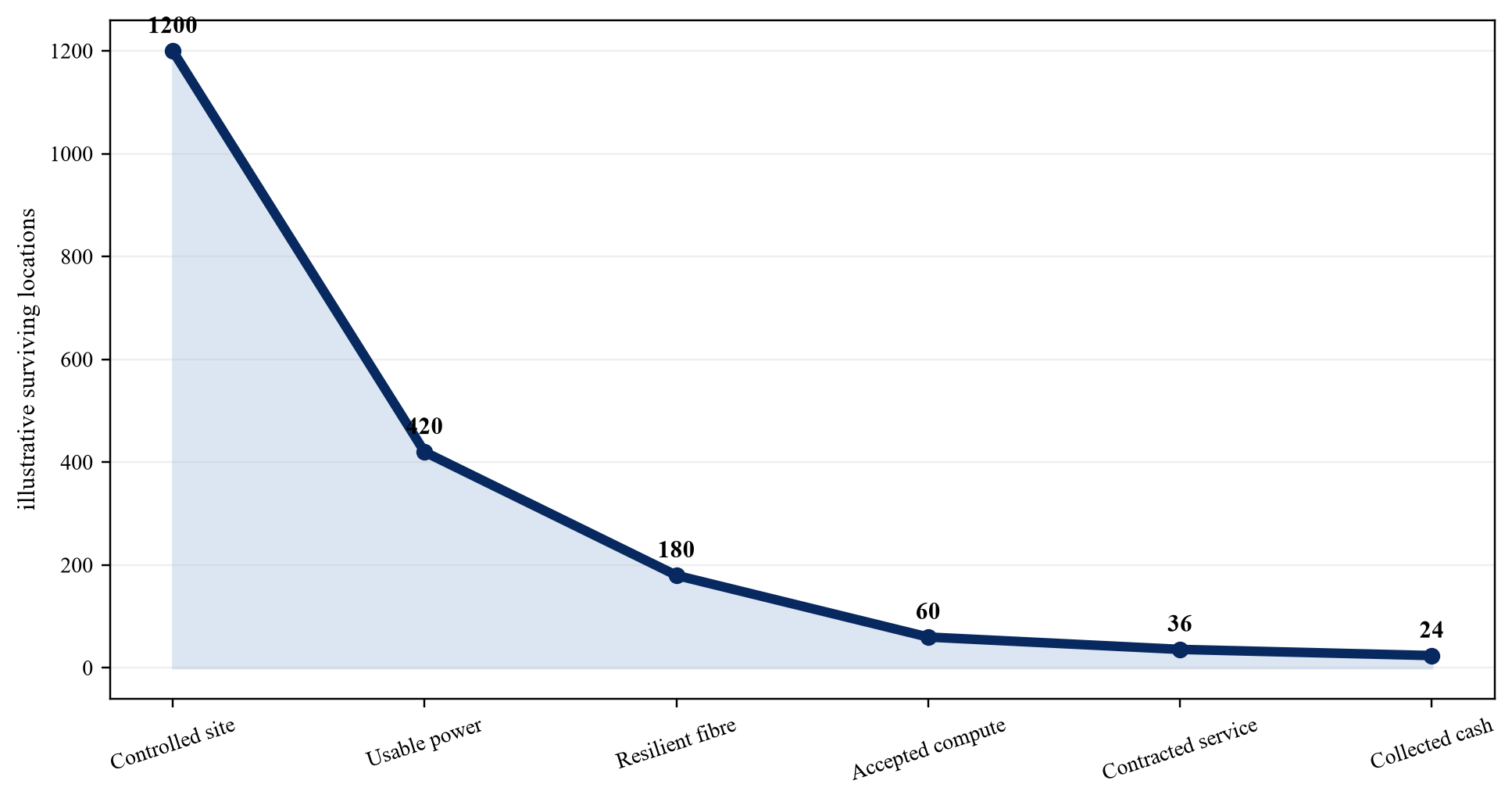
Proposed framework; value is recognised only where rights, service and cash are evidenced.
| Asset class | Core right | Primary cash flow | Principal value risk |
|---|---|---|---|
| tower or rooftop | occupation and equipment rights | rent and tenancy | lease expiry and use restriction |
| duct or dark fibre | route and capacity rights | lease or indefeasible-use fee | route, repair and access |
| lit network | service and operating control | bandwidth and managed connectivity | churn and operating intensity |
| micro data centre | power, cooling and secure space | hosting or capacity fee | utilisation and refresh |
| edge service | software, compute and SLA | contracted service revenue | performance and portability |
Proposed framework; documents and operating evidence determine final classification.
3. Map tower and rooftop control
A distributed location creates an option only when the acquirer controls occupation, access, permitted use, equipment loading, power works, fibre entry and contract transfer for a sufficient period. [2][5][7][8] The analysis should identify the legal owner, commercial counterparty, operating controller, customer, financier and party bearing remediation or transition cost. It should distinguish observed data, executed obligations and wholly hypothetical assumptions.
The evidence file should begin with site agreement, renewal, assignment, landlord consent, structural survey, loading capacity, access hours, exclusivity and termination rights. Each record should state scope, definition, effective date, expiry or refresh point, accountable owner and its relationship to accepted service and collected cash. Public policy, regulatory and company disclosures establish context; transaction value requires asset-level rights, executed contracts, measured performance and auditable financial records.
The principal failure is that site count is treated as deployment capacity even where rights do not permit compute use or transfer. The practical response is to classify every location as controlled, conditional, remediable or unavailable and value only the relevant state. Management estimates should be identified in the model and refreshed when evidence changes. Downside analysis should combine related site, power, fibre, customer, regulatory, technology, integration, financing and liquidity risks rather than isolating each variable. Approval should record the evidence accepted, conditions outstanding and authority to defer or stop expenditure.
4. Test usable power at every site
Micro data centres require deliverable capacity, connection works, redundancy, metering, tariff clarity and heat rejection. A nearby supply point or nominal site allocation does not prove usable compute power. [1][9][10][11] The analysis should identify the legal owner, commercial counterparty, operating controller, customer, financier and party bearing remediation or transition cost. It should distinguish observed data, executed obligations and wholly hypothetical assumptions.
The evidence file should begin with connection offer, available capacity, voltage, protection, upgrade scope, programme, tariff, backup design, cooling load and commissioning test. Each record should state scope, definition, effective date, expiry or refresh point, accountable owner and its relationship to accepted service and collected cash. Public policy, regulatory and company disclosures establish context; transaction value requires asset-level rights, executed contracts, measured performance and auditable financial records.
The principal failure is that portfolio megawatts aggregate requested, reserved and operating capacity without state reconciliation. The practical response is to run a site-level power gate and deduct all enabling cost and delay before recognising value. Management estimates should be identified in the model and refreshed when evidence changes. Downside analysis should combine related site, power, fibre, customer, regulatory, technology, integration, financing and liquidity risks rather than isolating each variable. Approval should record the evidence accepted, conditions outstanding and authority to defer or stop expenditure.
5. Test fibre and backhaul
The service path depends on route diversity, carrier access, peering, cloud on-ramps, restoration performance and capacity under representative load. Fibre proximity is not the same as a resilient service. [1][3][12][13] The analysis should identify the legal owner, commercial counterparty, operating controller, customer, financier and party bearing remediation or transition cost. It should distinguish observed data, executed obligations and wholly hypothetical assumptions.
The evidence file should begin with route maps, splice and duct rights, carrier agreements, cross-connects, measured latency, loss, jitter, congestion and restoration history. Each record should state scope, definition, effective date, expiry or refresh point, accountable owner and its relationship to accepted service and collected cash. Public policy, regulatory and company disclosures establish context; transaction value requires asset-level rights, executed contracts, measured performance and auditable financial records.
The principal failure is that straight-line distance or route kilometres substitute for tested end-to-end performance. The practical response is to require diverse commissioned paths and a priced service design before conversion capital is released. Management estimates should be identified in the model and refreshed when evidence changes. Downside analysis should combine related site, power, fibre, customer, regulatory, technology, integration, financing and liquidity risks rather than isolating each variable. Approval should record the evidence accepted, conditions outstanding and authority to defer or stop expenditure.
6. Classify edge workloads
Industrial vision, retail analytics, content delivery, private networks, connected transport and regulated data processing have different latency, control, resilience and economic requirements. [1][14][15][16] The analysis should identify the legal owner, commercial counterparty, operating controller, customer, financier and party bearing remediation or transition cost. It should distinguish observed data, executed obligations and wholly hypothetical assumptions.
The evidence file should begin with application owner, request profile, response deadline, data volume, compute stack, operating consequence, service window and alternative architecture. Each record should state scope, definition, effective date, expiry or refresh point, accountable owner and its relationship to accepted service and collected cash. Public policy, regulatory and company disclosures establish context; transaction value requires asset-level rights, executed contracts, measured performance and auditable financial records.
The principal failure is that all local processing is described as latency-sensitive and assigned to the nearest site. The practical response is to place each workload at the lowest-cost tier that satisfies its accepted requirements. Management estimates should be identified in the model and refreshed when evidence changes. Downside analysis should combine related site, power, fibre, customer, regulatory, technology, integration, financing and liquidity risks rather than isolating each variable. Approval should record the evidence accepted, conditions outstanding and authority to defer or stop expenditure.
| Workload | Edge driver | Evidence | Alternative |
|---|---|---|---|
| industrial vision | response and data volume | traced deadline and control outcome | on-premises node |
| private-network analytics | local continuity | traffic and failure test | regional node |
| content delivery | user distribution | traffic, cache hit and price | CDN or metro cloud |
| retail analytics | bandwidth and privacy | store profile and data design | batch regional processing |
| regulated processing | control and location | legal analysis and audit | sovereign regional cloud |
Proposed classification; application evidence determines placement.
7. Measure end-to-end latency
Customer outcome includes device, access network, routing, queue, data retrieval, model execution and response delivery. Server time alone cannot demonstrate the location advantage. [12][14][15][17] The analysis should identify the legal owner, commercial counterparty, operating controller, customer, financier and party bearing remediation or transition cost. It should distinguish observed data, executed obligations and wholly hypothetical assumptions.
The evidence file should begin with timestamped application traces, network paths, load conditions, retries, queue depth, model execution and user acceptance. Each record should state scope, definition, effective date, expiry or refresh point, accountable owner and its relationship to accepted service and collected cash. Public policy, regulatory and company disclosures establish context; transaction value requires asset-level rights, executed contracts, measured performance and auditable financial records.
The principal failure is that a laboratory benchmark or geographic radius is capitalised as customer value. The practical response is to test the complete path under representative load and reconcile results to the service contract. Management estimates should be identified in the model and refreshed when evidence changes. Downside analysis should combine related site, power, fibre, customer, regulatory, technology, integration, financing and liquidity risks rather than isolating each variable. Approval should record the evidence accepted, conditions outstanding and authority to defer or stop expenditure.
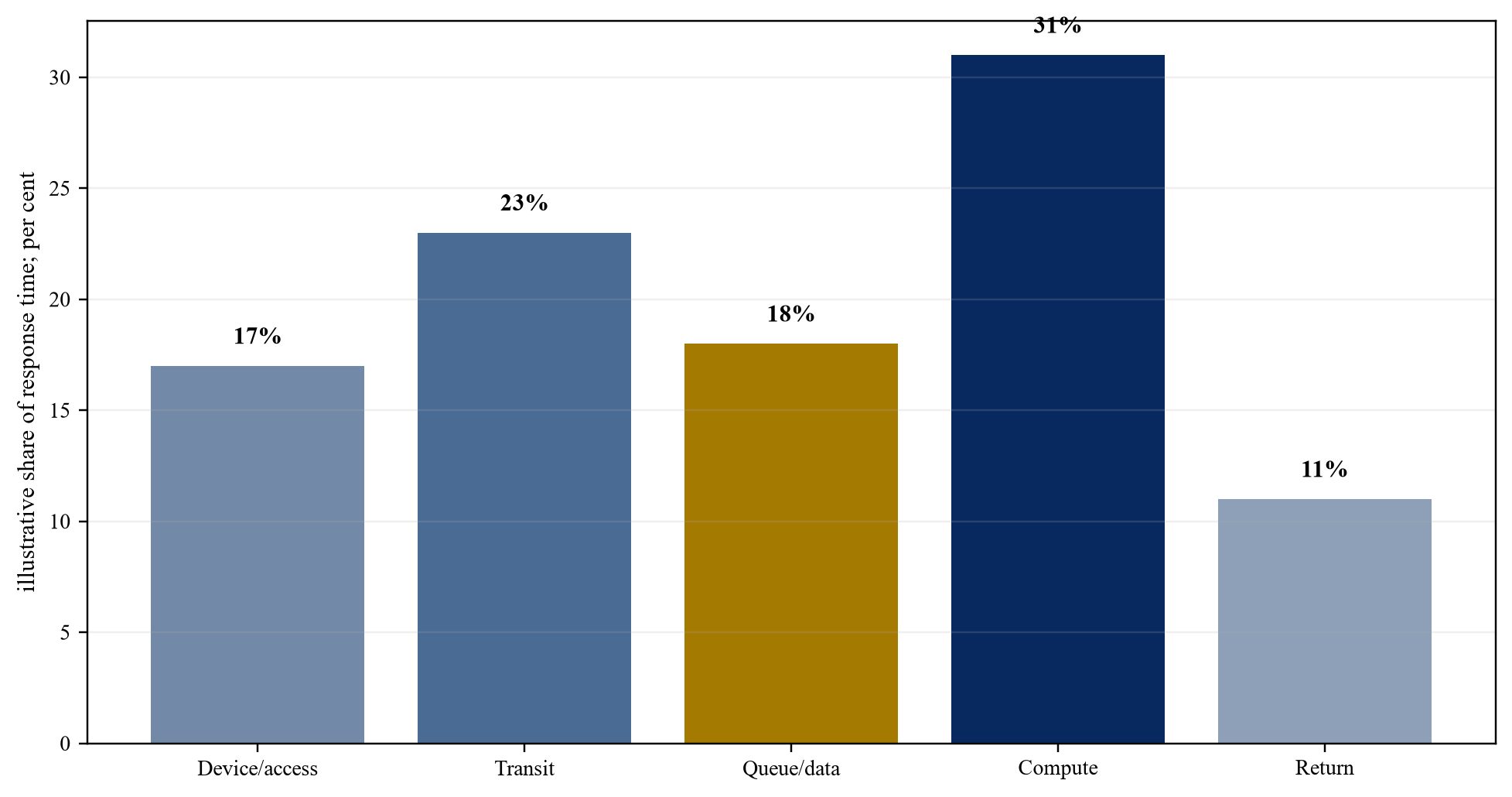
Proposed measurement model; percentages are illustrative and must be replaced by traced service data.
8. Establish paid customer demand
Technical feasibility becomes financeable when a creditworthy customer commits to a defined service, location, quantity, acceptance process, price and term. [4][6][18][19] The analysis should identify the legal owner, commercial counterparty, operating controller, customer, financier and party bearing remediation or transition cost. It should distinguish observed data, executed obligations and wholly hypothetical assumptions.
The evidence file should begin with customer contract, technical schedule, minimum payment, ramp, service credits, termination, security, invoice and cash. Each record should state scope, definition, effective date, expiry or refresh point, accountable owner and its relationship to accepted service and collected cash. Public policy, regulatory and company disclosures establish context; transaction value requires asset-level rights, executed contracts, measured performance and auditable financial records.
The principal failure is that letters of interest, market forecasts and channel relationships are treated as contracted utilisation. The practical response is to size each deployment phase to enforceable demand and hold pipeline outside debt sizing. Management estimates should be identified in the model and refreshed when evidence changes. Downside analysis should combine related site, power, fibre, customer, regulatory, technology, integration, financing and liquidity risks rather than isolating each variable. Approval should record the evidence accepted, conditions outstanding and authority to defer or stop expenditure.
9. Define a compute-ready site
A compute-ready node needs legal control, structural capacity, usable power, cooling, resilient fibre, physical security, monitoring, maintenance access, permits and an accepted operating design. [1][9][12][14] The analysis should identify the legal owner, commercial counterparty, operating controller, customer, financier and party bearing remediation or transition cost. It should distinguish observed data, executed obligations and wholly hypothetical assumptions.
The evidence file should begin with site readiness checklist, design, surveys, permits, equipment bill, construction scope, commissioning records and acceptance certificate. Each record should state scope, definition, effective date, expiry or refresh point, accountable owner and its relationship to accepted service and collected cash. Public policy, regulatory and company disclosures establish context; transaction value requires asset-level rights, executed contracts, measured performance and auditable financial records.
The principal failure is that a tower compound or fibre point is described as edge capacity before the physical and operating system exists. The practical response is to apply a binary minimum gate and retain a separate costed remediation plan. Management estimates should be identified in the model and refreshed when evidence changes. Downside analysis should combine related site, power, fibre, customer, regulatory, technology, integration, financing and liquidity risks rather than isolating each variable. Approval should record the evidence accepted, conditions outstanding and authority to defer or stop expenditure.
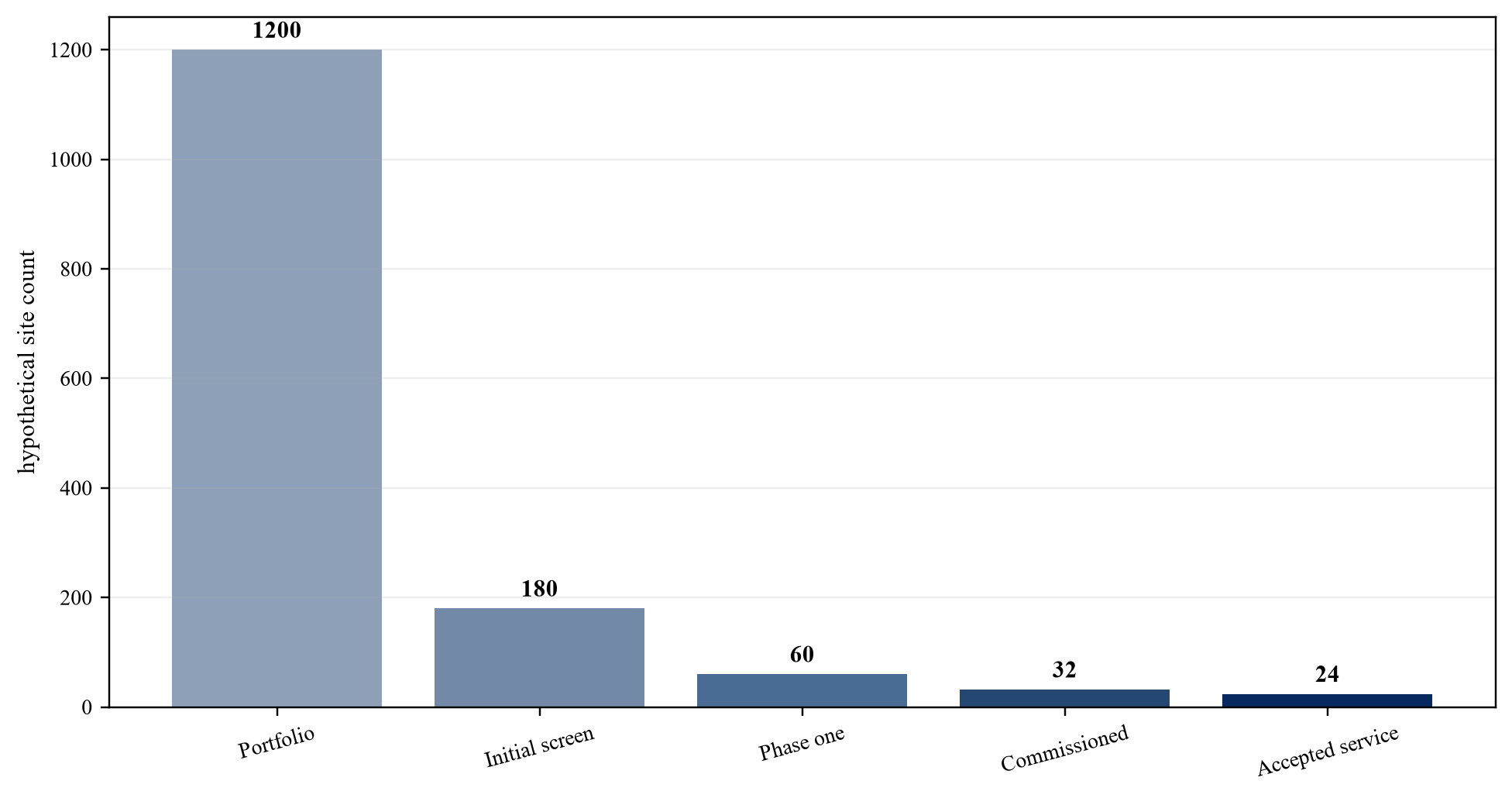
Wholly hypothetical; the funnel demonstrates attrition between inventory and accepted service.
| Gate | Required evidence | Failed-state action |
|---|---|---|
| legal control | transferable site and access rights | exclude or renegotiate |
| structure | survey and equipment loading | redesign or remediate |
| power and cooling | connection, tariff and tested capacity | resize or defer |
| fibre | commissioned diverse routes | procure or reject |
| permits and security | approvals and operating controls | condition precedent |
| customer service | accepted product and SLA | hold revenue and value |
Proposed minimum gate; local requirements may add conditions.
10. Separate operating nodes from candidate locations
Operating, commissioned, under-construction, permitted, power-reserved, fibre-adjacent and merely identified sites carry different probabilities and capital needs. [1][2][3][14] The analysis should identify the legal owner, commercial counterparty, operating controller, customer, financier and party bearing remediation or transition cost. It should distinguish observed data, executed obligations and wholly hypothetical assumptions.
The evidence file should begin with state definition, evidence owner, effective date, expiry, remaining conditions, enabling cost and next decision. Each record should state scope, definition, effective date, expiry or refresh point, accountable owner and its relationship to accepted service and collected cash. Public policy, regulatory and company disclosures establish context; transaction value requires asset-level rights, executed contracts, measured performance and auditable financial records.
The principal failure is that the transaction presentation adds all candidate sites to current edge capacity. The practical response is to publish a candidate-to-service waterfall and prohibit double counting between states. Management estimates should be identified in the model and refreshed when evidence changes. Downside analysis should combine related site, power, fibre, customer, regulatory, technology, integration, financing and liquidity risks rather than isolating each variable. Approval should record the evidence accepted, conditions outstanding and authority to defer or stop expenditure.
11. Reconcile permits and land-use rights
Compute use may trigger planning, noise, generator, cooling, fire, security, environmental and building requirements beyond passive telecom use. Requirements vary by country and municipality. [7][9][20][21] The analysis should identify the legal owner, commercial counterparty, operating controller, customer, financier and party bearing remediation or transition cost. It should distinguish observed data, executed obligations and wholly hypothetical assumptions.
The evidence file should begin with planning opinion, permit register, environmental review, fire and safety approvals, landlord consent and appeal exposure. Each record should state scope, definition, effective date, expiry or refresh point, accountable owner and its relationship to accepted service and collected cash. Public policy, regulatory and company disclosures establish context; transaction value requires asset-level rights, executed contracts, measured performance and auditable financial records.
The principal failure is that telecom permission is assumed to authorise data-centre operation and auxiliary plant. The practical response is to obtain jurisdiction-specific confirmation and price every condition, delay and community constraint. Management estimates should be identified in the model and refreshed when evidence changes. Downside analysis should combine related site, power, fibre, customer, regulatory, technology, integration, financing and liquidity risks rather than isolating each variable. Approval should record the evidence accepted, conditions outstanding and authority to defer or stop expenditure.
12. Test competition and wholesale-access constraints
Infrastructure consolidation can change local alternatives, bargaining power and access conditions. European and national authorities may examine geographic market power, discrimination and foreclosure. [2][5][7][22] The analysis should identify the legal owner, commercial counterparty, operating controller, customer, financier and party bearing remediation or transition cost. It should distinguish observed data, executed obligations and wholly hypothetical assumptions.
The evidence file should begin with market definition, competing routes and sites, customer switching, wholesale terms, exclusivity, remedies, regulatory status and merger filings. Each record should state scope, definition, effective date, expiry or refresh point, accountable owner and its relationship to accepted service and collected cash. Public policy, regulatory and company disclosures establish context; transaction value requires asset-level rights, executed contracts, measured performance and auditable financial records.
The principal failure is that national market shares conceal local bottlenecks or access obligations that change economics. The practical response is to model remedies and open-access duties by geographic market before signing. Management estimates should be identified in the model and refreshed when evidence changes. Downside analysis should combine related site, power, fibre, customer, regulatory, technology, integration, financing and liquidity risks rather than isolating each variable. Approval should record the evidence accepted, conditions outstanding and authority to defer or stop expenditure.
13. Design the operating model
The combined company must decide who sells, provisions, secures, monitors, bills and supports the service across passive infrastructure, networks and compute. [14][18][23][24] The analysis should identify the legal owner, commercial counterparty, operating controller, customer, financier and party bearing remediation or transition cost. It should distinguish observed data, executed obligations and wholly hypothetical assumptions.
The evidence file should begin with target operating model, decision rights, service catalogue, systems map, staffing, vendor model, control framework and service desk. Each record should state scope, definition, effective date, expiry or refresh point, accountable owner and its relationship to accepted service and collected cash. Public policy, regulatory and company disclosures establish context; transaction value requires asset-level rights, executed contracts, measured performance and auditable financial records.
The principal failure is that the deal model captures revenue synergy while leaving product ownership and operational accountability undefined. The practical response is to fund the operating platform and appoint accountable owners before customer migration. Management estimates should be identified in the model and refreshed when evidence changes. Downside analysis should combine related site, power, fibre, customer, regulatory, technology, integration, financing and liquidity risks rather than isolating each variable. Approval should record the evidence accepted, conditions outstanding and authority to defer or stop expenditure.
14. Preserve network and provider neutrality
A platform can widen demand when customers can choose carriers, clouds and hardware. Exclusive arrangements can simplify delivery while reducing addressable demand and exit flexibility. [1][12][16][23] The analysis should identify the legal owner, commercial counterparty, operating controller, customer, financier and party bearing remediation or transition cost. It should distinguish observed data, executed obligations and wholly hypothetical assumptions.
The evidence file should begin with carrier policy, cloud and hardware compatibility, cross-connect terms, software licences, data portability and switching tests. Each record should state scope, definition, effective date, expiry or refresh point, accountable owner and its relationship to accepted service and collected cash. Public policy, regulatory and company disclosures establish context; transaction value requires asset-level rights, executed contracts, measured performance and auditable financial records.
The principal failure is that the model assumes ecosystem revenue while contracts restrict interoperability or alternative providers. The practical response is to price exclusivity explicitly and preserve tested portability where neutrality supports value. Management estimates should be identified in the model and refreshed when evidence changes. Downside analysis should combine related site, power, fibre, customer, regulatory, technology, integration, financing and liquidity risks rather than isolating each variable. Approval should record the evidence accepted, conditions outstanding and authority to defer or stop expenditure.
15. Build a synergy evidence ladder
Synergy should move through identified, designed, contractable, accepted, billed and collected states. Probability and capital treatment should tighten at each step. [4][18][19][25] The analysis should identify the legal owner, commercial counterparty, operating controller, customer, financier and party bearing remediation or transition cost. It should distinguish observed data, executed obligations and wholly hypothetical assumptions.
The evidence file should begin with synergy owner, action, dependency, cost, date, customer, contract, acceptance, invoice and cash evidence. Each record should state scope, definition, effective date, expiry or refresh point, accountable owner and its relationship to accepted service and collected cash. Public policy, regulatory and company disclosures establish context; transaction value requires asset-level rights, executed contracts, measured performance and auditable financial records.
The principal failure is that the headline run-rate includes overlapping, unsupported or gross benefits without enabling costs. The practical response is to maintain a source-to-cash ledger and recognise only the stage approved by governance. Management estimates should be identified in the model and refreshed when evidence changes. Downside analysis should combine related site, power, fibre, customer, regulatory, technology, integration, financing and liquidity risks rather than isolating each variable. Approval should record the evidence accepted, conditions outstanding and authority to defer or stop expenditure.
| State | Minimum evidence | Valuation treatment |
|---|---|---|
| identified | named source and owner | exclude from base value |
| designed | costed action and dependency | scenario only |
| contractable | customer and commercial terms | probability weighted |
| accepted | commissioned service and acceptance | eligible operating forecast |
| billed | valid invoice and no dispute | working-capital adjusted |
| collected | bank receipt and reconciliation | realised cash |
Proposed governance; recognition increases only as evidence matures.
16. Model revenue synergy
Revenue can arise from converting controlled sites, attaching connectivity, winning multi-site customers or raising retention. Each case needs quantity, price, ramp, churn and cannibalisation evidence. [1][3][18][19] The analysis should identify the legal owner, commercial counterparty, operating controller, customer, financier and party bearing remediation or transition cost. It should distinguish observed data, executed obligations and wholly hypothetical assumptions.
The evidence file should begin with customer cohort, eligible sites, product, sales cycle, contract probability, price, contribution margin, cannibalisation and implementation capacity. Each record should state scope, definition, effective date, expiry or refresh point, accountable owner and its relationship to accepted service and collected cash. Public policy, regulatory and company disclosures establish context; transaction value requires asset-level rights, executed contracts, measured performance and auditable financial records.
The principal failure is that market size multiplied by a target share becomes transaction value without customer or delivery evidence. The practical response is to build site-and-customer cohorts and include revenue only after cost, delay and attrition. Management estimates should be identified in the model and refreshed when evidence changes. Downside analysis should combine related site, power, fibre, customer, regulatory, technology, integration, financing and liquidity risks rather than isolating each variable. Approval should record the evidence accepted, conditions outstanding and authority to defer or stop expenditure.
17. Model cost synergy
Potential savings include procurement, field operations, network capacity, facilities, systems and corporate overhead. Some costs rise because compute requires security, cooling, monitoring and skilled staff. [4][23][24][25] The analysis should identify the legal owner, commercial counterparty, operating controller, customer, financier and party bearing remediation or transition cost. It should distinguish observed data, executed obligations and wholly hypothetical assumptions.
The evidence file should begin with baseline cost, supplier contract, headcount, service requirement, transition cost, redundancy, inflation and timing. Each record should state scope, definition, effective date, expiry or refresh point, accountable owner and its relationship to accepted service and collected cash. Public policy, regulatory and company disclosures establish context; transaction value requires asset-level rights, executed contracts, measured performance and auditable financial records.
The principal failure is that gross savings omit stranded contracts, dual running, retention, remediation and service-quality cost. The practical response is to calculate net recurring savings after transition, resilience and service obligations. Management estimates should be identified in the model and refreshed when evidence changes. Downside analysis should combine related site, power, fibre, customer, regulatory, technology, integration, financing and liquidity risks rather than isolating each variable. Approval should record the evidence accepted, conditions outstanding and authority to defer or stop expenditure.
18. Deduct enabling capital and recurring service cost
Edge optionality requires investment in power, cooling, fibre, security, equipment, software, systems and customer onboarding. These uses compete with acquisition leverage and distributions. [9][10][18][26] The analysis should identify the legal owner, commercial counterparty, operating controller, customer, financier and party bearing remediation or transition cost. It should distinguish observed data, executed obligations and wholly hypothetical assumptions.
The evidence file should begin with site bill of quantities, procurement plan, technology cohort, implementation schedule, capital contingency, maintenance and refresh reserve. Each record should state scope, definition, effective date, expiry or refresh point, accountable owner and its relationship to accepted service and collected cash. Public policy, regulatory and company disclosures establish context; transaction value requires asset-level rights, executed contracts, measured performance and auditable financial records.
The principal failure is that synergy is presented before the expenditure needed to create and sustain it. The practical response is to measure net present value after all enabling capital, operating cost, tax and financing. Management estimates should be identified in the model and refreshed when evidence changes. Downside analysis should combine related site, power, fibre, customer, regulatory, technology, integration, financing and liquidity risks rather than isolating each variable. Approval should record the evidence accepted, conditions outstanding and authority to defer or stop expenditure.
19. Value the stand-alone businesses
The base valuation should reflect current contracts, renewal risk, capital intensity, market structure and asset lives without cross-asset assumptions. [4][6][25][27] The analysis should identify the legal owner, commercial counterparty, operating controller, customer, financier and party bearing remediation or transition cost. It should distinguish observed data, executed obligations and wholly hypothetical assumptions.
The evidence file should begin with historical cash, contracts, tenancy and utilisation, churn, capex, maintenance, working capital, tax and financing. Each record should state scope, definition, effective date, expiry or refresh point, accountable owner and its relationship to accepted service and collected cash. Public policy, regulatory and company disclosures establish context; transaction value requires asset-level rights, executed contracts, measured performance and auditable financial records.
The principal failure is that an inflated strategic base absorbs synergy and obscures the acquisition premium. The practical response is to produce auditable stand-alone cases and reconcile purchase price to each source of value. Management estimates should be identified in the model and refreshed when evidence changes. Downside analysis should combine related site, power, fibre, customer, regulatory, technology, integration, financing and liquidity risks rather than isolating each variable. Approval should record the evidence accepted, conditions outstanding and authority to defer or stop expenditure.
20. Apply a hypothetical multi-country acquisition
The case tests 1,200 locations, six metro fibre rings and eighteen operating nodes across four markets. Only 180 sites pass initial screening; sixty enter phase one and twenty-four reach accepted service by year three. [1][2][3][4] The analysis should identify the legal owner, commercial counterparty, operating controller, customer, financier and party bearing remediation or transition cost. It should distinguish observed data, executed obligations and wholly hypothetical assumptions.
The evidence file should begin with hypothetical perimeter, site gates, sources and uses, deployment plan, customer conversion, synergy bridge, financing and downside. Each record should state scope, definition, effective date, expiry or refresh point, accountable owner and its relationship to accepted service and collected cash. Public policy, regulatory and company disclosures establish context; transaction value requires asset-level rights, executed contracts, measured performance and auditable financial records.
The principal failure is that all 1,200 locations are treated as future nodes or the full synergy is reached without attrition and delay. The practical response is to fund phase one through gates and preserve the right to defer, repurpose or sell assets. Management estimates should be identified in the model and refreshed when evidence changes. Downside analysis should combine related site, power, fibre, customer, regulatory, technology, integration, financing and liquidity risks rather than isolating each variable. Approval should record the evidence accepted, conditions outstanding and authority to defer or stop expenditure.
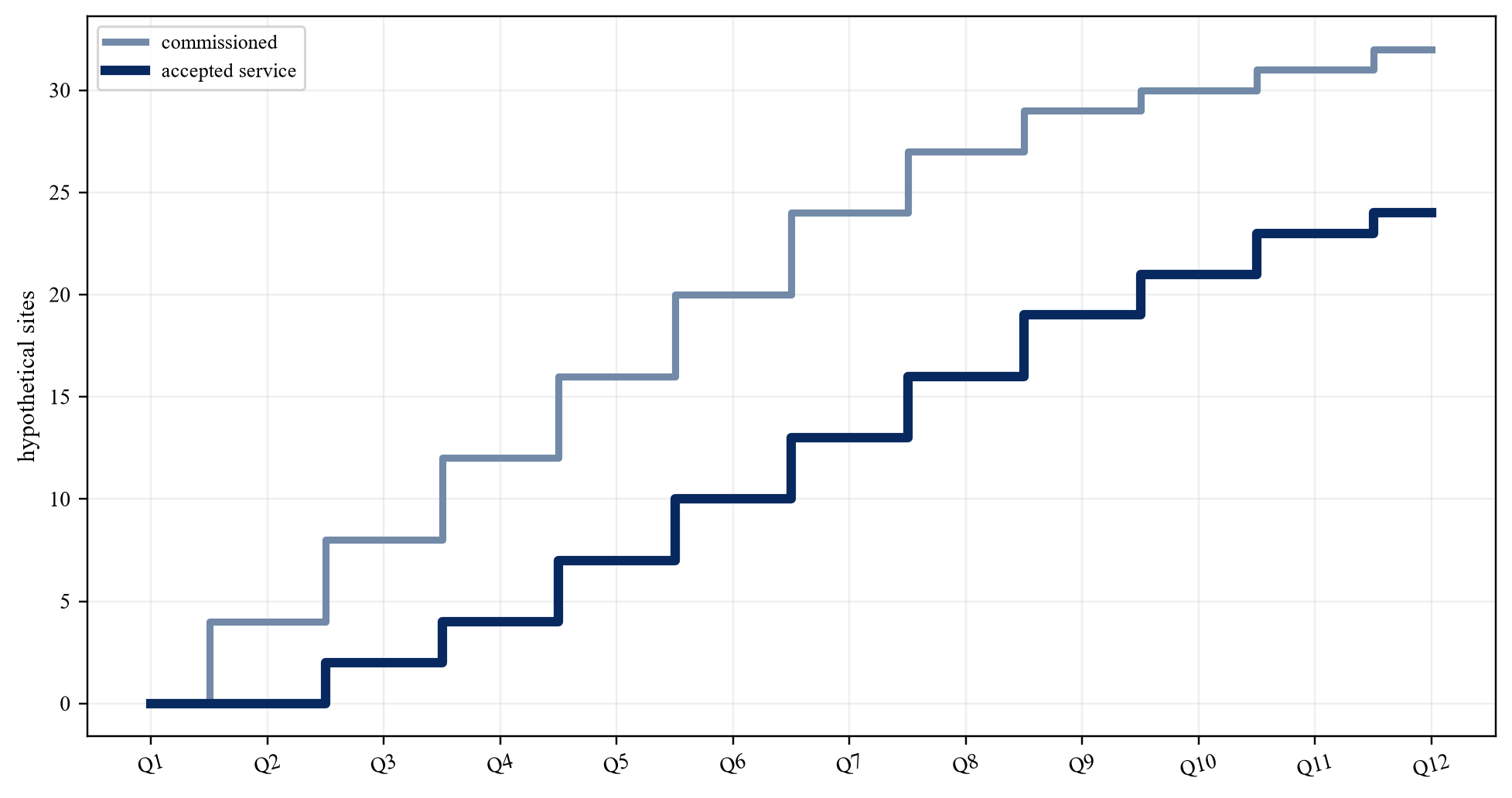
Wholly hypothetical; each cohort requires its own legal, power, fibre, customer and funding release.
| Metric | Central case | Gate or downside |
|---|---|---|
| portfolio locations | 1,200 | 180 pass initial screen |
| phase-one sites | 60 | 24 accepted by year three |
| operating micro nodes at signing | 18 | separately diligenced |
| initial uses | EUR 2,150 million | includes conversion and contingency |
| year-three gross run-rate synergy | EUR 92 million | evidence ladder applies |
| recurring enabling cost | EUR 38 million | deducted before net synergy |
| year-three net run-rate synergy | EUR 54 million | lower in combined downside |
Wholly hypothetical; figures do not describe an announced transaction.
21. Structure acquisition financing
Debt capacity should follow durable stand-alone cash and separately eligible contracted edge cash. Sponsor equity should absorb uncertain conversion, integration and technology risk. [26][27][28][29] The analysis should identify the legal owner, commercial counterparty, operating controller, customer, financier and party bearing remediation or transition cost. It should distinguish observed data, executed obligations and wholly hypothetical assumptions.
The evidence file should begin with borrower perimeter, cash waterfall, security, covenants, permitted capex, draw conditions, hedging, cure rights and sponsor support. Each record should state scope, definition, effective date, expiry or refresh point, accountable owner and its relationship to accepted service and collected cash. Public policy, regulatory and company disclosures establish context; transaction value requires asset-level rights, executed contracts, measured performance and auditable financial records.
The principal failure is that acquisition debt is sized to a synergy case that depends on uncontracted demand and future site conversion. The practical response is to exclude unsupported synergy from base debt sizing and use staged facilities for verified expansion. Management estimates should be identified in the model and refreshed when evidence changes. Downside analysis should combine related site, power, fibre, customer, regulatory, technology, integration, financing and liquidity risks rather than isolating each variable. Approval should record the evidence accepted, conditions outstanding and authority to defer or stop expenditure.
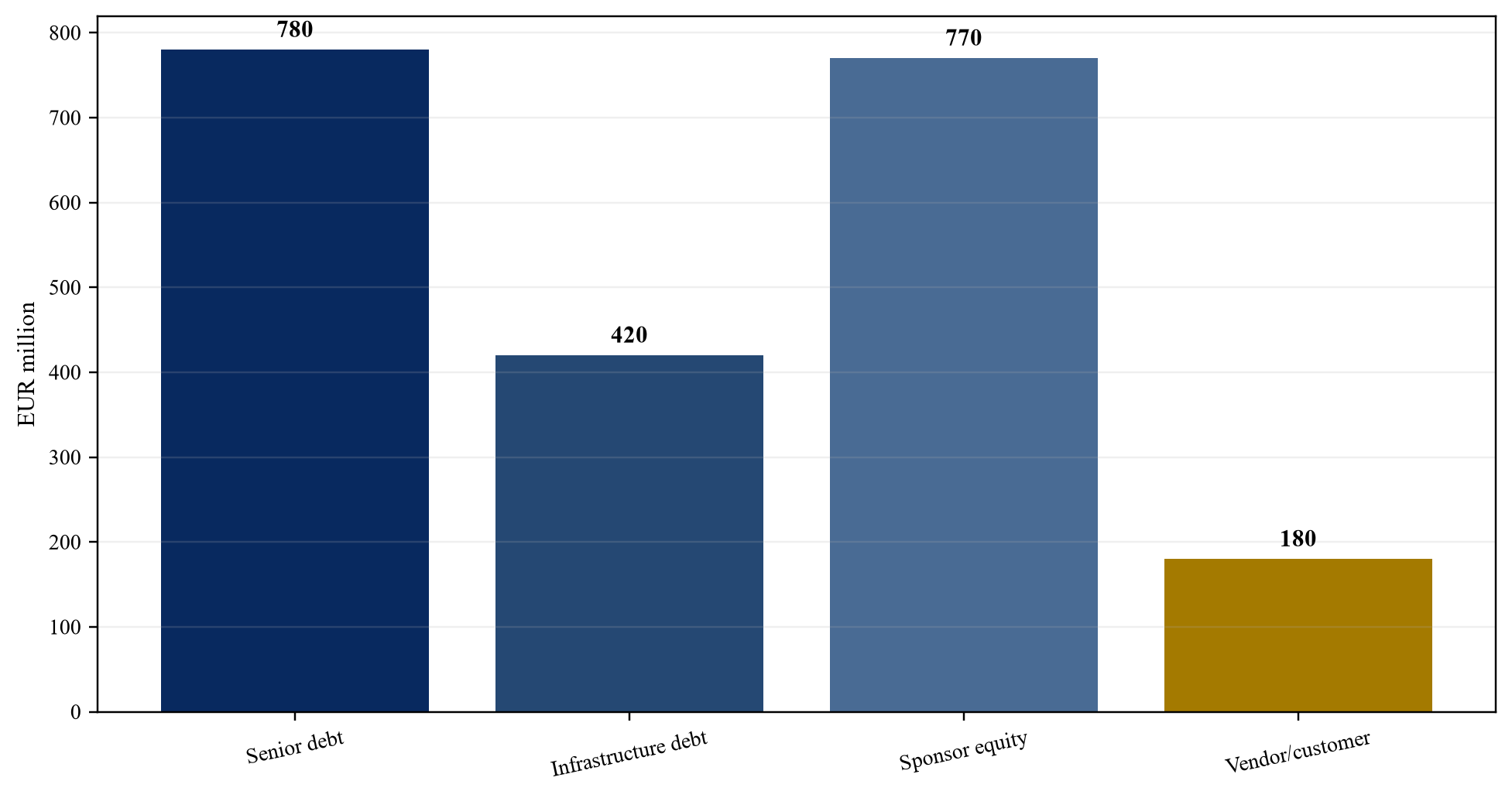
Wholly hypothetical; EUR million.
22. Allocate integration and technology risk
Site conversion, network integration, platform migration, cyber control, hardware refresh and customer acceptance sit with different parties. Contracts should allocate each risk to the party that controls it. [14][23][24][26] The analysis should identify the legal owner, commercial counterparty, operating controller, customer, financier and party bearing remediation or transition cost. It should distinguish observed data, executed obligations and wholly hypothetical assumptions.
The evidence file should begin with risk matrix, integration agreement, vendor warranty, service credits, insurance, direct agreements, caps, relief and step-in rights. Each record should state scope, definition, effective date, expiry or refresh point, accountable owner and its relationship to accepted service and collected cash. Public policy, regulatory and company disclosures establish context; transaction value requires asset-level rights, executed contracts, measured performance and auditable financial records.
The principal failure is that the acquisition vehicle retains correlated risks without price adjustment, recourse or liquidity. The practical response is to assign control, establish milestones and reserve for residual correlated exposures. Management estimates should be identified in the model and refreshed when evidence changes. Downside analysis should combine related site, power, fibre, customer, regulatory, technology, integration, financing and liquidity risks rather than isolating each variable. Approval should record the evidence accepted, conditions outstanding and authority to defer or stop expenditure.
| Risk | Primary controller | Core protection |
|---|---|---|
| site and permit | seller and site company | warranty, condition and price holdback |
| power and fibre | utility, carrier and site company | milestone and direct agreement |
| equipment and commissioning | vendor and operator | acceptance, warranty and liquidated remedy |
| customer demand | customer and sponsor | minimum payment and staging |
| service and cyber | operator | monitoring, insurance and credits |
| integration and separation | buyer | plan, reserve and stop rights |
Proposed framework; final contracts and applicable law govern.
23. Stress delay, demand, power and refresh together
A delayed site can miss a customer date; weak demand can reduce pricing; power upgrades can consume contingency; hardware change can accelerate refresh. These risks can compound. [9][10][18][29] The analysis should identify the legal owner, commercial counterparty, operating controller, customer, financier and party bearing remediation or transition cost. It should distinguish observed data, executed obligations and wholly hypothetical assumptions.
The evidence file should begin with base and downside assumptions, dependency map, liquidity, covenant headroom, cure capacity, module deferral and exit options. Each record should state scope, definition, effective date, expiry or refresh point, accountable owner and its relationship to accepted service and collected cash. Public policy, regulatory and company disclosures establish context; transaction value requires asset-level rights, executed contracts, measured performance and auditable financial records.
The principal failure is that single-variable sensitivities understate the cash effect of correlated integration and market shocks. The practical response is to run combined scenarios and identify the earliest funding, covenant or value failure. Management estimates should be identified in the model and refreshed when evidence changes. Downside analysis should combine related site, power, fibre, customer, regulatory, technology, integration, financing and liquidity risks rather than isolating each variable. Approval should record the evidence accepted, conditions outstanding and authority to defer or stop expenditure.
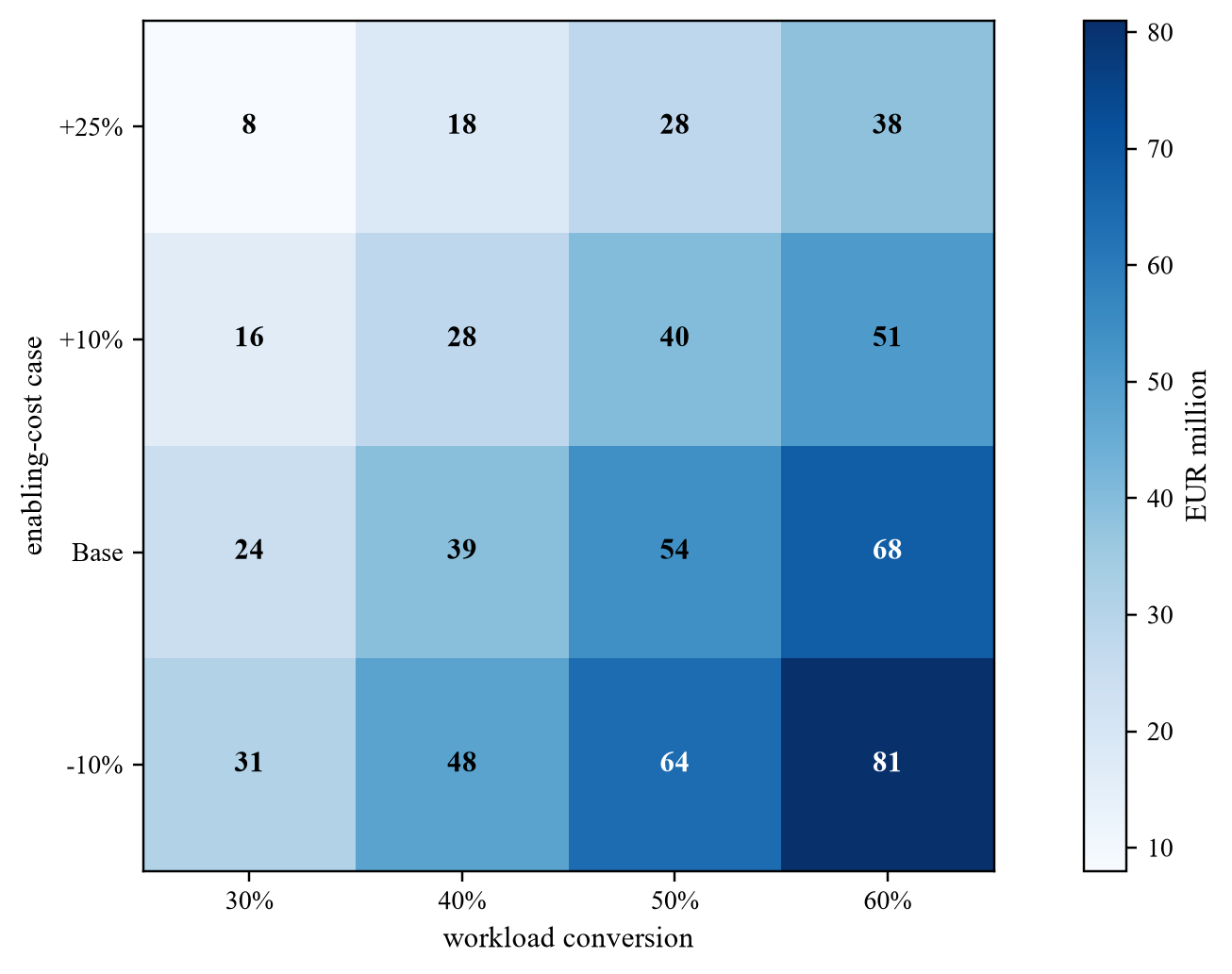
Wholly hypothetical; EUR million of year-three net run-rate synergy.
24. Design integration gates
Each site cohort should pass legal, power, fibre, permit, product, customer, funding and commissioning gates before the next commitment. [4][9][12][23] The analysis should identify the legal owner, commercial counterparty, operating controller, customer, financier and party bearing remediation or transition cost. It should distinguish observed data, executed obligations and wholly hypothetical assumptions.
The evidence file should begin with gate definition, required documents, approver, date, budget, exceptions and stop authority. Each record should state scope, definition, effective date, expiry or refresh point, accountable owner and its relationship to accepted service and collected cash. Public policy, regulatory and company disclosures establish context; transaction value requires asset-level rights, executed contracts, measured performance and auditable financial records.
The principal failure is that the integration programme tracks activity and spend without proving service readiness or value. The practical response is to release capital at evidence gates and escalate exceptions to the investment committee. Management estimates should be identified in the model and refreshed when evidence changes. Downside analysis should combine related site, power, fibre, customer, regulatory, technology, integration, financing and liquidity risks rather than isolating each variable. Approval should record the evidence accepted, conditions outstanding and authority to defer or stop expenditure.
25. Monitor site to service to cash
A common data model should connect site rights, power, fibre, equipment, service performance, customer acceptance, billing and collections. [18][19][23][24] The analysis should identify the legal owner, commercial counterparty, operating controller, customer, financier and party bearing remediation or transition cost. It should distinguish observed data, executed obligations and wholly hypothetical assumptions.
The evidence file should begin with asset identifier, contract identifier, telemetry, acceptance, invoice, cash, capex, operating cost, incidents and remediation. Each record should state scope, definition, effective date, expiry or refresh point, accountable owner and its relationship to accepted service and collected cash. Public policy, regulatory and company disclosures establish context; transaction value requires asset-level rights, executed contracts, measured performance and auditable financial records.
The principal failure is that separate dashboards report favourable site counts, uptime and pipeline that cannot reconcile to cash. The practical response is to maintain an auditable site-to-service-to-cash record with accountable owners. Management estimates should be identified in the model and refreshed when evidence changes. Downside analysis should combine related site, power, fibre, customer, regulatory, technology, integration, financing and liquidity risks rather than isolating each variable. Approval should record the evidence accepted, conditions outstanding and authority to defer or stop expenditure.
26. Preserve exit and separation routes
A future buyer may value towers, fibre, operating nodes or the service platform differently. Transfer restrictions and shared systems can destroy optionality. [4][6][25][27] The analysis should identify the legal owner, commercial counterparty, operating controller, customer, financier and party bearing remediation or transition cost. It should distinguish observed data, executed obligations and wholly hypothetical assumptions.
The evidence file should begin with asset ownership, transfer consent, licences, shared services, data portability, customer assignment, carve-out cost and buyer universe. Each record should state scope, definition, effective date, expiry or refresh point, accountable owner and its relationship to accepted service and collected cash. Public policy, regulatory and company disclosures establish context; transaction value requires asset-level rights, executed contracts, measured performance and auditable financial records.
The principal failure is that the terminal value applies one digital-infrastructure multiple to assets that cannot be separated or transferred cleanly. The practical response is to design legal, system and contract separability from signing and test buyer-specific value. Management estimates should be identified in the model and refreshed when evidence changes. Downside analysis should combine related site, power, fibre, customer, regulatory, technology, integration, financing and liquidity risks rather than isolating each variable. Approval should record the evidence accepted, conditions outstanding and authority to defer or stop expenditure.
27. Apply accounting and impairment discipline
Purchase-price allocation, leases, revenue recognition, financial instruments, fair value and impairment affect reported performance and governance after closing. [27][28][29][30] The analysis should identify the legal owner, commercial counterparty, operating controller, customer, financier and party bearing remediation or transition cost. It should distinguish observed data, executed obligations and wholly hypothetical assumptions.
The evidence file should begin with valuation files, identifiable assets, useful lives, contract liabilities, leases, debt terms, impairment indicators and disclosure controls. Each record should state scope, definition, effective date, expiry or refresh point, accountable owner and its relationship to accepted service and collected cash. Public policy, regulatory and company disclosures establish context; transaction value requires asset-level rights, executed contracts, measured performance and auditable financial records.
The principal failure is that accounting classifications are decided after the commercial model and obscure deteriorating site or technology value. The practical response is to align the transaction model with IFRS analysis and define early impairment triggers. Management estimates should be identified in the model and refreshed when evidence changes. Downside analysis should combine related site, power, fibre, customer, regulatory, technology, integration, financing and liquidity risks rather than isolating each variable. Approval should record the evidence accepted, conditions outstanding and authority to defer or stop expenditure.
28. Reach the investment decision
Approval should require stand-alone value, controlled site rights, deliverable power, resilient fibre, a defined service, contracted demand, net synergy, funded integration, regulatory clearance and downside liquidity. [1][2][4][26] The analysis should identify the legal owner, commercial counterparty, operating controller, customer, financier and party bearing remediation or transition cost. It should distinguish observed data, executed obligations and wholly hypothetical assumptions.
The evidence file should begin with investment memorandum, evidence ledger, model, diligence exceptions, financing, integration plan, risk allocation, scenarios and approval record. Each record should state scope, definition, effective date, expiry or refresh point, accountable owner and its relationship to accepted service and collected cash. Public policy, regulatory and company disclosures establish context; transaction value requires asset-level rights, executed contracts, measured performance and auditable financial records.
The principal failure is that strategic urgency or edge-market growth replaces the evidence required to pay an acquisition premium. The practical response is to approve only staged value with explicit conditions, owners, expiry dates and stop rights. Management estimates should be identified in the model and refreshed when evidence changes. Downside analysis should combine related site, power, fibre, customer, regulatory, technology, integration, financing and liquidity risks rather than isolating each variable. Approval should record the evidence accepted, conditions outstanding and authority to defer or stop expenditure.
| Decision | Minimum evidence | Possible action |
|---|---|---|
| acquisition premium | stand-alone value and net synergy | accept, cap or reject |
| site cohort | rights, power, fibre, permits and demand | fund, resize or defer |
| acquisition debt | stressed eligible cash and security | lend, condition or reduce |
| conversion facility | costed milestone and customer | draw, hold or cancel |
| regulatory remedy | market analysis and clearance | accept, reprice or abandon |
| next cohort | acceptance, cash and liquidity | release, repurpose or stop |
Proposed governance; each approval identifies evidence, owner and expiry.
Sources
- European Commission, *The Edge Observatory for the Digital Decade* (updated 28 August 2026). Read the primary source
- BEREC, *External study on the evolution of the competition dynamics of tower and access infrastructure companies not directly providing retail services*, BoR (23) 206 (2023). Read the primary source
- European Commission, *Connectivity: the backbone of EU digital ambitions*. Read the primary source
- IFRS Foundation, *IFRS 3 Business Combinations*. Read the primary source
- BEREC, *Report on Infrastructure Sharing*, BoR (25) 68 (2025). Read the primary source
- Cellnex Telecom, *Annual reports*. Read the primary source
- European Commission, *Gigabit Infrastructure Act* (updated 27 July 2026). Read the primary source
- European Commission, *Recommendation on the regulatory promotion of gigabit connectivity* (2024). Read the primary source
- European Commission, *Directive (EU) 2023/1791 on energy efficiency*. Read the primary source
- European Commission, *European Database on Energy Efficiency-related aspects of Data Centres*. Read the primary source
- International Energy Agency, *Energy and AI* (2025). Read the primary source
- ENISA, *Fog and Edge Computing in 5G* (2023). Read the primary source
- European Commission, *Digital Decade 2025: 5G Observatory Report* (2025). Read the primary source
- European Commission, *Edge Nodes Taxonomy and Monitoring Methodology*. Read the primary source
- ETSI, *Multi-access Edge Computing*. Read the primary source
- European Commission, *Cloud computing policy*. Read the primary source
- ITU-T, *Network performance objectives for IP-based services*, Recommendation Y.1541. Read the primary source
- IFRS Foundation, *IFRS 15 Revenue from Contracts with Customers*. Read the primary source
- IFRS Foundation, *IFRS 9 Financial Instruments*. Read the primary source
- European Commission, *Environmental Impact Assessment Directive*. Read the primary source
- European Commission, *NIS2 Directive*. Read the primary source
- European Commission, *EU merger control*. Read the primary source
- ENISA, *NIS Investments Report 2024*. Read the primary source
- ENISA, *Threat Landscape 2025*. Read the primary source
- IFRS Foundation, *IFRS 13 Fair Value Measurement*. Read the primary source
- European Investment Bank, *Digital economy and infrastructure*. Read the primary source
- IFRS Foundation, *IAS 36 Impairment of Assets*. Read the primary source
- IFRS Foundation, *IFRS 16 Leases*. Read the primary source
- European Central Bank, *Guide on leveraged transactions* (2017). Read the primary source
- IFRS Foundation, *IAS 12 Income Taxes*. Read the primary source
- European Commission, *State of the Digital Decade 2025 report* (2025). Read the primary source
- European Commission, *The Digital Networks Act* (proposal adopted 21 January 2026). Read the primary source
- European Commission, *Proposal for the Cloud and AI Development Act* (3 June 2026). Read the primary source
