

1. Define the protected value objective
The transaction team should state whether the negotiation protects delivered value, relative ownership, premium, downside, control or a combination. The required output is a signed value-objective memorandum. Use current source data and link every material conclusion to retained merger, market, capitalisation, operating, financing and regulatory evidence [1][2].
Translate the conclusion into the executed exchange-ratio model and board paper. Identify the formula, reference date, data owner, source system, currency, fully diluted share count, corporate-action treatment, approval threshold and decision deadline. Reconcile legal drafting, valuation analysis, accounting, financing and shareholder disclosure.
The principal risk is that the parties can optimise different outcomes while using the same exchange-ratio language. Quantify delivered value, pro forma ownership, premium, dilution, cash requirement and accounting consideration across fixed-ratio, floating-ratio, collar, relative-underperformance, high-volatility, delayed-closing and combined downside cases.
Retain the source, model version, reviewer, independent recalculation, legal and financial approval and board response. Compare actual market and operating movements with the signed cases; refresh the sensitivity grid after material changes; and assign every exception an owner and deadline.
2. Reconstruct the exchange formula
The transaction team should translate every numerator, denominator, adjustment, rounding rule and timing convention from the executed agreement. The required output is an executable exchange-ratio formula. Use current source data and link every material conclusion to retained merger, market, capitalisation, operating, financing and regulatory evidence [1][3].
Translate the conclusion into the executed exchange-ratio model and board paper. Identify the formula, reference date, data owner, source system, currency, fully diluted share count, corporate-action treatment, approval threshold and decision deadline. Reconcile legal drafting, valuation analysis, accounting, financing and shareholder disclosure.
The principal risk is that an apparently simple ratio can contain several conditional calculations. Quantify delivered value, pro forma ownership, premium, dilution, cash requirement and accounting consideration across fixed-ratio, floating-ratio, collar, relative-underperformance, high-volatility, delayed-closing and combined downside cases.
Retain the source, model version, reviewer, independent recalculation, legal and financial approval and board response. Compare actual market and operating movements with the signed cases; refresh the sensitivity grid after material changes; and assign every exception an owner and deadline.
3. Reconcile fully diluted shares
The transaction team should map issued shares, options, awards, convertibles, treasury shares, new grants, buybacks and permitted issuance. The required output is a closing share-count bridge. Use current source data and link every material conclusion to retained merger, market, capitalisation, operating, financing and regulatory evidence [3][14].
Translate the conclusion into the executed exchange-ratio model and board paper. Identify the formula, reference date, data owner, source system, currency, fully diluted share count, corporate-action treatment, approval threshold and decision deadline. Reconcile legal drafting, valuation analysis, accounting, financing and shareholder disclosure.
The principal risk is that ownership can move even when market prices do not. Quantify delivered value, pro forma ownership, premium, dilution, cash requirement and accounting consideration across fixed-ratio, floating-ratio, collar, relative-underperformance, high-volatility, delayed-closing and combined downside cases.
Retain the source, model version, reviewer, independent recalculation, legal and financial approval and board response. Compare actual market and operating movements with the signed cases; refresh the sensitivity grid after material changes; and assign every exception an owner and deadline.
4. Separate value from ownership
The transaction team should calculate delivered market value, enterprise value, premium and pro forma ownership under each price point. The required output is a value-and-ownership bridge. Use current source data and link every material conclusion to retained merger, market, capitalisation, operating, financing and regulatory evidence [2][4].
Translate the conclusion into the executed exchange-ratio model and board paper. Identify the formula, reference date, data owner, source system, currency, fully diluted share count, corporate-action treatment, approval threshold and decision deadline. Reconcile legal drafting, valuation analysis, accounting, financing and shareholder disclosure.
The principal risk is that one mechanism can stabilise value by allowing ownership to change. Quantify delivered value, pro forma ownership, premium, dilution, cash requirement and accounting consideration across fixed-ratio, floating-ratio, collar, relative-underperformance, high-volatility, delayed-closing and combined downside cases.
Retain the source, model version, reviewer, independent recalculation, legal and financial approval and board response. Compare actual market and operating movements with the signed cases; refresh the sensitivity grid after material changes; and assign every exception an owner and deadline.
5. Choose fixed or floating exposure
The transaction team should compare fixed-ratio, fixed-value, mixed and contingent structures against the value objective. The required output is a structure comparison. Use current source data and link every material conclusion to retained merger, market, capitalisation, operating, financing and regulatory evidence [2][5].
Translate the conclusion into the executed exchange-ratio model and board paper. Identify the formula, reference date, data owner, source system, currency, fully diluted share count, corporate-action treatment, approval threshold and decision deadline. Reconcile legal drafting, valuation analysis, accounting, financing and shareholder disclosure.
The principal risk is that the selected mechanism can transfer more volatility than the board intended. Quantify delivered value, pro forma ownership, premium, dilution, cash requirement and accounting consideration across fixed-ratio, floating-ratio, collar, relative-underperformance, high-volatility, delayed-closing and combined downside cases.
Retain the source, model version, reviewer, independent recalculation, legal and financial approval and board response. Compare actual market and operating movements with the signed cases; refresh the sensitivity grid after material changes; and assign every exception an owner and deadline.
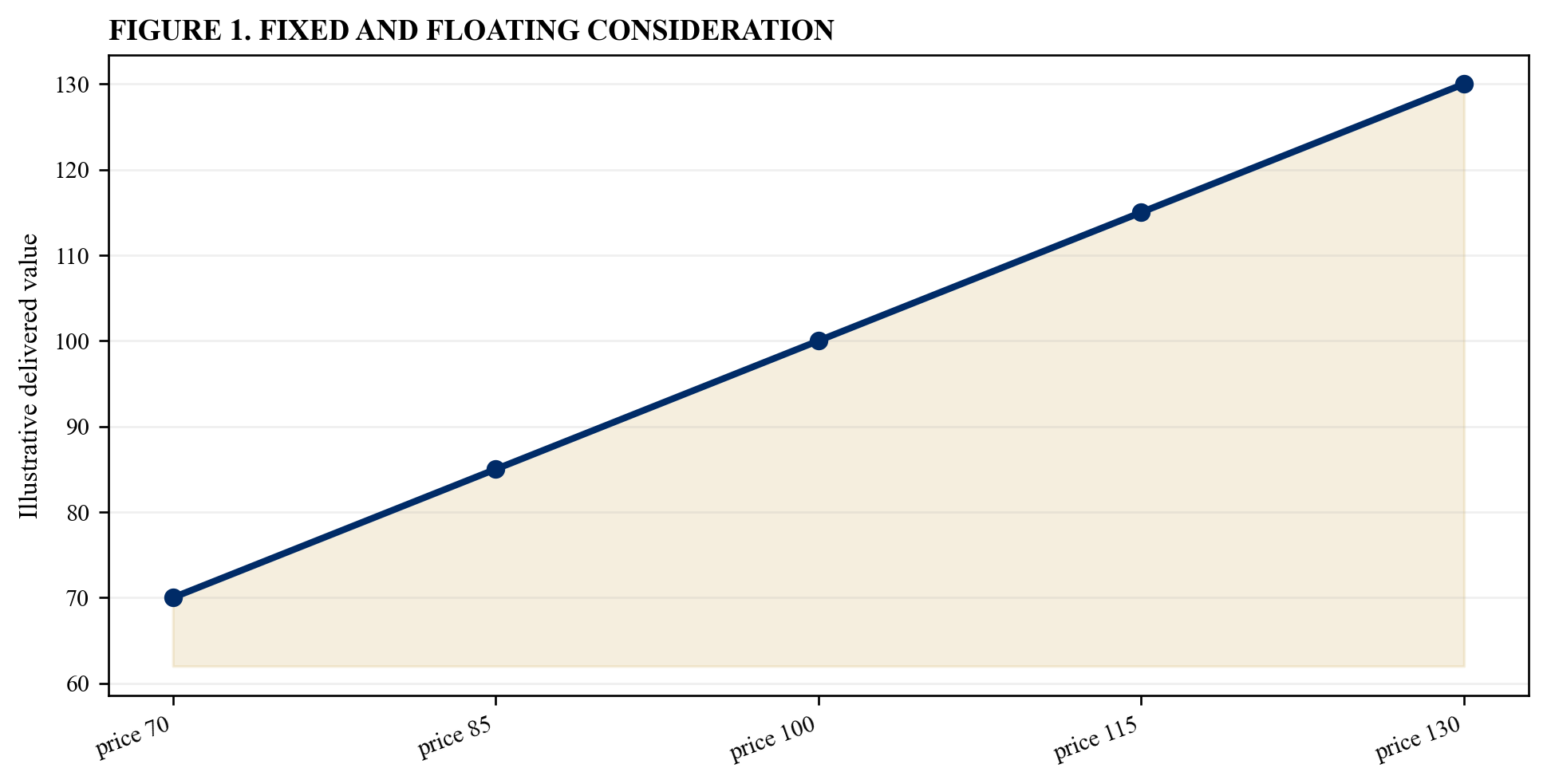
Illustrative analytical scenario; verified market, capitalisation and transaction data should replace index values.
6. Measure absolute price risk
The transaction team should model each party's price path from unaffected date through signing, measurement and closing. The required output is an absolute-price scenario file. Use current source data and link every material conclusion to retained merger, market, capitalisation, operating, financing and regulatory evidence [4][6].
Translate the conclusion into the executed exchange-ratio model and board paper. Identify the formula, reference date, data owner, source system, currency, fully diluted share count, corporate-action treatment, approval threshold and decision deadline. Reconcile legal drafting, valuation analysis, accounting, financing and shareholder disclosure.
The principal risk is that delivered consideration can fall while the exchange ratio remains constant. Quantify delivered value, pro forma ownership, premium, dilution, cash requirement and accounting consideration across fixed-ratio, floating-ratio, collar, relative-underperformance, high-volatility, delayed-closing and combined downside cases.
Retain the source, model version, reviewer, independent recalculation, legal and financial approval and board response. Compare actual market and operating movements with the signed cases; refresh the sensitivity grid after material changes; and assign every exception an owner and deadline.
7. Measure relative performance
The transaction team should compare the parties' returns over consistent periods and decompose market, sector and company effects. The required output is a relative-performance bridge. Use current source data and link every material conclusion to retained merger, market, capitalisation, operating, financing and regulatory evidence [3][7].
Translate the conclusion into the executed exchange-ratio model and board paper. Identify the formula, reference date, data owner, source system, currency, fully diluted share count, corporate-action treatment, approval threshold and decision deadline. Reconcile legal drafting, valuation analysis, accounting, financing and shareholder disclosure.
The principal risk is that the acquirer price can rise while the target still loses relative value. Quantify delivered value, pro forma ownership, premium, dilution, cash requirement and accounting consideration across fixed-ratio, floating-ratio, collar, relative-underperformance, high-volatility, delayed-closing and combined downside cases.
Retain the source, model version, reviewer, independent recalculation, legal and financial approval and board response. Compare actual market and operating movements with the signed cases; refresh the sensitivity grid after material changes; and assign every exception an owner and deadline.
8. Estimate volatility and correlation
The transaction team should use transparent windows, frequencies, corporate-action adjustments and stress assumptions for both shares. The required output is a market-risk calibration. Use current source data and link every material conclusion to retained merger, market, capitalisation, operating, financing and regulatory evidence [6][8].
Translate the conclusion into the executed exchange-ratio model and board paper. Identify the formula, reference date, data owner, source system, currency, fully diluted share count, corporate-action treatment, approval threshold and decision deadline. Reconcile legal drafting, valuation analysis, accounting, financing and shareholder disclosure.
The principal risk is that historical volatility can understate transaction-period dislocation. Quantify delivered value, pro forma ownership, premium, dilution, cash requirement and accounting consideration across fixed-ratio, floating-ratio, collar, relative-underperformance, high-volatility, delayed-closing and combined downside cases.
Retain the source, model version, reviewer, independent recalculation, legal and financial approval and board response. Compare actual market and operating movements with the signed cases; refresh the sensitivity grid after material changes; and assign every exception an owner and deadline.
Table 1. Exchange-ratio structure comparison
| Structure | Value exposure | Ownership exposure |
|---|---|---|
| fixed ratio | market floats | largely fixed |
| floating ratio | targeted | market floats |
| two-way collar | shared by zones | shared by zones |
| cash top-up | partly protected | funding dependent |
Illustrative structure; the executed merger agreement and verified closing inputs govern.
9. Define the reference price
The transaction team should specify closing, average, VWAP or other observable price, market, currency, source and adjustment rules. The required output is a reference-price specification. Use current source data and link every material conclusion to retained merger, market, capitalisation, operating, financing and regulatory evidence [1][4].
Translate the conclusion into the executed exchange-ratio model and board paper. Identify the formula, reference date, data owner, source system, currency, fully diluted share count, corporate-action treatment, approval threshold and decision deadline. Reconcile legal drafting, valuation analysis, accounting, financing and shareholder disclosure.
The principal risk is that different price definitions can create materially different exchange outcomes. Quantify delivered value, pro forma ownership, premium, dilution, cash requirement and accounting consideration across fixed-ratio, floating-ratio, collar, relative-underperformance, high-volatility, delayed-closing and combined downside cases.
Retain the source, model version, reviewer, independent recalculation, legal and financial approval and board response. Compare actual market and operating movements with the signed cases; refresh the sensitivity grid after material changes; and assign every exception an owner and deadline.
10. Set the measurement period
The transaction team should choose length, ending date, gap to closing and treatment of non-trading days. The required output is a measurement-window schedule. Use current source data and link every material conclusion to retained merger, market, capitalisation, operating, financing and regulatory evidence [1][9].
Translate the conclusion into the executed exchange-ratio model and board paper. Identify the formula, reference date, data owner, source system, currency, fully diluted share count, corporate-action treatment, approval threshold and decision deadline. Reconcile legal drafting, valuation analysis, accounting, financing and shareholder disclosure.
The principal risk is that a short or stale window can be dominated by transient moves. Quantify delivered value, pro forma ownership, premium, dilution, cash requirement and accounting consideration across fixed-ratio, floating-ratio, collar, relative-underperformance, high-volatility, delayed-closing and combined downside cases.
Retain the source, model version, reviewer, independent recalculation, legal and financial approval and board response. Compare actual market and operating movements with the signed cases; refresh the sensitivity grid after material changes; and assign every exception an owner and deadline.
11. Define market-disruption rules
The transaction team should address suspensions, extraordinary closures, erroneous prints, low liquidity and benchmark failure. The required output is a disruption protocol. Use current source data and link every material conclusion to retained merger, market, capitalisation, operating, financing and regulatory evidence [9][10].
Translate the conclusion into the executed exchange-ratio model and board paper. Identify the formula, reference date, data owner, source system, currency, fully diluted share count, corporate-action treatment, approval threshold and decision deadline. Reconcile legal drafting, valuation analysis, accounting, financing and shareholder disclosure.
The principal risk is that the contractual price can become unavailable or unrepresentative. Quantify delivered value, pro forma ownership, premium, dilution, cash requirement and accounting consideration across fixed-ratio, floating-ratio, collar, relative-underperformance, high-volatility, delayed-closing and combined downside cases.
Retain the source, model version, reviewer, independent recalculation, legal and financial approval and board response. Compare actual market and operating movements with the signed cases; refresh the sensitivity grid after material changes; and assign every exception an owner and deadline.
12. Design a two-way collar
The transaction team should set lower and upper boundaries, internal floating formula and external fixed ratios. The required output is a two-way collar payoff. Use current source data and link every material conclusion to retained merger, market, capitalisation, operating, financing and regulatory evidence [1][4].
Translate the conclusion into the executed exchange-ratio model and board paper. Identify the formula, reference date, data owner, source system, currency, fully diluted share count, corporate-action treatment, approval threshold and decision deadline. Reconcile legal drafting, valuation analysis, accounting, financing and shareholder disclosure.
The principal risk is that risk can jump at the boundary if the payoff is misunderstood. Quantify delivered value, pro forma ownership, premium, dilution, cash requirement and accounting consideration across fixed-ratio, floating-ratio, collar, relative-underperformance, high-volatility, delayed-closing and combined downside cases.
Retain the source, model version, reviewer, independent recalculation, legal and financial approval and board response. Compare actual market and operating movements with the signed cases; refresh the sensitivity grid after material changes; and assign every exception an owner and deadline.
13. Design an asymmetric collar
The transaction team should allocate downside and upside differently and quantify the economic concession embedded in each side. The required output is an asymmetric payoff map. Use current source data and link every material conclusion to retained merger, market, capitalisation, operating, financing and regulatory evidence [5][11].
Translate the conclusion into the executed exchange-ratio model and board paper. Identify the formula, reference date, data owner, source system, currency, fully diluted share count, corporate-action treatment, approval threshold and decision deadline. Reconcile legal drafting, valuation analysis, accounting, financing and shareholder disclosure.
The principal risk is that one-sided protection can appear balanced in headline value. Quantify delivered value, pro forma ownership, premium, dilution, cash requirement and accounting consideration across fixed-ratio, floating-ratio, collar, relative-underperformance, high-volatility, delayed-closing and combined downside cases.
Retain the source, model version, reviewer, independent recalculation, legal and financial approval and board response. Compare actual market and operating movements with the signed cases; refresh the sensitivity grid after material changes; and assign every exception an owner and deadline.
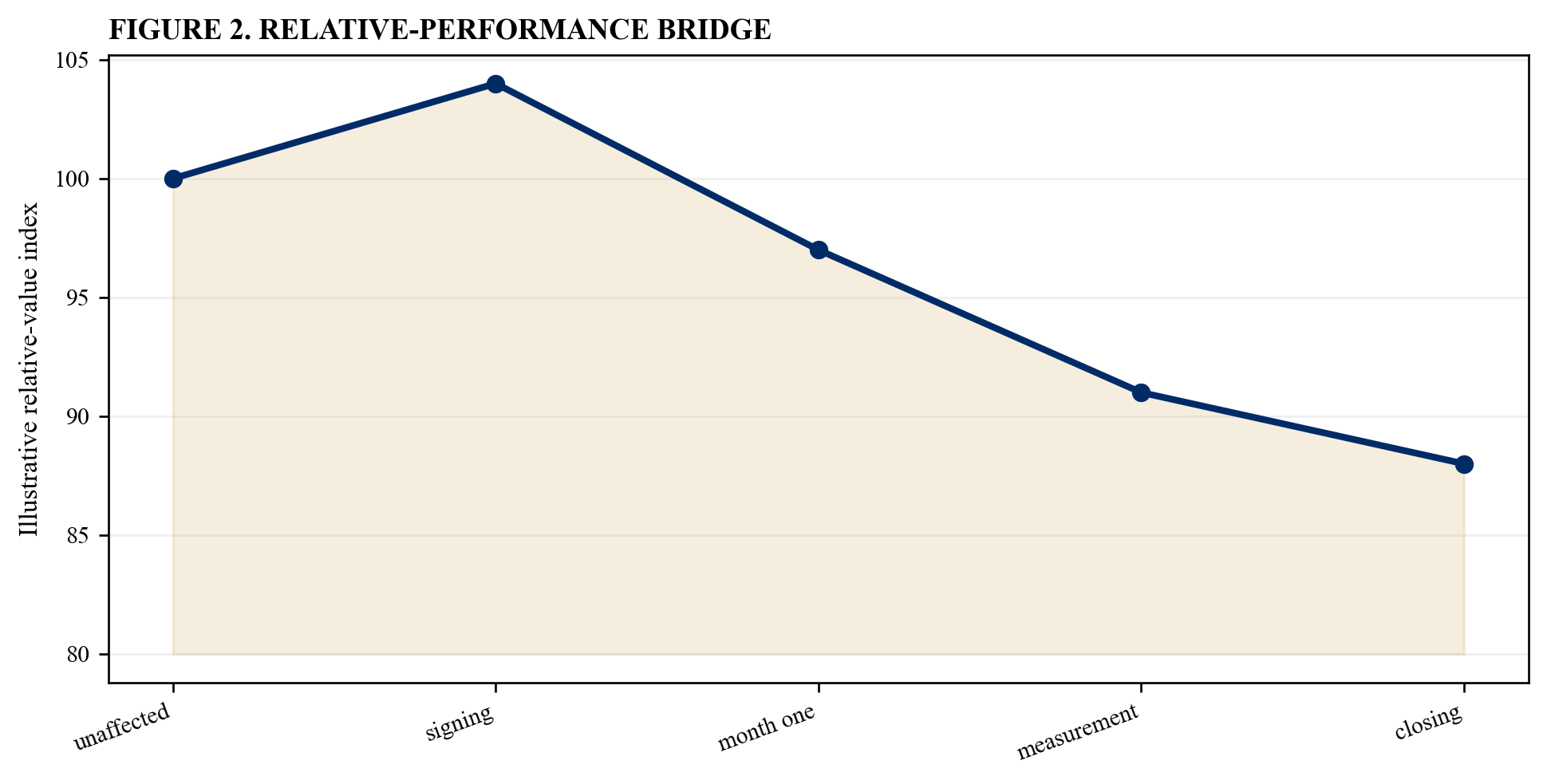
Illustrative analytical scenario; verified market, capitalisation and transaction data should replace index values.
14. Set collar width
The transaction team should link boundaries to volatility, expected closing time, financing capacity and negotiated risk tolerance. The required output is a collar-width rationale. Use current source data and link every material conclusion to retained merger, market, capitalisation, operating, financing and regulatory evidence [4][8].
Translate the conclusion into the executed exchange-ratio model and board paper. Identify the formula, reference date, data owner, source system, currency, fully diluted share count, corporate-action treatment, approval threshold and decision deadline. Reconcile legal drafting, valuation analysis, accounting, financing and shareholder disclosure.
The principal risk is that an arbitrary percentage can provide little protection in the relevant distribution. Quantify delivered value, pro forma ownership, premium, dilution, cash requirement and accounting consideration across fixed-ratio, floating-ratio, collar, relative-underperformance, high-volatility, delayed-closing and combined downside cases.
Retain the source, model version, reviewer, independent recalculation, legal and financial approval and board response. Compare actual market and operating movements with the signed cases; refresh the sensitivity grid after material changes; and assign every exception an owner and deadline.
15. Model slope and boundary continuity
The transaction team should test the payoff immediately inside and outside each boundary and identify cliffs or kinks. The required output is a continuous-payoff audit. Use current source data and link every material conclusion to retained merger, market, capitalisation, operating, financing and regulatory evidence [1][4].
Translate the conclusion into the executed exchange-ratio model and board paper. Identify the formula, reference date, data owner, source system, currency, fully diluted share count, corporate-action treatment, approval threshold and decision deadline. Reconcile legal drafting, valuation analysis, accounting, financing and shareholder disclosure.
The principal risk is that small price moves can create disproportionate value transfers. Quantify delivered value, pro forma ownership, premium, dilution, cash requirement and accounting consideration across fixed-ratio, floating-ratio, collar, relative-underperformance, high-volatility, delayed-closing and combined downside cases.
Retain the source, model version, reviewer, independent recalculation, legal and financial approval and board response. Compare actual market and operating movements with the signed cases; refresh the sensitivity grid after material changes; and assign every exception an owner and deadline.
16. Define caps, floors and rounding
The transaction team should specify maximum shares, minimum shares, decimal precision and fractional-share treatment. The required output is a cap-floor schedule. Use current source data and link every material conclusion to retained merger, market, capitalisation, operating, financing and regulatory evidence [1][12].
Translate the conclusion into the executed exchange-ratio model and board paper. Identify the formula, reference date, data owner, source system, currency, fully diluted share count, corporate-action treatment, approval threshold and decision deadline. Reconcile legal drafting, valuation analysis, accounting, financing and shareholder disclosure.
The principal risk is that rounding and share limits can accumulate into material value. Quantify delivered value, pro forma ownership, premium, dilution, cash requirement and accounting consideration across fixed-ratio, floating-ratio, collar, relative-underperformance, high-volatility, delayed-closing and combined downside cases.
Retain the source, model version, reviewer, independent recalculation, legal and financial approval and board response. Compare actual market and operating movements with the signed cases; refresh the sensitivity grid after material changes; and assign every exception an owner and deadline.
Table 2. Collar mechanics
| Zone | Ratio behaviour | Economic result |
|---|---|---|
| below floor | fixed maximum | value falls |
| inside collar | ratio floats | value targeted |
| above cap | fixed minimum | value rises |
| boundary | rounding applied | continuity tested |
Illustrative structure; the executed merger agreement and verified closing inputs govern.
17. Consider cash top-ups
The transaction team should model optional or mandatory cash used to restore value within stated funding and legal limits. The required output is a cash-substitution matrix. Use current source data and link every material conclusion to retained merger, market, capitalisation, operating, financing and regulatory evidence [2][13].
Translate the conclusion into the executed exchange-ratio model and board paper. Identify the formula, reference date, data owner, source system, currency, fully diluted share count, corporate-action treatment, approval threshold and decision deadline. Reconcile legal drafting, valuation analysis, accounting, financing and shareholder disclosure.
The principal risk is that protection can fail if funding is unavailable or capped. Quantify delivered value, pro forma ownership, premium, dilution, cash requirement and accounting consideration across fixed-ratio, floating-ratio, collar, relative-underperformance, high-volatility, delayed-closing and combined downside cases.
Retain the source, model version, reviewer, independent recalculation, legal and financial approval and board response. Compare actual market and operating movements with the signed cases; refresh the sensitivity grid after material changes; and assign every exception an owner and deadline.
18. Design mixed-consideration elections
The transaction team should reconcile shareholder elections, proration, allocation limits and default choices. The required output is an election and proration model. Use current source data and link every material conclusion to retained merger, market, capitalisation, operating, financing and regulatory evidence [2][13].
Translate the conclusion into the executed exchange-ratio model and board paper. Identify the formula, reference date, data owner, source system, currency, fully diluted share count, corporate-action treatment, approval threshold and decision deadline. Reconcile legal drafting, valuation analysis, accounting, financing and shareholder disclosure.
The principal risk is that individual outcomes can differ from the headline consideration mix. Quantify delivered value, pro forma ownership, premium, dilution, cash requirement and accounting consideration across fixed-ratio, floating-ratio, collar, relative-underperformance, high-volatility, delayed-closing and combined downside cases.
Retain the source, model version, reviewer, independent recalculation, legal and financial approval and board response. Compare actual market and operating movements with the signed cases; refresh the sensitivity grid after material changes; and assign every exception an owner and deadline.
19. Adjust for dividends and distributions
The transaction team should state how ordinary, special and unequal dividends affect prices, ratios and permitted leakage. The required output is a distribution-adjustment schedule. Use current source data and link every material conclusion to retained merger, market, capitalisation, operating, financing and regulatory evidence [3][15].
Translate the conclusion into the executed exchange-ratio model and board paper. Identify the formula, reference date, data owner, source system, currency, fully diluted share count, corporate-action treatment, approval threshold and decision deadline. Reconcile legal drafting, valuation analysis, accounting, financing and shareholder disclosure.
The principal risk is that one party can transfer value before closing through distributions. Quantify delivered value, pro forma ownership, premium, dilution, cash requirement and accounting consideration across fixed-ratio, floating-ratio, collar, relative-underperformance, high-volatility, delayed-closing and combined downside cases.
Retain the source, model version, reviewer, independent recalculation, legal and financial approval and board response. Compare actual market and operating movements with the signed cases; refresh the sensitivity grid after material changes; and assign every exception an owner and deadline.
20. Adjust for splits and corporate actions
The transaction team should cover splits, consolidations, rights issues, spin-offs, tender offers and recapitalisations. The required output is a corporate-action adjustment file. Use current source data and link every material conclusion to retained merger, market, capitalisation, operating, financing and regulatory evidence [3][12].
Translate the conclusion into the executed exchange-ratio model and board paper. Identify the formula, reference date, data owner, source system, currency, fully diluted share count, corporate-action treatment, approval threshold and decision deadline. Reconcile legal drafting, valuation analysis, accounting, financing and shareholder disclosure.
The principal risk is that mechanical price changes can distort the reference calculation. Quantify delivered value, pro forma ownership, premium, dilution, cash requirement and accounting consideration across fixed-ratio, floating-ratio, collar, relative-underperformance, high-volatility, delayed-closing and combined downside cases.
Retain the source, model version, reviewer, independent recalculation, legal and financial approval and board response. Compare actual market and operating movements with the signed cases; refresh the sensitivity grid after material changes; and assign every exception an owner and deadline.
21. Model currency exposure
The transaction team should identify consideration, trading, reporting and shareholder currencies and the relevant FX dates. The required output is a currency-adjusted value bridge. Use current source data and link every material conclusion to retained merger, market, capitalisation, operating, financing and regulatory evidence [16][17].
Translate the conclusion into the executed exchange-ratio model and board paper. Identify the formula, reference date, data owner, source system, currency, fully diluted share count, corporate-action treatment, approval threshold and decision deadline. Reconcile legal drafting, valuation analysis, accounting, financing and shareholder disclosure.
The principal risk is that stable local share prices can still produce volatile delivered value. Quantify delivered value, pro forma ownership, premium, dilution, cash requirement and accounting consideration across fixed-ratio, floating-ratio, collar, relative-underperformance, high-volatility, delayed-closing and combined downside cases.
Retain the source, model version, reviewer, independent recalculation, legal and financial approval and board response. Compare actual market and operating movements with the signed cases; refresh the sensitivity grid after material changes; and assign every exception an owner and deadline.
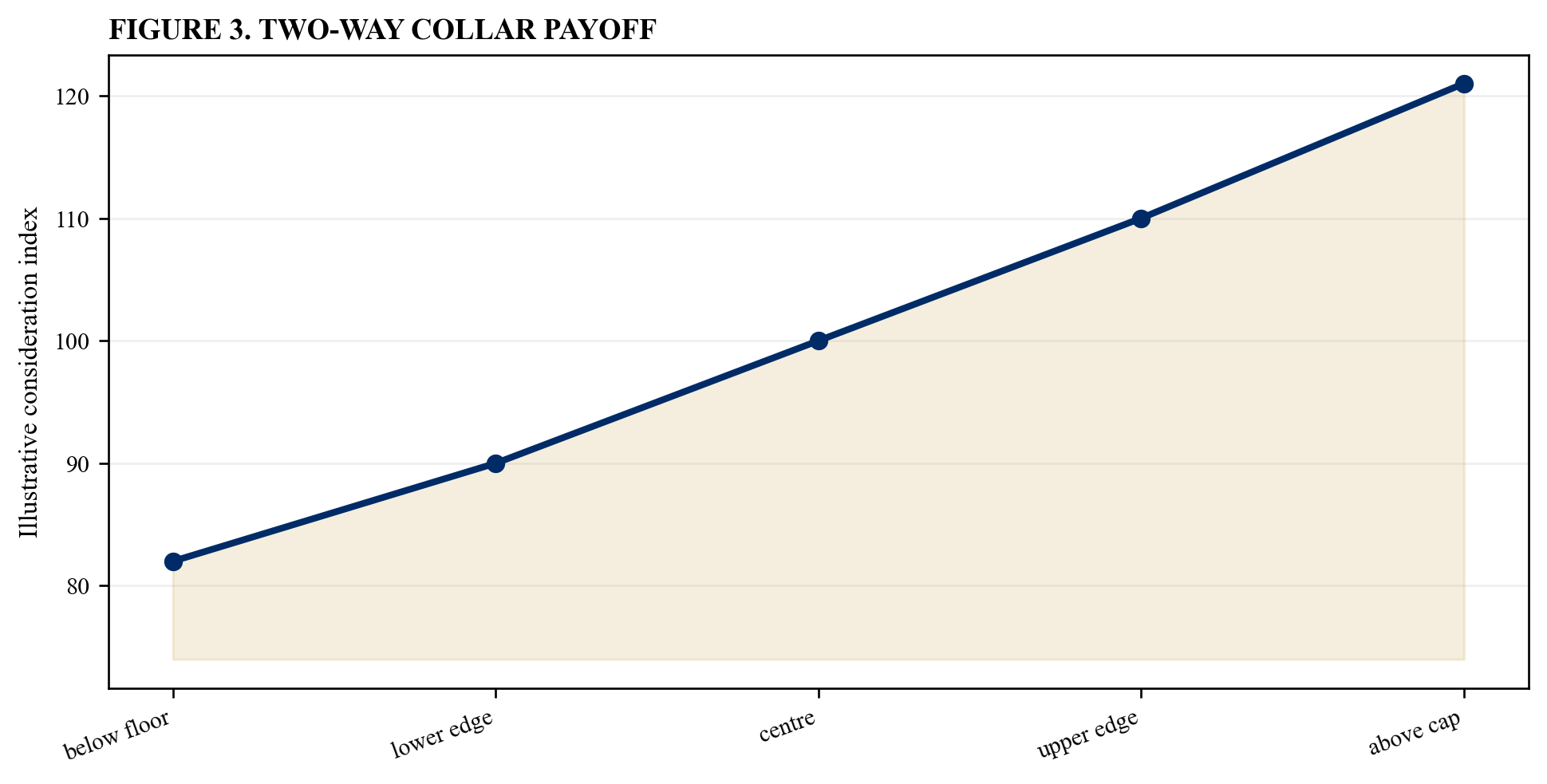
Illustrative analytical scenario; verified market, capitalisation and transaction data should replace index values.
22. Account for equity consideration
The transaction team should measure acquisition-date fair value and reconcile it with signing-date analysis and pro forma disclosures. The required output is an accounting-value bridge. Use current source data and link every material conclusion to retained merger, market, capitalisation, operating, financing and regulatory evidence [18][19].
Translate the conclusion into the executed exchange-ratio model and board paper. Identify the formula, reference date, data owner, source system, currency, fully diluted share count, corporate-action treatment, approval threshold and decision deadline. Reconcile legal drafting, valuation analysis, accounting, financing and shareholder disclosure.
The principal risk is that reported consideration can differ from the negotiated headline value. Quantify delivered value, pro forma ownership, premium, dilution, cash requirement and accounting consideration across fixed-ratio, floating-ratio, collar, relative-underperformance, high-volatility, delayed-closing and combined downside cases.
Retain the source, model version, reviewer, independent recalculation, legal and financial approval and board response. Compare actual market and operating movements with the signed cases; refresh the sensitivity grid after material changes; and assign every exception an owner and deadline.
23. Model earnings-per-share effects
The transaction team should reconcile new shares, timing, options, synergies, financing and discontinued operations. The required output is a pro forma EPS bridge. Use current source data and link every material conclusion to retained merger, market, capitalisation, operating, financing and regulatory evidence [14][20].
Translate the conclusion into the executed exchange-ratio model and board paper. Identify the formula, reference date, data owner, source system, currency, fully diluted share count, corporate-action treatment, approval threshold and decision deadline. Reconcile legal drafting, valuation analysis, accounting, financing and shareholder disclosure.
The principal risk is that exchange-ratio protection can change dilution and accretion. Quantify delivered value, pro forma ownership, premium, dilution, cash requirement and accounting consideration across fixed-ratio, floating-ratio, collar, relative-underperformance, high-volatility, delayed-closing and combined downside cases.
Retain the source, model version, reviewer, independent recalculation, legal and financial approval and board response. Compare actual market and operating movements with the signed cases; refresh the sensitivity grid after material changes; and assign every exception an owner and deadline.
24. Update fairness analysis
The transaction team should rerun relative valuation, contribution, ownership and consideration scenarios using current evidence. The required output is a closing fairness update. Use current source data and link every material conclusion to retained merger, market, capitalisation, operating, financing and regulatory evidence [3][7].
Translate the conclusion into the executed exchange-ratio model and board paper. Identify the formula, reference date, data owner, source system, currency, fully diluted share count, corporate-action treatment, approval threshold and decision deadline. Reconcile legal drafting, valuation analysis, accounting, financing and shareholder disclosure.
The principal risk is that a signing opinion can become stale as prices and forecasts diverge. Quantify delivered value, pro forma ownership, premium, dilution, cash requirement and accounting consideration across fixed-ratio, floating-ratio, collar, relative-underperformance, high-volatility, delayed-closing and combined downside cases.
Retain the source, model version, reviewer, independent recalculation, legal and financial approval and board response. Compare actual market and operating movements with the signed cases; refresh the sensitivity grid after material changes; and assign every exception an owner and deadline.
Table 3. Relative-value evidence
| Input | Source | Control |
|---|---|---|
| prices | named market feed | corporate-action adjusted |
| shares | capitalisation file | fully diluted |
| forecasts | board-approved models | version locked |
| FX | specified benchmark | date matched |
Illustrative structure; the executed merger agreement and verified closing inputs govern.
25. Monitor operating divergence
The transaction team should compare actual and forecast revenue, margins, cash flow, capital expenditure and material events for both parties. The required output is an operating-divergence dashboard. Use current source data and link every material conclusion to retained merger, market, capitalisation, operating, financing and regulatory evidence [3][21].
Translate the conclusion into the executed exchange-ratio model and board paper. Identify the formula, reference date, data owner, source system, currency, fully diluted share count, corporate-action treatment, approval threshold and decision deadline. Reconcile legal drafting, valuation analysis, accounting, financing and shareholder disclosure.
The principal risk is that market movement can reflect genuine changes in relative fundamentals. Quantify delivered value, pro forma ownership, premium, dilution, cash requirement and accounting consideration across fixed-ratio, floating-ratio, collar, relative-underperformance, high-volatility, delayed-closing and combined downside cases.
Retain the source, model version, reviewer, independent recalculation, legal and financial approval and board response. Compare actual market and operating movements with the signed cases; refresh the sensitivity grid after material changes; and assign every exception an owner and deadline.
26. Read interim operating covenants
The transaction team should identify restrictions on dividends, issuance, buybacks, acquisitions, debt and other capital actions. The required output is an interim-covenant matrix. Use current source data and link every material conclusion to retained merger, market, capitalisation, operating, financing and regulatory evidence [3][15].
Translate the conclusion into the executed exchange-ratio model and board paper. Identify the formula, reference date, data owner, source system, currency, fully diluted share count, corporate-action treatment, approval threshold and decision deadline. Reconcile legal drafting, valuation analysis, accounting, financing and shareholder disclosure.
The principal risk is that permitted actions can change relative value before closing. Quantify delivered value, pro forma ownership, premium, dilution, cash requirement and accounting consideration across fixed-ratio, floating-ratio, collar, relative-underperformance, high-volatility, delayed-closing and combined downside cases.
Retain the source, model version, reviewer, independent recalculation, legal and financial approval and board response. Compare actual market and operating movements with the signed cases; refresh the sensitivity grid after material changes; and assign every exception an owner and deadline.
27. Test material-adverse-effect interaction
The transaction team should separate price decline, industry conditions and company-specific deterioration under the executed definition. The required output is an MAE interaction map. Use current source data and link every material conclusion to retained merger, market, capitalisation, operating, financing and regulatory evidence [3][22].
Translate the conclusion into the executed exchange-ratio model and board paper. Identify the formula, reference date, data owner, source system, currency, fully diluted share count, corporate-action treatment, approval threshold and decision deadline. Reconcile legal drafting, valuation analysis, accounting, financing and shareholder disclosure.
The principal risk is that exchange-ratio protection can be mistaken for a substitute for contractual conditions. Quantify delivered value, pro forma ownership, premium, dilution, cash requirement and accounting consideration across fixed-ratio, floating-ratio, collar, relative-underperformance, high-volatility, delayed-closing and combined downside cases.
Retain the source, model version, reviewer, independent recalculation, legal and financial approval and board response. Compare actual market and operating movements with the signed cases; refresh the sensitivity grid after material changes; and assign every exception an owner and deadline.
28. Design price-based termination rights
The transaction team should specify thresholds, relative-index tests, notice, cure, top-up and board decision mechanics. The required output is a termination-right decision tree. Use current source data and link every material conclusion to retained merger, market, capitalisation, operating, financing and regulatory evidence [11][22].
Translate the conclusion into the executed exchange-ratio model and board paper. Identify the formula, reference date, data owner, source system, currency, fully diluted share count, corporate-action treatment, approval threshold and decision deadline. Reconcile legal drafting, valuation analysis, accounting, financing and shareholder disclosure.
The principal risk is that a walk-away right can be unusable without timely evidence and authority. Quantify delivered value, pro forma ownership, premium, dilution, cash requirement and accounting consideration across fixed-ratio, floating-ratio, collar, relative-underperformance, high-volatility, delayed-closing and combined downside cases.
Retain the source, model version, reviewer, independent recalculation, legal and financial approval and board response. Compare actual market and operating movements with the signed cases; refresh the sensitivity grid after material changes; and assign every exception an owner and deadline.
29. Model regulatory delay
The transaction team should extend volatility, forecast divergence, dividends, financing and reference-window risk across delayed closing dates. The required output is a delay scenario grid. Use current source data and link every material conclusion to retained merger, market, capitalisation, operating, financing and regulatory evidence [9][23].
Translate the conclusion into the executed exchange-ratio model and board paper. Identify the formula, reference date, data owner, source system, currency, fully diluted share count, corporate-action treatment, approval threshold and decision deadline. Reconcile legal drafting, valuation analysis, accounting, financing and shareholder disclosure.
The principal risk is that a structure calibrated for months can fail over a longer approval period. Quantify delivered value, pro forma ownership, premium, dilution, cash requirement and accounting consideration across fixed-ratio, floating-ratio, collar, relative-underperformance, high-volatility, delayed-closing and combined downside cases.
Retain the source, model version, reviewer, independent recalculation, legal and financial approval and board response. Compare actual market and operating movements with the signed cases; refresh the sensitivity grid after material changes; and assign every exception an owner and deadline.
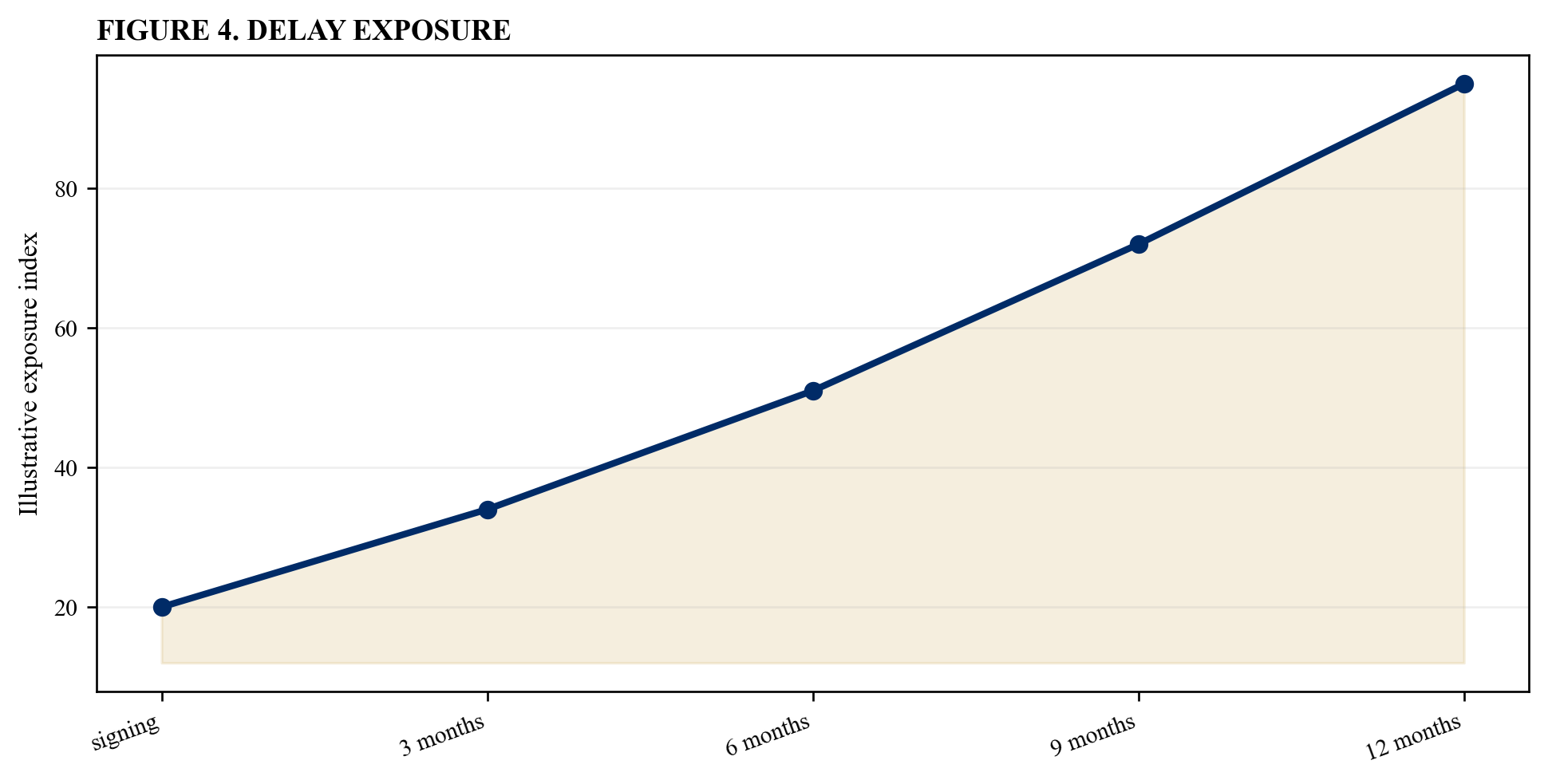
Illustrative analytical scenario; verified market, capitalisation and transaction data should replace index values.
30. Assess financing interaction
The transaction team should connect cash substitution, bridge facilities, rating capacity, leverage and funding conditions. The required output is a financing-capacity overlay. Use current source data and link every material conclusion to retained merger, market, capitalisation, operating, financing and regulatory evidence [13][24].
Translate the conclusion into the executed exchange-ratio model and board paper. Identify the formula, reference date, data owner, source system, currency, fully diluted share count, corporate-action treatment, approval threshold and decision deadline. Reconcile legal drafting, valuation analysis, accounting, financing and shareholder disclosure.
The principal risk is that value protection can create an unfinanceable cash requirement. Quantify delivered value, pro forma ownership, premium, dilution, cash requirement and accounting consideration across fixed-ratio, floating-ratio, collar, relative-underperformance, high-volatility, delayed-closing and combined downside cases.
Retain the source, model version, reviewer, independent recalculation, legal and financial approval and board response. Compare actual market and operating movements with the signed cases; refresh the sensitivity grid after material changes; and assign every exception an owner and deadline.
31. Assess capital and regulatory constraints
The transaction team should test share issuance limits, listing approvals, bank capital, foreign ownership and sector permissions. The required output is a closing-capacity checklist. Use current source data and link every material conclusion to retained merger, market, capitalisation, operating, financing and regulatory evidence [12][23].
Translate the conclusion into the executed exchange-ratio model and board paper. Identify the formula, reference date, data owner, source system, currency, fully diluted share count, corporate-action treatment, approval threshold and decision deadline. Reconcile legal drafting, valuation analysis, accounting, financing and shareholder disclosure.
The principal risk is that the calculated ratio can exceed authorised or regulatory capacity. Quantify delivered value, pro forma ownership, premium, dilution, cash requirement and accounting consideration across fixed-ratio, floating-ratio, collar, relative-underperformance, high-volatility, delayed-closing and combined downside cases.
Retain the source, model version, reviewer, independent recalculation, legal and financial approval and board response. Compare actual market and operating movements with the signed cases; refresh the sensitivity grid after material changes; and assign every exception an owner and deadline.
32. Model hedging and market behaviour
The transaction team should identify permitted hedging, merger-arbitrage positioning, borrow constraints and disclosure obligations. The required output is a market-behaviour risk file. Use current source data and link every material conclusion to retained merger, market, capitalisation, operating, financing and regulatory evidence [10][25].
Translate the conclusion into the executed exchange-ratio model and board paper. Identify the formula, reference date, data owner, source system, currency, fully diluted share count, corporate-action treatment, approval threshold and decision deadline. Reconcile legal drafting, valuation analysis, accounting, financing and shareholder disclosure.
The principal risk is that transaction trading can affect liquidity and reference prices. Quantify delivered value, pro forma ownership, premium, dilution, cash requirement and accounting consideration across fixed-ratio, floating-ratio, collar, relative-underperformance, high-volatility, delayed-closing and combined downside cases.
Retain the source, model version, reviewer, independent recalculation, legal and financial approval and board response. Compare actual market and operating movements with the signed cases; refresh the sensitivity grid after material changes; and assign every exception an owner and deadline.
Table 4. Downside scenario matrix
| Scenario | Primary movement | Board question |
|---|---|---|
| relative decline | target underperforms | value transfer |
| high volatility | boundaries crossed | payoff stability |
| delay | window extends | protection duration |
| combined | market and operations | closing decision |
Illustrative structure; the executed merger agreement and verified closing inputs govern.
33. Build the base scenario
The transaction team should apply the signed forecasts, expected closing date and central market assumptions. The required output is a base exchange-ratio outcome. Use current source data and link every material conclusion to retained merger, market, capitalisation, operating, financing and regulatory evidence [3][6].
Translate the conclusion into the executed exchange-ratio model and board paper. Identify the formula, reference date, data owner, source system, currency, fully diluted share count, corporate-action treatment, approval threshold and decision deadline. Reconcile legal drafting, valuation analysis, accounting, financing and shareholder disclosure.
The principal risk is that a single central estimate can hide asymmetric exposure. Quantify delivered value, pro forma ownership, premium, dilution, cash requirement and accounting consideration across fixed-ratio, floating-ratio, collar, relative-underperformance, high-volatility, delayed-closing and combined downside cases.
Retain the source, model version, reviewer, independent recalculation, legal and financial approval and board response. Compare actual market and operating movements with the signed cases; refresh the sensitivity grid after material changes; and assign every exception an owner and deadline.
34. Build the relative-underperformance case
The transaction team should stress one party against the other while holding the broad market path explicit. The required output is a relative-downside outcome. Use current source data and link every material conclusion to retained merger, market, capitalisation, operating, financing and regulatory evidence [3][7].
Translate the conclusion into the executed exchange-ratio model and board paper. Identify the formula, reference date, data owner, source system, currency, fully diluted share count, corporate-action treatment, approval threshold and decision deadline. Reconcile legal drafting, valuation analysis, accounting, financing and shareholder disclosure.
The principal risk is that absolute price protection can leave relative value exposed. Quantify delivered value, pro forma ownership, premium, dilution, cash requirement and accounting consideration across fixed-ratio, floating-ratio, collar, relative-underperformance, high-volatility, delayed-closing and combined downside cases.
Retain the source, model version, reviewer, independent recalculation, legal and financial approval and board response. Compare actual market and operating movements with the signed cases; refresh the sensitivity grid after material changes; and assign every exception an owner and deadline.
35. Build the high-volatility case
The transaction team should increase both volatilities, vary correlation and test boundary crossings. The required output is a volatility-and-correlation grid. Use current source data and link every material conclusion to retained merger, market, capitalisation, operating, financing and regulatory evidence [4][8].
Translate the conclusion into the executed exchange-ratio model and board paper. Identify the formula, reference date, data owner, source system, currency, fully diluted share count, corporate-action treatment, approval threshold and decision deadline. Reconcile legal drafting, valuation analysis, accounting, financing and shareholder disclosure.
The principal risk is that collar protection can behave differently when both shares move. Quantify delivered value, pro forma ownership, premium, dilution, cash requirement and accounting consideration across fixed-ratio, floating-ratio, collar, relative-underperformance, high-volatility, delayed-closing and combined downside cases.
Retain the source, model version, reviewer, independent recalculation, legal and financial approval and board response. Compare actual market and operating movements with the signed cases; refresh the sensitivity grid after material changes; and assign every exception an owner and deadline.
36. Build the delay-and-deterioration case
The transaction team should combine extended closing, operating divergence, distributions, financing cost and market decline. The required output is a combined downside case. Use current source data and link every material conclusion to retained merger, market, capitalisation, operating, financing and regulatory evidence [15][23].
Translate the conclusion into the executed exchange-ratio model and board paper. Identify the formula, reference date, data owner, source system, currency, fully diluted share count, corporate-action treatment, approval threshold and decision deadline. Reconcile legal drafting, valuation analysis, accounting, financing and shareholder disclosure.
The principal risk is that several modest changes can compound into a material transfer. Quantify delivered value, pro forma ownership, premium, dilution, cash requirement and accounting consideration across fixed-ratio, floating-ratio, collar, relative-underperformance, high-volatility, delayed-closing and combined downside cases.
Retain the source, model version, reviewer, independent recalculation, legal and financial approval and board response. Compare actual market and operating movements with the signed cases; refresh the sensitivity grid after material changes; and assign every exception an owner and deadline.
37. Set board escalation triggers
The transaction team should define price, relative-performance, forecast, financing and boundary thresholds with decision clocks. The required output is an escalation protocol. Use current source data and link every material conclusion to retained merger, market, capitalisation, operating, financing and regulatory evidence [3][22].
Translate the conclusion into the executed exchange-ratio model and board paper. Identify the formula, reference date, data owner, source system, currency, fully diluted share count, corporate-action treatment, approval threshold and decision deadline. Reconcile legal drafting, valuation analysis, accounting, financing and shareholder disclosure.
The principal risk is that the board can receive information after protective actions expire. Quantify delivered value, pro forma ownership, premium, dilution, cash requirement and accounting consideration across fixed-ratio, floating-ratio, collar, relative-underperformance, high-volatility, delayed-closing and combined downside cases.
Retain the source, model version, reviewer, independent recalculation, legal and financial approval and board response. Compare actual market and operating movements with the signed cases; refresh the sensitivity grid after material changes; and assign every exception an owner and deadline.
38. Control shareholder communications
The transaction team should reconcile public value illustrations, sensitivity tables, forward-looking statements and updates. The required output is a disclosure-control file. Use current source data and link every material conclusion to retained merger, market, capitalisation, operating, financing and regulatory evidence [3][10].
Translate the conclusion into the executed exchange-ratio model and board paper. Identify the formula, reference date, data owner, source system, currency, fully diluted share count, corporate-action treatment, approval threshold and decision deadline. Reconcile legal drafting, valuation analysis, accounting, financing and shareholder disclosure.
The principal risk is that headline values can be repeated after the underlying price has moved. Quantify delivered value, pro forma ownership, premium, dilution, cash requirement and accounting consideration across fixed-ratio, floating-ratio, collar, relative-underperformance, high-volatility, delayed-closing and combined downside cases.
Retain the source, model version, reviewer, independent recalculation, legal and financial approval and board response. Compare actual market and operating movements with the signed cases; refresh the sensitivity grid after material changes; and assign every exception an owner and deadline.
39. Validate the closing calculation
The transaction team should independently recalculate reference prices, share counts, corporate actions, cash, proration and fractional amounts. The required output is a closing calculation certificate. Use current source data and link every material conclusion to retained merger, market, capitalisation, operating, financing and regulatory evidence [1][12].
Translate the conclusion into the executed exchange-ratio model and board paper. Identify the formula, reference date, data owner, source system, currency, fully diluted share count, corporate-action treatment, approval threshold and decision deadline. Reconcile legal drafting, valuation analysis, accounting, financing and shareholder disclosure.
The principal risk is that an input or formula error can affect every shareholder. Quantify delivered value, pro forma ownership, premium, dilution, cash requirement and accounting consideration across fixed-ratio, floating-ratio, collar, relative-underperformance, high-volatility, delayed-closing and combined downside cases.
Retain the source, model version, reviewer, independent recalculation, legal and financial approval and board response. Compare actual market and operating movements with the signed cases; refresh the sensitivity grid after material changes; and assign every exception an owner and deadline.
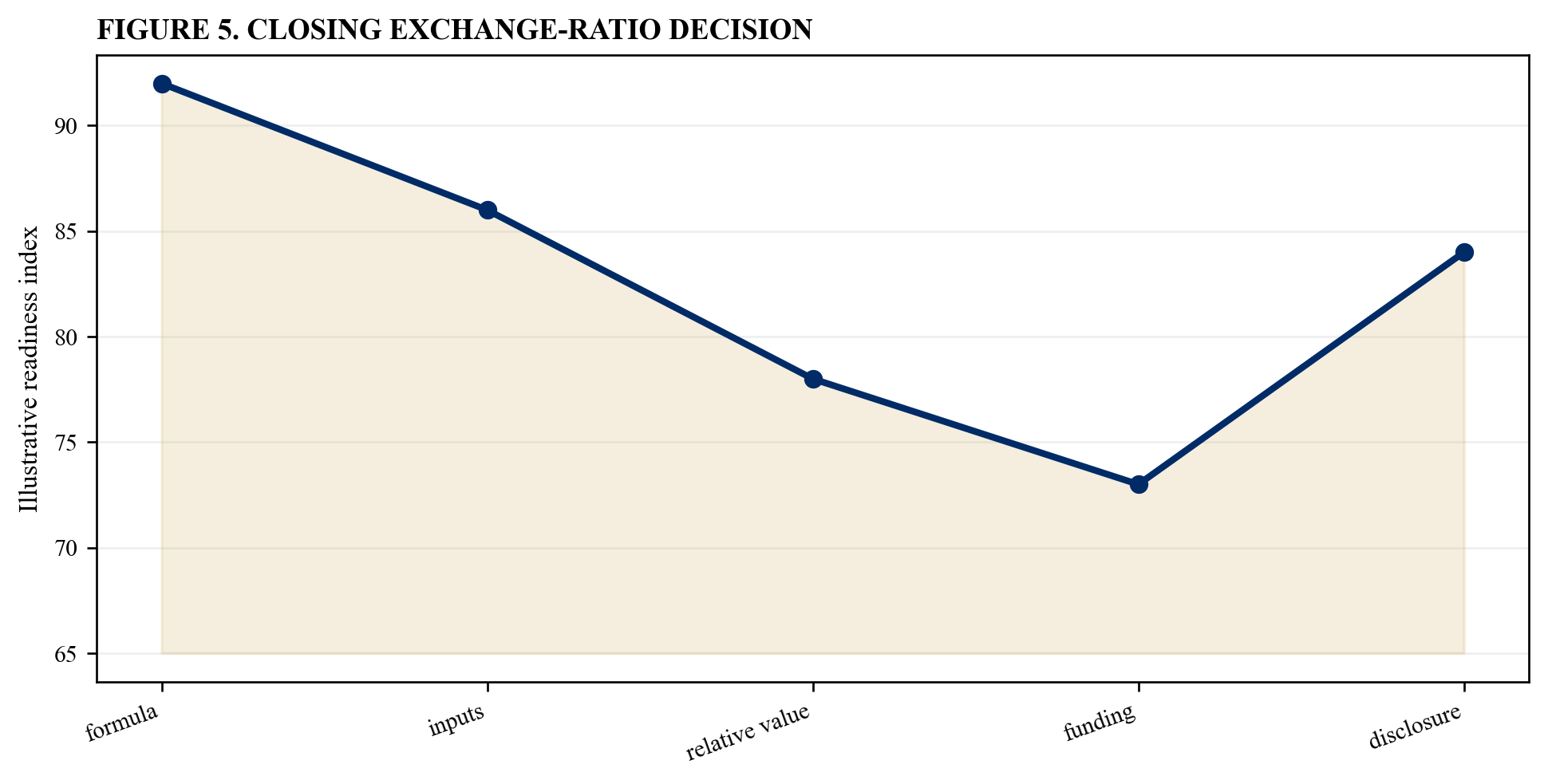
Illustrative analytical scenario; verified market, capitalisation and transaction data should replace index values.
40. Issue the exchange-ratio certificate
The transaction team should approve the formula, data, scenario grid, fairness update, financing, disclosures and closing outcome. The required output is a retained board and shareholder-ready exchange-ratio certificate. Use current source data and link every material conclusion to retained merger, market, capitalisation, operating, financing and regulatory evidence [3][18].
Translate the conclusion into the executed exchange-ratio model and board paper. Identify the formula, reference date, data owner, source system, currency, fully diluted share count, corporate-action treatment, approval threshold and decision deadline. Reconcile legal drafting, valuation analysis, accounting, financing and shareholder disclosure.
The principal risk is that the transaction can close without one reconciled view of delivered relative value. Quantify delivered value, pro forma ownership, premium, dilution, cash requirement and accounting consideration across fixed-ratio, floating-ratio, collar, relative-underperformance, high-volatility, delayed-closing and combined downside cases.
Retain the source, model version, reviewer, independent recalculation, legal and financial approval and board response. Compare actual market and operating movements with the signed cases; refresh the sensitivity grid after material changes; and assign every exception an owner and deadline.
Table 5. Exchange-ratio certificate
| Conclusion | Evidence | Approval test |
|---|---|---|
| formula | executed agreement | recalculated |
| inputs | prices and share counts | verified |
| outcomes | scenario and fairness update | board reviewed |
| closing | final calculation | independently checked |
Illustrative structure; the executed merger agreement and verified closing inputs govern.
References
- US Securities and Exchange Commission, Burlington Northern Santa Fe merger collar disclosure, https://www.sec.gov/Archives/edgar/data/934612/000095015709000805/form8k.htm
- US Securities and Exchange Commission, Data Domain and NetApp collar mechanics, https://www.sec.gov/Archives/edgar/data/1391984/000095013409011387/f52568ne425.htm
- US Securities and Exchange Commission, UTC and Rockwell Collins joint proxy statement, https://www.sec.gov/Archives/edgar/data/101829/000119312517307079/d449927ds4.htm
- US Securities and Exchange Commission, UTC and Rockwell Collins definitive proxy, https://www.sec.gov/Archives/edgar/data/1137411/000119312517365512/d449927ddefm14a.htm
- US Securities and Exchange Commission, Xerox and ACS proxy statement, https://www.sec.gov/Archives/edgar/data/108772/000119312509260010/d424b3.htm
- US Securities and Exchange Commission, Twilio and SendGrid fixed exchange ratio disclosure, https://www.sec.gov/Archives/edgar/data/1477425/000104746918007718/a2237381zdefm14a.htm
- US Securities and Exchange Commission, Prologis and Liberty Property Trust Form S-4, https://www.sec.gov/Archives/edgar/data/1045609/000104746919006506/a2239950zs-4.htm
- US Securities and Exchange Commission, Market Risk Disclosure, https://www.sec.gov/divisions/corpfin/guidance/derivfaq.htm
- US Securities and Exchange Commission, Regulation NMS, https://www.sec.gov/rules-regulations/2005/06/regulation-nms
- US Securities and Exchange Commission, Regulation M, https://www.sec.gov/files/rules/final/34-38067a.txt
- US Securities and Exchange Commission, exchange-ratio termination threshold example, https://www.sec.gov/Archives/edgar/data/1046112/000095015203009309/l03710bsc14d9xpdfy.pdf
- Delaware Code, Title 8 Section 251, https://delcode.delaware.gov/title8/c001/sc09/index.html
- US Securities and Exchange Commission, Time Warner and AT&T joint proxy statement, https://www.sec.gov/Archives/edgar/data/1105705/000119312517005295/d249981ddefm14a.htm
- IFRS Foundation, IAS 33 Earnings per Share, https://www.ifrs.org/issued-standards/list-of-standards/ias-33-earnings-per-share/
- UK Takeover Panel, Rule 21 restrictions on actions, https://code.thetakeoverpanel.org.uk/tp/rules/rule-21.html
- IFRS Foundation, IAS 21 Effects of Changes in Foreign Exchange Rates, https://www.ifrs.org/issued-standards/list-of-standards/ias-21-the-effects-of-changes-in-foreign-exchange-rates/
- Bank of England, daily exchange rates, https://www.bankofengland.co.uk/boeapps/database/Rates.asp
- IFRS Foundation, IFRS 3 Business Combinations, https://www.ifrs.org/issued-standards/list-of-standards/ifrs-3-business-combinations/
- IFRS Foundation, IFRS 13 Fair Value Measurement, https://www.ifrs.org/issued-standards/list-of-standards/ifrs-13-fair-value-measurement/
- IFRS Foundation, IAS 34 Interim Financial Reporting, https://www.ifrs.org/issued-standards/list-of-standards/ias-34-interim-financial-reporting/
- IFRS Foundation, IAS 10 Events after the Reporting Period, https://www.ifrs.org/issued-standards/list-of-standards/ias-10-events-after-the-reporting-period/
- US Securities and Exchange Commission, Connecticut Water Service and SJW joint proxy statement, https://www.sec.gov/Archives/edgar/data/276209/000119312518290170/d593586ddefm14a.htm
- US Federal Trade Commission, Premerger Notification Program, https://www.ftc.gov/enforcement/premerger-notification-program
- IFRS Foundation, IFRS 7 Financial Instruments Disclosures, https://www.ifrs.org/issued-standards/list-of-standards/ifrs-7-financial-instruments-disclosures/
- US Securities and Exchange Commission, beneficial ownership reporting, https://www.sec.gov/education/smallbusiness/goingpublic/officersanddirectors
- OECD, G20 OECD Principles of Corporate Governance 2023, https://www.oecd.org/en/publications/g20-oecd-principles-of-corporate-governance-2023_ed750b30-en/full-report.html
