

1. Define the funded entry perimeter
The investor, management team and advisers should identify acquisition consideration, incorporation, licences, deposits, capital expenditure, inventory, mobilisation, payroll, guarantees, tax and liquidity reserves. The controlled deliverable is a controlled uses schedule. Record the relevant legal entity, instrument, provider, currency, amount, maturity, pricing, security, recourse, condition, source, effective date, owner, evidence status and refresh trigger [1][2].
Reconcile corporate approvals, licences, contracts, bank correspondence, audited accounts, management forecasts, tax records, asset registers, customer evidence, credit information, security searches and treasury data. Separate binding commitments, indicative terms, management assumptions and unavailable evidence.
The central execution risk is that an entry budget can omit cash trapped between signing, licensing, delivery and first collection. Quantify the consequence for funding sufficiency, drawability, cash cost, control, covenant capacity, tax, liquidity, completion certainty, operating milestones, refinancing and downside recovery.
Convert the finding into the sources-and-uses model, instrument comparison, transaction documentation, funding conditions, Day-One controls and board dashboard. Preserve a dated evidence trail and obtain qualified UAE legal, regulatory, tax, accounting and financing advice for the relevant entity and transaction.
2. Choose the legal and operating architecture
The investor, management team and advisers should compare mainland, free-zone, branch, subsidiary, holding company, acquisition vehicle and operating-company alternatives. The controlled deliverable is an entity funding map. Record the relevant legal entity, instrument, provider, currency, amount, maturity, pricing, security, recourse, condition, source, effective date, owner, evidence status and refresh trigger [1][3].
Reconcile corporate approvals, licences, contracts, bank correspondence, audited accounts, management forecasts, tax records, asset registers, customer evidence, credit information, security searches and treasury data. Separate binding commitments, indicative terms, management assumptions and unavailable evidence.
The central execution risk is that capital can be placed in an entity that cannot own the asset, contract with the customer or grant the intended security. Quantify the consequence for funding sufficiency, drawability, cash cost, control, covenant capacity, tax, liquidity, completion certainty, operating milestones, refinancing and downside recovery.
Convert the finding into the sources-and-uses model, instrument comparison, transaction documentation, funding conditions, Day-One controls and board dashboard. Preserve a dated evidence trail and obtain qualified UAE legal, regulatory, tax, accounting and financing advice for the relevant entity and transaction.
3. Test ownership and strategic-activity constraints
The investor, management team and advisers should verify foreign-ownership eligibility, regulator approvals, board conditions and beneficial-ownership requirements. The controlled deliverable is an ownership-control memorandum. Record the relevant legal entity, instrument, provider, currency, amount, maturity, pricing, security, recourse, condition, source, effective date, owner, evidence status and refresh trigger [4][5].
Reconcile corporate approvals, licences, contracts, bank correspondence, audited accounts, management forecasts, tax records, asset registers, customer evidence, credit information, security searches and treasury data. Separate binding commitments, indicative terms, management assumptions and unavailable evidence.
The central execution risk is that the funding plan can assume control or transfer rights that the licensed activity does not permit. Quantify the consequence for funding sufficiency, drawability, cash cost, control, covenant capacity, tax, liquidity, completion certainty, operating milestones, refinancing and downside recovery.
Convert the finding into the sources-and-uses model, instrument comparison, transaction documentation, funding conditions, Day-One controls and board dashboard. Preserve a dated evidence trail and obtain qualified UAE legal, regulatory, tax, accounting and financing advice for the relevant entity and transaction.
4. Map funding uses to milestones
The investor, management team and advisers should sequence signing, completion, licence, site, equipment, hiring, customer acceptance, invoicing and collections. The controlled deliverable is a milestone drawdown plan. Record the relevant legal entity, instrument, provider, currency, amount, maturity, pricing, security, recourse, condition, source, effective date, owner, evidence status and refresh trigger [6][7].
Reconcile corporate approvals, licences, contracts, bank correspondence, audited accounts, management forecasts, tax records, asset registers, customer evidence, credit information, security searches and treasury data. Separate binding commitments, indicative terms, management assumptions and unavailable evidence.
The central execution risk is that capital can be fully drawn before the operating evidence needed for refinancing exists. Quantify the consequence for funding sufficiency, drawability, cash cost, control, covenant capacity, tax, liquidity, completion certainty, operating milestones, refinancing and downside recovery.
Convert the finding into the sources-and-uses model, instrument comparison, transaction documentation, funding conditions, Day-One controls and board dashboard. Preserve a dated evidence trail and obtain qualified UAE legal, regulatory, tax, accounting and financing advice for the relevant entity and transaction.
5. Build the sources-and-uses model
The investor, management team and advisers should reconcile instrument proceeds, fees, taxes, reserves, leakage, minimum cash and contingency to every funded use. The controlled deliverable is a balanced financing model. Record the relevant legal entity, instrument, provider, currency, amount, maturity, pricing, security, recourse, condition, source, effective date, owner, evidence status and refresh trigger [8][9].
Reconcile corporate approvals, licences, contracts, bank correspondence, audited accounts, management forecasts, tax records, asset registers, customer evidence, credit information, security searches and treasury data. Separate binding commitments, indicative terms, management assumptions and unavailable evidence.
The central execution risk is that headline facility size can overstate deployable cash after fees, reserves and restricted uses. Quantify the consequence for funding sufficiency, drawability, cash cost, control, covenant capacity, tax, liquidity, completion certainty, operating milestones, refinancing and downside recovery.
Convert the finding into the sources-and-uses model, instrument comparison, transaction documentation, funding conditions, Day-One controls and board dashboard. Preserve a dated evidence trail and obtain qualified UAE legal, regulatory, tax, accounting and financing advice for the relevant entity and transaction.
6. Establish the parent funding capacity
The investor, management team and advisers should test cash availability, approvals, leverage, covenants, country limits, currency and opportunity cost. The controlled deliverable is a parent-capacity certificate. Record the relevant legal entity, instrument, provider, currency, amount, maturity, pricing, security, recourse, condition, source, effective date, owner, evidence status and refresh trigger [10][11].
Reconcile corporate approvals, licences, contracts, bank correspondence, audited accounts, management forecasts, tax records, asset registers, customer evidence, credit information, security searches and treasury data. Separate binding commitments, indicative terms, management assumptions and unavailable evidence.
The central execution risk is that a board commitment can depend on distributions, lender consents or liquidity that has not been reserved. Quantify the consequence for funding sufficiency, drawability, cash cost, control, covenant capacity, tax, liquidity, completion certainty, operating milestones, refinancing and downside recovery.
Convert the finding into the sources-and-uses model, instrument comparison, transaction documentation, funding conditions, Day-One controls and board dashboard. Preserve a dated evidence trail and obtain qualified UAE legal, regulatory, tax, accounting and financing advice for the relevant entity and transaction.
7. Separate equity from intercompany debt
The investor, management team and advisers should document legal form, repayment expectation, maturity, pricing, subordination, conversion and loss absorption. The controlled deliverable is an instrument-characterisation file. Record the relevant legal entity, instrument, provider, currency, amount, maturity, pricing, security, recourse, condition, source, effective date, owner, evidence status and refresh trigger [12][13].
Reconcile corporate approvals, licences, contracts, bank correspondence, audited accounts, management forecasts, tax records, asset registers, customer evidence, credit information, security searches and treasury data. Separate binding commitments, indicative terms, management assumptions and unavailable evidence.
The central execution risk is that an intercompany balance can be treated inconsistently across legal, tax, accounting and credit analyses. Quantify the consequence for funding sufficiency, drawability, cash cost, control, covenant capacity, tax, liquidity, completion certainty, operating milestones, refinancing and downside recovery.
Convert the finding into the sources-and-uses model, instrument comparison, transaction documentation, funding conditions, Day-One controls and board dashboard. Preserve a dated evidence trail and obtain qualified UAE legal, regulatory, tax, accounting and financing advice for the relevant entity and transaction.
8. Model related-party pricing and purpose
The investor, management team and advisers should support interest rate, terms, credit profile, commercial rationale and transfer-pricing method. The controlled deliverable is a related-party funding memorandum. Record the relevant legal entity, instrument, provider, currency, amount, maturity, pricing, security, recourse, condition, source, effective date, owner, evidence status and refresh trigger [14][15].
Reconcile corporate approvals, licences, contracts, bank correspondence, audited accounts, management forecasts, tax records, asset registers, customer evidence, credit information, security searches and treasury data. Separate binding commitments, indicative terms, management assumptions and unavailable evidence.
The central execution risk is that pricing or deductibility can fail when the instrument lacks arm's-length evidence or a valid commercial purpose. Quantify the consequence for funding sufficiency, drawability, cash cost, control, covenant capacity, tax, liquidity, completion certainty, operating milestones, refinancing and downside recovery.
Convert the finding into the sources-and-uses model, instrument comparison, transaction documentation, funding conditions, Day-One controls and board dashboard. Preserve a dated evidence trail and obtain qualified UAE legal, regulatory, tax, accounting and financing advice for the relevant entity and transaction.
Table 1. Funding eligibility map
| Instrument | Best evidence | Primary constraint |
|---|---|---|
| parent equity | approved liquidity | concentration |
| local debt | UAE cash flow | seasoning |
| strategic equity | contracted contribution | control |
| asset finance | identifiable equipment | eligible cost |
Statutory periods are stated where labelled; other entries are analytical controls.
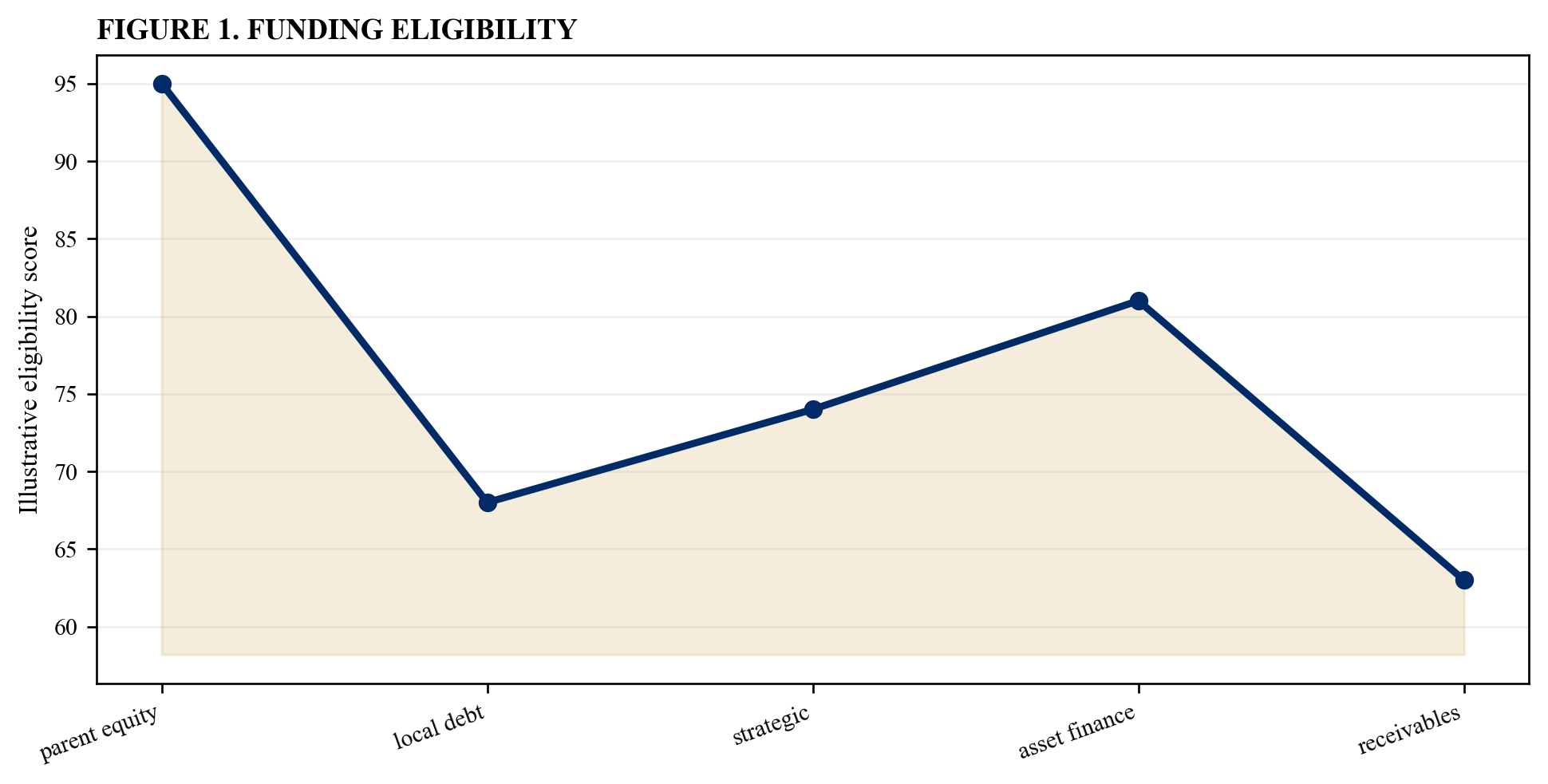
Illustrative analytical scenario; transaction evidence should replace model values.
9. Test interest-deduction capacity
The investor, management team and advisers should model general and specific limitations, EBITDA, exempt income, thresholds, carry-forward and group interactions. The controlled deliverable is an interest tax-capacity schedule. Record the relevant legal entity, instrument, provider, currency, amount, maturity, pricing, security, recourse, condition, source, effective date, owner, evidence status and refresh trigger [15][16].
Reconcile corporate approvals, licences, contracts, bank correspondence, audited accounts, management forecasts, tax records, asset registers, customer evidence, credit information, security searches and treasury data. Separate binding commitments, indicative terms, management assumptions and unavailable evidence.
The central execution risk is that the investment case can assume a tax shield that is delayed, restricted or unavailable. Quantify the consequence for funding sufficiency, drawability, cash cost, control, covenant capacity, tax, liquidity, completion certainty, operating milestones, refinancing and downside recovery.
Convert the finding into the sources-and-uses model, instrument comparison, transaction documentation, funding conditions, Day-One controls and board dashboard. Preserve a dated evidence trail and obtain qualified UAE legal, regulatory, tax, accounting and financing advice for the relevant entity and transaction.
10. Assess local bankability
The investor, management team and advisers should evidence UAE cash flow, management, licences, contracts, credit record, sponsor support, security and repayment capacity. The controlled deliverable is a bankability evidence pack. Record the relevant legal entity, instrument, provider, currency, amount, maturity, pricing, security, recourse, condition, source, effective date, owner, evidence status and refresh trigger [17][18].
Reconcile corporate approvals, licences, contracts, bank correspondence, audited accounts, management forecasts, tax records, asset registers, customer evidence, credit information, security searches and treasury data. Separate binding commitments, indicative terms, management assumptions and unavailable evidence.
The central execution risk is that a new entity can have a strong parent yet lack the local operating history required for standalone credit. Quantify the consequence for funding sufficiency, drawability, cash cost, control, covenant capacity, tax, liquidity, completion certainty, operating milestones, refinancing and downside recovery.
Convert the finding into the sources-and-uses model, instrument comparison, transaction documentation, funding conditions, Day-One controls and board dashboard. Preserve a dated evidence trail and obtain qualified UAE legal, regulatory, tax, accounting and financing advice for the relevant entity and transaction.
11. Design the local debt perimeter
The investor, management team and advisers should compare term loan, revolving credit, overdraft, trade line, project facility and acquisition bridge. The controlled deliverable is a facility-purpose matrix. Record the relevant legal entity, instrument, provider, currency, amount, maturity, pricing, security, recourse, condition, source, effective date, owner, evidence status and refresh trigger [19][20].
Reconcile corporate approvals, licences, contracts, bank correspondence, audited accounts, management forecasts, tax records, asset registers, customer evidence, credit information, security searches and treasury data. Separate binding commitments, indicative terms, management assumptions and unavailable evidence.
The central execution risk is that one omnibus facility can create mismatched tenors, amortisation and documentary conditions. Quantify the consequence for funding sufficiency, drawability, cash cost, control, covenant capacity, tax, liquidity, completion certainty, operating milestones, refinancing and downside recovery.
Convert the finding into the sources-and-uses model, instrument comparison, transaction documentation, funding conditions, Day-One controls and board dashboard. Preserve a dated evidence trail and obtain qualified UAE legal, regulatory, tax, accounting and financing advice for the relevant entity and transaction.
12. Quantify all-in debt cost
The investor, management team and advisers should include reference rate, margin, commitment fee, arrangement fee, legal cost, hedging, guarantees, reserve accounts and security cost. The controlled deliverable is an all-in cash-cost bridge. Record the relevant legal entity, instrument, provider, currency, amount, maturity, pricing, security, recourse, condition, source, effective date, owner, evidence status and refresh trigger [21][22].
Reconcile corporate approvals, licences, contracts, bank correspondence, audited accounts, management forecasts, tax records, asset registers, customer evidence, credit information, security searches and treasury data. Separate binding commitments, indicative terms, management assumptions and unavailable evidence.
The central execution risk is that the quoted margin can represent only a fraction of the economic cost of borrowing. Quantify the consequence for funding sufficiency, drawability, cash cost, control, covenant capacity, tax, liquidity, completion certainty, operating milestones, refinancing and downside recovery.
Convert the finding into the sources-and-uses model, instrument comparison, transaction documentation, funding conditions, Day-One controls and board dashboard. Preserve a dated evidence trail and obtain qualified UAE legal, regulatory, tax, accounting and financing advice for the relevant entity and transaction.
13. Test debt-service capacity
The investor, management team and advisers should model EBITDA-to-cash conversion, working capital, tax, capital expenditure, distributions and stressed debt service. The controlled deliverable is a debt-service capacity model. Record the relevant legal entity, instrument, provider, currency, amount, maturity, pricing, security, recourse, condition, source, effective date, owner, evidence status and refresh trigger [17][23].
Reconcile corporate approvals, licences, contracts, bank correspondence, audited accounts, management forecasts, tax records, asset registers, customer evidence, credit information, security searches and treasury data. Separate binding commitments, indicative terms, management assumptions and unavailable evidence.
The central execution risk is that accounting earnings can support debt while the UAE entity remains cash negative. Quantify the consequence for funding sufficiency, drawability, cash cost, control, covenant capacity, tax, liquidity, completion certainty, operating milestones, refinancing and downside recovery.
Convert the finding into the sources-and-uses model, instrument comparison, transaction documentation, funding conditions, Day-One controls and board dashboard. Preserve a dated evidence trail and obtain qualified UAE legal, regulatory, tax, accounting and financing advice for the relevant entity and transaction.
14. Define covenant headroom
The investor, management team and advisers should set leverage, coverage, liquidity, borrowing-base, information, ownership and negative-pledge tests. The controlled deliverable is a covenant-capacity schedule. Record the relevant legal entity, instrument, provider, currency, amount, maturity, pricing, security, recourse, condition, source, effective date, owner, evidence status and refresh trigger [24][25].
Reconcile corporate approvals, licences, contracts, bank correspondence, audited accounts, management forecasts, tax records, asset registers, customer evidence, credit information, security searches and treasury data. Separate binding commitments, indicative terms, management assumptions and unavailable evidence.
The central execution risk is that the base case can pass at closing yet breach during the planned ramp. Quantify the consequence for funding sufficiency, drawability, cash cost, control, covenant capacity, tax, liquidity, completion certainty, operating milestones, refinancing and downside recovery.
Convert the finding into the sources-and-uses model, instrument comparison, transaction documentation, funding conditions, Day-One controls and board dashboard. Preserve a dated evidence trail and obtain qualified UAE legal, regulatory, tax, accounting and financing advice for the relevant entity and transaction.
15. Map parent support and recourse
The investor, management team and advisers should compare guarantee, keepwell, equity cure, subordinated loan, completion support and limited-recourse structures. The controlled deliverable is a recourse ladder. Record the relevant legal entity, instrument, provider, currency, amount, maturity, pricing, security, recourse, condition, source, effective date, owner, evidence status and refresh trigger [10][26].
Reconcile corporate approvals, licences, contracts, bank correspondence, audited accounts, management forecasts, tax records, asset registers, customer evidence, credit information, security searches and treasury data. Separate binding commitments, indicative terms, management assumptions and unavailable evidence.
The central execution risk is that support can become effectively unlimited through overlapping guarantees, undertakings and cross-defaults. Quantify the consequence for funding sufficiency, drawability, cash cost, control, covenant capacity, tax, liquidity, completion certainty, operating milestones, refinancing and downside recovery.
Convert the finding into the sources-and-uses model, instrument comparison, transaction documentation, funding conditions, Day-One controls and board dashboard. Preserve a dated evidence trail and obtain qualified UAE legal, regulatory, tax, accounting and financing advice for the relevant entity and transaction.
16. Build the collateral map
The investor, management team and advisers should identify accounts, receivables, inventory, equipment, intellectual property, shares, contracts and insurance proceeds. The controlled deliverable is a collateral eligibility register. Record the relevant legal entity, instrument, provider, currency, amount, maturity, pricing, security, recourse, condition, source, effective date, owner, evidence status and refresh trigger [27][28].
Reconcile corporate approvals, licences, contracts, bank correspondence, audited accounts, management forecasts, tax records, asset registers, customer evidence, credit information, security searches and treasury data. Separate binding commitments, indicative terms, management assumptions and unavailable evidence.
The central execution risk is that assets can exist economically without being owned, assignable, identifiable or enforceable as collateral. Quantify the consequence for funding sufficiency, drawability, cash cost, control, covenant capacity, tax, liquidity, completion certainty, operating milestones, refinancing and downside recovery.
Convert the finding into the sources-and-uses model, instrument comparison, transaction documentation, funding conditions, Day-One controls and board dashboard. Preserve a dated evidence trail and obtain qualified UAE legal, regulatory, tax, accounting and financing advice for the relevant entity and transaction.
Table 2. Illustrative all-in annual cost
| Component | AED m | Control |
|---|---|---|
| cash interest | 7.2 | rate and margin |
| fees | 1.1 | amortised schedule |
| guarantee cost | 0.8 | recourse map |
| hedging and reserves | 1.4 | treasury plan |
Statutory periods are stated where labelled; other entries are analytical controls.
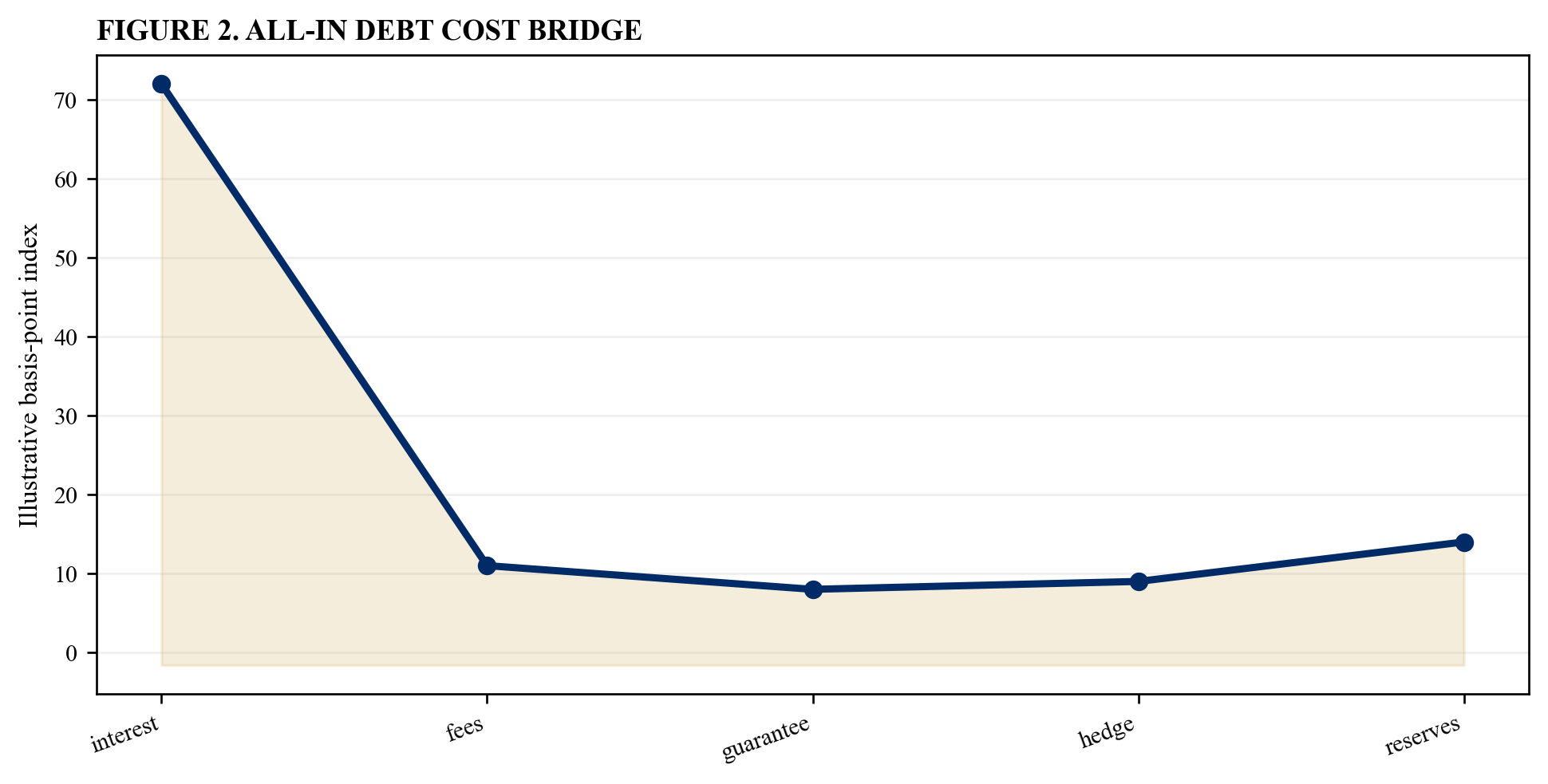
Illustrative analytical scenario; transaction evidence should replace model values.
17. Perfect movable-asset security
The investor, management team and advisers should map registration, control, possession, notice, priority, future assets, proceeds and enforcement steps. The controlled deliverable is a security-perfection checklist. Record the relevant legal entity, instrument, provider, currency, amount, maturity, pricing, security, recourse, condition, source, effective date, owner, evidence status and refresh trigger [27][29].
Reconcile corporate approvals, licences, contracts, bank correspondence, audited accounts, management forecasts, tax records, asset registers, customer evidence, credit information, security searches and treasury data. Separate binding commitments, indicative terms, management assumptions and unavailable evidence.
The central execution risk is that commercial agreement alone may not establish third-party priority over a movable asset. Quantify the consequence for funding sufficiency, drawability, cash cost, control, covenant capacity, tax, liquidity, completion certainty, operating milestones, refinancing and downside recovery.
Convert the finding into the sources-and-uses model, instrument comparison, transaction documentation, funding conditions, Day-One controls and board dashboard. Preserve a dated evidence trail and obtain qualified UAE legal, regulatory, tax, accounting and financing advice for the relevant entity and transaction.
18. Assess asset-finance suitability
The investor, management team and advisers should match identifiable productive equipment, useful life, residual value, vendor terms and repayment profile. The controlled deliverable is an asset-finance eligibility model. Record the relevant legal entity, instrument, provider, currency, amount, maturity, pricing, security, recourse, condition, source, effective date, owner, evidence status and refresh trigger [30][31].
Reconcile corporate approvals, licences, contracts, bank correspondence, audited accounts, management forecasts, tax records, asset registers, customer evidence, credit information, security searches and treasury data. Separate binding commitments, indicative terms, management assumptions and unavailable evidence.
The central execution risk is that asset finance can fund equipment efficiently while leaving installation, software, deposits and working capital unfunded. Quantify the consequence for funding sufficiency, drawability, cash cost, control, covenant capacity, tax, liquidity, completion certainty, operating milestones, refinancing and downside recovery.
Convert the finding into the sources-and-uses model, instrument comparison, transaction documentation, funding conditions, Day-One controls and board dashboard. Preserve a dated evidence trail and obtain qualified UAE legal, regulatory, tax, accounting and financing advice for the relevant entity and transaction.
19. Evaluate leasing economics
The investor, management team and advisers should compare finance lease, operating lease, hire purchase, direct ownership and sale-and-leaseback. The controlled deliverable is a lease-versus-buy model. Record the relevant legal entity, instrument, provider, currency, amount, maturity, pricing, security, recourse, condition, source, effective date, owner, evidence status and refresh trigger [30][32].
Reconcile corporate approvals, licences, contracts, bank correspondence, audited accounts, management forecasts, tax records, asset registers, customer evidence, credit information, security searches and treasury data. Separate binding commitments, indicative terms, management assumptions and unavailable evidence.
The central execution risk is that lower initial cash use can conceal inflexible term, residual-value transfer or termination exposure. Quantify the consequence for funding sufficiency, drawability, cash cost, control, covenant capacity, tax, liquidity, completion certainty, operating milestones, refinancing and downside recovery.
Convert the finding into the sources-and-uses model, instrument comparison, transaction documentation, funding conditions, Day-One controls and board dashboard. Preserve a dated evidence trail and obtain qualified UAE legal, regulatory, tax, accounting and financing advice for the relevant entity and transaction.
20. Design receivables finance
The investor, management team and advisers should verify invoice validity, assignment, customer acceptance, dilution, concentration, disputes, tenor and collection control. The controlled deliverable is a receivables borrowing base. Record the relevant legal entity, instrument, provider, currency, amount, maturity, pricing, security, recourse, condition, source, effective date, owner, evidence status and refresh trigger [33][34].
Reconcile corporate approvals, licences, contracts, bank correspondence, audited accounts, management forecasts, tax records, asset registers, customer evidence, credit information, security searches and treasury data. Separate binding commitments, indicative terms, management assumptions and unavailable evidence.
The central execution risk is that reported receivables can be legally or operationally unavailable for financing. Quantify the consequence for funding sufficiency, drawability, cash cost, control, covenant capacity, tax, liquidity, completion certainty, operating milestones, refinancing and downside recovery.
Convert the finding into the sources-and-uses model, instrument comparison, transaction documentation, funding conditions, Day-One controls and board dashboard. Preserve a dated evidence trail and obtain qualified UAE legal, regulatory, tax, accounting and financing advice for the relevant entity and transaction.
21. Test factoring and assignment enforceability
The investor, management team and advisers should map notice, contractual prohibitions, set-off, priority, servicing and debtor jurisdiction. The controlled deliverable is an assignment enforceability file. Record the relevant legal entity, instrument, provider, currency, amount, maturity, pricing, security, recourse, condition, source, effective date, owner, evidence status and refresh trigger [33][35].
Reconcile corporate approvals, licences, contracts, bank correspondence, audited accounts, management forecasts, tax records, asset registers, customer evidence, credit information, security searches and treasury data. Separate binding commitments, indicative terms, management assumptions and unavailable evidence.
The central execution risk is that a receivable can be economically sound yet unavailable because transfer, notice or priority requirements are unmet. Quantify the consequence for funding sufficiency, drawability, cash cost, control, covenant capacity, tax, liquidity, completion certainty, operating milestones, refinancing and downside recovery.
Convert the finding into the sources-and-uses model, instrument comparison, transaction documentation, funding conditions, Day-One controls and board dashboard. Preserve a dated evidence trail and obtain qualified UAE legal, regulatory, tax, accounting and financing advice for the relevant entity and transaction.
22. Finance inventory and trade cycles
The investor, management team and advisers should model purchase orders, letters of credit, trust receipts, warehouse controls, title, turnover and obsolescence. The controlled deliverable is a trade-finance cycle map. Record the relevant legal entity, instrument, provider, currency, amount, maturity, pricing, security, recourse, condition, source, effective date, owner, evidence status and refresh trigger [36][37].
Reconcile corporate approvals, licences, contracts, bank correspondence, audited accounts, management forecasts, tax records, asset registers, customer evidence, credit information, security searches and treasury data. Separate binding commitments, indicative terms, management assumptions and unavailable evidence.
The central execution risk is that inventory funding can outlive customer demand or depend on title the borrower does not hold. Quantify the consequence for funding sufficiency, drawability, cash cost, control, covenant capacity, tax, liquidity, completion certainty, operating milestones, refinancing and downside recovery.
Convert the finding into the sources-and-uses model, instrument comparison, transaction documentation, funding conditions, Day-One controls and board dashboard. Preserve a dated evidence trail and obtain qualified UAE legal, regulatory, tax, accounting and financing advice for the relevant entity and transaction.
23. Fund guarantees and bonding lines
The investor, management team and advisers should quantify bid, advance-payment, performance, retention and warranty instruments plus cash collateral. The controlled deliverable is a contingent-liability schedule. Record the relevant legal entity, instrument, provider, currency, amount, maturity, pricing, security, recourse, condition, source, effective date, owner, evidence status and refresh trigger [36][38].
Reconcile corporate approvals, licences, contracts, bank correspondence, audited accounts, management forecasts, tax records, asset registers, customer evidence, credit information, security searches and treasury data. Separate binding commitments, indicative terms, management assumptions and unavailable evidence.
The central execution risk is that off-balance-sheet instruments can consume liquidity and bank limits before revenue is earned. Quantify the consequence for funding sufficiency, drawability, cash cost, control, covenant capacity, tax, liquidity, completion certainty, operating milestones, refinancing and downside recovery.
Convert the finding into the sources-and-uses model, instrument comparison, transaction documentation, funding conditions, Day-One controls and board dashboard. Preserve a dated evidence trail and obtain qualified UAE legal, regulatory, tax, accounting and financing advice for the relevant entity and transaction.
24. Evaluate strategic equity
The investor, management team and advisers should test capital amount, customer access, licences, procurement, capabilities, governance, conflicts and exit alignment. The controlled deliverable is a strategic-investor scorecard. Record the relevant legal entity, instrument, provider, currency, amount, maturity, pricing, security, recourse, condition, source, effective date, owner, evidence status and refresh trigger [39][40].
Reconcile corporate approvals, licences, contracts, bank correspondence, audited accounts, management forecasts, tax records, asset registers, customer evidence, credit information, security searches and treasury data. Separate binding commitments, indicative terms, management assumptions and unavailable evidence.
The central execution risk is that strategic value can be asserted without enforceable commercial commitments. Quantify the consequence for funding sufficiency, drawability, cash cost, control, covenant capacity, tax, liquidity, completion certainty, operating milestones, refinancing and downside recovery.
Convert the finding into the sources-and-uses model, instrument comparison, transaction documentation, funding conditions, Day-One controls and board dashboard. Preserve a dated evidence trail and obtain qualified UAE legal, regulatory, tax, accounting and financing advice for the relevant entity and transaction.
Table 3. Milestone funding architecture
| Stage | Primary source | Release evidence |
|---|---|---|
| completion | parent capital | certain funds |
| mobilisation | local bridge | licence and contracts |
| assets | asset finance | title and installation |
| operations | receivables line | accepted invoices |
Statutory periods are stated where labelled; other entries are analytical controls.
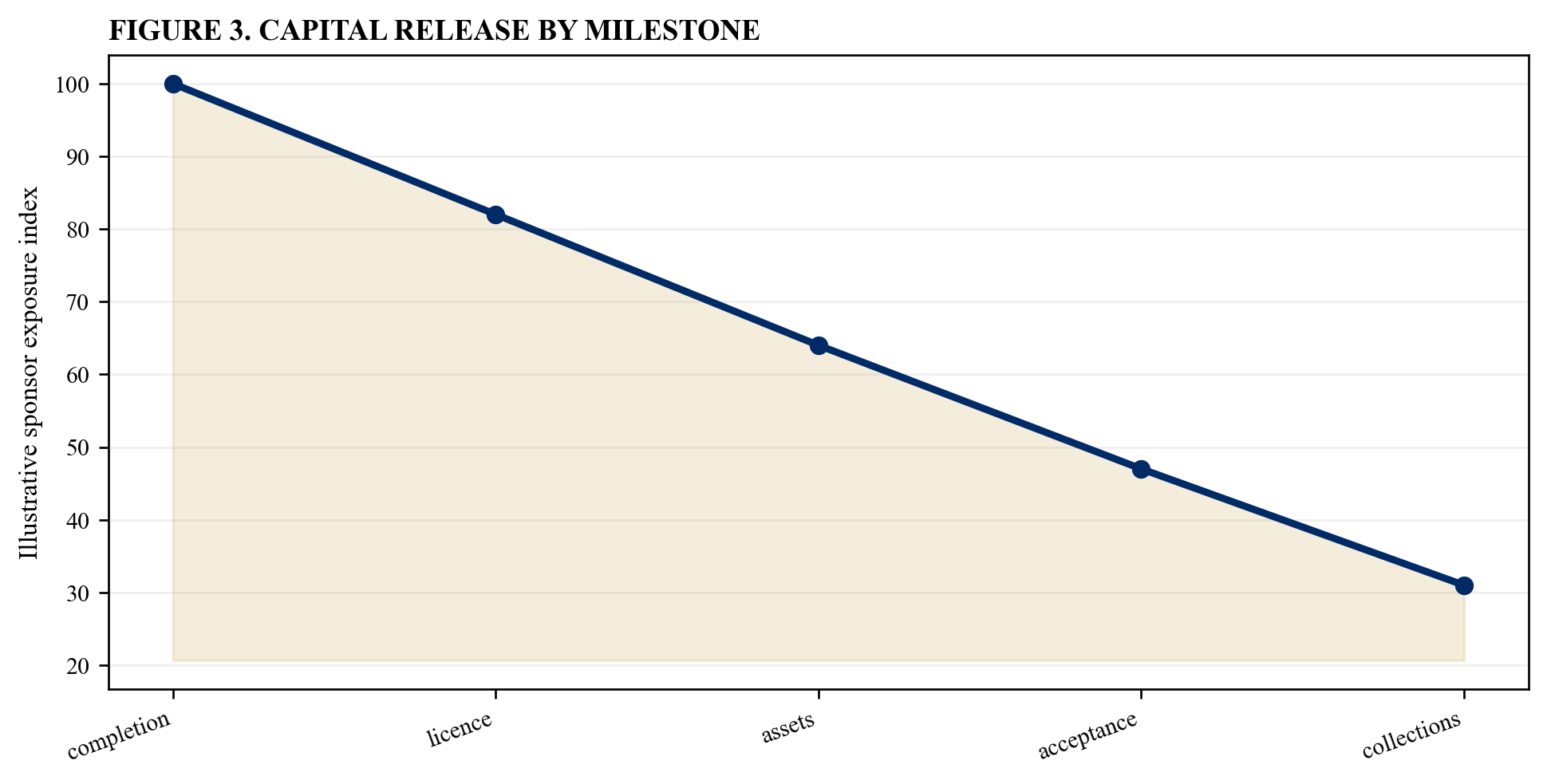
Illustrative analytical scenario; transaction evidence should replace model values.
25. Price control and dilution
The investor, management team and advisers should model share class, voting, reserved matters, board rights, anti-dilution, information and future funding. The controlled deliverable is a control-adjusted equity model. Record the relevant legal entity, instrument, provider, currency, amount, maturity, pricing, security, recourse, condition, source, effective date, owner, evidence status and refresh trigger [39][41].
Reconcile corporate approvals, licences, contracts, bank correspondence, audited accounts, management forecasts, tax records, asset registers, customer evidence, credit information, security searches and treasury data. Separate binding commitments, indicative terms, management assumptions and unavailable evidence.
The central execution risk is that apparently patient capital can constrain operating decisions and later financing. Quantify the consequence for funding sufficiency, drawability, cash cost, control, covenant capacity, tax, liquidity, completion certainty, operating milestones, refinancing and downside recovery.
Convert the finding into the sources-and-uses model, instrument comparison, transaction documentation, funding conditions, Day-One controls and board dashboard. Preserve a dated evidence trail and obtain qualified UAE legal, regulatory, tax, accounting and financing advice for the relevant entity and transaction.
26. Value non-cash strategic contribution
The investor, management team and advisers should quantify contracted revenue, distribution, technology, licences, people, assets and avoided time-to-market. The controlled deliverable is a contribution valuation bridge. Record the relevant legal entity, instrument, provider, currency, amount, maturity, pricing, security, recourse, condition, source, effective date, owner, evidence status and refresh trigger [40][42].
Reconcile corporate approvals, licences, contracts, bank correspondence, audited accounts, management forecasts, tax records, asset registers, customer evidence, credit information, security searches and treasury data. Separate binding commitments, indicative terms, management assumptions and unavailable evidence.
The central execution risk is that a partner can receive equity for access that remains discretionary or non-exclusive. Quantify the consequence for funding sufficiency, drawability, cash cost, control, covenant capacity, tax, liquidity, completion certainty, operating milestones, refinancing and downside recovery.
Convert the finding into the sources-and-uses model, instrument comparison, transaction documentation, funding conditions, Day-One controls and board dashboard. Preserve a dated evidence trail and obtain qualified UAE legal, regulatory, tax, accounting and financing advice for the relevant entity and transaction.
27. Model currency and convertibility exposure
The investor, management team and advisers should align AED, USD and other currency uses, revenue, debt, parent funding, hedges and distributions. The controlled deliverable is a currency-risk matrix. Record the relevant legal entity, instrument, provider, currency, amount, maturity, pricing, security, recourse, condition, source, effective date, owner, evidence status and refresh trigger [43][44].
Reconcile corporate approvals, licences, contracts, bank correspondence, audited accounts, management forecasts, tax records, asset registers, customer evidence, credit information, security searches and treasury data. Separate binding commitments, indicative terms, management assumptions and unavailable evidence.
The central execution risk is that the AED peg can reduce one exposure while leaving transaction, translation and non-dollar cash flows unhedged. Quantify the consequence for funding sufficiency, drawability, cash cost, control, covenant capacity, tax, liquidity, completion certainty, operating milestones, refinancing and downside recovery.
Convert the finding into the sources-and-uses model, instrument comparison, transaction documentation, funding conditions, Day-One controls and board dashboard. Preserve a dated evidence trail and obtain qualified UAE legal, regulatory, tax, accounting and financing advice for the relevant entity and transaction.
28. Design treasury and cash controls
The investor, management team and advisers should establish accounts, signatories, payment authorities, liquidity buffers, pooling, intercompany settlement and fraud controls. The controlled deliverable is a Day-One treasury architecture. Record the relevant legal entity, instrument, provider, currency, amount, maturity, pricing, security, recourse, condition, source, effective date, owner, evidence status and refresh trigger [45][46].
Reconcile corporate approvals, licences, contracts, bank correspondence, audited accounts, management forecasts, tax records, asset registers, customer evidence, credit information, security searches and treasury data. Separate binding commitments, indicative terms, management assumptions and unavailable evidence.
The central execution risk is that funding can arrive before governance can protect, deploy and reconcile it. Quantify the consequence for funding sufficiency, drawability, cash cost, control, covenant capacity, tax, liquidity, completion certainty, operating milestones, refinancing and downside recovery.
Convert the finding into the sources-and-uses model, instrument comparison, transaction documentation, funding conditions, Day-One controls and board dashboard. Preserve a dated evidence trail and obtain qualified UAE legal, regulatory, tax, accounting and financing advice for the relevant entity and transaction.
29. Map cash repatriation routes
The investor, management team and advisers should compare dividends, interest, fees, royalties, capital reduction, loan repayment and exit proceeds. The controlled deliverable is a repatriation waterfall. Record the relevant legal entity, instrument, provider, currency, amount, maturity, pricing, security, recourse, condition, source, effective date, owner, evidence status and refresh trigger [12][47].
Reconcile corporate approvals, licences, contracts, bank correspondence, audited accounts, management forecasts, tax records, asset registers, customer evidence, credit information, security searches and treasury data. Separate binding commitments, indicative terms, management assumptions and unavailable evidence.
The central execution risk is that gross cash generation can differ materially from distributable and transferable cash. Quantify the consequence for funding sufficiency, drawability, cash cost, control, covenant capacity, tax, liquidity, completion certainty, operating milestones, refinancing and downside recovery.
Convert the finding into the sources-and-uses model, instrument comparison, transaction documentation, funding conditions, Day-One controls and board dashboard. Preserve a dated evidence trail and obtain qualified UAE legal, regulatory, tax, accounting and financing advice for the relevant entity and transaction.
30. Stress-test withholding and cross-border tax
The investor, management team and advisers should verify domestic treatment, treaty access, beneficial ownership, permanent establishment and documentation. The controlled deliverable is a cross-border tax matrix. Record the relevant legal entity, instrument, provider, currency, amount, maturity, pricing, security, recourse, condition, source, effective date, owner, evidence status and refresh trigger [13][48].
Reconcile corporate approvals, licences, contracts, bank correspondence, audited accounts, management forecasts, tax records, asset registers, customer evidence, credit information, security searches and treasury data. Separate binding commitments, indicative terms, management assumptions and unavailable evidence.
The central execution risk is that a structure can rely on treaty or characterisation outcomes unsupported by substance and records. Quantify the consequence for funding sufficiency, drawability, cash cost, control, covenant capacity, tax, liquidity, completion certainty, operating milestones, refinancing and downside recovery.
Convert the finding into the sources-and-uses model, instrument comparison, transaction documentation, funding conditions, Day-One controls and board dashboard. Preserve a dated evidence trail and obtain qualified UAE legal, regulatory, tax, accounting and financing advice for the relevant entity and transaction.
31. Compare funding architectures
The investor, management team and advisers should score parent equity, parent debt, local debt, strategic equity, asset finance and receivables finance on common dimensions. The controlled deliverable is an instrument decision matrix. Record the relevant legal entity, instrument, provider, currency, amount, maturity, pricing, security, recourse, condition, source, effective date, owner, evidence status and refresh trigger [8][49].
Reconcile corporate approvals, licences, contracts, bank correspondence, audited accounts, management forecasts, tax records, asset registers, customer evidence, credit information, security searches and treasury data. Separate binding commitments, indicative terms, management assumptions and unavailable evidence.
The central execution risk is that teams can compare a cheap instrument with an expensive one while ignoring control, recourse and availability. Quantify the consequence for funding sufficiency, drawability, cash cost, control, covenant capacity, tax, liquidity, completion certainty, operating milestones, refinancing and downside recovery.
Convert the finding into the sources-and-uses model, instrument comparison, transaction documentation, funding conditions, Day-One controls and board dashboard. Preserve a dated evidence trail and obtain qualified UAE legal, regulatory, tax, accounting and financing advice for the relevant entity and transaction.
32. Construct the staged funding plan
The investor, management team and advisers should fund certainty and setup first, operating assets second, receivables third and refinancing after evidence milestones. The controlled deliverable is a sequenced capital architecture. Record the relevant legal entity, instrument, provider, currency, amount, maturity, pricing, security, recourse, condition, source, effective date, owner, evidence status and refresh trigger [6][50].
Reconcile corporate approvals, licences, contracts, bank correspondence, audited accounts, management forecasts, tax records, asset registers, customer evidence, credit information, security searches and treasury data. Separate binding commitments, indicative terms, management assumptions and unavailable evidence.
The central execution risk is that a permanent capital choice can be made to solve a temporary proof-of-entry problem. Quantify the consequence for funding sufficiency, drawability, cash cost, control, covenant capacity, tax, liquidity, completion certainty, operating milestones, refinancing and downside recovery.
Convert the finding into the sources-and-uses model, instrument comparison, transaction documentation, funding conditions, Day-One controls and board dashboard. Preserve a dated evidence trail and obtain qualified UAE legal, regulatory, tax, accounting and financing advice for the relevant entity and transaction.
Table 4. Illustrative downside scenarios
| Scenario | Peak cash need AED m | Refinance month |
|---|---|---|
| base | 42 | 18 |
| licence delay | 55 | 24 |
| slow collections | 68 | 27 |
| combined stress | 83 | none in horizon |
Statutory periods are stated where labelled; other entries are analytical controls.
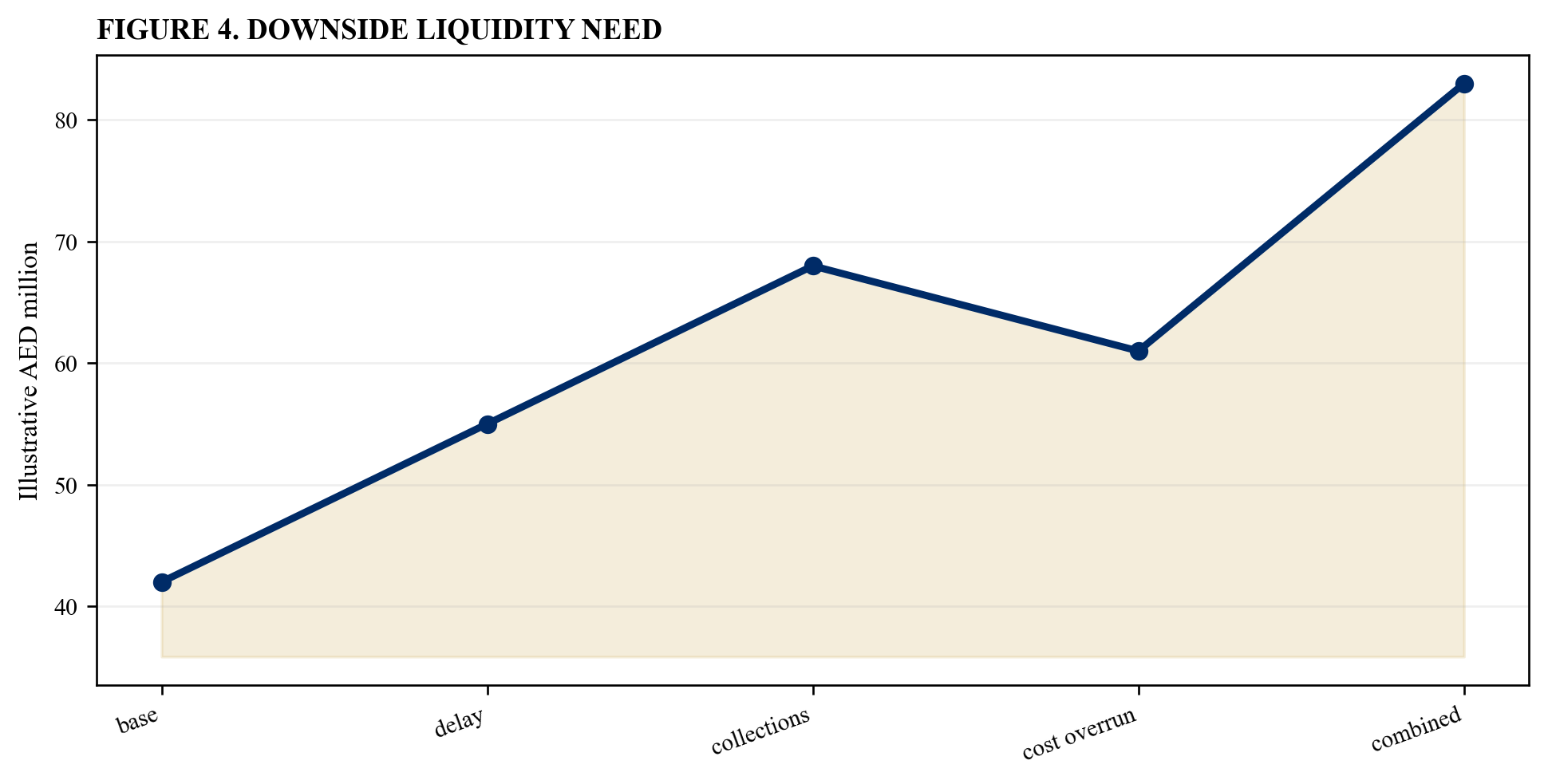
Illustrative analytical scenario; transaction evidence should replace model values.
33. Build the downside liquidity case
The investor, management team and advisers should model delayed licence, acquisition slippage, cost overrun, slow sales, customer default, covenant pressure and refinancing failure. The controlled deliverable is a downside liquidity runway. Record the relevant legal entity, instrument, provider, currency, amount, maturity, pricing, security, recourse, condition, source, effective date, owner, evidence status and refresh trigger [23][51].
Reconcile corporate approvals, licences, contracts, bank correspondence, audited accounts, management forecasts, tax records, asset registers, customer evidence, credit information, security searches and treasury data. Separate binding commitments, indicative terms, management assumptions and unavailable evidence.
The central execution risk is that the business can remain economically viable yet run out of unrestricted cash. Quantify the consequence for funding sufficiency, drawability, cash cost, control, covenant capacity, tax, liquidity, completion certainty, operating milestones, refinancing and downside recovery.
Convert the finding into the sources-and-uses model, instrument comparison, transaction documentation, funding conditions, Day-One controls and board dashboard. Preserve a dated evidence trail and obtain qualified UAE legal, regulatory, tax, accounting and financing advice for the relevant entity and transaction.
34. Estimate recoverability by instrument
The investor, management team and advisers should map asset value, priority, enforcement, guarantor capacity, dilution and time to recovery. The controlled deliverable is a recovery waterfall. Record the relevant legal entity, instrument, provider, currency, amount, maturity, pricing, security, recourse, condition, source, effective date, owner, evidence status and refresh trigger [27][52].
Reconcile corporate approvals, licences, contracts, bank correspondence, audited accounts, management forecasts, tax records, asset registers, customer evidence, credit information, security searches and treasury data. Separate binding commitments, indicative terms, management assumptions and unavailable evidence.
The central execution risk is that seniority on paper can deliver weak recovery when collateral is unavailable or enforcement is slow. Quantify the consequence for funding sufficiency, drawability, cash cost, control, covenant capacity, tax, liquidity, completion certainty, operating milestones, refinancing and downside recovery.
Convert the finding into the sources-and-uses model, instrument comparison, transaction documentation, funding conditions, Day-One controls and board dashboard. Preserve a dated evidence trail and obtain qualified UAE legal, regulatory, tax, accounting and financing advice for the relevant entity and transaction.
35. Protect acquisition funding certainty
The investor, management team and advisers should align commitment papers, conditions precedent, funds flow, currency, approvals, long-stop and fallback sources. The controlled deliverable is a certain-funds closing plan. Record the relevant legal entity, instrument, provider, currency, amount, maturity, pricing, security, recourse, condition, source, effective date, owner, evidence status and refresh trigger [2][53].
Reconcile corporate approvals, licences, contracts, bank correspondence, audited accounts, management forecasts, tax records, asset registers, customer evidence, credit information, security searches and treasury data. Separate binding commitments, indicative terms, management assumptions and unavailable evidence.
The central execution risk is that purchase obligations can become unconditional before financing is drawable. Quantify the consequence for funding sufficiency, drawability, cash cost, control, covenant capacity, tax, liquidity, completion certainty, operating milestones, refinancing and downside recovery.
Convert the finding into the sources-and-uses model, instrument comparison, transaction documentation, funding conditions, Day-One controls and board dashboard. Preserve a dated evidence trail and obtain qualified UAE legal, regulatory, tax, accounting and financing advice for the relevant entity and transaction.
36. Negotiate financing documentation
The investor, management team and advisers should connect representations, undertakings, defaults, draw conditions, security, information and cure rights to the business plan. The controlled deliverable is a documentation issues list. Record the relevant legal entity, instrument, provider, currency, amount, maturity, pricing, security, recourse, condition, source, effective date, owner, evidence status and refresh trigger [24][54].
Reconcile corporate approvals, licences, contracts, bank correspondence, audited accounts, management forecasts, tax records, asset registers, customer evidence, credit information, security searches and treasury data. Separate binding commitments, indicative terms, management assumptions and unavailable evidence.
The central execution risk is that standard terms can restrict the exact integration and investment actions required after entry. Quantify the consequence for funding sufficiency, drawability, cash cost, control, covenant capacity, tax, liquidity, completion certainty, operating milestones, refinancing and downside recovery.
Convert the finding into the sources-and-uses model, instrument comparison, transaction documentation, funding conditions, Day-One controls and board dashboard. Preserve a dated evidence trail and obtain qualified UAE legal, regulatory, tax, accounting and financing advice for the relevant entity and transaction.
37. Establish Day-One financing governance
The investor, management team and advisers should assign owners for cash, covenants, security, reporting, tax, transfer pricing, guarantees and lender relations. The controlled deliverable is a financing control tower. Record the relevant legal entity, instrument, provider, currency, amount, maturity, pricing, security, recourse, condition, source, effective date, owner, evidence status and refresh trigger [45][55].
Reconcile corporate approvals, licences, contracts, bank correspondence, audited accounts, management forecasts, tax records, asset registers, customer evidence, credit information, security searches and treasury data. Separate binding commitments, indicative terms, management assumptions and unavailable evidence.
The central execution risk is that responsibility can fragment across parent treasury, UAE management, finance, legal and advisers. Quantify the consequence for funding sufficiency, drawability, cash cost, control, covenant capacity, tax, liquidity, completion certainty, operating milestones, refinancing and downside recovery.
Convert the finding into the sources-and-uses model, instrument comparison, transaction documentation, funding conditions, Day-One controls and board dashboard. Preserve a dated evidence trail and obtain qualified UAE legal, regulatory, tax, accounting and financing advice for the relevant entity and transaction.
38. Implement the first hundred days
The investor, management team and advisers should sequence facility conditions, account controls, asset registers, invoicing, collections, reporting and refinancing evidence. The controlled deliverable is a timed finance workplan. Record the relevant legal entity, instrument, provider, currency, amount, maturity, pricing, security, recourse, condition, source, effective date, owner, evidence status and refresh trigger [18][50].
Reconcile corporate approvals, licences, contracts, bank correspondence, audited accounts, management forecasts, tax records, asset registers, customer evidence, credit information, security searches and treasury data. Separate binding commitments, indicative terms, management assumptions and unavailable evidence.
The central execution risk is that post-close teams can consume sponsor liquidity without building local bankability. Quantify the consequence for funding sufficiency, drawability, cash cost, control, covenant capacity, tax, liquidity, completion certainty, operating milestones, refinancing and downside recovery.
Convert the finding into the sources-and-uses model, instrument comparison, transaction documentation, funding conditions, Day-One controls and board dashboard. Preserve a dated evidence trail and obtain qualified UAE legal, regulatory, tax, accounting and financing advice for the relevant entity and transaction.
39. Monitor financing leading indicators
The investor, management team and advisers should track unrestricted cash, burn, collections, borrowing base, covenant forecast, milestone evidence, support usage and refinance readiness. The controlled deliverable is a board financing dashboard. Record the relevant legal entity, instrument, provider, currency, amount, maturity, pricing, security, recourse, condition, source, effective date, owner, evidence status and refresh trigger [23][55].
Reconcile corporate approvals, licences, contracts, bank correspondence, audited accounts, management forecasts, tax records, asset registers, customer evidence, credit information, security searches and treasury data. Separate binding commitments, indicative terms, management assumptions and unavailable evidence.
The central execution risk is that management can identify a funding failure only when a payment or covenant is due. Quantify the consequence for funding sufficiency, drawability, cash cost, control, covenant capacity, tax, liquidity, completion certainty, operating milestones, refinancing and downside recovery.
Convert the finding into the sources-and-uses model, instrument comparison, transaction documentation, funding conditions, Day-One controls and board dashboard. Preserve a dated evidence trail and obtain qualified UAE legal, regulatory, tax, accounting and financing advice for the relevant entity and transaction.
40. Issue the financing-readiness certificate
The investor, management team and advisers should reconcile uses, entities, instruments, approvals, tax, security, recourse, cash controls, downside liquidity and execution owners. The controlled deliverable is an auditable financing certificate. Record the relevant legal entity, instrument, provider, currency, amount, maturity, pricing, security, recourse, condition, source, effective date, owner, evidence status and refresh trigger [8][53].
Reconcile corporate approvals, licences, contracts, bank correspondence, audited accounts, management forecasts, tax records, asset registers, customer evidence, credit information, security searches and treasury data. Separate binding commitments, indicative terms, management assumptions and unavailable evidence.
The central execution risk is that investment approval can rely on a facility summary without proof that funds are available, sufficient and executable. Quantify the consequence for funding sufficiency, drawability, cash cost, control, covenant capacity, tax, liquidity, completion certainty, operating milestones, refinancing and downside recovery.
Convert the finding into the sources-and-uses model, instrument comparison, transaction documentation, funding conditions, Day-One controls and board dashboard. Preserve a dated evidence trail and obtain qualified UAE legal, regulatory, tax, accounting and financing advice for the relevant entity and transaction.
Table 5. Financing-readiness certificate
| Domain | Evidence | Owner |
|---|---|---|
| sources and uses | balanced model | finance |
| drawability | conditions file | deal lead |
| security and tax | opinions and schedules | legal and tax |
| liquidity | stress runway | board sponsor |
Statutory periods are stated where labelled; other entries are analytical controls.
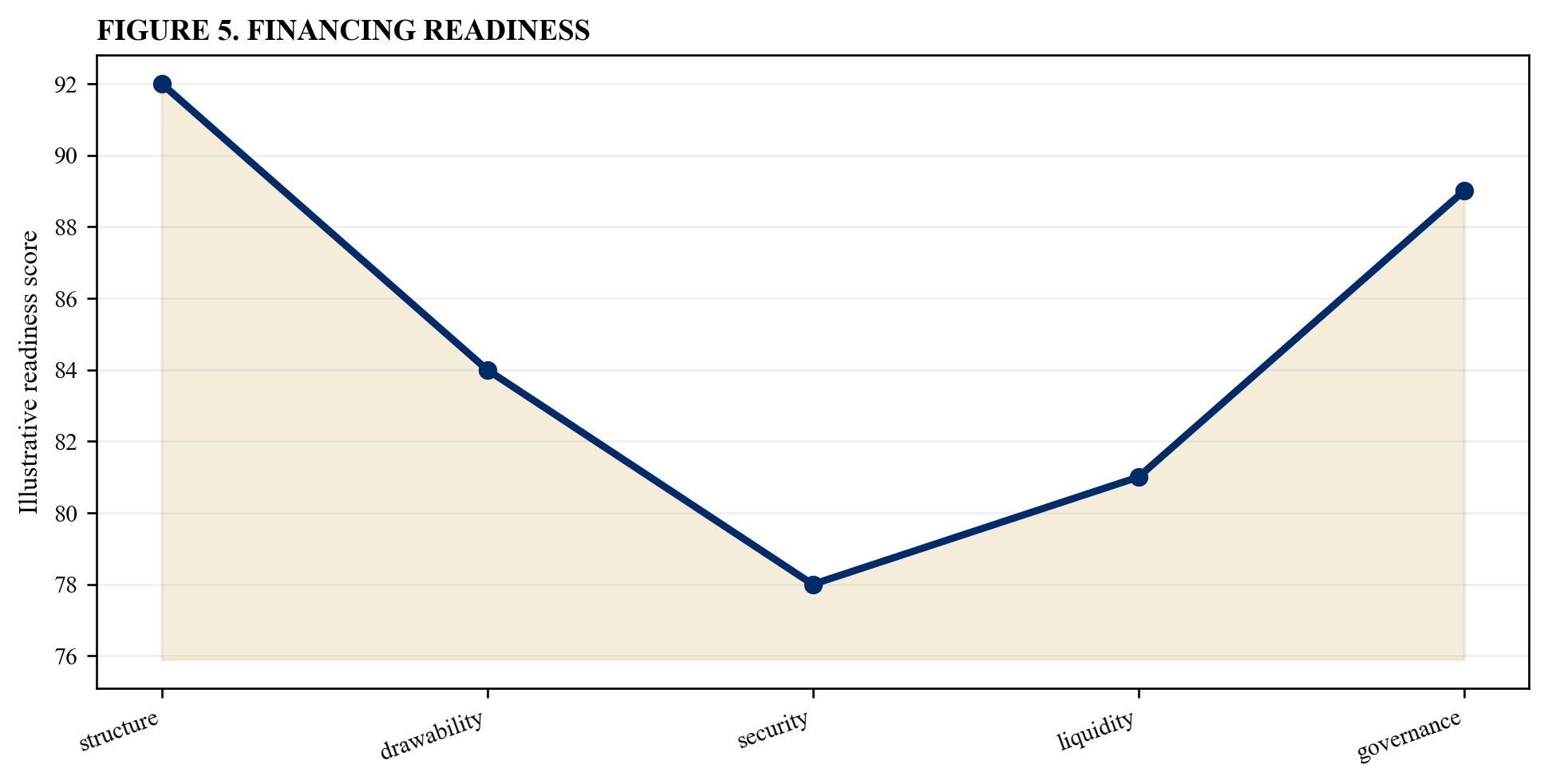
Illustrative analytical scenario; transaction evidence should replace model values.
References
- UAE Legislation, Federal Decree-Law No. 32 of 2021 on Commercial Companies, https://uaelegislation.gov.ae/en/legislations/1542
- ICC, Mergers and Acquisitions Model Contracts and Clauses, https://iccwbo.org/business-solutions/model-contracts-clauses/
- UAE Ministry of Economy and Tourism, Investment Incentives, https://www.moet.gov.ae/en/investment-incentives
- UAE Ministry of Economy and Tourism, Promising Sectors and Strategic Impact Activities, https://www.moet.gov.ae/en/promising-sectors
- UAE Ministry of Economy and Tourism, Investment FAQs, https://www.moet.gov.ae/en/investment-faqs
- PMI, The Standard for Project Management, https://www.pmi.org/pmbok-guide-standards
- ISO, ISO 21502 Project Management Guidance, https://www.iso.org/standard/74947.html
- IVSC, International Valuation Standards, https://www.ivsc.org/standards/
- IFRS Foundation, IFRS 9 Financial Instruments, https://www.ifrs.org/issued-standards/list-of-standards/ifrs-9-financial-instruments/
- OECD, G20/OECD Principles of Corporate Governance, https://www.oecd.org/corporate/principles-corporate-governance/
- IFRS Foundation, IAS 7 Statement of Cash Flows, https://www.ifrs.org/issued-standards/list-of-standards/ias-7-statement-of-cash-flows/
- UAE Federal Tax Authority, Corporate Tax Guide: Tax Groups, https://tax.gov.ae/en/taxes/corporate.tax/corporate.tax.guides.references.aspx
- UAE Federal Tax Authority, Corporate Tax General Guide, https://tax.gov.ae/Datafolder/Files/Guides/CT/CTGGCT1.pdf
- UAE Federal Tax Authority, Corporate Tax Guide: Transfer Pricing, https://tax.gov.ae/Datafolder/Files/Guides/CT/Transfer-Pricing-Guide.pdf
- UAE Federal Tax Authority, Interest Deduction Limitation Rules, https://tax.gov.ae/Datafolder/Files/Guides/CT/Interest-Deduction-guide.pdf
- UAE Legislation, Federal Decree-Law No. 47 of 2022 on Taxation of Corporations and Businesses, https://uaelegislation.gov.ae/en/legislations/1582
- Central Bank of the UAE Rulebook, Responsible Financing Practice, https://rulebook.centralbank.ae/en/rulebook/article-5-responsible-financing-practice
- Al Etihad Credit Bureau, Business Credit Reports, https://www.aecb.gov.ae/
- Central Bank of the UAE, Banking and Credit Facilities Rulebook, https://rulebook.centralbank.ae/en
- Emirates Development Bank, Business Financing Solutions, https://www.edb.gov.ae/
- Central Bank of the UAE, EIBOR, https://www.centralbank.ae/en/forex-eibor/eibor-rates/
- IFRS Foundation, IFRS 7 Financial Instruments Disclosures, https://www.ifrs.org/issued-standards/list-of-standards/ifrs-7-financial-instruments-disclosures/
- Basel Committee on Banking Supervision, Principles for the Management of Credit Risk, https://www.bis.org/bcbs/publ/d591.htm
- Loan Market Association, Primary Documents and Guidance, https://www.lma.eu.com/documents-guidelines
- IFRS Foundation, IAS 1 Presentation of Financial Statements, https://www.ifrs.org/issued-standards/list-of-standards/ias-1-presentation-of-financial-statements/
- UNCITRAL, Legislative Guide on Secured Transactions, https://uncitral.un.org/en/texts/securityinterests/legislativeguides/secured_transactions
- UAE Legislation, Federal Law No. 4 of 2020 Securing Rights in Movables, https://uaelegislation.gov.ae/en/legislations/1446
- Emirates Movable Collateral Registry, https://www.emcr.ae/
- UAE Legislation, Cabinet Resolution No. 29 of 2021 Executive Regulations for Movable Security, https://uaelegislation.gov.ae/en/legislations/1487
- UAE Legislation, Federal Law No. 8 of 2018 on Finance Lease, https://uaelegislation.gov.ae/en/legislations/1198
- IFRS Foundation, IFRS 16 Leases, https://www.ifrs.org/issued-standards/list-of-standards/ifrs-16-leases/
- IASB, Effects Analysis IFRS 16, https://www.ifrs.org/projects/completed-projects/2016/leases/
- UAE Legislation, Federal Decree-Law No. 16 of 2021 on Factoring and Transfer of Receivables, https://uaelegislation.gov.ae/en/legislations/1515
- FCI, General Rules for International Factoring, https://fci.nl/en/solutions/factoring
- UNCITRAL, Model Law on Secured Transactions, https://uncitral.un.org/en/texts/securityinterests/modellaw/secured_transactions
- ICC, Uniform Customs and Practice for Documentary Credits UCP 600, https://iccwbo.org/business-solutions/icc-rules-guidelines/ucp-600/
- ICC, Uniform Rules for Demand Guarantees URDG 758, https://iccwbo.org/business-solutions/icc-rules-guidelines/urdg-758/
- ICC, International Standard Demand Guarantee Practice, https://iccwbo.org/business-solutions/
- OECD, Due Diligence Guidance for Responsible Business Conduct, https://mneguidelines.oecd.org/due-diligence-guidance-for-responsible-business-conduct.htm
- World Bank, Corporate Governance of State-Owned Enterprises Toolkit, https://www.worldbank.org/en/topic/competitiveness/publication/corporate-governance-of-state-owned-enterprises-a-toolkit
- IFRS Foundation, IFRS 10 Consolidated Financial Statements, https://www.ifrs.org/issued-standards/list-of-standards/ifrs-10-consolidated-financial-statements/
- WIPO, IP Valuation Resources, https://www.wipo.int/sme/en/value_ip_assets/
- Central Bank of the UAE, Foreign Exchange and EIBOR, https://www.centralbank.ae/en/forex-eibor/
- BIS, Triennial Central Bank Survey Foreign Exchange, https://www.bis.org/statistics/rpfx22.htm
- ISO, ISO 31000 Risk Management, https://www.iso.org/iso-31000-risk-management.html
- Association of Corporate Treasurers, Treasury Resources, https://www.treasurers.org/knowledge-hub
- UAE Federal Tax Authority, Corporate Tax Guides and References, https://tax.gov.ae/en/taxes/corporate.tax/corporate.tax.guides.references.aspx
- UAE Ministry of Finance, Double Tax Agreements, https://mof.gov.ae/double-taxation-agreements/
- CFA Institute, Corporate Issuers and Capital Structure, https://www.cfainstitute.org/insights/professional-learning/refresher-readings
- World Bank, SME Finance, https://www.worldbank.org/en/topic/smefinance
- IMF, Corporate Sector Vulnerabilities and Financing, https://www.imf.org/en/Topics/financial-sector
- World Bank, Principles for Effective Insolvency and Creditor Rights Systems, https://www.worldbank.org/en/topic/financialsector/brief/the-world-bank-principles-for-effective-insolvency-and-creditor-rights
- City of London Law Society, Acquisition Finance Code and Guidance, https://www.citysolicitors.org.uk/
- UNIDROIT, Principles of International Commercial Contracts, https://www.unidroit.org/instruments/commercial-contracts/unidroit-principles-2016/
- COSO, Enterprise Risk Management Framework, https://www.coso.org/enterprise-risk-management
