

1. Define the dependency discount
Translate founder dependence into buyer concerns about cash-flow durability, transition cost and execution risk.
The controlled record should identify the dependency, affected cash flow, triggering event, stakeholder, current owner, successor, authority level, knowledge source, relationship evidence, system access, control, test, exception, deadline and approval. The immediate deliverable is a founder-dependency investment thesis.
The principal failure occurs when dependence remains a general observation with no consequence for value or deal terms. Reviewers should trace the exposure to revenue, margin, cash, customer retention, operating continuity and transaction execution; distinguish personal goodwill from transferable enterprise capability; and test whether another authorised person can reproduce the decision or outcome with the available information.
The decision pack for define the dependency discount should state the baseline, target state, transfer method, responsible executive, affected counterparties, evidence standard, rehearsal, exception route, performance indicator, buyer implication, residual exposure and next gate. Material exceptions should flow into the valuation model, management plan, diligence room, transaction protections and board reporting.
2. Set the transfer perimeter
Inventory revenue, customers, suppliers, people, approvals, knowledge, systems, reputation and external relationships that depend on the founder.
The controlled record should identify the dependency, affected cash flow, triggering event, stakeholder, current owner, successor, authority level, knowledge source, relationship evidence, system access, control, test, exception, deadline and approval. The immediate deliverable is a dependency perimeter map.
The principal failure occurs when the programme covers visible duties while informal dependencies remain hidden. Reviewers should trace the exposure to revenue, margin, cash, customer retention, operating continuity and transaction execution; distinguish personal goodwill from transferable enterprise capability; and test whether another authorised person can reproduce the decision or outcome with the available information.
The decision pack for set the transfer perimeter should state the baseline, target state, transfer method, responsible executive, affected counterparties, evidence standard, rehearsal, exception route, performance indicator, buyer implication, residual exposure and next gate. Material exceptions should flow into the valuation model, management plan, diligence room, transaction protections and board reporting.
3. Build the role map
Record every recurring founder activity, trigger, cadence, stakeholder, input, output and substitute owner.
The controlled record should identify the dependency, affected cash flow, triggering event, stakeholder, current owner, successor, authority level, knowledge source, relationship evidence, system access, control, test, exception, deadline and approval. The immediate deliverable is a founder role catalogue.
The principal failure occurs when a job description is mistaken for the founder's actual operating role. Reviewers should trace the exposure to revenue, margin, cash, customer retention, operating continuity and transaction execution; distinguish personal goodwill from transferable enterprise capability; and test whether another authorised person can reproduce the decision or outcome with the available information.
The decision pack for build the role map should state the baseline, target state, transfer method, responsible executive, affected counterparties, evidence standard, rehearsal, exception route, performance indicator, buyer implication, residual exposure and next gate. Material exceptions should flow into the valuation model, management plan, diligence room, transaction protections and board reporting.
4. Map decision authority
Identify decisions the founder makes, influences, vetoes or resolves across price, capital, customers, people and risk.
The controlled record should identify the dependency, affected cash flow, triggering event, stakeholder, current owner, successor, authority level, knowledge source, relationship evidence, system access, control, test, exception, deadline and approval. The immediate deliverable is an authority-transfer matrix.
The principal failure occurs when authority is delegated verbally while practical escalation still returns to the founder. Reviewers should trace the exposure to revenue, margin, cash, customer retention, operating continuity and transaction execution; distinguish personal goodwill from transferable enterprise capability; and test whether another authorised person can reproduce the decision or outcome with the available information.
The decision pack for map decision authority should state the baseline, target state, transfer method, responsible executive, affected counterparties, evidence standard, rehearsal, exception route, performance indicator, buyer implication, residual exposure and next gate. Material exceptions should flow into the valuation model, management plan, diligence room, transaction protections and board reporting.
5. Trace revenue origination
Separate founder-sourced, founder-assisted and institutionally sourced pipeline and conversion.
The controlled record should identify the dependency, affected cash flow, triggering event, stakeholder, current owner, successor, authority level, knowledge source, relationship evidence, system access, control, test, exception, deadline and approval. The immediate deliverable is a revenue-attribution bridge.
The principal failure occurs when headline growth conceals reliance on the founder's personal origination. Reviewers should trace the exposure to revenue, margin, cash, customer retention, operating continuity and transaction execution; distinguish personal goodwill from transferable enterprise capability; and test whether another authorised person can reproduce the decision or outcome with the available information.
The decision pack for trace revenue origination should state the baseline, target state, transfer method, responsible executive, affected counterparties, evidence standard, rehearsal, exception route, performance indicator, buyer implication, residual exposure and next gate. Material exceptions should flow into the valuation model, management plan, diligence room, transaction protections and board reporting.
6. Measure customer concentration
Combine account concentration with relationship ownership, contract strength, switching risk and renewal timing.
The controlled record should identify the dependency, affected cash flow, triggering event, stakeholder, current owner, successor, authority level, knowledge source, relationship evidence, system access, control, test, exception, deadline and approval. The immediate deliverable is a customer-dependency schedule.
The principal failure occurs when customer concentration is measured without asking who holds the commercial relationship. Reviewers should trace the exposure to revenue, margin, cash, customer retention, operating continuity and transaction execution; distinguish personal goodwill from transferable enterprise capability; and test whether another authorised person can reproduce the decision or outcome with the available information.
The decision pack for measure customer concentration should state the baseline, target state, transfer method, responsible executive, affected counterparties, evidence standard, rehearsal, exception route, performance indicator, buyer implication, residual exposure and next gate. Material exceptions should flow into the valuation model, management plan, diligence room, transaction protections and board reporting.
7. Transfer customer ownership
Assign executive sponsors, account leaders, contact maps, meeting cadence, renewal plans and documented commitments.
The controlled record should identify the dependency, affected cash flow, triggering event, stakeholder, current owner, successor, authority level, knowledge source, relationship evidence, system access, control, test, exception, deadline and approval. The immediate deliverable is a customer-transfer plan.
The principal failure occurs when introductions occur without transferring trust, context or problem-solving authority. Reviewers should trace the exposure to revenue, margin, cash, customer retention, operating continuity and transaction execution; distinguish personal goodwill from transferable enterprise capability; and test whether another authorised person can reproduce the decision or outcome with the available information.
The decision pack for transfer customer ownership should state the baseline, target state, transfer method, responsible executive, affected counterparties, evidence standard, rehearsal, exception route, performance indicator, buyer implication, residual exposure and next gate. Material exceptions should flow into the valuation model, management plan, diligence room, transaction protections and board reporting.
8. Transfer supplier and partner relationships
Document commercial terms, history, alternatives, escalation routes and successor contacts for critical counterparties.
The controlled record should identify the dependency, affected cash flow, triggering event, stakeholder, current owner, successor, authority level, knowledge source, relationship evidence, system access, control, test, exception, deadline and approval. The immediate deliverable is a counterparty continuity pack.
The principal failure occurs when counterparties continue to treat the founder as the only authorised negotiator. Reviewers should trace the exposure to revenue, margin, cash, customer retention, operating continuity and transaction execution; distinguish personal goodwill from transferable enterprise capability; and test whether another authorised person can reproduce the decision or outcome with the available information.
The decision pack for transfer supplier and partner relationships should state the baseline, target state, transfer method, responsible executive, affected counterparties, evidence standard, rehearsal, exception route, performance indicator, buyer implication, residual exposure and next gate. Material exceptions should flow into the valuation model, management plan, diligence room, transaction protections and board reporting.
Table 1. Dependency screen
| Domain | Evidence | Buyer concern |
|---|---|---|
| revenue | origination and renewal | cash-flow durability |
| relationships | shared contact ownership | continuity |
| authority | delegated decisions | execution |
| knowledge | tested playbooks | repeatability |
Illustrative control design; transaction-specific evidence and professional advice govern.
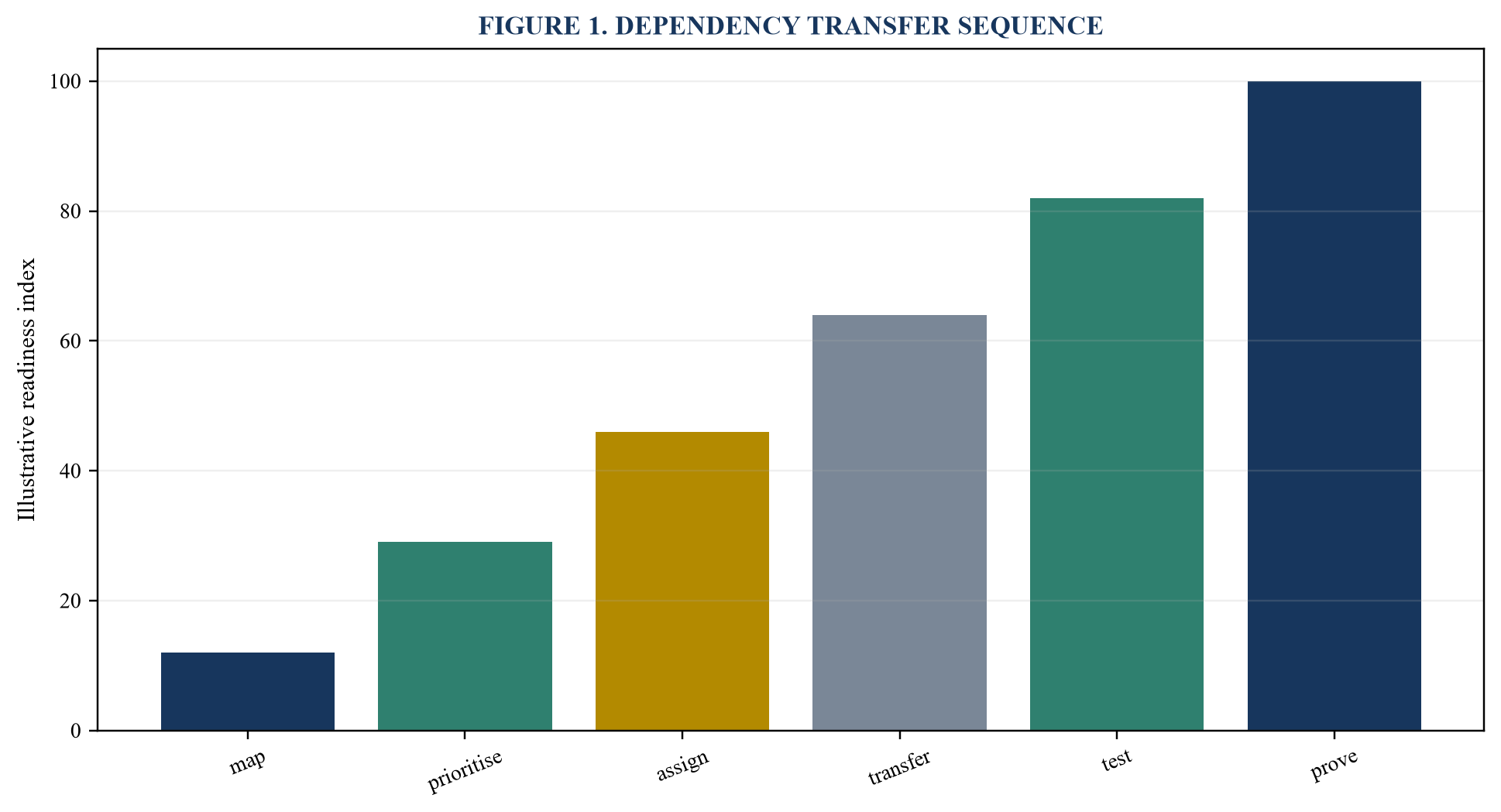
Values are illustrative readiness indices and require company-specific evidence.
9. Institutionalise pricing
Record pricing logic, discount boundaries, exceptions, approval rights and margin consequences.
The controlled record should identify the dependency, affected cash flow, triggering event, stakeholder, current owner, successor, authority level, knowledge source, relationship evidence, system access, control, test, exception, deadline and approval. The immediate deliverable is a pricing authority framework.
The principal failure occurs when commercial judgement remains tacit and every material quotation still needs the founder. Reviewers should trace the exposure to revenue, margin, cash, customer retention, operating continuity and transaction execution; distinguish personal goodwill from transferable enterprise capability; and test whether another authorised person can reproduce the decision or outcome with the available information.
The decision pack for institutionalise pricing should state the baseline, target state, transfer method, responsible executive, affected counterparties, evidence standard, rehearsal, exception route, performance indicator, buyer implication, residual exposure and next gate. Material exceptions should flow into the valuation model, management plan, diligence room, transaction protections and board reporting.
10. Transfer negotiation capability
Capture objectives, fallback positions, concessions, precedents, stakeholder interests and approval limits.
The controlled record should identify the dependency, affected cash flow, triggering event, stakeholder, current owner, successor, authority level, knowledge source, relationship evidence, system access, control, test, exception, deadline and approval. The immediate deliverable is a negotiation playbook.
The principal failure occurs when templates are transferred while the judgement needed to use them remains personal. Reviewers should trace the exposure to revenue, margin, cash, customer retention, operating continuity and transaction execution; distinguish personal goodwill from transferable enterprise capability; and test whether another authorised person can reproduce the decision or outcome with the available information.
The decision pack for transfer negotiation capability should state the baseline, target state, transfer method, responsible executive, affected counterparties, evidence standard, rehearsal, exception route, performance indicator, buyer implication, residual exposure and next gate. Material exceptions should flow into the valuation model, management plan, diligence room, transaction protections and board reporting.
11. Capture product and service knowledge
Document proposition architecture, customer use cases, delivery dependencies, roadmap choices and quality standards.
The controlled record should identify the dependency, affected cash flow, triggering event, stakeholder, current owner, successor, authority level, knowledge source, relationship evidence, system access, control, test, exception, deadline and approval. The immediate deliverable is a proposition knowledge base.
The principal failure occurs when technical or commercial knowledge is copied without its decision context. Reviewers should trace the exposure to revenue, margin, cash, customer retention, operating continuity and transaction execution; distinguish personal goodwill from transferable enterprise capability; and test whether another authorised person can reproduce the decision or outcome with the available information.
The decision pack for capture product and service knowledge should state the baseline, target state, transfer method, responsible executive, affected counterparties, evidence standard, rehearsal, exception route, performance indicator, buyer implication, residual exposure and next gate. Material exceptions should flow into the valuation model, management plan, diligence room, transaction protections and board reporting.
12. Stabilise delivery operations
Map handoffs, capacity constraints, exception paths, quality controls and client communications.
The controlled record should identify the dependency, affected cash flow, triggering event, stakeholder, current owner, successor, authority level, knowledge source, relationship evidence, system access, control, test, exception, deadline and approval. The immediate deliverable is an operating-exception system.
The principal failure occurs when the founder remains the default intervention point for delivery problems. Reviewers should trace the exposure to revenue, margin, cash, customer retention, operating continuity and transaction execution; distinguish personal goodwill from transferable enterprise capability; and test whether another authorised person can reproduce the decision or outcome with the available information.
The decision pack for stabilise delivery operations should state the baseline, target state, transfer method, responsible executive, affected counterparties, evidence standard, rehearsal, exception route, performance indicator, buyer implication, residual exposure and next gate. Material exceptions should flow into the valuation model, management plan, diligence room, transaction protections and board reporting.
13. Transfer financial control
Move cash, banking, budgeting, forecasting, credit, investment and reporting decisions into governed routines.
The controlled record should identify the dependency, affected cash flow, triggering event, stakeholder, current owner, successor, authority level, knowledge source, relationship evidence, system access, control, test, exception, deadline and approval. The immediate deliverable is a finance-control transition.
The principal failure occurs when signatory access changes while financial judgement and challenge remain founder-dependent. Reviewers should trace the exposure to revenue, margin, cash, customer retention, operating continuity and transaction execution; distinguish personal goodwill from transferable enterprise capability; and test whether another authorised person can reproduce the decision or outcome with the available information.
The decision pack for transfer financial control should state the baseline, target state, transfer method, responsible executive, affected counterparties, evidence standard, rehearsal, exception route, performance indicator, buyer implication, residual exposure and next gate. Material exceptions should flow into the valuation model, management plan, diligence room, transaction protections and board reporting.
14. Formalise legal and contract knowledge
Create a searchable record of obligations, deviations, renewal dates, disputes, licences and negotiating history.
The controlled record should identify the dependency, affected cash flow, triggering event, stakeholder, current owner, successor, authority level, knowledge source, relationship evidence, system access, control, test, exception, deadline and approval. The immediate deliverable is a contract intelligence register.
The principal failure occurs when contracts are stored but risks and commercial interpretations remain in the founder's memory. Reviewers should trace the exposure to revenue, margin, cash, customer retention, operating continuity and transaction execution; distinguish personal goodwill from transferable enterprise capability; and test whether another authorised person can reproduce the decision or outcome with the available information.
The decision pack for formalise legal and contract knowledge should state the baseline, target state, transfer method, responsible executive, affected counterparties, evidence standard, rehearsal, exception route, performance indicator, buyer implication, residual exposure and next gate. Material exceptions should flow into the valuation model, management plan, diligence room, transaction protections and board reporting.
15. Protect licences and regulated relationships
Identify approvals, named-person dependencies, reporting duties, regulator contacts and replacement requirements.
The controlled record should identify the dependency, affected cash flow, triggering event, stakeholder, current owner, successor, authority level, knowledge source, relationship evidence, system access, control, test, exception, deadline and approval. The immediate deliverable is a regulatory continuity schedule.
The principal failure occurs when a transfer plan overlooks permissions linked to an individual or informal regulator access. Reviewers should trace the exposure to revenue, margin, cash, customer retention, operating continuity and transaction execution; distinguish personal goodwill from transferable enterprise capability; and test whether another authorised person can reproduce the decision or outcome with the available information.
The decision pack for protect licences and regulated relationships should state the baseline, target state, transfer method, responsible executive, affected counterparties, evidence standard, rehearsal, exception route, performance indicator, buyer implication, residual exposure and next gate. Material exceptions should flow into the valuation model, management plan, diligence room, transaction protections and board reporting.
16. Build the leadership bench
Assess successors and deputies against the decisions, relationships and operating outcomes they must own.
The controlled record should identify the dependency, affected cash flow, triggering event, stakeholder, current owner, successor, authority level, knowledge source, relationship evidence, system access, control, test, exception, deadline and approval. The immediate deliverable is a management-bench assessment.
The principal failure occurs when titles are assigned without testing capability, credibility or capacity. Reviewers should trace the exposure to revenue, margin, cash, customer retention, operating continuity and transaction execution; distinguish personal goodwill from transferable enterprise capability; and test whether another authorised person can reproduce the decision or outcome with the available information.
The decision pack for build the leadership bench should state the baseline, target state, transfer method, responsible executive, affected counterparties, evidence standard, rehearsal, exception route, performance indicator, buyer implication, residual exposure and next gate. Material exceptions should flow into the valuation model, management plan, diligence room, transaction protections and board reporting.
Table 2. Successor readiness
| Test | Required proof | Decision |
|---|---|---|
| capability | observed outcome | develop or appoint |
| authority | signed mandate | delegate |
| capacity | workload evidence | resource |
| credibility | stakeholder acceptance | confirm |
Illustrative control design; transaction-specific evidence and professional advice govern.
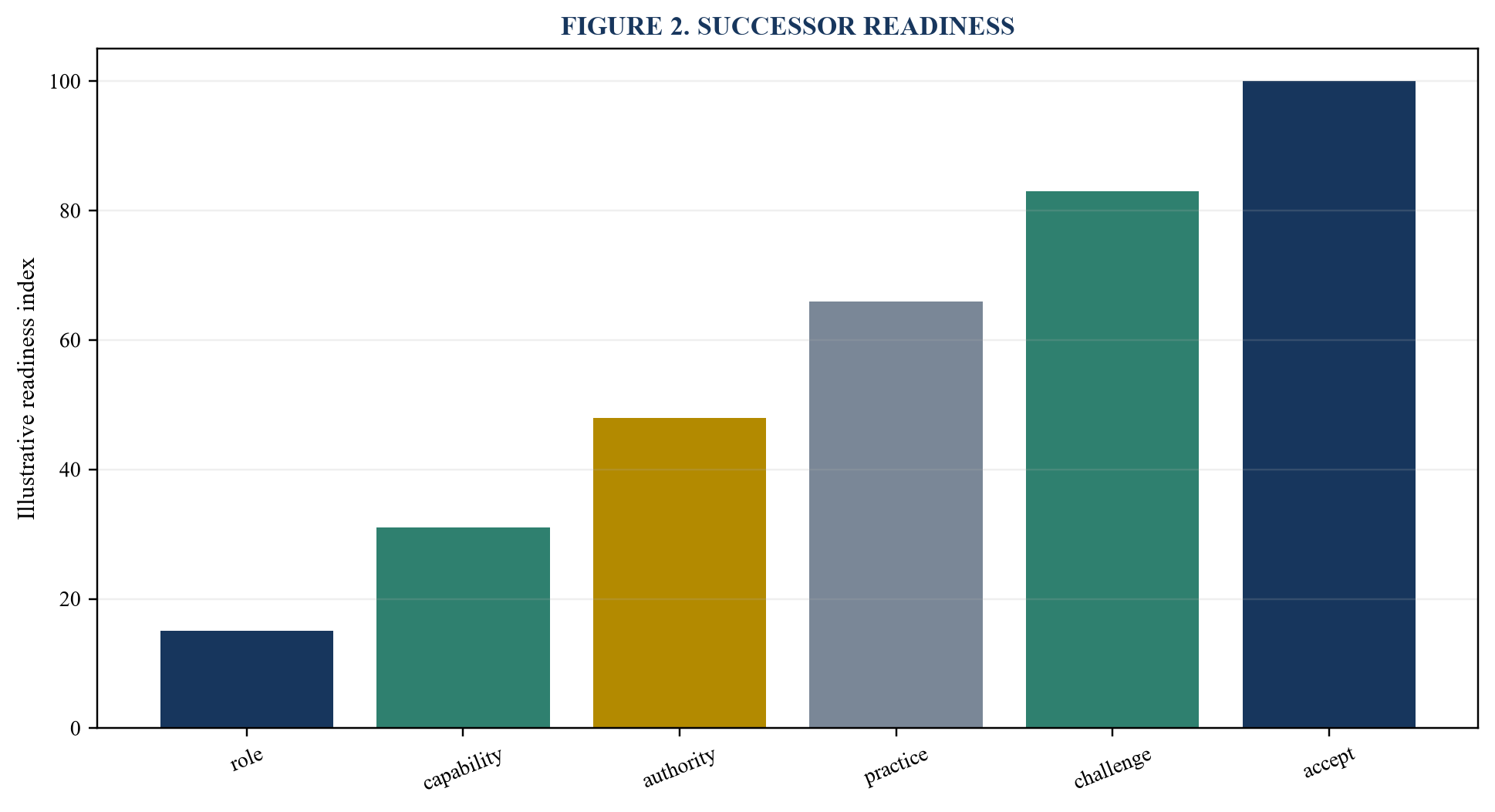
Values are illustrative readiness indices and require company-specific evidence.
17. Design the successor role
Specify mandate, outcomes, reserved matters, information rights, resources and transition milestones.
The controlled record should identify the dependency, affected cash flow, triggering event, stakeholder, current owner, successor, authority level, knowledge source, relationship evidence, system access, control, test, exception, deadline and approval. The immediate deliverable is a successor mandate.
The principal failure occurs when a successor inherits accountability without sufficient authority. Reviewers should trace the exposure to revenue, margin, cash, customer retention, operating continuity and transaction execution; distinguish personal goodwill from transferable enterprise capability; and test whether another authorised person can reproduce the decision or outcome with the available information.
The decision pack for design the successor role should state the baseline, target state, transfer method, responsible executive, affected counterparties, evidence standard, rehearsal, exception route, performance indicator, buyer implication, residual exposure and next gate. Material exceptions should flow into the valuation model, management plan, diligence room, transaction protections and board reporting.
18. Use a delegated-authority matrix
Set monetary and non-monetary limits, dual controls, exceptions, reporting and escalation.
The controlled record should identify the dependency, affected cash flow, triggering event, stakeholder, current owner, successor, authority level, knowledge source, relationship evidence, system access, control, test, exception, deadline and approval. The immediate deliverable is a delegated-authority schedule.
The principal failure occurs when delegation creates either paralysis or uncontrolled risk because boundaries are vague. Reviewers should trace the exposure to revenue, margin, cash, customer retention, operating continuity and transaction execution; distinguish personal goodwill from transferable enterprise capability; and test whether another authorised person can reproduce the decision or outcome with the available information.
The decision pack for use a delegated-authority matrix should state the baseline, target state, transfer method, responsible executive, affected counterparties, evidence standard, rehearsal, exception route, performance indicator, buyer implication, residual exposure and next gate. Material exceptions should flow into the valuation model, management plan, diligence room, transaction protections and board reporting.
19. Create a RACI that works
Allocate accountable and responsible owners for recurring decisions and cross-functional handoffs.
The controlled record should identify the dependency, affected cash flow, triggering event, stakeholder, current owner, successor, authority level, knowledge source, relationship evidence, system access, control, test, exception, deadline and approval. The immediate deliverable is an executable responsibility map.
The principal failure occurs when the matrix records participation while leaving final ownership ambiguous. Reviewers should trace the exposure to revenue, margin, cash, customer retention, operating continuity and transaction execution; distinguish personal goodwill from transferable enterprise capability; and test whether another authorised person can reproduce the decision or outcome with the available information.
The decision pack for create a raci that works should state the baseline, target state, transfer method, responsible executive, affected counterparties, evidence standard, rehearsal, exception route, performance indicator, buyer implication, residual exposure and next gate. Material exceptions should flow into the valuation model, management plan, diligence room, transaction protections and board reporting.
20. Align management incentives
Tie retention and reward to customer transfer, recurring performance, control adoption and leadership outcomes.
The controlled record should identify the dependency, affected cash flow, triggering event, stakeholder, current owner, successor, authority level, knowledge source, relationship evidence, system access, control, test, exception, deadline and approval. The immediate deliverable is a transition incentive plan.
The principal failure occurs when incentives reward short-term results while knowledge and relationship transfer remains optional. Reviewers should trace the exposure to revenue, margin, cash, customer retention, operating continuity and transaction execution; distinguish personal goodwill from transferable enterprise capability; and test whether another authorised person can reproduce the decision or outcome with the available information.
The decision pack for align management incentives should state the baseline, target state, transfer method, responsible executive, affected counterparties, evidence standard, rehearsal, exception route, performance indicator, buyer implication, residual exposure and next gate. Material exceptions should flow into the valuation model, management plan, diligence room, transaction protections and board reporting.
21. Retain critical people
Identify roles, flight risk, replacement time, knowledge concentration, motivation and retention actions.
The controlled record should identify the dependency, affected cash flow, triggering event, stakeholder, current owner, successor, authority level, knowledge source, relationship evidence, system access, control, test, exception, deadline and approval. The immediate deliverable is a critical-talent continuity plan.
The principal failure occurs when management capability erodes during sale preparation or buyer diligence. Reviewers should trace the exposure to revenue, margin, cash, customer retention, operating continuity and transaction execution; distinguish personal goodwill from transferable enterprise capability; and test whether another authorised person can reproduce the decision or outcome with the available information.
The decision pack for retain critical people should state the baseline, target state, transfer method, responsible executive, affected counterparties, evidence standard, rehearsal, exception route, performance indicator, buyer implication, residual exposure and next gate. Material exceptions should flow into the valuation model, management plan, diligence room, transaction protections and board reporting.
22. Capture tacit knowledge
Use interviews, shadowing, decision diaries, recordings, simulations and exception reviews to expose judgement.
The controlled record should identify the dependency, affected cash flow, triggering event, stakeholder, current owner, successor, authority level, knowledge source, relationship evidence, system access, control, test, exception, deadline and approval. The immediate deliverable is a tacit-knowledge capture programme.
The principal failure occurs when process manuals describe the normal case and omit the exceptions that consume founder attention. Reviewers should trace the exposure to revenue, margin, cash, customer retention, operating continuity and transaction execution; distinguish personal goodwill from transferable enterprise capability; and test whether another authorised person can reproduce the decision or outcome with the available information.
The decision pack for capture tacit knowledge should state the baseline, target state, transfer method, responsible executive, affected counterparties, evidence standard, rehearsal, exception route, performance indicator, buyer implication, residual exposure and next gate. Material exceptions should flow into the valuation model, management plan, diligence room, transaction protections and board reporting.
23. Build the decision catalogue
Record material decisions, facts considered, alternatives, thresholds, rationale, approval and results.
The controlled record should identify the dependency, affected cash flow, triggering event, stakeholder, current owner, successor, authority level, knowledge source, relationship evidence, system access, control, test, exception, deadline and approval. The immediate deliverable is a decision-memory library.
The principal failure occurs when teams receive conclusions without learning how to reproduce the judgement. Reviewers should trace the exposure to revenue, margin, cash, customer retention, operating continuity and transaction execution; distinguish personal goodwill from transferable enterprise capability; and test whether another authorised person can reproduce the decision or outcome with the available information.
The decision pack for build the decision catalogue should state the baseline, target state, transfer method, responsible executive, affected counterparties, evidence standard, rehearsal, exception route, performance indicator, buyer implication, residual exposure and next gate. Material exceptions should flow into the valuation model, management plan, diligence room, transaction protections and board reporting.
24. Secure systems and credentials
Move privileged access, data ownership, vendor accounts, domains, code, records and recovery processes into controlled custody.
The controlled record should identify the dependency, affected cash flow, triggering event, stakeholder, current owner, successor, authority level, knowledge source, relationship evidence, system access, control, test, exception, deadline and approval. The immediate deliverable is an access and custody register.
The principal failure occurs when business continuity depends on accounts or devices controlled personally by the founder. Reviewers should trace the exposure to revenue, margin, cash, customer retention, operating continuity and transaction execution; distinguish personal goodwill from transferable enterprise capability; and test whether another authorised person can reproduce the decision or outcome with the available information.
The decision pack for secure systems and credentials should state the baseline, target state, transfer method, responsible executive, affected counterparties, evidence standard, rehearsal, exception route, performance indicator, buyer implication, residual exposure and next gate. Material exceptions should flow into the valuation model, management plan, diligence room, transaction protections and board reporting.
Table 3. Knowledge and access controls
| Asset | Transfer method | Control |
|---|---|---|
| judgement | decision diary | peer review |
| credentials | managed custody | dual access |
| contracts | obligation register | calendar |
| IP | assignment review | title evidence |
Illustrative control design; transaction-specific evidence and professional advice govern.
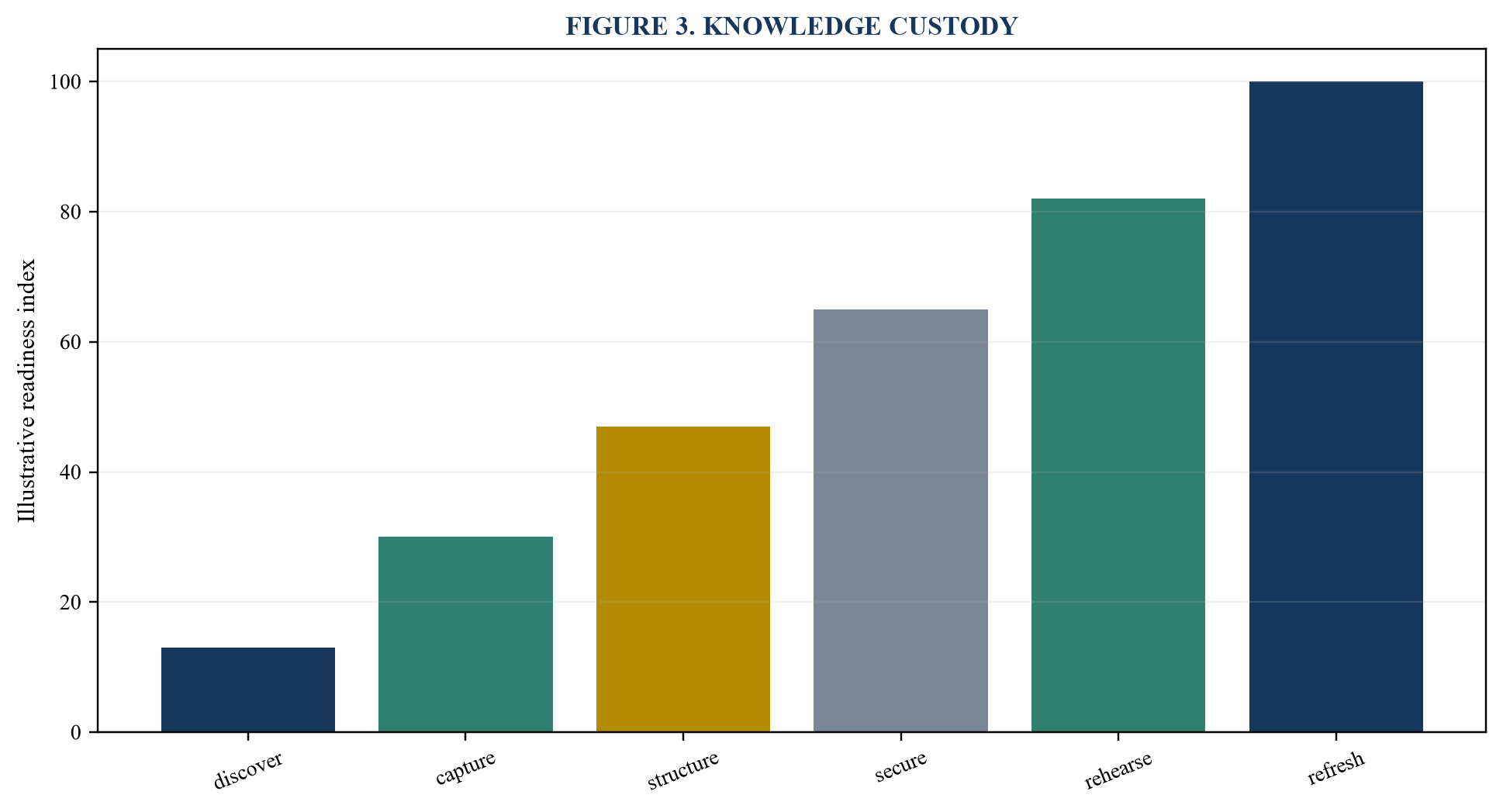
Values are illustrative readiness indices and require company-specific evidence.
25. Clarify intellectual-property ownership
Verify assignment, licences, contributor rights, open-source exposure, data rights and improvement ownership.
The controlled record should identify the dependency, affected cash flow, triggering event, stakeholder, current owner, successor, authority level, knowledge source, relationship evidence, system access, control, test, exception, deadline and approval. The immediate deliverable is an IP ownership pack.
The principal failure occurs when valuable know-how transfers operationally while legal title remains uncertain. Reviewers should trace the exposure to revenue, margin, cash, customer retention, operating continuity and transaction execution; distinguish personal goodwill from transferable enterprise capability; and test whether another authorised person can reproduce the decision or outcome with the available information.
The decision pack for clarify intellectual-property ownership should state the baseline, target state, transfer method, responsible executive, affected counterparties, evidence standard, rehearsal, exception route, performance indicator, buyer implication, residual exposure and next gate. Material exceptions should flow into the valuation model, management plan, diligence room, transaction protections and board reporting.
26. Install management information
Create timely dashboards for revenue, margin, cash, delivery, pipeline, customers, people and risk.
The controlled record should identify the dependency, affected cash flow, triggering event, stakeholder, current owner, successor, authority level, knowledge source, relationship evidence, system access, control, test, exception, deadline and approval. The immediate deliverable is a buyer-reproducible management pack.
The principal failure occurs when the founder's intuition remains the only integrated view of performance. Reviewers should trace the exposure to revenue, margin, cash, customer retention, operating continuity and transaction execution; distinguish personal goodwill from transferable enterprise capability; and test whether another authorised person can reproduce the decision or outcome with the available information.
The decision pack for install management information should state the baseline, target state, transfer method, responsible executive, affected counterparties, evidence standard, rehearsal, exception route, performance indicator, buyer implication, residual exposure and next gate. Material exceptions should flow into the valuation model, management plan, diligence room, transaction protections and board reporting.
27. Create operating cadence
Set weekly, monthly and quarterly forums with inputs, decisions, owners, minutes and escalation.
The controlled record should identify the dependency, affected cash flow, triggering event, stakeholder, current owner, successor, authority level, knowledge source, relationship evidence, system access, control, test, exception, deadline and approval. The immediate deliverable is a management operating calendar.
The principal failure occurs when meetings multiply without replacing founder-led coordination. Reviewers should trace the exposure to revenue, margin, cash, customer retention, operating continuity and transaction execution; distinguish personal goodwill from transferable enterprise capability; and test whether another authorised person can reproduce the decision or outcome with the available information.
The decision pack for create operating cadence should state the baseline, target state, transfer method, responsible executive, affected counterparties, evidence standard, rehearsal, exception route, performance indicator, buyer implication, residual exposure and next gate. Material exceptions should flow into the valuation model, management plan, diligence room, transaction protections and board reporting.
28. Strengthen board governance
Define board composition, matters reserved, challenge, conflicts, succession oversight and evidence.
The controlled record should identify the dependency, affected cash flow, triggering event, stakeholder, current owner, successor, authority level, knowledge source, relationship evidence, system access, control, test, exception, deadline and approval. The immediate deliverable is a governance transition charter.
The principal failure occurs when a nominal board defers every consequential issue to the founder. Reviewers should trace the exposure to revenue, margin, cash, customer retention, operating continuity and transaction execution; distinguish personal goodwill from transferable enterprise capability; and test whether another authorised person can reproduce the decision or outcome with the available information.
The decision pack for strengthen board governance should state the baseline, target state, transfer method, responsible executive, affected counterparties, evidence standard, rehearsal, exception route, performance indicator, buyer implication, residual exposure and next gate. Material exceptions should flow into the valuation model, management plan, diligence room, transaction protections and board reporting.
29. Protect reputation and brand
Transfer public, community, media, industry and referral relationships while separating personal and corporate identity.
The controlled record should identify the dependency, affected cash flow, triggering event, stakeholder, current owner, successor, authority level, knowledge source, relationship evidence, system access, control, test, exception, deadline and approval. The immediate deliverable is a reputation-transfer plan.
The principal failure occurs when enterprise goodwill remains inseparable from the founder's public persona. Reviewers should trace the exposure to revenue, margin, cash, customer retention, operating continuity and transaction execution; distinguish personal goodwill from transferable enterprise capability; and test whether another authorised person can reproduce the decision or outcome with the available information.
The decision pack for protect reputation and brand should state the baseline, target state, transfer method, responsible executive, affected counterparties, evidence standard, rehearsal, exception route, performance indicator, buyer implication, residual exposure and next gate. Material exceptions should flow into the valuation model, management plan, diligence room, transaction protections and board reporting.
30. Test founder absence
Run progressively longer simulations in which successors operate without founder intervention.
The controlled record should identify the dependency, affected cash flow, triggering event, stakeholder, current owner, successor, authority level, knowledge source, relationship evidence, system access, control, test, exception, deadline and approval. The immediate deliverable is a founder-absence test protocol.
The principal failure occurs when readiness is asserted without observing how the system behaves under real pressure. Reviewers should trace the exposure to revenue, margin, cash, customer retention, operating continuity and transaction execution; distinguish personal goodwill from transferable enterprise capability; and test whether another authorised person can reproduce the decision or outcome with the available information.
The decision pack for test founder absence should state the baseline, target state, transfer method, responsible executive, affected counterparties, evidence standard, rehearsal, exception route, performance indicator, buyer implication, residual exposure and next gate. Material exceptions should flow into the valuation model, management plan, diligence room, transaction protections and board reporting.
31. Track intervention leakage
Log every founder intervention, cause, impact, substitute owner and permanent corrective action.
The controlled record should identify the dependency, affected cash flow, triggering event, stakeholder, current owner, successor, authority level, knowledge source, relationship evidence, system access, control, test, exception, deadline and approval. The immediate deliverable is an intervention ledger.
The principal failure occurs when informal rescues continue and make the transfer programme look more complete than it is. Reviewers should trace the exposure to revenue, margin, cash, customer retention, operating continuity and transaction execution; distinguish personal goodwill from transferable enterprise capability; and test whether another authorised person can reproduce the decision or outcome with the available information.
The decision pack for track intervention leakage should state the baseline, target state, transfer method, responsible executive, affected counterparties, evidence standard, rehearsal, exception route, performance indicator, buyer implication, residual exposure and next gate. Material exceptions should flow into the valuation model, management plan, diligence room, transaction protections and board reporting.
32. Measure transfer evidence
Use indicators for founder-sourced revenue, contact ownership, approval volume, exception resolution, dashboard use and absence-test outcomes.
The controlled record should identify the dependency, affected cash flow, triggering event, stakeholder, current owner, successor, authority level, knowledge source, relationship evidence, system access, control, test, exception, deadline and approval. The immediate deliverable is a transfer scorecard.
The principal failure occurs when activity completion is confused with actual independence. Reviewers should trace the exposure to revenue, margin, cash, customer retention, operating continuity and transaction execution; distinguish personal goodwill from transferable enterprise capability; and test whether another authorised person can reproduce the decision or outcome with the available information.
The decision pack for measure transfer evidence should state the baseline, target state, transfer method, responsible executive, affected counterparties, evidence standard, rehearsal, exception route, performance indicator, buyer implication, residual exposure and next gate. Material exceptions should flow into the valuation model, management plan, diligence room, transaction protections and board reporting.
Table 4. Transfer scorecard
| Indicator | Baseline | Target |
|---|---|---|
| founder-sourced pipeline | measured share | declining share |
| founder approvals | monthly volume | exception only |
| shared relationships | coverage | two owners |
| absence tests | outcomes | repeatable |
Illustrative control design; transaction-specific evidence and professional advice govern.
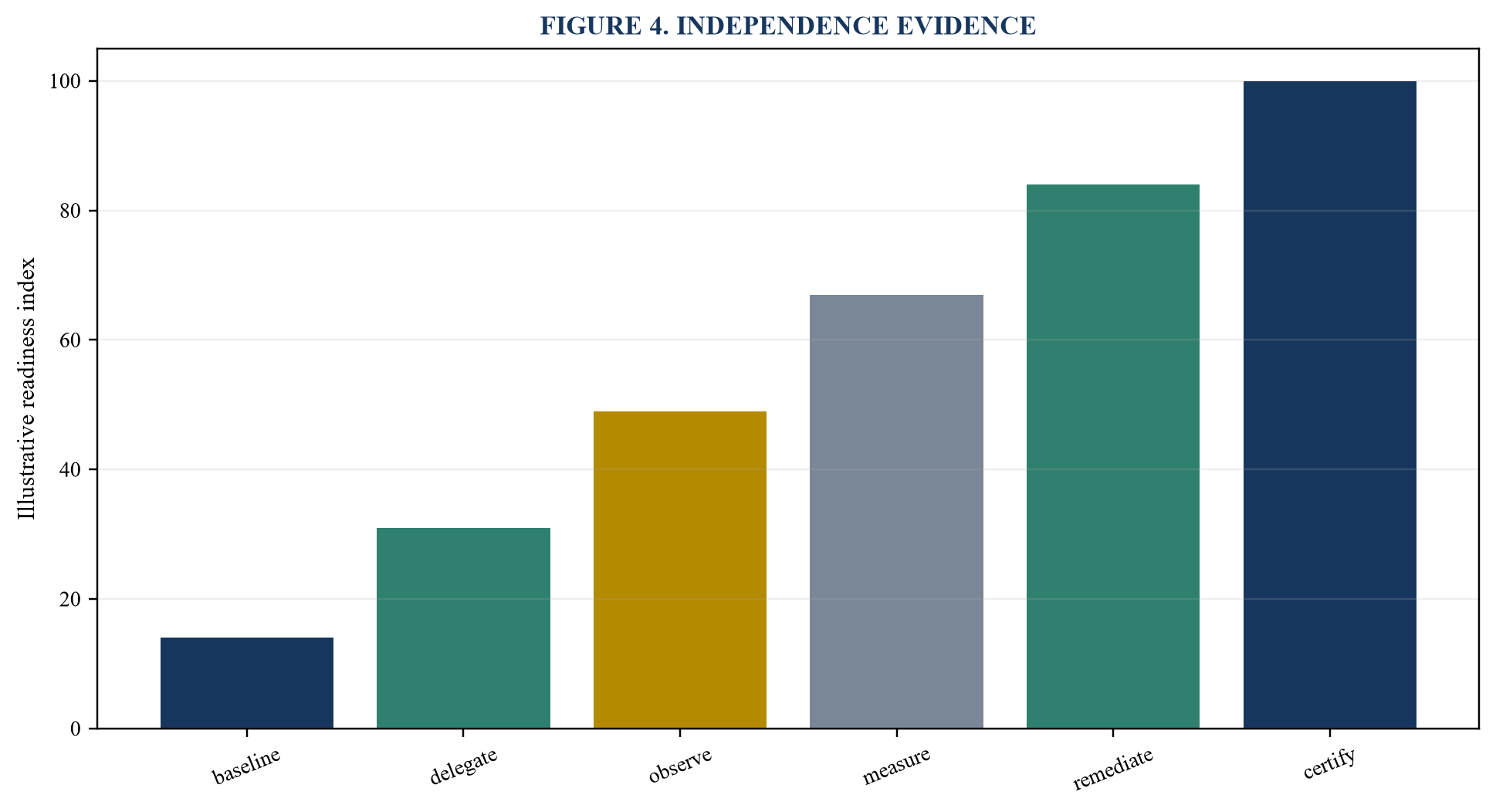
Values are illustrative readiness indices and require company-specific evidence.
33. Quantify the valuation effect
Model sustainable cash flow, customer loss, transition cost, management replacement, delay and buyer return thresholds.
The controlled record should identify the dependency, affected cash flow, triggering event, stakeholder, current owner, successor, authority level, knowledge source, relationship evidence, system access, control, test, exception, deadline and approval. The immediate deliverable is a dependency-adjusted valuation range.
The principal failure occurs when an arbitrary percentage discount is applied without linking risk to cash flows. Reviewers should trace the exposure to revenue, margin, cash, customer retention, operating continuity and transaction execution; distinguish personal goodwill from transferable enterprise capability; and test whether another authorised person can reproduce the decision or outcome with the available information.
The decision pack for quantify the valuation effect should state the baseline, target state, transfer method, responsible executive, affected counterparties, evidence standard, rehearsal, exception route, performance indicator, buyer implication, residual exposure and next gate. Material exceptions should flow into the valuation model, management plan, diligence room, transaction protections and board reporting.
34. Prepare the buyer evidence room
Organise role, authority, customer, talent, process, system, contract, IP, governance and test evidence.
The controlled record should identify the dependency, affected cash flow, triggering event, stakeholder, current owner, successor, authority level, knowledge source, relationship evidence, system access, control, test, exception, deadline and approval. The immediate deliverable is a founder-dependency diligence index.
The principal failure occurs when management claims cannot be reproduced during diligence. Reviewers should trace the exposure to revenue, margin, cash, customer retention, operating continuity and transaction execution; distinguish personal goodwill from transferable enterprise capability; and test whether another authorised person can reproduce the decision or outcome with the available information.
The decision pack for prepare the buyer evidence room should state the baseline, target state, transfer method, responsible executive, affected counterparties, evidence standard, rehearsal, exception route, performance indicator, buyer implication, residual exposure and next gate. Material exceptions should flow into the valuation model, management plan, diligence room, transaction protections and board reporting.
35. Design transaction protections
Align transition services, employment, consulting, retention, restrictive covenants, escrow, earnout and governance with residual risk.
The controlled record should identify the dependency, affected cash flow, triggering event, stakeholder, current owner, successor, authority level, knowledge source, relationship evidence, system access, control, test, exception, deadline and approval. The immediate deliverable is a residual-risk term map.
The principal failure occurs when deal terms compensate for unclear risk without a path to eliminate it. Reviewers should trace the exposure to revenue, margin, cash, customer retention, operating continuity and transaction execution; distinguish personal goodwill from transferable enterprise capability; and test whether another authorised person can reproduce the decision or outcome with the available information.
The decision pack for design transaction protections should state the baseline, target state, transfer method, responsible executive, affected counterparties, evidence standard, rehearsal, exception route, performance indicator, buyer implication, residual exposure and next gate. Material exceptions should flow into the valuation model, management plan, diligence room, transaction protections and board reporting.
36. Plan days zero to thirty
Baseline dependencies, protect critical people and accounts, establish governance and stop new concentration.
The controlled record should identify the dependency, affected cash flow, triggering event, stakeholder, current owner, successor, authority level, knowledge source, relationship evidence, system access, control, test, exception, deadline and approval. The immediate deliverable is a thirty-day stabilisation plan.
The principal failure occurs when the programme begins with documentation while urgent continuity risks remain exposed. Reviewers should trace the exposure to revenue, margin, cash, customer retention, operating continuity and transaction execution; distinguish personal goodwill from transferable enterprise capability; and test whether another authorised person can reproduce the decision or outcome with the available information.
The decision pack for plan days zero to thirty should state the baseline, target state, transfer method, responsible executive, affected counterparties, evidence standard, rehearsal, exception route, performance indicator, buyer implication, residual exposure and next gate. Material exceptions should flow into the valuation model, management plan, diligence room, transaction protections and board reporting.
37. Plan days thirty-one to ninety
Transfer recurring decisions, relationships, credentials, reporting and exception ownership through supervised practice.
The controlled record should identify the dependency, affected cash flow, triggering event, stakeholder, current owner, successor, authority level, knowledge source, relationship evidence, system access, control, test, exception, deadline and approval. The immediate deliverable is a ninety-day transfer sprint.
The principal failure occurs when successors observe the founder without exercising real authority. Reviewers should trace the exposure to revenue, margin, cash, customer retention, operating continuity and transaction execution; distinguish personal goodwill from transferable enterprise capability; and test whether another authorised person can reproduce the decision or outcome with the available information.
The decision pack for plan days thirty-one to ninety should state the baseline, target state, transfer method, responsible executive, affected counterparties, evidence standard, rehearsal, exception route, performance indicator, buyer implication, residual exposure and next gate. Material exceptions should flow into the valuation model, management plan, diligence room, transaction protections and board reporting.
38. Plan days ninety-one to one hundred eighty
Run absence tests, remediate failures, demonstrate repeatability and assemble buyer evidence.
The controlled record should identify the dependency, affected cash flow, triggering event, stakeholder, current owner, successor, authority level, knowledge source, relationship evidence, system access, control, test, exception, deadline and approval. The immediate deliverable is a 180-day independence test.
The principal failure occurs when the founder steps back before the new operating system has survived stress. Reviewers should trace the exposure to revenue, margin, cash, customer retention, operating continuity and transaction execution; distinguish personal goodwill from transferable enterprise capability; and test whether another authorised person can reproduce the decision or outcome with the available information.
The decision pack for plan days ninety-one to one hundred eighty should state the baseline, target state, transfer method, responsible executive, affected counterparties, evidence standard, rehearsal, exception route, performance indicator, buyer implication, residual exposure and next gate. Material exceptions should flow into the valuation model, management plan, diligence room, transaction protections and board reporting.
39. Govern residual dependence
Accept, insure, price, contract or remediate remaining exposures with named owners and review dates.
The controlled record should identify the dependency, affected cash flow, triggering event, stakeholder, current owner, successor, authority level, knowledge source, relationship evidence, system access, control, test, exception, deadline and approval. The immediate deliverable is a residual-dependency register.
The principal failure occurs when residual risk is hidden to preserve the headline valuation. Reviewers should trace the exposure to revenue, margin, cash, customer retention, operating continuity and transaction execution; distinguish personal goodwill from transferable enterprise capability; and test whether another authorised person can reproduce the decision or outcome with the available information.
The decision pack for govern residual dependence should state the baseline, target state, transfer method, responsible executive, affected counterparties, evidence standard, rehearsal, exception route, performance indicator, buyer implication, residual exposure and next gate. Material exceptions should flow into the valuation model, management plan, diligence room, transaction protections and board reporting.
40. Close through evidence gates
Require demonstrated revenue continuity, relationship transfer, delegated authority, management capability and controlled access before declaring readiness.
The controlled record should identify the dependency, affected cash flow, triggering event, stakeholder, current owner, successor, authority level, knowledge source, relationship evidence, system access, control, test, exception, deadline and approval. The immediate deliverable is a founder-transfer close certificate.
The principal failure occurs when the business enters market based on elapsed time rather than tested independence. Reviewers should trace the exposure to revenue, margin, cash, customer retention, operating continuity and transaction execution; distinguish personal goodwill from transferable enterprise capability; and test whether another authorised person can reproduce the decision or outcome with the available information.
The decision pack for close through evidence gates should state the baseline, target state, transfer method, responsible executive, affected counterparties, evidence standard, rehearsal, exception route, performance indicator, buyer implication, residual exposure and next gate. Material exceptions should flow into the valuation model, management plan, diligence room, transaction protections and board reporting.
Table 5. 180-day close gates
| Gate | Required evidence | Decision |
|---|---|---|
| revenue | institutional origination | pass |
| relationships | accepted successors | pass |
| authority | tested delegation | pass |
| continuity | absence test | pass |
Illustrative control design; transaction-specific evidence and professional advice govern.
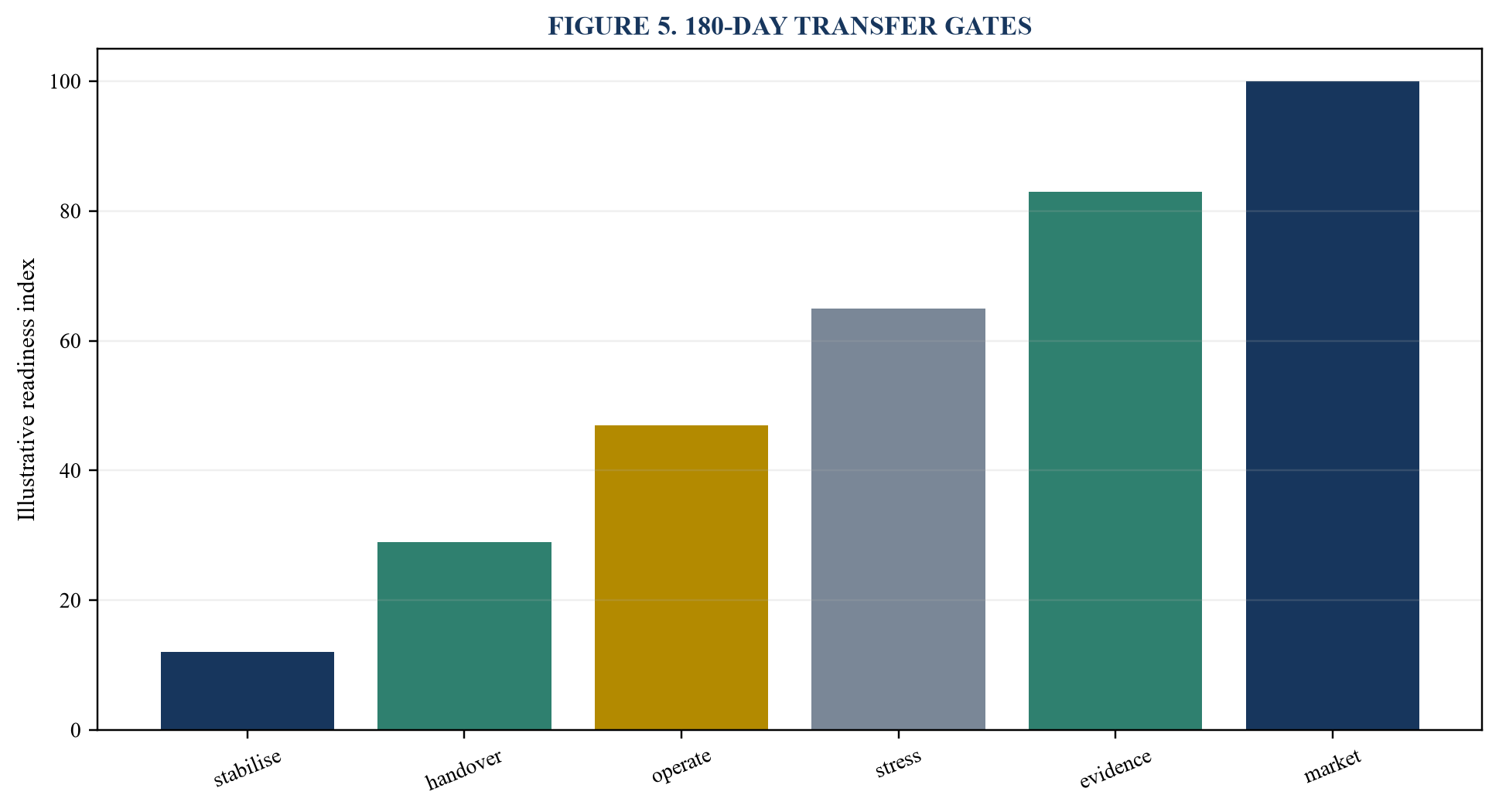
Values are illustrative readiness indices and require company-specific evidence.
References
- International Finance Corporation, Family Business Governance Handbook, https://www.ifc.org/en/insights-reports/2011/ifc-family-business-governance-handbook
- International Finance Corporation, Family Business Governance, https://www.ifc.org/en/what-we-do/sector-expertise/corporate-governance/family-business-governance
- International Finance Corporation, SME Governance Guidebook, https://www.ifc.org/en/insights-reports/2010/sme-governance-guidebook
- International Finance Corporation, Corporate Governance Success Stories in MENA, https://www.ifc.org/en/insights-reports/2011/cg-success-stories-mena
- Organisation for Economic Co-operation and Development, G20/OECD Principles of Corporate Governance 2023, https://www.oecd.org/en/publications/g20-oecd-principles-of-corporate-governance-2023_ed750b30-en.html
- Organisation for Economic Co-operation and Development, The Board of Directors, https://www.oecd.org/en/publications/oecd-corporate-governance-factbook-2025_f4f43735-en/full-report/the-board-of-directors_56efe758.html
- Financial Reporting Council, UK Corporate Governance Code 2024, https://www.frc.org.uk/library/standards-codes-policy/corporate-governance/uk-corporate-governance-code/
- Financial Reporting Council, Guidance on Board Effectiveness, https://www.frc.org.uk/library/standards-codes-policy/corporate-governance/guidance-on-board-effectiveness/
- Committee of Sponsoring Organizations of the Treadway Commission, Internal Control Integrated Framework, https://www.coso.org/guidance-on-ic
- Committee of Sponsoring Organizations of the Treadway Commission, Enterprise Risk Management, https://www.coso.org/enterprise-risk-management
- International Organization for Standardization, ISO 22301 Security and resilience, https://www.iso.org/standard/75106.html
- International Organization for Standardization, ISO 31000 Risk management, https://www.iso.org/iso-31000-risk-management.html
- International Valuation Standards Council, International Valuation Standards, https://www.ivsc.org/standards/
- IFRS Foundation, IFRS 3 Business Combinations, https://www.ifrs.org/issued-standards/list-of-standards/ifrs-3-business-combinations/
- IFRS Foundation, IFRS 13 Fair Value Measurement, https://www.ifrs.org/issued-standards/list-of-standards/ifrs-13-fair-value-measurement/
- IFRS Foundation, IAS 36 Impairment of Assets, https://www.ifrs.org/issued-standards/list-of-standards/ias-36-impairment-of-assets/
- World Intellectual Property Organization, Intellectual Property for Business, https://www.wipo.int/sme/en/
- World Intellectual Property Organization, IP Due Diligence Readiness, https://www.wipo.int/sme/en/ip_business/valuation/
- UK Government, Key person insurance, https://www.gov.uk/hmrc-internal-manuals/business-income-manual/bim45530
- US Securities and Exchange Commission, Example disclosure of dependence on key personnel, https://www.sec.gov/Archives/edgar/data/2034363/000203436326000003/EEURegCFOfferingStatement.pdf
- US Securities and Exchange Commission, Example founder and key-person risk disclosure, https://www.sec.gov/Archives/edgar/data/1722382/000166919119000150/2018_Annual_Report.pdf
- UK Takeover Panel, The Takeover Code, https://www.thetakeoverpanel.org.uk/the-code
- International Auditing and Assurance Standards Board, International Standards on Auditing, https://www.iaasb.org/publications-resources
- International Labour Organization, Employment Relationship Recommendation 2006, https://www.ilo.org/resource/r198-employment-relationship-recommendation-2006
- National Institute of Standards and Technology, Cybersecurity Framework 2.0, https://www.nist.gov/cyberframework
- World Bank Group, Corporate Governance, https://www.ifc.org/en/what-we-do/sector-expertise/corporate-governance
