

1. Define the family liquidity objective
Specify recipients, amount, currency, timing, fairness, control and acceptable funding risk.
The liquidity review should reconcile family decisions, ownership records, personal needs, valuation cases and enterprise strategy. Each conclusion records the cash source, legal entity, amount, timing, priority, authority, dependency, protection and unresolved exception. The immediate output is an approved liquidity-event mandate.
The structure must be tested through cash and downside outcomes. Reviewers trace assumptions to native records, reconcile the integrated model, test covenant and operating headroom and assess whether management can fund strategy after the family receives proceeds. Company facts, ownership objectives, jurisdiction and market terms govern every conclusion.
Material gaps require an accountable owner, corrective action, evidence, advice and decision date. Consequences should flow through cash, leverage, control, tax, valuation, stakeholder fairness, consent timing and transaction protection. Residual risk remains visible until funding is committed, conditions are satisfied and post-event resilience is proved.
2. Quantify the sources-and-uses requirement
Reconcile gross proceeds, taxes, costs, debt repayment, reinvestment and recipient allocations.
The liquidity review should reconcile transaction scenarios, tax estimates, fee budgets, ownership percentages and timing assumptions. Each conclusion records the cash source, legal entity, amount, timing, priority, authority, dependency, protection and unresolved exception. The immediate output is a controlled sources-and-uses model.
The structure must be tested through cash and downside outcomes. Reviewers trace assumptions to native records, reconcile the integrated model, test covenant and operating headroom and assess whether management can fund strategy after the family receives proceeds. Company facts, ownership objectives, jurisdiction and market terms govern every conclusion.
Material gaps require an accountable owner, corrective action, evidence, advice and decision date. Consequences should flow through cash, leverage, control, tax, valuation, stakeholder fairness, consent timing and transaction protection. Residual risk remains visible until funding is committed, conditions are satisfied and post-event resilience is proved.
3. Ring-fence operating liquidity
Protect payroll, suppliers, maintenance, working capital, committed capex, contingencies and regulatory cash.
The liquidity review should reconcile daily cash, working-capital cycles, capex plan, reserves, restrictions and downside forecasts. Each conclusion records the cash source, legal entity, amount, timing, priority, authority, dependency, protection and unresolved exception. The immediate output is an operating-liquidity floor.
The structure must be tested through cash and downside outcomes. Reviewers trace assumptions to native records, reconcile the integrated model, test covenant and operating headroom and assess whether management can fund strategy after the family receives proceeds. Company facts, ownership objectives, jurisdiction and market terms govern every conclusion.
Material gaps require an accountable owner, corrective action, evidence, advice and decision date. Consequences should flow through cash, leverage, control, tax, valuation, stakeholder fairness, consent timing and transaction protection. Residual risk remains visible until funding is committed, conditions are satisfied and post-event resilience is proved.
4. Determine lawful distribution capacity
Establish profits, reserves, solvency, capital-maintenance and approval constraints for every entity.
The liquidity review should reconcile audited accounts, interim balances, legal capital, articles, board papers and legal advice. Each conclusion records the cash source, legal entity, amount, timing, priority, authority, dependency, protection and unresolved exception. The immediate output is a distributable-capacity schedule.
The structure must be tested through cash and downside outcomes. Reviewers trace assumptions to native records, reconcile the integrated model, test covenant and operating headroom and assess whether management can fund strategy after the family receives proceeds. Company facts, ownership objectives, jurisdiction and market terms govern every conclusion.
Material gaps require an accountable owner, corrective action, evidence, advice and decision date. Consequences should flow through cash, leverage, control, tax, valuation, stakeholder fairness, consent timing and transaction protection. Residual risk remains visible until funding is committed, conditions are satisfied and post-event resilience is proved.
5. Map existing debt and covenant headroom
Measure drawn debt, availability, maturities, security, guarantees, baskets, leakage and default triggers.
The liquidity review should reconcile facility agreements, compliance certificates, forecasts, security records and lender correspondence. Each conclusion records the cash source, legal entity, amount, timing, priority, authority, dependency, protection and unresolved exception. The immediate output is a covenant-and-capacity baseline.
The structure must be tested through cash and downside outcomes. Reviewers trace assumptions to native records, reconcile the integrated model, test covenant and operating headroom and assess whether management can fund strategy after the family receives proceeds. Company facts, ownership objectives, jurisdiction and market terms govern every conclusion.
Material gaps require an accountable owner, corrective action, evidence, advice and decision date. Consequences should flow through cash, leverage, control, tax, valuation, stakeholder fairness, consent timing and transaction protection. Residual risk remains visible until funding is committed, conditions are satisfied and post-event resilience is proved.
6. Prove cash-flow durability
Separate recurring cash generation from timing, one-offs, related parties and unsustainable working-capital release.
The liquidity review should reconcile monthly cash flows, collections, supplier payments, taxes, capex and bank records. Each conclusion records the cash source, legal entity, amount, timing, priority, authority, dependency, protection and unresolved exception. The immediate output is a cash-conversion evidence file.
The structure must be tested through cash and downside outcomes. Reviewers trace assumptions to native records, reconcile the integrated model, test covenant and operating headroom and assess whether management can fund strategy after the family receives proceeds. Company facts, ownership objectives, jurisdiction and market terms govern every conclusion.
Material gaps require an accountable owner, corrective action, evidence, advice and decision date. Consequences should flow through cash, leverage, control, tax, valuation, stakeholder fairness, consent timing and transaction protection. Residual risk remains visible until funding is committed, conditions are satisfied and post-event resilience is proved.
7. Stress-test the operating company
Model revenue, margin, working capital, capex, rates, currency, covenant and refinancing shocks.
The liquidity review should reconcile integrated forecast, sensitivities, historical volatility and management actions. Each conclusion records the cash source, legal entity, amount, timing, priority, authority, dependency, protection and unresolved exception. The immediate output is a downside liquidity and covenant model.
The structure must be tested through cash and downside outcomes. Reviewers trace assumptions to native records, reconcile the integrated model, test covenant and operating headroom and assess whether management can fund strategy after the family receives proceeds. Company facts, ownership objectives, jurisdiction and market terms govern every conclusion.
Material gaps require an accountable owner, corrective action, evidence, advice and decision date. Consequences should flow through cash, leverage, control, tax, valuation, stakeholder fairness, consent timing and transaction protection. Residual risk remains visible until funding is committed, conditions are satisfied and post-event resilience is proved.
8. Choose the funding architecture
Compare distributions, redemptions, internal transfers, debt, minority equity and asset monetisation on one basis.
The liquidity review should reconcile uses, cash capacity, control objectives, valuation, tax, execution time and risk appetite. Each conclusion records the cash source, legal entity, amount, timing, priority, authority, dependency, protection and unresolved exception. The immediate output is a board funding-options matrix.
The structure must be tested through cash and downside outcomes. Reviewers trace assumptions to native records, reconcile the integrated model, test covenant and operating headroom and assess whether management can fund strategy after the family receives proceeds. Company facts, ownership objectives, jurisdiction and market terms govern every conclusion.
Material gaps require an accountable owner, corrective action, evidence, advice and decision date. Consequences should flow through cash, leverage, control, tax, valuation, stakeholder fairness, consent timing and transaction protection. Residual risk remains visible until funding is committed, conditions are satisfied and post-event resilience is proved.
Table 1. Funding architecture comparison
| Route | Primary strength | Core constraint |
|---|---|---|
| distribution | simple ownership continuity | lawful capacity and leakage |
| redemption | targeted owner exit | funding and valuation |
| debt | limited dilution | service and covenant burden |
| minority equity | balance-sheet support | rights and dilution |
Illustrative programme design; company-specific facts and authorised advice govern.
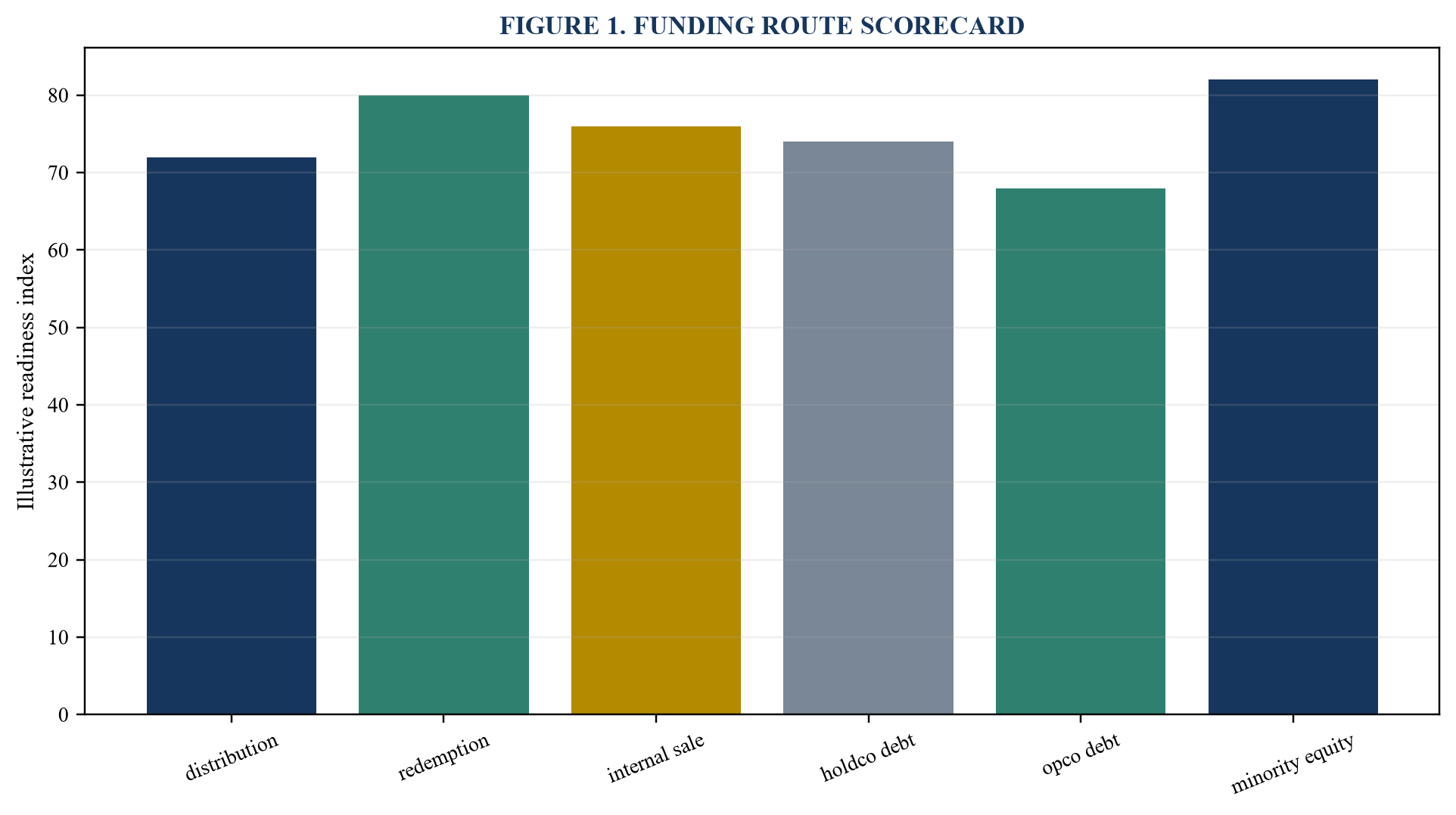
Values are illustrative readiness indices and require company-specific evidence.
9. Calibrate ordinary dividends
Set a sustainable recurring distribution after operating needs, debt service and reinvestment.
The liquidity review should reconcile free cash flow, dividend history, policy, covenants, forecasts and owner expectations. Each conclusion records the cash source, legal entity, amount, timing, priority, authority, dependency, protection and unresolved exception. The immediate output is a sustainable dividend policy.
The structure must be tested through cash and downside outcomes. Reviewers trace assumptions to native records, reconcile the integrated model, test covenant and operating headroom and assess whether management can fund strategy after the family receives proceeds. Company facts, ownership objectives, jurisdiction and market terms govern every conclusion.
Material gaps require an accountable owner, corrective action, evidence, advice and decision date. Consequences should flow through cash, leverage, control, tax, valuation, stakeholder fairness, consent timing and transaction protection. Residual risk remains visible until funding is committed, conditions are satisfied and post-event resilience is proved.
10. Design a special dividend
Test a one-time distribution against lawful capacity, cash conversion, covenants and future funding needs.
The liquidity review should reconcile reserves, liquidity forecast, lender terms, tax analysis and board duties. Each conclusion records the cash source, legal entity, amount, timing, priority, authority, dependency, protection and unresolved exception. The immediate output is a special-dividend decision paper.
The structure must be tested through cash and downside outcomes. Reviewers trace assumptions to native records, reconcile the integrated model, test covenant and operating headroom and assess whether management can fund strategy after the family receives proceeds. Company facts, ownership objectives, jurisdiction and market terms govern every conclusion.
Material gaps require an accountable owner, corrective action, evidence, advice and decision date. Consequences should flow through cash, leverage, control, tax, valuation, stakeholder fairness, consent timing and transaction protection. Residual risk remains visible until funding is committed, conditions are satisfied and post-event resilience is proved.
11. Evaluate share redemption or buyback
Define eligible shares, pricing, funding, approvals, creditor protection and post-event ownership.
The liquidity review should reconcile articles, shareholder agreement, company law, valuation, cash and consent requirements. Each conclusion records the cash source, legal entity, amount, timing, priority, authority, dependency, protection and unresolved exception. The immediate output is a redemption-and-buyback execution plan.
The structure must be tested through cash and downside outcomes. Reviewers trace assumptions to native records, reconcile the integrated model, test covenant and operating headroom and assess whether management can fund strategy after the family receives proceeds. Company facts, ownership objectives, jurisdiction and market terms govern every conclusion.
Material gaps require an accountable owner, corrective action, evidence, advice and decision date. Consequences should flow through cash, leverage, control, tax, valuation, stakeholder fairness, consent timing and transaction protection. Residual risk remains visible until funding is committed, conditions are satisfied and post-event resilience is proved.
12. Structure an inter-family transfer
Match exiting and continuing owners through funded purchase rights, instalments and enforceable security.
The liquidity review should reconcile transfer restrictions, valuation rules, buyer capacity, tax and family agreements. Each conclusion records the cash source, legal entity, amount, timing, priority, authority, dependency, protection and unresolved exception. The immediate output is an internal ownership-transfer plan.
The structure must be tested through cash and downside outcomes. Reviewers trace assumptions to native records, reconcile the integrated model, test covenant and operating headroom and assess whether management can fund strategy after the family receives proceeds. Company facts, ownership objectives, jurisdiction and market terms govern every conclusion.
Material gaps require an accountable owner, corrective action, evidence, advice and decision date. Consequences should flow through cash, leverage, control, tax, valuation, stakeholder fairness, consent timing and transaction protection. Residual risk remains visible until funding is committed, conditions are satisfied and post-event resilience is proved.
13. Use deferred consideration selectively
Balance upfront liquidity with seller notes, earn-outs or instalments tied to clear credit and control protections.
The liquidity review should reconcile cash capacity, forecasts, security, subordination, triggers and dispute mechanics. Each conclusion records the cash source, legal entity, amount, timing, priority, authority, dependency, protection and unresolved exception. The immediate output is a deferred-payment term sheet.
The structure must be tested through cash and downside outcomes. Reviewers trace assumptions to native records, reconcile the integrated model, test covenant and operating headroom and assess whether management can fund strategy after the family receives proceeds. Company facts, ownership objectives, jurisdiction and market terms govern every conclusion.
Material gaps require an accountable owner, corrective action, evidence, advice and decision date. Consequences should flow through cash, leverage, control, tax, valuation, stakeholder fairness, consent timing and transaction protection. Residual risk remains visible until funding is committed, conditions are satisfied and post-event resilience is proved.
14. Assess holding-company debt
Test structural subordination, upstream cash, security, guarantees, leakage and refinancing at the ownership level.
The liquidity review should reconcile group chart, distributions, covenants, tax, legal capacity and lender terms. Each conclusion records the cash source, legal entity, amount, timing, priority, authority, dependency, protection and unresolved exception. The immediate output is a holdco-debt capacity model.
The structure must be tested through cash and downside outcomes. Reviewers trace assumptions to native records, reconcile the integrated model, test covenant and operating headroom and assess whether management can fund strategy after the family receives proceeds. Company facts, ownership objectives, jurisdiction and market terms govern every conclusion.
Material gaps require an accountable owner, corrective action, evidence, advice and decision date. Consequences should flow through cash, leverage, control, tax, valuation, stakeholder fairness, consent timing and transaction protection. Residual risk remains visible until funding is committed, conditions are satisfied and post-event resilience is proved.
15. Assess operating-company debt
Determine incremental borrowing compatible with business volatility, capex, working capital and existing lenders.
The liquidity review should reconcile cash flow, debt service, collateral, covenants, borrowing base and downside cases. Each conclusion records the cash source, legal entity, amount, timing, priority, authority, dependency, protection and unresolved exception. The immediate output is an opco-debt options paper.
The structure must be tested through cash and downside outcomes. Reviewers trace assumptions to native records, reconcile the integrated model, test covenant and operating headroom and assess whether management can fund strategy after the family receives proceeds. Company facts, ownership objectives, jurisdiction and market terms govern every conclusion.
Material gaps require an accountable owner, corrective action, evidence, advice and decision date. Consequences should flow through cash, leverage, control, tax, valuation, stakeholder fairness, consent timing and transaction protection. Residual risk remains visible until funding is committed, conditions are satisfied and post-event resilience is proved.
16. Test a dividend recapitalisation
Measure leverage, rating or lender tolerance, debt service, refinancing concentration and resilience after proceeds.
The liquidity review should reconcile transaction debt model, market terms, cash sweeps, covenants and stress tests. Each conclusion records the cash source, legal entity, amount, timing, priority, authority, dependency, protection and unresolved exception. The immediate output is a dividend-recap risk decision.
The structure must be tested through cash and downside outcomes. Reviewers trace assumptions to native records, reconcile the integrated model, test covenant and operating headroom and assess whether management can fund strategy after the family receives proceeds. Company facts, ownership objectives, jurisdiction and market terms govern every conclusion.
Material gaps require an accountable owner, corrective action, evidence, advice and decision date. Consequences should flow through cash, leverage, control, tax, valuation, stakeholder fairness, consent timing and transaction protection. Residual risk remains visible until funding is committed, conditions are satisfied and post-event resilience is proved.
Table 2. Debt resilience gates
| Gate | Required evidence | Stop signal |
|---|---|---|
| cash floor | operating needs funded | payroll or supplier risk |
| debt service | downside coverage | persistent cash deficit |
| covenants | tested headroom | early breach case |
| refinancing | credible maturity route | single-date dependency |
Illustrative programme design; company-specific facts and authorised advice govern.
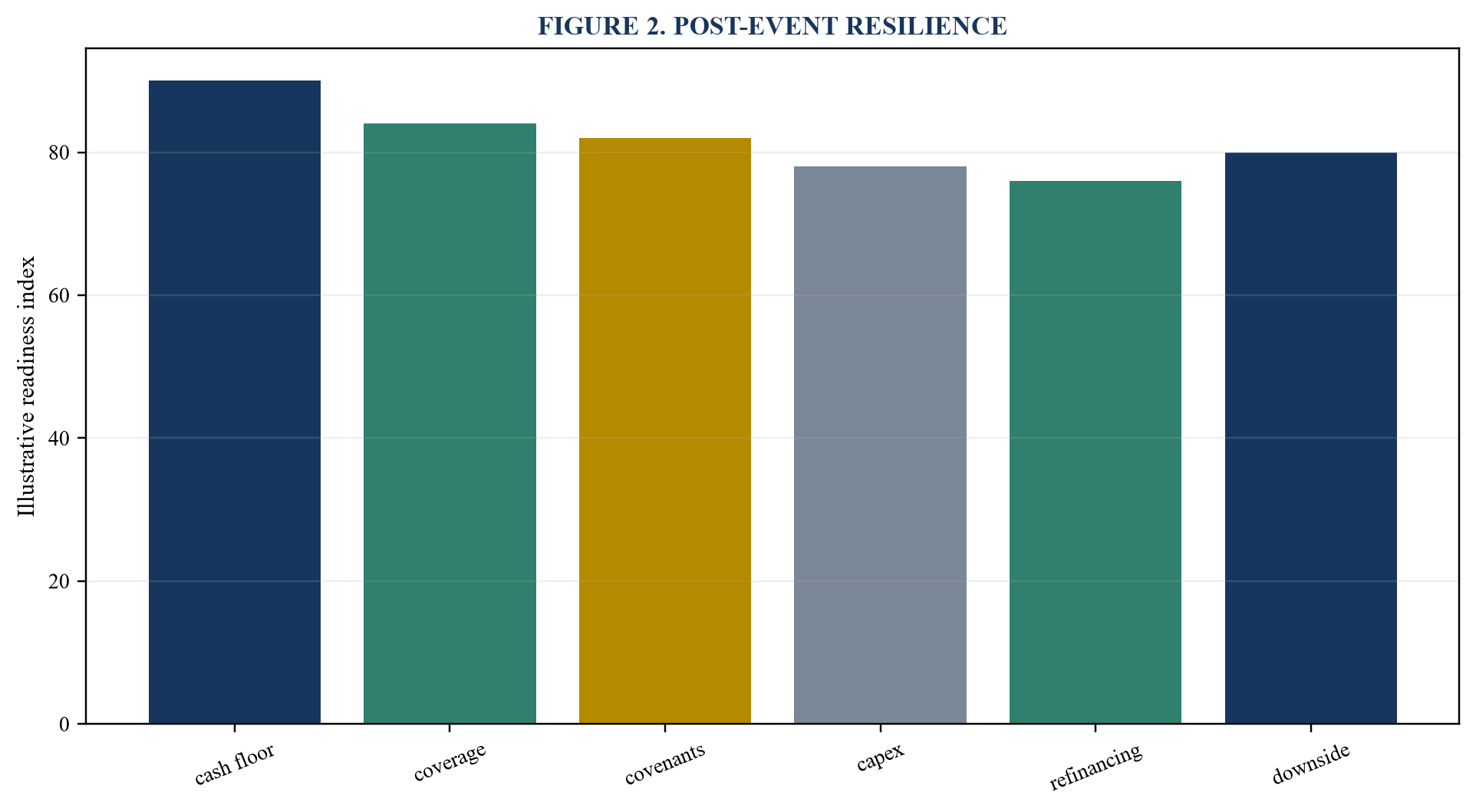
Values are illustrative readiness indices and require company-specific evidence.
17. Price minority growth capital
Compare shareholder liquidity and primary capital while protecting strategy, governance and future exit flexibility.
The liquidity review should reconcile valuation, dilution, investor rights, use of funds, cap table and exit scenarios. Each conclusion records the cash source, legal entity, amount, timing, priority, authority, dependency, protection and unresolved exception. The immediate output is a minority-capital structure.
The structure must be tested through cash and downside outcomes. Reviewers trace assumptions to native records, reconcile the integrated model, test covenant and operating headroom and assess whether management can fund strategy after the family receives proceeds. Company facts, ownership objectives, jurisdiction and market terms govern every conclusion.
Material gaps require an accountable owner, corrective action, evidence, advice and decision date. Consequences should flow through cash, leverage, control, tax, valuation, stakeholder fairness, consent timing and transaction protection. Residual risk remains visible until funding is committed, conditions are satisfied and post-event resilience is proved.
18. Monetise non-core assets
Identify assets that can be sold without impairing earnings, capacity, licences, customer delivery or future options.
The liquidity review should reconcile asset register, utilisation, earnings linkage, legal title and market evidence. Each conclusion records the cash source, legal entity, amount, timing, priority, authority, dependency, protection and unresolved exception. The immediate output is an asset-monetisation plan.
The structure must be tested through cash and downside outcomes. Reviewers trace assumptions to native records, reconcile the integrated model, test covenant and operating headroom and assess whether management can fund strategy after the family receives proceeds. Company facts, ownership objectives, jurisdiction and market terms govern every conclusion.
Material gaps require an accountable owner, corrective action, evidence, advice and decision date. Consequences should flow through cash, leverage, control, tax, valuation, stakeholder fairness, consent timing and transaction protection. Residual risk remains visible until funding is committed, conditions are satisfied and post-event resilience is proved.
19. Evaluate sale and leaseback
Compare immediate proceeds with rent burden, indexation, maintenance, covenants and strategic control.
The liquidity review should reconcile property value, lease terms, occupancy plan, accounting, tax and downside cases. Each conclusion records the cash source, legal entity, amount, timing, priority, authority, dependency, protection and unresolved exception. The immediate output is a sale-and-leaseback decision model.
The structure must be tested through cash and downside outcomes. Reviewers trace assumptions to native records, reconcile the integrated model, test covenant and operating headroom and assess whether management can fund strategy after the family receives proceeds. Company facts, ownership objectives, jurisdiction and market terms govern every conclusion.
Material gaps require an accountable owner, corrective action, evidence, advice and decision date. Consequences should flow through cash, leverage, control, tax, valuation, stakeholder fairness, consent timing and transaction protection. Residual risk remains visible until funding is committed, conditions are satisfied and post-event resilience is proved.
20. Prepare a portfolio divestiture
Separate a business or asset package whose sale funds owners while strengthening the retained group.
The liquidity review should reconcile portfolio strategy, standalone financials, perimeter, synergies, separation cost and buyer appetite. Each conclusion records the cash source, legal entity, amount, timing, priority, authority, dependency, protection and unresolved exception. The immediate output is a divestiture funding case.
The structure must be tested through cash and downside outcomes. Reviewers trace assumptions to native records, reconcile the integrated model, test covenant and operating headroom and assess whether management can fund strategy after the family receives proceeds. Company facts, ownership objectives, jurisdiction and market terms govern every conclusion.
Material gaps require an accountable owner, corrective action, evidence, advice and decision date. Consequences should flow through cash, leverage, control, tax, valuation, stakeholder fairness, consent timing and transaction protection. Residual risk remains visible until funding is committed, conditions are satisfied and post-event resilience is proved.
21. Use insurance and contingency funding
Protect the liquidity plan from death, incapacity, key-person loss, claim events and execution delay.
The liquidity review should reconcile policies, exclusions, beneficiaries, values, continuity plans and funding gaps. Each conclusion records the cash source, legal entity, amount, timing, priority, authority, dependency, protection and unresolved exception. The immediate output is a contingency-funding map.
The structure must be tested through cash and downside outcomes. Reviewers trace assumptions to native records, reconcile the integrated model, test covenant and operating headroom and assess whether management can fund strategy after the family receives proceeds. Company facts, ownership objectives, jurisdiction and market terms govern every conclusion.
Material gaps require an accountable owner, corrective action, evidence, advice and decision date. Consequences should flow through cash, leverage, control, tax, valuation, stakeholder fairness, consent timing and transaction protection. Residual risk remains visible until funding is committed, conditions are satisfied and post-event resilience is proved.
22. Design special-purpose vehicles carefully
Isolate funding, ownership or assets while preserving transparency, recourse clarity and legal substance.
The liquidity review should reconcile entity chart, cash waterfalls, security, governance, tax, accounting and regulatory analysis. Each conclusion records the cash source, legal entity, amount, timing, priority, authority, dependency, protection and unresolved exception. The immediate output is an SPV control blueprint.
The structure must be tested through cash and downside outcomes. Reviewers trace assumptions to native records, reconcile the integrated model, test covenant and operating headroom and assess whether management can fund strategy after the family receives proceeds. Company facts, ownership objectives, jurisdiction and market terms govern every conclusion.
Material gaps require an accountable owner, corrective action, evidence, advice and decision date. Consequences should flow through cash, leverage, control, tax, valuation, stakeholder fairness, consent timing and transaction protection. Residual risk remains visible until funding is committed, conditions are satisfied and post-event resilience is proved.
23. Compare conventional and Islamic structures
Evaluate loans, bonds, sukuk and asset-based structures against cash flow, assets, covenants and investor needs.
The liquidity review should reconcile financing terms, Sharia analysis, asset eligibility, tax, documentation and enforcement. Each conclusion records the cash source, legal entity, amount, timing, priority, authority, dependency, protection and unresolved exception. The immediate output is a financing-structure comparison.
The structure must be tested through cash and downside outcomes. Reviewers trace assumptions to native records, reconcile the integrated model, test covenant and operating headroom and assess whether management can fund strategy after the family receives proceeds. Company facts, ownership objectives, jurisdiction and market terms govern every conclusion.
Material gaps require an accountable owner, corrective action, evidence, advice and decision date. Consequences should flow through cash, leverage, control, tax, valuation, stakeholder fairness, consent timing and transaction protection. Residual risk remains visible until funding is committed, conditions are satisfied and post-event resilience is proved.
24. Map tax consequences
Quantify corporate, withholding, gains, transfer, property, residence and succession effects without assuming outcomes.
The liquidity review should reconcile entity and owner residence, transaction form, basis, advice and filing requirements. Each conclusion records the cash source, legal entity, amount, timing, priority, authority, dependency, protection and unresolved exception. The immediate output is a tax-scenario ledger.
The structure must be tested through cash and downside outcomes. Reviewers trace assumptions to native records, reconcile the integrated model, test covenant and operating headroom and assess whether management can fund strategy after the family receives proceeds. Company facts, ownership objectives, jurisdiction and market terms govern every conclusion.
Material gaps require an accountable owner, corrective action, evidence, advice and decision date. Consequences should flow through cash, leverage, control, tax, valuation, stakeholder fairness, consent timing and transaction protection. Residual risk remains visible until funding is committed, conditions are satisfied and post-event resilience is proved.
Table 3. Cash protection waterfall
| Priority | Cash use | Control |
|---|---|---|
| one | operations and regulatory cash | ring-fenced minimum |
| two | tax and debt service | scheduled reserve |
| three | committed value-creating capex | board-approved envelope |
| four | family liquidity | conditional distribution |
Illustrative programme design; company-specific facts and authorised advice govern.
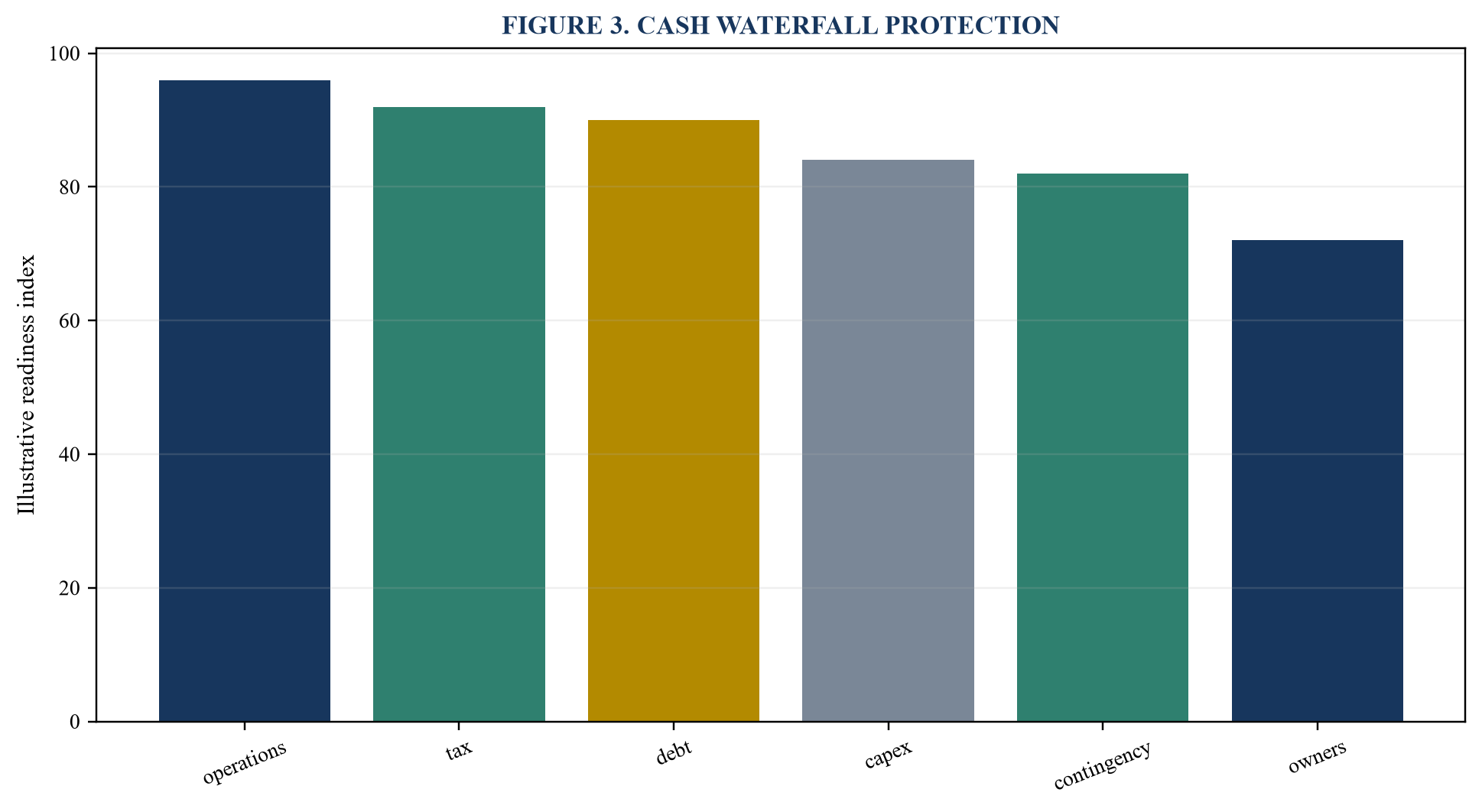
Values are illustrative readiness indices and require company-specific evidence.
25. Manage currency and repatriation
Align proceeds, debt service, dividends and owner needs across currencies, controls and banking routes.
The liquidity review should reconcile cash-flow currency, hedges, accounts, transfer rules, costs and timing. Each conclusion records the cash source, legal entity, amount, timing, priority, authority, dependency, protection and unresolved exception. The immediate output is a currency-and-repatriation plan.
The structure must be tested through cash and downside outcomes. Reviewers trace assumptions to native records, reconcile the integrated model, test covenant and operating headroom and assess whether management can fund strategy after the family receives proceeds. Company facts, ownership objectives, jurisdiction and market terms govern every conclusion.
Material gaps require an accountable owner, corrective action, evidence, advice and decision date. Consequences should flow through cash, leverage, control, tax, valuation, stakeholder fairness, consent timing and transaction protection. Residual risk remains visible until funding is committed, conditions are satisfied and post-event resilience is proved.
26. Define security and guarantees
Limit recourse, collateral, cross-guarantees and enforcement effects on the operating company and family assets.
The liquidity review should reconcile security registers, asset values, priority, corporate benefit, consent and legal opinions. Each conclusion records the cash source, legal entity, amount, timing, priority, authority, dependency, protection and unresolved exception. The immediate output is a security-and-recourse map.
The structure must be tested through cash and downside outcomes. Reviewers trace assumptions to native records, reconcile the integrated model, test covenant and operating headroom and assess whether management can fund strategy after the family receives proceeds. Company facts, ownership objectives, jurisdiction and market terms govern every conclusion.
Material gaps require an accountable owner, corrective action, evidence, advice and decision date. Consequences should flow through cash, leverage, control, tax, valuation, stakeholder fairness, consent timing and transaction protection. Residual risk remains visible until funding is committed, conditions are satisfied and post-event resilience is proved.
27. Set covenant protections
Build financial, distribution, capex, acquisition, information and default terms around operating resilience.
The liquidity review should reconcile forecast headroom, volatility, lender proposals, cure rights and reporting systems. Each conclusion records the cash source, legal entity, amount, timing, priority, authority, dependency, protection and unresolved exception. The immediate output is a covenant-protection schedule.
The structure must be tested through cash and downside outcomes. Reviewers trace assumptions to native records, reconcile the integrated model, test covenant and operating headroom and assess whether management can fund strategy after the family receives proceeds. Company facts, ownership objectives, jurisdiction and market terms govern every conclusion.
Material gaps require an accountable owner, corrective action, evidence, advice and decision date. Consequences should flow through cash, leverage, control, tax, valuation, stakeholder fairness, consent timing and transaction protection. Residual risk remains visible until funding is committed, conditions are satisfied and post-event resilience is proved.
28. Resolve structural and contractual subordination
Map priority among opco lenders, holdco lenders, shareholders and deferred sellers through cash waterfalls.
The liquidity review should reconcile facility terms, intercreditor documents, guarantees, distributions and insolvency analysis. Each conclusion records the cash source, legal entity, amount, timing, priority, authority, dependency, protection and unresolved exception. The immediate output is a creditor-priority waterfall.
The structure must be tested through cash and downside outcomes. Reviewers trace assumptions to native records, reconcile the integrated model, test covenant and operating headroom and assess whether management can fund strategy after the family receives proceeds. Company facts, ownership objectives, jurisdiction and market terms govern every conclusion.
Material gaps require an accountable owner, corrective action, evidence, advice and decision date. Consequences should flow through cash, leverage, control, tax, valuation, stakeholder fairness, consent timing and transaction protection. Residual risk remains visible until funding is committed, conditions are satisfied and post-event resilience is proved.
29. Protect fairness in related-party arrangements
Benchmark price, interest, security and allocation and exclude conflicted decision-makers where required.
The liquidity review should reconcile party register, independent valuation, market terms, approvals and disclosure. Each conclusion records the cash source, legal entity, amount, timing, priority, authority, dependency, protection and unresolved exception. The immediate output is a fairness-and-conflicts opinion pack.
The structure must be tested through cash and downside outcomes. Reviewers trace assumptions to native records, reconcile the integrated model, test covenant and operating headroom and assess whether management can fund strategy after the family receives proceeds. Company facts, ownership objectives, jurisdiction and market terms govern every conclusion.
Material gaps require an accountable owner, corrective action, evidence, advice and decision date. Consequences should flow through cash, leverage, control, tax, valuation, stakeholder fairness, consent timing and transaction protection. Residual risk remains visible until funding is committed, conditions are satisfied and post-event resilience is proved.
30. Establish the valuation basis
Apply a consistent enterprise-to-equity bridge, date, adjustments and minority or control treatment.
The liquidity review should reconcile financial model, debt and cash, precedents, rights, tax and independent valuation evidence. Each conclusion records the cash source, legal entity, amount, timing, priority, authority, dependency, protection and unresolved exception. The immediate output is a liquidity-event valuation file.
The structure must be tested through cash and downside outcomes. Reviewers trace assumptions to native records, reconcile the integrated model, test covenant and operating headroom and assess whether management can fund strategy after the family receives proceeds. Company facts, ownership objectives, jurisdiction and market terms govern every conclusion.
Material gaps require an accountable owner, corrective action, evidence, advice and decision date. Consequences should flow through cash, leverage, control, tax, valuation, stakeholder fairness, consent timing and transaction protection. Residual risk remains visible until funding is committed, conditions are satisfied and post-event resilience is proved.
31. Preserve minority shareholder rights
Provide information, consent, equal treatment, participation and remedies through the event.
The liquidity review should reconcile law, articles, shareholder agreements, board process and fairness analysis. Each conclusion records the cash source, legal entity, amount, timing, priority, authority, dependency, protection and unresolved exception. The immediate output is a minority-protection protocol.
The structure must be tested through cash and downside outcomes. Reviewers trace assumptions to native records, reconcile the integrated model, test covenant and operating headroom and assess whether management can fund strategy after the family receives proceeds. Company facts, ownership objectives, jurisdiction and market terms govern every conclusion.
Material gaps require an accountable owner, corrective action, evidence, advice and decision date. Consequences should flow through cash, leverage, control, tax, valuation, stakeholder fairness, consent timing and transaction protection. Residual risk remains visible until funding is committed, conditions are satisfied and post-event resilience is proved.
32. Reconcile transfer restrictions
Test pre-emption, first refusal, tag, drag, lock-in, permitted transfer and prohibited-holder provisions.
The liquidity review should reconcile constitutional documents, family charter, funding proof, timetable and counsel analysis. Each conclusion records the cash source, legal entity, amount, timing, priority, authority, dependency, protection and unresolved exception. The immediate output is a transfer-rights critical path.
The structure must be tested through cash and downside outcomes. Reviewers trace assumptions to native records, reconcile the integrated model, test covenant and operating headroom and assess whether management can fund strategy after the family receives proceeds. Company facts, ownership objectives, jurisdiction and market terms govern every conclusion.
Material gaps require an accountable owner, corrective action, evidence, advice and decision date. Consequences should flow through cash, leverage, control, tax, valuation, stakeholder fairness, consent timing and transaction protection. Residual risk remains visible until funding is committed, conditions are satisfied and post-event resilience is proved.
Table 4. Shareholder fairness test
| Dimension | Required evidence | Decision question |
|---|---|---|
| value | independent range | is consideration fair |
| access | equal information | can owners assess the route |
| conflict | recusal and review | is influence controlled |
| liquidity | funded completion | can obligations be met |
Illustrative programme design; company-specific facts and authorised advice govern.
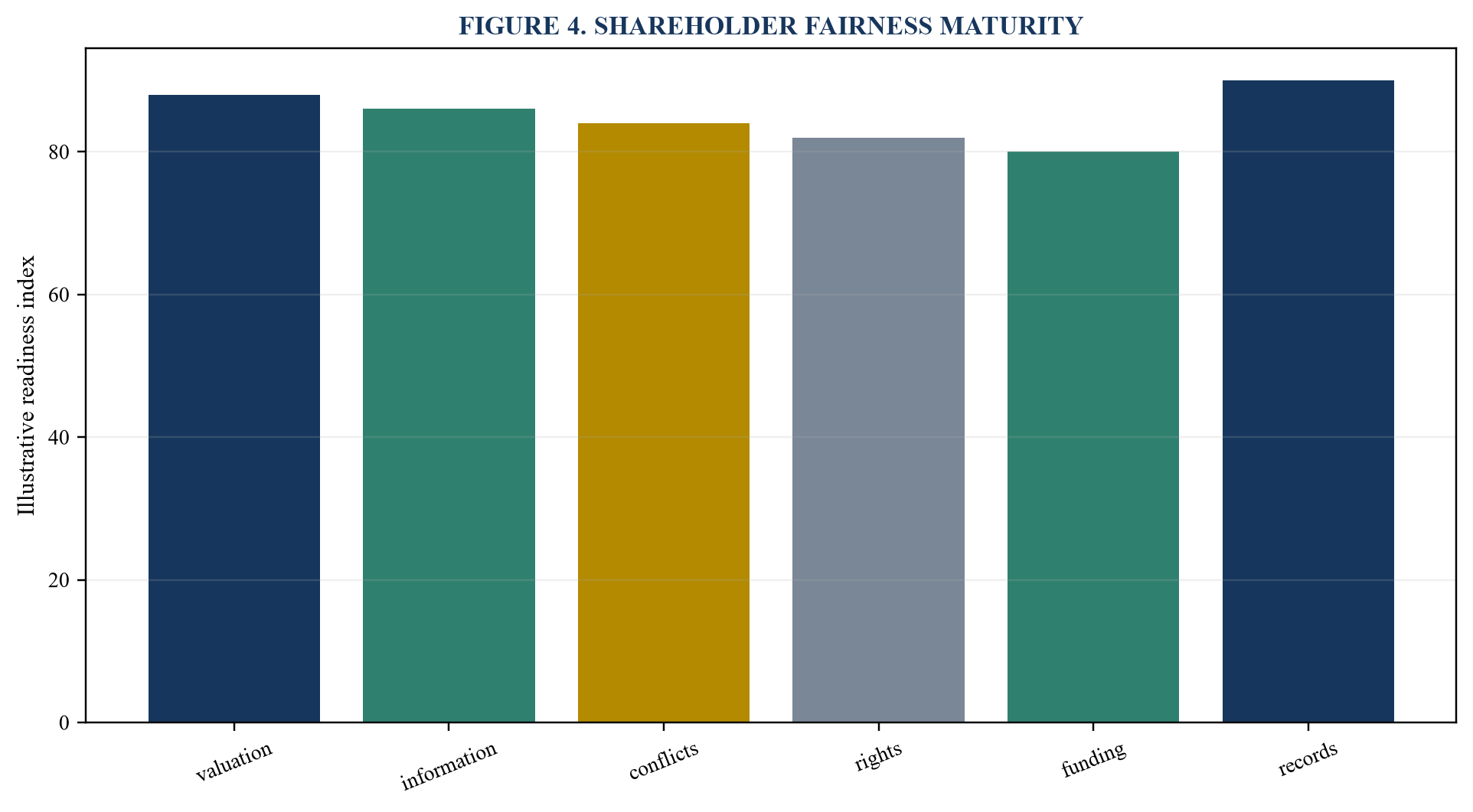
Values are illustrative readiness indices and require company-specific evidence.
33. Sequence funds and approvals
Connect drawdown, asset sale, equity subscription, redemption, taxes, fees, distributions and closing conditions.
The liquidity review should reconcile transaction documents, bank flows, approvals, consents, cash controls and timetable. Each conclusion records the cash source, legal entity, amount, timing, priority, authority, dependency, protection and unresolved exception. The immediate output is a completion funds-flow plan.
The structure must be tested through cash and downside outcomes. Reviewers trace assumptions to native records, reconcile the integrated model, test covenant and operating headroom and assess whether management can fund strategy after the family receives proceeds. Company facts, ownership objectives, jurisdiction and market terms govern every conclusion.
Material gaps require an accountable owner, corrective action, evidence, advice and decision date. Consequences should flow through cash, leverage, control, tax, valuation, stakeholder fairness, consent timing and transaction protection. Residual risk remains visible until funding is committed, conditions are satisfied and post-event resilience is proved.
34. Prepare lender and investor diligence
Prove ownership, authority, cash flow, collateral, related parties, governance, tax, forecasts and use of funds.
The liquidity review should reconcile data room, models, reports, registers, contracts and management evidence. Each conclusion records the cash source, legal entity, amount, timing, priority, authority, dependency, protection and unresolved exception. The immediate output is a capital-provider evidence room.
The structure must be tested through cash and downside outcomes. Reviewers trace assumptions to native records, reconcile the integrated model, test covenant and operating headroom and assess whether management can fund strategy after the family receives proceeds. Company facts, ownership objectives, jurisdiction and market terms govern every conclusion.
Material gaps require an accountable owner, corrective action, evidence, advice and decision date. Consequences should flow through cash, leverage, control, tax, valuation, stakeholder fairness, consent timing and transaction protection. Residual risk remains visible until funding is committed, conditions are satisfied and post-event resilience is proved.
35. Govern the family decision
Record purpose, alternatives, conflicts, duties, fairness, downside, advice, vote and delegated execution.
The liquidity review should reconcile board and shareholder papers, minutes, valuations, declarations and resolutions. Each conclusion records the cash source, legal entity, amount, timing, priority, authority, dependency, protection and unresolved exception. The immediate output is an auditable decision record.
The structure must be tested through cash and downside outcomes. Reviewers trace assumptions to native records, reconcile the integrated model, test covenant and operating headroom and assess whether management can fund strategy after the family receives proceeds. Company facts, ownership objectives, jurisdiction and market terms govern every conclusion.
Material gaps require an accountable owner, corrective action, evidence, advice and decision date. Consequences should flow through cash, leverage, control, tax, valuation, stakeholder fairness, consent timing and transaction protection. Residual risk remains visible until funding is committed, conditions are satisfied and post-event resilience is proved.
36. Draft the transaction documents
Align facility, subscription, transfer, redemption, security, intercreditor and governance instruments.
The liquidity review should reconcile agreed terms, conditions precedent, representations, covenants and legal opinions. Each conclusion records the cash source, legal entity, amount, timing, priority, authority, dependency, protection and unresolved exception. The immediate output is a coherent documentation suite.
The structure must be tested through cash and downside outcomes. Reviewers trace assumptions to native records, reconcile the integrated model, test covenant and operating headroom and assess whether management can fund strategy after the family receives proceeds. Company facts, ownership objectives, jurisdiction and market terms govern every conclusion.
Material gaps require an accountable owner, corrective action, evidence, advice and decision date. Consequences should flow through cash, leverage, control, tax, valuation, stakeholder fairness, consent timing and transaction protection. Residual risk remains visible until funding is committed, conditions are satisfied and post-event resilience is proved.
37. Execute the liquidity event
Control signing, conditions, funding, settlements, filings, registers, communications and operational continuity.
The liquidity review should reconcile closing checklist, funds flow, confirmations, approvals, filings and contingency routes. Each conclusion records the cash source, legal entity, amount, timing, priority, authority, dependency, protection and unresolved exception. The immediate output is a controlled completion process.
The structure must be tested through cash and downside outcomes. Reviewers trace assumptions to native records, reconcile the integrated model, test covenant and operating headroom and assess whether management can fund strategy after the family receives proceeds. Company facts, ownership objectives, jurisdiction and market terms govern every conclusion.
Material gaps require an accountable owner, corrective action, evidence, advice and decision date. Consequences should flow through cash, leverage, control, tax, valuation, stakeholder fairness, consent timing and transaction protection. Residual risk remains visible until funding is committed, conditions are satisfied and post-event resilience is proved.
38. Monitor post-event resilience
Track liquidity floor, debt service, covenants, reinvestment, performance, distributions and owner obligations.
The liquidity review should reconcile daily cash, management accounts, covenant reports, capex, risks and board dashboards. Each conclusion records the cash source, legal entity, amount, timing, priority, authority, dependency, protection and unresolved exception. The immediate output is a post-event resilience dashboard.
The structure must be tested through cash and downside outcomes. Reviewers trace assumptions to native records, reconcile the integrated model, test covenant and operating headroom and assess whether management can fund strategy after the family receives proceeds. Company facts, ownership objectives, jurisdiction and market terms govern every conclusion.
Material gaps require an accountable owner, corrective action, evidence, advice and decision date. Consequences should flow through cash, leverage, control, tax, valuation, stakeholder fairness, consent timing and transaction protection. Residual risk remains visible until funding is committed, conditions are satisfied and post-event resilience is proved.
39. Maintain contingency routes
Pre-agree reductions, deferrals, alternative capital, waivers, asset sales and owner actions for downside events.
The liquidity review should reconcile trigger levels, authority, lender dialogue, substitute funding and recovery scenarios. Each conclusion records the cash source, legal entity, amount, timing, priority, authority, dependency, protection and unresolved exception. The immediate output is a liquidity-event contingency playbook.
The structure must be tested through cash and downside outcomes. Reviewers trace assumptions to native records, reconcile the integrated model, test covenant and operating headroom and assess whether management can fund strategy after the family receives proceeds. Company facts, ownership objectives, jurisdiction and market terms govern every conclusion.
Material gaps require an accountable owner, corrective action, evidence, advice and decision date. Consequences should flow through cash, leverage, control, tax, valuation, stakeholder fairness, consent timing and transaction protection. Residual risk remains visible until funding is committed, conditions are satisfied and post-event resilience is proved.
40. Issue the family-liquidity conclusion
Present funded uses, operating protection, control consequences, residual risks and authorised route.
The liquidity review should reconcile integrated model, diligence, terms, approvals, stress tests and implementation plan. Each conclusion records the cash source, legal entity, amount, timing, priority, authority, dependency, protection and unresolved exception. The immediate output is a board-ready family-liquidity report.
The structure must be tested through cash and downside outcomes. Reviewers trace assumptions to native records, reconcile the integrated model, test covenant and operating headroom and assess whether management can fund strategy after the family receives proceeds. Company facts, ownership objectives, jurisdiction and market terms govern every conclusion.
Material gaps require an accountable owner, corrective action, evidence, advice and decision date. Consequences should flow through cash, leverage, control, tax, valuation, stakeholder fairness, consent timing and transaction protection. Residual risk remains visible until funding is committed, conditions are satisfied and post-event resilience is proved.
Table 5. Liquidity-event certificate
| Dimension | Required conclusion | Decision use |
|---|---|---|
| lawful | capital and approvals valid | authority |
| funded | sources cover uses | completion |
| resilient | operations survive downside | risk |
| fair | owner treatment evidenced | governance |
Illustrative programme design; company-specific facts and authorised advice govern.
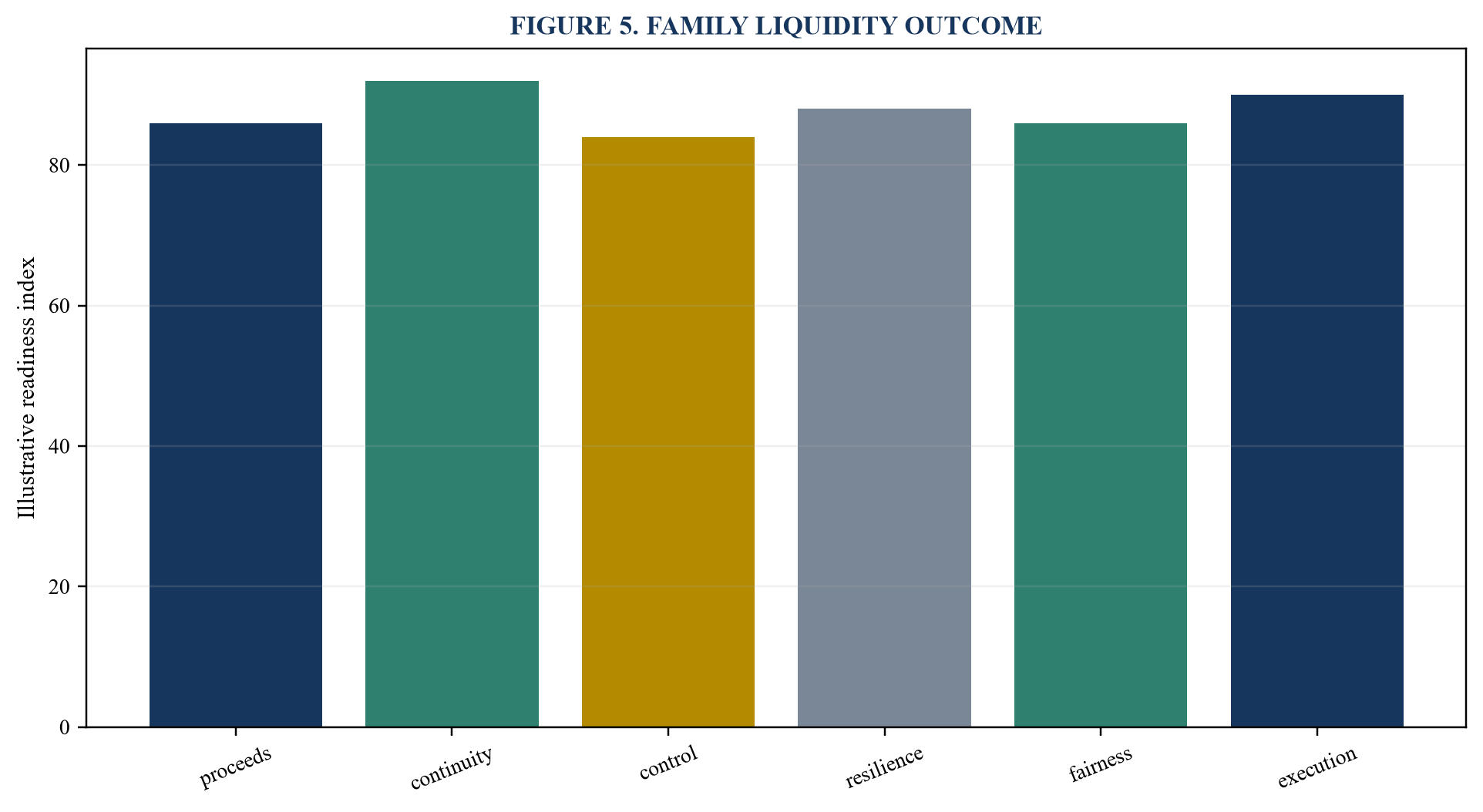
Values are illustrative readiness indices and require company-specific evidence.
References
- United Arab Emirates, Federal Decree-Law No. 37 of 2022 Concerning Family Businesses, https://uaelegislation.gov.ae/en/legislations/1608
- UAE Ministry of Economy and Tourism, Companies Legislation, https://www.moet.gov.ae/en/companies-legislations
- Dubai International Financial Centre, Family Arrangements Regulations 2023, https://assets.difc.com/v1/media/edge/images/dubaiintern0078-difcexperie96c5-production-3253/media/project/difcexperiences/difc/difcwebsite/documents/familydocs/family_arrangements_regulations_updated_april23.pdf
- International Finance Corporation, Family Business Governance Handbook, https://www.ifc.org/en/insights-reports/2011/ifc-family-business-governance-handbook
- OECD, G20 OECD Principles of Corporate Governance 2023, https://doi.org/10.1787/ed750b30-en
- OECD, The Role and Rights of Debtholders in Corporate Governance, https://www.oecd.org/en/publications/the-role-and-rights-of-debtholders-in-corporate-governance_d6b7cca5-en.html
- OECD, Corporate Governance Factbook 2023, Related Party Transactions, https://www.oecd.org/en/publications/oecd-corporate-governance-factbook-2023_6d912314-en/full-report/component-6.html
- UK Government, Companies Act 2006, Part 18 Acquisition by a Limited Company of Its Own Shares, https://www.legislation.gov.uk/ukpga/2006/46/part/18
- UK Government, Companies Act 2006, Part 23 Distributions, https://www.legislation.gov.uk/ukpga/2006/46/part/23
- IFRS Foundation, IAS 7 Statement of Cash Flows, https://www.ifrs.org/issued-standards/list-of-standards/ias-7-statement-of-cash-flows.html/
- IFRS Foundation, IAS 24 Related Party Disclosures, https://www.ifrs.org/issued-standards/list-of-standards/ias-24-related-party-disclosures/
- IFRS Foundation, IAS 32 Financial Instruments Presentation, https://www.ifrs.org/issued-standards/list-of-standards/ias-32-financial-instruments-presentation/
- IFRS Foundation, IFRS 9 Financial Instruments, https://www.ifrs.org/issued-standards/list-of-standards/ifrs-9-financial-instruments/
- IFRS Foundation, IFRS 13 Fair Value Measurement, https://www.ifrs.org/issued-standards/list-of-standards/ifrs-13-fair-value-measurement/
- IFRS Foundation, IFRS 16 Leases, https://www.ifrs.org/issued-standards/list-of-standards/ifrs-16-leases/
- IFRS Foundation, IFRS 10 Consolidated Financial Statements, https://www.ifrs.org/issued-standards/list-of-standards/ifrs-10-consolidated-financial-statements/
- IFRS Foundation, IFRS 3 Business Combinations, https://www.ifrs.org/issued-standards/list-of-standards/ifrs-3-business-combinations/
- IFRS Foundation, IAS 36 Impairment of Assets, https://www.ifrs.org/issued-standards/list-of-standards/ias-36-impairment-of-assets/
- IFRS Foundation, IAS 37 Provisions Contingent Liabilities and Contingent Assets, https://www.ifrs.org/issued-standards/list-of-standards/ias-37-provisions-contingent-liabilities-and-contingent-assets/
- Financial Reporting Council, UK Corporate Governance Code 2024, https://www.frc.org.uk/library/standards-codes-policy/corporate-governance/uk-corporate-governance-code/
- International Organization for Standardization, ISO 31000 Risk Management Guidelines, https://www.iso.org/iso-31000-risk-management.html
- International Auditing and Assurance Standards Board, ISA 500 Audit Evidence, https://www.iaasb.org/publications/international-standard-auditing-isa-500-audit-evidence
- US Securities and Exchange Commission, Regulation S-K, https://www.sec.gov/rules-regulations/staff-guidance/corporation-finance-interpretations/regulation-s-k
- UK Competition and Markets Authority, Merger Assessment Guidelines, https://www.gov.uk/government/publications/merger-assessment-guidelines/merger-assessment-guidelines-html-version
- UK Takeover Panel, The Takeover Code, https://www.thetakeoverpanel.org.uk/the-code/download-code
- National Institute of Standards and Technology, Cybersecurity Framework 2.0, https://doi.org/10.6028/NIST.CSWP.29
