

Introduction
Quantum sensing is moving from laboratory capability towards selected operational applications. Sensors based on atomic, optical, spin, superconducting or other quantum effects can measure magnetic fields, gravity, acceleration, rotation, time and other physical quantities with distinctive performance. The commercial value depends on the entire workflow: the physical sensor, control electronics, software, calibration, environmental compensation, data interpretation, integration and customer decision. A scientific result alone does not establish a deployable product.
Gulf institutions have begun building research and collaboration capacity. The Technology Innovation Institute states that its Quantum Research Center works on quantum sensing and optomechanical systems [1,2]. In November 2025, TII and Thales announced a collaboration covering gravimetry, magnetometry and navigation among other areas [3]. Saudi Arabia's Research Development and Innovation Authority describes a National Quantum Alliance and collaborative infrastructure for research, talent and industry [4]. These examples show institutional activity. They do not prove the economics, permissions or transferability of any proposed joint venture.
A joint venture can create a bridge between scarce technical capability and local demand. The foreign partner may contribute intellectual property, specialist people, equipment and development methods. The Gulf partner may contribute capital, customer access, sites, procurement knowledge, test environments and operating capacity. The transaction becomes fragile when those contributions are described in broad language. Terms such as technology transfer, localisation and sovereign capability can conceal materially different obligations.
The board needs a control architecture before it needs a headline ownership ratio. It should define what will be deployed, which knowledge is needed, where work will occur, who can access each asset, which authority must approve movement, how new intellectual property will be treated, and what happens if the collaboration ends. The same architecture should determine capital release and valuation.
1 Define the customer outcome before defining the transfer
The first question is the operational problem the customer is funding. A navigation customer may need position or heading performance when satellite signals are unavailable. An energy customer may need magnetic or gravity measurements that improve asset inspection or subsurface understanding. An industrial customer may need detection performance inside a defined production workflow. Each outcome requires a different sensor, environment, dataset, integration and acceptance test.
The venture should create an outcome specification with six elements: user, decision, operating environment, measurable performance, required availability and evidence of acceptance. The specification should state where performance is measured. Laboratory sensitivity, field-system performance and decision accuracy are different claims. Environmental noise, platform motion, temperature, shielding, calibration and signal processing can dominate deployment results.
The outcome determines the minimum capability that must be available locally. A customer demonstration may require a sealed instrument, trained operators and a protected analytics service. Local maintenance may require diagnostic tools, calibration procedures and spare modules. Local manufacture may require process specifications, supplier qualification and quality-control methods. Independent product modification can require source code, design files, fabrication knowledge and senior technical authority. These are progressively deeper forms of access.
The transaction team should resist an undifferentiated commitment to transfer all technology. It should create a transfer bill of materials linked to the approved outcome. Every item should have an owner, classification, permitted recipients, location, purpose, release condition and return or destruction rule. If a capability is unnecessary for the customer outcome, its transfer should require a separate decision.
2 Build a contribution map before negotiating equity
Equity should follow the resources and risks required to create the venture, rather than serve as a substitute for describing them. The contribution map should distinguish cash, intellectual property, equipment, people, customer contracts, facilities, permits, data, services and guarantees. It should state whether each contribution is owned, licensed, leased, seconded, purchased or provided under a service agreement.
Cash is readily measurable, while technology value is conditional. A patent portfolio may be legally owned yet irrelevant to the chosen field. Know-how may be valuable but dependent on named individuals. Equipment may have limited alternative use or require controlled replacement parts. Customer access may be strategic but cannot be valued as contracted revenue until procurement authority, budget and acceptance terms exist.
The venture should record the evidence supporting each contribution. Intellectual property requires chain of title, maintenance status, territorial coverage, freedom-to-operate analysis and an obligations register. WIPO describes the importance of mapping ownership, third-party licences, restrictions and commercialisation impediments during diligence [14-18]. Equipment requires title, specification, classification, condition and support. Personnel commitments require role, time, employer, visa, confidentiality, invention assignment and continuity.
The contribution map supports a more disciplined equity discussion. Cash can be paid at formation or in milestones. Background intellectual property can remain with the contributor and be licensed by field and territory. Services can be paid at arm's-length rates or treated as committed support. Customer contracts can become value only after execution and acceptance. This approach reduces disputes about whether one party delivered the bargain.
3 Separate deployment localisation from controlled technology transfer
Local deployment can be commercially meaningful without transferring every design secret. A layered model creates five levels. Level one is local sales and customer support. Level two adds installation, operation and first-line maintenance. Level three adds integration, calibration and selected component replacement. Level four adds local manufacture or assembly under controlled process documentation. Level five adds independent design, modification and creation of core technology.
Each level changes the information and authority available to the venture. The early levels can create jobs, customer confidence, response capability and recurring service revenue. Deeper levels may support sovereign autonomy and local supply chains. They also increase export-control, intellectual-property, quality, cyber and replication risk. A board should select the level that matches customer need, legal permission and economic scale.
The distinction matters for valuation. A venture with installation and service rights can generate cash without owning the underlying platform. A manufacturing licence can create margin and supply resilience while remaining subject to specifications and audits. Independent design rights can increase option value but require a larger technical organisation and may reduce the foreign partner's control over global technology.
The agreement should avoid ambiguous terms such as full transfer. It should identify the precise documents, software, equipment, training, support hours and decision rights at each stage. Release should depend on approved recipients, compliant environments, customer evidence and operating readiness. The parties can retain an agreed pathway to deeper capability without assuming that every stage will occur.
4 Classify technology equipment software and technical assistance
Export controls can apply to physical items, software, technology and technical assistance. The classification exercise should cover the complete system and its components. Quantum sensors may include lasers, photonics, vacuum equipment, cryogenic systems, precision electronics, navigation components, advanced materials, software and technical data. Controls can depend on performance thresholds, design intent, end use, destination and recipient.
The United States Bureau of Industry and Security amended controls for several advanced technologies in 2024 and continues to administer the Export Administration Regulations [7,8]. United Kingdom controls include categories for sensors, lasers, navigation and related technology, with amendments made in 2025 [9]. The European Union has increased scrutiny of investment and technology flows involving quantum technologies [10]. UAE law controls listed goods and associated technology and establishes licensing for import, export, re-export, transit and related activity [11-13].
The transaction team should create a classification matrix by jurisdiction. It should state the item, technical parameters, likely control entry, origin, current location, proposed movement, recipient, end use, licence requirement, authority, adviser and decision date. A supplier's marketing description is not a classification. The venture should retain the underlying technical analysis and official decisions.
Technical assistance deserves equal attention. Training, troubleshooting, source-code access, design reviews, remote support and collaborative research can convey controlled know-how without shipping hardware. Access by a foreign national or affiliate can be relevant under some regimes. Collaboration tools, repositories and remote diagnostics should therefore follow the same release process as physical equipment.
5 Conduct end-use end-user and ownership diligence
Permission can depend on who receives the capability and how it will be used. The venture should identify direct shareholders, ultimate beneficial owners, directors, customers, operators, subcontractors, research partners and persons with technical access. It should screen applicable sanctions, denied-party and restriction lists and document the result at onboarding and periodically thereafter.
End-use diligence should describe the operational application, site, platform, customer, outputs and downstream users. Broad descriptions such as civil use are insufficient for a technology that can support navigation, sensing, resource mapping or defence. The contract should prohibit unapproved military, intelligence, surveillance, proliferation or re-export activity where relevant and require notice of changes.
Ownership changes can alter the analysis. Transfers, new investors, board observers, security interests and changes of control may trigger investment-screening or licence requirements. The United Kingdom National Security and Investment framework expressly covers quantum technologies [5]. European policy treats quantum as an area of economic-security concern [10]. The joint-venture agreement should make sensitive ownership changes subject to advance review and required approvals.
Diligence should continue after formation. Customer onboarding, new sites, new fields of use, new personnel and additional data access can change risk. A compliance committee should maintain an exceptions register and escalation route. Commercial urgency should not allow local teams to expand access informally.
6 Design the intellectual-property architecture
The intellectual-property schedule should separate background assets, project inputs, foreground results, improvements, operational data, customer deliverables and general know-how. Background assets remain those created or controlled before the collaboration or outside its scope. The schedule should identify patents, applications, trade secrets, software, models, documentation, designs, calibration methods, datasets, trademarks and domain names.
WIPO guidance describes licences by right, field, territory, exclusivity and duration and emphasises early treatment of background and foreground intellectual property in joint ventures [14-16]. The licence into the venture should be sufficient to perform the approved business plan. It should avoid granting broader rights merely because the vehicle is jointly owned. Sublicensing, subcontracting and access by affiliates should be explicit.
Foreground intellectual property can be owned by the inventor's employer, by the venture or according to subject matter. Joint ownership can create complexity because exploitation rules vary by jurisdiction. A practical structure may give the venture ownership of application-specific integration created and funded locally, with back-licences to the contributors, while core platform improvements remain with the technology owner and are licensed into the venture for the approved field.
The structure should reward contribution and preserve deployment continuity. If a new algorithm depends on venture data and foreign platform code, the agreement should define both layers and the rights needed after exit. Patent prosecution, trade-secret controls, publication, defensive action and enforcement cost need named decision rights. Every person and contractor should sign enforceable confidentiality and invention-assignment terms.
7 Govern data models and operational learning
Quantum-sensing deployments can generate raw physical measurements, calibration records, environmental data, customer asset data, location information, derived maps, model outputs and maintenance histories. These datasets can have distinct owners and sensitivities. The data schedule should classify each category, define the controller, approved purpose, location, retention, access, permitted model training and deletion.
Raw data and derived insight should be separated. A customer may own measurements from its asset while the provider retains generic calibration methods. The venture may need the right to use de-identified operational data to improve reliability. The foreign technology owner may seek aggregated learning across markets. Those rights should be negotiated explicitly and tested against privacy, security, export and customer restrictions.
Sensitive data should remain in an approved environment. Role-based access, multifactor authentication, encryption, logging, controlled export and incident response should apply. Administrative access can reveal as much as application access and should be included. Portable media, screenshots, model downloads and remote debugging require policy and technical controls.
The venture should maintain a data lineage from sensor to customer decision. It should record firmware and model versions, calibration, processing steps, human review and release. This supports product assurance, customer acceptance and dispute resolution. It also identifies which operational learning creates value and who can use it after the joint venture ends.
8 Build a gated transfer and deployment plan
A controlled programme should advance through gates rather than a single closing. Gate one confirms the customer outcome and representative use case. Gate two confirms classification, end use, ownership, site and required permissions. Gate three approves the scoped licence, data environment, personnel and equipment. Gate four completes a representative deployment and independent acceptance. Gate five releases defined local operating capability. Gate six approves scale after repeat performance and commercial evidence.
Each gate should have documentary evidence and an accountable approver. Technical acceptance belongs with a qualified technical committee. Compliance and security approvals should be independent of sales. Commercial approval should confirm contract, budget, payment terms and contribution. The board should approve changes that expand the field, territory, performance, recipients or rights.
Training should follow the same architecture. Foundational operation can precede advanced diagnostics. Diagnostic capability can precede design modification. Training materials should be version controlled, classified and limited to approved recipients. Competence should be assessed through practical tests, supervised work and incident exercises. Attendance alone does not prove capability.
The plan should include rollback. If approval is denied, a partner defaults or a security incident occurs, access can be suspended, equipment isolated and data preserved. Customer continuity should have an alternative support route. The venture should know which rights survive and which materials must be returned or destroyed.
9 Design governance for a security-sensitive venture
The board needs commercial agility and protected-matter controls. Ordinary budgets, hiring and customer delivery can follow majority decisions within an approved plan. Reserved matters should cover changes to field and territory, release of controlled technology, access by new persons, licensing of background assets, material security exceptions, new sensitive customers, related-party transactions, capital commitments and exit.
Reserved matters should not create blanket vetoes over daily operations. The agreement should identify which director, committee or shareholder approves each issue and specify response times. A technical and security committee can make recommendations based on evidence. The board retains accountability for the venture and capital.
Information rights require segmentation. Directors generally need sufficient information to discharge duties, while export, security or customer restrictions may limit access to specific technical material. The parties should obtain legal advice and design approved information rooms, redacted board packs or cleared committees where necessary. Governance cannot cure an unlawful disclosure after it occurs.
Deadlock provisions should distinguish commercial disagreement from protected-matter refusal. Escalation, mediation, expert determination, buy-sell mechanisms and orderly wind-down can address commercial deadlock. A required compliance approval cannot be overridden by an economic mechanism. The venture should preserve safe operations and customer obligations throughout a dispute.
10 Align customer contracting with the transfer boundary
The customer contract should describe the delivered system, performance, site, interfaces, acceptance, support and data treatment. It should avoid promising ownership or access that the venture does not possess. A joint venture may have a territorial licence to sell and support a product while the foreign partner retains source code and design authority. The statement of work should reflect that boundary.
Acceptance should use representative field conditions. Measures can include sensitivity, drift, availability, false alarms, calibration stability, processing latency and decision accuracy. The parties should agree test equipment, reference methods, environmental conditions, sample size and treatment of uncertainty. A successful controlled test does not establish performance in every site.
Customer change requests can create uncontrolled transfer. A request for a new platform, site, data output or integration may require additional technology, new permissions or a wider licence. Change control should route the request through technical, compliance and commercial review before commitment.
Liability should reflect control. The venture can accept responsibility for installation, operation and support within its scope. The technology owner can warrant its licensed rights and agreed specifications subject to exclusions. The customer retains responsibilities for its environment, use and downstream decisions. Insurance, caps, exclusions, service credits and remediation should match the actual risk allocation.
11 Create a local operating model that can earn autonomy
Local capability should be measured through decisions and outputs, rather than headcount alone. The operating model should identify roles for system engineering, field deployment, calibration, software, data science, quality, security, compliance, product management, customer support and finance. Each role should have a competence standard and an authority boundary.
Secondments can start the programme, but they create concentration and continuity risk. The venture should pair specialists, document procedures and assign local deputies. A skills matrix should track observed performance in installation, diagnostics, calibration, incident management and customer acceptance. Critical activities should have at least two competent people and a supported escalation route.
Supplier localisation also needs evidence. Local assembly can add little resilience if all critical modules, firmware and calibration remain dependent on one foreign source. The venture should map components by criticality, lead time, control status, qualification burden and alternative supply. Local suppliers should enter through quality and security gates. Substitution should require configuration control and requalification.
Autonomy is therefore staged. The venture can first operate the system under foreign technical authority, then accept defined maintenance decisions, then manage local configuration and eventually develop approved application modules. Each stage should have measurable competence, rights and continuity resources. The customer and board can see which functions are genuinely local and which remain supported from abroad.
12 Model economics by deployment service and capability layer
Revenue should be separated into paid demonstrations, system sales or leases, integration, recurring operation, assurance, training and approved development. Grants and shareholder funding should remain distinct from customer revenue. A large pilot programme can consume scarce technical effort without establishing repeatable demand.
Direct cost should include equipment, imported modules, field engineering, calibration, cloud or secure computing, site access, travel, local staff, foreign specialist support, licences, compliance, spares and warranty. Transfer activity can have significant one-time cost. The venture should identify who pays for documentation, training, process validation and duplicated infrastructure.
The central hypothetical case assumes USD 27.60 million of annual revenue: USD 8.40 million from sovereign and strategic pilots that convert into deployment, USD 10.80 million from industrial systems and integration, USD 5.40 million from recurring assurance and support, and USD 3.00 million from approved training and development. Direct cost is USD 15.20 million, producing USD 12.40 million of contribution before central overhead. These figures demonstrate the model and are not estimates for a named venture.
Unit economics should be tracked by deployment and capability layer. A system can show attractive product margin while requiring unpriced specialist support. Recurring service can improve contribution after a stable installed base. Local manufacturing can reduce logistics or lead time only after volume covers qualification and fixed cost. The board should review contracted backlog, accepted revenue, direct cost, contribution, collections, warranty, support hours and concentration.
13 Finance the venture in evidence-linked stages
Formation capital should fund the minimum organisation, compliance architecture, customer qualification and representative demonstration. The next tranche should depend on required licences, an approved technical environment and a funded customer contract. Deployment capital should follow successful field acceptance. Scale capital should follow repeatable delivery, positive contribution and cash collection.
Equity is appropriate for research, market creation, first-of-kind integration and uncertain transfer work. Strategic capital can support sovereign capability where its objectives and governance are explicit. Customer milestone payments can finance bespoke equipment and acceptance. Asset or working-capital facilities may become possible after systems, receivables and contracts are identifiable and assignable. Debt should not fund unresolved permission or product risk.
Capital calls need objective conditions. A shareholder should not be required to fund an activity that cannot lawfully proceed. Conversely, a partner should not be able to withhold committed capital after agreed approvals and milestones. Default remedies can include dilution, shareholder loans, suspension of expansion rights or controlled wind-down, subject to legal and security constraints.
The financing model should include delayed licences, failed acceptance, component lead time, customer cancellation, restricted access and partner default. Liquidity reserves should cover secure operations, customer obligations, staff and controlled return or destruction of sensitive material. The board should preserve enough cash to manage an orderly stop.
14 Value rights evidence and restrictions separately
Valuation should begin with the cash flows the joint venture is legally and operationally able to earn. A broad addressable market does not compensate for a narrow field licence, unapproved exports or dependence on one expert. The valuation model should identify territory, field, exclusivity, duration, termination, sublicensing, improvement rights, data rights and change-of-control restrictions.
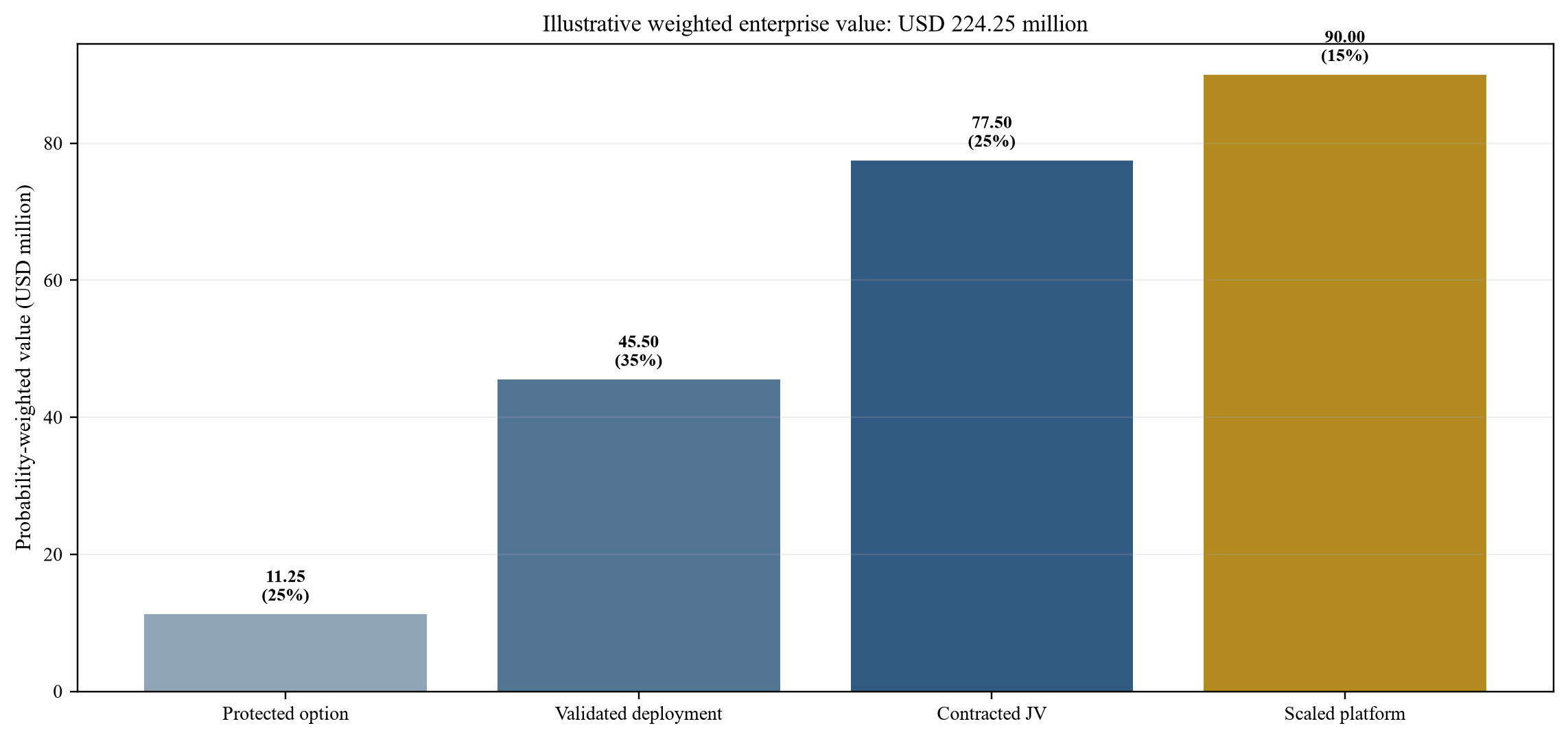
The protected-option stage has a team, scoped rights and funded validation but limited customer acceptance. A validated-deployment stage has representative performance and approved operations. A contracted-venture stage has customer commitments, accepted systems and observable contribution. A scaled-platform stage has repeat deployments, renewals, diversified customers and an effective local operating model.
A wholly hypothetical probability-weighted example assigns enterprise values of USD 45 million, USD 130 million, USD 310 million and USD 600 million to those four states, with probabilities of 25%, 35%, 25% and 15%. The weighted value is USD 224.25 million. The calculation is an illustration, not a valuation conclusion. A transaction would require company-specific forecasts, rights, risks and market evidence.
Restrictions can protect value as well as reduce it. Controlled access may preserve the foreign partner's global intellectual property and enable a trusted partnership. Clear data and improvement rules reduce disputes. Strong governance can support sovereign customers. The model should price the actual bundle of rights and obligations rather than applying a generic quantum premium.
15 Plan exit continuity and post-termination rights at formation
Exit planning should begin before technology enters the venture. The agreement should address expiry, breach, insolvency, change of control, loss of approvals, security incident, prolonged deadlock and strategic sale. Each event can require a different response.
Customer continuity comes first for installed systems. The venture may need a run-off licence, spare parts, support access and secure records for a defined period. The foreign partner may step in to support customers. A local partner may continue non-sensitive operations. Escrow can support selected documentation or software where lawful and technically useful, while highly controlled material may remain outside the arrangement.
Background intellectual property should return to its owner, subject to surviving customer rights and accrued obligations. Foreground intellectual property and data should follow the agreed allocation. Copies of controlled technical material should be returned, deleted or preserved under legal hold, with certification and audit. Equipment may be transferred, repurchased, exported or disabled depending on title and permissions.
Valuation and sale mechanics should recognise transfer restrictions. A buyer may need approval and may not qualify for the same licence. Put, call and buy-sell provisions should be conditional on regulatory permission. The parties should avoid a forced transfer mechanism that cannot legally deliver the relevant shares, technology or control.
16 Establish board metrics and early-warning indicators
The board should receive a compact dashboard spanning legality, technology, customers, operations, economics and capability. Legal measures include pending classifications, licences, exceptions, screening results and overdue actions. Technical measures include representative tests, accepted configurations, calibration stability, failures and unresolved claims. Customer measures include funded pipeline, executed contracts, acceptance, renewals and collections.
Operating measures should include qualified personnel, single-person dependencies, incidents, access exceptions, supplier concentration, critical spares and recovery exercises. Economic measures should include revenue by type, direct cost, contribution, cash, working capital, committed capital and runway. Capability measures should show which local decisions are authorised and competently performed.
Early-warning indicators deserve explicit thresholds. Examples include a licence decision approaching the customer deadline, technical access outside the approved repository, a foreign specialist exceeding planned support hours, a customer requesting an unapproved use, repeated calibration drift, a supplier delay, overdue receivables or unresolved foreground-IP disclosure.
Metrics should support decisions. The board can pause access, delay a deployment, require remediation, revise a customer promise, release capital or approve the next transfer level. A dashboard that reports activity without authority is inadequate for a security-sensitive venture.
17 Apply a ninety-day transaction-design sprint
The first thirty days should establish scope and evidence. The team confirms the priority customer outcome, maps contributions, inventories intellectual property and data, identifies equipment and people, begins classification, maps ownership and users, and selects a representative deployment. It also creates the governance and data-room structure.
Days thirty-one to sixty should convert evidence into transaction terms. The parties draft the field and territory licence, contribution schedule, transfer bill of materials, data schedule, personnel plan, compliance matrix, customer contract, capital plan and reserved matters. Technical teams design the representative test and secure environment. Advisers identify required filings and licence applications.
Days sixty-one to ninety should test readiness. The parties validate chain of title, classification assumptions, end use, access controls, cost and schedule. They agree milestone evidence, downside actions and exit continuity. The investment committee reviews the rights, customer, economics and residual risks. Signing occurs only when conditions and unresolved items are transparent.
The sprint does not promise regulatory approval or technical success. It creates a decision-ready structure and exposes gaps before expensive commitments. Matters requiring authority decisions remain conditions precedent or staged conditions. A transaction can proceed with defined uncertainty when capital, access and customer promises are limited accordingly.
18 Implement a controlled joint-venture operating system
After formation, the venture should operate one integrated register for customers, use cases, classifications, licences, personnel, repositories, equipment, data, configurations, claims, incidents and capital milestones. Each item should have an owner, evidence link, status, next action and approval history.
The operating cadence can include weekly delivery and access review, monthly technical and compliance committee review, quarterly board review and immediate escalation for incidents or scope change. Customer sales, engineering and compliance should work from the same approved use-case record. New opportunities should not inherit permissions from an earlier project without review.
Access should expire and require periodic revalidation. Repositories should separate core background technology, venture application work and customer environments. Release packages should be signed, hashed and logged. Sensitive meetings should have approved attendees and controlled materials. The venture should test revocation, recovery and evidence preservation.
The operating system also supports value creation. It shows which capabilities are repeatable, which customer configurations can be reused, where local teams are gaining authority and which restrictions constrain scale. Investors can distinguish protected potential from accepted cash flow. Partners can negotiate deeper transfer using evidence rather than aspiration.
Conclusion
A GCC quantum-sensing joint venture can combine scarce technology with strategic demand, capital, infrastructure and local operating capability. Its success depends on disciplined definition. The venture should know the customer outcome, rights, equipment, data, people, permissions, technical boundary and economic model before it commits to broad localisation language.
Controlled transfer is an operating design. Background intellectual property remains mapped. Licences are scoped by field, territory, use and recipient. Foreground results and data follow agreed rules. Technology, training and authority move through evidence gates. Customer contracts match the rights and performance the venture can deliver. Governance protects sensitive decisions while enabling ordinary operations.
Capital should follow accepted evidence. Formation equity funds scope and validation. Deployment capital follows permissions and funded customer commitments. Scale capital follows repeat delivery, contribution and collections. Debt becomes relevant only when assets and cash flows are identifiable and permission risk is contained. The board can preserve both sovereign value and the technology provider's global option by treating access as a staged, auditable resource.
Appendix A. Appendix A. Transfer bill of materials
The transfer bill of materials should list each patent, trade secret, software component, model, design file, process specification, test method, dataset, training module, equipment item and technical service. For each item it records owner, origin, classification, field, territory, permitted entity, named roles, location, purpose, release gate, duration, copying rule, subcontracting rule, audit evidence and exit treatment.
The register should distinguish viewing, execution, modification, manufacture, distribution and sublicensing. Those rights have different value and risk. A user may operate compiled software without receiving source code. A technician may replace modules without receiving fabrication specifications. A local integrator may develop an interface without owning the core algorithm.
Appendix B. Appendix B. Hypothetical financial case
The central case assumes four strategic deployments, six industrial systems, recurring assurance on the installed base and approved training or development. Revenue of USD 27.60 million less direct cost of USD 15.20 million produces USD 12.40 million of contribution. The demonstration-heavy case assumes delayed conversion, bespoke support and underused local capacity. The scaled case assumes repeatable deployment, broader assurance revenue and productive shared infrastructure.
The model excludes central research, tax, financing and shareholder overhead and should not be used as a forecast. A real case should model contract timing, acceptance, imports, duties, working capital, warranties, foreign support, local staffing, capital expenditure, licence cost and downside liquidity.
Appendix C. Appendix C. Diligence data room
The data room should include corporate records, ownership, sanctions screening, intellectual-property chain of title, patent and licence registers, employee and contractor assignments, classification memoranda, official licences, end-use statements, customer contracts, equipment lists, technical architecture, test evidence, data maps, cyber controls, incident records, supplier contracts, insurance, budgets and financial models.
Documents should identify status, owner, date and scope. Drafts should remain distinguishable from executed or authority-issued evidence. Sensitive technical material should be segregated and released only to approved reviewers. The diligence index should record missing items and management actions.
Appendix D. Appendix D. Investment-committee questions
The committee should ask whether the customer outcome is funded and measurable; whether the technology is controlled; whether every recipient and use is approved; whether the venture owns or licenses what it sells; whether data and improvements have clear rules; whether local capability matches promised autonomy; whether downside cash is funded; and whether customers can be supported after partner dispute or exit.
It should also identify residual uncertainty. Authority approval, field performance and adoption cannot be eliminated through drafting. The structure should limit capital and access until evidence arrives and should preserve an orderly response when it does not.
Appendix E. Appendix E. Terms that require precise definition
Localisation can mean local sales, operation, integration, assembly, manufacture or design authority. Technology transfer can mean a licence, disclosure, training, technical assistance, equipment delivery or ownership assignment. Sovereign capability can mean local service continuity, independent operation, domestic supply, controlled data or full design autonomy. The agreement should replace each broad label with a defined obligation and acceptance record.
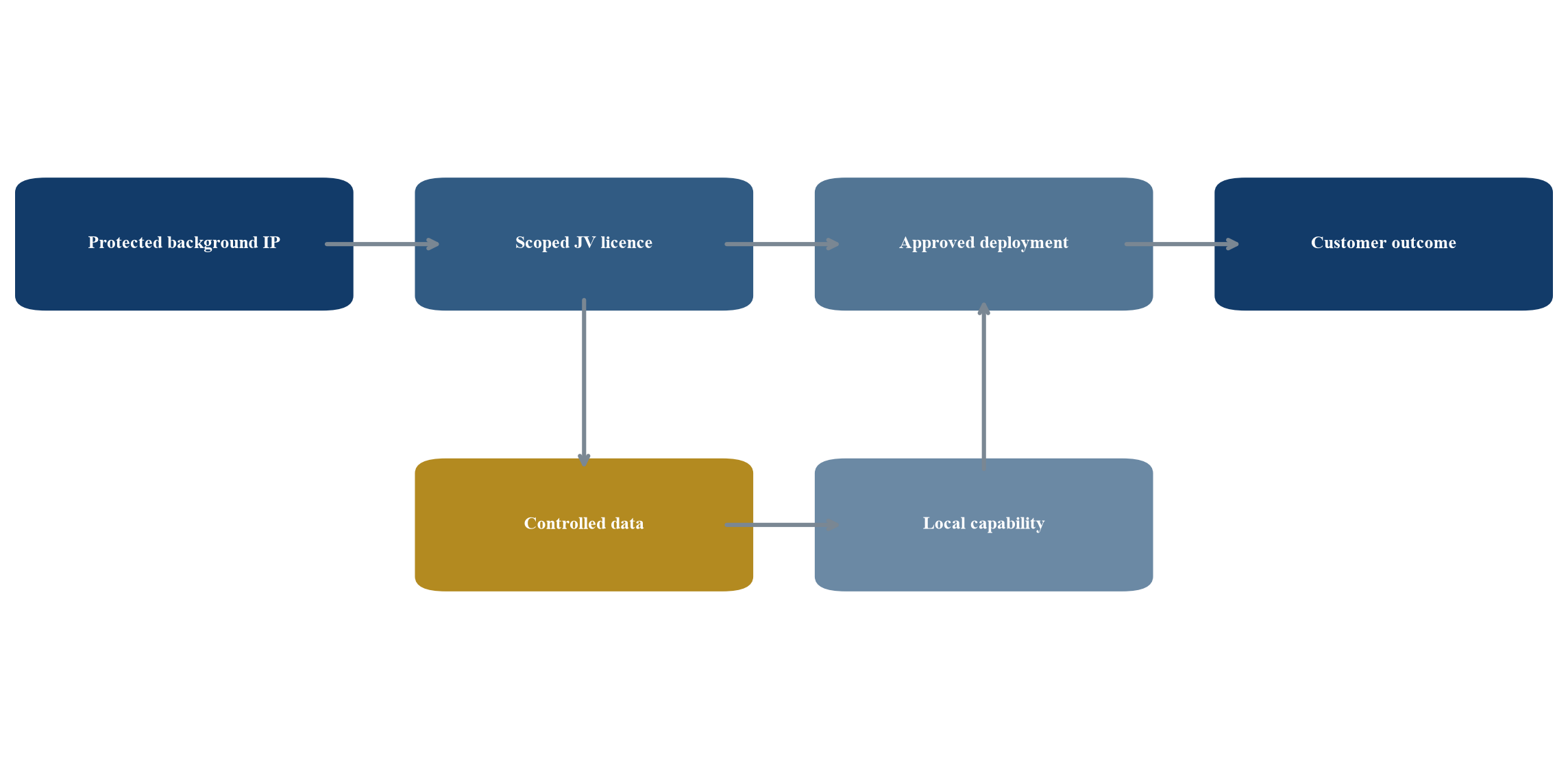
Proposed architecture; rights and controls require transaction-specific legal and technical review.
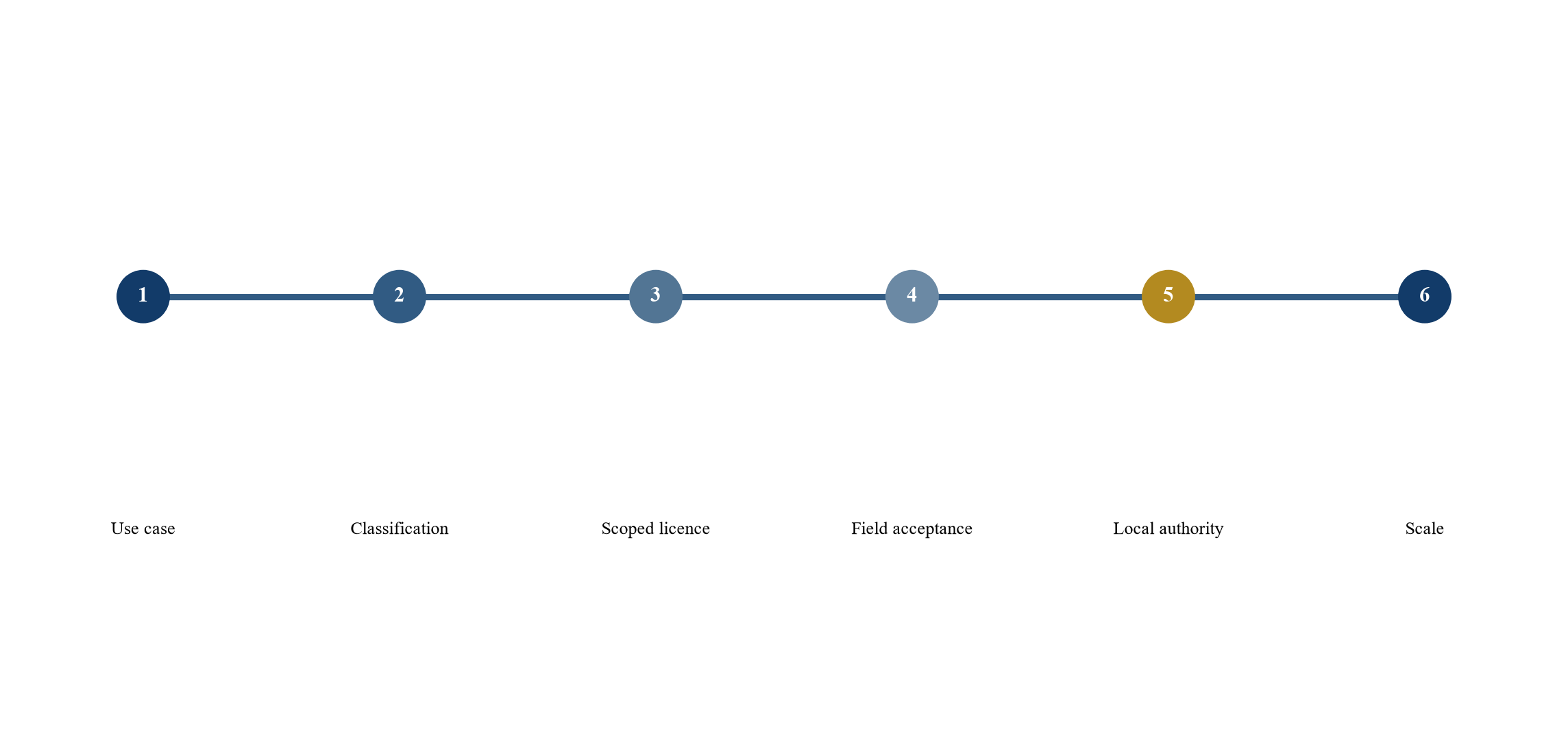
Proposed gate sequence; an approval at one gate does not imply approval at a later gate.
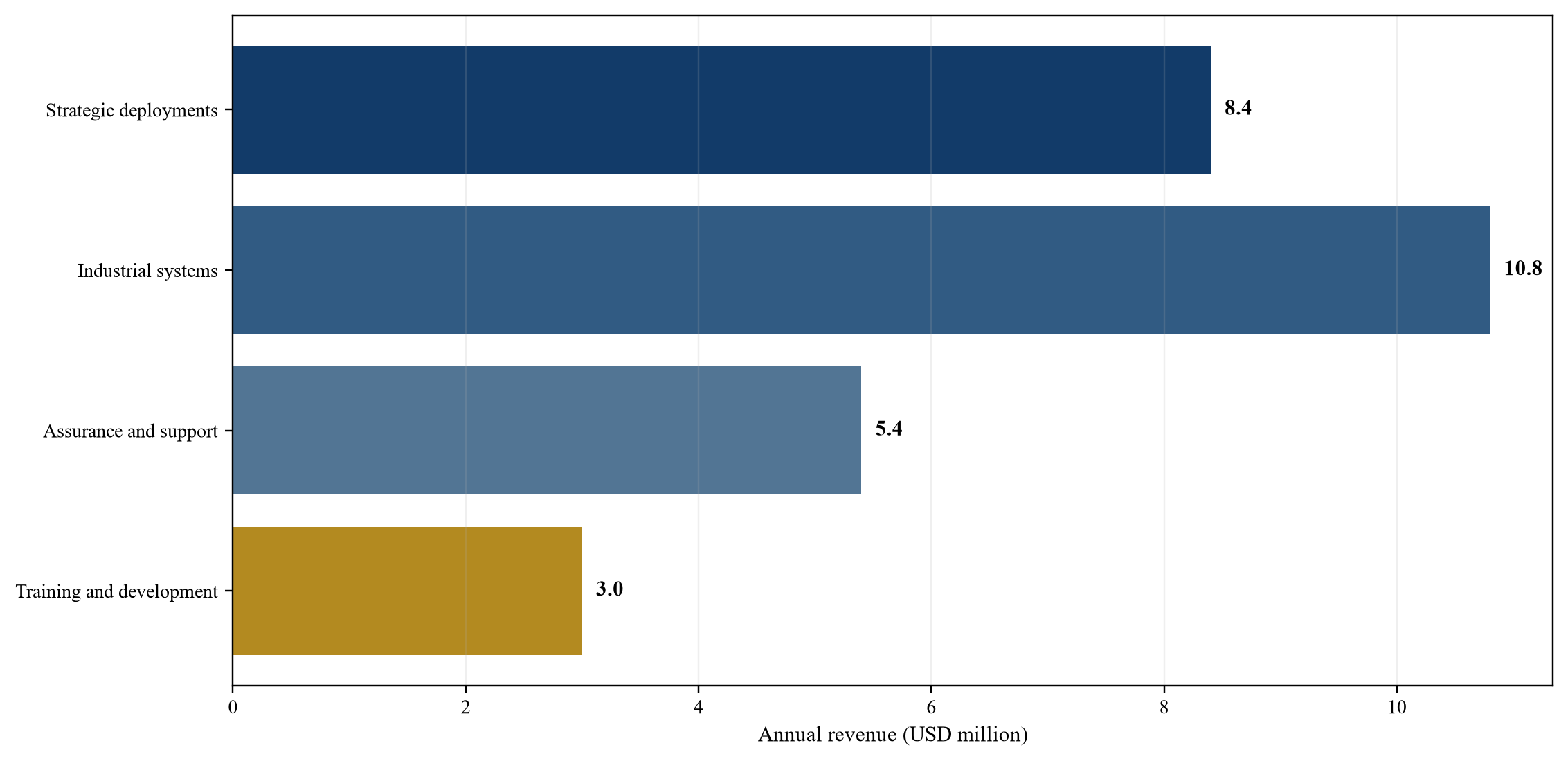
Wholly hypothetical management assumptions; USD million.
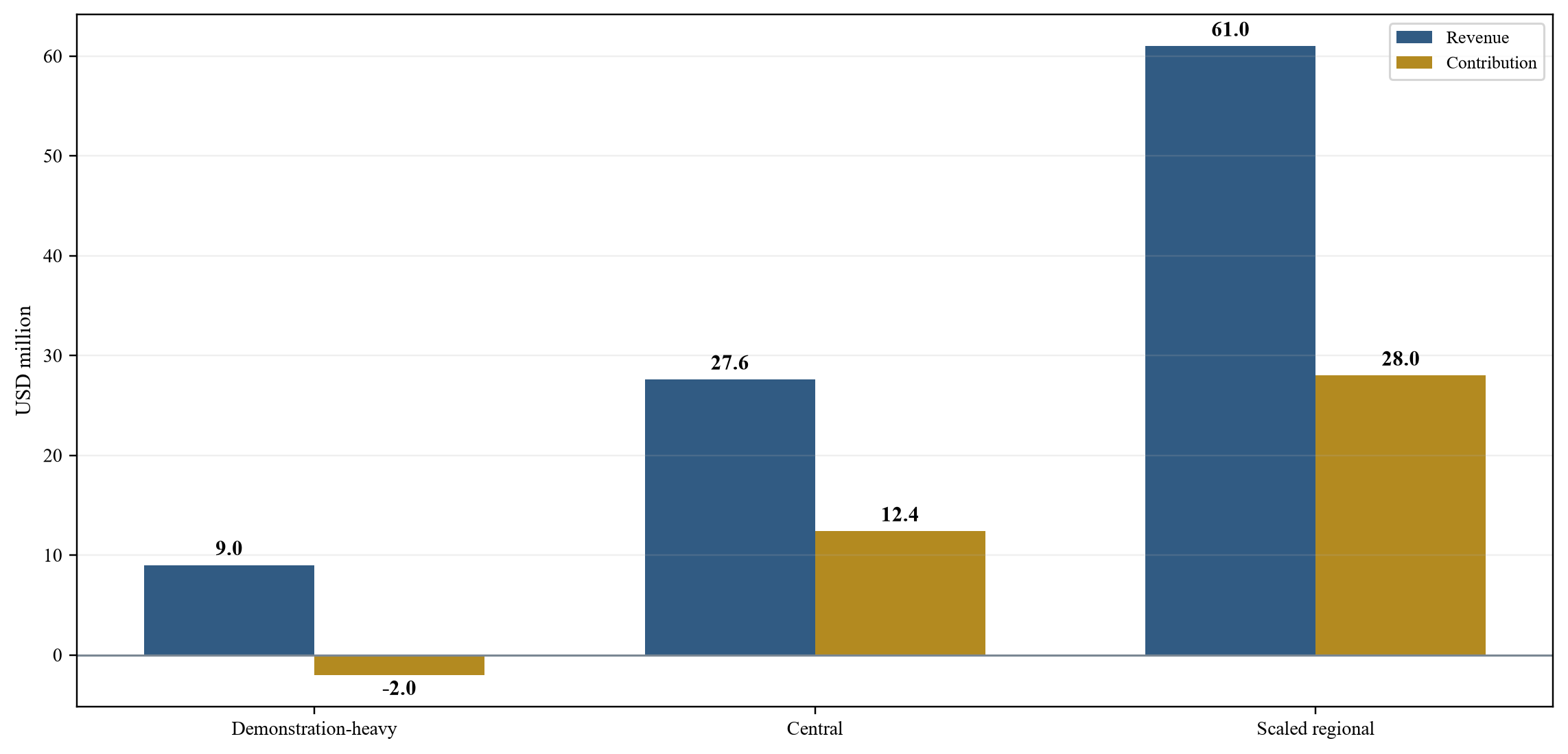
Wholly hypothetical management assumptions; USD million.
Wholly hypothetical management assumptions; USD million.
| Level | Local capability | Additional access | Principal evidence |
|---|---|---|---|
| 1 | Sales and customer support | Commercial documentation | Approved offer and trained team |
| 2 | Installation and operation | Operating manuals and tools | Accepted deployment and competence |
| 3 | Integration and maintenance | Diagnostics calibration and modules | Controlled environment and certification |
| 4 | Assembly or manufacture | Process specifications and quality methods | Qualified suppliers and repeat yield |
| 5 | Independent design modification | Core design source and technical authority | Explicit permission rights and governance |
Proposed classification; actual rights depend on transaction documents and approvals.
| Asset | Owner | Permitted use | Release evidence | Exit treatment |
|---|---|---|---|---|
| Patents and designs | Technology partner | Defined field and territory | Chain of title and licence | Licence expiry or run-off |
| Trade secrets | Technology partner | Named tasks and roles | Classification and access approval | Return deletion and certification |
| Software and models | Stated owner | Execute modify or integrate as specified | Repository and version controls | Disable return or surviving licence |
| Deployment data | Customer or venture as agreed | Service assurance and defined improvement | Data schedule and consent | Export deletion or retention rule |
| Equipment | Named owner | Approved sites and end use | Title classification and permit | Repurchase export or controlled disposal |
Proposed minimum fields for transaction control.
| Dimension | Required evidence | Common weakness | Gate owner |
|---|---|---|---|
| Customer outcome | Funded contract and acceptance method | General strategic demand | Commercial committee |
| Technology rights | Chain of title and scoped licence | Broad transfer language | Legal and IP committee |
| Export control | Classification end use and licences | Supplier assumption | Compliance committee |
| Data and security | Data map approved environment and logging | Uncontrolled collaboration tools | Security committee |
| Capability | Competence and authority matrix | Headcount treated as autonomy | Technical committee |
| Economics | Contribution cash and downside runway | Pilot revenue treated as scale | Board and finance |
Proposed investment-committee gate.
| Revenue or cost item | Revenue | Direct cost | Contribution |
|---|---|---|---|
| Sovereign and strategic deployments | 8.40 | 5.20 | 3.20 |
| Industrial systems and integration | 10.80 | 6.30 | 4.50 |
| Recurring assurance and support | 5.40 | 2.40 | 3.00 |
| Approved training and development | 3.00 | 1.30 | 1.70 |
| Total | 27.60 | 15.20 | 12.40 |
Wholly hypothetical management assumptions; USD million.
| Scenario | Revenue | Contribution | Principal condition |
|---|---|---|---|
| Demonstration-heavy | 9.00 | -2.00 | Bespoke pilots and delayed conversion |
| Central | 27.60 | 12.40 | Accepted deployments and recurring assurance |
| Scaled regional | 61.00 | 28.00 | Repeat configuration and diversified customers |
Wholly hypothetical management assumptions; USD million.
| Scenario | Enterprise value | Probability | Weighted value |
|---|---|---|---|
| Protected option | 45 | 25% | 11.25 |
| Validated deployment | 130 | 35% | 45.50 |
| Contracted joint venture | 310 | 25% | 77.50 |
| Scaled regional platform | 600 | 15% | 90.00 |
| Total | 100% | 224.25 |
Wholly hypothetical management assumptions; USD million.
| Area | Measures | Warning signal | Board action |
|---|---|---|---|
| Permissions | Classifications licences and exceptions | Approval misses customer date | Rephase commitment |
| Technology | Accepted configurations failures and claims | Field performance outside envelope | Pause claim or remediate |
| Security | Access changes incidents and logs | Unapproved recipient or export | Revoke access and investigate |
| Customers | Contracts acceptance renewals and collections | Pilot backlog without conversion | Revise commercial plan |
| Capability | Competence authority and dependencies | Single-person critical role | Pair train or retain support |
| Finance | Contribution cash working capital and runway | Capital need precedes evidence | Hold tranche or resize scope |
Proposed quarterly governance control.
Sources
- Technology Innovation Institute. Quantum Research Center. 2026. Read the primary source
- Technology Innovation Institute. Quantum Sensing Division. 2026. Read the primary source
- Technology Innovation Institute. TII and Thales Partner to Advance Research in Quantum Autonomy and Directed Energy. 20 November 2025. Read the primary source
- Research Development and Innovation Authority Saudi Arabia. National Quantum Hub. 2026. Read the primary source
- United Kingdom Government. National Quantum Strategy. 2023. Read the primary source
- United Kingdom Government. Quantum in Singapore Opportunities for Collaboration. 30 December 2025. Read the primary source
- United States Department of Commerce Bureau of Industry and Security. Department of Commerce Implements Controls on Quantum Computing and Other Advanced Technologies. 5 September 2024. Read the primary source
- United States Department of Commerce Bureau of Industry and Security. Export Administration Regulations. 2026. Read the primary source
- United Kingdom. Export Control Amendment No. 2 Regulations 2025. 2025. Read the primary source
- European Commission. Investment Screening and Outbound Investment Monitoring. 2026. Read the primary source
- United Arab Emirates. Federal Decree Law No. 43 of 2021 on Goods Subject to Non-Proliferation. 2021. Read the primary source
- Government of Dubai. Decree No. 25 of 2021 Regulating Dealing in Dual-use Commodities in the Emirate of Dubai. 2021. Read the primary source
- Executive Office for Control and Non-Proliferation. UAE Control List Guidance. 2022. Read the primary source
- World Intellectual Property Organization. Technology Transfer Agreements. 2026. Read the primary source
- World Intellectual Property Organization. IP Licensing Strategies for Ventures. 15 July 2026. Read the primary source
- World Intellectual Property Organization. How to Operate a Joint Venture. 15 July 2026. Read the primary source
- World Intellectual Property Organization. How to Prepare for IP Due Diligence. 14 July 2026. Read the primary source
- World Intellectual Property Organization. Intellectual Property Valuation Basics for Technology Transfer Professionals. 2025. Read the primary source
- World Intellectual Property Organization. IP Assignment and Licensing. 2026. Read the primary source
- World Intellectual Property Organization. Successful Technology Licensing. 2015. Read the primary source
- United Kingdom National Protective Security Authority. Secure Innovation Guidance. 2026. Read the primary source
- United Kingdom National Cyber Security Centre. Supply Chain Security Guidance. 2026. Read the primary source
- International Organization for Standardization. ISO IEC 27001 Information Security Management Systems. 2022. Read the primary source
- IFRS Foundation. IFRS 11 Joint Arrangements. 2026. Read the primary source
- IFRS Foundation. IFRS 15 Revenue from Contracts with Customers. 2026. Read the primary source
- European Commission. European Strategy for Quantum. 2025. Read the primary source
- European Commission. Recommendation on Research Security. 2024. Read the primary source
- United Kingdom Government. National Security and Investment Act Guidance for Quantum Technologies. 2026. Read the primary source
- United Arab Emirates. Federal Decree Law No. 45 of 2021 Regarding the Protection of Personal Data. 2021. Read the primary source
- Saudi Data and Artificial Intelligence Authority. Personal Data Protection Law. 2026. Read the primary source
- National Institute of Standards and Technology. Migration to Post Quantum Cryptography Project. 2026. Read the primary source
- International Telecommunication Union. Quantum Information Technology for Networks. 2026. Read the primary source
