

1. Define the terminal-value decision
The decision question is which serviceable capacity, customer cash and residual rights can persist beyond the explicit forecast. The evidence record should begin with asset register, site and lease rights, capacity definitions, customer contracts, operating history and capital plan. Each item should carry a source, date, owner, site and reconciliation status. National policy and market growth can explain demand context. Asset-specific documents determine remaining life, commercial capability and cash. [1][2]
The principal failure is that a perpetuity can extend today’s earnings after the equipment or contracts supporting them have expired. This matters because terminal value converts a future cash stream into a large present value. The model should expose the dependency and the event that confirms or rejects it.
The recommended response is to define the terminal asset, terminal service and terminal customer base before choosing a formula. Management estimates can support scenarios when they remain clearly identified as assumptions. The base case should retain only evidenced rights, measured performance and costed obligations. Downside cases should combine related risks rather than move one input at a time.
The investment committee should record value at risk, the earliest observable indicator, the accountable owner and the intervention available before cash or capital is released. This converts terminal value from a distant mathematical output into a governed operating and capital programme.
2. Adopt an asset and service dictionary
The decision question is how shell, core infrastructure, fit-out, IT equipment, controls and contracted service are distinguished. The evidence record should begin with fixed-asset register, engineering drawings, commissioning records, customer demarcation and accounting policy. Each item should carry a source, date, owner, site and reconciliation status. National policy and market growth can explain demand context. Asset-specific documents determine remaining life, commercial capability and cash. [3][4]
The principal failure is that ownership and useful life can be assigned to the wrong party when facility and customer equipment are blended. This matters because terminal value converts a future cash stream into a large present value. The model should expose the dependency and the event that confirms or rejects it.
The recommended response is to approve one component dictionary linked to legal ownership, maintenance and cash responsibility. Management estimates can support scenarios when they remain clearly identified as assumptions. The base case should retain only evidenced rights, measured performance and costed obligations. Downside cases should combine related risks rather than move one input at a time.
The investment committee should record value at risk, the earliest observable indicator, the accountable owner and the intervention available before cash or capital is released. This converts terminal value from a distant mathematical output into a governed operating and capital programme.
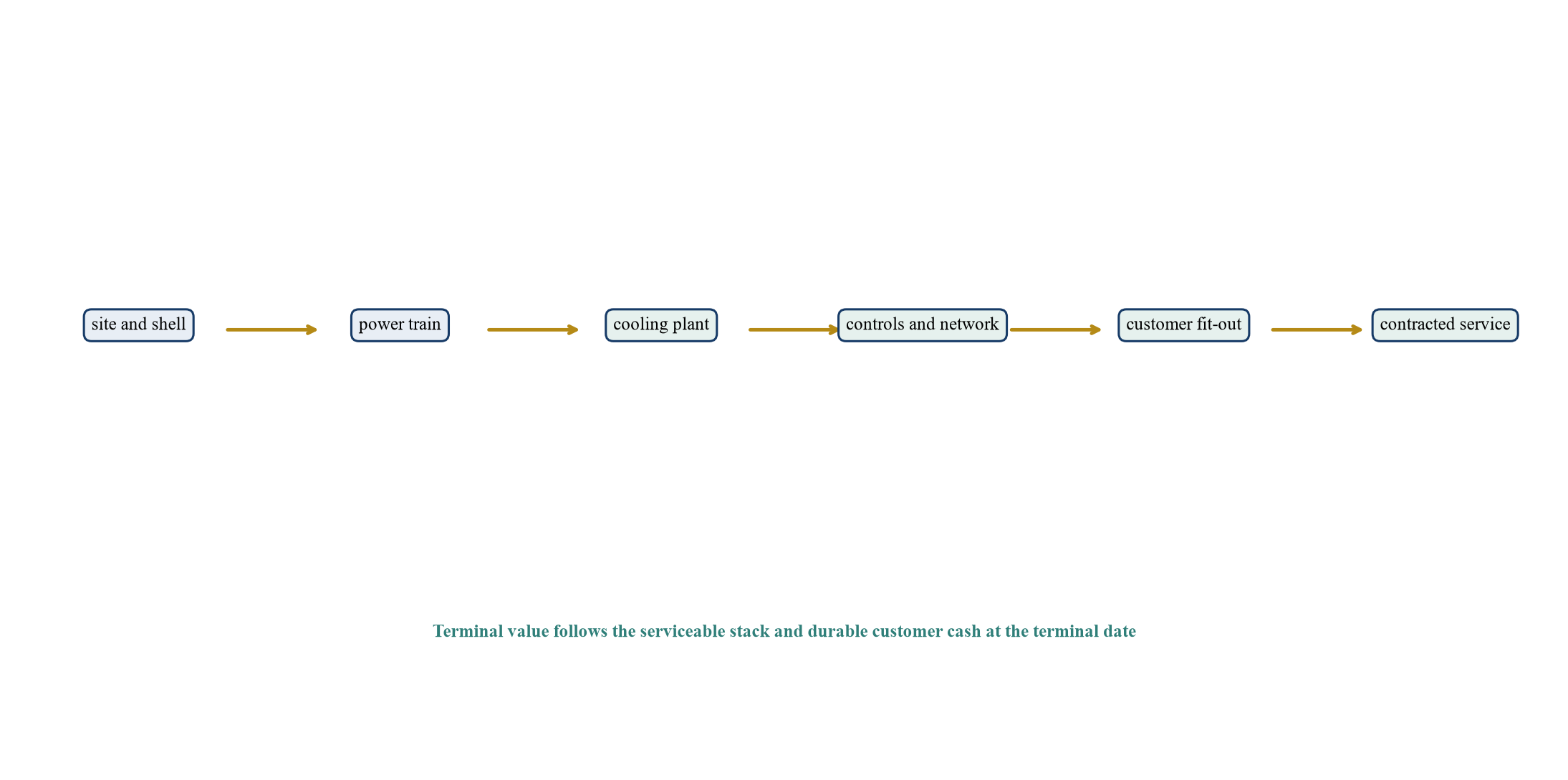
Analytical framework; ownership and service responsibility require asset-specific verification.
| Layer | Typical content | Principal terminal question |
|---|---|---|
| site and shell | land rights, structure and envelope | does the right outlive the forecast? |
| electrical core | grid intake, transformers, switchgear and UPS | what capacity remains serviceable? |
| mechanical core | chillers, heat rejection, pumps and water loops | which density can be cooled? |
| controls and network | monitoring, automation and connectivity | is support secure and interoperable? |
| customer fit-out | cages, racks, distribution and cooling interfaces | who owns and replaces it? |
| contracted service | capacity, resilience, connectivity and support | what renews and at what price? |
Proposed definitions; legal ownership and contracts control treatment.
3. Fix the legal and site perimeter
The decision question is which land, leases, buildings, utility rights, permits, equipment and contracts belong to the valuation. The evidence record should begin with title and lease records, permits, licences, utility agreements, insurance and change-of-control terms. Each item should carry a source, date, owner, site and reconciliation status. National policy and market growth can explain demand context. Asset-specific documents determine remaining life, commercial capability and cash. [5][6]
The principal failure is that valuable capacity can depend on rights outside the acquired entity or shorter than the terminal period. This matters because terminal value converts a future cash stream into a large present value. The model should expose the dependency and the event that confirms or rejects it.
The recommended response is to map each right to its holder, location, expiry, transfer condition and replacement path. Management estimates can support scenarios when they remain clearly identified as assumptions. The base case should retain only evidenced rights, measured performance and costed obligations. Downside cases should combine related risks rather than move one input at a time.
The investment committee should record value at risk, the earliest observable indicator, the accountable owner and the intervention available before cash or capital is released. This converts terminal value from a distant mathematical output into a governed operating and capital programme.
4. Segment shell, core systems and fit-out
The decision question is which components create long-duration real estate utility and which require recurring technical replacement. The evidence record should begin with architectural, electrical and mechanical schedules, bills of quantity, asset tags and maintenance records. Each item should carry a source, date, owner, site and reconciliation status. National policy and market growth can explain demand context. Asset-specific documents determine remaining life, commercial capability and cash. [3][7]
The principal failure is that one blended depreciation schedule can conceal rapidly ageing power, cooling and control components. This matters because terminal value converts a future cash stream into a large present value. The model should expose the dependency and the event that confirms or rejects it.
The recommended response is to model component lives, replacement triggers and cash responsibility separately. Management estimates can support scenarios when they remain clearly identified as assumptions. The base case should retain only evidenced rights, measured performance and costed obligations. Downside cases should combine related risks rather than move one input at a time.
The investment committee should record value at risk, the earliest observable indicator, the accountable owner and the intervention available before cash or capital is released. This converts terminal value from a distant mathematical output into a governed operating and capital programme.
5. Assess electrical topology and density
The decision question is whether substations, transformers, switchgear, UPS, busways and distribution can support future rack loads. The evidence record should begin with single-line diagrams, protection studies, nameplate data, loading, fault levels, redundancy and test results. Each item should carry a source, date, owner, site and reconciliation status. National policy and market growth can explain demand context. Asset-specific documents determine remaining life, commercial capability and cash. [8][9]
The principal failure is that headline megawatts can remain physically present while distribution limits make them commercially obsolete. This matters because terminal value converts a future cash stream into a large present value. The model should expose the dependency and the event that confirms or rejects it.
The recommended response is to calculate usable power at rack level under the required resilience standard. Management estimates can support scenarios when they remain clearly identified as assumptions. The base case should retain only evidenced rights, measured performance and costed obligations. Downside cases should combine related risks rather than move one input at a time.
The investment committee should record value at risk, the earliest observable indicator, the accountable owner and the intervention available before cash or capital is released. This converts terminal value from a distant mathematical output into a governed operating and capital programme.
6. Assess cooling and liquid-cooling readiness
The decision question is whether heat rejection, water loops, floor layout and controls can support higher-density workloads. The evidence record should begin with cooling schematics, environmental logs, water quality, rack specifications, commissioning and vendor evidence. Each item should carry a source, date, owner, site and reconciliation status. National policy and market growth can explain demand context. Asset-specific documents determine remaining life, commercial capability and cash. [8][10]
The principal failure is that facility capacity can lose relevance when cooling cannot serve the workload customers want to deploy. This matters because terminal value converts a future cash stream into a large present value. The model should expose the dependency and the event that confirms or rejects it.
The recommended response is to classify halls by air, hybrid and liquid-cooling readiness and cost each transition. Management estimates can support scenarios when they remain clearly identified as assumptions. The base case should retain only evidenced rights, measured performance and costed obligations. Downside cases should combine related risks rather than move one input at a time.
The investment committee should record value at risk, the earliest observable indicator, the accountable owner and the intervention available before cash or capital is released. This converts terminal value from a distant mathematical output into a governed operating and capital programme.
7. Build the equipment-age register
The decision question is what was installed, commissioned, refurbished or replaced and when. The evidence record should begin with purchase records, asset tags, serial numbers, warranties, maintenance history and physical inspection. Each item should carry a source, date, owner, site and reconciliation status. National policy and market growth can explain demand context. Asset-specific documents determine remaining life, commercial capability and cash. [3][11]
The principal failure is that book records can retain assets that have been replaced, cannibalised or operated beyond supported life. This matters because terminal value converts a future cash stream into a large present value. The model should expose the dependency and the event that confirms or rejects it.
The recommended response is to reconcile finance, engineering and physical evidence to one dated component register. Management estimates can support scenarios when they remain clearly identified as assumptions. The base case should retain only evidenced rights, measured performance and costed obligations. Downside cases should combine related risks rather than move one input at a time.
The investment committee should record value at risk, the earliest observable indicator, the accountable owner and the intervention available before cash or capital is released. This converts terminal value from a distant mathematical output into a governed operating and capital programme.
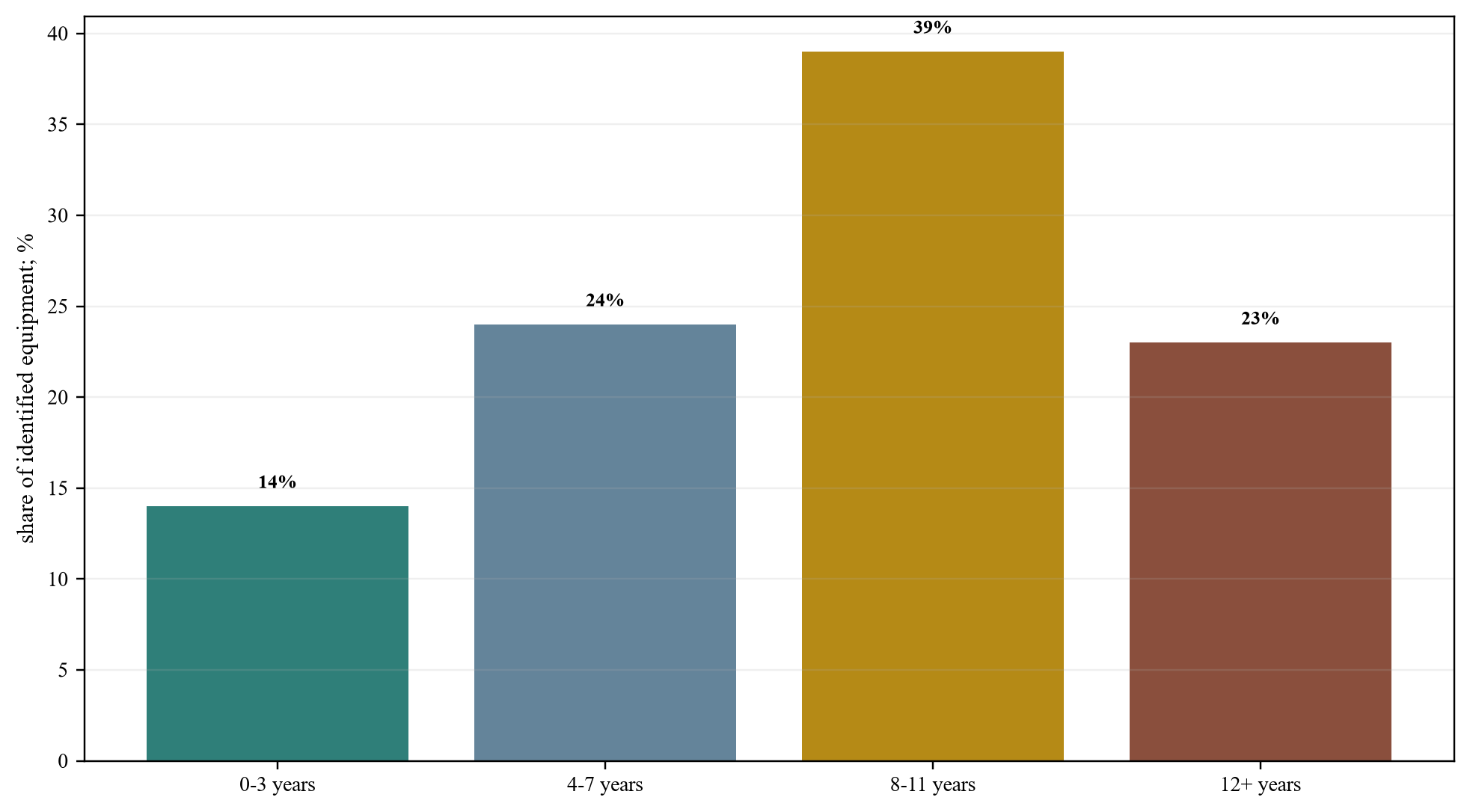
Wholly hypothetical share of identified core equipment; figures do not describe an identified facility.
8. Estimate remaining useful life
The decision question is how condition, duty cycle, environment, maintenance and support alter remaining service potential. The evidence record should begin with inspection, failure history, load profile, thermal records, oil or battery tests and manufacturer guidance. Each item should carry a source, date, owner, site and reconciliation status. National policy and market growth can explain demand context. Asset-specific documents determine remaining life, commercial capability and cash. [7][11]
The principal failure is that chronological age alone can understate deterioration or force premature replacement of healthy equipment. This matters because terminal value converts a future cash stream into a large present value. The model should expose the dependency and the event that confirms or rejects it.
The recommended response is to use condition-based ranges with a confidence grade and observable replacement trigger. Management estimates can support scenarios when they remain clearly identified as assumptions. The base case should retain only evidenced rights, measured performance and costed obligations. Downside cases should combine related risks rather than move one input at a time.
The investment committee should record value at risk, the earliest observable indicator, the accountable owner and the intervention available before cash or capital is released. This converts terminal value from a distant mathematical output into a governed operating and capital programme.
| Component | Evidence | Replacement trigger |
|---|---|---|
| transformer and switchgear | tests, loading, faults and parts | condition or capacity limit |
| UPS and batteries | runtime, impedance, temperature and events | performance threshold |
| chiller and heat rejection | efficiency, vibration, refrigerant and hours | cost or support threshold |
| pumps and fans | vibration, duty and maintenance | reliability or efficiency |
| controls | version, patching, licences and interfaces | support or security end |
| busway and rack distribution | loading, heat and connector condition | density or safety limit |
Proposed diligence schedule; actual life depends on condition, duty and support.
9. Separate accounting, physical and economic life
The decision question is when depreciation, mechanical endurance and commercial fitness diverge. The evidence record should begin with accounting policy, engineering assessment, customer requirement, regulation and market evidence. Each item should carry a source, date, owner, site and reconciliation status. National policy and market growth can explain demand context. Asset-specific documents determine remaining life, commercial capability and cash. [3][12]
The principal failure is that an asset can be fully depreciated yet productive, or mechanically sound yet commercially unusable. This matters because terminal value converts a future cash stream into a large present value. The model should expose the dependency and the event that confirms or rejects it.
The recommended response is to forecast cash from economic serviceability and test accounting consequences separately. Management estimates can support scenarios when they remain clearly identified as assumptions. The base case should retain only evidenced rights, measured performance and costed obligations. Downside cases should combine related risks rather than move one input at a time.
The investment committee should record value at risk, the earliest observable indicator, the accountable owner and the intervention available before cash or capital is released. This converts terminal value from a distant mathematical output into a governed operating and capital programme.
10. Map vendor support and spare parts
The decision question is which components retain warranty, parts, firmware and qualified service support. The evidence record should begin with original-equipment-manufacturer notices, service contracts, parts inventory, lead times and technician coverage. Each item should carry a source, date, owner, site and reconciliation status. National policy and market growth can explain demand context. Asset-specific documents determine remaining life, commercial capability and cash. [11][13]
The principal failure is that unsupported controls or proprietary components can convert a minor failure into prolonged loss of service. This matters because terminal value converts a future cash stream into a large present value. The model should expose the dependency and the event that confirms or rejects it.
The recommended response is to create an end-of-support calendar and secure replacement, spares or migration before the critical date. Management estimates can support scenarios when they remain clearly identified as assumptions. The base case should retain only evidenced rights, measured performance and costed obligations. Downside cases should combine related risks rather than move one input at a time.
The investment committee should record value at risk, the earliest observable indicator, the accountable owner and the intervention available before cash or capital is released. This converts terminal value from a distant mathematical output into a governed operating and capital programme.
| Signal | Evidence | Potential cash effect |
|---|---|---|
| vendor support ends | manufacturer notice | forced migration or outage risk |
| spare-parts lead time rises | supplier quote and inventory | larger reserve and downtime |
| efficiency gap widens | metered benchmark | higher operating cost |
| density demand exceeds design | customer pipeline and engineering test | lost revenue or retrofit |
| control platform is unsupported | version and patch evidence | cyber and insurance exposure |
| failures cluster | maintenance history | accelerated capital |
Proposed indicators; asset-specific verification remains necessary.
11. Test control-system obsolescence
The decision question is whether building, power and cooling controls remain secure, interoperable and maintainable. The evidence record should begin with software versions, licence terms, patch records, interfaces, cyber testing and recovery procedures. Each item should carry a source, date, owner, site and reconciliation status. National policy and market growth can explain demand context. Asset-specific documents determine remaining life, commercial capability and cash. [13][14]
The principal failure is that obsolete operational technology can impair visibility, resilience and insurability even when mechanical plant operates. This matters because terminal value converts a future cash stream into a large present value. The model should expose the dependency and the event that confirms or rejects it.
The recommended response is to price controlled migration, parallel operation and rollback capability. Management estimates can support scenarios when they remain clearly identified as assumptions. The base case should retain only evidenced rights, measured performance and costed obligations. Downside cases should combine related risks rather than move one input at a time.
The investment committee should record value at risk, the earliest observable indicator, the accountable owner and the intervention available before cash or capital is released. This converts terminal value from a distant mathematical output into a governed operating and capital programme.
12. Model power-density migration
The decision question is how customer demand for conventional, accelerated-compute and high-density deployments changes saleable capacity. The evidence record should begin with rack-density history, pipeline requirements, power and cooling limits, customer design standards and market evidence. Each item should carry a source, date, owner, site and reconciliation status. National policy and market growth can explain demand context. Asset-specific documents determine remaining life, commercial capability and cash. [1][8]
The principal failure is that a static megawatt count can overstate future revenue if the halls cannot accept demanded configurations. This matters because terminal value converts a future cash stream into a large present value. The model should expose the dependency and the event that confirms or rejects it.
The recommended response is to translate demand into rack, hall, power, cooling and network requirements by cohort. Management estimates can support scenarios when they remain clearly identified as assumptions. The base case should retain only evidenced rights, measured performance and costed obligations. Downside cases should combine related risks rather than move one input at a time.
The investment committee should record value at risk, the earliest observable indicator, the accountable owner and the intervention available before cash or capital is released. This converts terminal value from a distant mathematical output into a governed operating and capital programme.
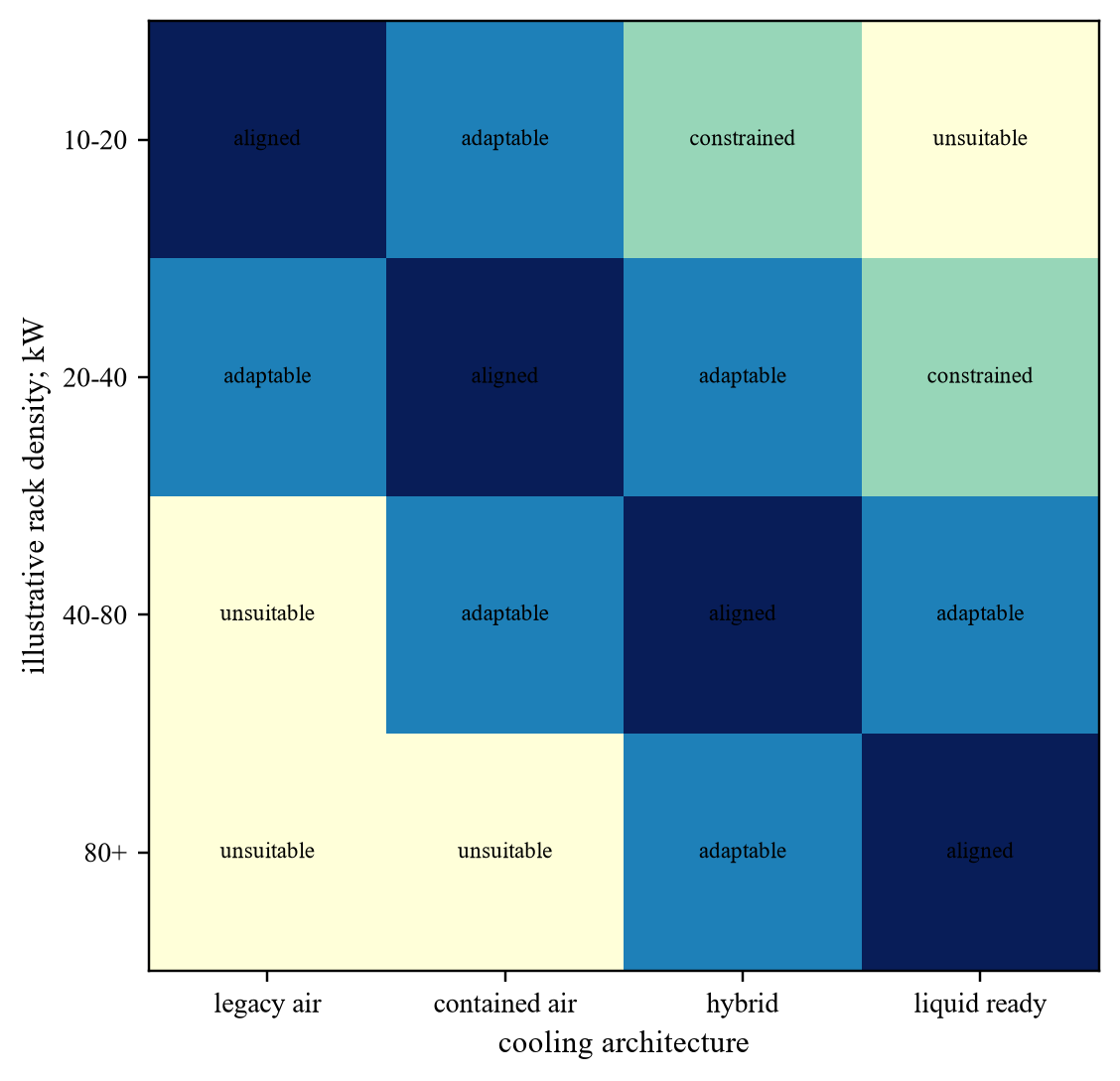
Analytical framework; actual hall capability requires engineering verification.
13. Plan live-retrofit constraints
The decision question is how construction, isolation, testing and customer access can be sequenced without unacceptable service loss. The evidence record should begin with method statements, redundancy diagrams, maintenance windows, permits, contractor plan and customer consents. Each item should carry a source, date, owner, site and reconciliation status. National policy and market growth can explain demand context. Asset-specific documents determine remaining life, commercial capability and cash. [9][15]
The principal failure is that retrofit cost can be understated when temporary plant, night work, decanting and revenue interruption are omitted. This matters because terminal value converts a future cash stream into a large present value. The model should expose the dependency and the event that confirms or rejects it.
The recommended response is to build a hall-by-hall critical path with operational hold points and contingency capacity. Management estimates can support scenarios when they remain clearly identified as assumptions. The base case should retain only evidenced rights, measured performance and costed obligations. Downside cases should combine related risks rather than move one input at a time.
The investment committee should record value at risk, the earliest observable indicator, the accountable owner and the intervention available before cash or capital is released. This converts terminal value from a distant mathematical output into a governed operating and capital programme.
14. Prove commissioning and resilience
The decision question is whether new and retained systems perform together under normal, failure and recovery conditions. The evidence record should begin with integrated systems tests, load-bank results, failover records, defect closure and customer acceptance. Each item should carry a source, date, owner, site and reconciliation status. National policy and market growth can explain demand context. Asset-specific documents determine remaining life, commercial capability and cash. [8][15]
The principal failure is that equipment installation can be treated as completion before integrated performance is demonstrated. This matters because terminal value converts a future cash stream into a large present value. The model should expose the dependency and the event that confirms or rejects it.
The recommended response is to release value only after witnessed tests meet defined capacity and resilience criteria. Management estimates can support scenarios when they remain clearly identified as assumptions. The base case should retain only evidenced rights, measured performance and costed obligations. Downside cases should combine related risks rather than move one input at a time.
The investment committee should record value at risk, the earliest observable indicator, the accountable owner and the intervention available before cash or capital is released. This converts terminal value from a distant mathematical output into a governed operating and capital programme.
15. Segment customer cohorts
The decision question is which hyperscale, enterprise, cloud, network and specialised-compute customers drive utilisation and margin. The evidence record should begin with contracts, invoices, capacity schedules, service credits, tenure, expansion and pipeline records. Each item should carry a source, date, owner, site and reconciliation status. National policy and market growth can explain demand context. Asset-specific documents determine remaining life, commercial capability and cash. [16][17]
The principal failure is that aggregate occupancy can hide concentration, uneconomic contracts and near-term expiries. This matters because terminal value converts a future cash stream into a large present value. The model should expose the dependency and the event that confirms or rejects it.
The recommended response is to analyse contracted load, revenue, margin and renewal date by customer cohort. Management estimates can support scenarios when they remain clearly identified as assumptions. The base case should retain only evidenced rights, measured performance and costed obligations. Downside cases should combine related risks rather than move one input at a time.
The investment committee should record value at risk, the earliest observable indicator, the accountable owner and the intervention available before cash or capital is released. This converts terminal value from a distant mathematical output into a governed operating and capital programme.
16. Measure customer stickiness
The decision question is which switching costs, interconnections, migration effort, compliance needs and service quality support retention. The evidence record should begin with cross-connects, data migration plans, certification, outage history, support tickets and renewal behaviour. Each item should carry a source, date, owner, site and reconciliation status. National policy and market growth can explain demand context. Asset-specific documents determine remaining life, commercial capability and cash. [16][18]
The principal failure is that customer tenure can be mistaken for future commitment when switching barriers are falling or service has weakened. This matters because terminal value converts a future cash stream into a large present value. The model should expose the dependency and the event that confirms or rejects it.
The recommended response is to score operational, technical, contractual and economic switching friction using observed evidence. Management estimates can support scenarios when they remain clearly identified as assumptions. The base case should retain only evidenced rights, measured performance and costed obligations. Downside cases should combine related risks rather than move one input at a time.
The investment committee should record value at risk, the earliest observable indicator, the accountable owner and the intervention available before cash or capital is released. This converts terminal value from a distant mathematical output into a governed operating and capital programme.
| Driver | Evidence | Valuation use |
|---|---|---|
| interconnection density | cross-connect inventory and traffic | migration complexity |
| data gravity | workload and dependency map | operational switching cost |
| compliance | certifications and customer approvals | requalification time |
| physical fit-out | ownership and removal obligations | exit cost |
| service quality | incidents, credits and tickets | renewal probability |
| price position | renewal history and competing offers | renewal price |
Proposed cohort analysis; executed contracts and observed behaviour control conclusions.
17. Analyse renewal price and churn
The decision question is how expiries, options, notice, price resets, credits and competitive alternatives affect terminal revenue. The evidence record should begin with executed contracts, renewal correspondence, cohort retention, pricing history and market offers. Each item should carry a source, date, owner, site and reconciliation status. National policy and market growth can explain demand context. Asset-specific documents determine remaining life, commercial capability and cash. [17][19]
The principal failure is that one portfolio retention rate can hide renewal cliffs and adverse selection by the most profitable customers. This matters because terminal value converts a future cash stream into a large present value. The model should expose the dependency and the event that confirms or rejects it.
The recommended response is to forecast renewal probability, price and cost by contract cohort and month. Management estimates can support scenarios when they remain clearly identified as assumptions. The base case should retain only evidenced rights, measured performance and costed obligations. Downside cases should combine related risks rather than move one input at a time.
The investment committee should record value at risk, the earliest observable indicator, the accountable owner and the intervention available before cash or capital is released. This converts terminal value from a distant mathematical output into a governed operating and capital programme.
18. Separate sustaining, compliance, retrofit and expansion capital
The decision question is which expenditure preserves current service, satisfies obligations, changes capability or adds capacity. The evidence record should begin with capital ledger, engineering scope, regulation, customer commitment and benefits case. Each item should carry a source, date, owner, site and reconciliation status. National policy and market growth can explain demand context. Asset-specific documents determine remaining life, commercial capability and cash. [3][20]
The principal failure is that growth expenditure can be presented as maintenance or mandatory replacement can be deferred outside the forecast. This matters because terminal value converts a future cash stream into a large present value. The model should expose the dependency and the event that confirms or rejects it.
The recommended response is to classify each project by causal driver and reconcile it to capacity, cost and cash benefit. Management estimates can support scenarios when they remain clearly identified as assumptions. The base case should retain only evidenced rights, measured performance and costed obligations. Downside cases should combine related risks rather than move one input at a time.
The investment committee should record value at risk, the earliest observable indicator, the accountable owner and the intervention available before cash or capital is released. This converts terminal value from a distant mathematical output into a governed operating and capital programme.
| Capital class | Purpose | Terminal-value treatment |
|---|---|---|
| sustaining | preserve current service | recurring reinvestment |
| compliance | satisfy law or mandatory standard | required cash outflow |
| retrofit | change efficiency or capability | cost and evidenced benefit |
| replacement | retire end-of-life component | component-cycle cash |
| expansion | add saleable capacity | separate growth case |
| customer-funded | satisfy contracted specification | recognise reimbursement and obligation |
Proposed classification; accounting and tax treatment require transaction-specific advice.
19. Build the refresh-capital cycle
The decision question is when batteries, UPS modules, chillers, controls, switchgear and other systems require intervention. The evidence record should begin with condition evidence, maintenance strategy, vendor support, lead time, outage windows and procurement terms. Each item should carry a source, date, owner, site and reconciliation status. National policy and market growth can explain demand context. Asset-specific documents determine remaining life, commercial capability and cash. [7][11]
The principal failure is that a smooth annual allowance can miss clustered replacements and funding peaks. This matters because terminal value converts a future cash stream into a large present value. The model should expose the dependency and the event that confirms or rejects it.
The recommended response is to use component-level timing, probability and cost with explicit escalation and contingency. Management estimates can support scenarios when they remain clearly identified as assumptions. The base case should retain only evidenced rights, measured performance and costed obligations. Downside cases should combine related risks rather than move one input at a time.
The investment committee should record value at risk, the earliest observable indicator, the accountable owner and the intervention available before cash or capital is released. This converts terminal value from a distant mathematical output into a governed operating and capital programme.
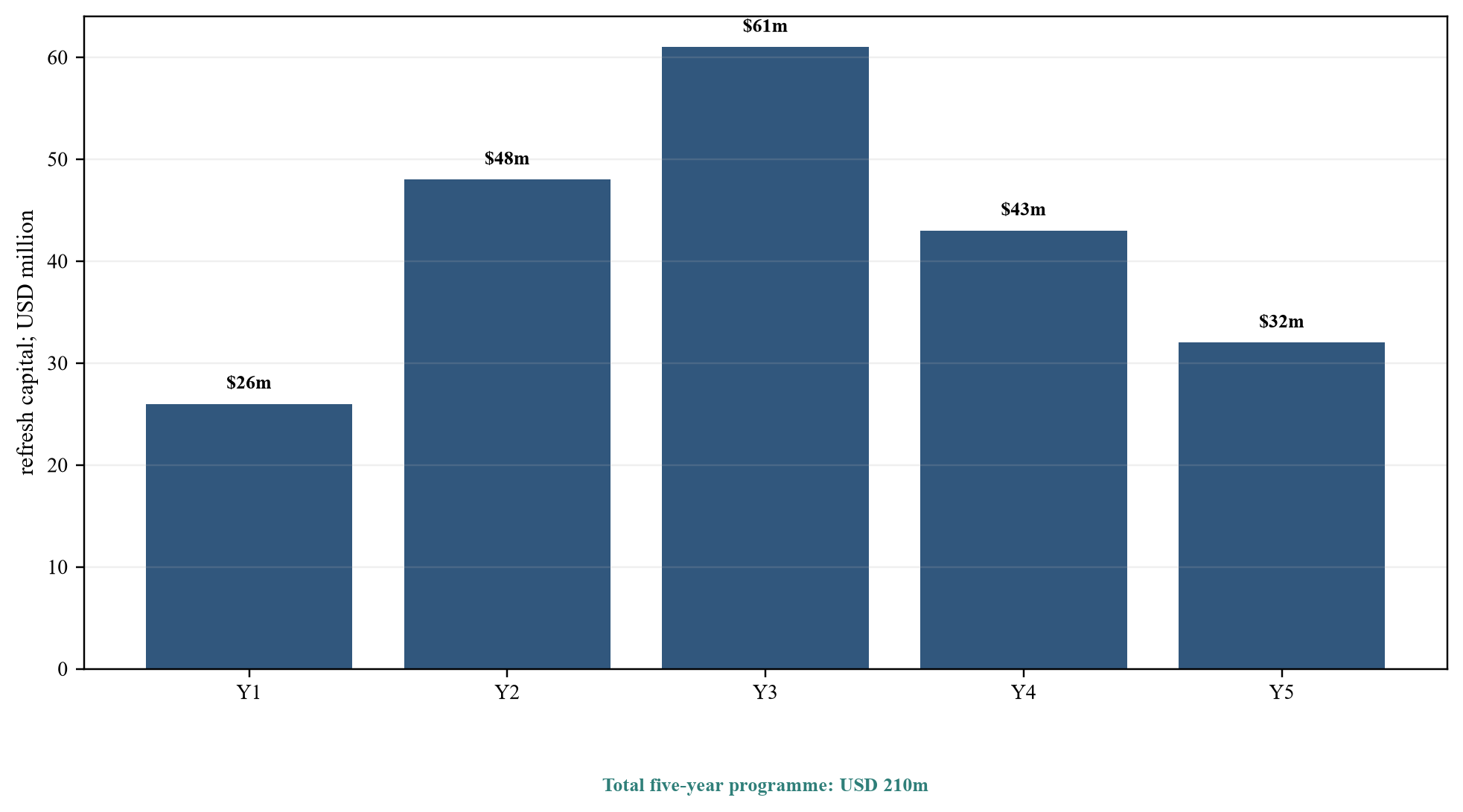
Wholly hypothetical USD millions; figures do not describe an identified facility.
20. Model downtime and lost revenue
The decision question is how planned and unplanned service interruption affects credits, churn, repair cost and customer confidence. The evidence record should begin with service-level agreements, event history, method statement, insurance and customer communication. Each item should carry a source, date, owner, site and reconciliation status. National policy and market growth can explain demand context. Asset-specific documents determine remaining life, commercial capability and cash. [15][17]
The principal failure is that capital budgets can omit revenue loss and contractual remedies created by the work itself. This matters because terminal value converts a future cash stream into a large present value. The model should expose the dependency and the event that confirms or rejects it.
The recommended response is to integrate operational disruption with project cost and customer-cohort cash. Management estimates can support scenarios when they remain clearly identified as assumptions. The base case should retain only evidenced rights, measured performance and costed obligations. Downside cases should combine related risks rather than move one input at a time.
The investment committee should record value at risk, the earliest observable indicator, the accountable owner and the intervention available before cash or capital is released. This converts terminal value from a distant mathematical output into a governed operating and capital programme.
21. Estimate operating cash before terminal value
The decision question is how billable load, price, electricity, staffing, maintenance, tax and working capital create distributable cash. The evidence record should begin with meter data, invoices, customer billing, payroll, maintenance, tax and collection records. Each item should carry a source, date, owner, site and reconciliation status. National policy and market growth can explain demand context. Asset-specific documents determine remaining life, commercial capability and cash. [2][16]
The principal failure is that terminal-value assumptions can mask weak conversion from contracted revenue to collected and distributable cash. This matters because terminal value converts a future cash stream into a large present value. The model should expose the dependency and the event that confirms or rejects it.
The recommended response is to reconcile capacity to meter, invoice, collection and sustaining capital before applying terminal value. Management estimates can support scenarios when they remain clearly identified as assumptions. The base case should retain only evidenced rights, measured performance and costed obligations. Downside cases should combine related risks rather than move one input at a time.
The investment committee should record value at risk, the earliest observable indicator, the accountable owner and the intervention available before cash or capital is released. This converts terminal value from a distant mathematical output into a governed operating and capital programme.
22. Determine the terminal-state asset
The decision question is which halls, components, contracts, capabilities and obligations exist at the end of the explicit forecast. The evidence record should begin with refresh programme, retirement plan, capacity test, customer schedule and legal-right expiry. Each item should carry a source, date, owner, site and reconciliation status. National policy and market growth can explain demand context. Asset-specific documents determine remaining life, commercial capability and cash. [2][12]
The principal failure is that the model can apply terminal growth to a capacity mix that cannot physically or contractually survive. This matters because terminal value converts a future cash stream into a large present value. The model should expose the dependency and the event that confirms or rejects it.
The recommended response is to prepare a terminal-date pro forma asset register and customer schedule. Management estimates can support scenarios when they remain clearly identified as assumptions. The base case should retain only evidenced rights, measured performance and costed obligations. Downside cases should combine related risks rather than move one input at a time.
The investment committee should record value at risk, the earliest observable indicator, the accountable owner and the intervention available before cash or capital is released. This converts terminal value from a distant mathematical output into a governed operating and capital programme.
23. Apply the hypothetical worked case
The decision question is how a 72 MW campus, ageing equipment, USD 210 million retrofit and customer renewal interact. The evidence record should begin with the stated hypothetical operating, technical, capital and discount assumptions. Each item should carry a source, date, owner, site and reconciliation status. National policy and market growth can explain demand context. Asset-specific documents determine remaining life, commercial capability and cash. [21][22]
The principal failure is that a point estimate can disguise dependence on execution and renewal assumptions. This matters because terminal value converts a future cash stream into a large present value. The model should expose the dependency and the event that confirms or rejects it.
The recommended response is to show the entire capacity, capital, customer and cash bridge with no hidden plug. Management estimates can support scenarios when they remain clearly identified as assumptions. The base case should retain only evidenced rights, measured performance and costed obligations. Downside cases should combine related risks rather than move one input at a time.
The investment committee should record value at risk, the earliest observable indicator, the accountable owner and the intervention available before cash or capital is released. This converts terminal value from a distant mathematical output into a governed operating and capital programme.
| Metric | Base assumption | Stress or range |
|---|---|---|
| customer-usable capacity | 72 MW | 68-74 MW |
| average billable load | 54 MW | 47-59 MW |
| equipment over seven years | 62% | 50-72% |
| five-year retrofit capital | USD 210m | USD 170m-290m |
| PUE before and after | 1.44 / 1.28 | 1.48 / 1.32 stress |
| customer renewal | 82% | 70-94% |
| discount rate | 11.5% | 10.5-13.0% |
| terminal growth | 3.5% | 2.5-4.0% |
| enterprise value | USD 1.15bn | USD 0.76bn-1.39bn |
Wholly hypothetical; figures do not describe an identified company or facility.
24. Bridge explicit cash to terminal value
The decision question is how normalised terminal cash, growth, discount rate and reinvestment produce residual value. The evidence record should begin with explicit forecast, terminal asset, customer cohorts, refresh capital, tax and financing. Each item should carry a source, date, owner, site and reconciliation status. National policy and market growth can explain demand context. Asset-specific documents determine remaining life, commercial capability and cash. [2][12]
The principal failure is that the terminal year can contain temporary margin, underinvestment or a non-recurring ramp that is capitalised forever. This matters because terminal value converts a future cash stream into a large present value. The model should expose the dependency and the event that confirms or rejects it.
The recommended response is to normalise revenue, operating cost, sustaining capital and working capital before calculating residual value. Management estimates can support scenarios when they remain clearly identified as assumptions. The base case should retain only evidenced rights, measured performance and costed obligations. Downside cases should combine related risks rather than move one input at a time.
The investment committee should record value at risk, the earliest observable indicator, the accountable owner and the intervention available before cash or capital is released. This converts terminal value from a distant mathematical output into a governed operating and capital programme.
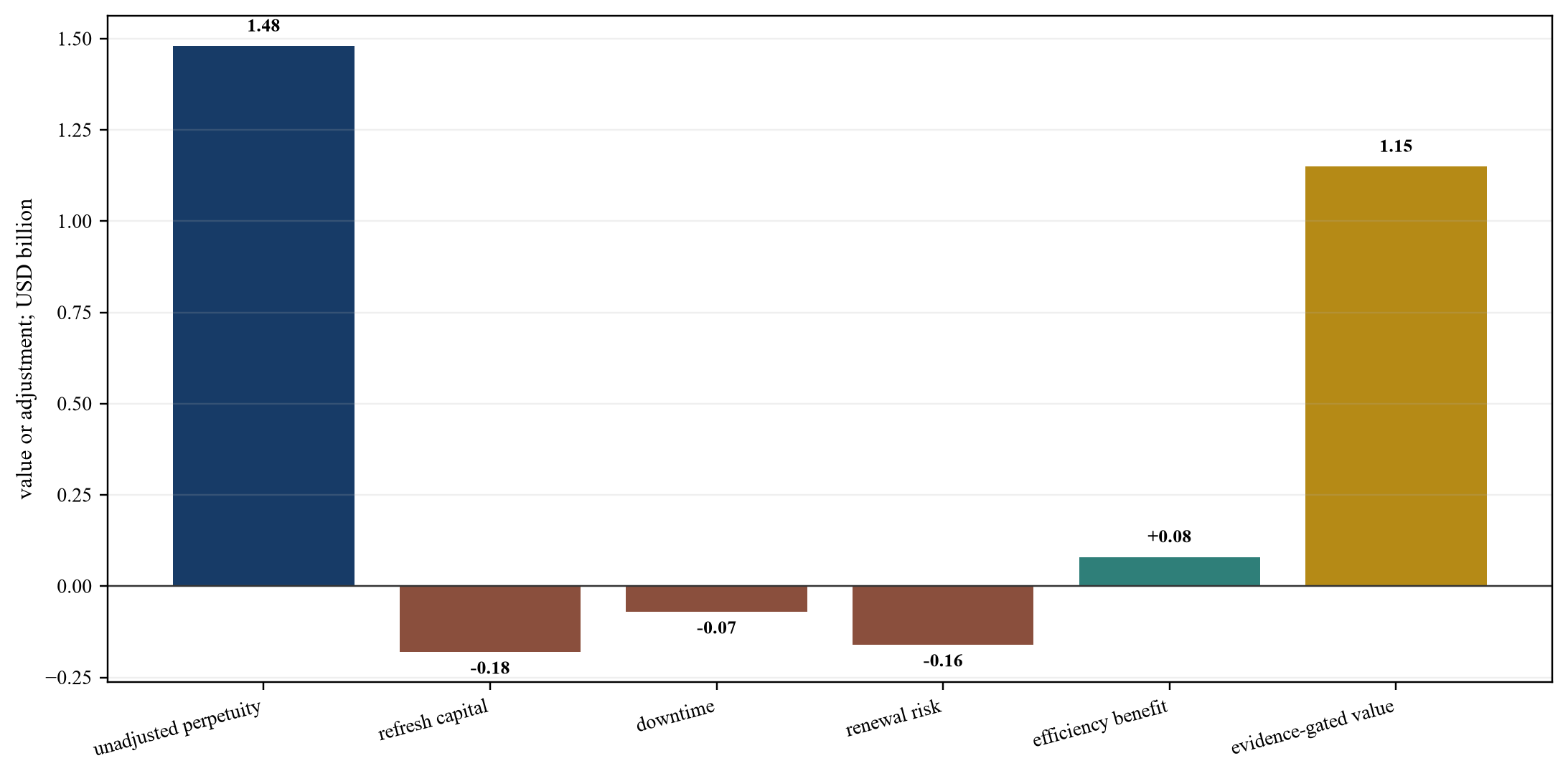
Wholly hypothetical USD billions; this is not a valuation opinion.
25. Stress obsolescence, capex and churn
The decision question is which combinations of accelerated refresh, density shortfall, delay, cost overrun and renewal loss impair value. The evidence record should begin with scenario model, component risk, customer expiries, contractor plan and liquidity. Each item should carry a source, date, owner, site and reconciliation status. National policy and market growth can explain demand context. Asset-specific documents determine remaining life, commercial capability and cash. [11][19]
The principal failure is that single-variable sensitivities can miss compounding technical and commercial failure. This matters because terminal value converts a future cash stream into a large present value. The model should expose the dependency and the event that confirms or rejects it.
The recommended response is to run coherent downside cases with early indicators and funded management actions. Management estimates can support scenarios when they remain clearly identified as assumptions. The base case should retain only evidenced rights, measured performance and costed obligations. Downside cases should combine related risks rather than move one input at a time.
The investment committee should record value at risk, the earliest observable indicator, the accountable owner and the intervention available before cash or capital is released. This converts terminal value from a distant mathematical output into a governed operating and capital programme.
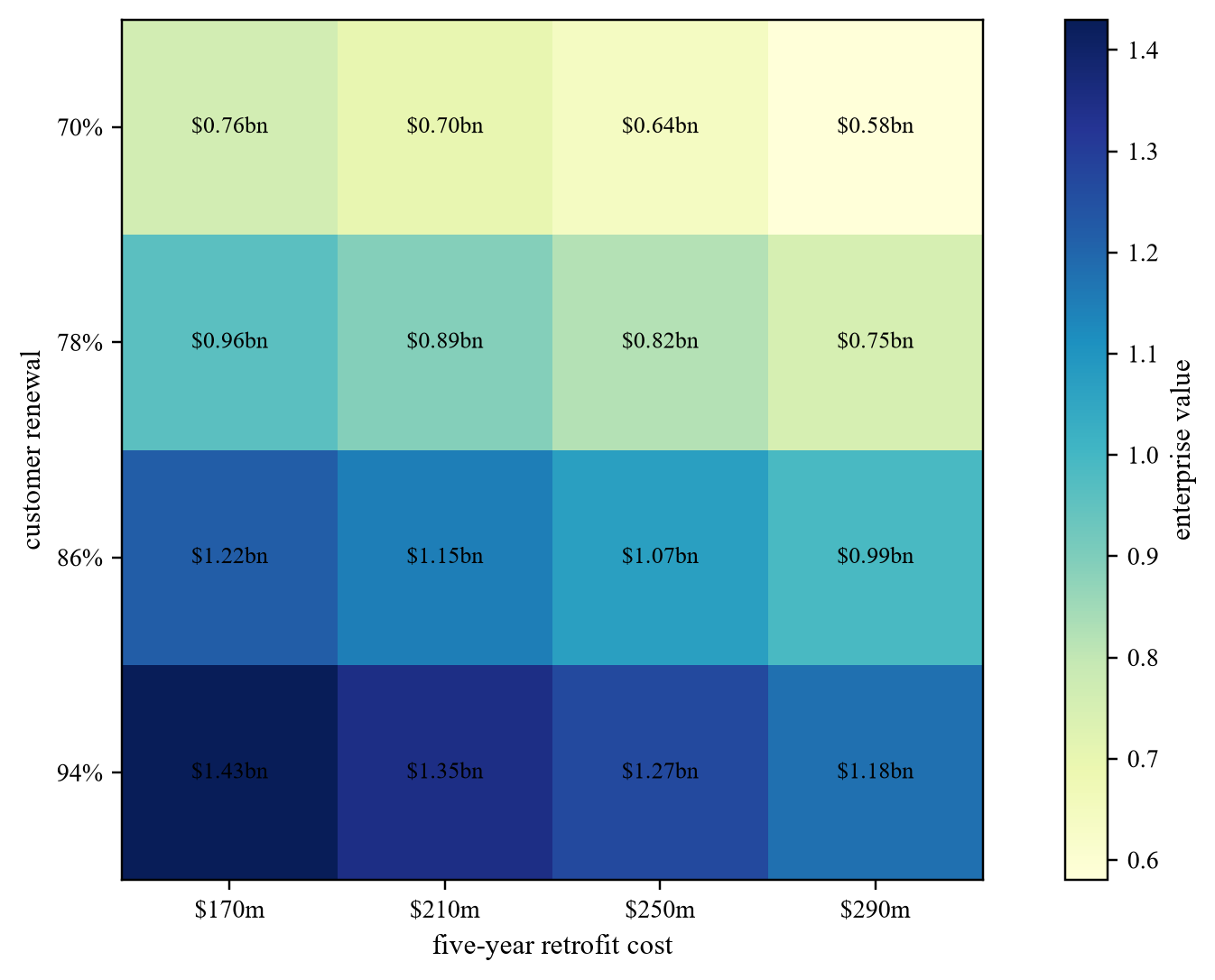
Wholly hypothetical USD billions; this is not a valuation opinion.
26. Match financing to the refresh cycle
The decision question is which debt tenor, amortisation, reserves and covenants fit uneven capital and renewal risk. The evidence record should begin with cash flow, capital schedule, customer contracts, collateral, debt terms and downside cases. Each item should carry a source, date, owner, site and reconciliation status. National policy and market growth can explain demand context. Asset-specific documents determine remaining life, commercial capability and cash. [23][24]
The principal failure is that debt service can peak when refresh spending rises and major customers approach renewal. This matters because terminal value converts a future cash stream into a large present value. The model should expose the dependency and the event that confirms or rejects it.
The recommended response is to align maturities, coverage tests, reserve releases and draw conditions with evidenced milestones. Management estimates can support scenarios when they remain clearly identified as assumptions. The base case should retain only evidenced rights, measured performance and costed obligations. Downside cases should combine related risks rather than move one input at a time.
The investment committee should record value at risk, the earliest observable indicator, the accountable owner and the intervention available before cash or capital is released. This converts terminal value from a distant mathematical output into a governed operating and capital programme.
27. Translate diligence into price and protections
The decision question is which price adjustment, condition, warranty, indemnity, escrow or earn-out allocates terminal-value uncertainty. The evidence record should begin with technical findings, customer evidence, capital plan, financing and draft transaction documents. Each item should carry a source, date, owner, site and reconciliation status. National policy and market growth can explain demand context. Asset-specific documents determine remaining life, commercial capability and cash. [5][24]
The principal failure is that valuation qualifications can disappear from the signed allocation of risk. This matters because terminal value converts a future cash stream into a large present value. The model should expose the dependency and the event that confirms or rejects it.
The recommended response is to attach each material dependency to value, protection, owner, evidence and deadline. Management estimates can support scenarios when they remain clearly identified as assumptions. The base case should retain only evidenced rights, measured performance and costed obligations. Downside cases should combine related risks rather than move one input at a time.
The investment committee should record value at risk, the earliest observable indicator, the accountable owner and the intervention available before cash or capital is released. This converts terminal value from a distant mathematical output into a governed operating and capital programme.
28. Reach the investment decision
The decision question is whether the serviceable terminal asset, durable customer cash and funded refresh plan justify commitment. The evidence record should begin with component register, terminal-state model, customer cohorts, downside liquidity, protections and board record. Each item should carry a source, date, owner, site and reconciliation status. National policy and market growth can explain demand context. Asset-specific documents determine remaining life, commercial capability and cash. [21][25]
The principal failure is that a secular data-growth narrative can displace asset-specific evidence about capability and cash. This matters because terminal value converts a future cash stream into a large present value. The model should expose the dependency and the event that confirms or rejects it.
The recommended response is to approve a range tied to verified serviceability, renewal and funded intervention. Management estimates can support scenarios when they remain clearly identified as assumptions. The base case should retain only evidenced rights, measured performance and costed obligations. Downside cases should combine related risks rather than move one input at a time.
The investment committee should record value at risk, the earliest observable indicator, the accountable owner and the intervention available before cash or capital is released. This converts terminal value from a distant mathematical output into a governed operating and capital programme.
| Decision | Evidence required | Possible action |
|---|---|---|
| serviceable terminal capacity | component and integrated-system tests | resize value |
| refresh programme | scope, sequence, bids and contingency | reserve or price adjustment |
| customer durability | contracts, cohort evidence and pricing | probability-weight cash |
| retrofit disruption | method, redundancy and customer consent | condition or protection |
| financing resilience | downside coverage and liquidity | resize or restructure |
| unresolved dependency | quantified cash and legal allocation | escrow, earn-out or decline |
Proposed governance; transaction-specific approvals remain necessary.
Sources
- International Energy Agency, *Energy and AI*. Read the primary source
- IFRS Foundation, *IAS 36 Impairment of Assets*. Read the primary source
- IFRS Foundation, *IAS 16 Property, Plant and Equipment*. Read the primary source
- U.S. Securities and Exchange Commission, *Equinix 2025 Form 10-K*. Read the primary source
- Ministry of Electronics and Information Technology, *Draft Data Centre Policy 2020*. Read the primary source
- Telecom Regulatory Authority of India, *Data Centres*. Read the primary source
- Uptime Institute, *Equipment Life Cycle Management*. Read the primary source
- ASHRAE, *Datacom Series*. Read the primary source
- ASHRAE Handbook, *Data Centers and Telecommunication Facilities*. Read the primary source
- ASHRAE, *Liquid Cooling Guidelines for Datacom Equipment Centers*. Read the primary source
- U.S. Securities and Exchange Commission, *Digital Realty Trust 2025 Form 10-K*. Read the primary source
- IFRS Foundation, *Conceptual Framework for Financial Reporting*. Read the primary source
- National Institute of Standards and Technology, *Cybersecurity Framework 2.0*. Read the primary source
- National Institute of Standards and Technology, *Guide to Operational Technology Security*. Read the primary source
- Uptime Institute, *Tier Standard and operational sustainability resources*. Read the primary source
- IFRS Foundation, *IFRS 15 Revenue from Contracts with Customers*. Read the primary source
- Telecom Regulatory Authority of India, *Recommendations on Regulatory Framework for Promoting Data Economy through Establishment of Data Centres, Content Delivery Networks, and Interconnect Exchanges in India*. Read the primary source
- Ministry of Electronics and Information Technology, *India Enterprise Architecture Framework*. Read the primary source
- Securities and Exchange Board of India, *Real Estate Investment Trusts Regulations*. Read the primary source
- IFRS Foundation, *IAS 37 Provisions, Contingent Liabilities and Contingent Assets*. Read the primary source
- IFRS Foundation, *IFRS 13 Fair Value Measurement*. Read the primary source
- Ministry of Electronics and Information Technology, *Digital Personal Data Protection Act 2023*. Read the primary source
- European Banking Authority, *Guidelines on loan origination and monitoring*. Read the primary source
- IFRS Foundation, *IFRS 9 Financial Instruments*. Read the primary source
- Telecom Regulatory Authority of India, *Consultation Paper on Regulatory Framework for Promoting Data Economy*. Read the primary source
- Central Electricity Authority, *Technical Standards and Regulations*. Read the primary source
