

1. Define the venture purpose and economic perimeter
The partners should state the products, territories, assets, obligations and value-creation thesis that the funding supports. The required output is an economic perimeter memorandum. Record the economic purpose, evidence, amount, currency, timing, priority, condition, legal capacity, accounting treatment, tax treatment, decision right and accountable owner [1][2].
Reconcile the provision to the approved business plan, legal documents, financing agreements, statutory constraints, accounting policies, transfer-pricing position and cash forecast. Model both the contractual entitlement and the cash actually available for payment.
The principal risk is that cash can be allocated to activities outside the agreed venture. Test the base case, delayed case and severe-but-plausible downside; quantify who funds, who receives cash, which rights change and what approvals or remedies follow.
Retain budgets, calls, bank evidence, invoices, service records, tax calculations, covenant certificates, reserves, board papers, shareholder approvals, model versions, payments and exceptions. Refresh the analysis when performance, funding, law, tax, financing or ownership changes.
2. Map ownership, control and economics separately
The partners should record legal interests, votes, reserved matters, profit shares, preferred rights and loss exposure. The required output is an ownership-control-economics map. Record the economic purpose, evidence, amount, currency, timing, priority, condition, legal capacity, accounting treatment, tax treatment, decision right and accountable owner [1][3].
Reconcile the provision to the approved business plan, legal documents, financing agreements, statutory constraints, accounting policies, transfer-pricing position and cash forecast. Model both the contractual entitlement and the cash actually available for payment.
The principal risk is that a nominal percentage can conceal different control and return rights. Test the base case, delayed case and severe-but-plausible downside; quantify who funds, who receives cash, which rights change and what approvals or remedies follow.
Retain budgets, calls, bank evidence, invoices, service records, tax calculations, covenant certificates, reserves, board papers, shareholder approvals, model versions, payments and exceptions. Refresh the analysis when performance, funding, law, tax, financing or ownership changes.
3. Build the opening sources and uses
The partners should reconcile acquisition, build, working capital, fees, contingencies and liquidity against each funding source. The required output is a fully funded opening plan. Record the economic purpose, evidence, amount, currency, timing, priority, condition, legal capacity, accounting treatment, tax treatment, decision right and accountable owner [4][5].
Reconcile the provision to the approved business plan, legal documents, financing agreements, statutory constraints, accounting policies, transfer-pricing position and cash forecast. Model both the contractual entitlement and the cash actually available for payment.
The principal risk is that headline capital can omit fees, tax and contingency needs. Test the base case, delayed case and severe-but-plausible downside; quantify who funds, who receives cash, which rights change and what approvals or remedies follow.
Retain budgets, calls, bank evidence, invoices, service records, tax calculations, covenant certificates, reserves, board papers, shareholder approvals, model versions, payments and exceptions. Refresh the analysis when performance, funding, law, tax, financing or ownership changes.
Table 1. Opening funding stack
| Source | Illustrative amount | Economic treatment |
|---|---|---|
| ordinary equity | 40 | residual |
| preferred equity | 20 | priority return |
| shareholder loan | 15 | subordinated debt |
| third-party debt | 25 | senior debt |
Illustrative analytical structure; verified transaction evidence and specialist review govern.
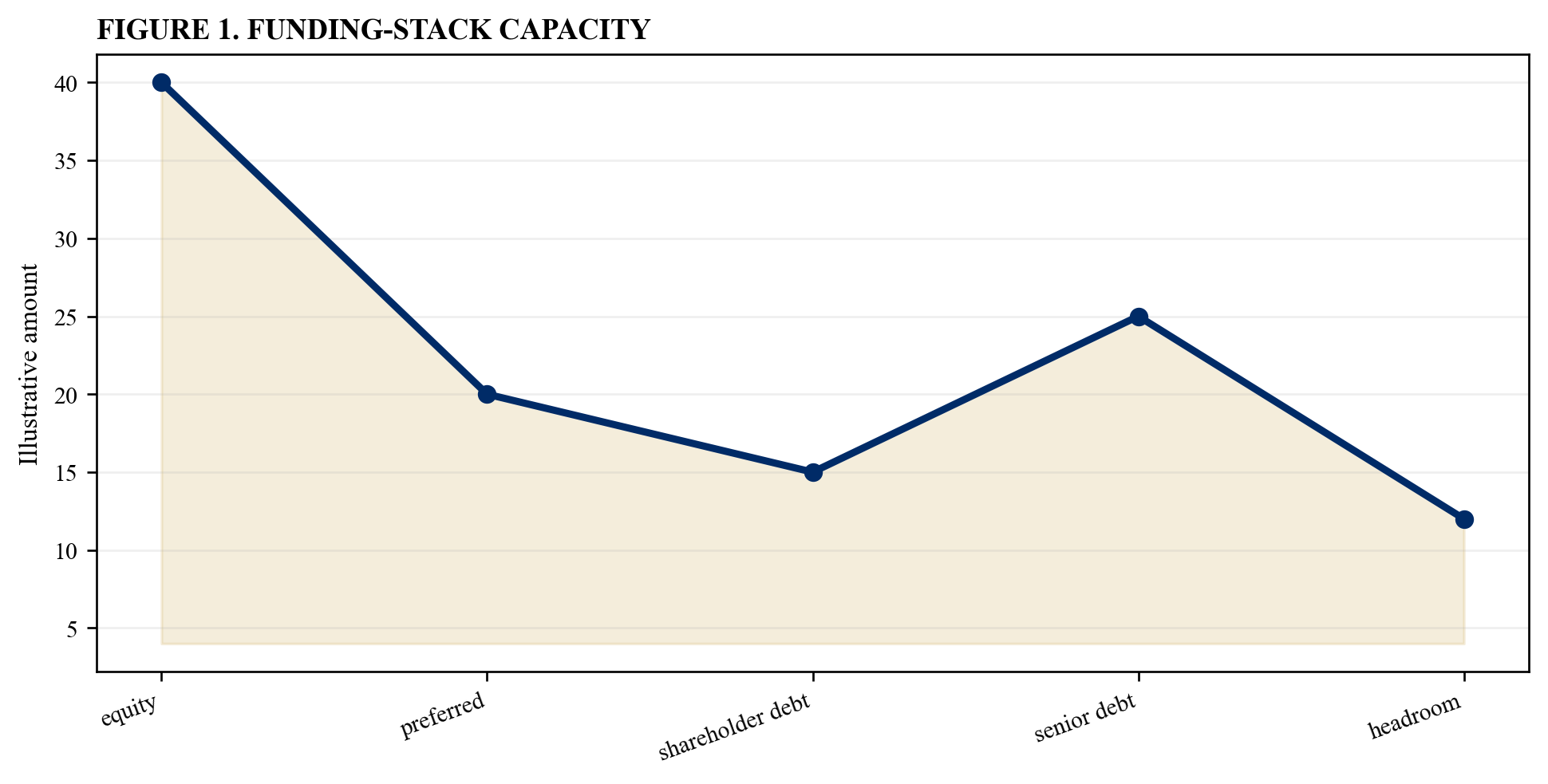
Illustrative analytical scenario; verified transaction evidence should replace index values.
4. Classify every funding instrument
The partners should separate ordinary equity, preferred equity, shareholder loans, guarantees, grants and third-party debt. The required output is an instrument register. Record the economic purpose, evidence, amount, currency, timing, priority, condition, legal capacity, accounting treatment, tax treatment, decision right and accountable owner [6][7].
Reconcile the provision to the approved business plan, legal documents, financing agreements, statutory constraints, accounting policies, transfer-pricing position and cash forecast. Model both the contractual entitlement and the cash actually available for payment.
The principal risk is that economically similar support can receive inconsistent rights or accounting. Test the base case, delayed case and severe-but-plausible downside; quantify who funds, who receives cash, which rights change and what approvals or remedies follow.
Retain budgets, calls, bank evidence, invoices, service records, tax calculations, covenant certificates, reserves, board papers, shareholder approvals, model versions, payments and exceptions. Refresh the analysis when performance, funding, law, tax, financing or ownership changes.
5. Define committed and optional capital
The partners should state amount, currency, timing, conditions, approvals and expiry for each commitment. The required output is a commitment schedule. Record the economic purpose, evidence, amount, currency, timing, priority, condition, legal capacity, accounting treatment, tax treatment, decision right and accountable owner [8][9].
Reconcile the provision to the approved business plan, legal documents, financing agreements, statutory constraints, accounting policies, transfer-pricing position and cash forecast. Model both the contractual entitlement and the cash actually available for payment.
The principal risk is that a business plan can assume funding that no partner is obliged to provide. Test the base case, delayed case and severe-but-plausible downside; quantify who funds, who receives cash, which rights change and what approvals or remedies follow.
Retain budgets, calls, bank evidence, invoices, service records, tax calculations, covenant certificates, reserves, board papers, shareholder approvals, model versions, payments and exceptions. Refresh the analysis when performance, funding, law, tax, financing or ownership changes.
6. Create evidence-led capital calls
The partners should link calls to approved budgets, milestones, invoices, liquidity forecasts and permitted uses. The required output is a capital-call certificate. Record the economic purpose, evidence, amount, currency, timing, priority, condition, legal capacity, accounting treatment, tax treatment, decision right and accountable owner [8][10].
Reconcile the provision to the approved business plan, legal documents, financing agreements, statutory constraints, accounting policies, transfer-pricing position and cash forecast. Model both the contractual entitlement and the cash actually available for payment.
The principal risk is that calls can become discretionary transfers without verified need. Test the base case, delayed case and severe-but-plausible downside; quantify who funds, who receives cash, which rights change and what approvals or remedies follow.
Retain budgets, calls, bank evidence, invoices, service records, tax calculations, covenant certificates, reserves, board papers, shareholder approvals, model versions, payments and exceptions. Refresh the analysis when performance, funding, law, tax, financing or ownership changes.
7. Set notice and payment mechanics
The partners should define lead time, bank details, currency conversion, withholding, evidence and receipt confirmation. The required output is a call operating procedure. Record the economic purpose, evidence, amount, currency, timing, priority, condition, legal capacity, accounting treatment, tax treatment, decision right and accountable owner [11][12].
Reconcile the provision to the approved business plan, legal documents, financing agreements, statutory constraints, accounting policies, transfer-pricing position and cash forecast. Model both the contractual entitlement and the cash actually available for payment.
The principal risk is that execution ambiguity can cause avoidable default or foreign-exchange leakage. Test the base case, delayed case and severe-but-plausible downside; quantify who funds, who receives cash, which rights change and what approvals or remedies follow.
Retain budgets, calls, bank evidence, invoices, service records, tax calculations, covenant certificates, reserves, board papers, shareholder approvals, model versions, payments and exceptions. Refresh the analysis when performance, funding, law, tax, financing or ownership changes.
8. Design funding-default remedies
The partners should stage cure, interest, suspension, dilution, loan conversion, purchase rights and dispute routes. The required output is a proportionate default ladder. Record the economic purpose, evidence, amount, currency, timing, priority, condition, legal capacity, accounting treatment, tax treatment, decision right and accountable owner [8][13].
Reconcile the provision to the approved business plan, legal documents, financing agreements, statutory constraints, accounting policies, transfer-pricing position and cash forecast. Model both the contractual entitlement and the cash actually available for payment.
The principal risk is that an aggressive remedy can transfer value beyond the funding shortfall. Test the base case, delayed case and severe-but-plausible downside; quantify who funds, who receives cash, which rights change and what approvals or remedies follow.
Retain budgets, calls, bank evidence, invoices, service records, tax calculations, covenant certificates, reserves, board papers, shareholder approvals, model versions, payments and exceptions. Refresh the analysis when performance, funding, law, tax, financing or ownership changes.
9. Control shareholder-loan terms
The partners should specify principal, interest, maturity, ranking, security, covenants, conversion and repayment blocks. The required output is a shareholder-debt term sheet. Record the economic purpose, evidence, amount, currency, timing, priority, condition, legal capacity, accounting treatment, tax treatment, decision right and accountable owner [6][14].
Reconcile the provision to the approved business plan, legal documents, financing agreements, statutory constraints, accounting policies, transfer-pricing position and cash forecast. Model both the contractual entitlement and the cash actually available for payment.
The principal risk is that debt can extract priority value while being treated as risk capital elsewhere. Test the base case, delayed case and severe-but-plausible downside; quantify who funds, who receives cash, which rights change and what approvals or remedies follow.
Retain budgets, calls, bank evidence, invoices, service records, tax calculations, covenant certificates, reserves, board papers, shareholder approvals, model versions, payments and exceptions. Refresh the analysis when performance, funding, law, tax, financing or ownership changes.
10. Reconcile third-party debt capacity
The partners should test leverage, coverage, cash sweeps, distribution blocks, guarantees and refinancing. The required output is a debt-capacity model. Record the economic purpose, evidence, amount, currency, timing, priority, condition, legal capacity, accounting treatment, tax treatment, decision right and accountable owner [15][16].
Reconcile the provision to the approved business plan, legal documents, financing agreements, statutory constraints, accounting policies, transfer-pricing position and cash forecast. Model both the contractual entitlement and the cash actually available for payment.
The principal risk is that the shareholder waterfall can promise cash that lenders restrict. Test the base case, delayed case and severe-but-plausible downside; quantify who funds, who receives cash, which rights change and what approvals or remedies follow.
Retain budgets, calls, bank evidence, invoices, service records, tax calculations, covenant certificates, reserves, board papers, shareholder approvals, model versions, payments and exceptions. Refresh the analysis when performance, funding, law, tax, financing or ownership changes.
11. Value non-cash contributions
The partners should verify title, usability, condition, restrictions, useful life and replacement cost. The required output is a contribution-value certificate. Record the economic purpose, evidence, amount, currency, timing, priority, condition, legal capacity, accounting treatment, tax treatment, decision right and accountable owner [17][18].
Reconcile the provision to the approved business plan, legal documents, financing agreements, statutory constraints, accounting policies, transfer-pricing position and cash forecast. Model both the contractual entitlement and the cash actually available for payment.
The principal risk is that assets or rights can be credited at values unsupported by economic utility. Test the base case, delayed case and severe-but-plausible downside; quantify who funds, who receives cash, which rights change and what approvals or remedies follow.
Retain budgets, calls, bank evidence, invoices, service records, tax calculations, covenant certificates, reserves, board papers, shareholder approvals, model versions, payments and exceptions. Refresh the analysis when performance, funding, law, tax, financing or ownership changes.
12. Map related-party services
The partners should identify people, systems, property, procurement, IP, treasury and management support. The required output is a service inventory. Record the economic purpose, evidence, amount, currency, timing, priority, condition, legal capacity, accounting treatment, tax treatment, decision right and accountable owner [19][20].
Reconcile the provision to the approved business plan, legal documents, financing agreements, statutory constraints, accounting policies, transfer-pricing position and cash forecast. Model both the contractual entitlement and the cash actually available for payment.
The principal risk is that fees can be charged for undefined or duplicated activity. Test the base case, delayed case and severe-but-plausible downside; quantify who funds, who receives cash, which rights change and what approvals or remedies follow.
Retain budgets, calls, bank evidence, invoices, service records, tax calculations, covenant certificates, reserves, board papers, shareholder approvals, model versions, payments and exceptions. Refresh the analysis when performance, funding, law, tax, financing or ownership changes.
13. Set arm's-length fee methods
The partners should select cost, allocation key, mark-up, benchmark, currency and true-up by service. The required output is a transfer-pricing schedule. Record the economic purpose, evidence, amount, currency, timing, priority, condition, legal capacity, accounting treatment, tax treatment, decision right and accountable owner [20][21].
Reconcile the provision to the approved business plan, legal documents, financing agreements, statutory constraints, accounting policies, transfer-pricing position and cash forecast. Model both the contractual entitlement and the cash actually available for payment.
The principal risk is that pricing can diverge from functions, assets and risks. Test the base case, delayed case and severe-but-plausible downside; quantify who funds, who receives cash, which rights change and what approvals or remedies follow.
Retain budgets, calls, bank evidence, invoices, service records, tax calculations, covenant certificates, reserves, board papers, shareholder approvals, model versions, payments and exceptions. Refresh the analysis when performance, funding, law, tax, financing or ownership changes.
14. Require service evidence
The partners should link invoices to contracts, deliverables, time, cost pools, allocation and acceptance. The required output is a fee evidence pack. Record the economic purpose, evidence, amount, currency, timing, priority, condition, legal capacity, accounting treatment, tax treatment, decision right and accountable owner [19][22].
Reconcile the provision to the approved business plan, legal documents, financing agreements, statutory constraints, accounting policies, transfer-pricing position and cash forecast. Model both the contractual entitlement and the cash actually available for payment.
The principal risk is that cash can leave the venture before the service is demonstrated. Test the base case, delayed case and severe-but-plausible downside; quantify who funds, who receives cash, which rights change and what approvals or remedies follow.
Retain budgets, calls, bank evidence, invoices, service records, tax calculations, covenant certificates, reserves, board papers, shareholder approvals, model versions, payments and exceptions. Refresh the analysis when performance, funding, law, tax, financing or ownership changes.
Table 2. Related-party fee evidence
| Fee | Basis | Control |
|---|---|---|
| management | verified cost pool | independent approval |
| technology | usage and licence | benchmark |
| procurement | documented saving | cap and audit |
| treasury | service and exposure | arm's-length test |
Illustrative analytical structure; verified transaction evidence and specialist review govern.
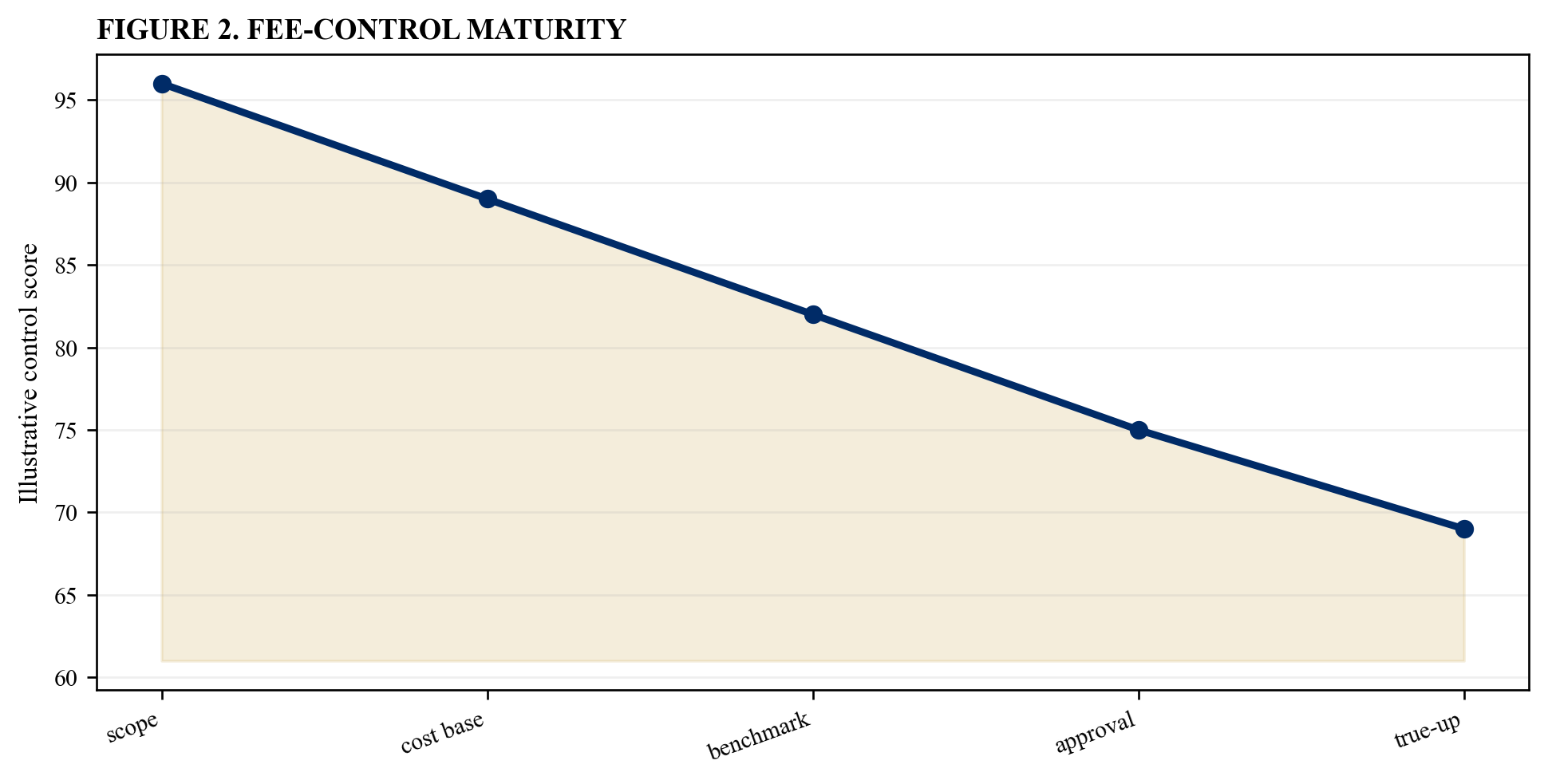
Illustrative analytical scenario; verified transaction evidence should replace index values.
15. Prevent fee and return double counting
The partners should bridge management fees, royalties, interest, procurement margins and dividends. The required output is an economic-rights reconciliation. Record the economic purpose, evidence, amount, currency, timing, priority, condition, legal capacity, accounting treatment, tax treatment, decision right and accountable owner [17][20].
Reconcile the provision to the approved business plan, legal documents, financing agreements, statutory constraints, accounting policies, transfer-pricing position and cash forecast. Model both the contractual entitlement and the cash actually available for payment.
The principal risk is that one contribution can earn overlapping compensation through several channels. Test the base case, delayed case and severe-but-plausible downside; quantify who funds, who receives cash, which rights change and what approvals or remedies follow.
Retain budgets, calls, bank evidence, invoices, service records, tax calculations, covenant certificates, reserves, board papers, shareholder approvals, model versions, payments and exceptions. Refresh the analysis when performance, funding, law, tax, financing or ownership changes.
16. Govern fee approvals and conflicts
The partners should use budgets, independent review, abstention, thresholds and audit rights. The required output is a related-party approval matrix. Record the economic purpose, evidence, amount, currency, timing, priority, condition, legal capacity, accounting treatment, tax treatment, decision right and accountable owner [2][23].
Reconcile the provision to the approved business plan, legal documents, financing agreements, statutory constraints, accounting policies, transfer-pricing position and cash forecast. Model both the contractual entitlement and the cash actually available for payment.
The principal risk is that interested directors can approve extraction without effective challenge. Test the base case, delayed case and severe-but-plausible downside; quantify who funds, who receives cash, which rights change and what approvals or remedies follow.
Retain budgets, calls, bank evidence, invoices, service records, tax calculations, covenant certificates, reserves, board papers, shareholder approvals, model versions, payments and exceptions. Refresh the analysis when performance, funding, law, tax, financing or ownership changes.
17. Forecast operating cash generation
The partners should translate volume, price, margin, working capital, tax and capex into cash. The required output is an integrated cash forecast. Record the economic purpose, evidence, amount, currency, timing, priority, condition, legal capacity, accounting treatment, tax treatment, decision right and accountable owner [24][25].
Reconcile the provision to the approved business plan, legal documents, financing agreements, statutory constraints, accounting policies, transfer-pricing position and cash forecast. Model both the contractual entitlement and the cash actually available for payment.
The principal risk is that accounting profit can be mistaken for distributable liquidity. Test the base case, delayed case and severe-but-plausible downside; quantify who funds, who receives cash, which rights change and what approvals or remedies follow.
Retain budgets, calls, bank evidence, invoices, service records, tax calculations, covenant certificates, reserves, board papers, shareholder approvals, model versions, payments and exceptions. Refresh the analysis when performance, funding, law, tax, financing or ownership changes.
18. Define working-capital floors
The partners should set inventory, receivable, payable, seasonal and stress liquidity thresholds. The required output is a liquidity reserve policy. Record the economic purpose, evidence, amount, currency, timing, priority, condition, legal capacity, accounting treatment, tax treatment, decision right and accountable owner [24][26].
Reconcile the provision to the approved business plan, legal documents, financing agreements, statutory constraints, accounting policies, transfer-pricing position and cash forecast. Model both the contractual entitlement and the cash actually available for payment.
The principal risk is that dividends can create a near-term cash shortage. Test the base case, delayed case and severe-but-plausible downside; quantify who funds, who receives cash, which rights change and what approvals or remedies follow.
Retain budgets, calls, bank evidence, invoices, service records, tax calculations, covenant certificates, reserves, board papers, shareholder approvals, model versions, payments and exceptions. Refresh the analysis when performance, funding, law, tax, financing or ownership changes.
19. Sequence tax and statutory payments
The partners should map corporate tax, withholding, VAT, payroll, customs and filing obligations. The required output is a tax cash calendar. Record the economic purpose, evidence, amount, currency, timing, priority, condition, legal capacity, accounting treatment, tax treatment, decision right and accountable owner [12][27].
Reconcile the provision to the approved business plan, legal documents, financing agreements, statutory constraints, accounting policies, transfer-pricing position and cash forecast. Model both the contractual entitlement and the cash actually available for payment.
The principal risk is that a distribution can precede unavoidable statutory cash outflows. Test the base case, delayed case and severe-but-plausible downside; quantify who funds, who receives cash, which rights change and what approvals or remedies follow.
Retain budgets, calls, bank evidence, invoices, service records, tax calculations, covenant certificates, reserves, board papers, shareholder approvals, model versions, payments and exceptions. Refresh the analysis when performance, funding, law, tax, financing or ownership changes.
20. Create reserve buckets
The partners should separate operating, maintenance, growth, claims, tax, debt and contingency reserves. The required output is a reserve ledger. Record the economic purpose, evidence, amount, currency, timing, priority, condition, legal capacity, accounting treatment, tax treatment, decision right and accountable owner [24][28].
Reconcile the provision to the approved business plan, legal documents, financing agreements, statutory constraints, accounting policies, transfer-pricing position and cash forecast. Model both the contractual entitlement and the cash actually available for payment.
The principal risk is that a broad reserve can become an ungoverned cash-trapping mechanism. Test the base case, delayed case and severe-but-plausible downside; quantify who funds, who receives cash, which rights change and what approvals or remedies follow.
Retain budgets, calls, bank evidence, invoices, service records, tax calculations, covenant certificates, reserves, board papers, shareholder approvals, model versions, payments and exceptions. Refresh the analysis when performance, funding, law, tax, financing or ownership changes.
21. Define maintenance and growth investment
The partners should distinguish asset integrity, committed projects and discretionary expansion. The required output is an investment-priority schedule. Record the economic purpose, evidence, amount, currency, timing, priority, condition, legal capacity, accounting treatment, tax treatment, decision right and accountable owner [25][29].
Reconcile the provision to the approved business plan, legal documents, financing agreements, statutory constraints, accounting policies, transfer-pricing position and cash forecast. Model both the contractual entitlement and the cash actually available for payment.
The principal risk is that growth spending can displace promised distributions without approved returns. Test the base case, delayed case and severe-but-plausible downside; quantify who funds, who receives cash, which rights change and what approvals or remedies follow.
Retain budgets, calls, bank evidence, invoices, service records, tax calculations, covenant certificates, reserves, board papers, shareholder approvals, model versions, payments and exceptions. Refresh the analysis when performance, funding, law, tax, financing or ownership changes.
22. Reconcile debt service and cash sweeps
The partners should apply interest, scheduled principal, mandatory prepayment and covenant cures. The required output is a lender-waterfall bridge. Record the economic purpose, evidence, amount, currency, timing, priority, condition, legal capacity, accounting treatment, tax treatment, decision right and accountable owner [15][16].
Reconcile the provision to the approved business plan, legal documents, financing agreements, statutory constraints, accounting policies, transfer-pricing position and cash forecast. Model both the contractual entitlement and the cash actually available for payment.
The principal risk is that shareholder cash expectations can ignore finance-document priority. Test the base case, delayed case and severe-but-plausible downside; quantify who funds, who receives cash, which rights change and what approvals or remedies follow.
Retain budgets, calls, bank evidence, invoices, service records, tax calculations, covenant certificates, reserves, board papers, shareholder approvals, model versions, payments and exceptions. Refresh the analysis when performance, funding, law, tax, financing or ownership changes.
Table 3. Cash waterfall
| Tier | Illustrative cash | Gate |
|---|---|---|
| operating and tax | 28 | statutory |
| maintenance reserve | 12 | asset integrity |
| debt service | 20 | finance documents |
| distributable cash | 40 | law and board approval |
Illustrative analytical structure; verified transaction evidence and specialist review govern.
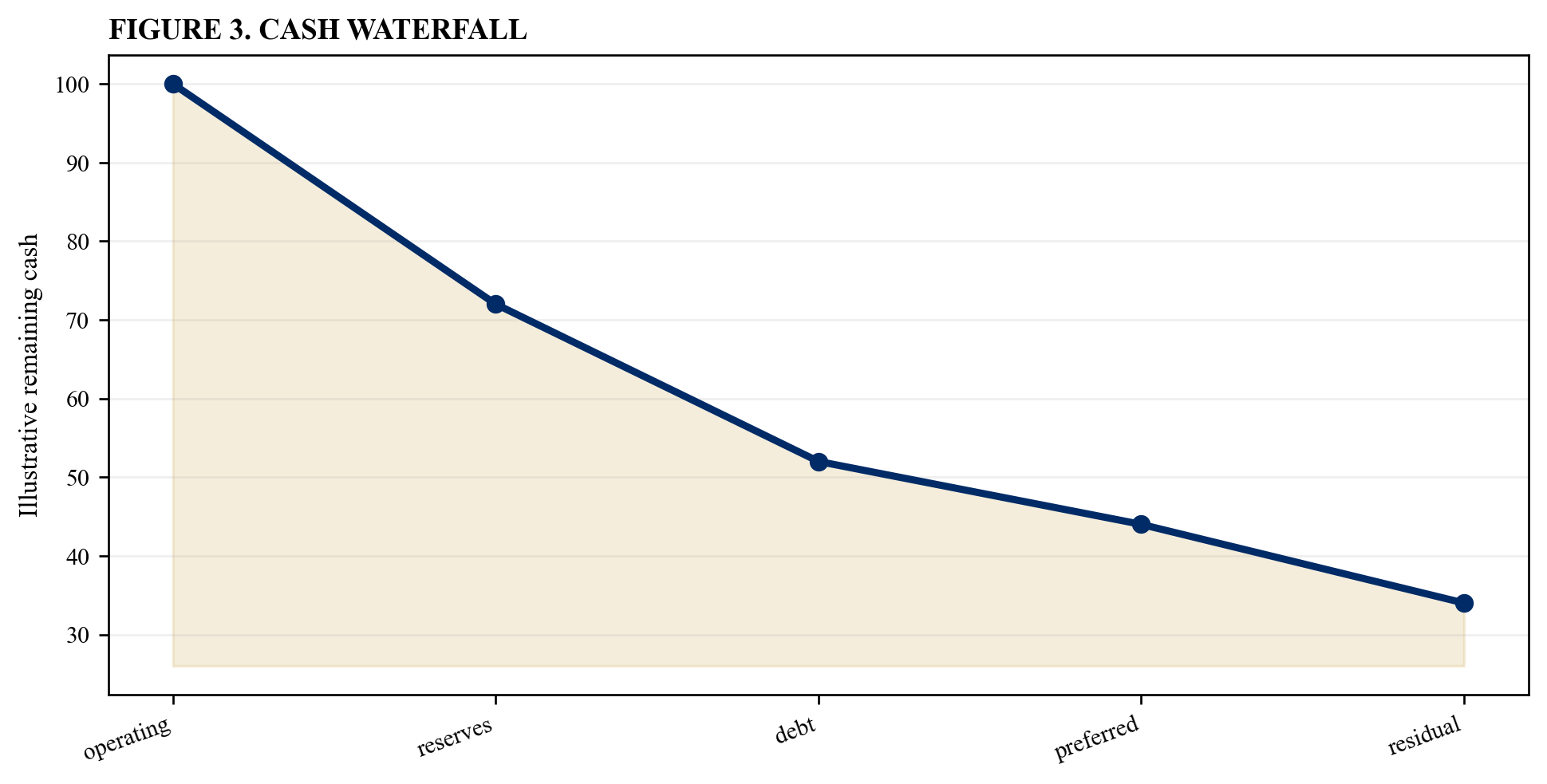
Illustrative analytical scenario; verified transaction evidence should replace index values.
23. Test lawful distribution capacity
The partners should apply distributable-reserve, solvency, capital-maintenance and director-duty tests. The required output is a distribution legal certificate. Record the economic purpose, evidence, amount, currency, timing, priority, condition, legal capacity, accounting treatment, tax treatment, decision right and accountable owner [30][31].
Reconcile the provision to the approved business plan, legal documents, financing agreements, statutory constraints, accounting policies, transfer-pricing position and cash forecast. Model both the contractual entitlement and the cash actually available for payment.
The principal risk is that available cash can be distributed when law or duties prohibit it. Test the base case, delayed case and severe-but-plausible downside; quantify who funds, who receives cash, which rights change and what approvals or remedies follow.
Retain budgets, calls, bank evidence, invoices, service records, tax calculations, covenant certificates, reserves, board papers, shareholder approvals, model versions, payments and exceptions. Refresh the analysis when performance, funding, law, tax, financing or ownership changes.
24. Define the distribution policy
The partners should specify frequency, thresholds, currencies, approvals, record dates and payment mechanics. The required output is a board-ready distribution rule. Record the economic purpose, evidence, amount, currency, timing, priority, condition, legal capacity, accounting treatment, tax treatment, decision right and accountable owner [3][30].
Reconcile the provision to the approved business plan, legal documents, financing agreements, statutory constraints, accounting policies, transfer-pricing position and cash forecast. Model both the contractual entitlement and the cash actually available for payment.
The principal risk is that dividends can become ad hoc bargaining events. Test the base case, delayed case and severe-but-plausible downside; quantify who funds, who receives cash, which rights change and what approvals or remedies follow.
Retain budgets, calls, bank evidence, invoices, service records, tax calculations, covenant certificates, reserves, board papers, shareholder approvals, model versions, payments and exceptions. Refresh the analysis when performance, funding, law, tax, financing or ownership changes.
25. Design preferred-return mechanics
The partners should define accrual, compounding, catch-up, hurdle, payment priority and expiry. The required output is a preferred-return schedule. Record the economic purpose, evidence, amount, currency, timing, priority, condition, legal capacity, accounting treatment, tax treatment, decision right and accountable owner [17][32].
Reconcile the provision to the approved business plan, legal documents, financing agreements, statutory constraints, accounting policies, transfer-pricing position and cash forecast. Model both the contractual entitlement and the cash actually available for payment.
The principal risk is that small drafting choices can materially change value transfer. Test the base case, delayed case and severe-but-plausible downside; quantify who funds, who receives cash, which rights change and what approvals or remedies follow.
Retain budgets, calls, bank evidence, invoices, service records, tax calculations, covenant certificates, reserves, board papers, shareholder approvals, model versions, payments and exceptions. Refresh the analysis when performance, funding, law, tax, financing or ownership changes.
26. Separate return of capital and profit
The partners should track contributed capital, repayments, income and residual proceeds. The required output is a capital-account ledger. Record the economic purpose, evidence, amount, currency, timing, priority, condition, legal capacity, accounting treatment, tax treatment, decision right and accountable owner [6][27].
Reconcile the provision to the approved business plan, legal documents, financing agreements, statutory constraints, accounting policies, transfer-pricing position and cash forecast. Model both the contractual entitlement and the cash actually available for payment.
The principal risk is that payments can be misclassified across tax, accounting and economics. Test the base case, delayed case and severe-but-plausible downside; quantify who funds, who receives cash, which rights change and what approvals or remedies follow.
Retain budgets, calls, bank evidence, invoices, service records, tax calculations, covenant certificates, reserves, board papers, shareholder approvals, model versions, payments and exceptions. Refresh the analysis when performance, funding, law, tax, financing or ownership changes.
27. Allocate residual cash transparently
The partners should state tiers, percentages, rounding, currency and worked examples. The required output is a mechanical waterfall model. Record the economic purpose, evidence, amount, currency, timing, priority, condition, legal capacity, accounting treatment, tax treatment, decision right and accountable owner [32][33].
Reconcile the provision to the approved business plan, legal documents, financing agreements, statutory constraints, accounting policies, transfer-pricing position and cash forecast. Model both the contractual entitlement and the cash actually available for payment.
The principal risk is that the same clause can produce competing spreadsheet interpretations. Test the base case, delayed case and severe-but-plausible downside; quantify who funds, who receives cash, which rights change and what approvals or remedies follow.
Retain budgets, calls, bank evidence, invoices, service records, tax calculations, covenant certificates, reserves, board papers, shareholder approvals, model versions, payments and exceptions. Refresh the analysis when performance, funding, law, tax, financing or ownership changes.
28. Govern trapped cash and upstreaming
The partners should map exchange control, withholding, minority protection, covenants and local approvals. The required output is an upstreamability analysis. Record the economic purpose, evidence, amount, currency, timing, priority, condition, legal capacity, accounting treatment, tax treatment, decision right and accountable owner [11][27].
Reconcile the provision to the approved business plan, legal documents, financing agreements, statutory constraints, accounting policies, transfer-pricing position and cash forecast. Model both the contractual entitlement and the cash actually available for payment.
The principal risk is that reported value can remain unavailable to investors. Test the base case, delayed case and severe-but-plausible downside; quantify who funds, who receives cash, which rights change and what approvals or remedies follow.
Retain budgets, calls, bank evidence, invoices, service records, tax calculations, covenant certificates, reserves, board papers, shareholder approvals, model versions, payments and exceptions. Refresh the analysis when performance, funding, law, tax, financing or ownership changes.
29. Build the base-case model
The partners should integrate operations, funding, fees, tax, debt, reserves and distributions monthly. The required output is a single-source economic model. Record the economic purpose, evidence, amount, currency, timing, priority, condition, legal capacity, accounting treatment, tax treatment, decision right and accountable owner [4][24].
Reconcile the provision to the approved business plan, legal documents, financing agreements, statutory constraints, accounting policies, transfer-pricing position and cash forecast. Model both the contractual entitlement and the cash actually available for payment.
The principal risk is that separate models can hide inconsistent assumptions. Test the base case, delayed case and severe-but-plausible downside; quantify who funds, who receives cash, which rights change and what approvals or remedies follow.
Retain budgets, calls, bank evidence, invoices, service records, tax calculations, covenant certificates, reserves, board papers, shareholder approvals, model versions, payments and exceptions. Refresh the analysis when performance, funding, law, tax, financing or ownership changes.
30. Stress-test downside scenarios
The partners should model delay, cost overrun, margin pressure, receivable stretch, rate shock and covenant breach. The required output is a downside distribution map. Record the economic purpose, evidence, amount, currency, timing, priority, condition, legal capacity, accounting treatment, tax treatment, decision right and accountable owner [15][28].
Reconcile the provision to the approved business plan, legal documents, financing agreements, statutory constraints, accounting policies, transfer-pricing position and cash forecast. Model both the contractual entitlement and the cash actually available for payment.
The principal risk is that capital needs can emerge before governance has an agreed response. Test the base case, delayed case and severe-but-plausible downside; quantify who funds, who receives cash, which rights change and what approvals or remedies follow.
Retain budgets, calls, bank evidence, invoices, service records, tax calculations, covenant certificates, reserves, board papers, shareholder approvals, model versions, payments and exceptions. Refresh the analysis when performance, funding, law, tax, financing or ownership changes.
31. Define downside-support triggers
The partners should link rescue funding to quantified liquidity, covenant, safety or continuity thresholds. The required output is a support trigger matrix. Record the economic purpose, evidence, amount, currency, timing, priority, condition, legal capacity, accounting treatment, tax treatment, decision right and accountable owner [8][28].
Reconcile the provision to the approved business plan, legal documents, financing agreements, statutory constraints, accounting policies, transfer-pricing position and cash forecast. Model both the contractual entitlement and the cash actually available for payment.
The principal risk is that one partner can call strategic spending an emergency. Test the base case, delayed case and severe-but-plausible downside; quantify who funds, who receives cash, which rights change and what approvals or remedies follow.
Retain budgets, calls, bank evidence, invoices, service records, tax calculations, covenant certificates, reserves, board papers, shareholder approvals, model versions, payments and exceptions. Refresh the analysis when performance, funding, law, tax, financing or ownership changes.
32. Cap and prioritise support obligations
The partners should state committed amount, duration, sequence, security, conditions and exhaustion. The required output is a support-cap schedule. Record the economic purpose, evidence, amount, currency, timing, priority, condition, legal capacity, accounting treatment, tax treatment, decision right and accountable owner [8][14].
Reconcile the provision to the approved business plan, legal documents, financing agreements, statutory constraints, accounting policies, transfer-pricing position and cash forecast. Model both the contractual entitlement and the cash actually available for payment.
The principal risk is that an open-ended obligation can arise through repeated operational decisions. Test the base case, delayed case and severe-but-plausible downside; quantify who funds, who receives cash, which rights change and what approvals or remedies follow.
Retain budgets, calls, bank evidence, invoices, service records, tax calculations, covenant certificates, reserves, board papers, shareholder approvals, model versions, payments and exceptions. Refresh the analysis when performance, funding, law, tax, financing or ownership changes.
33. Choose rescue-funding economics
The partners should compare pro-rata equity, preferred equity, shareholder debt, guarantees and third-party capital. The required output is a rescue-option memorandum. Record the economic purpose, evidence, amount, currency, timing, priority, condition, legal capacity, accounting treatment, tax treatment, decision right and accountable owner [6][17].
Reconcile the provision to the approved business plan, legal documents, financing agreements, statutory constraints, accounting policies, transfer-pricing position and cash forecast. Model both the contractual entitlement and the cash actually available for payment.
The principal risk is that the chosen instrument can shift value and control unintentionally. Test the base case, delayed case and severe-but-plausible downside; quantify who funds, who receives cash, which rights change and what approvals or remedies follow.
Retain budgets, calls, bank evidence, invoices, service records, tax calculations, covenant certificates, reserves, board papers, shareholder approvals, model versions, payments and exceptions. Refresh the analysis when performance, funding, law, tax, financing or ownership changes.
Table 4. Downside-support choices
| Instrument | Priority | Control effect |
|---|---|---|
| pro-rata equity | residual | stable |
| preferred equity | senior equity | conditional |
| shareholder loan | contractual | covenant-linked |
| guarantee | contingent | exposure rights |
Illustrative analytical structure; verified transaction evidence and specialist review govern.
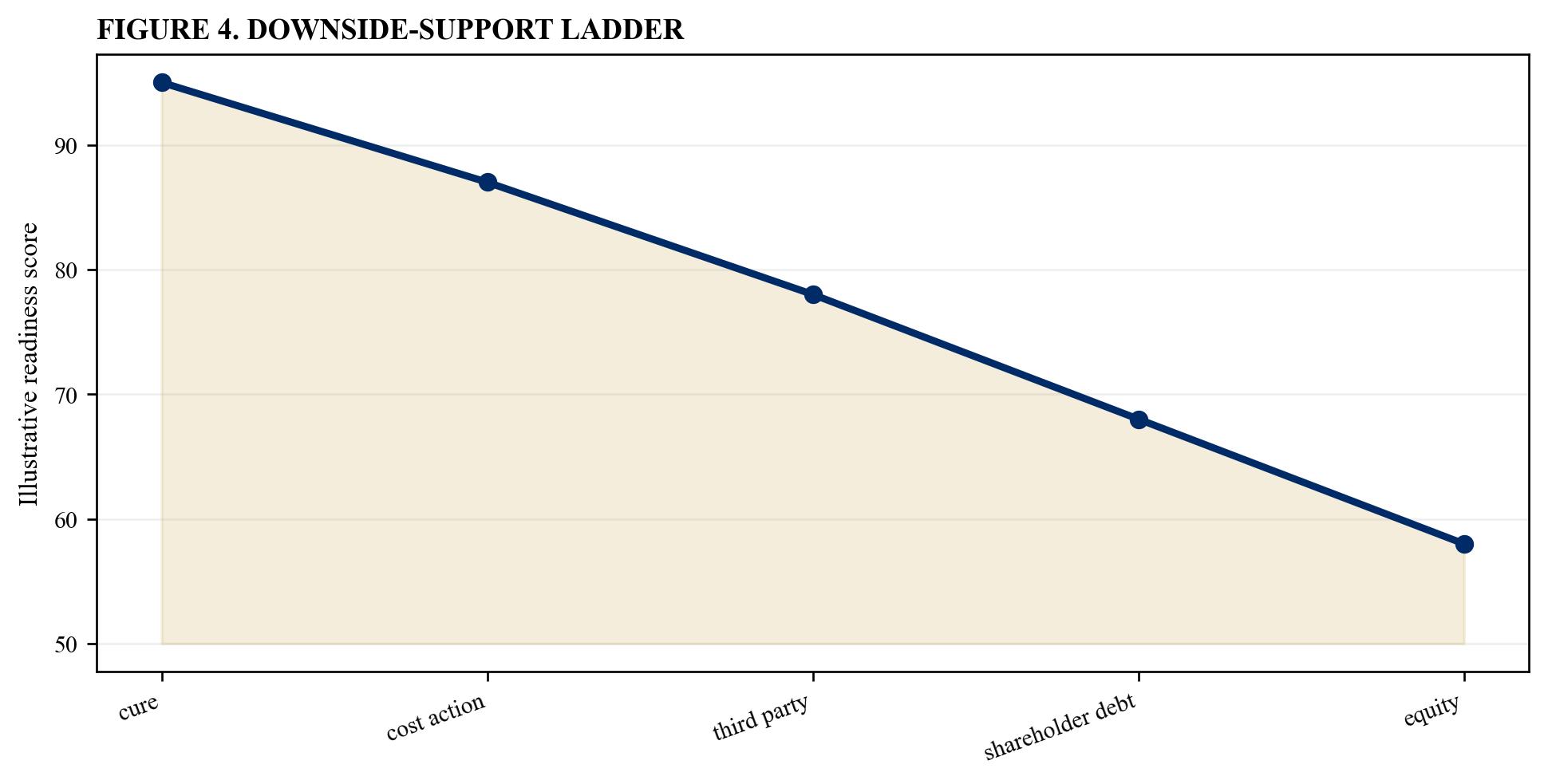
Illustrative analytical scenario; verified transaction evidence should replace index values.
34. Align dilution with verified value
The partners should define price, valuation date, discounts, caps, anti-dilution and challenge rights. The required output is a dilution calculation certificate. Record the economic purpose, evidence, amount, currency, timing, priority, condition, legal capacity, accounting treatment, tax treatment, decision right and accountable owner [18][32].
Reconcile the provision to the approved business plan, legal documents, financing agreements, statutory constraints, accounting policies, transfer-pricing position and cash forecast. Model both the contractual entitlement and the cash actually available for payment.
The principal risk is that funding shortfall can be used to capture disproportionate ownership. Test the base case, delayed case and severe-but-plausible downside; quantify who funds, who receives cash, which rights change and what approvals or remedies follow.
Retain budgets, calls, bank evidence, invoices, service records, tax calculations, covenant certificates, reserves, board papers, shareholder approvals, model versions, payments and exceptions. Refresh the analysis when performance, funding, law, tax, financing or ownership changes.
35. Price guarantees and contingent support
The partners should record exposure, fees, security, recourse, accounting and release conditions. The required output is a guarantee register. Record the economic purpose, evidence, amount, currency, timing, priority, condition, legal capacity, accounting treatment, tax treatment, decision right and accountable owner [7][28].
Reconcile the provision to the approved business plan, legal documents, financing agreements, statutory constraints, accounting policies, transfer-pricing position and cash forecast. Model both the contractual entitlement and the cash actually available for payment.
The principal risk is that off-balance-sheet risk can remain uncompensated or invisible. Test the base case, delayed case and severe-but-plausible downside; quantify who funds, who receives cash, which rights change and what approvals or remedies follow.
Retain budgets, calls, bank evidence, invoices, service records, tax calculations, covenant certificates, reserves, board papers, shareholder approvals, model versions, payments and exceptions. Refresh the analysis when performance, funding, law, tax, financing or ownership changes.
36. Protect competition-sensitive economics
The partners should limit parent access to prices, customers, wages, capacity and strategy. The required output is a clean-team economic protocol. Record the economic purpose, evidence, amount, currency, timing, priority, condition, legal capacity, accounting treatment, tax treatment, decision right and accountable owner [34][35].
Reconcile the provision to the approved business plan, legal documents, financing agreements, statutory constraints, accounting policies, transfer-pricing position and cash forecast. Model both the contractual entitlement and the cash actually available for payment.
The principal risk is that reporting can facilitate coordination between competitors. Test the base case, delayed case and severe-but-plausible downside; quantify who funds, who receives cash, which rights change and what approvals or remedies follow.
Retain budgets, calls, bank evidence, invoices, service records, tax calculations, covenant certificates, reserves, board papers, shareholder approvals, model versions, payments and exceptions. Refresh the analysis when performance, funding, law, tax, financing or ownership changes.
37. Control model and payment changes
The partners should version assumptions, approval, effective date, dependencies and audit trail. The required output is a waterfall change ledger. Record the economic purpose, evidence, amount, currency, timing, priority, condition, legal capacity, accounting treatment, tax treatment, decision right and accountable owner [36][37].
Reconcile the provision to the approved business plan, legal documents, financing agreements, statutory constraints, accounting policies, transfer-pricing position and cash forecast. Model both the contractual entitlement and the cash actually available for payment.
The principal risk is that an unnoticed spreadsheet change can reallocate cash. Test the base case, delayed case and severe-but-plausible downside; quantify who funds, who receives cash, which rights change and what approvals or remedies follow.
Retain budgets, calls, bank evidence, invoices, service records, tax calculations, covenant certificates, reserves, board papers, shareholder approvals, model versions, payments and exceptions. Refresh the analysis when performance, funding, law, tax, financing or ownership changes.
38. Resolve economic disputes
The partners should route accounting, valuation, tax, service, covenant and legal issues to suitable experts. The required output is an economic dispute matrix. Record the economic purpose, evidence, amount, currency, timing, priority, condition, legal capacity, accounting treatment, tax treatment, decision right and accountable owner [13][38].
Reconcile the provision to the approved business plan, legal documents, financing agreements, statutory constraints, accounting policies, transfer-pricing position and cash forecast. Model both the contractual entitlement and the cash actually available for payment.
The principal risk is that a payment can remain frozen while the forum is contested. Test the base case, delayed case and severe-but-plausible downside; quantify who funds, who receives cash, which rights change and what approvals or remedies follow.
Retain budgets, calls, bank evidence, invoices, service records, tax calculations, covenant certificates, reserves, board papers, shareholder approvals, model versions, payments and exceptions. Refresh the analysis when performance, funding, law, tax, financing or ownership changes.
39. Settle economics on exit
The partners should reconcile debt, fees, working capital, reserves, tax, claims, capital accounts and proceeds. The required output is an exit settlement statement. Record the economic purpose, evidence, amount, currency, timing, priority, condition, legal capacity, accounting treatment, tax treatment, decision right and accountable owner [17][33].
Reconcile the provision to the approved business plan, legal documents, financing agreements, statutory constraints, accounting policies, transfer-pricing position and cash forecast. Model both the contractual entitlement and the cash actually available for payment.
The principal risk is that historic imbalances can surface after price agreement. Test the base case, delayed case and severe-but-plausible downside; quantify who funds, who receives cash, which rights change and what approvals or remedies follow.
Retain budgets, calls, bank evidence, invoices, service records, tax calculations, covenant certificates, reserves, board papers, shareholder approvals, model versions, payments and exceptions. Refresh the analysis when performance, funding, law, tax, financing or ownership changes.
40. Issue the economic close certificate
The partners should confirm sources, calls, fees, cash, reserves, debt, distributions, support and exceptions. The required output is an auditable waterfall certificate. Record the economic purpose, evidence, amount, currency, timing, priority, condition, legal capacity, accounting treatment, tax treatment, decision right and accountable owner [1][39].
Reconcile the provision to the approved business plan, legal documents, financing agreements, statutory constraints, accounting policies, transfer-pricing position and cash forecast. Model both the contractual entitlement and the cash actually available for payment.
The principal risk is that the executed economics can diverge from the approved bargain. Test the base case, delayed case and severe-but-plausible downside; quantify who funds, who receives cash, which rights change and what approvals or remedies follow.
Retain budgets, calls, bank evidence, invoices, service records, tax calculations, covenant certificates, reserves, board papers, shareholder approvals, model versions, payments and exceptions. Refresh the analysis when performance, funding, law, tax, financing or ownership changes.
Table 5. Economic close certificate
| Conclusion | Evidence | Owner |
|---|---|---|
| funding | receipts and ledger | finance |
| fees | contracts and deliverables | audit committee |
| distribution | solvency and covenant tests | board |
| support | caps and approvals | shareholders |
Illustrative analytical structure; verified transaction evidence and specialist review govern.
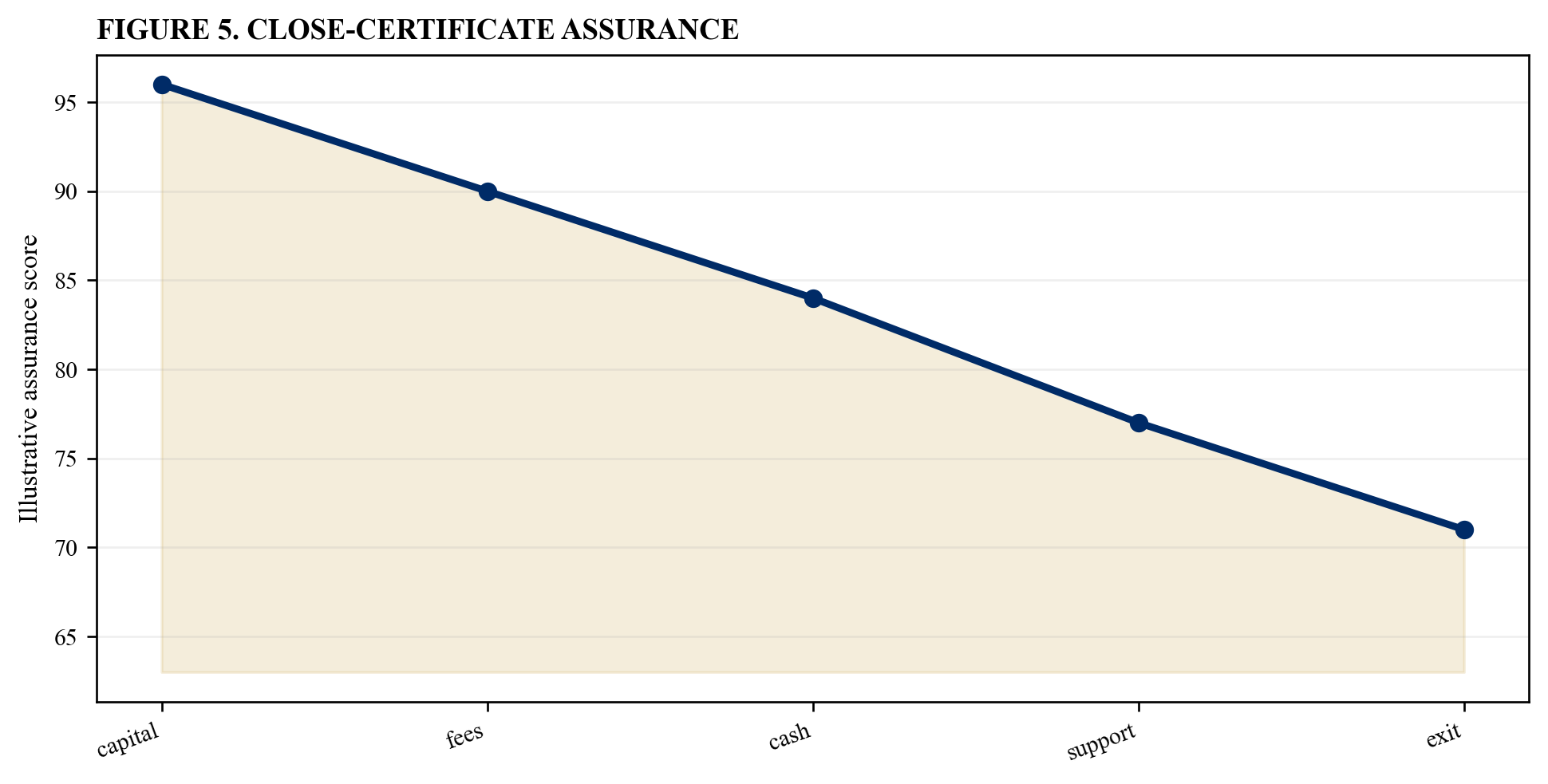
Illustrative analytical scenario; verified transaction evidence should replace index values.
References
- IFRS Foundation, IFRS 11 Joint Arrangements, https://www.ifrs.org/issued-standards/list-of-standards/ifrs-11-joint-arrangements/
- OECD, G20/OECD Principles of Corporate Governance 2023, https://www.oecd.org/en/publications/g20-oecd-principles-of-corporate-governance-2023_ed750b30-en.html
- IFRS Foundation, IAS 28 Investments in Associates and Joint Ventures, https://www.ifrs.org/issued-standards/list-of-standards/ias-28-investments-in-associates-and-joint-ventures/
- World Bank, Financial Modelling of PPP Projects, https://ppp.worldbank.org/public-private-partnership/financial-modelling
- World Bank, PPP Reference Guide, https://ppp.worldbank.org/public-private-partnership/library/ppp-reference-guide-3-0
- IFRS Foundation, IAS 32 Financial Instruments Presentation, https://www.ifrs.org/issued-standards/list-of-standards/ias-32-financial-instruments-presentation/
- IFRS Foundation, IFRS 9 Financial Instruments, https://www.ifrs.org/issued-standards/list-of-standards/ifrs-9-financial-instruments/
- UNCITRAL, Legislative Guide on Public-Private Partnerships, https://uncitral.un.org/en/texts/procurement/publicprivatepartnerships/legislativeguide
- OECD, Recommendation on the Governance of Infrastructure, https://legalinstruments.oecd.org/en/instruments/OECD-LEGAL-0460
- World Bank, PPP Risk Allocation Tool, https://ppp.worldbank.org/public-private-partnership/ppp-risk-allocation-tool
- International Monetary Fund, Annual Report on Exchange Arrangements and Exchange Restrictions, https://www.imf.org/en/Publications/Annual-Report-on-Exchange-Arrangements-and-Exchange-Restrictions
- OECD, Model Tax Convention, https://www.oecd.org/en/topics/sub-issues/tax-treaties/oecd-model-tax-convention-on-income-and-on-capital.html
- UNCITRAL, Model Law on International Commercial Arbitration, https://uncitral.un.org/en/texts/arbitration/modellaw/commercial_arbitration
- IFRS Foundation, IFRS 7 Financial Instruments Disclosures, https://www.ifrs.org/issued-standards/list-of-standards/ifrs-7-financial-instruments-disclosures/
- Basel Committee, Principles for the Management of Credit Risk, https://www.bis.org/bcbs/publ/d591.htm
- Loan Market Association, Sustainability Linked Loan Principles, https://www.lma.eu.com/sustainable-lending/resources
- International Valuation Standards Council, IVS Standards, https://ivsc.org/standards/
- World Intellectual Property Organization, Valuing Intellectual Property Assets, https://www.wipo.int/en/web/business/ip-valuation
- IFRS Foundation, IAS 24 Related Party Disclosures, https://www.ifrs.org/issued-standards/list-of-standards/ias-24-related-party-disclosures/
- OECD, Transfer Pricing Guidelines 2022, https://www.oecd.org/en/publications/oecd-transfer-pricing-guidelines-for-multinational-enterprises-and-tax-administrations-2022_0e655865-en.html
- OECD, Transfer Pricing Country Profiles, https://www.oecd.org/en/topics/sub-issues/transfer-pricing/transfer-pricing-country-profiles.html
- OECD, Base Erosion and Profit Shifting Actions, https://www.oecd.org/en/topics/policy-issues/base-erosion-and-profit-shifting-beps.html
- UK Government, Companies Act 2006, https://www.legislation.gov.uk/ukpga/2006/46/contents
- IFRS Foundation, IAS 7 Statement of Cash Flows, https://www.ifrs.org/issued-standards/list-of-standards/ias-7-statement-of-cash-flows/
- IFRS Foundation, IAS 36 Impairment of Assets, https://www.ifrs.org/issued-standards/list-of-standards/ias-36-impairment-of-assets/
- IFRS Foundation, IFRS 15 Revenue from Contracts with Customers, https://www.ifrs.org/issued-standards/list-of-standards/ifrs-15-revenue-from-contracts-with-customers/
- IFRS Foundation, IAS 12 Income Taxes, https://www.ifrs.org/issued-standards/list-of-standards/ias-12-income-taxes/
- IFRS Foundation, IAS 37 Provisions Contingent Liabilities and Contingent Assets, https://www.ifrs.org/issued-standards/list-of-standards/ias-37-provisions-contingent-liabilities-and-contingent-assets/
- IFRS Foundation, IAS 16 Property Plant and Equipment, https://www.ifrs.org/issued-standards/list-of-standards/ias-16-property-plant-and-equipment/
- UK Government, Companies Act 2006 Part 23 Distributions, https://www.legislation.gov.uk/ukpga/2006/46/part/23
- ADGM, Companies Regulations 2020, https://en.adgm.thomsonreuters.com/rulebook/companies-regulations-2020
- International Private Equity and Venture Capital Valuation Guidelines, https://www.privateequityvaluation.com/valuation-guidelines
- IFRS Foundation, IFRS 12 Disclosure of Interests in Other Entities, https://www.ifrs.org/issued-standards/list-of-standards/ifrs-12-disclosure-of-interests-in-other-entities/
- UK Competition and Markets Authority, Collaborating with Other Businesses, https://www.gov.uk/government/publications/collaborating-with-other-businesses
- US Department of Justice and Federal Trade Commission, 2026 Business Collaboration Guidance Inquiry, https://www.justice.gov/opa/pr/justice-department-and-federal-trade-commission-seek-public-comment-guidance-business
- NIST, Cybersecurity Framework 2.0, https://www.nist.gov/cyberframework
- NIST, Secure Software Development Framework, https://csrc.nist.gov/Projects/ssdf
- International Chamber of Commerce, Arbitration Rules, https://iccwbo.org/dispute-resolution/dispute-resolution-services/arbitration/rules-procedure/2021-arbitration-rules/
- OECD, Guidelines for Multinational Enterprises on Responsible Business Conduct, https://www.oecd.org/en/publications/oecd-guidelines-for-multinational-enterprises-on-responsible-business-conduct_81f92357-en.html
- IFRS Foundation, IFRS for SMEs Module 15 Joint Arrangements, https://www.ifrs.org/content/dam/ifrs/supporting-implementation/smes/2025-modules/module-15.pdf
