

1. Define the continuity objective
The buyer group should state the business outcomes, control standards and financing obligations that must continue through leadership disruption. The immediate output is a continuity-objective memorandum with named owners, dates, source evidence, approval status and open exceptions.
The analytical objective is to determine which minimum outcomes the buyer group must preserve. Reviewers should reconcile organisational records, constitutional documents, employment and service terms, financing documents, insurance policies, regulatory permissions, system access, customer and supplier evidence, financial models, board materials and independent advice. Scenarios should use consistent definitions.
The framework should allocate responsibility across directors, executives, deputies, shareholders, lenders, employees, customers, regulators, insurers and advisers. Triggers, authority, access, response time, communications, conflicts controls, funding, consent and restoration conditions should be explicit.
At each gate, decision makers should test operational continuity, lawful authority, knowledge transfer, stakeholder trust, cash resilience, financing compatibility and recovery speed together. Material gaps remain visible until evidence is complete, advice is current, mitigations are tested and the company can continue through credible single- and multi-person disruptions.
2. Map the buyer-group perimeter
The buyer group should identify directors, executives, investors, guarantors, advisers, representatives, regulated managers and shadow dependencies. The immediate output is a buyer-group responsibility map with named owners, dates, source evidence, approval status and open exceptions.
The analytical objective is to determine who holds authority, knowledge, capital exposure and external credibility. Reviewers should reconcile organisational records, constitutional documents, employment and service terms, financing documents, insurance policies, regulatory permissions, system access, customer and supplier evidence, financial models, board materials and independent advice. Scenarios should use consistent definitions.
The framework should allocate responsibility across directors, executives, deputies, shareholders, lenders, employees, customers, regulators, insurers and advisers. Triggers, authority, access, response time, communications, conflicts controls, funding, consent and restoration conditions should be explicit.
At each gate, decision makers should test operational continuity, lawful authority, knowledge transfer, stakeholder trust, cash resilience, financing compatibility and recovery speed together. Material gaps remain visible until evidence is complete, advice is current, mitigations are tested and the company can continue through credible single- and multi-person disruptions.
3. Map critical outcomes
The buyer group should list revenue, operations, cash, compliance, safety, technology, people, financing and value-plan outcomes. The immediate output is a critical-outcome register with named owners, dates, source evidence, approval status and open exceptions.
The analytical objective is to determine where leadership failure would transmit into enterprise harm. Reviewers should reconcile organisational records, constitutional documents, employment and service terms, financing documents, insurance policies, regulatory permissions, system access, customer and supplier evidence, financial models, board materials and independent advice. Scenarios should use consistent definitions.
The framework should allocate responsibility across directors, executives, deputies, shareholders, lenders, employees, customers, regulators, insurers and advisers. Triggers, authority, access, response time, communications, conflicts controls, funding, consent and restoration conditions should be explicit.
At each gate, decision makers should test operational continuity, lawful authority, knowledge transfer, stakeholder trust, cash resilience, financing compatibility and recovery speed together. Material gaps remain visible until evidence is complete, advice is current, mitigations are tested and the company can continue through credible single- and multi-person disruptions.
4. Identify concentrated dependencies
The buyer group should trace each critical outcome to named people, unique skills, relationships, systems, permissions and judgements. The immediate output is a dependency heat map with named owners, dates, source evidence, approval status and open exceptions.
The analytical objective is to determine which combinations create material single points of failure. Reviewers should reconcile organisational records, constitutional documents, employment and service terms, financing documents, insurance policies, regulatory permissions, system access, customer and supplier evidence, financial models, board materials and independent advice. Scenarios should use consistent definitions.
The framework should allocate responsibility across directors, executives, deputies, shareholders, lenders, employees, customers, regulators, insurers and advisers. Triggers, authority, access, response time, communications, conflicts controls, funding, consent and restoration conditions should be explicit.
At each gate, decision makers should test operational continuity, lawful authority, knowledge transfer, stakeholder trust, cash resilience, financing compatibility and recovery speed together. Material gaps remain visible until evidence is complete, advice is current, mitigations are tested and the company can continue through credible single- and multi-person disruptions.
5. Score impact and recovery time
The buyer group should measure cash loss, service interruption, legal exposure, replacement difficulty and time to stable control. The immediate output is a key-person risk score with named owners, dates, source evidence, approval status and open exceptions.
The analytical objective is to determine which exposures require immediate mitigation before completion. Reviewers should reconcile organisational records, constitutional documents, employment and service terms, financing documents, insurance policies, regulatory permissions, system access, customer and supplier evidence, financial models, board materials and independent advice. Scenarios should use consistent definitions.
The framework should allocate responsibility across directors, executives, deputies, shareholders, lenders, employees, customers, regulators, insurers and advisers. Triggers, authority, access, response time, communications, conflicts controls, funding, consent and restoration conditions should be explicit.
At each gate, decision makers should test operational continuity, lawful authority, knowledge transfer, stakeholder trust, cash resilience, financing compatibility and recovery speed together. Material gaps remain visible until evidence is complete, advice is current, mitigations are tested and the company can continue through credible single- and multi-person disruptions.
6. Test substitutability
The buyer group should assess internal deputies, external hires, advisers, service providers and interim executives against role requirements. The immediate output is a substitution evidence file with named owners, dates, source evidence, approval status and open exceptions.
The analytical objective is to determine whether credible capacity exists within the required recovery window. Reviewers should reconcile organisational records, constitutional documents, employment and service terms, financing documents, insurance policies, regulatory permissions, system access, customer and supplier evidence, financial models, board materials and independent advice. Scenarios should use consistent definitions.
The framework should allocate responsibility across directors, executives, deputies, shareholders, lenders, employees, customers, regulators, insurers and advisers. Triggers, authority, access, response time, communications, conflicts controls, funding, consent and restoration conditions should be explicit.
At each gate, decision makers should test operational continuity, lawful authority, knowledge transfer, stakeholder trust, cash resilience, financing compatibility and recovery speed together. Material gaps remain visible until evidence is complete, advice is current, mitigations are tested and the company can continue through credible single- and multi-person disruptions.
7. Map decision authority
The buyer group should document statutory, board, shareholder, contractual, banking, regulatory and operational authority. The immediate output is a authority matrix with named owners, dates, source evidence, approval status and open exceptions.
The analytical objective is to determine which decisions stop when a named person becomes unavailable. Reviewers should reconcile organisational records, constitutional documents, employment and service terms, financing documents, insurance policies, regulatory permissions, system access, customer and supplier evidence, financial models, board materials and independent advice. Scenarios should use consistent definitions.
The framework should allocate responsibility across directors, executives, deputies, shareholders, lenders, employees, customers, regulators, insurers and advisers. Triggers, authority, access, response time, communications, conflicts controls, funding, consent and restoration conditions should be explicit.
At each gate, decision makers should test operational continuity, lawful authority, knowledge transfer, stakeholder trust, cash resilience, financing compatibility and recovery speed together. Material gaps remain visible until evidence is complete, advice is current, mitigations are tested and the company can continue through credible single- and multi-person disruptions.
8. Design delegated authority
The buyer group should assign transaction, cash, people, customer, supplier, safety and technology thresholds to capable roles. The immediate output is a delegated-authority schedule with named owners, dates, source evidence, approval status and open exceptions.
The analytical objective is to determine whether ordinary operations can continue within controlled limits. Reviewers should reconcile organisational records, constitutional documents, employment and service terms, financing documents, insurance policies, regulatory permissions, system access, customer and supplier evidence, financial models, board materials and independent advice. Scenarios should use consistent definitions.
The framework should allocate responsibility across directors, executives, deputies, shareholders, lenders, employees, customers, regulators, insurers and advisers. Triggers, authority, access, response time, communications, conflicts controls, funding, consent and restoration conditions should be explicit.
At each gate, decision makers should test operational continuity, lawful authority, knowledge transfer, stakeholder trust, cash resilience, financing compatibility and recovery speed together. Material gaps remain visible until evidence is complete, advice is current, mitigations are tested and the company can continue through credible single- and multi-person disruptions.
Table 1. Key-person dependency architecture
| Dependency | Primary evidence | Continuity control |
|---|---|---|
| decision authority | mandates and minutes | delegated deputy |
| knowledge | files and decision logs | tested handover |
| relationships | account records | secondary owner |
| credentials | licence and access register | approved replacement |
Illustrative map; company-specific evidence and documents govern.
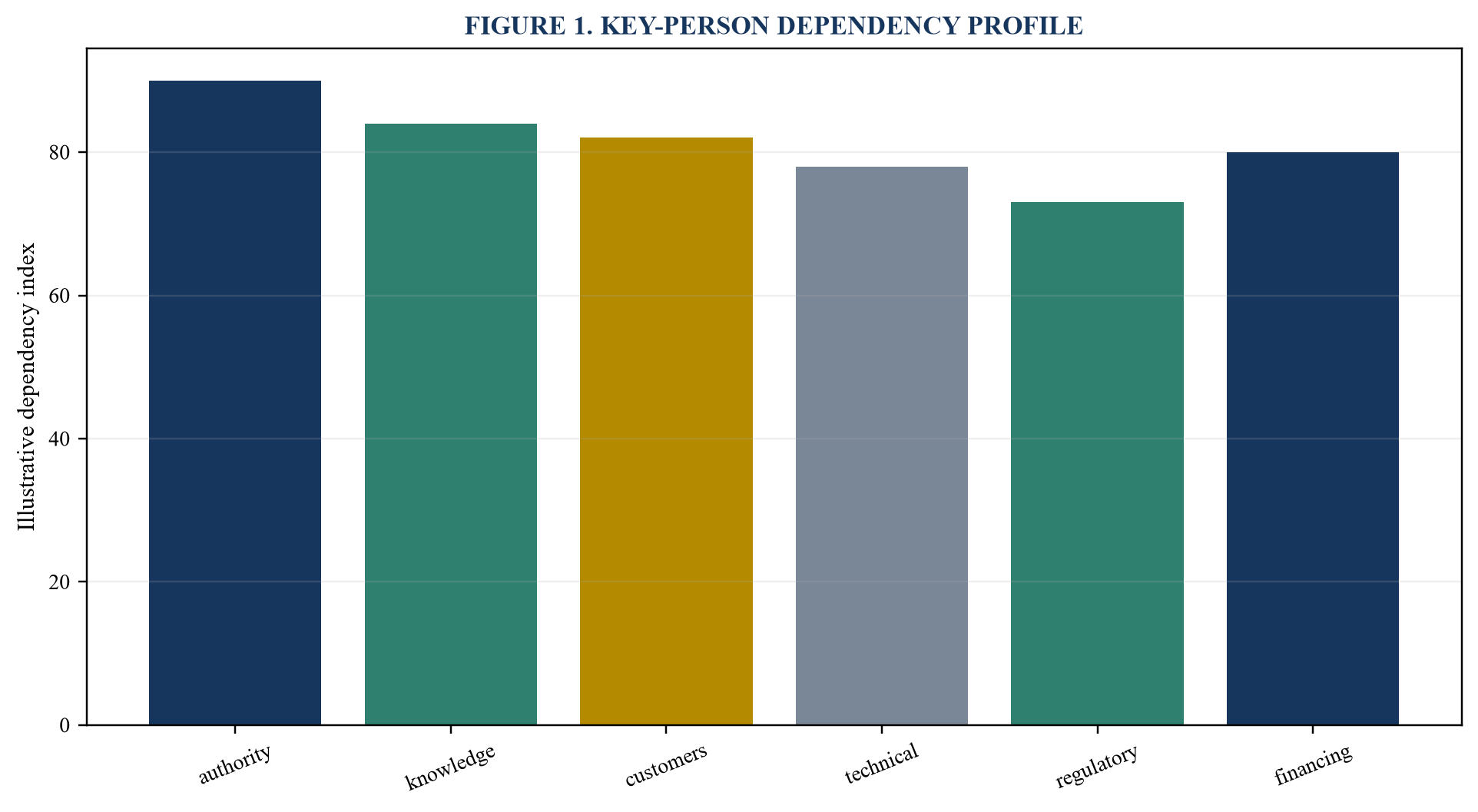
Values are illustrative readiness indices and require company-specific evidence.
9. Protect board functionality
The buyer group should test quorum, chairing, casting votes, conflicts, committees, alternates and appointment mechanics. The immediate output is a board continuity protocol with named owners, dates, source evidence, approval status and open exceptions.
The analytical objective is to determine whether the governing body remains valid and effective. Reviewers should reconcile organisational records, constitutional documents, employment and service terms, financing documents, insurance policies, regulatory permissions, system access, customer and supplier evidence, financial models, board materials and independent advice. Scenarios should use consistent definitions.
The framework should allocate responsibility across directors, executives, deputies, shareholders, lenders, employees, customers, regulators, insurers and advisers. Triggers, authority, access, response time, communications, conflicts controls, funding, consent and restoration conditions should be explicit.
At each gate, decision makers should test operational continuity, lawful authority, knowledge transfer, stakeholder trust, cash resilience, financing compatibility and recovery speed together. Material gaps remain visible until evidence is complete, advice is current, mitigations are tested and the company can continue through credible single- and multi-person disruptions.
10. Design emergency governance
The buyer group should establish triggers, convening rights, interim powers, escalation clocks and expiry conditions. The immediate output is a emergency governance charter with named owners, dates, source evidence, approval status and open exceptions.
The analytical objective is to determine how authority changes promptly during a defined disruption. Reviewers should reconcile organisational records, constitutional documents, employment and service terms, financing documents, insurance policies, regulatory permissions, system access, customer and supplier evidence, financial models, board materials and independent advice. Scenarios should use consistent definitions.
The framework should allocate responsibility across directors, executives, deputies, shareholders, lenders, employees, customers, regulators, insurers and advisers. Triggers, authority, access, response time, communications, conflicts controls, funding, consent and restoration conditions should be explicit.
At each gate, decision makers should test operational continuity, lawful authority, knowledge transfer, stakeholder trust, cash resilience, financing compatibility and recovery speed together. Material gaps remain visible until evidence is complete, advice is current, mitigations are tested and the company can continue through credible single- and multi-person disruptions.
11. Identify knowledge at risk
The buyer group should inventory tacit process, commercial history, technical judgement, regulatory rationale and relationship context. The immediate output is a critical-knowledge register with named owners, dates, source evidence, approval status and open exceptions.
The analytical objective is to determine which information cannot be recreated quickly from current records. Reviewers should reconcile organisational records, constitutional documents, employment and service terms, financing documents, insurance policies, regulatory permissions, system access, customer and supplier evidence, financial models, board materials and independent advice. Scenarios should use consistent definitions.
The framework should allocate responsibility across directors, executives, deputies, shareholders, lenders, employees, customers, regulators, insurers and advisers. Triggers, authority, access, response time, communications, conflicts controls, funding, consent and restoration conditions should be explicit.
At each gate, decision makers should test operational continuity, lawful authority, knowledge transfer, stakeholder trust, cash resilience, financing compatibility and recovery speed together. Material gaps remain visible until evidence is complete, advice is current, mitigations are tested and the company can continue through credible single- and multi-person disruptions.
12. Build knowledge transfer
The buyer group should create playbooks, decision logs, deal files, technical records, contact maps and recorded handovers. The immediate output is a knowledge-transfer plan with named owners, dates, source evidence, approval status and open exceptions.
The analytical objective is to determine whether a capable deputy can act with sufficient context. Reviewers should reconcile organisational records, constitutional documents, employment and service terms, financing documents, insurance policies, regulatory permissions, system access, customer and supplier evidence, financial models, board materials and independent advice. Scenarios should use consistent definitions.
The framework should allocate responsibility across directors, executives, deputies, shareholders, lenders, employees, customers, regulators, insurers and advisers. Triggers, authority, access, response time, communications, conflicts controls, funding, consent and restoration conditions should be explicit.
At each gate, decision makers should test operational continuity, lawful authority, knowledge transfer, stakeholder trust, cash resilience, financing compatibility and recovery speed together. Material gaps remain visible until evidence is complete, advice is current, mitigations are tested and the company can continue through credible single- and multi-person disruptions.
13. Protect access and credentials
The buyer group should govern bank mandates, signing tools, passwords, code repositories, licences, keys and physical access. The immediate output is a privileged-access continuity plan with named owners, dates, source evidence, approval status and open exceptions.
The analytical objective is to determine whether operations remain secure and accessible when a leader is unavailable. Reviewers should reconcile organisational records, constitutional documents, employment and service terms, financing documents, insurance policies, regulatory permissions, system access, customer and supplier evidence, financial models, board materials and independent advice. Scenarios should use consistent definitions.
The framework should allocate responsibility across directors, executives, deputies, shareholders, lenders, employees, customers, regulators, insurers and advisers. Triggers, authority, access, response time, communications, conflicts controls, funding, consent and restoration conditions should be explicit.
At each gate, decision makers should test operational continuity, lawful authority, knowledge transfer, stakeholder trust, cash resilience, financing compatibility and recovery speed together. Material gaps remain visible until evidence is complete, advice is current, mitigations are tested and the company can continue through credible single- and multi-person disruptions.
14. Create customer coverage
The buyer group should assign relationship owners, deputies, account histories, commitments, pricing authority and escalation routes. The immediate output is a customer continuity map with named owners, dates, source evidence, approval status and open exceptions.
The analytical objective is to determine whether revenue and trust survive a relationship-owner loss. Reviewers should reconcile organisational records, constitutional documents, employment and service terms, financing documents, insurance policies, regulatory permissions, system access, customer and supplier evidence, financial models, board materials and independent advice. Scenarios should use consistent definitions.
The framework should allocate responsibility across directors, executives, deputies, shareholders, lenders, employees, customers, regulators, insurers and advisers. Triggers, authority, access, response time, communications, conflicts controls, funding, consent and restoration conditions should be explicit.
At each gate, decision makers should test operational continuity, lawful authority, knowledge transfer, stakeholder trust, cash resilience, financing compatibility and recovery speed together. Material gaps remain visible until evidence is complete, advice is current, mitigations are tested and the company can continue through credible single- and multi-person disruptions.
15. Create supplier and partner coverage
The buyer group should map critical suppliers, subcontractors, advisers, joint ventures and public authorities to deputies. The immediate output is a external-dependency map with named owners, dates, source evidence, approval status and open exceptions.
The analytical objective is to determine whether inputs and counterparties continue without informal personal access. Reviewers should reconcile organisational records, constitutional documents, employment and service terms, financing documents, insurance policies, regulatory permissions, system access, customer and supplier evidence, financial models, board materials and independent advice. Scenarios should use consistent definitions.
The framework should allocate responsibility across directors, executives, deputies, shareholders, lenders, employees, customers, regulators, insurers and advisers. Triggers, authority, access, response time, communications, conflicts controls, funding, consent and restoration conditions should be explicit.
At each gate, decision makers should test operational continuity, lawful authority, knowledge transfer, stakeholder trust, cash resilience, financing compatibility and recovery speed together. Material gaps remain visible until evidence is complete, advice is current, mitigations are tested and the company can continue through credible single- and multi-person disruptions.
16. Preserve technical authority
The buyer group should identify design approvals, intellectual property, architecture, safety cases and specialist certifications. The immediate output is a technical succession file with named owners, dates, source evidence, approval status and open exceptions.
The analytical objective is to determine whether products, projects and regulated assets can continue lawfully. Reviewers should reconcile organisational records, constitutional documents, employment and service terms, financing documents, insurance policies, regulatory permissions, system access, customer and supplier evidence, financial models, board materials and independent advice. Scenarios should use consistent definitions.
The framework should allocate responsibility across directors, executives, deputies, shareholders, lenders, employees, customers, regulators, insurers and advisers. Triggers, authority, access, response time, communications, conflicts controls, funding, consent and restoration conditions should be explicit.
At each gate, decision makers should test operational continuity, lawful authority, knowledge transfer, stakeholder trust, cash resilience, financing compatibility and recovery speed together. Material gaps remain visible until evidence is complete, advice is current, mitigations are tested and the company can continue through credible single- and multi-person disruptions.
Table 2. Event and response matrix
| Event | Immediate response | Permanent decision |
|---|---|---|
| temporary incapacity | interim authority | reviewed recovery date |
| resignation | secure access handover | replacement and equity treatment |
| permanent loss | emergency governance | succession and transfer |
| internal conflict | conflicts protocol | mediation or buy-sell route |
Illustrative triggers; legal, regulatory and contractual terms govern.
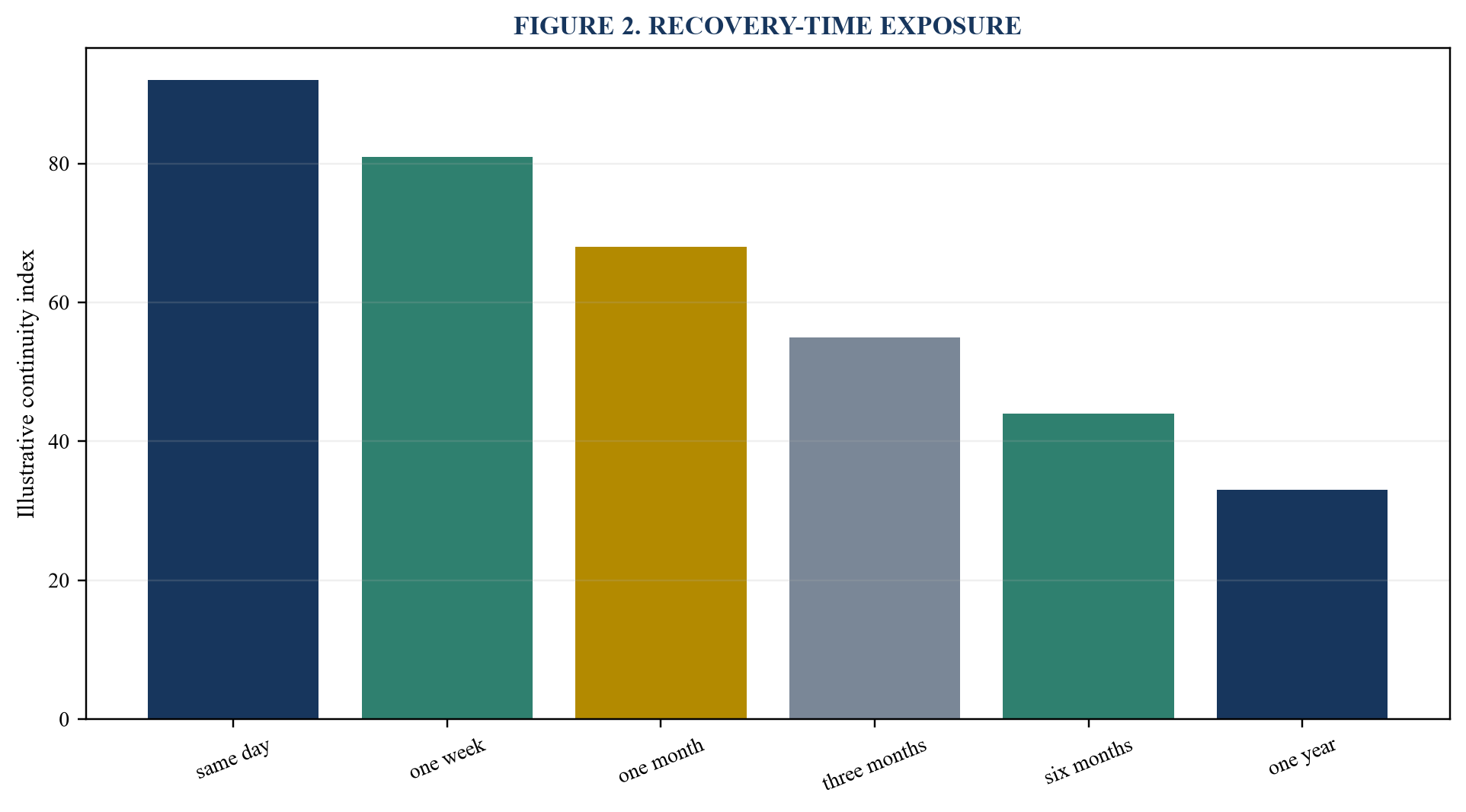
Values are illustrative readiness indices and require company-specific evidence.
17. Preserve regulatory accountability
The buyer group should map approvals, senior-management functions, fitness, notifications and temporary-cover rules. The immediate output is a regulatory handover schedule with named owners, dates, source evidence, approval status and open exceptions.
The analytical objective is to determine whether regulated responsibilities transfer within permitted periods. Reviewers should reconcile organisational records, constitutional documents, employment and service terms, financing documents, insurance policies, regulatory permissions, system access, customer and supplier evidence, financial models, board materials and independent advice. Scenarios should use consistent definitions.
The framework should allocate responsibility across directors, executives, deputies, shareholders, lenders, employees, customers, regulators, insurers and advisers. Triggers, authority, access, response time, communications, conflicts controls, funding, consent and restoration conditions should be explicit.
At each gate, decision makers should test operational continuity, lawful authority, knowledge transfer, stakeholder trust, cash resilience, financing compatibility and recovery speed together. Material gaps remain visible until evidence is complete, advice is current, mitigations are tested and the company can continue through credible single- and multi-person disruptions.
18. Preserve financial control
The buyer group should assign forecasting, payments, treasury, tax, reporting, covenant and audit responsibilities to deputies. The immediate output is a finance continuity calendar with named owners, dates, source evidence, approval status and open exceptions.
The analytical objective is to determine whether cash and reporting remain controlled through disruption. Reviewers should reconcile organisational records, constitutional documents, employment and service terms, financing documents, insurance policies, regulatory permissions, system access, customer and supplier evidence, financial models, board materials and independent advice. Scenarios should use consistent definitions.
The framework should allocate responsibility across directors, executives, deputies, shareholders, lenders, employees, customers, regulators, insurers and advisers. Triggers, authority, access, response time, communications, conflicts controls, funding, consent and restoration conditions should be explicit.
At each gate, decision makers should test operational continuity, lawful authority, knowledge transfer, stakeholder trust, cash resilience, financing compatibility and recovery speed together. Material gaps remain visible until evidence is complete, advice is current, mitigations are tested and the company can continue through credible single- and multi-person disruptions.
19. Model replacement cost
The buyer group should estimate search, interim leadership, retention, adviser, delay, remediation and opportunity costs. The immediate output is a replacement-cost model with named owners, dates, source evidence, approval status and open exceptions.
The analytical objective is to determine what liquidity a disruption requires before benefits or insurance. Reviewers should reconcile organisational records, constitutional documents, employment and service terms, financing documents, insurance policies, regulatory permissions, system access, customer and supplier evidence, financial models, board materials and independent advice. Scenarios should use consistent definitions.
The framework should allocate responsibility across directors, executives, deputies, shareholders, lenders, employees, customers, regulators, insurers and advisers. Triggers, authority, access, response time, communications, conflicts controls, funding, consent and restoration conditions should be explicit.
At each gate, decision makers should test operational continuity, lawful authority, knowledge transfer, stakeholder trust, cash resilience, financing compatibility and recovery speed together. Material gaps remain visible until evidence is complete, advice is current, mitigations are tested and the company can continue through credible single- and multi-person disruptions.
20. Evaluate key-person insurance
The buyer group should match insured events, lives, terms, exclusions, benefit amounts, ownership and tax treatment to losses. The immediate output is a insurance suitability record with named owners, dates, source evidence, approval status and open exceptions.
The analytical objective is to determine which cash losses are transferred and which risks remain operational. Reviewers should reconcile organisational records, constitutional documents, employment and service terms, financing documents, insurance policies, regulatory permissions, system access, customer and supplier evidence, financial models, board materials and independent advice. Scenarios should use consistent definitions.
The framework should allocate responsibility across directors, executives, deputies, shareholders, lenders, employees, customers, regulators, insurers and advisers. Triggers, authority, access, response time, communications, conflicts controls, funding, consent and restoration conditions should be explicit.
At each gate, decision makers should test operational continuity, lawful authority, knowledge transfer, stakeholder trust, cash resilience, financing compatibility and recovery speed together. Material gaps remain visible until evidence is complete, advice is current, mitigations are tested and the company can continue through credible single- and multi-person disruptions.
21. Set minimum continuity liquidity
The buyer group should reserve operating cash for replacement cost, disruption, covenant headroom and delayed value initiatives. The immediate output is a continuity liquidity policy with named owners, dates, source evidence, approval status and open exceptions.
The analytical objective is to determine whether the company can fund recovery without starving operations. Reviewers should reconcile organisational records, constitutional documents, employment and service terms, financing documents, insurance policies, regulatory permissions, system access, customer and supplier evidence, financial models, board materials and independent advice. Scenarios should use consistent definitions.
The framework should allocate responsibility across directors, executives, deputies, shareholders, lenders, employees, customers, regulators, insurers and advisers. Triggers, authority, access, response time, communications, conflicts controls, funding, consent and restoration conditions should be explicit.
At each gate, decision makers should test operational continuity, lawful authority, knowledge transfer, stakeholder trust, cash resilience, financing compatibility and recovery speed together. Material gaps remain visible until evidence is complete, advice is current, mitigations are tested and the company can continue through credible single- and multi-person disruptions.
22. Integrate acquisition finance
The buyer group should reconcile key-person events, reporting, defaults, consent, change, guarantees, cures and sponsor support with facilities. The immediate output is a finance continuity schedule with named owners, dates, source evidence, approval status and open exceptions.
The analytical objective is to determine how leadership events affect availability, pricing and control. Reviewers should reconcile organisational records, constitutional documents, employment and service terms, financing documents, insurance policies, regulatory permissions, system access, customer and supplier evidence, financial models, board materials and independent advice. Scenarios should use consistent definitions.
The framework should allocate responsibility across directors, executives, deputies, shareholders, lenders, employees, customers, regulators, insurers and advisers. Triggers, authority, access, response time, communications, conflicts controls, funding, consent and restoration conditions should be explicit.
At each gate, decision makers should test operational continuity, lawful authority, knowledge transfer, stakeholder trust, cash resilience, financing compatibility and recovery speed together. Material gaps remain visible until evidence is complete, advice is current, mitigations are tested and the company can continue through credible single- and multi-person disruptions.
23. Map personal guarantees
The buyer group should record guarantors, caps, releases, substitution, indemnities, security and estate implications. The immediate output is a guarantee succession map with named owners, dates, source evidence, approval status and open exceptions.
The analytical objective is to determine what happens to financing when a guaranteeing buyer leaves or dies. Reviewers should reconcile organisational records, constitutional documents, employment and service terms, financing documents, insurance policies, regulatory permissions, system access, customer and supplier evidence, financial models, board materials and independent advice. Scenarios should use consistent definitions.
The framework should allocate responsibility across directors, executives, deputies, shareholders, lenders, employees, customers, regulators, insurers and advisers. Triggers, authority, access, response time, communications, conflicts controls, funding, consent and restoration conditions should be explicit.
At each gate, decision makers should test operational continuity, lawful authority, knowledge transfer, stakeholder trust, cash resilience, financing compatibility and recovery speed together. Material gaps remain visible until evidence is complete, advice is current, mitigations are tested and the company can continue through credible single- and multi-person disruptions.
24. Design equity succession
The buyer group should set vesting, leavers, compulsory transfers, valuation, funding, voting and option treatment. The immediate output is a equity continuity model with named owners, dates, source evidence, approval status and open exceptions.
The analytical objective is to determine how ownership moves without creating paralysis or unfair windfalls. Reviewers should reconcile organisational records, constitutional documents, employment and service terms, financing documents, insurance policies, regulatory permissions, system access, customer and supplier evidence, financial models, board materials and independent advice. Scenarios should use consistent definitions.
The framework should allocate responsibility across directors, executives, deputies, shareholders, lenders, employees, customers, regulators, insurers and advisers. Triggers, authority, access, response time, communications, conflicts controls, funding, consent and restoration conditions should be explicit.
At each gate, decision makers should test operational continuity, lawful authority, knowledge transfer, stakeholder trust, cash resilience, financing compatibility and recovery speed together. Material gaps remain visible until evidence is complete, advice is current, mitigations are tested and the company can continue through credible single- and multi-person disruptions.
Table 3. Continuity cash waterfall
| Cash requirement | Evidence | Protection |
|---|---|---|
| operations and payroll | weekly cash model | minimum liquidity |
| interim leadership | replacement-cost model | contingency reserve |
| debt service | facility model | covenant headroom |
| equity transfer | valuation and terms | separately funded route |
Illustrative priorities; solvency and financing documents govern.
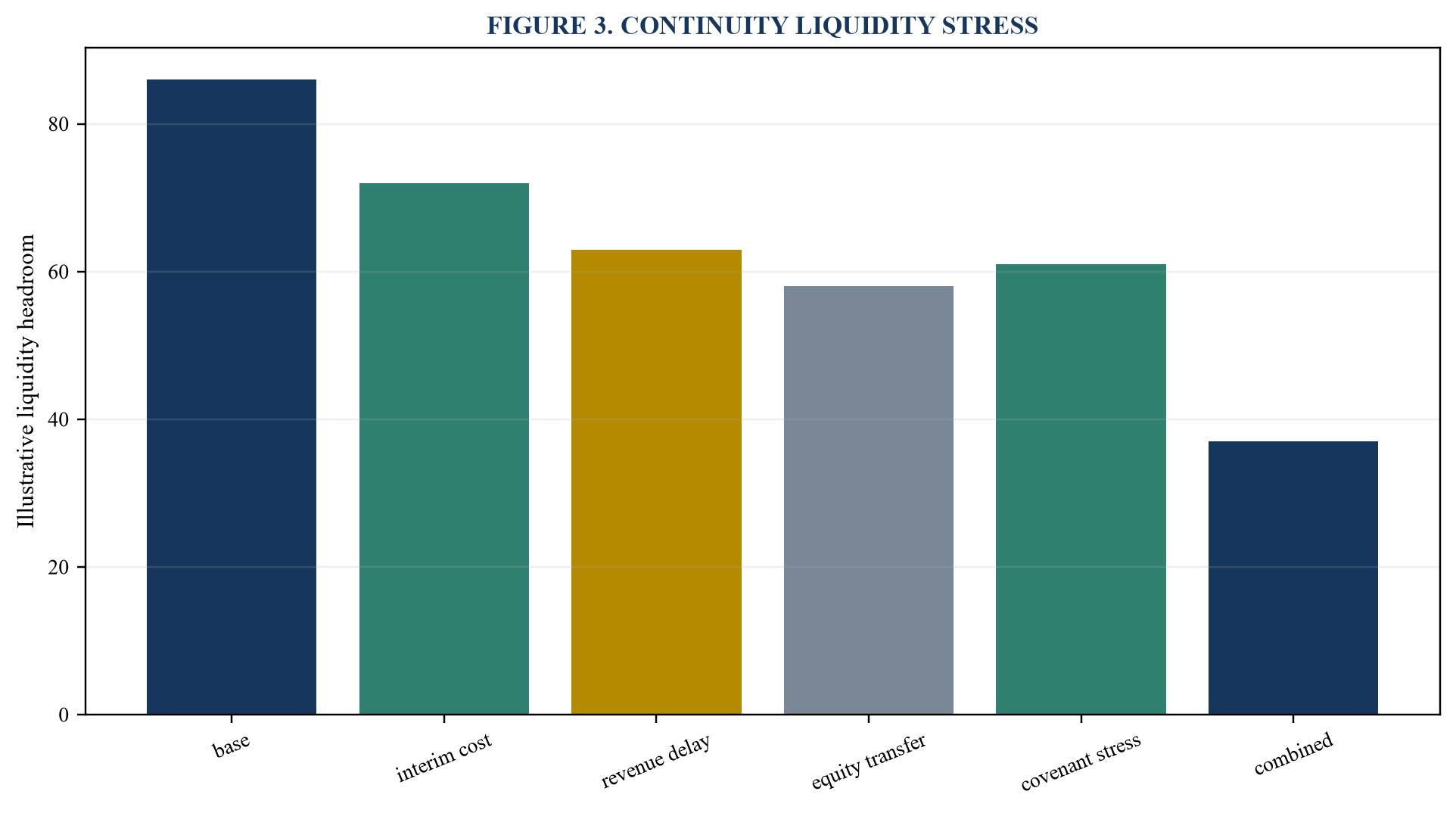
Values are illustrative readiness indices and require company-specific evidence.
25. Fund equity transfers
The buyer group should model insurance, company buybacks, shareholder purchases, vendor arrangements and instalments. The immediate output is a transfer funding plan with named owners, dates, source evidence, approval status and open exceptions.
The analytical objective is to determine whether compulsory or negotiated transfers are affordable. Reviewers should reconcile organisational records, constitutional documents, employment and service terms, financing documents, insurance policies, regulatory permissions, system access, customer and supplier evidence, financial models, board materials and independent advice. Scenarios should use consistent definitions.
The framework should allocate responsibility across directors, executives, deputies, shareholders, lenders, employees, customers, regulators, insurers and advisers. Triggers, authority, access, response time, communications, conflicts controls, funding, consent and restoration conditions should be explicit.
At each gate, decision makers should test operational continuity, lawful authority, knowledge transfer, stakeholder trust, cash resilience, financing compatibility and recovery speed together. Material gaps remain visible until evidence is complete, advice is current, mitigations are tested and the company can continue through credible single- and multi-person disruptions.
26. Protect management incentives
The buyer group should align retention, role expansion, interim burden, succession development and long-term value creation. The immediate output is a continuity incentive plan with named owners, dates, source evidence, approval status and open exceptions.
The analytical objective is to determine whether deputies are motivated before and after a key-person event. Reviewers should reconcile organisational records, constitutional documents, employment and service terms, financing documents, insurance policies, regulatory permissions, system access, customer and supplier evidence, financial models, board materials and independent advice. Scenarios should use consistent definitions.
The framework should allocate responsibility across directors, executives, deputies, shareholders, lenders, employees, customers, regulators, insurers and advisers. Triggers, authority, access, response time, communications, conflicts controls, funding, consent and restoration conditions should be explicit.
At each gate, decision makers should test operational continuity, lawful authority, knowledge transfer, stakeholder trust, cash resilience, financing compatibility and recovery speed together. Material gaps remain visible until evidence is complete, advice is current, mitigations are tested and the company can continue through credible single- and multi-person disruptions.
27. Manage buyer-group conflict
The buyer group should define mediation, reserved matters, deadlock, buy-sell, removal, information and misconduct routes. The immediate output is a buyer-group conflict protocol with named owners, dates, source evidence, approval status and open exceptions.
The analytical objective is to determine whether internal disagreement can be resolved before operations fail. Reviewers should reconcile organisational records, constitutional documents, employment and service terms, financing documents, insurance policies, regulatory permissions, system access, customer and supplier evidence, financial models, board materials and independent advice. Scenarios should use consistent definitions.
The framework should allocate responsibility across directors, executives, deputies, shareholders, lenders, employees, customers, regulators, insurers and advisers. Triggers, authority, access, response time, communications, conflicts controls, funding, consent and restoration conditions should be explicit.
At each gate, decision makers should test operational continuity, lawful authority, knowledge transfer, stakeholder trust, cash resilience, financing compatibility and recovery speed together. Material gaps remain visible until evidence is complete, advice is current, mitigations are tested and the company can continue through credible single- and multi-person disruptions.
28. Stress temporary incapacity
The buyer group should model uncertain duration, medical privacy, interim authority, communications and return-to-work. The immediate output is a incapacity scenario with named owners, dates, source evidence, approval status and open exceptions.
The analytical objective is to determine how control changes without prematurely forcing a permanent transfer. Reviewers should reconcile organisational records, constitutional documents, employment and service terms, financing documents, insurance policies, regulatory permissions, system access, customer and supplier evidence, financial models, board materials and independent advice. Scenarios should use consistent definitions.
The framework should allocate responsibility across directors, executives, deputies, shareholders, lenders, employees, customers, regulators, insurers and advisers. Triggers, authority, access, response time, communications, conflicts controls, funding, consent and restoration conditions should be explicit.
At each gate, decision makers should test operational continuity, lawful authority, knowledge transfer, stakeholder trust, cash resilience, financing compatibility and recovery speed together. Material gaps remain visible until evidence is complete, advice is current, mitigations are tested and the company can continue through credible single- and multi-person disruptions.
29. Stress sudden permanent loss
The buyer group should test death, permanent incapacity or immediate departure across authority, operations and finance. The immediate output is a sudden-loss scenario with named owners, dates, source evidence, approval status and open exceptions.
The analytical objective is to determine whether emergency control and funding activate without delay. Reviewers should reconcile organisational records, constitutional documents, employment and service terms, financing documents, insurance policies, regulatory permissions, system access, customer and supplier evidence, financial models, board materials and independent advice. Scenarios should use consistent definitions.
The framework should allocate responsibility across directors, executives, deputies, shareholders, lenders, employees, customers, regulators, insurers and advisers. Triggers, authority, access, response time, communications, conflicts controls, funding, consent and restoration conditions should be explicit.
At each gate, decision makers should test operational continuity, lawful authority, knowledge transfer, stakeholder trust, cash resilience, financing compatibility and recovery speed together. Material gaps remain visible until evidence is complete, advice is current, mitigations are tested and the company can continue through credible single- and multi-person disruptions.
30. Stress voluntary resignation
The buyer group should test notice, garden leave, restrictive covenants, handover, equity and customer communication. The immediate output is a resignation scenario with named owners, dates, source evidence, approval status and open exceptions.
The analytical objective is to determine whether the business preserves knowledge and relationships through an adversarial exit. Reviewers should reconcile organisational records, constitutional documents, employment and service terms, financing documents, insurance policies, regulatory permissions, system access, customer and supplier evidence, financial models, board materials and independent advice. Scenarios should use consistent definitions.
The framework should allocate responsibility across directors, executives, deputies, shareholders, lenders, employees, customers, regulators, insurers and advisers. Triggers, authority, access, response time, communications, conflicts controls, funding, consent and restoration conditions should be explicit.
At each gate, decision makers should test operational continuity, lawful authority, knowledge transfer, stakeholder trust, cash resilience, financing compatibility and recovery speed together. Material gaps remain visible until evidence is complete, advice is current, mitigations are tested and the company can continue through credible single- and multi-person disruptions.
31. Stress dismissal or investigation
The buyer group should test suspension, evidence, legal process, delegated authority, confidentiality and stakeholder trust. The immediate output is a misconduct scenario with named owners, dates, source evidence, approval status and open exceptions.
The analytical objective is to determine whether control survives while due process remains protected. Reviewers should reconcile organisational records, constitutional documents, employment and service terms, financing documents, insurance policies, regulatory permissions, system access, customer and supplier evidence, financial models, board materials and independent advice. Scenarios should use consistent definitions.
The framework should allocate responsibility across directors, executives, deputies, shareholders, lenders, employees, customers, regulators, insurers and advisers. Triggers, authority, access, response time, communications, conflicts controls, funding, consent and restoration conditions should be explicit.
At each gate, decision makers should test operational continuity, lawful authority, knowledge transfer, stakeholder trust, cash resilience, financing compatibility and recovery speed together. Material gaps remain visible until evidence is complete, advice is current, mitigations are tested and the company can continue through credible single- and multi-person disruptions.
32. Stress loss of regulatory approval
The buyer group should model suspension, temporary cover, notification, customer protection and replacement approval. The immediate output is a regulatory-loss scenario with named owners, dates, source evidence, approval status and open exceptions.
The analytical objective is to determine whether regulated activity can continue or be safely restricted. Reviewers should reconcile organisational records, constitutional documents, employment and service terms, financing documents, insurance policies, regulatory permissions, system access, customer and supplier evidence, financial models, board materials and independent advice. Scenarios should use consistent definitions.
The framework should allocate responsibility across directors, executives, deputies, shareholders, lenders, employees, customers, regulators, insurers and advisers. Triggers, authority, access, response time, communications, conflicts controls, funding, consent and restoration conditions should be explicit.
At each gate, decision makers should test operational continuity, lawful authority, knowledge transfer, stakeholder trust, cash resilience, financing compatibility and recovery speed together. Material gaps remain visible until evidence is complete, advice is current, mitigations are tested and the company can continue through credible single- and multi-person disruptions.
Table 4. Succession authority matrix
| Decision | Interim owner | Final authority |
|---|---|---|
| operating continuity | designated deputy | board |
| bank and treasury mandate | finance deputy | board and bank |
| regulated responsibility | approved cover | regulator and board |
| ownership transfer | unaffected directors | shareholders or court |
Illustrative governance; executed constitutional documents govern.
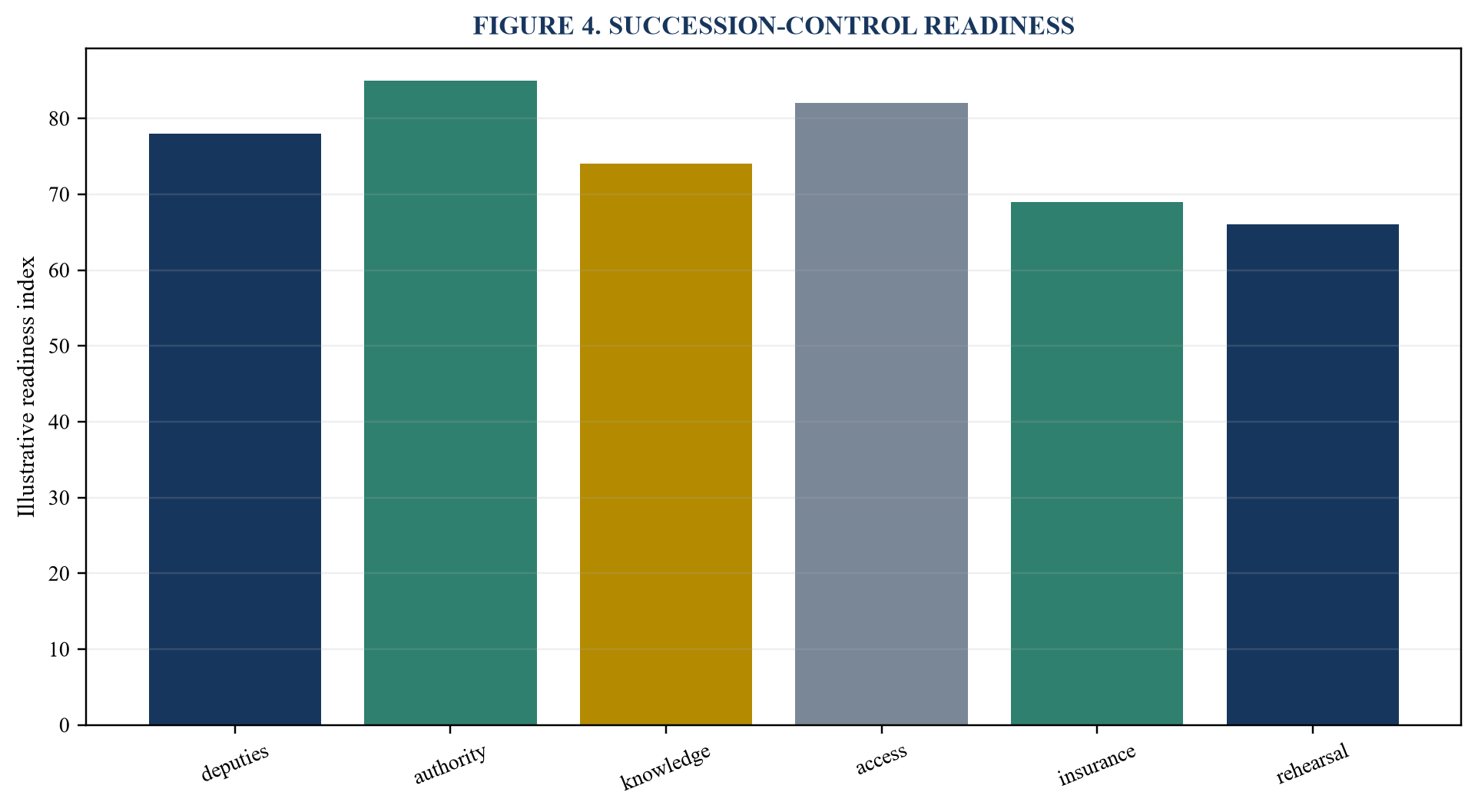
Values are illustrative readiness indices and require company-specific evidence.
33. Stress team fracture
The buyer group should model competing factions, resignations, information withholding, voting deadlock and customer disruption. The immediate output is a buyer-group fracture scenario with named owners, dates, source evidence, approval status and open exceptions.
The analytical objective is to determine whether the governance structure contains correlated departure risk. Reviewers should reconcile organisational records, constitutional documents, employment and service terms, financing documents, insurance policies, regulatory permissions, system access, customer and supplier evidence, financial models, board materials and independent advice. Scenarios should use consistent definitions.
The framework should allocate responsibility across directors, executives, deputies, shareholders, lenders, employees, customers, regulators, insurers and advisers. Triggers, authority, access, response time, communications, conflicts controls, funding, consent and restoration conditions should be explicit.
At each gate, decision makers should test operational continuity, lawful authority, knowledge transfer, stakeholder trust, cash resilience, financing compatibility and recovery speed together. Material gaps remain visible until evidence is complete, advice is current, mitigations are tested and the company can continue through credible single- and multi-person disruptions.
34. Stress simultaneous loss
The buyer group should remove two complementary leaders and test deputies, workload, authority, liquidity and lender confidence. The immediate output is a multi-person downside case with named owners, dates, source evidence, approval status and open exceptions.
The analytical objective is to determine whether apparent individual cover fails under correlated disruption. Reviewers should reconcile organisational records, constitutional documents, employment and service terms, financing documents, insurance policies, regulatory permissions, system access, customer and supplier evidence, financial models, board materials and independent advice. Scenarios should use consistent definitions.
The framework should allocate responsibility across directors, executives, deputies, shareholders, lenders, employees, customers, regulators, insurers and advisers. Triggers, authority, access, response time, communications, conflicts controls, funding, consent and restoration conditions should be explicit.
At each gate, decision makers should test operational continuity, lawful authority, knowledge transfer, stakeholder trust, cash resilience, financing compatibility and recovery speed together. Material gaps remain visible until evidence is complete, advice is current, mitigations are tested and the company can continue through credible single- and multi-person disruptions.
35. Plan communications
The buyer group should prepare employee, customer, supplier, lender, regulator, investor and media messages with owners and timing. The immediate output is a stakeholder communication matrix with named owners, dates, source evidence, approval status and open exceptions.
The analytical objective is to determine whether trust is preserved without inaccurate or premature disclosure. Reviewers should reconcile organisational records, constitutional documents, employment and service terms, financing documents, insurance policies, regulatory permissions, system access, customer and supplier evidence, financial models, board materials and independent advice. Scenarios should use consistent definitions.
The framework should allocate responsibility across directors, executives, deputies, shareholders, lenders, employees, customers, regulators, insurers and advisers. Triggers, authority, access, response time, communications, conflicts controls, funding, consent and restoration conditions should be explicit.
At each gate, decision makers should test operational continuity, lawful authority, knowledge transfer, stakeholder trust, cash resilience, financing compatibility and recovery speed together. Material gaps remain visible until evidence is complete, advice is current, mitigations are tested and the company can continue through credible single- and multi-person disruptions.
36. Rehearse the continuity plan
The buyer group should run tabletop and live simulations across authority, access, cash, customers and reporting. The immediate output is a continuity exercise record with named owners, dates, source evidence, approval status and open exceptions.
The analytical objective is to determine whether documented controls work under time pressure. Reviewers should reconcile organisational records, constitutional documents, employment and service terms, financing documents, insurance policies, regulatory permissions, system access, customer and supplier evidence, financial models, board materials and independent advice. Scenarios should use consistent definitions.
The framework should allocate responsibility across directors, executives, deputies, shareholders, lenders, employees, customers, regulators, insurers and advisers. Triggers, authority, access, response time, communications, conflicts controls, funding, consent and restoration conditions should be explicit.
At each gate, decision makers should test operational continuity, lawful authority, knowledge transfer, stakeholder trust, cash resilience, financing compatibility and recovery speed together. Material gaps remain visible until evidence is complete, advice is current, mitigations are tested and the company can continue through credible single- and multi-person disruptions.
37. Prepare closing evidence
The buyer group should verify appointments, deputies, documents, access, insurance, consents, liquidity, covenants and rehearsals. The immediate output is a key-person closing certificate with named owners, dates, source evidence, approval status and open exceptions.
The analytical objective is to determine whether continuity protections exist exactly as underwritten. Reviewers should reconcile organisational records, constitutional documents, employment and service terms, financing documents, insurance policies, regulatory permissions, system access, customer and supplier evidence, financial models, board materials and independent advice. Scenarios should use consistent definitions.
The framework should allocate responsibility across directors, executives, deputies, shareholders, lenders, employees, customers, regulators, insurers and advisers. Triggers, authority, access, response time, communications, conflicts controls, funding, consent and restoration conditions should be explicit.
At each gate, decision makers should test operational continuity, lawful authority, knowledge transfer, stakeholder trust, cash resilience, financing compatibility and recovery speed together. Material gaps remain visible until evidence is complete, advice is current, mitigations are tested and the company can continue through credible single- and multi-person disruptions.
38. Monitor the first year
The buyer group should track vacancies, workload, deputy readiness, knowledge completion, insurance, covenants and near misses. The immediate output is a first-year continuity dashboard with named owners, dates, source evidence, approval status and open exceptions.
The analytical objective is to determine whether risk is falling as the buyer group institutionalises. Reviewers should reconcile organisational records, constitutional documents, employment and service terms, financing documents, insurance policies, regulatory permissions, system access, customer and supplier evidence, financial models, board materials and independent advice. Scenarios should use consistent definitions.
The framework should allocate responsibility across directors, executives, deputies, shareholders, lenders, employees, customers, regulators, insurers and advisers. Triggers, authority, access, response time, communications, conflicts controls, funding, consent and restoration conditions should be explicit.
At each gate, decision makers should test operational continuity, lawful authority, knowledge transfer, stakeholder trust, cash resilience, financing compatibility and recovery speed together. Material gaps remain visible until evidence is complete, advice is current, mitigations are tested and the company can continue through credible single- and multi-person disruptions.
39. Review succession annually
The buyer group should refresh outcome maps, role requirements, talent, emergency authority, equity and financing after material change. The immediate output is a annual succession review with named owners, dates, source evidence, approval status and open exceptions.
The analytical objective is to determine whether the plan remains current as people and strategy evolve. Reviewers should reconcile organisational records, constitutional documents, employment and service terms, financing documents, insurance policies, regulatory permissions, system access, customer and supplier evidence, financial models, board materials and independent advice. Scenarios should use consistent definitions.
The framework should allocate responsibility across directors, executives, deputies, shareholders, lenders, employees, customers, regulators, insurers and advisers. Triggers, authority, access, response time, communications, conflicts controls, funding, consent and restoration conditions should be explicit.
At each gate, decision makers should test operational continuity, lawful authority, knowledge transfer, stakeholder trust, cash resilience, financing compatibility and recovery speed together. Material gaps remain visible until evidence is complete, advice is current, mitigations are tested and the company can continue through credible single- and multi-person disruptions.
40. Issue the resilience conclusion
The buyer group should integrate dependency, deputies, authority, knowledge, finance, equity, insurance and scenario evidence. The immediate output is a board-and-lender resilience certificate with named owners, dates, source evidence, approval status and open exceptions.
The analytical objective is to determine whether the successors themselves have a financeable succession system. Reviewers should reconcile organisational records, constitutional documents, employment and service terms, financing documents, insurance policies, regulatory permissions, system access, customer and supplier evidence, financial models, board materials and independent advice. Scenarios should use consistent definitions.
The framework should allocate responsibility across directors, executives, deputies, shareholders, lenders, employees, customers, regulators, insurers and advisers. Triggers, authority, access, response time, communications, conflicts controls, funding, consent and restoration conditions should be explicit.
At each gate, decision makers should test operational continuity, lawful authority, knowledge transfer, stakeholder trust, cash resilience, financing compatibility and recovery speed together. Material gaps remain visible until evidence is complete, advice is current, mitigations are tested and the company can continue through credible single- and multi-person disruptions.
Table 5. Buyer-group resilience certificate
| Certification | Evidence owner | Status |
|---|---|---|
| outcomes, dependencies and deputies | operating lead | tested |
| authority, access and knowledge | governance lead | tested |
| liquidity, insurance and financing | finance lead | tested |
| equity, documents and scenarios | board sponsor | tested |
Illustrative gate; authorised advisers determine sufficiency.
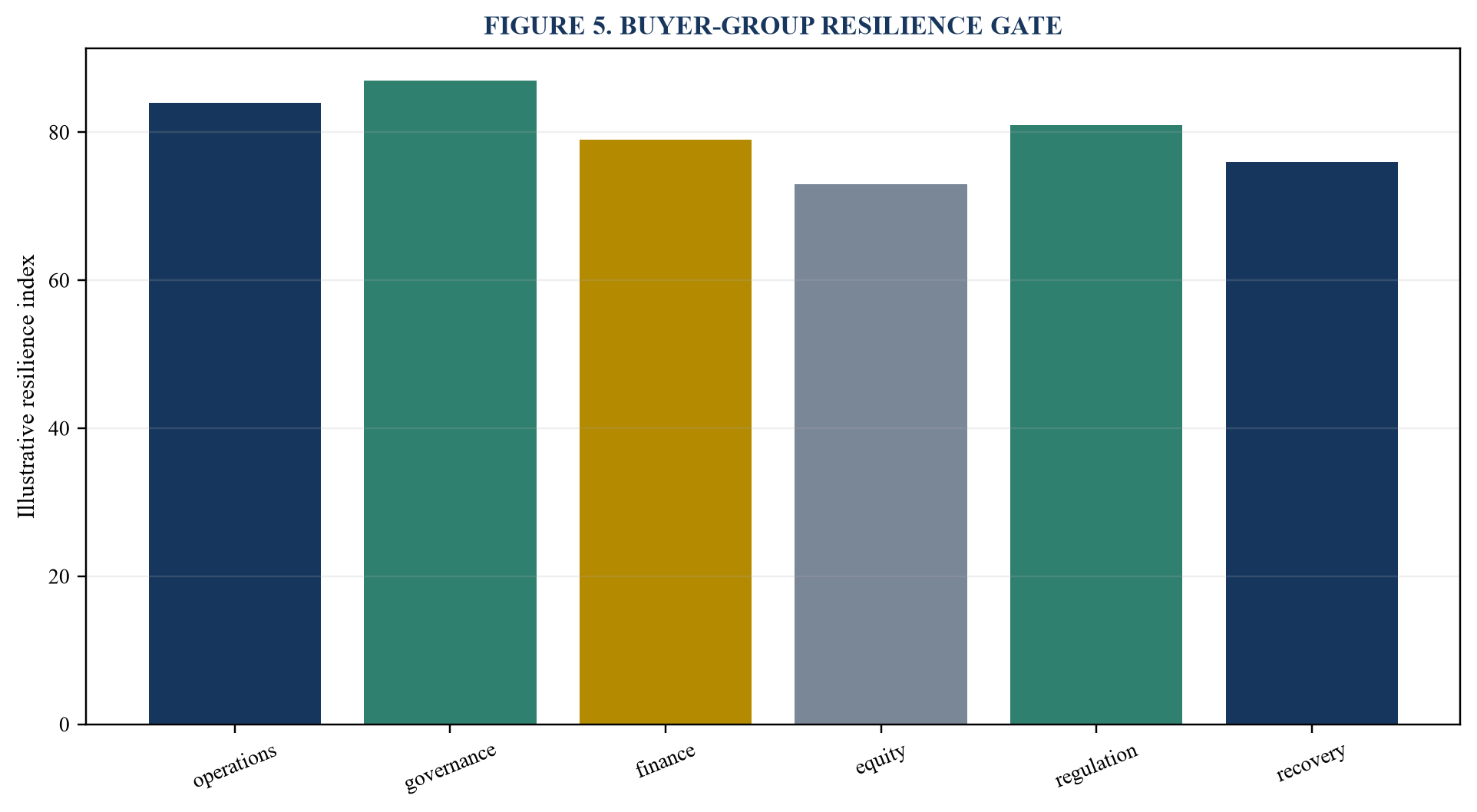
Values are illustrative readiness indices and require company-specific evidence.
References
- Financial Reporting Council, UK Corporate Governance Code 2024, https://www.frc.org.uk/library/standards-codes-policy/corporate-governance/uk-corporate-governance-code/
- Financial Reporting Council, Corporate Governance Code Guidance, https://www.frc.org.uk/library/standards-codes-policy/corporate-governance/corporate-governance-code-guidance/
- Financial Reporting Council, Provision 29 Mythbuster, https://www.frc.org.uk/library/standards-codes-policy/corporate-governance/provision-29-mythbuster/
- Financial Conduct Authority, MIFIDPRU 7.2 Internal Governance, https://handbook.fca.org.uk/handbook/MIFIDPRU/7/2.html
- Financial Conduct Authority, Senior management functions, https://www.fca.org.uk/firms/approved-persons/senior-management-functions
- Financial Conduct Authority, SUP 10C Senior Managers Regime, https://handbook.fca.org.uk/handbook/SUP/10C/
- Financial Conduct Authority, PS21/9 Investment Firms Prudential Regime, https://www.fca.org.uk/publication/policy/ps21-9.pdf
- Financial Conduct Authority, TR15/4 Governance over mortgage lending strategies, https://www.fca.org.uk/publications/thematic-reviews/tr15-4-governance-over-mortgage-lending-strategies
- UK Legislation, Companies Act 2006 section 172, https://www.legislation.gov.uk/ukpga/2006/46/section/172
- UK Legislation, Companies Act 2006 section 174, https://www.legislation.gov.uk/ukpga/2006/46/section/174
- UK Legislation, Companies Act 2006 section 175, https://www.legislation.gov.uk/ukpga/2006/46/section/175
- UK Government, Model articles for private companies limited by shares, https://www.gov.uk/government/publications/model-articles-for-private-companies-limited-by-shares
- UK Legislation, Employment Rights Act 1996, https://www.legislation.gov.uk/ukpga/1996/18/contents
- UK Legislation, Equality Act 2010, https://www.legislation.gov.uk/ukpga/2010/15/contents
- HM Revenue & Customs, BIM45525 Insurance for employees and key persons, https://www.gov.uk/hmrc-internal-manuals/business-income-manual/bim45525
- HM Revenue & Customs, BIM45530 Key persons and non-trade purposes, https://www.gov.uk/hmrc-internal-manuals/business-income-manual/bim45530
- National Association of Insurance Commissioners, Small Business Insurance and Key Person Life Insurance, https://content.naic.org/consumer/small-business.htm
- UK Government, Business continuity management toolkit, https://www.gov.uk/government/publications/business-continuity-management-toolkit
- National Institute of Standards and Technology, Contingency Planning Guide SP 800-34 Rev. 1, https://csrc.nist.gov/publications/detail/sp/800-34/rev-1/final
- Information Commissioner's Office, Employment practices and data protection, https://ico.org.uk/for-organisations/uk-gdpr-guidance-and-resources/employment/
- Acas, Managing staff absence, https://www.acas.org.uk/managing-staff-absence
- Acas, Resignation, https://www.acas.org.uk/resignation
- IFRS Foundation, IFRS 9 Financial Instruments, https://www.ifrs.org/issued-standards/list-of-standards/ifrs-9-financial-instruments/
- IFRS Foundation, IFRS 17 Insurance Contracts, https://www.ifrs.org/issued-standards/list-of-standards/ifrs-17-insurance-contracts/
- OECD, G20/OECD Principles of Corporate Governance 2023, https://www.oecd.org/corporate/principles-corporate-governance/
- International Organization for Standardization, ISO 22301 Business continuity management systems, https://www.iso.org/standard/75106.html
