

1. Define the liquidity mandate
The transaction team should state the survival horizon, minimum cash, protected operations, escalation thresholds and authorised decision makers. The required output is a signed liquidity mandate. Use current source data and link every material conclusion to retained bank, company, operating, financial and contractual evidence [1][2].
Translate the conclusion into the thirteen-week cash forecast and the monthly operating, debt, covenant and recovery model. Identify the legal entity, accountable owner, payment or receipt date, document basis, evidence threshold and approval authority. Reconcile bank data, ledgers, treasury forecasts, operating plans, finance documents and board reporting.
The principal risk is that teams can optimise payment timing without agreeing the minimum operating outcome. Quantify the effect on available cash, payment continuity, revolver access, covenant headroom, stakeholder control and survival runway. Show base, revenue-shock, working-capital, rate, revolver-closure and combined downside cases with explicit management responses.
Retain the source, model version, reviewer, independent challenge, finance and legal approval and board response. Compare forecast and actual cash weekly; remove unsupported receipts or capacity; and assign every exception an owner and deadline.
2. Map the legal-entity perimeter
The transaction team should identify borrowers, guarantors, restricted and unrestricted subsidiaries, holding companies and insolvency jurisdictions. The required output is a legal-entity cash map. Use current source data and link every material conclusion to retained bank, company, operating, financial and contractual evidence [3][4].
Translate the conclusion into the thirteen-week cash forecast and the monthly operating, debt, covenant and recovery model. Identify the legal entity, accountable owner, payment or receipt date, document basis, evidence threshold and approval authority. Reconcile bank data, ledgers, treasury forecasts, operating plans, finance documents and board reporting.
The principal risk is that consolidated cash can be unavailable to the entity that owes the debt. Quantify the effect on available cash, payment continuity, revolver access, covenant headroom, stakeholder control and survival runway. Show base, revenue-shock, working-capital, rate, revolver-closure and combined downside cases with explicit management responses.
Retain the source, model version, reviewer, independent challenge, finance and legal approval and board response. Compare forecast and actual cash weekly; remove unsupported receipts or capacity; and assign every exception an owner and deadline.
3. Locate every cash balance
The transaction team should reconcile bank accounts, currencies, pledges, blocked accounts, deposits, merchant balances and cash in transit. The required output is a verified cash-location register. Use current source data and link every material conclusion to retained bank, company, operating, financial and contractual evidence [5][6].
Translate the conclusion into the thirteen-week cash forecast and the monthly operating, debt, covenant and recovery model. Identify the legal entity, accountable owner, payment or receipt date, document basis, evidence threshold and approval authority. Reconcile bank data, ledgers, treasury forecasts, operating plans, finance documents and board reporting.
The principal risk is that reported cash can include balances that are restricted, delayed or outside control. Quantify the effect on available cash, payment continuity, revolver access, covenant headroom, stakeholder control and survival runway. Show base, revenue-shock, working-capital, rate, revolver-closure and combined downside cases with explicit management responses.
Retain the source, model version, reviewer, independent challenge, finance and legal approval and board response. Compare forecast and actual cash weekly; remove unsupported receipts or capacity; and assign every exception an owner and deadline.
4. Define cash availability
The transaction team should separate owned, accessible, transferable, pledged, trapped and operationally required cash. The required output is an available-cash bridge. Use current source data and link every material conclusion to retained bank, company, operating, financial and contractual evidence [5][7].
Translate the conclusion into the thirteen-week cash forecast and the monthly operating, debt, covenant and recovery model. Identify the legal entity, accountable owner, payment or receipt date, document basis, evidence threshold and approval authority. Reconcile bank data, ledgers, treasury forecasts, operating plans, finance documents and board reporting.
The principal risk is that gross cash can overstate funds usable for payroll, suppliers or debt service. Quantify the effect on available cash, payment continuity, revolver access, covenant headroom, stakeholder control and survival runway. Show base, revenue-shock, working-capital, rate, revolver-closure and combined downside cases with explicit management responses.
Retain the source, model version, reviewer, independent challenge, finance and legal approval and board response. Compare forecast and actual cash weekly; remove unsupported receipts or capacity; and assign every exception an owner and deadline.
5. Build the thirteen-week forecast
The transaction team should forecast weekly receipts, payments, borrowing, transfers and minimum cash by entity. The required output is a rolling thirteen-week cash model. Use current source data and link every material conclusion to retained bank, company, operating, financial and contractual evidence [1][8].
Translate the conclusion into the thirteen-week cash forecast and the monthly operating, debt, covenant and recovery model. Identify the legal entity, accountable owner, payment or receipt date, document basis, evidence threshold and approval authority. Reconcile bank data, ledgers, treasury forecasts, operating plans, finance documents and board reporting.
The principal risk is that monthly aggregation can conceal a short-duration payment failure. Quantify the effect on available cash, payment continuity, revolver access, covenant headroom, stakeholder control and survival runway. Show base, revenue-shock, working-capital, rate, revolver-closure and combined downside cases with explicit management responses.
Retain the source, model version, reviewer, independent challenge, finance and legal approval and board response. Compare forecast and actual cash weekly; remove unsupported receipts or capacity; and assign every exception an owner and deadline.
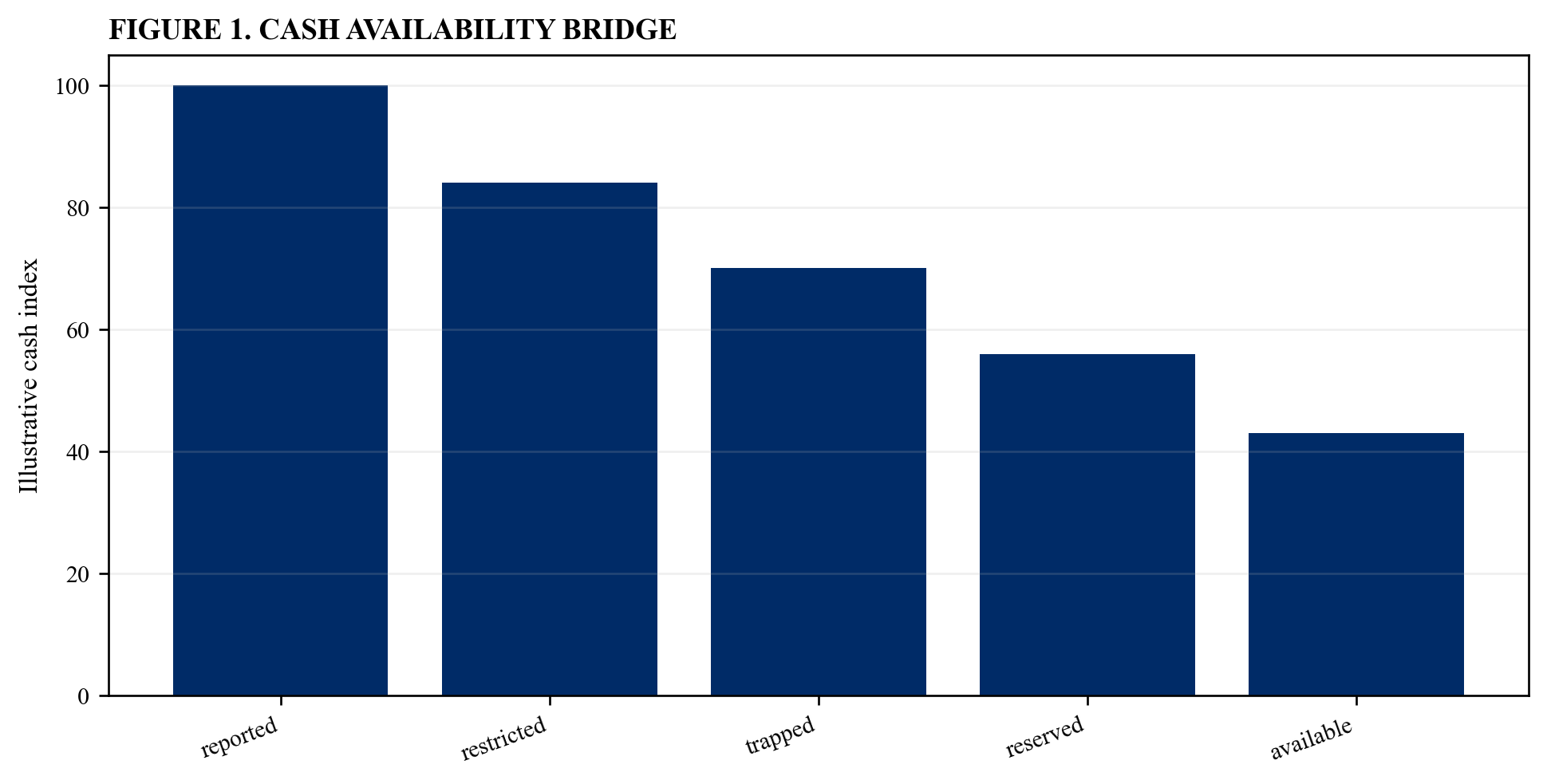
Illustrative analytical scenario; verified cash, operating and contractual evidence should replace index values.
6. Classify operating receipts
The transaction team should separate contracted, invoiced, disputed, delayed, concentrated and contingent inflows. The required output is a receipt-confidence schedule. Use current source data and link every material conclusion to retained bank, company, operating, financial and contractual evidence [8][9].
Translate the conclusion into the thirteen-week cash forecast and the monthly operating, debt, covenant and recovery model. Identify the legal entity, accountable owner, payment or receipt date, document basis, evidence threshold and approval authority. Reconcile bank data, ledgers, treasury forecasts, operating plans, finance documents and board reporting.
The principal risk is that forecast collections can arrive after the obligations they are meant to fund. Quantify the effect on available cash, payment continuity, revolver access, covenant headroom, stakeholder control and survival runway. Show base, revenue-shock, working-capital, rate, revolver-closure and combined downside cases with explicit management responses.
Retain the source, model version, reviewer, independent challenge, finance and legal approval and board response. Compare forecast and actual cash weekly; remove unsupported receipts or capacity; and assign every exception an owner and deadline.
7. Rank operating payments
The transaction team should classify payroll, critical suppliers, utilities, rent, tax, insurance, maintenance and discretionary expenditure. The required output is an operating-payment priority. Use current source data and link every material conclusion to retained bank, company, operating, financial and contractual evidence [10][11].
Translate the conclusion into the thirteen-week cash forecast and the monthly operating, debt, covenant and recovery model. Identify the legal entity, accountable owner, payment or receipt date, document basis, evidence threshold and approval authority. Reconcile bank data, ledgers, treasury forecasts, operating plans, finance documents and board reporting.
The principal risk is that uniform payment cuts can interrupt revenue or create legal and safety failures. Quantify the effect on available cash, payment continuity, revolver access, covenant headroom, stakeholder control and survival runway. Show base, revenue-shock, working-capital, rate, revolver-closure and combined downside cases with explicit management responses.
Retain the source, model version, reviewer, independent challenge, finance and legal approval and board response. Compare forecast and actual cash weekly; remove unsupported receipts or capacity; and assign every exception an owner and deadline.
8. Map statutory and fiduciary obligations
The transaction team should identify tax, payroll, pensions, regulatory, trust and creditor-duty constraints by jurisdiction. The required output is a statutory-payment calendar. Use current source data and link every material conclusion to retained bank, company, operating, financial and contractual evidence [4][10].
Translate the conclusion into the thirteen-week cash forecast and the monthly operating, debt, covenant and recovery model. Identify the legal entity, accountable owner, payment or receipt date, document basis, evidence threshold and approval authority. Reconcile bank data, ledgers, treasury forecasts, operating plans, finance documents and board reporting.
The principal risk is that management discretion can be narrower than the treasury model assumes. Quantify the effect on available cash, payment continuity, revolver access, covenant headroom, stakeholder control and survival runway. Show base, revenue-shock, working-capital, rate, revolver-closure and combined downside cases with explicit management responses.
Retain the source, model version, reviewer, independent challenge, finance and legal approval and board response. Compare forecast and actual cash weekly; remove unsupported receipts or capacity; and assign every exception an owner and deadline.
Table 1. Weekly payment priority
| Payment class | Timing | Control |
|---|---|---|
| payroll and safety | fixed dates | protected |
| critical suppliers | operating need | conditional |
| tax and statutory | legal due date | authorised |
| debt service | contract date | document governed |
Illustrative control framework; verified bank data, company records and executed documents govern.
9. Read the debt waterfall
The transaction team should map interest, amortisation, fees, hedging, cash sweeps, mandatory prepayments and waterfall ranking. The required output is an executed debt-payment schedule. Use current source data and link every material conclusion to retained bank, company, operating, financial and contractual evidence [2][12].
Translate the conclusion into the thirteen-week cash forecast and the monthly operating, debt, covenant and recovery model. Identify the legal entity, accountable owner, payment or receipt date, document basis, evidence threshold and approval authority. Reconcile bank data, ledgers, treasury forecasts, operating plans, finance documents and board reporting.
The principal risk is that headline debt service can omit contingent and accelerated cash requirements. Quantify the effect on available cash, payment continuity, revolver access, covenant headroom, stakeholder control and survival runway. Show base, revenue-shock, working-capital, rate, revolver-closure and combined downside cases with explicit management responses.
Retain the source, model version, reviewer, independent challenge, finance and legal approval and board response. Compare forecast and actual cash weekly; remove unsupported receipts or capacity; and assign every exception an owner and deadline.
10. Test revolver availability
The transaction team should reconcile commitments, drawings, letters of credit, ancillary usage, borrowing bases and availability blocks. The required output is a revolver-access bridge. Use current source data and link every material conclusion to retained bank, company, operating, financial and contractual evidence [1][13].
Translate the conclusion into the thirteen-week cash forecast and the monthly operating, debt, covenant and recovery model. Identify the legal entity, accountable owner, payment or receipt date, document basis, evidence threshold and approval authority. Reconcile bank data, ledgers, treasury forecasts, operating plans, finance documents and board reporting.
The principal risk is that undrawn commitments can be unusable when liquidity is needed most. Quantify the effect on available cash, payment continuity, revolver access, covenant headroom, stakeholder control and survival runway. Show base, revenue-shock, working-capital, rate, revolver-closure and combined downside cases with explicit management responses.
Retain the source, model version, reviewer, independent challenge, finance and legal approval and board response. Compare forecast and actual cash weekly; remove unsupported receipts or capacity; and assign every exception an owner and deadline.
11. Test draw conditions
The transaction team should map representations, defaults, repeating conditions, utilisation requests, notice periods and lender discretion. The required output is a facility-draw checklist. Use current source data and link every material conclusion to retained bank, company, operating, financial and contractual evidence [12][13].
Translate the conclusion into the thirteen-week cash forecast and the monthly operating, debt, covenant and recovery model. Identify the legal entity, accountable owner, payment or receipt date, document basis, evidence threshold and approval authority. Reconcile bank data, ledgers, treasury forecasts, operating plans, finance documents and board reporting.
The principal risk is that an operational or reporting breach can prevent a new draw. Quantify the effect on available cash, payment continuity, revolver access, covenant headroom, stakeholder control and survival runway. Show base, revenue-shock, working-capital, rate, revolver-closure and combined downside cases with explicit management responses.
Retain the source, model version, reviewer, independent challenge, finance and legal approval and board response. Compare forecast and actual cash weekly; remove unsupported receipts or capacity; and assign every exception an owner and deadline.
12. Model cash sweeps
The transaction team should apply excess-cash-flow, disposal, insurance, debt-issuance and other mandatory prepayment mechanics. The required output is a mandatory-prepayment roll-forward. Use current source data and link every material conclusion to retained bank, company, operating, financial and contractual evidence [12][14].
Translate the conclusion into the thirteen-week cash forecast and the monthly operating, debt, covenant and recovery model. Identify the legal entity, accountable owner, payment or receipt date, document basis, evidence threshold and approval authority. Reconcile bank data, ledgers, treasury forecasts, operating plans, finance documents and board reporting.
The principal risk is that cash expected for operations can be contractually redirected to lenders. Quantify the effect on available cash, payment continuity, revolver access, covenant headroom, stakeholder control and survival runway. Show base, revenue-shock, working-capital, rate, revolver-closure and combined downside cases with explicit management responses.
Retain the source, model version, reviewer, independent challenge, finance and legal approval and board response. Compare forecast and actual cash weekly; remove unsupported receipts or capacity; and assign every exception an owner and deadline.
13. Map cash traps
The transaction team should identify covenant, reserve, distribution, ring-fence and subsidiary-level restrictions on transfers. The required output is a cash-trap register. Use current source data and link every material conclusion to retained bank, company, operating, financial and contractual evidence [3][12].
Translate the conclusion into the thirteen-week cash forecast and the monthly operating, debt, covenant and recovery model. Identify the legal entity, accountable owner, payment or receipt date, document basis, evidence threshold and approval authority. Reconcile bank data, ledgers, treasury forecasts, operating plans, finance documents and board reporting.
The principal risk is that group liquidity can remain stranded behind contractual or corporate barriers. Quantify the effect on available cash, payment continuity, revolver access, covenant headroom, stakeholder control and survival runway. Show base, revenue-shock, working-capital, rate, revolver-closure and combined downside cases with explicit management responses.
Retain the source, model version, reviewer, independent challenge, finance and legal approval and board response. Compare forecast and actual cash weekly; remove unsupported receipts or capacity; and assign every exception an owner and deadline.
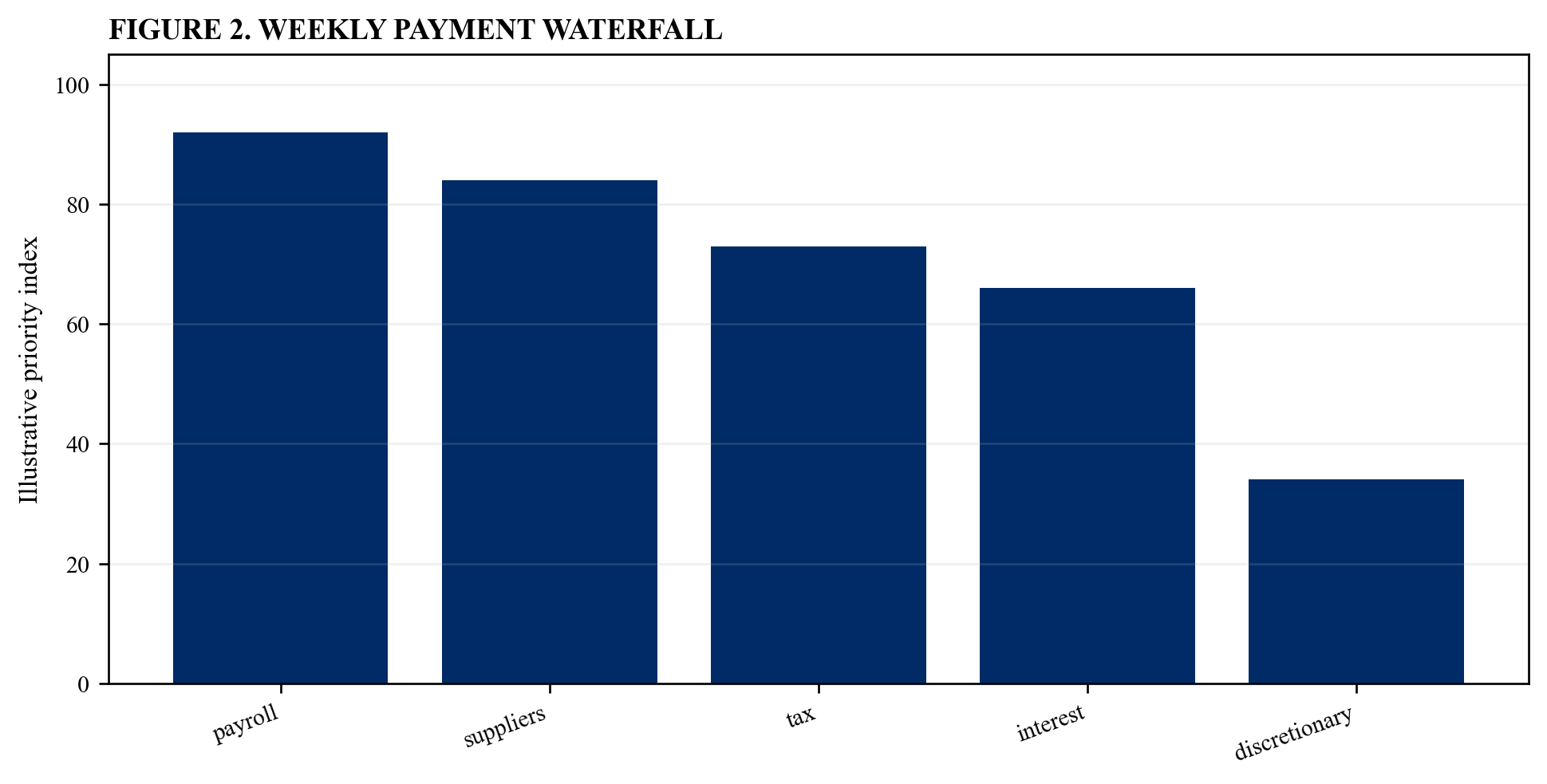
Illustrative analytical scenario; verified cash, operating and contractual evidence should replace index values.
14. Reconcile intercompany funding
The transaction team should map loans, distributions, service fees, guarantees, tax, withholding and transfer restrictions. The required output is an intercompany liquidity matrix. Use current source data and link every material conclusion to retained bank, company, operating, financial and contractual evidence [3][15].
Translate the conclusion into the thirteen-week cash forecast and the monthly operating, debt, covenant and recovery model. Identify the legal entity, accountable owner, payment or receipt date, document basis, evidence threshold and approval authority. Reconcile bank data, ledgers, treasury forecasts, operating plans, finance documents and board reporting.
The principal risk is that a transfer can be delayed, taxed, subordinated or challenged. Quantify the effect on available cash, payment continuity, revolver access, covenant headroom, stakeholder control and survival runway. Show base, revenue-shock, working-capital, rate, revolver-closure and combined downside cases with explicit management responses.
Retain the source, model version, reviewer, independent challenge, finance and legal approval and board response. Compare forecast and actual cash weekly; remove unsupported receipts or capacity; and assign every exception an owner and deadline.
15. Aggregate maturity obligations
The transaction team should schedule debt, leases, guarantees, derivatives and contingent payments at undiscounted cash amounts. The required output is a maturity ladder. Use current source data and link every material conclusion to retained bank, company, operating, financial and contractual evidence [5][16].
Translate the conclusion into the thirteen-week cash forecast and the monthly operating, debt, covenant and recovery model. Identify the legal entity, accountable owner, payment or receipt date, document basis, evidence threshold and approval authority. Reconcile bank data, ledgers, treasury forecasts, operating plans, finance documents and board reporting.
The principal risk is that multiple obligations can converge into one payment cliff. Quantify the effect on available cash, payment continuity, revolver access, covenant headroom, stakeholder control and survival runway. Show base, revenue-shock, working-capital, rate, revolver-closure and combined downside cases with explicit management responses.
Retain the source, model version, reviewer, independent challenge, finance and legal approval and board response. Compare forecast and actual cash weekly; remove unsupported receipts or capacity; and assign every exception an owner and deadline.
16. Price variable-rate exposure
The transaction team should model base rates, margins, floors, reset dates, hedges, collateral and fees. The required output is an interest and hedge schedule. Use current source data and link every material conclusion to retained bank, company, operating, financial and contractual evidence [1][17].
Translate the conclusion into the thirteen-week cash forecast and the monthly operating, debt, covenant and recovery model. Identify the legal entity, accountable owner, payment or receipt date, document basis, evidence threshold and approval authority. Reconcile bank data, ledgers, treasury forecasts, operating plans, finance documents and board reporting.
The principal risk is that cash interest or collateral calls can rise before reported leverage changes. Quantify the effect on available cash, payment continuity, revolver access, covenant headroom, stakeholder control and survival runway. Show base, revenue-shock, working-capital, rate, revolver-closure and combined downside cases with explicit management responses.
Retain the source, model version, reviewer, independent challenge, finance and legal approval and board response. Compare forecast and actual cash weekly; remove unsupported receipts or capacity; and assign every exception an owner and deadline.
Table 2. Facility-access gate
| Gate | Evidence | Failure effect |
|---|---|---|
| commitment | executed facility | no capacity |
| availability | usage bridge | reduced draw |
| conditions | draw checklist | draw stop |
| default | compliance file | control shift |
Illustrative control framework; verified bank data, company records and executed documents govern.
17. Protect maintenance investment
The transaction team should separate maintenance, safety, compliance, resilience and revenue-preserving capital expenditure. The required output is a protected-capex schedule. Use current source data and link every material conclusion to retained bank, company, operating, financial and contractual evidence [11][18].
Translate the conclusion into the thirteen-week cash forecast and the monthly operating, debt, covenant and recovery model. Identify the legal entity, accountable owner, payment or receipt date, document basis, evidence threshold and approval authority. Reconcile bank data, ledgers, treasury forecasts, operating plans, finance documents and board reporting.
The principal risk is that short-term liquidity can be created by deferring spending that protects future cash flow. Quantify the effect on available cash, payment continuity, revolver access, covenant headroom, stakeholder control and survival runway. Show base, revenue-shock, working-capital, rate, revolver-closure and combined downside cases with explicit management responses.
Retain the source, model version, reviewer, independent challenge, finance and legal approval and board response. Compare forecast and actual cash weekly; remove unsupported receipts or capacity; and assign every exception an owner and deadline.
18. Model working-capital stress
The transaction team should apply collection delays, inventory absorption, supplier tightening, deposits and seasonality. The required output is a working-capital downside. Use current source data and link every material conclusion to retained bank, company, operating, financial and contractual evidence [8][19].
Translate the conclusion into the thirteen-week cash forecast and the monthly operating, debt, covenant and recovery model. Identify the legal entity, accountable owner, payment or receipt date, document basis, evidence threshold and approval authority. Reconcile bank data, ledgers, treasury forecasts, operating plans, finance documents and board reporting.
The principal risk is that liquidity can deteriorate while accounting earnings remain stable. Quantify the effect on available cash, payment continuity, revolver access, covenant headroom, stakeholder control and survival runway. Show base, revenue-shock, working-capital, rate, revolver-closure and combined downside cases with explicit management responses.
Retain the source, model version, reviewer, independent challenge, finance and legal approval and board response. Compare forecast and actual cash weekly; remove unsupported receipts or capacity; and assign every exception an owner and deadline.
19. Test supply-chain finance withdrawal
The transaction team should identify reverse factoring, receivables finance, inventory facilities and supplier dependencies. The required output is a financing-withdrawal case. Use current source data and link every material conclusion to retained bank, company, operating, financial and contractual evidence [6][20].
Translate the conclusion into the thirteen-week cash forecast and the monthly operating, debt, covenant and recovery model. Identify the legal entity, accountable owner, payment or receipt date, document basis, evidence threshold and approval authority. Reconcile bank data, ledgers, treasury forecasts, operating plans, finance documents and board reporting.
The principal risk is that off-balance-sheet or operational funding can disappear abruptly. Quantify the effect on available cash, payment continuity, revolver access, covenant headroom, stakeholder control and survival runway. Show base, revenue-shock, working-capital, rate, revolver-closure and combined downside cases with explicit management responses.
Retain the source, model version, reviewer, independent challenge, finance and legal approval and board response. Compare forecast and actual cash weekly; remove unsupported receipts or capacity; and assign every exception an owner and deadline.
20. Identify collateral calls
The transaction team should map derivatives, letters of credit, guarantees, clearing and rating-linked collateral requirements. The required output is a collateral-liquidity schedule. Use current source data and link every material conclusion to retained bank, company, operating, financial and contractual evidence [5][17].
Translate the conclusion into the thirteen-week cash forecast and the monthly operating, debt, covenant and recovery model. Identify the legal entity, accountable owner, payment or receipt date, document basis, evidence threshold and approval authority. Reconcile bank data, ledgers, treasury forecasts, operating plans, finance documents and board reporting.
The principal risk is that market movements can create immediate cash demands outside debt amortisation. Quantify the effect on available cash, payment continuity, revolver access, covenant headroom, stakeholder control and survival runway. Show base, revenue-shock, working-capital, rate, revolver-closure and combined downside cases with explicit management responses.
Retain the source, model version, reviewer, independent challenge, finance and legal approval and board response. Compare forecast and actual cash weekly; remove unsupported receipts or capacity; and assign every exception an owner and deadline.
21. Calculate covenant headroom
The transaction team should apply executed definitions, adjustments, cure rights, testing dates and forecast performance. The required output is a covenant-headroom calendar. Use current source data and link every material conclusion to retained bank, company, operating, financial and contractual evidence [2][12].
Translate the conclusion into the thirteen-week cash forecast and the monthly operating, debt, covenant and recovery model. Identify the legal entity, accountable owner, payment or receipt date, document basis, evidence threshold and approval authority. Reconcile bank data, ledgers, treasury forecasts, operating plans, finance documents and board reporting.
The principal risk is that a covenant breach can alter control before cash reaches zero. Quantify the effect on available cash, payment continuity, revolver access, covenant headroom, stakeholder control and survival runway. Show base, revenue-shock, working-capital, rate, revolver-closure and combined downside cases with explicit management responses.
Retain the source, model version, reviewer, independent challenge, finance and legal approval and board response. Compare forecast and actual cash weekly; remove unsupported receipts or capacity; and assign every exception an owner and deadline.
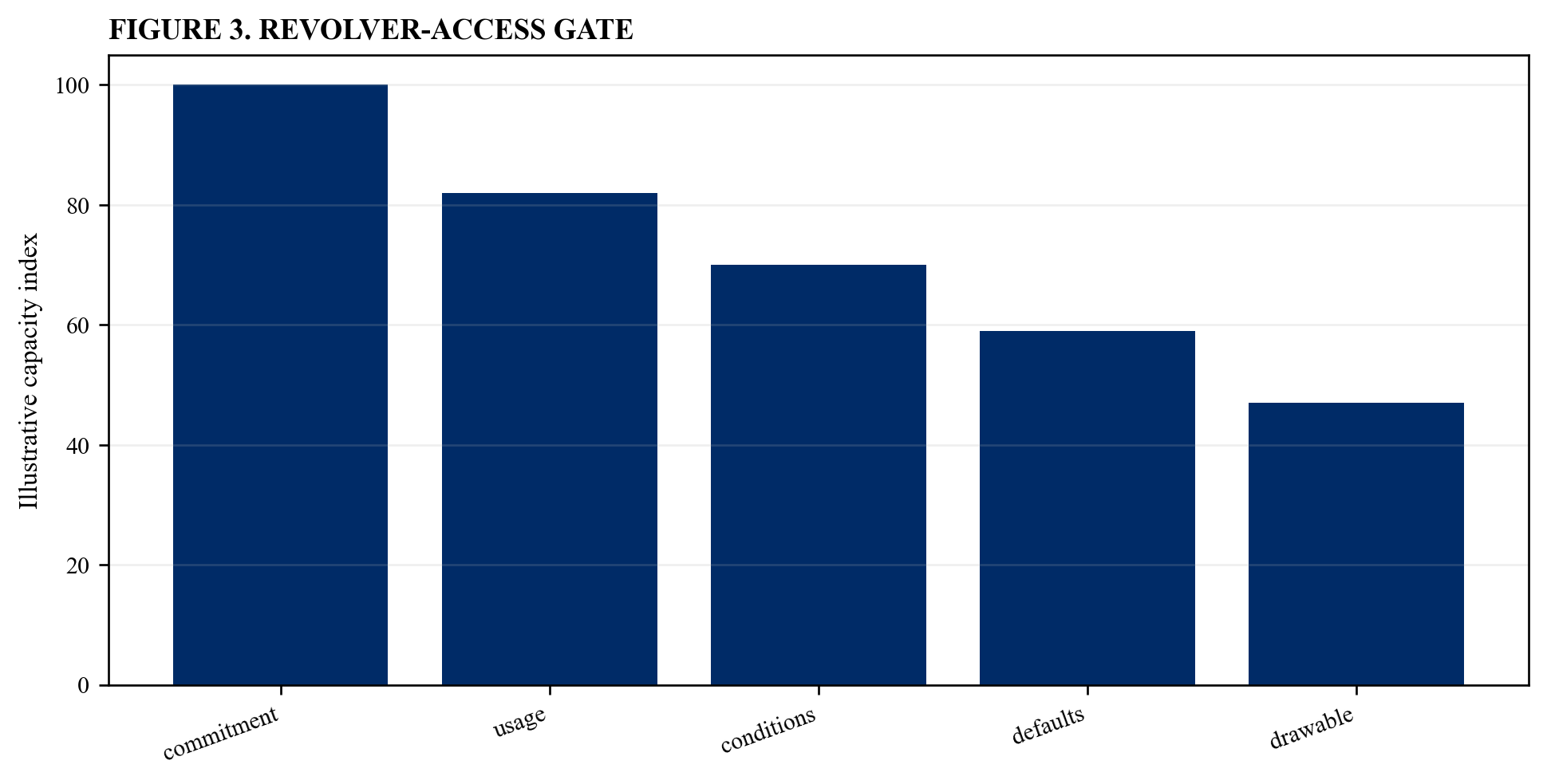
Illustrative analytical scenario; verified cash, operating and contractual evidence should replace index values.
22. Map default and acceleration triggers
The transaction team should identify payment, covenant, representation, cross-default, insolvency and material-adverse provisions. The required output is a default-trigger map. Use current source data and link every material conclusion to retained bank, company, operating, financial and contractual evidence [12][21].
Translate the conclusion into the thirteen-week cash forecast and the monthly operating, debt, covenant and recovery model. Identify the legal entity, accountable owner, payment or receipt date, document basis, evidence threshold and approval authority. Reconcile bank data, ledgers, treasury forecasts, operating plans, finance documents and board reporting.
The principal risk is that one breach can accelerate obligations across several instruments. Quantify the effect on available cash, payment continuity, revolver access, covenant headroom, stakeholder control and survival runway. Show base, revenue-shock, working-capital, rate, revolver-closure and combined downside cases with explicit management responses.
Retain the source, model version, reviewer, independent challenge, finance and legal approval and board response. Compare forecast and actual cash weekly; remove unsupported receipts or capacity; and assign every exception an owner and deadline.
23. Define stakeholder control rights
The transaction team should map board, sponsor, lender, agent, security trustee, regulator and insolvency-practitioner powers. The required output is a control-rights ladder. Use current source data and link every material conclusion to retained bank, company, operating, financial and contractual evidence [4][21].
Translate the conclusion into the thirteen-week cash forecast and the monthly operating, debt, covenant and recovery model. Identify the legal entity, accountable owner, payment or receipt date, document basis, evidence threshold and approval authority. Reconcile bank data, ledgers, treasury forecasts, operating plans, finance documents and board reporting.
The principal risk is that decision authority can migrate as distress deepens. Quantify the effect on available cash, payment continuity, revolver access, covenant headroom, stakeholder control and survival runway. Show base, revenue-shock, working-capital, rate, revolver-closure and combined downside cases with explicit management responses.
Retain the source, model version, reviewer, independent challenge, finance and legal approval and board response. Compare forecast and actual cash weekly; remove unsupported receipts or capacity; and assign every exception an owner and deadline.
24. Build the revenue-shock case
The transaction team should reduce volume, price and collections while retaining fixed and contractual cash uses. The required output is a revenue-shock waterfall. Use current source data and link every material conclusion to retained bank, company, operating, financial and contractual evidence [1][8].
Translate the conclusion into the thirteen-week cash forecast and the monthly operating, debt, covenant and recovery model. Identify the legal entity, accountable owner, payment or receipt date, document basis, evidence threshold and approval authority. Reconcile bank data, ledgers, treasury forecasts, operating plans, finance documents and board reporting.
The principal risk is that a trading decline can create a cash gap before cost actions take effect. Quantify the effect on available cash, payment continuity, revolver access, covenant headroom, stakeholder control and survival runway. Show base, revenue-shock, working-capital, rate, revolver-closure and combined downside cases with explicit management responses.
Retain the source, model version, reviewer, independent challenge, finance and legal approval and board response. Compare forecast and actual cash weekly; remove unsupported receipts or capacity; and assign every exception an owner and deadline.
Table 3. Thirteen-week liquidity waterfall
| Layer | Source or use | Decision |
|---|---|---|
| opening cash | accessible balances | verified |
| operating cash | receipts less priority uses | weekly |
| financing | confirmed draws and support | gated |
| closing headroom | cash plus availability | threshold tested |
Illustrative control framework; verified bank data, company records and executed documents govern.
25. Build the working-capital case
The transaction team should delay receipts, accelerate supplier payments and increase inventory or collateral needs. The required output is a working-capital waterfall. Use current source data and link every material conclusion to retained bank, company, operating, financial and contractual evidence [8][19].
Translate the conclusion into the thirteen-week cash forecast and the monthly operating, debt, covenant and recovery model. Identify the legal entity, accountable owner, payment or receipt date, document basis, evidence threshold and approval authority. Reconcile bank data, ledgers, treasury forecasts, operating plans, finance documents and board reporting.
The principal risk is that cash absorption can exceed revolver availability. Quantify the effect on available cash, payment continuity, revolver access, covenant headroom, stakeholder control and survival runway. Show base, revenue-shock, working-capital, rate, revolver-closure and combined downside cases with explicit management responses.
Retain the source, model version, reviewer, independent challenge, finance and legal approval and board response. Compare forecast and actual cash weekly; remove unsupported receipts or capacity; and assign every exception an owner and deadline.
26. Build the rate-shock case
The transaction team should apply higher rates, hedge expiry, margin ratchets and fees. The required output is a rate-shock waterfall. Use current source data and link every material conclusion to retained bank, company, operating, financial and contractual evidence [1][17].
Translate the conclusion into the thirteen-week cash forecast and the monthly operating, debt, covenant and recovery model. Identify the legal entity, accountable owner, payment or receipt date, document basis, evidence threshold and approval authority. Reconcile bank data, ledgers, treasury forecasts, operating plans, finance documents and board reporting.
The principal risk is that debt service can crowd out critical operating payments. Quantify the effect on available cash, payment continuity, revolver access, covenant headroom, stakeholder control and survival runway. Show base, revenue-shock, working-capital, rate, revolver-closure and combined downside cases with explicit management responses.
Retain the source, model version, reviewer, independent challenge, finance and legal approval and board response. Compare forecast and actual cash weekly; remove unsupported receipts or capacity; and assign every exception an owner and deadline.
27. Build the revolver-closure case
The transaction team should assume no new drawings and model only confirmed cash sources. The required output is a facility-closure waterfall. Use current source data and link every material conclusion to retained bank, company, operating, financial and contractual evidence [12][13].
Translate the conclusion into the thirteen-week cash forecast and the monthly operating, debt, covenant and recovery model. Identify the legal entity, accountable owner, payment or receipt date, document basis, evidence threshold and approval authority. Reconcile bank data, ledgers, treasury forecasts, operating plans, finance documents and board reporting.
The principal risk is that the base case can depend on access that fails a draw condition. Quantify the effect on available cash, payment continuity, revolver access, covenant headroom, stakeholder control and survival runway. Show base, revenue-shock, working-capital, rate, revolver-closure and combined downside cases with explicit management responses.
Retain the source, model version, reviewer, independent challenge, finance and legal approval and board response. Compare forecast and actual cash weekly; remove unsupported receipts or capacity; and assign every exception an owner and deadline.
28. Build the combined downside
The transaction team should combine revenue, working-capital, rate, collateral and facility-access stresses. The required output is a severe but plausible cash case. Use current source data and link every material conclusion to retained bank, company, operating, financial and contractual evidence [1][22].
Translate the conclusion into the thirteen-week cash forecast and the monthly operating, debt, covenant and recovery model. Identify the legal entity, accountable owner, payment or receipt date, document basis, evidence threshold and approval authority. Reconcile bank data, ledgers, treasury forecasts, operating plans, finance documents and board reporting.
The principal risk is that individually manageable stresses can interact non-linearly. Quantify the effect on available cash, payment continuity, revolver access, covenant headroom, stakeholder control and survival runway. Show base, revenue-shock, working-capital, rate, revolver-closure and combined downside cases with explicit management responses.
Retain the source, model version, reviewer, independent challenge, finance and legal approval and board response. Compare forecast and actual cash weekly; remove unsupported receipts or capacity; and assign every exception an owner and deadline.
29. Set payment decision rules
The transaction team should define protected, conditional, deferrable, renegotiable and prohibited payments with approval levels. The required output is a payment-control matrix. Use current source data and link every material conclusion to retained bank, company, operating, financial and contractual evidence [4][10].
Translate the conclusion into the thirteen-week cash forecast and the monthly operating, debt, covenant and recovery model. Identify the legal entity, accountable owner, payment or receipt date, document basis, evidence threshold and approval authority. Reconcile bank data, ledgers, treasury forecasts, operating plans, finance documents and board reporting.
The principal risk is that ad hoc decisions can create inconsistent stakeholder treatment and operational damage. Quantify the effect on available cash, payment continuity, revolver access, covenant headroom, stakeholder control and survival runway. Show base, revenue-shock, working-capital, rate, revolver-closure and combined downside cases with explicit management responses.
Retain the source, model version, reviewer, independent challenge, finance and legal approval and board response. Compare forecast and actual cash weekly; remove unsupported receipts or capacity; and assign every exception an owner and deadline.
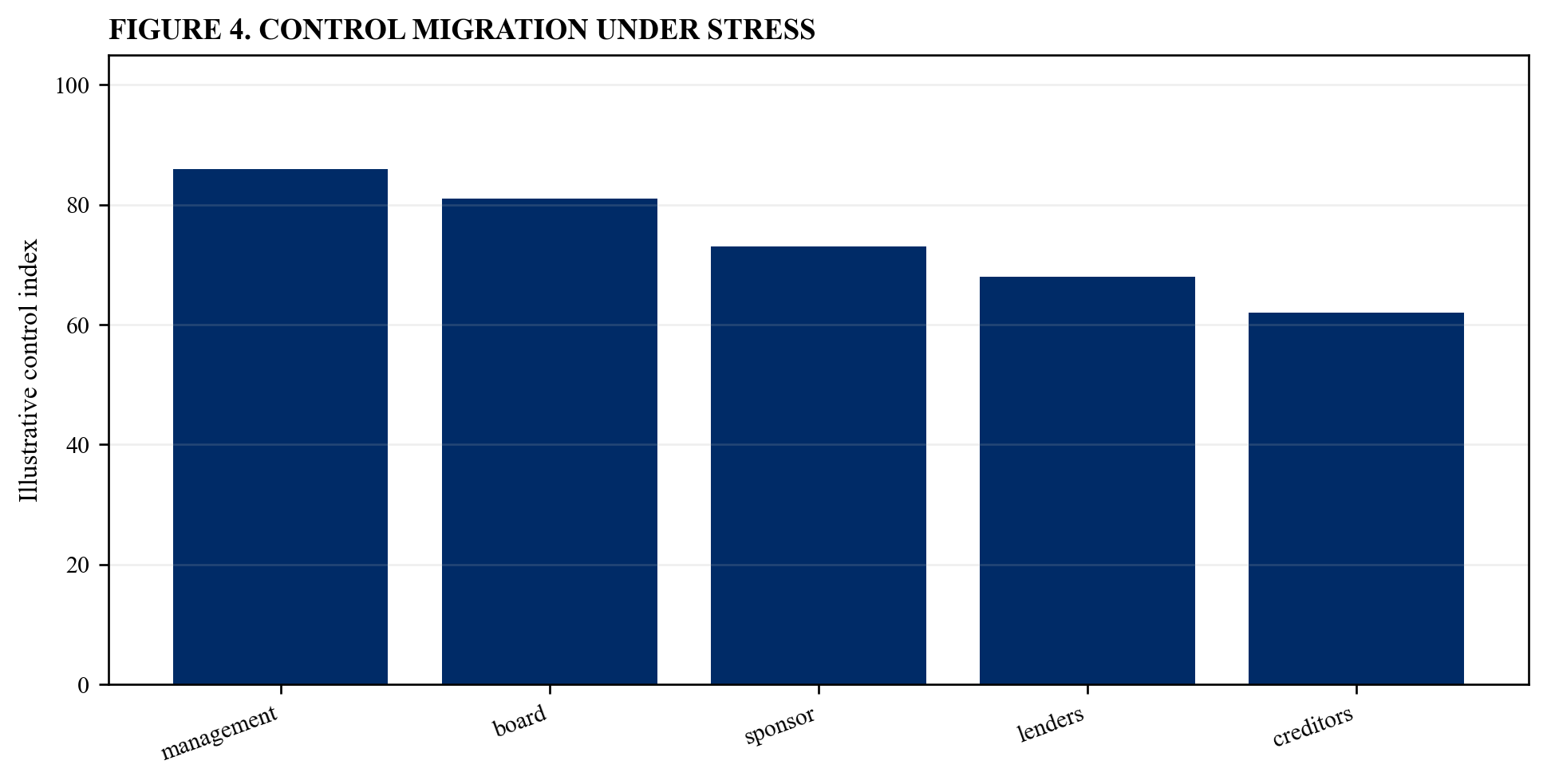
Illustrative analytical scenario; verified cash, operating and contractual evidence should replace index values.
30. Prioritise critical suppliers
The transaction team should score suppliers by revenue continuity, safety, substitution, legal rights and recovery time. The required output is a critical-supplier plan. Use current source data and link every material conclusion to retained bank, company, operating, financial and contractual evidence [10][11].
Translate the conclusion into the thirteen-week cash forecast and the monthly operating, debt, covenant and recovery model. Identify the legal entity, accountable owner, payment or receipt date, document basis, evidence threshold and approval authority. Reconcile bank data, ledgers, treasury forecasts, operating plans, finance documents and board reporting.
The principal risk is that payment deferral can stop production or destroy customer service. Quantify the effect on available cash, payment continuity, revolver access, covenant headroom, stakeholder control and survival runway. Show base, revenue-shock, working-capital, rate, revolver-closure and combined downside cases with explicit management responses.
Retain the source, model version, reviewer, independent challenge, finance and legal approval and board response. Compare forecast and actual cash weekly; remove unsupported receipts or capacity; and assign every exception an owner and deadline.
31. Design cash-conservation actions
The transaction team should quantify timing, operational effect, reversibility and stakeholder consent for each action. The required output is an owner-led conservation register. Use current source data and link every material conclusion to retained bank, company, operating, financial and contractual evidence [8][23].
Translate the conclusion into the thirteen-week cash forecast and the monthly operating, debt, covenant and recovery model. Identify the legal entity, accountable owner, payment or receipt date, document basis, evidence threshold and approval authority. Reconcile bank data, ledgers, treasury forecasts, operating plans, finance documents and board reporting.
The principal risk is that headline savings can arrive too late or reduce future receipts. Quantify the effect on available cash, payment continuity, revolver access, covenant headroom, stakeholder control and survival runway. Show base, revenue-shock, working-capital, rate, revolver-closure and combined downside cases with explicit management responses.
Retain the source, model version, reviewer, independent challenge, finance and legal approval and board response. Compare forecast and actual cash weekly; remove unsupported receipts or capacity; and assign every exception an owner and deadline.
32. Negotiate liquidity support
The transaction team should compare equity, shareholder loans, super-senior debt, waivers, extensions and asset-based facilities. The required output is a support-options matrix. Use current source data and link every material conclusion to retained bank, company, operating, financial and contractual evidence [2][21].
Translate the conclusion into the thirteen-week cash forecast and the monthly operating, debt, covenant and recovery model. Identify the legal entity, accountable owner, payment or receipt date, document basis, evidence threshold and approval authority. Reconcile bank data, ledgers, treasury forecasts, operating plans, finance documents and board reporting.
The principal risk is that new cash can introduce ranking, dilution or control consequences. Quantify the effect on available cash, payment continuity, revolver access, covenant headroom, stakeholder control and survival runway. Show base, revenue-shock, working-capital, rate, revolver-closure and combined downside cases with explicit management responses.
Retain the source, model version, reviewer, independent challenge, finance and legal approval and board response. Compare forecast and actual cash weekly; remove unsupported receipts or capacity; and assign every exception an owner and deadline.
Table 4. Stakeholder-control ladder
| Stage | Primary control | Required action |
|---|---|---|
| stable | management | monitor |
| pressure | board and sponsor | conserve |
| default risk | lenders and board | negotiate |
| insolvency risk | creditor-focused duties | protect value |
Illustrative control framework; verified bank data, company records and executed documents govern.
33. Plan asset disposals
The transaction team should map sale timing, consent, valuation, tax, mandatory prepayment and stranded costs. The required output is a net-liquidity disposal bridge. Use current source data and link every material conclusion to retained bank, company, operating, financial and contractual evidence [14][15].
Translate the conclusion into the thirteen-week cash forecast and the monthly operating, debt, covenant and recovery model. Identify the legal entity, accountable owner, payment or receipt date, document basis, evidence threshold and approval authority. Reconcile bank data, ledgers, treasury forecasts, operating plans, finance documents and board reporting.
The principal risk is that gross proceeds can materially overstate cash retained by the business. Quantify the effect on available cash, payment continuity, revolver access, covenant headroom, stakeholder control and survival runway. Show base, revenue-shock, working-capital, rate, revolver-closure and combined downside cases with explicit management responses.
Retain the source, model version, reviewer, independent challenge, finance and legal approval and board response. Compare forecast and actual cash weekly; remove unsupported receipts or capacity; and assign every exception an owner and deadline.
34. Set information cadence
The transaction team should define daily bank visibility, weekly cash reporting, variance analysis and lender reporting. The required output is a liquidity reporting calendar. Use current source data and link every material conclusion to retained bank, company, operating, financial and contractual evidence [2][24].
Translate the conclusion into the thirteen-week cash forecast and the monthly operating, debt, covenant and recovery model. Identify the legal entity, accountable owner, payment or receipt date, document basis, evidence threshold and approval authority. Reconcile bank data, ledgers, treasury forecasts, operating plans, finance documents and board reporting.
The principal risk is that late or inconsistent information can remove viable options. Quantify the effect on available cash, payment continuity, revolver access, covenant headroom, stakeholder control and survival runway. Show base, revenue-shock, working-capital, rate, revolver-closure and combined downside cases with explicit management responses.
Retain the source, model version, reviewer, independent challenge, finance and legal approval and board response. Compare forecast and actual cash weekly; remove unsupported receipts or capacity; and assign every exception an owner and deadline.
35. Define escalation triggers
The transaction team should set green, amber and red thresholds for cash, facility access, payments, covenants and stakeholder actions. The required output is an escalation protocol. Use current source data and link every material conclusion to retained bank, company, operating, financial and contractual evidence [21][23].
Translate the conclusion into the thirteen-week cash forecast and the monthly operating, debt, covenant and recovery model. Identify the legal entity, accountable owner, payment or receipt date, document basis, evidence threshold and approval authority. Reconcile bank data, ledgers, treasury forecasts, operating plans, finance documents and board reporting.
The principal risk is that management can act after contractual or operational options narrow. Quantify the effect on available cash, payment continuity, revolver access, covenant headroom, stakeholder control and survival runway. Show base, revenue-shock, working-capital, rate, revolver-closure and combined downside cases with explicit management responses.
Retain the source, model version, reviewer, independent challenge, finance and legal approval and board response. Compare forecast and actual cash weekly; remove unsupported receipts or capacity; and assign every exception an owner and deadline.
36. Prepare the contingency funding plan
The transaction team should assign owners, documents, approvals and timing for each backup source. The required output is an executable contingency plan. Use current source data and link every material conclusion to retained bank, company, operating, financial and contractual evidence [1][22].
Translate the conclusion into the thirteen-week cash forecast and the monthly operating, debt, covenant and recovery model. Identify the legal entity, accountable owner, payment or receipt date, document basis, evidence threshold and approval authority. Reconcile bank data, ledgers, treasury forecasts, operating plans, finance documents and board reporting.
The principal risk is that the alternative funding path can exist only as an untested assumption. Quantify the effect on available cash, payment continuity, revolver access, covenant headroom, stakeholder control and survival runway. Show base, revenue-shock, working-capital, rate, revolver-closure and combined downside cases with explicit management responses.
Retain the source, model version, reviewer, independent challenge, finance and legal approval and board response. Compare forecast and actual cash weekly; remove unsupported receipts or capacity; and assign every exception an owner and deadline.
37. Govern creditor-duty decisions
The transaction team should retain independent judgement, information, advice, conflicts and creditor-impact analysis. The required output is a board-duty evidence file. Use current source data and link every material conclusion to retained bank, company, operating, financial and contractual evidence [4][21].
Translate the conclusion into the thirteen-week cash forecast and the monthly operating, debt, covenant and recovery model. Identify the legal entity, accountable owner, payment or receipt date, document basis, evidence threshold and approval authority. Reconcile bank data, ledgers, treasury forecasts, operating plans, finance documents and board reporting.
The principal risk is that selective payments or continued trading can worsen creditor outcomes. Quantify the effect on available cash, payment continuity, revolver access, covenant headroom, stakeholder control and survival runway. Show base, revenue-shock, working-capital, rate, revolver-closure and combined downside cases with explicit management responses.
Retain the source, model version, reviewer, independent challenge, finance and legal approval and board response. Compare forecast and actual cash weekly; remove unsupported receipts or capacity; and assign every exception an owner and deadline.
38. Back-test cash forecasts
The transaction team should compare forecast and actual receipts, payments, drawings and headroom each week. The required output is a forecast-accuracy file. Use current source data and link every material conclusion to retained bank, company, operating, financial and contractual evidence [8][24].
Translate the conclusion into the thirteen-week cash forecast and the monthly operating, debt, covenant and recovery model. Identify the legal entity, accountable owner, payment or receipt date, document basis, evidence threshold and approval authority. Reconcile bank data, ledgers, treasury forecasts, operating plans, finance documents and board reporting.
The principal risk is that repeated optimism can remain hidden inside rolling forecasts. Quantify the effect on available cash, payment continuity, revolver access, covenant headroom, stakeholder control and survival runway. Show base, revenue-shock, working-capital, rate, revolver-closure and combined downside cases with explicit management responses.
Retain the source, model version, reviewer, independent challenge, finance and legal approval and board response. Compare forecast and actual cash weekly; remove unsupported receipts or capacity; and assign every exception an owner and deadline.
39. Prepare the restructuring bridge
The transaction team should link immediate liquidity actions with a credible operational, capital and stakeholder solution. The required output is a stabilisation-to-restructuring plan. Use current source data and link every material conclusion to retained bank, company, operating, financial and contractual evidence [21][25].
Translate the conclusion into the thirteen-week cash forecast and the monthly operating, debt, covenant and recovery model. Identify the legal entity, accountable owner, payment or receipt date, document basis, evidence threshold and approval authority. Reconcile bank data, ledgers, treasury forecasts, operating plans, finance documents and board reporting.
The principal risk is that cash conservation can postpone rather than resolve the underlying capital problem. Quantify the effect on available cash, payment continuity, revolver access, covenant headroom, stakeholder control and survival runway. Show base, revenue-shock, working-capital, rate, revolver-closure and combined downside cases with explicit management responses.
Retain the source, model version, reviewer, independent challenge, finance and legal approval and board response. Compare forecast and actual cash weekly; remove unsupported receipts or capacity; and assign every exception an owner and deadline.
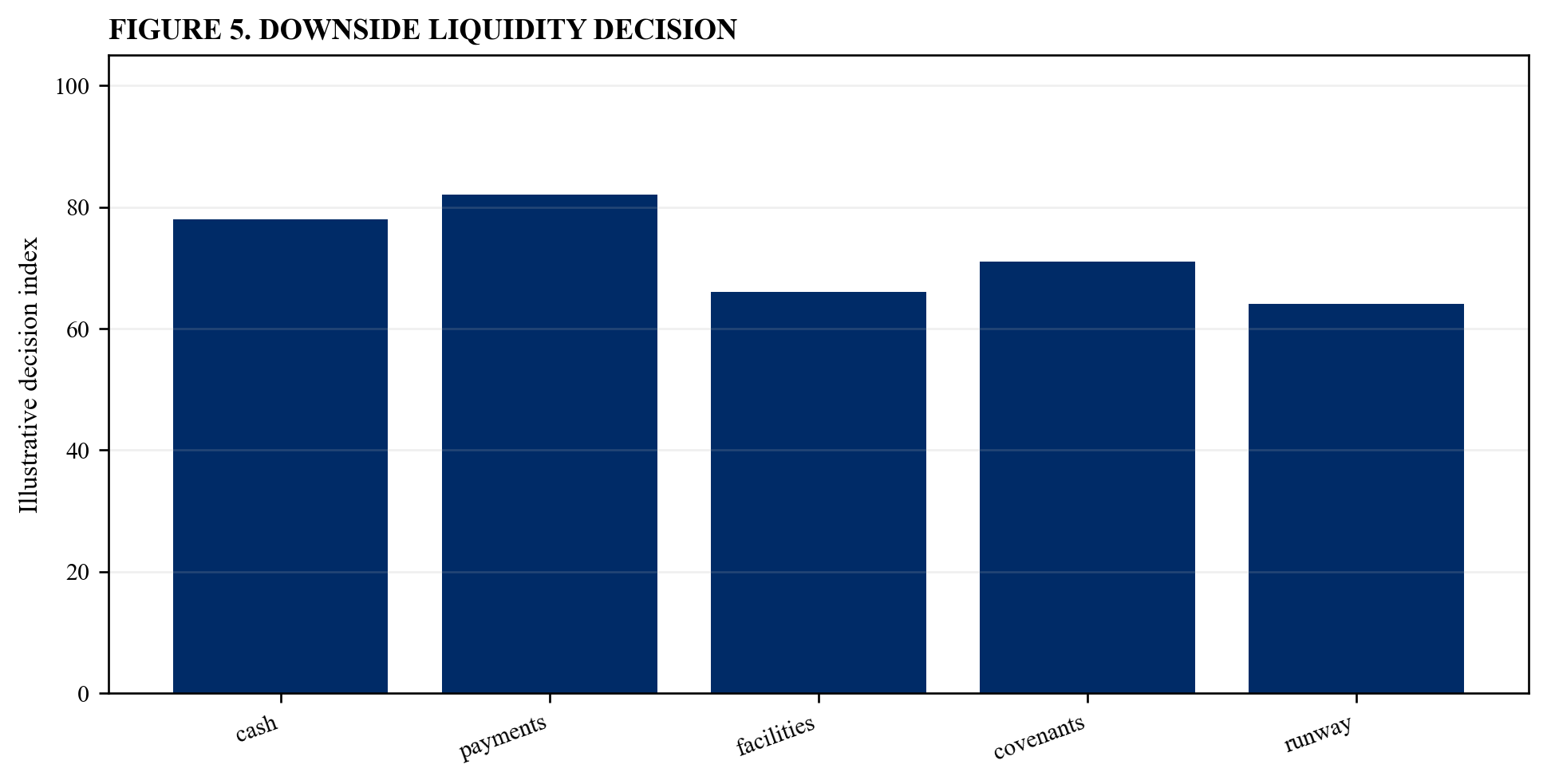
Illustrative analytical scenario; verified cash, operating and contractual evidence should replace index values.
40. Issue the liquidity certificate
The transaction team should approve cash availability, payment priorities, facility access, downside runway, controls and next decisions. The required output is a retained board and lender-ready liquidity certificate. Use current source data and link every material conclusion to retained bank, company, operating, financial and contractual evidence [4][24].
Translate the conclusion into the thirteen-week cash forecast and the monthly operating, debt, covenant and recovery model. Identify the legal entity, accountable owner, payment or receipt date, document basis, evidence threshold and approval authority. Reconcile bank data, ledgers, treasury forecasts, operating plans, finance documents and board reporting.
The principal risk is that the forecast can be circulated without ownership of the actions required to survive. Quantify the effect on available cash, payment continuity, revolver access, covenant headroom, stakeholder control and survival runway. Show base, revenue-shock, working-capital, rate, revolver-closure and combined downside cases with explicit management responses.
Retain the source, model version, reviewer, independent challenge, finance and legal approval and board response. Compare forecast and actual cash weekly; remove unsupported receipts or capacity; and assign every exception an owner and deadline.
Table 5. Liquidity certificate
| Conclusion | Evidence | Approval test |
|---|---|---|
| cash | bank and transfer file | available |
| payments | weekly waterfall | prioritised |
| facilities | conditions and defaults | accessible |
| runway | combined downside | minimum cleared |
Illustrative control framework; verified bank data, company records and executed documents govern.
References
- Bank of England, Financial Stability Report July 2026, https://www.bankofengland.co.uk/financial-stability-report/2026/july-2026
- European Central Bank, Guidance on leveraged transactions, https://www.bankingsupervision.europa.eu/ecb/pub/pdf/ssm.leveraged_transactions_guidance_201705.en.pdf
- IFRS Foundation, IFRS 10 Consolidated Financial Statements, https://www.ifrs.org/issued-standards/list-of-standards/ifrs-10-consolidated-financial-statements/
- UK Insolvency Service, Director duties upon insolvency, https://www.gov.uk/guidance/director-information-hub-director-duties-upon-insolvency
- IFRS Foundation, IFRS 7 Financial Instruments Disclosures, https://www.ifrs.org/issued-standards/list-of-standards/ifrs-7-financial-instruments-disclosures/
- IFRS Foundation, IFRIC Update June 2020 on supply chain financing, https://www.ifrs.org/news-and-events/updates/ifric/2020/ifric-update-june-2020/
- IFRS Foundation, IAS 7 Statement of Cash Flows, https://www.ifrs.org/issued-standards/list-of-standards/ias-7-statement-of-cash-flows/
- European Banking Authority, Guidelines on loan origination and monitoring, https://www.eba.europa.eu/activities/single-rulebook/regulatory-activities/credit-risk/guidelines-loan-origination-and-monitoring
- IFRS Foundation, IFRS 15 Revenue from Contracts with Customers, https://www.ifrs.org/issued-standards/list-of-standards/ifrs-15-revenue-from-contracts-with-customers/
- UK Government, Corporate Financial Distress guidance note, https://www.gov.uk/government/publications/the-sourcing-and-consultancy-playbooks/corporate-financial-distress-guidance-note-html
- International Labour Organization, Occupational safety and health, https://www.ilo.org/topics-and-sectors/safety-and-health-work
- European Banking Authority, Guidelines on leveraged transactions, https://www.eba.europa.eu/sites/default/files/documents/10180/1696305/1dba7657-6ccb-462a-b9f8-8df8686b9807/Final%20Guidelines%20on%20Leveraged%20Transactions.pdf
- European Central Bank, Leveraged finance supervisory review, https://www.bankingsupervision.europa.eu/press/supervisory-newsletters/newsletter/2024/html/ssm.nl240814_1.en.html
- IFRS Foundation, IFRS 5 Non-current Assets Held for Sale and Discontinued Operations, https://www.ifrs.org/issued-standards/list-of-standards/ifrs-5-non-current-assets-held-for-sale-and-discontinued-operations/
- OECD, Base erosion and profit shifting, https://www.oecd.org/tax/beps/
- IFRS Foundation, IFRS 16 Leases, https://www.ifrs.org/issued-standards/list-of-standards/ifrs-16-leases/
- IFRS Foundation, IFRS 9 Financial Instruments, https://www.ifrs.org/issued-standards/list-of-standards/ifrs-9-financial-instruments/
- IFRS Foundation, IAS 16 Property Plant and Equipment, https://www.ifrs.org/issued-standards/list-of-standards/ias-16-property-plant-and-equipment/
- IFRS Foundation, IAS 2 Inventories, https://www.ifrs.org/issued-standards/list-of-standards/ias-2-inventories/
- IFRS Foundation, Supplier Finance Arrangements amendments, https://www.ifrs.org/projects/completed-projects/2023/supplier-finance-arrangements/
- UK Government, Corporate insolvency and governance guidance, https://www.gov.uk/government/collections/company-insolvency
- International Organization for Standardization, ISO 31000 Risk management, https://www.iso.org/iso-31000-risk-management.html
- International Organization for Standardization, ISO 22301 Business continuity, https://www.iso.org/iso-22301-business-continuity.html
- OECD, G20 OECD Principles of Corporate Governance 2023, https://www.oecd.org/corporate/principles-corporate-governance/
- International Monetary Fund, Corporate sector and financial stability analysis, https://www.imf.org/en/Topics/financial-sector
- UK Financial Conduct Authority, Private market valuation practices, https://www.fca.org.uk/publications/multi-firm-reviews/private-market-valuation-practices
