

1. Define the price promise
Translate headline enterprise value, equity value, cash, debt, working capital, transaction expenses, leakage and contingent consideration into an agreed value bridge.
The controlled record should show the relevant period, legal entity, account or issue, transaction definition, source data, reconciliation, preparer, reviewer, materiality, buyer position, seller position, quantified proceeds effect, available protection, owner, deadline and approval. The immediate deliverable is a signed price-definition schedule.
The principal failure occurs when the parties repeat a headline price while holding different definitions of the cash received. Reviewers should distinguish accounting measurement, contractual allocation, commercial judgement and negotiation posture; reproduce the calculation; test cut-off and consistency; identify double counting; and compare a price change with narrower protections such as disclosure, covenant, escrow, indemnity, warranty, holdback or expert determination.
The decision pack for define the price promise should state the original LOI position, current evidence, proposed change, causation, materiality, scenario range, time effect, counterparty dependency, response options, authority and next gate. Material exceptions should flow into the price bridge, diligence plan, SPA drafting, negotiation mandate, board paper and closing funds flow.
2. Preserve competitive evidence
Archive bids, management presentations, bidder questions, valuation cases and board decisions before exclusivity.
The controlled record should show the relevant period, legal entity, account or issue, transaction definition, source data, reconciliation, preparer, reviewer, materiality, buyer position, seller position, quantified proceeds effect, available protection, owner, deadline and approval. The immediate deliverable is an auditable bid-history file.
The principal failure occurs when the seller loses negotiating leverage and cannot show how price was originally supported. Reviewers should distinguish accounting measurement, contractual allocation, commercial judgement and negotiation posture; reproduce the calculation; test cut-off and consistency; identify double counting; and compare a price change with narrower protections such as disclosure, covenant, escrow, indemnity, warranty, holdback or expert determination.
The decision pack for preserve competitive evidence should state the original LOI position, current evidence, proposed change, causation, materiality, scenario range, time effect, counterparty dependency, response options, authority and next gate. Material exceptions should flow into the price bridge, diligence plan, SPA drafting, negotiation mandate, board paper and closing funds flow.
3. Build an LOI control matrix
Convert every economic, diligence, financing, regulatory, governance and timing term into an owner, evidence test and change protocol.
The controlled record should show the relevant period, legal entity, account or issue, transaction definition, source data, reconciliation, preparer, reviewer, materiality, buyer position, seller position, quantified proceeds effect, available protection, owner, deadline and approval. The immediate deliverable is an LOI obligations matrix.
The principal failure occurs when open wording becomes a later invitation to renegotiate price. Reviewers should distinguish accounting measurement, contractual allocation, commercial judgement and negotiation posture; reproduce the calculation; test cut-off and consistency; identify double counting; and compare a price change with narrower protections such as disclosure, covenant, escrow, indemnity, warranty, holdback or expert determination.
The decision pack for build an loi control matrix should state the original LOI position, current evidence, proposed change, causation, materiality, scenario range, time effect, counterparty dependency, response options, authority and next gate. Material exceptions should flow into the price bridge, diligence plan, SPA drafting, negotiation mandate, board paper and closing funds flow.
4. Set the exclusivity bargain
Link exclusivity length and extensions to diligence milestones, draft quality, financing evidence and buyer performance.
The controlled record should show the relevant period, legal entity, account or issue, transaction definition, source data, reconciliation, preparer, reviewer, materiality, buyer position, seller position, quantified proceeds effect, available protection, owner, deadline and approval. The immediate deliverable is a milestone-based exclusivity calendar.
The principal failure occurs when time passes without reciprocal buyer delivery while alternatives cool. Reviewers should distinguish accounting measurement, contractual allocation, commercial judgement and negotiation posture; reproduce the calculation; test cut-off and consistency; identify double counting; and compare a price change with narrower protections such as disclosure, covenant, escrow, indemnity, warranty, holdback or expert determination.
The decision pack for set the exclusivity bargain should state the original LOI position, current evidence, proposed change, causation, materiality, scenario range, time effect, counterparty dependency, response options, authority and next gate. Material exceptions should flow into the price bridge, diligence plan, SPA drafting, negotiation mandate, board paper and closing funds flow.
5. Define permitted diligence
Specify the questions, periods, entities, data fields, access rules and materiality thresholds within scope.
The controlled record should show the relevant period, legal entity, account or issue, transaction definition, source data, reconciliation, preparer, reviewer, materiality, buyer position, seller position, quantified proceeds effect, available protection, owner, deadline and approval. The immediate deliverable is a diligence scope schedule.
The principal failure occurs when new workstreams are introduced late and recast known facts as discoveries. Reviewers should distinguish accounting measurement, contractual allocation, commercial judgement and negotiation posture; reproduce the calculation; test cut-off and consistency; identify double counting; and compare a price change with narrower protections such as disclosure, covenant, escrow, indemnity, warranty, holdback or expert determination.
The decision pack for define permitted diligence should state the original LOI position, current evidence, proposed change, causation, materiality, scenario range, time effect, counterparty dependency, response options, authority and next gate. Material exceptions should flow into the price bridge, diligence plan, SPA drafting, negotiation mandate, board paper and closing funds flow.
6. Create the evidence ledger
Map each price-supporting assertion to source data, reconciliation, preparer, reviewer, cut-off date and known limitation.
The controlled record should show the relevant period, legal entity, account or issue, transaction definition, source data, reconciliation, preparer, reviewer, materiality, buyer position, seller position, quantified proceeds effect, available protection, owner, deadline and approval. The immediate deliverable is a version-controlled evidence ledger.
The principal failure occurs when answers arrive as disconnected files that cannot be reproduced. Reviewers should distinguish accounting measurement, contractual allocation, commercial judgement and negotiation posture; reproduce the calculation; test cut-off and consistency; identify double counting; and compare a price change with narrower protections such as disclosure, covenant, escrow, indemnity, warranty, holdback or expert determination.
The decision pack for create the evidence ledger should state the original LOI position, current evidence, proposed change, causation, materiality, scenario range, time effect, counterparty dependency, response options, authority and next gate. Material exceptions should flow into the price bridge, diligence plan, SPA drafting, negotiation mandate, board paper and closing funds flow.
7. Reconcile revenue quality
Bridge statutory revenue to management revenue, cash receipts, contract balances, returns, rebates and one-off items.
The controlled record should show the relevant period, legal entity, account or issue, transaction definition, source data, reconciliation, preparer, reviewer, materiality, buyer position, seller position, quantified proceeds effect, available protection, owner, deadline and approval. The immediate deliverable is a revenue-quality bridge.
The principal failure occurs when timing, gross-versus-net or cut-off issues are presented as permanent earnings defects. Reviewers should distinguish accounting measurement, contractual allocation, commercial judgement and negotiation posture; reproduce the calculation; test cut-off and consistency; identify double counting; and compare a price change with narrower protections such as disclosure, covenant, escrow, indemnity, warranty, holdback or expert determination.
The decision pack for reconcile revenue quality should state the original LOI position, current evidence, proposed change, causation, materiality, scenario range, time effect, counterparty dependency, response options, authority and next gate. Material exceptions should flow into the price bridge, diligence plan, SPA drafting, negotiation mandate, board paper and closing funds flow.
8. Normalise earnings
Separate recurring trading performance from owner items, exceptional costs, underinvestment, run-rate changes and synergies.
The controlled record should show the relevant period, legal entity, account or issue, transaction definition, source data, reconciliation, preparer, reviewer, materiality, buyer position, seller position, quantified proceeds effect, available protection, owner, deadline and approval. The immediate deliverable is a defensible EBITDA normalisation schedule.
The principal failure occurs when adjusted EBITDA becomes a negotiation list without consistent evidence. Reviewers should distinguish accounting measurement, contractual allocation, commercial judgement and negotiation posture; reproduce the calculation; test cut-off and consistency; identify double counting; and compare a price change with narrower protections such as disclosure, covenant, escrow, indemnity, warranty, holdback or expert determination.
The decision pack for normalise earnings should state the original LOI position, current evidence, proposed change, causation, materiality, scenario range, time effect, counterparty dependency, response options, authority and next gate. Material exceptions should flow into the price bridge, diligence plan, SPA drafting, negotiation mandate, board paper and closing funds flow.
Table 1. Quality-of-earnings evidence
| Question | Evidence | Price relevance |
|---|---|---|
| revenue | contracts and cash | sustainability |
| margin | driver bridge | recurrence |
| adjustments | ledger support | normalisation |
| forecast | actual bridge | credibility |
Illustrative control structure; transaction-specific definitions and evidence govern.
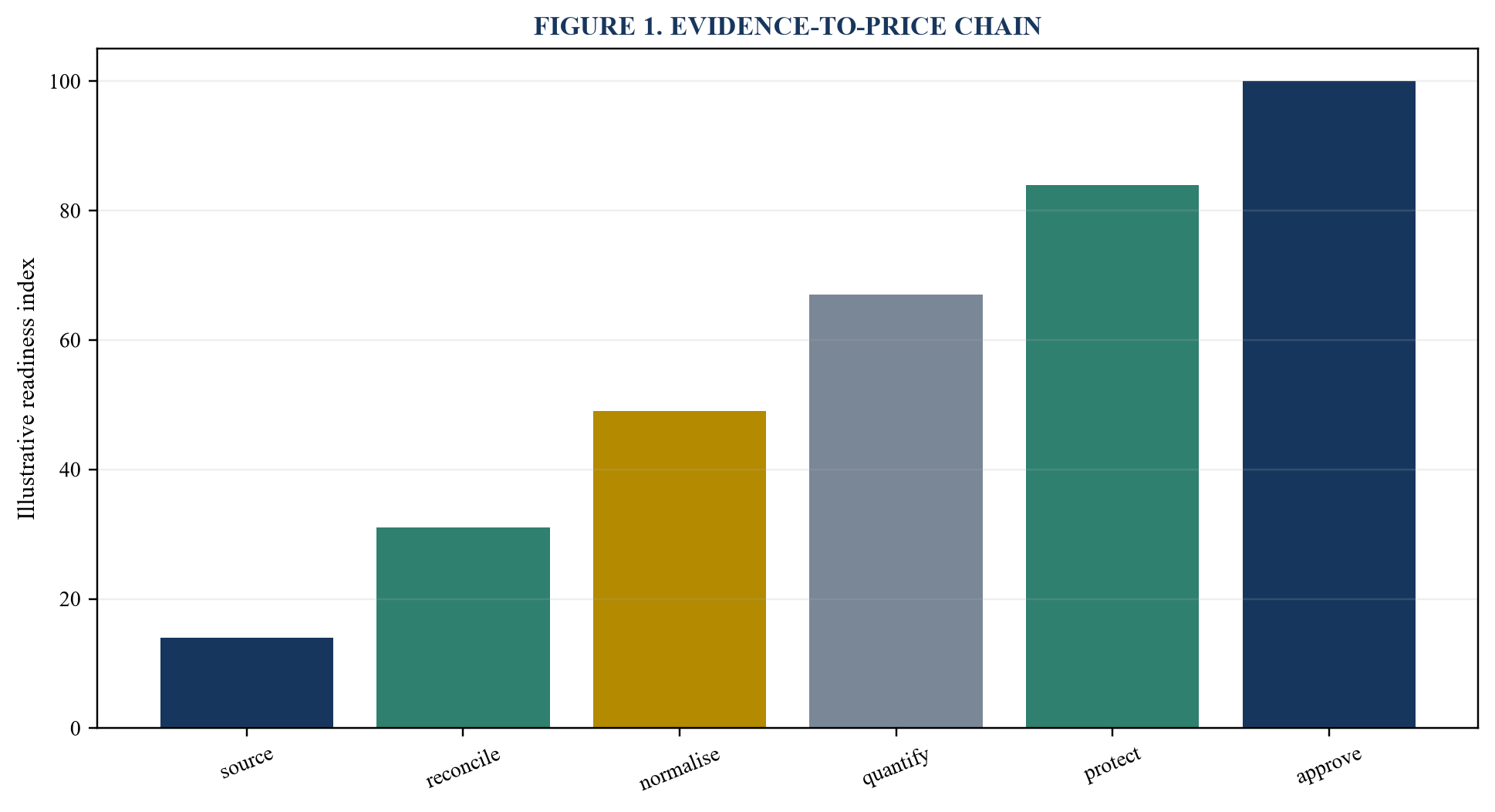
Values are illustrative readiness indices and require transaction-specific evidence.
9. Test customer durability
Analyse concentration, cohort retention, pricing, contractual rights, churn, pipeline conversion and collection history.
The controlled record should show the relevant period, legal entity, account or issue, transaction definition, source data, reconciliation, preparer, reviewer, materiality, buyer position, seller position, quantified proceeds effect, available protection, owner, deadline and approval. The immediate deliverable is a customer-value evidence pack.
The principal failure occurs when one customer event is extrapolated across the whole forecast. Reviewers should distinguish accounting measurement, contractual allocation, commercial judgement and negotiation posture; reproduce the calculation; test cut-off and consistency; identify double counting; and compare a price change with narrower protections such as disclosure, covenant, escrow, indemnity, warranty, holdback or expert determination.
The decision pack for test customer durability should state the original LOI position, current evidence, proposed change, causation, materiality, scenario range, time effect, counterparty dependency, response options, authority and next gate. Material exceptions should flow into the price bridge, diligence plan, SPA drafting, negotiation mandate, board paper and closing funds flow.
10. Test gross margin
Reconcile price, volume, mix, input cost, labour, freight, rebates, utilisation and accounting classification.
The controlled record should show the relevant period, legal entity, account or issue, transaction definition, source data, reconciliation, preparer, reviewer, materiality, buyer position, seller position, quantified proceeds effect, available protection, owner, deadline and approval. The immediate deliverable is a gross-margin waterfall.
The principal failure occurs when margin movement is attributed to quality without a driver bridge. Reviewers should distinguish accounting measurement, contractual allocation, commercial judgement and negotiation posture; reproduce the calculation; test cut-off and consistency; identify double counting; and compare a price change with narrower protections such as disclosure, covenant, escrow, indemnity, warranty, holdback or expert determination.
The decision pack for test gross margin should state the original LOI position, current evidence, proposed change, causation, materiality, scenario range, time effect, counterparty dependency, response options, authority and next gate. Material exceptions should flow into the price bridge, diligence plan, SPA drafting, negotiation mandate, board paper and closing funds flow.
11. Define net working capital
Write the exact included and excluded account map, sign conventions, currency treatment and relationship to cash, debt and transaction expenses.
The controlled record should show the relevant period, legal entity, account or issue, transaction definition, source data, reconciliation, preparer, reviewer, materiality, buyer position, seller position, quantified proceeds effect, available protection, owner, deadline and approval. The immediate deliverable is a working-capital definition matrix.
The principal failure occurs when accounting labels replace negotiated economic definitions. Reviewers should distinguish accounting measurement, contractual allocation, commercial judgement and negotiation posture; reproduce the calculation; test cut-off and consistency; identify double counting; and compare a price change with narrower protections such as disclosure, covenant, escrow, indemnity, warranty, holdback or expert determination.
The decision pack for define net working capital should state the original LOI position, current evidence, proposed change, causation, materiality, scenario range, time effect, counterparty dependency, response options, authority and next gate. Material exceptions should flow into the price bridge, diligence plan, SPA drafting, negotiation mandate, board paper and closing funds flow.
12. Set the working-capital peg
Use monthly history, seasonality, growth, business change, cut-off quality and forecast requirements to establish a representative target.
The controlled record should show the relevant period, legal entity, account or issue, transaction definition, source data, reconciliation, preparer, reviewer, materiality, buyer position, seller position, quantified proceeds effect, available protection, owner, deadline and approval. The immediate deliverable is a peg analysis with sensitivity bands.
The principal failure occurs when a simple average embeds abnormal periods or penalises growth. Reviewers should distinguish accounting measurement, contractual allocation, commercial judgement and negotiation posture; reproduce the calculation; test cut-off and consistency; identify double counting; and compare a price change with narrower protections such as disclosure, covenant, escrow, indemnity, warranty, holdback or expert determination.
The decision pack for set the working-capital peg should state the original LOI position, current evidence, proposed change, causation, materiality, scenario range, time effect, counterparty dependency, response options, authority and next gate. Material exceptions should flow into the price bridge, diligence plan, SPA drafting, negotiation mandate, board paper and closing funds flow.
13. Control accounting consistency
Agree hierarchy among transaction definitions, example calculations, historical policies, consistency and applicable accounting standards.
The controlled record should show the relevant period, legal entity, account or issue, transaction definition, source data, reconciliation, preparer, reviewer, materiality, buyer position, seller position, quantified proceeds effect, available protection, owner, deadline and approval. The immediate deliverable is an accounting-principles hierarchy.
The principal failure occurs when the buyer applies a new policy selectively at completion. Reviewers should distinguish accounting measurement, contractual allocation, commercial judgement and negotiation posture; reproduce the calculation; test cut-off and consistency; identify double counting; and compare a price change with narrower protections such as disclosure, covenant, escrow, indemnity, warranty, holdback or expert determination.
The decision pack for control accounting consistency should state the original LOI position, current evidence, proposed change, causation, materiality, scenario range, time effect, counterparty dependency, response options, authority and next gate. Material exceptions should flow into the price bridge, diligence plan, SPA drafting, negotiation mandate, board paper and closing funds flow.
14. Analyse receivables
Age balances, test subsequent cash, disputes, credits, concentration, related parties and expected losses.
The controlled record should show the relevant period, legal entity, account or issue, transaction definition, source data, reconciliation, preparer, reviewer, materiality, buyer position, seller position, quantified proceeds effect, available protection, owner, deadline and approval. The immediate deliverable is a receivables recovery schedule.
The principal failure occurs when gross receivables are treated as cash-equivalent without collectability evidence. Reviewers should distinguish accounting measurement, contractual allocation, commercial judgement and negotiation posture; reproduce the calculation; test cut-off and consistency; identify double counting; and compare a price change with narrower protections such as disclosure, covenant, escrow, indemnity, warranty, holdback or expert determination.
The decision pack for analyse receivables should state the original LOI position, current evidence, proposed change, causation, materiality, scenario range, time effect, counterparty dependency, response options, authority and next gate. Material exceptions should flow into the price bridge, diligence plan, SPA drafting, negotiation mandate, board paper and closing funds flow.
15. Analyse inventory
Test quantities, ownership, cut-off, ageing, obsolescence, reserves, net realisable value and consignment.
The controlled record should show the relevant period, legal entity, account or issue, transaction definition, source data, reconciliation, preparer, reviewer, materiality, buyer position, seller position, quantified proceeds effect, available protection, owner, deadline and approval. The immediate deliverable is an inventory evidence schedule.
The principal failure occurs when slow or excess stock enters the price bridge at unsupported carrying value. Reviewers should distinguish accounting measurement, contractual allocation, commercial judgement and negotiation posture; reproduce the calculation; test cut-off and consistency; identify double counting; and compare a price change with narrower protections such as disclosure, covenant, escrow, indemnity, warranty, holdback or expert determination.
The decision pack for analyse inventory should state the original LOI position, current evidence, proposed change, causation, materiality, scenario range, time effect, counterparty dependency, response options, authority and next gate. Material exceptions should flow into the price bridge, diligence plan, SPA drafting, negotiation mandate, board paper and closing funds flow.
16. Analyse payables and accruals
Reconcile supplier statements, unmatched receipts, payroll, bonuses, tax, rebates and unrecorded liabilities.
The controlled record should show the relevant period, legal entity, account or issue, transaction definition, source data, reconciliation, preparer, reviewer, materiality, buyer position, seller position, quantified proceeds effect, available protection, owner, deadline and approval. The immediate deliverable is an accrual completeness file.
The principal failure occurs when ordinary operating liabilities are reclassified as debt-like after exclusivity. Reviewers should distinguish accounting measurement, contractual allocation, commercial judgement and negotiation posture; reproduce the calculation; test cut-off and consistency; identify double counting; and compare a price change with narrower protections such as disclosure, covenant, escrow, indemnity, warranty, holdback or expert determination.
The decision pack for analyse payables and accruals should state the original LOI position, current evidence, proposed change, causation, materiality, scenario range, time effect, counterparty dependency, response options, authority and next gate. Material exceptions should flow into the price bridge, diligence plan, SPA drafting, negotiation mandate, board paper and closing funds flow.
Table 2. Working-capital control
| Component | Core test | Control |
|---|---|---|
| receivables | subsequent cash | ageing and disputes |
| inventory | quantity and NRV | reserve policy |
| payables | completeness | supplier reconciliation |
| accruals | cut-off | unrecorded-liability test |
Illustrative control structure; transaction-specific definitions and evidence govern.
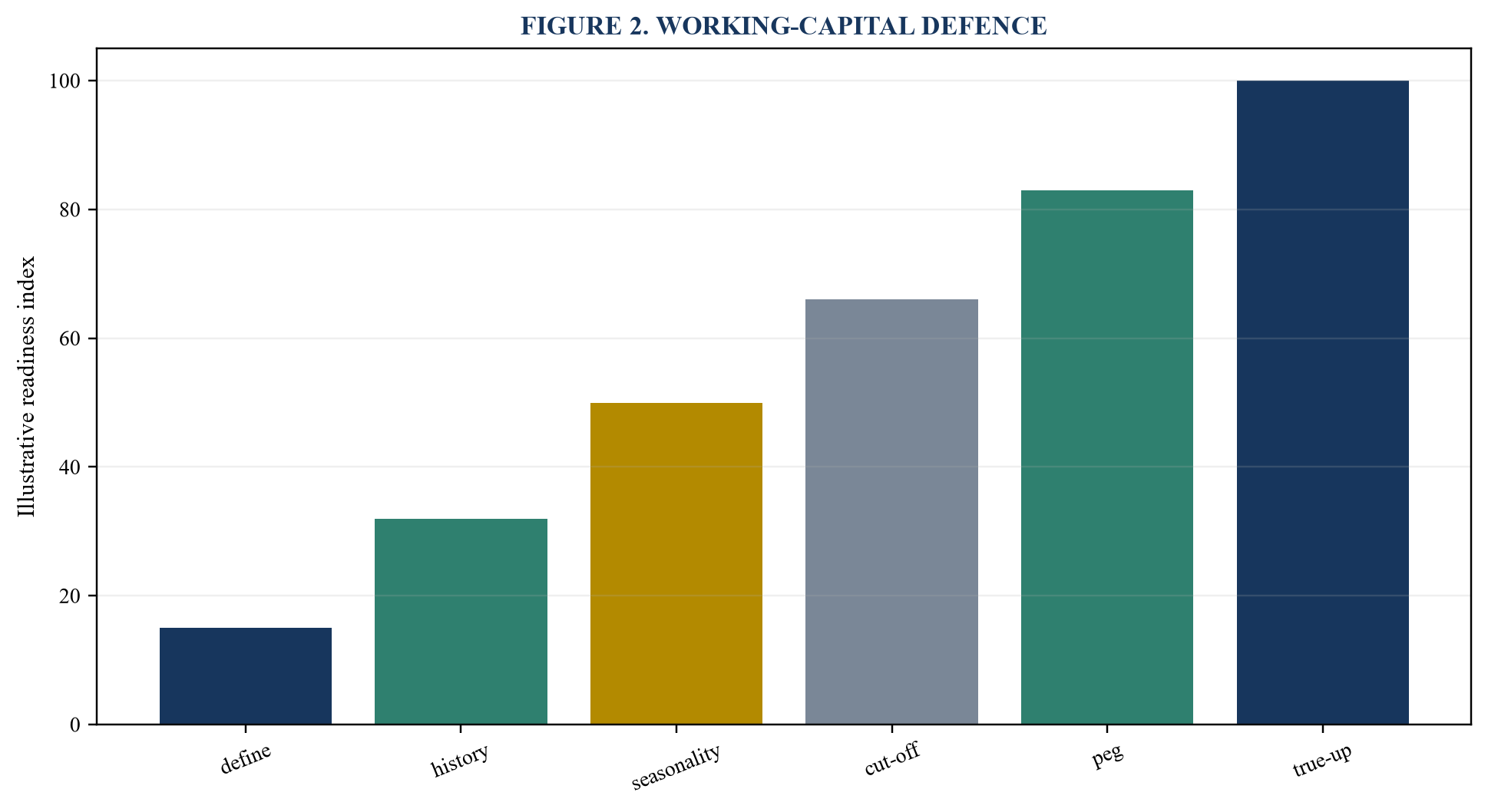
Values are illustrative readiness indices and require transaction-specific evidence.
17. Map cash and debt
Define cash-like and debt-like items, trapped cash, overdrafts, leases, factoring, guarantees, shareholder balances and derivatives.
The controlled record should show the relevant period, legal entity, account or issue, transaction definition, source data, reconciliation, preparer, reviewer, materiality, buyer position, seller position, quantified proceeds effect, available protection, owner, deadline and approval. The immediate deliverable is a debt-like items taxonomy.
The principal failure occurs when the same item is deducted twice or shifted between working capital and debt. Reviewers should distinguish accounting measurement, contractual allocation, commercial judgement and negotiation posture; reproduce the calculation; test cut-off and consistency; identify double counting; and compare a price change with narrower protections such as disclosure, covenant, escrow, indemnity, warranty, holdback or expert determination.
The decision pack for map cash and debt should state the original LOI position, current evidence, proposed change, causation, materiality, scenario range, time effect, counterparty dependency, response options, authority and next gate. Material exceptions should flow into the price bridge, diligence plan, SPA drafting, negotiation mandate, board paper and closing funds flow.
18. Map transaction expenses
Identify advisory, bonus, change-of-control, retention, tax, settlement and financing costs with payment responsibility.
The controlled record should show the relevant period, legal entity, account or issue, transaction definition, source data, reconciliation, preparer, reviewer, materiality, buyer position, seller position, quantified proceeds effect, available protection, owner, deadline and approval. The immediate deliverable is a transaction-cost schedule.
The principal failure occurs when late invoices and contingent fees create an unanticipated equity-value deduction. Reviewers should distinguish accounting measurement, contractual allocation, commercial judgement and negotiation posture; reproduce the calculation; test cut-off and consistency; identify double counting; and compare a price change with narrower protections such as disclosure, covenant, escrow, indemnity, warranty, holdback or expert determination.
The decision pack for map transaction expenses should state the original LOI position, current evidence, proposed change, causation, materiality, scenario range, time effect, counterparty dependency, response options, authority and next gate. Material exceptions should flow into the price bridge, diligence plan, SPA drafting, negotiation mandate, board paper and closing funds flow.
19. Choose the completion mechanism
Compare locked box, completion accounts and controlled hybrids against data quality, business volatility and timing.
The controlled record should show the relevant period, legal entity, account or issue, transaction definition, source data, reconciliation, preparer, reviewer, materiality, buyer position, seller position, quantified proceeds effect, available protection, owner, deadline and approval. The immediate deliverable is a completion-mechanism decision paper.
The principal failure occurs when the mechanism is selected by custom rather than the target's evidence capability. Reviewers should distinguish accounting measurement, contractual allocation, commercial judgement and negotiation posture; reproduce the calculation; test cut-off and consistency; identify double counting; and compare a price change with narrower protections such as disclosure, covenant, escrow, indemnity, warranty, holdback or expert determination.
The decision pack for choose the completion mechanism should state the original LOI position, current evidence, proposed change, causation, materiality, scenario range, time effect, counterparty dependency, response options, authority and next gate. Material exceptions should flow into the price bridge, diligence plan, SPA drafting, negotiation mandate, board paper and closing funds flow.
20. Design locked-box protection
Specify leakage, permitted leakage, value accrual, warranty coverage, monitoring and claims process.
The controlled record should show the relevant period, legal entity, account or issue, transaction definition, source data, reconciliation, preparer, reviewer, materiality, buyer position, seller position, quantified proceeds effect, available protection, owner, deadline and approval. The immediate deliverable is a locked-box control schedule.
The principal failure occurs when price certainty is undermined by ambiguous value transfers. Reviewers should distinguish accounting measurement, contractual allocation, commercial judgement and negotiation posture; reproduce the calculation; test cut-off and consistency; identify double counting; and compare a price change with narrower protections such as disclosure, covenant, escrow, indemnity, warranty, holdback or expert determination.
The decision pack for design locked-box protection should state the original LOI position, current evidence, proposed change, causation, materiality, scenario range, time effect, counterparty dependency, response options, authority and next gate. Material exceptions should flow into the price bridge, diligence plan, SPA drafting, negotiation mandate, board paper and closing funds flow.
21. Design completion accounts
Specify estimates, delivery dates, access, objections, expert determination, calculation examples and settlement.
The controlled record should show the relevant period, legal entity, account or issue, transaction definition, source data, reconciliation, preparer, reviewer, materiality, buyer position, seller position, quantified proceeds effect, available protection, owner, deadline and approval. The immediate deliverable is a completion-accounts protocol.
The principal failure occurs when post-close arithmetic becomes a broad second diligence process. Reviewers should distinguish accounting measurement, contractual allocation, commercial judgement and negotiation posture; reproduce the calculation; test cut-off and consistency; identify double counting; and compare a price change with narrower protections such as disclosure, covenant, escrow, indemnity, warranty, holdback or expert determination.
The decision pack for design completion accounts should state the original LOI position, current evidence, proposed change, causation, materiality, scenario range, time effect, counterparty dependency, response options, authority and next gate. Material exceptions should flow into the price bridge, diligence plan, SPA drafting, negotiation mandate, board paper and closing funds flow.
22. Control the reference period
Freeze the baseline dataset, chart of accounts, management adjustments, policies and source systems used for price.
The controlled record should show the relevant period, legal entity, account or issue, transaction definition, source data, reconciliation, preparer, reviewer, materiality, buyer position, seller position, quantified proceeds effect, available protection, owner, deadline and approval. The immediate deliverable is a signed reference-data pack.
The principal failure occurs when successive data cuts move the benchmark and create artificial deterioration. Reviewers should distinguish accounting measurement, contractual allocation, commercial judgement and negotiation posture; reproduce the calculation; test cut-off and consistency; identify double counting; and compare a price change with narrower protections such as disclosure, covenant, escrow, indemnity, warranty, holdback or expert determination.
The decision pack for control the reference period should state the original LOI position, current evidence, proposed change, causation, materiality, scenario range, time effect, counterparty dependency, response options, authority and next gate. Material exceptions should flow into the price bridge, diligence plan, SPA drafting, negotiation mandate, board paper and closing funds flow.
23. Run the weekly price bridge
Track movements from LOI enterprise value to current expected proceeds with cause, evidence, owner and status.
The controlled record should show the relevant period, legal entity, account or issue, transaction definition, source data, reconciliation, preparer, reviewer, materiality, buyer position, seller position, quantified proceeds effect, available protection, owner, deadline and approval. The immediate deliverable is a weekly value-at-risk dashboard.
The principal failure occurs when price risk emerges only when final documents arrive. Reviewers should distinguish accounting measurement, contractual allocation, commercial judgement and negotiation posture; reproduce the calculation; test cut-off and consistency; identify double counting; and compare a price change with narrower protections such as disclosure, covenant, escrow, indemnity, warranty, holdback or expert determination.
The decision pack for run the weekly price bridge should state the original LOI position, current evidence, proposed change, causation, materiality, scenario range, time effect, counterparty dependency, response options, authority and next gate. Material exceptions should flow into the price bridge, diligence plan, SPA drafting, negotiation mandate, board paper and closing funds flow.
24. Separate findings from proposals
Require every buyer issue to state fact, source, quantum, recurrence, agreement basis and requested remedy.
The controlled record should show the relevant period, legal entity, account or issue, transaction definition, source data, reconciliation, preparer, reviewer, materiality, buyer position, seller position, quantified proceeds effect, available protection, owner, deadline and approval. The immediate deliverable is a finding-to-remedy register.
The principal failure occurs when allegations and negotiating asks are blended together. Reviewers should distinguish accounting measurement, contractual allocation, commercial judgement and negotiation posture; reproduce the calculation; test cut-off and consistency; identify double counting; and compare a price change with narrower protections such as disclosure, covenant, escrow, indemnity, warranty, holdback or expert determination.
The decision pack for separate findings from proposals should state the original LOI position, current evidence, proposed change, causation, materiality, scenario range, time effect, counterparty dependency, response options, authority and next gate. Material exceptions should flow into the price bridge, diligence plan, SPA drafting, negotiation mandate, board paper and closing funds flow.
Table 3. Finding-to-remedy discipline
| Issue class | Evidence question | Proportionate response |
|---|---|---|
| temporary | timing and recovery | working-capital true-up |
| bounded | maximum exposure | escrow or indemnity |
| uncertain | resolution evidence | contingent mechanism |
| structural | recurring cash effect | valuation review |
Illustrative control structure; transaction-specific definitions and evidence govern.
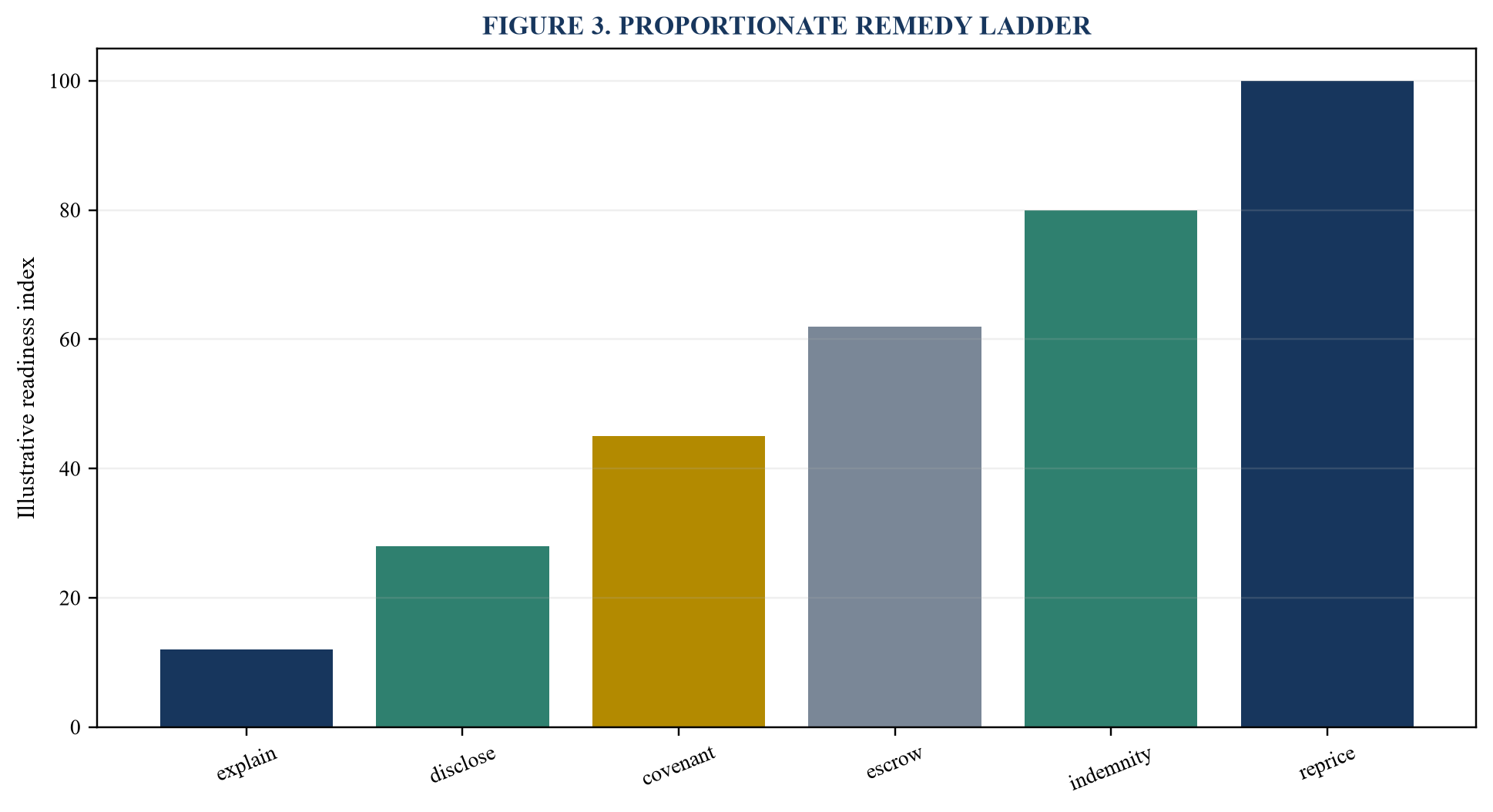
Values are illustrative readiness indices and require transaction-specific evidence.
25. Apply materiality
Set financial and qualitative thresholds by issue, period and aggregation rule.
The controlled record should show the relevant period, legal entity, account or issue, transaction definition, source data, reconciliation, preparer, reviewer, materiality, buyer position, seller position, quantified proceeds effect, available protection, owner, deadline and approval. The immediate deliverable is a materiality and escalation policy.
The principal failure occurs when immaterial diligence noise consumes management attention and weakens major arguments. Reviewers should distinguish accounting measurement, contractual allocation, commercial judgement and negotiation posture; reproduce the calculation; test cut-off and consistency; identify double counting; and compare a price change with narrower protections such as disclosure, covenant, escrow, indemnity, warranty, holdback or expert determination.
The decision pack for apply materiality should state the original LOI position, current evidence, proposed change, causation, materiality, scenario range, time effect, counterparty dependency, response options, authority and next gate. Material exceptions should flow into the price bridge, diligence plan, SPA drafting, negotiation mandate, board paper and closing funds flow.
26. Test causation
Distinguish pre-existing known conditions, new information, post-LOI trading, buyer assumptions and external change.
The controlled record should show the relevant period, legal entity, account or issue, transaction definition, source data, reconciliation, preparer, reviewer, materiality, buyer position, seller position, quantified proceeds effect, available protection, owner, deadline and approval. The immediate deliverable is a causation assessment.
The principal failure occurs when known facts are relabelled as new adverse discoveries. Reviewers should distinguish accounting measurement, contractual allocation, commercial judgement and negotiation posture; reproduce the calculation; test cut-off and consistency; identify double counting; and compare a price change with narrower protections such as disclosure, covenant, escrow, indemnity, warranty, holdback or expert determination.
The decision pack for test causation should state the original LOI position, current evidence, proposed change, causation, materiality, scenario range, time effect, counterparty dependency, response options, authority and next gate. Material exceptions should flow into the price bridge, diligence plan, SPA drafting, negotiation mandate, board paper and closing funds flow.
27. Quantify remedies
Model price adjustment, escrow, indemnity, warranty, covenant, holdback, earn-out and disclosure alternatives.
The controlled record should show the relevant period, legal entity, account or issue, transaction definition, source data, reconciliation, preparer, reviewer, materiality, buyer position, seller position, quantified proceeds effect, available protection, owner, deadline and approval. The immediate deliverable is a remedy-equivalence model.
The principal failure occurs when permanent headline price cuts are used for temporary or bounded risks. Reviewers should distinguish accounting measurement, contractual allocation, commercial judgement and negotiation posture; reproduce the calculation; test cut-off and consistency; identify double counting; and compare a price change with narrower protections such as disclosure, covenant, escrow, indemnity, warranty, holdback or expert determination.
The decision pack for quantify remedies should state the original LOI position, current evidence, proposed change, causation, materiality, scenario range, time effect, counterparty dependency, response options, authority and next gate. Material exceptions should flow into the price bridge, diligence plan, SPA drafting, negotiation mandate, board paper and closing funds flow.
28. Control scope change
Require written reason, decision owner, timing effect and price relevance for every new request.
The controlled record should show the relevant period, legal entity, account or issue, transaction definition, source data, reconciliation, preparer, reviewer, materiality, buyer position, seller position, quantified proceeds effect, available protection, owner, deadline and approval. The immediate deliverable is a scope-change log.
The principal failure occurs when diligence expands continuously during exclusivity. Reviewers should distinguish accounting measurement, contractual allocation, commercial judgement and negotiation posture; reproduce the calculation; test cut-off and consistency; identify double counting; and compare a price change with narrower protections such as disclosure, covenant, escrow, indemnity, warranty, holdback or expert determination.
The decision pack for control scope change should state the original LOI position, current evidence, proposed change, causation, materiality, scenario range, time effect, counterparty dependency, response options, authority and next gate. Material exceptions should flow into the price bridge, diligence plan, SPA drafting, negotiation mandate, board paper and closing funds flow.
29. Prepare the retrade response
Answer each proposed reduction with evidence, contract basis, counter-quantum, alternative protection and decision deadline.
The controlled record should show the relevant period, legal entity, account or issue, transaction definition, source data, reconciliation, preparer, reviewer, materiality, buyer position, seller position, quantified proceeds effect, available protection, owner, deadline and approval. The immediate deliverable is a retrade defence memorandum.
The principal failure occurs when the seller responds emotionally or concedes issue by issue. Reviewers should distinguish accounting measurement, contractual allocation, commercial judgement and negotiation posture; reproduce the calculation; test cut-off and consistency; identify double counting; and compare a price change with narrower protections such as disclosure, covenant, escrow, indemnity, warranty, holdback or expert determination.
The decision pack for prepare the retrade response should state the original LOI position, current evidence, proposed change, causation, materiality, scenario range, time effect, counterparty dependency, response options, authority and next gate. Material exceptions should flow into the price bridge, diligence plan, SPA drafting, negotiation mandate, board paper and closing funds flow.
30. Manage information asymmetry
Track what buyer teams, lenders, insurers, advisers and investment committees have received and approved.
The controlled record should show the relevant period, legal entity, account or issue, transaction definition, source data, reconciliation, preparer, reviewer, materiality, buyer position, seller position, quantified proceeds effect, available protection, owner, deadline and approval. The immediate deliverable is a stakeholder evidence map.
The principal failure occurs when one stakeholder reopens an issue already resolved elsewhere. Reviewers should distinguish accounting measurement, contractual allocation, commercial judgement and negotiation posture; reproduce the calculation; test cut-off and consistency; identify double counting; and compare a price change with narrower protections such as disclosure, covenant, escrow, indemnity, warranty, holdback or expert determination.
The decision pack for manage information asymmetry should state the original LOI position, current evidence, proposed change, causation, materiality, scenario range, time effect, counterparty dependency, response options, authority and next gate. Material exceptions should flow into the price bridge, diligence plan, SPA drafting, negotiation mandate, board paper and closing funds flow.
31. Control management access
Use agendas, rehearsed fact ownership, answer logs, follow-ups and adviser attendance for material sessions.
The controlled record should show the relevant period, legal entity, account or issue, transaction definition, source data, reconciliation, preparer, reviewer, materiality, buyer position, seller position, quantified proceeds effect, available protection, owner, deadline and approval. The immediate deliverable is a management-session protocol.
The principal failure occurs when inconsistent verbal answers create avoidable credibility gaps. Reviewers should distinguish accounting measurement, contractual allocation, commercial judgement and negotiation posture; reproduce the calculation; test cut-off and consistency; identify double counting; and compare a price change with narrower protections such as disclosure, covenant, escrow, indemnity, warranty, holdback or expert determination.
The decision pack for control management access should state the original LOI position, current evidence, proposed change, causation, materiality, scenario range, time effect, counterparty dependency, response options, authority and next gate. Material exceptions should flow into the price bridge, diligence plan, SPA drafting, negotiation mandate, board paper and closing funds flow.
32. Protect forecast credibility
Reconcile actuals to forecast, explain variances, update scenarios and isolate buyer-owned assumptions.
The controlled record should show the relevant period, legal entity, account or issue, transaction definition, source data, reconciliation, preparer, reviewer, materiality, buyer position, seller position, quantified proceeds effect, available protection, owner, deadline and approval. The immediate deliverable is a forecast-control pack.
The principal failure occurs when one missed month is treated as a structural failure. Reviewers should distinguish accounting measurement, contractual allocation, commercial judgement and negotiation posture; reproduce the calculation; test cut-off and consistency; identify double counting; and compare a price change with narrower protections such as disclosure, covenant, escrow, indemnity, warranty, holdback or expert determination.
The decision pack for protect forecast credibility should state the original LOI position, current evidence, proposed change, causation, materiality, scenario range, time effect, counterparty dependency, response options, authority and next gate. Material exceptions should flow into the price bridge, diligence plan, SPA drafting, negotiation mandate, board paper and closing funds flow.
Table 4. Retrade response matrix
| Buyer claim | Seller test | Decision output |
|---|---|---|
| earnings | recurrence and causation | normalised EBITDA |
| working capital | definition and peg | equity bridge |
| debt-like | classification and duplication | item treatment |
| scope | LOI and materiality | accept or reject |
Illustrative control structure; transaction-specific definitions and evidence govern.
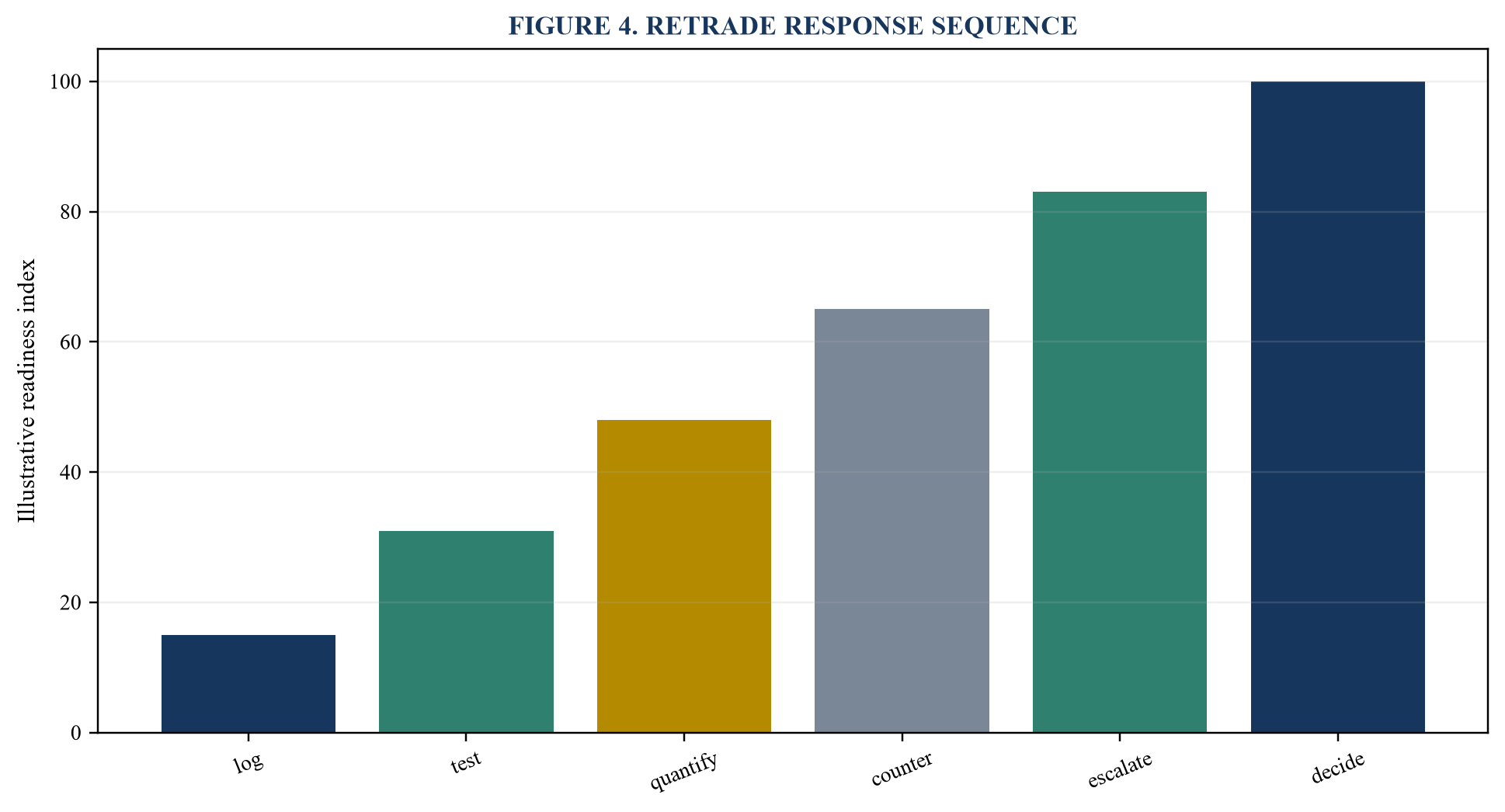
Values are illustrative readiness indices and require transaction-specific evidence.
33. Design the negotiation ladder
Pre-agree authority, priorities, tradable protections, walk-away conditions and escalation sequence.
The controlled record should show the relevant period, legal entity, account or issue, transaction definition, source data, reconciliation, preparer, reviewer, materiality, buyer position, seller position, quantified proceeds effect, available protection, owner, deadline and approval. The immediate deliverable is a negotiation mandate.
The principal failure occurs when commercial concessions are made without portfolio-level control. Reviewers should distinguish accounting measurement, contractual allocation, commercial judgement and negotiation posture; reproduce the calculation; test cut-off and consistency; identify double counting; and compare a price change with narrower protections such as disclosure, covenant, escrow, indemnity, warranty, holdback or expert determination.
The decision pack for design the negotiation ladder should state the original LOI position, current evidence, proposed change, causation, materiality, scenario range, time effect, counterparty dependency, response options, authority and next gate. Material exceptions should flow into the price bridge, diligence plan, SPA drafting, negotiation mandate, board paper and closing funds flow.
34. Price delay and optionality
Quantify operating exposure, financing carry, customer risk, employee risk and alternative-bid decay through time.
The controlled record should show the relevant period, legal entity, account or issue, transaction definition, source data, reconciliation, preparer, reviewer, materiality, buyer position, seller position, quantified proceeds effect, available protection, owner, deadline and approval. The immediate deliverable is an exclusivity extension price.
The principal failure occurs when extensions are granted without valuing the cost of lost options. Reviewers should distinguish accounting measurement, contractual allocation, commercial judgement and negotiation posture; reproduce the calculation; test cut-off and consistency; identify double counting; and compare a price change with narrower protections such as disclosure, covenant, escrow, indemnity, warranty, holdback or expert determination.
The decision pack for price delay and optionality should state the original LOI position, current evidence, proposed change, causation, materiality, scenario range, time effect, counterparty dependency, response options, authority and next gate. Material exceptions should flow into the price bridge, diligence plan, SPA drafting, negotiation mandate, board paper and closing funds flow.
35. Maintain deal certainty
Track financing, approvals, antitrust, consents, insurance, documentation and closing dependencies alongside price.
The controlled record should show the relevant period, legal entity, account or issue, transaction definition, source data, reconciliation, preparer, reviewer, materiality, buyer position, seller position, quantified proceeds effect, available protection, owner, deadline and approval. The immediate deliverable is a buyer-certainty scorecard.
The principal failure occurs when the seller protects value while buyer execution risk silently rises. Reviewers should distinguish accounting measurement, contractual allocation, commercial judgement and negotiation posture; reproduce the calculation; test cut-off and consistency; identify double counting; and compare a price change with narrower protections such as disclosure, covenant, escrow, indemnity, warranty, holdback or expert determination.
The decision pack for maintain deal certainty should state the original LOI position, current evidence, proposed change, causation, materiality, scenario range, time effect, counterparty dependency, response options, authority and next gate. Material exceptions should flow into the price bridge, diligence plan, SPA drafting, negotiation mandate, board paper and closing funds flow.
36. Draft dispute architecture
Align expert determination, arbitration, courts, scope, timetable, evidence, costs and finality to each issue class.
The controlled record should show the relevant period, legal entity, account or issue, transaction definition, source data, reconciliation, preparer, reviewer, materiality, buyer position, seller position, quantified proceeds effect, available protection, owner, deadline and approval. The immediate deliverable is a dispute-resolution map.
The principal failure occurs when the wrong forum decides accounting or contractual questions. Reviewers should distinguish accounting measurement, contractual allocation, commercial judgement and negotiation posture; reproduce the calculation; test cut-off and consistency; identify double counting; and compare a price change with narrower protections such as disclosure, covenant, escrow, indemnity, warranty, holdback or expert determination.
The decision pack for draft dispute architecture should state the original LOI position, current evidence, proposed change, causation, materiality, scenario range, time effect, counterparty dependency, response options, authority and next gate. Material exceptions should flow into the price bridge, diligence plan, SPA drafting, negotiation mandate, board paper and closing funds flow.
37. Run downside scenarios
Model base, trading miss, delayed close, working-capital shortfall, debt-like claim and combined stress cases.
The controlled record should show the relevant period, legal entity, account or issue, transaction definition, source data, reconciliation, preparer, reviewer, materiality, buyer position, seller position, quantified proceeds effect, available protection, owner, deadline and approval. The immediate deliverable is a net-proceeds scenario model.
The principal failure occurs when the board evaluates each issue separately and misses cumulative proceeds risk. Reviewers should distinguish accounting measurement, contractual allocation, commercial judgement and negotiation posture; reproduce the calculation; test cut-off and consistency; identify double counting; and compare a price change with narrower protections such as disclosure, covenant, escrow, indemnity, warranty, holdback or expert determination.
The decision pack for run downside scenarios should state the original LOI position, current evidence, proposed change, causation, materiality, scenario range, time effect, counterparty dependency, response options, authority and next gate. Material exceptions should flow into the price bridge, diligence plan, SPA drafting, negotiation mandate, board paper and closing funds flow.
38. Prepare the board decision
Present current proceeds, probabilities, alternatives, time cost, execution risk, stakeholder effects and recommendation.
The controlled record should show the relevant period, legal entity, account or issue, transaction definition, source data, reconciliation, preparer, reviewer, materiality, buyer position, seller position, quantified proceeds effect, available protection, owner, deadline and approval. The immediate deliverable is a board value-protection paper.
The principal failure occurs when the board sees headline price without the complete risk-adjusted choice. Reviewers should distinguish accounting measurement, contractual allocation, commercial judgement and negotiation posture; reproduce the calculation; test cut-off and consistency; identify double counting; and compare a price change with narrower protections such as disclosure, covenant, escrow, indemnity, warranty, holdback or expert determination.
The decision pack for prepare the board decision should state the original LOI position, current evidence, proposed change, causation, materiality, scenario range, time effect, counterparty dependency, response options, authority and next gate. Material exceptions should flow into the price bridge, diligence plan, SPA drafting, negotiation mandate, board paper and closing funds flow.
39. Execute the first thirty days
Sequence definitions, evidence, quality of earnings, working-capital, drafting, buyer cadence and escalation.
The controlled record should show the relevant period, legal entity, account or issue, transaction definition, source data, reconciliation, preparer, reviewer, materiality, buyer position, seller position, quantified proceeds effect, available protection, owner, deadline and approval. The immediate deliverable is a thirty-day retrade-readiness plan.
The principal failure occurs when seller preparation begins only after the buyer raises an issue. Reviewers should distinguish accounting measurement, contractual allocation, commercial judgement and negotiation posture; reproduce the calculation; test cut-off and consistency; identify double counting; and compare a price change with narrower protections such as disclosure, covenant, escrow, indemnity, warranty, holdback or expert determination.
The decision pack for execute the first thirty days should state the original LOI position, current evidence, proposed change, causation, materiality, scenario range, time effect, counterparty dependency, response options, authority and next gate. Material exceptions should flow into the price bridge, diligence plan, SPA drafting, negotiation mandate, board paper and closing funds flow.
40. Close through evidence gates
Require reconciled earnings, agreed definitions, scoped diligence, controlled changes, authorised remedies and verified proceeds.
The controlled record should show the relevant period, legal entity, account or issue, transaction definition, source data, reconciliation, preparer, reviewer, materiality, buyer position, seller position, quantified proceeds effect, available protection, owner, deadline and approval. The immediate deliverable is an accountable close certificate.
The principal failure occurs when completion is treated as document signature rather than a value-control process. Reviewers should distinguish accounting measurement, contractual allocation, commercial judgement and negotiation posture; reproduce the calculation; test cut-off and consistency; identify double counting; and compare a price change with narrower protections such as disclosure, covenant, escrow, indemnity, warranty, holdback or expert determination.
The decision pack for close through evidence gates should state the original LOI position, current evidence, proposed change, causation, materiality, scenario range, time effect, counterparty dependency, response options, authority and next gate. Material exceptions should flow into the price bridge, diligence plan, SPA drafting, negotiation mandate, board paper and closing funds flow.
Table 5. Close evidence gates
| Gate | Required proof | Approval |
|---|---|---|
| economics | reconciled proceeds | deal lead |
| diligence | closed material findings | workstream owners |
| documents | definitions and examples | legal and finance |
| funds flow | verified cash bridge | board or seller |
Illustrative control structure; transaction-specific definitions and evidence govern.
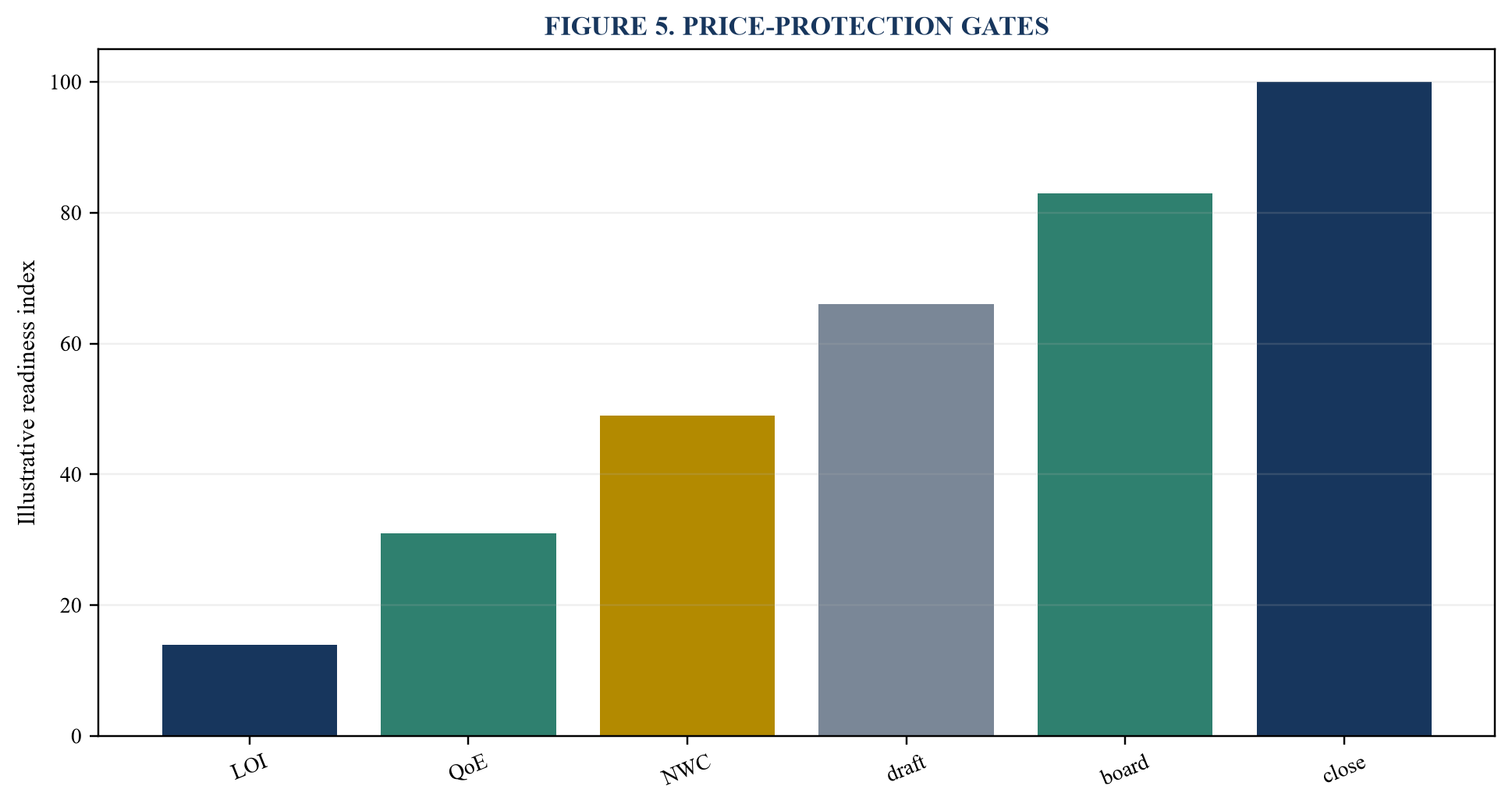
Values are illustrative readiness indices and require transaction-specific evidence.
References
- IFRS Foundation, IFRS 15 Revenue from Contracts with Customers, https://www.ifrs.org/issued-standards/list-of-standards/ifrs-15-revenue-from-contracts-with-customers/
- IFRS Foundation, IAS 2 Inventories, https://www.ifrs.org/issued-standards/list-of-standards/ias-2-inventories/
- IFRS Foundation, IAS 37 Provisions Contingent Liabilities and Contingent Assets, https://www.ifrs.org/issued-standards/list-of-standards/ias-37-provisions-contingent-liabilities-and-contingent-assets/
- IFRS Foundation, IFRS 3 Business Combinations, https://www.ifrs.org/issued-standards/list-of-standards/ifrs-3-business-combinations/
- IFRS Foundation, IFRS 9 Financial Instruments, https://www.ifrs.org/issued-standards/list-of-standards/ifrs-9-financial-instruments/
- IFRS Foundation, IFRS 16 Leases, https://www.ifrs.org/issued-standards/list-of-standards/ifrs-16-leases/
- IFRS Foundation, IAS 7 Statement of Cash Flows, https://www.ifrs.org/issued-standards/list-of-standards/ias-7-statement-of-cash-flows/
- IFRS Foundation, IFRS 13 Fair Value Measurement, https://www.ifrs.org/issued-standards/list-of-standards/ifrs-13-fair-value-measurement/
- US Securities and Exchange Commission, Financial Reporting Manual Topic 2, https://www.sec.gov/corpfin/cf-manual/topic-2
- US Securities and Exchange Commission, Financial Reporting Manual Topic 3, https://www.sec.gov/about/divisions-offices/division-corporation-finance/financial-reporting-manual/frm-topic-3
- US Securities and Exchange Commission, American Woodmark acquisition disclosure, https://www.sec.gov/Archives/edgar/data/794619/000079461919000046/R10.htm
- US Securities and Exchange Commission, SoFi Technisys working-capital disclosure, https://www.sec.gov/Archives/edgar/data/1818874/000181887423000018/R9.htm
- Financial Accounting Standards Board, Acquired Revenue Contracts in a Business Combination, https://fasb.org/news-and-meetings/in-the-news/new-fasb-standard-improves-consistency-in-accounting-for-acquired-revenue-contracts-with-customers-in-a-business-combination-399863
- Financial Accounting Standards Board, Revenue Recognition Implementation, https://fasb.org/page/pccAccordion?bcpath=tff&pageId=%2Fstandards%2Fimplementing%2Frevrec.html
- Institute of Chartered Accountants in England and Wales, Completion Mechanisms, https://www.icaew.com/-/media/corporate/files/technical/corporate-finance/guidelines/icaew-completion-mechanisms-v2.ashx?la=en
- Institute of Chartered Accountants in England and Wales, Effective Financial Due Diligence in Hotel Sales, https://www.icaew.com/technical/media-and-leisure/travel-tourism-and-hospitality/community-insights-and-announcements/hotel-sales-how-to-ensure-an-effective-financial-due-diligence-process
- Delaware Court of Chancery, Chicago Bridge and Iron Company v Westinghouse Electric Company, https://courts.delaware.gov/Opinions/Download.aspx?id=320070
- Delaware Court of Chancery, Matria Healthcare v Coral SR, https://courts.delaware.gov/opinions/%28winnz445qn1px2j4arlycgqb%29/download.aspx?ID=88820
- Delaware Court of Chancery, Viacom International v Winshall, https://courts.delaware.gov/opinions/download.aspx?ID=236280
- Delaware Court of Chancery, Working-capital adjustment opinion, https://courts.delaware.gov/opinions/%28mqglho55x3qr3x45rvtwryef%29/download.aspx?ID=89530
- UK Takeover Panel, The Takeover Code, https://www.thetakeoverpanel.org.uk/the-code
- UK Competition and Markets Authority, Merger Assessment Guidelines, https://www.gov.uk/government/publications/merger-assessment-guidelines
- International Valuation Standards Council, International Valuation Standards, https://www.ivsc.org/standards/
- Organisation for Economic Co-operation and Development, Due Diligence Guidance for Responsible Business Conduct, https://www.oecd.org/investment/due-diligence-guidance-for-responsible-business-conduct.htm
- World Bank Group, Corporate Governance Development Framework, https://www.ifc.org/en/what-we-do/sector-expertise/corporate-governance
- International Auditing and Assurance Standards Board, International Standards on Auditing, https://www.iaasb.org/publications-resources
