

1. Define the founder-exit assurance objective
Determine whether the business can preserve decisions, relationships, delivery and control when the founder changes role or leaves.
The controlled review should reconcile transaction perimeter, founder activities, buyer thesis, timetable and value thresholds. Workpapers identify the role, outcome, owner, authority, evidence period, dependency, alternate coverage, exception and transaction relevance. The immediate output is an approved management-continuity charter.
Testing should distinguish documented design from observed operation. Reviewers trace decisions to source records, compare formal responsibility with recurring behaviour, interview multiple levels, inspect performance over time and test whether deputies can act with the information, authority and resources available. Company-specific context governs every conclusion.
Material gaps should be quantified and assigned an owner, action, evidence requirement and decision date. Consequences flow into the diligence room, forecast, valuation, transition design, incentives, disclosure and transaction protections. Residual dependence remains visible until capability is installed, relationships and knowledge are transferred, operating evidence is produced or risk is explicitly accepted and allocated.
2. Map the management and governance perimeter
Reconcile legal entities, boards, committees, executives, functions, sites, ventures and outsourced leadership.
The controlled review should reconcile organisation charts, governance records, delegations and operating model. Workpapers identify the role, outcome, owner, authority, evidence period, dependency, alternate coverage, exception and transaction relevance. The immediate output is a controlled leadership-perimeter map.
Testing should distinguish documented design from observed operation. Reviewers trace decisions to source records, compare formal responsibility with recurring behaviour, interview multiple levels, inspect performance over time and test whether deputies can act with the information, authority and resources available. Company-specific context governs every conclusion.
Material gaps should be quantified and assigned an owner, action, evidence requirement and decision date. Consequences flow into the diligence room, forecast, valuation, transition design, incentives, disclosure and transaction protections. Residual dependence remains visible until capability is installed, relationships and knowledge are transferred, operating evidence is produced or risk is explicitly accepted and allocated.
3. Build the founder-dependence inventory
Capture every recurring decision, relationship, approval, negotiation, exception and intervention performed by the founder.
The controlled review should reconcile calendars, messages, approvals, meetings, systems, contracts and management interviews. Workpapers identify the role, outcome, owner, authority, evidence period, dependency, alternate coverage, exception and transaction relevance. The immediate output is a founder-activity register.
Testing should distinguish documented design from observed operation. Reviewers trace decisions to source records, compare formal responsibility with recurring behaviour, interview multiple levels, inspect performance over time and test whether deputies can act with the information, authority and resources available. Company-specific context governs every conclusion.
Material gaps should be quantified and assigned an owner, action, evidence requirement and decision date. Consequences flow into the diligence room, forecast, valuation, transition design, incentives, disclosure and transaction protections. Residual dependence remains visible until capability is installed, relationships and knowledge are transferred, operating evidence is produced or risk is explicitly accepted and allocated.
4. Identify critical roles and outcomes
Link roles to revenue, customers, products, operations, cash, risk, compliance and strategic change.
The controlled review should reconcile role charters, KPIs, process maps, incident history and forecasts. Workpapers identify the role, outcome, owner, authority, evidence period, dependency, alternate coverage, exception and transaction relevance. The immediate output is a role-criticality matrix.
Testing should distinguish documented design from observed operation. Reviewers trace decisions to source records, compare formal responsibility with recurring behaviour, interview multiple levels, inspect performance over time and test whether deputies can act with the information, authority and resources available. Company-specific context governs every conclusion.
Material gaps should be quantified and assigned an owner, action, evidence requirement and decision date. Consequences flow into the diligence room, forecast, valuation, transition design, incentives, disclosure and transaction protections. Residual dependence remains visible until capability is installed, relationships and knowledge are transferred, operating evidence is produced or risk is explicitly accepted and allocated.
5. Map decision rights
Specify who proposes, challenges, approves, executes, escalates and records each material decision.
The controlled review should reconcile delegations, authorities, committees, system permissions and observed practice. Workpapers identify the role, outcome, owner, authority, evidence period, dependency, alternate coverage, exception and transaction relevance. The immediate output is a decision-rights ledger.
Testing should distinguish documented design from observed operation. Reviewers trace decisions to source records, compare formal responsibility with recurring behaviour, interview multiple levels, inspect performance over time and test whether deputies can act with the information, authority and resources available. Company-specific context governs every conclusion.
Material gaps should be quantified and assigned an owner, action, evidence requirement and decision date. Consequences flow into the diligence room, forecast, valuation, transition design, incentives, disclosure and transaction protections. Residual dependence remains visible until capability is installed, relationships and knowledge are transferred, operating evidence is produced or risk is explicitly accepted and allocated.
6. Test governance in practice
Compare documented governance with actual meeting cadence, information flow, challenge, follow-through and exception handling.
The controlled review should reconcile agendas, packs, minutes, action logs, approvals and interviews. Workpapers identify the role, outcome, owner, authority, evidence period, dependency, alternate coverage, exception and transaction relevance. The immediate output is a governance operating-evidence file.
Testing should distinguish documented design from observed operation. Reviewers trace decisions to source records, compare formal responsibility with recurring behaviour, interview multiple levels, inspect performance over time and test whether deputies can act with the information, authority and resources available. Company-specific context governs every conclusion.
Material gaps should be quantified and assigned an owner, action, evidence requirement and decision date. Consequences flow into the diligence room, forecast, valuation, transition design, incentives, disclosure and transaction protections. Residual dependence remains visible until capability is installed, relationships and knowledge are transferred, operating evidence is produced or risk is explicitly accepted and allocated.
7. Assess management-team completeness
Test whether strategy, finance, commercial, operations, technology, people, legal and risk capabilities are appropriately covered.
The controlled review should reconcile team design, workloads, performance data, vacancies and succession plans. Workpapers identify the role, outcome, owner, authority, evidence period, dependency, alternate coverage, exception and transaction relevance. The immediate output is a management-capability heat map.
Testing should distinguish documented design from observed operation. Reviewers trace decisions to source records, compare formal responsibility with recurring behaviour, interview multiple levels, inspect performance over time and test whether deputies can act with the information, authority and resources available. Company-specific context governs every conclusion.
Material gaps should be quantified and assigned an owner, action, evidence requirement and decision date. Consequences flow into the diligence room, forecast, valuation, transition design, incentives, disclosure and transaction protections. Residual dependence remains visible until capability is installed, relationships and knowledge are transferred, operating evidence is produced or risk is explicitly accepted and allocated.
8. Assess role depth and succession coverage
Identify ready-now, ready-later and external options for each critical role and quantify time to effectiveness.
The controlled review should reconcile succession slates, assessments, development plans and market benchmarks. Workpapers identify the role, outcome, owner, authority, evidence period, dependency, alternate coverage, exception and transaction relevance. The immediate output is a succession-depth register.
Testing should distinguish documented design from observed operation. Reviewers trace decisions to source records, compare formal responsibility with recurring behaviour, interview multiple levels, inspect performance over time and test whether deputies can act with the information, authority and resources available. Company-specific context governs every conclusion.
Material gaps should be quantified and assigned an owner, action, evidence requirement and decision date. Consequences flow into the diligence room, forecast, valuation, transition design, incentives, disclosure and transaction protections. Residual dependence remains visible until capability is installed, relationships and knowledge are transferred, operating evidence is produced or risk is explicitly accepted and allocated.
Table 1. Critical-role depth test
| Role layer | Evidence | Decision |
|---|---|---|
| accountability | outcome ownership | criticality |
| ready now | proved deputy | continuity |
| ready later | development plan | timing |
| external | search pathway | contingency |
Illustrative analytical design; company-specific facts and authorised advice govern.
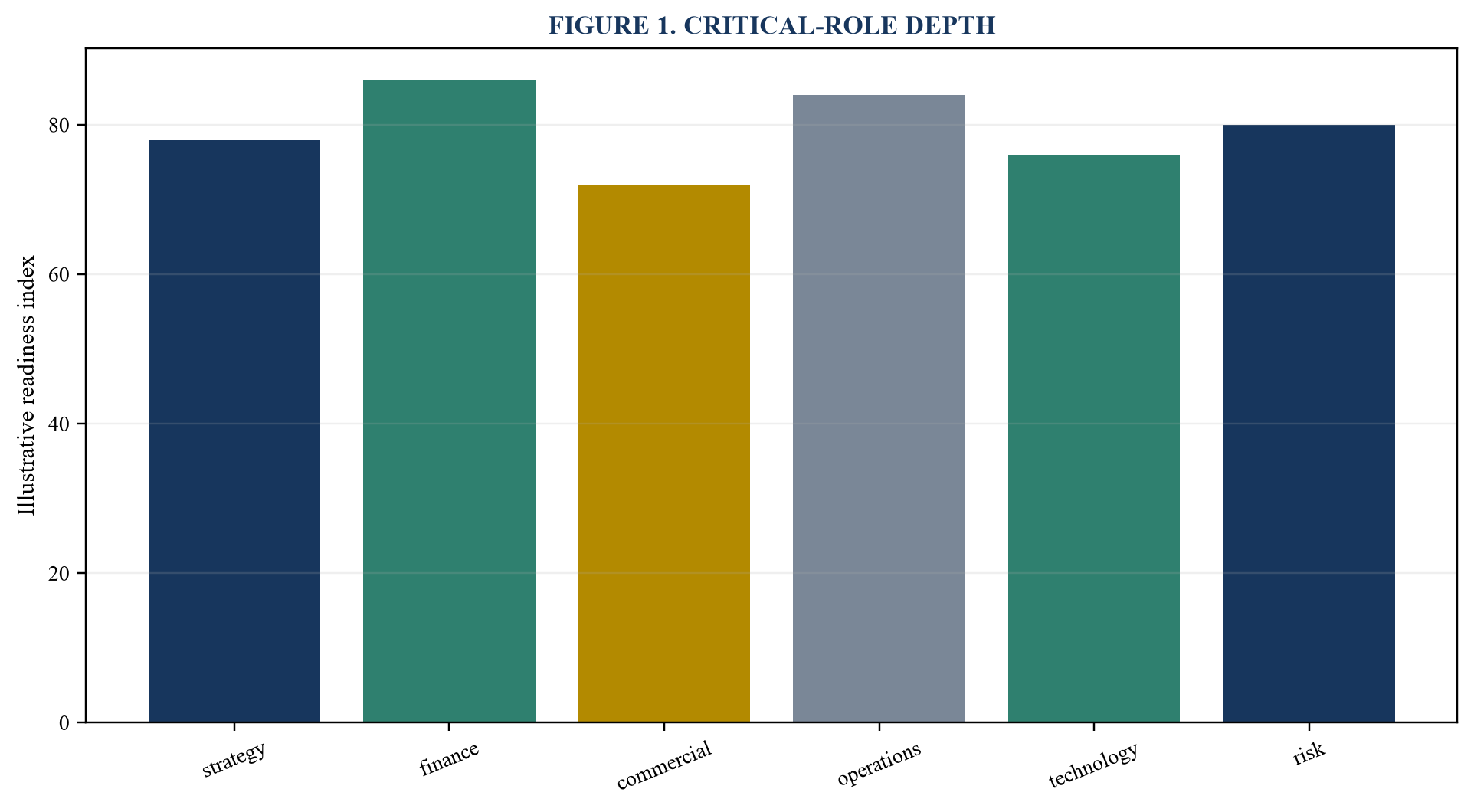
Values are illustrative readiness indices and require company-specific evidence.
9. Test customer relationship transferability
Determine whether material relationships belong to the institution and are supported by multiple credible contacts.
The controlled review should reconcile CRM, contracts, meetings, correspondence, account plans and customer feedback. Workpapers identify the role, outcome, owner, authority, evidence period, dependency, alternate coverage, exception and transaction relevance. The immediate output is a customer-transfer evidence pack.
Testing should distinguish documented design from observed operation. Reviewers trace decisions to source records, compare formal responsibility with recurring behaviour, interview multiple levels, inspect performance over time and test whether deputies can act with the information, authority and resources available. Company-specific context governs every conclusion.
Material gaps should be quantified and assigned an owner, action, evidence requirement and decision date. Consequences flow into the diligence room, forecast, valuation, transition design, incentives, disclosure and transaction protections. Residual dependence remains visible until capability is installed, relationships and knowledge are transferred, operating evidence is produced or risk is explicitly accepted and allocated.
10. Test supplier and partner continuity
Assess reliance on founder relationships for supply, distribution, alliances, licences and strategic access.
The controlled review should reconcile supplier records, agreements, performance, contacts and alternatives. Workpapers identify the role, outcome, owner, authority, evidence period, dependency, alternate coverage, exception and transaction relevance. The immediate output is a partner-continuity map.
Testing should distinguish documented design from observed operation. Reviewers trace decisions to source records, compare formal responsibility with recurring behaviour, interview multiple levels, inspect performance over time and test whether deputies can act with the information, authority and resources available. Company-specific context governs every conclusion.
Material gaps should be quantified and assigned an owner, action, evidence requirement and decision date. Consequences flow into the diligence room, forecast, valuation, transition design, incentives, disclosure and transaction protections. Residual dependence remains visible until capability is installed, relationships and knowledge are transferred, operating evidence is produced or risk is explicitly accepted and allocated.
11. Test commercial engine independence
Evaluate whether pipeline creation, pricing, negotiation, approvals and conversion operate without founder intervention.
The controlled review should reconcile CRM funnels, pricing logs, proposals, win-loss data and delegation records. Workpapers identify the role, outcome, owner, authority, evidence period, dependency, alternate coverage, exception and transaction relevance. The immediate output is a founder-independent revenue model.
Testing should distinguish documented design from observed operation. Reviewers trace decisions to source records, compare formal responsibility with recurring behaviour, interview multiple levels, inspect performance over time and test whether deputies can act with the information, authority and resources available. Company-specific context governs every conclusion.
Material gaps should be quantified and assigned an owner, action, evidence requirement and decision date. Consequences flow into the diligence room, forecast, valuation, transition design, incentives, disclosure and transaction protections. Residual dependence remains visible until capability is installed, relationships and knowledge are transferred, operating evidence is produced or risk is explicitly accepted and allocated.
12. Test delivery and operating control
Observe whether teams can plan, execute, manage exceptions and meet commitments through formal operating rhythms.
The controlled review should reconcile SOPs, dashboards, service records, incident logs and escalation evidence. Workpapers identify the role, outcome, owner, authority, evidence period, dependency, alternate coverage, exception and transaction relevance. The immediate output is an operating-continuity assessment.
Testing should distinguish documented design from observed operation. Reviewers trace decisions to source records, compare formal responsibility with recurring behaviour, interview multiple levels, inspect performance over time and test whether deputies can act with the information, authority and resources available. Company-specific context governs every conclusion.
Material gaps should be quantified and assigned an owner, action, evidence requirement and decision date. Consequences flow into the diligence room, forecast, valuation, transition design, incentives, disclosure and transaction protections. Residual dependence remains visible until capability is installed, relationships and knowledge are transferred, operating evidence is produced or risk is explicitly accepted and allocated.
13. Test financial control independence
Determine whether forecasts, cash, banking, commitments, reporting and financial challenge function without informal founder control.
The controlled review should reconcile models, close calendars, bank mandates, approvals and board reporting. Workpapers identify the role, outcome, owner, authority, evidence period, dependency, alternate coverage, exception and transaction relevance. The immediate output is a finance-control continuity file.
Testing should distinguish documented design from observed operation. Reviewers trace decisions to source records, compare formal responsibility with recurring behaviour, interview multiple levels, inspect performance over time and test whether deputies can act with the information, authority and resources available. Company-specific context governs every conclusion.
Material gaps should be quantified and assigned an owner, action, evidence requirement and decision date. Consequences flow into the diligence room, forecast, valuation, transition design, incentives, disclosure and transaction protections. Residual dependence remains visible until capability is installed, relationships and knowledge are transferred, operating evidence is produced or risk is explicitly accepted and allocated.
14. Test risk and compliance ownership
Identify accountable executives, evidence routines and escalation paths for legal, regulatory, cyber, safety and conduct risks.
The controlled review should reconcile risk registers, attestations, incidents, audits and remediation. Workpapers identify the role, outcome, owner, authority, evidence period, dependency, alternate coverage, exception and transaction relevance. The immediate output is a management risk-ownership matrix.
Testing should distinguish documented design from observed operation. Reviewers trace decisions to source records, compare formal responsibility with recurring behaviour, interview multiple levels, inspect performance over time and test whether deputies can act with the information, authority and resources available. Company-specific context governs every conclusion.
Material gaps should be quantified and assigned an owner, action, evidence requirement and decision date. Consequences flow into the diligence room, forecast, valuation, transition design, incentives, disclosure and transaction protections. Residual dependence remains visible until capability is installed, relationships and knowledge are transferred, operating evidence is produced or risk is explicitly accepted and allocated.
15. Map institutional knowledge
Locate tacit knowledge about customers, products, contracts, operations, negotiations and failure modes.
The controlled review should reconcile playbooks, records, interviews, repositories and decision histories. Workpapers identify the role, outcome, owner, authority, evidence period, dependency, alternate coverage, exception and transaction relevance. The immediate output is a knowledge-concentration register.
Testing should distinguish documented design from observed operation. Reviewers trace decisions to source records, compare formal responsibility with recurring behaviour, interview multiple levels, inspect performance over time and test whether deputies can act with the information, authority and resources available. Company-specific context governs every conclusion.
Material gaps should be quantified and assigned an owner, action, evidence requirement and decision date. Consequences flow into the diligence room, forecast, valuation, transition design, incentives, disclosure and transaction protections. Residual dependence remains visible until capability is installed, relationships and knowledge are transferred, operating evidence is produced or risk is explicitly accepted and allocated.
16. Test information-system readiness
Assess whether management information is timely, consistent, governed and sufficient for decisions after founder exit.
The controlled review should reconcile data definitions, dashboards, reconciliations, access and review evidence. Workpapers identify the role, outcome, owner, authority, evidence period, dependency, alternate coverage, exception and transaction relevance. The immediate output is a management-information reliability scorecard.
Testing should distinguish documented design from observed operation. Reviewers trace decisions to source records, compare formal responsibility with recurring behaviour, interview multiple levels, inspect performance over time and test whether deputies can act with the information, authority and resources available. Company-specific context governs every conclusion.
Material gaps should be quantified and assigned an owner, action, evidence requirement and decision date. Consequences flow into the diligence room, forecast, valuation, transition design, incentives, disclosure and transaction protections. Residual dependence remains visible until capability is installed, relationships and knowledge are transferred, operating evidence is produced or risk is explicitly accepted and allocated.
Table 2. Founder-dependence evidence
| Dependence | Test | Risk signal |
|---|---|---|
| decisions | approval trace | bottleneck |
| relationships | contact coverage | personal ownership |
| knowledge | repository and rehearsal | tacit concentration |
| control | absence simulation | informal override |
Illustrative analytical design; company-specific facts and authorised advice govern.
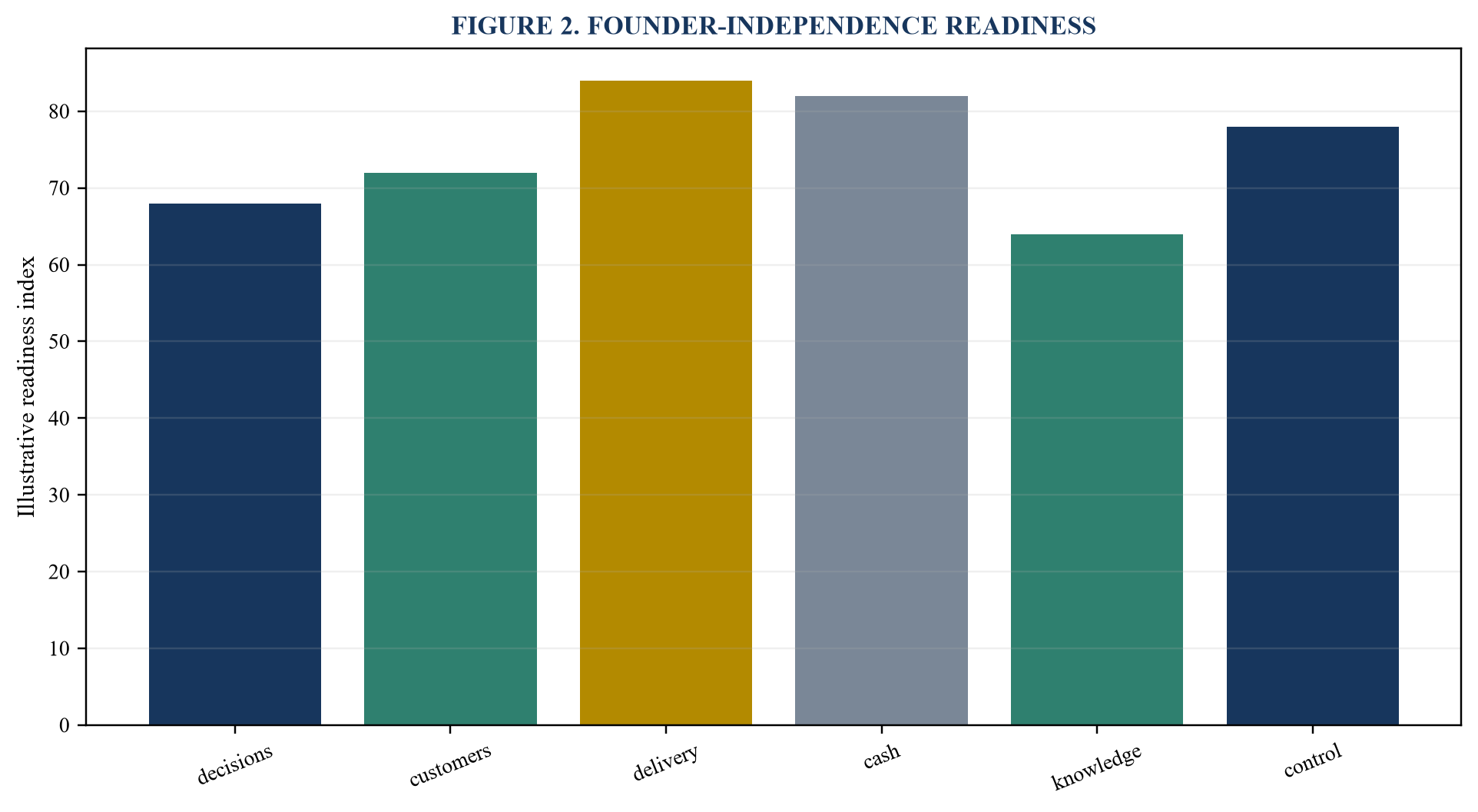
Values are illustrative readiness indices and require company-specific evidence.
17. Conduct the founder-absence simulation
Run a bounded period in which the founder cannot approve, intervene or privately resolve operating issues.
The controlled review should reconcile predefined scenarios, observation logs, decision records and outcomes. Workpapers identify the role, outcome, owner, authority, evidence period, dependency, alternate coverage, exception and transaction relevance. The immediate output is a founder-absence test report.
Testing should distinguish documented design from observed operation. Reviewers trace decisions to source records, compare formal responsibility with recurring behaviour, interview multiple levels, inspect performance over time and test whether deputies can act with the information, authority and resources available. Company-specific context governs every conclusion.
Material gaps should be quantified and assigned an owner, action, evidence requirement and decision date. Consequences flow into the diligence room, forecast, valuation, transition design, incentives, disclosure and transaction protections. Residual dependence remains visible until capability is installed, relationships and knowledge are transferred, operating evidence is produced or risk is explicitly accepted and allocated.
18. Run decision-case simulations
Test management responses to pricing pressure, customer loss, liquidity stress, cyber events and strategic opportunities.
The controlled review should reconcile case packs, decision criteria, role assignments and observed behaviours. Workpapers identify the role, outcome, owner, authority, evidence period, dependency, alternate coverage, exception and transaction relevance. The immediate output is a management judgement assessment.
Testing should distinguish documented design from observed operation. Reviewers trace decisions to source records, compare formal responsibility with recurring behaviour, interview multiple levels, inspect performance over time and test whether deputies can act with the information, authority and resources available. Company-specific context governs every conclusion.
Material gaps should be quantified and assigned an owner, action, evidence requirement and decision date. Consequences flow into the diligence room, forecast, valuation, transition design, incentives, disclosure and transaction protections. Residual dependence remains visible until capability is installed, relationships and knowledge are transferred, operating evidence is produced or risk is explicitly accepted and allocated.
19. Evaluate leadership performance evidence
Separate reputation and tenure from measurable delivery, judgement, team building and control outcomes.
The controlled review should reconcile scorecards, objectives, 360 feedback, project results and board evaluations. Workpapers identify the role, outcome, owner, authority, evidence period, dependency, alternate coverage, exception and transaction relevance. The immediate output is an evidence-based leadership assessment.
Testing should distinguish documented design from observed operation. Reviewers trace decisions to source records, compare formal responsibility with recurring behaviour, interview multiple levels, inspect performance over time and test whether deputies can act with the information, authority and resources available. Company-specific context governs every conclusion.
Material gaps should be quantified and assigned an owner, action, evidence requirement and decision date. Consequences flow into the diligence room, forecast, valuation, transition design, incentives, disclosure and transaction protections. Residual dependence remains visible until capability is installed, relationships and knowledge are transferred, operating evidence is produced or risk is explicitly accepted and allocated.
20. Evaluate team dynamics and challenge
Assess trust, candour, conflict resolution, information sharing and constructive challenge under pressure.
The controlled review should reconcile meeting observation, surveys, interviews, decisions and escalation patterns. Workpapers identify the role, outcome, owner, authority, evidence period, dependency, alternate coverage, exception and transaction relevance. The immediate output is a team-effectiveness diagnosis.
Testing should distinguish documented design from observed operation. Reviewers trace decisions to source records, compare formal responsibility with recurring behaviour, interview multiple levels, inspect performance over time and test whether deputies can act with the information, authority and resources available. Company-specific context governs every conclusion.
Material gaps should be quantified and assigned an owner, action, evidence requirement and decision date. Consequences flow into the diligence room, forecast, valuation, transition design, incentives, disclosure and transaction protections. Residual dependence remains visible until capability is installed, relationships and knowledge are transferred, operating evidence is produced or risk is explicitly accepted and allocated.
21. Map key-person economics
Quantify revenue, margin, cash, customer, execution and risk exposure attributable to concentrated leadership dependence.
The controlled review should reconcile account concentration, process exposure, replacement cost and scenario models. Workpapers identify the role, outcome, owner, authority, evidence period, dependency, alternate coverage, exception and transaction relevance. The immediate output is a key-person value-at-risk schedule.
Testing should distinguish documented design from observed operation. Reviewers trace decisions to source records, compare formal responsibility with recurring behaviour, interview multiple levels, inspect performance over time and test whether deputies can act with the information, authority and resources available. Company-specific context governs every conclusion.
Material gaps should be quantified and assigned an owner, action, evidence requirement and decision date. Consequences flow into the diligence room, forecast, valuation, transition design, incentives, disclosure and transaction protections. Residual dependence remains visible until capability is installed, relationships and knowledge are transferred, operating evidence is produced or risk is explicitly accepted and allocated.
22. Connect management quality to forecasts
Test whether the team owns assumptions, initiatives, resources, dependencies and delivery evidence behind the plan.
The controlled review should reconcile integrated model, budgets, initiatives, owners, milestones and variances. Workpapers identify the role, outcome, owner, authority, evidence period, dependency, alternate coverage, exception and transaction relevance. The immediate output is a management-to-forecast bridge.
Testing should distinguish documented design from observed operation. Reviewers trace decisions to source records, compare formal responsibility with recurring behaviour, interview multiple levels, inspect performance over time and test whether deputies can act with the information, authority and resources available. Company-specific context governs every conclusion.
Material gaps should be quantified and assigned an owner, action, evidence requirement and decision date. Consequences flow into the diligence room, forecast, valuation, transition design, incentives, disclosure and transaction protections. Residual dependence remains visible until capability is installed, relationships and knowledge are transferred, operating evidence is produced or risk is explicitly accepted and allocated.
23. Connect management quality to valuation
Translate continuity, capability and execution evidence into forecast confidence, risk, investment need and buyer cases.
The controlled review should reconcile valuation model, scenarios, market evidence and buyer thesis. Workpapers identify the role, outcome, owner, authority, evidence period, dependency, alternate coverage, exception and transaction relevance. The immediate output is a management-quality valuation bridge.
Testing should distinguish documented design from observed operation. Reviewers trace decisions to source records, compare formal responsibility with recurring behaviour, interview multiple levels, inspect performance over time and test whether deputies can act with the information, authority and resources available. Company-specific context governs every conclusion.
Material gaps should be quantified and assigned an owner, action, evidence requirement and decision date. Consequences flow into the diligence room, forecast, valuation, transition design, incentives, disclosure and transaction protections. Residual dependence remains visible until capability is installed, relationships and knowledge are transferred, operating evidence is produced or risk is explicitly accepted and allocated.
24. Assess founder transition choices
Compare immediate exit, phased handover, chair role, advisory role, retained equity and defined transition services.
The controlled review should reconcile objectives, conflicts, duration, authority, economics and buyer requirements. Workpapers identify the role, outcome, owner, authority, evidence period, dependency, alternate coverage, exception and transaction relevance. The immediate output is a founder-transition options paper.
Testing should distinguish documented design from observed operation. Reviewers trace decisions to source records, compare formal responsibility with recurring behaviour, interview multiple levels, inspect performance over time and test whether deputies can act with the information, authority and resources available. Company-specific context governs every conclusion.
Material gaps should be quantified and assigned an owner, action, evidence requirement and decision date. Consequences flow into the diligence room, forecast, valuation, transition design, incentives, disclosure and transaction protections. Residual dependence remains visible until capability is installed, relationships and knowledge are transferred, operating evidence is produced or risk is explicitly accepted and allocated.
Table 3. Transition-route comparison
| Route | Value benefit | Control requirement |
|---|---|---|
| immediate exit | clean separation | deep bench |
| phased handover | knowledge transfer | fixed milestones |
| chair role | strategic continuity | clear authority |
| retained equity | alignment | governance and liquidity |
Illustrative analytical design; company-specific facts and authorised advice govern.
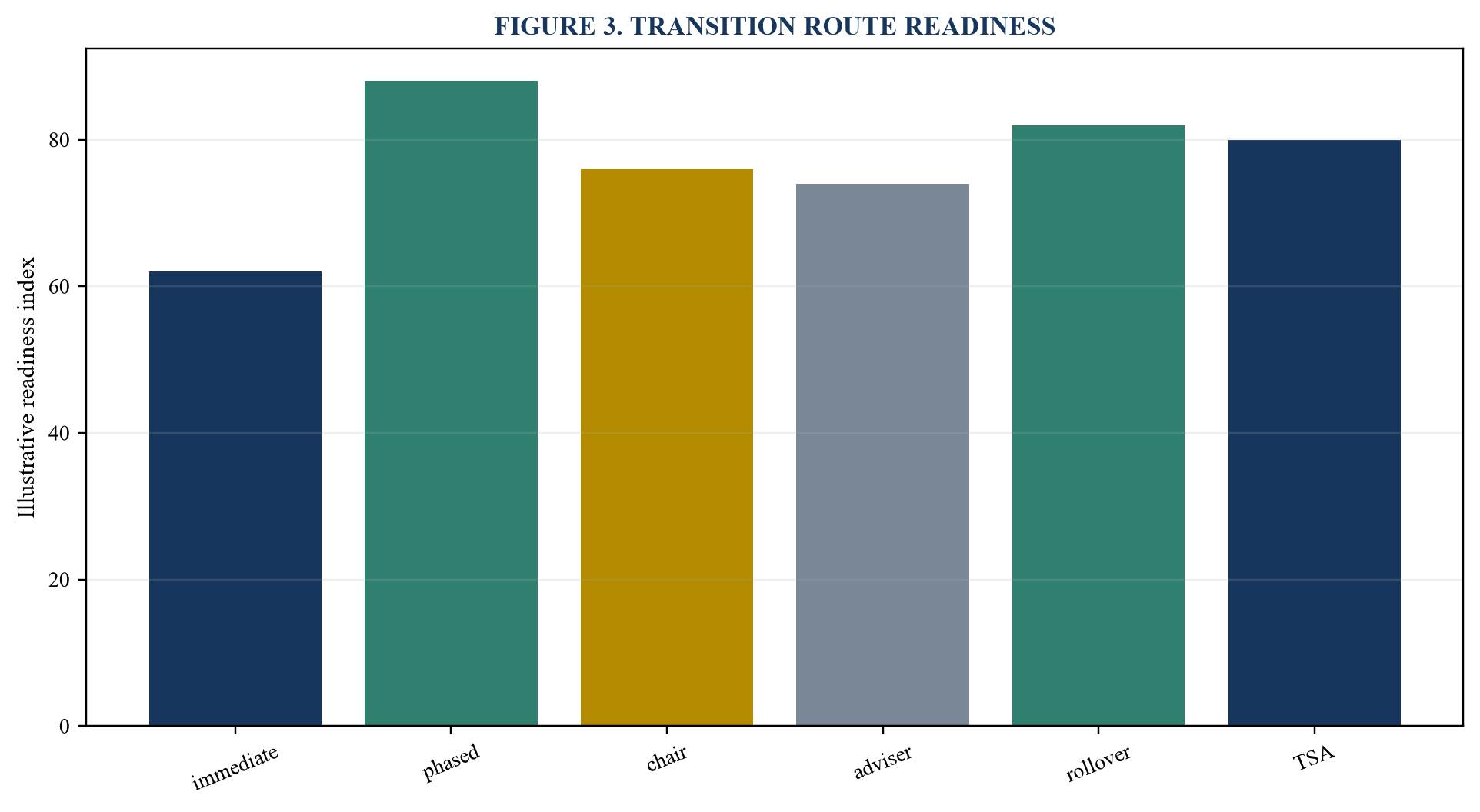
Values are illustrative readiness indices and require company-specific evidence.
25. Design role architecture after closing
Specify the target leadership structure, reporting lines, decision rights and interfaces for standalone or integrated ownership.
The controlled review should reconcile buyer model, operating design, synergies and regulatory obligations. Workpapers identify the role, outcome, owner, authority, evidence period, dependency, alternate coverage, exception and transaction relevance. The immediate output is a day-one leadership blueprint.
Testing should distinguish documented design from observed operation. Reviewers trace decisions to source records, compare formal responsibility with recurring behaviour, interview multiple levels, inspect performance over time and test whether deputies can act with the information, authority and resources available. Company-specific context governs every conclusion.
Material gaps should be quantified and assigned an owner, action, evidence requirement and decision date. Consequences flow into the diligence room, forecast, valuation, transition design, incentives, disclosure and transaction protections. Residual dependence remains visible until capability is installed, relationships and knowledge are transferred, operating evidence is produced or risk is explicitly accepted and allocated.
26. Assess employment and service terms
Review notice, restrictive covenants, duties, change provisions, confidentiality and enforceability by jurisdiction.
The controlled review should reconcile employment contracts, service agreements, policies and legal analysis. Workpapers identify the role, outcome, owner, authority, evidence period, dependency, alternate coverage, exception and transaction relevance. The immediate output is a leadership-contract risk schedule.
Testing should distinguish documented design from observed operation. Reviewers trace decisions to source records, compare formal responsibility with recurring behaviour, interview multiple levels, inspect performance over time and test whether deputies can act with the information, authority and resources available. Company-specific context governs every conclusion.
Material gaps should be quantified and assigned an owner, action, evidence requirement and decision date. Consequences flow into the diligence room, forecast, valuation, transition design, incentives, disclosure and transaction protections. Residual dependence remains visible until capability is installed, relationships and knowledge are transferred, operating evidence is produced or risk is explicitly accepted and allocated.
27. Assess incentives and retention
Test whether pay, equity, vesting, performance measures and retention arrangements align continuity with value creation.
The controlled review should reconcile compensation data, plans, grants, tax, accounting and behavioural risks. Workpapers identify the role, outcome, owner, authority, evidence period, dependency, alternate coverage, exception and transaction relevance. The immediate output is a management-incentive architecture.
Testing should distinguish documented design from observed operation. Reviewers trace decisions to source records, compare formal responsibility with recurring behaviour, interview multiple levels, inspect performance over time and test whether deputies can act with the information, authority and resources available. Company-specific context governs every conclusion.
Material gaps should be quantified and assigned an owner, action, evidence requirement and decision date. Consequences flow into the diligence room, forecast, valuation, transition design, incentives, disclosure and transaction protections. Residual dependence remains visible until capability is installed, relationships and knowledge are transferred, operating evidence is produced or risk is explicitly accepted and allocated.
28. Assess equity rollover and management participation
Evaluate ownership, governance, leaver terms, dilution, liquidity and alignment under the buyer structure.
The controlled review should reconcile cap table, rollover proposal, management plan and scenario analysis. Workpapers identify the role, outcome, owner, authority, evidence period, dependency, alternate coverage, exception and transaction relevance. The immediate output is a management-equity decision paper.
Testing should distinguish documented design from observed operation. Reviewers trace decisions to source records, compare formal responsibility with recurring behaviour, interview multiple levels, inspect performance over time and test whether deputies can act with the information, authority and resources available. Company-specific context governs every conclusion.
Material gaps should be quantified and assigned an owner, action, evidence requirement and decision date. Consequences flow into the diligence room, forecast, valuation, transition design, incentives, disclosure and transaction protections. Residual dependence remains visible until capability is installed, relationships and knowledge are transferred, operating evidence is produced or risk is explicitly accepted and allocated.
29. Assess founder and management conflicts
Identify related interests, information asymmetry, role ambiguity, side arrangements and competing incentives.
The controlled review should reconcile ownership, contracts, approvals, disclosures and interviews. Workpapers identify the role, outcome, owner, authority, evidence period, dependency, alternate coverage, exception and transaction relevance. The immediate output is a leadership-conflict register.
Testing should distinguish documented design from observed operation. Reviewers trace decisions to source records, compare formal responsibility with recurring behaviour, interview multiple levels, inspect performance over time and test whether deputies can act with the information, authority and resources available. Company-specific context governs every conclusion.
Material gaps should be quantified and assigned an owner, action, evidence requirement and decision date. Consequences flow into the diligence room, forecast, valuation, transition design, incentives, disclosure and transaction protections. Residual dependence remains visible until capability is installed, relationships and knowledge are transferred, operating evidence is produced or risk is explicitly accepted and allocated.
30. Assess leadership claims in the equity story
Trace statements about team strength, succession, culture and independence to specific evidence.
The controlled review should reconcile marketing materials, management presentations, data room and operating records. Workpapers identify the role, outcome, owner, authority, evidence period, dependency, alternate coverage, exception and transaction relevance. The immediate output is a management-claims substantiation file.
Testing should distinguish documented design from observed operation. Reviewers trace decisions to source records, compare formal responsibility with recurring behaviour, interview multiple levels, inspect performance over time and test whether deputies can act with the information, authority and resources available. Company-specific context governs every conclusion.
Material gaps should be quantified and assigned an owner, action, evidence requirement and decision date. Consequences flow into the diligence room, forecast, valuation, transition design, incentives, disclosure and transaction protections. Residual dependence remains visible until capability is installed, relationships and knowledge are transferred, operating evidence is produced or risk is explicitly accepted and allocated.
31. Design management diligence materials
Organise biographies, responsibilities, track records, scorecards, succession, incentives and evidence for buyer review.
The controlled review should reconcile controlled profiles, metrics, case studies, references and exceptions. Workpapers identify the role, outcome, owner, authority, evidence period, dependency, alternate coverage, exception and transaction relevance. The immediate output is a buyer-ready management fact book.
Testing should distinguish documented design from observed operation. Reviewers trace decisions to source records, compare formal responsibility with recurring behaviour, interview multiple levels, inspect performance over time and test whether deputies can act with the information, authority and resources available. Company-specific context governs every conclusion.
Material gaps should be quantified and assigned an owner, action, evidence requirement and decision date. Consequences flow into the diligence room, forecast, valuation, transition design, incentives, disclosure and transaction protections. Residual dependence remains visible until capability is installed, relationships and knowledge are transferred, operating evidence is produced or risk is explicitly accepted and allocated.
32. Prepare management presentations
Build a coherent, evidence-led narrative that shows ownership of strategy, operations, risks and the forecast.
The controlled review should reconcile presentation, rehearsal, Q&A bank, decision cases and supporting schedules. Workpapers identify the role, outcome, owner, authority, evidence period, dependency, alternate coverage, exception and transaction relevance. The immediate output is a management-presentation readiness pack.
Testing should distinguish documented design from observed operation. Reviewers trace decisions to source records, compare formal responsibility with recurring behaviour, interview multiple levels, inspect performance over time and test whether deputies can act with the information, authority and resources available. Company-specific context governs every conclusion.
Material gaps should be quantified and assigned an owner, action, evidence requirement and decision date. Consequences flow into the diligence room, forecast, valuation, transition design, incentives, disclosure and transaction protections. Residual dependence remains visible until capability is installed, relationships and knowledge are transferred, operating evidence is produced or risk is explicitly accepted and allocated.
Table 4. Management-to-value bridge
| Driver | Financial pathway | Buyer test |
|---|---|---|
| revenue | relationship continuity | account evidence |
| margin | operating discipline | delivery record |
| growth | initiative execution | owner and milestone |
| risk | control independence | simulation |
Illustrative analytical design; company-specific facts and authorised advice govern.
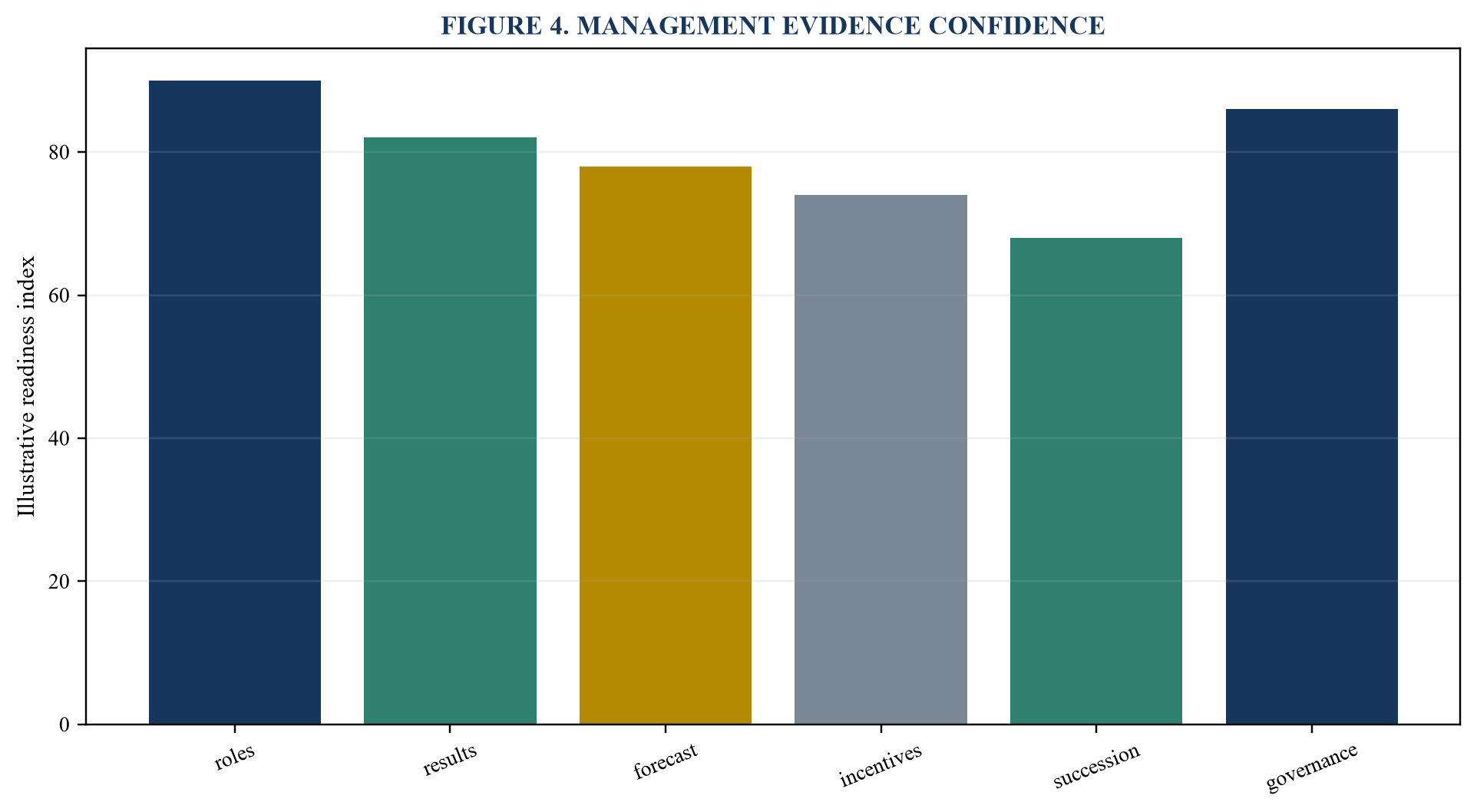
Values are illustrative readiness indices and require company-specific evidence.
33. Control management access and Q&A
Sequence interviews, preserve consistency, record commitments and route sensitive matters appropriately.
The controlled review should reconcile protocols, question log, answers, owners, approvals and follow-up evidence. Workpapers identify the role, outcome, owner, authority, evidence period, dependency, alternate coverage, exception and transaction relevance. The immediate output is a controlled management diligence log.
Testing should distinguish documented design from observed operation. Reviewers trace decisions to source records, compare formal responsibility with recurring behaviour, interview multiple levels, inspect performance over time and test whether deputies can act with the information, authority and resources available. Company-specific context governs every conclusion.
Material gaps should be quantified and assigned an owner, action, evidence requirement and decision date. Consequences flow into the diligence room, forecast, valuation, transition design, incentives, disclosure and transaction protections. Residual dependence remains visible until capability is installed, relationships and knowledge are transferred, operating evidence is produced or risk is explicitly accepted and allocated.
34. Design transition services and handover
Define knowledge transfer, relationship introductions, authorities, deliverables, milestones and exit criteria.
The controlled review should reconcile handover plan, transition agreement, workstreams and acceptance tests. Workpapers identify the role, outcome, owner, authority, evidence period, dependency, alternate coverage, exception and transaction relevance. The immediate output is a measurable transition plan.
Testing should distinguish documented design from observed operation. Reviewers trace decisions to source records, compare formal responsibility with recurring behaviour, interview multiple levels, inspect performance over time and test whether deputies can act with the information, authority and resources available. Company-specific context governs every conclusion.
Material gaps should be quantified and assigned an owner, action, evidence requirement and decision date. Consequences flow into the diligence room, forecast, valuation, transition design, incentives, disclosure and transaction protections. Residual dependence remains visible until capability is installed, relationships and knowledge are transferred, operating evidence is produced or risk is explicitly accepted and allocated.
35. Design pre-sale capability remediation
Prioritise missing roles, weak controls, knowledge gaps, relationship concentration and succession actions.
The controlled review should reconcile owners, milestones, budgets, hiring, development and closure evidence. Workpapers identify the role, outcome, owner, authority, evidence period, dependency, alternate coverage, exception and transaction relevance. The immediate output is a management-remediation roadmap.
Testing should distinguish documented design from observed operation. Reviewers trace decisions to source records, compare formal responsibility with recurring behaviour, interview multiple levels, inspect performance over time and test whether deputies can act with the information, authority and resources available. Company-specific context governs every conclusion.
Material gaps should be quantified and assigned an owner, action, evidence requirement and decision date. Consequences flow into the diligence room, forecast, valuation, transition design, incentives, disclosure and transaction protections. Residual dependence remains visible until capability is installed, relationships and knowledge are transferred, operating evidence is produced or risk is explicitly accepted and allocated.
36. Define transaction protections
Map residual leadership risk to conditions, covenants, retention, escrow, earn-out, warranties and termination rights.
The controlled review should reconcile risk allocation, quantification, duration, enforceability and evidence. Workpapers identify the role, outcome, owner, authority, evidence period, dependency, alternate coverage, exception and transaction relevance. The immediate output is a leadership-risk protection options paper.
Testing should distinguish documented design from observed operation. Reviewers trace decisions to source records, compare formal responsibility with recurring behaviour, interview multiple levels, inspect performance over time and test whether deputies can act with the information, authority and resources available. Company-specific context governs every conclusion.
Material gaps should be quantified and assigned an owner, action, evidence requirement and decision date. Consequences flow into the diligence room, forecast, valuation, transition design, incentives, disclosure and transaction protections. Residual dependence remains visible until capability is installed, relationships and knowledge are transferred, operating evidence is produced or risk is explicitly accepted and allocated.
37. Establish board oversight
Create a board cadence for succession, performance, incentives, founder transition and remediation decisions.
The controlled review should reconcile committee mandates, dashboards, minutes, approvals and escalation. Workpapers identify the role, outcome, owner, authority, evidence period, dependency, alternate coverage, exception and transaction relevance. The immediate output is a board management-assurance dashboard.
Testing should distinguish documented design from observed operation. Reviewers trace decisions to source records, compare formal responsibility with recurring behaviour, interview multiple levels, inspect performance over time and test whether deputies can act with the information, authority and resources available. Company-specific context governs every conclusion.
Material gaps should be quantified and assigned an owner, action, evidence requirement and decision date. Consequences flow into the diligence room, forecast, valuation, transition design, incentives, disclosure and transaction protections. Residual dependence remains visible until capability is installed, relationships and knowledge are transferred, operating evidence is produced or risk is explicitly accepted and allocated.
38. Measure post-close continuity
Track customers, employees, delivery, decisions, cash, controls and strategic milestones through transition.
The controlled review should reconcile baseline metrics, leading indicators, thresholds and intervention playbooks. Workpapers identify the role, outcome, owner, authority, evidence period, dependency, alternate coverage, exception and transaction relevance. The immediate output is a post-close continuity scorecard.
Testing should distinguish documented design from observed operation. Reviewers trace decisions to source records, compare formal responsibility with recurring behaviour, interview multiple levels, inspect performance over time and test whether deputies can act with the information, authority and resources available. Company-specific context governs every conclusion.
Material gaps should be quantified and assigned an owner, action, evidence requirement and decision date. Consequences flow into the diligence room, forecast, valuation, transition design, incentives, disclosure and transaction protections. Residual dependence remains visible until capability is installed, relationships and knowledge are transferred, operating evidence is produced or risk is explicitly accepted and allocated.
39. Set exit and release gates
Define objective evidence required to reduce founder involvement, release retention arrangements and close remediation.
The controlled review should reconcile milestones, acceptance tests, approvals, exceptions and residual risks. Workpapers identify the role, outcome, owner, authority, evidence period, dependency, alternate coverage, exception and transaction relevance. The immediate output is a founder-release gate certificate.
Testing should distinguish documented design from observed operation. Reviewers trace decisions to source records, compare formal responsibility with recurring behaviour, interview multiple levels, inspect performance over time and test whether deputies can act with the information, authority and resources available. Company-specific context governs every conclusion.
Material gaps should be quantified and assigned an owner, action, evidence requirement and decision date. Consequences flow into the diligence room, forecast, valuation, transition design, incentives, disclosure and transaction protections. Residual dependence remains visible until capability is installed, relationships and knowledge are transferred, operating evidence is produced or risk is explicitly accepted and allocated.
40. Issue the management bench conclusion
Present tested strengths, gaps, value effects, transition requirements and remaining dependencies.
The controlled review should reconcile evidence index, scenarios, decisions, limitations and board sign-off. Workpapers identify the role, outcome, owner, authority, evidence period, dependency, alternate coverage, exception and transaction relevance. The immediate output is a buyer-ready management bench assurance report.
Testing should distinguish documented design from observed operation. Reviewers trace decisions to source records, compare formal responsibility with recurring behaviour, interview multiple levels, inspect performance over time and test whether deputies can act with the information, authority and resources available. Company-specific context governs every conclusion.
Material gaps should be quantified and assigned an owner, action, evidence requirement and decision date. Consequences flow into the diligence room, forecast, valuation, transition design, incentives, disclosure and transaction protections. Residual dependence remains visible until capability is installed, relationships and knowledge are transferred, operating evidence is produced or risk is explicitly accepted and allocated.
Table 5. Management bench certificate
| Gate | Required proof | Decision use |
|---|---|---|
| covered | critical roles and deputies | continuity |
| authorised | decision rights work | control |
| transferable | relationships and knowledge | durability |
| aligned | terms and incentives | execution |
Illustrative analytical design; company-specific facts and authorised advice govern.
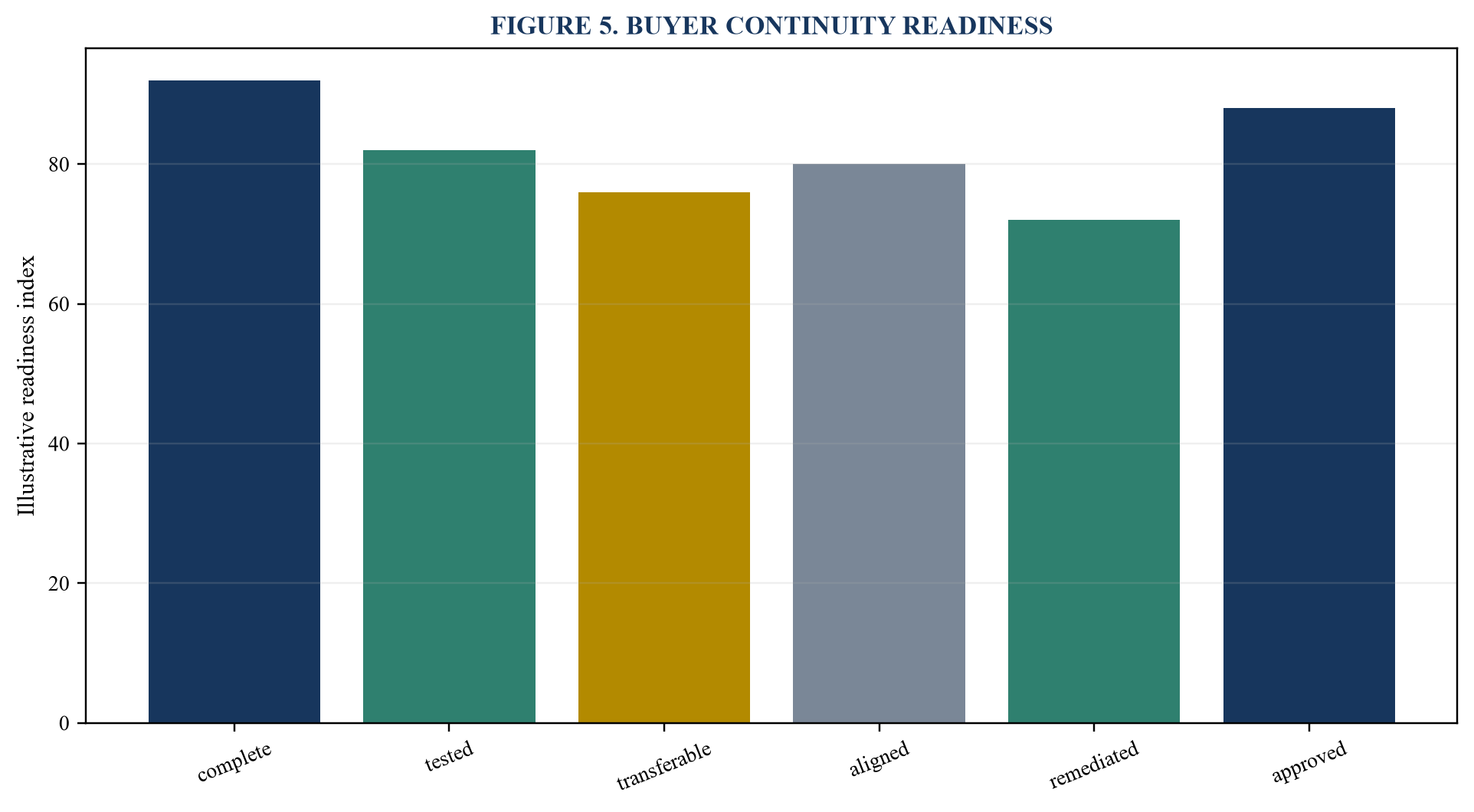
Values are illustrative readiness indices and require company-specific evidence.
References
- Financial Reporting Council, UK Corporate Governance Code 2024, https://www.frc.org.uk/library/standards-codes-policy/corporate-governance/uk-corporate-governance-code/
- Financial Reporting Council, Guidance on the UK Corporate Governance Code 2024, https://www.frc.org.uk/library/standards-codes-policy/corporate-governance/corporate-governance-code-guidance/
- OECD, G20/OECD Principles of Corporate Governance 2023, https://doi.org/10.1787/ed750b30-en
- International Organization for Standardization, ISO 30414:2025 Human Capital Reporting and Disclosure, https://www.iso.org/standard/30414.html
- US Securities and Exchange Commission, Modernization of Regulation S-K Items 101, 103 and 105, https://www.sec.gov/rules-regulations/2020/08/modernization-regulation-s-k-items-101-103-105
- IFRS Foundation, IFRS 2 Share-based Payment, https://www.ifrs.org/issued-standards/list-of-standards/ifrs-2-share-based-payment/
- IFRS Foundation, IAS 19 Employee Benefits, https://www.ifrs.org/issued-standards/list-of-standards/ias-19-employee-benefits/
- International Organization for Standardization, ISO 30409:2016 Workforce Planning, https://www.iso.org/standard/64149.html
- International Organization for Standardization, ISO 30405:2016 Recruitment, https://www.iso.org/standard/64149.html
- International Organization for Standardization, ISO 30422:2022 Learning and Development, https://www.iso.org/standard/74592.html
- International Organization for Standardization, ISO 30415:2021 Diversity and Inclusion, https://www.iso.org/standard/71164.html
- International Organization for Standardization, ISO 37301:2021 Compliance Management Systems, https://www.iso.org/standard/75080.html
- International Organization for Standardization, ISO 31000:2018 Risk Management Guidelines, https://www.iso.org/iso-31000-risk-management.html
- COSO, Internal Control Integrated Framework, https://www.coso.org/guidance-on-ic
- COSO, Enterprise Risk Management Framework, https://www.coso.org/guidance-erm
- Adams, Almeida and Ferreira, Understanding the Relationship between Founder-CEOs and Firm Performance, Journal of Empirical Finance 16, 2009, https://doi.org/10.1016/j.jempfin.2008.05.002
- Huson, Malatesta and Parrino, Managerial Succession and Firm Performance, Journal of Financial Economics 74, 2004, https://doi.org/10.1016/j.jfineco.2003.08.002
- Smith and Amoako-Adu, Management Succession and Financial Performance of Family Controlled Firms, Journal of Corporate Finance 5, 1999, https://doi.org/10.1016/S0929-1199(99)00010-3
- Helfat and Bailey, External Succession and Disruptive Change, Strategic Organization 3, 2005, https://doi.org/10.1177/1476127005050031
- Wasserman, Founder-CEO Succession and the Paradox of Entrepreneurial Success, Organization Science 14, 2003, https://doi.org/10.1287/orsc.14.2.149.14995
- Bloom and Van Reenen, Measuring and Explaining Management Practices across Firms and Countries, Quarterly Journal of Economics 122, 2007, https://doi.org/10.1162/qjec.122.4.1351
- UK Government, Companies Act 2006 section 172, https://www.legislation.gov.uk/ukpga/2006/46/section/172
- UK Government, Wates Corporate Governance Principles for Large Private Companies, https://www.frc.org.uk/library/standards-codes-policy/corporate-governance/wates-corporate-governance-principles/
- US Securities and Exchange Commission, Executive Compensation Disclosure, https://www.sec.gov/files/rules/final/2006/33-8732a.pdf
- European Securities and Markets Authority, Guidelines on Remuneration Policies and Practices, https://www.esma.europa.eu/document/guidelines-remuneration-policies-and-practices-mifid
- International Labour Organization, Governance and Tripartism Department resources, https://www.ilo.org/about-ilo/structure/governance-department
