

1. Define the conflict perimeter
The independent decision body should identify every management participant, connected person, adviser relationship and economic interest. The immediate output is a controlled conflict census and relationship map with named owners, dates, source evidence, approval status and open exceptions.
The control objective is to determine whether any participant can influence a decision from which that participant may benefit. Reviewers should reconcile board materials, transaction correspondence, data-room records, adviser work, valuation models, financing documents and declarations of interest.
The protocol should assign responsibility across the independent body, management, legal counsel, financial advisers, valuation specialists, lenders and assurance teams. Access permissions, recusals, meeting attendance, drafting rights, challenge routes and record retention should be explicit. Any departure needs a stated reason, decision owner, legal assessment, mitigating control and deadline.
At each gate, decision makers should test price, alternatives, execution certainty, information parity, personal benefits, stakeholder effects and process integrity together. Material gaps remain visible until evidence is complete, advice is current, exceptions are resolved or accepted by the authorised body, and the decision rationale can withstand later scrutiny.
2. Trigger the protocol early
The independent decision body should record the first credible buyer discussion, approach, financing contact or incentive negotiation. The immediate output is a controlled dated trigger memorandum with named owners, dates, source evidence, approval status and open exceptions.
The control objective is to determine whether governance controls began before information or process advantages accumulated. Reviewers should reconcile board materials, transaction correspondence, data-room records, adviser work, valuation models, financing documents and declarations of interest.
The protocol should assign responsibility across the independent body, management, legal counsel, financial advisers, valuation specialists, lenders and assurance teams. Access permissions, recusals, meeting attendance, drafting rights, challenge routes and record retention should be explicit. Any departure needs a stated reason, decision owner, legal assessment, mitigating control and deadline.
At each gate, decision makers should test price, alternatives, execution certainty, information parity, personal benefits, stakeholder effects and process integrity together. Material gaps remain visible until evidence is complete, advice is current, exceptions are resolved or accepted by the authorised body, and the decision rationale can withstand later scrutiny.
3. Constitute the independent decision body
The independent decision body should select unconflicted directors with the authority, time, information and budget to act. The immediate output is a controlled committee charter and authority matrix with named owners, dates, source evidence, approval status and open exceptions.
The control objective is to determine whether the body can investigate, negotiate, reject and seek alternatives without management consent. Reviewers should reconcile board materials, transaction correspondence, data-room records, adviser work, valuation models, financing documents and declarations of interest.
The protocol should assign responsibility across the independent body, management, legal counsel, financial advisers, valuation specialists, lenders and assurance teams. Access permissions, recusals, meeting attendance, drafting rights, challenge routes and record retention should be explicit. Any departure needs a stated reason, decision owner, legal assessment, mitigating control and deadline.
At each gate, decision makers should test price, alternatives, execution certainty, information parity, personal benefits, stakeholder effects and process integrity together. Material gaps remain visible until evidence is complete, advice is current, exceptions are resolved or accepted by the authorised body, and the decision rationale can withstand later scrutiny.
4. Define recusals and delegated authority
The independent decision body should separate operating decisions from buyer decisions and specify attendance, voting and escalation rights. The immediate output is a controlled recusal and delegation schedule with named owners, dates, source evidence, approval status and open exceptions.
The control objective is to determine whether conflicted managers are excluded from deliberation while business continuity remains protected. Reviewers should reconcile board materials, transaction correspondence, data-room records, adviser work, valuation models, financing documents and declarations of interest.
The protocol should assign responsibility across the independent body, management, legal counsel, financial advisers, valuation specialists, lenders and assurance teams. Access permissions, recusals, meeting attendance, drafting rights, challenge routes and record retention should be explicit. Any departure needs a stated reason, decision owner, legal assessment, mitigating control and deadline.
At each gate, decision makers should test price, alternatives, execution certainty, information parity, personal benefits, stakeholder effects and process integrity together. Material gaps remain visible until evidence is complete, advice is current, exceptions are resolved or accepted by the authorised body, and the decision rationale can withstand later scrutiny.
5. Test adviser independence
The independent decision body should review current, past and prospective mandates, fee dependencies, lending roles and commercial relationships. The immediate output is a controlled adviser-independence assessment with named owners, dates, source evidence, approval status and open exceptions.
The control objective is to determine whether advice can be demonstrably objective and any conflict can be managed or requires replacement. Reviewers should reconcile board materials, transaction correspondence, data-room records, adviser work, valuation models, financing documents and declarations of interest.
The protocol should assign responsibility across the independent body, management, legal counsel, financial advisers, valuation specialists, lenders and assurance teams. Access permissions, recusals, meeting attendance, drafting rights, challenge routes and record retention should be explicit. Any departure needs a stated reason, decision owner, legal assessment, mitigating control and deadline.
At each gate, decision makers should test price, alternatives, execution certainty, information parity, personal benefits, stakeholder effects and process integrity together. Material gaps remain visible until evidence is complete, advice is current, exceptions are resolved or accepted by the authorised body, and the decision rationale can withstand later scrutiny.
6. Protect independent judgement
The independent decision body should give directors direct access to evidence, advisers, alternatives and dissenting views. The immediate output is a controlled decision-information protocol with named owners, dates, source evidence, approval status and open exceptions.
The control objective is to determine whether each decision maker can exercise independent judgement rather than ratify a management-led outcome. Reviewers should reconcile board materials, transaction correspondence, data-room records, adviser work, valuation models, financing documents and declarations of interest.
The protocol should assign responsibility across the independent body, management, legal counsel, financial advisers, valuation specialists, lenders and assurance teams. Access permissions, recusals, meeting attendance, drafting rights, challenge routes and record retention should be explicit. Any departure needs a stated reason, decision owner, legal assessment, mitigating control and deadline.
At each gate, decision makers should test price, alternatives, execution certainty, information parity, personal benefits, stakeholder effects and process integrity together. Material gaps remain visible until evidence is complete, advice is current, exceptions are resolved or accepted by the authorised body, and the decision rationale can withstand later scrutiny.
7. Create the transaction record
The independent decision body should preserve approaches, meetings, materials, questions, deliberations, decisions and reasons. The immediate output is a controlled chronology and evidence index with named owners, dates, source evidence, approval status and open exceptions.
The control objective is to determine whether a later reviewer can reconstruct what the board knew, tested and decided at each gate. Reviewers should reconcile board materials, transaction correspondence, data-room records, adviser work, valuation models, financing documents and declarations of interest.
The protocol should assign responsibility across the independent body, management, legal counsel, financial advisers, valuation specialists, lenders and assurance teams. Access permissions, recusals, meeting attendance, drafting rights, challenge routes and record retention should be explicit. Any departure needs a stated reason, decision owner, legal assessment, mitigating control and deadline.
At each gate, decision makers should test price, alternatives, execution certainty, information parity, personal benefits, stakeholder effects and process integrity together. Material gaps remain visible until evidence is complete, advice is current, exceptions are resolved or accepted by the authorised body, and the decision rationale can withstand later scrutiny.
8. Classify information by purpose and sensitivity
The independent decision body should distinguish ordinary-course management data, buyer diligence, forecasts, personal data and competitive information. The immediate output is a controlled information-classification register with named owners, dates, source evidence, approval status and open exceptions.
The control objective is to determine whether each disclosure has a defined purpose, legal basis, owner and access rule. Reviewers should reconcile board materials, transaction correspondence, data-room records, adviser work, valuation models, financing documents and declarations of interest.
The protocol should assign responsibility across the independent body, management, legal counsel, financial advisers, valuation specialists, lenders and assurance teams. Access permissions, recusals, meeting attendance, drafting rights, challenge routes and record retention should be explicit. Any departure needs a stated reason, decision owner, legal assessment, mitigating control and deadline.
At each gate, decision makers should test price, alternatives, execution certainty, information parity, personal benefits, stakeholder effects and process integrity together. Material gaps remain visible until evidence is complete, advice is current, exceptions are resolved or accepted by the authorised body, and the decision rationale can withstand later scrutiny.
Table 1. Information-control architecture
| Information class | Control | Decision use |
|---|---|---|
| ordinary-course operations | role-based access | business continuity |
| buyer diligence | logged data-room access | bidder assessment |
| forecasts | approved provenance and equalisation | valuation |
| sensitive data | clean team and redaction | risk control |
Illustrative control design; transaction-specific facts and authorised advice govern.
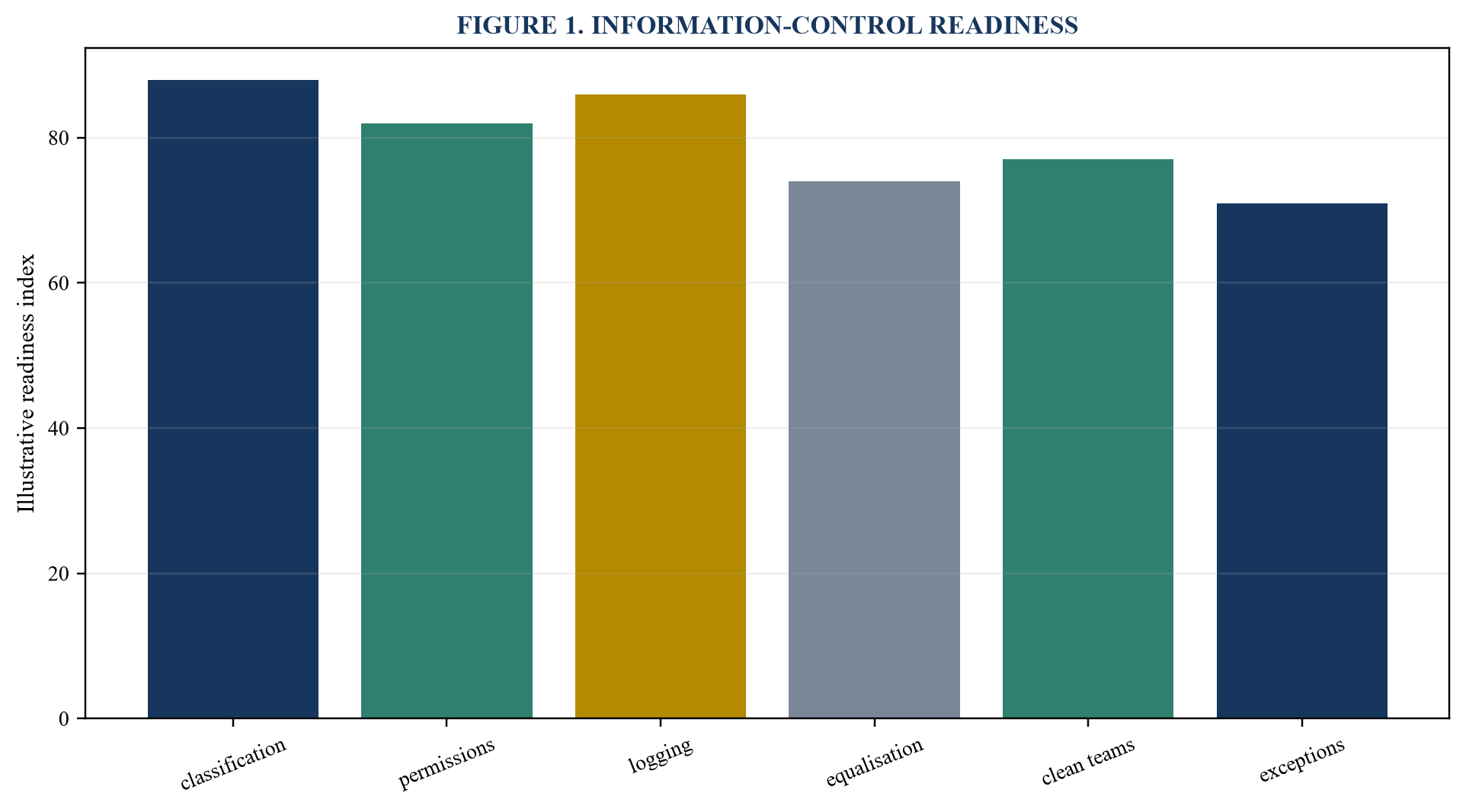
Values are illustrative readiness indices and require company-specific evidence.
9. Separate management's operating and buyer roles
The independent decision body should define when an executive acts for the company and when that person acts for the bidder. The immediate output is a controlled dual-role protocol with named owners, dates, source evidence, approval status and open exceptions.
The control objective is to determine whether communications, instructions and work product clearly identify the represented interest. Reviewers should reconcile board materials, transaction correspondence, data-room records, adviser work, valuation models, financing documents and declarations of interest.
The protocol should assign responsibility across the independent body, management, legal counsel, financial advisers, valuation specialists, lenders and assurance teams. Access permissions, recusals, meeting attendance, drafting rights, challenge routes and record retention should be explicit. Any departure needs a stated reason, decision owner, legal assessment, mitigating control and deadline.
At each gate, decision makers should test price, alternatives, execution certainty, information parity, personal benefits, stakeholder effects and process integrity together. Material gaps remain visible until evidence is complete, advice is current, exceptions are resolved or accepted by the authorised body, and the decision rationale can withstand later scrutiny.
10. Control forecast creation and use
The independent decision body should govern who prepares, challenges, approves, updates and distributes forecasts. The immediate output is a controlled forecast provenance file with named owners, dates, source evidence, approval status and open exceptions.
The control objective is to determine whether projections reflect the board-approved planning process and are shared consistently where required. Reviewers should reconcile board materials, transaction correspondence, data-room records, adviser work, valuation models, financing documents and declarations of interest.
The protocol should assign responsibility across the independent body, management, legal counsel, financial advisers, valuation specialists, lenders and assurance teams. Access permissions, recusals, meeting attendance, drafting rights, challenge routes and record retention should be explicit. Any departure needs a stated reason, decision owner, legal assessment, mitigating control and deadline.
At each gate, decision makers should test price, alternatives, execution certainty, information parity, personal benefits, stakeholder effects and process integrity together. Material gaps remain visible until evidence is complete, advice is current, exceptions are resolved or accepted by the authorised body, and the decision rationale can withstand later scrutiny.
11. Govern diligence access
The independent decision body should set data-room permissions, question routing, response ownership, redaction and audit logging. The immediate output is a controlled diligence-access matrix with named owners, dates, source evidence, approval status and open exceptions.
The control objective is to determine whether management receives information under the same defensible standard applied to credible alternatives. Reviewers should reconcile board materials, transaction correspondence, data-room records, adviser work, valuation models, financing documents and declarations of interest.
The protocol should assign responsibility across the independent body, management, legal counsel, financial advisers, valuation specialists, lenders and assurance teams. Access permissions, recusals, meeting attendance, drafting rights, challenge routes and record retention should be explicit. Any departure needs a stated reason, decision owner, legal assessment, mitigating control and deadline.
At each gate, decision makers should test price, alternatives, execution certainty, information parity, personal benefits, stakeholder effects and process integrity together. Material gaps remain visible until evidence is complete, advice is current, exceptions are resolved or accepted by the authorised body, and the decision rationale can withstand later scrutiny.
12. Use clean teams where needed
The independent decision body should isolate competitively sensitive, personal or lender-confidential information. The immediate output is a controlled clean-team charter with named owners, dates, source evidence, approval status and open exceptions.
The control objective is to determine whether restricted data can support diligence without contaminating commercial decisions or future conduct. Reviewers should reconcile board materials, transaction correspondence, data-room records, adviser work, valuation models, financing documents and declarations of interest.
The protocol should assign responsibility across the independent body, management, legal counsel, financial advisers, valuation specialists, lenders and assurance teams. Access permissions, recusals, meeting attendance, drafting rights, challenge routes and record retention should be explicit. Any departure needs a stated reason, decision owner, legal assessment, mitigating control and deadline.
At each gate, decision makers should test price, alternatives, execution certainty, information parity, personal benefits, stakeholder effects and process integrity together. Material gaps remain visible until evidence is complete, advice is current, exceptions are resolved or accepted by the authorised body, and the decision rationale can withstand later scrutiny.
13. Log disclosures and exceptions
The independent decision body should record documents, recipients, timestamps, purposes, restrictions and approved deviations. The immediate output is a controlled disclosure and exception log with named owners, dates, source evidence, approval status and open exceptions.
The control objective is to determine whether unequal access is identified promptly and remedied or justified. Reviewers should reconcile board materials, transaction correspondence, data-room records, adviser work, valuation models, financing documents and declarations of interest.
The protocol should assign responsibility across the independent body, management, legal counsel, financial advisers, valuation specialists, lenders and assurance teams. Access permissions, recusals, meeting attendance, drafting rights, challenge routes and record retention should be explicit. Any departure needs a stated reason, decision owner, legal assessment, mitigating control and deadline.
At each gate, decision makers should test price, alternatives, execution certainty, information parity, personal benefits, stakeholder effects and process integrity together. Material gaps remain visible until evidence is complete, advice is current, exceptions are resolved or accepted by the authorised body, and the decision rationale can withstand later scrutiny.
14. Prevent selective signalling
The independent decision body should control informal conversations with managers, lenders, investors, employees and counterparties. The immediate output is a controlled communications protocol with named owners, dates, source evidence, approval status and open exceptions.
The control objective is to determine whether non-public signals could influence bidding, price discovery or stakeholder behaviour. Reviewers should reconcile board materials, transaction correspondence, data-room records, adviser work, valuation models, financing documents and declarations of interest.
The protocol should assign responsibility across the independent body, management, legal counsel, financial advisers, valuation specialists, lenders and assurance teams. Access permissions, recusals, meeting attendance, drafting rights, challenge routes and record retention should be explicit. Any departure needs a stated reason, decision owner, legal assessment, mitigating control and deadline.
At each gate, decision makers should test price, alternatives, execution certainty, information parity, personal benefits, stakeholder effects and process integrity together. Material gaps remain visible until evidence is complete, advice is current, exceptions are resolved or accepted by the authorised body, and the decision rationale can withstand later scrutiny.
15. Preserve ordinary-course management
The independent decision body should define permitted operational decisions, reporting cadence and escalation thresholds. The immediate output is a controlled business-continuity mandate with named owners, dates, source evidence, approval status and open exceptions.
The control objective is to determine whether necessary executive action continues without allowing transaction leverage over the board. Reviewers should reconcile board materials, transaction correspondence, data-room records, adviser work, valuation models, financing documents and declarations of interest.
The protocol should assign responsibility across the independent body, management, legal counsel, financial advisers, valuation specialists, lenders and assurance teams. Access permissions, recusals, meeting attendance, drafting rights, challenge routes and record retention should be explicit. Any departure needs a stated reason, decision owner, legal assessment, mitigating control and deadline.
At each gate, decision makers should test price, alternatives, execution certainty, information parity, personal benefits, stakeholder effects and process integrity together. Material gaps remain visible until evidence is complete, advice is current, exceptions are resolved or accepted by the authorised body, and the decision rationale can withstand later scrutiny.
16. Protect whistleblowing and challenge
The independent decision body should provide confidential routes for employees, advisers and directors to raise concerns. The immediate output is a controlled challenge and escalation mechanism with named owners, dates, source evidence, approval status and open exceptions.
The control objective is to determine whether credible concerns receive independent investigation and documented resolution. Reviewers should reconcile board materials, transaction correspondence, data-room records, adviser work, valuation models, financing documents and declarations of interest.
The protocol should assign responsibility across the independent body, management, legal counsel, financial advisers, valuation specialists, lenders and assurance teams. Access permissions, recusals, meeting attendance, drafting rights, challenge routes and record retention should be explicit. Any departure needs a stated reason, decision owner, legal assessment, mitigating control and deadline.
At each gate, decision makers should test price, alternatives, execution certainty, information parity, personal benefits, stakeholder effects and process integrity together. Material gaps remain visible until evidence is complete, advice is current, exceptions are resolved or accepted by the authorised body, and the decision rationale can withstand later scrutiny.
Table 2. Conflict-and-recusal register
| Conflict source | Required evidence | Control response |
|---|---|---|
| buyer participation | declarations and consortium terms | recusal |
| incentive economics | term sheets and models | separate negotiation |
| adviser relationship | mandate and fee history | independence review |
| information advantage | access logs and provenance | equalisation |
Illustrative fields; the independent body determines transaction-specific treatment.
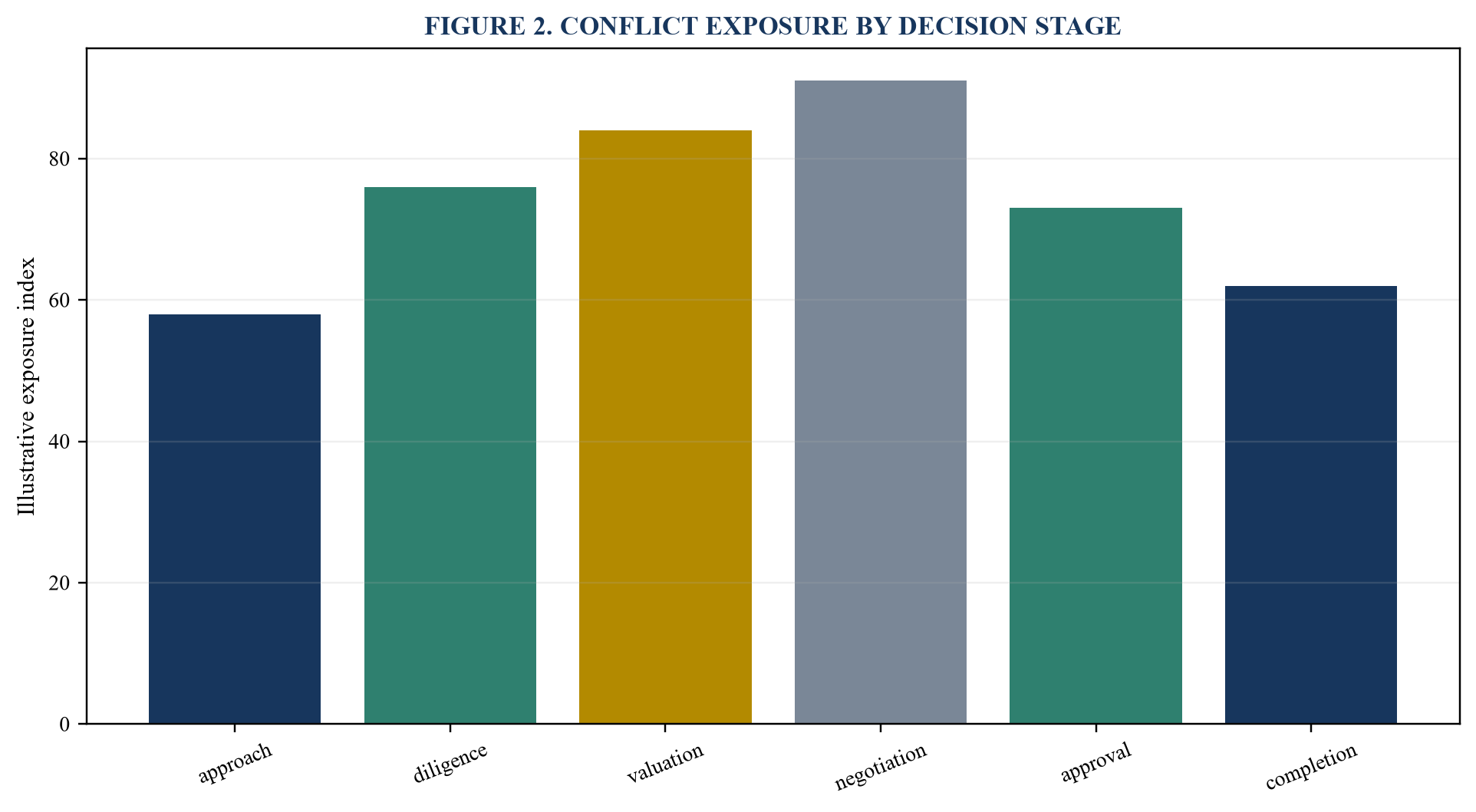
Values are illustrative readiness indices and require company-specific evidence.
17. Define the fairness question
The independent decision body should state whose interests, consideration alternatives, timing and non-price terms require assessment. The immediate output is a controlled fairness-question memorandum with named owners, dates, source evidence, approval status and open exceptions.
The control objective is to determine whether the board evaluates the whole transaction rather than a headline price alone. Reviewers should reconcile board materials, transaction correspondence, data-room records, adviser work, valuation models, financing documents and declarations of interest.
The protocol should assign responsibility across the independent body, management, legal counsel, financial advisers, valuation specialists, lenders and assurance teams. Access permissions, recusals, meeting attendance, drafting rights, challenge routes and record retention should be explicit. Any departure needs a stated reason, decision owner, legal assessment, mitigating control and deadline.
At each gate, decision makers should test price, alternatives, execution certainty, information parity, personal benefits, stakeholder effects and process integrity together. Material gaps remain visible until evidence is complete, advice is current, exceptions are resolved or accepted by the authorised body, and the decision rationale can withstand later scrutiny.
18. Establish standalone value
The independent decision body should reconcile historical performance, forecast cases, capital needs, risk and strategic options. The immediate output is a controlled standalone valuation range with named owners, dates, source evidence, approval status and open exceptions.
The control objective is to determine whether the company has a defensible value baseline independent of the proposed buyout. Reviewers should reconcile board materials, transaction correspondence, data-room records, adviser work, valuation models, financing documents and declarations of interest.
The protocol should assign responsibility across the independent body, management, legal counsel, financial advisers, valuation specialists, lenders and assurance teams. Access permissions, recusals, meeting attendance, drafting rights, challenge routes and record retention should be explicit. Any departure needs a stated reason, decision owner, legal assessment, mitigating control and deadline.
At each gate, decision makers should test price, alternatives, execution certainty, information parity, personal benefits, stakeholder effects and process integrity together. Material gaps remain visible until evidence is complete, advice is current, exceptions are resolved or accepted by the authorised body, and the decision rationale can withstand later scrutiny.
19. Test credible alternatives
The independent decision body should evaluate continued ownership, refinancing, minority capital, strategic sale and broader auction routes. The immediate output is a controlled alternatives assessment with named owners, dates, source evidence, approval status and open exceptions.
The control objective is to determine whether the board understands value, certainty, timing and execution trade-offs across feasible paths. Reviewers should reconcile board materials, transaction correspondence, data-room records, adviser work, valuation models, financing documents and declarations of interest.
The protocol should assign responsibility across the independent body, management, legal counsel, financial advisers, valuation specialists, lenders and assurance teams. Access permissions, recusals, meeting attendance, drafting rights, challenge routes and record retention should be explicit. Any departure needs a stated reason, decision owner, legal assessment, mitigating control and deadline.
At each gate, decision makers should test price, alternatives, execution certainty, information parity, personal benefits, stakeholder effects and process integrity together. Material gaps remain visible until evidence is complete, advice is current, exceptions are resolved or accepted by the authorised body, and the decision rationale can withstand later scrutiny.
20. Design market testing
The independent decision body should choose auction, targeted outreach, go-shop, pre-signing test or documented single-bidder rationale. The immediate output is a controlled market-test plan with named owners, dates, source evidence, approval status and open exceptions.
The control objective is to determine whether competitive tension is proportionate to confidentiality, disruption and buyer universe. Reviewers should reconcile board materials, transaction correspondence, data-room records, adviser work, valuation models, financing documents and declarations of interest.
The protocol should assign responsibility across the independent body, management, legal counsel, financial advisers, valuation specialists, lenders and assurance teams. Access permissions, recusals, meeting attendance, drafting rights, challenge routes and record retention should be explicit. Any departure needs a stated reason, decision owner, legal assessment, mitigating control and deadline.
At each gate, decision makers should test price, alternatives, execution certainty, information parity, personal benefits, stakeholder effects and process integrity together. Material gaps remain visible until evidence is complete, advice is current, exceptions are resolved or accepted by the authorised body, and the decision rationale can withstand later scrutiny.
21. Equalise material information
The independent decision body should identify information received by management that credible bidders need to compete. The immediate output is a controlled information-equalisation plan with named owners, dates, source evidence, approval status and open exceptions.
The control objective is to determine whether material asymmetry is removed through disclosure, recut forecasts or controlled access. Reviewers should reconcile board materials, transaction correspondence, data-room records, adviser work, valuation models, financing documents and declarations of interest.
The protocol should assign responsibility across the independent body, management, legal counsel, financial advisers, valuation specialists, lenders and assurance teams. Access permissions, recusals, meeting attendance, drafting rights, challenge routes and record retention should be explicit. Any departure needs a stated reason, decision owner, legal assessment, mitigating control and deadline.
At each gate, decision makers should test price, alternatives, execution certainty, information parity, personal benefits, stakeholder effects and process integrity together. Material gaps remain visible until evidence is complete, advice is current, exceptions are resolved or accepted by the authorised body, and the decision rationale can withstand later scrutiny.
22. Assess price and non-price terms
The independent decision body should compare cash, rollover, conditions, financing, liability, employee effects and execution certainty. The immediate output is a controlled bid-comparison matrix with named owners, dates, source evidence, approval status and open exceptions.
The control objective is to determine whether the preferred proposal maximises risk-adjusted stakeholder value under the governing duties. Reviewers should reconcile board materials, transaction correspondence, data-room records, adviser work, valuation models, financing documents and declarations of interest.
The protocol should assign responsibility across the independent body, management, legal counsel, financial advisers, valuation specialists, lenders and assurance teams. Access permissions, recusals, meeting attendance, drafting rights, challenge routes and record retention should be explicit. Any departure needs a stated reason, decision owner, legal assessment, mitigating control and deadline.
At each gate, decision makers should test price, alternatives, execution certainty, information parity, personal benefits, stakeholder effects and process integrity together. Material gaps remain visible until evidence is complete, advice is current, exceptions are resolved or accepted by the authorised body, and the decision rationale can withstand later scrutiny.
23. Examine management incentives
The independent decision body should map rollover, sweet equity, retention, employment, leaver and transaction-bonus terms. The immediate output is a controlled management-benefits register with named owners, dates, source evidence, approval status and open exceptions.
The control objective is to determine whether personal economics are separated from company negotiations and disclosed to independent decision makers. Reviewers should reconcile board materials, transaction correspondence, data-room records, adviser work, valuation models, financing documents and declarations of interest.
The protocol should assign responsibility across the independent body, management, legal counsel, financial advisers, valuation specialists, lenders and assurance teams. Access permissions, recusals, meeting attendance, drafting rights, challenge routes and record retention should be explicit. Any departure needs a stated reason, decision owner, legal assessment, mitigating control and deadline.
At each gate, decision makers should test price, alternatives, execution certainty, information parity, personal benefits, stakeholder effects and process integrity together. Material gaps remain visible until evidence is complete, advice is current, exceptions are resolved or accepted by the authorised body, and the decision rationale can withstand later scrutiny.
24. Control management presentations
The independent decision body should standardise preparation, attendance, materials, bidder access and feedback. The immediate output is a controlled management-presentation protocol with named owners, dates, source evidence, approval status and open exceptions.
The control objective is to determine whether executives support legitimate diligence without favouring their own consortium. Reviewers should reconcile board materials, transaction correspondence, data-room records, adviser work, valuation models, financing documents and declarations of interest.
The protocol should assign responsibility across the independent body, management, legal counsel, financial advisers, valuation specialists, lenders and assurance teams. Access permissions, recusals, meeting attendance, drafting rights, challenge routes and record retention should be explicit. Any departure needs a stated reason, decision owner, legal assessment, mitigating control and deadline.
At each gate, decision makers should test price, alternatives, execution certainty, information parity, personal benefits, stakeholder effects and process integrity together. Material gaps remain visible until evidence is complete, advice is current, exceptions are resolved or accepted by the authorised body, and the decision rationale can withstand later scrutiny.
Table 3. Procedural-fairness scorecard
| Fairness dimension | Evidence | Gate |
|---|---|---|
| alternatives | market test and option analysis | credible choice |
| valuation | independent range and sensitivities | price support |
| financing | commitments and conditions | certainty |
| disclosure | verified process and interests | informed decision |
Illustrative readiness scoring; evidence quality controls the conclusion.
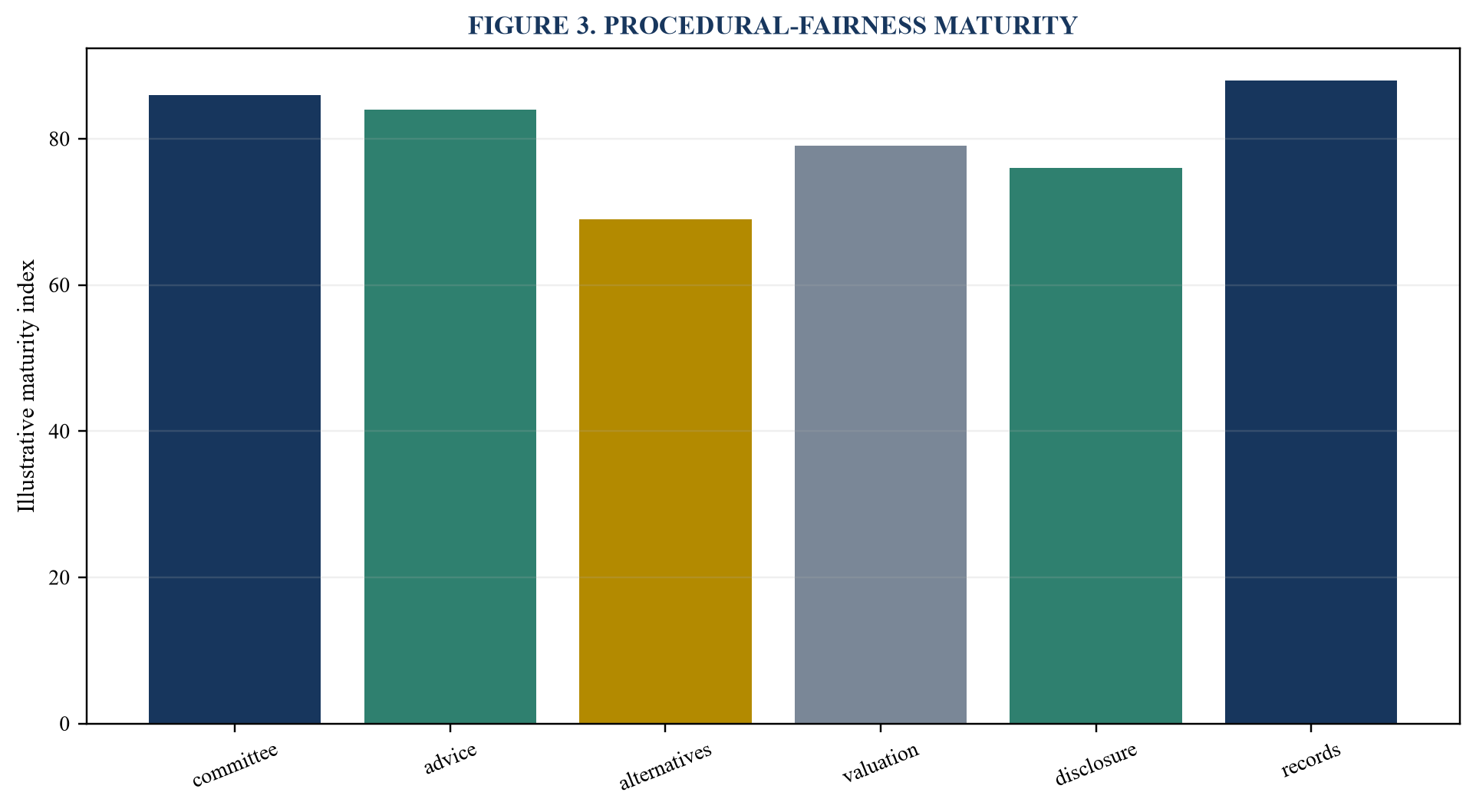
Values are illustrative readiness indices and require company-specific evidence.
25. Govern bidder financing interactions
The independent decision body should separate company cooperation from management's personal solicitation of capital. The immediate output is a controlled financing-contact register with named owners, dates, source evidence, approval status and open exceptions.
The control objective is to determine whether lenders and sponsors receive authorised information and the board can assess certainty of funds. Reviewers should reconcile board materials, transaction correspondence, data-room records, adviser work, valuation models, financing documents and declarations of interest.
The protocol should assign responsibility across the independent body, management, legal counsel, financial advisers, valuation specialists, lenders and assurance teams. Access permissions, recusals, meeting attendance, drafting rights, challenge routes and record retention should be explicit. Any departure needs a stated reason, decision owner, legal assessment, mitigating control and deadline.
At each gate, decision makers should test price, alternatives, execution certainty, information parity, personal benefits, stakeholder effects and process integrity together. Material gaps remain visible until evidence is complete, advice is current, exceptions are resolved or accepted by the authorised body, and the decision rationale can withstand later scrutiny.
26. Challenge conflicts in valuation inputs
The independent decision body should test projections, adjustments, synergies, discount rates, multiples and terminal assumptions. The immediate output is a controlled valuation-challenge log with named owners, dates, source evidence, approval status and open exceptions.
The control objective is to determine whether assumptions benefiting management are independently evidenced and sensitised. Reviewers should reconcile board materials, transaction correspondence, data-room records, adviser work, valuation models, financing documents and declarations of interest.
The protocol should assign responsibility across the independent body, management, legal counsel, financial advisers, valuation specialists, lenders and assurance teams. Access permissions, recusals, meeting attendance, drafting rights, challenge routes and record retention should be explicit. Any departure needs a stated reason, decision owner, legal assessment, mitigating control and deadline.
At each gate, decision makers should test price, alternatives, execution certainty, information parity, personal benefits, stakeholder effects and process integrity together. Material gaps remain visible until evidence is complete, advice is current, exceptions are resolved or accepted by the authorised body, and the decision rationale can withstand later scrutiny.
27. Evaluate process coercion
The independent decision body should identify threats to resign, withdraw cooperation, change forecasts or influence employees and lenders. The immediate output is a controlled coercion-risk assessment with named owners, dates, source evidence, approval status and open exceptions.
The control objective is to determine whether the board can continue the process and access information if management support changes. Reviewers should reconcile board materials, transaction correspondence, data-room records, adviser work, valuation models, financing documents and declarations of interest.
The protocol should assign responsibility across the independent body, management, legal counsel, financial advisers, valuation specialists, lenders and assurance teams. Access permissions, recusals, meeting attendance, drafting rights, challenge routes and record retention should be explicit. Any departure needs a stated reason, decision owner, legal assessment, mitigating control and deadline.
At each gate, decision makers should test price, alternatives, execution certainty, information parity, personal benefits, stakeholder effects and process integrity together. Material gaps remain visible until evidence is complete, advice is current, exceptions are resolved or accepted by the authorised body, and the decision rationale can withstand later scrutiny.
28. Protect employees and customers
The independent decision body should manage rumours, retention, service continuity and restricted communications. The immediate output is a controlled stakeholder-continuity plan with named owners, dates, source evidence, approval status and open exceptions.
The control objective is to determine whether operational constituencies receive accurate information at the authorised time. Reviewers should reconcile board materials, transaction correspondence, data-room records, adviser work, valuation models, financing documents and declarations of interest.
The protocol should assign responsibility across the independent body, management, legal counsel, financial advisers, valuation specialists, lenders and assurance teams. Access permissions, recusals, meeting attendance, drafting rights, challenge routes and record retention should be explicit. Any departure needs a stated reason, decision owner, legal assessment, mitigating control and deadline.
At each gate, decision makers should test price, alternatives, execution certainty, information parity, personal benefits, stakeholder effects and process integrity together. Material gaps remain visible until evidence is complete, advice is current, exceptions are resolved or accepted by the authorised body, and the decision rationale can withstand later scrutiny.
29. Control leaks and market conduct
The independent decision body should set secrecy, dealing, wall-crossing, announcement and incident procedures. The immediate output is a controlled market-conduct protocol with named owners, dates, source evidence, approval status and open exceptions.
The control objective is to determine whether sensitive information remains controlled and any breach triggers prompt legal and regulatory response. Reviewers should reconcile board materials, transaction correspondence, data-room records, adviser work, valuation models, financing documents and declarations of interest.
The protocol should assign responsibility across the independent body, management, legal counsel, financial advisers, valuation specialists, lenders and assurance teams. Access permissions, recusals, meeting attendance, drafting rights, challenge routes and record retention should be explicit. Any departure needs a stated reason, decision owner, legal assessment, mitigating control and deadline.
At each gate, decision makers should test price, alternatives, execution certainty, information parity, personal benefits, stakeholder effects and process integrity together. Material gaps remain visible until evidence is complete, advice is current, exceptions are resolved or accepted by the authorised body, and the decision rationale can withstand later scrutiny.
30. Document negotiation integrity
The independent decision body should record proposals, counterproposals, rejected terms, adviser input and decision rationale. The immediate output is a controlled negotiation ledger with named owners, dates, source evidence, approval status and open exceptions.
The control objective is to determine whether economic improvements and concessions can be traced to independent challenge. Reviewers should reconcile board materials, transaction correspondence, data-room records, adviser work, valuation models, financing documents and declarations of interest.
The protocol should assign responsibility across the independent body, management, legal counsel, financial advisers, valuation specialists, lenders and assurance teams. Access permissions, recusals, meeting attendance, drafting rights, challenge routes and record retention should be explicit. Any departure needs a stated reason, decision owner, legal assessment, mitigating control and deadline.
At each gate, decision makers should test price, alternatives, execution certainty, information parity, personal benefits, stakeholder effects and process integrity together. Material gaps remain visible until evidence is complete, advice is current, exceptions are resolved or accepted by the authorised body, and the decision rationale can withstand later scrutiny.
31. Test financing certainty and conditions
The independent decision body should verify commitments, conditions, flex, syndication, equity funding and termination rights. The immediate output is a controlled funding-certainty certificate with named owners, dates, source evidence, approval status and open exceptions.
The control objective is to determine whether the board understands funding risk before granting exclusivity or recommending the transaction. Reviewers should reconcile board materials, transaction correspondence, data-room records, adviser work, valuation models, financing documents and declarations of interest.
The protocol should assign responsibility across the independent body, management, legal counsel, financial advisers, valuation specialists, lenders and assurance teams. Access permissions, recusals, meeting attendance, drafting rights, challenge routes and record retention should be explicit. Any departure needs a stated reason, decision owner, legal assessment, mitigating control and deadline.
At each gate, decision makers should test price, alternatives, execution certainty, information parity, personal benefits, stakeholder effects and process integrity together. Material gaps remain visible until evidence is complete, advice is current, exceptions are resolved or accepted by the authorised body, and the decision rationale can withstand later scrutiny.
32. Govern exclusivity and deal protections
The independent decision body should assess no-shop terms, matching rights, break fees, fiduciary outs and timetables. The immediate output is a controlled deal-protection assessment with named owners, dates, source evidence, approval status and open exceptions.
The control objective is to determine whether protections preserve a credible ability to respond to superior alternatives. Reviewers should reconcile board materials, transaction correspondence, data-room records, adviser work, valuation models, financing documents and declarations of interest.
The protocol should assign responsibility across the independent body, management, legal counsel, financial advisers, valuation specialists, lenders and assurance teams. Access permissions, recusals, meeting attendance, drafting rights, challenge routes and record retention should be explicit. Any departure needs a stated reason, decision owner, legal assessment, mitigating control and deadline.
At each gate, decision makers should test price, alternatives, execution certainty, information parity, personal benefits, stakeholder effects and process integrity together. Material gaps remain visible until evidence is complete, advice is current, exceptions are resolved or accepted by the authorised body, and the decision rationale can withstand later scrutiny.
Table 4. Bid-comparison matrix
| Dimension | Management bid | Alternative path |
|---|---|---|
| consideration | cash and rollover terms | risk-adjusted value |
| conditions | approvals and financing | execution dependencies |
| timing | proposed timetable | disruption and delay |
| stakeholders | employees and customers | continuity effects |
Illustrative comparison structure; values and weights require board approval.
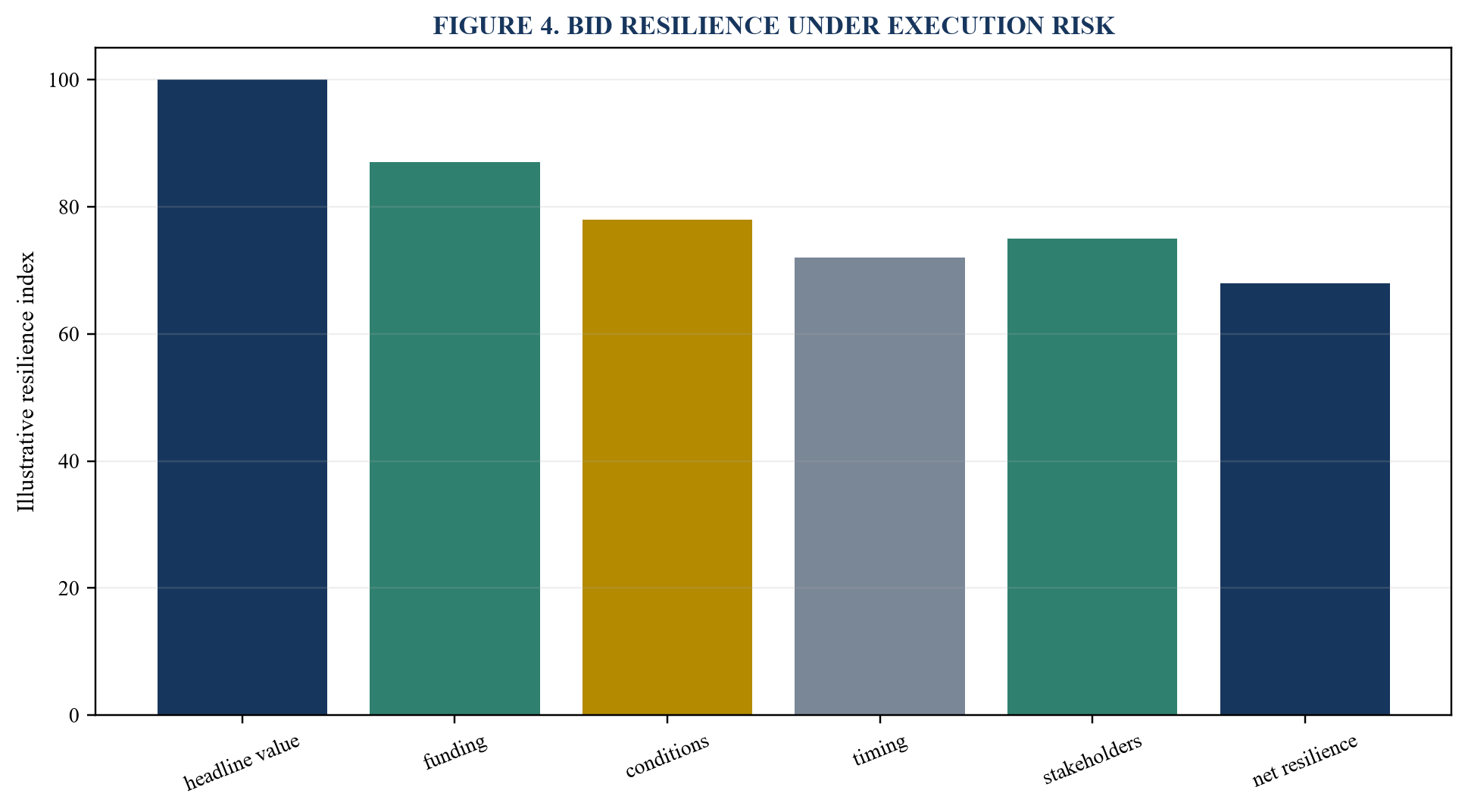
Values are illustrative readiness indices and require company-specific evidence.
33. Prepare decision-grade disclosures
The independent decision body should reconcile process history, interests, benefits, forecasts, valuation and fairness conclusions. The immediate output is a controlled disclosure evidence pack with named owners, dates, source evidence, approval status and open exceptions.
The control objective is to determine whether recipients can understand conflicts, alternatives and the reasons for the recommendation. Reviewers should reconcile board materials, transaction correspondence, data-room records, adviser work, valuation models, financing documents and declarations of interest.
The protocol should assign responsibility across the independent body, management, legal counsel, financial advisers, valuation specialists, lenders and assurance teams. Access permissions, recusals, meeting attendance, drafting rights, challenge routes and record retention should be explicit. Any departure needs a stated reason, decision owner, legal assessment, mitigating control and deadline.
At each gate, decision makers should test price, alternatives, execution certainty, information parity, personal benefits, stakeholder effects and process integrity together. Material gaps remain visible until evidence is complete, advice is current, exceptions are resolved or accepted by the authorised body, and the decision rationale can withstand later scrutiny.
34. Obtain formal independent advice
The independent decision body should define scope, information access, valuation work, assumptions and limitations. The immediate output is a controlled independent-advice record with named owners, dates, source evidence, approval status and open exceptions.
The control objective is to determine whether the advice directly addresses fairness and reasonableness under the applicable regime. Reviewers should reconcile board materials, transaction correspondence, data-room records, adviser work, valuation models, financing documents and declarations of interest.
The protocol should assign responsibility across the independent body, management, legal counsel, financial advisers, valuation specialists, lenders and assurance teams. Access permissions, recusals, meeting attendance, drafting rights, challenge routes and record retention should be explicit. Any departure needs a stated reason, decision owner, legal assessment, mitigating control and deadline.
At each gate, decision makers should test price, alternatives, execution certainty, information parity, personal benefits, stakeholder effects and process integrity together. Material gaps remain visible until evidence is complete, advice is current, exceptions are resolved or accepted by the authorised body, and the decision rationale can withstand later scrutiny.
35. Run the approval gates
The independent decision body should sequence committee, board, shareholder, lender and regulatory approvals. The immediate output is a controlled approval and dependency map with named owners, dates, source evidence, approval status and open exceptions.
The control objective is to determine whether each body receives complete information and conflicted votes are handled correctly. Reviewers should reconcile board materials, transaction correspondence, data-room records, adviser work, valuation models, financing documents and declarations of interest.
The protocol should assign responsibility across the independent body, management, legal counsel, financial advisers, valuation specialists, lenders and assurance teams. Access permissions, recusals, meeting attendance, drafting rights, challenge routes and record retention should be explicit. Any departure needs a stated reason, decision owner, legal assessment, mitigating control and deadline.
At each gate, decision makers should test price, alternatives, execution certainty, information parity, personal benefits, stakeholder effects and process integrity together. Material gaps remain visible until evidence is complete, advice is current, exceptions are resolved or accepted by the authorised body, and the decision rationale can withstand later scrutiny.
36. Manage signing-to-completion conduct
The independent decision body should control information updates, operating decisions, financing changes and stakeholder communications. The immediate output is a controlled interim governance plan with named owners, dates, source evidence, approval status and open exceptions.
The control objective is to determine whether the protections remain effective until control actually changes. Reviewers should reconcile board materials, transaction correspondence, data-room records, adviser work, valuation models, financing documents and declarations of interest.
The protocol should assign responsibility across the independent body, management, legal counsel, financial advisers, valuation specialists, lenders and assurance teams. Access permissions, recusals, meeting attendance, drafting rights, challenge routes and record retention should be explicit. Any departure needs a stated reason, decision owner, legal assessment, mitigating control and deadline.
At each gate, decision makers should test price, alternatives, execution certainty, information parity, personal benefits, stakeholder effects and process integrity together. Material gaps remain visible until evidence is complete, advice is current, exceptions are resolved or accepted by the authorised body, and the decision rationale can withstand later scrutiny.
37. Prepare for failed or competing bids
The independent decision body should define information withdrawal, retention, standstill, recusal reset and renewed market testing. The immediate output is a controlled contingency playbook with named owners, dates, source evidence, approval status and open exceptions.
The control objective is to determine whether the company can recover control of its process after a changed outcome. Reviewers should reconcile board materials, transaction correspondence, data-room records, adviser work, valuation models, financing documents and declarations of interest.
The protocol should assign responsibility across the independent body, management, legal counsel, financial advisers, valuation specialists, lenders and assurance teams. Access permissions, recusals, meeting attendance, drafting rights, challenge routes and record retention should be explicit. Any departure needs a stated reason, decision owner, legal assessment, mitigating control and deadline.
At each gate, decision makers should test price, alternatives, execution certainty, information parity, personal benefits, stakeholder effects and process integrity together. Material gaps remain visible until evidence is complete, advice is current, exceptions are resolved or accepted by the authorised body, and the decision rationale can withstand later scrutiny.
38. Monitor implementation and undertakings
The independent decision body should track conditions, disclosures, management arrangements, financing and agreed safeguards. The immediate output is a controlled completion-control dashboard with named owners, dates, source evidence, approval status and open exceptions.
The control objective is to determine whether every commitment is owned, evidenced and escalated before completion. Reviewers should reconcile board materials, transaction correspondence, data-room records, adviser work, valuation models, financing documents and declarations of interest.
The protocol should assign responsibility across the independent body, management, legal counsel, financial advisers, valuation specialists, lenders and assurance teams. Access permissions, recusals, meeting attendance, drafting rights, challenge routes and record retention should be explicit. Any departure needs a stated reason, decision owner, legal assessment, mitigating control and deadline.
At each gate, decision makers should test price, alternatives, execution certainty, information parity, personal benefits, stakeholder effects and process integrity together. Material gaps remain visible until evidence is complete, advice is current, exceptions are resolved or accepted by the authorised body, and the decision rationale can withstand later scrutiny.
39. Conduct post-deal assurance
The independent decision body should review protocol adherence, exceptions, information handling and stakeholder outcomes. The immediate output is a controlled post-transaction assurance report with named owners, dates, source evidence, approval status and open exceptions.
The control objective is to determine whether lessons and unresolved matters are captured without rewriting the contemporaneous record. Reviewers should reconcile board materials, transaction correspondence, data-room records, adviser work, valuation models, financing documents and declarations of interest.
The protocol should assign responsibility across the independent body, management, legal counsel, financial advisers, valuation specialists, lenders and assurance teams. Access permissions, recusals, meeting attendance, drafting rights, challenge routes and record retention should be explicit. Any departure needs a stated reason, decision owner, legal assessment, mitigating control and deadline.
At each gate, decision makers should test price, alternatives, execution certainty, information parity, personal benefits, stakeholder effects and process integrity together. Material gaps remain visible until evidence is complete, advice is current, exceptions are resolved or accepted by the authorised body, and the decision rationale can withstand later scrutiny.
40. Issue the conflict-protocol conclusion
The independent decision body should integrate conflicts, information, fairness, financing, advice, disclosure and approvals. The immediate output is a controlled board-ready conflict certificate with named owners, dates, source evidence, approval status and open exceptions.
The control objective is to determine whether the process is defensible on evidence, procedure and substantive outcome. Reviewers should reconcile board materials, transaction correspondence, data-room records, adviser work, valuation models, financing documents and declarations of interest.
The protocol should assign responsibility across the independent body, management, legal counsel, financial advisers, valuation specialists, lenders and assurance teams. Access permissions, recusals, meeting attendance, drafting rights, challenge routes and record retention should be explicit. Any departure needs a stated reason, decision owner, legal assessment, mitigating control and deadline.
At each gate, decision makers should test price, alternatives, execution certainty, information parity, personal benefits, stakeholder effects and process integrity together. Material gaps remain visible until evidence is complete, advice is current, exceptions are resolved or accepted by the authorised body, and the decision rationale can withstand later scrutiny.
Table 5. Conflict-protocol certificate
| Certification | Evidence owner | Status |
|---|---|---|
| conflicts mapped | company secretary | tested |
| information controlled | data-room owner | tested |
| fairness assessed | independent adviser | tested |
| approvals complete | independent chair | tested |
Illustrative board gate; authorised advisers determine legal and regulatory sufficiency.
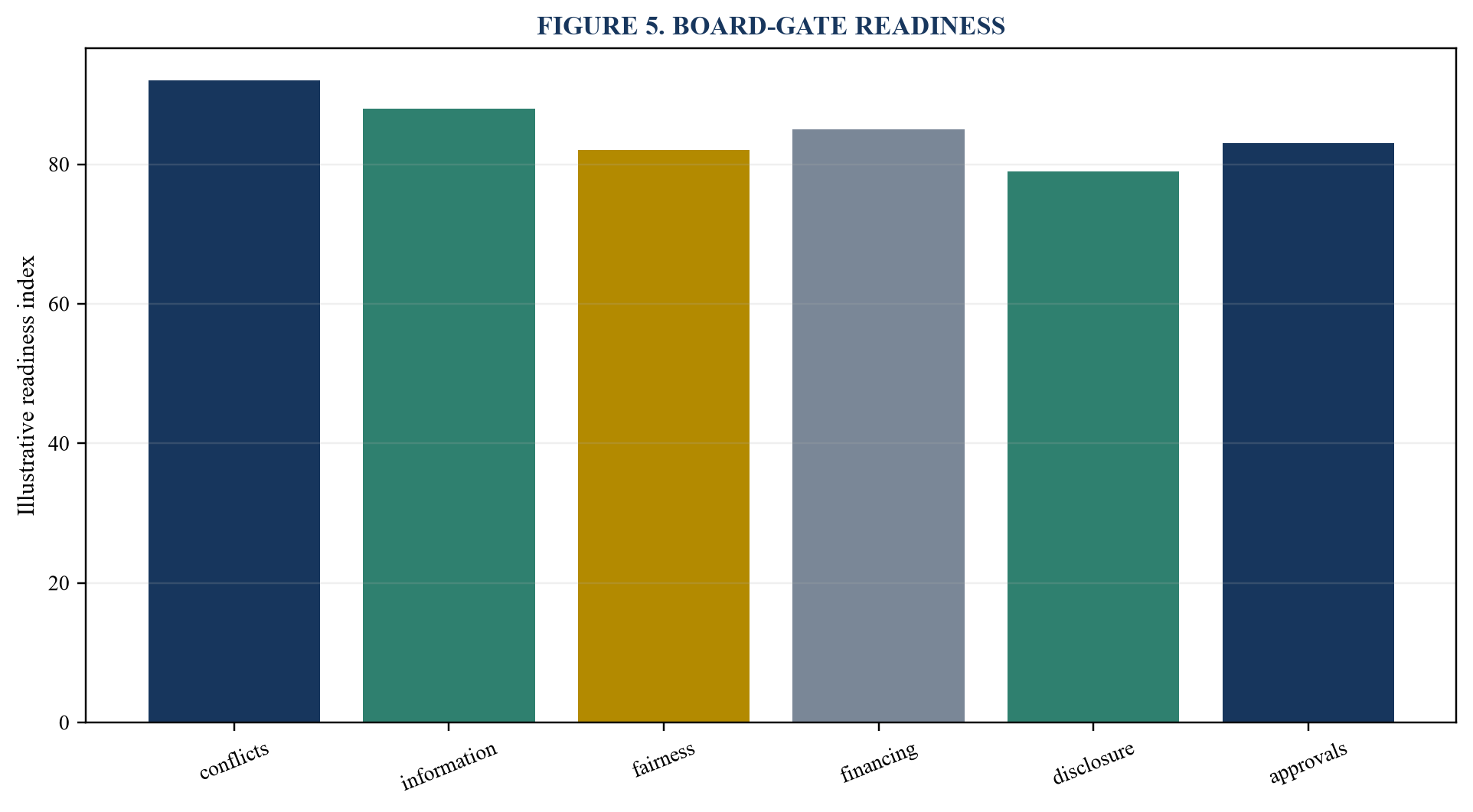
Values are illustrative readiness indices and require company-specific evidence.
References
- IFRS Foundation, IFRS 3 Business Combinations, https://www.ifrs.org/issued-standards/list-of-standards/ifrs-3-business-combinations/
- IFRS Foundation, IAS 37 Provisions Contingent Liabilities and Contingent Assets, https://www.ifrs.org/issued-standards/list-of-standards/ias-37-provisions-contingent-liabilities-and-contingent-assets/
- IFRS Foundation, IAS 36 Impairment of Assets, https://www.ifrs.org/issued-standards/list-of-standards/ias-36-impairment-of-assets/
- IFRS Foundation, IAS 38 Intangible Assets, https://www.ifrs.org/issued-standards/list-of-standards/ias-38-intangible-assets/
- IFRS Foundation, IAS 19 Employee Benefits, https://www.ifrs.org/issued-standards/list-of-standards/ias-19-employee-benefits/
- IFRS Foundation, IFRS 16 Leases, https://www.ifrs.org/issued-standards/list-of-standards/ifrs-16-leases/
- IFRS Foundation, IAS 12 Income Taxes, https://www.ifrs.org/issued-standards/list-of-standards/ias-12-income-taxes/
- IFRS Foundation, IAS 7 Statement of Cash Flows, https://www.ifrs.org/issued-standards/list-of-standards/ias-7-statement-of-cash-flows/
- Financial Accounting Standards Board, Business Combinations Topic 805, https://asc.fasb.org/topic&trid=2127482
- Financial Accounting Standards Board, Exit or Disposal Cost Obligations Topic 420, https://asc.fasb.org/topic&trid=2127437
- Financial Accounting Standards Board, Impairment or Disposal of Long-Lived Assets Topic 360, https://asc.fasb.org/topic&trid=2127400
- US Securities and Exchange Commission, Staff Accounting Bulletin No. 100 Restructuring and Impairment Charges, https://www.sec.gov/interps/account/sab100.htm
- US Securities and Exchange Commission, Non-GAAP Financial Measures Compliance and Disclosure Interpretations, https://www.sec.gov/corpfin/non-gaap-financial-measures.htm
- US Securities and Exchange Commission, Financial Reporting Manual, https://www.sec.gov/corpfin/cf-manual
- US Department of Justice Antitrust Division, Merger Remedies Manual, https://www.justice.gov/atr/page/file/1312416/dl
- US Department of Justice and Federal Trade Commission, Merger Guidelines, https://www.justice.gov/atr/2023-merger-guidelines
- UK Government, Being a company director, https://www.gov.uk/guidance/being-a-company-director
- UK Government, Director information hub: general duties, https://www.gov.uk/guidance/director-information-hub-general-duties
- UK Legislation, Companies Act 2006, section 172, https://www.legislation.gov.uk/ukpga/2006/46/section/172
- UK Legislation, Companies Act 2006, section 175, https://www.legislation.gov.uk/ukpga/2006/46/section/175
- UK Takeover Panel, Rule 3: Independent advice, https://code.thetakeoverpanel.org.uk/tp/rules/rule-3.html
- UK Takeover Panel, Rule 3.3: Disqualified advisers, https://code.thetakeoverpanel.org.uk/tp/rules/rule-3/rule-3-3.html
- UK Takeover Panel, Practice Statement 21: Rule 3 independent advice, https://code.thetakeoverpanel.org.uk/tp/ps/ps-21.html
- UK Takeover Panel, Appendix 3: Directors' responsibilities and conflicts guidance, https://code.thetakeoverpanel.org.uk/tp/apps/app-3.html
- US Securities and Exchange Commission, Financial Reporting Manual Topic 14: Going-private transactions, https://www.sec.gov/about/divisions-offices/division-corporation-finance/financial-reporting-manual/frm-topic-14
- US Securities and Exchange Commission, Rules, regulations and schedules including Rule 13e-3, https://www.sec.gov/about/divisions-offices/division-corporation-finance/rules-regulations-schedules
