

1. Define what equality means
The transaction team should separate exchange economics, ownership, voting power, board representation, leadership, headquarters and operating influence. The required output is an equality-claims register. Use current source data and link every material conclusion to retained transaction, constitutional, board, ownership, operating and regulatory evidence [1][2].
Translate the conclusion into the merger agreement, constitutional documents, board and committee charters, leadership scorecards, delegation of authority and integration plan. Identify the accountable decision maker, consultation rights, evidence threshold, approval route, decision clock and escalation mechanism.
The principal risk is that the parties can use one label for several materially different arrangements. Quantify the effect on decision speed, accountability, independence, management continuity, integration delivery and shareholder value. Test strategic disagreement, underperformance, conduct failure, activist pressure and leadership-loss cases with explicit board responses.
Retain the source, document version, reviewer, independent challenge, legal and governance approval and board response. Compare the agreed authority with actual decisions after closing; escalate deviations; and assign every unresolved governance item an owner and deadline.
2. Identify the accounting acquirer
The transaction team should apply voting rights, board composition, senior-management dominance, size, consideration and initiation indicators. The required output is an accounting-control memorandum. Use current source data and link every material conclusion to retained transaction, constitutional, board, ownership, operating and regulatory evidence [2][18].
Translate the conclusion into the merger agreement, constitutional documents, board and committee charters, leadership scorecards, delegation of authority and integration plan. Identify the accountable decision maker, consultation rights, evidence threshold, approval route, decision clock and escalation mechanism.
The principal risk is that commercial language can conflict with the acquisition accounting conclusion. Quantify the effect on decision speed, accountability, independence, management continuity, integration delivery and shareholder value. Test strategic disagreement, underperformance, conduct failure, activist pressure and leadership-loss cases with explicit board responses.
Retain the source, document version, reviewer, independent challenge, legal and governance approval and board response. Compare the agreed authority with actual decisions after closing; escalate deviations; and assign every unresolved governance item an owner and deadline.
3. Map legal control
The transaction team should identify surviving entities, constitutional rights, shareholder approvals, class rights and statutory thresholds. The required output is a legal-control map. Use current source data and link every material conclusion to retained transaction, constitutional, board, ownership, operating and regulatory evidence [3][10].
Translate the conclusion into the merger agreement, constitutional documents, board and committee charters, leadership scorecards, delegation of authority and integration plan. Identify the accountable decision maker, consultation rights, evidence threshold, approval route, decision clock and escalation mechanism.
The principal risk is that nominal ownership can differ from enforceable corporate authority. Quantify the effect on decision speed, accountability, independence, management continuity, integration delivery and shareholder value. Test strategic disagreement, underperformance, conduct failure, activist pressure and leadership-loss cases with explicit board responses.
Retain the source, document version, reviewer, independent challenge, legal and governance approval and board response. Compare the agreed authority with actual decisions after closing; escalate deviations; and assign every unresolved governance item an owner and deadline.
4. Map beneficial and voting ownership
The transaction team should reconcile issued shares, classes, convertibles, voting agreements, lock-ups and concentrated holders at closing. The required output is a closing ownership schedule. Use current source data and link every material conclusion to retained transaction, constitutional, board, ownership, operating and regulatory evidence [3][11].
Translate the conclusion into the merger agreement, constitutional documents, board and committee charters, leadership scorecards, delegation of authority and integration plan. Identify the accountable decision maker, consultation rights, evidence threshold, approval route, decision clock and escalation mechanism.
The principal risk is that headline exchange ratios can conceal voting concentration or contingent dilution. Quantify the effect on decision speed, accountability, independence, management continuity, integration delivery and shareholder value. Test strategic disagreement, underperformance, conduct failure, activist pressure and leadership-loss cases with explicit board responses.
Retain the source, document version, reviewer, independent challenge, legal and governance approval and board response. Compare the agreed authority with actual decisions after closing; escalate deviations; and assign every unresolved governance item an owner and deadline.
5. Translate the strategic thesis into governance
The transaction team should connect the combination rationale to the decisions and capabilities required after closing. The required output is a strategy-to-authority bridge. Use current source data and link every material conclusion to retained transaction, constitutional, board, ownership, operating and regulatory evidence [1][7].
Translate the conclusion into the merger agreement, constitutional documents, board and committee charters, leadership scorecards, delegation of authority and integration plan. Identify the accountable decision maker, consultation rights, evidence threshold, approval route, decision clock and escalation mechanism.
The principal risk is that parity architecture can survive after its commercial purpose has disappeared. Quantify the effect on decision speed, accountability, independence, management continuity, integration delivery and shareholder value. Test strategic disagreement, underperformance, conduct failure, activist pressure and leadership-loss cases with explicit board responses.
Retain the source, document version, reviewer, independent challenge, legal and governance approval and board response. Compare the agreed authority with actual decisions after closing; escalate deviations; and assign every unresolved governance item an owner and deadline.
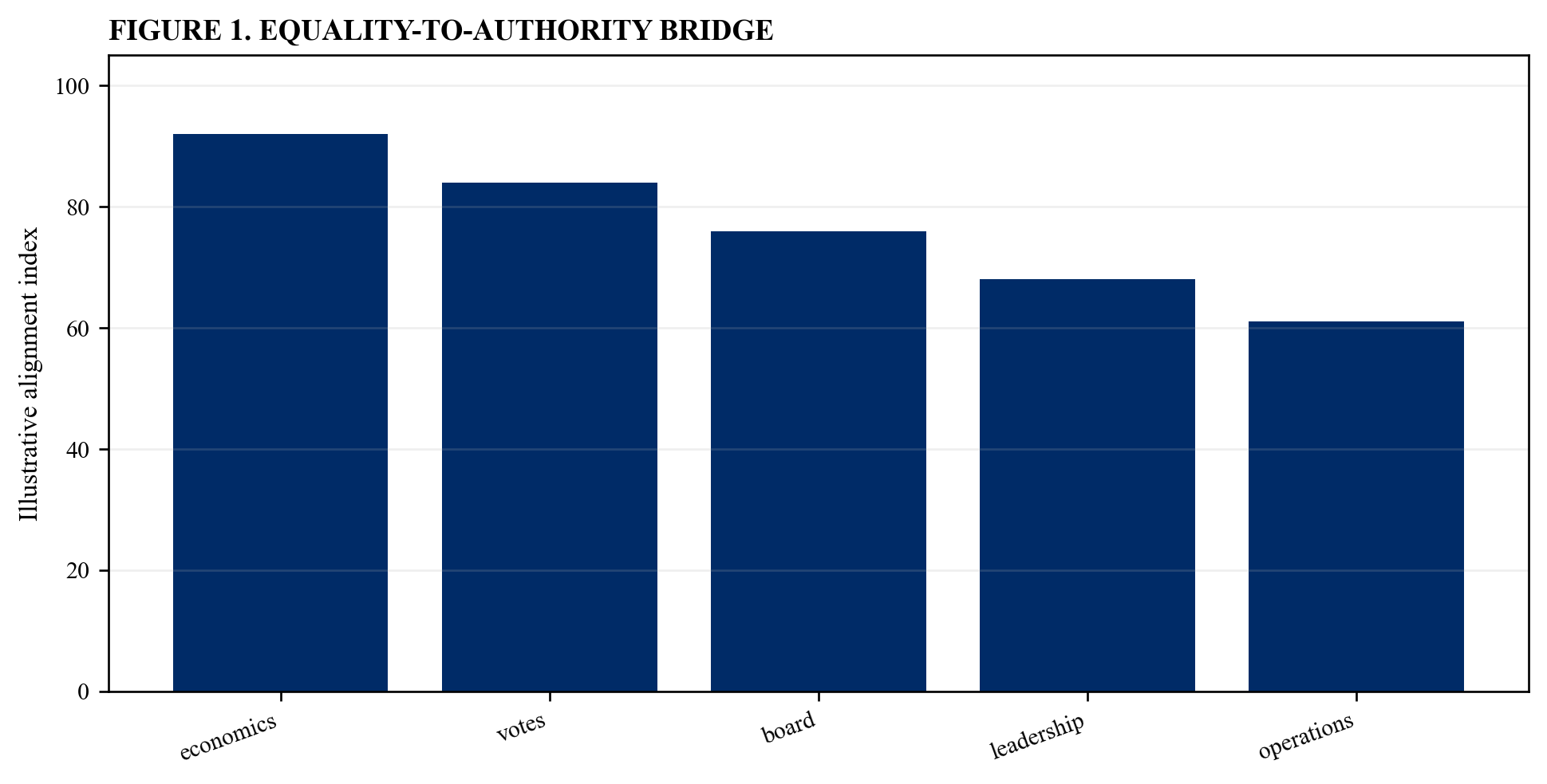
Illustrative analytical scenario; verified transaction, board and operating evidence should replace index values.
6. Define the board size and composition
The transaction team should specify seats, independence, skills, tenure, diversity, nomination sources and regulatory eligibility. The required output is a Day-One board matrix. Use current source data and link every material conclusion to retained transaction, constitutional, board, ownership, operating and regulatory evidence [1][4].
Translate the conclusion into the merger agreement, constitutional documents, board and committee charters, leadership scorecards, delegation of authority and integration plan. Identify the accountable decision maker, consultation rights, evidence threshold, approval route, decision clock and escalation mechanism.
The principal risk is that equal nomination counts can produce an unbalanced or oversized board. Quantify the effect on decision speed, accountability, independence, management continuity, integration delivery and shareholder value. Test strategic disagreement, underperformance, conduct failure, activist pressure and leadership-loss cases with explicit board responses.
Retain the source, document version, reviewer, independent challenge, legal and governance approval and board response. Compare the agreed authority with actual decisions after closing; escalate deviations; and assign every unresolved governance item an owner and deadline.
7. Separate nomination from fiduciary duty
The transaction team should state that directors act for the combined company and all shareholders rather than the predecessor that nominated them. The required output is a director-duty protocol. Use current source data and link every material conclusion to retained transaction, constitutional, board, ownership, operating and regulatory evidence [1][12].
Translate the conclusion into the merger agreement, constitutional documents, board and committee charters, leadership scorecards, delegation of authority and integration plan. Identify the accountable decision maker, consultation rights, evidence threshold, approval route, decision clock and escalation mechanism.
The principal risk is that legacy representatives can behave as instructed delegates. Quantify the effect on decision speed, accountability, independence, management continuity, integration delivery and shareholder value. Test strategic disagreement, underperformance, conduct failure, activist pressure and leadership-loss cases with explicit board responses.
Retain the source, document version, reviewer, independent challenge, legal and governance approval and board response. Compare the agreed authority with actual decisions after closing; escalate deviations; and assign every unresolved governance item an owner and deadline.
8. Design chair authority
The transaction team should define agenda control, information access, meeting powers, casting-vote position and emergency responsibilities. The required output is a chair authority schedule. Use current source data and link every material conclusion to retained transaction, constitutional, board, ownership, operating and regulatory evidence [1][13].
Translate the conclusion into the merger agreement, constitutional documents, board and committee charters, leadership scorecards, delegation of authority and integration plan. Identify the accountable decision maker, consultation rights, evidence threshold, approval route, decision clock and escalation mechanism.
The principal risk is that an honorific chair role can become an informal veto or an accountability gap. Quantify the effect on decision speed, accountability, independence, management continuity, integration delivery and shareholder value. Test strategic disagreement, underperformance, conduct failure, activist pressure and leadership-loss cases with explicit board responses.
Retain the source, document version, reviewer, independent challenge, legal and governance approval and board response. Compare the agreed authority with actual decisions after closing; escalate deviations; and assign every unresolved governance item an owner and deadline.
Table 1. Equality claims and control evidence
| Claim | Evidence | Decision test |
|---|---|---|
| economic balance | exchange and ownership | quantified |
| board balance | constitution and nominations | enforceable |
| leadership balance | role charters and removal | accountable |
| operating balance | delegation and budget | executable |
Illustrative governance framework; executed constitutional, transaction and employment documents govern.
9. Select the chief executive on evidence
The transaction team should use a combined-company role scorecard, strategy requirements, references, conflicts and succession resilience. The required output is a board-owned CEO selection file. Use current source data and link every material conclusion to retained transaction, constitutional, board, ownership, operating and regulatory evidence [1][13].
Translate the conclusion into the merger agreement, constitutional documents, board and committee charters, leadership scorecards, delegation of authority and integration plan. Identify the accountable decision maker, consultation rights, evidence threshold, approval route, decision clock and escalation mechanism.
The principal risk is that ancestry or negotiated entitlement can displace fitness for the combined mandate. Quantify the effect on decision speed, accountability, independence, management continuity, integration delivery and shareholder value. Test strategic disagreement, underperformance, conduct failure, activist pressure and leadership-loss cases with explicit board responses.
Retain the source, document version, reviewer, independent challenge, legal and governance approval and board response. Compare the agreed authority with actual decisions after closing; escalate deviations; and assign every unresolved governance item an owner and deadline.
10. Define president and deputy roles
The transaction team should specify accountabilities, reporting lines, duration, transition purpose and removal authority. The required output is a time-bounded leadership charter. Use current source data and link every material conclusion to retained transaction, constitutional, board, ownership, operating and regulatory evidence [4][13].
Translate the conclusion into the merger agreement, constitutional documents, board and committee charters, leadership scorecards, delegation of authority and integration plan. Identify the accountable decision maker, consultation rights, evidence threshold, approval route, decision clock and escalation mechanism.
The principal risk is that paired leadership can create two executive centres. Quantify the effect on decision speed, accountability, independence, management continuity, integration delivery and shareholder value. Test strategic disagreement, underperformance, conduct failure, activist pressure and leadership-loss cases with explicit board responses.
Retain the source, document version, reviewer, independent challenge, legal and governance approval and board response. Compare the agreed authority with actual decisions after closing; escalate deviations; and assign every unresolved governance item an owner and deadline.
11. Allocate executive appointments
The transaction team should assign authority for the chief financial, operating, risk, legal, technology and people roles. The required output is an executive appointment matrix. Use current source data and link every material conclusion to retained transaction, constitutional, board, ownership, operating and regulatory evidence [1][14].
Translate the conclusion into the merger agreement, constitutional documents, board and committee charters, leadership scorecards, delegation of authority and integration plan. Identify the accountable decision maker, consultation rights, evidence threshold, approval route, decision clock and escalation mechanism.
The principal risk is that quota-based appointments can preserve duplicate teams and divided loyalty. Quantify the effect on decision speed, accountability, independence, management continuity, integration delivery and shareholder value. Test strategic disagreement, underperformance, conduct failure, activist pressure and leadership-loss cases with explicit board responses.
Retain the source, document version, reviewer, independent challenge, legal and governance approval and board response. Compare the agreed authority with actual decisions after closing; escalate deviations; and assign every unresolved governance item an owner and deadline.
12. Design succession before closing
The transaction team should define interim cover, permanent selection, emergency replacement and departure consequences for key roles. The required output is a leadership succession protocol. Use current source data and link every material conclusion to retained transaction, constitutional, board, ownership, operating and regulatory evidence [1][13].
Translate the conclusion into the merger agreement, constitutional documents, board and committee charters, leadership scorecards, delegation of authority and integration plan. Identify the accountable decision maker, consultation rights, evidence threshold, approval route, decision clock and escalation mechanism.
The principal risk is that an unexpected departure can reopen the merger bargain. Quantify the effect on decision speed, accountability, independence, management continuity, integration delivery and shareholder value. Test strategic disagreement, underperformance, conduct failure, activist pressure and leadership-loss cases with explicit board responses.
Retain the source, document version, reviewer, independent challenge, legal and governance approval and board response. Compare the agreed authority with actual decisions after closing; escalate deviations; and assign every unresolved governance item an owner and deadline.
13. Define board reserved matters
The transaction team should list strategy, budget, financing, capital allocation, acquisitions, disposals, executive appointments and material risk decisions. The required output is a reserved-matters schedule. Use current source data and link every material conclusion to retained transaction, constitutional, board, ownership, operating and regulatory evidence [1][4].
Translate the conclusion into the merger agreement, constitutional documents, board and committee charters, leadership scorecards, delegation of authority and integration plan. Identify the accountable decision maker, consultation rights, evidence threshold, approval route, decision clock and escalation mechanism.
The principal risk is that critical authority can remain dispersed across informal understandings. Quantify the effect on decision speed, accountability, independence, management continuity, integration delivery and shareholder value. Test strategic disagreement, underperformance, conduct failure, activist pressure and leadership-loss cases with explicit board responses.
Retain the source, document version, reviewer, independent challenge, legal and governance approval and board response. Compare the agreed authority with actual decisions after closing; escalate deviations; and assign every unresolved governance item an owner and deadline.
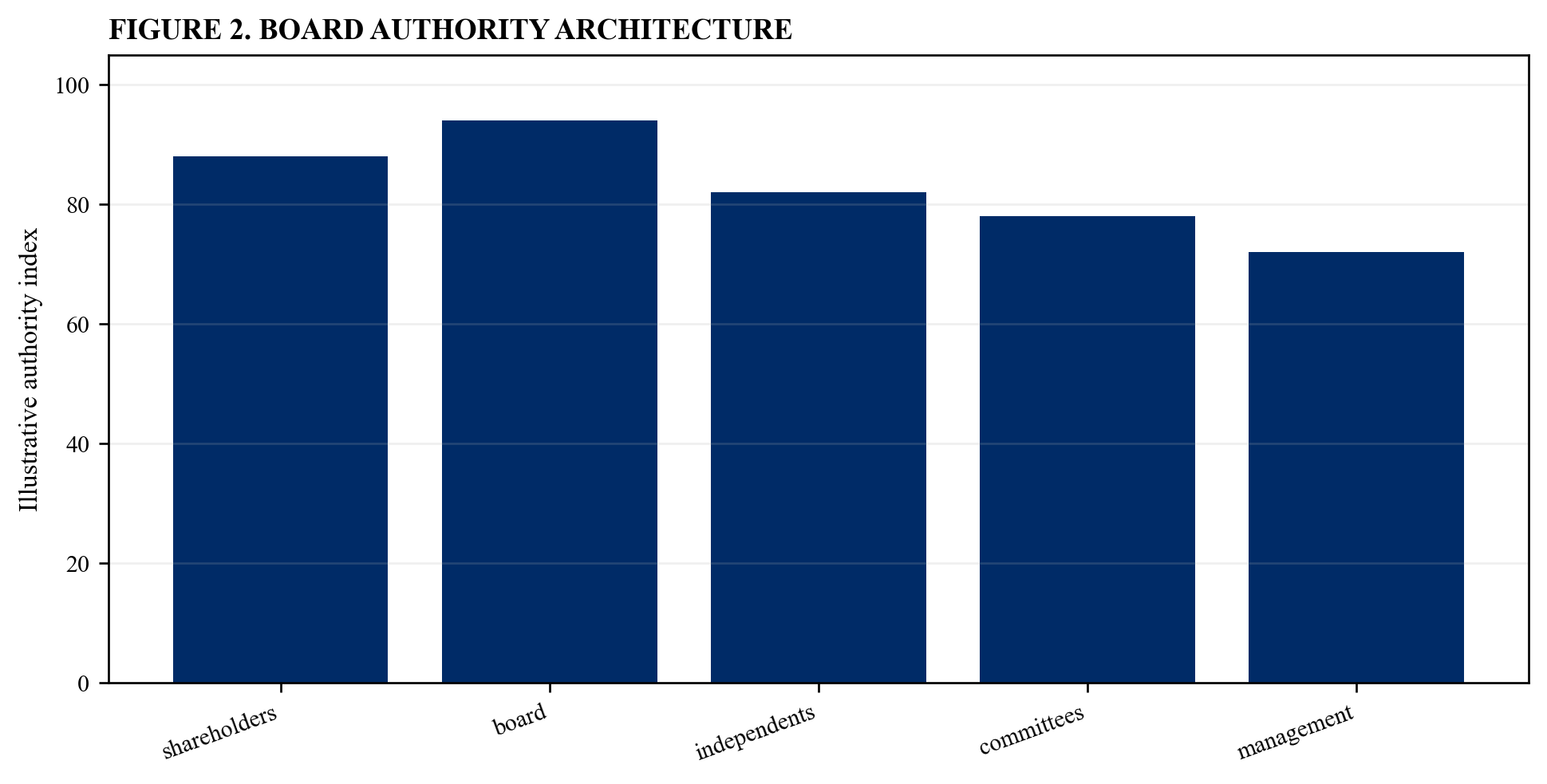
Illustrative analytical scenario; verified transaction, board and operating evidence should replace index values.
14. Set voting thresholds
The transaction team should distinguish ordinary, enhanced, independent-director and shareholder approvals by decision class. The required output is an approval-threshold matrix. Use current source data and link every material conclusion to retained transaction, constitutional, board, ownership, operating and regulatory evidence [3][10].
Translate the conclusion into the merger agreement, constitutional documents, board and committee charters, leadership scorecards, delegation of authority and integration plan. Identify the accountable decision maker, consultation rights, evidence threshold, approval route, decision clock and escalation mechanism.
The principal risk is that blanket supermajorities can convert protection into paralysis. Quantify the effect on decision speed, accountability, independence, management continuity, integration delivery and shareholder value. Test strategic disagreement, underperformance, conduct failure, activist pressure and leadership-loss cases with explicit board responses.
Retain the source, document version, reviewer, independent challenge, legal and governance approval and board response. Compare the agreed authority with actual decisions after closing; escalate deviations; and assign every unresolved governance item an owner and deadline.
15. Build independent tie-breaking capacity
The transaction team should define lead-independent-director, committee, expert or shareholder routes without compromising duties. The required output is a lawful deadlock design. Use current source data and link every material conclusion to retained transaction, constitutional, board, ownership, operating and regulatory evidence [1][4].
Translate the conclusion into the merger agreement, constitutional documents, board and committee charters, leadership scorecards, delegation of authority and integration plan. Identify the accountable decision maker, consultation rights, evidence threshold, approval route, decision clock and escalation mechanism.
The principal risk is that board parity can leave no legitimate route through a split vote. Quantify the effect on decision speed, accountability, independence, management continuity, integration delivery and shareholder value. Test strategic disagreement, underperformance, conduct failure, activist pressure and leadership-loss cases with explicit board responses.
Retain the source, document version, reviewer, independent challenge, legal and governance approval and board response. Compare the agreed authority with actual decisions after closing; escalate deviations; and assign every unresolved governance item an owner and deadline.
16. Design committee mandates
The transaction team should allocate audit, risk, nomination, remuneration, integration and capital-allocation responsibilities and chairs. The required output is a committee authority charter. Use current source data and link every material conclusion to retained transaction, constitutional, board, ownership, operating and regulatory evidence [1][4].
Translate the conclusion into the merger agreement, constitutional documents, board and committee charters, leadership scorecards, delegation of authority and integration plan. Identify the accountable decision maker, consultation rights, evidence threshold, approval route, decision clock and escalation mechanism.
The principal risk is that committee parity can reproduce the same deadlock beneath the board. Quantify the effect on decision speed, accountability, independence, management continuity, integration delivery and shareholder value. Test strategic disagreement, underperformance, conduct failure, activist pressure and leadership-loss cases with explicit board responses.
Retain the source, document version, reviewer, independent challenge, legal and governance approval and board response. Compare the agreed authority with actual decisions after closing; escalate deviations; and assign every unresolved governance item an owner and deadline.
Table 2. Board and committee architecture
| Layer | Authority | Continuity rule |
|---|---|---|
| board | reserved matters | vacancy process |
| independent directors | conflict decisions | lead authority |
| committees | delegated oversight | chair succession |
| management | operating execution | role scorecards |
Illustrative governance framework; executed constitutional, transaction and employment documents govern.
17. Control committee composition changes
The transaction team should set replacement, independence, vacancy and chair-succession rules. The required output is a committee continuity schedule. Use current source data and link every material conclusion to retained transaction, constitutional, board, ownership, operating and regulatory evidence [4][13].
Translate the conclusion into the merger agreement, constitutional documents, board and committee charters, leadership scorecards, delegation of authority and integration plan. Identify the accountable decision maker, consultation rights, evidence threshold, approval route, decision clock and escalation mechanism.
The principal risk is that one resignation can silently change negotiated influence. Quantify the effect on decision speed, accountability, independence, management continuity, integration delivery and shareholder value. Test strategic disagreement, underperformance, conduct failure, activist pressure and leadership-loss cases with explicit board responses.
Retain the source, document version, reviewer, independent challenge, legal and governance approval and board response. Compare the agreed authority with actual decisions after closing; escalate deviations; and assign every unresolved governance item an owner and deadline.
18. Create the delegation of authority
The transaction team should assign board, chief executive, executive committee, business and functional limits. The required output is a combined delegation matrix. Use current source data and link every material conclusion to retained transaction, constitutional, board, ownership, operating and regulatory evidence [1][15].
Translate the conclusion into the merger agreement, constitutional documents, board and committee charters, leadership scorecards, delegation of authority and integration plan. Identify the accountable decision maker, consultation rights, evidence threshold, approval route, decision clock and escalation mechanism.
The principal risk is that legacy delegations can overlap or leave decisions unowned. Quantify the effect on decision speed, accountability, independence, management continuity, integration delivery and shareholder value. Test strategic disagreement, underperformance, conduct failure, activist pressure and leadership-loss cases with explicit board responses.
Retain the source, document version, reviewer, independent challenge, legal and governance approval and board response. Compare the agreed authority with actual decisions after closing; escalate deviations; and assign every unresolved governance item an owner and deadline.
19. Define the integration leader's mandate
The transaction team should grant access, budget, escalation rights and a sunset date while preserving management accountability. The required output is an integration leadership charter. Use current source data and link every material conclusion to retained transaction, constitutional, board, ownership, operating and regulatory evidence [15][16].
Translate the conclusion into the merger agreement, constitutional documents, board and committee charters, leadership scorecards, delegation of authority and integration plan. Identify the accountable decision maker, consultation rights, evidence threshold, approval route, decision clock and escalation mechanism.
The principal risk is that the integration office can become a third power centre. Quantify the effect on decision speed, accountability, independence, management continuity, integration delivery and shareholder value. Test strategic disagreement, underperformance, conduct failure, activist pressure and leadership-loss cases with explicit board responses.
Retain the source, document version, reviewer, independent challenge, legal and governance approval and board response. Compare the agreed authority with actual decisions after closing; escalate deviations; and assign every unresolved governance item an owner and deadline.
20. Map entity and regional governance
The transaction team should align parent, subsidiary, regulated-entity and jurisdictional boards with group decisions. The required output is an entity-governance blueprint. Use current source data and link every material conclusion to retained transaction, constitutional, board, ownership, operating and regulatory evidence [1][17].
Translate the conclusion into the merger agreement, constitutional documents, board and committee charters, leadership scorecards, delegation of authority and integration plan. Identify the accountable decision maker, consultation rights, evidence threshold, approval route, decision clock and escalation mechanism.
The principal risk is that group authority can conflict with local director or regulatory duties. Quantify the effect on decision speed, accountability, independence, management continuity, integration delivery and shareholder value. Test strategic disagreement, underperformance, conduct failure, activist pressure and leadership-loss cases with explicit board responses.
Retain the source, document version, reviewer, independent challenge, legal and governance approval and board response. Compare the agreed authority with actual decisions after closing; escalate deviations; and assign every unresolved governance item an owner and deadline.
21. Design information rights
The transaction team should state reporting content, frequency, source systems, confidentiality, legal privilege and equal access. The required output is a board information covenant. Use current source data and link every material conclusion to retained transaction, constitutional, board, ownership, operating and regulatory evidence [1][5].
Translate the conclusion into the merger agreement, constitutional documents, board and committee charters, leadership scorecards, delegation of authority and integration plan. Identify the accountable decision maker, consultation rights, evidence threshold, approval route, decision clock and escalation mechanism.
The principal risk is that control can migrate to whichever legacy side controls the data. Quantify the effect on decision speed, accountability, independence, management continuity, integration delivery and shareholder value. Test strategic disagreement, underperformance, conduct failure, activist pressure and leadership-loss cases with explicit board responses.
Retain the source, document version, reviewer, independent challenge, legal and governance approval and board response. Compare the agreed authority with actual decisions after closing; escalate deviations; and assign every unresolved governance item an owner and deadline.
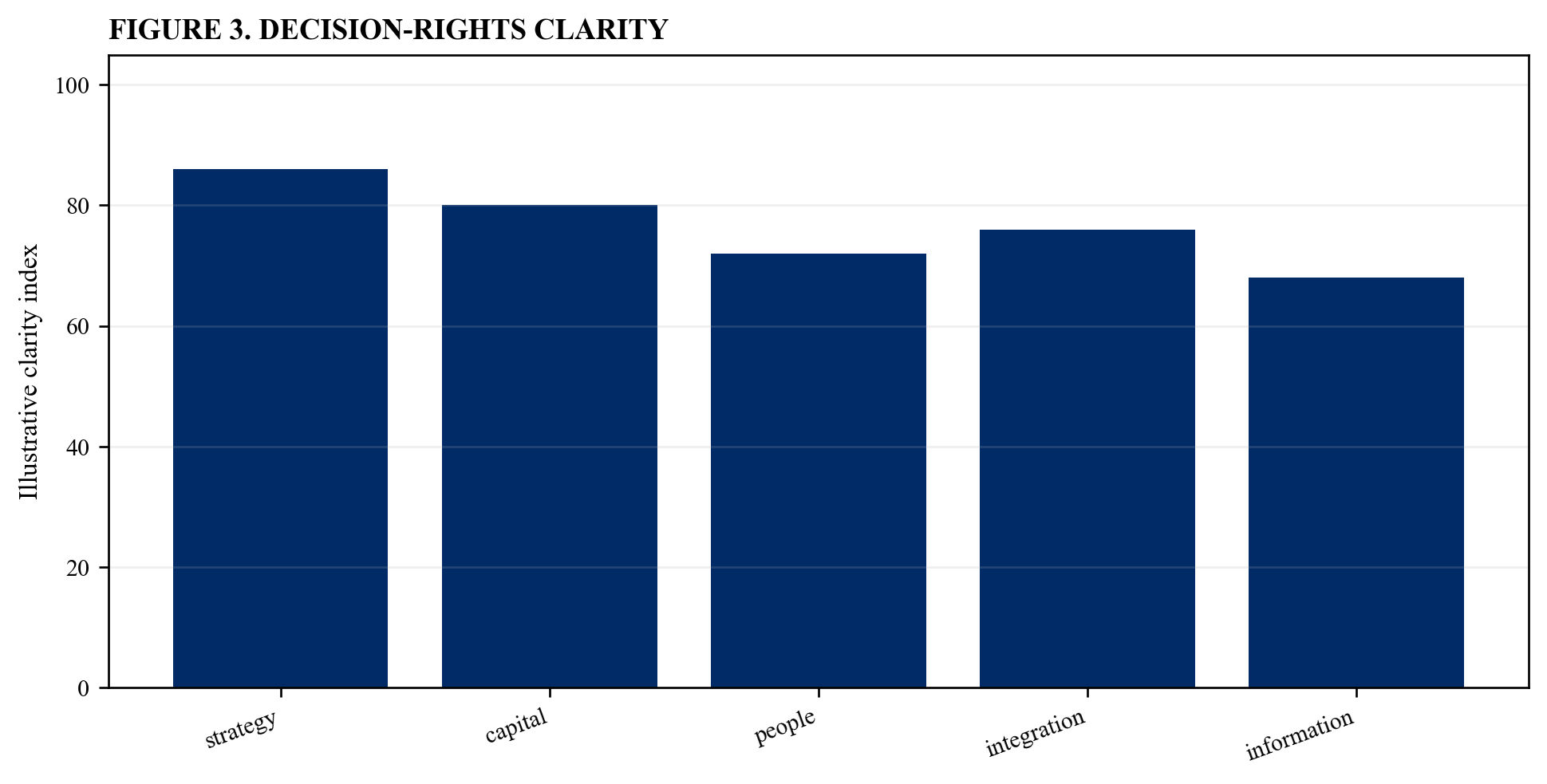
Illustrative analytical scenario; verified transaction, board and operating evidence should replace index values.
22. Set the budget process
The transaction team should define assumptions, challenge, approval, reforecasting and variance authority. The required output is a combined planning calendar. Use current source data and link every material conclusion to retained transaction, constitutional, board, ownership, operating and regulatory evidence [1][15].
Translate the conclusion into the merger agreement, constitutional documents, board and committee charters, leadership scorecards, delegation of authority and integration plan. Identify the accountable decision maker, consultation rights, evidence threshold, approval route, decision clock and escalation mechanism.
The principal risk is that an unresolved budget can become the annual proxy contest between legacy plans. Quantify the effect on decision speed, accountability, independence, management continuity, integration delivery and shareholder value. Test strategic disagreement, underperformance, conduct failure, activist pressure and leadership-loss cases with explicit board responses.
Retain the source, document version, reviewer, independent challenge, legal and governance approval and board response. Compare the agreed authority with actual decisions after closing; escalate deviations; and assign every unresolved governance item an owner and deadline.
23. Govern capital allocation
The transaction team should rank deleveraging, dividends, investment, restructuring, acquisitions and disposals against common hurdles. The required output is a capital-allocation rulebook. Use current source data and link every material conclusion to retained transaction, constitutional, board, ownership, operating and regulatory evidence [1][19].
Translate the conclusion into the merger agreement, constitutional documents, board and committee charters, leadership scorecards, delegation of authority and integration plan. Identify the accountable decision maker, consultation rights, evidence threshold, approval route, decision clock and escalation mechanism.
The principal risk is that each predecessor can protect its own assets and initiatives. Quantify the effect on decision speed, accountability, independence, management continuity, integration delivery and shareholder value. Test strategic disagreement, underperformance, conduct failure, activist pressure and leadership-loss cases with explicit board responses.
Retain the source, document version, reviewer, independent challenge, legal and governance approval and board response. Compare the agreed authority with actual decisions after closing; escalate deviations; and assign every unresolved governance item an owner and deadline.
24. Govern synergy commitments
The transaction team should assign baselines, owners, timing, reinvestment, one-off costs and external disclosure controls. The required output is a synergy accountability ledger. Use current source data and link every material conclusion to retained transaction, constitutional, board, ownership, operating and regulatory evidence [5][20].
Translate the conclusion into the merger agreement, constitutional documents, board and committee charters, leadership scorecards, delegation of authority and integration plan. Identify the accountable decision maker, consultation rights, evidence threshold, approval route, decision clock and escalation mechanism.
The principal risk is that shared targets can conceal unequal delivery and double counting. Quantify the effect on decision speed, accountability, independence, management continuity, integration delivery and shareholder value. Test strategic disagreement, underperformance, conduct failure, activist pressure and leadership-loss cases with explicit board responses.
Retain the source, document version, reviewer, independent challenge, legal and governance approval and board response. Compare the agreed authority with actual decisions after closing; escalate deviations; and assign every unresolved governance item an owner and deadline.
Table 3. Combined-company decision rights
| Decision | Owner | Escalation |
|---|---|---|
| strategy | board | enhanced approval |
| budget | board and CEO | timed reconsideration |
| appointments | board committee | independent recommendation |
| integration | CEO and integration leader | board oversight |
Illustrative governance framework; executed constitutional, transaction and employment documents govern.
25. Align incentives
The transaction team should connect executive and integration rewards to combined outcomes, conduct, retention and durable value. The required output is a combined remuneration scorecard. Use current source data and link every material conclusion to retained transaction, constitutional, board, ownership, operating and regulatory evidence [1][21].
Translate the conclusion into the merger agreement, constitutional documents, board and committee charters, leadership scorecards, delegation of authority and integration plan. Identify the accountable decision maker, consultation rights, evidence threshold, approval route, decision clock and escalation mechanism.
The principal risk is that legacy scorecards can reward territorial defence. Quantify the effect on decision speed, accountability, independence, management continuity, integration delivery and shareholder value. Test strategic disagreement, underperformance, conduct failure, activist pressure and leadership-loss cases with explicit board responses.
Retain the source, document version, reviewer, independent challenge, legal and governance approval and board response. Compare the agreed authority with actual decisions after closing; escalate deviations; and assign every unresolved governance item an owner and deadline.
26. Resolve headquarters and location authority
The transaction team should separate legal domicile, headquarters, operating centres, regulatory presence and workforce commitments. The required output is a location-decision schedule. Use current source data and link every material conclusion to retained transaction, constitutional, board, ownership, operating and regulatory evidence [6][7].
Translate the conclusion into the merger agreement, constitutional documents, board and committee charters, leadership scorecards, delegation of authority and integration plan. Identify the accountable decision maker, consultation rights, evidence threshold, approval route, decision clock and escalation mechanism.
The principal risk is that symbolic location promises can constrain future operating choices. Quantify the effect on decision speed, accountability, independence, management continuity, integration delivery and shareholder value. Test strategic disagreement, underperformance, conduct failure, activist pressure and leadership-loss cases with explicit board responses.
Retain the source, document version, reviewer, independent challenge, legal and governance approval and board response. Compare the agreed authority with actual decisions after closing; escalate deviations; and assign every unresolved governance item an owner and deadline.
27. Protect stakeholder commitments
The transaction team should classify binding undertakings, intentions, consultation duties, workforce arrangements and community commitments. The required output is a commitments register. Use current source data and link every material conclusion to retained transaction, constitutional, board, ownership, operating and regulatory evidence [5][6].
Translate the conclusion into the merger agreement, constitutional documents, board and committee charters, leadership scorecards, delegation of authority and integration plan. Identify the accountable decision maker, consultation rights, evidence threshold, approval route, decision clock and escalation mechanism.
The principal risk is that public statements can be mistaken for interchangeable promises. Quantify the effect on decision speed, accountability, independence, management continuity, integration delivery and shareholder value. Test strategic disagreement, underperformance, conduct failure, activist pressure and leadership-loss cases with explicit board responses.
Retain the source, document version, reviewer, independent challenge, legal and governance approval and board response. Compare the agreed authority with actual decisions after closing; escalate deviations; and assign every unresolved governance item an owner and deadline.
28. Design culture decision rights
The transaction team should assign ownership of values, policies, conduct standards, performance management and consequence decisions. The required output is a culture operating model. Use current source data and link every material conclusion to retained transaction, constitutional, board, ownership, operating and regulatory evidence [1][22].
Translate the conclusion into the merger agreement, constitutional documents, board and committee charters, leadership scorecards, delegation of authority and integration plan. Identify the accountable decision maker, consultation rights, evidence threshold, approval route, decision clock and escalation mechanism.
The principal risk is that culture can remain a slogan while legacy behaviours retain authority. Quantify the effect on decision speed, accountability, independence, management continuity, integration delivery and shareholder value. Test strategic disagreement, underperformance, conduct failure, activist pressure and leadership-loss cases with explicit board responses.
Retain the source, document version, reviewer, independent challenge, legal and governance approval and board response. Compare the agreed authority with actual decisions after closing; escalate deviations; and assign every unresolved governance item an owner and deadline.
29. Govern brand and identity
The transaction team should define naming, customer migration, product architecture, communications and sunset decisions. The required output is a brand transition charter. Use current source data and link every material conclusion to retained transaction, constitutional, board, ownership, operating and regulatory evidence [5][16].
Translate the conclusion into the merger agreement, constitutional documents, board and committee charters, leadership scorecards, delegation of authority and integration plan. Identify the accountable decision maker, consultation rights, evidence threshold, approval route, decision clock and escalation mechanism.
The principal risk is that continued dual identity can reinforce organisational camps. Quantify the effect on decision speed, accountability, independence, management continuity, integration delivery and shareholder value. Test strategic disagreement, underperformance, conduct failure, activist pressure and leadership-loss cases with explicit board responses.
Retain the source, document version, reviewer, independent challenge, legal and governance approval and board response. Compare the agreed authority with actual decisions after closing; escalate deviations; and assign every unresolved governance item an owner and deadline.
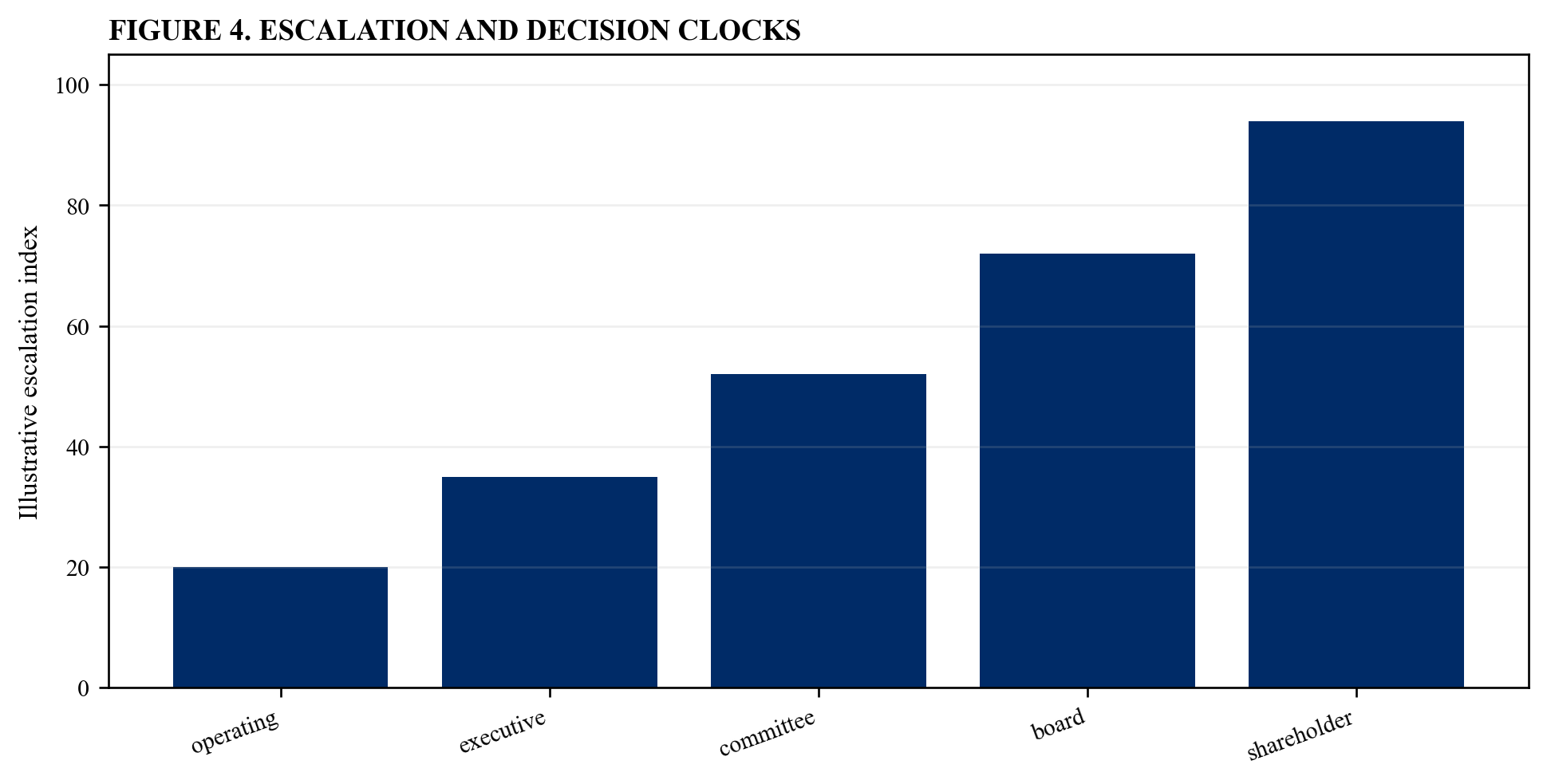
Illustrative analytical scenario; verified transaction, board and operating evidence should replace index values.
30. Build the ordinary-course escalation ladder
The transaction team should set operating, executive, committee, board and shareholder routes with decision clocks. The required output is an escalation timetable. Use current source data and link every material conclusion to retained transaction, constitutional, board, ownership, operating and regulatory evidence [1][15].
Translate the conclusion into the merger agreement, constitutional documents, board and committee charters, leadership scorecards, delegation of authority and integration plan. Identify the accountable decision maker, consultation rights, evidence threshold, approval route, decision clock and escalation mechanism.
The principal risk is that issues can age while each side waits for consensus. Quantify the effect on decision speed, accountability, independence, management continuity, integration delivery and shareholder value. Test strategic disagreement, underperformance, conduct failure, activist pressure and leadership-loss cases with explicit board responses.
Retain the source, document version, reviewer, independent challenge, legal and governance approval and board response. Compare the agreed authority with actual decisions after closing; escalate deviations; and assign every unresolved governance item an owner and deadline.
31. Test a strategic disagreement
The transaction team should model a split over portfolio direction, investment pacing or market entry. The required output is a strategy-deadlock simulation. Use current source data and link every material conclusion to retained transaction, constitutional, board, ownership, operating and regulatory evidence [1][7].
Translate the conclusion into the merger agreement, constitutional documents, board and committee charters, leadership scorecards, delegation of authority and integration plan. Identify the accountable decision maker, consultation rights, evidence threshold, approval route, decision clock and escalation mechanism.
The principal risk is that the governance design may work only while the original thesis remains uncontested. Quantify the effect on decision speed, accountability, independence, management continuity, integration delivery and shareholder value. Test strategic disagreement, underperformance, conduct failure, activist pressure and leadership-loss cases with explicit board responses.
Retain the source, document version, reviewer, independent challenge, legal and governance approval and board response. Compare the agreed authority with actual decisions after closing; escalate deviations; and assign every unresolved governance item an owner and deadline.
32. Test an underperformance case
The transaction team should model missed targets concentrated in one predecessor business and required intervention. The required output is a performance-control simulation. Use current source data and link every material conclusion to retained transaction, constitutional, board, ownership, operating and regulatory evidence [1][19].
Translate the conclusion into the merger agreement, constitutional documents, board and committee charters, leadership scorecards, delegation of authority and integration plan. Identify the accountable decision maker, consultation rights, evidence threshold, approval route, decision clock and escalation mechanism.
The principal risk is that parity protections can obstruct accountability for weak delivery. Quantify the effect on decision speed, accountability, independence, management continuity, integration delivery and shareholder value. Test strategic disagreement, underperformance, conduct failure, activist pressure and leadership-loss cases with explicit board responses.
Retain the source, document version, reviewer, independent challenge, legal and governance approval and board response. Compare the agreed authority with actual decisions after closing; escalate deviations; and assign every unresolved governance item an owner and deadline.
Table 4. Governance stress tests
| Scenario | Control question | Required evidence |
|---|---|---|
| underperformance | who intervenes | scorecard and delegation |
| conduct event | who investigates | committee mandate |
| activist pressure | who sets response | board protocol |
| leadership loss | who succeeds | succession file |
Illustrative governance framework; executed constitutional, transaction and employment documents govern.
33. Test a conduct or control failure
The transaction team should model an investigation, restatement, cyber event or regulatory breach affecting one legacy side. The required output is a conduct-response simulation. Use current source data and link every material conclusion to retained transaction, constitutional, board, ownership, operating and regulatory evidence [1][14].
Translate the conclusion into the merger agreement, constitutional documents, board and committee charters, leadership scorecards, delegation of authority and integration plan. Identify the accountable decision maker, consultation rights, evidence threshold, approval route, decision clock and escalation mechanism.
The principal risk is that legacy loyalties can impede independent investigation and remediation. Quantify the effect on decision speed, accountability, independence, management continuity, integration delivery and shareholder value. Test strategic disagreement, underperformance, conduct failure, activist pressure and leadership-loss cases with explicit board responses.
Retain the source, document version, reviewer, independent challenge, legal and governance approval and board response. Compare the agreed authority with actual decisions after closing; escalate deviations; and assign every unresolved governance item an owner and deadline.
34. Test an activist or hostile approach
The transaction team should model external pressure for disposals, leadership change, capital return or a new control transaction. The required output is an external-pressure simulation. Use current source data and link every material conclusion to retained transaction, constitutional, board, ownership, operating and regulatory evidence [1][7].
Translate the conclusion into the merger agreement, constitutional documents, board and committee charters, leadership scorecards, delegation of authority and integration plan. Identify the accountable decision maker, consultation rights, evidence threshold, approval route, decision clock and escalation mechanism.
The principal risk is that a parity board can fragment when shareholders demand a different strategy. Quantify the effect on decision speed, accountability, independence, management continuity, integration delivery and shareholder value. Test strategic disagreement, underperformance, conduct failure, activist pressure and leadership-loss cases with explicit board responses.
Retain the source, document version, reviewer, independent challenge, legal and governance approval and board response. Compare the agreed authority with actual decisions after closing; escalate deviations; and assign every unresolved governance item an owner and deadline.
35. Test leadership loss
The transaction team should model death, incapacity, resignation, removal and non-renewal of the chair or chief executive. The required output is a leadership-shock simulation. Use current source data and link every material conclusion to retained transaction, constitutional, board, ownership, operating and regulatory evidence [4][13].
Translate the conclusion into the merger agreement, constitutional documents, board and committee charters, leadership scorecards, delegation of authority and integration plan. Identify the accountable decision maker, consultation rights, evidence threshold, approval route, decision clock and escalation mechanism.
The principal risk is that personal bargains can fail when a named executive leaves. Quantify the effect on decision speed, accountability, independence, management continuity, integration delivery and shareholder value. Test strategic disagreement, underperformance, conduct failure, activist pressure and leadership-loss cases with explicit board responses.
Retain the source, document version, reviewer, independent challenge, legal and governance approval and board response. Compare the agreed authority with actual decisions after closing; escalate deviations; and assign every unresolved governance item an owner and deadline.
36. Define transition and sunset clauses
The transaction team should set review dates and objective expiry conditions for parity, appointment and location protections. The required output is a governance sunset calendar. Use current source data and link every material conclusion to retained transaction, constitutional, board, ownership, operating and regulatory evidence [4][15].
Translate the conclusion into the merger agreement, constitutional documents, board and committee charters, leadership scorecards, delegation of authority and integration plan. Identify the accountable decision maker, consultation rights, evidence threshold, approval route, decision clock and escalation mechanism.
The principal risk is that temporary protections can become permanent structural cost. Quantify the effect on decision speed, accountability, independence, management continuity, integration delivery and shareholder value. Test strategic disagreement, underperformance, conduct failure, activist pressure and leadership-loss cases with explicit board responses.
Retain the source, document version, reviewer, independent challenge, legal and governance approval and board response. Compare the agreed authority with actual decisions after closing; escalate deviations; and assign every unresolved governance item an owner and deadline.
37. Build amendment and waiver controls
The transaction team should state who can change governance terms, what requires independent review and what requires shareholder approval. The required output is an amendment authority map. Use current source data and link every material conclusion to retained transaction, constitutional, board, ownership, operating and regulatory evidence [3][10].
Translate the conclusion into the merger agreement, constitutional documents, board and committee charters, leadership scorecards, delegation of authority and integration plan. Identify the accountable decision maker, consultation rights, evidence threshold, approval route, decision clock and escalation mechanism.
The principal risk is that informal waivers can reallocate control without transparent approval. Quantify the effect on decision speed, accountability, independence, management continuity, integration delivery and shareholder value. Test strategic disagreement, underperformance, conduct failure, activist pressure and leadership-loss cases with explicit board responses.
Retain the source, document version, reviewer, independent challenge, legal and governance approval and board response. Compare the agreed authority with actual decisions after closing; escalate deviations; and assign every unresolved governance item an owner and deadline.
38. Create the governance evidence room
The transaction team should retain minutes, advice, skills matrices, scorecards, conflicts, approvals, undertakings and delegations. The required output is a decision-traceability file. Use current source data and link every material conclusion to retained transaction, constitutional, board, ownership, operating and regulatory evidence [1][5].
Translate the conclusion into the merger agreement, constitutional documents, board and committee charters, leadership scorecards, delegation of authority and integration plan. Identify the accountable decision maker, consultation rights, evidence threshold, approval route, decision clock and escalation mechanism.
The principal risk is that the board can be unable to show why the chosen structure served the combined company. Quantify the effect on decision speed, accountability, independence, management continuity, integration delivery and shareholder value. Test strategic disagreement, underperformance, conduct failure, activist pressure and leadership-loss cases with explicit board responses.
Retain the source, document version, reviewer, independent challenge, legal and governance approval and board response. Compare the agreed authority with actual decisions after closing; escalate deviations; and assign every unresolved governance item an owner and deadline.
39. Back-test governance performance
The transaction team should track decision time, escalation, vacancies, committee throughput, management turnover and delivery by quarter. The required output is a governance effectiveness dashboard. Use current source data and link every material conclusion to retained transaction, constitutional, board, ownership, operating and regulatory evidence [1][15].
Translate the conclusion into the merger agreement, constitutional documents, board and committee charters, leadership scorecards, delegation of authority and integration plan. Identify the accountable decision maker, consultation rights, evidence threshold, approval route, decision clock and escalation mechanism.
The principal risk is that formal balance can mask slow or avoided decisions. Quantify the effect on decision speed, accountability, independence, management continuity, integration delivery and shareholder value. Test strategic disagreement, underperformance, conduct failure, activist pressure and leadership-loss cases with explicit board responses.
Retain the source, document version, reviewer, independent challenge, legal and governance approval and board response. Compare the agreed authority with actual decisions after closing; escalate deviations; and assign every unresolved governance item an owner and deadline.
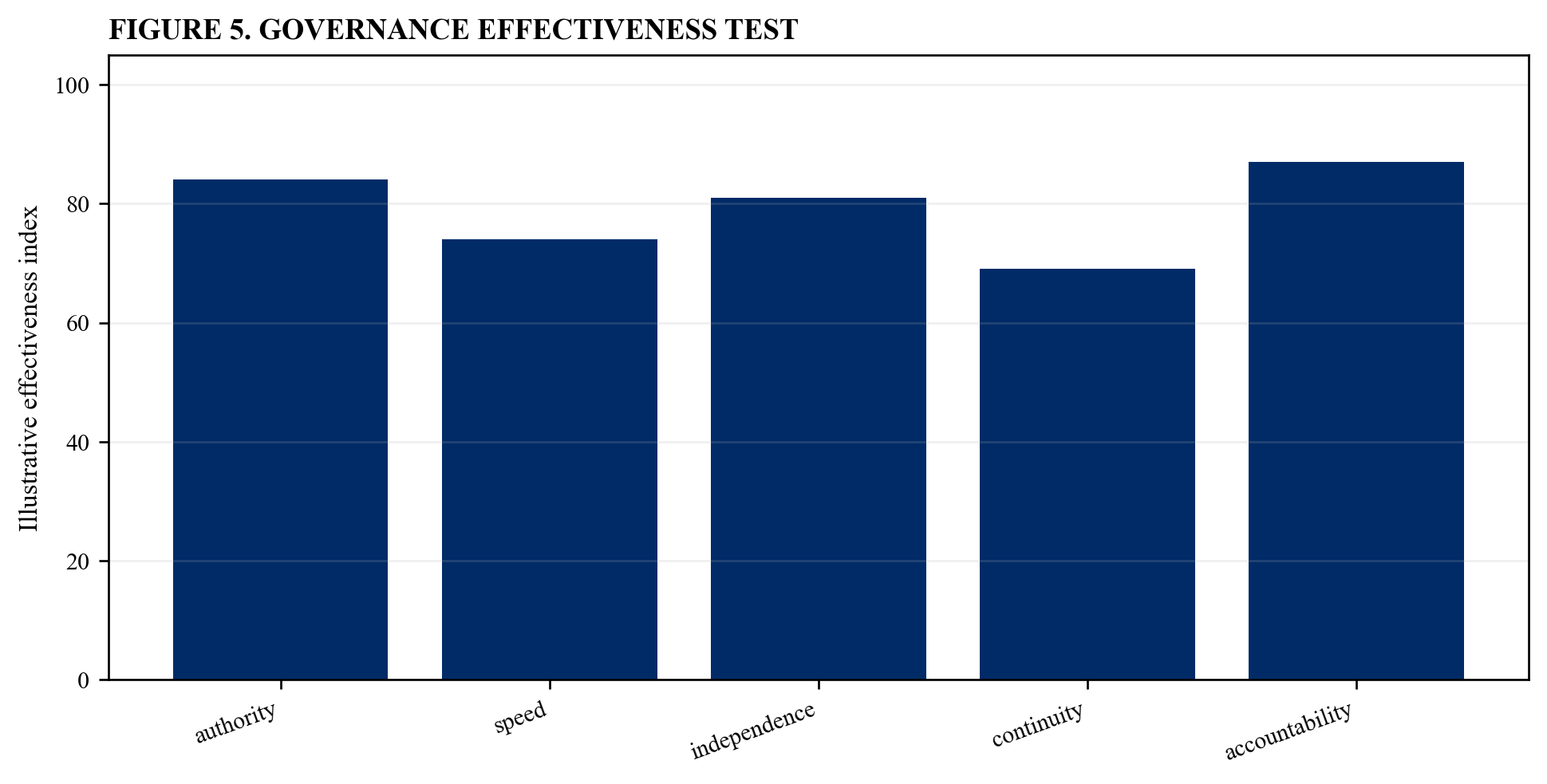
Illustrative analytical scenario; verified transaction, board and operating evidence should replace index values.
40. Issue the governance certificate
The transaction team should approve the authority map, appointments, duties, information, deadlocks, succession, commitments and review calendar. The required output is a retained board and shareholder-ready governance certificate. Use current source data and link every material conclusion to retained transaction, constitutional, board, ownership, operating and regulatory evidence [1][4].
Translate the conclusion into the merger agreement, constitutional documents, board and committee charters, leadership scorecards, delegation of authority and integration plan. Identify the accountable decision maker, consultation rights, evidence threshold, approval route, decision clock and escalation mechanism.
The principal risk is that the deal can close with unresolved control embedded in side letters or expectations. Quantify the effect on decision speed, accountability, independence, management continuity, integration delivery and shareholder value. Test strategic disagreement, underperformance, conduct failure, activist pressure and leadership-loss cases with explicit board responses.
Retain the source, document version, reviewer, independent challenge, legal and governance approval and board response. Compare the agreed authority with actual decisions after closing; escalate deviations; and assign every unresolved governance item an owner and deadline.
Table 5. Governance certificate
| Conclusion | Evidence | Approval test |
|---|---|---|
| authority | reserved matters and delegation | complete |
| leadership | scorecards and succession | board approved |
| deadlock | escalation and decision clocks | executable |
| review | metrics and sunset calendar | time bounded |
Illustrative governance framework; executed constitutional, transaction and employment documents govern.
References
- OECD, G20 OECD Principles of Corporate Governance 2023, https://www.oecd.org/en/publications/g20-oecd-principles-of-corporate-governance-2023_ed750b30-en/full-report.html
- IFRS Foundation, IFRS 3 Business Combinations, https://www.ifrs.org/issued-standards/list-of-standards/ifrs-3-business-combinations/
- US Securities and Exchange Commission, Connecticut Water Service and SJW joint proxy statement, https://www.sec.gov/Archives/edgar/data/276209/000119312518290170/d593586ddefm14a.htm
- US Securities and Exchange Commission, 2025 agreement and plan of merger governance provisions, https://www.sec.gov/Archives/edgar/data/893538/000089353825000144/exhibit21agreementandplano.htm
- UK Takeover Panel, Rule 20.1 equality of information, https://code.thetakeoverpanel.org.uk/tp/rules/rule-20/rule-20-1.html
- UK Takeover Panel, Rule 19.5 post-offer undertakings, https://code.thetakeoverpanel.org.uk/tp/rules/rule-19/rule-19-5.html
- US Department of Justice and Federal Trade Commission, Merger Guidelines, https://www.justice.gov/atr/merger-guidelines
- UK Competition and Markets Authority, Merger Assessment Guidelines, https://www.gov.uk/government/publications/merger-assessment-guidelines
- US Federal Trade Commission, Premerger Notification Program, https://www.ftc.gov/enforcement/premerger-notification-program
- Delaware Code, Title 8 Section 251, https://delcode.delaware.gov/title8/c001/sc09/index.html
- US Securities and Exchange Commission, Form S-4, https://www.sec.gov/files/forms-4.pdf
- UK Companies Act 2006 Section 172, https://www.legislation.gov.uk/ukpga/2006/46/section/172
- UK Financial Reporting Council, UK Corporate Governance Code 2024, https://www.frc.org.uk/library/standards-codes-policy/corporate-governance/uk-corporate-governance-code/
- US Securities and Exchange Commission, Regulation S-K, https://www.ecfr.gov/current/title-17/chapter-II/part-229
- International Organization for Standardization, ISO 37000 Governance of organizations, https://www.iso.org/standard/65036.html
- International Organization for Standardization, ISO 22301 Business continuity, https://www.iso.org/iso-22301-business-continuity.html
- Basel Committee on Banking Supervision, Corporate governance principles for banks, https://www.bis.org/bcbs/publ/d328.htm
- IFRS Foundation, IFRS 10 Consolidated Financial Statements, https://www.ifrs.org/issued-standards/list-of-standards/ifrs-10-consolidated-financial-statements/
- IFRS Foundation, IAS 36 Impairment of Assets, https://www.ifrs.org/issued-standards/list-of-standards/ias-36-impairment-of-assets/
- IFRS Foundation, IFRS 8 Operating Segments, https://www.ifrs.org/issued-standards/list-of-standards/ifrs-8-operating-segments/
- IFRS Foundation, IFRS 2 Share-based Payment, https://www.ifrs.org/issued-standards/list-of-standards/ifrs-2-share-based-payment/
- International Labour Organization, Social dialogue and tripartism, https://www.ilo.org/topics-and-sectors/social-dialogue-and-tripartism
- IFRS Foundation, IAS 24 Related Party Disclosures, https://www.ifrs.org/issued-standards/list-of-standards/ias-24-related-party-disclosures/
- IFRS Foundation, IFRS 12 Disclosure of Interests in Other Entities, https://www.ifrs.org/issued-standards/list-of-standards/ifrs-12-disclosure-of-interests-in-other-entities/
- International Organization for Standardization, ISO 31000 Risk management, https://www.iso.org/iso-31000-risk-management.html
- US Securities and Exchange Commission, investor glossary on mergers and acquisitions, https://www.investor.gov/introduction-investing/investing-basics/glossary/mergers-and-acquisitions
