

1. Define the minority-shareholder mandate
Protect legitimate ownership rights, durable control and enterprise value through an agreed governance and liquidity architecture.
The succession team should reconcile ownership objectives, strategy, governing documents, shareholder concerns, law and financing. Each conclusion records the accountable body, source, timing, candidate or owner, evidence, dependency, control and unresolved exception. The immediate output is a minority-rights charter.
Management continuity must be proved through operating outcomes while ownership choices remain explicit. Reviewers test capability, authority, relationships, stakeholder confidence and downside response against native records and observed performance. Company strategy, role requirements, family objectives and governing law control every conclusion.
Material gaps require an owner, corrective action, test, advice and decision date. Consequences should flow through leadership capacity, customer delivery, cash, financing, value, control, fairness and transaction timing. Residual risk remains visible until authority is operable, stakeholders are protected and the relevant governing bodies approve the next gate.
2. Map legal and beneficial ownership
Identify registered holders, beneficial owners, trusts, foundations, estates, nominees and contingent interests.
The succession team should reconcile registers, constitutional documents, declarations, estate records and adviser evidence. Each conclusion records the accountable body, source, timing, candidate or owner, evidence, dependency, control and unresolved exception. The immediate output is a verified ownership map.
Management continuity must be proved through operating outcomes while ownership choices remain explicit. Reviewers test capability, authority, relationships, stakeholder confidence and downside response against native records and observed performance. Company strategy, role requirements, family objectives and governing law control every conclusion.
Material gaps require an owner, corrective action, test, advice and decision date. Consequences should flow through leadership capacity, customer delivery, cash, financing, value, control, fairness and transaction timing. Residual risk remains visible until authority is operable, stakeholders are protected and the relevant governing bodies approve the next gate.
3. Inventory share classes and rights
Record voting, dividend, capital, transfer, conversion, information and appointment rights for every class.
The succession team should reconcile articles, shareholder agreements, registers, resolutions and transaction documents. Each conclusion records the accountable body, source, timing, candidate or owner, evidence, dependency, control and unresolved exception. The immediate output is a share-rights matrix.
Management continuity must be proved through operating outcomes while ownership choices remain explicit. Reviewers test capability, authority, relationships, stakeholder confidence and downside response against native records and observed performance. Company strategy, role requirements, family objectives and governing law control every conclusion.
Material gaps require an owner, corrective action, test, advice and decision date. Consequences should flow through leadership capacity, customer delivery, cash, financing, value, control, fairness and transaction timing. Residual risk remains visible until authority is operable, stakeholders are protected and the relevant governing bodies approve the next gate.
4. Identify control pathways
Show how votes, reserved matters, board appointments, informal influence and financing rights create actual control.
The succession team should reconcile ownership data, governance records, delegations, covenants and observed decisions. Each conclusion records the accountable body, source, timing, candidate or owner, evidence, dependency, control and unresolved exception. The immediate output is a control architecture map.
Management continuity must be proved through operating outcomes while ownership choices remain explicit. Reviewers test capability, authority, relationships, stakeholder confidence and downside response against native records and observed performance. Company strategy, role requirements, family objectives and governing law control every conclusion.
Material gaps require an owner, corrective action, test, advice and decision date. Consequences should flow through leadership capacity, customer delivery, cash, financing, value, control, fairness and transaction timing. Residual risk remains visible until authority is operable, stakeholders are protected and the relevant governing bodies approve the next gate.
5. Set the information baseline
Define the financial, operating, governance and ownership information supplied to all entitled shareholders.
The succession team should reconcile law, articles, agreements, reporting practice, confidentiality and materiality. Each conclusion records the accountable body, source, timing, candidate or owner, evidence, dependency, control and unresolved exception. The immediate output is a shareholder information policy.
Management continuity must be proved through operating outcomes while ownership choices remain explicit. Reviewers test capability, authority, relationships, stakeholder confidence and downside response against native records and observed performance. Company strategy, role requirements, family objectives and governing law control every conclusion.
Material gaps require an owner, corrective action, test, advice and decision date. Consequences should flow through leadership capacity, customer delivery, cash, financing, value, control, fairness and transaction timing. Residual risk remains visible until authority is operable, stakeholders are protected and the relevant governing bodies approve the next gate.
6. Create periodic reporting
Provide timely accounts, management performance, cash, debt, risk and strategy information at an approved cadence.
The succession team should reconcile audited accounts, management reports, board packs, covenant data and forecasts. Each conclusion records the accountable body, source, timing, candidate or owner, evidence, dependency, control and unresolved exception. The immediate output is a periodic shareholder pack.
Management continuity must be proved through operating outcomes while ownership choices remain explicit. Reviewers test capability, authority, relationships, stakeholder confidence and downside response against native records and observed performance. Company strategy, role requirements, family objectives and governing law control every conclusion.
Material gaps require an owner, corrective action, test, advice and decision date. Consequences should flow through leadership capacity, customer delivery, cash, financing, value, control, fairness and transaction timing. Residual risk remains visible until authority is operable, stakeholders are protected and the relevant governing bodies approve the next gate.
7. Govern budget and forecast access
Give decision-relevant forward information while protecting competition, privacy and transaction confidentiality.
The succession team should reconcile budget, forecast, sensitivity cases, access controls and shareholder purpose. Each conclusion records the accountable body, source, timing, candidate or owner, evidence, dependency, control and unresolved exception. The immediate output is a controlled forward-information protocol.
Management continuity must be proved through operating outcomes while ownership choices remain explicit. Reviewers test capability, authority, relationships, stakeholder confidence and downside response against native records and observed performance. Company strategy, role requirements, family objectives and governing law control every conclusion.
Material gaps require an owner, corrective action, test, advice and decision date. Consequences should flow through leadership capacity, customer delivery, cash, financing, value, control, fairness and transaction timing. Residual risk remains visible until authority is operable, stakeholders are protected and the relevant governing bodies approve the next gate.
8. Design board representation
Calibrate appointment, observer, nomination and removal rights to ownership, capability, independence and conflicts.
The succession team should reconcile articles, agreements, board skills, law, committees and ownership thresholds. Each conclusion records the accountable body, source, timing, candidate or owner, evidence, dependency, control and unresolved exception. The immediate output is a board-rights schedule.
Management continuity must be proved through operating outcomes while ownership choices remain explicit. Reviewers test capability, authority, relationships, stakeholder confidence and downside response against native records and observed performance. Company strategy, role requirements, family objectives and governing law control every conclusion.
Material gaps require an owner, corrective action, test, advice and decision date. Consequences should flow through leadership capacity, customer delivery, cash, financing, value, control, fairness and transaction timing. Residual risk remains visible until authority is operable, stakeholders are protected and the relevant governing bodies approve the next gate.
Table 1. Minority shareholder rights architecture
| Right | Core mechanism | Evidence |
|---|---|---|
| information | periodic and event reporting | shareholder pack |
| voice | meetings and voting | minutes and votes |
| value | dividend and related-party controls | cash and benchmarks |
| exit | transfer and liquidity routes | executed terms |
Illustrative programme design; company-specific facts and authorised advice govern.
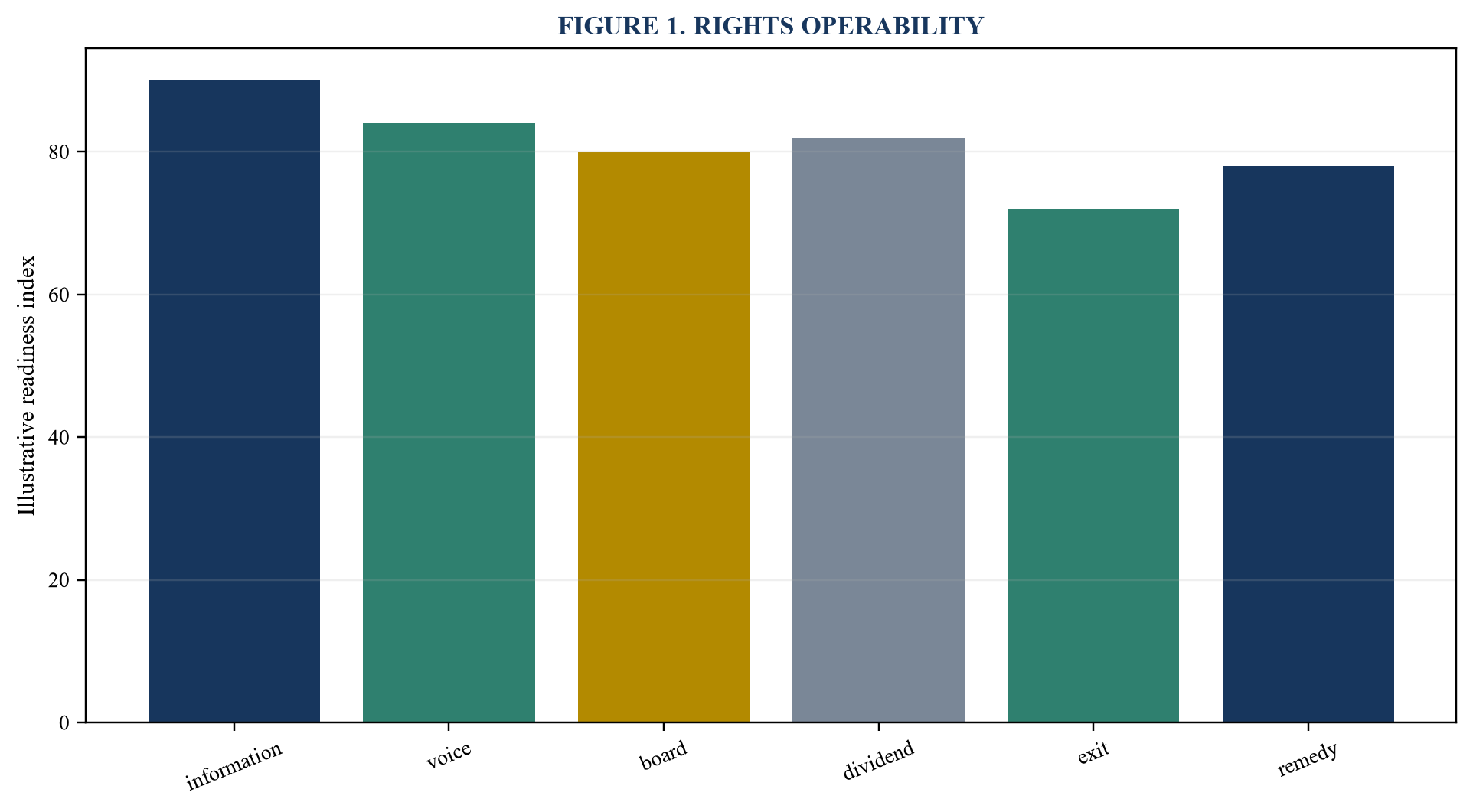
Values are illustrative readiness indices and require company-specific evidence.
9. Make meetings usable
Set notice, agenda, papers, questions, attendance, proxy, minutes and follow-up standards.
The succession team should reconcile law, articles, meeting calendar, technology and records. Each conclusion records the accountable body, source, timing, candidate or owner, evidence, dependency, control and unresolved exception. The immediate output is a shareholder meeting protocol.
Management continuity must be proved through operating outcomes while ownership choices remain explicit. Reviewers test capability, authority, relationships, stakeholder confidence and downside response against native records and observed performance. Company strategy, role requirements, family objectives and governing law control every conclusion.
Material gaps require an owner, corrective action, test, advice and decision date. Consequences should flow through leadership capacity, customer delivery, cash, financing, value, control, fairness and transaction timing. Residual risk remains visible until authority is operable, stakeholders are protected and the relevant governing bodies approve the next gate.
10. Make voting rights operable
Translate class rights, thresholds, proxies, written resolutions and conflicts into an executable process.
The succession team should reconcile registers, articles, law, resolutions, proxies and advice. Each conclusion records the accountable body, source, timing, candidate or owner, evidence, dependency, control and unresolved exception. The immediate output is a voting mechanics guide.
Management continuity must be proved through operating outcomes while ownership choices remain explicit. Reviewers test capability, authority, relationships, stakeholder confidence and downside response against native records and observed performance. Company strategy, role requirements, family objectives and governing law control every conclusion.
Material gaps require an owner, corrective action, test, advice and decision date. Consequences should flow through leadership capacity, customer delivery, cash, financing, value, control, fairness and transaction timing. Residual risk remains visible until authority is operable, stakeholders are protected and the relevant governing bodies approve the next gate.
11. Define reserved matters narrowly
Require enhanced approval for genuinely fundamental changes without turning ordinary management into deadlock.
The succession team should reconcile strategy, authority map, risk, financing, materiality and ownership objectives. Each conclusion records the accountable body, source, timing, candidate or owner, evidence, dependency, control and unresolved exception. The immediate output is a reserved-matters schedule.
Management continuity must be proved through operating outcomes while ownership choices remain explicit. Reviewers test capability, authority, relationships, stakeholder confidence and downside response against native records and observed performance. Company strategy, role requirements, family objectives and governing law control every conclusion.
Material gaps require an owner, corrective action, test, advice and decision date. Consequences should flow through leadership capacity, customer delivery, cash, financing, value, control, fairness and transaction timing. Residual risk remains visible until authority is operable, stakeholders are protected and the relevant governing bodies approve the next gate.
12. Protect pre-emption and dilution rights
Control new issues, waivers, options, convertibles and reorganisations through transparent notice and allocation.
The succession team should reconcile capital plan, cap table, articles, agreements, valuation and approvals. Each conclusion records the accountable body, source, timing, candidate or owner, evidence, dependency, control and unresolved exception. The immediate output is an anti-dilution process.
Management continuity must be proved through operating outcomes while ownership choices remain explicit. Reviewers test capability, authority, relationships, stakeholder confidence and downside response against native records and observed performance. Company strategy, role requirements, family objectives and governing law control every conclusion.
Material gaps require an owner, corrective action, test, advice and decision date. Consequences should flow through leadership capacity, customer delivery, cash, financing, value, control, fairness and transaction timing. Residual risk remains visible until authority is operable, stakeholders are protected and the relevant governing bodies approve the next gate.
13. Require class consent for rights changes
Identify when economic or voting rights are varied and obtain affected-class approval under applicable rules.
The succession team should reconcile class terms, proposed action, legal analysis, notices and votes. Each conclusion records the accountable body, source, timing, candidate or owner, evidence, dependency, control and unresolved exception. The immediate output is a class-rights variation certificate.
Management continuity must be proved through operating outcomes while ownership choices remain explicit. Reviewers test capability, authority, relationships, stakeholder confidence and downside response against native records and observed performance. Company strategy, role requirements, family objectives and governing law control every conclusion.
Material gaps require an owner, corrective action, test, advice and decision date. Consequences should flow through leadership capacity, customer delivery, cash, financing, value, control, fairness and transaction timing. Residual risk remains visible until authority is operable, stakeholders are protected and the relevant governing bodies approve the next gate.
14. Control related-party transactions
Disclose interests, benchmark terms, require recusal and use independent review for material family dealings.
The succession team should reconcile interest register, IAS 24 analysis, contracts, market evidence and minutes. Each conclusion records the accountable body, source, timing, candidate or owner, evidence, dependency, control and unresolved exception. The immediate output is a related-party approval protocol.
Management continuity must be proved through operating outcomes while ownership choices remain explicit. Reviewers test capability, authority, relationships, stakeholder confidence and downside response against native records and observed performance. Company strategy, role requirements, family objectives and governing law control every conclusion.
Material gaps require an owner, corrective action, test, advice and decision date. Consequences should flow through leadership capacity, customer delivery, cash, financing, value, control, fairness and transaction timing. Residual risk remains visible until authority is operable, stakeholders are protected and the relevant governing bodies approve the next gate.
15. Build a sustainable dividend policy
Connect distributions to cash generation, investment, leverage, reserves and equal treatment within each class.
The succession team should reconcile accounts, forecast, capex, covenants, class rights and tax. Each conclusion records the accountable body, source, timing, candidate or owner, evidence, dependency, control and unresolved exception. The immediate output is a governed dividend framework.
Management continuity must be proved through operating outcomes while ownership choices remain explicit. Reviewers test capability, authority, relationships, stakeholder confidence and downside response against native records and observed performance. Company strategy, role requirements, family objectives and governing law control every conclusion.
Material gaps require an owner, corrective action, test, advice and decision date. Consequences should flow through leadership capacity, customer delivery, cash, financing, value, control, fairness and transaction timing. Residual risk remains visible until authority is operable, stakeholders are protected and the relevant governing bodies approve the next gate.
16. Define distribution priority
Record preference, participation, arrears, discretion, timing and non-cash alternatives before declaring value.
The succession team should reconcile class rights, resolutions, cash, IFRIC 17 analysis and advice. Each conclusion records the accountable body, source, timing, candidate or owner, evidence, dependency, control and unresolved exception. The immediate output is a distribution waterfall.
Management continuity must be proved through operating outcomes while ownership choices remain explicit. Reviewers test capability, authority, relationships, stakeholder confidence and downside response against native records and observed performance. Company strategy, role requirements, family objectives and governing law control every conclusion.
Material gaps require an owner, corrective action, test, advice and decision date. Consequences should flow through leadership capacity, customer delivery, cash, financing, value, control, fairness and transaction timing. Residual risk remains visible until authority is operable, stakeholders are protected and the relevant governing bodies approve the next gate.
Table 2. Dividend decision frame
| Test | Required evidence | Decision signal |
|---|---|---|
| cash generation | normalised free cash flow | capacity |
| investment | approved value cases | retention |
| leverage | covenant headroom | resilience |
| class rights | distribution terms | allocation |
Illustrative programme design; company-specific facts and authorised advice govern.
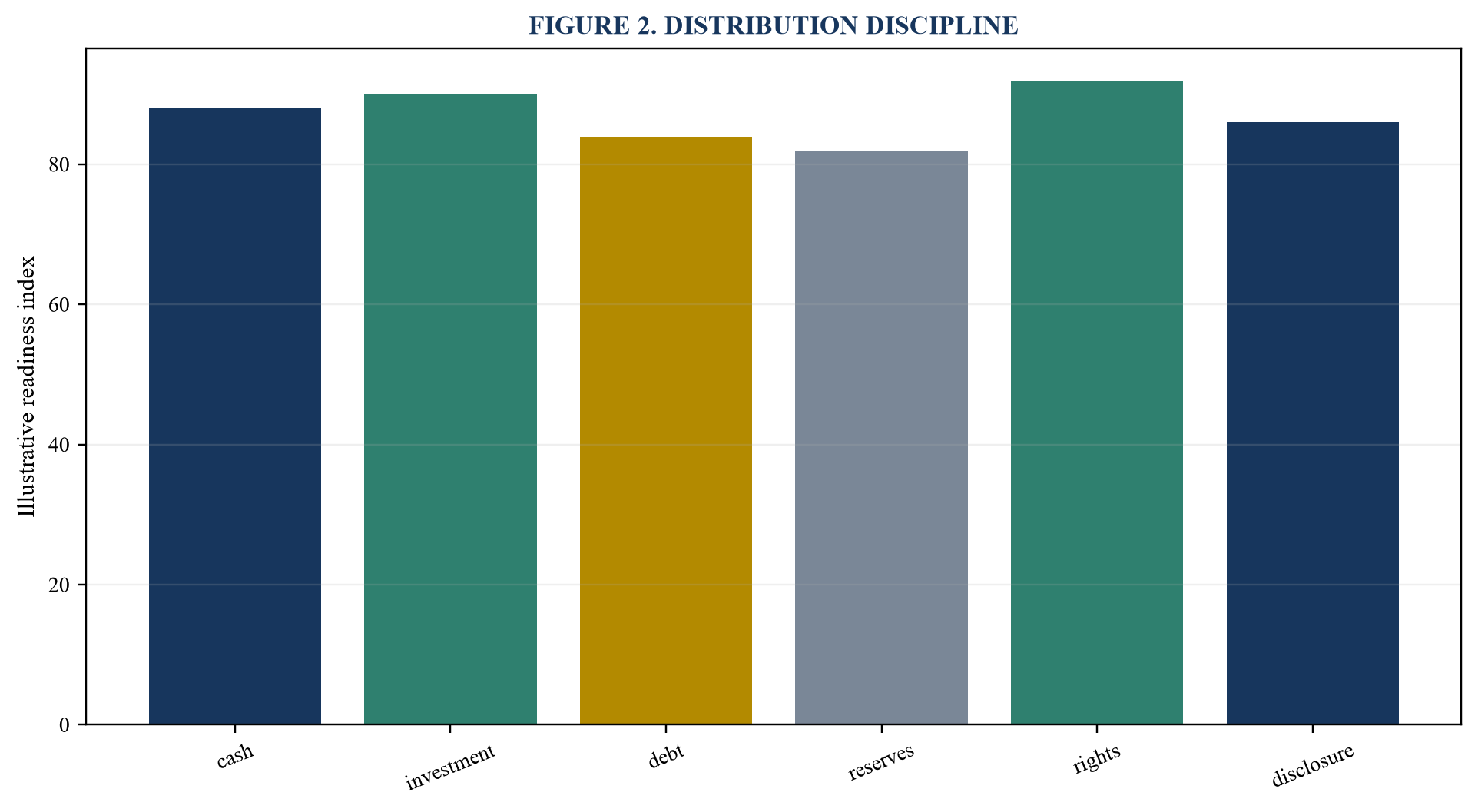
Values are illustrative readiness indices and require company-specific evidence.
17. Govern reinvestment decisions
Explain retained earnings through approved strategy, return thresholds, capital allocation and performance review.
The succession team should reconcile business plan, investment cases, hurdle rates, results and shareholder communications. Each conclusion records the accountable body, source, timing, candidate or owner, evidence, dependency, control and unresolved exception. The immediate output is a reinvestment accountability pack.
Management continuity must be proved through operating outcomes while ownership choices remain explicit. Reviewers test capability, authority, relationships, stakeholder confidence and downside response against native records and observed performance. Company strategy, role requirements, family objectives and governing law control every conclusion.
Material gaps require an owner, corrective action, test, advice and decision date. Consequences should flow through leadership capacity, customer delivery, cash, financing, value, control, fairness and transaction timing. Residual risk remains visible until authority is operable, stakeholders are protected and the relevant governing bodies approve the next gate.
18. Control shareholder loans and benefits
Separate equity rights from loans, services, employment reward and family benefits on market-supported terms.
The succession team should reconcile contracts, accounts, approvals, benchmarks, tax and related-party records. Each conclusion records the accountable body, source, timing, candidate or owner, evidence, dependency, control and unresolved exception. The immediate output is a shareholder value-transfer ledger.
Management continuity must be proved through operating outcomes while ownership choices remain explicit. Reviewers test capability, authority, relationships, stakeholder confidence and downside response against native records and observed performance. Company strategy, role requirements, family objectives and governing law control every conclusion.
Material gaps require an owner, corrective action, test, advice and decision date. Consequences should flow through leadership capacity, customer delivery, cash, financing, value, control, fairness and transaction timing. Residual risk remains visible until authority is operable, stakeholders are protected and the relevant governing bodies approve the next gate.
19. Create credible exit routes
Offer proportionate pathways for voluntary transfer, family purchase, redemption or approved third-party sale.
The succession team should reconcile transfer rules, valuation, funding capacity, buyer appetite and law. Each conclusion records the accountable body, source, timing, candidate or owner, evidence, dependency, control and unresolved exception. The immediate output is a minority liquidity map.
Management continuity must be proved through operating outcomes while ownership choices remain explicit. Reviewers test capability, authority, relationships, stakeholder confidence and downside response against native records and observed performance. Company strategy, role requirements, family objectives and governing law control every conclusion.
Material gaps require an owner, corrective action, test, advice and decision date. Consequences should flow through leadership capacity, customer delivery, cash, financing, value, control, fairness and transaction timing. Residual risk remains visible until authority is operable, stakeholders are protected and the relevant governing bodies approve the next gate.
20. Define the transfer process
Set notice, information, timetable, bidder access, consent, pre-emption and completion mechanics.
The succession team should reconcile articles, agreements, diligence rules, approvals and closing documents. Each conclusion records the accountable body, source, timing, candidate or owner, evidence, dependency, control and unresolved exception. The immediate output is an executable transfer protocol.
Management continuity must be proved through operating outcomes while ownership choices remain explicit. Reviewers test capability, authority, relationships, stakeholder confidence and downside response against native records and observed performance. Company strategy, role requirements, family objectives and governing law control every conclusion.
Material gaps require an owner, corrective action, test, advice and decision date. Consequences should flow through leadership capacity, customer delivery, cash, financing, value, control, fairness and transaction timing. Residual risk remains visible until authority is operable, stakeholders are protected and the relevant governing bodies approve the next gate.
21. Establish rights-specific valuation
Value the precise interest, rights and restrictions at a defined date and standard of value.
The succession team should reconcile class rights, accounts, forecasts, market evidence, purpose and standards. Each conclusion records the accountable body, source, timing, candidate or owner, evidence, dependency, control and unresolved exception. The immediate output is a minority-interest valuation instruction.
Management continuity must be proved through operating outcomes while ownership choices remain explicit. Reviewers test capability, authority, relationships, stakeholder confidence and downside response against native records and observed performance. Company strategy, role requirements, family objectives and governing law control every conclusion.
Material gaps require an owner, corrective action, test, advice and decision date. Consequences should flow through leadership capacity, customer delivery, cash, financing, value, control, fairness and transaction timing. Residual risk remains visible until authority is operable, stakeholders are protected and the relevant governing bodies approve the next gate.
22. Set rights of first offer and refusal
Design sequencing, information, price matching, timetable and failure consequences that permit genuine execution.
The succession team should reconcile transfer rules, market process, funding evidence, notices and advice. Each conclusion records the accountable body, source, timing, candidate or owner, evidence, dependency, control and unresolved exception. The immediate output is a first-offer and refusal procedure.
Management continuity must be proved through operating outcomes while ownership choices remain explicit. Reviewers test capability, authority, relationships, stakeholder confidence and downside response against native records and observed performance. Company strategy, role requirements, family objectives and governing law control every conclusion.
Material gaps require an owner, corrective action, test, advice and decision date. Consequences should flow through leadership capacity, customer delivery, cash, financing, value, control, fairness and transaction timing. Residual risk remains visible until authority is operable, stakeholders are protected and the relevant governing bodies approve the next gate.
23. Calibrate tag-along protection
Allow eligible minority holders to participate in a control sale on defined terms without blocking every transaction.
The succession team should reconcile control thresholds, eligible shares, consideration, notice, warranties and closing mechanics. Each conclusion records the accountable body, source, timing, candidate or owner, evidence, dependency, control and unresolved exception. The immediate output is a tag-along schedule.
Management continuity must be proved through operating outcomes while ownership choices remain explicit. Reviewers test capability, authority, relationships, stakeholder confidence and downside response against native records and observed performance. Company strategy, role requirements, family objectives and governing law control every conclusion.
Material gaps require an owner, corrective action, test, advice and decision date. Consequences should flow through leadership capacity, customer delivery, cash, financing, value, control, fairness and transaction timing. Residual risk remains visible until authority is operable, stakeholders are protected and the relevant governing bodies approve the next gate.
24. Calibrate drag-along execution
Permit an approved sale while protecting notice, equal class terms, liability limits and consideration delivery.
The succession team should reconcile thresholds, class rights, sale terms, escrow, warranties and law. Each conclusion records the accountable body, source, timing, candidate or owner, evidence, dependency, control and unresolved exception. The immediate output is a drag-along protocol.
Management continuity must be proved through operating outcomes while ownership choices remain explicit. Reviewers test capability, authority, relationships, stakeholder confidence and downside response against native records and observed performance. Company strategy, role requirements, family objectives and governing law control every conclusion.
Material gaps require an owner, corrective action, test, advice and decision date. Consequences should flow through leadership capacity, customer delivery, cash, financing, value, control, fairness and transaction timing. Residual risk remains visible until authority is operable, stakeholders are protected and the relevant governing bodies approve the next gate.
Table 3. Transfer protections
| Mechanism | Purpose | Control |
|---|---|---|
| pre-emption | protect ownership | clear allocation |
| right of first offer | create internal price | funding proof |
| tag-along | minority sale access | same class terms |
| drag-along | deliver control sale | threshold and safeguards |
Illustrative programme design; company-specific facts and authorised advice govern.
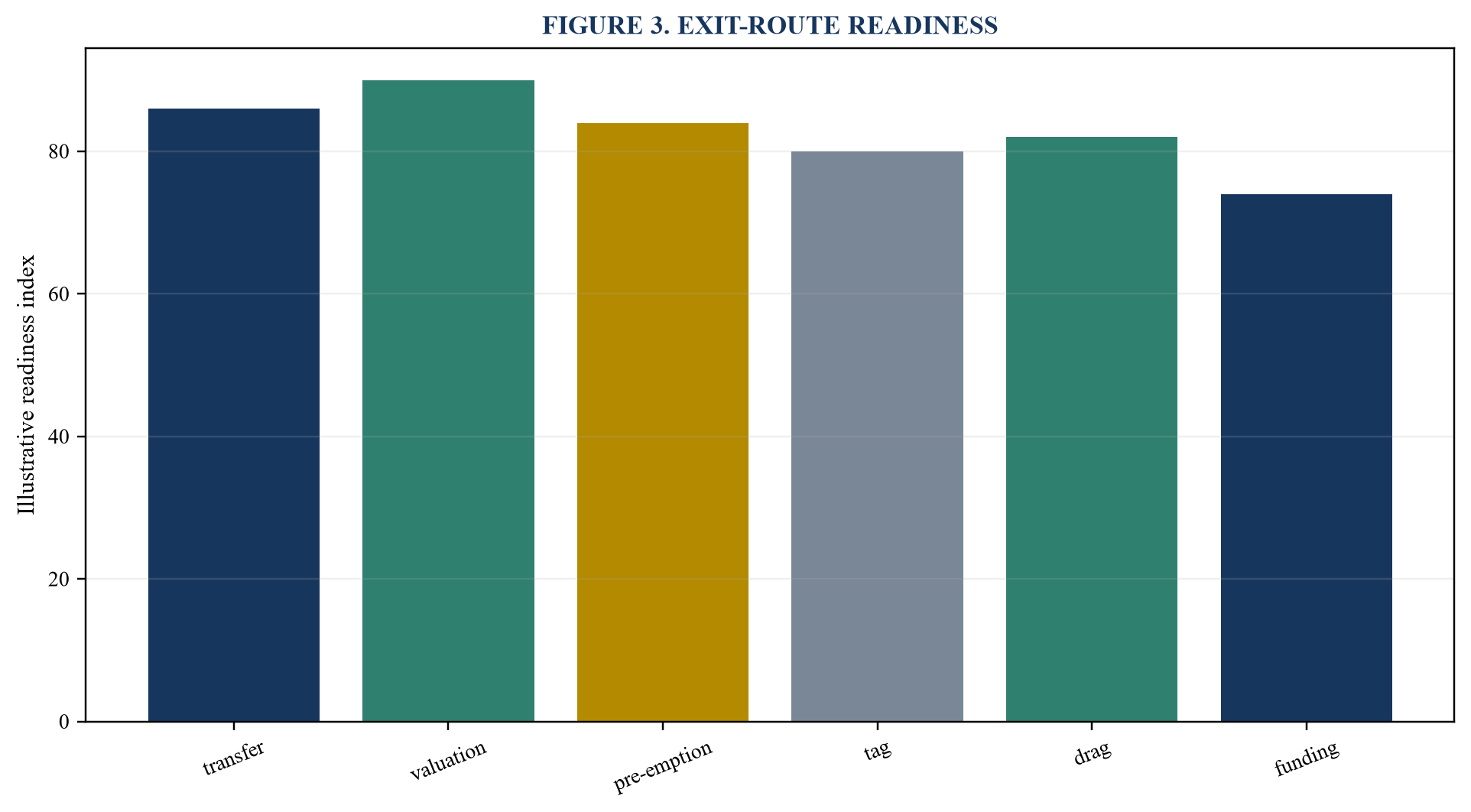
Values are illustrative readiness indices and require company-specific evidence.
25. Use put and call rights cautiously
Define narrow triggers, price, funding, security, timing and solvency tests so options remain financeable.
The succession team should reconcile trigger evidence, valuation formula, cash capacity, covenants and legal advice. Each conclusion records the accountable body, source, timing, candidate or owner, evidence, dependency, control and unresolved exception. The immediate output is an option-rights term sheet.
Management continuity must be proved through operating outcomes while ownership choices remain explicit. Reviewers test capability, authority, relationships, stakeholder confidence and downside response against native records and observed performance. Company strategy, role requirements, family objectives and governing law control every conclusion.
Material gaps require an owner, corrective action, test, advice and decision date. Consequences should flow through leadership capacity, customer delivery, cash, financing, value, control, fairness and transaction timing. Residual risk remains visible until authority is operable, stakeholders are protected and the relevant governing bodies approve the next gate.
26. Structure company redemption
Test lawful buyback mechanics, distributable resources, solvency, approvals, price and creditor effects.
The succession team should reconcile company law, articles, capital, forecast, valuation, tax and accounting. Each conclusion records the accountable body, source, timing, candidate or owner, evidence, dependency, control and unresolved exception. The immediate output is a redemption decision pack.
Management continuity must be proved through operating outcomes while ownership choices remain explicit. Reviewers test capability, authority, relationships, stakeholder confidence and downside response against native records and observed performance. Company strategy, role requirements, family objectives and governing law control every conclusion.
Material gaps require an owner, corrective action, test, advice and decision date. Consequences should flow through leadership capacity, customer delivery, cash, financing, value, control, fairness and transaction timing. Residual risk remains visible until authority is operable, stakeholders are protected and the relevant governing bodies approve the next gate.
27. Provide hardship liquidity rules
Create confidential, capped and independently reviewed access without establishing uncontrolled precedent.
The succession team should reconcile policy, request evidence, affordability, conflicts, prior cases and approvals. Each conclusion records the accountable body, source, timing, candidate or owner, evidence, dependency, control and unresolved exception. The immediate output is a hardship liquidity protocol.
Management continuity must be proved through operating outcomes while ownership choices remain explicit. Reviewers test capability, authority, relationships, stakeholder confidence and downside response against native records and observed performance. Company strategy, role requirements, family objectives and governing law control every conclusion.
Material gaps require an owner, corrective action, test, advice and decision date. Consequences should flow through leadership capacity, customer delivery, cash, financing, value, control, fairness and transaction timing. Residual risk remains visible until authority is operable, stakeholders are protected and the relevant governing bodies approve the next gate.
28. Diagnose deadlock precisely
Distinguish information failure, rights ambiguity, strategy disagreement, personal conflict and genuine decision impasse.
The succession team should reconcile issue log, decisions, documents, interviews, financial effects and governance records. Each conclusion records the accountable body, source, timing, candidate or owner, evidence, dependency, control and unresolved exception. The immediate output is a deadlock diagnosis.
Management continuity must be proved through operating outcomes while ownership choices remain explicit. Reviewers test capability, authority, relationships, stakeholder confidence and downside response against native records and observed performance. Company strategy, role requirements, family objectives and governing law control every conclusion.
Material gaps require an owner, corrective action, test, advice and decision date. Consequences should flow through leadership capacity, customer delivery, cash, financing, value, control, fairness and transaction timing. Residual risk remains visible until authority is operable, stakeholders are protected and the relevant governing bodies approve the next gate.
29. Create an escalation ladder
Move unresolved issues from management clarification to board, shareholder and independent facilitation stages.
The succession team should reconcile governance calendar, issue severity, authority, timetable and records. Each conclusion records the accountable body, source, timing, candidate or owner, evidence, dependency, control and unresolved exception. The immediate output is a staged escalation pathway.
Management continuity must be proved through operating outcomes while ownership choices remain explicit. Reviewers test capability, authority, relationships, stakeholder confidence and downside response against native records and observed performance. Company strategy, role requirements, family objectives and governing law control every conclusion.
Material gaps require an owner, corrective action, test, advice and decision date. Consequences should flow through leadership capacity, customer delivery, cash, financing, value, control, fairness and transaction timing. Residual risk remains visible until authority is operable, stakeholders are protected and the relevant governing bodies approve the next gate.
30. Use mediation before value destruction
Provide confidential neutral facilitation for suitable disputes while preserving urgent legal and protective rights.
The succession team should reconcile dispute terms, mediator criteria, confidentiality, authority and governing law. Each conclusion records the accountable body, source, timing, candidate or owner, evidence, dependency, control and unresolved exception. The immediate output is a mediation protocol.
Management continuity must be proved through operating outcomes while ownership choices remain explicit. Reviewers test capability, authority, relationships, stakeholder confidence and downside response against native records and observed performance. Company strategy, role requirements, family objectives and governing law control every conclusion.
Material gaps require an owner, corrective action, test, advice and decision date. Consequences should flow through leadership capacity, customer delivery, cash, financing, value, control, fairness and transaction timing. Residual risk remains visible until authority is operable, stakeholders are protected and the relevant governing bodies approve the next gate.
31. Design buy-sell mechanisms without coercion
Assess sealed bids, Russian roulette, Texas shoot-out and other mechanisms for funding asymmetry and fairness.
The succession team should reconcile ownership, wealth capacity, valuation, finance, tax, law and downside cases. Each conclusion records the accountable body, source, timing, candidate or owner, evidence, dependency, control and unresolved exception. The immediate output is a buy-sell suitability analysis.
Management continuity must be proved through operating outcomes while ownership choices remain explicit. Reviewers test capability, authority, relationships, stakeholder confidence and downside response against native records and observed performance. Company strategy, role requirements, family objectives and governing law control every conclusion.
Material gaps require an owner, corrective action, test, advice and decision date. Consequences should flow through leadership capacity, customer delivery, cash, financing, value, control, fairness and transaction timing. Residual risk remains visible until authority is operable, stakeholders are protected and the relevant governing bodies approve the next gate.
32. Map governing law and remedies
Identify contractual, statutory, equitable, tribunal, arbitration and court rights by entity and instrument.
The succession team should reconcile entity map, documents, jurisdiction, forum clauses and qualified advice. Each conclusion records the accountable body, source, timing, candidate or owner, evidence, dependency, control and unresolved exception. The immediate output is a remedies map.
Management continuity must be proved through operating outcomes while ownership choices remain explicit. Reviewers test capability, authority, relationships, stakeholder confidence and downside response against native records and observed performance. Company strategy, role requirements, family objectives and governing law control every conclusion.
Material gaps require an owner, corrective action, test, advice and decision date. Consequences should flow through leadership capacity, customer delivery, cash, financing, value, control, fairness and transaction timing. Residual risk remains visible until authority is operable, stakeholders are protected and the relevant governing bodies approve the next gate.
Table 4. Deadlock response ladder
| Stage | Action | Escalation trigger |
|---|---|---|
| clarify | share facts and rights | information gap persists |
| govern | board or shareholder decision | authority unresolved |
| mediate | neutral facilitation | relationship impasse |
| separate | priced exit mechanism | durable deadlock |
Illustrative programme design; company-specific facts and authorised advice govern.
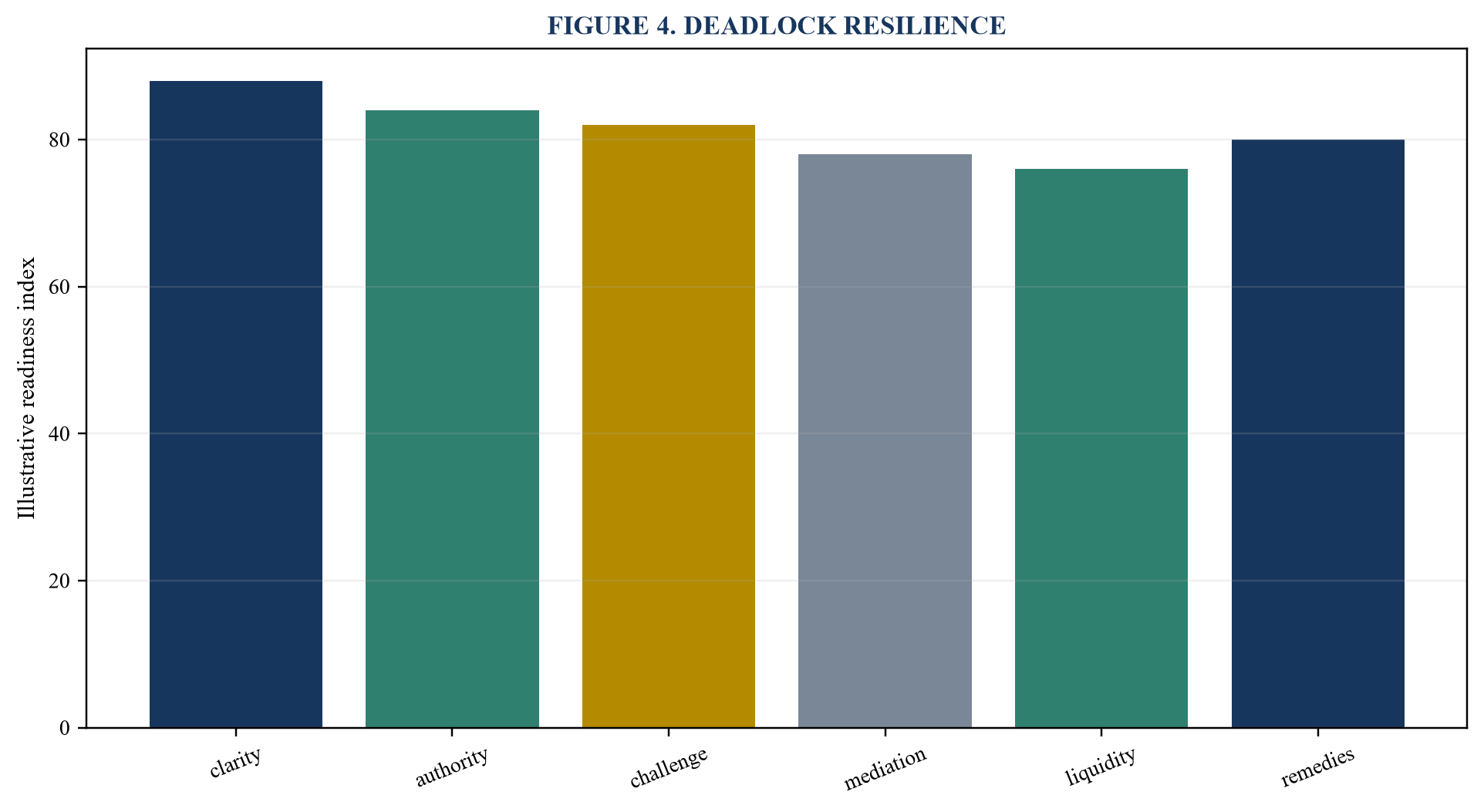
Values are illustrative readiness indices and require company-specific evidence.
33. Protect creditors and enterprise purpose
Keep distributions, redemptions, security and settlement funding within capital, solvency and covenant constraints.
The succession team should reconcile law, facilities, forecasts, certificates, board duties and consents. Each conclusion records the accountable body, source, timing, candidate or owner, evidence, dependency, control and unresolved exception. The immediate output is a creditor and purpose certificate.
Management continuity must be proved through operating outcomes while ownership choices remain explicit. Reviewers test capability, authority, relationships, stakeholder confidence and downside response against native records and observed performance. Company strategy, role requirements, family objectives and governing law control every conclusion.
Material gaps require an owner, corrective action, test, advice and decision date. Consequences should flow through leadership capacity, customer delivery, cash, financing, value, control, fairness and transaction timing. Residual risk remains visible until authority is operable, stakeholders are protected and the relevant governing bodies approve the next gate.
34. Control confidentiality and data access
Use role-based permissions, clean teams, privilege and secure delivery for sensitive shareholder information.
The succession team should reconcile data map, privacy, cyber controls, agreements and transaction protocols. Each conclusion records the accountable body, source, timing, candidate or owner, evidence, dependency, control and unresolved exception. The immediate output is a secure shareholder portal design.
Management continuity must be proved through operating outcomes while ownership choices remain explicit. Reviewers test capability, authority, relationships, stakeholder confidence and downside response against native records and observed performance. Company strategy, role requirements, family objectives and governing law control every conclusion.
Material gaps require an owner, corrective action, test, advice and decision date. Consequences should flow through leadership capacity, customer delivery, cash, financing, value, control, fairness and transaction timing. Residual risk remains visible until authority is operable, stakeholders are protected and the relevant governing bodies approve the next gate.
35. Manage conflicts and recusal
Identify family, director, adviser and financing conflicts and allocate decisions to unconflicted authorities.
The succession team should reconcile interest register, relationships, mandates, minutes and independent advice. Each conclusion records the accountable body, source, timing, candidate or owner, evidence, dependency, control and unresolved exception. The immediate output is a conflict-control register.
Management continuity must be proved through operating outcomes while ownership choices remain explicit. Reviewers test capability, authority, relationships, stakeholder confidence and downside response against native records and observed performance. Company strategy, role requirements, family objectives and governing law control every conclusion.
Material gaps require an owner, corrective action, test, advice and decision date. Consequences should flow through leadership capacity, customer delivery, cash, financing, value, control, fairness and transaction timing. Residual risk remains visible until authority is operable, stakeholders are protected and the relevant governing bodies approve the next gate.
36. Audit equitable treatment
Compare information, notice, voting, distributions, related parties, dilution and exit access within relevant classes.
The succession team should reconcile policies, records, transactions, class rights, exceptions and outcomes. Each conclusion records the accountable body, source, timing, candidate or owner, evidence, dependency, control and unresolved exception. The immediate output is a minority fairness audit.
Management continuity must be proved through operating outcomes while ownership choices remain explicit. Reviewers test capability, authority, relationships, stakeholder confidence and downside response against native records and observed performance. Company strategy, role requirements, family objectives and governing law control every conclusion.
Material gaps require an owner, corrective action, test, advice and decision date. Consequences should flow through leadership capacity, customer delivery, cash, financing, value, control, fairness and transaction timing. Residual risk remains visible until authority is operable, stakeholders are protected and the relevant governing bodies approve the next gate.
37. Run governance stress tests
Test withheld information, dividend shock, related-party deal, dilution, control sale, multiple exits and covenant pressure.
The succession team should reconcile scenarios, rights matrix, model, documents, roles and observed response. Each conclusion records the accountable body, source, timing, candidate or owner, evidence, dependency, control and unresolved exception. The immediate output is a minority-rights stress-test report.
Management continuity must be proved through operating outcomes while ownership choices remain explicit. Reviewers test capability, authority, relationships, stakeholder confidence and downside response against native records and observed performance. Company strategy, role requirements, family objectives and governing law control every conclusion.
Material gaps require an owner, corrective action, test, advice and decision date. Consequences should flow through leadership capacity, customer delivery, cash, financing, value, control, fairness and transaction timing. Residual risk remains visible until authority is operable, stakeholders are protected and the relevant governing bodies approve the next gate.
38. Implement document and process changes
Coordinate constitutional amendments, agreements, policies, systems, approvals, communications and training.
The succession team should reconcile gap list, drafting, consents, critical path, owners and evidence. Each conclusion records the accountable body, source, timing, candidate or owner, evidence, dependency, control and unresolved exception. The immediate output is a rights implementation programme.
Management continuity must be proved through operating outcomes while ownership choices remain explicit. Reviewers test capability, authority, relationships, stakeholder confidence and downside response against native records and observed performance. Company strategy, role requirements, family objectives and governing law control every conclusion.
Material gaps require an owner, corrective action, test, advice and decision date. Consequences should flow through leadership capacity, customer delivery, cash, financing, value, control, fairness and transaction timing. Residual risk remains visible until authority is operable, stakeholders are protected and the relevant governing bodies approve the next gate.
39. Review rights after transition
Test whether changed ownership, strategy, financing and family circumstances require approved recalibration.
The succession team should reconcile post-transition evidence, shareholder feedback, performance, disputes and legal update. Each conclusion records the accountable body, source, timing, candidate or owner, evidence, dependency, control and unresolved exception. The immediate output is a post-transition rights review.
Management continuity must be proved through operating outcomes while ownership choices remain explicit. Reviewers test capability, authority, relationships, stakeholder confidence and downside response against native records and observed performance. Company strategy, role requirements, family objectives and governing law control every conclusion.
Material gaps require an owner, corrective action, test, advice and decision date. Consequences should flow through leadership capacity, customer delivery, cash, financing, value, control, fairness and transaction timing. Residual risk remains visible until authority is operable, stakeholders are protected and the relevant governing bodies approve the next gate.
40. Issue the minority-rights conclusion
Present information, dividend, governance, exit, deadlock, fairness, risks, approvals and implementation priorities.
The succession team should reconcile rights matrix, diagnostics, models, options, stress tests, advice and consents. Each conclusion records the accountable body, source, timing, candidate or owner, evidence, dependency, control and unresolved exception. The immediate output is a board-and-shareholder minority-rights paper.
Management continuity must be proved through operating outcomes while ownership choices remain explicit. Reviewers test capability, authority, relationships, stakeholder confidence and downside response against native records and observed performance. Company strategy, role requirements, family objectives and governing law control every conclusion.
Material gaps require an owner, corrective action, test, advice and decision date. Consequences should flow through leadership capacity, customer delivery, cash, financing, value, control, fairness and transaction timing. Residual risk remains visible until authority is operable, stakeholders are protected and the relevant governing bodies approve the next gate.
Table 5. Minority-rights certificate
| Dimension | Required conclusion | Decision use |
|---|---|---|
| informed | decision information accessible | trust |
| equitable | class treatment evidenced | fairness |
| liquid | credible exit path exists | continuity |
| governed | deadlock routes executable | resilience |
Illustrative programme design; company-specific facts and authorised advice govern.
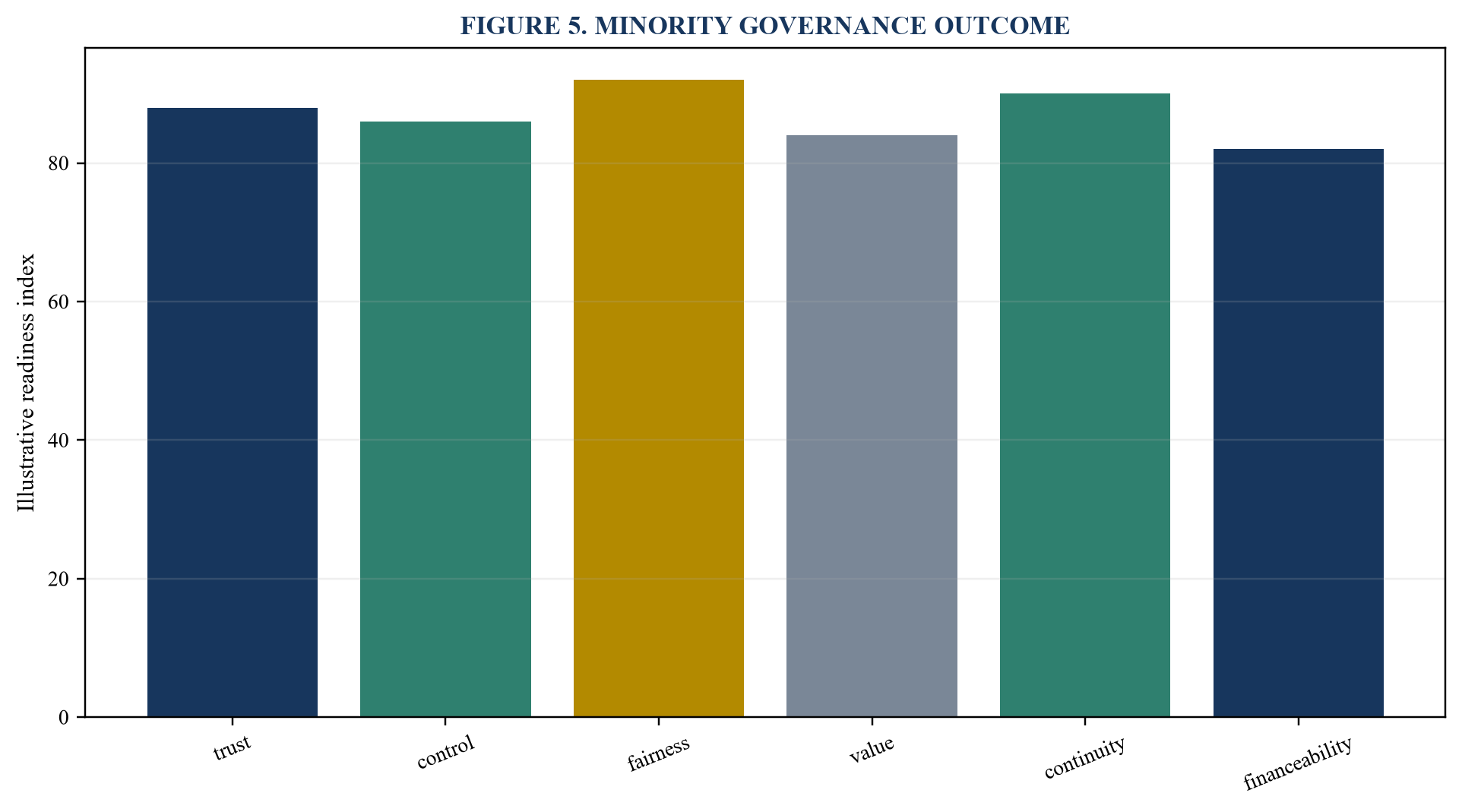
Values are illustrative readiness indices and require company-specific evidence.
References
- OECD, G20/OECD Principles of Corporate Governance 2023, https://doi.org/10.1787/ed750b30-en
- OECD, Rights and Equitable Treatment of Shareholders, https://www.oecd.org/en/publications/g20-oecd-principles-of-corporate-governance-2023_ed750b30-en/full-report/component-5.html
- OECD, Disclosure and Transparency, https://www.oecd.org/en/publications/g20-oecd-principles-of-corporate-governance-2023_ed750b30-en/full-report/component-7.html
- OECD, Corporate Governance Factbook 2025, https://www.oecd.org/en/publications/oecd-corporate-governance-factbook-2025_f4f43735-en.html
- OECD, Methodology for Assessing Implementation of the G20/OECD Principles 2025, https://www.oecd.org/en/publications/methodology-for-assessing-the-implementation-of-the-g20-oecd-principles-of-corporate-governance-2025_80996ea9-en.html
- OECD, Flexibility and Investor Protection in Share Class Structures 2026, https://www.oecd.org/en/publications/flexibility-and-investor-protection-in-share-class-structures_49a978ad-en.html
- International Finance Corporation, Family Business Governance Handbook, https://www.ifc.org/en/insights-reports/2011/ifc-family-business-governance-handbook
- International Finance Corporation, Family Business Governance, https://www.ifc.org/en/what-we-do/sector-expertise/corporate-governance/family-business-governance
- International Finance Corporation, Corporate Governance FAQs for the Middle East and North Africa, https://www.ifc.org/en/insights-reports/2016/corporate-governance-faqs
- International Finance Corporation, SME Governance Guidebook, https://www.ifc.org/en/insights-reports/2010/sme-governance-guidebook
- United Arab Emirates, Federal Decree-Law No. 37 of 2022 Concerning Family Businesses, https://uaelegislation.gov.ae/en/legislations/1608
- UAE Ministry of Economy and Tourism, Companies Legislation, https://www.moet.gov.ae/en/companies-legislations
- Dubai International Financial Centre, Family Arrangements Regulations 2023, https://assets.difc.com/v1/media/edge/images/dubaiintern0078-difcexperie96c5-production-3253/media/project/difcexperiences/difc/difcwebsite/documents/familydocs/family_arrangements_regulations_updated_april23.pdf
- Financial Reporting Council, Wates Corporate Governance Principles for Large Private Companies, https://www.frc.org.uk/library/standards-codes-policy/corporate-governance/the-wates-corporate-governance-principles-for-large-private-companies/
- IFRS Foundation, IFRS 13 Fair Value Measurement, https://www.ifrs.org/issued-standards/list-of-standards/ifrs-13-fair-value-measurement/
- IFRS Foundation, Educational Material on Fair Value Measurement of Unquoted Equity Instruments, https://www.ifrs.org/content/dam/ifrs/supporting-implementation/ifrs-13/education-ifrs-13-eng.pdf
- IFRS Foundation, IAS 24 Related Party Disclosures, https://www.ifrs.org/issued-standards/list-of-standards/ias-24-related-party-disclosures/
- IFRS Foundation, IFRIC 17 Distributions of Non-cash Assets to Owners, https://www.ifrs.org/issued-standards/list-of-standards/ifric-17-distributions-of-non-cash-assets-to-owners/
- UK Government, Companies Act 2006 Part 13 Resolutions and Meetings, https://www.legislation.gov.uk/ukpga/2006/46/part/13
- UK Government, Companies Act 2006 Part 17 A Company's Share Capital, https://www.legislation.gov.uk/ukpga/2006/46/part/17
- UK Government, Companies Act 2006 Part 18 Acquisition by Limited Company of Own Shares, https://www.legislation.gov.uk/ukpga/2006/46/part/18
- UK Government, Companies Act 2006 section 172, https://www.legislation.gov.uk/ukpga/2006/46/section/172
- UK Government, Companies Act 2006 section 994 Petition by Company Member, https://www.legislation.gov.uk/ukpga/2006/46/section/994
- International Valuation Standards Council, International Valuation Standards, https://www.ivsc.org/standards/
- United Nations Commission on International Trade Law, Model Law on International Commercial Mediation 2018, https://uncitral.un.org/en/texts/mediation/modellaw/commercial_conciliation
- International Organization for Standardization, ISO 31000 Risk Management Guidelines, https://www.iso.org/iso-31000-risk-management.html
