

1. Define the partnership thesis
The diligence team should state the strategic problem, contribution expected from each party and measurable value logic. The principal deliverable is a partnership-thesis memorandum. Define the assertion being tested, the source required, the person responsible, the review standard and the consequence of a gap [1][2].
Triangulate registry records, contracts, policies, transaction data, operating evidence, interviews and independent sources. Record source dates, ownership, contradictions and access limitations. A confident statement from the negotiation team is a lead for verification rather than evidence of performance.
The central failure risk is that diligence can validate a counterparty without testing whether the proposed relationship creates value. Assess how the issue could affect legality, cash flow, control, continuity, customers, financing, valuation, reputation and exit. Calibrate review depth to exposure, jurisdiction, ownership opacity, public-sector contact, dependency and reversibility.
Translate each material finding into a decision: accept with rationale, obtain more evidence, remediate before signing, protect contractually, reduce dependency, defer exclusivity or stop. Retain the evidence and revisit it on a scheduled date or a defined change event.
2. Set a risk-based diligence perimeter
The diligence team should classify jurisdictions, sectors, products, customers, public touchpoints, payment routes and technologies. The principal deliverable is a scoped diligence plan. Define the assertion being tested, the source required, the person responsible, the review standard and the consequence of a gap [3][4].
Triangulate registry records, contracts, policies, transaction data, operating evidence, interviews and independent sources. Record source dates, ownership, contradictions and access limitations. A confident statement from the negotiation team is a lead for verification rather than evidence of performance.
The central failure risk is that a uniform checklist can miss the risks that matter most to the specific alliance. Assess how the issue could affect legality, cash flow, control, continuity, customers, financing, valuation, reputation and exit. Calibrate review depth to exposure, jurisdiction, ownership opacity, public-sector contact, dependency and reversibility.
Translate each material finding into a decision: accept with rationale, obtain more evidence, remediate before signing, protect contractually, reduce dependency, defer exclusivity or stop. Retain the evidence and revisit it on a scheduled date or a defined change event.
3. Verify legal identity and standing
The diligence team should confirm incorporation, licences, registered offices, directors, authorised signatories and good standing. The principal deliverable is a legal-identity certificate. Define the assertion being tested, the source required, the person responsible, the review standard and the consequence of a gap [5][6].
Triangulate registry records, contracts, policies, transaction data, operating evidence, interviews and independent sources. Record source dates, ownership, contradictions and access limitations. A confident statement from the negotiation team is a lead for verification rather than evidence of performance.
The central failure risk is that commercial discussions can proceed with an entity that lacks authority or operating permission. Assess how the issue could affect legality, cash flow, control, continuity, customers, financing, valuation, reputation and exit. Calibrate review depth to exposure, jurisdiction, ownership opacity, public-sector contact, dependency and reversibility.
Translate each material finding into a decision: accept with rationale, obtain more evidence, remediate before signing, protect contractually, reduce dependency, defer exclusivity or stop. Retain the evidence and revisit it on a scheduled date or a defined change event.
4. Map beneficial ownership
The diligence team should trace natural-person ownership through every intermediate vehicle and reconcile registries with source documents. The principal deliverable is an ownership-and-control map. Define the assertion being tested, the source required, the person responsible, the review standard and the consequence of a gap [3][7].
Triangulate registry records, contracts, policies, transaction data, operating evidence, interviews and independent sources. Record source dates, ownership, contradictions and access limitations. A confident statement from the negotiation team is a lead for verification rather than evidence of performance.
The central failure risk is that opaque chains can conceal economic beneficiaries, nominees or sanctions exposure. Assess how the issue could affect legality, cash flow, control, continuity, customers, financing, valuation, reputation and exit. Calibrate review depth to exposure, jurisdiction, ownership opacity, public-sector contact, dependency and reversibility.
Translate each material finding into a decision: accept with rationale, obtain more evidence, remediate before signing, protect contractually, reduce dependency, defer exclusivity or stop. Retain the evidence and revisit it on a scheduled date or a defined change event.
Table 1. Ownership-and-control evidence map
| Layer | Evidence | Question |
|---|---|---|
| legal entity | registry and constitution | who can bind it |
| shareholder | register and agreements | who owns rights |
| financing | security and covenants | who can influence |
| actual conduct | minutes and instructions | who directs decisions |
Illustrative analytical structure; verified transaction evidence and specialist review govern.
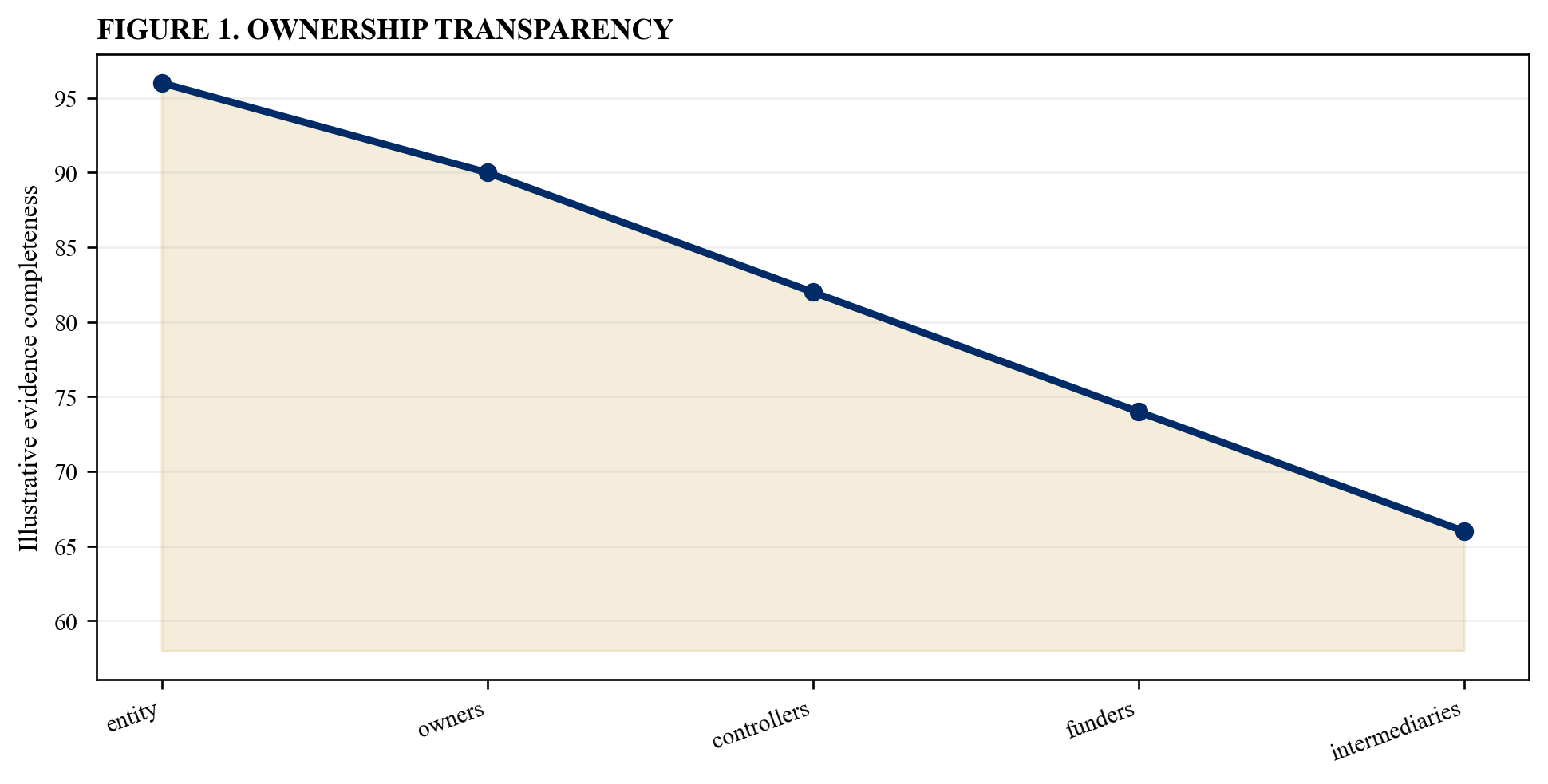
Illustrative analytical scenario; verified evidence should replace index values.
5. Test de facto control
The diligence team should examine voting arrangements, options, financing, management rights, family relationships and actual influence. The principal deliverable is a control assessment. Define the assertion being tested, the source required, the person responsible, the review standard and the consequence of a gap [8][9].
Triangulate registry records, contracts, policies, transaction data, operating evidence, interviews and independent sources. Record source dates, ownership, contradictions and access limitations. A confident statement from the negotiation team is a lead for verification rather than evidence of performance.
The central failure risk is that formal share percentages can understate a person’s practical ability to direct the partner. Assess how the issue could affect legality, cash flow, control, continuity, customers, financing, valuation, reputation and exit. Calibrate review depth to exposure, jurisdiction, ownership opacity, public-sector contact, dependency and reversibility.
Translate each material finding into a decision: accept with rationale, obtain more evidence, remediate before signing, protect contractually, reduce dependency, defer exclusivity or stop. Retain the evidence and revisit it on a scheduled date or a defined change event.
6. Screen sanctions comprehensively
The diligence team should check the relevant United Nations, United Kingdom, United States, European Union and local regimes. The principal deliverable is a documented screening record. Define the assertion being tested, the source required, the person responsible, the review standard and the consequence of a gap [8][10].
Triangulate registry records, contracts, policies, transaction data, operating evidence, interviews and independent sources. Record source dates, ownership, contradictions and access limitations. A confident statement from the negotiation team is a lead for verification rather than evidence of performance.
The central failure risk is that name matching alone can miss entities owned or controlled by designated persons. Assess how the issue could affect legality, cash flow, control, continuity, customers, financing, valuation, reputation and exit. Calibrate review depth to exposure, jurisdiction, ownership opacity, public-sector contact, dependency and reversibility.
Translate each material finding into a decision: accept with rationale, obtain more evidence, remediate before signing, protect contractually, reduce dependency, defer exclusivity or stop. Retain the evidence and revisit it on a scheduled date or a defined change event.
7. Assess politically exposed person exposure
The diligence team should identify domestic and foreign public functions, family members, close associates and relevant time periods. The principal deliverable is a PEP-risk assessment. Define the assertion being tested, the source required, the person responsible, the review standard and the consequence of a gap [11][12].
Triangulate registry records, contracts, policies, transaction data, operating evidence, interviews and independent sources. Record source dates, ownership, contradictions and access limitations. A confident statement from the negotiation team is a lead for verification rather than evidence of performance.
The central failure risk is that public connections can create bribery, procurement, licensing and reputation risks. Assess how the issue could affect legality, cash flow, control, continuity, customers, financing, valuation, reputation and exit. Calibrate review depth to exposure, jurisdiction, ownership opacity, public-sector contact, dependency and reversibility.
Translate each material finding into a decision: accept with rationale, obtain more evidence, remediate before signing, protect contractually, reduce dependency, defer exclusivity or stop. Retain the evidence and revisit it on a scheduled date or a defined change event.
8. Trace funding sources and payment routes
The diligence team should understand capital providers, lenders, intermediaries, currencies, banks and expected cash flows. The principal deliverable is a funds-and-payments map. Define the assertion being tested, the source required, the person responsible, the review standard and the consequence of a gap [4][13].
Triangulate registry records, contracts, policies, transaction data, operating evidence, interviews and independent sources. Record source dates, ownership, contradictions and access limitations. A confident statement from the negotiation team is a lead for verification rather than evidence of performance.
The central failure risk is that an acceptable operating entity can depend on a prohibited or high-risk funding channel. Assess how the issue could affect legality, cash flow, control, continuity, customers, financing, valuation, reputation and exit. Calibrate review depth to exposure, jurisdiction, ownership opacity, public-sector contact, dependency and reversibility.
Translate each material finding into a decision: accept with rationale, obtain more evidence, remediate before signing, protect contractually, reduce dependency, defer exclusivity or stop. Retain the evidence and revisit it on a scheduled date or a defined change event.
9. Investigate enforcement and debarment
The diligence team should search regulator decisions, court records, development-bank lists and public procurement exclusions. The principal deliverable is an enforcement-history schedule. Define the assertion being tested, the source required, the person responsible, the review standard and the consequence of a gap [14][15].
Triangulate registry records, contracts, policies, transaction data, operating evidence, interviews and independent sources. Record source dates, ownership, contradictions and access limitations. A confident statement from the negotiation team is a lead for verification rather than evidence of performance.
The central failure risk is that a partner can omit past conduct that predicts eligibility or integrity problems. Assess how the issue could affect legality, cash flow, control, continuity, customers, financing, valuation, reputation and exit. Calibrate review depth to exposure, jurisdiction, ownership opacity, public-sector contact, dependency and reversibility.
Translate each material finding into a decision: accept with rationale, obtain more evidence, remediate before signing, protect contractually, reduce dependency, defer exclusivity or stop. Retain the evidence and revisit it on a scheduled date or a defined change event.
10. Test anti-bribery controls
The diligence team should evaluate leadership commitment, risk assessment, third parties, gifts, payments, training, reporting and remediation. The principal deliverable is an anti-bribery control assessment. Define the assertion being tested, the source required, the person responsible, the review standard and the consequence of a gap [16][17].
Triangulate registry records, contracts, policies, transaction data, operating evidence, interviews and independent sources. Record source dates, ownership, contradictions and access limitations. A confident statement from the negotiation team is a lead for verification rather than evidence of performance.
The central failure risk is that written policies can exist without incentives, resources or operating evidence. Assess how the issue could affect legality, cash flow, control, continuity, customers, financing, valuation, reputation and exit. Calibrate review depth to exposure, jurisdiction, ownership opacity, public-sector contact, dependency and reversibility.
Translate each material finding into a decision: accept with rationale, obtain more evidence, remediate before signing, protect contractually, reduce dependency, defer exclusivity or stop. Retain the evidence and revisit it on a scheduled date or a defined change event.
11. Evaluate AML and counter-terrorist-financing controls
The diligence team should review customer risk, ownership verification, monitoring, escalation, suspicious activity and record retention. The principal deliverable is an AML-control assessment. Define the assertion being tested, the source required, the person responsible, the review standard and the consequence of a gap [3][12].
Triangulate registry records, contracts, policies, transaction data, operating evidence, interviews and independent sources. Record source dates, ownership, contradictions and access limitations. A confident statement from the negotiation team is a lead for verification rather than evidence of performance.
The central failure risk is that the alliance can inherit exposure from weak customer or intermediary controls. Assess how the issue could affect legality, cash flow, control, continuity, customers, financing, valuation, reputation and exit. Calibrate review depth to exposure, jurisdiction, ownership opacity, public-sector contact, dependency and reversibility.
Translate each material finding into a decision: accept with rationale, obtain more evidence, remediate before signing, protect contractually, reduce dependency, defer exclusivity or stop. Retain the evidence and revisit it on a scheduled date or a defined change event.
12. Map strategic incentives
The diligence team should identify revenue, control, learning, market access, optionality, defensive and signalling motives for each party. The principal deliverable is an incentive map. Define the assertion being tested, the source required, the person responsible, the review standard and the consequence of a gap [1][18].
Triangulate registry records, contracts, policies, transaction data, operating evidence, interviews and independent sources. Record source dates, ownership, contradictions and access limitations. A confident statement from the negotiation team is a lead for verification rather than evidence of performance.
The central failure risk is that stated objectives can differ from the behaviour rewarded by the partner’s economics. Assess how the issue could affect legality, cash flow, control, continuity, customers, financing, valuation, reputation and exit. Calibrate review depth to exposure, jurisdiction, ownership opacity, public-sector contact, dependency and reversibility.
Translate each material finding into a decision: accept with rationale, obtain more evidence, remediate before signing, protect contractually, reduce dependency, defer exclusivity or stop. Retain the evidence and revisit it on a scheduled date or a defined change event.
Table 2. Incentive diagnostic
| Motive | Evidence test | Potential tension |
|---|---|---|
| market access | verified customer path | channel control |
| technology | transferable rights | learning leakage |
| capital | funding proof | downside asymmetry |
| optionality | portfolio review | future competition |
Illustrative analytical structure; verified transaction evidence and specialist review govern.
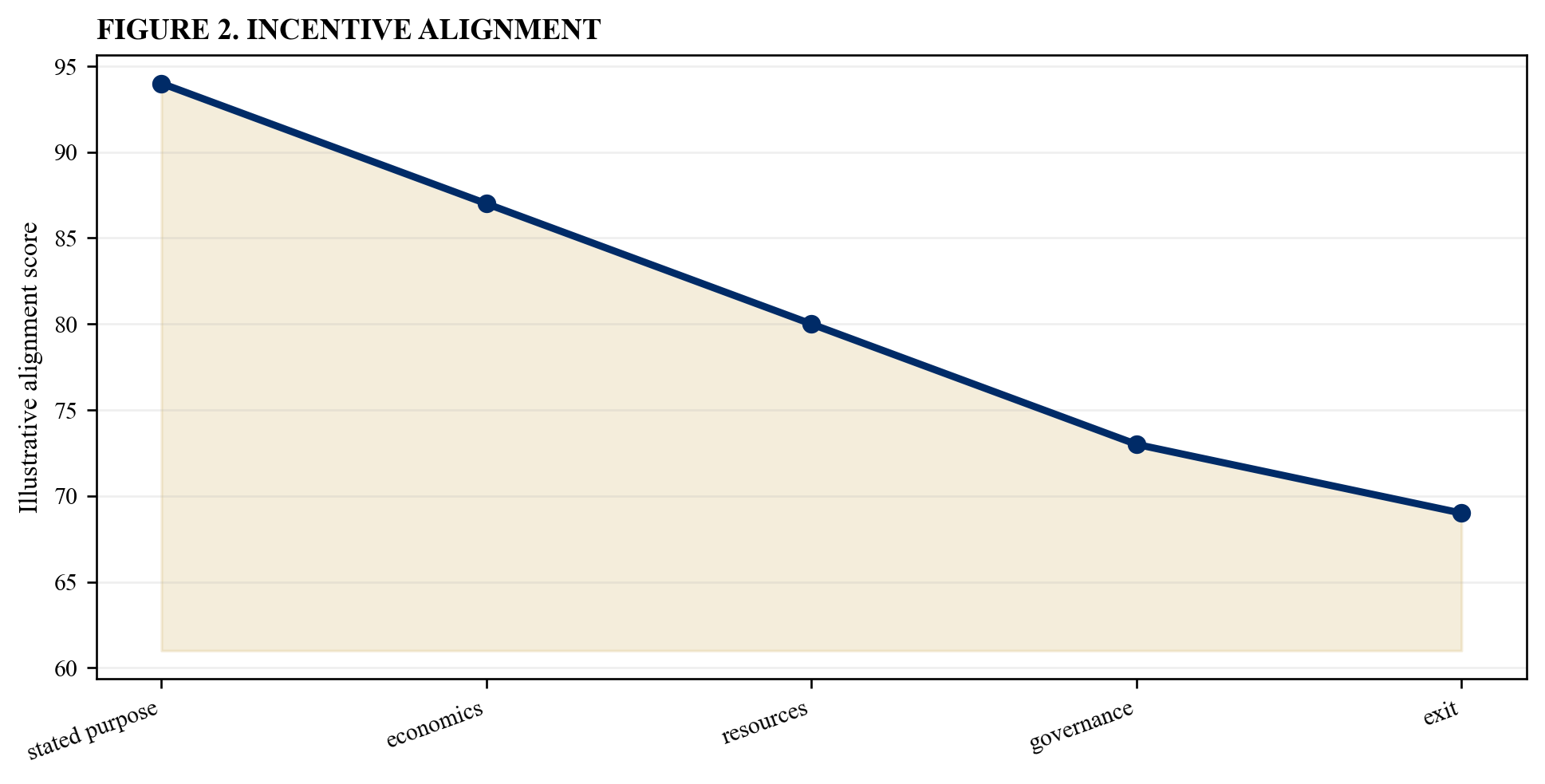
Illustrative analytical scenario; verified evidence should replace index values.
13. Test economic alignment
The diligence team should model contributions, transfer pricing, fees, procurement, dividends, funding calls, downside support and exit proceeds. The principal deliverable is an alignment model. Define the assertion being tested, the source required, the person responsible, the review standard and the consequence of a gap [19][20].
Triangulate registry records, contracts, policies, transaction data, operating evidence, interviews and independent sources. Record source dates, ownership, contradictions and access limitations. A confident statement from the negotiation team is a lead for verification rather than evidence of performance.
The central failure risk is that value can migrate through related arrangements while headline ownership remains balanced. Assess how the issue could affect legality, cash flow, control, continuity, customers, financing, valuation, reputation and exit. Calibrate review depth to exposure, jurisdiction, ownership opacity, public-sector contact, dependency and reversibility.
Translate each material finding into a decision: accept with rationale, obtain more evidence, remediate before signing, protect contractually, reduce dependency, defer exclusivity or stop. Retain the evidence and revisit it on a scheduled date or a defined change event.
14. Identify hidden principals and intermediaries
The diligence team should verify advisers, introducers, distributors, agents, subcontractors and beneficial recipients. The principal deliverable is a third-party relationship register. Define the assertion being tested, the source required, the person responsible, the review standard and the consequence of a gap [16][21].
Triangulate registry records, contracts, policies, transaction data, operating evidence, interviews and independent sources. Record source dates, ownership, contradictions and access limitations. A confident statement from the negotiation team is a lead for verification rather than evidence of performance.
The central failure risk is that an intermediary can create legal or reputation exposure outside the signed agreement. Assess how the issue could affect legality, cash flow, control, continuity, customers, financing, valuation, reputation and exit. Calibrate review depth to exposure, jurisdiction, ownership opacity, public-sector contact, dependency and reversibility.
Translate each material finding into a decision: accept with rationale, obtain more evidence, remediate before signing, protect contractually, reduce dependency, defer exclusivity or stop. Retain the evidence and revisit it on a scheduled date or a defined change event.
15. Assess strategic consistency
The diligence team should compare the alliance with the partner’s portfolio, public commitments, competing ventures and capital allocation. The principal deliverable is a strategic-consistency review. Define the assertion being tested, the source required, the person responsible, the review standard and the consequence of a gap [1][22].
Triangulate registry records, contracts, policies, transaction data, operating evidence, interviews and independent sources. Record source dates, ownership, contradictions and access limitations. A confident statement from the negotiation team is a lead for verification rather than evidence of performance.
The central failure risk is that the proposed venture can be peripheral, defensive or vulnerable to internal competition. Assess how the issue could affect legality, cash flow, control, continuity, customers, financing, valuation, reputation and exit. Calibrate review depth to exposure, jurisdiction, ownership opacity, public-sector contact, dependency and reversibility.
Translate each material finding into a decision: accept with rationale, obtain more evidence, remediate before signing, protect contractually, reduce dependency, defer exclusivity or stop. Retain the evidence and revisit it on a scheduled date or a defined change event.
16. Convert capability claims into tests
The diligence team should define the people, assets, permits, customer access, technology and funding needed for each workstream. The principal deliverable is a capability verification matrix. Define the assertion being tested, the source required, the person responsible, the review standard and the consequence of a gap [23][24].
Triangulate registry records, contracts, policies, transaction data, operating evidence, interviews and independent sources. Record source dates, ownership, contradictions and access limitations. A confident statement from the negotiation team is a lead for verification rather than evidence of performance.
The central failure risk is that presentations can substitute aspiration for deployable capability. Assess how the issue could affect legality, cash flow, control, continuity, customers, financing, valuation, reputation and exit. Calibrate review depth to exposure, jurisdiction, ownership opacity, public-sector contact, dependency and reversibility.
Translate each material finding into a decision: accept with rationale, obtain more evidence, remediate before signing, protect contractually, reduce dependency, defer exclusivity or stop. Retain the evidence and revisit it on a scheduled date or a defined change event.
Table 3. Capability verification
| Claim | Required evidence | Contract response |
|---|---|---|
| people | named capacity | key-person milestone |
| assets | inspection and title | availability covenant |
| licence | authority confirmation | condition precedent |
| customers | permission and pipeline | conversion milestone |
Illustrative analytical structure; verified transaction evidence and specialist review govern.
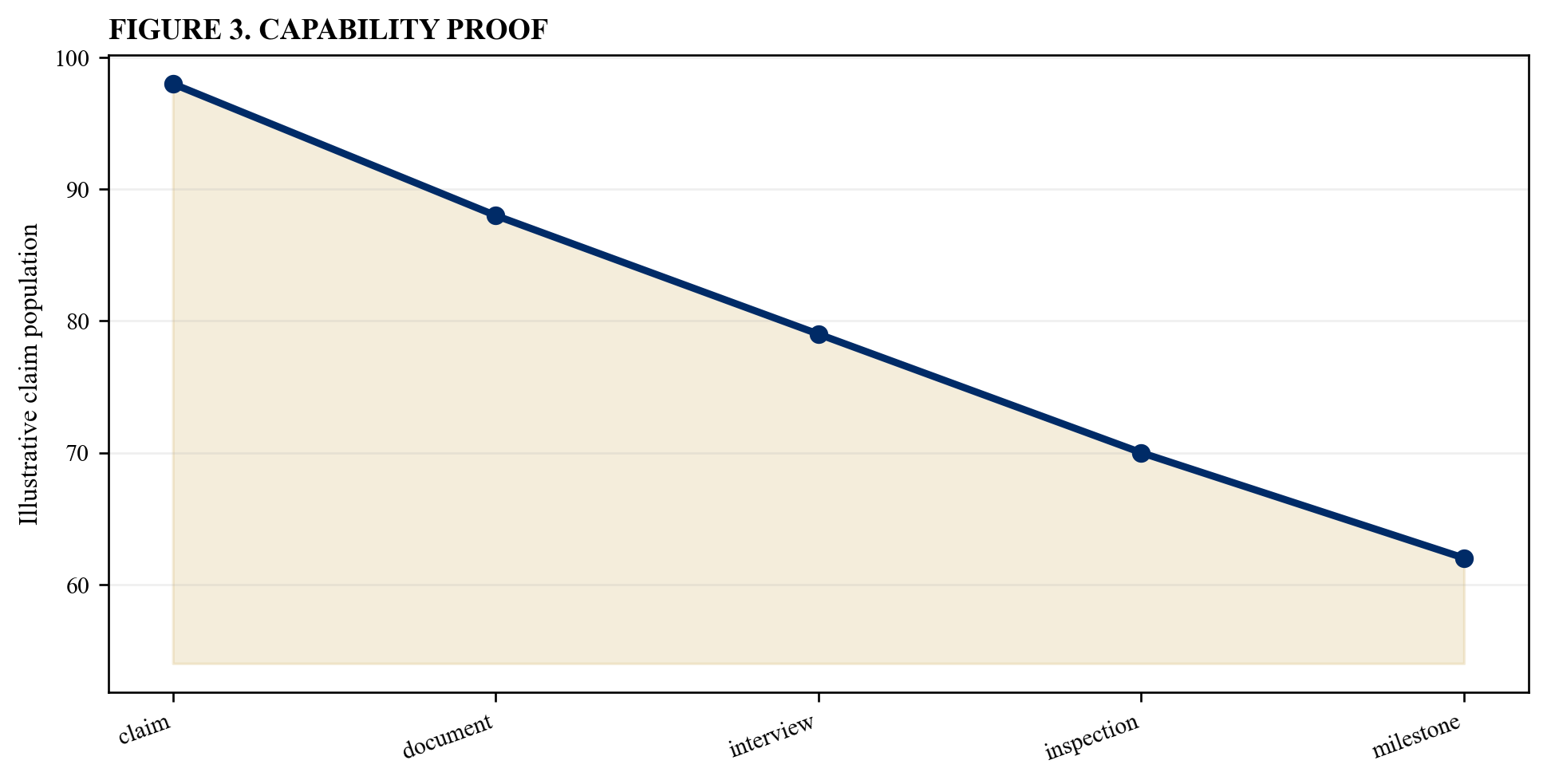
Illustrative analytical scenario; verified evidence should replace index values.
17. Verify key people and capacity
The diligence team should confirm employment, authority, availability, succession, incentives, references and competing responsibilities. The principal deliverable is a key-person schedule. Define the assertion being tested, the source required, the person responsible, the review standard and the consequence of a gap [17][25].
Triangulate registry records, contracts, policies, transaction data, operating evidence, interviews and independent sources. Record source dates, ownership, contradictions and access limitations. A confident statement from the negotiation team is a lead for verification rather than evidence of performance.
The central failure risk is that named executives can lack time, authority or a durable commitment to the venture. Assess how the issue could affect legality, cash flow, control, continuity, customers, financing, valuation, reputation and exit. Calibrate review depth to exposure, jurisdiction, ownership opacity, public-sector contact, dependency and reversibility.
Translate each material finding into a decision: accept with rationale, obtain more evidence, remediate before signing, protect contractually, reduce dependency, defer exclusivity or stop. Retain the evidence and revisit it on a scheduled date or a defined change event.
18. Validate operational assets
The diligence team should inspect facilities, systems, equipment, licences, logistics and business-continuity resources. The principal deliverable is an asset-and-readiness report. Define the assertion being tested, the source required, the person responsible, the review standard and the consequence of a gap [24][26].
Triangulate registry records, contracts, policies, transaction data, operating evidence, interviews and independent sources. Record source dates, ownership, contradictions and access limitations. A confident statement from the negotiation team is a lead for verification rather than evidence of performance.
The central failure risk is that assets cited in negotiations can be unavailable, encumbered or unsuitable. Assess how the issue could affect legality, cash flow, control, continuity, customers, financing, valuation, reputation and exit. Calibrate review depth to exposure, jurisdiction, ownership opacity, public-sector contact, dependency and reversibility.
Translate each material finding into a decision: accept with rationale, obtain more evidence, remediate before signing, protect contractually, reduce dependency, defer exclusivity or stop. Retain the evidence and revisit it on a scheduled date or a defined change event.
19. Test customer and market access
The diligence team should verify relationship ownership, contractual freedom, channel economics, concentration and conversion evidence. The principal deliverable is a market-access evidence pack. Define the assertion being tested, the source required, the person responsible, the review standard and the consequence of a gap [21][27].
Triangulate registry records, contracts, policies, transaction data, operating evidence, interviews and independent sources. Record source dates, ownership, contradictions and access limitations. A confident statement from the negotiation team is a lead for verification rather than evidence of performance.
The central failure risk is that claimed access can be personal, non-transferable or restricted by existing contracts. Assess how the issue could affect legality, cash flow, control, continuity, customers, financing, valuation, reputation and exit. Calibrate review depth to exposure, jurisdiction, ownership opacity, public-sector contact, dependency and reversibility.
Translate each material finding into a decision: accept with rationale, obtain more evidence, remediate before signing, protect contractually, reduce dependency, defer exclusivity or stop. Retain the evidence and revisit it on a scheduled date or a defined change event.
20. Assess financial resilience
The diligence team should analyse liquidity, leverage, covenants, contingent liabilities, cash conversion and capacity for committed funding. The principal deliverable is a resilience and funding assessment. Define the assertion being tested, the source required, the person responsible, the review standard and the consequence of a gap [28][29].
Triangulate registry records, contracts, policies, transaction data, operating evidence, interviews and independent sources. Record source dates, ownership, contradictions and access limitations. A confident statement from the negotiation team is a lead for verification rather than evidence of performance.
The central failure risk is that solvency at signing can coexist with inadequate capacity to support launch or downside. Assess how the issue could affect legality, cash flow, control, continuity, customers, financing, valuation, reputation and exit. Calibrate review depth to exposure, jurisdiction, ownership opacity, public-sector contact, dependency and reversibility.
Translate each material finding into a decision: accept with rationale, obtain more evidence, remediate before signing, protect contractually, reduce dependency, defer exclusivity or stop. Retain the evidence and revisit it on a scheduled date or a defined change event.
21. Verify intellectual-property rights
The diligence team should establish ownership, licences, encumbrances, employee assignments, open-source obligations and infringement risk. The principal deliverable is an IP-rights schedule. Define the assertion being tested, the source required, the person responsible, the review standard and the consequence of a gap [30][31].
Triangulate registry records, contracts, policies, transaction data, operating evidence, interviews and independent sources. Record source dates, ownership, contradictions and access limitations. A confident statement from the negotiation team is a lead for verification rather than evidence of performance.
The central failure risk is that technology contributions can be narrower or less transferable than expected. Assess how the issue could affect legality, cash flow, control, continuity, customers, financing, valuation, reputation and exit. Calibrate review depth to exposure, jurisdiction, ownership opacity, public-sector contact, dependency and reversibility.
Translate each material finding into a decision: accept with rationale, obtain more evidence, remediate before signing, protect contractually, reduce dependency, defer exclusivity or stop. Retain the evidence and revisit it on a scheduled date or a defined change event.
22. Assess data rights and privacy
The diligence team should map data sources, lawful basis, purposes, localisation, transfers, retention, access and exit portability. The principal deliverable is a data-rights map. Define the assertion being tested, the source required, the person responsible, the review standard and the consequence of a gap [32][33].
Triangulate registry records, contracts, policies, transaction data, operating evidence, interviews and independent sources. Record source dates, ownership, contradictions and access limitations. A confident statement from the negotiation team is a lead for verification rather than evidence of performance.
The central failure risk is that the operating model can depend on data that the partner cannot lawfully provide or reuse. Assess how the issue could affect legality, cash flow, control, continuity, customers, financing, valuation, reputation and exit. Calibrate review depth to exposure, jurisdiction, ownership opacity, public-sector contact, dependency and reversibility.
Translate each material finding into a decision: accept with rationale, obtain more evidence, remediate before signing, protect contractually, reduce dependency, defer exclusivity or stop. Retain the evidence and revisit it on a scheduled date or a defined change event.
23. Test cyber-security maturity
The diligence team should review governance, access, architecture, incident history, recovery, suppliers and secure development. The principal deliverable is a cyber-risk assessment. Define the assertion being tested, the source required, the person responsible, the review standard and the consequence of a gap [34][35].
Triangulate registry records, contracts, policies, transaction data, operating evidence, interviews and independent sources. Record source dates, ownership, contradictions and access limitations. A confident statement from the negotiation team is a lead for verification rather than evidence of performance.
The central failure risk is that connection to a weaker partner can expand the attack surface of both parties. Assess how the issue could affect legality, cash flow, control, continuity, customers, financing, valuation, reputation and exit. Calibrate review depth to exposure, jurisdiction, ownership opacity, public-sector contact, dependency and reversibility.
Translate each material finding into a decision: accept with rationale, obtain more evidence, remediate before signing, protect contractually, reduce dependency, defer exclusivity or stop. Retain the evidence and revisit it on a scheduled date or a defined change event.
24. Evaluate AI and model risk
The diligence team should document model purpose, data provenance, testing, human oversight, security and allocation of responsibility. The principal deliverable is an AI-risk assessment. Define the assertion being tested, the source required, the person responsible, the review standard and the consequence of a gap [36][37].
Triangulate registry records, contracts, policies, transaction data, operating evidence, interviews and independent sources. Record source dates, ownership, contradictions and access limitations. A confident statement from the negotiation team is a lead for verification rather than evidence of performance.
The central failure risk is that automated decisions can transmit bias, error, opacity or regulatory exposure into the venture. Assess how the issue could affect legality, cash flow, control, continuity, customers, financing, valuation, reputation and exit. Calibrate review depth to exposure, jurisdiction, ownership opacity, public-sector contact, dependency and reversibility.
Translate each material finding into a decision: accept with rationale, obtain more evidence, remediate before signing, protect contractually, reduce dependency, defer exclusivity or stop. Retain the evidence and revisit it on a scheduled date or a defined change event.
25. Review supply-chain integrity
The diligence team should map critical suppliers, sub-tiers, labour, minerals, resilience, sanctions and substitution options. The principal deliverable is a critical-supply-chain map. Define the assertion being tested, the source required, the person responsible, the review standard and the consequence of a gap [2][38].
Triangulate registry records, contracts, policies, transaction data, operating evidence, interviews and independent sources. Record source dates, ownership, contradictions and access limitations. A confident statement from the negotiation team is a lead for verification rather than evidence of performance.
The central failure risk is that the partner can transmit hidden concentration or responsible-business-conduct exposure. Assess how the issue could affect legality, cash flow, control, continuity, customers, financing, valuation, reputation and exit. Calibrate review depth to exposure, jurisdiction, ownership opacity, public-sector contact, dependency and reversibility.
Translate each material finding into a decision: accept with rationale, obtain more evidence, remediate before signing, protect contractually, reduce dependency, defer exclusivity or stop. Retain the evidence and revisit it on a scheduled date or a defined change event.
26. Examine safety and environmental performance
The diligence team should verify permits, incidents, investigations, remediation, insurance and operating controls. The principal deliverable is a safety-and-environment schedule. Define the assertion being tested, the source required, the person responsible, the review standard and the consequence of a gap [2][39].
Triangulate registry records, contracts, policies, transaction data, operating evidence, interviews and independent sources. Record source dates, ownership, contradictions and access limitations. A confident statement from the negotiation team is a lead for verification rather than evidence of performance.
The central failure risk is that historical underinvestment can become the venture’s operational and reputation liability. Assess how the issue could affect legality, cash flow, control, continuity, customers, financing, valuation, reputation and exit. Calibrate review depth to exposure, jurisdiction, ownership opacity, public-sector contact, dependency and reversibility.
Translate each material finding into a decision: accept with rationale, obtain more evidence, remediate before signing, protect contractually, reduce dependency, defer exclusivity or stop. Retain the evidence and revisit it on a scheduled date or a defined change event.
27. Assess reputation with evidence discipline
The diligence team should search credible media, stakeholder reports and litigation while separating allegation, fact and adjudication. The principal deliverable is an adverse-information log. Define the assertion being tested, the source required, the person responsible, the review standard and the consequence of a gap [17][40].
Triangulate registry records, contracts, policies, transaction data, operating evidence, interviews and independent sources. Record source dates, ownership, contradictions and access limitations. A confident statement from the negotiation team is a lead for verification rather than evidence of performance.
The central failure risk is that unverified commentary can be ignored too quickly or treated unfairly as a finding. Assess how the issue could affect legality, cash flow, control, continuity, customers, financing, valuation, reputation and exit. Calibrate review depth to exposure, jurisdiction, ownership opacity, public-sector contact, dependency and reversibility.
Translate each material finding into a decision: accept with rationale, obtain more evidence, remediate before signing, protect contractually, reduce dependency, defer exclusivity or stop. Retain the evidence and revisit it on a scheduled date or a defined change event.
28. Interview beyond the deal team
The diligence team should speak with operating leaders, compliance, finance, technology, customers, suppliers and former counterparties. The principal deliverable is an interview evidence matrix. Define the assertion being tested, the source required, the person responsible, the review standard and the consequence of a gap [16][23].
Triangulate registry records, contracts, policies, transaction data, operating evidence, interviews and independent sources. Record source dates, ownership, contradictions and access limitations. A confident statement from the negotiation team is a lead for verification rather than evidence of performance.
The central failure risk is that a polished negotiation team can mask weak organisational ownership. Assess how the issue could affect legality, cash flow, control, continuity, customers, financing, valuation, reputation and exit. Calibrate review depth to exposure, jurisdiction, ownership opacity, public-sector contact, dependency and reversibility.
Translate each material finding into a decision: accept with rationale, obtain more evidence, remediate before signing, protect contractually, reduce dependency, defer exclusivity or stop. Retain the evidence and revisit it on a scheduled date or a defined change event.
29. Protect sensitive information
The diligence team should stage disclosure, use clean teams, restrict access and comply with competition and privacy requirements. The principal deliverable is an information-control protocol. Define the assertion being tested, the source required, the person responsible, the review standard and the consequence of a gap [32][40].
Triangulate registry records, contracts, policies, transaction data, operating evidence, interviews and independent sources. Record source dates, ownership, contradictions and access limitations. A confident statement from the negotiation team is a lead for verification rather than evidence of performance.
The central failure risk is that diligence can expose prices, customers, strategy or personal data before commitment. Assess how the issue could affect legality, cash flow, control, continuity, customers, financing, valuation, reputation and exit. Calibrate review depth to exposure, jurisdiction, ownership opacity, public-sector contact, dependency and reversibility.
Translate each material finding into a decision: accept with rationale, obtain more evidence, remediate before signing, protect contractually, reduce dependency, defer exclusivity or stop. Retain the evidence and revisit it on a scheduled date or a defined change event.
30. Stage exclusivity
The diligence team should link duration and scope to verified milestones, access, responsiveness and evidence quality. The principal deliverable is an exclusivity gate. Define the assertion being tested, the source required, the person responsible, the review standard and the consequence of a gap [1][18].
Triangulate registry records, contracts, policies, transaction data, operating evidence, interviews and independent sources. Record source dates, ownership, contradictions and access limitations. A confident statement from the negotiation team is a lead for verification rather than evidence of performance.
The central failure risk is that dependency and lost alternatives can grow while material questions remain unanswered. Assess how the issue could affect legality, cash flow, control, continuity, customers, financing, valuation, reputation and exit. Calibrate review depth to exposure, jurisdiction, ownership opacity, public-sector contact, dependency and reversibility.
Translate each material finding into a decision: accept with rationale, obtain more evidence, remediate before signing, protect contractually, reduce dependency, defer exclusivity or stop. Retain the evidence and revisit it on a scheduled date or a defined change event.
Table 4. Staged exclusivity gate
| Gate | Evidence state | Commercial freedom |
|---|---|---|
| entry | identity and control | broad alternatives |
| access | core evidence delivered | limited exclusivity |
| validation | critical tests passed | defined scope |
| signing | conditions resolved | contracted rights |
Illustrative analytical structure; verified transaction evidence and specialist review govern.
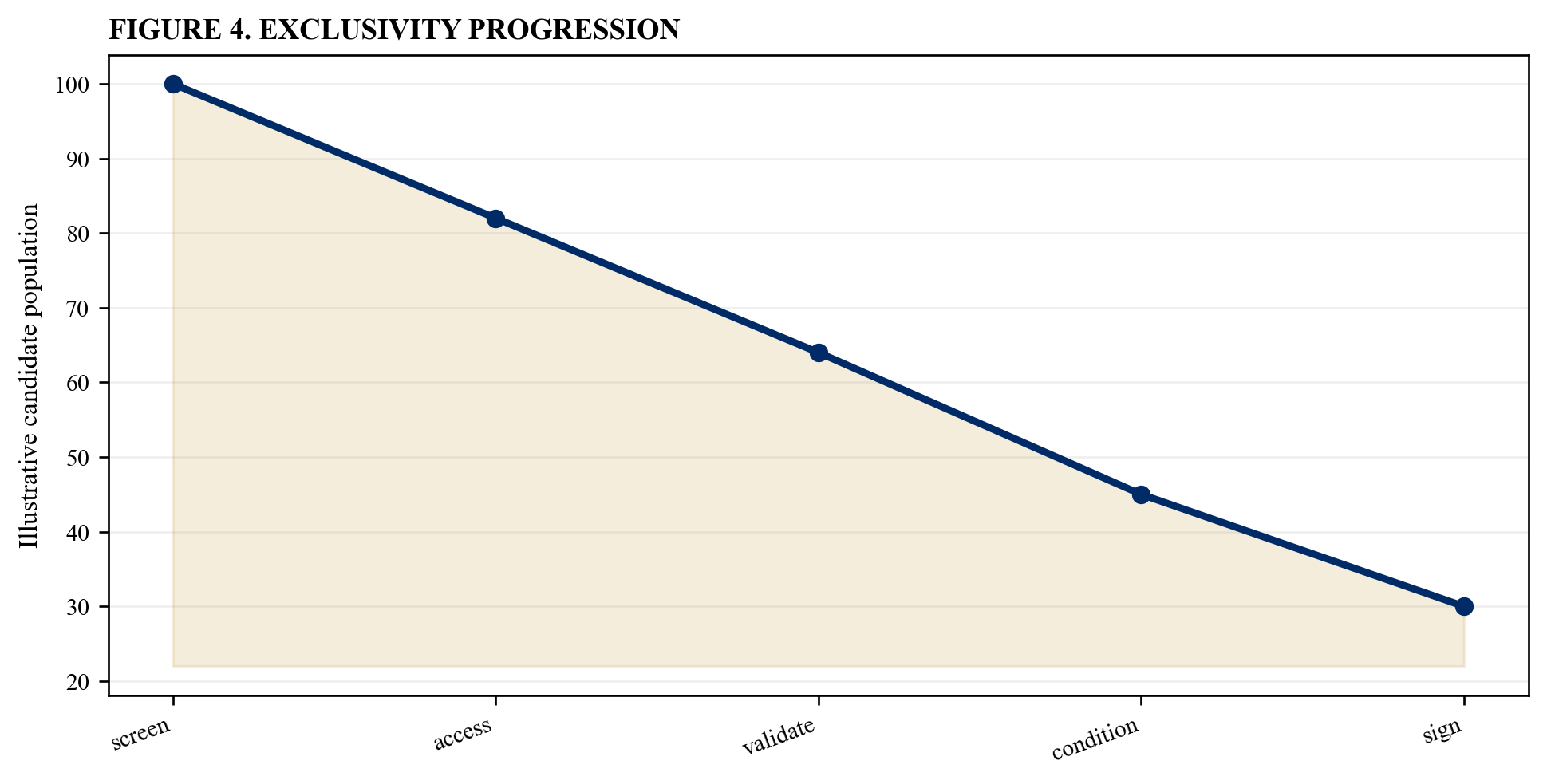
Illustrative analytical scenario; verified evidence should replace index values.
31. Score red flags and evidence quality
The diligence team should rate severity, likelihood, detectability, remediability, source reliability and residual uncertainty. The principal deliverable is a partner-risk scorecard. Define the assertion being tested, the source required, the person responsible, the review standard and the consequence of a gap [4][17].
Triangulate registry records, contracts, policies, transaction data, operating evidence, interviews and independent sources. Record source dates, ownership, contradictions and access limitations. A confident statement from the negotiation team is a lead for verification rather than evidence of performance.
The central failure risk is that colour ratings can hide weak evidence or incomparable judgments. Assess how the issue could affect legality, cash flow, control, continuity, customers, financing, valuation, reputation and exit. Calibrate review depth to exposure, jurisdiction, ownership opacity, public-sector contact, dependency and reversibility.
Translate each material finding into a decision: accept with rationale, obtain more evidence, remediate before signing, protect contractually, reduce dependency, defer exclusivity or stop. Retain the evidence and revisit it on a scheduled date or a defined change event.
32. Design conditions before signing
The diligence team should turn unresolved critical matters into evidence-based conditions with owners and deadlines. The principal deliverable is a conditions register. Define the assertion being tested, the source required, the person responsible, the review standard and the consequence of a gap [1][16].
Triangulate registry records, contracts, policies, transaction data, operating evidence, interviews and independent sources. Record source dates, ownership, contradictions and access limitations. A confident statement from the negotiation team is a lead for verification rather than evidence of performance.
The central failure risk is that commercial momentum can convert known gaps into accepted risk without authority. Assess how the issue could affect legality, cash flow, control, continuity, customers, financing, valuation, reputation and exit. Calibrate review depth to exposure, jurisdiction, ownership opacity, public-sector contact, dependency and reversibility.
Translate each material finding into a decision: accept with rationale, obtain more evidence, remediate before signing, protect contractually, reduce dependency, defer exclusivity or stop. Retain the evidence and revisit it on a scheduled date or a defined change event.
33. Translate risk into contractual protection
The diligence team should use representations, warranties, covenants, audit rights, indemnities, suspension and termination proportionately. The principal deliverable is a contractual mitigation schedule. Define the assertion being tested, the source required, the person responsible, the review standard and the consequence of a gap [8][19].
Triangulate registry records, contracts, policies, transaction data, operating evidence, interviews and independent sources. Record source dates, ownership, contradictions and access limitations. A confident statement from the negotiation team is a lead for verification rather than evidence of performance.
The central failure risk is that generic clauses can fail to address the mechanism by which risk would transmit. Assess how the issue could affect legality, cash flow, control, continuity, customers, financing, valuation, reputation and exit. Calibrate review depth to exposure, jurisdiction, ownership opacity, public-sector contact, dependency and reversibility.
Translate each material finding into a decision: accept with rationale, obtain more evidence, remediate before signing, protect contractually, reduce dependency, defer exclusivity or stop. Retain the evidence and revisit it on a scheduled date or a defined change event.
34. Create a remediation plan
The diligence team should define actions, investment, accountable executives, milestones, testing and consequences for control weaknesses. The principal deliverable is a remediation roadmap. Define the assertion being tested, the source required, the person responsible, the review standard and the consequence of a gap [16][17].
Triangulate registry records, contracts, policies, transaction data, operating evidence, interviews and independent sources. Record source dates, ownership, contradictions and access limitations. A confident statement from the negotiation team is a lead for verification rather than evidence of performance.
The central failure risk is that promises to improve can remain unbudgeted and unverifiable. Assess how the issue could affect legality, cash flow, control, continuity, customers, financing, valuation, reputation and exit. Calibrate review depth to exposure, jurisdiction, ownership opacity, public-sector contact, dependency and reversibility.
Translate each material finding into a decision: accept with rationale, obtain more evidence, remediate before signing, protect contractually, reduce dependency, defer exclusivity or stop. Retain the evidence and revisit it on a scheduled date or a defined change event.
35. Set governance and information rights
The diligence team should align board oversight, reserved matters, reporting, inspection and escalation with the identified risks. The principal deliverable is a risk-linked governance matrix. Define the assertion being tested, the source required, the person responsible, the review standard and the consequence of a gap [1][22].
Triangulate registry records, contracts, policies, transaction data, operating evidence, interviews and independent sources. Record source dates, ownership, contradictions and access limitations. A confident statement from the negotiation team is a lead for verification rather than evidence of performance.
The central failure risk is that governance can remain generic while diligence identifies specific control needs. Assess how the issue could affect legality, cash flow, control, continuity, customers, financing, valuation, reputation and exit. Calibrate review depth to exposure, jurisdiction, ownership opacity, public-sector contact, dependency and reversibility.
Translate each material finding into a decision: accept with rationale, obtain more evidence, remediate before signing, protect contractually, reduce dependency, defer exclusivity or stop. Retain the evidence and revisit it on a scheduled date or a defined change event.
36. Prepare continuity and substitution options
The diligence team should identify alternative suppliers, staff, technology, data, funding and operating routes. The principal deliverable is a dependency-reduction plan. Define the assertion being tested, the source required, the person responsible, the review standard and the consequence of a gap [24][26].
Triangulate registry records, contracts, policies, transaction data, operating evidence, interviews and independent sources. Record source dates, ownership, contradictions and access limitations. A confident statement from the negotiation team is a lead for verification rather than evidence of performance.
The central failure risk is that the venture can become captive to one partner before performance is proven. Assess how the issue could affect legality, cash flow, control, continuity, customers, financing, valuation, reputation and exit. Calibrate review depth to exposure, jurisdiction, ownership opacity, public-sector contact, dependency and reversibility.
Translate each material finding into a decision: accept with rationale, obtain more evidence, remediate before signing, protect contractually, reduce dependency, defer exclusivity or stop. Retain the evidence and revisit it on a scheduled date or a defined change event.
37. Design monitoring triggers
The diligence team should refresh ownership, sanctions, PEP, enforcement, financial, cyber and conduct checks on events and a schedule. The principal deliverable is a continuing-monitoring calendar. Define the assertion being tested, the source required, the person responsible, the review standard and the consequence of a gap [8][10].
Triangulate registry records, contracts, policies, transaction data, operating evidence, interviews and independent sources. Record source dates, ownership, contradictions and access limitations. A confident statement from the negotiation team is a lead for verification rather than evidence of performance.
The central failure risk is that a clean signing-date assessment can become stale as control and conduct change. Assess how the issue could affect legality, cash flow, control, continuity, customers, financing, valuation, reputation and exit. Calibrate review depth to exposure, jurisdiction, ownership opacity, public-sector contact, dependency and reversibility.
Translate each material finding into a decision: accept with rationale, obtain more evidence, remediate before signing, protect contractually, reduce dependency, defer exclusivity or stop. Retain the evidence and revisit it on a scheduled date or a defined change event.
38. Establish incident escalation
The diligence team should define notification, investigation, privilege, regulator contact, containment and decision authority. The principal deliverable is an incident-response protocol. Define the assertion being tested, the source required, the person responsible, the review standard and the consequence of a gap [17][34].
Triangulate registry records, contracts, policies, transaction data, operating evidence, interviews and independent sources. Record source dates, ownership, contradictions and access limitations. A confident statement from the negotiation team is a lead for verification rather than evidence of performance.
The central failure risk is that late disclosure can magnify legal, operational and reputation damage. Assess how the issue could affect legality, cash flow, control, continuity, customers, financing, valuation, reputation and exit. Calibrate review depth to exposure, jurisdiction, ownership opacity, public-sector contact, dependency and reversibility.
Translate each material finding into a decision: accept with rationale, obtain more evidence, remediate before signing, protect contractually, reduce dependency, defer exclusivity or stop. Retain the evidence and revisit it on a scheduled date or a defined change event.
39. Preserve exit readiness
The diligence team should secure data return, IP continuity, customer transition, asset access, records and orderly separation. The principal deliverable is an exit-portability plan. Define the assertion being tested, the source required, the person responsible, the review standard and the consequence of a gap [30][32].
Triangulate registry records, contracts, policies, transaction data, operating evidence, interviews and independent sources. Record source dates, ownership, contradictions and access limitations. A confident statement from the negotiation team is a lead for verification rather than evidence of performance.
The central failure risk is that termination rights can be economically unusable without operational portability. Assess how the issue could affect legality, cash flow, control, continuity, customers, financing, valuation, reputation and exit. Calibrate review depth to exposure, jurisdiction, ownership opacity, public-sector contact, dependency and reversibility.
Translate each material finding into a decision: accept with rationale, obtain more evidence, remediate before signing, protect contractually, reduce dependency, defer exclusivity or stop. Retain the evidence and revisit it on a scheduled date or a defined change event.
40. Issue the partner-risk certificate
The diligence team should record evidence, findings, limitations, mitigations, residual risk, approvals, monitoring and changes. The principal deliverable is an auditable partner-risk certificate. Define the assertion being tested, the source required, the person responsible, the review standard and the consequence of a gap [3][8].
Triangulate registry records, contracts, policies, transaction data, operating evidence, interviews and independent sources. Record source dates, ownership, contradictions and access limitations. A confident statement from the negotiation team is a lead for verification rather than evidence of performance.
The central failure risk is that the decision rationale can disappear while dependency and exposure continue. Assess how the issue could affect legality, cash flow, control, continuity, customers, financing, valuation, reputation and exit. Calibrate review depth to exposure, jurisdiction, ownership opacity, public-sector contact, dependency and reversibility.
Translate each material finding into a decision: accept with rationale, obtain more evidence, remediate before signing, protect contractually, reduce dependency, defer exclusivity or stop. Retain the evidence and revisit it on a scheduled date or a defined change event.
Table 5. Partner-risk certificate
| Conclusion | Evidence | Owner |
|---|---|---|
| identity and control | verified map | legal and compliance |
| capability | test results | operations |
| alignment | economic model | finance and strategy |
| residual risk | mitigation record | approving body |
Illustrative analytical structure; verified transaction evidence and specialist review govern.
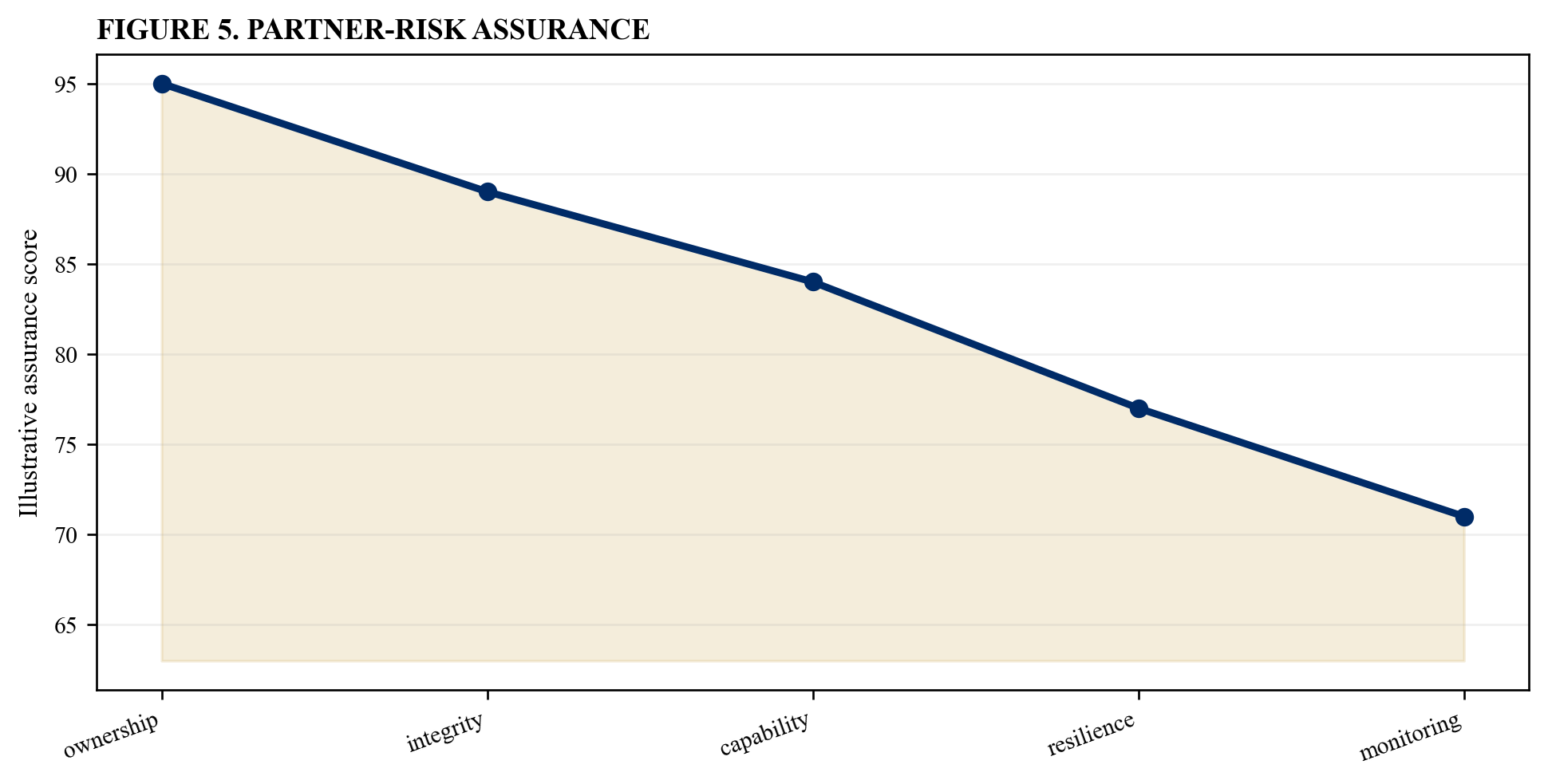
Illustrative analytical scenario; verified evidence should replace index values.
References
- OECD, G20/OECD Principles of Corporate Governance 2023, https://www.oecd.org/en/publications/g20-oecd-principles-of-corporate-governance-2023_ed750b30-en.html
- OECD, Due Diligence Guidance for Responsible Business Conduct, https://www.oecd.org/en/publications/oecd-due-diligence-guidance-for-responsible-business-conduct_15f5f4b3-en.html
- Financial Action Task Force, The FATF Recommendations, https://www.fatf-gafi.org/en/publications/Fatfrecommendations/Fatf-recommendations.html
- Financial Action Task Force, Guidance on Risk-Based Supervision, https://www.fatf-gafi.org/en/publications/Fatfrecommendations/Guidance-rba-supervision.html
- UK Government, Companies Act 2006, https://www.legislation.gov.uk/ukpga/2006/46/contents
- Companies House, People with Significant Control Guidance, https://www.gov.uk/government/collections/people-with-significant-control-psc
- Financial Action Task Force, Guidance on Beneficial Ownership of Legal Persons, https://www.fatf-gafi.org/en/publications/Fatfrecommendations/Guidance-Beneficial-Ownership-Legal-Persons.html
- Office of Financial Sanctions Implementation, UK Financial Sanctions General Guidance, https://www.gov.uk/government/publications/financial-sanctions-general-guidance/uk-financial-sanctions-general-guidance
- Office of Financial Sanctions Implementation, Ownership and Control Public Officials Guidance, https://www.gov.uk/government/publications/ownership-and-control-public-officials-and-control-guidance
- United Nations Security Council, Consolidated Sanctions List, https://main.un.org/securitycouncil/en/content/un-sc-consolidated-list
- Financial Action Task Force, Politically Exposed Persons Recommendations 12 and 22, https://www.fatf-gafi.org/en/publications/Fatfrecommendations/Peps-r12-r22.html
- Wolfsberg Group, Guidance on a Risk Based Approach for Managing Money Laundering Risks, https://wolfsberg-group.org/resources/2019-guidance
- US Department of the Treasury, A Framework for OFAC Compliance Commitments, https://ofac.treasury.gov/system/files/126/framework_ofac_cc.pdf
- World Bank, Listing of Ineligible Firms and Individuals, https://www.worldbank.org/en/projects-operations/procurement/debarred-firms
- European Bank for Reconstruction and Development, Enforcement Policy and Procedures, https://www.ebrd.com/home/who-we-are/strategies-governance-compliance/enforcement-policy-and-procedures.html
- US Department of Justice, Evaluation of Corporate Compliance Programs, https://www.justice.gov/criminal/criminal-fraud/page/file/937501/dl
- UK Ministry of Justice, Bribery Act 2010 Guidance, https://www.gov.uk/government/publications/bribery-act-2010-guidance
- International Finance Corporation, Corporate Governance Methodology, https://www.ifc.org/en/what-we-do/sector-expertise/corporate-governance/cg-methodology-tools
- IFRS Foundation, IAS 24 Related Party Disclosures, https://www.ifrs.org/issued-standards/list-of-standards/ias-24-related-party-disclosures/
- OECD, Transfer Pricing Guidelines 2022, https://www.oecd.org/en/publications/oecd-transfer-pricing-guidelines-for-multinational-enterprises-and-tax-administrations-2022_0e655865-en.html
- International Chamber of Commerce, Third Party Due Diligence Guide for SMEs, https://iccwbo.org/news-publications/policies-reports/icc-anti-corruption-third-party-due-diligence-guide-for-smes/
- IFRS Foundation, IFRS 11 Joint Arrangements, https://www.ifrs.org/issued-standards/list-of-standards/ifrs-11-joint-arrangements/
- International Organization for Standardization, ISO 37301 Compliance Management Systems, https://www.iso.org/standard/75080.html
- International Organization for Standardization, ISO 31000 Risk Management, https://www.iso.org/iso-31000-risk-management.html
- International Organization for Standardization, ISO 37001 Anti-Bribery Management Systems, https://www.iso.org/standard/85817.html
- International Organization for Standardization, ISO 22301 Business Continuity Management Systems, https://www.iso.org/standard/75106.html
- UK Competition and Markets Authority, Collaborating with Other Businesses, https://www.gov.uk/government/publications/collaborating-with-other-businesses
- IFRS Foundation, IFRS 7 Financial Instruments Disclosures, https://www.ifrs.org/issued-standards/list-of-standards/ifrs-7-financial-instruments-disclosures/
- IFRS Foundation, IAS 37 Provisions Contingent Liabilities and Contingent Assets, https://www.ifrs.org/issued-standards/list-of-standards/ias-37-provisions-contingent-liabilities-and-contingent-assets/
- World Intellectual Property Organization, IP Due Diligence Readiness, https://www.wipo.int/en/web/ip-business-moments/ip-due-diligence
- World Intellectual Property Organization, Valuing Intellectual Property Assets, https://www.wipo.int/en/web/business/ip-valuation
- UK Information Commissioner's Office, Data Sharing Code of Practice, https://ico.org.uk/for-organisations/uk-gdpr-guidance-and-resources/data-sharing/data-sharing-a-code-of-practice/
- European Data Protection Board, Guidelines and Recommendations, https://www.edpb.europa.eu/our-work-tools/general-guidance/guidelines-recommendations-best-practices_en
- National Institute of Standards and Technology, Cybersecurity Framework 2.0, https://www.nist.gov/cyberframework
- National Institute of Standards and Technology, Cybersecurity Supply Chain Risk Management Practices, https://csrc.nist.gov/pubs/sp/800/161/r1/final
- National Institute of Standards and Technology, AI Risk Management Framework, https://www.nist.gov/itl/ai-risk-management-framework
- European Commission, Regulatory Framework for Artificial Intelligence, https://digital-strategy.ec.europa.eu/en/policies/regulatory-framework-ai
- OECD, Guidelines for Multinational Enterprises on Responsible Business Conduct, https://www.oecd.org/en/publications/oecd-guidelines-for-multinational-enterprises-on-responsible-business-conduct_81f92357-en.html
- International Labour Organization, Tripartite Declaration of Principles concerning Multinational Enterprises and Social Policy, https://www.ilo.org/empent/areas/mne-declaration/lang--en/index.htm
- United Nations, Guiding Principles on Business and Human Rights, https://www.ohchr.org/documents/publications/guidingprinciplesbusinesshr_en.pdf
