

1. Define the acquisition system
State strategic objective, target model, value levers, geography, holding period and capital constraints.
The controlled record should identify the relevant customer, revenue stream, contract, cohort, relationship owner, commercial dependency, evidence source, baseline, trend, scenario, control, exception, accountable executive, deadline and approval. The immediate deliverable is an acquisition-system charter.
The principal failure occurs when serial acquisition is a strategy by itself. Reviewers should connect the evidence to revenue durability, gross margin, cash conversion, renewal probability, switching behaviour, counterparty credit and transaction value; distinguish contractual protection from observed customer behaviour; and test whether the conclusion survives a downside scenario.
The decision pack for define the acquisition system should state the commercial question, measurement perimeter, historical evidence, customer-specific facts, forecast logic, sensitivity, management action, buyer implication, residual uncertainty and next gate. Material exceptions should flow into the valuation model, quality-of-earnings work, diligence room, sale-process narrative, transaction protections and board reporting.
2. Define platform and bolt-on
Specify the operating, commercial, governance and capability tests for each role.
The controlled record should identify the relevant customer, revenue stream, contract, cohort, relationship owner, commercial dependency, evidence source, baseline, trend, scenario, control, exception, accountable executive, deadline and approval. The immediate deliverable is a role-classification standard.
The principal failure occurs when deal size alone determines transaction role. Reviewers should connect the evidence to revenue durability, gross margin, cash conversion, renewal probability, switching behaviour, counterparty credit and transaction value; distinguish contractual protection from observed customer behaviour; and test whether the conclusion survives a downside scenario.
The decision pack for define platform and bolt-on should state the commercial question, measurement perimeter, historical evidence, customer-specific facts, forecast logic, sensitivity, management action, buyer implication, residual uncertainty and next gate. Material exceptions should flow into the valuation model, quality-of-earnings work, diligence room, sale-process narrative, transaction protections and board reporting.
3. Map the value thesis
Connect market structure, customer value, capabilities, scale and cash generation.
The controlled record should identify the relevant customer, revenue stream, contract, cohort, relationship owner, commercial dependency, evidence source, baseline, trend, scenario, control, exception, accountable executive, deadline and approval. The immediate deliverable is a value-driver tree.
The principal failure occurs when multiple arbitrage is sufficient. Reviewers should connect the evidence to revenue durability, gross margin, cash conversion, renewal probability, switching behaviour, counterparty credit and transaction value; distinguish contractual protection from observed customer behaviour; and test whether the conclusion survives a downside scenario.
The decision pack for map the value thesis should state the commercial question, measurement perimeter, historical evidence, customer-specific facts, forecast logic, sensitivity, management action, buyer implication, residual uncertainty and next gate. Material exceptions should flow into the valuation model, quality-of-earnings work, diligence room, sale-process narrative, transaction protections and board reporting.
4. Set sequence hypotheses
Compare platform-first, capability-first, customer-first and geographic-first pathways.
The controlled record should identify the relevant customer, revenue stream, contract, cohort, relationship owner, commercial dependency, evidence source, baseline, trend, scenario, control, exception, accountable executive, deadline and approval. The immediate deliverable is a sequencing hypothesis register.
The principal failure occurs when one sequence fits every market. Reviewers should connect the evidence to revenue durability, gross margin, cash conversion, renewal probability, switching behaviour, counterparty credit and transaction value; distinguish contractual protection from observed customer behaviour; and test whether the conclusion survives a downside scenario.
The decision pack for set sequence hypotheses should state the commercial question, measurement perimeter, historical evidence, customer-specific facts, forecast logic, sensitivity, management action, buyer implication, residual uncertainty and next gate. Material exceptions should flow into the valuation model, quality-of-earnings work, diligence room, sale-process narrative, transaction protections and board reporting.
5. Assess market structure
Map fragmentation, concentration, substitutes, buyer power and acquisition supply.
The controlled record should identify the relevant customer, revenue stream, contract, cohort, relationship owner, commercial dependency, evidence source, baseline, trend, scenario, control, exception, accountable executive, deadline and approval. The immediate deliverable is a market-structure map.
The principal failure occurs when fragmentation proves roll-up potential. Reviewers should connect the evidence to revenue durability, gross margin, cash conversion, renewal probability, switching behaviour, counterparty credit and transaction value; distinguish contractual protection from observed customer behaviour; and test whether the conclusion survives a downside scenario.
The decision pack for assess market structure should state the commercial question, measurement perimeter, historical evidence, customer-specific facts, forecast logic, sensitivity, management action, buyer implication, residual uncertainty and next gate. Material exceptions should flow into the valuation model, quality-of-earnings work, diligence room, sale-process narrative, transaction protections and board reporting.
6. Assess cumulative competition risk
Evaluate each transaction within the complete acquisition pattern.
The controlled record should identify the relevant customer, revenue stream, contract, cohort, relationship owner, commercial dependency, evidence source, baseline, trend, scenario, control, exception, accountable executive, deadline and approval. The immediate deliverable is a serial-acquisition competition file.
The principal failure occurs when sub-threshold deals have no cumulative consequence. Reviewers should connect the evidence to revenue durability, gross margin, cash conversion, renewal probability, switching behaviour, counterparty credit and transaction value; distinguish contractual protection from observed customer behaviour; and test whether the conclusion survives a downside scenario.
The decision pack for assess cumulative competition risk should state the commercial question, measurement perimeter, historical evidence, customer-specific facts, forecast logic, sensitivity, management action, buyer implication, residual uncertainty and next gate. Material exceptions should flow into the valuation model, quality-of-earnings work, diligence room, sale-process narrative, transaction protections and board reporting.
7. Set geographic perimeter
Compare regulatory, tax, labour, data, currency and operating differences.
The controlled record should identify the relevant customer, revenue stream, contract, cohort, relationship owner, commercial dependency, evidence source, baseline, trend, scenario, control, exception, accountable executive, deadline and approval. The immediate deliverable is a geography sequence map.
The principal failure occurs when adjacent countries integrate naturally. Reviewers should connect the evidence to revenue durability, gross margin, cash conversion, renewal probability, switching behaviour, counterparty credit and transaction value; distinguish contractual protection from observed customer behaviour; and test whether the conclusion survives a downside scenario.
The decision pack for set geographic perimeter should state the commercial question, measurement perimeter, historical evidence, customer-specific facts, forecast logic, sensitivity, management action, buyer implication, residual uncertainty and next gate. Material exceptions should flow into the valuation model, quality-of-earnings work, diligence room, sale-process narrative, transaction protections and board reporting.
8. Define platform requirements
Set minimum leadership, systems, controls, cash flow, brand and integration capacity.
The controlled record should identify the relevant customer, revenue stream, contract, cohort, relationship owner, commercial dependency, evidence source, baseline, trend, scenario, control, exception, accountable executive, deadline and approval. The immediate deliverable is a platform specification.
The principal failure occurs when the largest target is automatically the platform. Reviewers should connect the evidence to revenue durability, gross margin, cash conversion, renewal probability, switching behaviour, counterparty credit and transaction value; distinguish contractual protection from observed customer behaviour; and test whether the conclusion survives a downside scenario.
The decision pack for define platform requirements should state the commercial question, measurement perimeter, historical evidence, customer-specific facts, forecast logic, sensitivity, management action, buyer implication, residual uncertainty and next gate. Material exceptions should flow into the valuation model, quality-of-earnings work, diligence room, sale-process narrative, transaction protections and board reporting.
Table 1. Platform specification
| Dimension | Minimum evidence | Failure signal |
|---|---|---|
| leadership | credible operating depth | founder dependence |
| systems | scalable core stack | manual fragmentation |
| controls | repeatable close and risk | unreconciled exceptions |
| cash | resilient conversion | working-capital volatility |
Illustrative analytical design; company-specific evidence and professional advice govern.
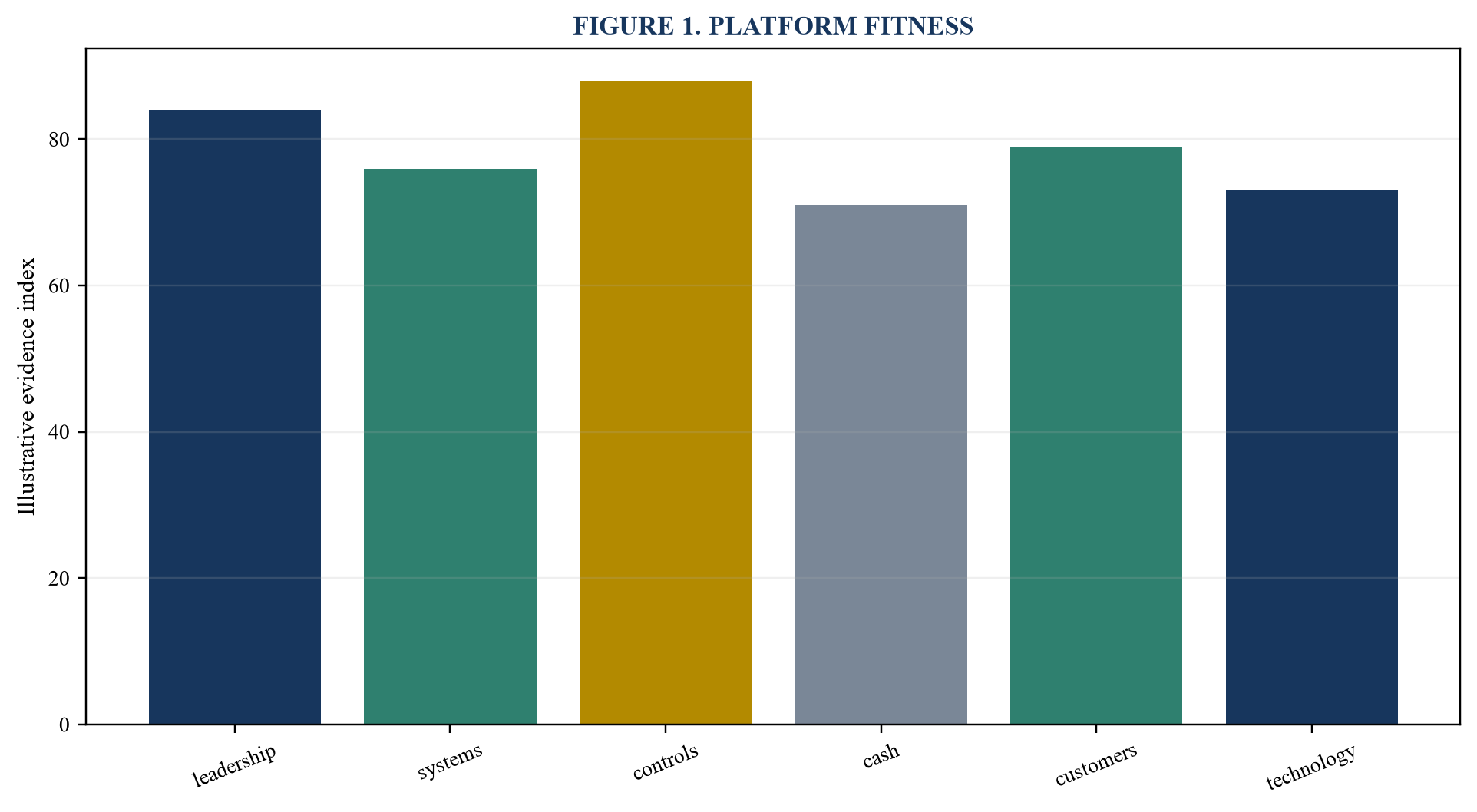
Values are illustrative evidence indices and require company-specific support.
9. Assess platform quality
Test earnings, customers, management, technology, controls and liabilities.
The controlled record should identify the relevant customer, revenue stream, contract, cohort, relationship owner, commercial dependency, evidence source, baseline, trend, scenario, control, exception, accountable executive, deadline and approval. The immediate deliverable is a platform quality scorecard.
The principal failure occurs when headline EBITDA demonstrates platform fitness. Reviewers should connect the evidence to revenue durability, gross margin, cash conversion, renewal probability, switching behaviour, counterparty credit and transaction value; distinguish contractual protection from observed customer behaviour; and test whether the conclusion survives a downside scenario.
The decision pack for assess platform quality should state the commercial question, measurement perimeter, historical evidence, customer-specific facts, forecast logic, sensitivity, management action, buyer implication, residual uncertainty and next gate. Material exceptions should flow into the valuation model, quality-of-earnings work, diligence room, sale-process narrative, transaction protections and board reporting.
10. Assess bolt-on quality
Test adjacency, integration load, synergy, liabilities and standalone resilience.
The controlled record should identify the relevant customer, revenue stream, contract, cohort, relationship owner, commercial dependency, evidence source, baseline, trend, scenario, control, exception, accountable executive, deadline and approval. The immediate deliverable is a bolt-on quality scorecard.
The principal failure occurs when small targets are simple targets. Reviewers should connect the evidence to revenue durability, gross margin, cash conversion, renewal probability, switching behaviour, counterparty credit and transaction value; distinguish contractual protection from observed customer behaviour; and test whether the conclusion survives a downside scenario.
The decision pack for assess bolt-on quality should state the commercial question, measurement perimeter, historical evidence, customer-specific facts, forecast logic, sensitivity, management action, buyer implication, residual uncertainty and next gate. Material exceptions should flow into the valuation model, quality-of-earnings work, diligence room, sale-process narrative, transaction protections and board reporting.
11. Measure integration capacity
Quantify leadership bandwidth, programme resources, systems throughput and change saturation.
The controlled record should identify the relevant customer, revenue stream, contract, cohort, relationship owner, commercial dependency, evidence source, baseline, trend, scenario, control, exception, accountable executive, deadline and approval. The immediate deliverable is an integration-capacity model.
The principal failure occurs when integration capacity expands with deal volume. Reviewers should connect the evidence to revenue durability, gross margin, cash conversion, renewal probability, switching behaviour, counterparty credit and transaction value; distinguish contractual protection from observed customer behaviour; and test whether the conclusion survives a downside scenario.
The decision pack for measure integration capacity should state the commercial question, measurement perimeter, historical evidence, customer-specific facts, forecast logic, sensitivity, management action, buyer implication, residual uncertainty and next gate. Material exceptions should flow into the valuation model, quality-of-earnings work, diligence room, sale-process narrative, transaction protections and board reporting.
12. Map operating-model choices
Choose preservation, federation, absorption or full transformation by capability.
The controlled record should identify the relevant customer, revenue stream, contract, cohort, relationship owner, commercial dependency, evidence source, baseline, trend, scenario, control, exception, accountable executive, deadline and approval. The immediate deliverable is an operating-model decision tree.
The principal failure occurs when full integration always maximises value. Reviewers should connect the evidence to revenue durability, gross margin, cash conversion, renewal probability, switching behaviour, counterparty credit and transaction value; distinguish contractual protection from observed customer behaviour; and test whether the conclusion survives a downside scenario.
The decision pack for map operating-model choices should state the commercial question, measurement perimeter, historical evidence, customer-specific facts, forecast logic, sensitivity, management action, buyer implication, residual uncertainty and next gate. Material exceptions should flow into the valuation model, quality-of-earnings work, diligence room, sale-process narrative, transaction protections and board reporting.
13. Design governance
Allocate board, sponsor, platform and integration authorities.
The controlled record should identify the relevant customer, revenue stream, contract, cohort, relationship owner, commercial dependency, evidence source, baseline, trend, scenario, control, exception, accountable executive, deadline and approval. The immediate deliverable is a decision-rights matrix.
The principal failure occurs when sponsor ownership resolves operating accountability. Reviewers should connect the evidence to revenue durability, gross margin, cash conversion, renewal probability, switching behaviour, counterparty credit and transaction value; distinguish contractual protection from observed customer behaviour; and test whether the conclusion survives a downside scenario.
The decision pack for design governance should state the commercial question, measurement perimeter, historical evidence, customer-specific facts, forecast logic, sensitivity, management action, buyer implication, residual uncertainty and next gate. Material exceptions should flow into the valuation model, quality-of-earnings work, diligence room, sale-process narrative, transaction protections and board reporting.
14. Build the integration backbone
Standardise programme management, data, finance, HR, legal and risk workstreams.
The controlled record should identify the relevant customer, revenue stream, contract, cohort, relationship owner, commercial dependency, evidence source, baseline, trend, scenario, control, exception, accountable executive, deadline and approval. The immediate deliverable is an integration playbook.
The principal failure occurs when each deal should design its own integration process. Reviewers should connect the evidence to revenue durability, gross margin, cash conversion, renewal probability, switching behaviour, counterparty credit and transaction value; distinguish contractual protection from observed customer behaviour; and test whether the conclusion survives a downside scenario.
The decision pack for build the integration backbone should state the commercial question, measurement perimeter, historical evidence, customer-specific facts, forecast logic, sensitivity, management action, buyer implication, residual uncertainty and next gate. Material exceptions should flow into the valuation model, quality-of-earnings work, diligence room, sale-process narrative, transaction protections and board reporting.
15. Design diligence for repeatability
Use a common evidence taxonomy while preserving deal-specific depth.
The controlled record should identify the relevant customer, revenue stream, contract, cohort, relationship owner, commercial dependency, evidence source, baseline, trend, scenario, control, exception, accountable executive, deadline and approval. The immediate deliverable is a repeatable diligence model.
The principal failure occurs when a checklist creates comparable evidence. Reviewers should connect the evidence to revenue durability, gross margin, cash conversion, renewal probability, switching behaviour, counterparty credit and transaction value; distinguish contractual protection from observed customer behaviour; and test whether the conclusion survives a downside scenario.
The decision pack for design diligence for repeatability should state the commercial question, measurement perimeter, historical evidence, customer-specific facts, forecast logic, sensitivity, management action, buyer implication, residual uncertainty and next gate. Material exceptions should flow into the valuation model, quality-of-earnings work, diligence room, sale-process narrative, transaction protections and board reporting.
16. Create data standards
Define entities, customers, products, contracts, employees and financial measures.
The controlled record should identify the relevant customer, revenue stream, contract, cohort, relationship owner, commercial dependency, evidence source, baseline, trend, scenario, control, exception, accountable executive, deadline and approval. The immediate deliverable is a canonical data model.
The principal failure occurs when data can be harmonised after closing. Reviewers should connect the evidence to revenue durability, gross margin, cash conversion, renewal probability, switching behaviour, counterparty credit and transaction value; distinguish contractual protection from observed customer behaviour; and test whether the conclusion survives a downside scenario.
The decision pack for create data standards should state the commercial question, measurement perimeter, historical evidence, customer-specific facts, forecast logic, sensitivity, management action, buyer implication, residual uncertainty and next gate. Material exceptions should flow into the valuation model, quality-of-earnings work, diligence room, sale-process narrative, transaction protections and board reporting.
Table 2. Integration capacity
| Resource | Capacity evidence | Constraint |
|---|---|---|
| leadership | named owners | competing priorities |
| programme | experienced team | deal overlap |
| data | canonical model | poor lineage |
| technology | migration throughput | legacy complexity |
Illustrative analytical design; company-specific evidence and professional advice govern.
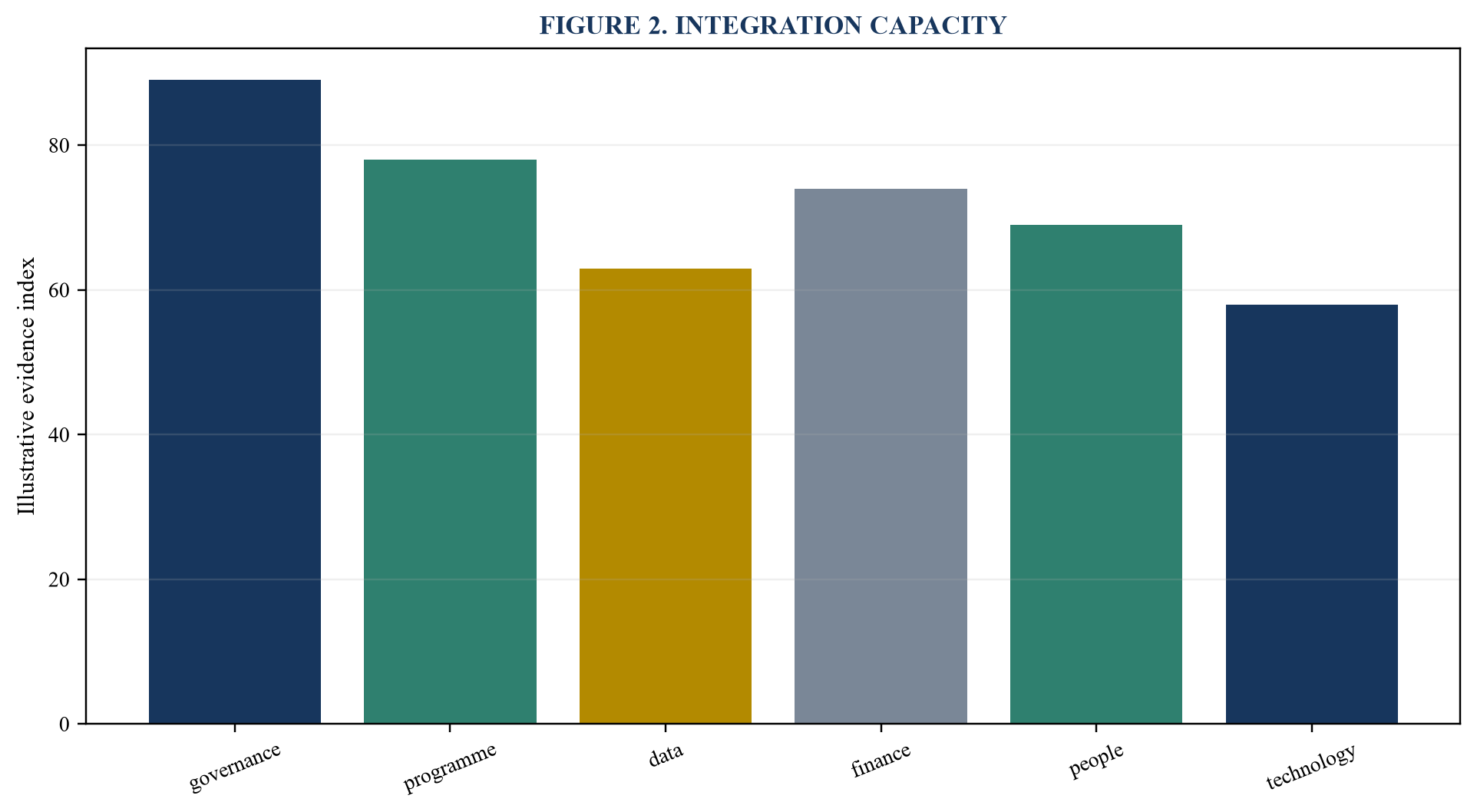
Values are illustrative evidence indices and require company-specific support.
17. Assess technology architecture
Map applications, infrastructure, interfaces, cyber risk and migration paths.
The controlled record should identify the relevant customer, revenue stream, contract, cohort, relationship owner, commercial dependency, evidence source, baseline, trend, scenario, control, exception, accountable executive, deadline and approval. The immediate deliverable is a technology absorption plan.
The principal failure occurs when the platform stack can absorb every target. Reviewers should connect the evidence to revenue durability, gross margin, cash conversion, renewal probability, switching behaviour, counterparty credit and transaction value; distinguish contractual protection from observed customer behaviour; and test whether the conclusion survives a downside scenario.
The decision pack for assess technology architecture should state the commercial question, measurement perimeter, historical evidence, customer-specific facts, forecast logic, sensitivity, management action, buyer implication, residual uncertainty and next gate. Material exceptions should flow into the valuation model, quality-of-earnings work, diligence room, sale-process narrative, transaction protections and board reporting.
18. Assess finance architecture
Align chart of accounts, controls, close, treasury, tax and reporting.
The controlled record should identify the relevant customer, revenue stream, contract, cohort, relationship owner, commercial dependency, evidence source, baseline, trend, scenario, control, exception, accountable executive, deadline and approval. The immediate deliverable is a finance integration design.
The principal failure occurs when consolidation equals integration. Reviewers should connect the evidence to revenue durability, gross margin, cash conversion, renewal probability, switching behaviour, counterparty credit and transaction value; distinguish contractual protection from observed customer behaviour; and test whether the conclusion survives a downside scenario.
The decision pack for assess finance architecture should state the commercial question, measurement perimeter, historical evidence, customer-specific facts, forecast logic, sensitivity, management action, buyer implication, residual uncertainty and next gate. Material exceptions should flow into the valuation model, quality-of-earnings work, diligence room, sale-process narrative, transaction protections and board reporting.
19. Assess people architecture
Identify critical roles, leadership depth, incentives, culture and workforce obligations.
The controlled record should identify the relevant customer, revenue stream, contract, cohort, relationship owner, commercial dependency, evidence source, baseline, trend, scenario, control, exception, accountable executive, deadline and approval. The immediate deliverable is a people-capacity map.
The principal failure occurs when management retention follows ownership change. Reviewers should connect the evidence to revenue durability, gross margin, cash conversion, renewal probability, switching behaviour, counterparty credit and transaction value; distinguish contractual protection from observed customer behaviour; and test whether the conclusion survives a downside scenario.
The decision pack for assess people architecture should state the commercial question, measurement perimeter, historical evidence, customer-specific facts, forecast logic, sensitivity, management action, buyer implication, residual uncertainty and next gate. Material exceptions should flow into the valuation model, quality-of-earnings work, diligence room, sale-process narrative, transaction protections and board reporting.
20. Assess customer architecture
Test overlap, cross-sell, pricing, service continuity and churn risk.
The controlled record should identify the relevant customer, revenue stream, contract, cohort, relationship owner, commercial dependency, evidence source, baseline, trend, scenario, control, exception, accountable executive, deadline and approval. The immediate deliverable is a customer integration thesis.
The principal failure occurs when customer bases combine without friction. Reviewers should connect the evidence to revenue durability, gross margin, cash conversion, renewal probability, switching behaviour, counterparty credit and transaction value; distinguish contractual protection from observed customer behaviour; and test whether the conclusion survives a downside scenario.
The decision pack for assess customer architecture should state the commercial question, measurement perimeter, historical evidence, customer-specific facts, forecast logic, sensitivity, management action, buyer implication, residual uncertainty and next gate. Material exceptions should flow into the valuation model, quality-of-earnings work, diligence room, sale-process narrative, transaction protections and board reporting.
21. Assess commercial architecture
Align brands, propositions, channels, sales coverage and account ownership.
The controlled record should identify the relevant customer, revenue stream, contract, cohort, relationship owner, commercial dependency, evidence source, baseline, trend, scenario, control, exception, accountable executive, deadline and approval. The immediate deliverable is a commercial integration plan.
The principal failure occurs when revenue synergies begin at closing. Reviewers should connect the evidence to revenue durability, gross margin, cash conversion, renewal probability, switching behaviour, counterparty credit and transaction value; distinguish contractual protection from observed customer behaviour; and test whether the conclusion survives a downside scenario.
The decision pack for assess commercial architecture should state the commercial question, measurement perimeter, historical evidence, customer-specific facts, forecast logic, sensitivity, management action, buyer implication, residual uncertainty and next gate. Material exceptions should flow into the valuation model, quality-of-earnings work, diligence room, sale-process narrative, transaction protections and board reporting.
22. Assess supply architecture
Map suppliers, procurement, logistics, resilience and concentration.
The controlled record should identify the relevant customer, revenue stream, contract, cohort, relationship owner, commercial dependency, evidence source, baseline, trend, scenario, control, exception, accountable executive, deadline and approval. The immediate deliverable is a supply synergy map.
The principal failure occurs when purchasing scale converts immediately into savings. Reviewers should connect the evidence to revenue durability, gross margin, cash conversion, renewal probability, switching behaviour, counterparty credit and transaction value; distinguish contractual protection from observed customer behaviour; and test whether the conclusion survives a downside scenario.
The decision pack for assess supply architecture should state the commercial question, measurement perimeter, historical evidence, customer-specific facts, forecast logic, sensitivity, management action, buyer implication, residual uncertainty and next gate. Material exceptions should flow into the valuation model, quality-of-earnings work, diligence room, sale-process narrative, transaction protections and board reporting.
23. Model synergy timing
Separate gross opportunity, implementation cost, timing, leakage and risk.
The controlled record should identify the relevant customer, revenue stream, contract, cohort, relationship owner, commercial dependency, evidence source, baseline, trend, scenario, control, exception, accountable executive, deadline and approval. The immediate deliverable is a synergy cash bridge.
The principal failure occurs when announced synergy equals realised cash. Reviewers should connect the evidence to revenue durability, gross margin, cash conversion, renewal probability, switching behaviour, counterparty credit and transaction value; distinguish contractual protection from observed customer behaviour; and test whether the conclusion survives a downside scenario.
The decision pack for model synergy timing should state the commercial question, measurement perimeter, historical evidence, customer-specific facts, forecast logic, sensitivity, management action, buyer implication, residual uncertainty and next gate. Material exceptions should flow into the valuation model, quality-of-earnings work, diligence room, sale-process narrative, transaction protections and board reporting.
24. Model dis-synergies
Quantify churn, disruption, stranded cost, remediation and management distraction.
The controlled record should identify the relevant customer, revenue stream, contract, cohort, relationship owner, commercial dependency, evidence source, baseline, trend, scenario, control, exception, accountable executive, deadline and approval. The immediate deliverable is a dis-synergy register.
The principal failure occurs when only positive synergies matter. Reviewers should connect the evidence to revenue durability, gross margin, cash conversion, renewal probability, switching behaviour, counterparty credit and transaction value; distinguish contractual protection from observed customer behaviour; and test whether the conclusion survives a downside scenario.
The decision pack for model dis-synergies should state the commercial question, measurement perimeter, historical evidence, customer-specific facts, forecast logic, sensitivity, management action, buyer implication, residual uncertainty and next gate. Material exceptions should flow into the valuation model, quality-of-earnings work, diligence room, sale-process narrative, transaction protections and board reporting.
Table 3. Synergy bridge
| Layer | Evidence | Deduction |
|---|---|---|
| gross opportunity | validated baseline | none |
| delivery cost | resourced plan | cash and expense |
| timing | milestone curve | discount and delay |
| leakage | churn and disruption | risk adjustment |
Illustrative analytical design; company-specific evidence and professional advice govern.
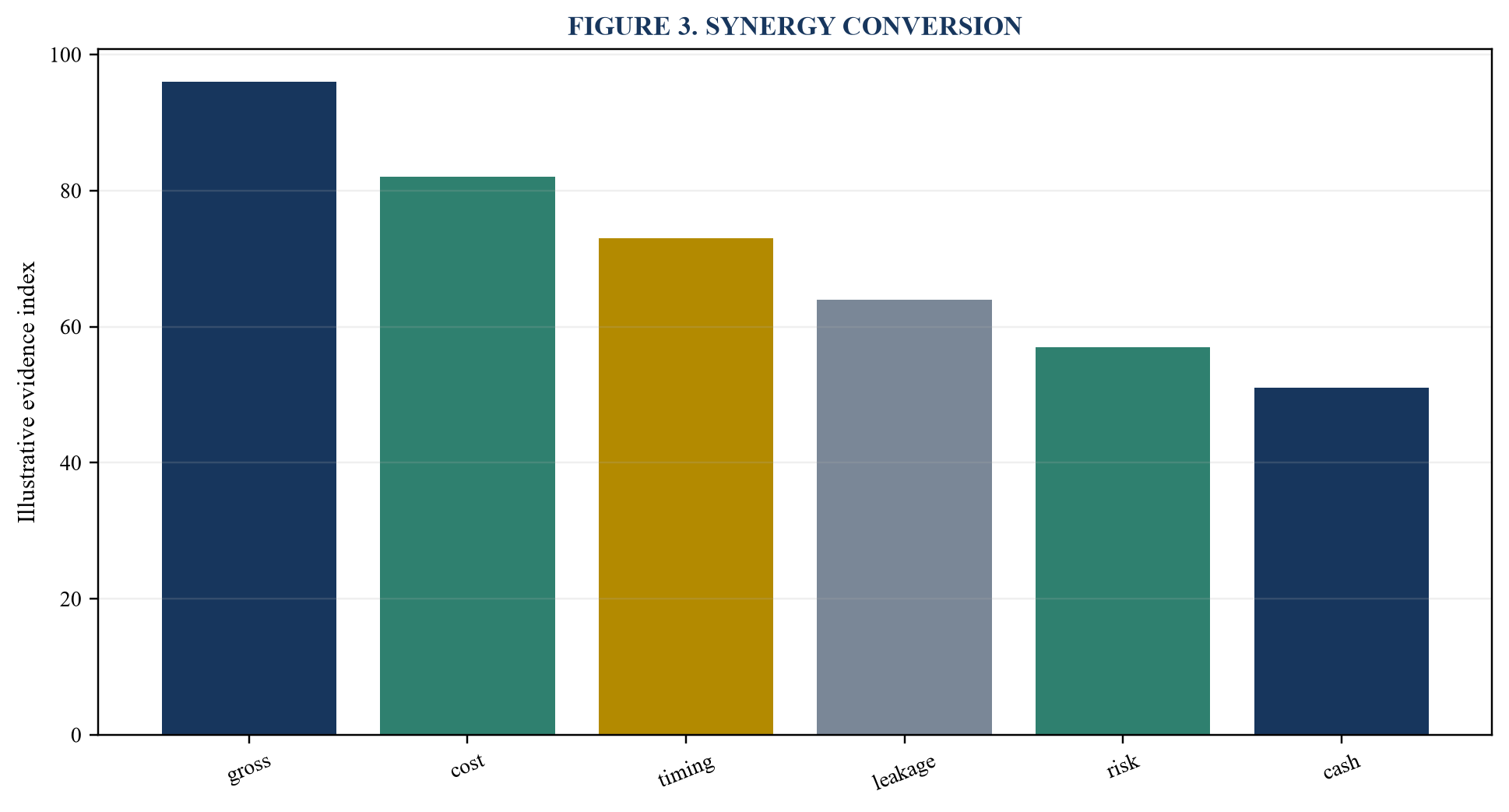
Values are illustrative evidence indices and require company-specific support.
25. Model transaction economics
Integrate price, fees, financing, tax, integration cost, synergies and exit value.
The controlled record should identify the relevant customer, revenue stream, contract, cohort, relationship owner, commercial dependency, evidence source, baseline, trend, scenario, control, exception, accountable executive, deadline and approval. The immediate deliverable is a full-economics model.
The principal failure occurs when entry multiple determines return. Reviewers should connect the evidence to revenue durability, gross margin, cash conversion, renewal probability, switching behaviour, counterparty credit and transaction value; distinguish contractual protection from observed customer behaviour; and test whether the conclusion survives a downside scenario.
The decision pack for model transaction economics should state the commercial question, measurement perimeter, historical evidence, customer-specific facts, forecast logic, sensitivity, management action, buyer implication, residual uncertainty and next gate. Material exceptions should flow into the valuation model, quality-of-earnings work, diligence room, sale-process narrative, transaction protections and board reporting.
26. Set capital allocation limits
Define leverage, liquidity, equity, concentration and return thresholds.
The controlled record should identify the relevant customer, revenue stream, contract, cohort, relationship owner, commercial dependency, evidence source, baseline, trend, scenario, control, exception, accountable executive, deadline and approval. The immediate deliverable is a capital guardrail.
The principal failure occurs when available capital should be fully deployed. Reviewers should connect the evidence to revenue durability, gross margin, cash conversion, renewal probability, switching behaviour, counterparty credit and transaction value; distinguish contractual protection from observed customer behaviour; and test whether the conclusion survives a downside scenario.
The decision pack for set capital allocation limits should state the commercial question, measurement perimeter, historical evidence, customer-specific facts, forecast logic, sensitivity, management action, buyer implication, residual uncertainty and next gate. Material exceptions should flow into the valuation model, quality-of-earnings work, diligence room, sale-process narrative, transaction protections and board reporting.
27. Set pacing constraints
Link pipeline speed to integration capacity, financing and evidence maturity.
The controlled record should identify the relevant customer, revenue stream, contract, cohort, relationship owner, commercial dependency, evidence source, baseline, trend, scenario, control, exception, accountable executive, deadline and approval. The immediate deliverable is a pacing algorithm.
The principal failure occurs when a fixed annual deal target drives discipline. Reviewers should connect the evidence to revenue durability, gross margin, cash conversion, renewal probability, switching behaviour, counterparty credit and transaction value; distinguish contractual protection from observed customer behaviour; and test whether the conclusion survives a downside scenario.
The decision pack for set pacing constraints should state the commercial question, measurement perimeter, historical evidence, customer-specific facts, forecast logic, sensitivity, management action, buyer implication, residual uncertainty and next gate. Material exceptions should flow into the valuation model, quality-of-earnings work, diligence room, sale-process narrative, transaction protections and board reporting.
28. Create readiness gates
Require minimum evidence before signing, closing and commencing the next deal.
The controlled record should identify the relevant customer, revenue stream, contract, cohort, relationship owner, commercial dependency, evidence source, baseline, trend, scenario, control, exception, accountable executive, deadline and approval. The immediate deliverable is a sequence-gate framework.
The principal failure occurs when pipeline scarcity justifies overlapping gates. Reviewers should connect the evidence to revenue durability, gross margin, cash conversion, renewal probability, switching behaviour, counterparty credit and transaction value; distinguish contractual protection from observed customer behaviour; and test whether the conclusion survives a downside scenario.
The decision pack for create readiness gates should state the commercial question, measurement perimeter, historical evidence, customer-specific facts, forecast logic, sensitivity, management action, buyer implication, residual uncertainty and next gate. Material exceptions should flow into the valuation model, quality-of-earnings work, diligence room, sale-process narrative, transaction protections and board reporting.
29. Design a pilot acquisition
Choose a transaction that tests the hardest strategic assumptions at controlled scale.
The controlled record should identify the relevant customer, revenue stream, contract, cohort, relationship owner, commercial dependency, evidence source, baseline, trend, scenario, control, exception, accountable executive, deadline and approval. The immediate deliverable is a pilot-deal specification.
The principal failure occurs when the first deal should maximise immediate EBITDA. Reviewers should connect the evidence to revenue durability, gross margin, cash conversion, renewal probability, switching behaviour, counterparty credit and transaction value; distinguish contractual protection from observed customer behaviour; and test whether the conclusion survives a downside scenario.
The decision pack for design a pilot acquisition should state the commercial question, measurement perimeter, historical evidence, customer-specific facts, forecast logic, sensitivity, management action, buyer implication, residual uncertainty and next gate. Material exceptions should flow into the valuation model, quality-of-earnings work, diligence room, sale-process narrative, transaction protections and board reporting.
30. Plan platform build-before-buy
Identify capabilities that must exist before acquisition volume increases.
The controlled record should identify the relevant customer, revenue stream, contract, cohort, relationship owner, commercial dependency, evidence source, baseline, trend, scenario, control, exception, accountable executive, deadline and approval. The immediate deliverable is a pre-deal build plan.
The principal failure occurs when platform infrastructure can follow the deals. Reviewers should connect the evidence to revenue durability, gross margin, cash conversion, renewal probability, switching behaviour, counterparty credit and transaction value; distinguish contractual protection from observed customer behaviour; and test whether the conclusion survives a downside scenario.
The decision pack for plan platform build-before-buy should state the commercial question, measurement perimeter, historical evidence, customer-specific facts, forecast logic, sensitivity, management action, buyer implication, residual uncertainty and next gate. Material exceptions should flow into the valuation model, quality-of-earnings work, diligence room, sale-process narrative, transaction protections and board reporting.
31. Plan bolt-on-before-platform cases
Define when a capability, licence, geography or customer foothold can precede a platform.
The controlled record should identify the relevant customer, revenue stream, contract, cohort, relationship owner, commercial dependency, evidence source, baseline, trend, scenario, control, exception, accountable executive, deadline and approval. The immediate deliverable is a bolt-on-first exception case.
The principal failure occurs when platform-first is universally safer. Reviewers should connect the evidence to revenue durability, gross margin, cash conversion, renewal probability, switching behaviour, counterparty credit and transaction value; distinguish contractual protection from observed customer behaviour; and test whether the conclusion survives a downside scenario.
The decision pack for plan bolt-on-before-platform cases should state the commercial question, measurement perimeter, historical evidence, customer-specific facts, forecast logic, sensitivity, management action, buyer implication, residual uncertainty and next gate. Material exceptions should flow into the valuation model, quality-of-earnings work, diligence room, sale-process narrative, transaction protections and board reporting.
32. Set management incentives
Align value creation, integration quality, cash and risk with compensation.
The controlled record should identify the relevant customer, revenue stream, contract, cohort, relationship owner, commercial dependency, evidence source, baseline, trend, scenario, control, exception, accountable executive, deadline and approval. The immediate deliverable is an incentive architecture.
The principal failure occurs when deal count is an effective performance measure. Reviewers should connect the evidence to revenue durability, gross margin, cash conversion, renewal probability, switching behaviour, counterparty credit and transaction value; distinguish contractual protection from observed customer behaviour; and test whether the conclusion survives a downside scenario.
The decision pack for set management incentives should state the commercial question, measurement perimeter, historical evidence, customer-specific facts, forecast logic, sensitivity, management action, buyer implication, residual uncertainty and next gate. Material exceptions should flow into the valuation model, quality-of-earnings work, diligence room, sale-process narrative, transaction protections and board reporting.
Table 4. Sequence gates
| Gate | Required proof | Decision |
|---|---|---|
| thesis | falsifiable value case | source |
| capacity | resourced integration | sign |
| readiness | closed dependencies | close |
| stability | benefit and control evidence | next deal |
Illustrative analytical design; company-specific evidence and professional advice govern.
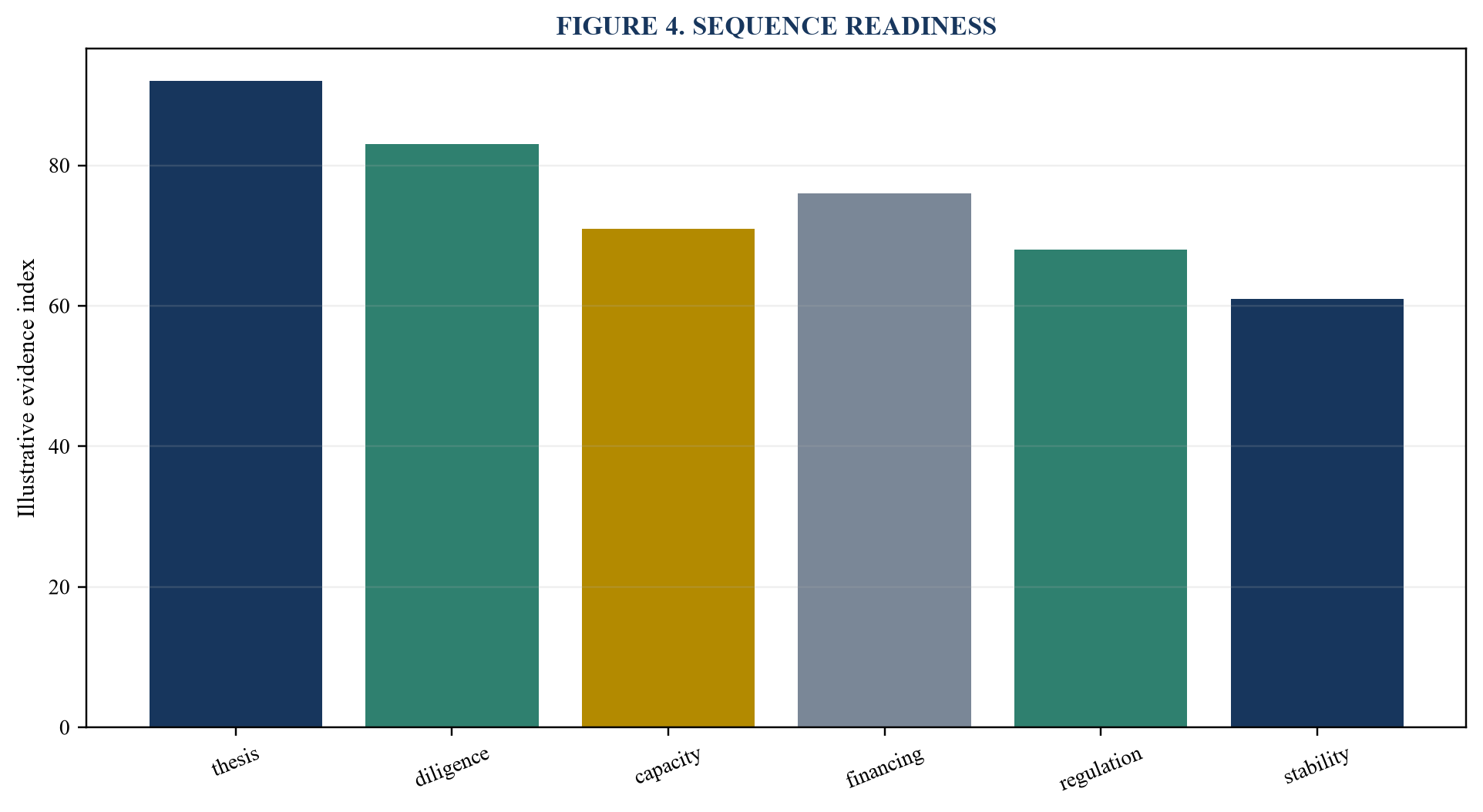
Values are illustrative evidence indices and require company-specific support.
33. Build portfolio reporting
Track value, integration, cash, risk and capacity across the complete programme.
The controlled record should identify the relevant customer, revenue stream, contract, cohort, relationship owner, commercial dependency, evidence source, baseline, trend, scenario, control, exception, accountable executive, deadline and approval. The immediate deliverable is a programme dashboard.
The principal failure occurs when individual deal reports reveal portfolio risk. Reviewers should connect the evidence to revenue durability, gross margin, cash conversion, renewal probability, switching behaviour, counterparty credit and transaction value; distinguish contractual protection from observed customer behaviour; and test whether the conclusion survives a downside scenario.
The decision pack for build portfolio reporting should state the commercial question, measurement perimeter, historical evidence, customer-specific facts, forecast logic, sensitivity, management action, buyer implication, residual uncertainty and next gate. Material exceptions should flow into the valuation model, quality-of-earnings work, diligence room, sale-process narrative, transaction protections and board reporting.
34. Manage accounting consistency
Standardise purchase accounting, goodwill, provisions and measurement-period changes.
The controlled record should identify the relevant customer, revenue stream, contract, cohort, relationship owner, commercial dependency, evidence source, baseline, trend, scenario, control, exception, accountable executive, deadline and approval. The immediate deliverable is an accounting control protocol.
The principal failure occurs when repeat deals remain comparable automatically. Reviewers should connect the evidence to revenue durability, gross margin, cash conversion, renewal probability, switching behaviour, counterparty credit and transaction value; distinguish contractual protection from observed customer behaviour; and test whether the conclusion survives a downside scenario.
The decision pack for manage accounting consistency should state the commercial question, measurement perimeter, historical evidence, customer-specific facts, forecast logic, sensitivity, management action, buyer implication, residual uncertainty and next gate. Material exceptions should flow into the valuation model, quality-of-earnings work, diligence room, sale-process narrative, transaction protections and board reporting.
35. Manage financing dependencies
Align acquisition facilities, covenants, security, refinancing and cash upstreaming.
The controlled record should identify the relevant customer, revenue stream, contract, cohort, relationship owner, commercial dependency, evidence source, baseline, trend, scenario, control, exception, accountable executive, deadline and approval. The immediate deliverable is a financing sequence map.
The principal failure occurs when capital availability is independent of sequence. Reviewers should connect the evidence to revenue durability, gross margin, cash conversion, renewal probability, switching behaviour, counterparty credit and transaction value; distinguish contractual protection from observed customer behaviour; and test whether the conclusion survives a downside scenario.
The decision pack for manage financing dependencies should state the commercial question, measurement perimeter, historical evidence, customer-specific facts, forecast logic, sensitivity, management action, buyer implication, residual uncertainty and next gate. Material exceptions should flow into the valuation model, quality-of-earnings work, diligence room, sale-process narrative, transaction protections and board reporting.
36. Manage regulatory remedies
Translate divestitures, access, licensing and behavioural commitments into the operating model.
The controlled record should identify the relevant customer, revenue stream, contract, cohort, relationship owner, commercial dependency, evidence source, baseline, trend, scenario, control, exception, accountable executive, deadline and approval. The immediate deliverable is a remedy operating plan.
The principal failure occurs when clearance conditions end at closing. Reviewers should connect the evidence to revenue durability, gross margin, cash conversion, renewal probability, switching behaviour, counterparty credit and transaction value; distinguish contractual protection from observed customer behaviour; and test whether the conclusion survives a downside scenario.
The decision pack for manage regulatory remedies should state the commercial question, measurement perimeter, historical evidence, customer-specific facts, forecast logic, sensitivity, management action, buyer implication, residual uncertainty and next gate. Material exceptions should flow into the valuation model, quality-of-earnings work, diligence room, sale-process narrative, transaction protections and board reporting.
37. Test downside resilience
Stress slower integration, lower synergies, higher rates, delayed exits and management loss.
The controlled record should identify the relevant customer, revenue stream, contract, cohort, relationship owner, commercial dependency, evidence source, baseline, trend, scenario, control, exception, accountable executive, deadline and approval. The immediate deliverable is a programme reverse stress.
The principal failure occurs when diversification neutralises programme risk. Reviewers should connect the evidence to revenue durability, gross margin, cash conversion, renewal probability, switching behaviour, counterparty credit and transaction value; distinguish contractual protection from observed customer behaviour; and test whether the conclusion survives a downside scenario.
The decision pack for test downside resilience should state the commercial question, measurement perimeter, historical evidence, customer-specific facts, forecast logic, sensitivity, management action, buyer implication, residual uncertainty and next gate. Material exceptions should flow into the valuation model, quality-of-earnings work, diligence room, sale-process narrative, transaction protections and board reporting.
38. Set stop rules
Define triggers for pausing acquisitions, resetting integration or changing strategy.
The controlled record should identify the relevant customer, revenue stream, contract, cohort, relationship owner, commercial dependency, evidence source, baseline, trend, scenario, control, exception, accountable executive, deadline and approval. The immediate deliverable is a stop-rule register.
The principal failure occurs when momentum should survive adverse evidence. Reviewers should connect the evidence to revenue durability, gross margin, cash conversion, renewal probability, switching behaviour, counterparty credit and transaction value; distinguish contractual protection from observed customer behaviour; and test whether the conclusion survives a downside scenario.
The decision pack for set stop rules should state the commercial question, measurement perimeter, historical evidence, customer-specific facts, forecast logic, sensitivity, management action, buyer implication, residual uncertainty and next gate. Material exceptions should flow into the valuation model, quality-of-earnings work, diligence room, sale-process narrative, transaction protections and board reporting.
39. Create the board sequence decision
Present platform and bolt-on choices against value, capacity, risk and timing.
The controlled record should identify the relevant customer, revenue stream, contract, cohort, relationship owner, commercial dependency, evidence source, baseline, trend, scenario, control, exception, accountable executive, deadline and approval. The immediate deliverable is a sequencing board paper.
The principal failure occurs when the cheapest target should go first. Reviewers should connect the evidence to revenue durability, gross margin, cash conversion, renewal probability, switching behaviour, counterparty credit and transaction value; distinguish contractual protection from observed customer behaviour; and test whether the conclusion survives a downside scenario.
The decision pack for create the board sequence decision should state the commercial question, measurement perimeter, historical evidence, customer-specific facts, forecast logic, sensitivity, management action, buyer implication, residual uncertainty and next gate. Material exceptions should flow into the valuation model, quality-of-earnings work, diligence room, sale-process narrative, transaction protections and board reporting.
40. Institutionalise learning
Convert post-close evidence into target criteria, models, playbooks and pacing.
The controlled record should identify the relevant customer, revenue stream, contract, cohort, relationship owner, commercial dependency, evidence source, baseline, trend, scenario, control, exception, accountable executive, deadline and approval. The immediate deliverable is an acquisition learning loop.
The principal failure occurs when experience accumulates without structured review. Reviewers should connect the evidence to revenue durability, gross margin, cash conversion, renewal probability, switching behaviour, counterparty credit and transaction value; distinguish contractual protection from observed customer behaviour; and test whether the conclusion survives a downside scenario.
The decision pack for institutionalise learning should state the commercial question, measurement perimeter, historical evidence, customer-specific facts, forecast logic, sensitivity, management action, buyer implication, residual uncertainty and next gate. Material exceptions should flow into the valuation model, quality-of-earnings work, diligence room, sale-process narrative, transaction protections and board reporting.
Table 5. Board sequence choice
| Path | Best-fit condition | Principal risk |
|---|---|---|
| platform first | strong scalable core | overpaying for size |
| bolt-on first | controlled capability test | orphan asset |
| build first | capacity deficit | lost timing |
| pause | failed evidence gate | pipeline decay |
Illustrative analytical design; company-specific evidence and professional advice govern.
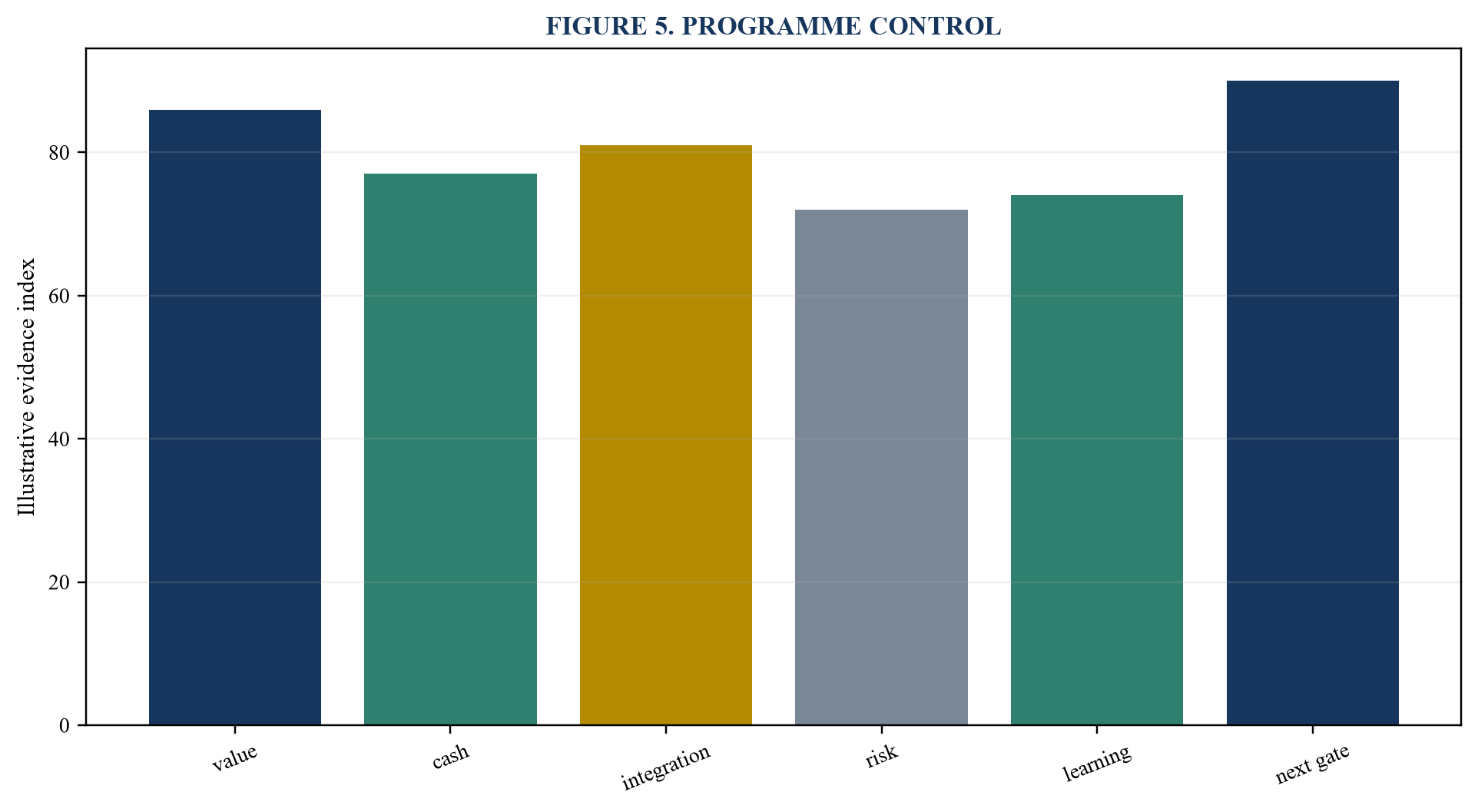
Values are illustrative evidence indices and require company-specific support.
References
- US Department of Justice and Federal Trade Commission, Merger Guidelines Overview, https://www.justice.gov/atr/merger-guidelines/overview
- US Department of Justice, Guideline 8 on a Series of Multiple Acquisitions, https://www.justice.gov/atr/merger-guidelines/applying-merger-guidelines/guideline-8
- US Federal Trade Commission, Hart-Scott-Rodino Act and Rules, https://www.ftc.gov/enforcement/premerger-notification-program
- US Federal Trade Commission, Premerger Notification Rule, https://www.ftc.gov/legal-library/browse/rules/premerger-notification-reporting-waiting-period-requirements
- European Commission, EU Merger Control Overview, https://competition-policy.ec.europa.eu/mergers/overview_en
- European Commission, Merger Control Procedures, https://competition-policy.ec.europa.eu/mergers/procedures_en
- European Commission, Merger Best Practices, https://competition-policy.ec.europa.eu/mergers/legislation/best-practices_en
- European Commission, Review of the Merger Guidelines, https://competition-policy.ec.europa.eu/mergers/review-merger-guidelines_en
- UK Competition and Markets Authority, Merger Assessment Guidelines, https://www.gov.uk/government/publications/merger-assessment-guidelines
- UK Competition and Markets Authority, Merger Remedies Guidance, https://www.gov.uk/government/publications/merger-remedies
- UK Government, National Security and Investment Act Guidance, https://www.gov.uk/government/collections/national-security-and-investment-act
- US Department of the Treasury, CFIUS, https://home.treasury.gov/policy-issues/international/the-committee-on-foreign-investment-in-the-united-states-cfius
- IFRS Foundation, IFRS 3 Business Combinations, https://www.ifrs.org/issued-standards/list-of-standards/ifrs-3-business-combinations/
- IFRS Foundation, IAS 36 Impairment of Assets, https://www.ifrs.org/issued-standards/list-of-standards/ias-36-impairment-of-assets/
- IFRS Foundation, IFRS 8 Operating Segments, https://www.ifrs.org/issued-standards/list-of-standards/ifrs-8-operating-segments/
- IFRS Foundation, IFRS 10 Consolidated Financial Statements, https://www.ifrs.org/issued-standards/list-of-standards/ifrs-10-consolidated-financial-statements/
- IFRS Foundation, IFRS 13 Fair Value Measurement, https://www.ifrs.org/issued-standards/list-of-standards/ifrs-13-fair-value-measurement/
- International Valuation Standards Council, International Valuation Standards, https://ivsc.org/standards/
- OECD, G20/OECD Principles of Corporate Governance, https://www.oecd.org/corporate/principles-corporate-governance/
- OECD, Corporate Bond Markets, https://www.oecd.org/en/topics/corporate-bond-markets.html
- Basel Committee on Banking Supervision, Basel Framework Credit Risk, https://www.bis.org/basel_framework/chapter/CRE/20.htm
- European Banking Authority, Guidelines on Loan Origination and Monitoring, https://www.eba.europa.eu/regulation-and-policy/credit-risk/guidelines-on-loan-origination-and-monitoring
- International Organization for Standardization, ISO 31000 Risk Management, https://www.iso.org/iso-31000-risk-management.html
- International Organization for Standardization, ISO 27001 Information Security, https://www.iso.org/standard/27001
- Committee of Sponsoring Organizations of the Treadway Commission, Enterprise Risk Management, https://www.coso.org/enterprise-risk-management
- Financial Stability Board, Non-Bank Financial Intermediation, https://www.fsb.org/work-of-the-fsb/financial-innovation-and-structural-change/non-bank-financial-intermediation/
