

1. Define the monitoring mandate
State whether monitoring protects investment value, debt service, liquidity, covenants, valuation, exit readiness, regulatory obligations or investor reporting.
Controlled evidence includes fund; asset; instrument; jurisdiction; monitoring objective; decision right; reporting period. The immediate decision is to freeze the monitoring purpose and accountable decision before deploying an agent. Definitions should remain stable across portfolio, investment, credit, legal, operational and financial records.
Monitoring evidence should remain fund-, asset-, instrument-, jurisdiction-, decision- and period-specific. The review should preserve missing reports, failed reconciliations, contradictory sources, overrides, dissent and adverse outcomes.
The operating team and finance team should use the same definitions. Native records should support aggregate dashboards, and sample testing should follow representative cases from input through outcome and cash. Exceptions, failed cases and client concessions remain part of the population. Reconciliation should cover opening and closing balances, acquisitions, disposals, foreign exchange, allocation changes and manual adjustments that could otherwise mimic operating improvement.
2. Map ownership, lending and governance rights
Monitoring should reflect board rights, information rights, consent matters, lender protections, intercreditor terms and contractual remedies.
Controlled evidence includes shareholder agreement; facility agreement; security; covenant; consent; remedy; notice. The immediate decision is to bind every alert and action route to an evidenced right or obligation. Definitions should remain stable across portfolio, investment, credit, legal, operational and financial records.
Finance should distinguish observed performance, funded remediation, management forecast, sponsor plan and agent-generated estimate. Every projected benefit needs timing, full cost, accountable ownership and a route to cash.
Decision makers need both upside and downside. The analysis should state which party controls conversion, what investment remains, when cash appears, which risks survive and whether the result continues after a change of ownership. Unsupported precision should be replaced with bounded scenarios. The committee should record the decision consequence of each range, including price, structure, funding, covenant, integration and monitoring implications.
3. Create the portfolio data contract
Each source needs an owner, delivery channel, definition, frequency, cut-off, permission, quality threshold and failure route.
Controlled evidence includes source; owner; field; definition; frequency; cut-off; permission; exception. The immediate decision is to make expected evidence and delivery failure explicit. Definitions should remain stable across portfolio, investment, credit, legal, operational and financial records.
Investment, portfolio, credit, legal, compliance, valuation, technology and operations teams should use stable identifiers and cut-offs. Material conclusions should be traced from native evidence through case, decision, action and outcome.
The analytical unit should remain stable from source record to valuation conclusion. Reviewers should see the population, exclusions, period, owner and reconciliation to finance. Where evidence is incomplete, the model should retain a range and identify the action needed to narrow it. Comparisons should preserve product, customer, site, complexity and market conditions; aggregation should not conceal adverse cohorts or delayed consequences.
4. Govern the entity and instrument master
Legal entities, funds, holdings, borrowers, guarantors, facilities, tranches, currencies and ownership links should remain effective-date specific.
Controlled evidence includes entity; identifier; relationship; instrument; seniority; currency; effective date; owner. The immediate decision is to prevent metrics and obligations from attaching to the wrong legal or economic unit. Definitions should remain stable across portfolio, investment, credit, legal, operational and financial records.
Decision makers need bounded downside for missing information, stale records, extraction error, false alerts, missed events, confidentiality breach, model drift, provider failure and weak adoption.
Evidence should distinguish observation, estimate, management plan and transaction judgement. A supported claim includes timing, full cost, dependency, transferability and a cash consequence. Sensitivity should show how the conclusion changes when adoption, demand, quality or persistence underperforms. Material assumptions need validation dates, accountable owners and explicit expiry conditions so that stale expectations do not survive into pricing or financing decisions.
5. Control accounting periods and cut-offs
Management accounts, statutory records, ledgers and operational systems may close on different calendars and revision cycles.
Controlled evidence includes period; close date; source version; adjustment; restatement; reviewer; approval. The immediate decision is to preserve comparable periods and expose later revisions. Definitions should remain stable across portfolio, investment, credit, legal, operational and financial records.
Monitoring evidence should remain fund-, asset-, instrument-, jurisdiction-, decision- and period-specific. The review should preserve missing reports, failed reconciliations, contradictory sources, overrides, dissent and adverse outcomes.
The operating team and finance team should use the same definitions. Native records should support aggregate dashboards, and sample testing should follow representative cases from input through outcome and cash. Exceptions, failed cases and client concessions remain part of the population. Reconciliation should cover opening and closing balances, acquisitions, disposals, foreign exchange, allocation changes and manual adjustments that could otherwise mimic operating improvement.
Table 1. Monitoring data contract
| Element | Required evidence | Failure risk |
|---|---|---|
| identity | entity and instrument master | wrong asset or obligation |
| period | cut-off, version and restatement | false trend |
| definition | formula, unit and owner | incomparable metric |
| permission | right, purpose and access | unlawful or restricted use |
Replace illustrative classifications with company-specific evidence and approved transaction treatment.
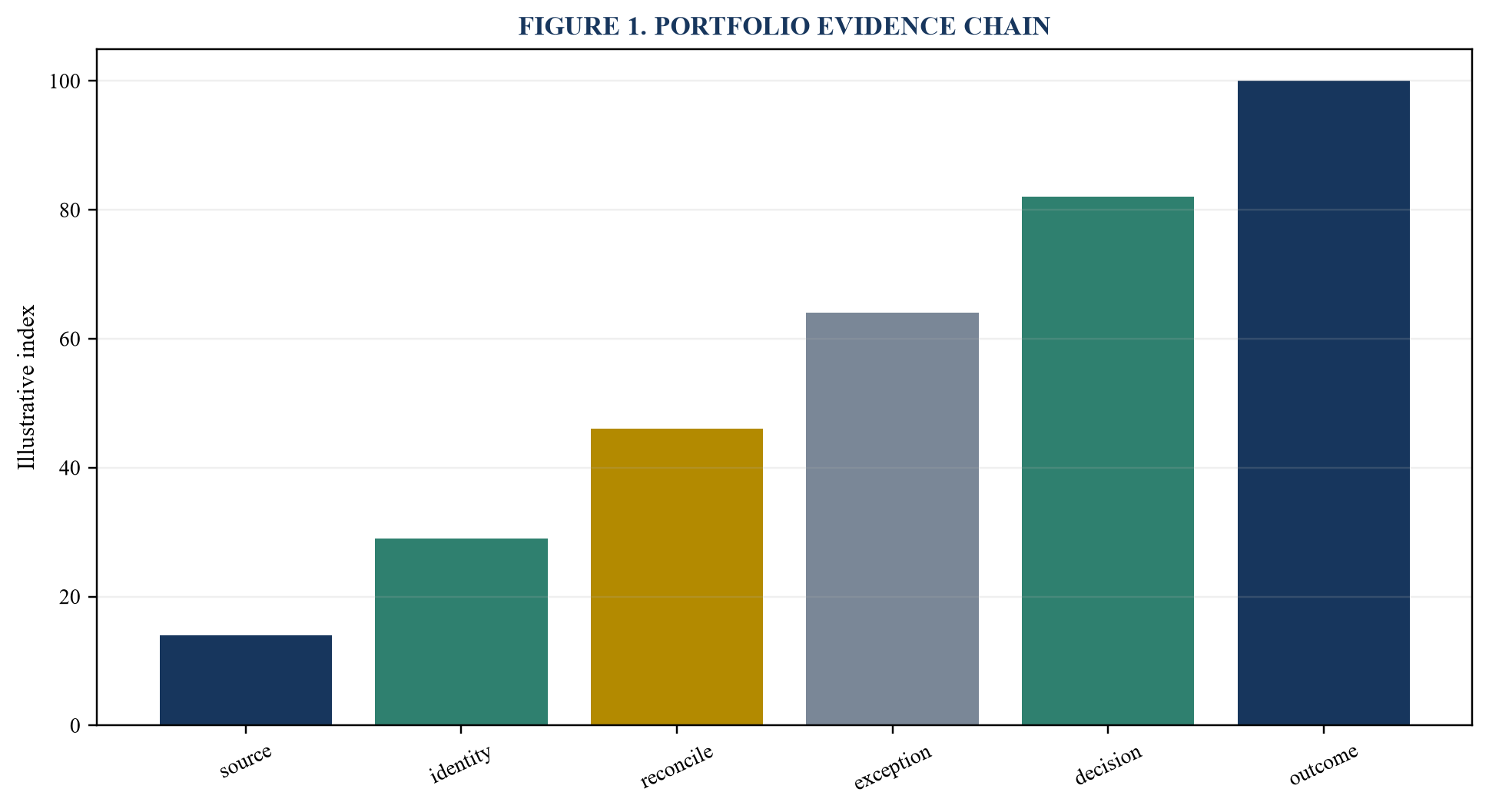
Each exception should remain linked from permitted source through decision and outcome.
6. Reconcile bank, cash and treasury evidence
Cash should be reconciled across bank statements, ledgers, restricted accounts, sweeps, facilities and approved forecasts.
Controlled evidence includes account; bank; currency; balance; restriction; reconciliation; variance; timestamp. The immediate decision is to distinguish accessible liquidity from reported cash. Definitions should remain stable across portfolio, investment, credit, legal, operational and financial records.
Finance should distinguish observed performance, funded remediation, management forecast, sponsor plan and agent-generated estimate. Every projected benefit needs timing, full cost, accountable ownership and a route to cash.
Decision makers need both upside and downside. The analysis should state which party controls conversion, what investment remains, when cash appears, which risks survive and whether the result continues after a change of ownership. Unsupported precision should be replaced with bounded scenarios. The committee should record the decision consequence of each range, including price, structure, funding, covenant, integration and monitoring implications.
7. Maintain the debt and security schedule
Principal, interest, fees, amortisation, maturity, collateral, guarantees, hedges and priority should remain current and traceable.
Controlled evidence includes facility; tranche; lender; principal; pricing; maturity; security; hedge. The immediate decision is to connect financing obligations to liquidity and remedy analysis. Definitions should remain stable across portfolio, investment, credit, legal, operational and financial records.
Investment, portfolio, credit, legal, compliance, valuation, technology and operations teams should use stable identifiers and cut-offs. Material conclusions should be traced from native evidence through case, decision, action and outcome.
The analytical unit should remain stable from source record to valuation conclusion. Reviewers should see the population, exclusions, period, owner and reconciliation to finance. Where evidence is incomplete, the model should retain a range and identify the action needed to narrow it. Comparisons should preserve product, customer, site, complexity and market conditions; aggregation should not conceal adverse cohorts or delayed consequences.
8. Build the covenant graph
Definitions, calculations, test dates, cure rights, baskets, headroom and reporting duties should be represented as linked evidence.
Controlled evidence includes covenant; definition; input; formula; threshold; test date; cure; notice. The immediate decision is to make covenant status reproducible and contract-specific. Definitions should remain stable across portfolio, investment, credit, legal, operational and financial records.
Decision makers need bounded downside for missing information, stale records, extraction error, false alerts, missed events, confidentiality breach, model drift, provider failure and weak adoption.
Evidence should distinguish observation, estimate, management plan and transaction judgement. A supported claim includes timing, full cost, dependency, transferability and a cash consequence. Sensitivity should show how the conclusion changes when adoption, demand, quality or persistence underperforms. Material assumptions need validation dates, accountable owners and explicit expiry conditions so that stale expectations do not survive into pricing or financing decisions.
9. Monitor borrowing bases and eligibility
Receivables, inventory, reserves, concentrations and advance rates require eligibility evidence and reconciliation to finance records.
Controlled evidence includes collateral item; eligibility rule; reserve; concentration; advance rate; certificate; exception. The immediate decision is to identify borrowing-base erosion before liquidity becomes constrained. Definitions should remain stable across portfolio, investment, credit, legal, operational and financial records.
Monitoring evidence should remain fund-, asset-, instrument-, jurisdiction-, decision- and period-specific. The review should preserve missing reports, failed reconciliations, contradictory sources, overrides, dissent and adverse outcomes.
The operating team and finance team should use the same definitions. Native records should support aggregate dashboards, and sample testing should follow representative cases from input through outcome and cash. Exceptions, failed cases and client concessions remain part of the population. Reconciliation should cover opening and closing balances, acquisitions, disposals, foreign exchange, allocation changes and manual adjustments that could otherwise mimic operating improvement.
10. Standardise operating metrics
Operational indicators need stable definitions, source systems, units, cohorts and reconciliation to financial consequences.
Controlled evidence includes metric; definition; unit; source; cohort; frequency; owner; cash link. The immediate decision is to prevent apparent operational improvement from changing definitions. Definitions should remain stable across portfolio, investment, credit, legal, operational and financial records.
Finance should distinguish observed performance, funded remediation, management forecast, sponsor plan and agent-generated estimate. Every projected benefit needs timing, full cost, accountable ownership and a route to cash.
Decision makers need both upside and downside. The analysis should state which party controls conversion, what investment remains, when cash appears, which risks survive and whether the result continues after a change of ownership. Unsupported precision should be replaced with bounded scenarios. The committee should record the decision consequence of each range, including price, structure, funding, covenant, integration and monitoring implications.
11. Detect customer and revenue concentration
Agents should trace customer identity, contract quality, renewal, churn, receivables and margin rather than rely on aggregate revenue.
Controlled evidence includes customer; contract; revenue; margin; renewal; receivable; concentration; change. The immediate decision is to surface dependence and deterioration at the economic-customer level. Definitions should remain stable across portfolio, investment, credit, legal, operational and financial records.
Investment, portfolio, credit, legal, compliance, valuation, technology and operations teams should use stable identifiers and cut-offs. Material conclusions should be traced from native evidence through case, decision, action and outcome.
The analytical unit should remain stable from source record to valuation conclusion. Reviewers should see the population, exclusions, period, owner and reconciliation to finance. Where evidence is incomplete, the model should retain a range and identify the action needed to narrow it. Comparisons should preserve product, customer, site, complexity and market conditions; aggregation should not conceal adverse cohorts or delayed consequences.
12. Detect supplier and input exposure
Critical suppliers, inputs, substitutes and geopolitical dependencies affect continuity and cash.
Controlled evidence includes supplier; input; contract; lead time; price; substitute; payable; disruption. The immediate decision is to connect supply risk to production, margin and liquidity decisions. Definitions should remain stable across portfolio, investment, credit, legal, operational and financial records.
Decision makers need bounded downside for missing information, stale records, extraction error, false alerts, missed events, confidentiality breach, model drift, provider failure and weak adoption.
Evidence should distinguish observation, estimate, management plan and transaction judgement. A supported claim includes timing, full cost, dependency, transferability and a cash consequence. Sensitivity should show how the conclusion changes when adoption, demand, quality or persistence underperforms. Material assumptions need validation dates, accountable owners and explicit expiry conditions so that stale expectations do not survive into pricing or financing decisions.
Table 2. Signal-to-action workflow
| Stage | Agent task | Accountable gate |
|---|---|---|
| ingest | collect and classify | approve source exceptions |
| reconcile | match and calculate | verify material variance |
| triage | rank and draft questions | set materiality and owner |
| act | prepare alternatives | authorised decision and confirmation |
Replace illustrative classifications with company-specific evidence and approved transaction treatment.
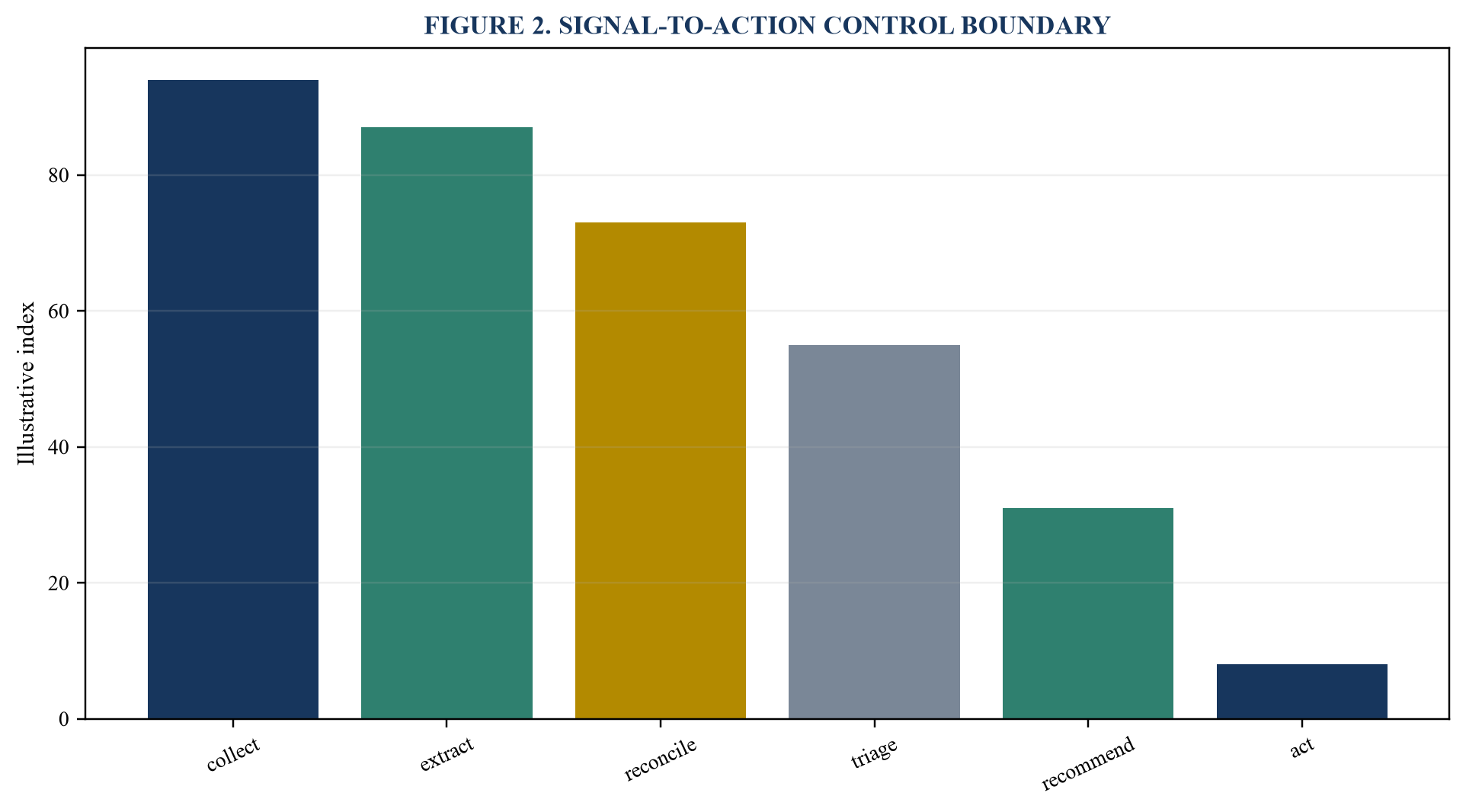
Human authority should increase as financial and contractual consequence rises.
13. Monitor working-capital mechanics
Receivables, inventory, payables, deferred revenue and contract assets should be analysed by ageing, quality and cash conversion.
Controlled evidence includes account; counterparty; ageing; dispute; inventory status; term; cash movement. The immediate decision is to separate accounting growth from funded cash generation. Definitions should remain stable across portfolio, investment, credit, legal, operational and financial records.
Monitoring evidence should remain fund-, asset-, instrument-, jurisdiction-, decision- and period-specific. The review should preserve missing reports, failed reconciliations, contradictory sources, overrides, dissent and adverse outcomes.
The operating team and finance team should use the same definitions. Native records should support aggregate dashboards, and sample testing should follow representative cases from input through outcome and cash. Exceptions, failed cases and client concessions remain part of the population. Reconciliation should cover opening and closing balances, acquisitions, disposals, foreign exchange, allocation changes and manual adjustments that could otherwise mimic operating improvement.
14. Build the liquidity runway
Base, downside and severe cases should connect cash, facilities, covenants, capex, taxes, distributions and management actions.
Controlled evidence includes opening liquidity; inflow; outflow; facility; covenant; action; timing; minimum. The immediate decision is to show when intervention is needed and what funding remains available. Definitions should remain stable across portfolio, investment, credit, legal, operational and financial records.
Finance should distinguish observed performance, funded remediation, management forecast, sponsor plan and agent-generated estimate. Every projected benefit needs timing, full cost, accountable ownership and a route to cash.
Decision makers need both upside and downside. The analysis should state which party controls conversion, what investment remains, when cash appears, which risks survive and whether the result continues after a change of ownership. Unsupported precision should be replaced with bounded scenarios. The committee should record the decision consequence of each range, including price, structure, funding, covenant, integration and monitoring implications.
15. Challenge forecasts and management cases
Forecasts should retain versions, owners, assumptions, evidence, variances and approved actions by period.
Controlled evidence includes forecast; driver; assumption; version; owner; variance; explanation; action. The immediate decision is to identify whether misses are timing, execution, market or structural. Definitions should remain stable across portfolio, investment, credit, legal, operational and financial records.
Investment, portfolio, credit, legal, compliance, valuation, technology and operations teams should use stable identifiers and cut-offs. Material conclusions should be traced from native evidence through case, decision, action and outcome.
The analytical unit should remain stable from source record to valuation conclusion. Reviewers should see the population, exclusions, period, owner and reconciliation to finance. Where evidence is incomplete, the model should retain a range and identify the action needed to narrow it. Comparisons should preserve product, customer, site, complexity and market conditions; aggregation should not conceal adverse cohorts or delayed consequences.
16. Connect monitoring to private-asset valuation
Valuation updates should distinguish observed transactions, calibrated inputs, company forecasts, market evidence and committee judgment.
Controlled evidence includes valuation date; method; input; calibration; comparable; adjustment; reviewer; conclusion. The immediate decision is to make monitoring evidence visible in fair-value and exit-value decisions. Definitions should remain stable across portfolio, investment, credit, legal, operational and financial records.
Decision makers need bounded downside for missing information, stale records, extraction error, false alerts, missed events, confidentiality breach, model drift, provider failure and weak adoption.
Evidence should distinguish observation, estimate, management plan and transaction judgement. A supported claim includes timing, full cost, dependency, transferability and a cash consequence. Sensitivity should show how the conclusion changes when adoption, demand, quality or persistence underperforms. Material assumptions need validation dates, accountable owners and explicit expiry conditions so that stale expectations do not survive into pricing or financing decisions.
17. Identify credit deterioration
Payment behaviour, covenant headroom, leverage, interest coverage, liquidity, collateral and sponsor support should be assessed together.
Controlled evidence includes obligation; payment; leverage; coverage; headroom; collateral; support; trend. The immediate decision is to route early deterioration into a documented credit response. Definitions should remain stable across portfolio, investment, credit, legal, operational and financial records.
Monitoring evidence should remain fund-, asset-, instrument-, jurisdiction-, decision- and period-specific. The review should preserve missing reports, failed reconciliations, contradictory sources, overrides, dissent and adverse outcomes.
The operating team and finance team should use the same definitions. Native records should support aggregate dashboards, and sample testing should follow representative cases from input through outcome and cash. Exceptions, failed cases and client concessions remain part of the population. Reconciliation should cover opening and closing balances, acquisitions, disposals, foreign exchange, allocation changes and manual adjustments that could otherwise mimic operating improvement.
18. Use external signals with discipline
News, filings, sanctions, litigation, ratings, web data and market prices require identity resolution, authority and corroboration.
Controlled evidence includes event; source; entity; date; authority; corroboration; materiality; reviewer. The immediate decision is to prevent noisy external data from becoming unsupported portfolio action. Definitions should remain stable across portfolio, investment, credit, legal, operational and financial records.
Finance should distinguish observed performance, funded remediation, management forecast, sponsor plan and agent-generated estimate. Every projected benefit needs timing, full cost, accountable ownership and a route to cash.
Decision makers need both upside and downside. The analysis should state which party controls conversion, what investment remains, when cash appears, which risks survive and whether the result continues after a change of ownership. Unsupported precision should be replaced with bounded scenarios. The committee should record the decision consequence of each range, including price, structure, funding, covenant, integration and monitoring implications.
19. Escalate cyber and operational events
Incidents should connect affected assets, service interruption, legal duties, insurance, remediation, customers and cash.
Controlled evidence includes incident; asset; severity; downtime; obligation; cost; recovery; closure. The immediate decision is to translate operational events into investment and credit consequences. Definitions should remain stable across portfolio, investment, credit, legal, operational and financial records.
Investment, portfolio, credit, legal, compliance, valuation, technology and operations teams should use stable identifiers and cut-offs. Material conclusions should be traced from native evidence through case, decision, action and outcome.
The analytical unit should remain stable from source record to valuation conclusion. Reviewers should see the population, exclusions, period, owner and reconciliation to finance. Where evidence is incomplete, the model should retain a range and identify the action needed to narrow it. Comparisons should preserve product, customer, site, complexity and market conditions; aggregation should not conceal adverse cohorts or delayed consequences.
20. Govern sustainability and regulatory evidence
Environmental, social and governance metrics should follow applicable mandates, definitions, sources and disclosure obligations.
Controlled evidence includes metric; methodology; source; boundary; period; assurance; obligation; exception. The immediate decision is to retain decision-useful evidence without unsupported sustainability claims. Definitions should remain stable across portfolio, investment, credit, legal, operational and financial records.
Decision makers need bounded downside for missing information, stale records, extraction error, false alerts, missed events, confidentiality breach, model drift, provider failure and weak adoption.
Evidence should distinguish observation, estimate, management plan and transaction judgement. A supported claim includes timing, full cost, dependency, transferability and a cash consequence. Sensitivity should show how the conclusion changes when adoption, demand, quality or persistence underperforms. Material assumptions need validation dates, accountable owners and explicit expiry conditions so that stale expectations do not survive into pricing or financing decisions.
Table 3. Portfolio exception register
| Exception | Evidence | Decision route |
|---|---|---|
| liquidity | bank, ledger and forecast | treasury and investment committee |
| covenant | contract, inputs and calculation | credit and legal review |
| valuation | company and market evidence | valuation committee |
| operations | incident and cash consequence | board and portfolio team |
Replace illustrative classifications with company-specific evidence and approved transaction treatment.
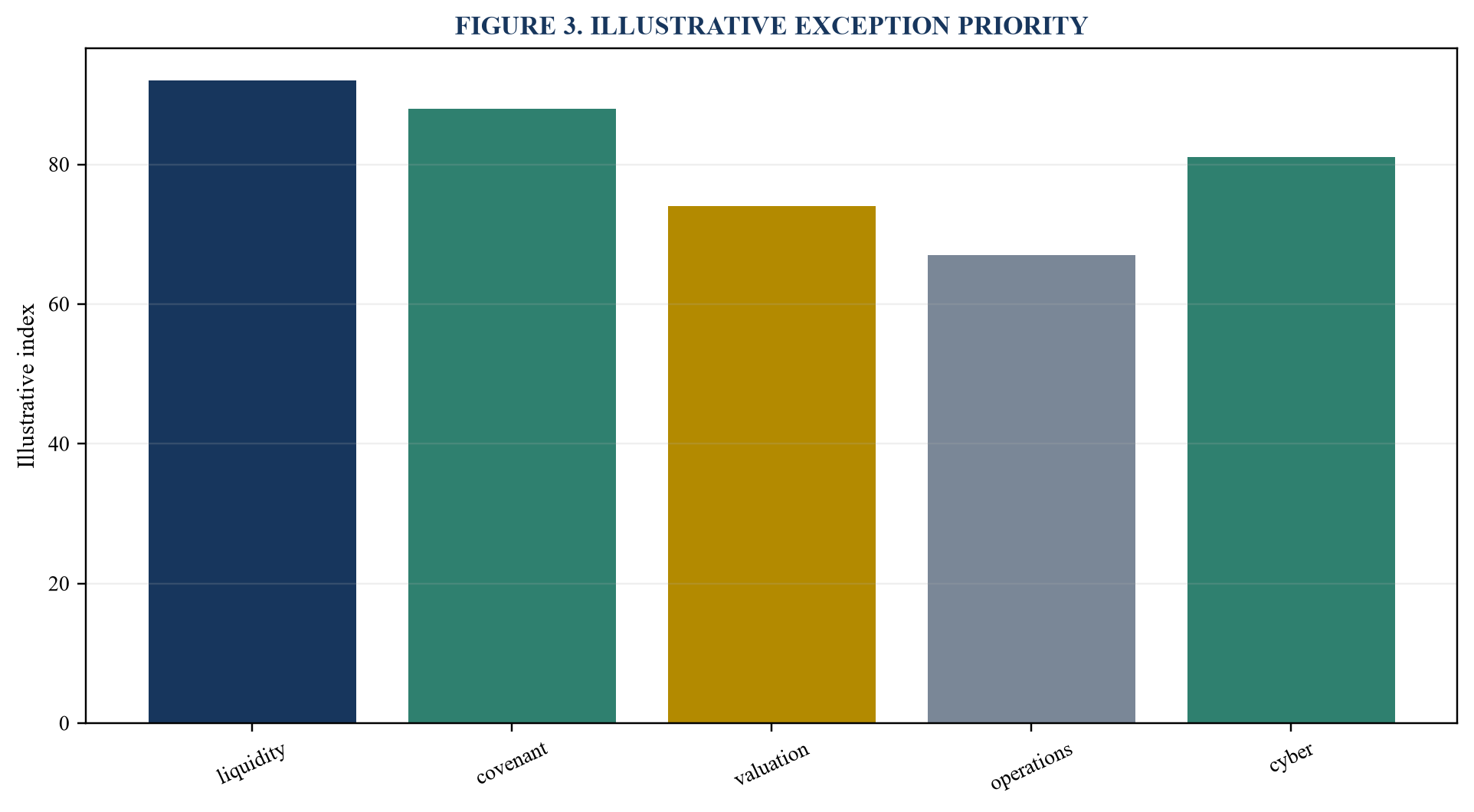
Replace indices with fund-, asset- and instrument-specific evidence.
21. Structure management communications
Board packs, calls, emails and explanations should be captured with speaker, date, claim, evidence, challenge and follow-up.
Controlled evidence includes communication; speaker; date; claim; source; inconsistency; question; response. The immediate decision is to preserve management insight without treating assertion as proof. Definitions should remain stable across portfolio, investment, credit, legal, operational and financial records.
Monitoring evidence should remain fund-, asset-, instrument-, jurisdiction-, decision- and period-specific. The review should preserve missing reports, failed reconciliations, contradictory sources, overrides, dissent and adverse outcomes.
The operating team and finance team should use the same definitions. Native records should support aggregate dashboards, and sample testing should follow representative cases from input through outcome and cash. Exceptions, failed cases and client concessions remain part of the population. Reconciliation should cover opening and closing balances, acquisitions, disposals, foreign exchange, allocation changes and manual adjustments that could otherwise mimic operating improvement.
22. Validate document intelligence
Agents extracting from accounts, certificates, contracts and presentations need field-level tests for tables, units, dates and amendments.
Controlled evidence includes document; version; field; location; value; unit; confidence; reviewer. The immediate decision is to measure extraction at the point of financial and contractual consequence. Definitions should remain stable across portfolio, investment, credit, legal, operational and financial records.
Finance should distinguish observed performance, funded remediation, management forecast, sponsor plan and agent-generated estimate. Every projected benefit needs timing, full cost, accountable ownership and a route to cash.
Decision makers need both upside and downside. The analysis should state which party controls conversion, what investment remains, when cash appears, which risks survive and whether the result continues after a change of ownership. Unsupported precision should be replaced with bounded scenarios. The committee should record the decision consequence of each range, including price, structure, funding, covenant, integration and monitoring implications.
23. Engineer portfolio retrieval
Retrieval should preserve permissions, entity scope, version, period, citation location, contradictions and stale-data rules.
Controlled evidence includes query; corpus; permission; result; citation; version; conflict; expiry. The immediate decision is to return evidence that a reviewer can verify in context. Definitions should remain stable across portfolio, investment, credit, legal, operational and financial records.
Investment, portfolio, credit, legal, compliance, valuation, technology and operations teams should use stable identifiers and cut-offs. Material conclusions should be traced from native evidence through case, decision, action and outcome.
The analytical unit should remain stable from source record to valuation conclusion. Reviewers should see the population, exclusions, period, owner and reconciliation to finance. Where evidence is incomplete, the model should retain a range and identify the action needed to narrow it. Comparisons should preserve product, customer, site, complexity and market conditions; aggregation should not conceal adverse cohorts or delayed consequences.
24. Define agent roles and boundaries
Specify whether an agent collects, extracts, reconciles, calculates, detects, drafts, routes or recommends.
Controlled evidence includes agent; task; input; output; permission; tool; reviewer; prohibited action. The immediate decision is to bound automation to an approved monitoring responsibility. Definitions should remain stable across portfolio, investment, credit, legal, operational and financial records.
Decision makers need bounded downside for missing information, stale records, extraction error, false alerts, missed events, confidentiality breach, model drift, provider failure and weak adoption.
Evidence should distinguish observation, estimate, management plan and transaction judgement. A supported claim includes timing, full cost, dependency, transferability and a cash consequence. Sensitivity should show how the conclusion changes when adoption, demand, quality or persistence underperforms. Material assumptions need validation dates, accountable owners and explicit expiry conditions so that stale expectations do not survive into pricing or financing decisions.
25. Prohibit unauthorised portfolio action
Agents should not release funds, contact counterparties, waive rights, amend forecasts, certify covenants or publish valuations without authority.
Controlled evidence includes action; decision right; approver; condition; instruction; confirmation; override. The immediate decision is to separate monitoring assistance from fiduciary and contractual action. Definitions should remain stable across portfolio, investment, credit, legal, operational and financial records.
Monitoring evidence should remain fund-, asset-, instrument-, jurisdiction-, decision- and period-specific. The review should preserve missing reports, failed reconciliations, contradictory sources, overrides, dissent and adverse outcomes.
The operating team and finance team should use the same definitions. Native records should support aggregate dashboards, and sample testing should follow representative cases from input through outcome and cash. Exceptions, failed cases and client concessions remain part of the population. Reconciliation should cover opening and closing balances, acquisitions, disposals, foreign exchange, allocation changes and manual adjustments that could otherwise mimic operating improvement.
26. Design exceptions rather than alerts
A useful exception shows source, failed expectation, calculation, consequence, owner, deadline, permitted response and closure test.
Controlled evidence includes exception; evidence; threshold; materiality; owner; SLA; action; closure. The immediate decision is to reduce alert volume while preserving decision-critical events. Definitions should remain stable across portfolio, investment, credit, legal, operational and financial records.
Finance should distinguish observed performance, funded remediation, management forecast, sponsor plan and agent-generated estimate. Every projected benefit needs timing, full cost, accountable ownership and a route to cash.
Decision makers need both upside and downside. The analysis should state which party controls conversion, what investment remains, when cash appears, which risks survive and whether the result continues after a change of ownership. Unsupported precision should be replaced with bounded scenarios. The committee should record the decision consequence of each range, including price, structure, funding, covenant, integration and monitoring implications.
27. Calibrate materiality and urgency
Thresholds should reflect value, liquidity, covenant, safety, legal, reputational and timing consequences.
Controlled evidence includes metric; threshold; horizon; consequence; probability treatment; escalation; approver. The immediate decision is to direct scarce attention according to decision consequence. Definitions should remain stable across portfolio, investment, credit, legal, operational and financial records.
Investment, portfolio, credit, legal, compliance, valuation, technology and operations teams should use stable identifiers and cut-offs. Material conclusions should be traced from native evidence through case, decision, action and outcome.
The analytical unit should remain stable from source record to valuation conclusion. Reviewers should see the population, exclusions, period, owner and reconciliation to finance. Where evidence is incomplete, the model should retain a range and identify the action needed to narrow it. Comparisons should preserve product, customer, site, complexity and market conditions; aggregation should not conceal adverse cohorts or delayed consequences.
28. Create an accountable case workflow
Questions, evidence requests, analyses, decisions, actions and closures should remain linked within one case record.
Controlled evidence includes case; issue; evidence; question; response; decision; action; outcome. The immediate decision is to prevent material exceptions from disappearing across email and meetings. Definitions should remain stable across portfolio, investment, credit, legal, operational and financial records.
Decision makers need bounded downside for missing information, stale records, extraction error, false alerts, missed events, confidentiality breach, model drift, provider failure and weak adoption.
Evidence should distinguish observation, estimate, management plan and transaction judgement. A supported claim includes timing, full cost, dependency, transferability and a cash consequence. Sensitivity should show how the conclusion changes when adoption, demand, quality or persistence underperforms. Material assumptions need validation dates, accountable owners and explicit expiry conditions so that stale expectations do not survive into pricing or financing decisions.
29. Build the portfolio heat map
Cross-portfolio views should retain asset-level definitions, ranges, confidence, missing data and drill-through evidence.
Controlled evidence includes asset; metric; period; band; confidence; exception; owner; link. The immediate decision is to support comparison without concealing local facts and uncertainty. Definitions should remain stable across portfolio, investment, credit, legal, operational and financial records.
Monitoring evidence should remain fund-, asset-, instrument-, jurisdiction-, decision- and period-specific. The review should preserve missing reports, failed reconciliations, contradictory sources, overrides, dissent and adverse outcomes.
The operating team and finance team should use the same definitions. Native records should support aggregate dashboards, and sample testing should follow representative cases from input through outcome and cash. Exceptions, failed cases and client concessions remain part of the population. Reconciliation should cover opening and closing balances, acquisitions, disposals, foreign exchange, allocation changes and manual adjustments that could otherwise mimic operating improvement.
30. Design committee governance
Portfolio-review and valuation committees need evidence, counter-evidence, unresolved issues, decisions, conditions and minutes.
Controlled evidence includes committee; paper; issue; source; challenge; decision; condition; minute. The immediate decision is to make governance and challenge independently reviewable. Definitions should remain stable across portfolio, investment, credit, legal, operational and financial records.
Finance should distinguish observed performance, funded remediation, management forecast, sponsor plan and agent-generated estimate. Every projected benefit needs timing, full cost, accountable ownership and a route to cash.
Decision makers need both upside and downside. The analysis should state which party controls conversion, what investment remains, when cash appears, which risks survive and whether the result continues after a change of ownership. Unsupported precision should be replaced with bounded scenarios. The committee should record the decision consequence of each range, including price, structure, funding, covenant, integration and monitoring implications.
Table 4. Equity and credit decision differences
| Issue | Private equity emphasis | Private credit emphasis |
|---|---|---|
| governance | board and value-creation rights | contract and lender rights |
| liquidity | funding and exit flexibility | debt service and availability |
| downside | value preservation and control | collateral, priority and remedy |
| action | operating intervention | waiver, cure or enforcement |
Replace illustrative classifications with company-specific evidence and approved transaction treatment.
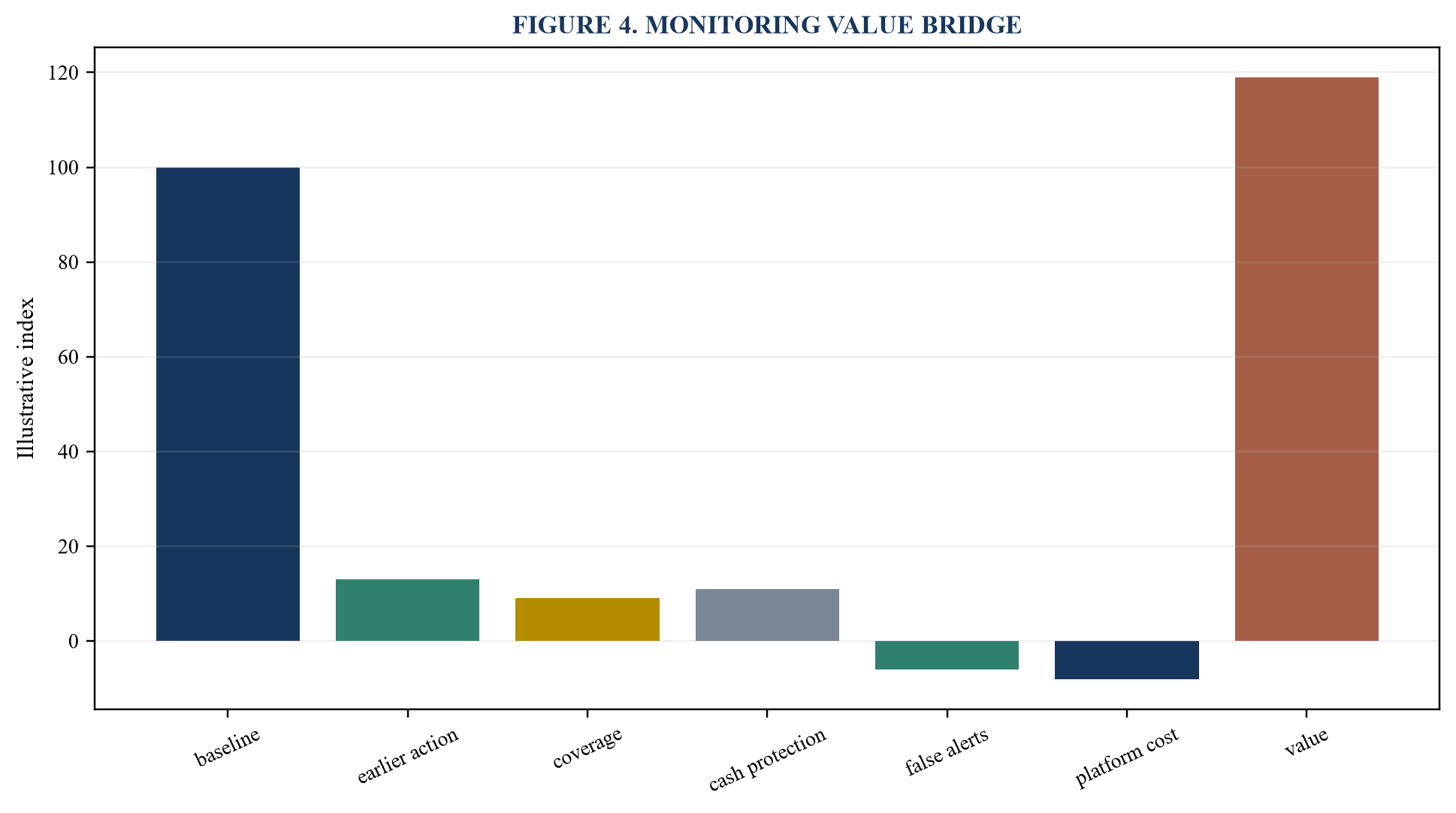
Earlier action creates value after false-alert, remediation and operating costs.
31. Coordinate sponsor and lender workflows
Equity owners and creditors may share facts while holding different rights, incentives, confidentiality constraints and remedies.
Controlled evidence includes party; role; right; information; restriction; request; response; approval. The immediate decision is to route evidence without collapsing distinct duties and interests. Definitions should remain stable across portfolio, investment, credit, legal, operational and financial records.
Investment, portfolio, credit, legal, compliance, valuation, technology and operations teams should use stable identifiers and cut-offs. Material conclusions should be traced from native evidence through case, decision, action and outcome.
The analytical unit should remain stable from source record to valuation conclusion. Reviewers should see the population, exclusions, period, owner and reconciliation to finance. Where evidence is incomplete, the model should retain a range and identify the action needed to narrow it. Comparisons should preserve product, customer, site, complexity and market conditions; aggregation should not conceal adverse cohorts or delayed consequences.
32. Control conflicts and incentives
Management, sponsor, lender and provider incentives can affect reporting, valuation and escalation.
Controlled evidence includes party; interest; benefit; duty; disclosure; mitigation; approval. The immediate decision is to surface conflicts before they shape monitoring conclusions. Definitions should remain stable across portfolio, investment, credit, legal, operational and financial records.
Decision makers need bounded downside for missing information, stale records, extraction error, false alerts, missed events, confidentiality breach, model drift, provider failure and weak adoption.
Evidence should distinguish observation, estimate, management plan and transaction judgement. A supported claim includes timing, full cost, dependency, transferability and a cash consequence. Sensitivity should show how the conclusion changes when adoption, demand, quality or persistence underperforms. Material assumptions need validation dates, accountable owners and explicit expiry conditions so that stale expectations do not survive into pricing or financing decisions.
33. Protect confidential and personal information
Portfolio data should remain within contractual, privacy, securities and information-barrier controls.
Controlled evidence includes data class; purpose; permission; location; access; retention; transfer; deletion. The immediate decision is to limit processing while retaining required investment records. Definitions should remain stable across portfolio, investment, credit, legal, operational and financial records.
Monitoring evidence should remain fund-, asset-, instrument-, jurisdiction-, decision- and period-specific. The review should preserve missing reports, failed reconciliations, contradictory sources, overrides, dissent and adverse outcomes.
The operating team and finance team should use the same definitions. Native records should support aggregate dashboards, and sample testing should follow representative cases from input through outcome and cash. Exceptions, failed cases and client concessions remain part of the population. Reconciliation should cover opening and closing balances, acquisitions, disposals, foreign exchange, allocation changes and manual adjustments that could otherwise mimic operating improvement.
34. Validate agents by consequence
Validation should use representative assets, periods, document quality, missed events, false alerts and downstream decisions.
Controlled evidence includes use case; test set; expected result; metric; threshold; adverse case; reviewer; limitation. The immediate decision is to approve each agent configuration for an evidenced task and consequence. Definitions should remain stable across portfolio, investment, credit, legal, operational and financial records.
Finance should distinguish observed performance, funded remediation, management forecast, sponsor plan and agent-generated estimate. Every projected benefit needs timing, full cost, accountable ownership and a route to cash.
Decision makers need both upside and downside. The analysis should state which party controls conversion, what investment remains, when cash appears, which risks survive and whether the result continues after a change of ownership. Unsupported precision should be replaced with bounded scenarios. The committee should record the decision consequence of each range, including price, structure, funding, covenant, integration and monitoring implications.
35. Monitor model and data drift
Source populations, company systems, reporting definitions, models, prompts and agent tools change throughout ownership and lending periods.
Controlled evidence includes baseline; version; change; metric; threshold; alert; investigation; disposition. The immediate decision is to stop stale validation from governing a changed monitoring environment. Definitions should remain stable across portfolio, investment, credit, legal, operational and financial records.
Investment, portfolio, credit, legal, compliance, valuation, technology and operations teams should use stable identifiers and cut-offs. Material conclusions should be traced from native evidence through case, decision, action and outcome.
The analytical unit should remain stable from source record to valuation conclusion. Reviewers should see the population, exclusions, period, owner and reconciliation to finance. Where evidence is incomplete, the model should retain a range and identify the action needed to narrow it. Comparisons should preserve product, customer, site, complexity and market conditions; aggregation should not conceal adverse cohorts or delayed consequences.
36. Test resilience and manual fallback
Monitoring should continue through provider failure, data delay, cyber incidents and loss of key personnel.
Controlled evidence includes service; dependency; recovery objective; backup; manual process; exercise; result; owner. The immediate decision is to retain critical evidence and decision control during disruption. Definitions should remain stable across portfolio, investment, credit, legal, operational and financial records.
Decision makers need bounded downside for missing information, stale records, extraction error, false alerts, missed events, confidentiality breach, model drift, provider failure and weak adoption.
Evidence should distinguish observation, estimate, management plan and transaction judgement. A supported claim includes timing, full cost, dependency, transferability and a cash consequence. Sensitivity should show how the conclusion changes when adoption, demand, quality or persistence underperforms. Material assumptions need validation dates, accountable owners and explicit expiry conditions so that stale expectations do not survive into pricing or financing decisions.
37. Oversee providers and concentration
Administrators, data vendors, model providers and cloud services require diligence, contracts, service evidence and exit plans.
Controlled evidence includes provider; service; data flow; subcontractor; SLA; incident; substitute; exit. The immediate decision is to bound operational dependency and switching risk. Definitions should remain stable across portfolio, investment, credit, legal, operational and financial records.
Monitoring evidence should remain fund-, asset-, instrument-, jurisdiction-, decision- and period-specific. The review should preserve missing reports, failed reconciliations, contradictory sources, overrides, dissent and adverse outcomes.
The operating team and finance team should use the same definitions. Native records should support aggregate dashboards, and sample testing should follow representative cases from input through outcome and cash. Exceptions, failed cases and client concessions remain part of the population. Reconciliation should cover opening and closing balances, acquisitions, disposals, foreign exchange, allocation changes and manual adjustments that could otherwise mimic operating improvement.
38. Preserve records and auditability
Sources, versions, calculations, alerts, cases, overrides, approvals and outcomes should be retained according to applicable obligations.
Controlled evidence includes record; source; user; timestamp; decision; version; retention; retrieval. The immediate decision is to reconstruct what the manager knew, decided and did. Definitions should remain stable across portfolio, investment, credit, legal, operational and financial records.
Finance should distinguish observed performance, funded remediation, management forecast, sponsor plan and agent-generated estimate. Every projected benefit needs timing, full cost, accountable ownership and a route to cash.
Decision makers need both upside and downside. The analysis should state which party controls conversion, what investment remains, when cash appears, which risks survive and whether the result continues after a change of ownership. Unsupported precision should be replaced with bounded scenarios. The committee should record the decision consequence of each range, including price, structure, funding, covenant, integration and monitoring implications.
39. Measure productivity and economic value
Track delivery timeliness, analyst hours, coverage, false alerts, missed events, action latency, full cost and cash outcomes.
Controlled evidence includes baseline; cohort; quality; time; cost; action; outcome; reviewer. The immediate decision is to recognise value only when control quality and economics remain intact. Definitions should remain stable across portfolio, investment, credit, legal, operational and financial records.
Investment, portfolio, credit, legal, compliance, valuation, technology and operations teams should use stable identifiers and cut-offs. Material conclusions should be traced from native evidence through case, decision, action and outcome.
The analytical unit should remain stable from source record to valuation conclusion. Reviewers should see the population, exclusions, period, owner and reconciliation to finance. Where evidence is incomplete, the model should retain a range and identify the action needed to narrow it. Comparisons should preserve product, customer, site, complexity and market conditions; aggregation should not conceal adverse cohorts or delayed consequences.
Table 5. Evidence-gated implementation
| Period | Primary work | Gate |
|---|---|---|
| days 1-30 | rights, master data and baseline | approve controlled sources |
| days 31-60 | reconciliation and exceptions | approve monitored pilot |
| days 61-100 | case workflow and committees | approve scaled use |
Replace illustrative classifications with company-specific evidence and approved transaction treatment.
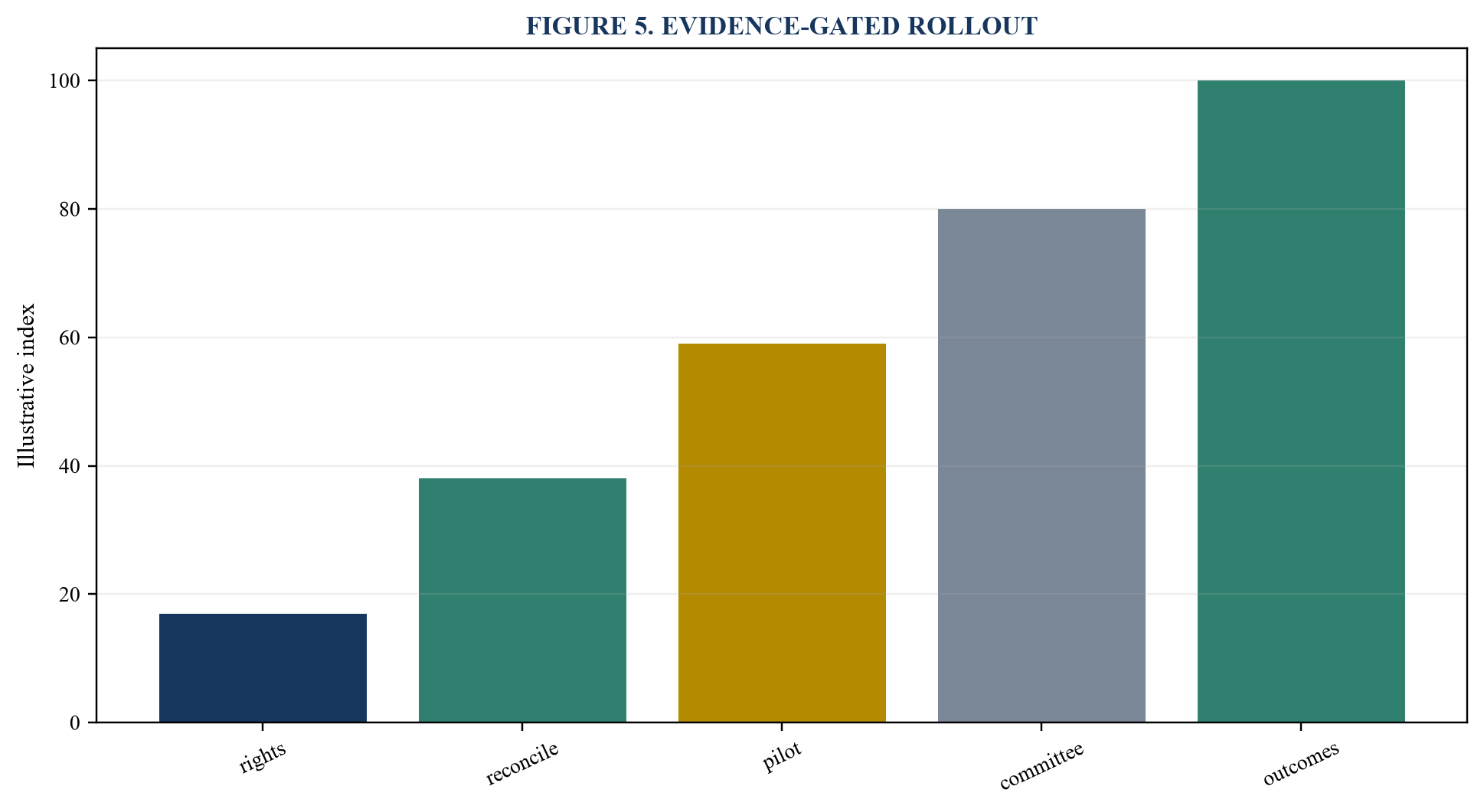
Scale should follow rights, reconciliation, exception quality, adoption and outcomes.
40. Implement through evidence-gated cohorts
Begin with bounded ingestion and reconciliation, then exceptions and questions, before decision-critical recommendations or actions.
Controlled evidence includes cohort; owner; test; threshold; incident; benefit; gate; stop criterion. The immediate decision is to scale only after evidence, control, adoption and value gates pass. Definitions should remain stable across portfolio, investment, credit, legal, operational and financial records.
Decision makers need bounded downside for missing information, stale records, extraction error, false alerts, missed events, confidentiality breach, model drift, provider failure and weak adoption.
Evidence should distinguish observation, estimate, management plan and transaction judgement. A supported claim includes timing, full cost, dependency, transferability and a cash consequence. Sensitivity should show how the conclusion changes when adoption, demand, quality or persistence underperforms. Material assumptions need validation dates, accountable owners and explicit expiry conditions so that stale expectations do not survive into pricing or financing decisions.
References
- International Organization of Securities Commissions, Artificial Intelligence in Capital Markets: Use Cases, Risks, and Challenges, https://www.iosco.org/library/pubdocs/pdf/IOSCOPD788.pdf
- International Organization of Securities Commissions, Thematic Analysis: Emerging Technologies in Private Capital, https://www.iosco.org/library/pubdocs/pdf/IOSCOPD813.pdf
- U.S. Securities and Exchange Commission, 2025 Examination Priorities, https://www.sec.gov/files/2025-exam-priorities.pdf
- U.S. Securities and Exchange Commission, Observations from Examinations of Investment Advisers Managing Private Funds, https://www.sec.gov/files/ocie-risk-alert-private-funds
- U.S. Securities and Exchange Commission, Investment Advisers Act of 1940, https://www.sec.gov/files/rules/final/ia-1092.pdf
- U.S. Securities and Exchange Commission, Investment Adviser Marketing Rule, https://www.sec.gov/investment/marketing-faq
- U.S. Securities and Exchange Commission, Private Markets Valuation Roundtable Remarks, https://www.sec.gov/newsroom/speeches-statements/uyeda-remarks-sifma-private-markets-valuation-roundtable-090425
- Financial Conduct Authority, Asset Management and Alternatives Supervisory Strategy, https://www.fca.org.uk/publication/correspondence/asset-management-alternatives-portfolio-letter-2025.pdf
- Financial Conduct Authority, AI and the FCA: Our Approach, https://www.fca.org.uk/firms/innovation/ai-approach
- European Securities and Markets Authority, Public Statement on Artificial Intelligence in Investment Services, https://www.esma.europa.eu/press-news/esma-news/esma-provides-guidance-firms-using-artificial-intelligence-investment-services
- Institutional Limited Partners Association, Reporting Template Version 2.0, https://ilpa.org/industry-guidance/templates-standards-model-documents/ilpa-templates-hub/ilpa-reporting-template/
- Institutional Limited Partners Association, Performance Template Granular Methodology, https://ilpa.org/resources-tools/resource-library/ilpa-performance-template-granular-methodology-v-1-1/
- Institutional Limited Partners Association, Templates Standards and Model Documents, https://ilpa.org/industry-guidance/templates-standards-model-documents/
- IFRS Foundation, IFRS 13 Fair Value Measurement, https://www.ifrs.org/issued-standards/list-of-standards/ifrs-13-fair-value-measurement/
- International Valuation Standards Council, International Valuation Standards, https://ivsc.org/standards/
- Financial Stability Board, The Financial Stability Implications of Artificial Intelligence, https://www.fsb.org/uploads/P14112024.pdf
- International Organization for Standardization, ISO IEC 42001 Artificial Intelligence Management System, https://www.iso.org/standard/81230.html
- National Institute of Standards and Technology, Artificial Intelligence Risk Management Framework, https://www.nist.gov/itl/ai-risk-management-framework
- National Institute of Standards and Technology, Cybersecurity Framework 2.0, https://www.nist.gov/cyberframework
- European Union, Regulation EU 2024/1689 Artificial Intelligence Act, https://eur-lex.europa.eu/eli/reg/2024/1689/oj
- European Union, Regulation EU 2016/679 General Data Protection Regulation, https://eur-lex.europa.eu/eli/reg/2016/679/oj
- UK Government, Data Protection Act 2018, https://www.legislation.gov.uk/ukpga/2018/12/contents
- International Organization of Securities Commissions, Principles on Outsourcing, https://www.iosco.org/library/pubdocs/pdf/IOSCOPD687.pdf
- CFA Institute, Global Investment Performance Standards, https://www.cfainstitute.org/ethics-standards/codes/gips-standards
- Bank for International Settlements, Principles for the Management of Credit Risk, https://www.bis.org/publ/bcbs75.htm
- European Banking Authority, Guidelines on Loan Origination and Monitoring, https://www.eba.europa.eu/regulation-and-policy/credit-risk/guidelines-loan-origination-and-monitoring
