

1. Define the financing decision
The transaction team should state the acquisition timetable, sources-and-uses requirement, operating plan, risk tolerance and whole-life financing objectives. The required output is a financing decision memorandum with measurable selection criteria. This establishes a consistent basis for comparing financing proposals and retaining the evidence behind the board's decision [1][2].
The work should identify the accountable owner, source data, calculation method, effective date, approval route and open conditions. Test each conclusion against binding proposal language, executed transaction documents, current operating evidence and the downside case. Retain assumptions until documentary or market evidence closes them.
The principal risk is that headline pricing can dominate the choice before execution and downside requirements are understood. Connect pricing with funding certainty, operational freedom, cash generation, covenant capacity, lender behaviour and the expected exit. A financing term is acceptable when it remains executable through the relevant operating and market conditions and its economic effect can be reproduced from retained evidence.
Review evidence in dated models; escalate material deviations with owners and deadlines.
2. Map the LBO sources and uses
The transaction team should reconcile purchase price, refinancing, fees, taxes, hedging, working capital, integration funding and minimum cash. The required output is a signed-off sources-and-uses schedule with contingency. This establishes a consistent basis for comparing financing proposals and retaining the evidence behind the board's decision [3][4].
The work should identify the accountable owner, source data, calculation method, effective date, approval route and open conditions. Test each conclusion against binding proposal language, executed transaction documents, current operating evidence and the downside case. Retain assumptions until documentary or market evidence closes them.
The principal risk is that an underfunded closing model can consume liquidity immediately after control passes. Connect pricing with funding certainty, operational freedom, cash generation, covenant capacity, lender behaviour and the expected exit. A financing term is acceptable when it remains executable through the relevant operating and market conditions and its economic effect can be reproduced from retained evidence.
Review evidence in dated models; escalate material deviations with owners and deadlines.
3. Classify available debt routes
The transaction team should distinguish relationship-bank, underwritten, club, broadly syndicated, unitranche, first-lien, second-lien, mezzanine and hybrid structures. The required output is a financing route map with eligible providers and constraints. This establishes a consistent basis for comparing financing proposals and retaining the evidence behind the board's decision [1][5].
The work should identify the accountable owner, source data, calculation method, effective date, approval route and open conditions. Test each conclusion against binding proposal language, executed transaction documents, current operating evidence and the downside case. Retain assumptions until documentary or market evidence closes them.
The principal risk is that labels can conceal material differences in ranking, hold size, transferability and decision authority. Connect pricing with funding certainty, operational freedom, cash generation, covenant capacity, lender behaviour and the expected exit. A financing term is acceptable when it remains executable through the relevant operating and market conditions and its economic effect can be reproduced from retained evidence.
Review evidence in dated models; escalate material deviations with owners and deadlines.
4. Set the comparison perimeter
The transaction team should compare instruments at the same leverage, currency, tenor, amortisation, commitment level and operational scope. The required output is a normalised term sheet grid. This establishes a consistent basis for comparing financing proposals and retaining the evidence behind the board's decision [3][6].
The work should identify the accountable owner, source data, calculation method, effective date, approval route and open conditions. Test each conclusion against binding proposal language, executed transaction documents, current operating evidence and the downside case. Retain assumptions until documentary or market evidence closes them.
The principal risk is that apparently cheaper debt may fund less of the acquisition or exclude essential working-capital capacity. Connect pricing with funding certainty, operational freedom, cash generation, covenant capacity, lender behaviour and the expected exit. A financing term is acceptable when it remains executable through the relevant operating and market conditions and its economic effect can be reproduced from retained evidence.
Review evidence in dated models; escalate material deviations with owners and deadlines.
5. Build the base rate case
The transaction team should select the relevant floating or fixed benchmark, forward curve, floor, day-count and reset assumptions. The required output is a base-rate schedule linked to cash interest. This establishes a consistent basis for comparing financing proposals and retaining the evidence behind the board's decision [7][8].
The work should identify the accountable owner, source data, calculation method, effective date, approval route and open conditions. Test each conclusion against binding proposal language, executed transaction documents, current operating evidence and the downside case. Retain assumptions until documentary or market evidence closes them.
The principal risk is that rate assumptions can make a small margin difference appear more important than persistent benchmark exposure. Connect pricing with funding certainty, operational freedom, cash generation, covenant capacity, lender behaviour and the expected exit. A financing term is acceptable when it remains executable through the relevant operating and market conditions and its economic effect can be reproduced from retained evidence.
Review evidence in dated models; escalate material deviations with owners and deadlines.
6. Compare margins and floors
The transaction team should model margins, ratchets, floors, default interest and the conditions governing each step. The required output is a coupon comparison across operating and rate scenarios. This establishes a consistent basis for comparing financing proposals and retaining the evidence behind the board's decision [7][9].
The work should identify the accountable owner, source data, calculation method, effective date, approval route and open conditions. Test each conclusion against binding proposal language, executed transaction documents, current operating evidence and the downside case. Retain assumptions until documentary or market evidence closes them.
The principal risk is that a margin ratchet can have little value when thresholds are unreachable or the floor remains binding. Connect pricing with funding certainty, operational freedom, cash generation, covenant capacity, lender behaviour and the expected exit. A financing term is acceptable when it remains executable through the relevant operating and market conditions and its economic effect can be reproduced from retained evidence.
Review evidence in dated models; escalate material deviations with owners and deadlines.
7. Capture fees and original issue discount
The transaction team should include arrangement, underwriting, ticking, commitment, agency, monitoring, exit and original issue discount economics. The required output is a all-in funding-cost bridge. This establishes a consistent basis for comparing financing proposals and retaining the evidence behind the board's decision [3][10].
The work should identify the accountable owner, source data, calculation method, effective date, approval route and open conditions. Test each conclusion against binding proposal language, executed transaction documents, current operating evidence and the downside case. Retain assumptions until documentary or market evidence closes them.
The principal risk is that fees can shift value between signing, closing, holding and exit dates without changing the quoted margin. Connect pricing with funding certainty, operational freedom, cash generation, covenant capacity, lender behaviour and the expected exit. A financing term is acceptable when it remains executable through the relevant operating and market conditions and its economic effect can be reproduced from retained evidence.
Review evidence in dated models; escalate material deviations with owners and deadlines.
Table 1. Whole life financing cost bridge
| Cost component | Bank led debt | Private credit |
|---|---|---|
| cash margin and floor | benchmark plus negotiated margin | benchmark plus direct-lending margin |
| upfront economics | arrangement and underwriting fees | arrangement fee and original issue discount |
| holding costs | commitment, agency and hedging | monitoring, undrawn and delayed-draw costs |
| exit costs | break costs and refinancing fees | call protection and prepayment premium |
Illustrative components; binding proposals and executed documents govern.
8. Price hedging and currency
The transaction team should model hedge requirements, premiums, credit charges, break costs, collateral terms and foreign-exchange mismatch. The required output is a hedged debt service and break-cost schedule. This establishes a consistent basis for comparing financing proposals and retaining the evidence behind the board's decision [7][11].
The work should identify the accountable owner, source data, calculation method, effective date, approval route and open conditions. Test each conclusion against binding proposal language, executed transaction documents, current operating evidence and the downside case. Retain assumptions until documentary or market evidence closes them.
The principal risk is that an acquisition can carry affordable nominal debt while remaining exposed to rate or currency volatility. Connect pricing with funding certainty, operational freedom, cash generation, covenant capacity, lender behaviour and the expected exit. A financing term is acceptable when it remains executable through the relevant operating and market conditions and its economic effect can be reproduced from retained evidence.
Review evidence in dated models; escalate material deviations with owners and deadlines.
9. Value revolving liquidity
The transaction team should compare committed revolving capacity, availability tests, utilisation fees, clean-downs, ancillary lines and lender discretion. The required output is a working-capital liquidity map. This establishes a consistent basis for comparing financing proposals and retaining the evidence behind the board's decision [12][13].
The work should identify the accountable owner, source data, calculation method, effective date, approval route and open conditions. Test each conclusion against binding proposal language, executed transaction documents, current operating evidence and the downside case. Retain assumptions until documentary or market evidence closes them.
The principal risk is that a term-loan-only structure can force equity support during ordinary seasonal cash movements. Connect pricing with funding certainty, operational freedom, cash generation, covenant capacity, lender behaviour and the expected exit. A financing term is acceptable when it remains executable through the relevant operating and market conditions and its economic effect can be reproduced from retained evidence.
Review evidence in dated models; escalate material deviations with owners and deadlines.
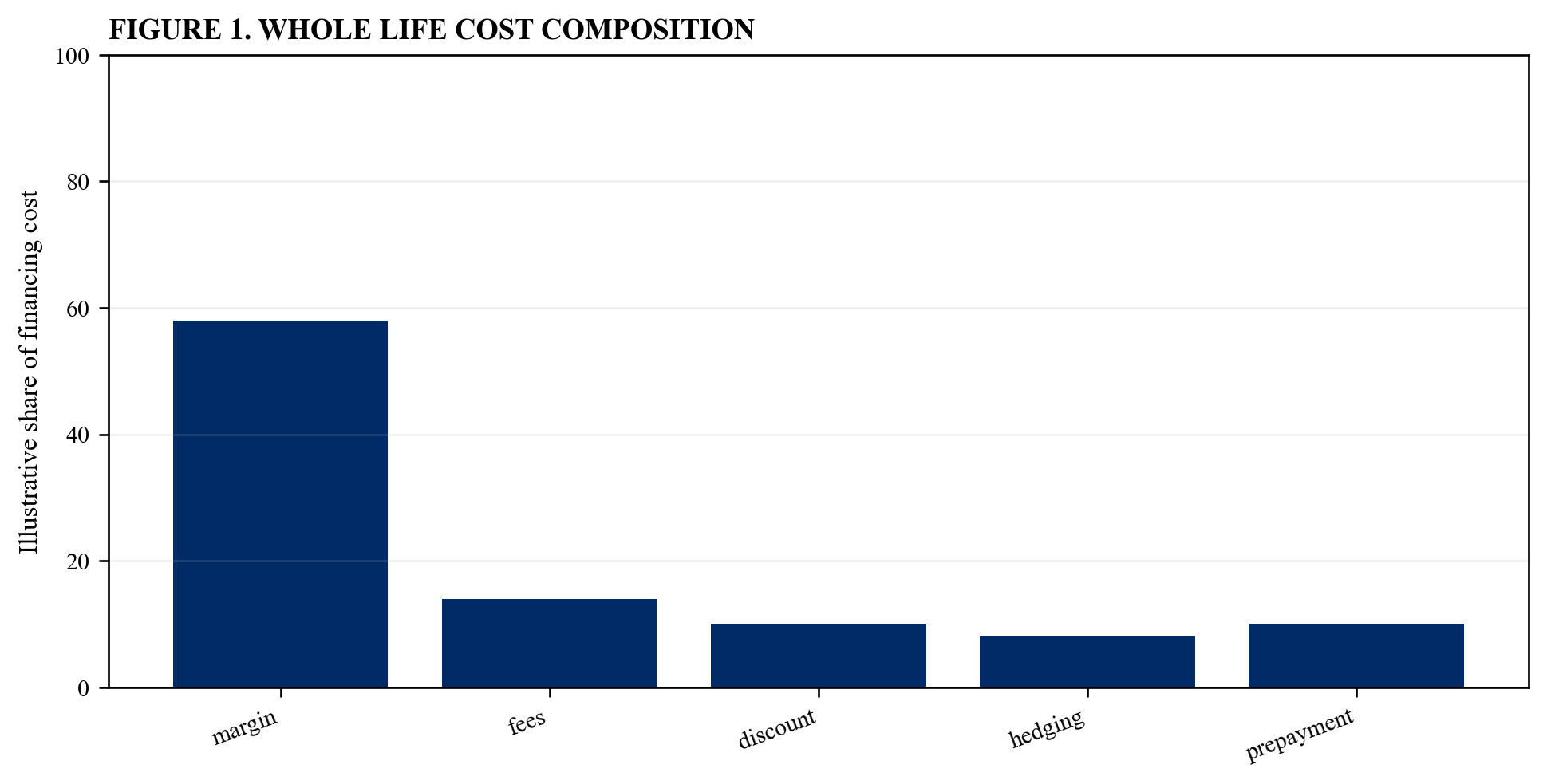
Illustrative analytical scenario; verified financing proposals should replace the index values.
10. Model amortisation and cash sweep
The transaction team should translate scheduled repayment, excess cash flow, disposal proceeds, insurance proceeds and mandatory prepayment into equity cash flows. The required output is a debt paydown and sponsor distribution model. This establishes a consistent basis for comparing financing proposals and retaining the evidence behind the board's decision [3][14].
The work should identify the accountable owner, source data, calculation method, effective date, approval route and open conditions. Test each conclusion against binding proposal language, executed transaction documents, current operating evidence and the downside case. Retain assumptions until documentary or market evidence closes them.
The principal risk is that faster deleveraging can reduce risk while constraining investment and changing the equity return profile. Connect pricing with funding certainty, operational freedom, cash generation, covenant capacity, lender behaviour and the expected exit. A financing term is acceptable when it remains executable through the relevant operating and market conditions and its economic effect can be reproduced from retained evidence.
Review evidence in dated models; escalate material deviations with owners and deadlines.
11. Calculate whole life cost
The transaction team should discount cash interest, fees, hedging, prepayment, amendment and refinancing costs through expected and downside exit dates. The required output is a net-present-cost comparison with attribution. This establishes a consistent basis for comparing financing proposals and retaining the evidence behind the board's decision [3][7].
The work should identify the accountable owner, source data, calculation method, effective date, approval route and open conditions. Test each conclusion against binding proposal language, executed transaction documents, current operating evidence and the downside case. Retain assumptions until documentary or market evidence closes them.
The principal risk is that a low-cost opening period can be outweighed by call protection or an early refinancing requirement. Connect pricing with funding certainty, operational freedom, cash generation, covenant capacity, lender behaviour and the expected exit. A financing term is acceptable when it remains executable through the relevant operating and market conditions and its economic effect can be reproduced from retained evidence.
Review evidence in dated models; escalate material deviations with owners and deadlines.
12. Measure commitment quality
The transaction team should identify committed amounts, expiry, conditions, lender approvals, representations, draw mechanics and termination rights. The required output is a commitment certainty score supported by executed language. This establishes a consistent basis for comparing financing proposals and retaining the evidence behind the board's decision [15][16].
The work should identify the accountable owner, source data, calculation method, effective date, approval route and open conditions. Test each conclusion against binding proposal language, executed transaction documents, current operating evidence and the downside case. Retain assumptions until documentary or market evidence closes them.
The principal risk is that a signed term sheet can still leave material funding conditions unresolved. Connect pricing with funding certainty, operational freedom, cash generation, covenant capacity, lender behaviour and the expected exit. A financing term is acceptable when it remains executable through the relevant operating and market conditions and its economic effect can be reproduced from retained evidence.
Review evidence in dated models; escalate material deviations with owners and deadlines.
13. Test diligence conditions
The transaction team should map financial, commercial, legal, tax, environmental, insurance, pensions, technology and sanctions diligence to funding requirements. The required output is a diligence-to-condition matrix. This establishes a consistent basis for comparing financing proposals and retaining the evidence behind the board's decision [15][17].
The work should identify the accountable owner, source data, calculation method, effective date, approval route and open conditions. Test each conclusion against binding proposal language, executed transaction documents, current operating evidence and the downside case. Retain assumptions until documentary or market evidence closes them.
The principal risk is that late diligence findings can reopen pricing or prevent funding close to completion. Connect pricing with funding certainty, operational freedom, cash generation, covenant capacity, lender behaviour and the expected exit. A financing term is acceptable when it remains executable through the relevant operating and market conditions and its economic effect can be reproduced from retained evidence.
Review evidence in dated models; escalate material deviations with owners and deadlines.
14. Test syndication and market flex
The transaction team should identify underwriting exposure, syndication periods, flex rights, lender information, allocations and failed-syndication consequences. The required output is a syndication risk register and flex cost case. This establishes a consistent basis for comparing financing proposals and retaining the evidence behind the board's decision [5][16].
The work should identify the accountable owner, source data, calculation method, effective date, approval route and open conditions. Test each conclusion against binding proposal language, executed transaction documents, current operating evidence and the downside case. Retain assumptions until documentary or market evidence closes them.
The principal risk is that the sponsor can carry price or documentation risk created by a lender's distribution strategy. Connect pricing with funding certainty, operational freedom, cash generation, covenant capacity, lender behaviour and the expected exit. A financing term is acceptable when it remains executable through the relevant operating and market conditions and its economic effect can be reproduced from retained evidence.
Review evidence in dated models; escalate material deviations with owners and deadlines.
Table 2. Commitment certainty map
| Certainty factor | Evidence | Failure mode |
|---|---|---|
| credit approval | final authorised approval | renewed committee required |
| diligence | closed condition matrix | late issue reopens terms |
| syndication | underwriting and flex terms | price or allocation changes |
| funding operations | tested notices and accounts | delayed draw at completion |
Illustrative gates; executed commitment documents determine enforceability.
15. Verify investment committee authority
The transaction team should confirm which lender bodies approved the credit, what remains delegated and which changes require renewed approval. The required output is a approval authority record for each financing provider. This establishes a consistent basis for comparing financing proposals and retaining the evidence behind the board's decision [1][15].
The work should identify the accountable owner, source data, calculation method, effective date, approval route and open conditions. Test each conclusion against binding proposal language, executed transaction documents, current operating evidence and the downside case. Retain assumptions until documentary or market evidence closes them.
The principal risk is that execution can pause when commercial agreement exceeds the mandate held by the deal team. Connect pricing with funding certainty, operational freedom, cash generation, covenant capacity, lender behaviour and the expected exit. A financing term is acceptable when it remains executable through the relevant operating and market conditions and its economic effect can be reproduced from retained evidence.
Review evidence in dated models; escalate material deviations with owners and deadlines.
16. Map concentration and hold constraints
The transaction team should test single-name, sector, sponsor, geography, fund-life and portfolio concentration limits. The required output is a lender-capacity and concentration certificate. This establishes a consistent basis for comparing financing proposals and retaining the evidence behind the board's decision [1][18].
The work should identify the accountable owner, source data, calculation method, effective date, approval route and open conditions. Test each conclusion against binding proposal language, executed transaction documents, current operating evidence and the downside case. Retain assumptions until documentary or market evidence closes them.
The principal risk is that a lender may support the structure commercially while lacking durable capacity to fund or hold it. Connect pricing with funding certainty, operational freedom, cash generation, covenant capacity, lender behaviour and the expected exit. A financing term is acceptable when it remains executable through the relevant operating and market conditions and its economic effect can be reproduced from retained evidence.
Review evidence in dated models; escalate material deviations with owners and deadlines.
17. Test funding mechanics
The transaction team should rehearse notices, accounts, funds flow, know-your-customer evidence, utilisation requests and same-day escalation. The required output is a closing funds-flow rehearsal and named contacts. This establishes a consistent basis for comparing financing proposals and retaining the evidence behind the board's decision [15][19].
The work should identify the accountable owner, source data, calculation method, effective date, approval route and open conditions. Test each conclusion against binding proposal language, executed transaction documents, current operating evidence and the downside case. Retain assumptions until documentary or market evidence closes them.
The principal risk is that operational defects can delay a financing whose credit and documentation are otherwise complete. Connect pricing with funding certainty, operational freedom, cash generation, covenant capacity, lender behaviour and the expected exit. A financing term is acceptable when it remains executable through the relevant operating and market conditions and its economic effect can be reproduced from retained evidence.
Review evidence in dated models; escalate material deviations with owners and deadlines.
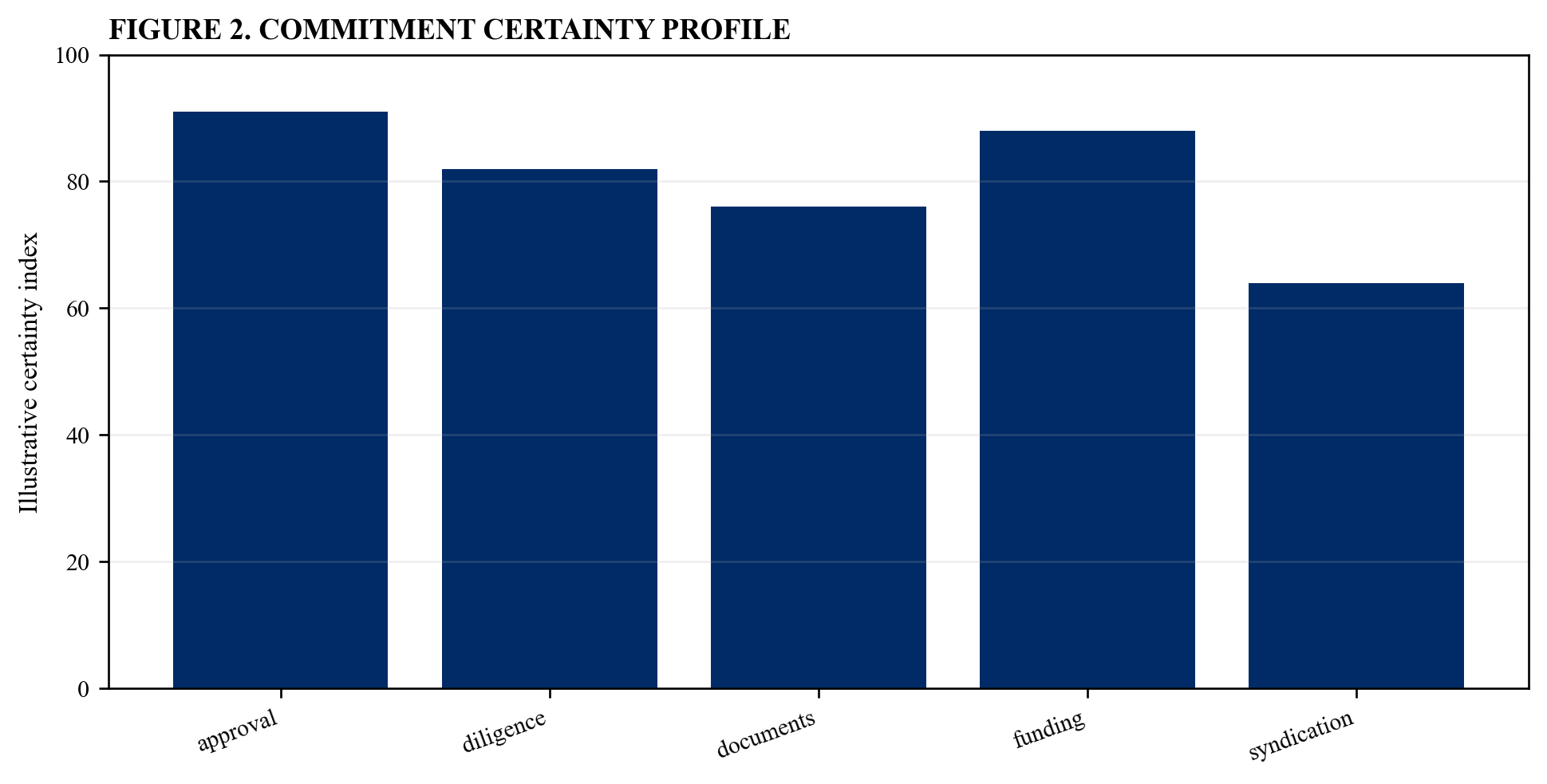
Illustrative analytical scenario; verified financing proposals should replace the index values.
18. Compare lender group architecture
The transaction team should assess the number of lenders, agent role, voting thresholds, transfer rights, confidentiality and relationship depth. The required output is a lender governance map. This establishes a consistent basis for comparing financing proposals and retaining the evidence behind the board's decision [1][5].
The work should identify the accountable owner, source data, calculation method, effective date, approval route and open conditions. Test each conclusion against binding proposal language, executed transaction documents, current operating evidence and the downside case. Retain assumptions until documentary or market evidence closes them.
The principal risk is that a concentrated group can move quickly yet create dependency on a small number of balance sheets. Connect pricing with funding certainty, operational freedom, cash generation, covenant capacity, lender behaviour and the expected exit. A financing term is acceptable when it remains executable through the relevant operating and market conditions and its economic effect can be reproduced from retained evidence.
Review evidence in dated models; escalate material deviations with owners and deadlines.
19. Design maintenance covenants
The transaction team should model leverage, interest cover, fixed-charge cover, liquidity and testing frequency with definitions and cure routes. The required output is a maintenance covenant model with monthly forecast headroom. This establishes a consistent basis for comparing financing proposals and retaining the evidence behind the board's decision [3][20].
The work should identify the accountable owner, source data, calculation method, effective date, approval route and open conditions. Test each conclusion against binding proposal language, executed transaction documents, current operating evidence and the downside case. Retain assumptions until documentary or market evidence closes them.
The principal risk is that covenant headroom can disappear through definitional adjustments before cash distress is visible. Connect pricing with funding certainty, operational freedom, cash generation, covenant capacity, lender behaviour and the expected exit. A financing term is acceptable when it remains executable through the relevant operating and market conditions and its economic effect can be reproduced from retained evidence.
Review evidence in dated models; escalate material deviations with owners and deadlines.
20. Design incurrence controls
The transaction team should map tests for debt, liens, acquisitions, distributions, disposals, investments, guarantees and affiliate transactions. The required output is a incurrence covenant architecture tied to the value plan. This establishes a consistent basis for comparing financing proposals and retaining the evidence behind the board's decision [3][20].
The work should identify the accountable owner, source data, calculation method, effective date, approval route and open conditions. Test each conclusion against binding proposal language, executed transaction documents, current operating evidence and the downside case. Retain assumptions until documentary or market evidence closes them.
The principal risk is that operating flexibility can be restricted by baskets that were negotiated without the acquisition pipeline. Connect pricing with funding certainty, operational freedom, cash generation, covenant capacity, lender behaviour and the expected exit. A financing term is acceptable when it remains executable through the relevant operating and market conditions and its economic effect can be reproduced from retained evidence.
Review evidence in dated models; escalate material deviations with owners and deadlines.
21. Audit EBITDA adjustments
The transaction team should classify realised, run-rate, synergy, restructuring, acquisition and exceptional adjustments with caps and evidence. The required output is a covenant EBITDA bridge reconciled to reporting. This establishes a consistent basis for comparing financing proposals and retaining the evidence behind the board's decision [3][21].
The work should identify the accountable owner, source data, calculation method, effective date, approval route and open conditions. Test each conclusion against binding proposal language, executed transaction documents, current operating evidence and the downside case. Retain assumptions until documentary or market evidence closes them.
The principal risk is that aggressive adjustments can create apparent capacity while weakening lender trust and refinancing credibility. Connect pricing with funding certainty, operational freedom, cash generation, covenant capacity, lender behaviour and the expected exit. A financing term is acceptable when it remains executable through the relevant operating and market conditions and its economic effect can be reproduced from retained evidence.
Review evidence in dated models; escalate material deviations with owners and deadlines.
Table 3. Covenant flexibility architecture
| Value plan need | Relevant control | Evidence test |
|---|---|---|
| add-on acquisitions | permitted acquisition and incremental debt | pipeline fits capacity |
| operational investment | capex and investment baskets | funded downside case |
| shareholder liquidity | restricted payments | distribution path remains lawful |
| exit optionality | portability and prepayment | likely routes remain executable |
Illustrative categories; definitions and baskets require legal review.
22. Set acquisition capacity
The transaction team should test permitted acquisitions, incremental facilities, ratio debt, pro forma adjustments and lender consent. The required output is a buy-and-build debt capacity map. This establishes a consistent basis for comparing financing proposals and retaining the evidence behind the board's decision [5][20].
The work should identify the accountable owner, source data, calculation method, effective date, approval route and open conditions. Test each conclusion against binding proposal language, executed transaction documents, current operating evidence and the downside case. Retain assumptions until documentary or market evidence closes them.
The principal risk is that the financing can fund the platform while preventing the add-on strategy that supports the valuation. Connect pricing with funding certainty, operational freedom, cash generation, covenant capacity, lender behaviour and the expected exit. A financing term is acceptable when it remains executable through the relevant operating and market conditions and its economic effect can be reproduced from retained evidence.
Review evidence in dated models; escalate material deviations with owners and deadlines.
23. Set distribution capacity
The transaction team should map dividends, management payments, shareholder debt service, tax distributions and restricted-payment baskets. The required output is a distribution waterfall under base and downside cases. This establishes a consistent basis for comparing financing proposals and retaining the evidence behind the board's decision [3][20].
The work should identify the accountable owner, source data, calculation method, effective date, approval route and open conditions. Test each conclusion against binding proposal language, executed transaction documents, current operating evidence and the downside case. Retain assumptions until documentary or market evidence closes them.
The principal risk is that equity value can remain trapped even when the business performs above plan. Connect pricing with funding certainty, operational freedom, cash generation, covenant capacity, lender behaviour and the expected exit. A financing term is acceptable when it remains executable through the relevant operating and market conditions and its economic effect can be reproduced from retained evidence.
Review evidence in dated models; escalate material deviations with owners and deadlines.
24. Set disposal and reinvestment rules
The transaction team should compare mandatory prepayment, reinvestment periods, asset-sale baskets and release mechanics. The required output is a disposal proceeds decision tree. This establishes a consistent basis for comparing financing proposals and retaining the evidence behind the board's decision [14][20].
The work should identify the accountable owner, source data, calculation method, effective date, approval route and open conditions. Test each conclusion against binding proposal language, executed transaction documents, current operating evidence and the downside case. Retain assumptions until documentary or market evidence closes them.
The principal risk is that a value-accretive portfolio change can trigger debt paydown and reduce reinvestment capacity. Connect pricing with funding certainty, operational freedom, cash generation, covenant capacity, lender behaviour and the expected exit. A financing term is acceptable when it remains executable through the relevant operating and market conditions and its economic effect can be reproduced from retained evidence.
Review evidence in dated models; escalate material deviations with owners and deadlines.
25. Design equity cures
The transaction team should define cure amount, frequency, deemed EBITDA, cash prepayment, leverage effect and sponsor discretion. The required output is a equity-cure protocol and return sensitivity. This establishes a consistent basis for comparing financing proposals and retaining the evidence behind the board's decision [3][20].
The work should identify the accountable owner, source data, calculation method, effective date, approval route and open conditions. Test each conclusion against binding proposal language, executed transaction documents, current operating evidence and the downside case. Retain assumptions until documentary or market evidence closes them.
The principal risk is that a cure can protect control while transferring more value from the sponsor than the operating case can recover. Connect pricing with funding certainty, operational freedom, cash generation, covenant capacity, lender behaviour and the expected exit. A financing term is acceptable when it remains executable through the relevant operating and market conditions and its economic effect can be reproduced from retained evidence.
Review evidence in dated models; escalate material deviations with owners and deadlines.
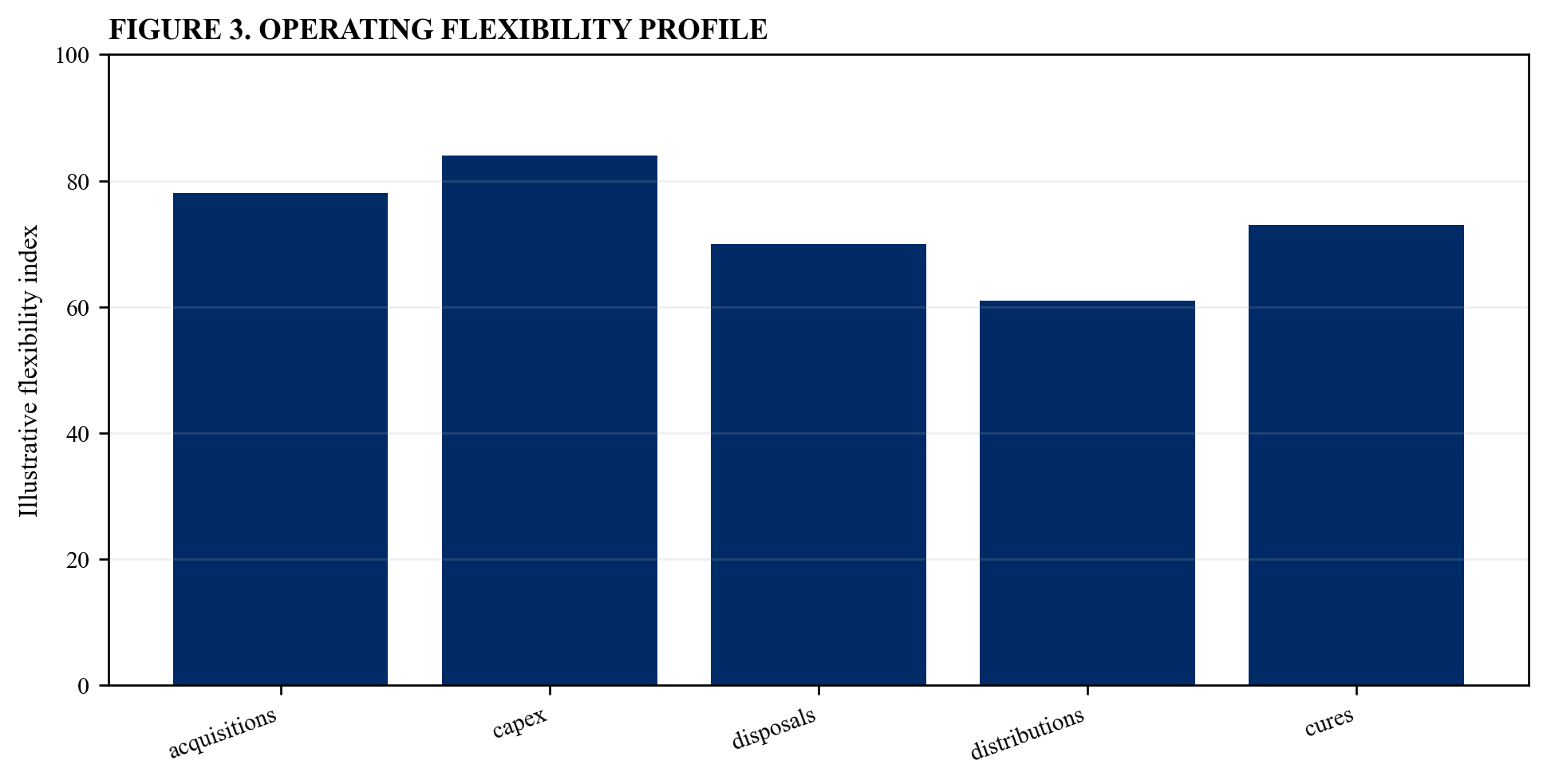
Illustrative analytical scenario; verified financing proposals should replace the index values.
26. Compare prepayment flexibility
The transaction team should model voluntary prepayment, call protection, make-whole, soft call, repricing protection and break costs. The required output is a refinancing option value schedule. This establishes a consistent basis for comparing financing proposals and retaining the evidence behind the board's decision [3][10].
The work should identify the accountable owner, source data, calculation method, effective date, approval route and open conditions. Test each conclusion against binding proposal language, executed transaction documents, current operating evidence and the downside case. Retain assumptions until documentary or market evidence closes them.
The principal risk is that early operating outperformance can become expensive to refinance into cheaper debt. Connect pricing with funding certainty, operational freedom, cash generation, covenant capacity, lender behaviour and the expected exit. A financing term is acceptable when it remains executable through the relevant operating and market conditions and its economic effect can be reproduced from retained evidence.
Review evidence in dated models; escalate material deviations with owners and deadlines.
27. Compare amendment economics
The transaction team should identify consent thresholds, amendment fees, most-favoured-nation rights, sacred rights and lender coordination. The required output is a amendment route and cost matrix. This establishes a consistent basis for comparing financing proposals and retaining the evidence behind the board's decision [1][22].
The work should identify the accountable owner, source data, calculation method, effective date, approval route and open conditions. Test each conclusion against binding proposal language, executed transaction documents, current operating evidence and the downside case. Retain assumptions until documentary or market evidence closes them.
The principal risk is that a small lender group can simplify voting while exercising greater pricing power during stress. Connect pricing with funding certainty, operational freedom, cash generation, covenant capacity, lender behaviour and the expected exit. A financing term is acceptable when it remains executable through the relevant operating and market conditions and its economic effect can be reproduced from retained evidence.
Review evidence in dated models; escalate material deviations with owners and deadlines.
28. Test portability and change of control
The transaction team should review sponsor, ownership, listing, transfer and permitted-holder provisions against likely exits. The required output is a exit route compatibility map. This establishes a consistent basis for comparing financing proposals and retaining the evidence behind the board's decision [3][20].
The work should identify the accountable owner, source data, calculation method, effective date, approval route and open conditions. Test each conclusion against binding proposal language, executed transaction documents, current operating evidence and the downside case. Retain assumptions until documentary or market evidence closes them.
The principal risk is that financing terms can narrow the buyer universe or require refinancing at an unfavourable market point. Connect pricing with funding certainty, operational freedom, cash generation, covenant capacity, lender behaviour and the expected exit. A financing term is acceptable when it remains executable through the relevant operating and market conditions and its economic effect can be reproduced from retained evidence.
Review evidence in dated models; escalate material deviations with owners and deadlines.
29. Assess lender transfer risk
The transaction team should control assignments, disqualified institutions, competitors, loan-to-own investors, participations and disclosure. The required output is a lender transfer and confidentiality protocol. This establishes a consistent basis for comparing financing proposals and retaining the evidence behind the board's decision [1][5].
The work should identify the accountable owner, source data, calculation method, effective date, approval route and open conditions. Test each conclusion against binding proposal language, executed transaction documents, current operating evidence and the downside case. Retain assumptions until documentary or market evidence closes them.
The principal risk is that the relationship can change materially after closing even when the original lender remains agent. Connect pricing with funding certainty, operational freedom, cash generation, covenant capacity, lender behaviour and the expected exit. A financing term is acceptable when it remains executable through the relevant operating and market conditions and its economic effect can be reproduced from retained evidence.
Review evidence in dated models; escalate material deviations with owners and deadlines.
30. Assess information and valuation rights
The transaction team should compare reporting frequency, budgets, inspections, calls, valuations, ESG data and access during stress. The required output is a lender information schedule aligned to management reporting. This establishes a consistent basis for comparing financing proposals and retaining the evidence behind the board's decision [18][23].
The work should identify the accountable owner, source data, calculation method, effective date, approval route and open conditions. Test each conclusion against binding proposal language, executed transaction documents, current operating evidence and the downside case. Retain assumptions until documentary or market evidence closes them.
The principal risk is that bespoke information demands can consume management capacity and expose inconsistent performance narratives. Connect pricing with funding certainty, operational freedom, cash generation, covenant capacity, lender behaviour and the expected exit. A financing term is acceptable when it remains executable through the relevant operating and market conditions and its economic effect can be reproduced from retained evidence.
Review evidence in dated models; escalate material deviations with owners and deadlines.
Table 4. Downside headroom matrix
| Downside | First transmission | Required response |
|---|---|---|
| delayed synergies | leverage and cash | phase costs and preserve liquidity |
| weak cash conversion | revolver drawings | working-capital intervention |
| persistent rates | interest cover | hedge and deleverage plan |
| delayed exit | maturity runway | early refinancing workstream |
Illustrative stresses; verified operating data should replace assumptions.
31. Model delayed synergies
The transaction team should defer integration benefits and include duplicate cost, restructuring cash and covenant effects. The required output is a synergy delay case with liquidity and cure triggers. This establishes a consistent basis for comparing financing proposals and retaining the evidence behind the board's decision [3][21].
The work should identify the accountable owner, source data, calculation method, effective date, approval route and open conditions. Test each conclusion against binding proposal language, executed transaction documents, current operating evidence and the downside case. Retain assumptions until documentary or market evidence closes them.
The principal risk is that debt sized to rapid synergies can create a covenant problem before management proves the operating plan. Connect pricing with funding certainty, operational freedom, cash generation, covenant capacity, lender behaviour and the expected exit. A financing term is acceptable when it remains executable through the relevant operating and market conditions and its economic effect can be reproduced from retained evidence.
Review evidence in dated models; escalate material deviations with owners and deadlines.
32. Model weaker cash conversion
The transaction team should stress receivables, inventory, capex, taxes and restructuring cash while holding EBITDA constant. The required output is a cash-conversion downside and revolving need. This establishes a consistent basis for comparing financing proposals and retaining the evidence behind the board's decision [3][24].
The work should identify the accountable owner, source data, calculation method, effective date, approval route and open conditions. Test each conclusion against binding proposal language, executed transaction documents, current operating evidence and the downside case. Retain assumptions until documentary or market evidence closes them.
The principal risk is that EBITDA protection can conceal a cash deficit that increases drawings and reduces covenant headroom. Connect pricing with funding certainty, operational freedom, cash generation, covenant capacity, lender behaviour and the expected exit. A financing term is acceptable when it remains executable through the relevant operating and market conditions and its economic effect can be reproduced from retained evidence.
Review evidence in dated models; escalate material deviations with owners and deadlines.
33. Model persistent interest rates
The transaction team should apply higher-for-longer benchmarks, hedge expiry, floors and refinancing spreads through the hold period. The required output is a rate persistence case and interest coverage path. This establishes a consistent basis for comparing financing proposals and retaining the evidence behind the board's decision [2][7][8].
The work should identify the accountable owner, source data, calculation method, effective date, approval route and open conditions. Test each conclusion against binding proposal language, executed transaction documents, current operating evidence and the downside case. Retain assumptions until documentary or market evidence closes them.
The principal risk is that floating-rate leverage can absorb operating improvement and delay deleveraging. Connect pricing with funding certainty, operational freedom, cash generation, covenant capacity, lender behaviour and the expected exit. A financing term is acceptable when it remains executable through the relevant operating and market conditions and its economic effect can be reproduced from retained evidence.
Review evidence in dated models; escalate material deviations with owners and deadlines.
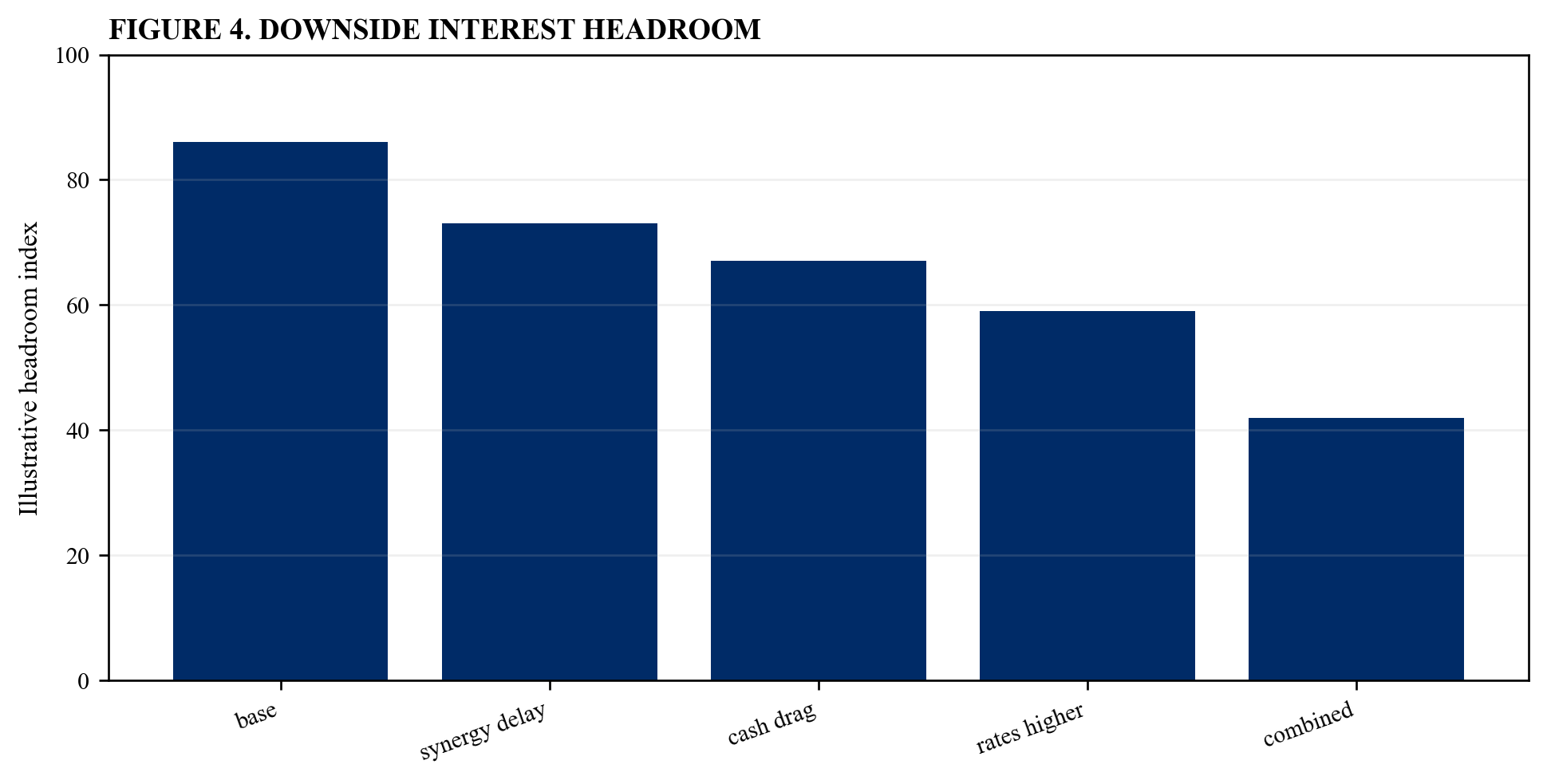
Illustrative analytical scenario; verified financing proposals should replace the index values.
34. Model lender and market stress
The transaction team should test unavailable syndication, fund liquidity pressure, bank balance-sheet limits, wider spreads and reduced hold capacity. The required output is a financing-market stress playbook. This establishes a consistent basis for comparing financing proposals and retaining the evidence behind the board's decision [1][2][18].
The work should identify the accountable owner, source data, calculation method, effective date, approval route and open conditions. Test each conclusion against binding proposal language, executed transaction documents, current operating evidence and the downside case. Retain assumptions until documentary or market evidence closes them.
The principal risk is that the preferred provider may be unable to extend or refinance exposure when the borrower needs support. Connect pricing with funding certainty, operational freedom, cash generation, covenant capacity, lender behaviour and the expected exit. A financing term is acceptable when it remains executable through the relevant operating and market conditions and its economic effect can be reproduced from retained evidence.
Review evidence in dated models; escalate material deviations with owners and deadlines.
35. Model a postponed exit
The transaction team should extend the hold period, refresh covenants, maturity runway, hedges, call protection and equity returns. The required output is a delayed-exit liquidity and refinancing case. This establishes a consistent basis for comparing financing proposals and retaining the evidence behind the board's decision [2][25].
The work should identify the accountable owner, source data, calculation method, effective date, approval route and open conditions. Test each conclusion against binding proposal language, executed transaction documents, current operating evidence and the downside case. Retain assumptions until documentary or market evidence closes them.
The principal risk is that maturity concentration can force a refinancing before the sponsor can realise the value plan. Connect pricing with funding certainty, operational freedom, cash generation, covenant capacity, lender behaviour and the expected exit. A financing term is acceptable when it remains executable through the relevant operating and market conditions and its economic effect can be reproduced from retained evidence.
Review evidence in dated models; escalate material deviations with owners and deadlines.
36. Design a hybrid stack
The transaction team should allocate term, revolving, delayed-draw, acquisition, asset-based and subordinated capacity to the providers best suited to each risk. The required output is a hybrid financing architecture with intercreditor requirements. This establishes a consistent basis for comparing financing proposals and retaining the evidence behind the board's decision [5][12].
The work should identify the accountable owner, source data, calculation method, effective date, approval route and open conditions. Test each conclusion against binding proposal language, executed transaction documents, current operating evidence and the downside case. Retain assumptions until documentary or market evidence closes them.
The principal risk is that multiple providers can improve fit while adding documentation, ranking and enforcement complexity. Connect pricing with funding certainty, operational freedom, cash generation, covenant capacity, lender behaviour and the expected exit. A financing term is acceptable when it remains executable through the relevant operating and market conditions and its economic effect can be reproduced from retained evidence.
Review evidence in dated models; escalate material deviations with owners and deadlines.
37. Run the competitive financing process
The transaction team should issue a consistent information pack, term sheet request, timetable, clarification log and comparison model. The required output is a auditable financing competition with normalised bids. This establishes a consistent basis for comparing financing proposals and retaining the evidence behind the board's decision [15][17].
The work should identify the accountable owner, source data, calculation method, effective date, approval route and open conditions. Test each conclusion against binding proposal language, executed transaction documents, current operating evidence and the downside case. Retain assumptions until documentary or market evidence closes them.
The principal risk is that asymmetric information can make proposals appear comparable while material conditions remain hidden. Connect pricing with funding certainty, operational freedom, cash generation, covenant capacity, lender behaviour and the expected exit. A financing term is acceptable when it remains executable through the relevant operating and market conditions and its economic effect can be reproduced from retained evidence.
Review evidence in dated models; escalate material deviations with owners and deadlines.
38. Prepare the credit evidence pack
The transaction team should reconcile historical trading, quality of earnings, forecast drivers, downside, liquidity, management and security. The required output is a lender-ready evidence file with accountable owners. This establishes a consistent basis for comparing financing proposals and retaining the evidence behind the board's decision [15][17].
The work should identify the accountable owner, source data, calculation method, effective date, approval route and open conditions. Test each conclusion against binding proposal language, executed transaction documents, current operating evidence and the downside case. Retain assumptions until documentary or market evidence closes them.
The principal risk is that unsupported confidence can increase lender conditions and reduce certainty late in the process. Connect pricing with funding certainty, operational freedom, cash generation, covenant capacity, lender behaviour and the expected exit. A financing term is acceptable when it remains executable through the relevant operating and market conditions and its economic effect can be reproduced from retained evidence.
Review evidence in dated models; escalate material deviations with owners and deadlines.
Table 5. Financing decision certificate
| Decision dimension | Required evidence | Board conclusion |
|---|---|---|
| whole life cost | normalised cash-flow comparison | acceptable or conditioned |
| commitment quality | closed funding condition map | acceptable or conditioned |
| operating flexibility | value-plan covenant model | acceptable or conditioned |
| downside and exit | stress and refinancing cases | acceptable or conditioned |
The board should retain proposal and modelling evidence.
39. Certify closing and first year controls
The transaction team should verify funding, hedging, reporting, covenant definitions, calendars, notices, permissions and relationship governance. The required output is a closing certificate and first-year debt calendar. This establishes a consistent basis for comparing financing proposals and retaining the evidence behind the board's decision [19][20].
The work should identify the accountable owner, source data, calculation method, effective date, approval route and open conditions. Test each conclusion against binding proposal language, executed transaction documents, current operating evidence and the downside case. Retain assumptions until documentary or market evidence closes them.
The principal risk is that value can leak through missed notices, avoidable defaults or inconsistent covenant calculations. Connect pricing with funding certainty, operational freedom, cash generation, covenant capacity, lender behaviour and the expected exit. A financing term is acceptable when it remains executable through the relevant operating and market conditions and its economic effect can be reproduced from retained evidence.
Review evidence in dated models; escalate material deviations with owners and deadlines.
40. Issue the financing conclusion
The transaction team should integrate whole-life cost, commitment quality, flexibility, downside resilience, lender fit and exit compatibility. The required output is a board financing decision with conditions and rejected alternatives. This establishes a consistent basis for comparing financing proposals and retaining the evidence behind the board's decision [1][2][3].
The work should identify the accountable owner, source data, calculation method, effective date, approval route and open conditions. Test each conclusion against binding proposal language, executed transaction documents, current operating evidence and the downside case. Retain assumptions until documentary or market evidence closes them.
The principal risk is that a single weighted score can conceal a fatal funding, control or refinancing weakness. Connect pricing with funding certainty, operational freedom, cash generation, covenant capacity, lender behaviour and the expected exit. A financing term is acceptable when it remains executable through the relevant operating and market conditions and its economic effect can be reproduced from retained evidence.
Review evidence in dated models; escalate material deviations with owners and deadlines.
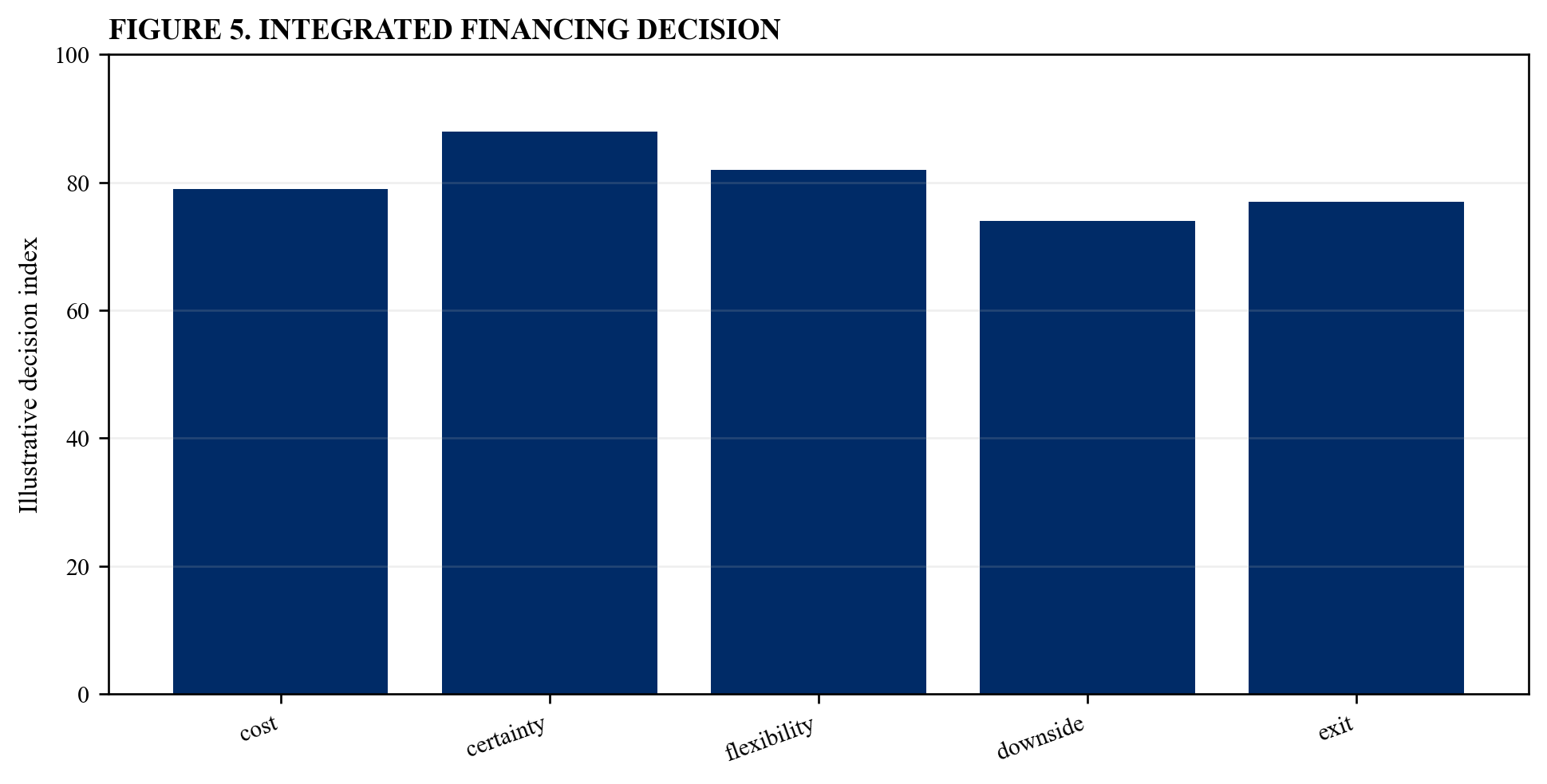
Illustrative analytical scenario; verified financing proposals should replace the index values.
References
- Bank of England, Financial Stability Report July 2026, https://www.bankofengland.co.uk/financial-stability-report/2026/july-2026
- European Central Bank, Stress in global private credit markets and its implications for euro area financial stability, https://www.ecb.europa.eu/press/financial-stability-publications/fsr/special/html/ecb.fsrart202605_04~3f2135af91.en.html
- International Monetary Fund, Global Financial Stability Report April 2024 Chapter 2 The Rise and Risks of Private Credit, https://www.imf.org/en/publications/gfsr/issues/2024/04/16/global-financial-stability-report-april-2024
- IFRS Foundation, IFRS 3 Business Combinations, https://www.ifrs.org/issued-standards/list-of-standards/ifrs-3-business-combinations/
- Bank for International Settlements, Private credit and financial stability, https://www.bis.org/publ/qtrpdf/r_qt2403e.htm
- European Banking Authority, Guidelines on loan origination and monitoring, https://www.eba.europa.eu/regulation-and-policy/credit-risk/guidelines-loan-origination-and-monitoring
- Bank of England, Yield curves, https://www.bankofengland.co.uk/statistics/yield-curves
- European Central Bank, Key ECB interest rates, https://www.ecb.europa.eu/stats/policy_and_exchange_rates/key_ecb_interest_rates/html/index.en.html
- European Securities and Markets Authority, Leveraged loans and collateralised loan obligations, https://www.esma.europa.eu/
- UK Financial Conduct Authority, Investment firms prudential regime, https://www.fca.org.uk/firms/investment-firms-prudential-regime
- Bank of England, Working Group on Sterling Risk-Free Reference Rates, https://www.bankofengland.co.uk/markets/transition-to-sterling-risk-free-rates-from-libor
- European Banking Authority, Guidelines on management of non-performing and forborne exposures, https://www.eba.europa.eu/regulation-and-policy/credit-risk/guidelines-management-non-performing-and-forborne-exposures
- UK Finance, Business finance guidance, https://www.ukfinance.org.uk/policy-and-guidance/guidance/business-finance
- IFRS Foundation, IFRS 9 Financial Instruments, https://www.ifrs.org/issued-standards/list-of-standards/ifrs-9-financial-instruments/
- European Banking Authority, Guidelines on leveraged transactions, https://www.eba.europa.eu/
- European Central Bank, Guidance on leveraged transactions, https://www.bankingsupervision.europa.eu/ecb/pub/pdf/ssm.leveraged_transactions_guidance_201705.en.pdf
- Financial Reporting Council, Standard for Investment Reporting 1000, https://www.frc.org.uk/library/standards-codes-policy/audit-assurance-and-ethics/standards-for-investment-reporting/
- Financial Stability Board, Vulnerabilities in private credit, https://www.fsb.org/2025/02/vulnerabilities-in-private-credit/
- UK Government, Money laundering regulations guidance, https://www.gov.uk/guidance/money-laundering-regulations-your-responsibilities
- European Banking Authority, Single Rulebook credit risk, https://www.eba.europa.eu/regulation-and-policy/single-rulebook
- International Accounting Standards Board, Business combinations disclosures goodwill and impairment project, https://www.ifrs.org/projects/work-plan/business-combinations-disclosures-goodwill-and-impairment/
- UK Financial Conduct Authority, Private market valuation practices review, https://www.fca.org.uk/publications/multi-firm-reviews/private-market-valuation-practices
- International Valuation Standards Council, IVS 500 Financial Instruments, https://www.ivsc.org/standards/
- IFRS Foundation, IAS 7 Statement of Cash Flows, https://www.ifrs.org/issued-standards/list-of-standards/ias-7-statement-of-cash-flows/
- International Monetary Fund, Global Financial Stability Report October 2025, https://www.imf.org/en/publications/gfsr/issues/2025/10/14/global-financial-stability-report-october-2025
- OECD, G20 OECD Principles of Corporate Governance 2023, https://www.oecd.org/corporate/principles-corporate-governance/
