

1. Define the procurement objective
The contracting authority should state service outcomes, value, competition and delivery requirements. The required output is an award-objective charter. Record the accountable owner, applicable rule, source evidence, decision criterion, approval, exception and review date [1][2].
Test the conclusion against effective competition, equal treatment, transparency, proportionality, integrity, consortium capability, financeability, service delivery, whole-life value and enforceable contract commitments. Preserve a secure audit trail from market analysis through award.
The principal risk is that process compliance can displace the public outcome. Quantify the effect on bidder participation, price, quality, risk allocation, financing, implementation, public payments, challenge exposure and trust. Compare the proposed approach with narrower criteria, alternative packaging, staged qualification, independent assurance and a lawful stop or retender.
Translate the conclusion into tender rules, disclosure, qualification, evaluation, approvals, contract conditions and monitoring. Refresh it after material ownership, membership, financing, market or bid change.
2. Map the supply market
The contracting authority should identify capable sponsors, operators, contractors, technology providers, lenders and constraints. The required output is a competition map. Record the accountable owner, applicable rule, source evidence, decision criterion, approval, exception and review date [3][4].
Test the conclusion against effective competition, equal treatment, transparency, proportionality, integrity, consortium capability, financeability, service delivery, whole-life value and enforceable contract commitments. Preserve a secure audit trail from market analysis through award.
The principal risk is that requirements can unintentionally exclude credible bidders. Quantify the effect on bidder participation, price, quality, risk allocation, financing, implementation, public payments, challenge exposure and trust. Compare the proposed approach with narrower criteria, alternative packaging, staged qualification, independent assurance and a lawful stop or retender.
Translate the conclusion into tender rules, disclosure, qualification, evaluation, approvals, contract conditions and monitoring. Refresh it after material ownership, membership, financing, market or bid change.
3. Choose the procurement strategy
The contracting authority should select open, restricted, dialogue, staged or negotiated procedures under applicable law. The required output is a procurement strategy. Record the accountable owner, applicable rule, source evidence, decision criterion, approval, exception and review date [5][6].
Test the conclusion against effective competition, equal treatment, transparency, proportionality, integrity, consortium capability, financeability, service delivery, whole-life value and enforceable contract commitments. Preserve a secure audit trail from market analysis through award.
The principal risk is that the procedure can lack flexibility or competitive tension. Quantify the effect on bidder participation, price, quality, risk allocation, financing, implementation, public payments, challenge exposure and trust. Compare the proposed approach with narrower criteria, alternative packaging, staged qualification, independent assurance and a lawful stop or retender.
Translate the conclusion into tender rules, disclosure, qualification, evaluation, approvals, contract conditions and monitoring. Refresh it after material ownership, membership, financing, market or bid change.
4. Design pro-competitive lots and scope
The contracting authority should test packaging, interfaces, scale and specialist access. The required output is a scope competition test. Record the accountable owner, applicable rule, source evidence, decision criterion, approval, exception and review date [3][7].
Test the conclusion against effective competition, equal treatment, transparency, proportionality, integrity, consortium capability, financeability, service delivery, whole-life value and enforceable contract commitments. Preserve a secure audit trail from market analysis through award.
The principal risk is that bundling can make only one consortium credible. Quantify the effect on bidder participation, price, quality, risk allocation, financing, implementation, public payments, challenge exposure and trust. Compare the proposed approach with narrower criteria, alternative packaging, staged qualification, independent assurance and a lawful stop or retender.
Translate the conclusion into tender rules, disclosure, qualification, evaluation, approvals, contract conditions and monitoring. Refresh it after material ownership, membership, financing, market or bid change.
5. Set transparent rules
The contracting authority should publish timetable, communications, decisions, confidentiality and change procedures. The required output is a bidder protocol. Record the accountable owner, applicable rule, source evidence, decision criterion, approval, exception and review date [1][8].
Test the conclusion against effective competition, equal treatment, transparency, proportionality, integrity, consortium capability, financeability, service delivery, whole-life value and enforceable contract commitments. Preserve a secure audit trail from market analysis through award.
The principal risk is that discretion can create unequal treatment or perceived favouritism. Quantify the effect on bidder participation, price, quality, risk allocation, financing, implementation, public payments, challenge exposure and trust. Compare the proposed approach with narrower criteria, alternative packaging, staged qualification, independent assurance and a lawful stop or retender.
Translate the conclusion into tender rules, disclosure, qualification, evaluation, approvals, contract conditions and monitoring. Refresh it after material ownership, membership, financing, market or bid change.
6. Define consortium eligibility
The contracting authority should specify legal capacity, formation, liability, representation and member commitments. The required output is an eligibility schedule. Record the accountable owner, applicable rule, source evidence, decision criterion, approval, exception and review date [9][10].
Test the conclusion against effective competition, equal treatment, transparency, proportionality, integrity, consortium capability, financeability, service delivery, whole-life value and enforceable contract commitments. Preserve a secure audit trail from market analysis through award.
The principal risk is that an informal group can bid without enforceable collective responsibility. Quantify the effect on bidder participation, price, quality, risk allocation, financing, implementation, public payments, challenge exposure and trust. Compare the proposed approach with narrower criteria, alternative packaging, staged qualification, independent assurance and a lawful stop or retender.
Translate the conclusion into tender rules, disclosure, qualification, evaluation, approvals, contract conditions and monitoring. Refresh it after material ownership, membership, financing, market or bid change.
7. Identify beneficial ownership
The contracting authority should trace control, affiliates, nominees and politically exposed interests. The required output is an ownership register. Record the accountable owner, applicable rule, source evidence, decision criterion, approval, exception and review date [11][12].
Test the conclusion against effective competition, equal treatment, transparency, proportionality, integrity, consortium capability, financeability, service delivery, whole-life value and enforceable contract commitments. Preserve a secure audit trail from market analysis through award.
The principal risk is that hidden common control can undermine competition and integrity. Quantify the effect on bidder participation, price, quality, risk allocation, financing, implementation, public payments, challenge exposure and trust. Compare the proposed approach with narrower criteria, alternative packaging, staged qualification, independent assurance and a lawful stop or retender.
Translate the conclusion into tender rules, disclosure, qualification, evaluation, approvals, contract conditions and monitoring. Refresh it after material ownership, membership, financing, market or bid change.
8. Screen integrity and exclusion grounds
The contracting authority should test convictions, debarment, sanctions, tax, insolvency and misconduct. The required output is an integrity clearance. Record the accountable owner, applicable rule, source evidence, decision criterion, approval, exception and review date [1][13].
Test the conclusion against effective competition, equal treatment, transparency, proportionality, integrity, consortium capability, financeability, service delivery, whole-life value and enforceable contract commitments. Preserve a secure audit trail from market analysis through award.
The principal risk is that a qualified technical bidder can carry unacceptable legal or reputational risk. Quantify the effect on bidder participation, price, quality, risk allocation, financing, implementation, public payments, challenge exposure and trust. Compare the proposed approach with narrower criteria, alternative packaging, staged qualification, independent assurance and a lawful stop or retender.
Translate the conclusion into tender rules, disclosure, qualification, evaluation, approvals, contract conditions and monitoring. Refresh it after material ownership, membership, financing, market or bid change.
Table 1. Consortium integrity screen
| Dimension | Evidence | Gate |
|---|---|---|
| ownership | beneficial-owner map | clear or investigate |
| exclusion | sanctions and debarment | pass or exclude |
| conflicts | relationship register | mitigate or exclude |
| capacity | critical-member evidence | qualify or reject |
Illustrative analytical structure; applicable law and verified procurement evidence govern.
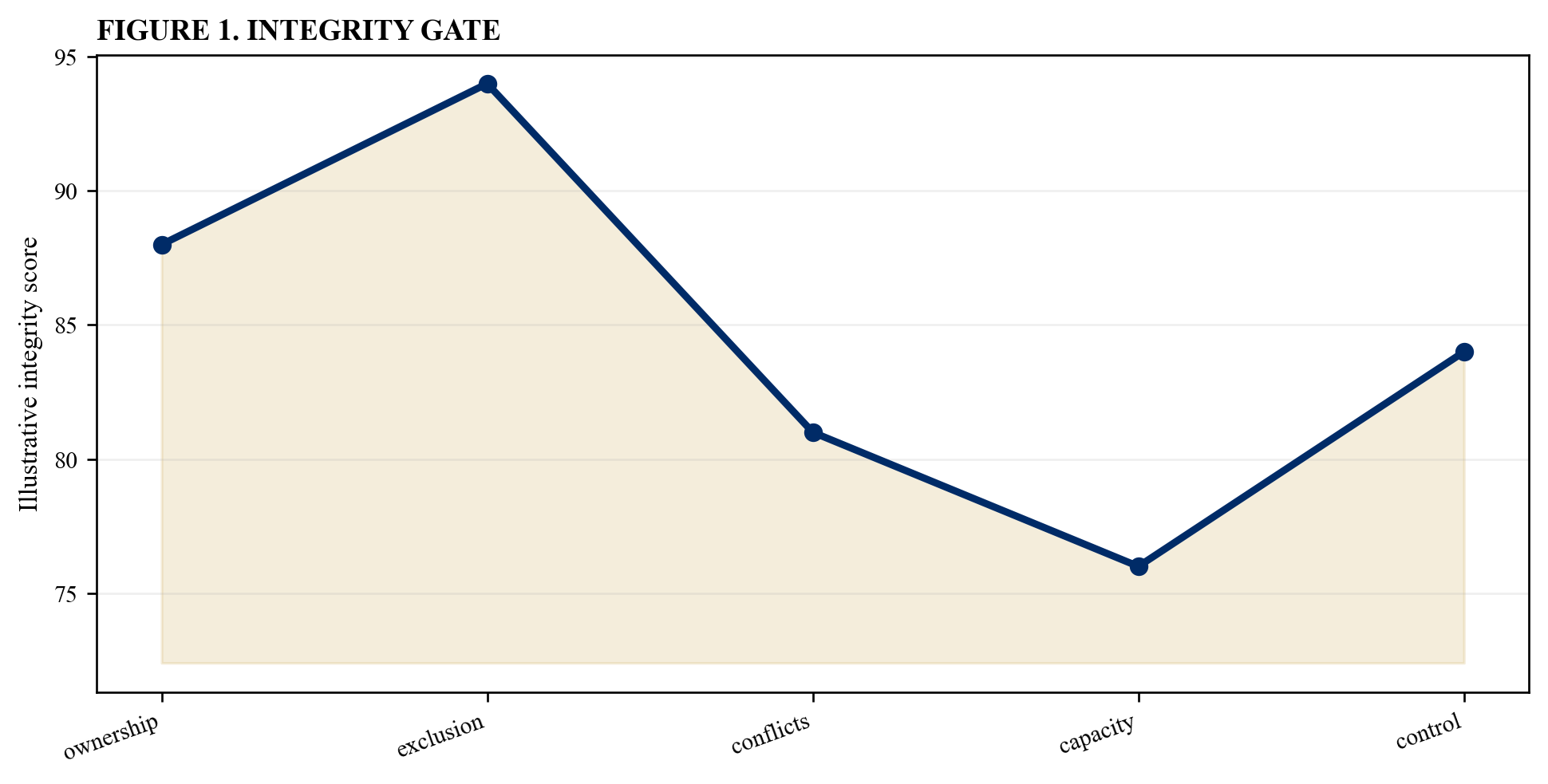
Illustrative analytical scenario; verified procurement evidence should replace values.
9. Control cross-consortium participation
The contracting authority should govern members, affiliates, advisors, suppliers and essential specialists appearing in multiple bids. The required output is a participation matrix. Record the accountable owner, applicable rule, source evidence, decision criterion, approval, exception and review date [9][14].
Test the conclusion against effective competition, equal treatment, transparency, proportionality, integrity, consortium capability, financeability, service delivery, whole-life value and enforceable contract commitments. Preserve a secure audit trail from market analysis through award.
The principal risk is that shared parties can enable information leakage or collusion. Quantify the effect on bidder participation, price, quality, risk allocation, financing, implementation, public payments, challenge exposure and trust. Compare the proposed approach with narrower criteria, alternative packaging, staged qualification, independent assurance and a lawful stop or retender.
Translate the conclusion into tender rules, disclosure, qualification, evaluation, approvals, contract conditions and monitoring. Refresh it after material ownership, membership, financing, market or bid change.
10. Test conflicts of interest
The contracting authority should review authority, advisor, evaluator, bidder and related-party relationships. The required output is a conflict register. Record the accountable owner, applicable rule, source evidence, decision criterion, approval, exception and review date [15][16].
Test the conclusion against effective competition, equal treatment, transparency, proportionality, integrity, consortium capability, financeability, service delivery, whole-life value and enforceable contract commitments. Preserve a secure audit trail from market analysis through award.
The principal risk is that undisclosed interests can distort design, access or scoring. Quantify the effect on bidder participation, price, quality, risk allocation, financing, implementation, public payments, challenge exposure and trust. Compare the proposed approach with narrower criteria, alternative packaging, staged qualification, independent assurance and a lawful stop or retender.
Translate the conclusion into tender rules, disclosure, qualification, evaluation, approvals, contract conditions and monitoring. Refresh it after material ownership, membership, financing, market or bid change.
11. Qualify collective capability
The contracting authority should assess whether combined skills cover design, build, finance, operate and handback. The required output is a consortium capability map. Record the accountable owner, applicable rule, source evidence, decision criterion, approval, exception and review date [9][17].
Test the conclusion against effective competition, equal treatment, transparency, proportionality, integrity, consortium capability, financeability, service delivery, whole-life value and enforceable contract commitments. Preserve a secure audit trail from market analysis through award.
The principal risk is that strong individual credentials may not form a workable delivery system. Quantify the effect on bidder participation, price, quality, risk allocation, financing, implementation, public payments, challenge exposure and trust. Compare the proposed approach with narrower criteria, alternative packaging, staged qualification, independent assurance and a lawful stop or retender.
Translate the conclusion into tender rules, disclosure, qualification, evaluation, approvals, contract conditions and monitoring. Refresh it after material ownership, membership, financing, market or bid change.
12. Qualify critical members individually
The contracting authority should identify capabilities and capital that cannot be averaged across the group. The required output is a critical-member test. Record the accountable owner, applicable rule, source evidence, decision criterion, approval, exception and review date [9][18].
Test the conclusion against effective competition, equal treatment, transparency, proportionality, integrity, consortium capability, financeability, service delivery, whole-life value and enforceable contract commitments. Preserve a secure audit trail from market analysis through award.
The principal risk is that a weak essential party can hide behind aggregate consortium strength. Quantify the effect on bidder participation, price, quality, risk allocation, financing, implementation, public payments, challenge exposure and trust. Compare the proposed approach with narrower criteria, alternative packaging, staged qualification, independent assurance and a lawful stop or retender.
Translate the conclusion into tender rules, disclosure, qualification, evaluation, approvals, contract conditions and monitoring. Refresh it after material ownership, membership, financing, market or bid change.
13. Test relevant experience
The contracting authority should verify comparable scale, complexity, jurisdiction, technology and performance. The required output is an experience evidence file. Record the accountable owner, applicable rule, source evidence, decision criterion, approval, exception and review date [17][19].
Test the conclusion against effective competition, equal treatment, transparency, proportionality, integrity, consortium capability, financeability, service delivery, whole-life value and enforceable contract commitments. Preserve a secure audit trail from market analysis through award.
The principal risk is that headline credentials can rely on remote affiliates or unrelated projects. Quantify the effect on bidder participation, price, quality, risk allocation, financing, implementation, public payments, challenge exposure and trust. Compare the proposed approach with narrower criteria, alternative packaging, staged qualification, independent assurance and a lawful stop or retender.
Translate the conclusion into tender rules, disclosure, qualification, evaluation, approvals, contract conditions and monitoring. Refresh it after material ownership, membership, financing, market or bid change.
14. Test financial capacity
The contracting authority should assess net worth, liquidity, leverage, commitments, guarantees and downside resilience. The required output is a financial-capacity model. Record the accountable owner, applicable rule, source evidence, decision criterion, approval, exception and review date [20][21].
Test the conclusion against effective competition, equal treatment, transparency, proportionality, integrity, consortium capability, financeability, service delivery, whole-life value and enforceable contract commitments. Preserve a secure audit trail from market analysis through award.
The principal risk is that members may lack capital to sustain construction and operating stress. Quantify the effect on bidder participation, price, quality, risk allocation, financing, implementation, public payments, challenge exposure and trust. Compare the proposed approach with narrower criteria, alternative packaging, staged qualification, independent assurance and a lawful stop or retender.
Translate the conclusion into tender rules, disclosure, qualification, evaluation, approvals, contract conditions and monitoring. Refresh it after material ownership, membership, financing, market or bid change.
15. Test financing credibility
The contracting authority should require lender engagement, sources, terms, conditions, hedging and support evidence. The required output is a financeability assessment. Record the accountable owner, applicable rule, source evidence, decision criterion, approval, exception and review date [22][23].
Test the conclusion against effective competition, equal treatment, transparency, proportionality, integrity, consortium capability, financeability, service delivery, whole-life value and enforceable contract commitments. Preserve a secure audit trail from market analysis through award.
The principal risk is that a low price can depend on unavailable or conditional funding. Quantify the effect on bidder participation, price, quality, risk allocation, financing, implementation, public payments, challenge exposure and trust. Compare the proposed approach with narrower criteria, alternative packaging, staged qualification, independent assurance and a lawful stop or retender.
Translate the conclusion into tender rules, disclosure, qualification, evaluation, approvals, contract conditions and monitoring. Refresh it after material ownership, membership, financing, market or bid change.
16. Test delivery interfaces
The contracting authority should map sponsor, EPC, O&M, technology, supply and financing obligations. The required output is an interface responsibility matrix. Record the accountable owner, applicable rule, source evidence, decision criterion, approval, exception and review date [24][25].
Test the conclusion against effective competition, equal treatment, transparency, proportionality, integrity, consortium capability, financeability, service delivery, whole-life value and enforceable contract commitments. Preserve a secure audit trail from market analysis through award.
The principal risk is that gaps between consortium members can become claims and service failure. Quantify the effect on bidder participation, price, quality, risk allocation, financing, implementation, public payments, challenge exposure and trust. Compare the proposed approach with narrower criteria, alternative packaging, staged qualification, independent assurance and a lawful stop or retender.
Translate the conclusion into tender rules, disclosure, qualification, evaluation, approvals, contract conditions and monitoring. Refresh it after material ownership, membership, financing, market or bid change.
Table 2. Consortium capability map
| Role | Core evidence | Contract control |
|---|---|---|
| sponsor | capital and governance | equity lock-in |
| contractor | delivery record | performance security |
| operator | service capability | key O&M contract |
| lender | credit terms | funding condition |
Illustrative analytical structure; applicable law and verified procurement evidence govern.
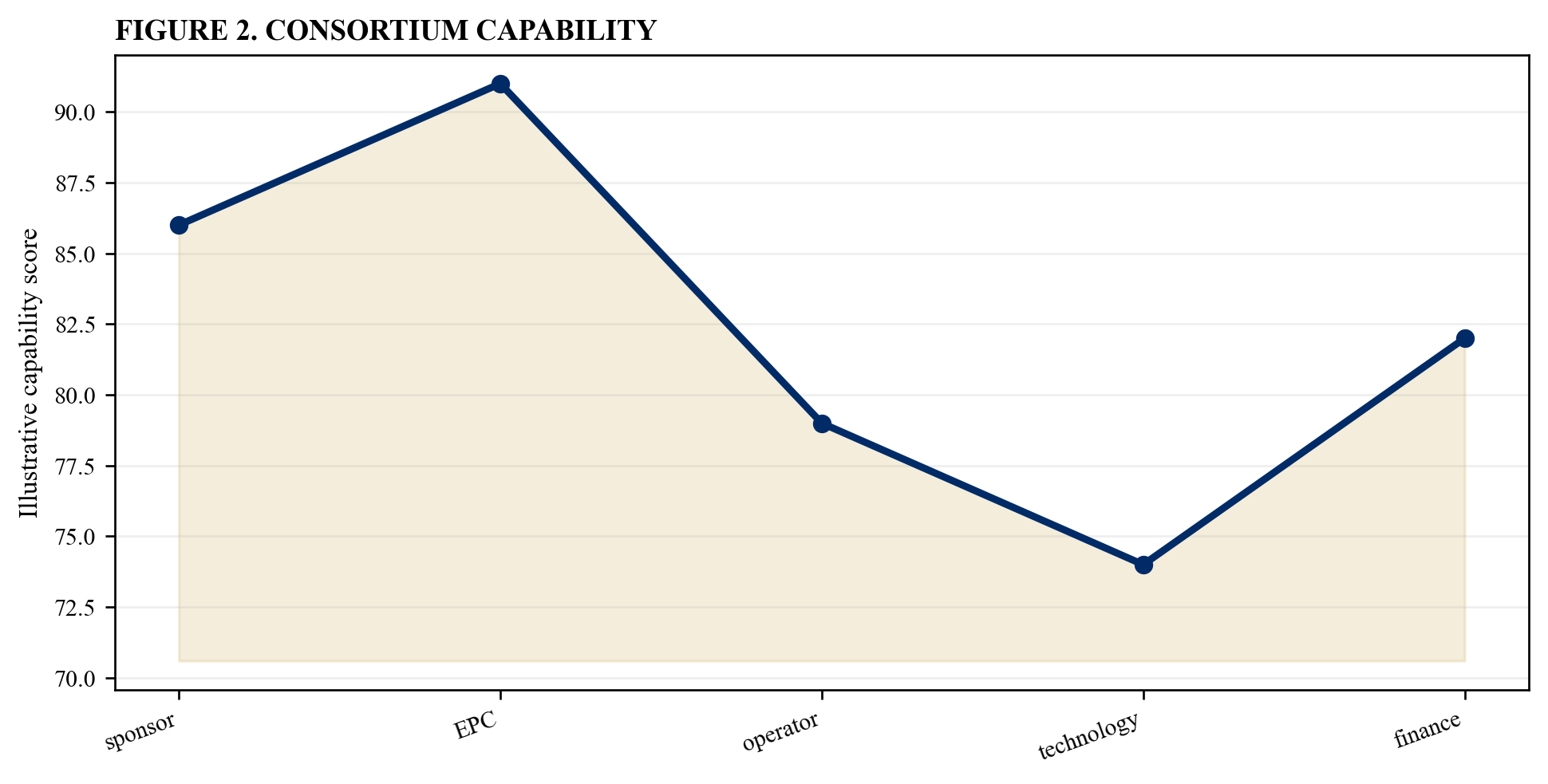
Illustrative analytical scenario; verified procurement evidence should replace values.
17. Set minimum participation commitments
The contracting authority should define equity, liability, lock-in, key contracts and parent support. The required output is a member commitment schedule. Record the accountable owner, applicable rule, source evidence, decision criterion, approval, exception and review date [10][26].
Test the conclusion against effective competition, equal treatment, transparency, proportionality, integrity, consortium capability, financeability, service delivery, whole-life value and enforceable contract commitments. Preserve a secure audit trail from market analysis through award.
The principal risk is that credentials can be borrowed for qualification and withdrawn after award. Quantify the effect on bidder participation, price, quality, risk allocation, financing, implementation, public payments, challenge exposure and trust. Compare the proposed approach with narrower criteria, alternative packaging, staged qualification, independent assurance and a lawful stop or retender.
Translate the conclusion into tender rules, disclosure, qualification, evaluation, approvals, contract conditions and monitoring. Refresh it after material ownership, membership, financing, market or bid change.
18. Control consortium changes
The contracting authority should set consent, equivalence, timing, competition and disclosure tests. The required output is a change-control protocol. Record the accountable owner, applicable rule, source evidence, decision criterion, approval, exception and review date [9][27].
Test the conclusion against effective competition, equal treatment, transparency, proportionality, integrity, consortium capability, financeability, service delivery, whole-life value and enforceable contract commitments. Preserve a secure audit trail from market analysis through award.
The principal risk is that post-qualification replacement can alter the evaluated bidder. Quantify the effect on bidder participation, price, quality, risk allocation, financing, implementation, public payments, challenge exposure and trust. Compare the proposed approach with narrower criteria, alternative packaging, staged qualification, independent assurance and a lawful stop or retender.
Translate the conclusion into tender rules, disclosure, qualification, evaluation, approvals, contract conditions and monitoring. Refresh it after material ownership, membership, financing, market or bid change.
19. Govern key subcontractors
The contracting authority should identify relied-upon capability, exclusivity, substitution and performance responsibility. The required output is a critical-subcontractor register. Record the accountable owner, applicable rule, source evidence, decision criterion, approval, exception and review date [24][28].
Test the conclusion against effective competition, equal treatment, transparency, proportionality, integrity, consortium capability, financeability, service delivery, whole-life value and enforceable contract commitments. Preserve a secure audit trail from market analysis through award.
The principal risk is that material delivery risk can sit outside evaluated consortium members. Quantify the effect on bidder participation, price, quality, risk allocation, financing, implementation, public payments, challenge exposure and trust. Compare the proposed approach with narrower criteria, alternative packaging, staged qualification, independent assurance and a lawful stop or retender.
Translate the conclusion into tender rules, disclosure, qualification, evaluation, approvals, contract conditions and monitoring. Refresh it after material ownership, membership, financing, market or bid change.
20. Create an equal information baseline
The contracting authority should provide consistent data-room access, updates, questions and answers. The required output is an information-equality log. Record the accountable owner, applicable rule, source evidence, decision criterion, approval, exception and review date [8][29].
Test the conclusion against effective competition, equal treatment, transparency, proportionality, integrity, consortium capability, financeability, service delivery, whole-life value and enforceable contract commitments. Preserve a secure audit trail from market analysis through award.
The principal risk is that selective information can influence price and risk allocation. Quantify the effect on bidder participation, price, quality, risk allocation, financing, implementation, public payments, challenge exposure and trust. Compare the proposed approach with narrower criteria, alternative packaging, staged qualification, independent assurance and a lawful stop or retender.
Translate the conclusion into tender rules, disclosure, qualification, evaluation, approvals, contract conditions and monitoring. Refresh it after material ownership, membership, financing, market or bid change.
21. Structure competitive dialogue
The contracting authority should define topics, confidentiality, solution development and common updates. The required output is a dialogue protocol. Record the accountable owner, applicable rule, source evidence, decision criterion, approval, exception and review date [5][30].
Test the conclusion against effective competition, equal treatment, transparency, proportionality, integrity, consortium capability, financeability, service delivery, whole-life value and enforceable contract commitments. Preserve a secure audit trail from market analysis through award.
The principal risk is that bilateral engagement can tailor the tender to one solution. Quantify the effect on bidder participation, price, quality, risk allocation, financing, implementation, public payments, challenge exposure and trust. Compare the proposed approach with narrower criteria, alternative packaging, staged qualification, independent assurance and a lawful stop or retender.
Translate the conclusion into tender rules, disclosure, qualification, evaluation, approvals, contract conditions and monitoring. Refresh it after material ownership, membership, financing, market or bid change.
22. Control clarifications
The contracting authority should separate explanation from material bid amendment and record every decision. The required output is a clarification ledger. Record the accountable owner, applicable rule, source evidence, decision criterion, approval, exception and review date [6][31].
Test the conclusion against effective competition, equal treatment, transparency, proportionality, integrity, consortium capability, financeability, service delivery, whole-life value and enforceable contract commitments. Preserve a secure audit trail from market analysis through award.
The principal risk is that clarification can become unequal negotiation after submission. Quantify the effect on bidder participation, price, quality, risk allocation, financing, implementation, public payments, challenge exposure and trust. Compare the proposed approach with narrower criteria, alternative packaging, staged qualification, independent assurance and a lawful stop or retender.
Translate the conclusion into tender rules, disclosure, qualification, evaluation, approvals, contract conditions and monitoring. Refresh it after material ownership, membership, financing, market or bid change.
23. Define evaluation criteria early
The contracting authority should set technical, service, risk, price, finance and deliverability criteria before bids. The required output is an approved scoring framework. Record the accountable owner, applicable rule, source evidence, decision criterion, approval, exception and review date [1][32].
Test the conclusion against effective competition, equal treatment, transparency, proportionality, integrity, consortium capability, financeability, service delivery, whole-life value and enforceable contract commitments. Preserve a secure audit trail from market analysis through award.
The principal risk is that criteria can be adjusted after evaluators see bidder positions. Quantify the effect on bidder participation, price, quality, risk allocation, financing, implementation, public payments, challenge exposure and trust. Compare the proposed approach with narrower criteria, alternative packaging, staged qualification, independent assurance and a lawful stop or retender.
Translate the conclusion into tender rules, disclosure, qualification, evaluation, approvals, contract conditions and monitoring. Refresh it after material ownership, membership, financing, market or bid change.
24. Calibrate weights and thresholds
The contracting authority should test scoring sensitivity, minimum quality and price interaction. The required output is an evaluation simulation. Record the accountable owner, applicable rule, source evidence, decision criterion, approval, exception and review date [32][33].
Test the conclusion against effective competition, equal treatment, transparency, proportionality, integrity, consortium capability, financeability, service delivery, whole-life value and enforceable contract commitments. Preserve a secure audit trail from market analysis through award.
The principal risk is that small scoring choices can predetermine the preferred consortium. Quantify the effect on bidder participation, price, quality, risk allocation, financing, implementation, public payments, challenge exposure and trust. Compare the proposed approach with narrower criteria, alternative packaging, staged qualification, independent assurance and a lawful stop or retender.
Translate the conclusion into tender rules, disclosure, qualification, evaluation, approvals, contract conditions and monitoring. Refresh it after material ownership, membership, financing, market or bid change.
Table 3. Illustrative evaluation model
| Dimension | Illustrative weight | Threshold |
|---|---|---|
| service and technical | 35 | minimum quality |
| commercial and risk | 25 | compliant allocation |
| financeability | 15 | credible funding |
| whole-life value | 25 | best evaluated value |
Illustrative analytical structure; applicable law and verified procurement evidence govern.
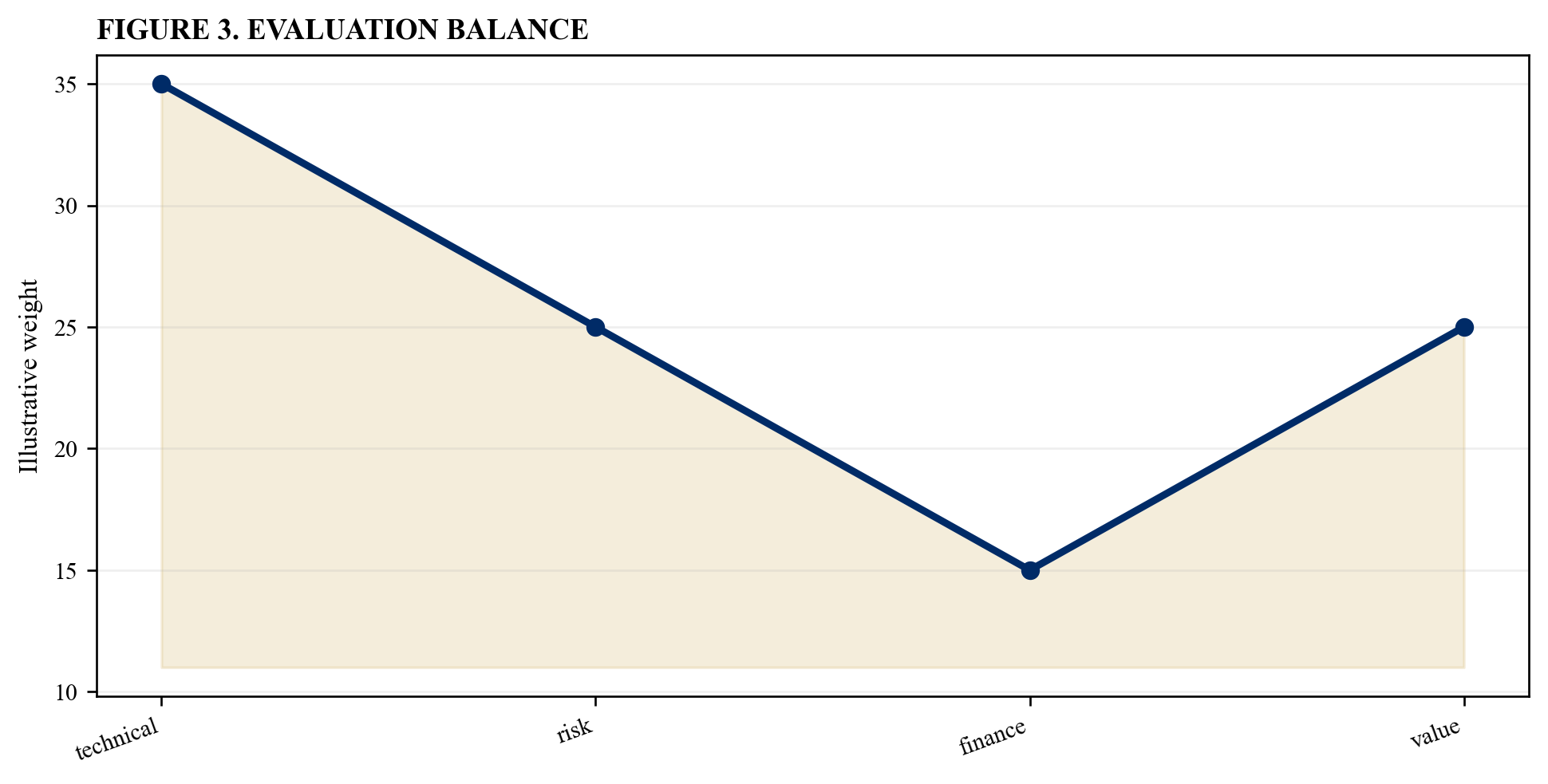
Illustrative analytical scenario; verified procurement evidence should replace values.
25. Appoint an independent evaluation team
The contracting authority should verify competence, conflicts, roles, moderation and approvals. The required output is an evaluator governance plan. Record the accountable owner, applicable rule, source evidence, decision criterion, approval, exception and review date [15][34].
Test the conclusion against effective competition, equal treatment, transparency, proportionality, integrity, consortium capability, financeability, service delivery, whole-life value and enforceable contract commitments. Preserve a secure audit trail from market analysis through award.
The principal risk is that untrained or conflicted reviewers can produce inconsistent scores. Quantify the effect on bidder participation, price, quality, risk allocation, financing, implementation, public payments, challenge exposure and trust. Compare the proposed approach with narrower criteria, alternative packaging, staged qualification, independent assurance and a lawful stop or retender.
Translate the conclusion into tender rules, disclosure, qualification, evaluation, approvals, contract conditions and monitoring. Refresh it after material ownership, membership, financing, market or bid change.
26. Secure bid information
The contracting authority should control access, encryption, logs, segregation and retention. The required output is a bid-security protocol. Record the accountable owner, applicable rule, source evidence, decision criterion, approval, exception and review date [29][35].
Test the conclusion against effective competition, equal treatment, transparency, proportionality, integrity, consortium capability, financeability, service delivery, whole-life value and enforceable contract commitments. Preserve a secure audit trail from market analysis through award.
The principal risk is that leakage can damage competition and bidder confidence. Quantify the effect on bidder participation, price, quality, risk allocation, financing, implementation, public payments, challenge exposure and trust. Compare the proposed approach with narrower criteria, alternative packaging, staged qualification, independent assurance and a lawful stop or retender.
Translate the conclusion into tender rules, disclosure, qualification, evaluation, approvals, contract conditions and monitoring. Refresh it after material ownership, membership, financing, market or bid change.
27. Detect collusion indicators
The contracting authority should analyse pricing, metadata, language, contacts, subcontracting and bid patterns. The required output is a bid-rigging red-flag review. Record the accountable owner, applicable rule, source evidence, decision criterion, approval, exception and review date [3][36].
Test the conclusion against effective competition, equal treatment, transparency, proportionality, integrity, consortium capability, financeability, service delivery, whole-life value and enforceable contract commitments. Preserve a secure audit trail from market analysis through award.
The principal risk is that formal competition can conceal coordinated bids. Quantify the effect on bidder participation, price, quality, risk allocation, financing, implementation, public payments, challenge exposure and trust. Compare the proposed approach with narrower criteria, alternative packaging, staged qualification, independent assurance and a lawful stop or retender.
Translate the conclusion into tender rules, disclosure, qualification, evaluation, approvals, contract conditions and monitoring. Refresh it after material ownership, membership, financing, market or bid change.
28. Test abnormally low bids
The contracting authority should request explanations of cost, productivity, risk, subsidy and compliance. The required output is a low-bid credibility report. Record the accountable owner, applicable rule, source evidence, decision criterion, approval, exception and review date [4][37].
Test the conclusion against effective competition, equal treatment, transparency, proportionality, integrity, consortium capability, financeability, service delivery, whole-life value and enforceable contract commitments. Preserve a secure audit trail from market analysis through award.
The principal risk is that underpricing can win award and reappear as renegotiation or failure. Quantify the effect on bidder participation, price, quality, risk allocation, financing, implementation, public payments, challenge exposure and trust. Compare the proposed approach with narrower criteria, alternative packaging, staged qualification, independent assurance and a lawful stop or retender.
Translate the conclusion into tender rules, disclosure, qualification, evaluation, approvals, contract conditions and monitoring. Refresh it after material ownership, membership, financing, market or bid change.
29. Audit financial models
The contracting authority should test inputs, formulas, consistency, financing, tax and scenario resilience. The required output is an independent model audit. Record the accountable owner, applicable rule, source evidence, decision criterion, approval, exception and review date [22][38].
Test the conclusion against effective competition, equal treatment, transparency, proportionality, integrity, consortium capability, financeability, service delivery, whole-life value and enforceable contract commitments. Preserve a secure audit trail from market analysis through award.
The principal risk is that opaque errors can drive price ranking and fiscal exposure. Quantify the effect on bidder participation, price, quality, risk allocation, financing, implementation, public payments, challenge exposure and trust. Compare the proposed approach with narrower criteria, alternative packaging, staged qualification, independent assurance and a lawful stop or retender.
Translate the conclusion into tender rules, disclosure, qualification, evaluation, approvals, contract conditions and monitoring. Refresh it after material ownership, membership, financing, market or bid change.
30. Normalise permitted differences
The contracting authority should compare assumptions, exclusions, indexation, risk positions and innovations transparently. The required output is a bid-normalisation bridge. Record the accountable owner, applicable rule, source evidence, decision criterion, approval, exception and review date [32][39].
Test the conclusion against effective competition, equal treatment, transparency, proportionality, integrity, consortium capability, financeability, service delivery, whole-life value and enforceable contract commitments. Preserve a secure audit trail from market analysis through award.
The principal risk is that headline prices can measure different obligations. Quantify the effect on bidder participation, price, quality, risk allocation, financing, implementation, public payments, challenge exposure and trust. Compare the proposed approach with narrower criteria, alternative packaging, staged qualification, independent assurance and a lawful stop or retender.
Translate the conclusion into tender rules, disclosure, qualification, evaluation, approvals, contract conditions and monitoring. Refresh it after material ownership, membership, financing, market or bid change.
31. Moderate qualitative scoring
The contracting authority should require evidence-based reasons, calibration and dissent records. The required output is a moderation report. Record the accountable owner, applicable rule, source evidence, decision criterion, approval, exception and review date [34][40].
Test the conclusion against effective competition, equal treatment, transparency, proportionality, integrity, consortium capability, financeability, service delivery, whole-life value and enforceable contract commitments. Preserve a secure audit trail from market analysis through award.
The principal risk is that subjective scores can become untraceable consensus. Quantify the effect on bidder participation, price, quality, risk allocation, financing, implementation, public payments, challenge exposure and trust. Compare the proposed approach with narrower criteria, alternative packaging, staged qualification, independent assurance and a lawful stop or retender.
Translate the conclusion into tender rules, disclosure, qualification, evaluation, approvals, contract conditions and monitoring. Refresh it after material ownership, membership, financing, market or bid change.
32. Evaluate whole-life value
The contracting authority should integrate service, risk, resilience, flexibility, financing and fiscal cost. The required output is a value-for-money recommendation. Record the accountable owner, applicable rule, source evidence, decision criterion, approval, exception and review date [2][23].
Test the conclusion against effective competition, equal treatment, transparency, proportionality, integrity, consortium capability, financeability, service delivery, whole-life value and enforceable contract commitments. Preserve a secure audit trail from market analysis through award.
The principal risk is that lowest nominal payment can create higher lifecycle cost. Quantify the effect on bidder participation, price, quality, risk allocation, financing, implementation, public payments, challenge exposure and trust. Compare the proposed approach with narrower criteria, alternative packaging, staged qualification, independent assurance and a lawful stop or retender.
Translate the conclusion into tender rules, disclosure, qualification, evaluation, approvals, contract conditions and monitoring. Refresh it after material ownership, membership, financing, market or bid change.
Table 4. Illustrative integrity dashboard
| Indicator | Illustrative score | Response |
|---|---|---|
| competition | 78 | monitor concentration |
| information equality | 94 | retain logs |
| evaluation traceability | 86 | complete moderation |
| financing credibility | 71 | refresh evidence |
Illustrative analytical structure; applicable law and verified procurement evidence govern.
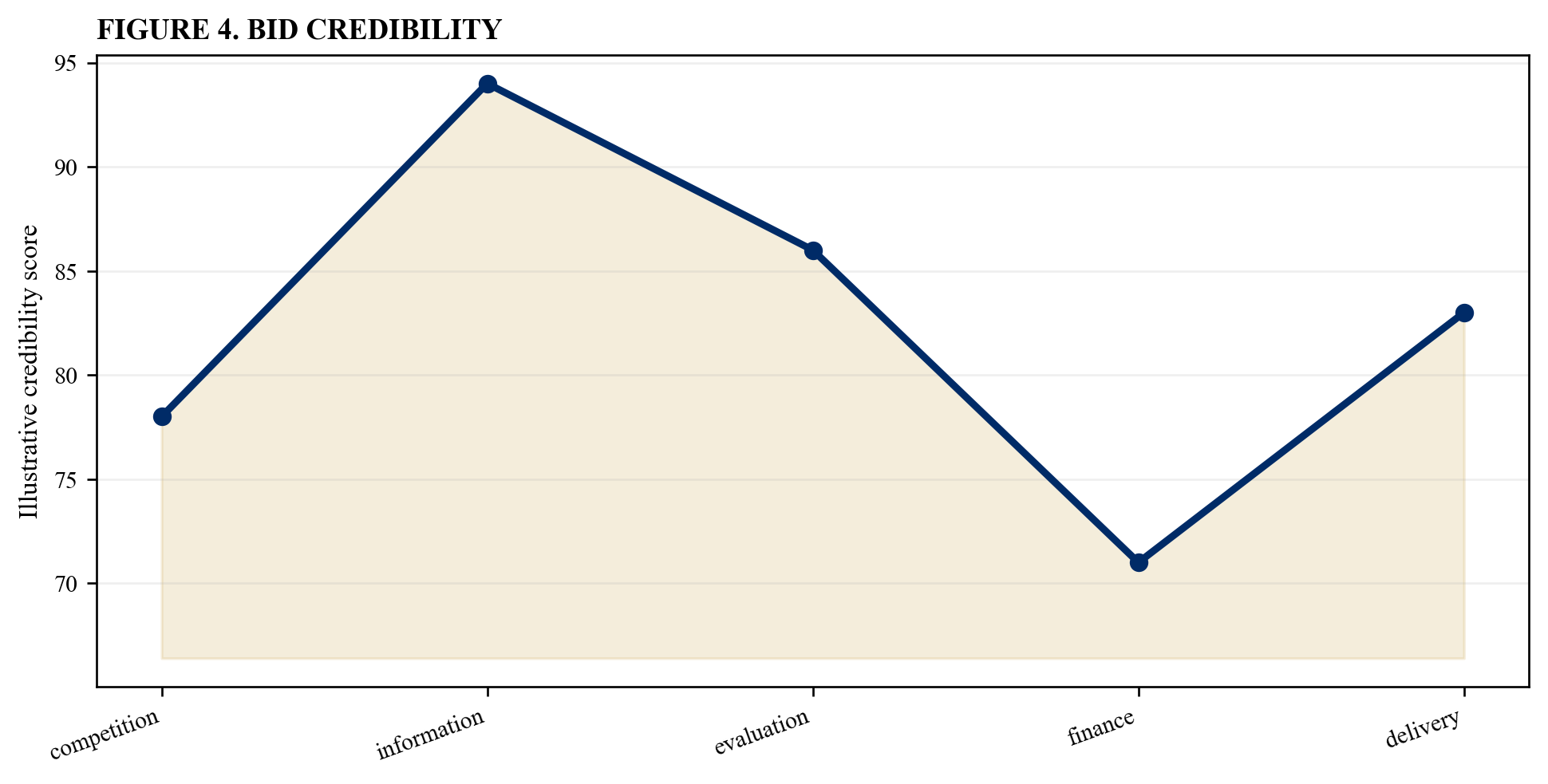
Illustrative analytical scenario; verified procurement evidence should replace values.
33. Control preferred-bidder negotiation
The contracting authority should limit changes, preserve evaluated value and require approvals. The required output is a negotiation boundary. Record the accountable owner, applicable rule, source evidence, decision criterion, approval, exception and review date [6][31].
Test the conclusion against effective competition, equal treatment, transparency, proportionality, integrity, consortium capability, financeability, service delivery, whole-life value and enforceable contract commitments. Preserve a secure audit trail from market analysis through award.
The principal risk is that material post-bid changes can defeat the competitive award. Quantify the effect on bidder participation, price, quality, risk allocation, financing, implementation, public payments, challenge exposure and trust. Compare the proposed approach with narrower criteria, alternative packaging, staged qualification, independent assurance and a lawful stop or retender.
Translate the conclusion into tender rules, disclosure, qualification, evaluation, approvals, contract conditions and monitoring. Refresh it after material ownership, membership, financing, market or bid change.
34. Reconfirm consortium and finance
The contracting authority should refresh ownership, membership, sanctions, commitments and financing before award. The required output is an award refresh. Record the accountable owner, applicable rule, source evidence, decision criterion, approval, exception and review date [12][27].
Test the conclusion against effective competition, equal treatment, transparency, proportionality, integrity, consortium capability, financeability, service delivery, whole-life value and enforceable contract commitments. Preserve a secure audit trail from market analysis through award.
The principal risk is that the entity awarded can differ from the one qualified and evaluated. Quantify the effect on bidder participation, price, quality, risk allocation, financing, implementation, public payments, challenge exposure and trust. Compare the proposed approach with narrower criteria, alternative packaging, staged qualification, independent assurance and a lawful stop or retender.
Translate the conclusion into tender rules, disclosure, qualification, evaluation, approvals, contract conditions and monitoring. Refresh it after material ownership, membership, financing, market or bid change.
35. Provide challenge and standstill
The contracting authority should give reasons, records and lawful review before contract execution. The required output is a challenge protocol. Record the accountable owner, applicable rule, source evidence, decision criterion, approval, exception and review date [1][8].
Test the conclusion against effective competition, equal treatment, transparency, proportionality, integrity, consortium capability, financeability, service delivery, whole-life value and enforceable contract commitments. Preserve a secure audit trail from market analysis through award.
The principal risk is that weak remedies can reduce trust and conceal evaluation error. Quantify the effect on bidder participation, price, quality, risk allocation, financing, implementation, public payments, challenge exposure and trust. Compare the proposed approach with narrower criteria, alternative packaging, staged qualification, independent assurance and a lawful stop or retender.
Translate the conclusion into tender rules, disclosure, qualification, evaluation, approvals, contract conditions and monitoring. Refresh it after material ownership, membership, financing, market or bid change.
36. Disclose the award
The contracting authority should publish bidders, decision rationale, contract features and permitted redactions. The required output is an award disclosure. Record the accountable owner, applicable rule, source evidence, decision criterion, approval, exception and review date [8][29].
Test the conclusion against effective competition, equal treatment, transparency, proportionality, integrity, consortium capability, financeability, service delivery, whole-life value and enforceable contract commitments. Preserve a secure audit trail from market analysis through award.
The principal risk is that opaque results weaken accountability and future competition. Quantify the effect on bidder participation, price, quality, risk allocation, financing, implementation, public payments, challenge exposure and trust. Compare the proposed approach with narrower criteria, alternative packaging, staged qualification, independent assurance and a lawful stop or retender.
Translate the conclusion into tender rules, disclosure, qualification, evaluation, approvals, contract conditions and monitoring. Refresh it after material ownership, membership, financing, market or bid change.
37. Preserve the audit trail
The contracting authority should retain approvals, communications, models, scores, conflicts and negotiations. The required output is a complete procurement record. Record the accountable owner, applicable rule, source evidence, decision criterion, approval, exception and review date [35][40].
Test the conclusion against effective competition, equal treatment, transparency, proportionality, integrity, consortium capability, financeability, service delivery, whole-life value and enforceable contract commitments. Preserve a secure audit trail from market analysis through award.
The principal risk is that later review can lack evidence of how discretion was exercised. Quantify the effect on bidder participation, price, quality, risk allocation, financing, implementation, public payments, challenge exposure and trust. Compare the proposed approach with narrower criteria, alternative packaging, staged qualification, independent assurance and a lawful stop or retender.
Translate the conclusion into tender rules, disclosure, qualification, evaluation, approvals, contract conditions and monitoring. Refresh it after material ownership, membership, financing, market or bid change.
38. Translate commitments into contract
The contracting authority should embed member roles, lock-in, guarantees, key subcontracts and remedies. The required output is a contract commitment schedule. Record the accountable owner, applicable rule, source evidence, decision criterion, approval, exception and review date [10][26].
Test the conclusion against effective competition, equal treatment, transparency, proportionality, integrity, consortium capability, financeability, service delivery, whole-life value and enforceable contract commitments. Preserve a secure audit trail from market analysis through award.
The principal risk is that winning-bid capability can disappear during mobilisation. Quantify the effect on bidder participation, price, quality, risk allocation, financing, implementation, public payments, challenge exposure and trust. Compare the proposed approach with narrower criteria, alternative packaging, staged qualification, independent assurance and a lawful stop or retender.
Translate the conclusion into tender rules, disclosure, qualification, evaluation, approvals, contract conditions and monitoring. Refresh it after material ownership, membership, financing, market or bid change.
39. Monitor post-award integrity
The contracting authority should track ownership, member changes, related parties, performance and amendments. The required output is a post-award integrity dashboard. Record the accountable owner, applicable rule, source evidence, decision criterion, approval, exception and review date [12][28].
Test the conclusion against effective competition, equal treatment, transparency, proportionality, integrity, consortium capability, financeability, service delivery, whole-life value and enforceable contract commitments. Preserve a secure audit trail from market analysis through award.
The principal risk is that risk can migrate after competitive scrutiny ends. Quantify the effect on bidder participation, price, quality, risk allocation, financing, implementation, public payments, challenge exposure and trust. Compare the proposed approach with narrower criteria, alternative packaging, staged qualification, independent assurance and a lawful stop or retender.
Translate the conclusion into tender rules, disclosure, qualification, evaluation, approvals, contract conditions and monitoring. Refresh it after material ownership, membership, financing, market or bid change.
40. Issue the procurement-integrity certificate
The contracting authority should reconcile competition, qualification, information, evaluation, award and contract controls. The required output is an auditable award certificate. Record the accountable owner, applicable rule, source evidence, decision criterion, approval, exception and review date [1][2].
Test the conclusion against effective competition, equal treatment, transparency, proportionality, integrity, consortium capability, financeability, service delivery, whole-life value and enforceable contract commitments. Preserve a secure audit trail from market analysis through award.
The principal risk is that approval can rest on disconnected reviews with inconsistent conclusions. Quantify the effect on bidder participation, price, quality, risk allocation, financing, implementation, public payments, challenge exposure and trust. Compare the proposed approach with narrower criteria, alternative packaging, staged qualification, independent assurance and a lawful stop or retender.
Translate the conclusion into tender rules, disclosure, qualification, evaluation, approvals, contract conditions and monitoring. Refresh it after material ownership, membership, financing, market or bid change.
Table 5. Procurement-integrity certificate
| Decision | Evidence | Owner |
|---|---|---|
| competition | market and tender design | procurement lead |
| qualification | member and group capacity | evaluation chair |
| integrity | ownership and conflicts | independent officer |
| award | scoring and finance | approval authority |
Illustrative analytical structure; applicable law and verified procurement evidence govern.
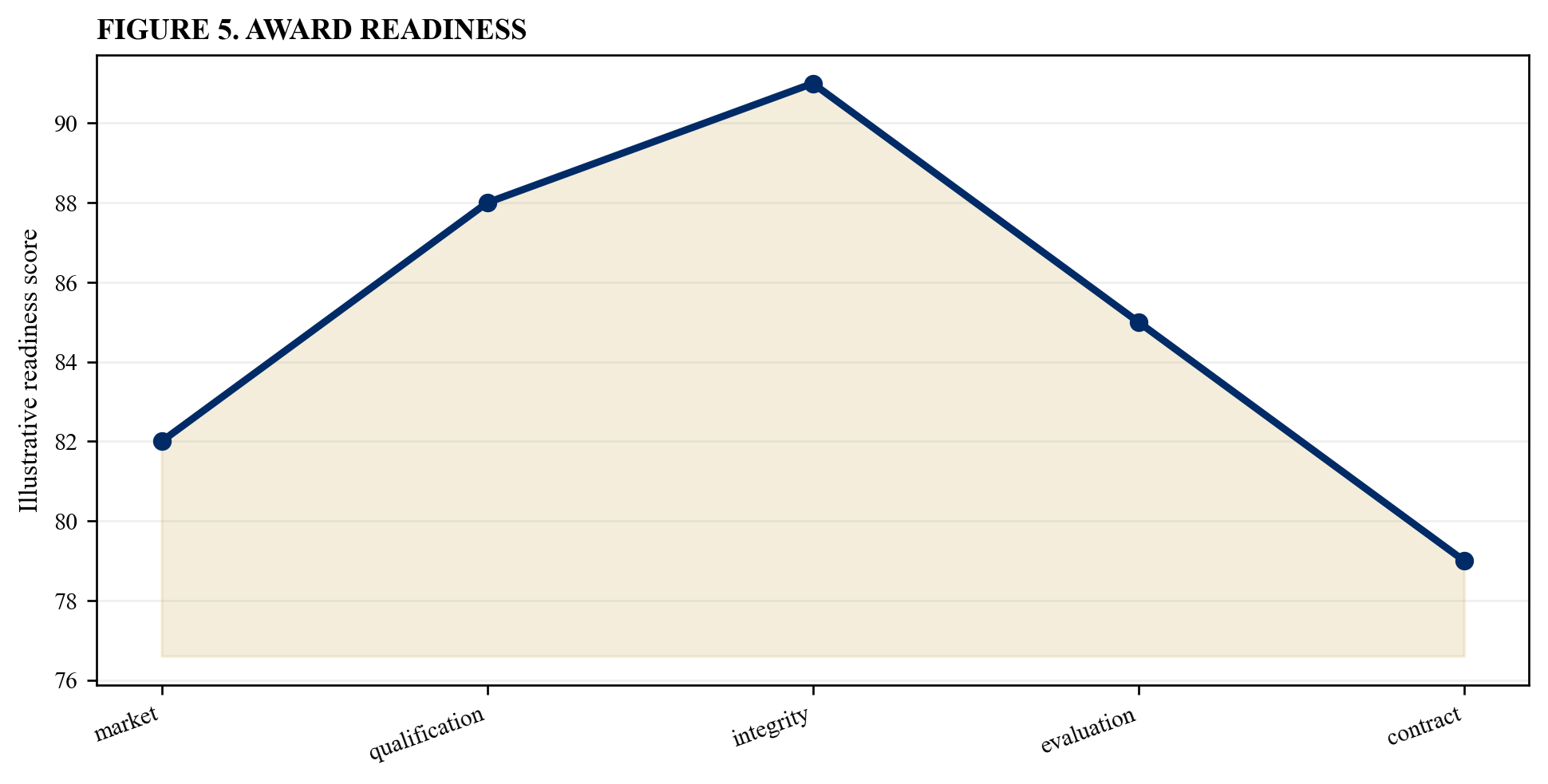
Illustrative analytical scenario; verified procurement evidence should replace values.
References
- UNCITRAL, Model Legislative Provisions on PPPs, https://uncitral.un.org/en/mlpppp
- OECD, Recommendation on Public Procurement, https://legalinstruments.oecd.org/en/instruments/OECD-LEGAL-0411
- OECD, Fighting Bid Rigging in Public Procurement, https://www.oecd.org/en/topics/sub-issues/competition-enforcement/fighting-bid-rigging-in-public-procurement.html
- OECD, Guidelines for Fighting Bid Rigging 2025, https://www.oecd.org/en/publications/oecd-guidelines-for-fighting-bid-rigging-in-public-procurement-2025-update_cbe05a56-en.html
- World Bank PPP Resource Center, Deciding the Procurement Strategy, https://ppp.worldbank.org/deciding-procurement-strategy
- World Bank PPP Resource Center, Managing the Bid Process, https://ppp.worldbank.org/managing-bid-process
- OECD, Competition and Corruption in Public Procurement, https://www.oecd.org/en/events/2026/06/competition-and-corruption-in-public-procurement.html
- World Bank PPP Resource Center, Disclosure of PPP Information, https://ppp.worldbank.org/disclosure-ppp-project-and-program-information
- UNCITRAL, Model Legislative Provisions on PPPs 2019, https://uncitral.un.org/sites/uncitral.un.org/files/media-documents/uncitral/en/19-11011_ebook_final.pdf
- EPEC, Guide to Guidance, https://ppp.worldbank.org/sites/default/files/2024-09/EIB_guide-to-guidance-en_EN.pdf
- World Bank, Beneficial Ownership in Procurement, https://www.worldbank.org/en/topic/governance/brief/beneficial-ownership
- FATF, Beneficial Ownership, https://www.fatf-gafi.org/en/topics/beneficial-ownership.html
- World Bank, Listing of Ineligible Firms, https://www.worldbank.org/en/projects-operations/procurement/debarred-firms
- OECD, Bid Rigging Detection List, https://www.oecd.org/en/topics/sub-issues/competition-enforcement/fighting-bid-rigging-in-public-procurement.html
- OECD, Managing Conflict of Interest, https://www.oecd.org/en/topics/conflict-of-interest.html
- World Bank, Procurement Regulations, https://www.worldbank.org/en/projects-operations/products-and-services/brief/procurement-new-framework
- World Bank PPP Resource Center, Qualifying Bidders, https://ppp.worldbank.org/qualifying-bidders
- EBRD, Procurement Policies and Rules, https://www.ebrd.com/home/work-with-us/procurement/project-procurement.html
- World Bank, Procurement Guidance, https://www.worldbank.org/en/projects-operations/products-and-services/procurement-projects-programs
- World Bank PPP Resource Center, Firm Qualification Criteria, https://ppp.worldbank.org/qualifying-bidders
- IMF, Public Investment Management Assessment, https://infrastructuregovern.imf.org/content/PIMA/Home/PimaTool.html
- World Bank PPP Resource Center, Finance Structures, https://ppp.worldbank.org/finance-structures-ppp
- World Bank Group, PPP Reference Guide Version 3, https://ppp.worldbank.org/sites/default/files/2024-08/PPP%20Reference%20Guide%20Version%203.pdf
- World Bank PPP Resource Center, Structuring PPP Contracts, https://ppp.worldbank.org/structuring-ppp-contract
- World Bank PPP Resource Center, Risk Allocation, https://ppp.worldbank.org/risk-allocation
- World Bank PPP Resource Center, Performance Security, https://ppp.worldbank.org/security-documents
- World Bank PPP Resource Center, Asset Recycling Tendering, https://ppp.worldbank.org/Asset_Recycling_Tendering_Process
- World Bank PPP Resource Center, Managing PPP Contracts, https://ppp.worldbank.org/managing-ppp-contracts
- World Bank, PPP Disclosure Framework, https://ppp.worldbank.org/sites/default/files/2022-03/FrameworkPPPDisclosure_101917__FINALFULL.pdf
- UNCITRAL, Model Law on Public Procurement, https://uncitral.un.org/en/texts/procurement/modellaw/public_procurement
- World Bank PPP Resource Center, Bid Evaluation, https://ppp.worldbank.org/managing-bid-process
- OECD, Public Procurement Toolbox, https://www.oecd.org/governance/procurement/toolbox/
- UK Government, Sourcing Playbook, https://www.gov.uk/government/publications/the-sourcing-playbook
- World Bank, Evaluation Guidance, https://www.worldbank.org/en/projects-operations/products-and-services/brief/procurement-new-framework
- Open Contracting Partnership, Open Contracting Data Standard, https://standard.open-contracting.org/latest/en/
- UNODC, Guidebook on Anti-Corruption in Public Procurement, https://www.unodc.org/unodc/en/corruption/tools_and_publications.html
- EBRD, Abnormally Low Tenders Guidance, https://www.ebrd.com/home/work-with-us/procurement/project-procurement.html
- UK Government, Should Cost Modelling, https://www.gov.uk/government/publications/should-cost-modelling
- EPEC, PPP Procurement Guidance, https://www.eib.org/epec/g2g/index.htm
- OECD, Integrity in Public Procurement, https://www.oecd.org/en/topics/public-procurement.html
